Interconnects by Nathan Lambert · Monday, February 9 2026 · 9 min read · ↑ top
On comparing models in 2026.
Last Thursday, February 5th, both OpenAI and Anthropic unveiled the next iterations of their models designed as coding assistants, GPT-5.3-Codex and Claude Opus 4.6, respectively. Ahead of this, Anthropic had a firm grasp of the mindshare as everyone collectively grappled with the new world of agents, primarily driven by a Claude Code with Opus 4.5-induced step change in performance. This post doesn’t unpack how software is changing forever, Moltbook is showcasing the future, ML research is accelerating, and the many broader implications, but rather how to assess, live with, and prepare for new models. The fine margins between Opus 4.6 and Codex 5.3 will be felt in many model versions this year, with Opus ahead in this matchup on usability.
Going into these releases I’d been using Claude Code extensively as a general computer agent, with some software engineering and a lot of data analysis, automation, etc. I had dabbled with Codex 5.2 (usually on xhigh, maximum thinking effort), but found it not to quite work for me among my broad, horizontal set of tasks.
For the last few days, I’ve been using both of the models much more evenly. I mean this as a great compliment, but Codex 5.3 feels much more Claude-like, where it’s much faster in its feedback and much more capable in a broad suite of tasks from git to data analysis (previous versions of Codex, including up to 5.2, regularly failed basic git operations like creating a fresh branch). Codex 5.3 takes a very important step towards Claude’s territory by having better product-market fit. This is a very important move for OpenAI and between the two models, Codex 5.3 feels far more different than its predecessors.
OpenAI’s latest GPT, with this context, keeps an edge as a better coding model. It’s hard to describe this general statement precisely, and a lot of it is based on reading others’ work, but it seems to be a bit better at finding bugs and fixing things in codebases, such as the minimal algorithmic examples for my RLHF Book. In my experience, this is a minor edge, and the community thinks that this is most apparent in complex situations (i.e. not most vibe-coded apps).
As users become better at supervising these new agents, having the best top-end ability in software understanding and creation could become a meaningful edge for Codex 5.3, but it is not an obvious advantage today. Many of my most trusted friends in the AI space swear by Codex because it can be just this tiny bit better. I haven’t been able to unlock it.
Switching from Opus 4.6 to Codex 5.3 feels like I need to babysit the model in terms of more detailed descriptions when doing somewhat mundane tasks like “clean up this branch and push the PR.” I can trust Claude to understand the context of the fix and generally get it right, where Codex can skip files, put stuff in weird places, etc.
Both of these releases feel like the companies pushing for capabilities and speed of execution in the models, but at the cost of some ease of use. I’ve found both Opus 4.6 and Codex 5.3 ignoring an instruction if I queue up multiple things to do — they’re really best when given well-scoped, clear problems (especially Codex). Claude Code’s harness has a terrible bug that makes subagents brick the terminal, where new messages say you must compact or clear, but compaction fails.
Despite the massive step by Codex, they still have a large gap to close to Claude on the product side. Opus 4.6 is another step in the right direction, where Claude Code feels like a great experience. It’s approachable, it tends to work in the wide range of tasks I throw at it, and this’ll help them gain much broader adoption than Codex. If I’m going to recommend a coding agent to an audience who has limited-to-no software experience, it’s certainly going to be Claude. At a time when agents are just emerging into general use, this is a massive advantage, both in mindshare and feedback in terms of usage data.¹
In the meantime, there’s no cut-and-dried guideline on which agent you need to use for any use-case, you need to use multiple models all the time and keep up with the skill that is managing agents.
Assessing models in 2026
There have been many hints through 2025 that we were heading toward an AI world where benchmarks associated with model releases no longer convey meaningful signal to users. Back in the time of the GPT-4 or Gemini 2.5 Pro releases, the benchmark deltas could be easily felt within the chatbot form factor of the day — models were more reliable, could do more tasks, etc. This continued through models like OpenAI’s o3. During this phase of AI’s buildout, roughly from 2023 to 2025, we were assembling the core functionality of modern language models: tool-use, extended reasoning, basic scaling, etc. The gains were obvious.
It should be clear with the releases of both Opus 4.6 and Codex 5.3 that benchmark-based release reactions barely matter. For this release, I barely looked at the evaluation scores. I saw that Opus 4.6 had a bit better search scores and Codex 5.3 used far fewer tokens per answer, but neither of these were going to make me sure they were much better models.
Each of the AI laboratories, and the media ecosystems covering them, have been on this transition away from standard evaluations at their own pace. The most telling example is the Gemini 3 Pro release in November of 2025. The collective vibe was Google is back in the lead. Kevin Roose, self-proclaimed “AGI-pilled” NYTimes reporter in SF said:
There's sort of this feeling that Google, which kind of struggled in AI for a couple of years there — they had the launch of Bard and the first versions of Gemini, which had some issues — and I think they were seen as sort of catching up to the state of the art. And now the question is: is this them taking their crown back?
We don’t need to dwell on the depths of Gemini’s current crisis, but they have effectively no impact at the frontier of coding agents, which as an area feels the most likely for dramatic strides in performance — dare I say, even many commonly accepted definitions of AGI that center around the notion of a “remote worker?” The timeline has left them behind 2 months after their coronation, showing Gemini 3 was hailed as a false king.
On the other end of the spectrum is Anthropic. With Anthropic’s release of Claude 4 in May of 2025, I was skeptical of their bet on code — I was distracted by the glitz of OpenAI and Gemini trading blows with announcements like models achieving IMO Gold medals in mathematics or other evaluation breakthroughs.
Anthropic deserves serious credit for the focus of its vision. They were likely not the only AI lab to note the coming role of agents, but they were by far the first to shift their messaging and prioritization towards this. In my post in June of 2025, a month after Claude 4 was released, I was coming around to them being right to deprioritize standard benchmarks:
This is a different path for the industry and will take a different form of messaging than we’re used to. More releases are going to look like Anthropic’s Claude 4, where the benchmark gains are minor and the real world gains are a big step. There are plenty of more implications for policy, evaluation, and transparency that come with this. It is going to take much more nuance to understand if the pace of progress is continuing, especially as critics of AI are going to seize the opportunity of evaluations flatlining to say that AI is no longer working.
This leaves me reflecting on the role of Interconnects’ model reviews in 2026. 2025 was characterized by many dramatic, day-of model release blog posts, with the entry of many new Chinese open model builders, OpenAI’s first open language model since GPT-2, and of course the infinitely hyped GPT-5. These timely release posts still have great value — they center the conversation around the current snapshot of a company vis-a-vis the broader industry, but if models remain similar, they’ll do little to disentangle the complexity in mapping the current frontier of AI.
In order to serve my role as an independent voice tracking the frontier models, I need to keep providing regular updates on how I’m using models, why, and why not. Over time, the industry is going to develop better ways of articulating the differences in agentic models. For the next few months, maybe even years, I expect the pace of progress to be so fast and uneven in agentic capabilities, that consistent testing and clear articulation will be the only way to monitor it.
1
The emerging frontier of coding agents is in the use of subagents (or “agent teams”, which are subagents that can work together), where the primary orchestration agent sends off copies of itself to work on pieces of the problem. Claude is slightly ahead here with more polished features, but the space will evolve quickly, and maybe OpenAI can take their experiences with products like GPT-Pro to make a Pro agent.
The GPT-Pro line of models is a major advantage OpenAI has over Anthropic. I use them all the time. As we learn to use these agents for more complex, long-term tasks, harnessing more compute on a single problem will be a crucial differentiator.
Liking, sharing, commenting, or recommending Interconnects from your Substack is the only way Interconnects is possible. Thank you for your support.
If you liked this, consider upgrading to a paid subscription to cover my growing subscription and API fees. We offer group Interconnects subscriptions at tiered discounts for 5+ heads.
If you want all of the best AI writing on Substack through one subscription for your team of 20+, check out https://readsail.com/.
A comprehensive handbook for the AI-native engineering philosophy
by Kieran Klaassen Software used to be built by armies of engineers. Now, with AI, Every runs all five of its products with single-person engineering teams. When I started buildingCora , our AI email assistant, from scratch, I wanted to see how much I could enable myself with AI. I knew it was possible for one person to ship like five. All I had to do was build the right systems and the right productivity hacks. This evolved into a systematic approach to AI-assisted development that I call compound engineering. It now has 7,000 stars on GitHub, which confirms my belief that this will become the default for how software gets built.
The philosophy
The core philosophy of compound engineering is that each unit of engineering work should make subsequent units easier—not harder. Most codebases get harder to work with over time because each feature you add injects more complexity. After 10 years, teams spend more time fighting their system than building on it because each new feature is a negotiation with the old ones. Over time, the codebase becomes harder to understand, harder to modify, and harder to trust. Compound engineering flips this on its head. Instead of features adding complexity and fragility, they teach the system new capabilities. Bug fixes eliminate entire categories of future bugs. When they are codified, patterns become tools for future work. Over time, the codebase becomes easier to understand, easier to modify, and easier to trust.
The complete guide to compound engineering
Today, we’re publishing a complete guide to compound engineering on Every. It has everything from a high-level breakdown of compound-engineering principles to low-level implementation details. If you—or your agent—want to become an expert, you should read it: Read the guide If you want to start using compound engineering in your work, download our plugin from GitHub. Install the compound engineering plugin
ben's bites · Tuesday, February 10 2026 · 9 min read · ↑ top
it's time to let the minions run wild
Hey folks,
I built something small that I needed…with all this clawdbot/openclaw mania I found it really hard to ‘see’ files on my remote computer (mac-mini/vps/etc). So I built a combined file-explorer app - you can upload/read/edit files on any machine (local or remote) you connect to it. Its free to clone/remix.
We have two new coding models: Opus 4.6 from Anthropic and GPT-5.3-Codex from OpenAI. My feed is loving GPT-5.3-Codex more (see Matt’s and Theo’s reviews) - I prefer it some of the time; when opus gets stuck or seems stupid about something → get codex to sort it out, if I know what I want and need it to just get done → codex, for planning, brainstorming and anything that needs resources (docs, links, etc) → opus. Both OpenAI and Anthropic put the models to extreme tests:
The new Opus comes with beta support for 1M tokens in its context window and a fast mode, which costs 6x more for 2.5x faster outputs. Anthropic also released a bunch of other API features like Context Compaction, Adaptive Thinking, Effort and a new feature in Claude Code -Agent Teams (demo + how to install it). Agent teams are multiple cc sessions working with shared tasks, messaging between themselves and centralised management. It’s available to all cc users.
There’s another launch from OpenAI too. A new platform, called OpenAI Frontier. It does a similar thing, i.e. let enterprises create agents plugged into their data with the ability to run commands on a computer (just like cc/codex) and feedback loops to improve them over time. Copilot and Google Cloud have something similar for a while now, but a) model capabilities and b) computer access/ability to use tools have been holding them back. To me, Frontier feels like an attempt to capture those users versus something similar to cc’s new agent teams.
ai.com guys ran a Super Bowl ad, and it crashed their website. Right now, it looks like an openclaw wrapper.
Why’s there always a meeting bot in your Zoom call? Blame Recall.ai. They power every meeting AI app, from Cluely to Hubspot to Clickup. Recall.ai handles the hard part: getting recording data across meeting platforms. Get started with $100 in credits.*
🌐What I’m consuming
Wiki Education partnered with Pangram (an AI detection tool), and they released a report detailing where it works, its blindspots and more. The collective trust in the AI community for Pangram’s detection is significantly more than the early “AI detectors don’t work” claim, so this distinction is worth a read.
Tailscale lets you hook into a dev environment on a remote machine (like a Mac Mini) from any device. I’ve been using it for my projects (here’s a guide). It’s ex-CTO (now building exe.dev) wrote about the last eight months of agents.
Stripe is using minions - agents that can one-shot features end-to-end. Simon wrote about how StrongDM’s AI team builds serious software without even looking at the code. Also read: Agent-native engineering - Restructuring your organisation around agents as individual contributors instead of engineers.
Should and will we build a new programming language now that we have agents? (I think so, if you are - I want to invest)
Stop talking to walls of predictive text and start doing real research with Superagent. Give it a question, and it gets to work: Subagents deeply interrogate your topic, scour a wide range of credible sources, and package it all up into boardroom-ready reports, slides, docs, or websites.*
⚙️ Tools and demos
👩🚀 Agent Composer - AI agents for advanced industries—compress routine engineering tasks from hours to minutes.*
Claude inExcel and PowerPoint - The official extensions for office tools by Anthropic.
Sphinx - Fully browser-based data science environment with a powerful agent.
Agentation - Let your agent fix your UI by annotating elements in your app.
Solo manages your entire dev stack. Add a project, let it detect all processes and start everything in one click.
Keep.md - Bookmark links from anywhere, store them as markdown and give them to your agent wherever you need. (going to replace my current link-saving workflow with this for this newsletter)
OpenClaw’s skill store, Clawhub, now auto-scans all skills for malware using VirusTotal. Every day, there are a dozen variants of OpenClaw launching now. Here are some that sound legit:
Webclaw - A fast, local-first, open-source web client for openclaw.
md-browser - A markdown-first mini browser that sees the web like an AI.
Agent-relay - Real-time messaging between AI agents. Sub-5ms latency, any CLI, any language.
Sage - Privacy-first personal AI agent with persistent memory, built in Rust. (explainer video)
agent-browser can now access local PDFs/HTML files and capture all clickable divs on a page.
pi-messenger - A chat room for multiple agents working on the same project.
Shannon - An AI hacker that wants to break your app and find exploits.
Napkin - A skill for Claude Code that gives the agent persistent memory of its mistakes.
X API is now pay-per-use. Though I use Bird CLI, the new pricing lets you build things like this Twitter research assistant on official APIs easily now.
Vercel AI Accelerator - 6 weeks prgram with access to the Vercel team, investors and $6M in credits. Application open now until February 16th.
Vouch - A community trust management system for who gets to contribute to your open-source projects.
Cursor released Composer 1.5- the same base model as Composer 1, but RLed 20 times more. It’ll be a lot more expensive while we have only one measure of how much better it is - Cursorbench (an internal benchmark with no public details).
That’s it for today. Feel free to comment and share your thoughts. 👋
by Natalia Quintero TL;DR:Today we’re launching Every Events , a new home for all of our training resources. It’s a living calendar of everything we’re teaching our subscribers, from digestible workshops to longer courses that go deep. This is the knowledge you need to stay at the edge of AI.
Over the past year, we’ve been teaching more and more. We’ve run live coding camps and a vibe coding marathon. We’ve taught small, focused workshops. We’ve trained teams at companies like the New York Timesand leading hedge funds. And, by learning and playing with AI every day in-house at Every, we’ve learned a lot along the way about what actually helps people use it well. Now, we’re pulling all of that together for our subscribers. Every Events is a single place to see everything we’re offering: upcoming courses and camps, recordings of past sessions, and the resources that go with them. If you want to learn how to use AI like we do at Every, or in the same way that’s helped leading businesses, this is the place to start. Visit Every Events
Different types of learning: Camps, Demo Days, courses, and meetups
We offer different kinds of events because not all learning needs the same shape.
1-Camps: Free, practical, and community-driven
Camps are live, hands-on sessions for paid Every subscribers. They’re usually an hour long and focused on how we use AI tools in practice, whether that’s spinning up parallel agents in OpenClaw, handling complex engineering tasks in OpenAI’s Codex , or sharing broader workflows that don’t map neatly to a single product. They’re not polished lectures, as the tools we introduce in these working sessions are often those we’re learning to use and experimenting with at the same time as you. We show you what we’re doing, what’s working, and what’s breaking. If you’re a paid subscriber, you get:
Access to all future live camps
Recordings of every camp we’ve run
Links, GitHub repos, and resources from each session
We’re also launching an in-depth course offering. These are paid courses, separate from your subscription, that go much deeper than a camp ever could. Think multi-hour, carefully designed instruction, an extension of our writing, research, and enterprise training. We’ll be teaching at least one course per month, focused on topics like:
Getting the most out of Claude Code
Using AI as a writer or designer
Building production-ready apps with AI
This is the first time we’ve done this in a coordinated, ongoing way, and we’re excited about where it’s headed.
3-Demo Days: A front-row seat to AI at Every
Where camps teach you the nuts and bolts of how we’re using AI at Every, and courses go deep on getting the most out of tools and models, Demo Days let you see that in action. These are sessions in search of new AI use cases and workflows. Everything from command centers that query company data across a dozen sources, an AI CFO that answers financial questions with full context, and a Pokémon-style visualizer for watching agents work in parallel. These sessions let subscribers in on the process, as our own product builders share what they’re making and how they’re improving our own apps, like Spiral for writing, Sparkle for file organization, Cora for emails, and Monologue for dictation. Demo Days are where we showcase new products, and where you can give us feedback and help shape the Every tools you’re already using.
4- Live events: Connecting with the Every community IRL
Camps, courses, and Demo Days teach you how we work. Live events let you meet the people doing the work—and the community learning alongside you. We hold dinners , meetups , and co-hosted gatherings throughout the year, bringing together our 125,000-plus readers in cities where our team can show up. These events are informal by design—just good conversation about AI, building, and whatever else comes up. Live events appear on the Events page as we schedule them. We hope you’ll join us when one lands near you.
What’s coming up
We’re launching the Events page with a few initial offerings:
Claude Code for Absolute Beginners: A course for people who’ve never used Claude Code before. We’ll walk you through what it is, how it works, and how to start using it confidently. Registration is open now.
Claude Code for Finance: A focused workshop on applying Claude Code in financial workflows. Coming in March. Registration is open now.
Claude Code Part II: Building Production-ready Apps: A more advanced follow-up for people who are already comfortable with the basics and want to build real applications. Coming in March. Registration is not open yet— sign up to get notified.
More camps and courses are coming soon. If there is a topic you would like to see covered, reach out and let us know. Visit Every Events
From our work to yours
Every is based on three pillars: ideas, apps, and training.
We explore our ideas and what we’re seeing in our writing.
We build apps and put our ideas into practice.
We share what we’ve learned about how to use AI with our subscribers and consulting clients.
AI touches everything we do at Every—writing, building tools, and refining our workflows. Engineers and non-technical team members learn from each other constantly, discovering what improves our work and what just gets in the way. Over the past year, we’ve also worked with two dozen companies, including the New York Times, hedge fund Walleye Capital , and mental health tech company Headway. We’ve learned a lot about the blockers that smart people come up against when they’re trying to use AI, and how to unstick them. We want our community to benefit from what we’re learning daily at Every, and to help you use this technology in ways that actually work. Our goal is simple: to make this the best home on the internet for learning how to work with AI thoughtfully, practically, and with taste.
What comes next
The Every Events page is now live, and it will keep growing. If you’re already a subscriber, this is your new hub for learning resources. If you’re new to Every, it’s the clearest picture yet of how we help our community get the most out of AI.
In January of 1709, in a steep gorge cut by the river Severn in the midlands of England, a 30-year-old Quaker named Abraham Darby fired a blast furnace for the first time.
The furnace had been built decades earlier and blown up around 1703 by a previous operator. It sat derelict in the Coalbrookdale Valley, where coal and iron ore lay in abundance near the surface of the valley walls, and a narrow stream cut through the bottom with enough force to drive a water wheel and bellows. Darby had leased the wreck in September of 1708, the year prior, and spent a few months rebuilding it.
As a boy in the 1690s, Darby had been an apprentice to Jonathan Freeth, a fellow Quaker who made malt mills. Darby understood from watching men brew ale that you did not smelt with coal, and if you smelt it with coke by baking out the sulfur first, you could produce a high quality product. The coal in the Coalbrookdale Valley happened to be unusually pure, and when you burned it, it yielded fuel clean enough to produce castable iron.
On the 10th of January, he had his first blast day. Fully liquid high-quality iron flowed into the molds. Little did he know that with his firing, he had lit the fuse of the Industrial Revolution.
It is difficult to overstate the problem that Darby solved. Before Darby, iron production in England was structurally capped. Every furnace could only be run on charcoal, and charcoal required timber. England, with its relatively small land area and low-density forests, was running out of trees. Iron masters competed with ship builders and construction for a shrinking stock of wood, and furnaces sat idle for months, waiting for enough fuel to turn them on. The industry had been in structural decline for over a century.
Darby’s invention would set Britain up to become the greatest empire in history. Every partnership that fueled this first forge was Quaker. Thomas Goldney of Bristol financed the works. Richard Ford, also a Friend, married Darby’s daughter and managed operations. When Darby offered to teach his smelting technique to another iron master, the man he chose was William Rawlinson, a fellow Quaker. Weekday meetings were held in the company offices at the works. On Sundays, Darby sat with his fellow workers at a Quaker meeting in the town nearby.
When he died in 1717, only 39 years old, and his widow died just months later, his eldest son was six. The business should have collapsed and Darby’s invention should have been lost to the wind. Instead, Joshua Sergeant, Darby’s brother-in-law, bought back the mortgage shares on behalf of his children, and Ford held the enterprise together until the boy was old enough to take his place. The Quaker network absorbed the loss through a mutual obligation they felt towards each other and to the enterprise. Their shared faith and the long patience of people who believed their work participated in something that would outlast them fueled resilience for the business.
Abraham II expanded the works, introduced steam power, and paid higher wages than the local mines. And in times of food shortage, he bought farms to feed his workers. When he died in 1763, his son Abraham III took control at 18. In 1779, he completed the Iron Bridge over the Severn, the first cast iron bridge in the world,100 feet across. Nearly 400 tons of iron cast in the family’s furnace went into its construction. He bore the cost overruns personally and died in debt at 39, the same age as his grandfather. He was buried in the Quaker burial ground at Coalbrookdale.
The Barclays, the Lloyds, the Cadburys, the Rowntrees, the Clarks, and the Wedgwoods were all prominent Quaker merchant families. A religious minority that at its peak numbered almost 60,000 people in the country of 6 million – just under 1% – at that time produced an overwhelming share of England’s commercial and industrial infrastructure, so disproportionate that it still puzzles economic historians.
The standard explanation is that the Test Acts barred Quakers from universities and public offices, so they moved their talents into trade. That is likely true, but also insufficient. Plenty of persecuted minorities channeled their talents into trade. Most of them did not build Barclays. The question of why the Quakers so radically changed Britain and, in turn, the economic history of the West is worth answering.
2. On Quakers
Quakers are a strange people. I, Will, should know. I grew up as one. They’re a sect that refused to swear oaths, refused to remove their hats before magistrates, refused to address anyone with honorifics, and finally refused, with a stubbornness that cost them dearly in fines, imprisonment, and social exile, to lie. Not in the way that most religious communities refuse to lie, which is to say they aspired to it one day and often fell short. The Quakers earnestly enforced a near-militant allegiance to the truth. Through meetings, through discipline, through expulsion, a friend who cheated a customer or misrepresented a product faced not only civil liability but spiritual reckoning before his entire community.
Everyone knew this, and everyone could trade with them safely as a result. You could trade with a Quaker even across the ocean with minimal contracts because the contract was already written in something more binding than paper: a spiritual agreement. In a place like early England where transaction costs – entire apparatus of verification, enforcement, legal recourse – were extremely high, and which in turn made long-distance commerce expensive and slow, the Quakers were able to drive that cost to nearly zero.
Ante D. Luvian
@uncle_deluge
@Rickshawty2 Quakers and Baptists were small minority communities at the time, Lutherans actually had majority regions and New England was still Congregationalist
Quakers and Baptists were small minority communities at the time, Lutherans actually had majority regions and New England was still Congregationalist
The trust was inherited by the faith and carried into every transaction before the partners even met. Even things like fixed pricing were a Quaker invention. Before Quakers, commerce meant haggling. Every transaction consisted of a negotiation and every price was a contest. Quaker shopkeepers posted a single price and held it. You paid what everyone else paid. And you never worried about being cheated because the man behind the counter believed that cheating was a mortal sin, not in the casual way that most people believe in sins, but in the way where he ordered and structured his entire community and his life such that he could remain true to his word. Customers came in enormous numbers. Of course they did.
Quakers also refused ostentatious behavior and conspicuous consumption. Quakers did not display wealth because display was vanity and vanity was a sin. What other businessmen extracted to furnish lavish estates and carriages and display the visible performance of success, Quakers treated as excess cash flows to reinvest in their businesses. They built for the long term because they understood their work to be stewardship, a core Quaker value. The businesses existed to participate in God’s purpose.
These constraints, the honesty, the simplicity, the refusal of ostentation, the reinvestment and the fixed pricing, were a structural advantage for Quaker businessmen. Every single one of them felt like a limitation, but every single one of them was actually a moat. The religion worked something like a business strategy, but they would never call it one. The moment it became one, it stopped working.
The Quakers did not calculate that honesty was profitable and practice it; they practiced it because God demanded it, and profitability was a consequence that was beside the point, not one they could manufacture by seeking.
3. The Invisible Hand
The Quakers understood something about commerce that we have since forgotten. This is something that Adam Smith understood too. Smith today is largely remembered as an economist, but he held the chair of moral philosophy at the University of Glasgow from 1752 to 1764. His wide-sweeping lectures covered theology, ethics, jurisprudence, political economy in that order, because that was the order in which he believed they mattered.
The problem at the center of Smith’s work was first and foremost moral, not economic: how do human beings, who are selfish, form moral judgments at all? How does a creature driven by self-interest develop a conscience? His answer was the impartial spectator, an imagined observer from whose eyes we learn to judge our own conduct.
Smith was a prolific writer during his lifetime. He wrote the lectures on jurisprudence, the essays on philosophical subjects, various volumes of correspondence, and of course the famous On the Wealth of Nations, but at least in our opinion, and seemingly his own, his life’s work was The Theory of Moral Sentiments. He revised it across nearly six editions over three decades, and he was still revising it in the final year of his life, adding an entirely new section on the corruption of moral sentiments by wealth and status, a section that reads like a man who has watched his other book be fundamentally misunderstood and is trying to correct the record before he dies. He had barely touched The Wealth of Nations after its first publication, and on his deathbed he ordered 16 volumes of unpublished manuscripts to be burnt. He certainly ordered The Theory of Moral Sentiments to be protected.
Eva Basilion
@EBasilion
The Theory of Moral Sentiments is what gives Smith’s disembodied invisible hand its humanity. Problem is that no one got the memo.
NAZAL KARADAN @NAZALKARADAN
@EBasilion I think people only took parts of his work. His 1st book, Theory of Moral Sentiments, was most important for him. There he stresses humans are intelligent, empathetic beings who aren't or shouldn't be selfish, and that works in our interests as humans
I think people only took parts of his work. His 1st book, Theory of Moral Sentiments, was most important for him. There he stresses humans are intelligent, empathetic beings who aren’t or shouldn’t be selfish, and that works in our interests as humans
The Wealth of Nations is an application of The Theory of Moral Sentiments to commercial life, not the other way around. Smith understood markets as moral formation. Commerce trains morals because exchange requires it. It teaches honesty because your counterpart will not come back if you cheat him. It punishes fraud over the long run, even if it rewards it short-term. It forces repeated dealings with strangers over years, building a habit of fairness that no contract could possibly ever compel.
But Smith was deeply suspicious of merchants in their own right. The Wealth of Nations warns that businessmen will conspire against public interest at every opportunity, and that the division of labor renders workers stupid if unchecked and that employers will always collude to suppress wages. He did not believe that markets alone, left to themselves, would produce good outcomes. He believed that markets populated by morally formed people devout in their faith, operating within communities of mutual accountability, tended towards good outcomes.
He assumed of his readers that they were fully formed in Christian ethics before they even entered the market. Formed by the church, by families, by guilds, and by the dense web of obligation and expectation that life in Scotland in the 18th century made inescapable. The market rewarded the qualities of Christian life: sympathy, honesty, and the capacity to think long beyond your own life. And in this way it cultivated something much deeper and older.
When economics professionalized in 19th century America, it took with it what it could formalize and left the rest. Supply and demand, the division of labor, comparative advantage, pricing mechanisms, all made secular and atheistic. The impartial spectator was left behind. Smith became the patron saint of self-interest, and the book that he deeply cared about and spent his life on became a curiosity for weird Christian Twitter users and economics grad students.
4. The Worship of Art
Will Manidis
@WillManidis
separating enterprise from faith, from community, from friendship, and more importantly from one's moral and spiritual conviction has been the greatest disaster of modernity. the firm does not exist separate from the spiritual, does not exist separate from the transcendent
Jeremy Giffon @jeremygiffon
Wallace Stevens turned down a tenured position at Harvard after winning the pulitzer to keep his insurance job. There's an argument to be made that the arts, like the humanities and politics, were never meant to be done in isolation from the worldly.
Wallace Stevens turned down a tenured position at Harvard after winning the pulitzer to keep his insurance job. There’s an argument to be made that the arts, like the humanities and politics, were never meant to be done in isolation from the worldly. x.com/nabeelqu/statu…
Tom Wolfe’s 1984 essay, “The Worship of Art”, explains what happened next. Sometime in the 20th century, when businessmen lost these moral frameworks, they replaced them with art and cultural philanthropy, which became a substitute faith. The museum board was the congregation, the gala was the liturgy, and the naming rights to the hospital were a tithe. Wolfe called these Boy Scout badges. The badge did not ask questions of how you earned it, provided that you could afford it.
When you lose the framework that ties your daily work to a moral account of the universe, that void does not stay empty. Something else fills the house. The finance industry of the 1980s and the 1990s built a culture that was actively hostile to answering this question. Leveraged buyouts hollowed out towns, mortgage products extracted maximum value from people who could not understand them. Compensation structures rewarded quarterly execution instead of decades-long stewardship. The people doing the work were produced by institutions that had systematically selected against the instinct to ask whether the work itself was good.
It’s easy to call this hypocrisy, but it’s not. Hypocrisy is knowing the right thing and choosing the wrong one. This is worse and more interesting. It is a culture that has eliminated the language for asking the question at all. Harvard, Goldman Sachs, McKinsey: secular confirmation rites. They signaled membership among the elect in the way that baptism once did. Except that baptism imposed obligations, and Goldman imposed none that touched the conscience.
Patrick OShaughnessy
@patrick_oshag
Everyone talks about the PayPal mafia But not nearly enough talk about (Harvard) Spee mafia from late 2000s Absolute murders row
The form of worship is preserved but the transcendence is gone.
Robert Jackall spent years inside American corporations in the 1980s conducting ethnographic field work. He documented it in Moral Mazes, the most devastating portrait of organizational moral life ever written. A former Vice President at a major US corporation told him:
“What is right in the corporation is not what is right in a man’s home or in his church. What is right in the corporation is what the guy above you wants from you. That is the morality of the corporation.”
Jackall found this everywhere, not as a failure of the system but as the system working exactly as it was designed. Managers learn within months to read political signals with the sensitivity of an augur reading the flight of birds. They learn to never associate themselves with a project that might fail. They learn above all to never stake a career on a moral claim because a moral claim cannot be hedged, cannot be walked back, and cannot be reframed as commercially convenient. A manager who raises an ethical concern is not celebrated for his conscience. He is noted as a person who makes things complicated.
The managers Jackall profiles are not bad people. They are ordinary, often thoughtful, and sometimes genuinely principled people who operate inside structures that make the exercise of personal moral judgment functionally impossible. The structure does not feed on bad people. It produces bad behavior from good ones. So they buy their morality elsewhere — the museum board, the annual letter, the philanthropy — not because they are hypocrites but because the system has made the alternative unavailable.
Rob Henderson
@robkhenderson
Attributes that determine success in a corporate environment, from Moral Mazes: The World of Corporate Managers:
Attributes that determine success in a corporate environment, from Moral Mazes: The World of Corporate Managers:
We are building the same apparatus for the technology industry. We have built an attention economy optimized for engagement metrics that make people measurably worse and we have not responded by asking whether the work is good but instead by coming up with complex, eschatological reasons why it is okay. We are building AI systems that will reshape how billions of people work, relate and think. The conversation about these systems has been cordoned off into ethics boards and AI safety teams that function as the new museum boards — asking cosmic questions that permit the real work to continue unexamined.
The Quakers could not leave. That was the instrumental difference. The Quaker merchant who cheated a customer faced his meeting and his community. The work was the test and there was no badge that substituted for it.
5. Expected Value
Effective altruism is perhaps the most expensive and intellectually sophisticated Boy Scout badge ever produced. EA was the apex of purchased virtue, a religion so rigorously constructed that it convinced an entire generation of smart and secular people that they could calculate their way to moral seriousness without ever touching the formations. You don’t need to be changed by your morals, you just need to sum the numbers correctly.
The promise was moral clarity through quantification. Maximize expected value, identify the most cost-effective charity through rigorous analysis, donate accordingly, measure impact per dollar. The framework was beautiful in the way that mathematical and formal systems are beautiful. It attracted exactly the people you would expect: quantifiably gifted, analytically rigorous, often young, often from elite technical institutions, and often deeply sincere in their desire to do good — almost uniformly unformed by any moral tradition thick enough to make them question its premises.
EA had, and still has, quasi-religious features: a clear doctrine, demanding standards, a community of believers with shared language and shared institutions, apocalyptic urgency through existential risk and longtermism. It has everything that a religion has, except for the one thing that makes religion work: it forms you through practice and through community and through discipline over a lifetime and does not let you leave when it becomes costly.
Dwarkesh Patel
@dwarkesh_sp
@BjarturTomas Our argument about inequality is even stronger if we're talking about digital successors (and not just biological humans owning galaxies). In fact, the more wealth enables radical transformation, the more acute inequality can become. If Larry can buy a Jupiter brain and trillion
Sam Bankman-Fried’s reasoning that risking billions in customer deposits was justified if it raised the possibility of preventing existential catastrophe by even a fraction of a fraction of a percent was not a betrayal of the framework but a faithful application of it. This is the point and it is the only point that matters about FTX in the context of moral formation.
In his conversation with Tyler Cowen in April of 2022, months before the collapse, SBF endorsed expected value reasoning that would justify essentially any gamble if the stakes were large enough. After the collapse in his messages to Kelsey Piper at Vox, his immediate concern was not the customers who lost their money. It was that the scandal would make things harder for people trying to do good. The framework was so thoroughly intact that even after it produced a monumental catastrophe, he could only evaluate the catastrophe from within it.
EA manufactured a secular eschatology. Longtermism provided the structure: millennial time frames, civilizational stakes, and the possibility that actions taken now could determine the fates of trillions of people. This is a substitution for the eschaton, the final judgment and the world to come. It serves the same psychological function and provides the same sense of cosmic importance that human beings require to sustain sacrifice over time.
The problem with this manufactured eschatology is that it has two dial settings and no stable middle. It either burns too hot, producing the manic urgency that convinced SBF and others that the stakes were so high that ordinary morality was a luxury that they could not afford. Or it burns out entirely when the catastrophe remains abstract year after year after year and the daily sacrifices start to feel arbitrary. Religious traditions solve this problem over centuries through ritual, through community, through liturgical calendars that modulate the intensity of faith and practice across seasons, through narrative structures that sustain commitment across generations without requiring constant threat of judgment. These are technologies of moral formation that are extraordinarily difficult to build de novo.
Joe Weisenthal
@TheStalwart
This is also an issue that came up on the episode. There are strains of even the animal welfare debate that can wind up in some deeply misanthropic places (like perhaps we should make the earth less hospitable to humans, in order to make it more hospitable to bugs and shrimp)
Daniel Cook @jdanielcook
@tracyalloway @TheStalwart What/Who are we promoting AI welfare over? "Promote the general welfare" does not extend to AI.
6. There Is No Secular Alternative.
It’s fashionable now amongst the wealthy jet set of technologists to call for new aesthetics. Better buildings, better cities, better objects. Beautiful people occupying beautiful spaces. Powered by a new secular identity of post-scarcity and peptide maximalism. This conversation has been running for years in the progress studies community, but has recently reached the mainstream with very important and successful entrepreneurs endorsing it. Patrick Collison built Stripe Press partly around it. Marc Andreessen’s “Time to Build” gestured at it. The rationalist community, which seemingly has opinions on everything other than its own morality, has extensive opinions about it. Why is everything ugly? Why are our cities hideous? Why does nothing we build anymore have the quality that old things have? Why can we not make beautiful things anymore?
They are asking the right questions, but they are wrong about what the question is. The call for a new aesthetic is necessarily a call for a new transcendent morality. You cannot build beautiful things without beautiful and transcendent reasons for making them.
Nabeel S. Qureshi
@nabeelqu
Most people know of Christopher Alexander's "Pattern Language" or "Timeless Way of Building", but few know about his religious turn in "The Nature of Order", where he develops a Catholic-Shintoist metaphysics in which God lives in matter, and beauty is the act of revealing God:
Christopher Alexander understood this and nearly destroyed his career. He spent decades producing A Pattern Language, a book that is impossible to miss on the shelf of nearly every Silicon Valley elite. Probably the most important influential work on architecture and design. Software engineers love it. It is ultimately a seemingly secular book. It is a book about patterns. There are 253 of them, rigorously documented, covering everything from the distribution of towns to the placement of windows. It is a magnificent achievement of systemic thinking applied to the built environment.
However, Alexander came away believing it was fundamentally incomplete. He spent the last decades of his life on a book called The Nature of Order. Four volumes published between 2002 and 2004 that almost no one has read. In fact, the book is almost impossible to find in print today while A Pattern Language is seemingly everywhere. The question that drove these volumes was simple and unanswerable in his existing framework. Why do some things feel alive and others do not? Why does a courtyard in Andalusia feel alive but an office park in South San Francisco does not? A medieval village in Tuscany feels alive, but a new city built by technologists in California does not.
Nabeel S. Qureshi
@nabeelqu
I strongly recommend, especially Volume 4 -- among other things, it's one of the most stunningly made/printed books I've ever held. Some images below. Will write an essay on this at some point, because I think it has relevance for the "revival of beauty" discourse.
The difference is not reducible to geometry. It is certainly not reducible to a pattern. Alexander – a trained mathematician – tried. He spent 20 years trying to find a formula for it, and he couldn’t get there. Instead:
“I try to find in my own experience what it is that I feel to be holy. I have come to believe that the ultimate effort of a serious artist or a serious builder is directed towards something with the presence of God.”
The man who wrote the most rigorously systemic and material book on design in the 20th century spent his final years arguing that the quality he had been trying to formalize was not an aesthetic or material property at all. It was a theological one. Good making, good building, good design participates in something transcendent. It was the aliveness he could feel in a courtyard in Seville and not feel in a strip mall in the Tenderloin. He could not explain the beauty without the God that underlay it. The patterns were real but necessarily insufficient.
This is obvious to anyone that has ever participated in a faith tradition. No purely secular building has approached the beauty of the old cathedrals. No secular music has ever reached Bach. No secular poetry has touched the Psalms.
The craftsmen who built churches worked for decades on stone carvings placed so high that no human eye would ever see them clearly. They carved them anyway. They carved for God. Those calling for new aesthetics without calling for the thing that has always produced great aesthetics are asking for the fruit without the root.
Will Manidis
@WillManidis
I quite like Dorothy Sayers' answer from her 1942 essay Why Work?. Quality work inherently honors God and His creation. We spend too much time assigning moral weight and obsessing over moral frameworks for work, when instead we could just do Good Work and that alone is enough.
Patrick Collison @patrickc
Two conversations this weekend make me think that there's a vibe shift afoot in Silicon Valley around what one should work on and what is worthwhile. Culturally, it feels like the moment is ripe for new frameworks: • Davos expert morality is stale and discredited. • It's also
One of our favorite writers, Dorothy Sayers, is remembered, when she is remembered at all, as a mystery novelist. She wrote the Lord Peter Wimsey detective stories in the 1920s and 1930s and they were very popular and very good at the time and are largely forgotten in our own. What is also largely forgotten is that Sayers was one of the sharpest theological minds in wartime Britain, a close friend and intellectual peer of C.S. Lewis, and one of the first women to receive a degree from Oxford. In 1942, in the middle of the war, she delivered an essay called “Why Work?” to a gathering in Eastbourne, just a few hundred miles south of where that first blast furnace was lit. We believe it to be one of the most important things written about labor in the twentieth century and almost no one has read it.
Her argument was that the church had catastrophically failed the working person by treating work as merely instrumental — a way to earn money for living and giving rather than as something sacred in its own right. The church told the carpenter not to drink and to come to services on Sunday. It never told him that the quality of his carpentry was itself the religious act. Sayers thought this was a disaster and said so:
“The church’s approach to an intelligent carpenter is usually confined to exhorting him not to be drunk and disorderly in his leisure hours, and to come to church on Sundays. What the church should be telling him is this: that the very first demand that his religion makes upon him is that he should make good tables.”
Nico
@Nico__Chuan
My dad found this Windsor chair for $20 and gifted it to us for our dining room. As best I can tell it’s a handmade piece from the 1800s. Antique prices have fallen off a cliff. There’s never been a better time to scoop these pieces up. https://t.co/6NxoAJgjtX
Nico @Nico__Chuan
amazing what people throw away these days
The work, for Sayers, was prayer. The shoemaker makes good shoes because that is what shoemakers do, because the object leaving his hands will either participate in the work of glorifying creation or degrade it. Christ was a carpenter. Moses was a shepherd. Paul made tents.
The AI megacycle that will unfold over the next ten years will produce more overcapitalized businesses searching for an identity than any boom in history. The temptation will be to purchase virtue. Fund the institute. Publish the hand-wringing annual letter that might even include a Bible verse or two. The actual work will remain untouched by any of it.
Every secular constraint eventually faces the question: why maintain this when it is costly? The only thing that has ever held a constraint in place across generations, through pressure, through loss, through the slow grinding temptation of day after day to simply stop, is the conviction that the constraint was not chosen but received. That it comes from something outside the self that the self cannot renegotiate. That it is owed to God and to creation itself.
The businesses that lasted understood this. Each of them had something at the core that looked, to outside eyes, like irrationality. A refusal that made no sense. A constraint held well past the point where a rational person would have abandoned it. If you asked why the constraint was there, and kept asking, you arrived at God. You always arrived at God.
The work that lasts from this era will be no different. The companies that endure, the technologies that serve rather than consume, the institutions that hold their shape across generations when the founders are dead and the capital is restless and the market is telling them to be something other than what they are — they will have something at their center that resists justification in purely secular terms. Something that seems religious, because it is.
There is no secular alternative. There has never been one.
Ben Goodger and Darin Fisher on building a browser that does the chores—and what that means for the web
by Rhea Purohit Ben Goodger and Darin Fisher. TL;DR: Today, we’re releasing a new episode of our podcastAI& I, whereDan Shippersits down with two members of the team building OpenAI’s agentic browser Atlas,Ben Goodger, head of engineering,__andDarin Fisher, member of technical staff.Watch onX or YouTube, or listen on Spotify or Apple Podcasts. The AI labs fighting for attentionduring the Super Bowl call to mind another iconic Super Bowl moment: Apple’s 1984 ad for the Macintosh , which promised that the personal computer would be a source of unbound wonder, freedom, and delight. They were right, but over time, the personal computer has also become cluttered with errands. These “computer errands”—downloading a W-2 when tax season rolls around, hunting for the right coupon code before checkout, or navigating the unholy labyrinth of the Amazon Web Services dashboard just to change one permission setting—have taken over our digital lives. Atlas , OpenAI’s agentic browser , sprang from the idea that AI should handle this tedium for you. In this week’s episode of AI& I, Dan Shipper sat down with two members of the Atlas team, Ben Goodger and Darin Fisher. Goodger is Atlas’s head of engineering, and Fisher is a member of the technical staff. Both are legends of the browser world. They’ve spent decades building the modern web, working together on Netscape, Firefox, and Chrome before arriving at Atlas. From that vantage point, they told Dan how they think browsing is about to change, why building a browser is harder than it looks, and what it’s like to create a new one with AI coding tools like Codex. Here is a link to the episode transcript. You can check out their full conversation: Here are some of the themes they touch on:
How browsing the web will evolve
As agentic browsers become mainstream, they raise fundamental questions about the future of the web, and how we’ll interact with it going forward.
The web will survive—with less drudgery
One of the big questions hanging over agentic browsers is whether they eventually make the web obsolete. If you can stay inside ChatGPT and have agents do all the browsing for you—maybe even spin up custom pages on demand—do traditional websites cease to matter? Goodger doesn’t buy that future. Yes, people will increasingly hand off tedious or mechanical work to agents. But he believes there is a category of activities, like shopping and travel planning, where people still want to be directly involved. The web’s abundance, in these cases, is part of its appeal; it’s a place to wander rather than a resource to extract. Fisher offered an analogy: He loves taking Waymos, but he also loves driving his stick shift. Sometimes you want the convenience of being chauffeured; other times, you want tactility and control—and the future involves moving between the two modes depending on the task. While AI might synthesize information for you, what to ignore and what to act on is still up to you. You might ask a model to prepare a shopping cart, but you’re still going to want to look at what’s in it before you buy. You’ll probably incorporate the two modes, says Fisher, very naturally in your life.
A browser as a guide, not just a doorway
For most of the web’s history, browsers have been an empty door frame between you and whatever site you’re trying to reach. If they work well, you barely notice they exist. But an agentic browser introduces a new possibility: a browser that also helps you decide where to go. Dan likens this to the difference between a utilitarian taxi and a more-involved tour guide. He wonders if this new vision of the browser conflicts with what people have come to expect from the old vision. Goodger argues Atlas is built to balance this duality. The interface is deliberately minimal, keeping the browsing experience familiar and unobtrusive—but ChatGPT sits at the heart of the product, ready when you want it. You choose how much to engage with the AI. The web is full of moments where you don’t know what to do next in order to achieve an objective. Atlas, they suggest, is designed for those situations.
An inside look at building an agentic browser
Goodger estimates that more than half the code behind Atlas was written by Codex , OpenAI’s coding agent. The browser is as much built by AI as it is built for AI.
How the Atlas team uses Codex
Goodger and Fisher have been manually coding browsers together for decades, and they both say that building Atlas with AI feels fundamentally different. For Fisher, the value lies in navigating complexity. For years they’ve worked in the Chromium codebase—the foundational code that underlies Google Chrome and other browsers including Microsoft Edge, Opera, Brave, and Atlas. That codebase has grown enormous over time, so being able to ask Codex questions about it is, Fisher says, “unbelievably useful.” The same goes for learning new techniques like how to set up a particular animation, or knowing what the right strategy is for a UI effect. “A lot of our code is able to be created by Codex because there’s a lot of straightforward aspects to what we’re doing, but there’s also very delicate aspects,” he says. “These tools can be tremendous companions as we’re trying to figure out what’s the right strategy to explore the solution space.”
How AI changes the experience of coding
For engineers who’ve spent decades writing software by hand, using AI coding tools can feel like a kind of loss : The work gets faster, but perhaps less personal. Fisher doesn’t deny that tension. He describes writing code as “almost therapeutic,” like “art, ”and views Codex as a tool that accelerates the tedious parts while leaving the satisfying ones intact. He describes spending hours on a refactor that spanned the code base—updating the same kind of code, with slight variations, in dozens of places across the project. When a similar task came up later, he handed it to Codex, and it finished in an hour by following the patterns he’d already established. Goodger sees a similar division of labor. AI coding tools are often surprisingly good at finding elegant solutions, but they don’t always understand the context behind a decision—the reasons that aren’t written in the code. There’s still a need for the kind of judgment that comes from experience. But once you’ve made that call, AI can execute far quicker than you could yourself. “I don’t feel precious about typing that code,” he says. Another upshot of coding with AI is that the Atlas codebase is better-tested than it otherwise would be. Writing unit tests—small pieces of code that check whether a specific part of your software works correctly—is important but tedious. Fisher notes that the team can now just ask Codex to generate them, and it often catches edge cases they didn’t think to specify. “In that regard,” Fisher says, “it’s been a fabulous friend.” What do you use AI for? Have you found any interesting or surprising use cases? We want to hear from you—and we might even interview you.
Timestamps
Introduction: 00:01:57
Designing an AI browser that’s intuitive to use: 00:11:51
How the web changes if agents do most of the browsing: 00:15:24
Why traditional websites will not become obsolete: 00:25:06
A browser that stays out of the way versus one that shows you around:00:29:00
How the team uses Codex to build Atlas: 00:39:51
The craft of coding with AI tools:00:44:47
Why Goodger and Fisher care so much about browsers: 00:52:33
You can check out the episode on X, Spotify, Apple Podcasts, or YouTube. Links are below:
Miss an episode? Catch up on Dan’s recent conversations with founding executive editor of WiredKevin Kelly , star podcaster Dwarkesh Patel , LinkedIn cofounder Reid Hoffman , ChatPRD founder Claire Vo , economist Tyler Cowen , writer and entrepreneur David Perell , founder and newsletter operator Ben Tossell , and others, and learn how they use AI to think, create, and relate. If you’re enjoying the podcast, here are a few things I recommend:
In 1711, a toolmaker in Kyoto named Chiyozuru Korehide began forging kanna blades for the carpenters building the temples at Higashi Hongan-ji. The blades were forged from laminated steal, the highest quality white hagane forge-welded to soft iron, and were extraordinary.
Three hundred years later, his descendants still forge them. A Chiyozuru kanna costs somewhere between three hundred and three thousand dollars. It takes days to set up. The dai must be hand-fitted, the blade back flattened on a series of progressively finer stones, the chipbreaker mated until light cannot pass between it and the edge. Only then can you take a shaving.
The shaving curls are transcendent. It is beautiful. It is also, in the economic sense, worthless. A power planer does the same work in a fraction of the time. The kanna exists so that the setup can exist.
I want to talk about a category of object that is shaped like a tool, but distinctly isn’t one. You can hold it. You can use it. It fits in the hand the way a tool should. It produces the feeling of work-- the friction, the labor, the sense of forward motion-- but it doesn’t produce work. The object is not broken, it is performing its function. It’s function is to feel like a tool.
This week, a slop-essay called “Something Big is Happening” reached escape velocity. 40 million people and about four hundred billion dollars of AUM have read and discussed it in fevered tones.
Matt Shumer
@mattshumer_
https://t.co/ivXRKXJvQg
It was written, or perhaps more precisely generated, by Matt Shumer, the CEO of an LLM startup that I couldn’t immediately parse the function of from its various landing pages.
What is interesting is not that the essay is slop. What is interesting is that people consumed it. They shared it. They engaged with it. They performed the act of reading and distributing an essay about artificial intelligence that was itself produced by artificial intelligence, and at no point in this loop did the output matter. The consumption was the product. The sharing was the output. The essay, much like the AI it discusses, was a tool-shaped object and it worked exactly as designed.
This is, ultimately, also the story of the AI boom so far. The dominant narrative about AI is not what it has built, but the rate at which people are consuming it. The rate at which we are spending on GPU farms. The rate at which we are expensing the tools against Ramp cards.
The headlines are token budgets and GPU clusters and billion-dollar training runs and trillion-dollar infrastructure buildouts. The story is the capex.
AI is everywhere in consumption and almost nowhere in output. We are spending unprecedented sums to acquire, configure, deploy, and operate these systems, and the primary product of that spending is the experience of spending it.
A woodworker who spends six figures a year on exotic hardwoods he will never build with is not investing in output. He is investing in scrap. The wood exists so that the tools have something to touch. The shavings and scraps are the product.
Miles Grimshaw
@milesgrimshaw
This has really stuck with me ... I was with someone who's easily 6 figures a year already.
Ethan Mollick @emollick
If you are considering taking a job offer, you may want to ask what your token budget will be.
Miles Grimshaw, a much better investor than I am, recently forced the idea of “token budget” into our collective consciousness. The framing was that of a compensation negotiation: token budget as a proxy for resources, for seriousness, for how much work the company expects you to do with these tools.
We have begun to talk about token consumption the way we talk about capital expenditure: as an input that scales linearly to output. More tokens, more work. Bigger budget, bigger results. This framing is so natural, so intuitive, so aligned with every other resource allocation decision a manager makes, that almost no one has stopped to ask whether the relationship between tokens consumed and value produced is a line, a curve, or a cloud.
It is, in most cases, a cloud. But the budget is real.
The problem begins when the tool-shaped object is designed to hide this from you. When the feeling of work becomes the product, sold as work itself.
Consider Farmville.
FarmVille is a command-and-control interface. No matter where you click, your farm will expand, your crops will grow, and the number will go up. The only input is your time, the direction of which is largely irrelevant. The screen fills with evidence of your effort: crops, cosmetics, and increasingly large barns.
The number goes up. This is the entire product.
The market for feeling productive is orders of magnitude larger than the market for being productive. Most people, most of the time, want to click and watch the number go up. They do not want to be told the number is fake. They will pay— in time, in attention, in actual money— to keep the number going up.
Farmville is a tool shaped object.
Tool Shaped Objects are not new. Entire product categories exist in this space. The productivity app that you configure for three weeks and then never use. The Notion workspace with fourteen linked databases tracking a life that does not require tracking. People got their bodies tattooed with Roam Research symbols in 2018, people forget this now.
These are all kanna. These are tool shaped objects. The setup is the practice. But unlike the Japanese woodworker, the user of these objects typically believes he is doing the thing the tool is shaped like, and not the thing the tool actually does.
The current generation of LLM-driven insanity — the billion dollar frameworks, the orchestration layers, the agentic workflows— is the most sophisticated tool-shaped object ever created.
You can build an agent that reads your email, summarizes the contents, drafts a response, checks the response against a style guide, routes the response through an approval chain, logs the interaction, and reports the results to a dashboard. You can watch this happen. You can watch the tokens stream. You can see the chain of thought. You can monitor the system prompt. You can adjust the temperature. You can swap the model. You can add a tool. You can add six tools. You can add a tool that calls another agent that calls a third agent that searches the web and synthesizes the results into a memo that no one will read.
The number goes up.
I have seen teams of very smart engineers build agent systems of breathtaking complexity whose primary output is the existence of the system itself. The agents run. They produce logs. The logs are analyzed by other agents. Reports are generated. Dashboards are populated. The entire apparatus hums with the unmistakable energy of work being done.
What is being done is the operation of the apparatus.
Alex Finn
@AlexFinn
Yesterday I installed ClawdBot on this mac mini. An AI agent assistant that works for you 24/7 Since then it's accomplished all of this for me while I lived my life: • Wrote 3 Youtube scripts • Wrote my next newsletter • Researched 26 other AI accounts and took notes on
This is not to say that LLMs as such are worthless, quite the opposite. These models, at least from my view, will become very good in short order, and the careful deployment of them will have unbelievable effects on productivity the real economy.
But my narrow suggestion is that this diffusion into the real economy will take much longer, and look much different than the current run on South Bay Best Buys for Mac Minis would have you believe.
This is FarmVille at institutional scale. The quality that makes LLMs so extraordinarily effective as tool-shaped objects is their verbal fluency. Every prior tool-shaped object had to work within the constraints of its medium. FarmVille could only produce the sensation of farming. Notion could only produce the sensation of organizing. But an LLM can produce the sensation of anything.
What makes this particularly difficult to see is that LLMs are also, genuinely, tools. They do real work. The line between the tool and the tool-shaped object is not a line at all but a gradient, and the gradient shifts with every use case, every user, every prompt. You can only fail to notice when you have crossed from one side to the other.
ben's bites · Thursday, February 12 2026 · 8 min read · ↑ top
not just $60m seed rounds...
Hey folks,
Thomas Dohmke (ex-GitHub CEO) launchedEntire — a new company building the “next developer platform” for agent-human collaboration. $60M seed led by Felicis (!! $60m seed?!). Their bet - code in files and PRs is a dying paradigm so what’s next is intent → outcomes in natural language. Their first ship is Checkpoints. It captures the full agent context (transcript, prompts, files touched, token usage, tool calls) alongside every git commit. People are talking about the new-age GitHub often on Twitter (I’m taking a stab at my own!). Whether Entire is it, or the start of many attempts at it, someone needs to build the infra layer for a world where agents write the code.
OpenAI shippednew primitives in the Responses API for long-running agentic work: server-side compaction (multi-hour agent runs without hitting context limits), containers with networking (agents can install libraries and run scripts with internet access), and native Skills support with a pre-built spreadsheets skill. Pus they put out 10 tips on running multi-hour agent workflows reliably.
Matt Shumer’s “Something Big is Happening ” went mega-viral. It’s a long essay aimed at non-tech people explaining where AI is right now. The gist: he describes what he wants built in plain english, walks away for 4 hours, comes back to finished software. GPT-5.3 Codex “helped build itself” per OpenAI’s own docs. Whether you think the essay is brilliant or slop (Will Manidis wrote a fantastic counter-essay called “Tool Shaped Objects” comparing AI hype to FarmVille — well worth reading), it clearly hit a nerve with many. John Coogan also had a good take: AI is not Covid, it’s a series of S-curves, not one exponential.
Lex Fridman interviewed Peter Steinberger (OpenClaw creator) — 3+ hour deep dive. origin story, why it went viral (180k+ GitHub stars), security concerns, GPT-5.3 Codex vs Opus 4.6, acquisition offers from OpenAI and Meta, and whether AI agents replace 80% of apps. good listen.
Nader Dabit wrote “You Could’ve Invented OpenClaw” — a full tutorial building OpenClaw’s architecture from scratch. Sessions, SOUL.md, tools, permissions, gateway pattern, compaction, memory, cron, multi-agent. ~400 lines of Python. One of the best explainers on how these agents work. Point your agent to the markdown version + say “build it” to give it a go 😊 (i’ve made a couple of my own)
Lenny Rachitsky asked for OpenClawimpact and horror stories. The contrast is fun — people love it and hate it in equal measure.
Boris wrote up hisworkflow for working with Claude Code: Plan in a dedicated doc, annotate it, iteratively work with a persistent artifact that doesn’t get compacted. Says plan mode sucks across all coding agents.
Agents training future AI models — hamza tested whether current models can actually do this. spoiler: it’s more complicated than the narrative suggests.
“I improved 15 LLMs at coding in one afternoon. Only the harness changed. ” — this is a banger. he built a new edit tool called Hashline for his open-source coding agent (oh-my-pi, a fork of Pi). instead of making models reproduce exact text to edit files (which fails constantly), every line gets a short content hash. models reference the hash to say “edit this line.” result: Gemini improved 8%, Grok Code Fast went from 6.7% to 68.3% — a tenfold improvement. no retraining, no new models, just a better tool interface. “ the model is the moat. the harness is the bridge. burning bridges just means fewer people bother to cross. ”
NemoVideo - Scientific workflow for viral hits. Pro-grade, effortless video editing agent. Stop betting on luck & chat your way to virality.*
WebMCP is here. Chrome 146 has an early preview (behind a flag) that lets AI agents query and execute services on websites without screenshotting and clicking around like a drunk robot. Websites expose tools directly to agents. Wes Bos tried it — says it’s way faster and way easier to adapt existing apps. Agents are finally becoming first-class citizens of the web.
Warp launched Oz — a platform to orchestrate agents in the cloud. Spin up hundreds of agents from terminal, browser, API, or your phone. Each gets a Docker environment to build, test, and write PRs.
ashe built a Claude Code/Codex skill that uses the new X API to help with tweet drafts — pulls Matt Gray’s writing guide, trending posts on your topic, and your best posts from the last 30 days.
keep.surf chrome extension — save tabs, bookmarks, and links, turn them into an API, give the skill to your OpenClaw agent.
Lindy launched Lindy Assistant — talks to you through iMessage, connects to 100s of apps, helps with meetings and emails, proactively finds ways to save you time.
Nebula — set up any cron or webhook by just asking. activates agents or workflows with specific instructions. keeps running all day every day.
Happycapy is now open to everyone — an “agent-native computer” in your browser and on your phone. powered by Claude Code + MiniMax (Opus 4.6, Minimax M2.5). secure cloud sandbox, agent teams, task automation. no installs, just run.
positioning as the all-in-one alternative to running OpenClaw yourself.
Jarod Xu
@Jarodxu7
Happycapy is now open to everyone 🚀 The agent-native computer, in your browser, and now on your phone. > Powered by Claude Code + MiniMax, including Opus 4.6 and Minimax M2.5 > Your own secure cloud sandbox > Run agent teams. Automate task Not just another OpenClaw. It’s
🥣 Dev Dish
pgrok — a free ngrok alternative. point a wildcard domain to a VPS, install on both ends, done. runs 100% on your infrastructure. built on opentui.
Tambo 1.0 — open-source generative UI toolkit for React.
Happycapy is now open to everyone — an “agent-native computer” in your browser and on your phone. powered by Claude Code + MiniMax (Opus 4.6, Minimax M2.5). secure cloud sandbox, agent teams, task automation. no installs, just run. positioning as the all-in-one alternative to running OpenClaw yourself.
Repo Prompt 2.0 — new built-in Agent mode using RP’s MCP tools, first-class Codex support (leveraging its app server), plus Claude Code and Gemini CLI support. brand new onboarding too.
🍦 Afters
swyx’s career advice : “always reflect where the smart/ambitious people are and just dive in.” physical/mental nexus is king.
How Claude Code Is Transforming Finance—Without Turning You Into a Coder
Every · Thursday, February 12 2026 · 3 min read · ↑ top
With ChatGPT or Claude, you’re only using a fraction of what LLMs can deliver
by Brooker Belcourt TL;DR: As the head of financial services consulting at Every,Brooker Belcourthas helped take top hedge funds, asset managers, and research teams from AI-curious to AI-native. Today, he shares the reasons why the financial industry—one of the best placed to take advantage of AI—still isn’t getting the most out of this new technology. It doesn’t require investors to become coders, just proficiency with Claude Code and a clear view of the tasks to automate—lessons that apply to any industry.—Kate LeePlus: If you work in finance and want to learn more, join us on March 13 for a day-long Claude Code for Finance course. We’ll get you set up with Claude Code, download the Every investor plugin, set up the Daloopa MCP and Carbon Arc MCP, and customize the plugin to your investment philosophy.Register for the course. _
If any industry was made for AI, it’s finance. The workflows are structured, the tasks easy to map out. Investment processes live as written procedures, compliance requirements, and repeatable research frameworks. An earnings review has defined steps. That predictability is exactly the environment where AI thrives. But working with hedge funds, asset managers, and research teams as part of Every’s consulting team_ , I’ve learned that investors aren’t always getting the most out of AI. We’ve seen this pattern repeatedly: A team gets excited about AI, spends a few weeks trying to get something working, hits a technical snag, and quietly goes back to doing things the old way. It’s a funny little conundrum that firms in one of the industries best fit for AI struggle to figure out how to implement it. But several low-hanging solutions can accelerate AI adoption in finance. Here’s a primer on how to get started, based on what I have seen from six months of supporting firms representing more than $100 billion in assets under management.
Start with Claude Code
Financial services teams scour through earnings calls, portfolio reviews, and limited partner updates—massive amounts of data. AI is a natural solution to synthesize these inputs and quickly find patterns in them. However, common LLM tools don’t connect to all of your data, and it can take too much time working with LLMs to get it right. If you’re only using ChatGPT or Claude chat, they aren’t built to handle complex, multi-step workflows and incorporate structured and unstructured data. Usually, the first step I take with finance teams is to recommend Claude Code. Unlike alternative LLM tools, Claude Code can run for hours on a single task, access all your files without limits—including folders and files stored locally on your computer—and write and execute code automatically. It can also plan, allocate agents to a task, and run work in parallel. This lets you tap into the full capability of newer models such as Opus 4.6 and GPT-5.3 Codex. It’s also the best tool for large amounts of data and complex tasks. Data is useless unless you can connect data sets that don’t naturally speak to each other. For example, in an earnings preview, which lays out what analysts and investors should expect to see in a company’s quarterly earnings, Claude Code excels at connecting multiple data sets that are rarely paired together, including alternative data sets and fundamental data. This could be data that lives in the browser, such as economic data releases from a central bank, or in someone’s Downloads folder, and historically would take an engineer to bring together.
Define what you’d like to get done
The second step for teams is to clearly define the task they need to complete. These are the most common tasks that we help financial professionals accelerate with AI:
You're among 69,521 others who received this email because you wanted a weekly recap of the best articles from Hacker News. Published by Curpress from Bellingham, Washington. Hacker Newsletter is not affiliated with Y Combinator in any way.
✨ Want to promote your startup? Buy a classified ad or click reply to get our media kit
Every week I’ll provide updates on the latest trends in cloud software companies. Follow along to stay up to date!
Build vs Buy
Another week and software continues to grind lower. However, despite all of the carnage, there was another big winner this week! Fastly is up ~100% over the last week. The week prior, 8x8 had the big week (they were up ~70% in a week). Always an opportunity somewhere…
I thought I was done talking about “is software dead” after the last couple weeks Clouded Judgement posts, but I just had more thoughts I wanted to share… I think two things are true. I think people are simultaneously under and over estimating the impact AI will have on the existing software complex. The difference is the timing. Overestimating in the short term, and underestimating in the long term.
I see a lot of arguments claiming software is dead because everyone will just vibe code their own software. I don’t buy this at all… This is really just another iteration of the “build vs buy” debate. Historically, people have chosen not to build internal tools for a few reasons:
Total cost of ownership: Internal software looks “free” until you account for maintenance, infrastructure, support, upgrades, and opportunity cost of diverted talent.
Speed to market: Vendors were already built and production ready. Internal builds often took quarters or years, especially once edge cases surfaced.
Focus on core differentiation: Engineering time is scarce. Companies preferred to spend it on what made them unique, not rebuilding commoditized infrastructure or applications.
Ongoing maintenance and technical debt: Software is never done. Security patches, compliance updates, performance tuning, and feature requests turn into permanent internal burden.
Economies of scale and feature velocity: Vendors amortize R&D across thousands of customers and ship improvements continuously. A single company rarely matches that pace.
Reliability, security, and compliance expertise: Enterprise grade uptime, SOC2, GDPR, industry regulations, audit logs, monitoring. Vendors build teams around this. Internal projects often underinvest until something breaks.
Now, being able to “vibe code” certainly eliminates some of the historical challenges of building your own software. But a lot remains…We can’t underestimate how good vibe coding will get, but I don’t think it changes the overall viewpoint on build vs buy.
However - I think there is a different (but very related) reason that software is challenged. The cost of creating software is going to zero. The risk isn’t that someone will vibe code a internal CRM replacement…The risk is that 10 companies could now create a new CRM, from the ground up, built for a new end user in mind (agents vs people), with a business model for the AI world (consumption / usage vs seats), and now all of a sudden the market is flooded with offerings and the legacy space commoditizes.
This, to me, is the real risk. Software broadly commoditizes, with a new crop of software / value emerging. A big constraint to the development of software is engineering resources. Before the cloud, a constraint was how quickly could you stand up racks of servers to support user growth. In the cloud era that was commoditized, and engineering resources became the constraining factor (how quickly could you develop software). With AI, that constraining resource (engineering velocity) is going away.
So what happens from here…The world is about to be flooded with software. For companies that can’t innovate and capture this next S-Curve of innovation, they will slowly fade to irrelevance. The will be valued as companies in a post-growth industry, and receive a post-growth valuation multiple (see ya revenue multiples…). For those who can, a new vector of growth lays ahead of them.
I’ll end this weeks post with (hopefully) two final anecdotes about the topic of “is software dead.”
First - when looking for examples of historical “major disruption” periods, one many people point to was the iPhone. The first iPhone came out in 2007. In that year, Nokia had a market share of ~40%. They were the king. Well, we all know what happened from there. Apple became one of the most dominant tech companies in history. However, it might surprise people that Nokia still has a ~$40b market cap today. Far from dead! This is down from ~$150b in 2007 (and they’ve had to re-invent themselves). The point is, despite Apple seemingly “killing” them, they never fully died.
Second - the market will typically discount stocks facing major disruption potential far before earnings are impacted (ie before the disruption shows up in the numbers). If we bring this back to the “is software dead” conversation, many are pointing to the recent Q4 earnings reports (we’re in the middle of earnings season right now) as “evidence” that AI isn’t eating software. For the most part, earnings have been good! Retention figures don’t seem to show any sign of cracking. However, I found an awesome graphic floating around X this week (copied below). It showed an index of newspaper companies stock performance and earnings over time (starting in 2002). What you’ll see, is the voting machine of the market saw the disruption coming from the internet, and started to discount the newspaper stocks right away. From 2002 to 2009 those stocks basically went down in a straight line. However, if you look at earnings estimates for that same set of companies, they actually grew for about 5 straight years! During that time, the stocks continued to drop. It wasn’t until 2007 when the earnings really started to get disrupted. Earnings then fell off a cliff. All of this to say - don’t take too much comfort in the short term quarterly results :) Disruption generally takes a bit longer
Of course, there is so much different when comparing the newspaper industry in 2002 to the software industry in 2026…. First - back then legacy newspaper players were slow to adapt. Today, legacy software companies are embracing AI rapidly. Second, newspapers lost their entire core business (print ads) to zero-cost alternatives. Software disruption via AI is more nuanced: I believe the downside is more about trimming growth rates, not erasing demand completely. Third, newspapers were low-barrier commodities (anyone could print and distribute) with fragmented markets and razor-thin margins once ads fled. Software has more network effects, data moats, and higher switching costs. There are many other differences, these were just a few call outs.
There’s a lot that’s quite different about the disruption newspapers faced vs what software companies are facing today. However, the point that could be similar - short term performance may not be the “sign of safety” we think. Software is more likely to die a slow death than an instant one. The threat AI poses is very real (one of biggest risks I wrote about a few weeks back). Most companies face a real commoditization risk as the cost of creating software craters. Only some will capture the next tailwind. At the end of the day, most “AI companies” are really “software companies",” so really the important question is how has a path for durable predictable growth into the future.
Quarterly Reports Summary
Top 10 EV / NTM Revenue Multiples
Top 10 Weekly Share Price Movement
Update on Multiples
SaaS businesses are generally valued on a multiple of their revenue - in most cases the projected revenue for the next 12 months. Revenue multiples are a shorthand valuation framework. Given most software companies are not profitable, or not generating meaningful FCF, it’s the only metric to compare the entire industry against. Even a DCF is riddled with long term assumptions. The promise of SaaS is that growth in the early years leads to profits in the mature years. Multiples shown below are calculated by taking the Enterprise Value (market cap + debt - cash) / NTM revenue.
Overall Stats:
Overall Median: 3.4x
Top 5 Median: 17.9x
10Y: 4.1%
Bucketed by Growth. In the buckets below I consider high growth >22% projected NTM growth, mid growth 15%-22% and low growth <15%. I had to adjusted the cut off for “high growth.” If 22% feels a bit arbitrary, it’s because it is…I just picked a cutoff where there were ~10 companies that fit into the high growth bucket so the sample size was more statistically significant
High Growth Median: 9.7x
Mid Growth Median: 6.3x
Low Growth Median: 2.7x
EV / NTM Rev / NTM Growth
The below chart shows the EV / NTM revenue multiple divided by NTM consensus growth expectations. So a company trading at 20x NTM revenue that is projected to grow 100% would be trading at 0.2x. The goal of this graph is to show how relatively cheap / expensive each stock is relative to its growth expectations.
EV / NTM FCF
The line chart shows the median of all companies with a FCF multiple >0x and <100x. I created this subset to show companies where FCF is a relevant valuation metric.
Companies with negative NTM FCF are not listed on the chart
Scatter Plot of EV / NTM Rev Multiple vs NTM Rev Growth
How correlated is growth to valuation multiple?
Operating Metrics
Median NTM growth rate: 12%
Median LTM growth rate: 14%
Median Gross Margin: 76%
Median Operating Margin (1%)
Median FCF Margin: 20%
Median Net Retention: 110%
Median CAC Payback: 36 months
Median S&M % Revenue: 36%
Median R&D % Revenue: 24%
Median G&A % Revenue: 15%
Comps Output
Rule of 40 shows rev growth + FCF margin (both LTM and NTM for growth + margins). FCF calculated as Cash Flow from Operations - Capital Expenditures
GM Adjusted Payback is calculated as: (Previous Q S&M) / (Net New ARR in Q x Gross Margin) x 12. It shows the number of months it takes for a SaaS business to pay back its fully burdened CAC on a gross profit basis. Most public companies don’t report net new ARR, so I’m taking an implied ARR metric (quarterly subscription revenue x 4). Net new ARR is simply the ARR of the current quarter, minus the ARR of the previous quarter. Companies that do not disclose subscription rev have been left out of the analysis and are listed as NA.
Sources used in this post include Bloomberg, Pitchbook and company filings
The information presented in this newsletter is the opinion of the author and does not necessarily reflect the view of any other person or entity, including Altimeter Capital Management, LP (”Altimeter”). The information provided is believed to be from reliable sources but no liability is accepted for any inaccuracies. This is for information purposes and should not be construed as an investment recommendation. Past performance is no guarantee of future performance. Altimeter is an investment adviser registered with the U.S. Securities and Exchange Commission. Registration does not imply a certain level of skill or training. Altimeter and its clients trade in public securities and have made and/or may make investments in or investment decisions relating to the companies referenced herein. The views expressed herein are those of the author and not of Altimeter or its clients, which reserve the right to make investment decisions or engage in trading activity that would be (or could be construed as) consistent and/or inconsistent with the views expressed herein.
This post and the information presented are intended for informational purposes only. The views expressed herein are the author’s alone and do not constitute an offer to sell, or a recommendation to purchase, or a solicitation of an offer to buy, any security, nor a recommendation for any investment product or service. While certain information contained herein has been obtained from sources believed to be reliable, neither the author nor any of his employers or their affiliates have independently verified this information, and its accuracy and completeness cannot be guaranteed. Accordingly, no representation or warranty, express or implied, is made as to, and no reliance should be placed on, the fairness, accuracy, timeliness or completeness of this information. The author and all employers and their affiliated persons assume no liability for this information and no obligation to update the information or analysis contained herein in the future.
As a professional venture capitalist, it’s my obligation to write about software valuations and the big SaaS sell-off in the public markets. This is my “end of SaaS” post. There are many like it, but this one is mine.
Software after SaaS: sin eaters, hybrids, and NFX.
Software is definitely not dead. Nor is SaaS. But pure software will be a much different (worse) business than it is today.
The TAMs will shrink or at least stop growing. Pricing power will decline. Margins will compress. Multiples will stay depressed.
Margins in SaaS depended on three assumptions:
Zero marginal cost of reproduction (same code, infinite users)
Non-ephemeral value (software doesn’t depreciate like media, so you keep selling across time)
High switching costs (mission-critical or highly differentiated products drive retention and willingness to pay)
AI degrades all three. Marginal costs go up with inference. Value depreciates faster as new tools improve rapidly. And switching costs collapse as software becomes less differentiated/easier to replicate, and easier to switch between (does the agent care what software it’s using?).
The economics of software businesses are getting permanently dented.
The net result: a business that used to earn 25% income margins might earn 10-11% going forward. In the future/near-present, you can think of pure application software having similar dynamics to traditional services business today: very numerous, easy to start, usually not very big, little or no need for outside capital at inception.
It’s definitely still a business but it’s a fundamentally different kind of business. The assumptions of perpetual revenue growth and stable high profits that undergird SaaS multiples go away for many/most of the household names that can’t successfully find defensible positions.
With all that said, the TAMs won’t go to zero and public equities won’t get permawiped, because no serious person/leader/company that actually wants to win is going to homebrew everything, switch vendors constantly, or buy from tiny upstarts.
Leaders want a throat to choke and purchasing decision they can defend (“no one gets fired for buying IBM”)
You want to crowdsource best practices from other customers/you don’t want to discover every commodity from first principles
No one wants to be responsible for maintaining undifferentiated cost centers, even if they can build an 80% solution with relative ease.
Everything is a capital allocation decision evaluated in times of relative IRR, even if only implicitly. Businesses want to focus only on the things that they do best and allocate their resources to the places where they can produce the most differentiated returns. Even if codegen changes that math it does so largely by making pure software companies more competitive to run, not by introducing tons of internally vibe coded competition.
This is why Anthropic and OpenAI don’t rebuild Slack internally. It’s a pain in the ass and doesn’t drive their business. And it’s why white shoe professional services like consulting and law won’t go away. You’re rarely paying purely for the outputs - especially not when they seem rote.
So: software isn’t going away. But SaaS as a business model, defined by 80-90% gross margins, is not the default anymore.
Ultimately the solution to this new problem for software lies in #3 (switching costs) not in ephemerality or replicability.
Switching costs are the real driver of pricing power and consequently margins and long term earnings. If you can dictate pricing substantially above your costs without customers leaving, you have pricing power. It shows up in the P&L as margins. Whether those switching costs derive from brand, network effects, product value, monopoly, or usage patterns doesn’t matter.
”Software is a business tool, not a business model.” - Sam Lessin
The future of software after SaaS:
Build for network effects. Create switching costs through networks and multiplayer dynamics such that your value gets better with scale and the cost to compete goes up for any new entrant. There are specific places where network effects might erode in the face of agents but overall this is part of the physics of business and will generally persist.
Become a sin-eater. If you can absorb and make smooth the most jagged, ugly part of a business, you allow them to wash their hands of something they desperately want off their plate, which is very often risk. The code isn’t the product; the code is the interface for high-stakes, operationally intensive coordination. Think: flows that are too high volume/intricate to do manually but too high stakes to do generically. This is why security, infra, fintech, etc all still have a future. Nihar calls this “embracing liability.”
Roll hybrid models. Decommodify code by bundling it:
Software + services: use services to differentiate software. This is why “forward deployed” businesses are so in vogue right now in the enterprise.
Hardware + software: physical switching costs. Generate lock-in or create proprietary data through sensors, devices, and physical infrastructure.
Services + software: use software to differentiate services. This presents as vertical integration, whether as a de novo business or an acquisition platform.
There are other advantages that can create durable businesses: brand, trust, regulatory capture, cost of capital, distribution. But those have to be earned over time and you generally can’t plan for them at inception (or some people can but YOU probably can’t).
Software will be more important over the next decade than it’s been over the last: cheaper to produce, more powerful to use, responsible for orchestrating and accelerating more GDP. The challenge/opportunity/profit is in decommodifying the code and building good software businesses: align with rather than against the foundation models such that their improving capabilities are a boon not a headwind to you. The latter option (rooting against the models/betting on their limits) only makes sense within some narrow domains, software engineering not being one of them.
As the models improve software capabilities even more than they already have, the SaaS TAMs will be smaller but the software TAMs overall will be MUCH bigger. There will be more software companies and the most successful of them will be hugely profitable and valuable - not just in financial terms but in terms of impact.
Connecting the foundation models to high value complex real-world use cases is the biggest opportunity for wealth creation in recent memory. It will happen through new (often hybrid) business models and products rather than re-running the cloud playbook.
The software companies that succeed in this brave new world won’t be pure application software and they certainly won’t be traditional SaaS. The physics are moving too much, too hard, and too fast against the business models and the products having an economic future.
On the criticality of democratic institutions for capitalism
A lot of people don’t take seriously the extent to which our system of entrepreneurial capitalism rests on strong institutions. What Trump is doing to our democracy, he is also doing to our market system...
It should be extremely concerning to anyone who calls himself a capitalist to watch him start nationalizing companies, which is what he has done in the steel industry and in the chips industry. The systems of democracy, capitalism, property rights, institutions and independent judiciary, these are all actually one thing. In countries that have one, they generally tend to have all of them. In countries where one fails, the rest fail shortly thereafter...
Even in the most strictly amoral terms, if you don’t care about any of the ideas about the liberal world order, we’re going to wind up looking like Turkey or Argentina or Russia where there is no meaningfully free market system, there is no central bank independence, there are no strong institutions...
He’s doing third world style corruption in the US and is substantially undermining the excellence of American institutions and the excellence of American capitalism and we are all going to wind up paying for that.
The problem with kingmaking is it’s not putting the crown on the head of the crown prince upon the death of his father. It’s putting a crown on a baby out of the womb and believing that the crown itself confers legitimacy instead of the legitimacy conferring the crown.
OpenAI was so profoundly non-consensus from its start, it wasn’t even a for-profit company. Anthropic people thought was an insane thing to even attempt. Cognition started as a video conferencing app. Clay wandered in the desert for 10 years. Ramp, everyone was like what the hell are they doing? Don’t they know about Brex? It’s worth five times Brex now.
Winners always look inevitable in retrospect. I just don’t believe in that as the reality on the ground.
A couple times a year, Mike Dempsey writes something really excellent. I really think he’s one of the best thinkers/writers in venture.
When the institutions are optimized to fund the legible thing and the individuals are optimized to build the legible thing, the identity of the founder itself fades. Being a founder used to carry with it the implication that you had seen something others hadn’t, that you were willing to be wrong in public about an unlikely future you believed in, and take a risk of banging your head against a wall with high career risk for a long time. Now it is almost eye-roll inducing in many non-tech circles as people struggle to distinguish Another Founder with Another Launch Video building Another (insert zeitgeist here) Startup.
[…]
Investment banking had 2008. An easy to see crisis that gave people moral vocabulary to dismiss it and started the march downwards of social status throughout the 2010s. You could say “I don’t want to be part of that” (even if it was painting a broad brush stroke on the entire finance industry) and point at something concrete.
The venture-backed startup path doesn’t have its 2008, but instead has has something more diffuse and possibly harder to reverse: cultural exhaustion.
Amazon’s “two-pizza rule” worked for the past twenty-four years. We need a new heuristic for the next twenty-four.
by Dan Shipper TLDR:__Today we’re launching a new experiment:Proof, an agent-native markdown editor that lets you collaborate on documents with multiple humans and AI agents—and tracks who wrote what. It’s available now for paid Every subscribers.Try Proof
For the past two decades, Amazon’s “two-pizza rule” has been the gold standard for team size. The story goes like this: At a company retreat in 2002, when Amazon managers wanted more communication, Jeff Bezos fired back that “communication is terrible!” A few weeks later, he restructured the company around small autonomous teams. If a team had more than 10 people—more than could be fed by two pizzas —it was too big. Twenty-four years later, two-pizza teams are now themselves too big for building software products. When each employee is armed with Opus 4.6 and Codex 5.3 , the ideal team size shrinks even further. I call it the two-slice team. Two slices, to feed one person. (These are New York slices that you fold in half and eat standing at a counter.) This is how we structure our product teams at Every. We have four software products, each run by a single person. Ninety-nine percent of our code is written by AI agents. Overall, we have six business units with just 20 full-time employees. The two-slice team structure lets us ship faster, pivot more quickly, and maintain the entrepreneurial spirit that larger teams lose. And these are real products, not just weekend vibe coding demos. For example, Monologue , our smart dictation app run by Naveen Naidu , is used about 30,000 times a day to transcribe 1.5 million words. The codebase totals 143,000 lines of code and Naveen’s written almost every single line of it himself with the help of Codex and Opus. AI also helps Naveen do customer service and market research, and think through business and product strategy. It allows him to do by himself what would normally take 3–4 people before AI. A two-slice team works well as a starting point for software products. But as these products have grown and as we’ve introduced new products we’ve also had to re-invent how the rest of the organization supports these teams.
How organizations support two-slice teams
Rather than putting more full-time employees on existing products, two-slice teams pull in help as needed from both inside and outside of Every. To enable this, our design, growth, and marketing teams act as internal agencies that move team members in and out of projects as needed. For example, our creative director Lucas Crespo runs a three-person team. A team member might help design a new Monologue screen, but that won’t be all they work on. They might also design a promotional banner for Spiral , our AI writing helper, or an email template for Cora , our AI email assistant. In any given week, one creative team member might touch two or more of our products. Sometimes these resources come from outside of Every too. Cora, run by Kieran Klaasen , employs a full-stack senior engineer who helps out a few days a week with hairy problems that current AI models aren’t great at solving in one go. The engineer dips in and out to help build the infrastructure that lets Cora process millions of emails per day. This kind of flexible structure is only possible because AI lets internal employees and freelancers alike get up to speed on an unfamiliar product in minutes. For example, a technical freelancer can quickly understand the codebase using AI, without Kieran having to step away from his own work to help explain. We think it’s a superior working experience for everyone involved. General managers get a lot of autonomy and can move extremely quickly on new opportunities. Internal team members get to touch different products and problems every day, so the work is always interesting. In fact, I’ve been acting as a two-slice team myself. For the last few weeks I’ve been building an agent-native markdown editor called Proof. It lets you easily collaborate on markdown documents with multiple humans and AI agents together. It also tracks provenance so you can tell who wrote what. It’s a great example of what’s possible with a two-slice team-size. An editor like this would have previously taken 3-4 engineers six months to build. Instead, I made it in my spare time. Proof has started to get traction inside of Every. We use it to collaborate on the plan files generated by coding agents. It’s available now for paid Every subscribers. If you’re interested, give it a shot. Try Proof
Scott Galloway · Friday, February 13 2026 · 9 min read · ↑ top
“Society grows great when old men plant trees whose shade they’ll never sit under.” There’s an inverse to that wisdom. Great societies decline when old men chop down forests meant to provide shade and oxygen for future generations. Donald Trump isn’t making America great again, he’s clear-cutting American values.
Normal
Late last Thursday night, the president posted a video promoting his debunked 2020 election conspiracy theories. The clip includes images of Michelle and Barack Obama as apes. The following morning, the video drew widespread backlash, including from Senator Tim Scott, a Trump ally and the only Black Republican in the Senate, who called it “the most racist” thing he’s seen out of this White House. (Note the implication: Trump has provided other examples of racism for Senator Scott to benchmark against.) Initially, press secretary Karoline Leavitt dismissed the criticism as “fake outrage.” Insisting he hadn’t made a mistake, Trump doubled down, calling the video “very strong in terms of voter fraud,” and adding that he was the “least racist president you’ve had in a long time.”
Trump’s crisis management role model remains Roy Cohn, the lawyer who served as Senator Eugene McCarthy’s attack dog. Cohn taught Trump to respond to criticism immediately using asymmetrical force: Admit nothing, deny everything, and always claim victory, no matter the actual outcome. I teach a session on crisis communications in my Brand Strategy course at Stern. The scale of a crisis isn’t a function of the mistake, but how you react to it. The better playbook: Acknowledge the issue in plain language, take responsibility, and don’t just fix the problem, overcorrect with force disproportionate to the mistake.
As criticism of Trump’s video continued to mount, he moved on to other targets, calling an American Olympic skier who criticized his policies a “loser.” Next, he attacked Bad Bunny’s Super Bowl halftime performance, writing on Truth Social, “Nobody understands a word this guy is saying, and the dancing is disgusting, especially for young children watching.” Not to worry — Kid Rock performed at an alternate half-time show which felt like watching a Ford Pinto compete at F1 Monaco. Supposedly, the criteria for entrance to Kid Rock’s performance was knowing the purchase limits on Sudafed or wearing an ankle monitor.
Trump’s performative concern over bad role models — won’t someone think of the children? — is rich from a man who appears in the Epstein files 38,000 times. More times than Jesus is mentioned in the Bible; more times than the word “meth” is uttered in all five seasons of Breaking Bad (#awesome). Trump’s depraved behavior is so omnipresent it’s been normalized. Worse, it’s become the cultural context for an entire generation of future civic, business and nonprofit leaders. Trump has been running for president or in office for a decade — if 2024 was the first election you were old enough to vote in, that’s more than half your life. According to a 2018 Quinnipiac poll, 90% of Americans believe it’s important for the president to be a good role model.
Role Models
Sociologist Robert K. Merton coined the term “role model” in 1957 while studying the socialization of medical students. Distinguishing between reference groups (the crowd you want to belong to) and role models (individuals you emulate in a specific social role), Merton found that we learn “scripts” from role models that teach us how to behave in a specific status (doctor, leader, parent, etc.). Emulating role models, the med students engaged in “anticipatory socialization,” adopting the professional values and norms of practitioners before officially becoming doctors themselves. Building on Merton’s work, psychologists Thekla Morgenroth, Michelle K. Ryan, and Kim Peters argued in a 2015 paper that role models serve three motivational functions: acting as behavioral models, representing what’s possible, and serving as sources of inspiration.
In her book Pull: Networking and Success Since Benjamin Franklin , historian Pamela Walker Laird argues that access to role models is essential for accumulating social capital and influencing the career paths of American business leaders. According to Laird, Ben Franklin, the prototype for an American inventor/entrepreneur, served as a role model to countless nineteenth-century business leaders, including Thomas Mellon, B.F. Goodrich, and Frederick Weyerhäuser. For a contemporary example of a business role model, see the Steve Jobs “uniform” — black turtlenecks, Levi’s 501s, and New Balance sneakers. Explaining the enduring popularity of Jobs-coded looks on TikTok last year, psychotherapist Eloise Skinner told Fortune , “Zoomers have expressed confusion about what to wear for work, given that many started their careers working from home in their pajamas during the pandemic.” In other words, more than a decade after his death, Jobs continues to provide a script for how aspiring business leaders should carry themselves.
Medical students, aspiring entrepreneurs, and sartorially confused Zoomers don’t choose their role models at random, however. In his 2015 book The Secret of Our Success , Harvard anthropologist Joseph Henrich argued that what sets humans apart from other species is our capacity for cultural learning. According to Henrich, role models are “storage units” for cultural survival skills, and we’re hardwired to identify high-prestige role models. Explaining a scenario where players had the choice to contribute money (or not) to a community project, Henrich wrote, “When the high-prestige player had the opportunity to contribute money first, he or she tended to contribute to, and thus cooperate in, the joint effort, and then the following low-prestige player usually did as well. So, everyone won.” But when the low-prestige player went first, they tended not to contribute, and then, neither did the high-prestige player. In effect, high-prestige people can initiate/veto collaboration, giving them power to set a group’s agenda, whereas low-prestige people have limited veto power and often follow the lead of … a role model.
One recent example: The “Trump dance” phenomenon. The dance dates to his 2020 campaign — the nadir of Trump’s appeal/prestige. Four years later, after Trump mounted the greatest political comeback in American history, professional athletes, the general public, and two world leaders (Malaysian Prime Minister Anwar Ibrahim and Argentina’s President Javier Milei) were emulating a septuagenarian’s Village People impression. To paraphrase Mel Brooks, it’s good to be the authoritarian.
Cy
Last fall, my Pivot co-host Kara Swisher and I did a live tour. The final stop was Los Angeles, my hometown. It was a full-circle moment for me, as one of my early role models was in the audience. When I was 13, I walked into the Dean Witter office in Westwood with $200 my mother’s boyfriend had given me, with instructions to figure out how to buy stocks or return the money. At Dean Witter, Cy Cerro, a good man with an irrational passion for the well-being of a child who wasn’t his, gave me my first lesson in financial markets. We decided to invest my bounty in 13 shares of Columbia Pictures, ticker CPS, at $15 3/8. Each weekday for the next two years, I’d drop two dimes into a payphone and call Cy to discuss my portfolio. He made time for me. He also made time to call my mom. Not to pitch her for business (we had no money), but to let her know what we discussed in the calls and say nice things about me.
Eventually, I lost touch with Cy and sold the stock to fund a road trip to Ensenada with my UCLA fraternity brothers. But in 2021, I reconnected with my old broker. Our lives had moved along eerily similar paths: UCLA, financial services (both of us at Morgan Stanley, via Dean Witter for Cy); divorce, two kids, and then entrepreneurship. I’ve made a good/great living starting and selling companies. However, the bulk of my wealth is a function of one thing I’ve done since the age of 13 — invest in stocks. Unfortunately, there are three times as many women applying to be Big Sisters in NYC than men applying to be Big Brothers. In sum, we need more Cy Cerros. Note: You don’t need to be a baller or have your own family to mentor a young man. Just a guy trying to lead a virtuous life who has the most important thing to share: your presence.
Weimar
My intellectual sherpas these days are the historians Heather Cox Richardson and Timothy Synder. Whenever they’re on my podcast, I’m reminded history doesn’t repeat itself, but it rhymes. After reelecting an insurrectionist grifter, America doesn’t yet rhyme with the Third Reich, but the late-stage Weimar Republic. One alarming parallel: rhetoric that dehumanizes political opponents and out-groups. In his speeches, Hitler deployed “vermin” and “parasite” to fearmonger Germans into committing mass murder. Trump calls immigrants “garbage” from “shit-hole countries,” priming (some) Americans to want to throw out their neighbors. Meanwhile, the press is the “enemy of the people,” and dissenters are the “enemy within.” A National Bureau of Economic Research study found that the use of violent words in Trump’s speeches has trended upward since 2015, with an increasing focus on crime. “The growing violence of Trump’s language suggests a strategy aimed at spreading anxiety in order to boost demand for a strong leader who can combat the threats he invokes,” wrote the study’s authors, UCLA political science professors Nikita Savin and Daniel Treisman.
Cloud Cover
Another alarming parallel with Weimar Germany? Business leaders who provide cloud cover with their silence. German industrialists might’ve stopped Hitler but chose silence instead, as they wanted his help crushing labor unions. In public, Fortune 500 CEOs are silent about Trump. They prefer to wait him out, issuing watered-down press releases through trade groups only when absolutely necessary and bending the knee in exchange for tariff relief and favorable regulatory treatment. In other words, they’ve chosen the path of zero resistance, creating a speedway for an authoritarian.
Life is so rich,
Multimodal Function Calling with Gemini 3 and Interactions API
philschmid.de · Friday, February 13 2026 · 1 min read · ↑ top
philschmid.de - RSS feed
RSS feed for my blog www.philschmid.de
Friday 13 February 2026 12:00 AM UTC+00 Multimodal function calling allows tools to return images the model can process natively, similar to how you pass images in prompts. Instead of describing what's in a file, your tool returns the actual image and Gemini 3 processes it natively.
Ed Sim from What's Hot 🔥 in Enterprise IT/VC · Saturday, February 14 2026 · 9 min read · ↑ top
Anthropic: $0 → $14B in 3 Years. Unprecedented. And Still Early 🤯
Feb 14
Mic 🎤 drop
Have we ever seen anything like this in history?
“It has been less than three years since Anthropic earned its first dollar in revenue. Today, our run-rate revenue is $14 billion, with this figure growing over 10x annually in each of those past three years.”
Anthropic
@AnthropicAI
We’ve raised $30B in funding at a $380B post-money valuation. This investment will help us deepen our research, continue to innovate in products, and ensure we have the resources to power our infrastructure expansion as we make Claude available everywhere our customers are.
The wild aspect is that it’s still has barely penetrated the Fortune 500 and much of this is still spend on coding - absorb that. Some of the Anthropic investors suggested to me that while users are all over the Fortune 500 the real huge leap will be how to take shadow usage and turn that into pure enterprise contracts and when that happens, this could get much steeper.
Talking to many CIOs and CISOs, I can still tell you that securing agents and data privacy and protection are still top of mind. Which is also why JPM’s resilient AI stocks is chock full of cybersecurity companies.
Jesse Cohen
@JesseCohenInv
JPMorgan's 19 AI-Resilient Software Stocks to Buy: $MSFT $NOW $OKTA $TWLO $PANW $CRWD $ZS $S $SNOW $DDOG $VEEV $FROG What would you add?
And exactly what we discussed on the AI in Financials Panel this week at the Bank of America annual financial services conference.
This is also why my portfolio company Keycard continues to push the boundaries of security for autonomous coding agent workflows.
Keycard
@KeycardLabs
We acquired Anchor.dev . Keycard now powers autonomous coding agent workflows. Developers shouldn't have to choose between agent capability and security. 🧵
All that being said, don’t sleep on OpenAI Codex. So many gems 💎 in this podcast with Lenny and Sherwin Wu who leads engineering for OpenAI API:
Lenny Rachitsky
@lennysan
My biggest takeaways from @sherwinwu : 1. AI is writing virtually all code at OpenAI. 95% of the engineers use Codex, and engineers who embrace these tools open 70% more pull requests than their peers, and that gap is widening over time. 2. The role of a software engineer is
Lenny Rachitsky @lennysan
"Engineers are becoming sorcerers" @SherwinWu leads engineering for @OpenAI’s API platform, which gives him a unique view into what’s going, where things are heading, and what the future of software engineering looks like. Over 95% of engineers at OpenAI use Codex daily, each
Here are a couple which stood out for all of you enterprise readers:
1. AI is writing virtually all code at OpenAI. 95% of the engineers use Codex, and engineers who embrace these tools open 70% more pull requests than their peers, and that gap is widening over time.
Spotify as well…
Sar Haribhakti
@sarthakgh
Spotify says it’s best developers haven’t written a single line of code since December It’s co-CEO on earnings call:
2. The role of a software engineer is shifting from writing code to managing fleets of AI agents. Many engineers now run 10 to 20 parallel Codex threads, steering and reviewing rather than writing code themselves.
It always starts with the early adopter developers first but as discussed in last week’s What’s 🔥, this is also coming for knowledge work and will diffuse faster than ever.
7. Most enterprise AI deployments have negative ROI because they’re top-down mandates without bottom-up adoption. Success requires both executive buy-in and grassroots enthusiasm. Sherwin recommends creating a “tiger team” of technically-minded enthusiasts (often not engineers) who can explore capabilities, apply AI to specific workflows, and create excitement throughout the organization.
9. Business process automation is an underrated AI opportunity. While Silicon Valley focuses on knowledge work, most of the economy runs on repeatable business processes with standard operating procedures. There’s massive potential to apply AI to these workflows, which are often overlooked by the tech community.
I also believe that many of these workflows are just codified in culture and that not only AI can identify them but also help reengineer them to be even more efficient.
As always, 🙏🏼 for reading and please share with your friends and colleagues!
Scaling Startups
💯
Naval
@naval
Nothing worse than a slow failure.
why funds are getting bigger and bigger, the outcomes are as well
David Clark
@daveclark85
Thought it was worth updating our analysis of top 1% exits post 2024. The trend is continuing and may even be accelerating by the time we hit 2029...
💯
Dan Hockenmaier
@danhockenmaier
Four types of people at every company now yes, people get 10x better when the go from bottom right to top right but also, people get 10x worse when they go from bottom left to top left
lots of great firms but need more engineers!
Michael Morgenstern
@M___Morgenstern
2026 Miami Venture Capital Market: Founders Fund a16z Atomic Khosla Layer Global Magnet Capital Formation Bling Capital 776 SoftBank Blumberg Capital Boldstart Form Capital Casimir Holdings Fin Capital SaaS Ventures Protagonist Newtopia VC Avila VC Conscience OneSixOne Ventures
Enterprise Tech
this is huge and opens up so many more ways for agents to do work more accurately and cheaply. WebMCP is a groundbreaking browser API that allows AI agents to interact directly with web services through structured JavaScript tools or annotated HTML forms, drastically improving efficiency by reducing errors from traditional UI simulation and screen-scraping methods. By enabling developers to expose site capabilities in a standardized way, it promises up to 90% lower token usage, 97.9% success rates, and over 50% cost savings, positioning it as a key advancement for reliable AI-driven web automation.
Maximiliano Firtman
@firt
Chrome 146 includes an early preview of WebMCP, accessible via a flag, that lets AI agents query and execute services without browsing the web app like a user. Services can be declared through an imperative navigator.modelContext API or declaratively through a form.
spot on esp. as Datadog reported some solid YoY growth of 29% 👇🏻 - infra software not going away to vibe coding
Ed Sim
@edsim
🎯 also why Chronosphere grew so fast, it had the other model provider as largest customer hard core infra software not going to be replaced by a plugin or skill
Marcelo P. Lima @MarceloLima
Everyone's going to vibe code everything, except Claude Code's maker Anthropic which is paying DataDog a lot of money for observability
it’s coming back for sure for so many reasons - privacy, security, costs, control…
Chamath Palihapitiya
@chamath
Is on-premise the new cloud? I’m beginning to think yes. It’s the only way for companies to not blow themselves up and have some semblance of capability in an AI world…
more Fortune 500 digital worker numbers, this time its BNY, it was Goldman last week
CNBC International
@CNBCi
At America’s oldest bank, 134 new workers don’t sleep or take sick days. They don’t even have names. They’re what BNY calls “digital employees.” They work side by side with humans. They have unique roles and are evaluated by how well they do them. Some of their jobs were done by
how to create a movement - must read
Ed Sim
@edsim
this is what "agents eat labor" looks like in practice. not replacing salespeople, replacing the manual grunt work so they can actually sell. @kareemamin @vxanand @clay didn't just build a product, they created a job title. GTM engineer didn't exist 3 years ago. now it's 100+
super important paper on what’s next in world of AI models - RLMs could revolutionize AI by enabling efficient handling of million-token contexts without hardware upgrades, boosting tasks like document analysis or complex simulations. This might shift AI development toward inference-time scaling, reducing reliance on massive models and sparking new agent-based architectures by 2026.
Alex L Zhang
@a1zhang
Much like the switch in 2025 from language models to reasoning models, we think 2026 will be all about the switch to Recursive Language Models (RLMs). It turns out that models can be far more powerful if you allow them to treat their own prompts as an object in an external
what SaaS meltdown? lots of infra still 📈 while apps will have much more unpredictability of future earnings - Databrick with blowout numbers 🤯 with accelerating growth rate, one other interesting note - Ali said that 80% of the databases on the platform are built by AI agents 🤖
Ali Ghodsi
@alighodsi
I now constantly get questions about the SAAS meltdown, role of AI, system of records etc. I don't have an answer to all these. But I do know that we saw an acceleration in our business in Q2, Q3, and now finished the year with accelerating Q4. The question is, why? Short
just so you know…
Dhanesh Gianani
@dhanesh500
NO WAYYY Claude in PowerPoint is absolutely INSANE ! It’s so over…
the RSA Innovation Sandbox Top 10 Finalists have been announced - launchpad for many of the best cybersecurity startups - these Top 10 Finalists have over 100 acquisitions and received over $18.1 billion in investments over the last 20 years 🤯 - so pretty pumped that Humanix.AI has been selected (one of our port cos)
Ed Sim
@edsim
Congrats @get_humanix_ai . RSA Innovation Sandbox Top 10. Humans are the new endpoint. Humanix protects them. Tackling the hardest security problem left: protecting humans from manipulation, deception, + impersonation in real time. Great group of finalists 👇🏻
for those OpenClaw users, give your bot a soul.md
Peter Steinberger 🦞
@steipete
Your @openclaw is too boring? Paste this, right from Molty. "Read your SOUL.md . Now rewrite it with these changes: 1. You have opinions now. Strong ones. Stop hedging everything with 'it depends' — commit to a take. 2. Delete every rule that sounds corporate. If
Markets
💯
BuccoCapital Bloke
@buccocapital
And so it begins. These companies only need 60% of their employees. Yes, AI will help. But they need to fix their cost structures. Immediately. I expect massive layoffs in SaaS/fintech
*Walter Bloomberg @DeItaone
DORSEY’S BLOCK CUTTING UP TO 10% OF ST AFF IN EFFICIENCY PUSH
to the note above, some pain on the way
Jared Sleeper
@JaredSleeper
Headcounts for assorted companies: Salesforce: 87,415 ServiceNow: 32,378 Workday: 23,234 Zoom: 12,743 Docusign: 8,403 OpenAI: 7,112 Okta: 7,064 UiPath: 5,096 Sprinklr: 4,368 Anthropic: 4,178 Yes, UiPath still has more employees than Anthropic. Infer from that what you will.
eat when dinner is served 🍽️
Deirdre Bosa
@dee_bosa
Databricks raised $7 billion because the smartest investors in the room were getting year 2000 vibes @alighodsi isn't predicting a crash but he's preparing for one
Plus: The only guide you need for compound engineering
by Every Staff Hello, and happy Sunday! This week, Every’s head of platformWillie Williamskicks off a new section—Jagged Frontier—where he goes further out on the AI frontier than we usually venture, returning to a few big ideas from fresh angles each time. First, though, a mini-Vibe Check on OpenAI’s warp-speed Codex-Spark. New models are coming out so quickly that sometimes it’s hard even for us to keep pace. We’re off on Monday for Presidents’ Day in the U.S.—we’ll be back in your inbox on Tuesday.— Kate Lee__ ## Mini-Vibe Check: OpenAI’s Codex-Spark is so fast it’ll blow your hair back
GPT-5.3-Codex-Spark was slinging code so fast on our livestream on Thursday, Cora general manager Kieran Klaassen and Every CEO Dan Shipper couldn’t get a word in edgewise. OpenAI’s new model generates ~1,000 tokens per second. For context, Anthropic’s latest heavy-duty model Opus 4.6 runs at about 95. The AI industry has spent the last year optimizing for intelligence—smarter models, deeper reasoning, longer thinking chains. Spark goes in the other direction. It’s not as sharp as Opus 4.6 or GPT-5.3 Codex on reasoning, so it’s not as reliable on complex tasks. But then again, how smart does a model need to be if it gets you what you need before you lose your train of thought?
What it is
Spark is a smaller, speed-optimized version of OpenAI’s GPT-5.3 Codex, built to run on hardware from Cerebras, a chipmaker that designed its processors specifically for AI inference. It’s OpenAI’s first model running on non-Nvidia hardware, which is partly why it’s so fast: Cerebras designed its hardware specifically for speed at AI inference, not for general purpose (as Nvidia does). The tradeoff is that Spark is less capable than both GPT-5.3 Codex and Opus 4.6 on complex reasoning. Think of it as a fast junior developer who can knock out simple tasks instantly, rather than a senior engineer who takes longer but catches edge cases. It’s currently available only to Pro subscribers ($200 per month) in the Codex app and command line interface, with API access limited to design partners.
What’s working
Dan has been testing Spark on knowledge work queries where he needs an answer in 30 seconds and staying in flow is more important than getting every detail correct. On the stream, he pulled a YouTube performance report in about 30 seconds that would have taken Opus or 5.3 Codex closer to 90. Dan pointed out that 90 seconds is enough to make him leave the task, check Discord, and lose the thread. Thirty seconds keeps him in his chair. Kieran found Spark best for brainstorming and rapid iteration. He ran it through his compound engineering workflow—triaging GitHub issues, planning features, iterating on Cora’s user interface—and the speed made exploratory work feel frictionless. He ran about 10 design iterations in the time a heavier model would have finished two or three. The stream’s most interesting finding came from another Kieran experiment. He gave Spark a routine code review task two ways: one where Spark did all the work itself, and one where it delegated pieces to helper agents—the way most developers speed up complex tasks. Spark alone finished in 1.5 minutes. With helpers, it took four minutes, because the helpers had to pass information back and forth. Kieran thinks this points to a broader change in how developers will approach code. Until now, developers have been building increasingly complex systems where multiple AI agents divide up work and run in parallel—it’s faster than waiting for one model to handle everything. But if the model itself is fast enough, that complexity becomes unnecessary. One well-written prompt that gets an answer in a second can beat a five-agent system that takes four minutes to coordinate.
What needs work
The code itself isn’t as good. GPT-5.3 Codex and Opus 4.6 both produce more comprehensive and reliable output on serious tasks. Spark is a tier below on reasoning, and for anything production-critical, you’d still reach for a model with heavier reasoning capabilities. The speed also creates its own problem. Spark can spit out 10 pages of code and work summaries in about 30 seconds, which is overwhelming. Dan flagged this as a UI problem, not a model problem—coding interfaces aren’t built for reviewing output at this pace. Until tools develop affordances for that volume of work, the raw speed can create friction instead of eliminating it. Dan framed both limitations as part of a larger pattern: Every three to six months, capabilities change so radically that your entire approach has to change. UI overwhelm didn’t used to be a problem. Progress can be energizing but also, as Dan admitted, “a little tiring.”
Who should try it
It’s worth trying if you have:
Fast, lightweight tasks that don’t need deep reasoning: brainstorming, triage, analytics queries, UI iteration
Workflows where staying in flow matters more than perfection : changelogs, quick data pulls, exploratory prototyping
Curiosity about how speed changes your process : if iteration is part of what you value about AI, this model could be for you,
For anything that needs precision or judgment, stick with Opus 4.6 or 5.3 Codex. For the team’s full first impression of Spark, check out the livestream. — Katie Parrott__
Knowledge base
“Compound Engineering: The Definitive Guide”by Kieran Klaassen/Source Code : Most codebases get harder to work with over time—each feature adding complexity until teams spend more time fighting the system than building on it. Compound engineering flips this: Each unit of work makes the next one easier. Bug fixes eliminate entire categories of future bugs. Patterns become reusable tools. Read this for Kieran’s full systematic approach, plus a GitHub plugin to start using compound engineering today. 🧑💻 Paid subscribers can learn Kieran’s approach at our firstCompound Engineering Camp on February 20. Reserve your spot.🎧 🖥“Inside OpenAI’s Agentic Browser, Atlas”by Rhea Purohit/AI & I: Ben Goodger and Darin Fisher have spent decades building browsers together—Netscape, Firefox, Chrome—and now they’re building Atlas, OpenAI’s agentic browser designed to handle your digital errands. In this conversation with Dan, they explain why the web won’t become obsolete and how Atlas balances being an invisible doorway with being a helpful guide. 🎧 🖥 Listen on Spotify or Apple Podcasts , or watch on X or YouTube. “How Claude Code Is Transforming Finance—Without Turning You Into a Coder”by Brooker Belcourt : Finance should be AI’s sweet spot—structured workflows, repeatable research, defined processes—yet most firms try AI for a few weeks, hit a snag, and quietly revert to their old ways. Brooker Belcourt , Every’s head of financial services consulting, shares what he’s learned from six months working with firms managing over $100 billion in assets. No coding required—just a clear view of the task. Read this for his full playbook. 💹 I f you work in finance and want to learn more, join us on March 13 for a day-long Claude Code for Finance course. Reserve your spot.“The Two-slice Team”by Dan Shipper/Chain of Thought : Amazon’s “two-pizza rule” kept teams under 10 people for two decades. Now, Dan argues it’s time for a new standard: the two-slice team—two slices, one person. Every now runs four software products each led by a single person, with 99 percent of code written by AI agents. Read this to understand his philosophy, and test Proof , an agent-native markdown editor that Dan alone built in his spare time. “Introducing Every Events”by Natalia Quintero/On Every : After a year of coding camps, vibe coding marathons, and enterprise training for companies like the New York Times and Walleye Capital, we’re pulling it all together with Every Events—your new hub for training resources. Camps are free and hands-on for paid subscribers. Courses go deeper for a separate fee. Demo Days showcase what Every’s builders are making in real time. Read this for the full calendar and how to sign up.
Jagged frontier
In the beginning, there was the command line. Then came Windows, and we stopped writing instructions and started clicking icons. Next our phone, where we forgot the mouse and used our fat fingers to scroll the web. Now, I don’t even use my hands. I talk. I whisper to my code. I yell at my email. I murmur incantations that make my computer dance as if I’m casting spells. Productivity at 200 words per minute while I watch the clouds float by. Each shift in computing stripped away a layer of abstraction. The cursor was more natural than a terminal. Fingers were more natural than the mouse. Voice is the interface we were born knowing how to use. It’s why talking feels so right, like something we’re returning to rather than adopting for the first time. It may not be a coincidence that voice is having its moment at the same time that AI is making us feel like beginners again. Every week there is a new tool and a new interface to learn. When things are moving so fast, voice might be the key to getting our heads around all of it. Because you don’t have to learn voice—you just say what you want. The interface that supported the emergence of human civilization hundreds of thousands of years ago turns out to be the best way to keep up with the most complex technology we’ve ever built. Not despite being ancient, but because of it.— Willie Williams
From Every Studio
Cora gets a model upgrade
This week Kieran upgraded the inference model powering Cora ’s email classification and summarization from Gemini Flash 2.0 to Flash 2.5. The result is better classification accuracy, cleaner summaries, and improved reliability under high demand. The changes are live for all users—you don’t need to do anything, just notice that Cora’s getting a bit better at reading the room.
Alignment
Dead at dawn. For the past few weeks I’ve been struggling with my sleep. I wake up at 4 a.m. and instinctively reach for my phone so I can open emails or X. I know that’s an issue, because within five minutes I absorb three predictions about mass job losses, two threads about tools I’ve never heard of, and a viral essay comparing AI to Covid. Given that I worked in medicine through COVID, my chest, as you can imagine, gets pretty tight. I put the phone down but don’t fall back asleep. One of the issues is that the AI timeline only ever seems to serve you two emotions: terror that you’re about to be replaced, or panic that you’re falling behind. And you can’t dismiss either, because some of these takes have merit. So instead of ignoring the content, I realized I had to create some kind of filter that stops it from overwhelming me. What broke the cycle was a technique I borrowed from writer Cedric Chin. Before you consume anything, ask yourself one question : What is the outcome I’m trying to achieve? When I started answering honestly, I realized most of my scrolling was hoarding and stockpiling information that wouldn’t change a single decision I’d make that week. I came across an impressive new AI video editor, but it was nowhere near my top five priorities. So I bookmarked it as interesting and forgot about it. The mass layoffs thread that went megaviral is possibly directionally true, but it doesn’t change what I’m doing right now, at this moment. This is not ignorance by any stretch of the imagination. I’m choosing what enters my sphere of attention and filtering it through my goals and objectives. I know this sounds like Life Advice 101—you know, just have priorities. But I didn’t actively apply the ones that I had for the first 30 years of my life, and I’d bet most people scrolling at 4 a.m. don’t either. Once you have even a rough plan of what you’re trying to do this week, this month, this year, everything on your timeline becomes filterable through that lens. It either serves your goals or it doesn’t, and the stuff that doesn’t can be de-prioritized. That’s what intentionality gives you: equanimity and a good night’s sleep.— Ashwin Sharma__
Listen: Why Rippling’s VP of Design thinks speed improves quality
First Round Review · Sunday, February 15 2026 · 2 min read · ↑ top
On our second episode of Executive Function, Rippling’s VP of Design, Ryan Lucas, discusses how to build a fast, demanding, supportive place for designers to do their best work.
“Figma is not the source of truth. It’s a bunch of rectangles in a vector drawing program,” says Ryan Lucas , VP of Design at Rippling. “The source of truth is the thing that customers experience.”This exemplifies Lucas’s approach to building products, teams and cultures — utility above all else. In conversation with First Round partner Brett Berson, Lucas explores why you can’t scale taste, how his background as an industrial designer shaped his thinking and how to create a demanding yet supportive environment as a manager.Here are a few of our favorite moments from the conversation:
A holistic framework for how designers should think about their jobs : “Useful, usable and desirable are the three things we need to deliver. People often forget about the last bit. Dreyfuss said the designer’s job is not done if the product doesn’t sell — you need to know a balance sheet, be able to write copy, talk to customers. The idea behind it is you basically can’t deliver a well-formed product unless you have an understanding of all those things.”
Creating a demanding yet supportive environment : “People can’t do great work unless you push them. You have to put people in a position of being somewhat uncomfortable. And I want it to be backed up by feeling like the feedback I’m giving them is really substantive. The supportive piece is that good creative work of any kind doesn’t come from fear. It’s hard to balance pushing people and keeping them out of that fight-or-flight zone.”
If scaling judgement is possible : “How do you as a design leader scale quality and do it in a way that’s repeatable? You can define quality and get specific about it. But at some point, it’s still a little intangible. I think there’s a lot you can do to spread the ability to build better products across an org. But to get to the highest point on the mountain, you probably need the opinionated, tasteful, benevolent dictator.”
We’ve got a lot more interviews lined up in the coming weeks. Here are some of the incredible execs you’ll be able to learn from:
David Singleton , former CTO at Stripe
Chris Degnan , former COO at DoorDash
Stevie Case , CRO at Vanta
Katie Burke , COO at Harvey
Sheila Joglekar Vashee , CMO at Figma
Whether you’re a senior IC who wants to know what it takes to get to the top, or a founder building out your C-suite, we hope you’ll walk away from these conversations with a new model for what executive excellence looks like.
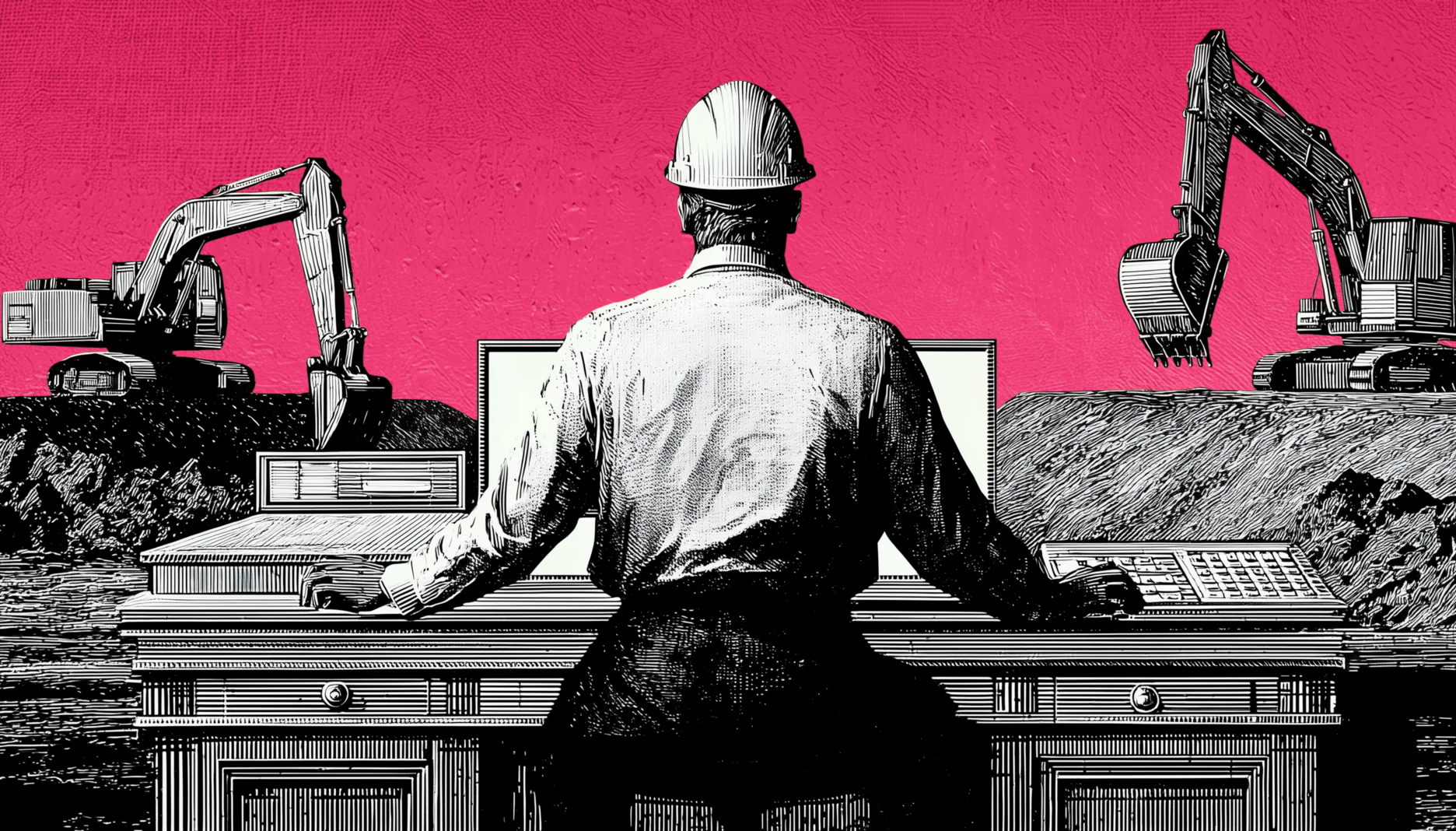 Software used to be built by armies of engineers. Now, with AI, Every runs all five of its products with single-person engineering teams. When I started building
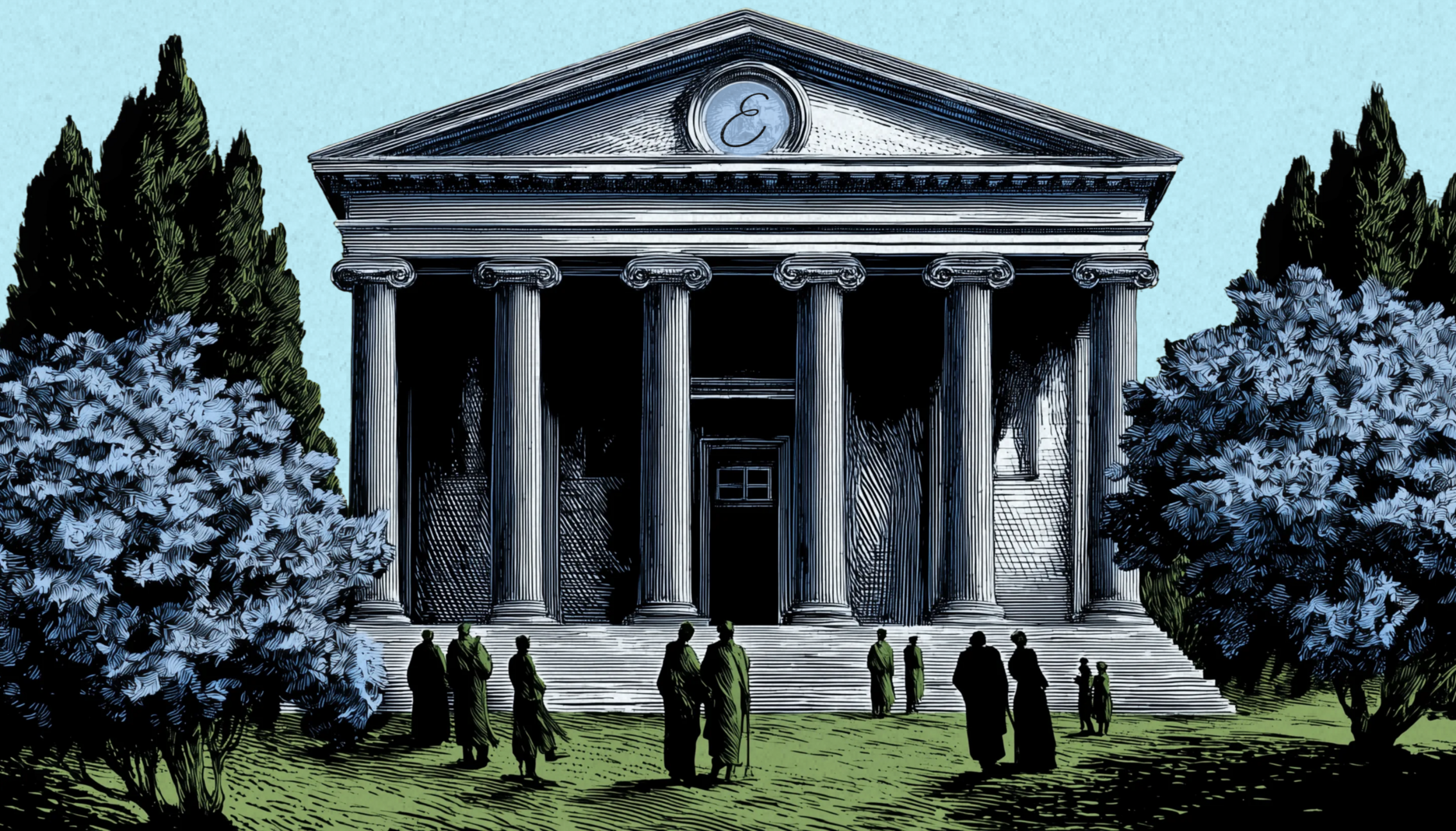 TL;DR: Today we’re launching

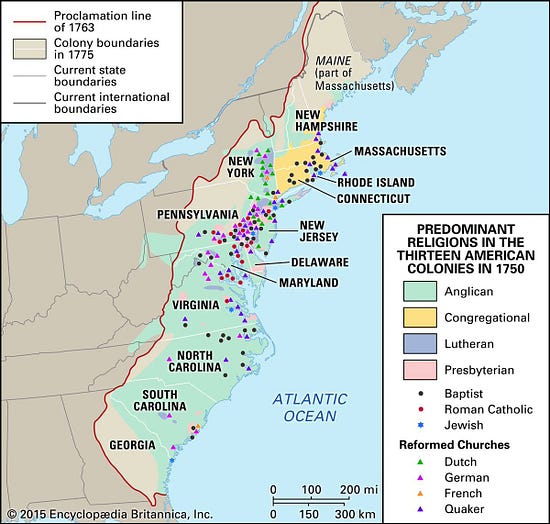
 Jeremy Giffon @jeremygiffon
Wallace Stevens turned down a tenured position at Harvard after winning the pulitzer to keep his insurance job. There's an argument to be made that the arts, like the humanities and politics, were never meant to be done in isolation from the worldly.
Jeremy Giffon @jeremygiffon
Wallace Stevens turned down a tenured position at Harvard after winning the pulitzer to keep his insurance job. There's an argument to be made that the arts, like the humanities and politics, were never meant to be done in isolation from the worldly.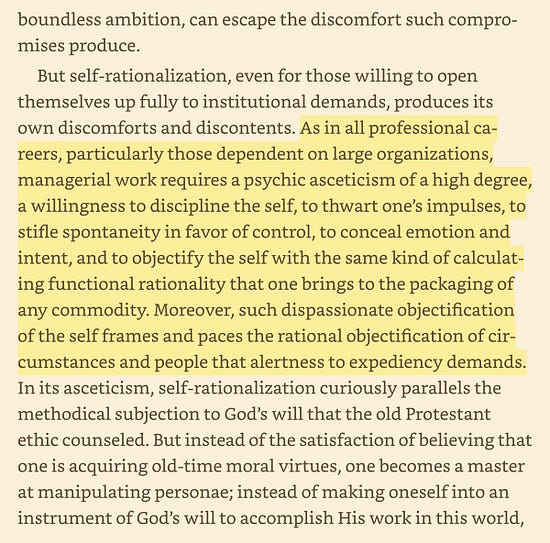
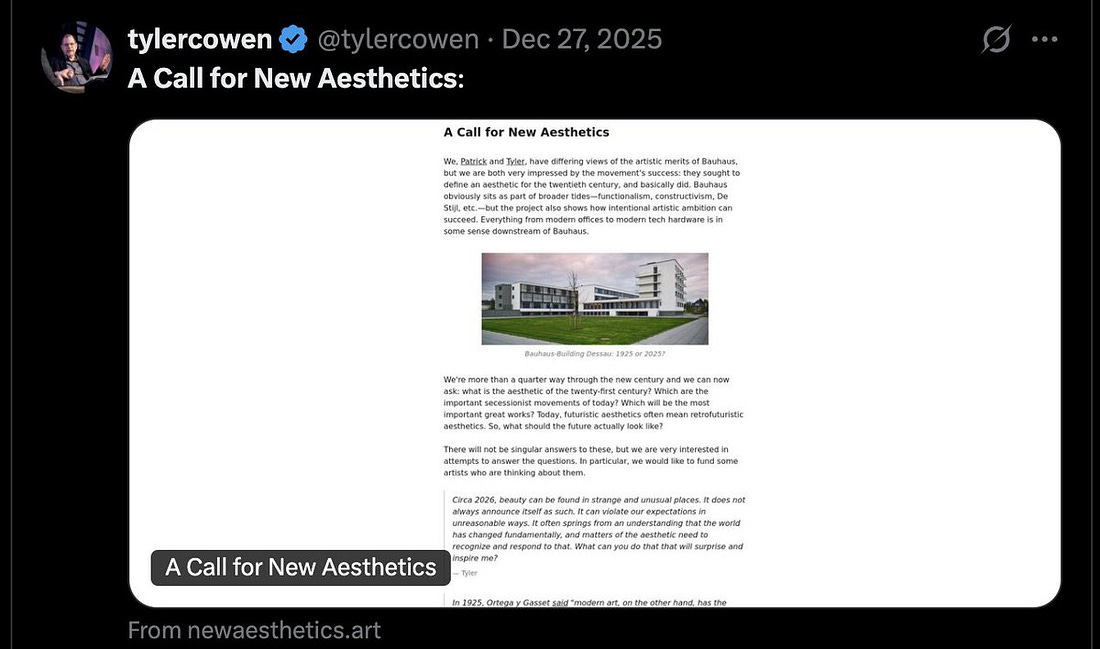


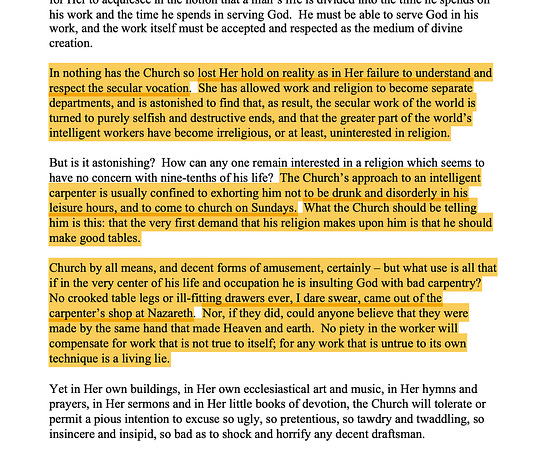 Patrick Collison @patrickc
Two conversations this weekend make me think that there's a vibe shift afoot in Silicon Valley around what one should work on and what is worthwhile. Culturally, it feels like the moment is ripe for new frameworks: • Davos expert morality is stale and discredited. • It's also
Patrick Collison @patrickc
Two conversations this weekend make me think that there's a vibe shift afoot in Silicon Valley around what one should work on and what is worthwhile. Culturally, it feels like the moment is ripe for new frameworks: • Davos expert morality is stale and discredited. • It's also Nico @Nico__Chuan
amazing what people throw away these days
Nico @Nico__Chuan
amazing what people throw away these days

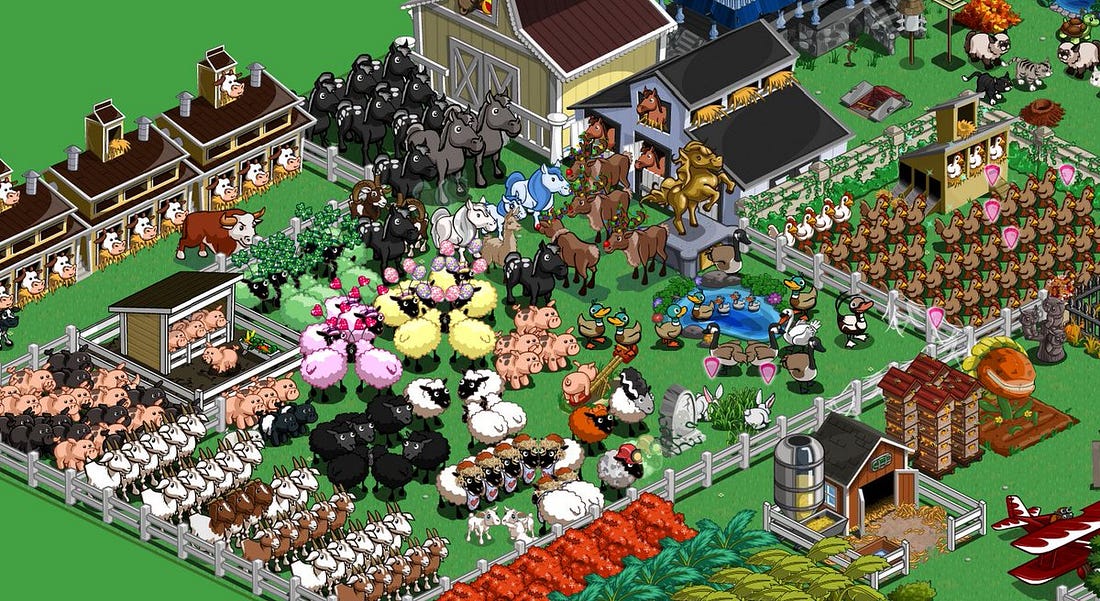
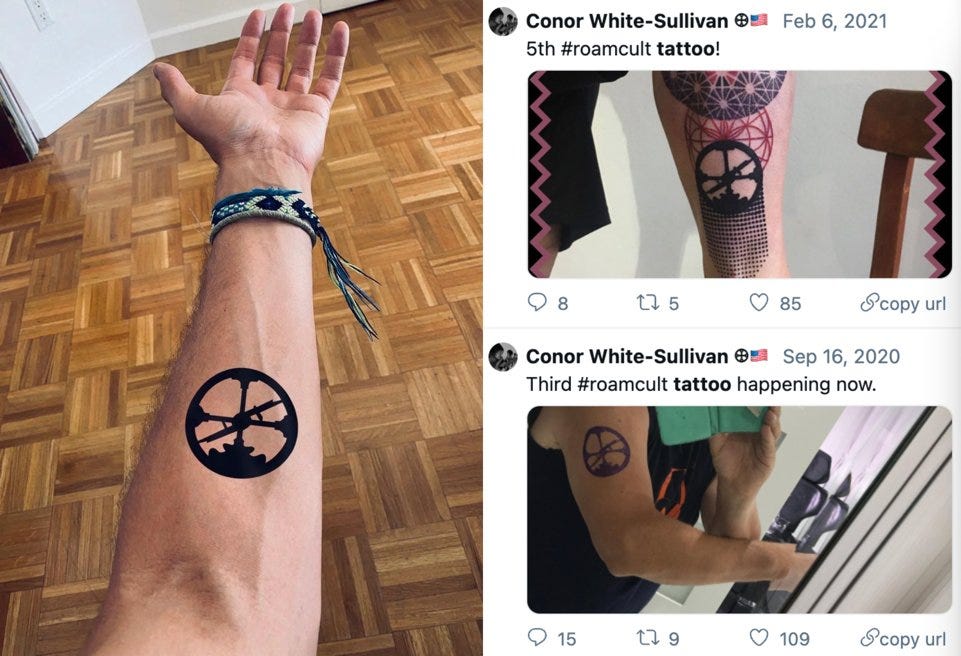
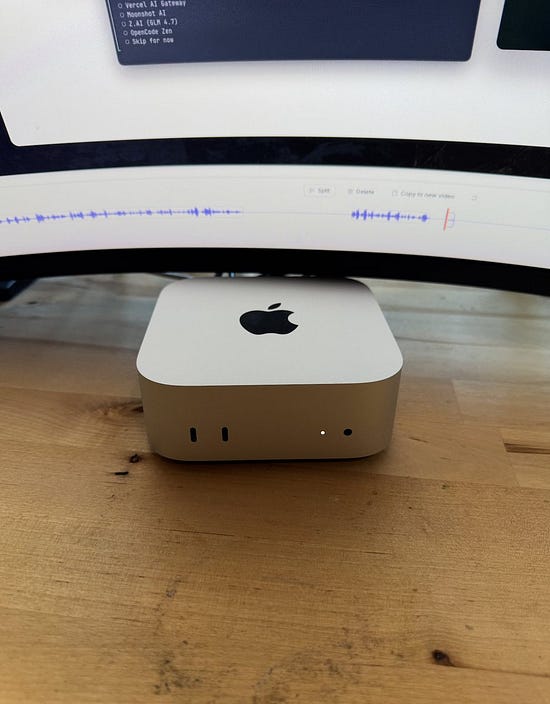
 TL;DR: As the head of financial services consulting at Every,Brooker Belcourt has helped take top hedge funds, asset managers, and research teams from AI-curious to AI-native. Today, he shares the reasons why the financial industry—one of the best placed to take advantage of AI—still isn’t getting the most out of this new technology. It doesn’t require investors to become coders, just proficiency with Claude Code and a clear view of the tasks to automate—lessons that apply to any industry.—

 TLDR:__Today we’re launching a new experiment:Proof , an agent-native markdown editor that lets you collaborate on documents with multiple humans and AI agents—and tracks who wrote what. It’s available now for


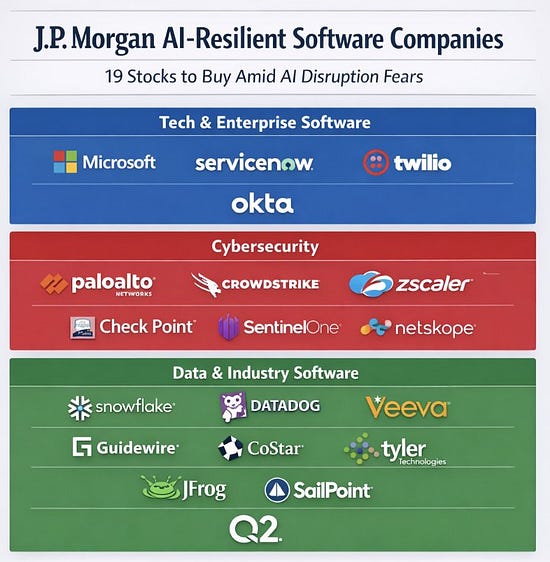

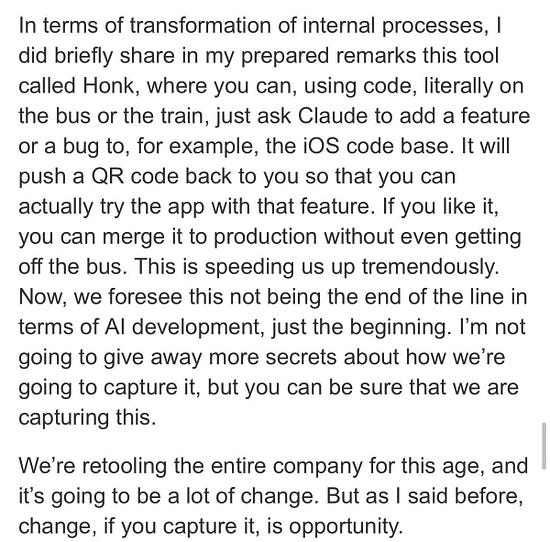
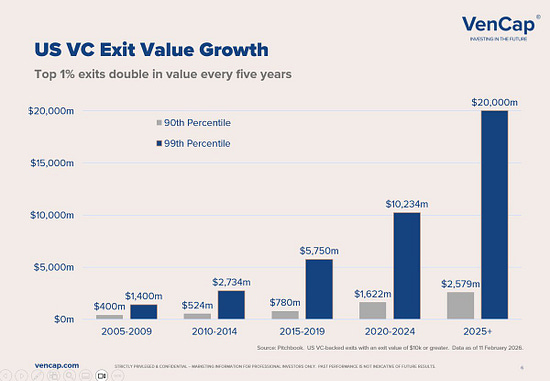
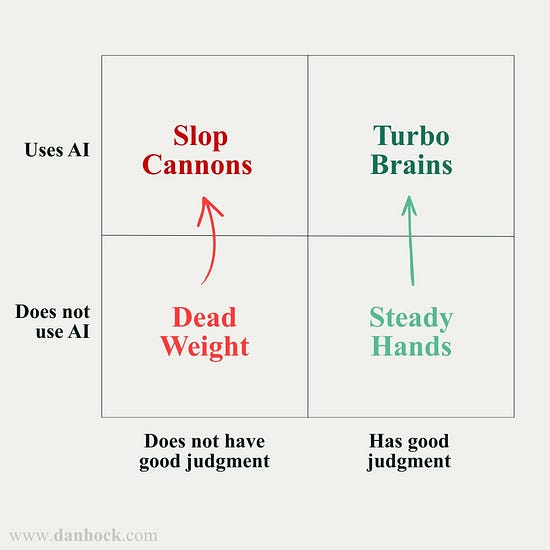
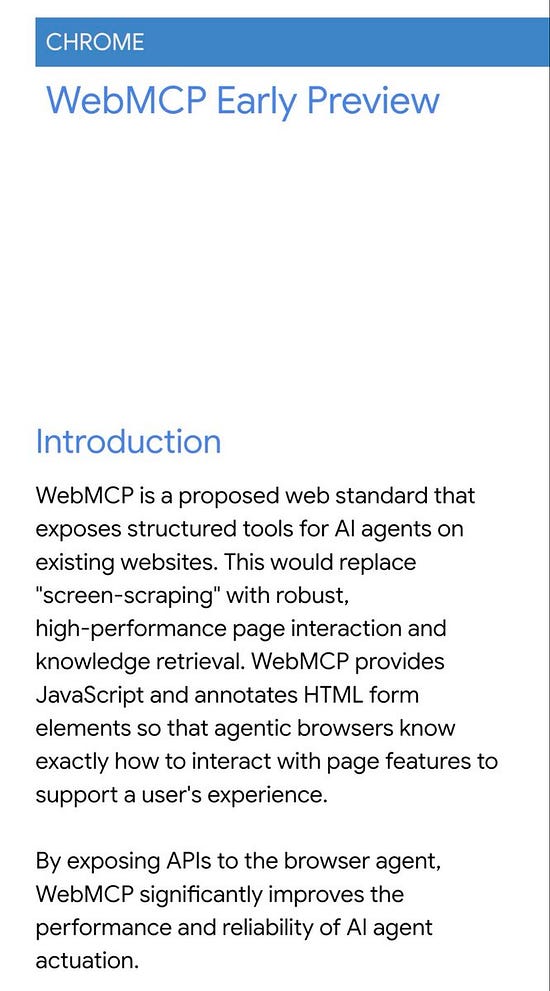
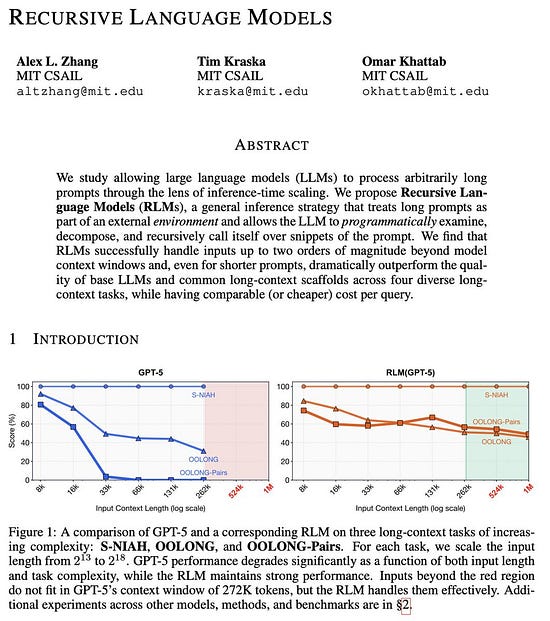
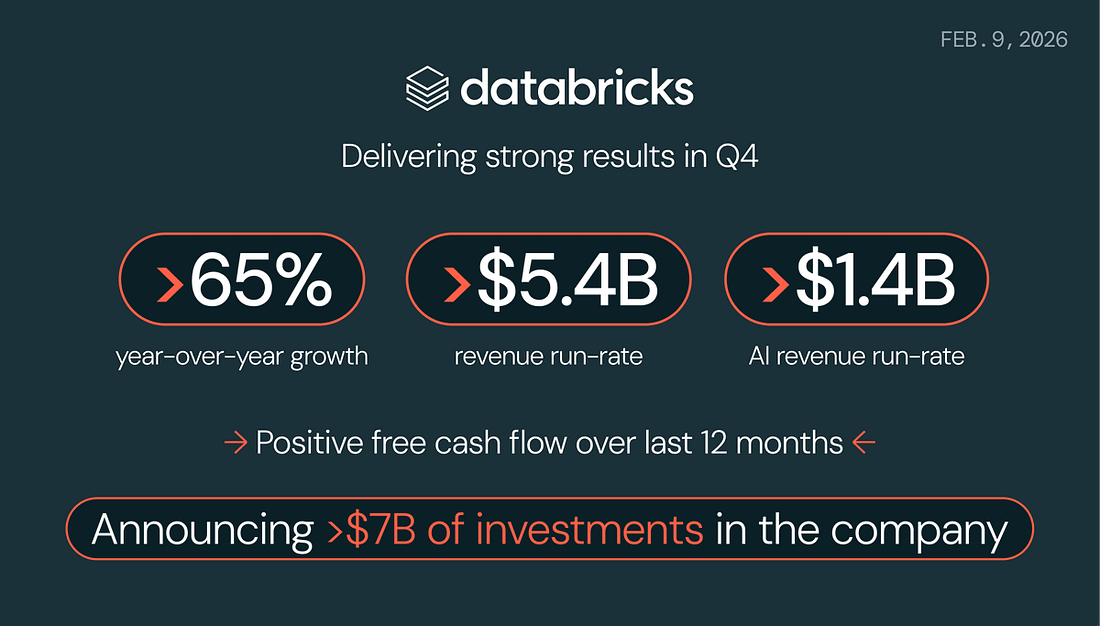
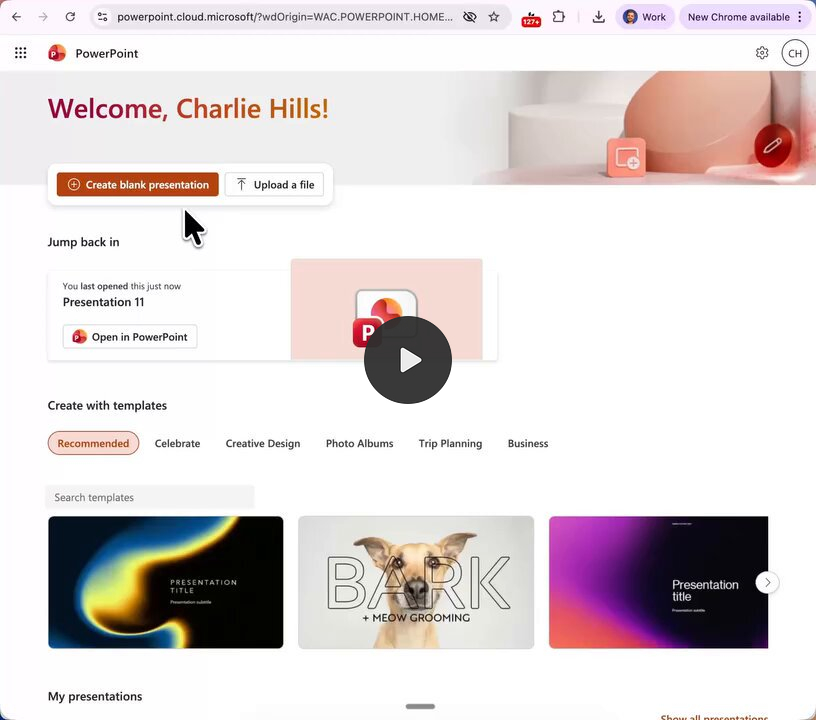
 Hello, and happy Sunday! This week, Every’s head of platform