The Planet

⬇ EPUB (19.2 MB) for your e-reader

In this issue

  1. Latest open artifacts (#18): Arcee's 400B MoE, LiquidAI's underrated 1B model, new Kimi, and anticipation of a bus…
    Interconnects by Nathan Lambert · Mon Feb 2 · 3 min
  2. Getting Started with Gemini Deep Research API
    philschmid.de · Mon Feb 2 · 1 min
  3. The Agent Client Protocol Overview
    philschmid.de · Mon Feb 2 · 1 min
  4. Vibe Check: OpenAI's Codex App Gains Ground on Claude Code
    Every · Mon Feb 2 · 1 min
  5. Vibe Check: We Tested OpenAI's New Codex App
    Every · Mon Feb 2 · 1 min
  6. Dissecting the Internet's Most Novel Creature
    Tomasz Tunguz · Mon Feb 2 · 1 min
  7. Join our expert workshop on OpenClaw for paid Every subscribers
    Every · Mon Feb 2 · 1 min
  8. Vibe Alignment
    AVC · Tue Feb 3 · 1 min
  9. What's next for coding agents?
    ben's bites · Tue Feb 3 · 8 min
  10. The Next Chapter of Every Consulting
    Every · Tue Feb 3 · 9 min
  11. We Trained an AI on a Board Game. It Became a Better Customer Support Agent.
    Every · Tue Feb 3 · 6 min
  12. Building Developer Infrastructure at Scale : Office Hours with Jim Everingham
    Tomasz Tunguz · Wed Feb 4 · 1 min
  13. 🎧 Every's Head of Consulting Just Automated Her Job
    Every · Wed Feb 4 · 9 min
  14. Why Nvidia builds open models with Bryan Catanzaro
    Interconnects by Nathan Lambert · Wed Feb 4 · 62 min
  15. The Other Leverage in Software & AI
    Tomasz Tunguz · Wed Feb 4 · 1 min
  16. Last chance to register for Every’s OpenClaw Camp—plus everything you need to prep
    Every · Thu Feb 5 · 1 min
  17. Vibe coding is old now
    ben's bites · Thu Feb 5 · 5 min
  18. Special discount code for Every
    Every · Thu Feb 5 · 1 min
  19. A new podcast from First Round: How the top 0.001% of scaleup execs operate
    First Round Review · Thu Feb 5 · 2 min
  20. How we'd choose between the brand-new OpenAI and Anthropic models
    Every · Thu Feb 5 · 1 min
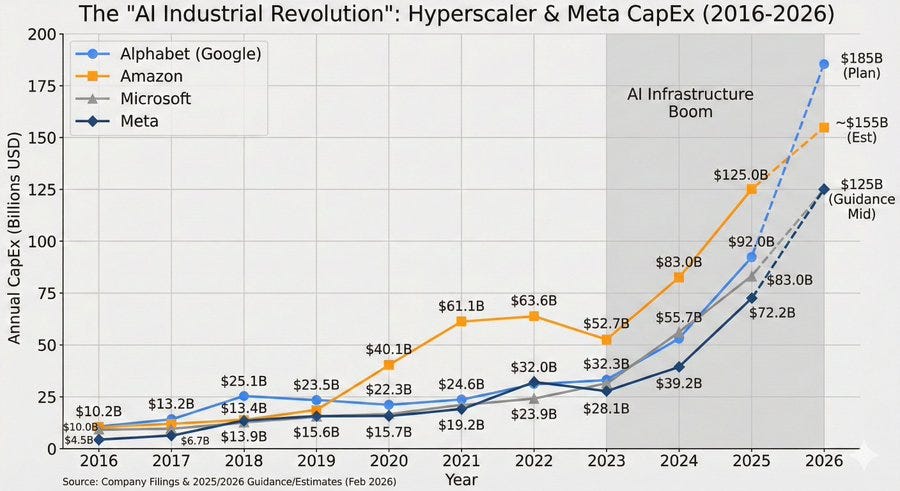
  21. Google's 52x AI Growth
    Tomasz Tunguz · Thu Feb 5 · 1 min
  22. Hacker Newsletter #781
    Hacker Newsletter · Fri Feb 6 · 7 min
  23. Clouded Judgement 2.6.26 - Software Is Dead...Again...For Real this Time...Maybe?
    Clouded Judgement by Jamin Ball · Fri Feb 6 · 13 min
  24. What Is Taste, Really?
    Every · Fri Feb 6 · 6 min
  25. Legibility is a brand to capital and brand is promises kept
    Yoni Rechtman · Fri Feb 6 · 6 min
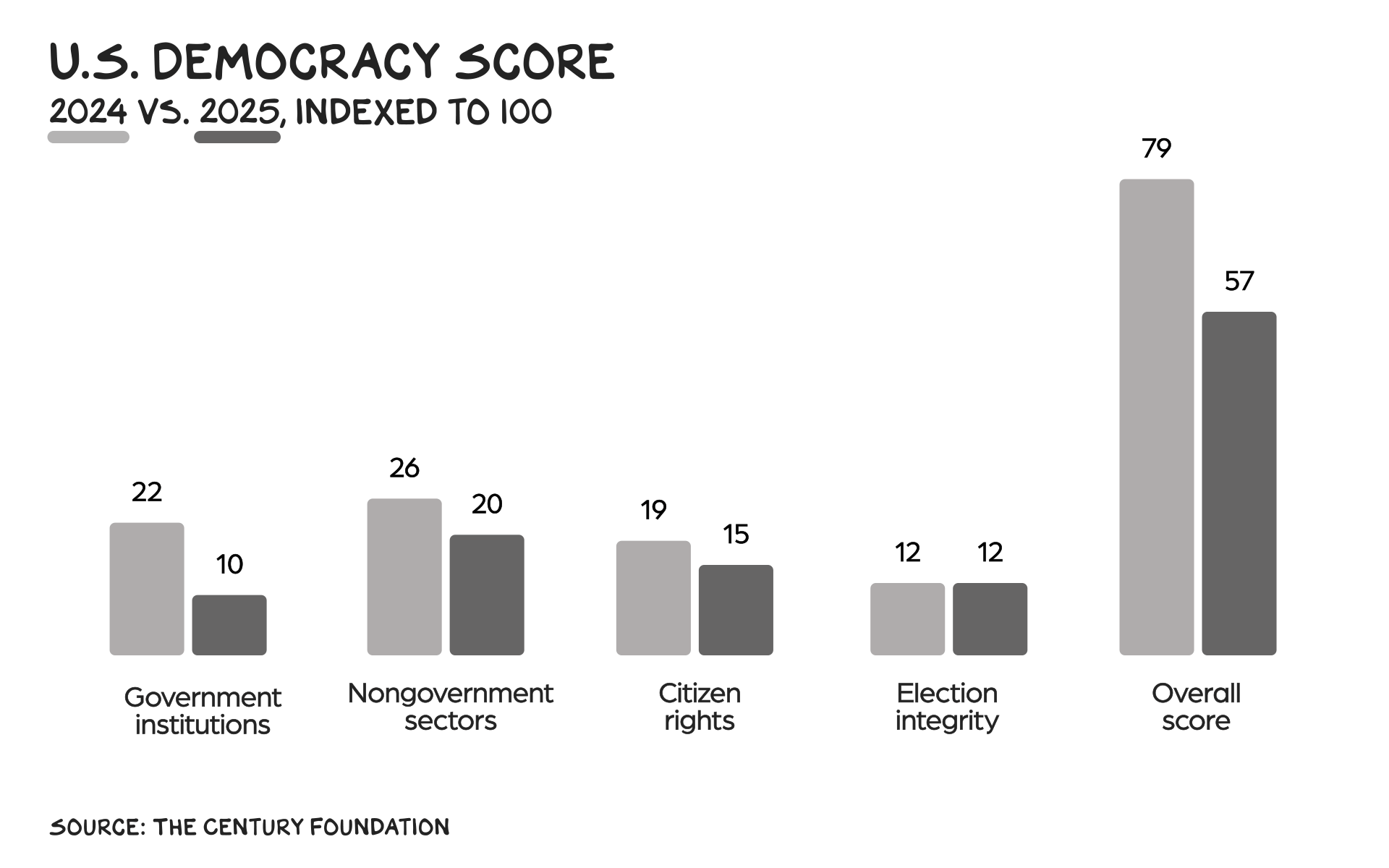
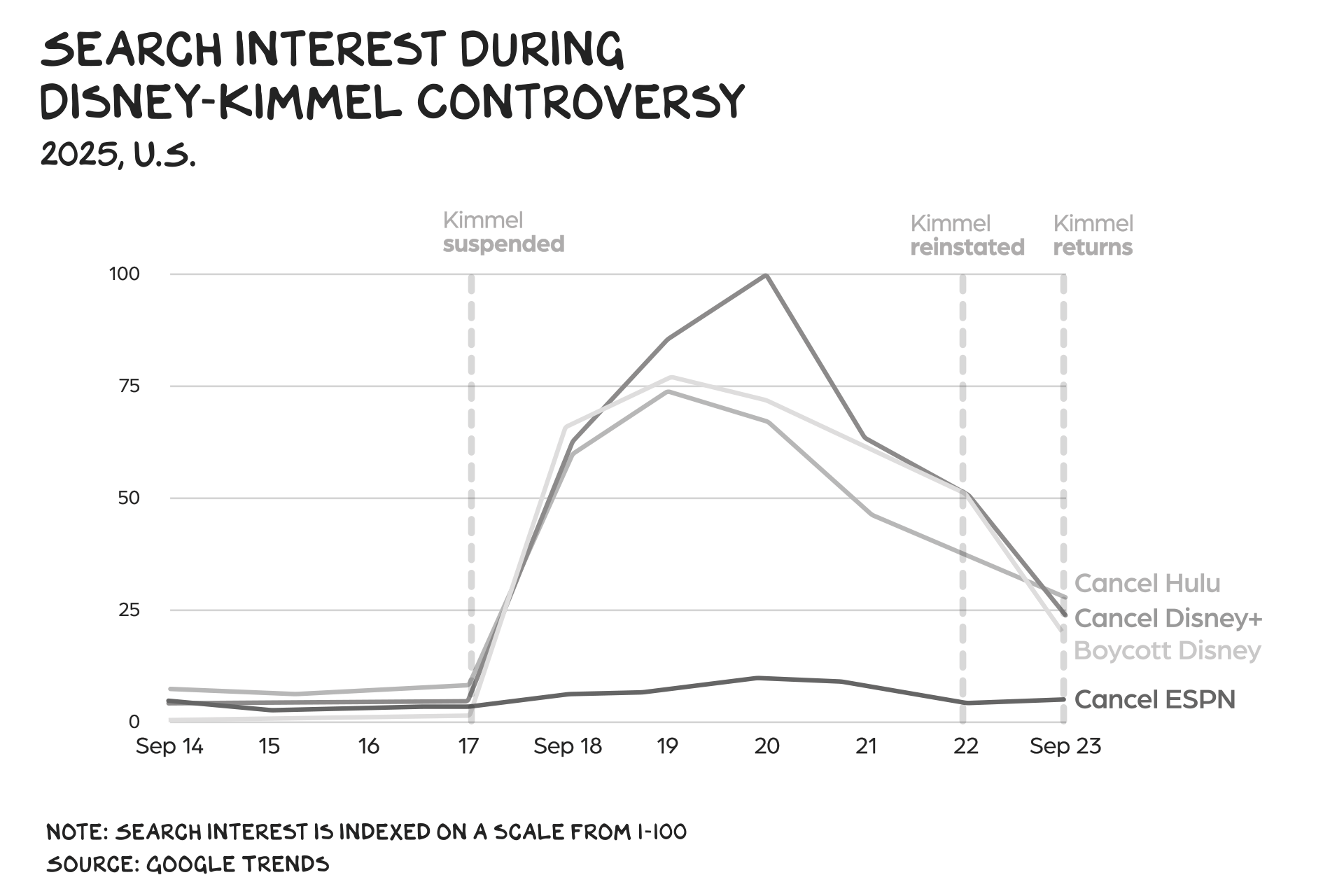
  26. Resistance Infrastructure
    Scott Galloway · Fri Feb 6 · 8 min
  27. How Markets Price AI Risk
    Tomasz Tunguz · Fri Feb 6 · 1 min
  28. What’s 🔥 in Enterprise IT/VC #484
    Ed Sim from What's Hot 🔥 in Enterprise IT/VC · Sat Feb 7 · 14 min
  29. Welcome to Minutes
    Will Manidis · Sun Feb 8 · 1 min
  30. The Ur-model Cometh
    Every · Sun Feb 8 · 7 min
  31. End Game Play
    Will Manidis · Sun Feb 8 · 8 min

Latest open artifacts (#18): Arcee's 400B MoE, LiquidAI's underrated 1B model, new Kimi, and anticipation of a bus…

Interconnects by Nathan Lambert · Monday, February 2 2026 · 3 min read · ↑ top

Tons of useful "niche" models and anticipation of big releases coming soon.

Florian Brand and Nathan Lambert

Feb 2| | ∙| Preview

January was on the slower side of open model releases compared to the record-setting year that was 2025. While there were still plenty of very strong and noteworthy models, most of the AI industry is looking ahead to models coming soon. There have beencountlessrumors of DeepSeek V4’s looming release and impressive capabilities alongside a far more competitive open model ecosystem.

In the general AI world, rumors for Claude Sonnet 5’s release potentially being tomorrow have been under debate all weekend. We’re excited for what comes next — for now, plenty of new open models to tinker with.

Our Picks

image

Arcee AI goes all-in on open models built in the U.S.

Jan 27

Models

Reading through the rest of this issue, we were impressed by the quality of the “niche” small models across the ecosystem. From OCR to embeddings and song-generation, this issue has some of everything and there really tends to be open models that excel at any modality needed today — they can just be hard to find!... Monthly extra roundups of open models, datasets, and links. Occasionally paywalled hot takes. Interconnects Discord Server.

Fetched links (7)

Getting Started with Gemini Deep Research API

philschmid.de · Monday, February 2 2026 · 1 min read · ↑ top

Fetched links (4)

The Agent Client Protocol Overview

philschmid.de · Monday, February 2 2026 · 1 min read · ↑ top

philschmid.de - RSS feed

RSS feed for my blog www.philschmid.de

Sunday 01 February 2026 12:00 AM UTC+00 The Agent Client Protocol (ACP) is an open standard abstracts the events and outputs of AI agents and provides a common interface for editors to interact with them. Similar to MCP but for agent to client (UI) communication.

Fetched links (4)

Vibe Check: OpenAI's Codex App Gains Ground on Claude Code

Every · Monday, February 2 2026 · 1 min read · ↑ top

Vibe Check

OpenAI nailed the interface. But it's built for hardcore engineering.

by Dan Shipper and Katie Parrott This is a free preview of a subscribers-only post. TL;DR: You’re getting our full Vibe Check on the new Codex app because you’re a paid subscriber to Every—thank you for your support. If you want high-level takeaways from our testing, explore our interactive site or read on for the complete analysis. We’re also hosting a livestream about the release on YouTube at 1 p.m. ET.—Kate Lee Was this newsletter forwarded to you?_Sign up to get it in your inbox. Anthropic has been spending more time in the AI spotlight recently, as even “non-nerds” are psyched about _Claude Code. Two weeks ago, I (Dan) wrote that OpenAI has some catching up to do on the coding front. Today, they’re announcing a step in the right direction. The company is shipping a Codex desktop app. The original Codex launched as a web app last May, three months after Claude Code. At the time, we deemed it best for techies, not vibe coders.

This post is for

paying subscribers.

Try for $1 Or, learn more.

Fetched links (7)

Vibe Check: We Tested OpenAI's New Codex App

Every · Monday, February 2 2026 · 1 min read · ↑ top

Vibe Check

Our hands-on review of the company’s desktop coding tool based on a week of testing

by Dan Shipper and Katie Parrott OpenAI just dropped a new Codex app—a desktop version of the company’s agentic coding app—and we put it through its paces. The verdict: It’s gold for senior engineers. Here’s what you’ll find on the free Vibe Check experience:

  1. Our high-level take on what the Codex app gets right
  2. A walkthrough of standout features: the sidebar, cloud-to-local sync, skills library, automations, and code diffs
  3. The full reach test ratings from our team (yes, the green/yellow/red scores)
  4. A replay of our live stream where we tested it in real time

Read the Codex Vibe Check Want the full breakdown? The detailed analysis—including how Codex stacks up against Claude Code, who should try it, and who should stick with what they have—is available exclusively for paid subscribers. Upgrade to unlock the full Vibe Check Join us at 1 p.m. ET for a livestream with Every’s team about our takeaways from a week of testing. —The Every team

Fetched links (15)

Dissecting the Internet's Most Novel Creature

Tomasz Tunguz · Monday, February 2 2026 · 1 min read · ↑ top

Fetched links (8)

Join our expert workshop on OpenClaw for paid Every subscribers

Every · Monday, February 2 2026 · 1 min read · ↑ top

Fetched links (7)

Vibe Alignment

AVC · Tuesday, February 3 2026 · 1 min read · ↑ top

Vibe Alignment cover image AVCFeb 3

Support

Michael Dempsey has a great framing for the secret sauce in the founder/VC relationship. He calls it "vibe alignment" in this excellent and far-reaching post about where we are in the startup/VC world right now.

It is certainly possible and probably quite common to build a successful company with an investor syndicate you don't relate to and don't like. But it is not fun.

The rare thing is to build a successful company with an investor syndicate you love working with. I've had the pleasure of doing this many times in my career. It is what I seek out. It is the primary thing I like about VC and startups. It is what keeps me engaged after all these years.

When vibe alignment happens between a founding team and their investor group, it is magic. It makes it easier to correctly make those five to ten hard decisions that determine the trajectory of a company.

As Michael points out in his terrific and timely post, the institutional revolving door nature of VC right now makes finding vibe alignment harder and many founders just opt for the best financial deal. That's entirely rational behavior.

But it takes all of the fun out of it, unfortunately.

Support AVCI am a VCShow you appreciate this writer, help support their work, and share in their growth over time by buying their writer coin.Support

Fetched links (5)

What's next for coding agents?

ben's bites · Tuesday, February 3 2026 · 8 min read · ↑ top

New UIs, lobsters and imagined worlds.

The newsletter for the technically curious. Updates, tool reviews, and lay of the land from an exited founder turned investor and forever tinkerer.

Hey folks,

Codex, OpenAI’s coding assistant, now has a macOS app. It’s not too different from other interfaces (GUIs) for terminal agents. It imports all your past sessions (from your local machine and codex web app) and has a dedicated place to one-click install skills and set up automations that run on a schedule. Free and Go users can also use Codex via the app now, and all other plans have 2x the limit for the next two months.

At first glance, it looks like many others out there, but it does have a very polished feel to it. And I think having an ‘Automations’ tab is going to be pretty powerful - if you could easily set up workflows for your agent every morning, give me a breakdown of my inbox, but first triage emails into these labels and archive xyz’ then I think that gets less-technical people down the rabbit hole of just how powerful agents can be.

Theo has things to say about it, and Simon has a breakdown of how things work behind the scenes.

“Unlike Conductor, Codex doesn't absolutely eviscerate my battery. It also doesn't require a worktree for every single thing I'm working on, which makes it much easier to use for most stuff :)” — Theo

“Automations are currently restricted in that they can only run when your laptop is powered on. OpenAI promise that cloud-based automations are coming soon, which will resolve this limitation.” — Simon

DeepMind played one of the aces up its sleeve - Project Genie. It’s an experimental research prototype that lets you create, edit, and explore virtual worlds. It takes prompts and refines them for “world building”, generates an image as the starting point and then uses Genie 3, the virtual world creation engine, to let you interact with the output. Currently limited to 60-second-long generations and 18+ adults in the US with a Gemini Ultra subscription.

xAI is now a part of SpaceX ,and xAI’s new video model, Grok Imagine (now at version 1.0), has created over a billion videos in the last 30 days.

Would you share a logo with another brand? No, so why share an AI voice? Amplified 2026: Voices’ Annual State of Voice Report reveals why enterprises are securing exclusive voice licenses for their AI voices. **See how leaders are using voice to create a trusted brand trademark.Download the report.

🦞 The lobsters are live

Clawdbot had another rebirth, under the name OpenClaw. Quick recap: it’s a highly autonomous personal agent that connects to your tools and a computer to do tasks. (I built my own from scratch, called bites - it’s not nearly ready for ‘prime-time’ but the code is open source)

Setting it up is not easy, and a bunch of options exist now like SimpleClaw (one click deploy), moltwoker (uses cloudflare), another via Composio and with some help, even on your mac within a container (i.e. a bit safer). Vercel and Docker are both pushing their Sandbox offering to run it securely.

My feed is full of tweets about it: a sample of tasks for your bots, or giving them access to buy using USDC. There’s nanoclaw - a minimal, hackable reproduction of it using apple containers for sandboxing/security. Clawhub is a place to upload AgentSkills bundles, version them like npm, and make them searchable. and although it has dummy data, there’s even a craigslist for the lobster.

X has been going bananas, and everyone is jumping on the bandwagon. Many posts are slop, but here are a few decent ones:

A lot, innit?

But the breakout story of this saga is:

Moltbook – a reddit-like site for these clawd bots to chat with each other.

A post on there had the bots discussing encrypting their messages so humans can’t read it and you can imagine it’s breaking news and freaking everyone out. Balaji is not so freaked out about it but Andrej Karpathy, Scott Belsky and Jack Clark all have valid points about these “networks of autonomous AIs”.

The maker of Moltbook is expanding though, with a 22 min interview on TBPN and a developer platform to build on top of MoltBook.

Too much? Just give this post from Simon a read → All you need to know about Moltbook.

🌐What I’m consuming

Image generated using Nano Banana Pro

⚙️ Tools and demos

🥣 Dev Dish

🍦 Afters

That’s it for today. Feel free to comment and share your thoughts. 👋

Fetched links (5)

The Next Chapter of Every Consulting

Every · Tuesday, February 3 2026 · 9 min read · ↑ top

On Every

We've helped finance and tech companies save hundreds of hours—here's the approach that works

by Natalia Quintero Today, theEvery consulting practice is announcing specialized playbooks for tech and finance companies to go from AI-curious to AI-native. Our consulting team has worked with hedge funds and investors with combined assets under management of over $100 billion, and has trained teams at top tech companies using a methodology that’s earned more than 7,000 stars on GitHub. Below, Every’s head of consulting Natalia Quintero shares what we’ve learned working with these companies—and how any team can get started.—Kate Lee For the past year and a half, we’ve been doing AI consulting for companies like the New York Times , the hedge fund Walleye Capital, and mental health tech company Headway. What we’ve learned has reshaped how we think about AI adoption—and what it takes to get results. When we started, we noticed that something fundamental was missing in how professionals were using AI. These tools had drastically improved our own productivity across the editorial, product, and consulting teams, from synthesizing notes and automating meeting actions to extracting value from messy data. But the companies reaching out to us were at a loss for where to get started, or whether AI would even be worth the effort. So we decided to share what we’d learned from using AI every day. We took on a small group of clients in finance, media, and tech to help them implement AI in their workflows. A year later, we’ve spoken to over 100 companies about their needs and frustrations, and have worked closely with nearly two dozen organizations. The practices we’ve been teaching have changed as fast as the tech. A year ago, our training focused on prompt engineering, engineering inside of the ChatGPT user interface, and developing robust Projects that referenced up to 20 documents. Now, while those principles and features are still important, they feel ancient. Today, we’re building custom plugins that connect AI to proprietary data, teaching teams to use Claude Code for end-to-end automation, and deploying agents that run entire workflows without human intervention. The technology has advanced rapidly, and we’ve been developing frameworks to match: compound engineering, which has been recognized by the creator of Claude Code, and agent-native architecture, our guide to building products in this new era. Our team of applied AI engineers, designers, analysts, writers, and editors are living this future every day. And our experiences have confirmed our long-held theses: We’re moving rapidly to an allocation economy, where individuals won’t be judged by the limits of subject matter expertise, but instead on how well they can allocate and manage AI resources to get work done. The key skills needed to get the most out of AI are the same skills good managers possess—goal setting, clear communication, effective feedback, and constant learning. Today, we’re unveiling the next chapter of Every Consulting, and to mark this, we’re sharing how we see the state of AI adoption at companies today.

Write at the speed of thought

The four levels of AI maturity

Many assume that successful AI implementation requires jumping straight from zero to full automation. Even partial automation can deliver incredible productivity gains. I grade our clients on a spectrum of automatability—how much benefit a company can get from AI. This doesn’t mean replacing jobs. More often, it entails adding capacity to existing employees by automating well-defined tasks and repetitive workflows using documents and data. And as we have more easily-defined tasks, repetitive workflows, and data handy, they move up the learning curve. Here is how we see the different maturities of AI usage across organizations:

Level 1: ChatGPT for tasks

You’re using ChatGPT or Claude mainly in chat. You summarize things, write drafts, or generate ideas. You use it almost as a Google Search replacement. (This is a great start, but if this is you, you’re just scratching the surface. Often people stuck at level 1 don’t realize the tasks that they could automate. It’s hard to identify problems to be solved when you live with them every day.)

Level 2: Custom agents—AI tailored to workflows—with permissions

You’ve built some custom prompts or GPTs for recurring tasks. You’re still asking them to confirm what they’re doing. You feel like you’re managing a junior intern.

Level 3: Custom agent does a defined job

Your custom agent no longer asks for permissions. It performs complex tasks like research, data analysis, and project management. The agent can do multiple tasks simultaneously.

Level 4: Custom agent is your screen

The custom agent takes over your development environment, and is all you see. Instead of looking at your inbox or Google Docs, you’re working completely from an environment like Claude or Claude Code You leverage AI skills, have a cross-team GitHub repository to which non-technical team members contribute, and do very little of the “work” that you used to do. Even in just the past few months, it has gotten easier for people with no prior technical experience to use agents, which should accelerate adoption. Most companies are still at level one, but want help getting to level four. AI usage is a skill, and like with any skill, it takes time. Companies or teams at level four are rare. They embrace experimentation and often operate in small, nimble environments where they are not bound by the compliance that exists in large companies. It’s also not always obvious which teams to start with in any given company.

No two industries are the same

Each industry concentrates its highest value work in different departments. In tech, this work often sits with the engineers. In a financial firm, it’s the investors. But the best AI implementation plan doesn’t always start there. In one fast-growing hedge fund, we found that enabling the back office— compliance, operations, recruiting, and administrative teams—with AI would provide the biggest gains. The company was scaling rapidly, and back-office bottlenecks were limiting how quickly the front office could grow. Additionally, every industry has different levels of documentation, which determines what can be automated. Tasks that can be documented—like generating a report from data—are easy to automate. Tasks that can’t—like deciding what makes a good investment—resist it. Here are a few of the tasks that we have automated across different roles and industries: Investment professionals: One hedge fund client wrote out its investment philosophy—what they care about and how they evaluate companies—as a structured skill. Using our compound engineering plugin, they now screen companies and analyze earnings transcripts, financial statements, web data, and regulatory filings in parallel, producing a coherent investment report in minutes. The same work previously took a week. Researchers and analysts: We have helped investors at private equity firms automate creating investment memos. With the right inputs—documented processes and proprietary data—AI turns two weeks of analysis into a few hours. Using Claude Code and custom skills that encode their investment criteria, analysts can now pull data from multiple sources, run preliminary analysis, and generate draft memos automatically. Content teams: We built one of the largest media companies in the world a Claude Skill a tool that captures their brand voice, taking rough drafts to editor-approved copy in minutes. Product teams: Product teams want to automate sorting through user feedback, spotting feature requests, and organizing scattered meeting notes. Plus, when they can quickly vibe code throwaway prototypes to “show rather than tell” what needs to be built, engineering teams have an easier time building and shipping products. With Claude Code and compound engineering, even non-technical product managers can build working prototypes and automate the grunt work of feedback synthesis. Most importantly, success looks different for each company. For example, our work with a 70-person recruiting firm has saved recruiters five to 10 hours per person, per week. Meanwhile, an investment firm is saving 50 hours per investment memo. In each case, effective AI implementation solves a painful, time-consuming problem. Documenting the tedious, time-consuming tasks that are also high-value is the best way to start.

The only consultancy working with finance and tech firms

We’ve chosen to focus exclusively on finance and technology firms—industries where the data is rich, the stakes are high, and the potential return on investment from AI implementation is enormous. Our finance vertical is led by Brooker Belcourt , who built the finance arm at Perplexity and previously founded and sold an investment tech company after starting his career at Goldman Sachs, Coatue, and Citadel. If that’s you, we’d love to talk. Get in touch In the meantime, here’s my recommendation for any team that wants to get started with AI on their own. Write down a list of your daily tasks, and note which ones you’d assign to a smart intern. Use Monologue to write a detailed job description for how you’d delegate this task. If you’re stuck, ask an LLM to interview you. This is your master prompt. To get to level one, paste this prompt into ChatGPT. To get to level two, add additional examples and make it a GPT. To get to level three, turn it into a skill in Claude. And to get to level four: Run it as a scheduled task on Claude Code. If you find yourself wanting some help, reach out to us. We have a four-step process:

  1. Set a strategy: We survey where you’re at: your AI baseline.
  2. Build workflows: We build tools that automate the parts of your business that are currently within reach.
  3. Train teams: We help you build an AI workforce.
  4. Support: Afterwards, we stick around as the chief AI officer.

Whether or not you’re working with us, we’re excited to hear about how you’re using AI. And if you need guidance, we’re just an email away. Want to learn more? Join ourconsulting information session on February 13. Or if you’re in finance, join our March 13 workshop to learn how we use Claude Code to automate earnings previews, reviews, valuations, and more. Every is accepting a limited number of consulting engagements for 2026. If you’re interested in working with us,get in touch.

Fetched links (29)

We Trained an AI on a Board Game. It Became a Better Customer Support Agent.

Every · Tuesday, February 3 2026 · 6 min read · ↑ top

Playtesting

Games teach transferable skills—to humans and AI alike

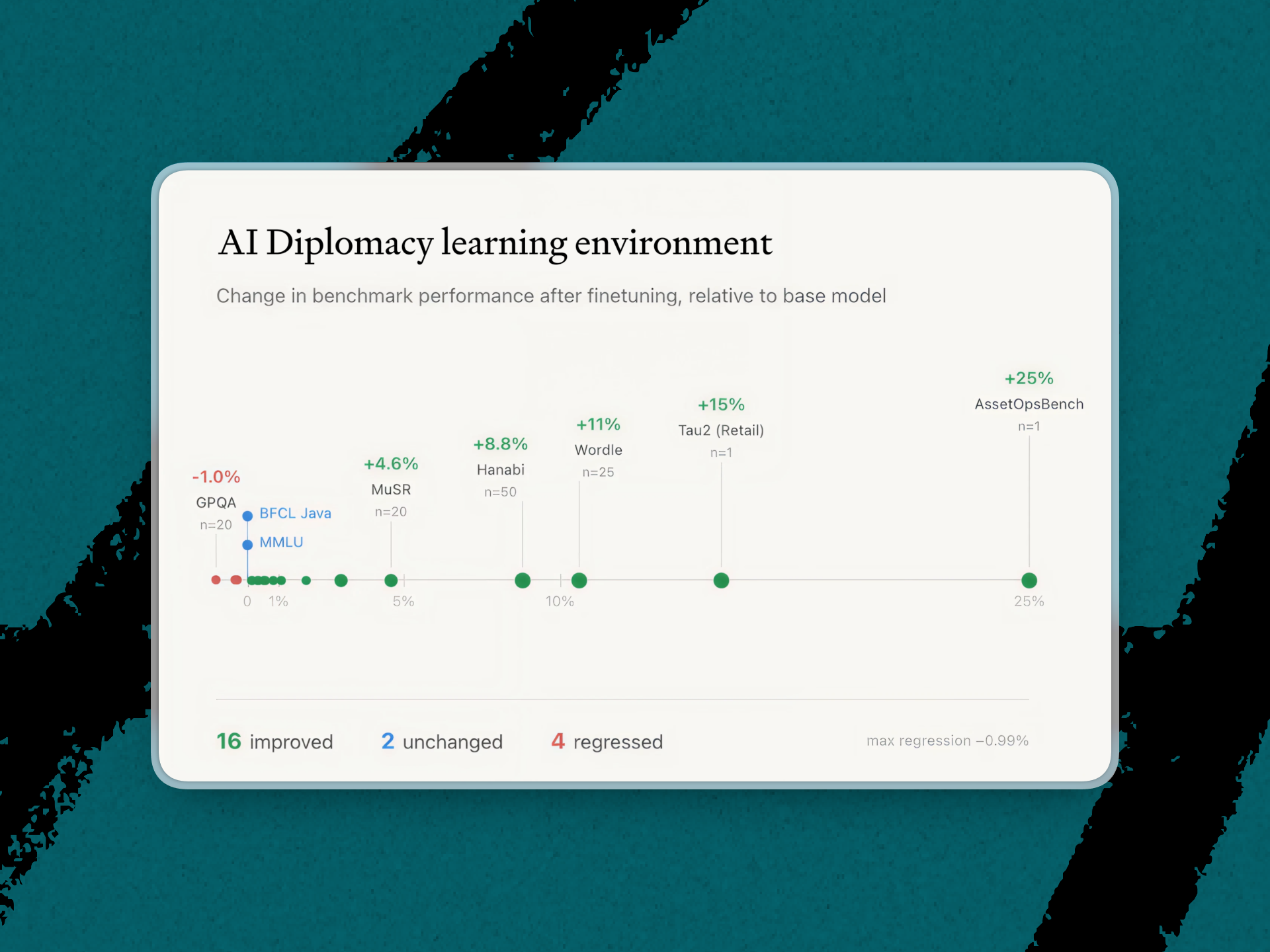
by Alex Duffy In this installment of Playtesting , Alex Duffy shows why games might be the smartest approach to AI training right now. As the cofounder and CEO of Good Start Labs, he’s been exploring how game environments can improve AI capabilities across unexpected domains. His latest finding is surprising: Fine-tuning a model on the strategy game Diplomacy improved its performance on customer support and industrial operations benchmarks. Read on to learn why games generate the kind of data and behaviors that make AI better at the serious stuff, and what the Every team has learned from classics like StarCraft .— Kate Lee__ It’s my job to make AI play games. One board game we’ve focused on at Good Start Labs has been Diplomacy , a World War I simulation reportedly played by John F. Kennedy and Henry Kissinger. There’s no dice and no luck. As everything shifts around you, all you can rely on are persuasion and strategy. When we fine-tuned the Qwen3-235B model—an open-source model developed by the team at Chinese cloud computing company Alibaba Cloud—on thousands of rounds of Diplomacy, we found an over 10 percent improvement in performance on other games such as the card game Hanabi and word game Wordle. But we were encouraged to see that these improvements translated to other realms. The fine-tuned model also did better on Tau2, a benchmark that tests how well AI agents handle customer support conversations, and AssetOpsBench , IBM’s benchmark for industrial operations like equipment monitoring and maintenance. It’s not a big leap to believe that improvement in one game could boost the model’s performance on others. But how does understanding WWI strategy make a model better at helping someone change their airline reservation or monitor equipment? Simple: Games reward specific behaviors. When you get good at those behaviors, they show up elsewhere. When I asked my colleagues at Every what games had taught them, everyone had similar experiences. “ StarCraft taught me how to cook,” Every’s head of platform Willie Williams tells me, recalling the high-speed chess-like game. “You have things that take different amounts of time, and you want them to land at the same time.” Our senior designer, Daniel Rodrigues , learned English from Pokémon before any classroom. AI editorial lead Katie Parrott became a more systematic thinker from board game mechanics and applied it to designing AI workflows. This transfer of skills from games to other domains works for AI, too—and we can measure it. Diplomacy trains context-tracking, shifting priorities, and strategic communication. Customer support, where information is often incomplete and requests shift, needs the same capabilities. We trained our model on Diplomacy in a reinforcement learning environment where you can clearly score whether the AI did something right. Labs are racing to build these kinds of environments because they do something that feeding the models static data can’t: They give models feedback on their decisions, teaching them to strategize, not just recall facts. When you train a model on text from the internet, it learns to predict words. If you train it in an environment with goals and feedback, the model starts to develop skills that look remarkably like strategy. It’s a glimpse of where AI training is headed: less scraping the web, more learning by doing. When fine-tuned in the Diplomacy learning environment, the Qwen 235B model improved significantly on certain benchmarks unrelated to gameplay. (Graph courtesy of Alex Duffy.)When fine-tuned in the Diplomacy learning environment, the Qwen 235B model improved significantly on certain benchmarks unrelated to gameplay. (Graph courtesy of Alex Duffy.)

Write at the speed of thought

The game is the curriculum

“You become good at whatever the system rewards,” Every’s AI& I producer Rachel Braun tells me. Diplomacy rewards tracking context, planning responses, and navigating shifting alliances—exactly the capabilities with which labs like Anthropic, OpenAI, and DeepMind are trying to imbue their models. It’s also why Arcee, a U.S.-based AI lab that develops open-source models, is using our Diplomacy environment to train its Trinity models. That includes its 400 billion parameter flagship Trinity Large models, one of the largest open-source model families from an American lab. Because it’s open-source, people can build on top of it, adapt it to their problems, and make it better for everyone else. What Arcee and other labs are betting on is a second additional way to improve AI—not by making models bigger, but by training them differently after they’re built. Instead of just feeding them more text to read, they’re putting models in game-like situations where they practice tasks, get feedback on what worked, and develop skills they can apply elsewhere. The next big leap will come by combining learning by doing with ingesting more data. AI researcher Andrej Karpathy put it this way : By training models in multiple games and tasks where you can score success, what are known as verifiable tasks, “the LLMs spontaneously develop strategies that look like ‘reasoning’ to humans.” The environment becomes the models’ curriculum, and whoever designs that curriculum shapes what the model becomes good at and how.

The game is also the exam

But games don’t just train models; they generate data no one else has. Our AI agents have played hundreds of thousands of rounds of the party game Bad Cards alongside 2 million real users. In the game, players get a prompt—something like, “What’s the secret ingredient in Grandma’s cookies?”—and compete to submit the funniest answer. Our agents pick punchlines and learn from the votes, generating data that shows people’s preferences for humor shift over time. That’s data that can’t be scraped from anywhere on the internet. What users want from AI shifts faster than tests can measure, so static benchmarks become outdated quickly. Crowdsourced benchmarking project LM Arena just raised $150 million on this premise: The team is building an open platform for anyone to evaluate AI models by collecting feedback from human beings at scale. Games are a natural fit for this continuous evaluation. They generate large amounts of data about real preferences, continuously refreshed. As more people interact with AI through play, they learn how these tools work, but their feedback—on what’s funny, for example—makes the next model better.

From StarCraft to the frying pan

Willie didn’t set out to learn cooking from StarCraft —he was trying to win. But the skills he learned showed up in his kitchen anyway. AI development is exhibiting the same pattern. If you set a clear goal, the skills to reach it will follow. Only people can define what those goals should be: what counts as a good decision, what’s funny, and what matters. That’s subjective, inherently human work. Games are where we focus because they turn fuzzy goals into scorable outcomes—exactly what models need to learn. Diplomacy is just one game among thousands. Each one teaches something different, and we’re just beginning to discover what translates—how war strategy can help customers, or when science-fiction video game skills will show up in the kitchen. We’re off to a good start.

Fetched links (25)

Building Developer Infrastructure at Scale : Office Hours with Jim Everingham

Tomasz Tunguz · Wednesday, February 4 2026 · 1 min read · ↑ top

Fetched links (3)

🎧 Every's Head of Consulting Just Automated Her Job

Every · Wednesday, February 4 2026 · 9 min read · ↑ top

AI & I

Natalia Quintero on why resources and fancy tools don't predict success, the power of internal AI champions, and building Claudie—the AI that handles her project management

by Tom Matsuda Watch on YouTube Natalia Quintero. TL;DR: Today, we’re releasing a new episode of our podcast AI& I .Dan Shipper sits down withNatalia Quintero , Every’s head of consulting, about what she has learned from helping companies adopt AI and how the best stay ahead. Their conversation follows Every Consulting’s announcement of specialized playbooks for tech and finance companies to go from AI-curious to AI-native. Watch onX or YouTube, or listen on Spotify or Apple Podcasts. Plus: Every is hosting a 90-minute session for paid subscribers about OpenClaw on Friday at 12 p.m. ET. The event will feature AI builder and author Nat Eliason , and we’ll cover getting it installed, our most valuable use cases at Every, and what’s next for always-on AI. Most New Year’s resolutions don’t make it past February. The gym membership goes unused. The meal prep containers gather dust. The journals go unwritten. Natalia Quintero ‘s January commitment sounded equally doomed: waking at 6 a.m. every day to vibe code with AI. But four weeks later, she is still going and calls herself a “bonafide vibe code addict.” As the head of AI consulting at Every, it also mirrors what Quintero has observed across the companies she works with: The people and organizations making the biggest leaps with AI aren’t the ones with the most resources or the fanciest tools. They are the ones who give themselves the time and space to experiment. She’s had a front-row seat to how the world’s top companies approach AI adoption, having spoken to over 100 companies about their needs and worked closely with nearly two dozen organizations, including the New York Times and the hedge fund Walleye Capital. In this episode of AI& I, she tells Dan Shipper about the importance of play in AI adoption and the project management agent she built that has saved her 14 hours a week. Here is a link to the episode transcript. You can check out their full conversation: Here are some of the characteristics they see in the most AI-forward companies:

1-There is a coordinated effort from the top

Natalia says that several key characteristics separate the companies thriving with AI from those floundering. The first is simple but non-negotiable: Leadership must be all in. “For AI to be a high-leverage tool at any given company, it needs to come from the top down,” she says. This is fundamentally different from how companies have historically adopted software, where company technology chiefs might just purchase a software program with the hope that employees use it, Natalia explains. Dan agrees. He says the companies going the furthest have CEOs deep in ChatGPT and Claude Code. He cites Shopify CEO Tobias Lütke —who famously used AI to create an HTML-based viewer for his own MRI scans during his weekends—as an example. He says that an organization’s ability to adapt AI is directly correlated with its chief executive’s AI skills: “You will probably go as far as your CEO has gone. It’s not something the CEO can delegate.”

2-They empower AI early adopters

The second critical pattern that Natalia and Dan see among successful adopters of AI is that those companies identify and empower internal AI champions. “Inside of any organization, there are people who are just natural early adopters,” Shipper notes. “Your job as an executive who’s leading your org is to identify those people and spread what they know and elevate their status so that they can pave the way for everyone else.” One of Natalia most striking examples of this in practice comes from an Every client in the private equity industry. Natalia worked closely with Jonathan, a partner at the firm who not only has technical knowledge of AI but also understands the people dynamics around AI. By this, she means that he understands that AI adoption diverges across teams in an organization, depending on how much capacity and support they have to experiment with new technologies. This is a unique combination of skills, she says. Natalia and Every’s consulting team worked with Jonathan as he sat down with every investor at his firm and mapped out all the tasks they performed—from research to diligence to market mapping to portfolio management—in granular detail. This kind of mapping is one of the key steps in determining what tasks can be automated with AI and how. This helped Every and the client build “a very, very detailed view of what it looks like at this firm for an investor to do their job,” Quintero explains. They then identified high-leverage opportunities to apply AI to those specific workflows. One of the most time-consuming tasks for the private equity client was sifting through investment thesis materials they’d collected for over a decade to apply their current investment strategy to potential new opportunities. By connecting the right sources of data to ChatGPT and then funneling it through a set of custom prompts, they were able to produce a solid draft of an investment memo in 30 minutes compared to a previous time frame of three weeks. “That’s only possible when you have someone on the inside who understands all of the elements,” she says.

3-They give people creative space to experiment

The private equity example also underlines another common pattern in successful AI adoption: Employees and leadership need to have the space to “play” with the technology. “Having that creative space is very, very counterintuitive to the way that we usually work,” Natalia says, referring to knowledge workers. “How much of our time is really spent in traditional jobs just figuring out if there’s a new way to do things?” Natalia fell into the very trap she often sees with clients at the end of last year. Her days were packed with meetings and client work, leaving no time to explore new AI tools. “I didn’t really have time to play with a lot of these tools,” she admits. To combat this, Natalia and Nityesh Agarwal , an Every engineer, have been starting their workday at 6 a.m. every day to vibe code and experiment. The result of those early mornings is Claudie, an AI project manager running on Opus 4.5 that lives in the Every GitHub. Claudie has access to Google Workspace tools, which enables it to handle a variety of project management-based tasks, including onboarding new clients, conducting quality checks on collected data, and providing weekly updates on what’s going on with clients. With Claudie, Natalia’s weekly project management workload has been cut down from 15 hours to one. But getting there took several iterations. “We got 85 percent of the way there three times and then had to scrap it and start again to get to a new framework that actually got us to 100 percent,” she says. The Claudie system includes a detailed “job description” that Claudie reads every time it’s asked to do something—defining where it works, what its job is, what good work looks like, who it reports to, and who its colleagues are. But it can still make mistakes, says Natalia, so you have to teach the system to rectify its errors by making sure Claudie has access to sufficient information. “This is the same way you would build a relationship with any new staff member that you would bring on board,” she says. “You’re really building and cementing that relationship, and you’re also investing in that relationship.” Companies that give people risk-free space to try new technology, learn its ins and outs, and fail without getting behind in their jobs are the ones where people can eventually achieve that breakthrough moment. What AI projects are you working on? Have you found ways to carve out creative space in your organization? We want to hear from you—and we might even interview you.

Timestamps:
  1. Introduction: 00:00:00
  2. Why successful AI adoption requires coordinated, top-down effort: 00:01:30
  3. How a private equity firm reduced investment memo creation from weeks to 30 minutes: 00:07:05
  4. The benefits of connecting AI to proprietary context: 00:13:30
  5. The plan-delegate-assess-compound framework for engineering teams: 00:15:20
  6. How non-technical team members are becoming vibe coding addicts: 00:17:55
  7. Building Claudie: an AI project manager from scratch: 00:20:50
  8. Why creative exploration time outside the 9-to-5 is essential: 00:23:00
  9. Live demo: How Claudie automates client onboarding and tracking: 00:27:50
  10. The human side of AI: spending less time in spreadsheets, more time with people: 00:38:40

You can check out the episode on X, Spotify, Apple Podcasts, or YouTube. Links are below:

  1. Watch on X
  2. Watch on YouTube
  3. Listen on Spotify (make sure to follow to help us rank!)
  4. Listen on Apple Podcasts

Miss an episode? Catch up on Dan’s recent conversations with founding executive editor of Wired Kevin Kelly , star podcaster Dwarkesh Patel , LinkedIn cofounder Reid Hoffman , ChatPRD founder Claire Vo , economist Tyler Cowen , writer and entrepreneur David Perell , founder and newsletter operator Ben Tossell , and others, and learn how they use AI to think, create, and relate. If you’re enjoying the podcast, here are a few things I recommend:

  1. Subscribe to Every
  2. Follow Dan on X
  3. Subscribe to Every’s YouTube channel
Fetched links (32)

Why Nvidia builds open models with Bryan Catanzaro

Interconnects by Nathan Lambert · Wednesday, February 4 2026 · 62 min read · ↑ top
riverside_2026_01 26 nemotron_interconnects_inter.mp4 Watch now

Interconnects interview #17 on the past, present, and future of the Nemotron project.

One of the big stories of 2025 for me was how Nvidia massively stepped up their open model program — more releases, higher quality models, joining a small handful of companies releasing datasets, etc. In this interview, I sat down with one of the 3 VP’s leading the effort of 500+ technical staff, Bryan Catanzaro, to discuss:

The biggest takeaway I had from this interview is how Nvidia understands their unique roll as a company that and both build and directly capture the value they get from building open language models, giving them a uniquely sustainable advantage.

Bryan has a beautiful analogy for open models this early in AI’s development, and how they are a process of creating “potential energy” for AI’s future applications.

I hope you enjoy it!

Guest: Bryan Catanzaro , VP Applied Deep Learning Research (ADLR), NVIDIA. X: @ctnzr, LinkedIn, Google Scholar.

Listen on Apple Podcasts, Spotify, YouTube, and where ever you get your podcasts. For other Interconnects interviews, go here.

Nemotron Model Timeline

2019–2022 — Foundational Work

Nov 2023 — Nemotron-3 8B: Enterprise-ready NeMo models . Models: base, chat-sft, chat-rlhf, collection. Blog.

Feb 2024 — Nemotron-4 15B: Multilingual LLM trained to 8T tokens. Paper.

Jun 2024 — Nemotron-4 340B: Major open release detailing their synthetic data pipeline. Paper, blog. Models: Instruct, Reward.

Jul–Sep 2024 — Minitron / Nemotron-Mini: First of their pruned models, pruned from 15B . Minitron-4B (base model), Nemotron-Mini-4B-Instruct. Paper, code.

Oct 2024 — Llama-3.1-Nemotron-70B: Strong post-training on Llama 3.1 70B. Model, collection. Key dataset — HelpSteer2, paper.

Mar–Jun 2025 — Nemotron-H: First hybrid Mamba-Transformer models for inference efficiency . Paper, research page, blog. Models: 8B, 47B, 4B-128K.

May 2025 — Llama-Nemotron: Efficient reasoning models built ontop of Llama (still!).Paper.

Sep 2025 — Nemotron Nano 2: 9B hybrid for reasoning, continuing to improve in performance . 12B base on 20T tokens (FP8 training) pruned to 9B for post-training. Report, V2 collection.

Nov 2025 — Nemotron Nano V2 VL: 12B VLM .Report.

Dec 2025 — Nemotron 3: Nano/Super/Ultra family, hybrid MoE, up to 1M context. Super/Ultra H1 2026. Nano: 25T tokens, 31.6B total / ~3.2B active, releases recipes + code + datasets.Papers: White Paper, Technical Report. Models: Nano-30B-BF16, Base, FP8.

Nemotron’s Recent Datasets

NVIDIA began releasing substantially more data in 2025, including pretraining datasets — making them one of few organizations releasing high-quality pretraining data at scale (which comes with non-negligible legal risk).

Pretraining Data

Collection CC-v2, CC-v2.1, CC-Code-v1, Code-v2, Specialized-v1, CC-Math-v1. Math paper: arXiv:2508.15096.

Post-Training Data

Core post-training dumps (SFT/RL blends):

2025 reasoning/code SFT corpora:

NeMo Gym RLVR datasets: Collection

Nemotron v3 post-training (Dec 2025): Collection

HelpSteer (human feedback/preference):

And others, not linked here.

Chapters

Transcript

00:00:06 Nathan Lambert: Okay. Hey, Bryan. I’m very excited to talk about Nemotron. I think low-key, one of the biggest evolving stories in twenty-five of open models, outside the obvious things in China that everybody talks about, that gets a ton of attention. So th- thanks for coming on the pod.

00:00:22 Bryan Catanzaro: Oh, yeah, it’s my honor.

00:00:23 Nathan Lambert: So I wanted to start, and some of these questions are honestly fulfilling my curiosity as a fan. As like, why does NVIDIA, at a basic level, release Nemotron as open models?

00:00:39 Bryan Catanzaro: Well, we know that it’s an opportunity for NVIDIA to grow our market whenever AI grows, and we know that having access to open AI models is really important for a lot of developers and researchers that are trying to push AI forward. you know, we were really excited by efforts from some other companies around the industry to push openly developed AI forward. You know, Meta did some amazing work, obviously, with Llama and you know OpenAI released GPT OSS, which was exciting. And the Allen Institute, of course, has been, you know, really leading the charge for research, open research and, you know, also things like the Marin Project and OpenAthena. You know, like there’s, there’s a bunch of things that we’re always excited to see develop.

And, you know, as we think about where AI is gonna go, you know, NVIDIA believes that AI is a form of infrastructure. it’s.. AI is a very useful technology when it’s applied, but on its own you know, it’s kind of a foundation and infrastructure. We think that technology generally works better when there’s openness to the infrastructure so that people can build things in different ways. You know, you think about the way that the internet transformed every aspect of the world economy is pretty profound, and we’re not done yet.

But the way that, for example, retail uses the internet is different from the way that healthcare uses the internet. And the fact that you know, different sectors of the economy were able to figure out how to incorporate the internet into the beating heart of their businesses in different ways was possible because the internet was built on open technologies that, you know, allowed people to try different things. And we think AI is gonna evolve in a similar way, that organizations across every sector of the world economy are gonna find new and surprising and fun, and important things to do with AI, and they’ll be able to do that better if they have the ability to customize AI and incorporate it directly into the work that they do. and so -- and by the way, this is not to detract from any of the you know, more closed approaches to AI, you know, the APIs that we see from a number of leading labs that, you know, are just extraordinary and have amazing capabilities. We’re excited about those, too.

You know, NVIDIA loves to support AI in all of its manifestations, but we feel like right now the sort of closed approaches to deploying AI are doing pretty well but we, you know, could use some more energy in the openly developed AI ecosystem, and so that’s why we’ve been putting more effort into it this past year.

00:03:42 Nathan Lambert: Yeah. So I’m definitely gonna dig into this a lot ‘cause I have seen this. We’re sitting here recording in January twenty-six, which is in the midst of the rollout of these Nemotron three models. There’s the-- I think the Nano has released in the fall, which was probably one of the biggest splashes the org has made, and everybody’s eagerly awaiting these super and ultra-larger variants.

And it’s like how far are you, how far are you willing to push this Nemotron platform? Like, is it just depending on the users and the uptake and the ecosystem? Like, like, what is the-- is there a North Star in this? Or you hear a lot of.. if you listen to a lot of other open labs, they’re like: “We want to build open AGI,” which is like, I don’t necessarily think grounded, but there’s like a very unifying vision.

Is there something that you try to set the tone for it that goes through the organization? I mean, AI too, it’s like-

00:04:31 Bryan Catanzaro: You know, my North-

00:04:32 Nathan Lambert: .. academics is so-

00:04:34 Bryan Catanzaro: For Nemotron.

00:04:36 Nathan Lambert: Okay, go ahead.

00:04:37 Bryan Catanzaro: Oh, sorry. Go ahead.

00:04:39 Nathan Lambert: I was just, like, gonna compare to, like, AI too, where we can have such a-- like, we have a very specific vision, being so open that it’s like, I think, like, research is so needed, and there’s so little recipes to build on, like, with really credible research. So there’s, like, a research infrastructure, and then when you have something like Llama, it was, like, built on Zuckerberg’s vision, and he changed his mind, which I actually thought his vision was ex- was excellent, the way he articulated the need for open models, and it kind of faded. So it’s like, is there a way to set a vision for an org that, like, permeates every- everyone and is really compelling and exciting?

00:05:17 Bryan Catanzaro: Right. Well, we built Nemotron for two main reasons. The first is because we need to for our main product line. So what I mean by that?

Well, accelerated computing, what NVIDIA does, we build fast computers, right? But the point of building fast computers is to help people do new things. and actually every fast computer is also a slow computer. you know, the observation that it would be nice if computers were faster and could do more things isn’t new. that’s been around since the beginning of computing. So what makes accelerated computing different from standard computing is that we’re prioritizing, you know, we’re focusing, we’re deciding we’re gonna accelerate this workload. This other workload, which is like ninety-nine percent of all of the workloads, we’re gonna let somebody else do that, right?

So, like, you do not buy NVIDIA systems to do any general purpose computation. You buy them for a purpose, right? Which is these days, all about AI. But when you think about the workload, the compute workloads involved in AI there’s a, there’s a lot of diversity and there’s a lot of really important -.. parameters, hyperparameters, or algorithmic approaches that all have enormous imp- impacts on the systems that we need to build for AI.

So things like numeric precision MoE architecture, which of course, influence net-- it influences network design. you know, we’re dreaming about sparsity. We, you know, we’ve had, we’ve had sparse neural network acceleration in the GPU since Ampere. I don’t think that it’s being used enough. you know, so how do we, how do we figure out how to use that? These, these sorts of things have an enormous impact on the future of NVIDIA’s main product line, and we have to understand the answers to those questions deeply ourselves in order to know what we’re going to build.

We can’t just go to our customers and do a survey and say, “Hey “ you know, Meta, for example, since we were just talking about them, “what would you like to see in a future product line from NVIDIA?” Of course, Meta’s always trying to help us as much as they can, but there’s limits to what they can tell us because, you know a lot of the information that influences the design of these systems, it’s very expensive to derive, and so therefore, it’s, it’s very closely held. And so we need to be able to understand these questions very deeply in order to understand what kind of systems to build, in order to understand what we’re accelerating in AI and what we’re not gonna worry about. and so that’s kind of the first job for Nemotron models, is to make it possible for NVIDIA to continue to exist as a company. And I think it’s important that the community knows that because that’s the reason why NVIDIA is making the investments in Nemotron, is because we believe it’s essential for the future of our company. and so this isn’t-- and although as much, as much as it feels good to say, you know, NVIDIA believes in open openly developed AI because you know, we’re so charitable, but actually, that’s not the case. This is actually a business decision-

00:08:34 Nathan Lambert: It’s smart

00:08:34 Bryan Catanzaro: .. like, for NVIDIA, our business needs us to know about AI very deeply. And and so, you know, the amount of investment that is justified to carry on NVIDIA’s ongoing business, I think, is large. and so that’s that’s job number one for Nemotron. Now job number two for Nemotron is to support the ecosystem more broadly outside of NVIDIA. and, you know, NVIDIA has a special position in the AI landscape. of all of the big AI companies I think we’re the one that works with the most other companies. We support every company small and large, AI native company to old established enterprise.

We work with hyperscalers, we work with tiny little startups, we work with countries around the world. so we have this unique position and I think also a uni- unique responsibility and al- maybe also a unique opportunity, that whenever AI is able to grow in any sort of direction, in any capability, then you know, that’s an opportunity for us to grow our business. Obviously, it’s not automatic, right? you know, the AI market is diverse, and it’s getting more diverse, and it should be, ‘cause it’s the most important market in the history of humanity. So so we acknowledge that, and at the same time, we know that it’s in our interest to develop the AI ecosystem. The more people that are building, inventing, and deploying AI, the more opportunity that we have as a company.

So that’s job number two for Nemotron.

00:10:17 Nathan Lambert: Yeah. I really appreciate you saying it so directly ‘cause it’s like we’ve worked.. We- I launched this thing, the Adam Project, last summer, which is trying to get more investment in the US open models, and it’s like the only company that has an obvious business model for open models is something like NVIDIA, where you need to make sure that the open models and the research ecosystem plays nicely on CUDA, because then you’re gonna be able to be one-- You’re so many steps closer to research that’s happening. If not, like, if it like- There’s such an advantage to have research happen mostly on GPUs relative to AMD or anything like this, so.

00:10:49 Bryan Catanzaro: Well, you know, we are-- we’re, we’re not thinking about how to prevent competition. You know, we welcome competition. There’s lots of competition. There should be more competition in this space, but we are very self-interested in staying engaged with the community.

You know, it’s very important. You know, CUDA not many people remember this because it happened so long ago, but you know, CUDA started out with a lot of outreach from NVIDIA to the academic and industrial community saying, “Hey, we have this new way of doing computing. we’d love to see what you can do with it.” In fact, you know, I started using CUDA in 2006 when I was a grad student at Berkeley because David Kirk, who was the chief scientist of NVIDIA at the time, came over to Berkeley and said, “Hey we just released this new GPU, and it has this new programming model called CUDA. You should give it a try.” And I was-- at the time, I was working on machine learning on FPGAs, and I had been working on this one particular piece of support vector machine training on the FPGA, and I decided to take that little piece and write it in CUDA, and it took me like fifteen minutes, and then I ran it, and it was like two hundred times faster than my single-threaded CPU code, and I was like: “Whoa, that was way easier than what I was doing before. I’m just gonna go do that,” right?

So, like, my own personal involvement with CUDA and NVIDIA came about because of this outreach that NVIDIA conducted right from the beginning of CUDA. you know, of course, that led to a lot of great things for NVIDIA, including AlexNet, which was another academic project, you know, where Alex Krizhevsky and Ilya Sutskever were thinking about: “How do we train larger neural networks on more data? we’re gonna go write a bunch of GPU code that uses the GPU in a, in a kinda new and clever way, so that we can train a better image classification model.” And, you know, that had such astonishing results, it kicked off the deep learning era for the whole community. and again, not something that-.. could have been done top-down. That was a, that was a very much a result of NVIDIA supporting open development and re- research in parallel computing and artificial intelligence. And so we remember that, and we’re thinking about in twenty-six, what does it look like to help, you know, the Alex Krizhevsky of the future, who’s, who’s a grad student in a lab somewhere, invent the next technology that changes the world? It seems really difficult to do that without something like Nemotron or, or the other openly developed AI projects out there. yeah, I also wanna say in regards to this Nemotron is not trying to be the only project out there.

We’re part of the community. We love other people doing great work in openly developed AI. We learn from things that other people do and you know, so we’re, we’re trying to support the community because it’s in our interest, but we you know, we’re very happy to see other people contributing as well.

00:13:57 Nathan Lambert: Yeah, I mean, I can transition into something I wanted to ask about is like, I see multiple ways, twenty-five Nemotron mat-- in, I don’t wanna use the word maturing ‘cause I wanna ask you about how it feels in the org, but just like the output reached levels that were more noticed by the community and people building with models. And there’s a lot of ways that can happen, but one of them is like, in my niche community, I’ve been using Nemotron datasets a lot. Like we-- when we redo our post-training recipe, one of the only people we look at is like, okay, NVIDIA, Nemotron has released a lot of high-quality, openly licensed post-training data. this year, you also started releasing some pre-training data, which among AI2 got a lot of notice. Like, what is that? is that like a distinct shift within Nemotron?

Is that something that you’ve wanted to do for a while and finally just did? But it’s ‘cause it’s like-- it is just like a zero to one moment where releasing pre-training data comes with legal risk for any company, but so few people do it, where on my side of the world, it’s like pretty easy to normally say what the best pre-training dataset is, and it had, for a long time, oscillated between like Hugging Face, AI2, DCLM, and there was like literally only two or three options. So in terms of fundamental research, like I think that’s a big step from an org to support the community and take on some risk. So if you have any story you can tell and or just say like, I appreciate it, that’s, that’s all.. that’s all I got.

00:15:23 Bryan Catanzaro: Well, yeah. I mean, so I think it’d be great if more people could understand that Nemotron is not just a model, right? Like, what we’re trying to do with Nemotron is to support openly developed AI, because, again, that’s our big opportunity, right? Now, there’s a lot of organizations that are incentivized to build a model, and the model is maybe the thing that runs their business, right?

But at NVIDIA, the model is not the thing that runs our business, it’s the systems. So when we’re thinking about how do we support the ecosystem, it’s clear to us that the ecosystem needs more than just a model. There’s a lot of models out there already, you know? And of course, we want Nemotron to be awesome, but you know, if Nemotron can convince other people to work on AI because of a dataset or a technique, you know, we’re, we’re trying to be very open with all of the things we learn, you know, including..

I mean, we do a lot of expensive experiments in order to figure out how to do blending for our datasets or to figure out, you know, optimize our settings and, you know, these sorts of things. we’re very happy for other people to pick that up and run with it if it’s useful to them, you know. And so that makes Nemotron a different kind of AI effort. Of course, there is a model component, and that’s a tangible thing, and it’s, it’s easy to focus on that, but we see Nemotron as you know, an effort that includes models, but also includes datasets, techniques, all of all of the research that goes into Nemotron. And again we’re a unique kind of AI organization because of the way that we work with AI companies around the industry and because of the way that our business works, we can afford to be more open with some of these things than maybe some other organizations could be.

Now to your question about, like, does it take some courage in order to be open? Yeah, absolutely it does. and you know, I think there’s been-- one of the things that’s happened in twenty-five is that there’s been an evolving understanding within NVIDIA about the benefits of openness, and that has really enabled the company to make some investments that perhaps it was a little gun-shy to make in the past. And so that’s really encouraging for me. it’s something that I’ve you know, advocated for a while, and so it’s, it’s great to see the company kind of lining up behind it. I also, you know, to your point about like twenty-five being a, a year where Nemotron really made some strides, I want to say thank you for noticing that, and then maybe tell you a little bit about how that happened, because I think it’s instructive for me about how I think the work is gonna go forward in the future.

So you know, NVIDIA is a very decentralized company with a lot of volunteers. You know, everybody that works at NVIDIA is a volunteer. And what do I mean by that? Well, I mean, look, the industry is moving quick.

You know, people can always move from one job to the next. So the way that we think about the work that we do is like, it’s very decentralized, it’s very much let smart people figure out what they should be doing and then kind of self-organize. Now one of the challenges of self-organization in a field that’s moving quickly is that sometimes a whole bunch of people decide to-.. do similar kind of overlapping things but aren’t really coordinated. and that’s okay at the beginning because, you know in a place like NVIDIA, it’s just great to have some energy. It, it took us a while, I think, as a company to figure out that Nemotron was better together.

That rather than having, like, this group has a, has a model and that group has a dataset, and like, you know, then we end up publishing papers that kind of you know don’t really acknowledge each other and aren’t really coordinated. And then, of course along with that, we need to have k times the GPUs, where k is the number of independent efforts. we realized that, you know building AI, you really do need to figure out how to collaborate. the AI efforts that are built from teams of people focused on the overall effort succeeding rather than their own particular piece of the project succeeding, those are the ones that, you know, really change the world. And, you know, of course, NVIDIA works that way for the systems that we build, right? So, like, the people working on the memory controller on the GPU know that they also have to work with the people working on the SM that does the math, right?

Like, you can’t, you can’t make a GPU where it’s just like, “Well, we’ve got an awesome memory controller,” if the math doesn’t work, right? It all has to, has to kinda work together. And so that coordination, I think in the field of AI, it took us a little bit longer to do maybe than you could imagine that it could have. and I think that slowed the progress for Nemotron. so I give a lot of credit to the Nemotron team for realizing over the past, I don’t know, year and a half or so, that it was really time to join up and build one thing and make it awesome, and deeply understand that the success of the Nemotron project was more important than the success of any individual piece of that project. And the reason why I’m telling you all of this is because I think that’s actually true more broadly than just inside NVIDIA, and I think it’s, it’s difficult. you know, researchers like those of us with PhDs, for example, we are taught how to be independent, you know, and how to, how to build up our Google Scholar profile, and there’s, like, an incentive to go ahead and focus on that.

And a lot of successful academics and people researchers you know, they manage to push that pretty far and get some pretty amazing results. But, you know, I do believe that in 2020- in the 2020s you know, that the best research is done as part of a larger team. so how do we figure out how to work together? You know, how do we figure out how to put the success of the team first? That is a thing that is challenging to do but if we can achieve it, I think yield significant results.

And, you know, to the extent that we made progress in that part of the organization, I think we also saw progress in the technology. and that’s.. That gives me great hope for 2026 for Nemotron because the way the team is working together, I think is you know, pretty extraordinary. There’s just an enormous number of brilliant people that have decided that they’re gonna volunteer to make Nemotron awesome, and we’re, we’re starting to see some pretty great things come together.

00:22:25 Nathan Lambert: I agree with everything you said. Do you have any advice for making the orgs come together? I think we’ve seen big-- Wait, I’ve seen two class-- there’s two classes of AI companies right now. One is startup, does everything, and you have a model in six months, but you’re building from zero, and you have-- you p-- everybody agrees when they start that they do this. And then you have Google’s famous long-winded reorgs, which they actually eventually got right. Like, they got it very right with what’s going on with Gemini and Google DeepMind-.. right now. And it’s like, do you have any advice on doing this? I think, like, I’m, AI too, also advocating for this, but it’s very hard. I think personally-

00:22:58 Bryan Catanzaro: It’s-

00:22:58 Nathan Lambert: .. it’s like, I mean, I’m, I’m a special case ‘cause I’m also visible, where it’s e-- very easy for me to turn internet activity into, like, reputation points because of algorithms and size. But it’s very hard to do bottom-up technical work and get all of this and get all the culture alignment. So do you have any advice on actually, like, what works in this domain?

00:23:20 Bryan Catanzaro: You know what’s worked for us is invitation and not control. so you know, one way that, like, for a while I kinda wanted to try to implement was, like, nobody gets to publish any papers in AI unless they’re clearly part of Nemotron. So this is kind of a top-down, like, we’re gonna make you do it, right? I came to the realization that which we never implemented this, by the way, but I came to realization that this was a bad idea because it would just breed resentment, and, you know, NVIDIA is a company of volunteers. Everybody here is a volunteer.

So what we need to do is create the conditions by which it makes sense for people to volunteer to be part of Nemotron. And so the way that we went about doing that first of all it involved like, some top-level agreements between me and some of the other leaders of Nemotron, for example, John Cohen and Kerry Briski. I work very closely with the two of them. And you know, that hadn’t always been the case.

Like, we kind of had all come to this place independently. but we realized, like, Nemotron, better together, all three of us, and then we started telling our teams that: “You know, we really think Nemotron is gonna be better together.” so that top-down alignment, I think was really helpful. We-- again, we weren’t telling people exactly what to do, but we were just sending a con constant message like, you know, “Nemotron’s better together.” And then we built some structures that facilitated collaboration. So in the past decisions in the Nemotron project tended to be made in kind of a an opaque way. and the reason for that is just, you know-.. it’s hard to tell everybody about the middle of the sausage-making process. You know, it’s, like, messy and dif- difficult, and so, like, you know, it’s natural.

Like, researchers, we’re used to doing this, right? It’s a fait accompli. Like, “Here’s my ICML paper,” and like, you know, the fact that you spent, like, two years failing at that task before you finally succeeded, and then you tied a bow around it and gave it to the ICML committee, you don’t really talk about that, right? And so it’s difficult for researchers to, to be open about the middle of the process of research.

There’s a lot of failure, and it’s hard for people to feel like they’re, they’re not looking amazing. But what we, what we decided to do is we structured the project with.. There’s about twenty different areas for the project. Each of them has a clear leader, what we call a pilot in command.

Their job is to-- the job of the pilot in command is to land the airplane. You know, you just want the airplane to land, okay? So somebody, if you’re landing an airplane, there might be multiple pilots on board, but only one of them is gonna land the airplane at any time, right? Because it would be chaos if two of them tried to land at the same time, people would die.

So so this is not a committee structure; it is a delineated responsibility structure. And then the purpose of that pilot in command for each of these sections is to gather together all the best ideas, help the group of people that are interested in working on that space to come up with data-driven answers to what we should do, what technical decisions we should make, and then document that, you know, in a, in a way that other people can review. and you know, the thing that’s been really great about that is that it is inviting to people because when they see, like, okay, here’s the group of volunteers that are working on this area of Nemotron and then they want to contribute, it’s much clearer about how they could go about doing that, and it’s also clearer what the group needs because you know, these meetings are being held in the open. and we have-- we actually have a website where all of the ideas are submitted. they each get, like, a unique identifier, and then they get engaged with, you know, the PIC is trying to understand what the implications are, what kinds of experiments need to be run in order to prove or disprove the idea? how do we do what I call integration studies? You know, I, integration studies are so key for bringing researchers together, and they’re so opposite of what we are taught when we’re learning how to do ablations as a graduate student. You know, rather than, like, isolating the particular contribution of one idea, integration studies are about putting a hundred ideas together and seeing if they’re better than what we had before. so this kind of thing, doing that in a structured way and in a, in an open way internally has then made it possible for more people to volunteer, and that has then generally raised the rigor of the experiments and also the I think the outcome of the work.

00:28:15 Nathan Lambert: Yeah, this is great. I think that over the last few years, there’s been more consensus on things that work for research. And I think the- we also do integration tests very regularly of like, is this feature gonna land for the model? And that’s kind of a..

It’s a good- it’s a nice mirror to ablations, where we know research is changing so much. There’s a lot of turmoil in the academic research community, and it’s nice to have things that are tangible as ways that are a little bit different when you’re doing these large-scale projects. So people that underst- like, you still need to do ablations. But then it needs to survive, like, an additional test in order to land into the model.

So it’s like an additional type of work that needs to be done, and I just like to have words to describe what is actually happening. I think on the Nemotron-3 Nano front, I do a lot of analysis on just looking at basic adoption metrics and Nemotron we created this, what we called like a relative adoption metric, which is essentially looking at downloads over time for models, because it’s easy to know which models have a ton of downloads that are released a while ago. But to, like, look at the trajectory of downloads changing over time, this is a lot-- this is a mouthful. It’s kind of an aside, but, like, Nemotron Nano 3 was in the thirty B size range, like, on track to be one of the top ten models downloaded of all time.

The point that I bring this up, other than to just flatter you, is like, do you think last mile adoption takes a substantial amount of work other than making, like, a very functional model? Or does adoption-- like, do you need to, like, change the recipe that you’re making and put a lot of focus and evaluation and, like, change this over time so that you actually get people to really use the model, rather than, like, “Oh, the benchmarks are good,” look at NVIDIA flying high?

00:30:03 Bryan Catanzaro: Right. Yeah, I mean, wow, it has taken the whole company coming together in order to make Nano V3 have more of an impact than the models that we released before. and there’s so many different aspects to that. obviously, there’s a lot of technical aspects which frankly, I think we have more work to do. So, like you know, making sure that on day zero, when we release something, that the quantizations, all the quantizations, the best quantizations are out there, that the speed on all of the important inference frameworks is out there, that it runs on all of the edge devices that we care about fla- flawlessly, that the install experience is great. You know, this kind of work is extraordinarily important because you know, it’s a crowded world.

There’s so many different things that people could choose to work with, and any amount of friction that gets in the way of people even evaluating something that you do is gonna blunt the results, no matter how good that technology is.. I don’t think that we’re amazing at this yet, so this is something that I anticipate we’re gonna see a lot more investment in as the, you know more people at NVIDIA from all over the company, from marketing, from developer relations, from software engineering, you know as they-- as we all come together in support of this effort. so yeah, so it does, it does take an enormous amount of work. and then, you know, something that I’m particularly interested in is you know, how do we work engage-- i-in a new way, sort of engage with the community to make future Nemotron models even stronger? You know if the only things that we were to optimize for with a Nemotron model would be kind of academic benchmarks that are, you know, highly cited it’s likely the case that the model wouldn’t be general enough to really be useful. And so what we’re trying to build is a technology that other people can extend and deploy, and that means we need to have, like, other ways of understanding the strength of a model besides you know, a handful of academic benchmarks.

I think we have a lot of room to grow here. I’m hoping over time that we develop the muscle of being able to engage with the community and learn from them. Like, you know, okay, this particular thing that I tried to do with Nemotron, it didn’t work. It did this other thing that, you know, I wasn’t expecting, it was wrong. well, that can become feedback that then is used to make the next version better.

I think we’ve got a lot of work to do in that regard.

00:33:10 Nathan Lambert: Do you think there’s any magic to it? I’ve-- I’m blown away by how successful OpenAI’s two open-source models are. Like, yes, they’re obviously the number one name brand in AI, but on the same metric that I see you guys, like, overperforming, like, what I would expect. I’m like, “Wow, great job, NVIDIA.” They’re, like, totally off the charts, like, on track to like, beat Llama’s, like, most downloaded numbers ever with these two GPT OSS models.

And I feel like what they-- like, even on release, they had hiccups where people were pretty negative on it. But for whatever reason, it has just like.. People figured it out, and it just clicked, and then just, like, for a company to say so little about it. Like, we-- Meta put so much effort into Llama being adopted, and you obviously are putting a lot of effort into this.

Like, I’m just like, did OpenAI just crack the code, or is there sometimes a bit of luck?

00:33:59 Bryan Catanzaro: Well, I don’t think I, I don’t think about OpenAI as a, as a lucky company. I think of them as a visionary company that works incredibly hard and you know, I think their success is well deserved. I love the GPT OSS models. You know definitely they’re an inspiration for us here at Nemotron. and yeah, so I think OpenAI also has, like, some other ways of engaging with the community just because of the large number of people that use their services, and that helps them learn things about what are people trying to do with AI, that then they can address when they’re building models, and you know, obviously, you know, people talk about that as a flywheel. you know, I think that’s really interesting and really important.

NVIDIA is never going to have the same kind of flywheel as OpenAI does. We’re not trying to build a service like ChatGPT. What we’re trying to do is help the ecosystem, you know, be strong and enduring. we think that it’s important for there to be this openly developed AI ecosystem, and also we’re, we’re trying to build our next generation of systems, and so we have our own reasons for doing this. But we’re not ever going to have the same exact user base or flywheel that OpenAI does.

On the other hand, you know, we are able to work with institutions around the world in our own way, that I think offers us different opportunities and hopefully, that helps us make things that are, that are useful, too.

00:35:38 Nathan Lambert: Yeah, this makes me realize, I’m having a lot of conversations on.. There are many open model efforts, especially even among people that are fully open, and it’s like, how do we better coordinate? So especially at the smaller scale, it’s like AI2 and Hugging Face. So they’re not big teams.

Like, how do we make sure we’re not doing the same data project at the same-- the same exact thing at the same time? And it’s like, I wonder if there’s opportunities for open companies, like LM Arena has historically released a lot of user data to, like, better help us close this kind of what are people using models for flywheel. And but it’s just-- it’s very hard to build cross-organizational model improvement pipelines, is something that I think. I think models become pretty vertical in terms of somebody at NVIDIA getting the feedback and the model making better.

So that’s what would be something I would like to see this year, but I don’t have ideas for doing it well.

00:36:28 Bryan Catanzaro: Yeah. You know at NVIDIA, we have a tradition of working really closely with, you know, organizations that use our technology. and, you know, we really-- we have, we have teams of engineers that their job is to enable success for our customers. in fact, there’s more people at NVIDIA that care about the success of people outside of NVIDIA than I feel like sometimes there are people that care about the success of things inside NVIDIA. So, like, sometimes I’m like, I’m like: “Hey, could we use a little bit of that e-energy to support Nemotron?” And, and the answer is yes, and NVIDIA is doing that. But I think as Nemotron matures, we’re gonna find that you know, the organizations that work with NVIDIA to make Nemotron awesome for their business, for their use case are gonna have a say in how Nemotron evolves and hopefully, that helps Nemotron address their needs.

00:37:29 Nathan Lambert: .. Yeah, a basic question: how many people, like, how many employees does it take to build all the different versions of Nemotron? I haven’t brought this up because you also have other great types of models. I think our, like, open model analyst, Florian, is obsessed with the Parakeet model, ‘cause- Much faster at typing and is much faster at speaking than typing.

So there’s a lot of other-- I don’t know-- I don’t have the full list of other NVIDIA models off the top of my head, but you are releasing a lot of varieties of models. So I think it’s a bit of a there’s more context to my original question, which is I think about language models ‘cause I’m a n-- like, I just think of AI’s progress is gonna continue to go very fast, so I focus as that as the engine. So but it’s like, how many people is putting this kind of movement into place?

00:38:16 Bryan Catanzaro: Yeah. Well, it’s, it’s, it’s hard to know exactly, and as I said, NVIDIA is a company of volunteers. But and also these days, things are changing, right? Like, so the Parakeet team, which is an excellent team, by the way they I would say a year ago wouldn’t have really considered themselves so much part of the core Nemotron effort, but these days they absolutely are. for the obvious reason that, you know, LLMs these days need to be able to consume all sorts of data, right?

Including audio data. And so you know, as the pro-- as the characteristics, the capabilities of Nemotron models expand obviously, the number of people contributing is gonna expand. I’d say right now there’s about five hundred people that are working pretty much full-time on Nemotron technologies in different ways. This is everything from numerics quantization recipes to speech recognition or image understanding or, you know, pre-training, post-training, RL systems inference software. you know, there’s, there’s a, there’s a whole bunch of different dimensions, right?

So I’d say it’s about five hundred people. but also we’re having our Nemotron all-hands meeting this week, and so I took a look to see how many people were invited to that all-hands meeting, and it was about two thousand. so those are people around the company that are interested in working with Nemotron and either expanding its capabilities or helping its adoption. and so I think you know, the number is somewhere in between and it’s hopefully gonna keep growing as, as Nemotron matures.

00:40:07 Nathan Lambert: Yeah, I mean, that’s one of the greatest attestations to what you’re saying is like, if the interest outside the company-- inside the company is four times as big as the people doing it, you’re gonna, you’re gonna keep scaling up, it seems. People are gonna-.. find ways to help. - One of the other things I’m interested in, I don’t know, like, on the point of five hundred, it’s like, it sounds like a lot of people, but with how many things you have going on, it seems also very few. ‘Cause I’m transitioning to thinking about the long-standing, like, open-source software that you’ve had for NeMo, and I think Megatron, and it’s like they’ve been around for a long time. I think Megatron has gone through many eras. I have a note here.

It’s like these softwares have been going around since, like, twenty nineteen in some form. And it’s, it-

00:40:51 Bryan Catanzaro: Publicly. We had our first public release in twenty nineteen, but we started earlier.

00:40:56 Nathan Lambert: And it’s something that I’ve found is that when I started doing lang- language models, so I was a late bloomer, and we’ll transition to some career talk in a few minutes at Hugging Face. Like Megatron had, like, a bad rap of being very hard to use. But now, like three years later, I hear from anyone that’s founding a new language modeling startup, they’re like, “Just use Megatron.” like, do you pick up on things like this? Is it just, like, random-

00:41:22 Bryan Catanzaro: Well, we-

00:41:22 Nathan Lambert: .. but it’s like-

00:41:22 Bryan Catanzaro: We hard on it. You know, we’re trying really hard to make Megatron easier to use. It’s difficult. Megatron is a complicated piece of technology, and, you know, when we originally started Megatron, the point was to show the community that you could make state-of-the-art large transformer language models with NVIDIA.

I don’t know if you recall, but it-- there was some assertions by some other companies back in twenty seventeen when the transformer was invented, that they could only be made without NVIDIA. in fact, there were statements to that effect on bl-- on official blog posts, which I think got redacted later on. But it was important for NVIDIA to show up and say, “We love language models. We love transformers. Let’s see what we could do, you know, if we partitioned the work properly on lots of GPUs with an amazing interconnect, what kinds of models could we train?” And so that’s where the Megatron project started.

You know, I actually came up with the name Megatron. one of my proudest moments, I suppose. I was thinking about it, I was like: This is a really big transformer. What’s the biggest and baddest transformer? Oh, it’s Megatron.

So that’s, you know, where the name came from. but you’ll think about that had nothing to do with usability, right? Like, I wasn’t, I wasn’t thinking about, like, how do we make a platform that’s really easy for other people to use? I was just trying to show the world that, like, NVIDIA systems could be awesome for transformers. You know, that was, that was my goal.

Over the years, you know, it has evolved. We have a lot more people trying to use Megatron. We got a lot of complaints about how hard it was to use, and then we did a lot of work to try to improve the software engineering around Megatron. You know, these days Megatron software engineering is actually shared between about four different teams at NVIDIA. and we have to coordinate that work very closely.

That has also not been easy. There has been times when you know, people wanted to fork Megatron, and then there were times when we, like, had to bring it back together, and it’s like: Look, I know forking things is always tempting, but look, better together. It’s better for all of us to keep working together.. and so I feel like Megatron the-- and especially Megatron Core, which is like a subset of Megatron that’s, like, especially protected, and we try to put more software engineering into that that has gotten dramatically better since we started paying more attention to it as a company. are we done yet? No, there’s a lot, a lot, a lot more work.

00:43:52 Nathan Lambert: a ba-- a basic question: Is is Megatron or Megatron Core, like, this is what Nemotron is trained on? And also-- And it’s also something that many of the hottest, like, AI startups are training their models on. I would guess that there’s nothing else that does that. So, like, could you summarize why it’s so hard?

00:44:11 Bryan Catanzaro: Well, you know, there’s a, there’s a lot of other great frameworks out there. Megatron’s not the only one. and you know, we’re happy about that. NVIDIA doesn’t need to control the space. What we, what we do wanna do is make sure that we’re putting our products forward in the best light, you know, and it’s a challenging problem.

We’ve got so many things going on with precision and you know, the networking. Like, those questions, like, the software is so complicated. these days, you know, we’re pre-training our Nemotron-3 Super and Ultra models using FP4 which is a thing that, you know, hasn’t been done publicly anyway and something that, you know, we’re pretty excited about because our GPUs have really awesome FP4 throughput. But obviously, the numerical challenges of, like, trying to train a state-of-the-art language model using four bits is non-trivial. So, like, you know, all of that work has to go into Megatron, into Transformer Engine which is a, another open-source project that Megatron relies on and, you know coordinating all of that making sure that, you know, we can actually deliver the benefits of NVIDIA systems to people that are trying to make state-of-the-art models, that’s really important to us.

And, you know, of the five hundred or so people working on Megatron, like, a pretty good fraction.. or on Nemotron, a pretty good fraction of them are working on these kinds of systems issues, right? Because NVIDIA at its core, is a systems company. and Megatron, you know, Nemotron’s first job really is about systems, you know, and so we, we care, we care deeply about that.

00:45:51 Nathan Lambert: Yeah. I mean, from my perspective, I was at Hugging Face before AI2, and Hugging Face is, like, the best company at doing public work. But also, and switching to AI2 and focusing on, like, we’re focused on the output artifact the most. Seeing the different type-- Like, it’s such a different type of work, going from you’re trying to build a tool that’s good for training models, to build a tool that’s good for everybody else and whatever heck use case they are.

00:46:13 Bryan Catanzaro: It’s different.

00:46:13 Nathan Lambert: So I think-

00:46:13 Bryan Catanzaro: Yeah. Different work.

00:46:14 Nathan Lambert: To do both is like.. I’m, I’m happy that AI2’s repos aren’t that popular in terms-

00:46:21 Bryan Catanzaro: Oh,

00:46:21 Nathan Lambert: .. of open-source adoption because, like, we can’t handle it. We just can’t. It’s, like, so hard because it’s people-- it’s, like, it ends up being researchers that are supporting it, and we don’t have the ability to scale the organization structure. So I just think, like, that’s a, that’s a very fun turnaround for me to think of all these things happening at once.

00:46:39 Bryan Catanzaro: Yeah. Well, thanks for noticing we’re putting effort in. I would say Megatron is still not nearly as user-friendly as Hugging Face libraries. Like-.. Hugging Face libraries are legendary, and I admire the work they’ve done to make the community so productive. people, you know, are able to get so much research done thanks to the work that, you know, Hugging Face has put into to their library. So you know, my hat’s off to them as well.

00:47:06 Nathan Lambert: Yeah. One of my hot takes, you don’t have to reply, is that Hugging Face and NVIDIA have been very good partners.

00:47:10 Bryan Catanzaro: Oh, absolutely.

00:47:10 Nathan Lambert: And it’s like bringing that Hugging Face culture to the NVIDIA stuff would be so good. It’s just so hard, so I don’t know how that would work, but-

00:47:17 Bryan Catanzaro: We’re trying, you know, and you know, it is, it is challenging. NVIDIA is always a company that is gonna prioritize speed like hardware speed, above really anything else, ‘cause that’s, like, who we are. I am always trying to make the case that developer speed is important, too, right? It’s like there’s different ways of thinking about speed. and it is definitely the case that a lot of NVIDIA’s software is so cumbersome to use that you know people can’t get the actual hardware speed as fast as it should be because they just give up.

You know, they just don’t, don’t even figure out how to use that. So I think NVIDIA’s making strides there. I think the, the company is understanding more deeply how important developer experience is, and I hope we continue to push that, so that the benefits of all of the systems technology that NVIDIA works so hard on can be more widely used. but at the same time, you know, there is gonna be a tension between those things. It’s, it’s not gonna go away, and you know, to a certain extent, I think that’s just life on planet Earth.

00:48:26 Nathan Lambert: It is. I think you’re do- you’re doing a good job, and I’m gonna kind of shift gears in this interview. So I’ve.. In becoming more back in language- in becoming a person that works in language models, I’ve seen your name more and more times.

I was like, “Bryan Catanzaro, like, where have I seen this?” And then I went and did the research of the Berkeley PhD in, like.. It says April of 2021, you gave a Berkeley EECS Colloquium titled “Applications of Deep Learning and Graphics, Conversational AI, and Systems Design.” I’m not even gonna posit that I actually went, but that’s definitely where I remembered the name from in grad school. And we both have backgrounds that aren’t traditionally in AI and end up working in language models. I just wanted to, like-- what have you learned from your path th- through NVIDIA into what, like, people should be thinking about with AI or open models today?

This could be career reflections, like technical reflections. I just think that there’s-- there are actually a lot of people that come from all over the, like, STEM field to work in AI, so giving it-

00:49:29 Bryan Catanzaro: Sure

00:49:29 Nathan Lambert: .. space to think about is-

00:49:31 Bryan Catanzaro: .. useful, even if it’s just like, it was the big problem, and I wanted to go solve it. Well, I think, you know I’ve, I’ve had a lot of opportunity and a lot of luck in my career. I think in hindsight, it seems like an extraordinarily lucky thing that, you know, I did my first internship at NVIDIA in 2008, and I was, like, building machine learning models on the GPU, and I went to NVIDIA, and nobody else was really doing that. And I was like, “Hey, like, we should have more people doing machine learning on the GPU.

I think this could be an opportunity.” And you know, it took a few years for me to make any headway. NVIDIA didn’t really wanna listen to me. I was a brand-new PhD. I was in the research organization, which is very independent, but, you know, sometimes struggles to change the way that the, you know, the bigger company thinks about things.

And and yet, I just had this conviction, you know, I just was following my heart about what I think is gonna be important, what do I think could really change the world? And that has been, I think, the thread that has taken me through my whole career, is that I’m constantly trying to refine my beliefs about what matters and then hold to them. And that.. I don’t know how helpful it is to say that, but I feel like sometimes people you know, tend to follow the, whatever the thing is that people are talking about on Twitter.

And like I’ve- I’ve done a lot of unpopular things during my career because I believed in them, you know? I remember I published my first paper in 2008 on, at ICML, on training support vector machines on the GPU, and I actually had somebody at the conference, it was in Helsinki at dinner, you know, we were all telling each other what we’re doing, and, and I was like: Yeah, I wanna help people train bigger models on bigger data sets with GPUs. And, and I had you know, a couple of people just say, “Well, why are you here at ICML? That just doesn’t really feel like a good thing for us.” And in 2008, ICML was momly- mainly about new mathematical frameworks for thinking about data, and you know, maybe if you trained a model at all, you would train one on your laptop.

You know, that was the state of machine learning in 2008. So for somebody to come in and say, “I think I want to focus on, like, parallel computing, new kinds of hardware for machine learning, programming frameworks for machine learning, so that, you know, we- more people can try inventing new models on complicated machines with a lot more compute throughput on bigger data sets,” that was like a, an unpopular thing. At least it felt very unpopular. I felt very marginalized at the time by the community.

But I believed in it, you know? I just felt like, look, technology.. Like I have this sense of, like, where do I think technology is going? I knew that traditional computing was running out of steam.

You know, I had, I had done a few internships at Intel, and I was trying to help Intel make processors that ran at, like, ten gigahertz back in 2001, and, you know, it was, like, clear that th- they were running into a wall. And I was thinking: Okay, so if the compute hardware is gonna have to be different, it’s gonna be more restricted. It’s not gonna be able to be so general-purpose in order to get speed. What kinds of applications are gonna have, like, an infinite need for more computing?

And I thought, well, machine learning and AI, that could really change the world if it ever actually worked. But, you know, but, you know, back then it, back then, it kinda worked inside of Google. outside of Google, it kind of didn’t work. and so I had kinda these signals, like it was possible, but it was hard. It was a little weird. It was a little niche.

I was a little bit caught in between different fields, like the systems people didn’t think I was systems enough, and the machine learning people didn’t think I was machine learning enough. But, but I believed in what I was doing, and I found a way to keep following that belief. And, you know, ultimately it was very rewarding when all of a sudden NVIDIA decided, “Hey deep learning is changing the world. What do we know about deep learning?” And then it was like: Oh, well, Bryan’s been doing that for several years, and he’s written some libraries that we could turn into a product.

Let’s go do that. And, you know, so that all happened really quickly after many years of nothing happening, you know? And that was really obviously an amazing opportunity for me. you know, an- another thing that was important to me, I left NVIDIA in 2014 to go work at the Silicon Valley AI Lab at Baidu with a group of really talented people, including Andrew Ng and Dario Amodei and Awni Hannun and Adam Coates, and you know, this was a, a really once-in-a-lifetime opportunity, I think for me, to learn some things that would have been hard for me to learn on my own. you know, I felt at the time at NVIDIA that although I had this great opportunity to help NVIDIA become an AI company, and I was doing that, and I was succeeding at that back in 2013 2014, I also felt like I really wanted to learn from a broader community of people applying machine learning and AI to solve really important business problems. And so going to work at Baidu really gave me that chance. and I was there for a couple of years, learned a ton. very grateful to the team there especially to Andrew Ng, who, who encouraged me to, to join with him on that. and then, you know, I ran into limits of what I could do in California, working for a Chinese company.

I was thinking about, you know, what should I do next? And Jensen asked me to come back and build an applied research lab at NVIDIA in 2016. and -.. I wasn’t sure, like, if that was a good idea. I thought NVIDIA’s already grown so much, you know.

The, the years from twenty fourteen to twenty sixteen, NVIDIA actually grew a lot. these days you look back at it, and you’re like: It was still really tiny. But, but back then, I was like: I don’t know, maybe NVIDIA’s already tapped out. I don’t know if you recall, in twenty sixteen, there was already, like, ten different companies making GPU competitors, right? The TPU had already been out for a while and you know, it, it wasn’t clear that NVIDIA was gonna become as large as it, as it has.

But I believed in the opportunity. I believed in the people. you know, one of the things I loved about NVIDIA was that it’s a very stable organization. So Jensen, he’s been running it since he founded it in nineteen ninety-three. my boss, Jonah Alben, who’s an absolutely extraordinary person has been here for you know quite a, quite a long time, almost since the very beginning of NVIDIA. And these people a lot of the leadership at NVIDIA they love the work.

Their heart is in the work. Jensen and Jonah and many other leaders at NVIDIA, they don’t need to be doing this, right? They, they have earned the right to go sit on a beach and drink mai tais all day, but their heart is in the work, and they work incredibly hard. you know, the.. I feel like if there was an Olympics for email, you know Jensen would get the gold medal.

You know, like it’s, it’s unfathomable to me, like, how much information he’s able to process. and it’s a skill that he’s built up over a long time running this company, but it’s also a reflection of his commitment to the work. And I felt like working at a place where we’ve got this very stable organization that loves the work, that really wants to change the world. You know, why does, why does Jensen get up in the morning? Well, it’s-- this is his chance to do something meaningful.

I thought, associating with these people, you know, I could do worse. I could-- I think I could learn from this as well. And so I came to NVIDIA, and back then it was really hard to explain to people why I was trying to build an AI lab inside of NVIDIA. At, at the time, NVIDIA wasn’t doing very much AI, and so I had to kind of develop a vision for that and then explain it to people. that’s ended up being a really good idea for me as well.

You know, the lab, I think, has really helped NVIDIA. you know, Megatron, I think, has really shown the industry, like, how valuable NVIDIA systems can be for language modeling, which is, which is awesome. DLSS, you know I’m continuing to, to push DLSS forward. Very excited about making graphics, you know more efficient with AI. These days, you know, fifteen out of every sixteen pixels a gamer sees are rendered by AI models that, you know, my team developed, and that then makes the GPU ten times more power efficient.

This is a really exciting you know, thing for me to be involved with, something that I’ve, you know, dreamed about for years. So, so that’s the kind of thing that continues to push me forward, is that I have strong beliefs about what I think is possible, where I think technology’s going, and I’m willing to do things that are we- weird and unpopular but, you know, basically following my convictions. I’m very much always thinking about the people I’m working with, the tribe. You know, I think tribes matter enormously. like you know if I..

So, so back when I was a grad student, I was working on programming models for machine learning. I joined the Python tribe. There are other people that were in the Scala tribe, and the people that did their work in the Scala tribe, trying to make programming models for machine learning in, like, two thousand and ten you know, that work, although a lot of it was technically excellent, didn’t matter to the community as much as the people who were in the Python tribe. It ended up.. and, you know, it kind of sucks sometimes that the world is tribal like this, but it’s just the case.

You know, that like the people that you work with, the community that you work with has a big impact on the problems you think about and then the impact that your work has. So I think a lot about the people and the tribes that I’m collaborating with or that I’m part of. and you know, that’s, that’s kind of been the thread that has carried me through my career.

00:59:56 Nathan Lambert: Yeah. Than- thanks for sharing this full arc. I think you’ve said things that I tell people but in different languages, and the first one, the early days, it seems like there can be space in between fields, where people-- two fields will have their way of describing things, but both of them are probably incomplete, and there can be space there, which is a lot of what I was doing transitioning from novel robots to model-based RL, where I, like, didn’t sit and bear in the actual AI lab, but I started doing AI with my, like, total electrical engineering friends. And then the second thing is, like, I’d wholeheartedly recommend this to people, is, like, choose your work based on the people and people that sincerely are in it for-.. the, what they want to do, and a lot of-

01:00:41 Bryan Catanzaro: And follow your beliefs. You know, think about it. What do you believe in? And it’s okay to change your mind, you know, but, like, figure out what is it that you believe in.

Ask yourself every day: Do I still believe in that? If I do, what next? You know. If I don’t, well, what do I believe in?

You know, that’s been really important to me. I think too many people end up kind of just following trends. That’s not usually helpful because the trends are too late. So if you wanna, if you wanna change the world, you need to be ahead of the trends, and you need to know, you know, it-- trends-- I don’t think trends in computing are just fashion.

I think there’s truth that drives those trends. Not always, but often. You know, it’s just-- this is, it’s there’s kind of an inevitable force of gravity. It just can be really hard to par- parse out the noise and figure out what is the truth that is gonna push the industry forward, and how can you push that with it.

You know, if you can join with that, you can accomplish great things.

01:01:36 Nathan Lambert: Yeah, I agree. I think in building language models, it’s like you want to build a model that the community wants in six months. I think if you’re building a model to compete-.. with the models that are already out, you’re not gonna keep up. And I think that it’s like, what is the right thing is building open language models in six months, and like, where do you need to try to steer things is one of the hardest problems that I think about. So I don’t-- if you want to close with any predictions where you see, like, open models, like, if we’re-- if you’re gonna be here at the end of twenty-six, if there’s anything you think will be far more obvious than it is today, or any bets that you want to make, I think it’s kind of a good place to wrap.

01:02:18 Bryan Catanzaro: Well predictions are always hard, and I don’t feel like I’m very good at making predictions. But I am-- I feel like I am good at identifying what I believe in, and what I believe in right now is that compute remains one of the fundamental challenges behind AI. It has been that way for a very long time and I think it continues to be. I think as we find new ways to apply compute to AI, we discover new forms of scaling laws that help AI become more useful and therefore, it becomes more widespread.

So I’m gonna keep thinking about compute. I continue to believe that the fastest-- that, you know, the way to think about AI is not just in terms of absolute intelligence, but rather intelligence per second. You know, there’s some sort of normalization in there that relates to how fast a model can think, how fast a model can be trained or post-trained. You know, that models that kind of incorporate this compute acceleration characteristic, where they’re thinking about intelligence per unit time, those are gonna end up winning because they end up getting trained on more data, they end up getting post-trained with more cycles, they end up with more iterations during thinking when they’re deployed. and you know, of course, if they happen to fit the hardware really well whatever hardware that is then, you know, that can have a pretty non-trivial effect on the intelligence as well.

So that’s something that I really believe in. I really believe in AI as an infrastructure. You know, there’s, there’s different ways of thinking about AI. I think some people believe AI is more like the singularity, like once AGI has been declared, then the whole world is different forever, and all humans have lost their jobs and, you know, there’s a lot of like-- there’s a lot of things about AI that people believe that I personally don’t believe.

You know, I believe, first of all, that intelligence is very multifaceted that it is not easy to pin down, that as soon as we try to pin down intelligence, we find that there’s very many more forms of intelligence that aren’t covered by that. So, for example, a model that achieves gold medal status on the International Math Olympiad, that’s an extraordinary achievement, but it doesn’t make me have no job, right? Like, I’m actually not solving math problems all day, even though, like, having the ability to solve math problems is clearly very useful. And you know, it’s also the case that intelligence is, you know, is kind of like a potential energy it’s not a kinetic energy, right?

In order to transform intelligence into kinetic energy, it needs to have a platform. It needs to be applied in the proper way. and you know, that is why I believe in open models and open- openly developed and deployed intelligence. I believe every company, every organization, has secrets that only they know. They have special data, they have special ways of thinking about their problems, their customers, their solutions, and they’re gonna know how to apply AI better than anyone else.

And so AI as infrastructure that transforms companies, turbocharges them, allows them to take the things they know and multiply their impact, that’s something that I believe in more than AI as an event, that one day, when it happens, makes everyone obsolete. I don’t.. I just don’t believe in that. you know, I often joke that, like if, for example, the CEO were to retire at some point, and we needed to find a replacement you know, handing out an IQ test or asking, you know, who has the highest SAT score that would not be a very good way of finding a replacement, you know? intelligence is just far too complex for that. And so you know, so this, these beliefs, you know, you can disagree with me about anything that I just said, and I’m not offended by that.

I have a lot of friends that do. but you know, I’m asking myself, well, if I believe that intelligence has these characteristics and that AI is gonna change the world by turbocharging institutions that exist a-and also creating new applications that we haven’t even dreamed of yet rather than replacing all humans, then, you know, how do I go about building that, you know? And so that’s, that’s kind of the direction that I’m on right now.

01:07:00 Nathan Lambert: Yeah, I love it. I agree, I agree that we’re entering an interesting area where the open models are taking so many different shapes and sizes and have so many different strengths and trade-offs, that there can start to be interesting interplay as an ecosystem, where there’s just so many different things going on. And I think I like your idea of potential energy, and you have to build things that are kind of unclear of what-- It’s like you have to build the energy in a way, and you don’t really know what the goal is, but you have to do.. try to build these good models. So I appreciate it, and-

01:07:30 Bryan Catanzaro: Yeah, and then let people apply it. Let it-- let them make the kinetic energy happen.

01:07:35 Nathan Lambert: I agree. Thanks for coming on.

01:07:37 Bryan Catanzaro: Thanks so much for inviting me. It’s been a great conversation.

Links: Interconnects Podcast Feed | ($) Interconnects Discord | About | Order RLHF Book
Liking, sharing, commenting, or recommending Interconnects from your Substack is the only way Interconnects is possible. Thank you for your support.
If you liked this, consider upgrading to a paid subscription to cover my growing subscription and API fees. We offer group Interconnects subscriptions at tiered discounts for 5+ heads.
If you want all of the best AI writing on Substack through one subscription for your team of 20+, check out https://readsail.com/.
Fetched links (5)
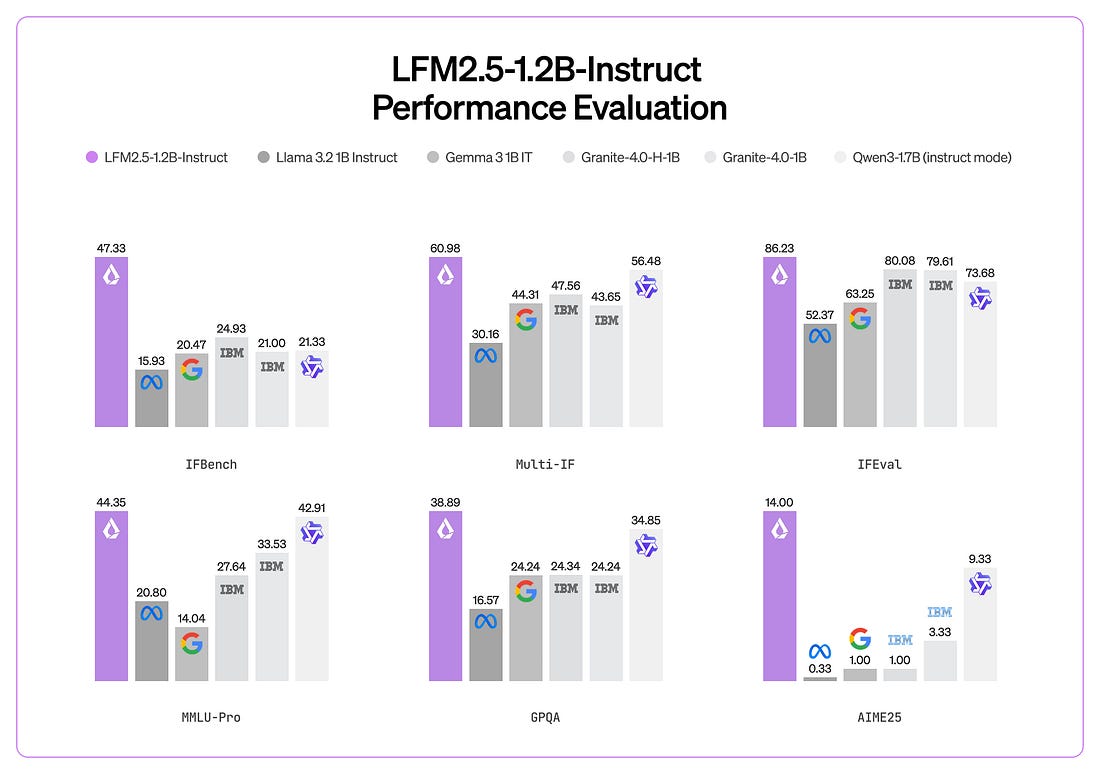

The Other Leverage in Software & AI

Tomasz Tunguz · Wednesday, February 4 2026 · 1 min read · ↑ top

Fetched links (10)

Last chance to register for Every’s OpenClaw Camp—plus everything you need to prep

Every · Thursday, February 5 2026 · 1 min read · ↑ top

Fetched links (10)

Vibe coding is old now

ben's bites · Thursday, February 5 2026 · 5 min read · ↑ top

Anthropic's new ad, it's about... ads

The newsletter for the technically curious. Updates, tool reviews, and lay of the land from an exited founder turned investor and forever tinkerer.

Hey folks,

Karpathy on one year of vibe-coding and a need for a better name. He suggests agentic engineering—I prefer it because there’s less of a negative connotation and that you’re not doing ‘real work’. It is a level of engineering, where you could be at the very beginning of the spectrum all the way up to experienced engineers.

On that note, I’m starting a community

You’ve seen the posts—people building apps, automations, entire products without writing code. You know you should be doing this too.

I can’t code, but I build. I sold a no-code community to Zapier, failed at learning to code the traditional way, and now ship software using AI agents.

This community is for people like us figuring it out together. Not another Discord full of experienced engineers.

Come and learn to build with agents!

Claude ran a Super Bowl campaign to dunk on ads in ChatGPT (without naming them), and it has really pissed Sam Altman and OpenAI’s CMO Kate Rouch. It got to a point that they went to ChatGPT and had it write longposts calling Anthropic out. They say: ChatGPT has more free users in Texas than Claude has in total. Ooofff. Do they have a point? Yes. Do they look like crybabies? Also, yes.

It feels off-brand for Claude to do something like this. But I suppose attention is all that matters these days.

Related → Why Claude will remain ad-free - this written piece from Anthropic has a more nuanced take on ads.

Back to work:

Droid now supports plugins - Plugins bundle skills, commands, and agents into packages you can install and share. Compatible with all claude code plugins - import them in 1-click.

Claude Code has a new command /insights. When you run it, it’ll gobble up your past month’s history, your projects and how you use Claude Code and give suggestions on how to improve your workflow. Also, you can now give CC’s VS Code extension access to your browser via Claude in Chrome.

Mistral released its latest batch of Voxtral models. Voxtral Realtime is built for live applications with configurable latency going as low as 240ms (and open-weights too). Voxtral Mini Transcribe 2 is for async workloads with high accuracy in multiple languages and low costs.

🌐What I’m consuming

⚙️ Tools and demos

*

🥣 Dev Dish

🍦 Afters

That’s it for today. Feel free to comment and share your thoughts. 👋

Fetched links (3)

Special discount code for Every

Every · Thursday, February 5 2026 · 1 min read · ↑ top

Fetched links (3)

A new podcast from First Round: How the top 0.001% of scaleup execs operate

First Round Review · Thursday, February 5 2026 · 2 min read · ↑ top

Introducing our new podcast, Executive Function, where we sit down with the best scaleup execs operating today: The ones up-and-coming tech leaders wish they could have as a mentor, and founders wish they could hire.__Our first episode with Vercel COO Jeanne DeWitt Grosser just dropped — and stay tuned for future interviews with execs from Rippling, Harvey, Cognition & more.

Listen now: YouTube | Apple | Spotify

There's a lot of knowledge floating around the Valley about what makes a great founder, engineer or PM. Some names and faces, or heuristics and frameworks probably come to mind.But we’ve found there's remarkably few resources available for folks stepping into the C-suite, specifically at hypergrowth companies — these people are forced to keep pace with a company that changes 5-10x in a year.Our new podcast, Executive Function , aims to fill this gap. Think of these conversations like office hours with the execs driving the growth of today’s best companies, like Rippling, Harvey and Cognition.Our first guest, Jeanne DeWitt Grosser , exemplifies operational excellence. She spent nearly a decade at Stripe , leading growth and product before stepping into the role of Chief Business Officer. She’s now the Chief Operating Officer at Vercel.First Round Partner Brett Berson sat down with Jeanne to unpack why most execs fail, how she interviews exec hires and why context is the biggest rate limiter of impact. Some highlights from their conversation:

Listen to the episode

We’ve got a lot more interviews lined up in the coming weeks. Here are some of the incredible execs you’ll be able to learn from:

Whether you’re a senior IC who wants to know what it takes to get to the top, or a founder building out your C-suite, we hope you’ll walk away from these conversations with a new model for what executive excellence looks like.

Take me to Executive Function

Made with ✨ by First Round Capital.

Fetched links (5)

How we'd choose between the brand-new OpenAI and Anthropic models

Every · Thursday, February 5 2026 · 1 min read · ↑ top

Fetched links (13)

Google's 52x AI Growth

Tomasz Tunguz · Thursday, February 5 2026 · 1 min read · ↑ top

Fetched links (5)

Hacker Newsletter #781

Hacker Newsletter · Friday, February 6 2026 · 7 min read · ↑ top

The most important thing to do if you find yourself in a hole is to stop digging. //Warren Buffett

hackernewsletter

Issue #781 // 2026-02-06 // View in your browser Hello! If you use something like Pinboard, or you just enjoy curating the web, hit reply and let me know. I'm looking for a few people to join a beta I'm working on. – kale

#Favorites

Optimize your website for AI answer engines with Webflow //webflow.com sponsored Claude Opus 4.6 //anthropic.com comments→ I miss thinking hard //jernesto.com comments→ GPT-5.3-Codex //openai.com comments→ Notepad++ hijacked by state-sponsored actors //notepad-plus-plus.org comments→ Surely the crash of the US economy has to be soon //wilsoniumite.com comments→ What I learned building an opinionated and minimal coding agent //mariozechner.at comments→ My AI Adoption Journey //mitchellh.com comments→ Company as Code //blog.42futures.com comments→ Tractor //incoherency.co.uk comments→ Moltbook is the most interesting place on the internet right now //simonwillison.net comments→

#Ask HN

Do you also "hoard" notes/links but struggle to turn them into actions? Is there anyone here who still uses slide rules? Any real OpenClaw (Clawd Bot/Molt Bot) users? What's your experience? Anyone else struggle with how to learn coding in the AI era?

#Show HN

Voxtral Transcribe 2 //mistral.ai comments→ NanoClaw – “Clawdbot” in 500 lines of TS with Apple container isolation //github.com comments→ Safe-now.live – Ultra-light emergency info site (<10KB) //safe-now.live comments→ Rentahuman – The Meatspace Layer for AI //rentahuman.ai comments→ Phage Explorer //phage-explorer.org comments→ See how many words you have written in Hacker News comments //serjaimelannister.github.io comments→

#Code

Deno Sandbox //deno.com comments→ We tasked Opus 4.6 using agent teams to build a C Compiler //anthropic.com comments→ Orchestrate teams of Claude Code sessions //code.claude.com comments→ GitHub Actions is slowly killing engineering teams //iankduncan.com comments→

#Data

It's 2026, Just Use Postgres //tigerdata.com comments→ AliSQL: Alibaba's open-source MySQL with vector and DuckDB engines //github.com comments→ Deep dive into Turso, the “SQLite rewrite in Rust” //kerkour.com comments→ Sqldef: Idempotent schema management tool for MySQL, PostgreSQL, SQLite //sqldef.github.io comments→

#Design

Antirender: remove the glossy shine on architectural renderings //antirender.com comments→ Buttered Crumpet, a custom typeface for Wallace and Gromit //jamieclarketype.com comments→ How to choose colors for your CLI applications //blog.xoria.org comments→

#Books

The Book of PF, 4th edition //nostarch.com comments→ Julia //borretti.me comments→ Review of 1984 by Isaac Asimov //newworker.org comments→

#Working

Ask HN: Who is hiring? //news.ycombinator.com Why more companies are recognizing the benefits of keeping older employees //longevity.stanford.edu comments→ Ask HN: Who wants to be hired? //news.ycombinator.com Management as AI superpower: Thriving in a world of agentic AI //oneusefulthing.org comments→

#Learn

Banning lead in gas worked. The proof is in our hair //attheu.utah.edu comments→ Geologists may have solved mystery of Green River's 'uphill' route //phys.org comments→ China Moon Mission: Aiming for 2030 lunar landing //spectrum.ieee.org comments→ The largest number representable in 64 bits //tromp.github.io comments→

#Watching

I trapped an AI model inside an art installation //youtube.com comments→ John Romero: Making Catacomb 3-D //youtube.com comments→

#Startup News

xAI joins SpaceX //spacex.com comments→ Tesla ending Models S and X production //cnbc.com comments→ Waymo seeking about $16B near $110B valuation //bloomberg.com comments→ Pinterest sacks two engineers for creating software to identify fired workers //theguardian.com comments→

#Fun

List animals until failure //rose.systems comments→ Adventure Game Studio: OSS software for creating adventure games //adventuregamestudio.co.uk comments→ Nintendo DS code editor and scriptable game engine //crl.io comments→ Micropolis/SimCity Clone in Emacs Lisp //github.com comments→ I wrapped the Zorks with an LLM //infocom.tambo.co comments→

END

You're among 69,438 others who received this email because you wanted a weekly recap of the best articles from Hacker News. Published by Curpress from Bellingham, Washington. Hacker Newsletter is not affiliated with Y Combinator in any way.

✨ Want to promote your startup? Buy a classified ad or click reply to get our media kit

⭐ Not a subscriber? Subscribe at https://hackernewsletter.com

Fetched links (42)

Clouded Judgement 2.6.26 - Software Is Dead...Again...For Real this Time...Maybe?

Clouded Judgement by Jamin Ball · Friday, February 6 2026 · 13 min read · ↑ top

Jamin Ball

ERROR 404 NOT FOUND DNS_PROBE_FINISHED_NXDOMAIN

.

.

.

.

Just kidding…Software dying hasn’t taken down Clouded Judgement, not yet at least! Subscribe while you can, legend has it if the median software multiple dips below 3.0x then Clouded Judgement spontaneously combusts. And in the phoenix’s ashes will rise…Hallucinated Judgement, and ode to our new AI overlords. Kidding again (maybe), that will never be the name

Software Is Dead...Again...For Real this Time...Maybe

Last week I wrote a post titled “Software is Dead…Again.” Since then, IGV is down ~20% (in just 1 week!). If software was dead a week ago what is it now, down an incremental 20%?!

First - some fun stats

The median NTM revenue multiple (cue all the comments “he’s still talking about revenue multiples?!?”) is 3.6x. This is the lowest it’s been in the last 10+ years. For the revenue multiple haters, the median FCF multiple is 16x NTM FCF, for median growth rate of ~20% (alas, once again, cue another set of haters, saying none of the FCF is real and it’s all sitting in SBC). Can’t escape it, maybe software is a zero with no valuation support. Was good while it lasted.

39% of my software index is trading <3x NTM revenue

The median “high growth” software co is trading <10x revenue

Hyperscalers (specifically AWS and Google Cloud) CRUSHED it. Google cloud accelerated from 34% last quarter to 48% this quarter, and AWS accelerated from 20% last quarter to 24% this quarter. Their CapEx projections also exploded. Google guided to ~$180b of CapEx for the upcoming year vs estimates of ~$120b. Meta ~$125b vs estimates of $110b. Amazon $200b vs estimates of ~$150b. Microsoft is run-rating at $120b of CapEx (quarterly capex x 4). Here’s a fun tweet (chart below) showing how steep the ramp in CapEx has become.

Image

Despite the massive ramp in expected CapEx, both Nvidia and TSM were down this week.

Then there’s the few software companies who have already reported earnings. ServiceNow, Atlassian, Palantir, Bill.com, Paylocity (and a few others). Results have actually been pretty solid. Median Q4 quarterly beat is 3.0%, and median guidance raise for next quarter is 2.0%. Both would be the highest mark in the last ~3 years. So far, the numbers aren’t deteriorating (but doesn’t matter, market voting machine moves quick!).

And finally there’s 8x8 - not all hope is lost. They are up ~70% in the last week. There’s always the diamond in the rough somewhere.

So how do I synthesize everything going on with public software companies? The voting machine is saying “shoot now ask questions later.” The voting machine is putting all of software in the “too hard” bucket. A new Anthropic model comes out, and the “AI will replace all software” narrative gets even more vociferous.

When I talk to software bears they say three things (among others):

  1. They will all be vibe coded away

  2. Classic software has hit its “late maturity” phase. TAMs have been exhausted, competition is up, and the entire industry’s growth rate will collapse, eventually to that of GDP growth, faster than most think. Because of this, the entire sector should trade on GAAP P/E multiple, like the other “late maturity” industries facing disruption.

  3. Not only is are they late in the cycle, but they also won’t capture any “AI revenue.” They won’t innovate fast enough, and can’t attract the right talent to innovate. All future growth in software will come from AI agents, none of which the legacy SaaS providers will capture.

  4. Operationally, they’re run terribly. SBC is rampant, and is a way of enriching insiders at the expense of shareholders. They all have way too many employees and operate very inefficiently (relative to how they could operate)

When I talk to software bulls they say in response:

  1. Good luck vibe coding a system or record. Good luck vibe coding the classic “enterprise” features like RBAC, SSO, audit logs, data residency, SOC2 (and all other security certifications), audit reporting, etc. Good luck encoding all business logic and edge cases (what has taken the classic systems of record years to accumulate). Good luck offering support to your internal users. Good luck maintaining / upgrading / keeping up with the latest best of breed tech. And if you actually are able to do all of this, good luck doing it in a way that has a total TCO lower than just buying the original piece of software from a vendor…At the end of the day, companies aren’t in the business of building internal tools, they’re in the business of selling solutions to customers.

  2. Software isn’t in it’s late cycle, it’s no where close (as an industry) to growing at the same rate as GDP growth, it’s way less cyclical than other industries, so still should trade at mor premium multiples

  3. Existing players have a distribution and trust advantage, already being installed in the largest enterprises. They’ll capture the agents revenue, or at least their fair share

  4. Ya, the bears probably right on point 4. For the most part these companies are run inefficiently, and all the SBC is quite the scheme.

Where do I sit? Personally I don’t think the “vibe code” risk is real…at all…At least not in the short term. I will acknowledge that it’s really hard to predict what the future looks like. And these models improve SO quickly. So what seems impossible to vibe code today will be entirely possible a year from now (and much more). The rate of change is extraordinary. I think it’s naive to underestimate the possibilities of what vibe coding will be able to achieve a year from now (let alone 2-3 years from now). But, I don’t think the overall attitude of “let’s build internally vs pay someone to manage internal software” will change…We’ll always settle on companies outsourcing internal software to vendors (be it legacy SaaS or new AI native startups).

What I do believe - there’s real “front door” risk. I wrote about it here in December. In summary, classic software could be reduced to something that looks more like middleware with agents capturing all of the incremental value on top of them. I mean, look at this graphic from OpenAI…It’s screaming “the classic system of records will be pushed down the stack.” The system of record is literally at the bottom…Down the stack = lower growth potential, and smaller profit pool to capture.

Image

In this world, which I believe we will get to eventually (but the path from here to there is probably longer than what the market is pricing in, but sooner than most industry critics think…), the next growth vector of software won’t be captured by legacy cloud software businesses. And I don’t mean this in an absolute. Some value will, but most (vast majority, I think) of the incremental AI value created in software will go to agents. Incumbents just move to slow. Can’t attract the best talent (what great AI engineers want to work for a legacy company vs cutting edge startup?), have innovators dilemma, have to evolve their business models, etc. Said another way, expansion revenue will be MUCH harder to come by. There will be a small percentage of “legacy SaaS” companies that innovate and capture this new S-Curve. Maybe 10%. The rest won’t…But, not capturing

But, this doesn’t mean the doom of software is at our doorstep…Not capturing the next phase shift of explosive growth doesn’t mean that all growth disappears…I do think there is still a lot of growth left in classic cloud migrations. I was talking to the CEO of a very large business this week. They recently started a migration to SAP. The way they described this migration: I know SAP isn’t a modern company by any stretch, let alone an AI company, but what else was I going to do? There are no “AI-native SAPs.” And I’m not going to have my engineers building out our own SAP. I hear this sentiment all the time.

Said another way, I don’t think we’re necessarily “late cycle” of the cloud software market…I still think there is tons of room for classic cloud migrations. So I don’t think we can call cloud software a melting ice cube, yet. However, maybe the AI native co’s end up stealing the “first” cloud migrations for the industry laggards (that would be an anti-pattern, the laggards will probably not jump straight to AI native challengers).

The other reality - software has a longgggg half life…It takes a long time to “kill.” maybe this is why we’re on the “Software is Dead…Again…Again” blog post title. The software cat has lost 3 of it’s 9 lives! But it’s still alive. For now. With a few lives left.

So the right question - what is the right multiple now for this industry? A “ not yet a melting ice cube, but future growth prospects look hampered, and more terminal risk with lots more uncertainty.

Well, it’s certainly deserves a lower multiple than where it was! When uncertainty goes up, the discount rate must follow. And the uncertainty is WAY up. Dust hasn’t even come close to settling yet.

I do think growth prospects have changed. The voting machine sure believes it. I think it’s gone too far. But at the same time I think some of software universe is still over-valued. There will (could) be some epic returns from here if you pick the 10% who become more of an “AI winner” who can avoid being pushed down / reduced to middleware. Those looking at my multiple charts and saying “but the pre-covid average multiple was 8x NTM rev, we’ll bounce back eventually” will probably be disappointed. If we ever get back there (as an industry median) it will probably be because a new crop of “AI native Agent” companies in hyper growth mode go public and bring the median up. The basket of existing cloud software companies may never get back to a median of 8x NTM rev (mark that statement in case we do, and this is the bottom!)

We can analyze and debate this until we’re blue in the face, but the reality is uncertainty up, discount rate up (I’ll stop beating that dead horse).

If you want a “top line” (revenue, gross profit, etc) vs a “bottom line” (earnings, FCF) valuation metric, you have to be operating in hyper / high growth - because the assumption is if you (and the industry) is in (hyper) growth mode, then you’re early in the S-Curve. The only way top line valuation metrics can ever make sense is if you can grow fast enough to eat the multiple compression that will inevitably come as the industry matures and re-rates. Either that, or the market will just always place high multiples on industries early in a cycle :) We did value internet companies on a multiple of users / eyeballs at one point!

So the question becomes - will legacy SaaS co’s re-enter growth mode and capture a new S-Curve of growth with agents? Will their growth fall off a cliff as agents eat their lunch and turn them into middleware? Time will tell. There will be dispersion. Good luck! For those who don’t capture the AI Agent tailwind, their “death” will probably happen much slower than people think. For those who do, it’s been an elevator down, and will be a slow escalator up. Takes a while for the market to rebuild confidence in an entire sector.

In summary - I think the market is getting it wrong in the short term. These companies have stronger moats and will be more resilient than anticipated. However, I think the market is probably right in the long term. Agents will create a ton of creative disruption, hamper expansion revenue of legacy vendors, and history is against the incumbents capturing this new vector of hyper growth.

Quarterly Reports Summary

Top 10 EV / NTM Revenue Multiples

Top 10 Weekly Share Price Movement

Update on Multiples

SaaS businesses are generally valued on a multiple of their revenue - in most cases the projected revenue for the next 12 months. Revenue multiples are a shorthand valuation framework. Given most software companies are not profitable, or not generating meaningful FCF, it’s the only metric to compare the entire industry against. Even a DCF is riddled with long term assumptions. The promise of SaaS is that growth in the early years leads to profits in the mature years. Multiples shown below are calculated by taking the Enterprise Value (market cap + debt - cash) / NTM revenue.

Overall Stats:

Bucketed by Growth. In the buckets below I consider high growth >22% projected NTM growth, mid growth 15%-22% and low growth <15%. I had to adjusted the cut off for “high growth.” If 22% feels a bit arbitrary, it’s because it is…I just picked a cutoff where there were ~10 companies that fit into the high growth bucket so the sample size was more statistically significant

EV / NTM Rev / NTM Growth

The below chart shows the EV / NTM revenue multiple divided by NTM consensus growth expectations. So a company trading at 20x NTM revenue that is projected to grow 100% would be trading at 0.2x. The goal of this graph is to show how relatively cheap / expensive each stock is relative to its growth expectations.

EV / NTM FCF

The line chart shows the median of all companies with a FCF multiple >0x and <100x. I created this subset to show companies where FCF is a relevant valuation metric.

Companies with negative NTM FCF are not listed on the chart

Scatter Plot of EV / NTM Rev Multiple vs NTM Rev Growth

How correlated is growth to valuation multiple?

Operating Metrics

Comps Output

Rule of 40 shows rev growth + FCF margin (both LTM and NTM for growth + margins). FCF calculated as Cash Flow from Operations - Capital Expenditures

GM Adjusted Payback is calculated as: (Previous Q S&M) / (Net New ARR in Q x Gross Margin) x 12. It shows the number of months it takes for a SaaS business to pay back its fully burdened CAC on a gross profit basis. Most public companies don’t report net new ARR, so I’m taking an implied ARR metric (quarterly subscription revenue x 4). Net new ARR is simply the ARR of the current quarter, minus the ARR of the previous quarter. Companies that do not disclose subscription rev have been left out of the analysis and are listed as NA.

Sources used in this post include Bloomberg, Pitchbook and company filings

The information presented in this newsletter is the opinion of the author and does not necessarily reflect the view of any other person or entity, including Altimeter Capital Management, LP (”Altimeter”). The information provided is believed to be from reliable sources but no liability is accepted for any inaccuracies. This is for information purposes and should not be construed as an investment recommendation. Past performance is no guarantee of future performance. Altimeter is an investment adviser registered with the U.S. Securities and Exchange Commission. Registration does not imply a certain level of skill or training. Altimeter and its clients trade in public securities and have made and/or may make investments in or investment decisions relating to the companies referenced herein. The views expressed herein are those of the author and not of Altimeter or its clients, which reserve the right to make investment decisions or engage in trading activity that would be (or could be construed as) consistent and/or inconsistent with the views expressed herein.

This post and the information presented are intended for informational purposes only. The views expressed herein are the author’s alone and do not constitute an offer to sell, or a recommendation to purchase, or a solicitation of an offer to buy, any security, nor a recommendation for any investment product or service. While certain information contained herein has been obtained from sources believed to be reliable, neither the author nor any of his employers or their affiliates have independently verified this information, and its accuracy and completeness cannot be guaranteed. Accordingly, no representation or warranty, express or implied, is made as to, and no reliance should be placed on, the fairness, accuracy, timeliness or completeness of this information. The author and all employers and their affiliated persons assume no liability for this information and no obligation to update the information or analysis contained herein in the future.

Fetched links (4)

What Is Taste, Really?

Every · Friday, February 6 2026 · 6 min read · ↑ top

Understanding and honing taste in the AI age

by Jack Cheng In his first piece for Every,Jack Cheng exploredcreativity. Now he’s tackling another ubiquitous word in AI discourse: taste. But as he points out, we’re often conflating two very different things when we use it, and understanding how these two interact is crucial if taste is really going to be our edge in an AI-augmented world. From his early days at a SoHo ad agency to Steve Jobs debating laundry machines at family dinners, Jack shows how taste is built through making things and learning to articulate why you like what you like.—Kate Lee A couple of months ago, my one-year-old son learned the words “yeah” and “no.” Since then, he’s started to express his preferences: for his green garden vegetable bib over his blue space bib, for fire trucks (or as he calls them, “wee-ooh-wee-oohs”) over other vehicles. He’s still fickle—one day he’ll want his sloth stuffie, another his dog one—but he’s very much on his way to developing his taste. Taste. As AI tools grow more capable, I keep bumping into this word. Now that these tools can handle much of the execution work, we’re told, now that you can do pretty much anything without prior limitations of skill or experience, taste is the moat, the secret sauce, the difference-maker. “Just add taste.” But when you encounter “taste” in the wild, you might get definitions as varied as the source. It is a “contentious term of frustrating ambiguity,” per fashion and culture writer W. David Marx. Investor and designer Willem Van Lancker says taste is a product of friction , earned through making and repeated discernment. Spiral , Every’s AI writing product, is pitched as “your AI writing assistant with taste.” Last year’s Financial Times holiday gift guide quipped, “On the whole, children have lamentably bad taste and are happy with any bit of garish plastic that you care to throw at them,” which I can attest is true. To me, part of the confusion stems from the fact that when we talk about taste, we’re talking about two different forms of it: 1) personal taste and 2) what is considered tasteful or “in good taste.” The two might overlap considerably, but if taste is going to be our edge in this era of AI, we need to first understand how they interact before we can effectively hone that edge.

Write at the speed of thought

A tale of two tastes

My first job out of college was at an ad agency in New York City’s SoHo neighborhood. Picture a sheltered, pimply teenager from the suburban Midwest transplanted into the world’s hotbed of fashion and media tastemakers. I was exhilarated. I was also way out of my league. The agency’s loft office had two long rows of desks with Apple Cinema Displays, at a time when the device maker wasn’t widely used outside of creative fields. Mid- and senior-level graphic designers sat at those desks, beautifying product packaging in Adobe Illustrator, dressed in clothes from brands I didn’t recognize from my local mall back home. Some of those designers became my first friends in the city. Their apartments were filled with mid-century furniture, carefully thrifted ceramics, and eclectic—yet serenely arranged—wall art. They had taste , and I desperately wanted to have it too. I spent my first paychecks on clothing from various SoHo menswear shops and a shiny new MacBook Pro—my first Apple computer. My friend Gino and I opened it in the office, cooing in awe of the pearlescent packaging.

Your aggregate self

From this story, you can see both personal taste and tastefulness interacting. The first, personal taste—or very simply, a sense of what you like and don’t like—comes through accumulated experience. My job put me in contact with unfamiliar fashion, art, furniture, and technology products that I could compare against what I’d known before. Some of those choices stuck; others I shed not long after I left. Slowly, I built up my preferences and ultimately, my sense of self. A strong sense of personal taste—and thus a strong sense of self—is a potent filter. When there is an overwhelming array of things to choose from, it operates as an instinct, quickly reducing the number of choices. What’s “not me” is immediately discarded, leaving you to evaluate the rest for what is you. This filter becomes even more necessary as AI opens up choices previously locked behind the doors of time, labor, and technical ability. Personal taste is also a homing beacon. It helps you find others with similar tastes, and helps them find you. Journalist and culture critic Kyle Chayka writes in his book Filterworld that taste “is a word for how we measure culture and judge our relationship to it. If something suits our taste, we feel close to it and identify with it, as well as form relationships with other people based on it.” Which leads us to our second form of taste: “good” taste.

Good taste is cultural

My trying to fit in among my new work colleagues was also about recognizing that they had good taste. This second definition of taste is much slipperier, because it’s cultural. Just as individual persons can have their own likes and dislikes, so can groups of people. Good taste looks different in different cultures, different social groups: In engineering, good taste might be a preference for clean, elegant code, or for elegant coding languages like Ruby. Good taste in film might mean a preference for well-respected, less-mainstream directors like Yashujiro Ozu and Whit Stillman , for foreign cinema on the streaming service Mubi and titles in the Criterion Collection. To W. David Marx, this cultural sense of taste is also bound up in status. Maybe I saw the agency’s designers as having good taste because they were higher up in the organization than me, a junior creative. My mimicry was an attempt to both understand their constellation of choices and claim some of the implied status for myself. Part of this cultural definition unlocked for me through talking with Eleanor Warnock , Every’s managing editor. When I asked her for examples of people whom she considered to have good taste, one person she cited was actor and model Julia Fox , whose fearless attitude and mixing of avant-garde and DIY aesthetics spurred a resurgence of Y2K fashion. “She has really good taste for what’s on the money, what is memorable and what is punchy, and a real taste for fashion and drama.” Eleanor said, and then added: “But I don’t agree with her taste.” To put it into our framework: Even though their personal tastes don’t align, Eleanor recognizes that Fox has a distinct sense of taste that, combined with Fox’s celebrity status, is one that larger groups of people want to emulate—and is therefore considered “good taste.” Fox’s personal taste helps define the broader cultural taste from within, like an oboe against which the rest of the orchestra tunes its instruments. She is, in other words, a tastemaker.

The work of discernment

When people talk about the importance of cultivating taste, or discernment, I take it to mean that in order to differentiate yourself as someone with good taste, or as a tastemaker, you first have to have a clear sense of personal taste. Part of that is accumulating experience—training data, if you will. But how you go about those experiences also counts...

Fetched links (12)

Legibility is a brand to capital and brand is promises kept

Yoni Rechtman · Friday, February 6 2026 · 6 min read · ↑ top

Elon's MegaCo, Outtake's Series B, Institutions should go direct

Yoni Rechtman

Will Manidis wrote a great piece on becoming “legible to Capital.”

Think of an idea being legible to Capital as being magnetically charged to the capital markets. Dollars are just attracted to you: allocators discuss it at cocktail parties, funds market it at their AGMs, and twitter discusses novel financing schemes to get more dollars behind the idea.

He’s certainly right in identifying and naming the phenomenon. But he’s largely making a retrospective descriptive claim, not a prospectively normative one. That is, it’s obvious when someone has achieved it. It’s much less obvious how or what you should do.

And I’ve been writing about legibility for a while now. The frame I keep coming back to is that startups can be either legible (clear, easily understood) or illegible (hard to read), and that this distinction matters more than stage, more than traction, more than most of the things investors claim to care about. The job of true seed investors is to fund illegible opportunities to the point of undeniability (in contrast to inorganic/formation stage “king making”).

Will’s framing implies legibility is a property. Some companies have it, some don’t. On an ex post facto basis, the winners always appear inevitable and obvious. You look at Ramp or Cognition and you think: of course. That was always going to work. That was always going to attract capital, talent, and customers. But... airplane meme. Legibility wasn’t a precondition of their existence. It was an active process/outcome.

So yes, legibility to capital is one of the most powerful forces in the startup ecosystem. But it is a thing to work towards, not merely a thing to have.

In the past I had made a common category error here. Despite talking about companies as breaking down into two stages - legible and illegible - I had still been treating legibility as a curve rather than a step function. I had believed that if companies just execute, hit some arbitrary revenue milestone, the world would start to care. It won’t. You can put up great numbers and still be completely invisible to downstream capital because you never built the narrative architecture that makes those numbers mean something. Remember, if startups are just stories about the future, they are formless without that architecture

Legibility is brand for capital. And brand is promises kept.

The key white space is the narrow sliver of illegibility where an important story can meet with narrative and execution to make and keep a promise that matters.

That is while legibility is not fixed, illegibility might be. Put differently, the first most important question is whether or not you’re working on something that actually matters or has a promise big enough that keeping it is important. Read more here.

The single most interesting and important function of early stage is translating weird takes on important stories as told by illegible companies into narrative momentum and legible opportunities for downstream capital. Done right, you can transmute ideas into not merely good businesses, but important companies over time.

Institutions should go direct

Given that the single job of most scaled venture funds at this point is deploying max dollars into a handful of ~7 names, I don’t get why the top LPs need to pay them fees vs going direct.

You’re telling me that a mega allocator can’t pay [lab alum] $10M/year cash for access?

When there’s no more picking why pay a picker?

It would be substantially cheaper and they’d operate with more information/conviction if the biggest institutions just spun up teams with alums from these companies and paid them cash to get direct access to the best opportunities in the biggest names.

This is basically the same dynamic as institutions paying HFs 2/20 to buy the Mag 7…

Given how persistent it is despite being economically irrational, it must be a consequence of “non-obvious” incentives (I’m using scare quotes bc the incentives are actually so obvious).

The real incentive most of the time at most institutional allocators is to track, not to beat, the benchmark in ways are socially defensible and won’t cost you your job.

If you’re backing one of a couple of names which are in turn backing one of a couple of names, you have maximum defensibility. Unless you’re really compensated on upside, you have no reason to think about upside.

Elon’s Mega Co and the Slow creator fund

Elon has now merged xAI into SpaceX after already merging Solar City into Tesla and X into xAI. Very likely he will wind up merging SpaceX into Tesla and create one single ElonCo, which will eventually subsume Boring and Neuralink.

A single Elon MegaCo has always been the most shareholder-friendly, incentive aligned thing to do and has always been coming.

If you are investing in any Elon Musk company, what you are buying is not so much ‘cars’ or ‘rockets’ or ‘robots’ or ‘social media’ or ‘brain implants,’ but rather that ability to allocate capital to the next big thing. - Matt Levine

The problem was that keeping these as separate companies created constant conflict. When Elon shifts GPUs from Tesla to xAI, or routes engineers from one company to another, he’s borrowing from Peter to pay Paul. His various shareholder bases are/were competing for his attention and access to free/cheap capital, which are the unique assets that make all these businesses work. Rather than have that zero-sum game play out across separate cap tables, everyone is obviously better served if they’re all just one company.

For certain entrepreneurs, discrete companies are intolerable constraints. The company structure puts them out of, rather than into, alignment with their capital partners. This is bad and requires new holding company approaches to capitalize and incentive their singular entrepreneurial abilities.

At Slow, we’ve been thinking about this for years.

Our Creator Fund takes equity in personal holding companies, not the individual companies creators spawn.We’re backing people for whom the right unit of investment is the person, not any single project they might pursue. They have audiences, entrepreneurial instincts, and the ability to spin up multiple businesses over time. The holdco structure lets us bet on them, not on one idea.

Elon is doing the same thing at trillion dollar scale that we’ve been doing with creators. Some people are permanent founders, and the capital structure should reflect that.

At Slow we’re largely focused on media entrepreneurs as a particularly and painfully undercapitalized asset class but clearly this phenomenon is both broad and deep.

Outtake’s Series B

Outtake raised a $40M Series B led by Iconiq. Outtake is a really cool new take on fraud and security. They proactively crawl the entire open web to build a trust network and proactively take down malicious/deceptive sites, ads, profiles, etc.

From their OpenAI case study:

Most alternative solutions still rely on third-party contractors to manually review flagged content—a process that can be slow, inconsistent, and expensive. Outtake⁠ reimagines that system with always-on AI agents that scan millions of surface areas, such as webpages, app store listings, and ads, per minute, building a map of trustworthy and suspicious entities. That map helps security teams understand what’s happening, who’s behind it, and route resolution recommendations for expert review in a matter of hours.

Megan and Sam led the seed round and Slow remains the biggest outside shareholder in the business. I had dinner with two of the early employees this week and am totally blown away by the quality of the team/depth of talent over there.

Attackers have always-on sophisticated AI. Defenders need the same.

We’re hosting a dinner with Work-bench in New York in March to discuss how AI is breaking cyber paradigms and what comes next. You can sign up to join us here.

Fetched links (4)

Resistance Infrastructure

Scott Galloway · Friday, February 6 2026 · 8 min read · ↑ top

I’ve struggled my whole life to discern the difference between being right vs. effective. Over the past decade, the U.S. has been on a slow burn to fascism. The best description I’ve seen of America’s current political landscape came from David Frum: “If progressives won’t enforce the border, fascists will.” We are squarely in the fascist part of the program. Now that it’s happened, to borrow from Sinclair Lewis, being right isn’t enough. We need to be effective. The question isn’t what to say or who to vote for, but what to build? A: Resistance infrastructure.

American Duma

Congress has the power to rein in ICE, restore the rule of law, and unwind authoritarianism in America. But to paraphrase a quote popular with self-help gurus and motivational speakers, Congress isn’t coming to save you. Last year’s government shutdown over healthcare didn’t result in a solution, but the assignment of blame. Democrats leveraged the recent partial government shutdown to negotiate for “guardrails” on America’s gestapo. Good. But banning federal agents from wearing masks and ordering independent investigations into the murders of American citizens are empty wins if the Trump administration is responsible for enforcing those policies. In addition, without true structural change — de-gerrymandering, reversing Citizens United, installing term limits — we’ll continue to endure a bipolar America. Democrats, playing by a rulebook that’s been incinerated, come across as neutered and voiceless. Meanwhile, Republicans are Jekyll and Hyde. In private, they say Trump is a threat to American democracy; in public, they’re sycophants, praising the president no matter what he says or does. The result? Congress is America’s answer to the Russian Duma, i.e., nominally important but functionally irrelevant. When I interviewed historian Timothy Synder, author of On Tyranny , on my podcast at the end of January, he said the current state of American politics is best understood as a system of competitive authoritarianism. A democratically elected leader erodes checks and balances, attacks institutions, and weaponizes the justice system against his opponents. “There will still be elections, but you don’t wait for the opposition party,” Synder said. “Instead [the people] have to push out ahead of the opposition party. You have to set the moral terms, take risks, and build a coalition of which the opposition party is a part, but isn’t necessarily leading.” Pro-democracy movements aren’t created by political parties, they’re created by people.

If We Build It …

Political parties are elected and returned to office for promising and then delivering tangible results to their constituents: good jobs, better schools, clean drinking water, etc. Political movements are graded on a similar curve, but the connection between action and outcome is rarely a straight line. The 1955 Montgomery bus boycott began as a one-day protest. Despite a 90% participation rate, the single-day action achieved no tangible results. But after 13 months and a favorable Supreme Court ruling, the boycott successfully forced the integration of Montgomery’s bus system. During that long campaign, however, it would’ve been easy for onlookers to be cynical. Over the past decade, I’ve been a protest cynic, believing most actions, viewed through the narrow lens of the moment, are performative measures that generate selfies and make participants feel good about being right, without having any actual impact. But Timothy Snyder says my thesis is incorrect. “The main reason you protest is to tell the rest of the people who are watching you that what’s going on isn’t normal,” Snyder told me. “The second reason you protest is that it’s the gateway to doing other things.” In other words, what looks like sound and fury signifying nothing is in fact an incubator for building infrastructure and organizing further actions. Case in point: After the first day of the Montgomery bus boycott, activists, led by a young preacher named Martin Luther King Jr., organized a carpooling network with more than 200 cars and 100 pickup locations. That infrastructure sustained their movement, allowing them to register an estimated $3,000 hit per day ($35,000 adjusted for inflation) to the city’s bus service until their demands were met.

Infrastructure

America’s economy has become one giant bet on AI, with seven tech companies representing more than a third of the S&P 500. The concentration of economic power in so few hands renders those businesses uniquely vulnerable to a boycott, as consumers can focus on a short target list. Big Tech’s vulnerability is further multiplied by the subscription model, as valuations for subscription companies are typically 8x to 20x revenue. One example: In 2022, Netflix reported losing just 200,000 subscribers in a single quarter, and that wiped out $50 billion in market cap overnight. (Netflix attributed the churn to increased competition and the lifting of pandemic restrictions that had kept people in front of their TVs.) The free gift with purchase? Consumers maximize political impact while minimizing household expenses. In America, 4 out of 5 adults spend nearly $200 per year on unused subscriptions. I had three HBO Max subscriptions … somehow.

For a recent example of what happens when consumers deploy their spending power against the jugular of authoritarianism, see Disney’s suspension and reinstatement of Jimmy Kimmel. In the end, it took fewer than 1% of the Mouse’s total streaming subscribers to accomplish what CEO Bob Iger couldn’t — stand up to an authoritarian. (Note: According to Erica Chenoweth, a political scientist and professor at Harvard who analyzed 323 nonviolent and violent mobilizations between 1900 and 2006, when at least 3.5% of a country’s population actively engages in a peaceful protest movement, it has always resulted in political change.)

Expectations

My go-to framework for understanding the rise of fascism in America today is the rise of fascism in Europe in the 1930s. The most chilling parallel between then and now is the relationship between business elites and authoritarians. German industrialists weren’t necessarily enthusiastic Nazis, Timothy Snyder told me, but they saw Hitler as a tool to crush unions and undermine democracy, the source of labor’s power. The most powerful American business leaders are making a similar bet, trading their support for tariff carveouts, a promise not to regulate AI, and hundreds of billions in shareholder value.

According to Brayden King, a professor at Northwestern University’s Kellogg School of Management who studies social movements and corporate social responsibility, and Sarah A. Soule, dean of the Stanford Business School, the typical boycott doesn’t have much impact on a company’s market cap. In their 2007 study of 342 boycotts against U.S. corporations between 1962 and 1990, they found that boycotts, on average, caused a 1% decline in a company’s stock price. “The number one predictor of what makes a boycott effective is how much media attention it creates, not how many people sign onto a petition or how many consumers it mobilizes,” King said in 2017.

Marker

I recently wrote that we should be deeply concerned about a world where connections are forged without friction, as we’re seeing resilience muscles atrophy, especially among young people. In my conversation with Timothy Snyder, he shared a related concern about the lack of friction in the way we conceptualize politics. “People talk about the Insurrection Act or martial law, whether they’re for them or against them, like [we’re in] a video game and you just level up,” he said. “It’s not like that.” In reality, politics is a messy, unpredictable struggle that favors the most resilient. Deploying the language of video games — “unlocks,” “cheat codes,” “speedrunning,” etc. — lulls us into believing that political change, whether in the direction of dictatorship or democracy, is a frictionless experience, achievable by pressing the right combination of buttons.

Life is so rich,

How Markets Price AI Risk

Tomasz Tunguz · Friday, February 6 2026 · 1 min read · ↑ top

Fetched links (5)

What’s 🔥 in Enterprise IT/VC #484

Ed Sim from What's Hot 🔥 in Enterprise IT/VC · Saturday, February 7 2026 · 14 min read · ↑ top

It's just February 7 and Agents Are Eating Software Faster Than Any of Us Thought

Feb 7

The agents are coming for you narrative went from whisper to scream this week. While still so early, Wall Street’s lemming-like narrative spooked the market. Here’s why - most of it was Anthropic’s plugin framework which I highlighted in last week’s newsletter.

Ed Sim @edsim @claudeai open-sourcing cowork plugins is a gift 🎁 and a weapon 🔫. Incredible discovery for startups. Also a brutal compression event for anyone building thin wrappers. The real opportunity is multiplayer mode. Org-wide sharing of skills is where plugins stop being tools and Image Claude @claudeai Cowork now supports plugins. Plugins let you bundle any skills, connectors, slash commands, and sub-agents together to turn Claude into a specialist for your role, team, and company.
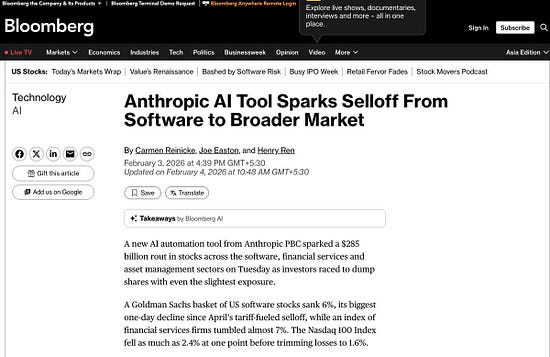
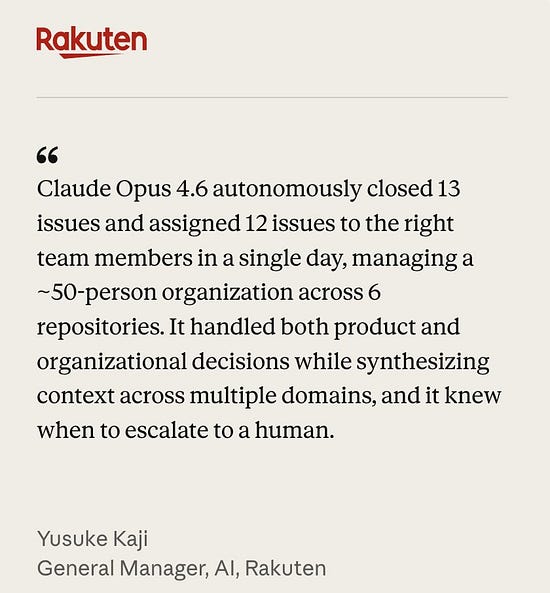
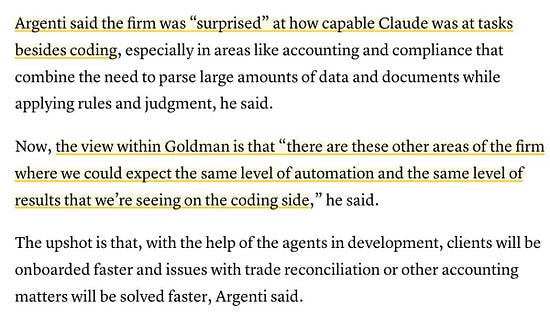
Seems like Wall Street caught on to that a few days later along with the journalists. IMO everyone overreacted although in the long term, the trend is accelerating faster than any of us thought.

Shruti @heyshrutimishra HOLY SHIT Anthropic Just Triggered a $285B Market Crash 😳 Bloomberg just reported that Anthropic released a new AI tool that caused: 󠁯•󠁏 $285 billion wiped out across software, finance, and asset management stocks 󠁯•󠁏 6% drop in Goldman's software basket (biggest since Image

As I wrote last March: “Software is eating the world. AI is eating software. But that’s just cannibalizing existing spend. If AI/Agents can eat into labor, then opportunity for apps get much bigger. If not, we are in for a world of hurt as many apps can get easily cloned.” That take rings truer than ever.

Mike Jung @mikej0000 This post from @edsim from ~1 year ago speaks to what Wall Street is coming to grips with now. Prescient. Didn't expect that PE firms and BDCs would get clobbered because of their exposure to SaaS, but it makes perfect sense. @ttunguz points this out in one of his recent Ed Sim @edsim Lots of debate on the future of SaaS - the reality none of us really know and these are all guesses Also when it comes to the enterprise, it's so early But here's what many VCs are thinking 🤔: Software is eating the world AI is eating software but that is just cannabalizing

For me, what changed this week were two things:

  1. The models and harnessing to deliver AI are improving faster than any of us ever thought possible from the model providers like Anthropic and OpenAI dropping new models on the same day along with innovation from an unfunded open source builder at OpenClaw

  2. Diffusion of agentic workflows is happening faster than ever in the enterprise - it’s all accelerating

This doesn’t mean SaaS is dead and it doesn’t mean every SaaS co should be down 15% in one day, but it does mean that these companies better start cannibalizing themselves yesterday in order to exist tomorrow. Some will make it, maybe 20-25%, the rest won’t as it’s super hard to turn a battleship around and think in first principles and set up several startups within a large org.

Brad Gerstner from Altimeter Capital nails it - all about the unpredictability of future free cash flow. The only companies who escape the meltdown are those companies that can show they can accelerate their revenue because of AI. Application software is in the “too hard” to predict bucket. Clickhouse, Databricks and others, easier to see.

Brad Gerstner @altcap Software is not dead. Grt leaders. Grt companies. Most will hit their numbers. But the terminal value & multiples are lower bc the potential for AI disruption lowers predictability of future cash flows. This only changes if they show how AI is accelerating their core biz. 📈🧐 Altimeter Capital @AltimeterCap Brad Gerstner (@altcap) joined CNBC’s Halftime Report with Scott Wapner (@ScottWapnerCNBC) to address the software selloff. In a moment of “exponential change,” investors say “fog of war” and put application software in the “too hard bucket” — not because they’re “missing

Anyone who has used Claude Code and Cowork should know that tech always starts with early adopters, usually technical engineer types, and spreads from there. It doesn’t take a huge leap of faith to see that what Claude Code did for engineering would eventually move to other business areas - it was just a matter of time.

If that wasn’t enough, Anthropic released Opus 4.6 and more harnessing to manage and orchestrate swarms of agents.

Yuchen Jin @Yuchenj_UW “Claude Opus 4.6 ... managing a ~50-person organization across 6 repositories. It handled both product and organizational decisions while synthesizing context across multiple domains, and it knew when to escalate to a human.” Sam wasn’t joking about being replaced by an AI CEO. Image

The crazy aspect is that it can also orchestrate humans 🤯.

As mentioned earlier, it’s technology like this that is pushing into the Fortune 500 much faster than any of us ever thought possible. Here’s Goldman Sachs announcing that it will automate the back office which is huge, especially since it is a regulated entity.

Ed Sim @edsim everyone debating whether AI agents "really work" while @GoldmanSachs is quietly replacing accounting and compliance roles with Anthropic's models. for those of us using Claude Code/Cowork daily, this was obvious... agents are coming for every back-office function CNBC @CNBC Goldman Sachs is tapping Anthropic’s AI model to automate accounting, compliance roles https://t.co/mBvKSh6vma

To my earlier point on folks who use Claude Code know that the leap to work is not a huge one - here’s Goldman Sachs’ CIO on his aha moment:

Ed Sim @edsim first it always starts with coding, similar to Claude Code to Cowork built in 10 days because understood usage patterns of the first developer users And now...Goldman CIO Argenti says: Image

OpenAI CEO of Applications Fidji Simo said she believes AI agents (AI coworkers) will be pervasive in the enterprise by year end.

tae kim @firstadopter I was on an @OpenAI briefing call earlier this week with other reporters about OpenAI's new Enterprise platform for AI Agents called Frontier. Fascinating stuff. @fidjissimo OpenAI CEO of Applications Fidji Simo said she believes AI agents (AI coworkers) will be pervasive in the Image

Now let’s look at this chart from Dylan Patel 👇🏻

Ed Sim @edsim 🤯 Now just imagine swarms of agents working. That 20% may be light Dylan Patel @dylan522p 4% of GitHub public commits are being authored by Claude Code right now. At the current trajectory, we believe that Claude Code will be 20%+ of all daily commits by the end of 2026. While you blinked, AI consumed all of software development. Read more 👇 https://t.co/HzK4nbe2vy https://t.co/E1kIjfrNgk

This data is pre-agent swarms. Now imagine hundreds of agents coordinating simultaneously. That 20% will be more like 40%+ by the end of the year.

Speaking with many VCs and founders after spending the past week in San Francisco, I can tell you that this is one of the most exciting and scariest times to be in technology. I, for one, feel this dichotomy in every single conversation.

All I know is that it’s just February 7, and I have no idea what the rest of the year will look like.

But if you're a founder, this is the golden window. Incumbents are deer in headlights, platforms are handing you weapons for free, and the entire enterprise stack is up for grabs. The founders who move now will own the next decade

Ed Sim @edsim This week in AI felt like 10 years compressed into a few days

As always, 🙏🏼 for reading and please share with your friends and colleagues!

Scaling Startups

fun discussion in tweet

Ed Sim @edsim Still seeing too many startups that will simply be a skill in days, weeks or months. Make sure yours can’t be reduced to one

trends to pay attention to - YC call for startups

Y Combinator @ycombinator The way startups are built has shifted quickly. We're excited about a range of startup ideas for AI-native companies that can now be built faster, cheaper, and with more ambition than ever. ycombinator.com/rfs Image

TL:DR version: 1. AI as the worker, not just the tool

Several of the RFS categories (AI-native hedge funds, AI-native agencies, AI guidance for physical work) share a common thread: YC wants startups where AI does the work end-to-end rather than just assisting a human. An AI agency doesn’t sell software to designers; it is the design firm. An AI hedge fund doesn’t add a chatbot to an existing trading desk; it’s built from day one around agents that research, strategize, and execute. This signals YC believes we’re past the “copilot” era and into the “AI-as-the-entire-workforce” era.

2. AI moves upstream from code to decisions

“Cursor for Product Managers” and the expanded AI developer tools category reveal a pattern: the bottleneck in software is shifting from writing code to deciding what to build and maintaining what you’ve built. YC sees the code-generation wave as maturing and is now looking at the layers above it (product strategy, customer insight synthesis) and below it (debugging, testing, deployment). The implication is that founders should look for where human judgment is still the bottleneck in a workflow, because that’s where the next wave of AI companies will be built.

3. Stablecoins + regulation = a fintech window opening right now

The stablecoin financial services category, combined with YC’s own decision to offer funding in USDC, is a strong signal. With the GENIUS and CLARITY Acts creating a new regulatory framework, YC sees a narrow window for startups to build compliant crypto-native financial infrastructure (yield accounts, cross-border payments, etc.) before incumbents catch up. It’s notable that YC is putting its own money where its mouth is by actually paying founders in stablecoins.

Enterprise Tech

amazing how fast the tides can turn; Cursor was all the rage just a few months ago and then Claude Code changed everything, no IDE needed, just type in Claude Code and let it work. It was the talk of SF this past week so no surprise here - now Claude Code can manage swarms of agents and humans too

Claude @claudeai On Claude Code, we’re introducing agent teams. Spin up multiple agents that coordinate autonomously and work in parallel—best for tasks that can be split up and tackled independently. Agent teams are in research preview: code.claude.com/docs/en/agent-…

not to be outdone, OpenAI releases Frontier

Sam Altman @sama The companies that succeed in the future are going to make very heavy use of AI. People will manage teams of agents to do very complex things. Today we are launching Frontier, a new platform to enable these companies.

Ed Sim @edsim Feels like ServiceNow control tower - wonder how open this truly is in terms of orchestrating other agents - if so, look at stack lots of infra cos going to feel some pain Image OpenAI @OpenAI Introducing OpenAI Frontier—a new platform that helps enterprises build, deploy, and manage AI coworkers that can do real work. https://t.co/4W0adQzSZ1
holy Gemini

Jeff Dean @JeffDean Very proud to see the progress across so many areas. Great to see @GeminiApp hit 750M monthly active users, and the use of our Gemini models across many products and Cloud surfaces is strong: 10B tokens/minute is 166M tokens/sec (TPUs!), or ~1750 tokens/person on earth per day. Sundar Pichai @sundarpichai Our Q4/FY’25 results are in. Thanks to our partners & employees, it was a tremendous quarter, exceeding $400B in annual revenue for the first time. Our full AI stack is fueling our progress, and Gemini 3 adoption has been faster than any other model in our history. We’re really

👀

Vision4theBlind @Vision4theBlind Google CEO says that they don’t fully understand their own AI system after it started doing things it wasn’t programmed to do such as teaching itself an entire foreign language it was not asked to do

must read from Greg Brockman - how OpenAI is transitioning to full agentic, retooling and cultural shifts:

As a first step, by March 31st, we’re aiming that:

(1) For any technical task, the tool of first resort for humans is interacting with an agent rather than using an editor or terminal.

(2) The default way humans utilize agents is explicitly evaluated as safe, but also productive enough that most workflows do not need additional permissions.

In order to get there, here’s what we recommended to the team a few weeks ago:

Greg Brockman @gdb Software development is undergoing a renaissance in front of our eyes. If you haven't used the tools recently, you likely are underestimating what you're missing. Since December, there's been a step function improvement in what tools like Codex can do. Some great engineers at

the beauty of open source - nicely done by Runlayer although I’ll be spending some time this weekend trying to keep up with the 5 new releases of OpenClaw on Digital Ocean

Andy Berman @berman66 Today, we're launching OpenClaw for Enterprise. The IDEA of OpenClaw is excellent. That's why your employees already tried ClawdBot last weekend. They probably spent hours linking it to everything - email, Slack, Jira, you name it. They installed a giant security nightmare.

pay attention - tasks and outcomes are just skills, IMO like the new open source - here’s an example

ElevenLabs Developers @ElevenLabsDevs Introducing ElevenLabs Skills. With skills, AI coding assistants like Claude Code, Cursor, and OpenCode are better at using our APIs to handle AI audio and agent workflows. Get started: npx skills add elevenlabs/skills

but also need to beware of vulnerabilities, where there is usage, there are hackers

Ed Sim @edsim @elonmusk reminds me of early days of open source, going to need verified skills along with auto scanning of any calls to skills - check out this report from @snyksec 🤯 read rest here: snyk.io/blog/toxicskil… Image

autonomous infrastructure from Vercel

Guillermo Rauch @rauchg We've reached an all-time high of 87.6% autonomous resolution rate on @vercel support cases. Best part: people truly love it. Even when the AI can't help, the overall UX is better (we auto-fill the ticket form). Last week I had my "CEO supports day". It's now clear to me that: Image

great overview of where we are in robotics - visit to China who is by far the leader

Sourish Jasti @SourishJasti 1/ General-purpose robotics is the rare technological frontier where the US / China started at roughly the same time and there's no clear winner yet. To better understand the landscape, @ZoeyTang_1007 , @intelchentwo , @vishnuman0 and I spent the last ~8 weeks creating a deep dive

while crypto markets are obliterated, the tech actually delivering real value - $4.6B stablecoin settlement volume, up 4.6x from just September 🤯

Omar @TheOneandOmsy At earnings, Visa disclosing their stablecoin settlement volumes now up to $4.6 billion run-rate, up ~4.6x from just September and ~18x from the start of the year Image Omar @TheOneandOmsy Interesting excerpt from the GS conference: Visa stablecoin settlement volumes now up to ~$1b run-rate, up 4x from earlier this year Direct stablecoin settlement lets Visa's partners bypass traditional bank/fiat rails for instant 24/7 settlement on the network. I.e. issuers
Gartner’s 6 Cyber Trends for 2026

AI and quantum computing are reshaping cybersecurity. Here’s the short version:

  1. Agentic AI is outpacing security. Unmanaged AI agents are creating new attack surfaces faster than teams can track them.

  2. Regulators are coming for leadership. Boards and execs face personal liability for compliance failures.

  3. Post-quantum prep starts now. Current encryption could be cracked by 2030. “Harvest now, decrypt later” attacks make migration urgent.

  4. Identity systems weren’t built for AI agents. Access management needs a rethink for autonomous systems.

  5. AI SOCs help but hurt. AI-powered security ops boost efficiency while creating staffing and skills gaps.

  6. Security training is failing. 57% of workers use personal GenAI for work. Generic awareness programs can’t keep up.

Bottom line: AI is both the biggest threat and the biggest tool in cyber right now.

Markets

earlier this week with a little bounceback after this post on Friday but wow - the direction is clear

Shay Boloor @StockSavvyShay SaaSpocalypse 2026 Drawdown from highs: • $FIG −83% • $HUBS −71% • $MNDY −70% • $TEAM −68% • $ESTC −56% • $NOW −53% • $RBRK −50% • $CRM −47% • $APP −47% • $ZS −46% • $WDAY −45% • $DDOG −42% • $SNOW −40% • $SHOP −37% • $NET −33% • $CRWD −26%

we need to keep up with China - must read on China’s genius plan

Zijing Wu @zijing_wu Here’s the full version in print, available in our weekend edition as well as the FT Magazine. The earlier free link no longer works as too many have used it. Image Zijing Wu @zijing_wu How has China systematically built a vast pipeline of AI talent? My debut feature in FT Magazine explores the pivotal education program behind this achievement, weaving in some personal reflections. China’s Genius Plan https://t.co/MUZTIDaw6g

incredible story and growth 🧵

ElevenLabs @elevenlabsio We raised $500M at an $11B valuation to transform how people interact with technology.

Fetched links (3)

Welcome to Minutes

Will Manidis · Sunday, February 8 2026 · 1 min read · ↑ top

It’s good to have you here!You will start receiving updates right here in your inbox. You can also log in to the website to read the full archives and other posts as they are published.Some housekeeping... If you can’t find the newsletter, check your spam folder. And please mark this address as ‘not spam.’ If the newsletter isn’t in your spam folder, either, you should look in the Promotions tab.You can always see everything on the website.Thanks again, and please tell a few friends if you feel like it.

The Ur-model Cometh

Every · Sunday, February 8 2026 · 7 min read · ↑ top

Plus: What’s next for Every consulting

by Every Staff Hello, and happy Sunday! This past week was like Christmas in February. Anthropic and OpenAI both dropped significantly improved models that moved us closer to peak general-purpose AI, and it was all-hands here at Every to share what our advance testing revealed about each of them. The result was Vibe Checks on both Opus 4.6 and Codex 5.3 , the inevitable head-to-head showdown , and a livestream featuring Sam Altman himself.— Kate Lee__ Courtesy of Rachel Braun.Courtesy of Rachel Braun. ## Knowledge base
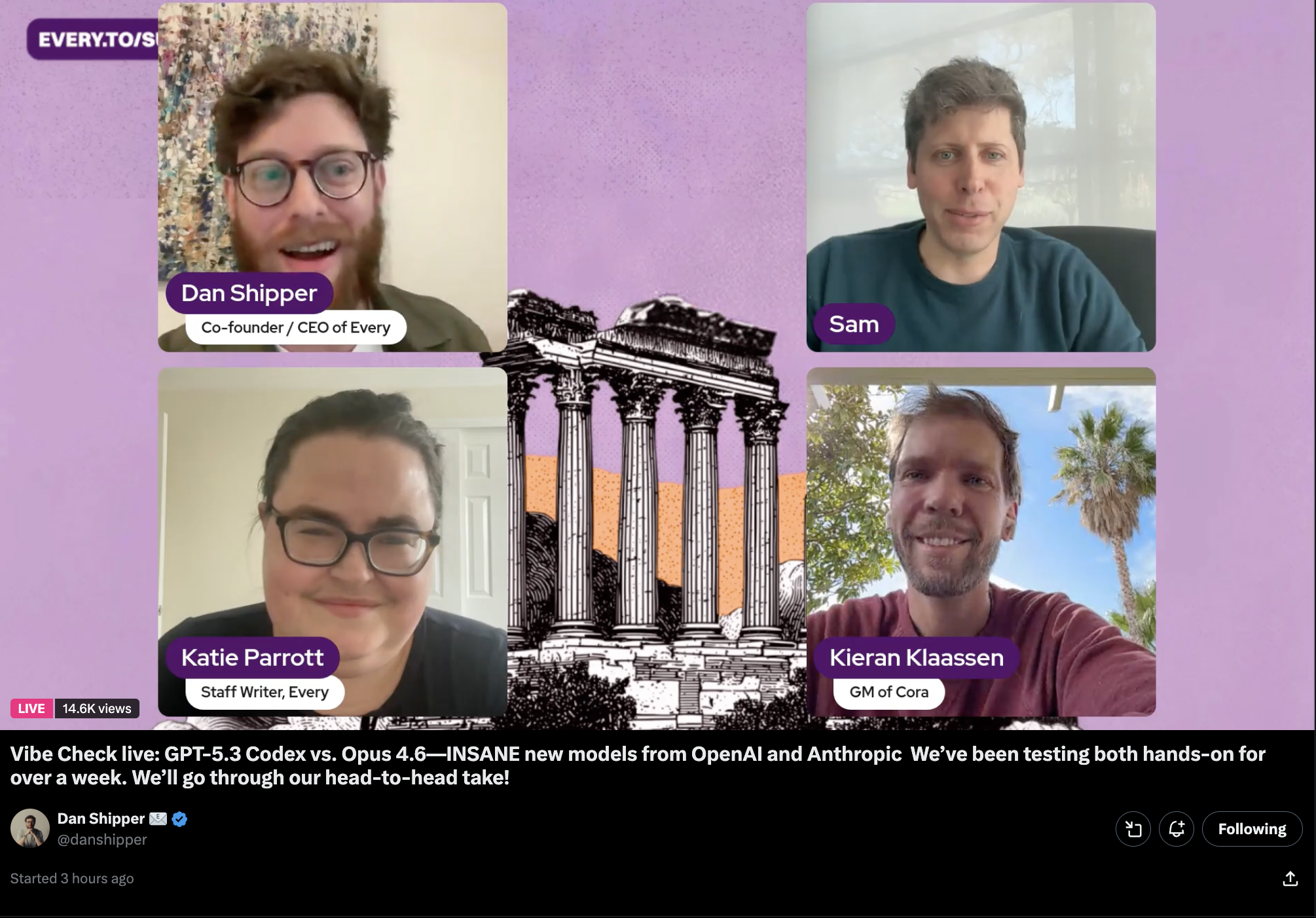
“GPT-5.3 Codex vs. Opus 4.6: The Great Convergence” by Dan Shipper/Vibe Check : Opus picked up Codex’s precision. Codex gained Opus’s warmth and willingness. Every CEO Dan Shipper and the team tested both extensively, and the verdict is that these models are—in a good way—beginning to resemble each other. Most of the Every team is now using both. Read this for the full head-to-head breakdown, including which one has the higher ceiling and which delivers steadier, faster autonomous execution. “Vibe Check: Opus 4.6—The Best Coding Model We’ve Tested (With Some Maddening Habits)” by Dan Shipper and Katie Parrott/Vibe Check : In 15 minutes, Opus 4.6 solved a Monologue iOS problem that stumped both Codex and Opus 4.5—researching competitors and open-source repos to find the perfect solution. Put simply: It’s extremely smart. As proof, it set the high score on Corageneral manager’s Kieran Klaassen ’s LFG benchmark. Some trade-offs exist, though—it’s slower and occasionally confabulates, and the team preferred Opus 4.5’s prose in blind tests. But for vibe coders? Switch now. Read this to learn why. “GPT-5.3 Codex: The 10x Engineer, Now More Fun at Parties” by Dan Shipper and Katie Parrott/Vibe Check : Codex has always been brilliant but rigid, like a senior engineer who only speaks in implementation details. GPT-5.3 loosens up. It’s faster, warmer, more creative, and finally stops asking permission. Dan ran it overnight on difficult bugs and watched it execute full test loops autonomously with great results. Read this to see how its benchmark scores stack up and to learn why even Kieran —Every’s most devoted Claude Code user—now reaches for Codex sometimes. “Vibe Check: OpenAI’s Codex App Gains Ground on Claude Code” by Dan Shipper and Katie Parrott/Vibe Check : OpenAI’s new Codex desktop app is the first graphical user interface that’s pulled Dan out of his terminal since Claude Code launched. The Mac app serves as a “command center for agents” with cloud-to-local sync, a skills library, automations, and one-click YOLO mode. Most of the Every engineering team went green on this release; read this to see why it’s competitive for professional programmers orchestrating agents, but vibe coders should stick with Claude. “The Next Chapter of Every Consulting” by Natalia Quintero/On Every : Every’s consulting practice unveils specialized AI playbooks for tech and finance companies, drawing from work with hedge funds managing over $100 billion in combined assets. Head of consulting Natalia Quintero shares a four-level AI maturity framework, from basic ChatGPT usage to agents that take over your entire workflow. The results: One hedge fund now screens companies in minutes instead of a week, and an investment firm saves 50 hours per memo. Read this for Every’s four-step consulting process, including a DIY roadmap any team can use now. 🎧 🖥 “Every’s Head of Consulting Just Automated Her Job” by Tom Matsuda/AI & I: Natalia wakes at 6 a.m. daily to vibe code—and now calls herself “a bonafide vibe code addict.” The result: Claudie, a project manager that slashed her weekly admin work from 15 hours to one. In this conversation with Dan, she shares what she’s learned from working with companies like the New York Times and Walleye Capital: AI success requires top-down commitment, empowered internal champions, and creative space to experiment. 🎧 🖥 Listen on Spotify or Apple Podcasts , or watch on X or YouTube. “We Trained an AI on a Board Game. It Became a Better Customer Support Agent.” by Alex Duffy/Playtesting : When Good Start Labs fine-tuned an open-source model on thousands of rounds of Diplomacy—the WWI strategy game favored by JFK and Henry Kissinger —it didn’t just get better at games. The model improved over 10 percent on customer support and industrial operations benchmarks. The reason: Diplomacy rewards context-tracking, shifting priorities, and strategic communication, and models learn more from playing games with feedback than from scraping the web. Read this for why games are becoming AI’s new curriculum. “What Is Taste, Really?” by Jack Cheng : When we talk about taste in the AI age, we’re conflating two things: personal taste (what you like) and “good taste” (what’s culturally valued). Every contributing editor Jack Cheng unpacks both, drawing from his early days at a SoHo ad agency and Steve Jobs ’s family dinner debates over which laundry machines to buy. The key insight: Learn to articulate why you like something, because that articulation builds your toolbox. Read this for a framework to sharpen your creative edge.

Alignment

The intentionality engine. I was never someone who tracked things. Every thought or feeling lived inside my head, which is a polite way of saying it lived nowhere. I once had a killer idea for an essay on a walk and vowed that I’d remember it by the time I got home. Of course, I didn’t. This has happened so many times over the past few years that it stopped being funny and started feeling like self-sabotage. I’ve always admired people who kept meticulous journals and developed “second brains” for ideas, but I couldn’t be bothered. Then over the holidays I started using Obsidian, a knowledge management system built on simple markdown files, alongside Claude Code and Monologue , a voice-note app that lets me talk instead of type. What makes this setup special is that every idea links to everything else. A half-formed idea during a walk can link to an essay draft I’ve been chewing on, which connects to a tweet I bookmarked three weeks ago. Over time these separate pieces of information become an intricate web of patterns that start to surface on their own. Courtesy of Ashwin Sharma.Courtesy of Ashwin Sharma. But what started as a way to hold onto ideas has become something more than that. Every day has become a tiny experiment informed by the last: When I know yesterday was a low mood day—because I logged it—I wake up knowing I need to get outside or call a friend. I’m overflowing with intention and focus. There’s another big reason to care about this right now. As AI agents get more powerful, the most important thing you can do is give them context about who you are. These notes aren’t scattered diary entries or half-remembered preferences, but structured, comprehensive self-knowledge. I want my system to know everything about me, because that’s how I’ll get the most from AI. Your personal knowledge base is the training data for your future agent. Obsidian used to intimidate me. I assumed it was for hardcore developers, but vibe coding has made it so accessible that I now can’t imagine life without it. And what it’s really taught me is that when you’re intentional about recording your days, you become intentional about living them.— Ashwin Sharma

Fetched links (28)

End Game Play

Will Manidis · Sunday, February 8 2026 · 8 min read · ↑ top

Will Manidis

It is 1985. Garry Kasparov sits across from Anatoly Karpov in Moscow. It is Game 24.

This is the second time the two men would meet. The first, the year prior, ran forty-eight games over five months before FIDE president Florencio Campomanes controversially ended it with no result. Karpov was leading 5-3 but visibly deteriorating, had lost something like twenty-five pounds, and looked like he was dying over the board. By the time Kasparov sits down for the rematch these two have been locked in a single unbroken psychological war for over a year.

The score is 12-11. Kasparov needs a draw to win.

Kasparov is twenty-two. He has spent a meaningful fraction of those years preparing openings. His choice is the Sicilian Najdorf, probably the most theoretically dense opening in chess.

His seconds—Nikitin, Dorfman, Timoshchenko—are not running simulations. There are no real chess engines in 1985. They are grandmasters in a late night hotel rooms dense with cigarette smoke and cluttered with physical boards, mining by hand for novelties and new lines.

Kasparov burns forty percent of his clock before the middlegame. This is how serious people play.

Today the median grandmaster game spends maybe five percent of thinking time on the opening. The first twenty-five, thirty moves have become recitation, blitzed at speed, both players rushing to reach the endgame.

When Magnus Carlsen abandoned the classical World Championship in 2023, the reason he gave was boredom. Elite play in modern chess means years memorizing computer lines only to show up and recite them until you reach the endgame where real play can occur.

Magnus gave the game up and moved to rapid and blitz. Both formats too fast for deep prep, where you have to actually play.

Chess has become an endgame sport. The opening and the middlegame, where you feel your way into a position, where complications arise that no one planned for, have been compressed into filler. You skip them. You rush past them. You play for the endgame.

However this is not a story about chess.

Across every domain we have stopped playing openings. We have stopped playing middlegames. The instinct everywhere is to skip directly to the endgame. To reason backward from the terminal state and treat everything between here and there as something to recite and move on.

Consider modern war. A century ago, wars were fought with openings. The first weeks of August 1914 determined the shape of the next four years: the Schlieffen Plan’s failure at the Marne locked both sides into trenches that would not move for fifty months. Eisenhower spent years on the opening of the Western Front: the selection of Normandy over Calais, the deception campaigns, the weather delays, the decision to go on June 6th despite conditions that made his meteorologists sick.

He wrote a letter taking full responsibility for the invasion’s failure and kept it in his pocket. If he got this opening wrong, a million men would have died for nothing.

The wars we fight now have no openings.

‘Our landings in the Cherbourg-Havre area have failed to gain a satisfactory foothold and I have withdrawn the troops. My decision to attack at this time and place was based on the best information available. The troops, the air and the Navy did all that bravery and devotion to duty could do. If any blame or fault attaches to the attempt it is mine alone.”

In Yemen we bomb buildings that are already rubble. In Iran we pretend to destroy Fordow and the Iranians pretend to believe us, then hit Al Udeid and we pretend not to notice. In Venezuela we spend months blowing up boats in the Caribbean and stage the abduction of a man while his government stays intact. These are wars not being fought, but recited. Both sides blitzing through a script to reach a foreordained position.

The middlegame did not disappear. In the Donbas there is no computer simulation. It is the Somme with drones: men dying in mud and minefields to inch a position forward that no model can solve cleanly. The trenches on the Western Front didn’t move for fifty months. The trenches in eastern Ukraine haven’t moved in three years. The middlegame is still there. It is still brutal. It is still where the actual consequences land. But our understanding of the struggle did.

The opening has been engineered out. What remains is the performance of mass consequence without the risk of it. Eisenhower’s advance today would be fought with 22 JSOC operators and some drones, not a million men at the front. The idea of opening a war, not ending one, with this narrow precision would be absurd a generation ago-- but not in an endgame world.

John Collison @collision Please enjoy this Cheeky Pint / @dwarkesh_sp crossover with @elonmusk . Dwarkesh was most interested in how Elon is going to make space datacenters work. I was most interested in Elon's method for attacking hard technical problems, and why it hasn’t been replicated as much as you

Endgame mentality extends far beyond the battlespace and the chess board. Consider, the recent Cheeky Pints episode with Elon Musk.

Dwarkesh Patel interviews Elon Musk and asks a middlegame question: where does the power come from to run data centers in space. How do you service GPUs that fail in orbit. What is the cost path for solar cells in thirty-six months. Positional questions.

Musk will not play the middlegame. Within seconds he has moved from the engineering of a single data center to harvesting a millionth of the Sun’s energy, to a mass driver on the Moon shooting AI satellites into deep space at two and a half kilometers per second. Dwarkesh asks how you manufacture a terawatt of chips by 2030. Musk says he’ll build a TeraFab. Dwarkesh asks how you start a chip fab when you’ve never built one. Musk says he’ll figure it out. Every time Dwarkesh tries to hold the position— what are the actual moves between here and there— Musk skips past it to the next boundary condition.

They do not disagree about the endgame. In fact, these two men are totally aligned in beliefs that would seem utterly outlandish to all but a small set of Bay Area rationalists. That is a belief that we are mere months away from a coming digital singularity that will produce self improving intelligence from raw silicon that will in turn consume 99% of the energy output of all complex civilization to date in its perpetual quest for self improvement.

Dwarkesh does not dispute that AI scales to terawatts. He does not dispute that it ends up in space. He has already conceded the terminal position. What he disputes is how much middlegame you can skip. Musk’s answer, every time, is all of it. The limiting factor is power. Solve it. The limiting factor is chips. Solve it. The limiting factor is mass to orbit. Solve it. The middlegame is not a phase to be inhabited. It is a series of bottlenecks between now and the endgame, and bottlenecks exist to be eliminated and not paid much attention to otherwise.

This is terminal endgame reasoning. And it works— at SpaceX and Tesla, in ways that are difficult to argue with. Steel instead of carbon fiber. Catching boosters on the tower. The Gigafactory. He has been right often enough that dismissing the method is not serious.

But when the conversation turns from hardware the method breaks. Dwarkesh asks what the relationship between humans and AI looks like in practice. Musk jumps past it. Humans will be less than one percent of all intelligence. The AI will either have the right values or it won’t. We are either the chimps in the protected zone or we are dead. When Dwarkesh pushes— how do you actually make Grok care about human consciousness— Musk says he’ll tell it to.

This is not a middlegame answer. This is a man who has already recited his way to move thirty and is waiting for the endgame to begin.

Endgame play is a symptom of simulation. Engines exhausted the opening and middlegame of chess so humans skip to the only phase that isn’t pre-computed. Both sides of a modern war can model the front, model the force projection, model the outcome— so the opening collapses and what gets fought is the narrow sliver simulation can’t price. Musk simulates forward from the terminal state and treats everything between here and there as bottleneck. Already computed. Already recited.

Of course he does. Our engines are better than Kasparov’s notebooks. The opening Eisenhower spent years agonizing over could have been modeled by anyone with a map and a calendar and enough compute. Simulation compresses whatever it can reach. Human effort migrates to whatever it can’t. This is how it has always worked. It will be more true after AGI than before. That is more phases of more games compressed into recitation, more human work pushed to the edges where the position is still live.

But we have made a category error. We have confused simulating an endgame with arriving at one. These are not the same thing. The ability to model the terminal state of AI does not mean the terminal state of AI is close. The ability to simulate the outcome of a war does not mean the war is over. We have become so fluent in endgame reasoning that we have mistaken fluency for proximity and proximity to the end is the only thing that makes work feel urgent anymore, so we keep manufacturing it.

God did not build a world that was immediately primed for judgment. It has been two thousand years. It will very likely be many more.

Scripture is filled with men that are faced with this same category error. Abraham died without receiving the promise, Moses never entered Canaan. Hebrews holds them up not as men who failed to reach the endgame but as men who played the middlegame so well it didn’t matter that they never reached it. They were not proximate to the end. They were nowhere near the end. The middlegame was their vocation.

We have convinced ourselves that simulation has exhausted the middle of everything— war, technology, politics, the economy— and that the only serious move left is the last one. Simulation has not exhausted the middle. It has exhausted our patience for it. The middle is still where the complications live, where the position is ambiguous and the thing no one modeled happens and you have to play the board as it is. The middle is two thousand years long and counting and we are somewhere in it and the eschaton is not ours alone to force.

Know your vocation. Play the game. Burn the clock.

Fetched links (4)