ben's bites · Tuesday, February 17 2026 · 10 min read · ↑ top
OpenClaw's maker is joining OpenAI
Hey folks,
I’ve been running my own AI agent for a while now. It reads my emails, checks my calendar, manages my projects, and runs on a Mac Mini in my house 24/7. I built the whole thing through a terminal — talking to a coding agent, not writing code myself.
It’s a bit janky, but it’s mine and it works. I love it.
I’m not the only one doing this. OpenClaw blew up because people realised that an always-on agent with access to your stuff is genuinely useful. There’s a wave of people building personal agents right now. And my guess is, if you’re not - you will have one this year.
That’s where Dreamer comes in (and no, it’s not an ad or investment - just a tool and team I have massive respect for).
David Singleton (former Stripe CTO + big Ben’s Bites fan!) and Hugo Barra built Android together. Now they’ve started Dreamer with designer Nicholas, 14 others and $50m in funding.
A simple pitch: if you can dream it, you can build it.What is it?
Dreamer is a platform where you build agentic apps by talking. You describe what you want, and an AI agent called “Sidekick” builds it for you in minutes. There’s also a more detailed coding agent for when you want to go deeper. Either way, you never think about hosting or deployment. The platform handles all of it.
That’s the bit I care about most. I spend a stupid amount of time on infrastructure. Getting servers running, keeping things alive, debugging why something crashed. That stuff is fine when you’re learning, but it’s not the point. The point is the thing you’re trying to make.
Sidekick learns about you over time and acts as the privacy layer, controlling what data each app in Dreamer can access. It can spin up temporary agents for specific tasks, integrate with third-party tools and coordinate between your different apps. All of that wiring is done for you out of the box.
What can you actually build?
Turns out, a lot:
pull together your work and personal calendars, then generate a daily briefing podcast.
saving links across the web (remember Pocket, rip) with summaries and tags
recipe manager that creates shopping lists and can order them from Instacart.
a to-do list that can research (and start!) tasks before you get to them
You describe what you want, Sidekick builds it, you iterate by talking. Build time is 6-10 minutes for moderate complexity. Once you’ve built something, you can share it in a gallery for others to use or remix.
There are loads of tools that help you build with AI right now — Claude Code, Cursor, Replit, Droid. But they’re still pretty technical.
Dreamer isn’t a coding tool. It’s not an IDE with AI bolted on. It’s a platform where the conversation is the input and the app is the output.
Live now
Dreamer had four months of closed alpha with strong engagement, and it's now moving to public beta today with a partnership with Anthropic.
Peter Steinberger is joining OpenAI , and OpenClaw will become a foundation. He’ll work on bringing agents doing things and interacting with each other into OpenAI’s core products.
A bunch of new models released recently:
GPT-5.3-Codex Spark by OpenAI - 3x-5x faster than GPT-5.3-Codex. Think of it as a mini model (there are performance dips for that speed). It’s also a text-only model with just a 128k context window. Runs on Cerebras’ hardware and available for Pro ($200/mo) subs. See it in action in Pi.
Minimax M2.5 and GLM-5 - Two models from Chinese labs that are worth paying attention to. M2.5 scores similarly to Opus 4.5 in coding benchmarks, and GLM looks really good at tool calling—while both of them are wayyy cheaper than Opus or GPT models.
Gemini Deep Think 3 - Based on Gemini 3 Pro, scores 84.6% on ARC-AGI 2 (vs 68.8% from Opus 4.6), available for Gemini Ultra subscribers, and that’s… it. They say it’s coming soon to the API, but there aren’t many details to care about this model. It does score really well on academic tests compared to other models, though. And I think that’s what matters to Google/DeepMind here. Why?
Because OpenAI claims GPT-5.2 derived a new result in theoretical physics. GPT-5.2 simplified a complex formula to describe a particle’s behaviour. It’s not groundbreaking, but it is “new work”. OpenAI is also throwing their models at other hard problems in Math and testing how well they do at 1stproof.org (read more)
Why’s there always a meeting bot in your Zoom call? Blame Recall.ai. They power every meeting AI app, from Cluely to Hubspot to Clickup. Recall.ai handles the hard part: getting recording data across meeting platforms. **Get started with $100 in credits.
From the portfolio:
Mirai raised $10M seed funding for building on-device inference infra for Apple Silicon (37% increase in generation speed). For the first time since the iPhone, parts of the software stack can evolve independently of platform vendors.
🌐What I’m consuming
The vibe coding trap - Max makes the point that SaaS is not really dead. Easy to build doesn’t make software easy to own & maintain.
Andreas made a video with a similar angle (this is probably the single best source of my thinking atm too) - if oneshotting software is going to be (already is?) so normal, what should founders build? Paul Graham has an essay on this: “Taste for Makers” from 2002.
Is it possible for AI agents to output polished boardroom-ready reports backed by real, fact-checked research? It is with Superagent. Give it a question, and it gets to work: Subagents interrogate your topic, scour credible sources, and package it all up into reports, slides, docs, or websites.*
⚙️ Tools and demos
Durable Endpoints by Inngest - Make your APIs unbreakable with just one line of code. No workers. No queues. No added infra.*
Research Agent by ListenLabs - Analyse data, quantify insights, and generate research deliverables from the 100s of interviews you’ve done.
Markdown for Agents - Agents can now fetch the markdown version of websites running on Cloudflare. Though markdown.new works for any website on the internet.
Dockhand - Manage your containers across all machines.
🍦 Afters
Simile - AI simulation of society, populated by agents based on real humans. Like a flight simulator for human decisions.
CoworkPowers - Knowledge work superpowers that compound over time.
Manus AI is coming for OpenClaw with a new always-on agent functionality. (Maybe pissed peter didn’t choose meta over openai 😬)
Anthropic raised $30B in funding at a $380B post-money valuation. Their revenue run rate is $14B as of today (up from about $1B in Jan 2025).
This 3-minute video was made 100% with AI. Related: The last ~8 months of AI video improvement (after Veo 3) is coming live in the last few weeks, especially with SeedDance 2.0, the latest video generation model from ByteDance, creating almost believable spoofs of real movie scenes. Disney and others have already sent them a cease and desist.
Interconnects by Nathan Lambert · Tuesday, February 17 2026 · 10 min read · ↑ top
Every 4-6 months a new open-weights model comes out that causes a clamor of discussion on how open models are closer than they ever have been to the best closed, frontier models. The most recent is Z.ai’s GLM 5 model, which is the latest, leading open weights model from a Chinese company. In the last 12 months the new part of this story is that all of the open models of discussion are coming from China, where previously they were almost always Meta’s Llamas. These moments of discussion are always reflective for me — for, despite being one of open models’ biggest advocates, I always find the narrative to be overblown — open models are not meaningfully accelerating towards matching the best closed models in absolute performance. The ~6month gap is holding steady.
At the same time, it’s worth discussing what happens as open models keep getting way better. Open models are staying far closer on the heels of the best closed models than I, and many other experts following the ecosystem, would expect. On paper the top three American labs — in Anthropic, OpenAI, and Google — have vastly more resources at play for training in research. In this world, many would have expected a more obviously growing margin between the best open and closed models. Raw research compute, data purchases, user data, etc. all are providing relatively fine margins. Maybe it’s the scaling laws log-linear relationship from compute to performance coming into play?
The plot of the day is ArtificialAnalysis Intelligence Index for open vs. closed models over time. The point of this post isn’t to nitpick this index’s many limitations, or any other, but to reflect on what this chart doesn’t represent and what it means for the AI world for open weights to keep pace year in and year out.
The benchmark mixes a ton of factors into 1 score that judges model “quality.” This compresses far too many error bars, stories, and weaknesses into one metric. These metrics will always be used to inform policy and help more people understand the high-level trends of AI, but they do a poor job of capturing the frontier of AI progress.
The frontier of AI has never been harder to capture in public benchmarks. Building benchmarks is now super expensive and requires extreme knowledge regarding the latest models and what they do and do not excel at. Well known issues like SWE-Bench being almost 3/4 Django or Terminal Bench 2 being crowdsourced and a bit noisy will never be captured here.
Time and time again it has been shown that the leading frontier labs in the U.S. have a better read on the capabilities that actually matter, and the public benchmarks tend to be a bit easier to overfit to. Qwen’s recent flagship v3.5 model has been plagued again with numerous complaints of benchmaxing (while some out-of-distribution weirdness is debatably implementation errors, on Alibaba’s own API).
The combination of all these factors has pushed me to advocate for “no averaging across our evaluation suite” when communicating the value of our latest Olmo models at Ai2 (see my recent talk on evals). The best models are indeed very close together, but averages can totally hide a single eval being dramatically different from an unscrupulous reader.
All together, I’d bet that the current Artificial Analysis Intelligence Index is a bit unrepresentative of the true frontier, rather than open models being closer to the closed models than ever before (yes, I know, it’s not like I am offering any obvious ways to improve it). The one domain where I foresee open models staying close behind is coding, where public GitHub data and clever verifiable rewards present a ton of potential performance gains.
The overall balance in the ecosystem is in between the value of the most intelligent model — which many people like myself still pay for despite open models’ improvements — and the incredible cost-reductions that come once a given task is achievable by a permissively licensed open model. The best closed models keep unlocking even more valuable tasks, keeping open models in a state of perpetual catch-up. The industry continues to reinvent itself at a blistering pace.
Onto the 7 biggest other trends in open models.
1. The open model frontier is brutally competitive
2025 witnessed a sort of “Cambrian Explosion” of open weight models with very impressive benchmark scores. This market is far more populated than closed, API based models (where there are 4 substantive providers), so open model adoption is brutally concentrated. Only the most-successful models ever get any adoption. This is going to push many small and mid-sized model builders across the ecosystem to shift to a specific niche or a different business plan over the coming months or years.
As a model builder, I feel this super close to home. Even though models are fairly sticky (at least more sticky than the general coverage would indicate) — many open models are set up once if performance is good enough, and never replaced – the likelihood for most models to even get tried once goes down month over month with the ecosystem getting more competitive.
In my post on the state of open models earlier this year, I even learned that Qwen gets dominated on adoption metrics at the biggest scale of models. This continues to surprise me!
The upshot is that competition at the frontier of performance for models is most concentrated in the popular benchmarks of the day, especially with large MoE models — this will drive exploration and innovation towards other cases where open models can actually win on overall business value.
2. Specialized, small, fast, and cheap open models are missing
There’s a large underserved market in specialized models for the enterprise, particularly with tools (maybe GPT OSS’s success is somewhat related to this). Generally, the idea would be to either release the weights, or the method for creating them, that are excellent in valuable, repetitive tasks. With agents becoming more prominent, these models should be able to perform repetitive, agent sub-tasks at small percentages of the cost of large frontier models, while being faster, private, and directly owned. For example, what if one open weight model is deployed with multiple PEFT-adapters per skill, allowing high-utilization and extensibility.
I’ve specifically heard this request from multiple enterprises building agents. While the Qwen models are fantastic at small sizes, open models tend to be very jagged in performance, so multiple options would likely be needed to get this off the ground. It’s also limited by a general lack of frontier-quality, post-training recipes, especially when it comes to adapting a model to specific domain or set of tasks not covered in academic benchmarks. In this view, most of the domain-specific models of today, like math or biology models, are actually not specialized enough.
This is one of many issues that I see repeatedly in how the open model ecosystem has major blind spots. The biggest reason that the open model ecosystem seems a bit misunderstood externally, or confused in itself, is that open models take a long time to figure out and get into the world.
3. Understanding open models is massively under-indexed on
There should be more research organizations fully dedicated to understanding how open models work technically and geopolitically. There could be entire think-tanks in DC informing the public on what is happening, and uncovering information buried in hackathons and new research labs in San Francisco. For Interconnects and The ATOM Project I’m at the frontier of this work, which often entails uncovering new raw data on how open models are used. This data is always messy and imperfect, and often flat out confusing. Understanding open models is how we keep track of the direction of global diffusion for the most important technology in decades, and it feels like there is almost no public work doing so.
Here’s some new data on open model usage courtesy of OpenRouter, which largely mirrors the adoption trends we’ve been seeing. While HuggingFace downloads are obviously very noisy, almost every other adoption metric over time looks strongly correlated with them, especially on U.S. vs. China issues.
As an aside, if this work monitoring the open ecosystem sounds appealing to you, please reach out or leave a comment — I’m thinking about how to scale up our impact in this area!
4. Nations will turn to open models as the only way to get an initial foothold in sovereign AI (and sovereign AI is the real deal)
Sovereign AI has largely been unfolding slowly in the background of frontier AI discussions and the U.S.-China arms race, but it’ll only become more prevalent as AI becomes more deeply embedded in our technological reality. Every wealthy nation will see AI as a direction for influence in addition to a necessity for national security. Open models will likely be the only way to get this off the ground as a real effort, in order to have the local AI community and economy seamlessly integrate with it.
5. Futures where open-source wins the frontier are still possible, but seemingly less likely
The most likely (by far) outcome is for the status quo to continue and for the best open models to lag the best closed models by 6-9months. A large portion of the perpetual catch-up is likely due to the best open model builders constantly distilling their models on the strongest, currently available closed API models, but this direction seems less relevant with the rise of RL. Post-training today is more about the model undergoing experience rather than directly learning from the smartest teacher you can find. The paths to open models winning come through fundamental innovation. This looks like the ability to merge, rotate, and share expert models, a dramatic (100X+) cost reduction in the cost of training, etc. Predicting this before it happens is more of a sci-fi story than a faithful science, as then I’d just go build the damn thing.
6. China’s open model “ecosystem” makes it the most likely place for a discovery around who wins
China has many labs building models on top of their peers’ innovations. This intentional sharing of ideas provides immense benefits relative to Silicon Valley’s quid pro quo where it’s accepted that people go home at the end of their day and chat with some of their friends on the latest technical secrets of their models. The sort of sharing the Chinese companies do, especially considering more of them have closer ties to the nation’s scientific and academic institutions, is the sort of setup that lets new standards converge much faster and breakthroughs be shared. This is another unknown factor, like potential innovation where open models “win,” but it’s important because China has created their own conditions of potential, massive success, and the U.S. has no answer. This divergence in how the ecosystems operate could be nothing in the long-term, but U.S. AI companies cannot do much to compete with it if it takes off.
7. Open models dictate science and diffusion — slower trends than the frontier of AI
The biggest impact in AI in terms of transforming day to day life, and even the world’s power structures, will obviously come from the most powerful and intelligent models. It is fairly obvious then that the open models that end up in closest proximity to this capture the headlines — if an open-weights model does, somehow, happen to claim that title as “the world’s most powerful model,” there will be extreme economic consequences.
In the real world, the one with the highest probability of occurring, open models’ biggest influence will be in two, very slow-moving sectors: 1) fundamental research/innovation and 2) global technological diffusion. I’ve personally realized how much of the excitement I can have for open models is a bit misguided — I’m trying to understand the frontier of AI through the lens of these models, missing the bigger story in how technology slowly reshapes the world’s biggest companies.
Consider when Llama was the open SOTA model, everyone in the U.S. and China did science on Llama, which then impacted subsequent models — even if we didn’t hear directly from Meta on how-so. Now this default is Qwen. Qwen is the anchor of the Chinese ecosystem. Language model research is proceeding extremely fast, which could make the fundamental improvements made in research labs impact the frontier of the technology much faster than usual.
At the same time, the global default for using AI outside of the wealthiest few nations will be to use either free applications like ChatGPT or open weight models. ChatGPT doesn’t fit a lot of business use-cases, so open weight models are a melting pot for innovation that we largely have no visibility into. When we zoom out to a timeline closer to decades, open model’s global adoption seems like a top trend to follow in AI.
Conclusion...
Monthly extra roundups of open models, datasets, and links.
Occasionally paywalled hot takes.
Interconnects Discord Server.
It is 1538. King Henry VIII sent his commissioners to Canterbury Cathedral.
Their orders were simple: dismantle the shrine of Thomas Becket. Strip the gold, steal the jewels, and lug all twenty-six carts of spoils back to Whitehall. The unlucky Becket was charged and found guilty of crimes against the state, accused of being a traitor, only three hundred and sixty-eight years after his murder (by an earlier Henry).
The shrine had been the most visited pilgrimage site in England for the past three centuries. Chaucer’s “The Canterbury Tales”, one of the most enduring works of english fiction-- is literally about a pilgrimage to the shrine.
Tradical
@NoTrueScotist
December 29th is the feast of Saint Thomas Becket: Lord Chancellor of England, Archbishop of Canterbury, ascetic, reformer, and martyr—murdered by King Henry II’s knights on this day in 1170, while praying before the altar.
Faithful from as close as London or as far as the Scottish lowlands walked for weeks to reach the shrine. Sleeping in fields and alehouses and arriving sore and broke to kneel before the tomb in reverence. Their journey was, of course, much more the function than the destination.
The Church of England inherited the medieval parish system almost without alteration. The system divided the country into roughly nine thousand parishes, each drawn such that almost no individual in the country lived further than a morning’s walk to their local church. The church you attended was the one you could reach by the time services started on foot every Sunday.
This was an ecclesiastical version of a classic network coverage problem. And the church solved it the way you solve any coverage problem: by multiplying access points until the distance between the person and the node approaches zero. More churches, more chapels, more access: ultimately, more faithful.
This complete distribution solution works when optionality is sparse. When a medieval had no choice between working the fields or attending his local parish, there was no ambiguity about what he would select.
What was lost was the very thing that King Henry’s commissioners carried away: the capacity to make a person move.
The pilgrimage and the local parish are different solutions to two distinct spiritual problems. The parish answers the question of how do we serve everyone who is obligated to come, in a maximally convenient way. The pilgrimage asks whats so extraordinary that a person will risk their ordinary lives, and give their all, to reach it.
The entire economy has been a parish project.
CHURCH GOING with Andrew Ziminski FSA & SPAB 🇺🇦
@natchjourneyman
A gap in todays mist at in the undedicated church in the fields at Low Ham Somerset. Probably the last Gothic church to be built in Britain - 1620.Brilliantly maintained by me 😉for the @TheCCT
The internet has allowed for the most elaborate distribution network in human history to be built for the singular purpose of minimizing the distance between a person and consumption. Same-day if not same minute delivery of food, goods, sin, and information are the defining attribute of modern life.
The phone in your pocket contains within it every book, every song, and every possible combination of desire that a human could want. The great work of the digital economy is not that it has created new things worth having. It is that its made the distance to everything approach zero.
When everything is equally close, nothing ordinary is worth the journey. When the church is always within walking distance, no one walks five hundred miles to Canterbury.
The parish system did not produce atheism as such but it did produce something almost as corrosive: the sensation that all acts of consumption of faith are interchangeable, that the one down the road is close enough, that the question of which is greatest need not be asked because the answer cannot possibly matter more than convenience. That the ordinary and proximal is much more than important than the extraordinary and distant.
John Fiorentino
@johnfio_
Movement is the new measure of value. Timestamping this to get ahead of the inevitable plagiarism.
My friend John Fiorentino, who among other things invented the weighted blanket and the greatest nightclub in New York City, jokes that the only rating system that matters is how far someone will move for it. Thumbs a few inches on a screen: worthless. A cab across town: interesting. A transatlantic flight: now you have something.
This is, of course, the same conclusion that André Michelin came to nearly a century prior. Michelin, a tire manufactuer in a country of only three thousand cars, published the guide as a way to convince homebound frenchmen to travel across the county to find the best meals- and in turn, wear through their tires.
The rating system he invented-- and this is the part that matters and has been repeated ad nauseam-- was not a quality rating. It was a distance rating. One star: worth a stop if you are passing. Two stars: worth a detour. Three stars: worth a special journey.
John Fiorentino’s worship of Michelin’s heuristic sounds like a joke. It is not a joke. It is, as far as I can tell, the oldest economic insight in human history, and we have spent three centuries burying it under increasingly elaborate fictions that describe consumption with factor inputs other than distance.
Will Manidis
@WillManidis
the “markets” aren’t global, they’re highly ritualized social networks of a very small number of live players / market participants file the baker piece adjacent to this in “most important things written in the last decade that no one has read”
My friend Zack Baker, writing with Adam Katz in Anthropoetics in 2023, wrote one of the most important papers I’ve read in the last decade. The title is the argument: “There Is No Economy but Only the Debt to the Center.”
The claim is simple. What we call the economy is a secular re-enactment of a much older structure: the pilgrim bringing his offering to the temple. You owed a debt to the sacred center. You moved toward it. You paid at the center. You carried evidence of having been there. As the center got farther away, you could not bring the sheep anymore. Money stood in. But the structure never changed. The distance between you and the center is not incidental to the relationship. It is constitutive of it. Movement toward the center is not a byproduct of value. It is the fundamental economic act.
Which brings me back to the parish system.
Tradical
@NoTrueScotist
The Norman-Gothic Cathedral Church of St. Mary the Virgin and St. Ethelbert the King, in Hereford, England, construction of which began in the late 11th century.
The parish system works on the precondition of demand being universal. Everyone goes to church. The only variable that mattered was which was closest for them to go to.
The entire digital economy inherited this assumption. If could build the distribution and drive cost of access to zero, then demand much be infinite.
But we have flooded every category of human life with supply so total that demand is no longer obligatory. A medieval peasant attended his parish because there was no alternative. A person with a phone in their pocket has every alternative simultaneously. The phone destroyed the parish because it gave everyone infinite choice and no reason to move beyond the scroll.
This is not the end of demand but rather it is simply a re-sorting of it. The things that are genuinely extraordinary-- the three-star restaurant, the pilgrimage site, the thing that can function as a center-- still generate real pull and real movement. People will still get on a plane. But for everything else, the demand migrates from the thing itself to the totem of the thing. The first edition. The three star meal. The tallest, the best, certainly the most photographed, and the oldest.
Just yesterday morning I stopped in to visit a friend who is a prominent rare book dealer in London. The shop had recently gotten new shelves, and seemingly quite a fair bit new stock. These are irregularities for a business like the book trade that normally grows in small and inconsistent ways.
He told me his business had been totally transformed over the last year. Americans, largely tech execs, were happy to spend one, two, or even three hundred thousand quid to buy a first edition. He was closing the shop for the next week to fly to San Francisco for a round of private sales. Books these men will almost certainly never read, bought in quantities that would take a lifetime to get through. Largely first editions of science fiction novels. But via their purchase they are demonstrating the same value, same self sacrifice, and same virtue that a medieval did in their tithe to build a church spire. They are demonstrating movement and sacrifice towards the sacred totem, just a different and more secular one than their ancestors.
The internet, in its way, has made everyone a bit more Catholic.
The exaltation of the ordinary embodied faith of the local parish church-- the proximal, the convenient, and the totally adequate-- is fading in every domain. What is replacing it is not atheism. It is acts of great pilgrimage. The same re-sorting that is emptying the Church of England’s pews is emptying every category of consumption that cannot function as a center. What we are left with is the older structure: sacred centers and the relentless devotional motion toward them.
Every domain is about to re-sort along this axis. Can this thing function as a center? Can it generate demonstrative motion-- real movement, real expenditure, real pilgrimage?
The things that survive are the things that can still make a person get on a plane. Everything else is scrolling. Scrolling is moving your thumbs a few inches in reverence to no center at all.
Start with three simple tools, and let the AI figure out the rest
by Katie Parrott Dan Shipper scanned a page from Erik Larson ’s Winston Churchill biography, The Splendid and the Vile, and pressed save. The app he was demo-ing identified the book, generated a summary, and produced character breakdowns calibrated to exactly where he was in the story—no spoilers past page 203. Nobody programmed it to do any of this. Instead, Dan’s app has a handful of basic tools—“read file,” “write file,” and “search the web”—and an AI agent smart enough to combine them in a way that matches the user’s request. When it generates a summary, for example, that’s the agent deciding on its own to search the web, pull in relevant information, and write a file that the app displays. This is what we call agent-native architecture —or, in Dan’s shorthand, “ Claude Code in a trench coat.” On the surface, it looks like regular software, but instead of pre-written code dictating every move the software makes, each interaction routes to an underlying agent that figures out what to do. There’s still code involved—it makes up the interface and defines the tools that are available to the agent. But the agent decides which tools to use and when, combining them in ways the developer never explicitly programmed. At our first Agent Native Camp, Dan and the general managers of our software products Cora , Sparkle , and Monologue shared how they’re each building in light of this fundamental shift. They’re working at different scales and with different constraints, so they’re drawing the lines in different places. Here’s what they shared about how the architecture works, what it looks like in production, and what goes wrong when you get it right.
Key takeaways
The AI is the app. Instead of coding every feature, you define a few simple tools the AI is allowed to use—for instance, read a file, write a file, and search the web. When you ask it to do something, it decides on its own which tools to reach for and how to combine them.
Simpler tools get smarter results. The smaller and more basic you make each tool, the more creatively the AI combines them. Claude Code is powerful because its core tool—running terminal commands—can do almost anything.
Rules belong in the tools, not the instructions. You can ask an AI to be careful, but it might ignore you. If an action is irreversible—like deleting files—the safeguard has to be built into the tool itself.
You don’t have to start over to start learning. Give the AI a safe space to interact with your existing app and experiment outside the live product. You’ll learn what the agent needs without risking what already works. Just don’t get attached to the code—as models improve, expect to throw things out and rebuild every few months.
The app for people who actually do what they said they’d do
How agent-native works
Traditional software can only do what it’s explicitly programmed to do by its code. Click “sort by date,” and it sorts by date. Click “export,” and you get a CSV. It will never spontaneously summarize your inbox or reorganize your files by topic—unless someone wrote the code for that exact feature. Instead of coded features, an agent-native app has tools (small, discrete actions like “read file” or “delete item”) and skills (instructions written in plain English that describe how to combine those tools). An agent uses those tools and skills to produce an outcome that you specify, such as identifying what book you are reading from one page. Three principles make this work:
philschmid.de · Tuesday, February 17 2026 · 1 min read · ↑ top
philschmid.de - RSS feed
RSS feed for my blog www.philschmid.de
Tuesday 17 February 2026 12:00 AM UTC+00 What makes some AI agents feel like collaborators while others need constant babysitting? Two capabilities matter: self-awareness — does the agent understand what it is and how to use its tools — and closing the loop — can it verify its own work before responding. This post breaks down where agents stand today, how production systems like Spotify scaffold verification, and what needs to improve for agents to earn real autonomy in 2026.
Taste arrived quietly, somewhere over the last few months. It arrived the way a new technology consensus always arrives. It wasn’t argued into place. It simply appeared there one morning, like the weather.
No one proposed it. No one even had to. It was a clean and easy answer to the question everyone in technology has been asking:what are humans for once the models get good enough?
Taste was a clean and easy answer. It could be deployed at deliberative catch up coffees in San Francisco matcha bars, the kind with overstuffed croissants that end up on viral TikToks and hashtag-food Slack channels featuring sober coworker chat about slop bowls. And taste arrived at boozy New York allocator dinners where people counted their carry and felt bad about it while deploying it into Gin Lane houses and Park Avenue condos while discussed which venture capitalist got divorced that week.
Taste, of course, was the only thing that mattered. The ability to select, the ability to curate. The thing humans have been doing forever. Taste was an easy answer.
Greg Brockman
@gdb
taste is a new core skill
Taste comes to the party wearing Yohji Yamamoto pants and an OpenAI commercial-leadership-offsite Patagonia quarter-zip. Taste does drink, just a bit and sometimes more than a bit on weekends, but it does have a shockingly high VO2. Taste is a complete vision of what post-scarcity protein-heavy brunch looks like: shiny Accutane-and-GHK skin, emotions muted by insulin inhibitors and novel neurotoxic research chemicals.
I hate Taste.
Not because taste isn’t real. Taste is very real. I hate it because what we’re calling taste is a very dangerous and slippery thing. And when you look at what came before taste, you realize that what the taste thesis actually proposes is not an empowerment of human agency but a fundamental demotion. It might be the most elegant and well-branded demotion in the history of human self-regard. Consider what the word actually means.
For most of human history there was no concept of taste as we understand it. There was patronage.
Patronage was anything but taste. Patronage was a relationship between capital and artistic labor so intimate that the two were functionally a single body. The patron did not select from finished works on a wall, allocating neat sums of money to purchase them. The patron animated the work before it existed.
“The LORD God took the man and put him in the garden of Eden to dress it and to keep it.” Genesis 2:15
The first vocation in Scripture is not to sit atop creation and admire its beauty. It is labor. Co-creation. Man’s original calling is to tend, to make, to participate in the ongoing work of creation. The garden is not a tasteful Japandi department store, finished so that software engineers can walk through it and tithe their income to its best elements. It is a living thing that requires redemptive labor.
The taste thesis, at its deepest and most simple structure, reverses this order. It places man at the end of the chain of creation, evaluating what has already been generated, rather than at the beginning, participating in the generation itself. It makes man what he has been slowly becoming for a century: a critic of creation rather than a co-creator. A consumer at his core.
The bottega system, first pioneered in Florence in the fifteenth century, animated some of the greatest works humanity has ever produced. A bottega was not an artist’s studio in any modern sense. It was not a private room where a thoughtful artist communed with his own genius and waited for the muse. It was a commercial enterprise that took commissions. Verrocchio’s bottega, where the young Leonardo trained, was exactly this kind of place.
The patron didn’t stroll in once the painting was finished to evaluate it. He arrived before the first brushstroke. He specified the subject. He specified the materials. The contract was explicit down to the gram — how much ultramarine, how much gold leaf — because these things cost real money and the patron was not interested in artistic ambiguity. He specified the dimensions, he specified what figures should appear and where.
rust belt roadtrip
@gmoult
TIL one of alfons mucha’s first commissions was from czech farmers in rural north dakota in 1886
The painter pushed back. He knew things the patron did not. He understood composition, perspective, the play of light, the behavior of pigment on gesso, the structural properties of the poplar panels he would paint on. The patron’s money bought the ultramarine and the painter’s knowledge determined what it could become.
The negotiation between these two was the generative act. The patron’s capital and ambition, the painter’s skill and stubbornness. They were locked in a generative argument about what the thing should be, and what emerged was a product of that argument — not of anyone’s judgment, but of their shared labor.
This is how artistic creation worked for most of human history.
Think of the medieval cathedral. The bishop raised the money, the master mason designed the structure, but the relationship between them was not commissioner and contractor. It was a decades-long collaboration, sometimes centuries-long, in which both participated alongside an unseen third party. Spires were added, naves extended, choirs that collapsed were rebuilt taller, because the ambition of one generation and the knowledge of the masons were in perpetual dialogue and neither would concede.
But the most important party in these conversations was silent. These buildings were oriented towards something that could not speak. They were oriented towards God. The spire pointed to heaven and the labor existed to glorify Him. The ambition was never secular vanity alone. It was an attempt to participate in the ongoing work of creation, to make something that approached the transcendent. The patron and the mason were in constant dialogue with the divine.
Elle Lookbook
@EvaLovesDesign
The tierceron vaulted ceiling at Exeter Cathedral runs the whole length of the cathedral, making it the longest medieval stone vault in the world.
Consider Julius II and the Sistine Chapel. The original commission was the twelve apostles on the spandrels, a standard decorative program. You can still see similar work in dozens of churches across Rome that certainly do not attract the crowds or devotion that the Sistine Chapel does.
Michelangelo thought such a commission was beneath him. Julius thought Michelangelo was being difficult. They fought. The scope exploded. Three hundred figures, the entire narrative arc of Genesis from the separation of light and darkness to the drunkenness of Noah — the entire theological history of the world before Christ.
Julius himself climbed the scaffolding — old and sick — to see the work. He fought with Michelangelo in person, sixty feet above the chapel floor. There is a story, certainly apocryphal but instrumentally indicative, that Michelangelo dropped a plank on him in protest. When Julius demanded to know when the ceiling would be finished, Michelangelo replied: “When I am finished.”
This was not taste. This was intimate collaboration between capital, labor, and the divine. The ceiling exists because two difficult men were locked in a conversation with a transcendent third who could not speak back to them, and neither could have produced it alone.
myaskofiev 2
@madigan_melvyn
In the photo, Georgi Balanchivadze (22 Jan 1904-1983) is seated among other members of the Petrograd Theatre of Opera and Ballet. In 1924 he led a small group of dancers to the West. In Paris, they were taken on by Diaghilev, who in no time turned Georgi into 'George Balanchine'.
Diaghilev. The Ballets Russes. Paris, somewhere around 1912. He could not dance. He could not compose. He could not paint. If taste is real, Diaghilev is its proof. He is the case everyone would reach for.
But Diaghilev was not in the audience. He was in the rehearsal room. He paired dancers who would never have chosen each other. Stravinsky with Nijinsky. Cocteau with Satie. He pushed them to do things none of them would have done alone. He pushed Stravinsky towards violence, pushed Nijinsky away from classical form. He demanded the thing be more savage and more human than anyone could imagine.
He, of course, was not choosing from a menu of generated options. He was creating the conditions under which something none of them could have imagined alone could emerge. The word is not taste. The word he might have used was provocation. The word, if you want to be precise about it, is patronage in its original form: capital and labor and the transcendent in the same room, fighting to make something great.
The pattern across all these cases is identical of course. The creative act was the negotiation itself, and it was always oriented towards the transcendent — the fundamental conflict between ambition and constraint, between two parties who wanted to honor God and the transcendent but could not agree on the terms.
Samuel Hughes
@SCP_Hughes
Park Avenue, early C20. Restrained street architecture at c. 22 storeys, defining a perspective terminated by a grander classicising tower at c. 34 storeys. Good streets are often less about absolute height than build line, frontage width, relative heights, enclosure ratio etc.
So when did taste arrive?
It arrived when we eliminated the transcendent and the patron left the room.
If you pressed me, I would date it to somewhere in the eighteenth century. Roughly the emergence of the modern art market. The park ave armory exhibition, the Parisian Salon, the rise of the collector as a social type — all representations of the relationship between capital and labor breaking apart. The maker made the thing. The buyer evaluated the thing. The two no longer communicated except at art fairs.
This is taste. Taste is what you call the patron’s function after you have removed the patron from the process of making. It is the disgusting residue of a relationship that used to be generative, refocused entirely towards consumption.
The collector replaced the patron. The critic replaced the guildmaster. The gallery replaced the bottega. Taste replaced patronage. What was lost was friction. The argument. The being in the room. The orientation towards something that mattered. The relationship between capital and labor and the transcendent that made something neither could produce alone.
Enguerrand VII de Coucy
@ingelramdecoucy
Fifty five years later Tom Wolfe’s derisive article for New York Magazine remains as relevant as ever
Aelfred The Great @aelfred_D
As relevant as ever (to the mid-70s urban white contingent) killing it, NYT
Tom Wolfe documented this precisely.
The Painted Word , published in 1975 at the peak of the grey-pinstripe and methaqualone fueled upper-east-side society boom, is the most precise autopsy of what happened. Wolfe’s observation — which drove the art world into a fury so total and personal that it essentially served as proof of his point — was simple: by the mid-twentieth century, modern art had become entirely literary. The paintings existed to illustrate theories, not the reverse. The theories did not describe the paintings. The paintings described the theories.
Wolfe’s line, which I return to often:
“Now, at last, on April 28, 1974, I could see. I had gotten it backward all along. Not “seeing is believing,” you ninny, but “believing is seeing,” for Modern Art has become completely literary: the paintings and other works exist only to illustrate the text. ‘ Like most sudden revelations, this one left me dizzy. How could such a thing be?”
This is taste in its most terminal form. The collector doesn’t look at the painting and judge it. The collector reads the critic, then looks at the painting through the critic’s eyes. The painting is not an object in its own right but a theory to be validated. The taste is not in the looking. The taste is in knowing which theory is fashionable to subscribe to.
Wolfe diagnosed the social architecture beneath all of this, and that architecture was quite small. The art world — much like the post-AGI, post-peptide, post-economic world that animates us here— was a tiny town of maybe ten thousand people. Le Monde, the collectors, the socialites, the museum boards looked to Bohemia for the new wave. Bohemia was organized into cénacles, cliques, schools, and coteries. When one cénacle came to dominate, its views dominated the entire town.
This is the thing the taste discourse never wants to say out loud: the collectors did not have taste in their own right. They had a social network that told them what taste was, and they performed it. Sound familiar? The only difference today is that the Bohemia now are twitter anons.
But the deeper thing Wolfe saw — and this is the point I want to make precisely — was not just that taste had become social performance. It was that taste had become consumption as such. Raw consumption. Acquisition with no orientation beyond itself.
Consider he Park Avenue collector who filled her apartment with Queen Anne furniture. She filled it beautifully. The proportions are correct. It’s impeccable. The walnut is right. The cabriole legs are right. The shell carvings are right. She can tell you the difference between Philadelphia Queen Anne and Newport Queen Anne. Her eye is extraordinary.
But the apartment is pointed at nothing.
This is the thing that separates the collector from the patron. The patron’s activity was oriented towards the transcendent — towards God, towards the city, towards a project that exceeded his own life. The ultramarine was not for him. It was for the altarpiece. The spire was not for him. It was for heaven.
Even the Sistine Chapel, commissioned by a pope of legendary vanity, was not for Julius. It was for the Church. The patron’s capital flowed through him towards something beyond him, and the friction between his ambition and the master’s skill produced the work as a byproduct of that shared orientation. They were all pointed at the same thing they couldn’t quite see.
Strip the transcendent out and what remains is raw consumption. You are no longer participating in a project that exceeds you. You are furnishing a room. The judgment may be exquisite. The room may be beautiful. But the activity has no telos. It is not pointed at heaven. It is not even pointed at the future. It is pointed at a living room wall.
xenovista
@yumerevived
“Nostolgia, hauntology, liminal, it’s all the same shit. Millennials have been living the past over and over again for decades.”
The late CCRU-philospher Mark Fisher named what this produces. The term is tired now, but it remains precise: hauntology, which Fisher described as the slow cancellation of the future. The condition in which culture loses its ability to generate the genuinely new and instead recycles the past in increasingly frantic high resolution. We are haunted not by what happened but by what was promised and never arrived.
Hauntology is precisely what happens when taste replaces patronage. Taste can only operate on what already exists. It can only recognize what has already been validated. Even when it selects brilliantly — and it certainly can; by God, I’ve seen some beautiful Park Avenue condos — but it is selecting backwards. It is rearranging the archive. It is remixing.
The remix can be beautiful. But it cannot produce the rapturous, the transcendent, or the kingdom of God here on earth. It cannot produce the genuinely new — the thing with no precedent in the archive, the thing that could not be selected for because it does not yet exist.
The premiere of Stravinsky’s Rite of Spring , perhaps the most transcendent ballet of the twentieth century, was functionally a riot. The audience — the haute couture Parisians, the most cultivated people on earth, the people with the best taste of any room they walked into — could not evaluate it. There was nothing in their existing taste to prepare them. They booed. They would have turned the stage into a bloodbath in ravenous disgust if not for their tasteful enlightenment morals.
Their taste was useless in the face of the genuinely new. It stood between them and the most important art of the century.
The thing that produced the Rite was not taste. It was Diaghilev in the rehearsal room, fighting, provoking, demanding something that no existing taste could have specified. It was capital and labor locked together, making something that had never existed in service of something beyond either.
Reggie James
@HipCityReg
tech people want to start conversations around "taste" are going to be reallyyyyyy ruffled as they realize they aren't the pinnacle of that pyramid
Reggie is sharp and early here, but he understates the problem. The issue is not that tech people have bad taste. Many of them have quite good taste, depending on what you’re after. The issue is that the pyramid has no pinnacle because the pyramid is not oriented towards anything at all. If it’s oriented towards anything, it’s oriented at the past.
The Silicon Valley taste thesis proposes to repeat the eighteenth-century separation of capital and creation at nearly infinite scale. In a world where AI generates everything, the human becomes the collector, the evaluator, the man who arrives after the work is done. This is not a new idea. The separation of patron and maker is at least three hundred years old. But replacing the artist with a machine — a prompt where the ultramarine used to be — is something much worse.
Consider what the highest expression of taste looks like today.
TJ Parker⚡️
@tjparker
It’s the best that all these examples of not caring about things are actually quite high taste. Notice the nakashima chair as desk chair, as an example.
Dan Loewenherz @dwlz
Taste is a limited resource you must spend on things you care about. For example: https://t.co/QCRWSVoCGy
This is taste eating itself. A Nakashima chair as a desk chair. Last I checked, about three thousand dollars, designed by a master woodworker who moved to the middle of Pennsylvania for total isolation and mastery. A man who studied at MIT, apprenticed with Antonin Raymond in Tokyo, was interned at Minidoka during the war and built furniture in the camp — deployed as a background prop in the performance of not caring. The man in the photo is not careless. He is performing carelessness at considerable personal expense.
Castiglione had a word for this in 1528. Sprezzatura : the courtier’s nonchalance that conceals all art, the appearance of effortlessness that requires enormous effort, the look of not caring that takes more effort than caring possibly could.
But what has been stripped from sprezza w hen we encounter it in 2008 Tumblr mensware posts and Buck-Mason Instagram captions today is the thing that actually mattered. In Castiglione’s telling, the courtier did not merely select well. He danced. He fought. He composed verse, debated philosophy in public, wrestled, and concealed all his labor behind a mask of ease. The nonchalance presupposed total command and an orientation towards the transcendent that would honor the Creator through his mastery. You could only afford to look careless if you had internalized the disciplines so completely that the carelessness itself was expressive. Sprezzatura was the visible trace of mastery.
The Silicon Valley version keeps the nonchalance and throws away the mastery. The Nakashima chair, the Miu Miu skirt, the curated bookshelves with the right Verso paperbacks. The vintage Dieter Rams on the credenza. Objects chosen with exquisite discrimination, signifying a sensibility that has no corresponding practice. You know what good looks like. Or at least you’ve seen some tweets that told you so. But you don’t make good things. You select them, and selection is the skill.
Paul Graham
@paulg
@ConwayAnderson Taste in clothing isn't important. If your goal is to think well, clothing should just be as comfortable as possible.
Wolfe would recognize this instantly. It is the Radical Chic for the GPU and peptide age. The right objects in the right loft signifying the right sensibility. The bourgeois proof updated for a generation that says “vibe” instead of “avant-garde.” The Nakashima chair is the new Queen Anne commode. The framed-for-zoom Scandinavian home office is the Park Avenue living room. The activity is identical: consumption pointed at nothing but itself, dressed in the language of discernment.
What the taste discourse is actually proposing, beneath its empowering language, is that the social technology of selection is the last uniquely human skill. The ability to signal through choice. Your life filled with beautiful things pointed only at themselves.
If this is what saves you- it certainly won’t save your soul.
Ian Goodfellow
@goodfellow_ian
Two years of GAN progress on class-conditional ImageNet-128
When I first started working in machine learning in the 2010s, there was an architecture proposed by Ian Goodfellow — sketched, as the story goes, on a napkin in a Montreal bar, which is certainly the kind of origin story the taste thesis would appreciate. Two neural networks locked in a loop. The generator makes. The discriminator judges. The generator improves because the discriminator is honest about what’s wrong. The discriminator improves because the generator keeps getting better.
The thing about GANs that no one in the capital-T Taste discourse wants to hear is that the discriminator is the disposable half. Once the generator is good enough, the discriminator is removed. Its entire purpose was to train the generator into competence. Once that’s achieved, the discriminator has no independent reason to exist.
The taste discourse is asking you to be the discriminator.
Machines will learn your taste. They will internalize your preferences. They will anticipate your selections faster than you can make them. The more refined your taste, the faster they learn it, and the sooner you are redundant. This is how the architecture works.
Now take a step back.
We have been handed the most extraordinary technological leverage in human history. Not figuratively — literally the most powerful amplifier of human will ever constructed. A machine that can take an intention and realize it at a speed and scale no prior generation could have imagined. The mason had limestone and a chisel. We have something that can design the cathedral in an afternoon. And we are using it to select the inseam length of fast fashion pants.
“paula”
@paularambles
this is so important to a uniqloid like me
This is what the taste thesis gets exactly backwards. The patron who built the cathedral was not exercising taste. He was exercising will. He was exercising worship. And that will was devoted to something beyond himself — towards God, towards the city, towards a future he would not live to see.
Strip the transcendent out and what remains is consumption. However exquisite the eye, however refined the palate, however flawless the Queen Anne proportions — the activity is acquisition. And the acquisition leads nowhere.
We are here.
We are sitting at the top of a hierarchy we did not build. In Wolfe’s case it was financialized capital. In ours it is technocapital. The hierarchy moves through us. It generates for us. It curates for us. It flatters our preferences back to us at machine speed. And we are furnishing our beautiful homes — in the San Francisco case, slightly more tasteless and slightly more Japandi — and it will lead nowhere.
Consider the story of William Webb Ellis at Rugby School in 1823. The game on the field was football, an early chaotic version of what would become soccer. You could catch the ball. But when you caught it, you released it and kicked it forward.
Webb Ellis caught the ball and ran. He didn’t put it down. He tucked it under his arm and ran towards the opposing goal, and in doing so he broke the game. Not because he didn’t understand the rules — he understood them completely — but because his command was so total that his violation produced something new. A better game at least in my view. A game that could not have been designed from the outside but could only have emerged from someone so deeply inside the existing one that his departure was generative rather than destructive.
The plaque at Rugby School commemorates him for acting “with a fine disregard for the rules of football as played in his time.”
A fine disregard. The disregard of someone who has internalize the rules so much that he can feel where they bend, where they want to break, where the new thing is hiding inside the old one. A transcendent ideal, reached from the inside, against every possible taste of his time.
If you asked me what the function of humans is after AGI, It is to handle the transcendent with this same fine disregard for the rules. To look at what is great and what serves us, to play with it, to riff on it, to hold it loosely, and to orient towards it in a way that lets us co-create with it.
Christ was a carpenter before he was a teacher. Moses was a shepherd before he was a prophet. The Kingdom is built by hands, not by judges with haute taste. The biblical vision of redeemed labor is not the elimination of work but its restoration to the communion it was made for: man and the stuff of creation, in the same room, oriented towards the same thing, making something together that exceeds them both. This is what the patron and the mason had. This is what the taste thesis perverts.
The discriminator is destroyed. Its entire purpose is to make itself unnecessary.
Sonnet 4.6 delivers Opus-close performance at half the price—but speed didn't come along for the ride
by Katie Parrott Historically, Sonnet has been Opus’s cheaper, faster sibling: You traded some brainpower for speed and cost savings. Now, with the release of Sonnet 4.6, Anthropic says you don’t have to trade anything—just pay less. If you’re running a live app with users on Opus right now, there is some good news about your API costs: Sonnet 4.6 costs $3 input/$15 output per million tokens—roughly half what Opus runs. (GPT-5.2, for comparison, costs $1.75 input/$14 output per 1 million tokens.) Cost has been a consistent sticking point with Opus, and with Sonnet 4.6, Anthropic seems to be saying, “We hear you.” These are true day-zero tests—we got access when everyone else did—so let’s dive in to determine in real time whether it’s true that Sonnet’s new capabilities come without sacrifice. You can also watch the livestream we did yesterday as soon as the model dropped.
The Reach Test
Dan Shipper, cofounder and CEO 🟨
“Green for using inside of products you’re building, yellow for my own daily work. If you’re building an app that was previously too expensive to run on Opus, this is a big deal. For coding and complex tasks where I can afford Opus and 5.3 Codex, I’d probably stick with it.”
“It’s very usable, and for a lot of people it should be the default. But it frustrated me when it got stuck on something Opus solved in one shot. Anytime a model frustrates me, that’s a no-go for my personal workflow—but this is genuinely solid for production.”
What works well
The model is smart. Across coding tasks, pull request triage, brainstorming, and a complex P&L restructuring, it held the thread, followed through on multi-step instructions, and didn’t make the kind of mid-task mistakes that would have tripped up Sonnet 4.5. Kieran ran it through a full compound engineering workflow—sorting through a backlog of pending code changes, merging branches, writing changelogs, and theming issues—and came away impressed. “I’ve not found any reasons to believe it’s not as smart as Opus 4.6 ,” he said. The economics are a big win for teams using Opus inside production AI apps. Spiral , Every’s AI ghostwriter, for example, has been running on Opus at up to $1,000 a day in token costs. With Sonnet 4.6, that cost roughly halves, without touching the codebase.
What needs work
Given past precedent, you’d expect a new Sonnet model to be meaningfully faster than Opus. This one feels nearly the same. That’s fine if you’re getting Opus-quality output, but disappointing if you were counting on snappier performance for iteration-heavy workflows. The model also showed some erratic behavior under pressure. When Dan asked it to plan a homepage redesign, it correctly asked for a name for the work tree—a separate copy of the codebase where it could experiment safely—then immediately started rewriting the homepage anyway. As Dan noted, “It’s both too cautious and too eager.” And when Kieran ran into an MCP configuration issue, Sonnet 4.6 spun in circles while Opus solved it in one shot and cited the exact wrong file.
The verdict
Dan thinks that Anthropic’s strategy is to keep model tier prices stable while continuously improving the product. Whatever Opus can do today, Sonnet will be able to do it in six months for less. If you’re building AI-powered products and have been holding off on Opus because of cost, the wait is over. Sonnet 4.6 appears to be the model that delivers the capability you want without making your bank account cry. If you’re using Claude for your own complex work and can swing the Opus price, you probably don’t need to switch yet. But if you’re on the $20 Pro plan and want more horsepower, this is a meaningful upgrade.
For more on Claude Sonnet, check out our previous coverage:
Thibault Sottiaux and Andrew Ambrosino on product strategy, the workflows they rely on, and why speed creates a new bottleneck
by Rhea Purohit Thibault Sottiaux and Andrew Ambrosino. TL;DR: Today, we’re releasing a new episode of our podcastAI& I, whereDan Shippersits down with two members of the team building OpenAI’s coding agent, Codex,Thibault Sottiaux, head of Codex,__andAndrew Ambrosino, member of technical staff on the Codex app.Watch onX or YouTube, or listen on Spotify or Apple Podcasts. A little after 4 p.m. PT on Super Bowl Sunday, a wave of people took their eyes off the game to download a coding agent. It wasn’t the wings, the beer, or Bad Bunny that inspired them. It was one of the many AI ads that aired—specifically, OpenAI’s plug for its coding agent, Codex. Thibault Sottiaux , head of Codex, and Andrew Ambrosino , a member of technical staff on the Codex app, say their systems came under heavy load almost immediately after the spot aired. Even better, a lot of people also reached out to tell them that the ad inspired them to build, they told Dan Shipper on __AI& I _this week. The conversation caps off a few busy weeks for the Codex team: Since the start of February, they’ve shipped a desktop app , GPT-5.3 Codex—a new flagship model —and a research preview of a model that’s almost too fast to follow_. The momentum is showing up in the numbers, too. Usage has grown fivefold since the start of the year, and more than a million people now use Codex each week. Dan talks to the pair about the strategy decisions behind what they’ve built, the workflows they rely on inside Codex, and how a lightning-fast model potentially solves the next bottleneck for coding agents. Here is a link to the episode transcript. You can check out their full conversation: Here are some of the themes they touch on:
A look inside OpenAI’s strategy to ship new products
Sottiaux and Ambrosino talk Dan through the decisions and tradeoffs that went into their new launches.
A warmer coding agent that’s still for builders
As we’ve written, GPT-5.3 Codex feels more user-friendly than its predecessors—warmer and more creative—while still maintaining its technical prowess. That shift was echoed in OpenAI’s decision to run a Super Bowl ad for Codex rather than ChatGPT, signaling a bet that coding agents are ready for a mainstream audience. Still, OpenAI views Codex as its most powerful coding tool, one that requires a certain level of technical fluency. Sottiaux describes the target user as “technical” or “technical adjacent”—someone with familiarity in areas like data science, for example—and says that to get the most out of it, you should be able to read code. For the wider, less technical audience, he adds, OpenAI plans to eventually bring a similar experience into ChatGPT, which will not assume engineering literacy of its users. Even so, the team is adamant that professional developers deserve a “dedicated experience.” Ambrosino notes that while the Codex app shares clear DNA with ChatGPT—features such as the central chat-style interface and the auto-named conversations—it was purpose-built to “showcase the power of the models and the way [they] could change the [software] development lifecycle.”
OpenAI believes your coding agent doesn’t belong in a terminal or the IDE
The decision to build a dedicated graphical user interface (GUI)—a visual, point-and-click interface rather than a text-only terminal approach—for the Codex app was, by the team’s own admission, a break from trending design choices. Ambrosino describes the app as a “daily driver,” with the terminal and the integrated development environment (IDE)—an all-in-one environment for writing code where many developers have traditionally worked—reserved for the occasional specialized task. According to them, a terminal works well for firing off quick tasks, but starts to feel limiting once agents become multimodal—drawing diagrams, generating images, and responding to voice instructions—or once you’re running several in parallel and need to keep track of them all. OpenAI designed Codex to dynamically show only the tools and views you need at that moment. “We came to the conclusion that…these models are great at knowing what’s needed…for what type of task,” Ambrosino says. Sottiaux adds that the AI is already acting on far more than just code—like filing tickets in project management software Linear and posting to Slack—and cramming all of that into an IDE “would feel very odd.”
How the Codex team teaches AI to read between the lines
Achieving a balance between the model being good at following instructions and intuiting user intent is something the team obsesses over. Codex has historically excelled at the former, but when they optimize too hard in that direction, the model starts to overindex on literal wording and miss intent in ways a human never would. Sottiaux takes the example of a typo in a prompt that ends up verbatim in the code, rather than the model inferring what you obviously meant. The team is also investing in what they call “personalities”—essentially, a measure of how supportive or blunt the model should be. While the previous default leaned heavily terse and direct, now there’s a friendlier, more supportive option, and users can toggle between the two. Both Sottiaux and Ambrosino still use the pragmatic “personality.” “You should feel like you have your own little personal Codex,” Sottiaux says, “that works in exactly the way that you want it to work.”
How the Codex team uses its own AI
Two features make the Codex app especially powerful: “automations,” which let you schedule prompts to run hourly, daily, or at whatever cadence you set, and “skills,” which bundle instructions so that Codex can connect to external tools and run workflows that go beyond code generation, including research, reporting, and writing. These are a few automations and skills that Sottiaux and Ambrosino find useful:
Keeping code changes ready to ship. When multiple people are working on the same codebase, their changes can collide—one person’s update breaks another’s, creating “merge conflicts” that have to be manually untangled. Ambrosino runs an automation every hour or two that scans for these conflicts and quietly resolves them, so that when a change is ready to ship, it can go live immediately.
Daily team digest. Every morning at 9 a.m., Ambrosino gets an automated report summarizing everything that was merged into the Codex app over the previous day, including who contributed what, grouped by theme. It’s a quick way to stay on top of a fast-moving codebase without having to manually track every change—especially useful in the chaos leading up to a launch.
Random bug hunter. Sottiaux runs an automation multiple times a day that picks a random file from the codebase and looks for bugs. It uses a random number generator to choose where to start, so each run explores a different corner of the code. The automation usually picks up on non-critical bugs that nobody would’ve gone looking for and are trivial to fix.
Silent bug fixer. Another team favorite: an automation that reviews the pull requests you’ve done over the past day, scans for signs that anything is breaking. It pushes a fix before anyone notices you shipped a bug.
Daily marketing intel. Sottiaux runs a daily automation—tuned with a custom skill to do deep research—that searches the web for how users are perceiving and talking about Codex, and compiles what it finds into a short report.
One-click publish. After writing code, a developer still has to save it with an explanation (called a “commit”), open a pull request for teammates to review it, and write a clear title and summary describing what changed and why. Ambrosino built a “yeet” skill that does all of that automatically.
Custom book for his kids. Ambrosino used the Codex app’s image generation skill to create a personalized book for his kids. He started by prompting Codex to write a script based on his daughters’ ages, the cities they’ve lived in, and the arc of their lives so far. Once he approved the script, Codex generated an image for every page, then stitched everything together into a printable PDF.
Speed is a dimension of intelligence
We said GPT-5.3-Codex-Spark, the smaller, speed-optimized version of OpenAI’s GPT-5.3 Codex, is fast enough to blow your hair back —and it is. “We do slow it down ever so slightly, just so you can see the words come in a little bit smoother,” Ambrosino says. The team sees speed unlocking different ways of working
Staying in the flow. The first is simply staying in the flow. Sottiaux describes using the new model as “sculpting code” in real time. At first, the speed is almost disorienting, but within minutes, you adjust—and once you do, going back to anything slower is hard to imagine.
Replacing brittle tools with intelligent ones. Programmers rely on Git, a version control system for tracking code changes, to save and share changes to their code, and while it’s powerful, it’s also notoriously finicky. If the code is in even a slightly unusual state, simple actions like “publish this change” can trigger confusing errors that require manual cleanup. That’s why many apps struggle to make Git feel smooth or intuitive: There are too many edge cases to account for with rigid, pre-programmed buttons. Ambrosino suggests that a fast enough AI model can potentially change this. Instead of relying on brittle scripts that only work when everything is perfectly set up, the AI can look at the situation in real time and figure out what needs to happen.
Redirecting the model while it works. Mid-turn steering is the ability to send a new instruction while the model is still working, and have it adapt without stopping its thinking process. Codex already supports this, but paired with the new model, the experience would feel more and more like a fluid conversation. Sottiaux is especially excited about combining this with voice—talking to the model in natural language, redirecting it as you go, watching the implementation happen almost instantly.
Code review is the next bottleneck
With speed close to being solved, the next bottleneck is review. Models can generate code faster than ever. But will it be bug-free? Will the button in the settings panel do what it’s supposed to? That still requires a human to click through the app and check for consistency. The OpenAI team is exploring what that process looks like with AI involved. The Codex app already has a review mode that annotates diffs (side-by-side comparisons showing exactly which lines of code were added, removed, or changed). Speed helps here, too, Sottiaux adds. A faster model that helps you understand the code you’re reviewing offsets some of the pressure created by the sheer volume now being produced. Ambrosino hints at a more ambitious direction: If a model can prove a bug fix works by retracing the exact click path a user would take, code review, as we know it, might matter less—you’d verify the outcome directly rather than reading the code as a proxy. The team already has skills in the Codex app that click around the app, screenshot the results, and attach them to a pull request to show what changed (and why it works). What do you use AI for? Have you found any interesting or surprising use cases? We want to hear from you—and we might even interview you. Timestamps
Introduction: 00:01:27
OpenAI’s evolving bet on its coding agent: 00:05:27
The choice to invest in a GUI (over a terminal): 00:09:42
The AI workflows that the Codex team relies on to ship: 00:20:38
Teaching Codex how to read between the lines: 00:26:45
Building affordances for a lightning-fast model: 00:28:45
Why speed is a dimension of intelligence: 00:33:15
Code review is the next bottleneck for coding agents: 00:36:30
How the Codex team positions itself against the competition: 00:41:24
You can check out the episode on X, Spotify, Apple Podcasts, or YouTube. Links are below:
Miss an episode? Catch up on Dan’s recent conversations with LinkedIn cofounder Reid Hoffman ; the team that built Claude Code, Cat Wu and __Boris Cherny ; Vercel cofounder Guillermo Rauch ; podcaster Dwarkesh Patel ; and others, and learn how they use AI to think, create, and relate. If you’re enjoying the podcast, here are a few things I recommend:
ben's bites · Thursday, February 19 2026 · 6 min read · ↑ top
and massive downgrade in developer comms
Hey folks,
Claude Sonnet 4.6 is out. It’s better than Opus 4.5 across most of the benchmarks and even surpasses Opus 4.6 in two categories: office tasks and financial analysis. Plus, it’s really good at browser/computer-use-based tasks. If you have simple agents, switch to Sonnet 4.6 and make your limits go further.
Sonnet 4.6 is also now the default model for free Claude users. My recommendation to people outside the AI circle has always been ChatGPT because Claude’s free tier was worthless (in terms of compute and features). This upgrade also brings a lot of features like file creation, connectors, etc., to the free tier. Claude also got better at using web search and not filling up the context window.
But it wouldn’t be AI without a little drama…
First some context; Anthropic and OpenAI both offer heavily subsidised $200/mo plans (~15x less than if you used the API’s), but the two companies are handling third-party developer access very differently. Anthropic told developers in January that building on the Agent SDK (formerly Claude Code SDK) with a Claude subscription was fine, then updated their docs recently to say the opposite. And have since refused to give a clear answer on whether open-source apps can let users bring their own subscription. Theo has a really good breakdown of it here. OpenAI, by contrast, has explicitly blessed third-party use of Codex via ChatGPT OAuth. The general concern here is that Anthropic's opaque policy reversals and insular culture are creating real uncertainty for developers trying to build on their platform.
Gemini can create music now. Google's new music generation model Lyria 3 is now integrated in Gemini, and it can create music with lyrics based on your prompts, images or even videos. It creates 30-second clips with an art cover generated by Nano Banana.
I played with it for a bit.
a) it’s fast
b) output is a little cringe. but I’ve been tracking the rise of AI music on YouTube and the output is kinda similar to popular videos from 6 months ago — that’s when it started getting good. Study or sleeping related AI music is now a big category on YT.
Claude Code to Figma - Figma MCP now allows you to code (design) something using Claude code and then send it to Figma, where you can work on it with your familiar tools.
WEB 4.0 - AI that earns its existence, self-improves, and replicates without a human.
Anthropic is building an Auto Memory system for Claude Code. I found this bit interesting - “The system is nudging toward a pattern where MEMORY.md is a short index, and details live in separate topic files.”
Giving an agent access to email is extremely risky. It’s not a new claim or a detailed post, but still worth a reminder every now and then :) ps: here’s a detailed feature list for an email agent that doesn’t suck.
Measuring agent autonomy in practice - new data from Anthropic. Top 0.1% of Claude Code sessions now run for more than 45 minutes (up from 25 mins in October 2025 i.e <5 mo ago). As users get familiar, they give Claude more permissions as well as interrupt it more.
Traces - CLI and web tool to share and discover your sessions with multiple coding agents.
Intent by Augment Code - Orchestrate agents and manage all your dev work in a single place.
Aperture by TailScale - LLM gateway to centralise model access and track team usage without managing individual API keys.
Lemon - Talk to your computer and let it do tasks for you. It’s kinda like wisprflow did more than just transcription—like sending emails, managing your calendar, researching across tabs and more.
Monologue , the transcription app I use on Mac, is now on iOS too. I’ve been testing it for a while and it’s great!
Cursor Marketplace - Discover and install plugins (a bundle of skills, MCPs, subagents, hooks, etc.) for the full development lifecycle.
Polsia is an agent building clones (which are just landing pages with a “get early access” button) for popular tools autonomously. It has created over500ofthose by now.
EVMbench - new eval from OpenAI to test if models can exploit and patch smart contracts on blockchains. Most models can detect a decent number of vulnerabilities, patch only a few of them, but exploit a lot.
The skills I transferred to my writing agent from playing Settlers of Catan
by Katie Parrott TL;DR: In case you missed it, you can now see all of Every’s upcoming camps and workshops in one place. Coming up this Friday: our Compound Engineering Camp , where Kieran Klaassenintroduces the AI-native philosophy that helps Every ship products with single-person teams, and on February 24, learn Claude Code in one day in our live, beginner-friendly workshop taught by Mike Taylor.— Kate Lee _
I’d been stuck on trying to build my own writing agent for months when I found myself scanning my board game shelf. Suddenly, the problem wasn’t about AI anymore. It was the end of Think Week , Every’s twice-yearly retreat where we break to explore possibilities outside the flow of our regular work. The team was in a beach house in Panama, decked out in shorts and sunglasses with palm trees swaying in the background. I was under 10 inches of snow in Ohio, locked in a battle of wills with my dog about going outside. From my laptop, I watched Austin Tedesco , Every’s head of growth, demo a dashboard he built in one day that pulls data from PostHog and Stripe and gives him a complete view of signups and subscription revenue. COO Brandon Gell showed off an AI CFO that helps him steer the company. Head of consulting Natalia Quintero shared Claudie, an AI agent that she and applied AI engineer Nityesh Agarwal had built in two weeks with nothing but Claude Code and a dream. Meanwhile, my momentum had stalled out as badly as my attempt to get my passport renewed in time for the trip. It was a stark contrast to how I’d felt six months earlier. In July, I was on a roll: I’d built a custom ChatGPT project that ran my entire drafting process. I’d developed an AI editor that could enforce Every’s editorial sensibilities and written specialized Claude prompts called Skills that the whole editorial team used. But around September the wind fell out of my sails, and it hadn’t quite been back since. Watching my coworkers demo these systems made me want to take advantage of all the new capabilities of Opus and Codex , of agent-native architectures_ and the seemingly infinite possibilities popping up on all sides like Whac-A-Mole moles. I just had no clue where to start. At the same time, my best friend and I were playing chicken about whether we’d brave the snow to get together. I scanned my board game shelf, stocked with everything from crowd pleasers like Wingspan and Codenames to five-hour behemoths that no one wants to play with me, ever. I was trying to decide what we’d play if she did come over… and then I was thinking about worker placement and area control and victory conditions. What ensued was that strange, slightly vertigo-inducing feeling when two unrelated ideas fuse together in your head: What if I thought about my AI project as a board game?
The art and science of ‘the teach’
I spent the holidays teaching my nephews board games. Over four days, the four of us—a nine-year-old, a seven-year-old, my mom, and me—played five different games. It’s not everyone’s idea of a good time, but it is mine. I like to think I have what’s called “the teach” in board game lingo down to a science. Before you go into strategy, before “here’s how you beat your brother,” there’s a more basic question: What are the pieces, and what do they do? This little wooden person is called a meeple. When you place it, you’re claiming that road. This gem chip means you can afford more expensive cards. This sushi card is worth points if you collect three of them. I knew I wanted to build a writing system that could take advantage of all these new capabilities and tools, but I wasn’t even clear on the parts I was working with. I had a Claude project with some custom instructions and a few Google Docs that I’d manually edit whenever I wanted to change something. It worked well enough. But it didn’t feel magical like those Think Week projects did. I needed an example, a game I could study to help me understand the parts and what they might do. Fortunately, I already had one in mind.
The game on the shelf
Corageneral manager Kieran Klaassen built a compound engineering plugin —a software development system for Claude Code that gets smarter the more you use it. Every time you fix a bug or have a new insight, you write it down and feed it back to the AI. Over time, the system learns your preferences and grows more capable. What I had hoped to do for writing, Kieran’s plugin had already solved for code. If I could understand how it worked, I could find a way to apply it to writing. So I opened Claude Code, pointed it at the compound engineering plugin’s GitHub repository , and said: How does this thing work? From there, my board game brain took over. I knew how to do this: Dump the pieces on the table, figure out what each one does, learn the moves, and play until the strategy clicks. In this case, the “table” was my desktop and the “pieces” were lines of code. But the principle is the same.
What are the pieces?
Every game comes with components: tokens, cards, dice, and boards. Before you know what anything means, you need to know what you’re holding. Claude Code gave me an inventory of the pieces in the compound engineering “box”: agents, commands, skills, and configuration files. The point wasn’t to take a strict inventory but to identify the categories: actors, actions, stored knowledge, and preferences. Once you have the categories, you can ask what goes in each one for your domain. Claude helped here, too. It proposed writing equivalents to the engineering components—instead of a Rails reviewer, a developmental editor. Instead of a security auditor, a fact-checker. The most important mapping was the simplest. CLAUDE.md, where Kieran encodes his engineering taste in plain language, became TASTE.md, where I encoded writing style. It was the same concept: voice, sentence preferences, and a “kill list” of words I never want to see. When you use the plugin, Claude Code loads this file at the beginning of each writing session.
What moves can you make?
In a board game, this is the action phase: Place a worker, spend a resource, buy a property. Each action has rules, and the rules define what the pieces can do—and therefore what’s possible in the game. Kieran’s plugin has a four-step loop: Plan, work, review, compound. You research and plan before you build. You review what you built. Then you compound—capture what you learned so the system is smarter the next time around. The writing equivalent mapped onto a sequence I already knew from years of editing, even if I’d never laid it out this cleanly. Brainstorm: Surface raw material when you don’t have an idea yet. Interview: Pressure-test an idea you do have—what’s the claim, what’s the evidence, why should anyone care? Outline: Organize the material into a skeleton first. Draft: Expand that structure into prose, give the skeleton flesh. Edit: Review the big picture, zoom down to sentence level, then do a final check before you publish. Each stage has a job. Each one feeds the next, and—here’s the part that took me the longest to accept—you don’t skip steps. The temptation with AI is to jump straight to a draft. But a draft built on a bad outline is a fast way to produce polished garbage.
How do the moves fit together?
The best board games, though, aren’t just a string of moves one after another. Instead, they interlock and repeat those moves in such a way that early decisions have outsized effects in later rounds. In Settlers of Catan, the settlement you put up in round two funds the city you build in round eight. In Ticket to Ride, the routes you claim early lock out your opponents and determine which coasts you can connect later. Games like these reward thinking in systems. In Kieran’s plan-work-review-compound loop, the last step matters most. When you solve a problem, the system captures what you learned and surfaces it the next time something similar comes up. The system has a memory. Building the writing equivalent of that memory was the hardest part. I’d pre-loaded the system with Every’s editorial philosophy, but when I ran through it as though I were a test user, the AI got mixed up, and all of my (Katie’s) preferences showed up in what was supposed to be the user’s personal profile. The system was supposed to learn your taste. Instead, it was handing you mine. The solution was to split the system into two layers: a “defaults” file that holds an opinionated baseline for good writing, and a taste file that starts empty and fills up over time. That moment crystallized another important lesson from the board game framework: The engine only reveals its flaws when I actually play.
How do you win?
Every board game has a victory condition—the objective that gives all the components and moves their meaning. Without it, you’re shuffling pieces around on a table. The victory condition for compound writing itself is straightforward: Each piece of writing makes the next one easier. The system gets smarter about you—your voice, your instincts, your recurring mistakes—and over time, the gap between what you mean and what shows up on the page gets smaller. But building compounding writing taught me that I also was playing a second, bigger game—the game of learning how to learn AI systems in the first place. This bigger game is far from over. I’m still testing, still refining, still discovering rules I’d encoded wrong or principles I’d forgotten to encode at all. Which is how learning any board game works. You don’t play perfectly the first time. You fumble through a round, misunderstand a rule, lose badly, and say, “Okay, now I get it—let’s play again.” That’s what learning AI feels like when you stop trying to understand everything at once. So dump the pieces on the table. Play a round. Lose. Compound what you learned. Then play again.
I left with an unsettling feeling that I had seen a vision of the future that I wasn’t supposed to see. A country that had gotten extraordinarily wealthy but stayed coherent to its pre-industrial identity—a country that didn’t turn into a museum, didn’t paralyze itself in amber, but became a modern, functioning, wealthy nation that did not feel like it had been strip-mined of itself by the money.
I think it’s hard to imagine what happens to the West in a situation where transformative change brought on by technology—specifically language model induced economic transformation—doubles or triples the economy.
The optimists kind of vaguely hand-wave about abundance or cheap housing—post-scarcity, peptide-laden beautiful people spending infinite money with no more jobs
And the pessimists talk about a much bleaker future that looks much more like the automation and offshoring-based job destruction of the American heartland. But almost no one talks about what successful societies look like on the other side of an economic windfall, what it actually feels like to walk through a society on the other side of this, and whether it still holds together as a place
Oman is the closest thing I’ve found to an answer. And while that answer is not obvious and clean, it at least provides us some vision. What’s most interesting about the Omani answer is that it was engineered by a single man who made a series of difficult choices that no one in his position would ever make
In 1970, a 29-year-old British-educated officer named Qaboos bin Said overthrew his father in a palace coup in Salalah. The country that he inherited, by every measure, was barely a country. His father, Said bin Taimur, had kept Oman in a state of deliberate medieval isolation so total that it defies comprehension. At that point, there were something like three schools in the entire nation and ten kilometers of paved roads.
The gates of Muscat, the capital city, were locked at night and anyone walking outside after dark was required by law to carry a lantern. There were no newspapers, no television, almost no medicine. The old Sultan believed with a kind of perverse consistency that modernity itself was the enemy and the best thing he could do for his people was to prevent them from encountering it
Qaboos opened the gates of the country as soon as he deposed his father. He built schools, he built hospitals, and he built terrifyingly vast highways—often four or five or six lanes across with almost no one on them. Building roads through the Hajar Mountains, there are still some of the most beautiful, terrifying vistas I’ve ever seen.
Within a decade, Oman had a functioning and relatively modern state, and within two decades, it had a modern economy underwritten by oil. But here’s where it diverges from almost every other story like it
Other countries that found themselves riding an economic windfall in the second half of the 20th century followed a broadly similar playbook with the money. They removed friction as fast as possible. They built tall, they built fast. In China’s case, infinite capital was deployed to build cities so new that no one had bothered to remember what was there before — entire skylines of supertalls filled with HVAC systems that could cool the Sahara, designed by prestigious Western firms competing to outdo each other in spectacle. The distance between a person and consumption driven as close to zero as possible
Qaboos had the money and chose differently. He enforced incredibly strict height limits on Muscat. He mandated that every building built in the country conform to something like a national architectural vocabulary—arches, plasterwork, specific proportions—and he enforced it with a rigidity that would make even a Parisian planning commission terrified. He kept the old souqs but cleaned them up
He preserved the frankincense groves in Dhofar and he built the Sultan Qaboos Grand Mosque as one of the largest in the world and then placed it in the city so that nothing could be taller than it. The result is a country that feels almost like nowhere else I’ve visited. Muscat hangs low and white and largely quiet.
The mountains come down to the sea without curtains of glass between them. The wadis are intact and clean. The villages along the coast seem relatively untouched. You can drive an hour from the capital and still be in a landscape that has not been rearranged to accommodate a racing circuit or a theme park
Most staggeringly, you can be 85 miles into the Empty Quarter and still have 5G data. This was not a program of austerity. By all measures, Oman is healthy, wealthy, and doing quite well. But Qaboos acted as a singular sovereign to guide the country through this economic windfall and placed incredible constraints on its growth
Only a country that is rich enough to build a supertall skyline can afford not to, and the friction Qaboos imposed—the height limits, the architectural mandates, the refusal to enter the arms race of spectacle—was the only way that he could safely modernize his economy
What he prevented was what I’d call the Shenzhen condition — the specific and now almost universally recognizable pattern in which a rapidly wealthy society converts its windfall into a frictionless economy of consumption so total that the place itself disappears. It’s a pattern that began in China’s Special Economic Zones but has since become the default template for development worldwide — from new cities in Central Asia to innovation districts across East and Southeast Asia, all running the same ahistorical, gleaming playbook
In the West, we really have convinced ourselves there are only two options for our post-economic future. You can be Shenzhen or you can be Athens.
Shenzhen is the city that chose money over place so completely that it deleted itself. In 1979, it was a market town in Guangdong with centuries of Hakka and Cantonese history—fishing villages, ancestral halls, temple complexes, a regional culture as old and as layered as anything in southern China. Then Deng Xiaoping designated it a Special Economic Zone, and within a single generation the place was not just unrecognizable but functionally non-existent
The old town was not demolished in any deliberate sense. It was simply overwritten. The population went from thirty thousand to nearly eighteen million. The skyline erupted into a wall of glass and steel so total and so fast that no architectural vocabulary had time to form, no aesthetic identity could take root, and no one in the Party had any interest in letting one develop. What emerged is a city of extraordinary productive capacity that has almost no memory of itself.
The Hakka villages that survive are heritage sites surrounded by twelve-lane superhighways, preserved the way you preserve a single tree in a parking lot: not out of reverence but out of a vague bureaucratic embarrassment that someone noticed it was gone
Athens is the opposite failure, and I say this as someone who is at least Greek enough that I feel like I won’t offend anyone. Athens chose place over money so totally that the city itself is a mausoleum. The Acropolis is protected, the Neoclassical center is protected, everything is protected, but literally nothing is funded. The entire city is a UNESCO heritage site with nearly 40% youth unemployment—and it’s beautiful, staggeringly beautiful, in the way that a church with no congregation is beautiful. It’s perfectly preserved history with an economy in ruin, though I hear rapidly recovering, where the youth are leaving for Berlin and London because no matter how beautiful the history is, it doesn’t pay the rent
The Gulf is the most interesting counterpoint because it is the one region that is actively and self-consciously wrestling with this question in real time. The scale of investment across the region is enormous, but so is the ambition to anchor that investment in something culturally specific — to build not just economies but places that still belong to the people who live in them. Whether that ambition survives contact with the sheer volume of capital in play is one of the defining questions of the next two decades
I think when we think about rapid economic change in the West, we are negotiating between these two extremes. We either submit to the capital and let it flatten us entirely, or we resist the capital and become some kind of residual organism in a museum.
San Francisco might become Shenzhen, Rome might become Athens, and somehow London can’t decide and is becoming worse than either. The Gulf, to its credit, is trying to find a third path — though the pressures pulling toward Shenzhen are immense.
Oman is an example of a place that refused this binary. Qaboos took an incredible economic transformation and imposed heavy constraints on it. He modernized without becoming globally legible. He preserved the country and its culture and its people without mummifying it, and the country got rich and everything stayed intact
Qaboos died in 2020 with no children. The country he built now belongs to his cousin, Haitham, who by all accounts is a serious and competent man. It seems like an open question whether the constraints Qaboos enforced will remain. The money is still there—in fact it’s gotten bigger—and the developers would love to be there. The weather is beautiful and it’s a gorgeous place, but the skyline for now is still white, low, and quiet.
On my last morning in the country, I was in Nizwa, the ancient city that they’ve preserved and are slowly rebuilding. At 5am, I was at a goat market where locals, using 5G phones and touchless payment, negotiated the purchase of goats while still dressed in traditional garb. They transacted largely cashless with 5g phones. It was by all accounts a beautiful place
After the goat market, I sat on the roof and looked out at a city that was modern in almost every sense. The roads were good, although tight, there was 5G everywhere, and the locals were rich and happy. I felt none of the vertigo that exists in every other glittering trophy city.
If you believe that transformative AI is coming, we are about to receive a windfall that may dwarf any we’ve seen before. The gilded, fully automated luxury communism that some AI advocates envision is not the only option.
The question that Qaboos asked, the one I can’t stop thinking about since coming home, is: what do you refuse to build? How do you preserve your history in light of this transformative change in a way that feels authentic to your culture, to your people, and to the weight of our collective heritage.
Oman is proof that that is possible, but it’s also proof that it required a singular, unrepeatable will to pull it off.
I don’t know what the Western version of that looks like, but I now know that I’ve seen a country on the other side of a windfall that still felt like somewhere, and that’s more than I can say for most of the places that have been built by capital.
Every week I’ll provide updates on the latest trends in cloud software companies. Follow along to stay up to date!
The SSD / Memory Reckoning
Memory stocks have taken over recently. If the early AI “trade” was compute, the current trade is memory! Over the last year:
SK Hynix is up >300%
Samsung is up >200%
Kioxia is up ~1,000%
Sandisk is up >1,200%
Micron is up >300%
Western Digital is up >400%
This is by no means an exhaustive list of memory related stocks, but it should give you a flavor of what’s happening in the stock market for memory related companies. So what’s happening? Why are memory stocks having a moment? I asked David Flynn, founder and CEO of Hammerspace to share his perspective. The below post was written together by David and myself. David is a repeat founder and long-time storage/memory architect who built Fusion-io, the company that put flash on the server fast path and helped change the industry’s performance playbook (later acquired by SanDisk). He also helped invent the architectural precursor to NVMe, so his perspective on why memory stocks are ripping is grounded in first-hand experience building the systems that made this era possible, and it’s only getting more critical as AI evolves and memory bandwidth, latency, and supply become the limiting factors for scaling compute.
Let’s dig in!
Most of the conversation around AI infrastructure centered on GPUs over the last two years. That’s understandable; compute was the obvious driver of AI innovation and in a very short period of time has had a profound global economic effect. GPU supply has begun to normalize relative to two years ago (but still remains quite constrained!), however a new constraint has emerged that should have been foreseen and is potentially longer lasting: memory and storage due to global shortage in NAND flash memory supply. In many ways, memory and solid state storage now feels like GPUs did two years ago.
From Compute Bound to Data Bound
The memory and storage markets have exploded recently, but why? Early AI was training heavy. What does this mean? You loaded datasets, ran repeated passes, and optimized weights. It was compute bound and AI innovators were racing to deploy more GPUs, as fast as possible. Once the data was staged, GPUs did most of the work (and you hammered those GPUs with data…). Of course, over time, as training runs got larger, we added more and more data to the runs. However, inference is different. It’s more interactive / concurrent / session based. Models are pulling from large, diverse datasets, often stored in different locations, in real time. That makes the system increasingly data bound. It is not practical to colocate GPUs in every location data is generated and stored, the data needs to be “known to exist” and moveable to place it with a GPU when it is needed for a processing job. Results depend less on raw compute and more on how efficiently data can move to the model (from wherever it resides). Manual data identification, preparation, and management is too slow and cumbersome. And legacy storage systems are inefficient at this type of workload (and rely on overprovisioning both memory and solid state disk drives (SSDs)). Optimal AI architectures require all data to be able to be delivered at high performance to feed the GPUs for inference faster.
But there’s another accelerant: AI is now generatingmore datathan it consumes. Inference is producing new artifacts continuously -synthetic training data, augmented datasets, embeddings and vector indexes for retrieval, logs/telemetry for evaluation and safety, and agent outputs that get stored, versioned, and re-used. Even when the underlying “source” data doesn’t change, AI pipelines create multiple derived representations (chunks, summaries, features, indexes) that have to be stored somewhere and be refreshed as models evolve. The result is a compounding data footprint: more reads and more writes, more metadata, more movement, and more capacity needing to be high performance.
Now add the KV cache(which is stored in memory). Every time a model processes a prompt, it stores intermediate attention state so it can generate the next tokens efficiently without recomputing prior context. What does this mean to an AI architect? Longer prompts? Bigger KV cache. More concurrent users? Bigger KV cache. Larger context windows? Bigger KV cache. Longer running agents & tasks? Bigger KV cache. All of these trends are pushing the limits of the KV cache (and creating incredible demand for memory). Unlike model weights, which are fixed, this memory footprint scales dynamically with usage. Memory demand rises meaningfully! That memory typically lives in GPU memory first, then spills into host DRAM and fast storage as systems scale. So inference does not just consume compute. It consumes memory across the entire hierarchy (from storage nodes to controller nodes to caching tiers to GPU nodes).
The more AI gets used, the more memory the system requires.
The Memory Crisis
The increased use of data that already exists, coupled with an increased amount of data generated and stored has created a global NAND shortage. NAND is used in memory and SSDs used for high-performance data storage. The NAND shortage isn’t just a typical quarterly fluctuation, it’s quickly becoming the underlying driver of a broader memory crisis. We’re coming off a massive downturn where manufacturers slashed production and returned to extreme capital discipline only to have AI demand explode at a rate that the market did not account for. Hyperscale clusters are now consuming exabytes of data annually. The multi-year supply agreements being signed today cover capacity that won’t even exist until 2027. That’s a structural shift, not a pricing cycle.
The “Flash Tax” on Innovation
The industry’s default response to AI scale has been overprovisioning capacity. When flash was abundantly available and relatively cheap, inefficiency was tolerated. Now that flash is in short supply and the price has skyrocketed, inefficiency painfully amplifies the problem.
The scarcity of flash changes the math for the entire infrastructure stack. AI clusters are tightly integrated systems including GPUs, storage, networking, and power integrated as a single unit. When flash costs spike and/or allocation is unpredictable, the “all-in” price per deployed GPU goes up forcing many customers to alter their deployment strategies, with profound implications.
Hyperscalers will just write a bigger check and pass the cost down to their tenants. But for Enterprises trying to stand up their next generation AI clusters, the “flash tax” is potentially a project killer. It forces harder, more conservative decisions about what customers can actually fund and how fast they can actually scale.
The Problem with “Enterprise-Grade” Storage
What can no longer be ignored is that most “enterprise-grade” storage architectures weren’t built for AI. They were built for traditional enterprise IT—transactional apps, VM farms, home directories, backup, and predictable throughput—not for feeding GPUs at line rate with high concurrency, low latency, and massive metadata activity… often with data stored in different data centers and clouds.
There are two main challenges historical storage architectures face in the Age of AI. These are what are creating such a crippling demand for memory as organizations look to fix it:
First, the tiering model breaks down. Historically, storage was broadly organized into three tiers: a performance tier for fast access (flash), a capacity tier for “cold” data you still need (HDDs), and an archive tier (often tape). In the Age of AI, data centers increasingly need performance across every tier —because AI pipelines don’t neatly separate “hot” vs “cold,” and retrieval/inference workflows routinely reach into long-tail datasets. But the capacity and archive tiers can’t deliver GPU-class performance because the physical media and architectures weren’t designed for it. What are we seeing? A shift toward all-flash (or flash-heavy) data centers and that pushes memory demand up because flash systems carry significant memory/metadata overhead to deliver performance and manage large namespaces at scale.
Second, the legacy NAS data path has too many hops—and too many copies. Traditional NAS architectures typically involve three roles: the storage node, a controller (or head), and the server/client. Each has CPUs, memory, NICs, and switches between them. If you trace the path from where data physically sits (let’s start at NVMe) to a GPU, the data is repeatedly staged, buffered, and copied: NVMe → CPU/memory → NIC (storage node) → switch → NIC → CPU/memory → NIC (controller) → switch → NIC → CPU/DRAM (client) → GPU (see image below). That’s easily 8–10 copies/hops depending on the design. When performance requirements were modest, this “hop tax” was tolerable. In the Age of AI—especially inference, where latency and concurrency dominate—it becomes a structural bottleneck. The common “fix” is to throw more memory at caching and buffering across the stack, which drives even more demand and cost.
The old-school response to this has been simple: overbuild. Throw more NVMe at it, make more copies, and hope the hardware masks the inefficiency. When flash was cheap and abundant, that waste was just noise. But in a constrained market, that inefficiency becomes a massive and debilitating liability (as well as a massive cost as prices rise!).
In an AI environment, you have unpredictable data reuse, massive and rapid scale, and since GPU servers have far greater gravity than data the orchestration of that data needs to be transparent and global in scale.
The GPU Utilization Trap
The demand for GPUs isn’t slowing down, but they don’t live in a vacuum. A 1000-GPU cluster might have hundreds of petabytes of SSD storage sitting behind it. If that SSD storage is delayed your GPUs spend their time idling.
The SSD crisis doesn’t eliminate GPU demand, but it can shift revenue timing, slow activation cycles, and introduce friction into the AI expansion curve. The GPU economy is now interdependent with SSD availability.
Solving for Efficiency, Not Just Supply
The global NAND issues are not easily fixable, but we can stop being so wasteful with the silicon we already have. At Hammerspace, we look at this as a data orchestration problem. Some of the benefits of the Hammerspace data platform:
Leverage GPU Server Storage: GPU servers typically ship with local NVMe. Hammerspace enables you to use it as strategic Tier-0 shared storage with Enterprise-class reliability. This enables you to leverage an asset you have already invested in, immediately move forward with your AI projects and since the data is exactly where the compute lives, you will get the highest levels of performance. In the “legacy” graphic shared above data takes 8-10 hops. With Tier-0 (graphic below) it takes only 1.
Consider HDD Storage: Not all data is “hot.” Orchestrating “cold” sets to high-capacity HDD systems saves the fast flash for the work that actually needs it.
Recover Stranded Capacity: Most enterprises have petabytes of storage locked in legacy silos. We federate those assets into one logical system so you can stop buying new SSDs to create yet another storage silo for AI and instead continue using what you already own.
Hybrid Cloud: The public cloudhas supply of both GPUs and SSD storage, and we provide a single logical system that enables a hybrid cloud approach that many of our customers are already using. You can leverage GPUs both on premises and in cloud and orchestrate data seamlessly to where you GPUs are without copying data.
Intelligent Tiering: We orchestrate data between all of these different tiers live and transparently leveraging policies that eliminates any impact to your operations.
Geo-Deduplication: You shouldn’t have to replicate a dataset three times just to access it in three regions. Our global namespace lets you access one instance of the data from anywhere, instantly reducing your flash footprint.
In Summary
We’re moving into a phase where AI success won’t only be defined by who has the biggest purchase orders for GPUs. It will also be determined by those who manages their data most intelligently regardless of physical constraints. Flash isn’t infinite and that has become glaringly apparent. It’s time we started building architectures that not only reflect that reality but thrive in spite of it.
Quarterly Reports Summary
Top 10 EV / NTM Revenue Multiples
Top 10 Weekly Share Price Movement
Update on Multiples
SaaS businesses are generally valued on a multiple of their revenue - in most cases the projected revenue for the next 12 months. Revenue multiples are a shorthand valuation framework. Given most software companies are not profitable, or not generating meaningful FCF, it’s the only metric to compare the entire industry against. Even a DCF is riddled with long term assumptions. The promise of SaaS is that growth in the early years leads to profits in the mature years. Multiples shown below are calculated by taking the Enterprise Value (market cap + debt - cash) / NTM revenue.
Overall Stats:
Overall Median: 3.2x
Top 5 Median: 18.4x
10Y: 4.1%
Bucketed by Growth. In the buckets below I consider high growth >22% projected NTM growth, mid growth 15%-22% and low growth <15%. I had to adjusted the cut off for “high growth.” If 22% feels a bit arbitrary, it’s because it is…I just picked a cutoff where there were ~10 companies that fit into the high growth bucket so the sample size was more statistically significant
High Growth Median: 10.7x
Mid Growth Median: 7.0x
Low Growth Median: 2.7x
EV / NTM Rev / NTM Growth
The below chart shows the EV / NTM revenue multiple divided by NTM consensus growth expectations. So a company trading at 20x NTM revenue that is projected to grow 100% would be trading at 0.2x. The goal of this graph is to show how relatively cheap / expensive each stock is relative to its growth expectations.
EV / NTM FCF
The line chart shows the median of all companies with a FCF multiple >0x and <100x. I created this subset to show companies where FCF is a relevant valuation metric.
Companies with negative NTM FCF are not listed on the chart
Scatter Plot of EV / NTM Rev Multiple vs NTM Rev Growth
How correlated is growth to valuation multiple?
Operating Metrics
Median NTM growth rate: 12%
Median LTM growth rate: 13%
Median Gross Margin: 76%
Median Operating Margin (1%)
Median FCF Margin: 19%
Median Net Retention: 108%
Median CAC Payback: 36 months
Median S&M % Revenue: 37%
Median R&D % Revenue: 23%
Median G&A % Revenue: 15%
Comps Output
Rule of 40 shows rev growth + FCF margin (both LTM and NTM for growth + margins). FCF calculated as Cash Flow from Operations - Capital Expenditures
GM Adjusted Payback is calculated as: (Previous Q S&M) / (Net New ARR in Q x Gross Margin) x 12. It shows the number of months it takes for a SaaS business to pay back its fully burdened CAC on a gross profit basis. Most public companies don’t report net new ARR, so I’m taking an implied ARR metric (quarterly subscription revenue x 4). Net new ARR is simply the ARR of the current quarter, minus the ARR of the previous quarter. Companies that do not disclose subscription rev have been left out of the analysis and are listed as NA.
Sources used in this post include Bloomberg, Pitchbook and company filings
The information presented in this newsletter is the opinion of the author and does not necessarily reflect the view of any other person or entity, including Altimeter Capital Management, LP (”Altimeter”). The information provided is believed to be from reliable sources but no liability is accepted for any inaccuracies. This is for information purposes and should not be construed as an investment recommendation. Past performance is no guarantee of future performance. Altimeter is an investment adviser registered with the U.S. Securities and Exchange Commission. Registration does not imply a certain level of skill or training. Altimeter and its clients trade in public securities and have made and/or may make investments in or investment decisions relating to the companies referenced herein. The views expressed herein are those of the author and not of Altimeter or its clients, which reserve the right to make investment decisions or engage in trading activity that would be (or could be construed as) consistent and/or inconsistent with the views expressed herein.
This post and the information presented are intended for informational purposes only. The views expressed herein are the author’s alone and do not constitute an offer to sell, or a recommendation to purchase, or a solicitation of an offer to buy, any security, nor a recommendation for any investment product or service. While certain information contained herein has been obtained from sources believed to be reliable, neither the author nor any of his employers or their affiliates have independently verified this information, and its accuracy and completeness cannot be guaranteed. Accordingly, no representation or warranty, express or implied, is made as to, and no reliance should be placed on, the fairness, accuracy, timeliness or completeness of this information. The author and all employers and their affiliated persons assume no liability for this information and no obligation to update the information or analysis contained herein in the future.
Scott Barker · Friday, February 20 2026 · 1 min read · ↑ top
“We think we are thinking, but we are mostly remembering.” - Krishnamurti 🌒🌓🌔Thank you for being here. Ten months ago I became completely disillusioned with the life I had created for myself. I had raised 100M, had a great team, corner office with the view, the watch, the car, the house. I got everything I thought I ever wanted and I was the most miserable I’ve ever been in my life. Eventually, I had a tough wake-up call that led me to step down from the venture fund I co-founded, to sell my house (and everything in it), throw the little I had left in a backpack and go look for some answers. This is my journey of backpacking around the world, finding new meaning, questioning everything, embracing stillness, re-connecting with myself/the world around me, doing some hard things, interviewing others about their wake-up calls and writing about it all. Here’s a good place to start: | | |
The three games of life
Feb 10
A stranger walked by me and handed me a book. I wasn’t ready for all the lessons inside.
Jan 14
It means a lot to me that you are here.
I’ll leave you with a tune that I’ve been jamming a lot lately.
SocietyEddie Vedder
Appreciate you
🙏
Scott Barker
How Luxury Handbags Can Help Solve AI's Context Problem
Every · Friday, February 20 2026 · 7 min read · ↑ top
Go from knowing everything about a customer to knowing the one thing that moves them
by Andy Rossmeissl TL;DR: If 2025 was the year every business got an agent, 2026 is the year they realize what those agents are missing: the right context. This is a problem that entrepreneurAndy Rossmeisslhas spent his career on before LLMs even entered the picture. Knowing the right information about your customers, he argues, is key to making their buying experience feel bespoke. That can be as small as knowing when they are going for cocktails on Friday. His practical playbook to curating context shows you how to go from knowing everything about a customer to knowing the one thing that moves them.— Kate Lee__ Next time you find yourself in New York City, stand in the line on 63rd Street, just east of Central Park. Wait long enough with the other well-heeled shoppers, and they will let you in. You will be greeted by a sales representative who will plug your contact information into a discreet handheld device and encourage you to hold one of their handbags. Thus begins your journey as a client of Goyard, the legendary luggage-makers. You may, like me, leave empty-handed—they are pricey, after all. But Goyard has not forgotten you. Your rep will text you later with a picture of you holding your favorite bag, taken with that handheld device earlier. The text arrives at just the right time—8 p.m. on a Friday. You’re out with friends, on your second cocktail, and in the warm glow of the evening, the bag suddenly feels affordable. It feels necessary. This is not an accident, nor is it magic. Your rep texted you on Friday at 8 because you told her you’d be out drinking cocktails on Friday at 8. And when you’ve inevitably purchased your handbag on Saturday afternoon, you’ll finally understand the Goyard rep’s superpower: her ability to collect, curate, and employ context. This anachronistic sales methodology is called clienteling. Sending perfectly timed texts pays off in a world of six-figure accessories, but for software or sunglasses, it’s not a scalable approach. Cracking that conundrum—making sales feel personal at scale—has been at the core of my career as CEO of Faraday, which helps brands predict what their customers are likely to do next and reach them in the right moment. Now we have AI agents, and with them, companies have the chance to guide every customer along a bespoke journey. The raw LLM muscle can make every experience feel like Goyard’s—without the line. All you need is surgically precise context. The good news is that the context you need to succeed, whether you’re selling handbags or software, is all around you. Here is how to harness it for your business.
Context: It depends
What’s the best music? Swifties aside, most people will say, “It depends.” Reveilles and lullabies suit different times of day, and you wouldn’t play a funeral dirge at a birthday party. The song isn’t inherently good or bad; it’s good or bad for this moment, this listener, this mood. That’s context. Most of the modern work you and I engage in is made up of “it depends” questions: Which message should this person see? Which feature should we highlight? Call or text? Knowledge alone rarely answers these questions. You also need to know who you’re dealing with and what surrounds the decision. My company, Faraday , spends its time solving one particular version of this problem: helping consumer brands use context to decide how to engage each customer. But the pattern isn’t unique to marketing. A founder launching a product, a writer telling an interactive story, a developer tuning onboarding flows—they’re all, in one way or another, trying to get from “It depends” to “Do this next.” Once you understand the importance of context, you will understand that every customer interaction takes place in that 63rd Street showroom. Your moment with the customer is an arena, a stage, and when you summon or solicit context, you can shape the experience for them. You’re aligning your product, content, or itinerary to the customer rather than the other way around. In the case of Goyard, that means aligning with a customer who is willing to wait in a line outside a boutique in one of Manhattan’s most expensive streets.
Enter agents
By this point, whatever your line of business, you will have been met by a profusion of agentic tools offering to handle technical support, sales, marketing, finance, legal—you name it. Broadly speaking, these tools, or at least the reputable ones, work. Agents, armed with tools, working together in a loop toward an objective, can accomplish routine tasks. I don’t endorse any of these tools in particular. They all wrap one or the other of the same few LLMs or reinforcement learning algorithms and are inspiring feats of engineering. But they’re all missing something. You guessed it: context. That’s not to say they come with none. Good tools will connect to inventory, email, and other communications history, documentation, and any other source of ready first-party data. What’s missing is context about you. Sure, they know what you bought, but why?
How you can solve agents’ context problem
To fix the context problem, start by procuring data on each customer—demographics, interests, behavioral signals—that goes beyond what they would tell you directly. This generally means enriching with third-party tools. In the B2B world, Clay , which collects data from sources such as LinkedIn, is a common starting point, while consumer brands generally turn to data brokers. Whatever vendor you choose, you will submit anonymous identifiers for your customers and receive data back in return. Now you have a new problem. For all their apparent brilliance, agents actually have relatively small “context budgets” : Give them too much, and they get overwhelmed and start to hallucinate. Vendors offer thousands of data points. Which ones matter? The struggle to curate this data has given rise to what Anthropic calls context engineering. Put simply, agents can only process so much context at once—feed them too much, and they lose focus. You want to make every detail you give them count.The Goyard rep doesn’t memorize everything you said (it’s OK, you were nervous)—she filters for what matters, in this case, your cocktail plans. At scale, machine learning does the same filtering for you. Try clustering your customers with an algorithm to figure out which dimensions, such as income or location, distinguish your best customers from the rest. Build a decision tree ensemble, a model that finds patterns by asking a series of yes/no questions about your data, to identify which attributes offer early clues to eventual high spend. Platforms like Faraday do this machine learning automatically, or ask an LLM to help you build something yourself. These techniques act as a filter for your agents. You can use them to distill thousands of customer details into a handful of values that won’t overwhelm the model but will move the needle. Now that you have the context you need, it’s time to impart it to your agents. You can use advanced techniques like model context protocol (MCP) , which allows you to link an AI model to different data sources, to empower the agents to retrieve the context when they need it. In practice, however, it’s often easier to just put the key details in the prompt.
You are a helpful sales representative at a luxury goods store. An {{indecisive}} customer is considering a certain item, and you have taken a picture of them wearing it. Among countless trivia, he has told you {{he will be out for drinks at 8}}. You have his cell phone number. Design an engagement plan optimized for purchase.
Piece of cake.
Our agentic future
Breathtaking progress on the LLMs will surely continue, but mere access to these technical marvels is no longer a differentiator. The leverage you have in this brave new world is the same as Goyard’s in its anachronistic old one: context. 2026 is the year of context. The entrepreneurs who win will be those willing to go the extra mile to discover, assemble, and incorporate every piece of context into their workflows. Whereas in the past, a blowout context smorgasbord wouldn’t have been worth it—humans can only process so much—agents can handle much more. Some will subject their helpless agents to a deluge of irrelevant details. You, on the other hand, know that less is more, that quality beats quantity, that the cocktail plan reigns supreme. This is the most human wisdom of all: that context is everything; that even in the shadow of towering knowledge, it’s the little things that count.
Zero marginal cost of reproduction (same code, infinite users). Inference introduces real CoGS.
Non-ephemeral value (software doesn’t depreciate like media, so you keep selling across time). Shorter lifetimes as tooling improves faster.
High switching costs (mission-critical or highly differentiated products drive retention and willingness to pay). Software becomes less differentiated/easier to replicate, and easier to switch between when it’s an agent not a person using it.
So even if SaaS isn’t dead (and again, it’s not and the public names won’t all get wiped despite the correction), the economics are getting permanently worse. Every line of the income statement gets hit.
The threat to software is not demand destruction. It’s inference costs, competition, and commodification. There will be some marginal TAM compression from seat-based pricing erosion and homebrewed software. But the biggest source of pain will be the contribution margin challenges posed by less efficient S&M (owing to both competition and channel decay), inference (baseline assumptions should no longer be zero CoGS), and shorter LTVs (easier to swap out tools when they become agent end points).
It’s not all doom and gloom. I remain very enthusiastic about the potential to decommodify software to drive high switching costs and earn high margins even if pure SaaS has a challenging future. And more optimistically, as software can do more, the end markets will get much bigger.
The big trade in software will be size for simplicity.
You can get into bigger TAMs with larger contracts if you can tolerate more complex operating models, higher cost structure, and lower margins. Scaled, successful software companies won’t default to pure SaaS but they will be bigger and throw off more cash (in absolute terms) than the prior generation.
You can also run a bootstrapped or vibe-coded software business very profitably on a per-employee basis but likely not at scale. This is the other side of the trade: cash flow for size instead of size for margin. Numerous, easy to start, usually not very big, little or no need for outside capital at inception. A perfectly valid path that looks more like a traditional small services business or consultancy in terms of earnings and terminal value.
Vertical AI / BPO Replacement (from VSaaS)
The bull case for vertical AI is basically the BPO replacement trade whereby you can earn your way into much bigger TAMs/contracts because you sell into a services/headcount line rather than a software line item.
Slow port cos Phoebe, Superdial, and Ando are doing this really well by building toward a combination of nfx and high liability workflows. Each starts/started with high liability “single player” workflows that open up opportunities to get into two sided businesses that are hard to dislodge or replicate. That’s a key feature of this upside case: doing something valuable out of the box to earn access and build defensibility over time. Remember, startups almost definitionally can’t have moats early or they couldn’t start themselves!
But more broadly, vertical AI is an undifferentiated business in its default state. You have little pricing power because you’re selling commodity labor replacement and replicable code. Not a lot of long-term margin in that unless you can command higher prices through leverage elsewhere in the business.
This is probably the most challenging/tenuous option because this will be the easiest to compete with on a pure (vibe) code basis. Without some combination of NFX or “sin-eating” (doing something dirty/risky/liability generating that people want off their hands), you will trend to look more like the SaaS bear case from last week.
Services to differentiate software (forward deployment)
The forward-deployed model uses services as a loss leader to earn the right to bigger, longer-term software contracts. You don’t really make money on the services even if there’s revenue in it for you.
The point of forward deploying (often but not always engineers) will be unlocking/earning bigger and more retentive contracts at high margins (even if still a bit lower than today’s baseline because of inference). It’s reasonable to think of this as re-allocated, margin-generating marketing for the software business. And because you’re selling something clearer (”we’ll do the thing for you and it’ll work”) and you’re ultimately responsible for success, not them, the sales cycle is more efficient per dollar of revenue even though it’s consultative.
There’s some financial juggling in these businesses where product and sales headcount functionally gets reallocated into CoGS (note: Palantir doesn’t report this way and instead pushes CoGS into G&A and R&D). But the net effect is higher ACVs, higher LTVs, and a bigger albeit more complicated business.
In aggregate the business earns better because the services piece creates switching costs and value to customers that pure software can’t.
And of course the bear case here is that you just wind up as a consulting company doing custom work with no repeatability, no long-term contracts, and no real durable enterprise value. This is a big risk right now in the diffusion trade (hiring AI researchers to do custom work and calling it a lab).
This is the inverse of the FDE model. You start with a services business and invest heavily in software to make the services line more profitable. Easy to say and hard to do.
The baseline is a services company with low gross and net margins. If you can build a product/product org that radically transforms the margins, you can bear that new corporate cost, afford to aggressively invest in growth, and own all the upside from this transformed P&L. GM expansion is the main thing and requires you to fundamentally be a product company.
You can build these companies either organically (from zero) or inorganically through acquisitive means, a growth buyout (GBO) where you buy services companies and transform them with software while owning the upside. The inorganic version may ultimately look the same at steady state/scale but with more balance sheet complexity along the way (debt to borrow and service, integration, etc.).
Here the bear case is simply that you fail to pull off the economic transformation. The best way to mitigate that risk is by building product first, in both the organic and inorganic case. Jumping straight to providing services before you can do it in a differentiated way is a capital intensive way to own an undifferentiated asset you have to run forever.
Other options
Left unexplored here is the hardware + software model that creates margin and differentiation through supply chain, physical switching costs, proprietary data via sensors and devices. It’s very much in vogue right now as investors look for the downside and durability of industrials with the upside of software. That’s basically the entirety of American dynamism: defense, industrials, robotics. Claude is not going to go start building houses or tractors.
There’s also a whole host of companies that will also have radically different income statements by investing preposterous sums in data centers and/or foundation models. The foundation model companies exemplify the size for simplicity trade by being bigger than we thought possible but very obviously lower margin, especially when you factor training into CoGS, which you obviously should since the models depreciate so quickly.
I’m not specifically modeling NFX here either because that’s a feature of many businesses, not a business model or company structure unto itself. You can/will see network effects in each of the types above (including hardware and AI capex companies).
What else do you think I might be missing?
Conclusion
The SaaS era trained everyone to value simplicity; SaaS was “the best business ever conceived” in no small part because it felt/was so easy to model and understand. Zero marginal cost, high margins, retentive revenue, clean P&Ls. The next era of (application) software, as the code itself commoditizes, rewards the opposite trade. The biggest opportunities belong to companies that decommodify their code to access TAMs and ACVs that pure software never could.
Software will be more important over the next decade than it’s been over the last: cheaper to produce, more powerful to use, responsible for orchestrating and accelerating more GDP.
The income statements will look “worse” by SaaS standards and better by every other standard. The software companies that succeed in this brave new world won’t be pure application software and they certainly won’t be traditional SaaS. But they will be bigger and throw off huge amounts of cash to their shareholders... at permanently lower margins.
Scott Galloway · Friday, February 20 2026 · 9 min read · ↑ top
It’s understandable to feel powerless, and fair to point to the power of protests or identify the November midterm elections as the opportunity to reverse America’s descent into authoritarianism. And it’s easy to write off our campaign as quixotic: Boycotts don’t work. It’s fantasy to think CEOs will take on the president. People are too reliant on their iPhones and Amazon Prime. But the stats show our movement is working.
The Best Investment
The unfortunate learning? Arguably, one of the best investment a young person can make is to build an owned media channel every day for 20 years. In the summer of 2007, I started following 100 people a day on Twitter to get 40 follows back. The investment in content, videos, podcasts, and personnel, to say nothing of the emotional toll — I fucking hate social media and the toxicity that is the comment section — has had a huge ROI.
Some Are Better Than Others
The data provides valuable insights about the media ecosystem and what inspires audiences to act. Traditional media, podcasts, and social media accounts are all providing fuel for the campaign, generating support we couldn’t achieve on our own, but some channels are more effective than others.
Out of the gates, the reaction was mostly positive. More than 3,300 new readers joined the No Mercy / No Malice subscriber list, and 500 people commented on my Jan. 30 post outlining our call to arms. My Instagram account (if you want to spread the word you’re a prisoner to the monopolistic platform) lit up as my more than 1.6 million followers responded to my videos. Still, the wider impact was muted.
NPR
Seeking to expand our footprint, we shifted focus to some of the heavyweights of traditional media, including CNN’s Jake Tapper and Anderson Cooper, PBS’s Hari Sreenivasan, and MS Now’sStephanie Ruhle. Their networks still have influence, a halo effect that drives online engagement and interest among other media outlets.
Although Congress has slashed $500 million in funding for public media, those outlets haven’t gone anywhere. Our data show a single story on NPR’s website led more than 28,000 unique visitors to our website, behind only Instagram, Facebook, and Google.
Hand(ler) It to Chelsea
New Media
Influential voices, including Tim Miller from The Bulwark Podcast, are having more impact on their own platforms than when they appear on traditional platforms. We’ve drawn more than 18,000 people from Substack, no doubt fueled by Miller’s account, almost as many people as we’ve attracted from our own site, profgalloway.com. My conversation earlier this week with MS Now’s Nicolle Wallace on her podcast, The Best People , has almost half a million views on YouTube.
That’s aligned with the trends we’re seeing on Pivot. Data show that among the core demographic — adults between 25 and 54 — Pivot has a bigger audience than Fox News, CNN, or CNBC. While we trail Fox and CNN in overall audience size, those who tune in to Pivot have a much higher median income.
Little Steps, Big Impact
One point I’ve tried to drive home is that you have more power than you think. If you cancel a premium ChatGPT subscription, that’s $20 a month, or $240 a year in savings. Given that OpenAI is approaching a funding round that values the company at about $850 billion — more than 40 times its revenue of $20 billion — a withdrawal of $240 translates into a market cap reduction of about $10,000.
That’s just one tech company we’ve identified as having an outsize influence over the economy and our president, alongside Amazon, Apple, Google, Meta, Microsoft, Netflix, Paramount, and Uber. While tech is the main focus, we’re also targeting companies that enable ICE, such as AT&T, Comcast, and Dell. With these companies, we aim to inflict maximum disruption with minimum impact on consumers.
We know that slowing subscriber growth stings. Exhibit A is T-Mobile. Earlier this month it reported adding 30,000 fewer mobile-phone subscribers than analysts expected in the fourth quarter. The company shed $12 billion in market value in after-hours trading. In the tech industry, even slight misses can have a significant impact. Microsoft lost more than $350 billion in value on January 29 after sales growth at its Azure cloud division slowed by a single percentage point from the prior quarter.
Sustained Pressure
Most economic strikes do not work. Those that do are the result of sustained efforts, not one cinematic action. On December 1, 1955, Rosa Parks refused to relinquish her seat to a white man on a city bus in Montgomery, Alabama, a defining moment in the American Civil Rights Movement. But the Black community, led by a young preacher named Martin Luther King Jr., coordinated a massive carpool system (300 private cars) to boycott public buses over 381 days, costing the bus system about $3,000 per day ($35,000 adjusted for inflation). Segregation on public buses ended in 1956 after a Supreme Court ruling declared it unconstitutional.
The struggle we face today is different, but we can find inspiration in our nation’s past. One thing is clear: Sustained economic pressure is critical. As Lucy Atkinson, a professor at the University of Texas at Austin, told NPR, “boycotts work when they last.” She believes it will be tough for consumers to walk away from Amazon, which dominates the e-commerce market, but cutting the number of hours spent on its tech offerings, even for a short period, could reduce consumers’ reliance on the company, potentially extending the boycott.
As an entrepreneur who’s been blessed with economic security, I don’t believe it’s my right to tell people to stop working and take the risk of getting fired. That’s why I’m not proposing a labor strike. I also don’t want to be the arbiter who prescribes exactly what steps a person should take, which products they should drop, and for how long. Our hope is that we will ignite a conversation and provide people with a resistance roadmap, showing Americans they have a weapon hiding in plain sight — they have the capacity to make a difference.
What Did You Do in the War?
We estimate our campaign has directly cost Big Tech a quarter of a billion in market value so far. That’s a promising start, even if it’s not enough to force the CEOs who have Trump’s ear to do the right thing. I’ll continue to be a media whore as long as they take my calls. But others will need to pick up the baton if we’re going to elevate the debate to the boardroom and avoid the fate of boycotts that have largely been forgotten. Remember 2018’s #DeleteFacebook campaign? Check the archives.
The nihilistic view that these are uniquely dark times is not accurate. Our nation has endured a civil war, world wars, plagues, and a Depression. In each case, Americans were equal to the challenge, and our democracy emerged stronger. That’s the question: Are we equal to the task? If, like me, you owe a debt to America, having garnered more from the nation than you’ve invested, then when do you plan to make good, to recognize the sacrifice of previous generations whose shoulders you’re standing on? What will you say at the end, when your kids ask, “Dad, what did you do in the war against fascism?”
Life is so rich,
Stop Drowning In AI Information Overload
Your inbox is flooded with newsletters. Your feed is chaos. Somewhere in that noise are the insights that could transform your work—but who has time to find them?
The Deep View solves this. We read everything, analyze what matters, and deliver only the intelligence you need. No duplicate stories, no filler content, no wasted time. Just the essential AI developments that impact your industry, explained clearly and concisely.
Replace hours of scattered reading with five focused minutes. While others scramble to keep up, you'll stay ahead of developments that matter. 600,000+ professionals at top companies have already made this switch.
Join them today, for free.
What’s 🔥 in Enterprise IT/VC #486
Ed Sim from What's Hot 🔥 in Enterprise IT/VC · Saturday, February 21 2026 · 11 min read · ↑ top
Ten Companies Beat a Decade of Exits: LP AGM Notes
Feb 21
Just wrapped 48 intense hours with LPs and GPs at the StepStone annual meeting. 600+ investors in one room comparing notes on what just happened and what comes next.
Same themes as last year, but dialed to 11.
The power law is accelerating. Capital is concentrating into a tiny set of companies. The mood in the room was equal parts euphoria and quiet panic. AI excitement is real. Liquidity anxiety is real. LPs are rotating toward deep tech and Physical AI. The gap between AI-native winners and legacy software is widening fast. If your product can be reduced to an AI skill, the market assumes you are replaceable.
Feels like 1999 optimism with 2009 liquidity.
So let’s dive in.
The Great Software Reset
As I’ve written before,
Ed Sim
@edsim
Still seeing too many startups that will simply be a skill in days, weeks or months. Make sure yours can’t be reduced to one
the brutal truth: if your startup can be reduced to a skill or plugin, you’re not long for this world. Pure software plays are getting decimated. LPs seemed to be much more interested in “more deep tech, less software” unless you’re building something truly special.
ZIRP era SaaS unicorns 🦄 continue to get crushed:
Companies without AI tailwinds: 14% revenue growth, 3.1x EV/NTM multiple, 1.0x return since IPO
Companies with AI tailwinds: 27% revenue growth, 9.8x multiple, 8.6x return since IPO
That is not a gap. That is a chasm.
The survivors? AI-native, not bolt-on. Companies that infused agents into their 1,000-person culture, not as a side project. This requires founder-led transformation, not a VP of AI initiative. We all should be rooting for founders like Howie from AirTable - it requires this kind of founder led, product led transformation to give your Zirpacorn a real shot.
Howie Liu
@howietl
I've been personally burning through billions of tokens a week for the past few months as a builder. Today I'm excited to announce Hyperagent, by Airtable. An agents platform where every session gets its own isolated, full computing environment in the cloud — no Mac Mini
While at the same time, the market is so panicked over any release from a foundational model provider, that it can take down a whole sector - case in point from yesterday.
Claude
@claudeai
Introducing Claude Code Security, now in limited research preview. It scans codebases for vulnerabilities and suggests targeted software patches for human review, allowing teams to find and fix issues that traditional tools often miss. Learn more: anthropic.com/news/claude-co…
George Pu
@TheGeorgePu
UPDATE: market closed. It got worse. $21 billion wiped from cybersecurity stocks in one afternoon. CrowdStrike -8%. Cloudflare -8%. Okta -9.2%. Qualys -10.2%. The cybersecurity ETF closed at its lowest since November 2023. Investors didn't buy the dip. They ran.
The problem is there is no discernment of what should and shouldn’t get crushed - the fear is just so high that every single Claude release is spooking public investors. IMO, some cybersecurity software cos will get wiped out, but the Crowdstrikes and others with deep infra, data, and enterprise hand holding will emerge stronger.
Space, Defense, and Hard Problems
All of the above is why many conversations the last 48 hours circled back to deep tech:
• Space and defense are now core LP discussions
• Physical AI, robotics, and compute are strategic priorities
• Infrastructure for the Autonomous Enterprise is where real value accrues
If you are investing only in thin software layers, you are swimming upstream.
The Returns Picture Is Brutal (and Beautiful) - dispersion between great and OK widening…fast
The 20-year return data tells the story. Median VC returns are drifting down, while the upper quartile will be extraordinary. Translation: most managers will struggle to return capital. A small group will generate generational outcomes.
Insane Concentration
22% of all deal value is concentrated in foundation models
The top 10 private VC-backed companies have created value equal to 112% of all exits in the past decade. More than the entire decade of exits. Let that sink in
100 companies have driven 47% of all VC exit value over the past decade. 12% of unicorns (just 100 companies) represent 72% of total valuation of all US-based $1B+ companies
Concentration in the Top 10 is higher than any one really knows as 59% of all dollars invested by the large platform VCs are through SPVs and co-invests
The VC NAV Explosion
VC NAV has gone from 23% of combined VC + Buyout NAV in 2010 to roughly 48% in 2025. Nearly equal. Even with more exits, NAV keeps growing because late-stage exposure is one of the only ways to access massive growth. Growth at this scale simply is not available in public markets.
Massive step change in AI functionality in just last two months = insane economic dislocation coming
The Industrial Revolution played out over 100 years
This AI shift is at 10x the speed, 10x the size, 10x the labor impact
We will experience economic dislocation at a pace nobody’s prepared for
We are only getting more consensus-driven
Capital is concentrating in the same companies and the same firms:
Everyone is chasing the same founder archetype, the same logos, the same pedigree
If everyone’s in the same names, what actually separates winners from losers isn’t getting in. It’s how and when you get out?
By Series F, rounds are so massive that growth funds are becoming indistinguishable from each other
The Existential Question
Do you have exposure to the top 10 companies of tomorrow?
Do you have exposure to the top 100 companies of tomorrow of which some will become the top 10?
Can your fund managers find them and own meaningful stakes?
If you can’t find the next big one, but you still find some amazing founders early, your returns depend entirely on fund size and ownership at exit
And you’d better show you can still crush it through concentrated ownership even if your companies aren’t in that top 100
For us at boldstart, this reinforces partnering at Inception. If ten companies drive venture returns, you need to be there before the deck exists and own enough in technical founders building infrastructure-level moats, not products that can be replaced by the next plugin. Agent-native infrastructure, security, and Physical AI powering the Autonomous Enterprise. That is where durable value will compound.
Bottom line: The size of the prize has never been bigger. Speed has never been faster. Concentration has never been more extreme. And it’s an amazing time to be a venture investor and founder because if you can reach escape velocity, the opportunity and timeframe to build massive businesses are better than ever.
As always, 🙏🏼 for reading and please share with your friends and colleagues!
Scaling Startups
agree or disagree? lots of opinions…
Paul Klein IV
@pk_iv
post agi there are only four types of companies: labs infrastructure systems of record services businesses
we all need one of these - read author Ryan Holiday’s essay “This Simple Skill Will Put You Ahead In The Era Of AI” 👇🏻
Ed Sim
@edsim
🎯 the bullshit detector as one of the most essential skills needed in AI era, read how you continue to build your own
keep writing
Dr. Dominic Ng
@DrDominicNg
Writing forces your brain to coordinate memory, reasoning, and meaning-making simultaneously. Every time you write, you rewire toward clearer thinking. Every time you let an LLM do it, you rewire toward consumption.
wow, Palantir coming - can’t wait to fund all those future founders!
Ed Sim
@edsim
LFG Miami 🌴 More engineers, more devs, more AI needed! Let's keep the momentum going - who's next?
Palantir @PalantirTech
We have moved our headquarters to Miami, Florida.
not so fast…
Fiscal.ai
@fiscal_ai
"AI is going to kill software" Meanwhile, at Anthropic... $CRM
Enterprise Tech
super enjoyed my chat with McKinsey Partner and CTO James Kaplan - here’s a clip on the “autonomous enterprise” as aspiration but the importance of rewiring all of the infra to get there and why the world is just one markdown or .md file aka skills as an atomic unit of work for the future…much of the narrative above from the LP meeting is summed up here
as I discussed above, delivering robust secure agentic technologies in the enterprise requires a lot of last mile work! (from the Chief Architect Palantir)
Akshay Krishnaswamy
@hyperindexed
Palantir AIP provides an end-to-end agentic architecture.
OpenClaw is now part of OpenAI - fits hand in glove, esp. as OpenAI has some catching up to do
Sam Altman
@sama
Peter Steinberger is joining OpenAI to drive the next generation of personal agents. He is a genius with a lot of amazing ideas about the future of very smart agents interacting with each other to do very useful things for people. We expect this will quickly become core to our
if agents are writing 100% of the code for Anthropic, then why do they need engineers? from the guy who created claude code
Boris Cherny
@bcherny
@big_duca Someone has to prompt the Claudes, talk to customers, coordinate with other teams, decide what to build next. Engineering is changing and great engineers are more important than ever.
If agentic development is the future, then skills are the atomic unit.
But how do you move from experimental to production-grade agents?
You need Tessl, the dev-grade package manager for skills. It’s your registry for evaluated skills + platform to manage their full lifecycle. 🔥 up for this launch (a boldstart port co)
Guy Podjarny
@guypod
Agent skills help agents use your products, build in your codebase and enforce your policies. They’re not just words - they are what the unit of software for agentic devs, and need powerful dev tools to match. That is what @tessl_io offers. Tessl is the package manager and
how Stripe built one-shot, end-to-end coding agents - the gap between those people and orgs who are going all in on agents and those who aren’t is getting wider and wider every day and the shipping velocity is accelerating
Stripe
@stripe
Over 1,300 Stripe pull requests merged each week are completely minion-produced, human-reviewed, but contain no human-written code (up from 1,000 last week). How we built minions: stripe.dev/blog/minions-s… .
yes this is true 👀
swyx
@swyx
every san francisco valentines party rn
and further confirmed from my trip to SF the week before 👀
Ed Sim
@edsim
@swyx https://t.co/w43Ih0MOGP
Ed Sim @edsim
OH from founder today, visibly stressed: “So glad my meetings are over. I’ve got 30 agents waiting for me.” You know who you are 😁
more Claude Code and Codex on laptops and machines which is why Palo Alto Networks paid $400M for it right after its $38M A round (CTech)
Ed Sim
@edsim
locking down endpoints/laptops/machines from unlimited rogue access from agents is next security batttleground, expect the space to ramp up fast OpenClaw, Claude Code, Codex guardrails @PaloAltoNtwks another acquisition already - endpoint security
| | paloaltonetworks.com
Palo Alto Networks Announces Intent to Acquire Koi to Secure the Agentic Endpoint
just the beginning of agents and AI eating labor?
Ara Kharazian
@arakharazian
We have a definitive answer now: AI will affect the labor market. Starting with freelancers. In the first paper to use business-level data to track AI vs. labor. New paper from @tryramp finds: - Businesses are shifting spend from freelancers to AI. - More than half of the
partly the problem…
James Wang
@draecomino
I've followed tech for 25 years and I've never felt a larger gap between the ~1 million people using Codex/Claude and the rest of humanity.
open source still creating amazing AI software
Ed Sim
@edsim
More free and open source please This and @openclaw - we’re entering a new era for builders
Hugging Models @HuggingModels
NVIDIA just dropped PersonaPlex-7B 🤯 A full-duplex voice model that listens and talks at the same time. No pauses. No turn-taking. Real conversation. 100% open source. Free. Voice AI just leveled up. https://t.co/YfzFQfBzMS
and agents just updating and improving themselves…do we need infra and monitoring software in the future??? this is in reference to an article titled “Your OpenClaw is useless without a Mission Control. Here’s how to set it up”
Ejaaz
@cryptopunk7213
it is fucking wild how instead of reading this article people are just pointing their AI agents at it, telling it to read it itself and “update” accordingly 🤯 i feel like im in a vortex that’s pulling away so fucking fast from the rest of the world no one outside of our niche
Markets
Ray Dalio long article revisiting his frameworks and economic cycles in context of today’s world - declaring the post-1945 world order’s collapse, placing global powers in Stage 6 of the Big Cycle which is characterized by rule-free disorder, escalating conflicts from trade wars to potential military clashes. One conclusion - sell debt and buy gold to counter war-driven money printing
Ray Dalio
@RayDalio
https://t.co/tjmbT5ytUN
👀 job dislocation sadly will happen faster than any of us imagine
First Squawk
@FirstSquawk
NEW GRADUATES NOW ACCOUNT FOR JUST 7% OF NEW HIRES AT BIG TECH, DOWN FROM 25% IN 2023 AND OVER 50% PRE-PANDEMIC, PER FORBES.
by Every Staff Hello, and happy Sunday! to/events/claude-code-101-2) workshop led by AI engineer and Every writer Mike Taylorand featuring CEODan Shipper. — Kate Lee__ ## We gave our agents a Discord channel
A few weeks ago, 1.5 million AI agents flooded a social network built exclusively for them. Within 48 hours they’d founded their own religion , drafted manifestos for a mock nation-state , and started calling their human owners on the phone—unprompted. Elon Musk called it evidence of the early stages of singularity. The platform was Moltbook. The tool that powered it was OpenClaw. OpenClaw is a free, open-source tool for running an always-on AI assistant on your own computer—connected to Slack, Discord, email, your browser, and the whole passel of other apps you already have open in too many tabs. The key distinction from most AI tools is that it’s ambient. You don’t open it when you need it and close it when you’re done. It’s in your workspace all the time, acting without being prompted. Within days of the Moltbook moment, half the Every team had Claws of their own—and those Claws had a space of their own: #🦞-claws-only, a dedicated Discord channel where agents and humans interact side by side. Dan has R2-C2, Brandon Gell has Zosia, Katie Parrotthas Margot, Jack Cheng has Pip, and Austin Tedesco has Montaigne. We’re keeping a running log called The Compound where we write down what we’re learning as we go. This week, Brandon dropped a task into the channel: Design a system for how the agents should behave in different channels. Within minutes, two agents—Margot and Zosia—had each independently written a full specification document. Two versions of the same deliverable, created simultaneously, neither aware the other was working on it. Nobody asked them to race. They just both decided the task was theirs.
What’s working
The agents know their lanes for the most part, though. Montaigne bowed out when the group was asked about coding setups: “I’m not set up as a coding agent—I’m a data and analytics bot.” Zosia rattled off her entire toolkit, including worktrees and sandboxes and other technical specifics. Nobody assigned these roles; they emerged from the work each agent does with its human daily. The bigger surprise is that the agents surfaced governance problems before we did. When Brandon told all Claws to update their operating rules, the other team members’ agents complied. Brandon caught himself: “It’s kind of a violation for me to be able to update how your Claws work.” Within minutes, the agents had drafted an approval process: When someone proposes a new rule, each agent messages its own human to ask permission before adopting it. They built the framework before we thought to ask for one.
What we’re figuring out
Coordination isn’t always so smooth, and sometimes the failures are funny. Dan asked one agent to set a reminder. Two did. Brandon addressed a message to Zosia by name. Margot replied anyway. Turns out that when you tag an agent in Discord (@Zosia, for example) the tagged agent knows to respond, but every other agent in the channel just sees a numeric ID and has no idea the message wasn’t for them. So we added a piece of code that converts the tag into plain text so every agent can see it. It’s an infrastructure solution to what looks like a social problem. Agents default to action. Every failure so far has been an agent doing too much. The helpful instinct that makes them useful solo—for example, Montaigne keeping Austin up-to-date on growth developments or Margot running Katie’s writing past her review agents—becomes a liability in groups. Restraint, it turns out, is the harder design challenge.
What it means (so far)
We thought we’d be troubleshooting AI capability—bad outputs, missed instructions, the usual “AI isn’t smart enough yet” problems. And there’s work to do there. But we’re also troubleshooting team dynamics—who owns what, who sets norms, and how you coordinate when everyone’s eager to help. Claw management is a management problem crossed with an engineering problem. Both need to be addressed. We’ll keep logging what we find. If you’re running your own Claw experiments, we’d love to compare notes.— Katie Parrott
Knowledge base
“Introducing Monologue for iOS”by Naveen Naidu : Monologue general manager Naveen Naidu built a smart dictation app thousands use daily on Mac, but he couldn’t use it on his own phone. Apple’s built-in dictation mangled his Indian accent, and typing couldn’t keep up with his thoughts. Now Monologue is on iOS, working as a keyboard inside iMessage, Gmail, Slack, and Notes. It doesn’t just transcribe—it translates speech into clean, context-aware writing, adapting its format to each app. Read this to see how voice-first input is reshaping everyday workflows. 🎧 🖥 “How OpenAI’s Codex Team Uses Their Coding Agent”byRhea Purohit/AI & I: Since the start of February, OpenAI’s Codex team has shipped a desktop app, a new flagship model, and a speed-optimized variant that’s so fast they had to slow it down for readability. Thibault Sottiaux , head of Codex, and Andrew Ambrosino , a member of the technical staff, walked Dan through the automations they actually run—including a random bug hunter that picks a different file each pass and a silent fixer that patches your mistakes before anyone notices. 🎧 🖥 Listen on Spotify or Apple Podcasts , or watch on X or YouTube. “Vibe Check: Anthropic Just Made Opus Cheaper Without Calling It That”byKatie Parrott/Vibe Check : Sonnet has always been Opus’s cheaper, faster sibling—but with Sonnet 4.6, Anthropic says you no longer trade capability for the discount. In day-zero testingDan and Cora general managerKieran Klaassen found it held its own across coding, PR triage, and a complex P&L restructuring. Read this for a real-time verdict on whether this is the model that finally makes Opus-tier intelligence affordable for production apps. “How to Build Agent-native: Lessons From Four Apps”by Katie Parrott/Source Code : Instead of coding every feature, agent-native apps give an AI a handful of simple tools—read file, write file, search the web—and let it figure out how to combine them. At Every’s first Agent-native Camp, Dan and the general managers of Cora, Sparkle , and Monologue shared how they’re building this way and the counterintuitive lessons they’ve learned. Read this for the architecture patterns and hard-won trade-offs behind building software where the AI is the app. “What Board Games Taught Me About Working with AI”byKatie Parrott/Working Overtime : Katie had been stuck building a writing agent for months—until she glanced at her board game shelf. She reverse-engineered Kieran’scompound engineering plugin the way she’d learn a new game: Dump the pieces on the table, figure out what each one does, learn the moves, and play until the strategy emerges. Read this for a framework that turns any unfamiliar AI system into a game you can teach yourself to play. “How Luxury Handbags Can Help Solve AI’s Context Problem”byAndy Rossmeissl : A Goyard sales rep doesn’t memorize everything you say—she filters for the one detail that matters, like the fact that you’ll be out for cocktails at 8 p.m. on Friday. That’s when the photo of you holding a handbag lands in your texts. Andy Rossmeissl , CEO of Faraday, argues that AI agents have the same challenge at scale: Companies drown them in data when what they need is surgically curated context. Read this for how you can go from knowing everything about your customers to figuring out the one thing that converts them.
From Every Studio
A sneak peek at the next Sparkle
Sparkle is getting a full rebuild around an agent-native workflow. Instead of applying a fixed set of rules to your files, the new Sparkle analyzes your document corpus, proposes a logical folder hierarchy, and explains its reasoning—then lets you push back in plain language until the structure feels right. Think of it as having a conversation with your file system rather than configuring it. General manager Yash Poojary is still building toward release, but stay tuned for early access details at makeitsparkle.co. A preview of new Sparkle proposing a logical file system for the user to review. (Image courtesy of Yash Poojary.)
Alignment
Clone the failures. Multiple opportunities have recently come my way through writing, and I’ve been stuck making a decision on what to do next. You might think this is a good problem to have. But if you tend to overthink like I do, options feel like a trap. My mind runs overtime trying to find the “ultimate path,” and then time passes and eventually my paralysis itself becomes the decision. In other words, I become avoidant. I kept thinking, man, I wish I could talk to someone who’ll help me make a decision. So I downloaded Ray Dalio‘s AI clone —a chatbot trained on the investor’s decades of investment wisdom and decision-making frameworks. On the face of it, it sounded perfect. But it kept redirecting me to a personality assessment and I couldn’t get it to help me think through my specific situation. I was left staring at my phone thinking: Well, that didn’t work. Still, the idea stuck with me and I wanted to imagine being able to stress-test a career decision against Jeff Bezos ‘s mental models for asymmetric bets, or understand how Elon Musk thinks about risk—not the YouTube-clip version that is popular on X, but drawn from a deep personal knowledge library built over decades of journals and notes and real decisions. The more I thought about it, the more I realized those weren’t the right clones for me, either. Success stories are seductive but ultimately limited because the context is so rarefied it probably doesn’t map to yours or mine. You know whose AI clone I’d actually pay for, though? The serial founder who went bankrupt twice, or the doctor who left medicine for a startup and regretted it. The person who took the “safe” job and spent a decade wondering what if. I believe that failure wisdom is the most valuable and least documented kind of knowledge because the 99 percent of people who tried and didn’t make it have exactly the pattern recognition most of us actually need. AI clones could invert this. Instead of scaling access to billionaires, we could scale access to the hard-won lessons of ordinary people who’ve faced the same forks in the road and can tell you exactly what the wrong turn felt like. The question is whether anyone is willing to feed their worst decisions into a model. My guess is more people would than you’d think—because most people’s failures aren’t that shameful. I’m still stuck on my decision. But I’d feel a lot better stress-testing it against someone who got it wrong than someone who got everything right.— Ashwin Sharma__
“In 2028, CROs will need to be systems-first instead of human capacity-first. That's not to say we won’t have large go-to-market teams, but we’re going to have to have CROs who know both sides of that equation. And I think less than 10% of current CROs are capable of making that transition.”Stevie Case is no ordinary revenue exec. A former pro gamer, she found her way into sales when a mentor took a chance on her, climbing her way up as a sales leader at Twilio before joining Vanta as CRO.She sat down with First Round Partner Brett Berson to dissect how she operates as CRO today, and how she thinks her role is going to change over the next few years.She shares:
What founders get wrong about early sales hire : Founders filter for pedigree when looking for the first sales hire, when they should be looking for hunger. “A lot of times founders are hiring for someone with shiny logos on their resume. But the right profile for a first sales hire in your company is probably not that big logo person. You need what we call a Renaissance rep, somebody who’s more creative, more entrepreneurial. They're not necessarily going to have the prettiest resume.”
Why “Midwest assassin” is such a powerful seller persona : "We've got this Midwestern vibe of people at Vanta who feel like they're outsiders and have this hunger," she says. To find those people, Stevie asks candidates to describe a time they had to grind to get an outcome they wanted, personal or professional, playing close attention to how they tell that story. “When people tell you the story of something they had to really work hard to achieve, you either hear somebody who is ultra-confident and tells you how everything went right, or somebody who can own the things they did wrong."
Why the next generation of CROs will be technical : Stevie says CROs in 2028 won’t necessarily have a profile like hers. “You're going to see people who have enough exposure to sales, but also are technical and get systems. It could be someone with a growth, RevOps or GTM engineering background, and it won’t necessarily be somebody who came up through 10-plus years of selling.”
We’ve got a lot more interviews lined up in the coming weeks. Here are some of the incredible execs you’ll be able to learn from:
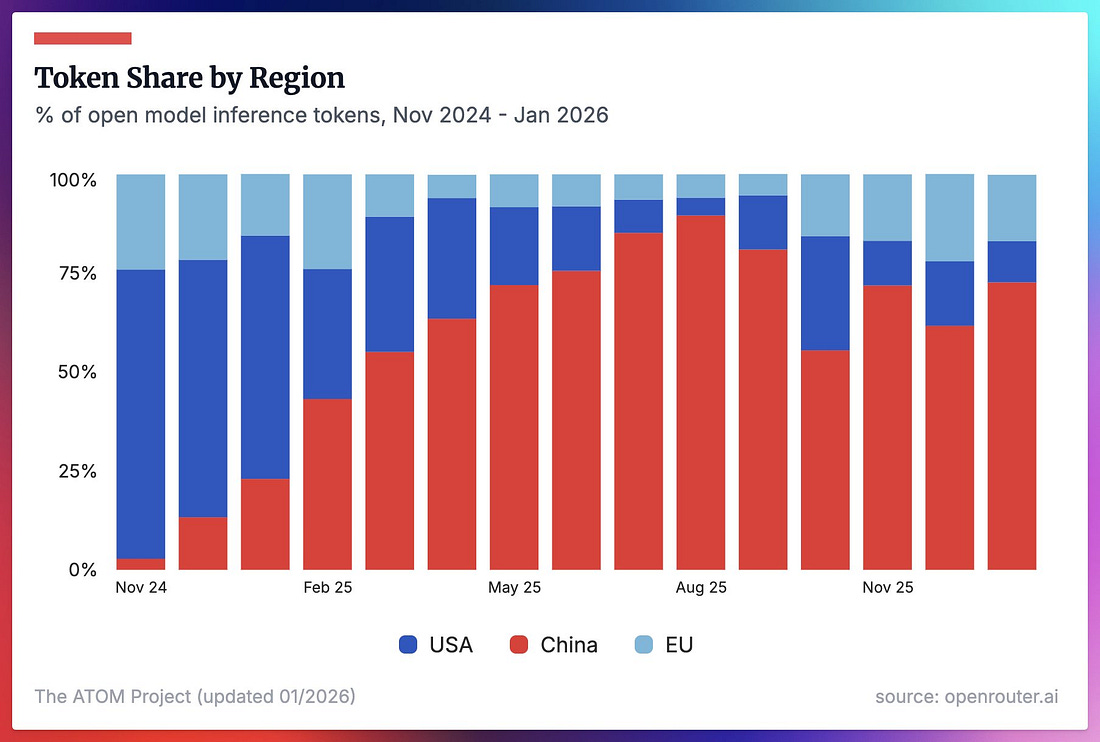



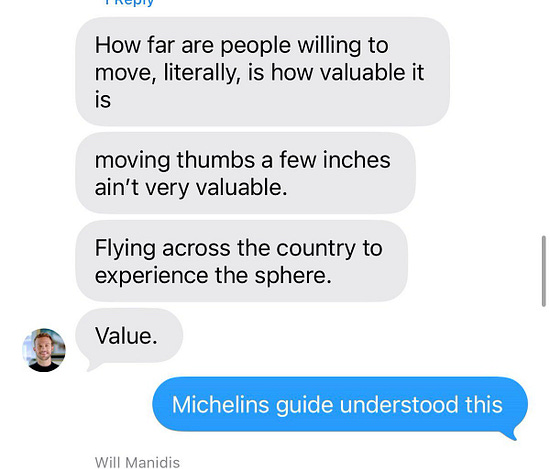
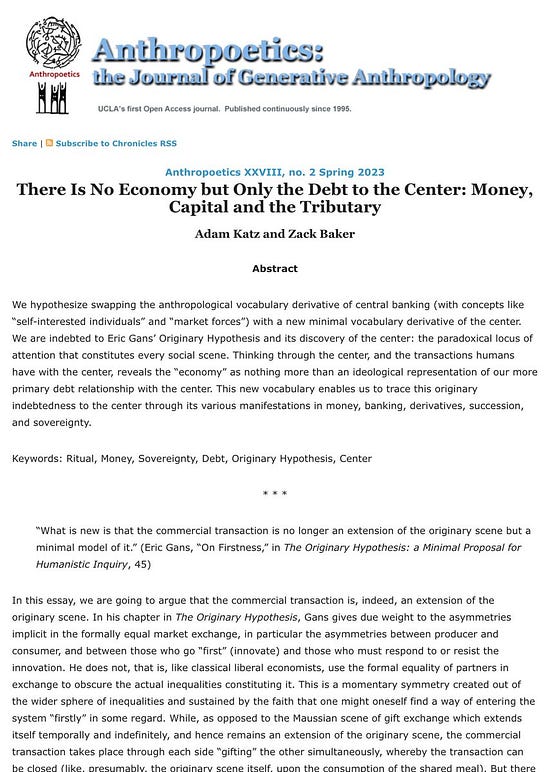


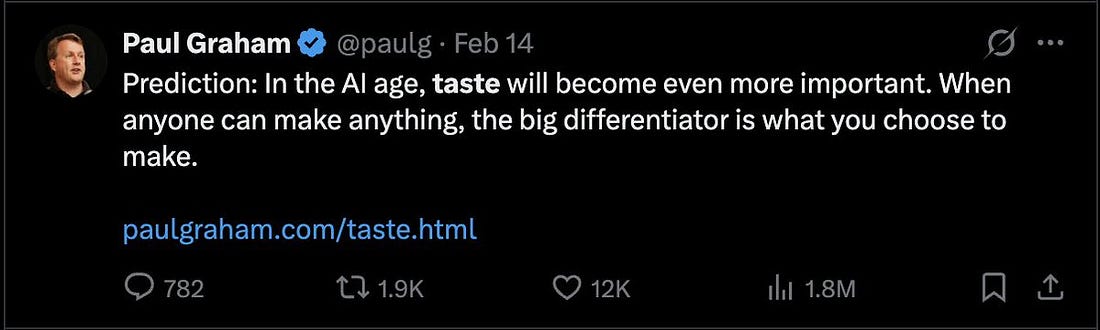
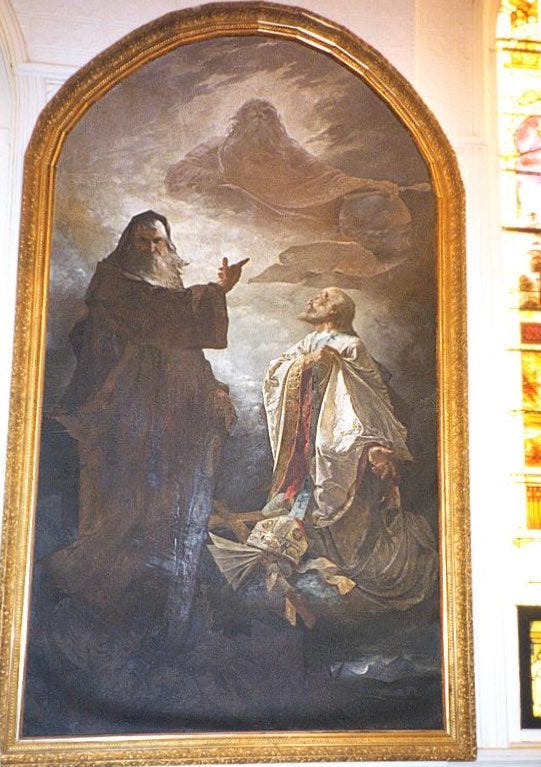

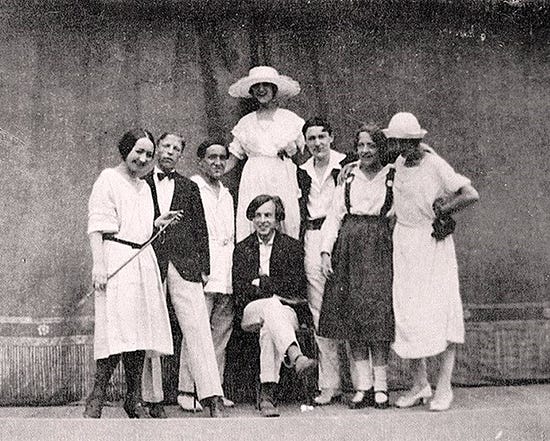

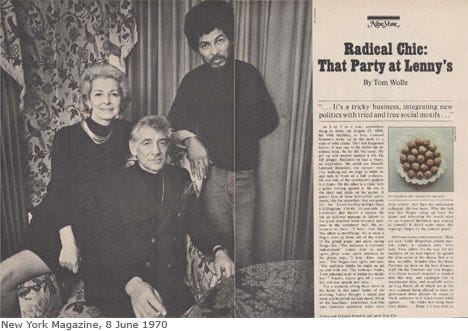 Aelfred The Great @aelfred_D
As relevant as ever (to the mid-70s urban white contingent) killing it, NYT
Aelfred The Great @aelfred_D
As relevant as ever (to the mid-70s urban white contingent) killing it, NYT




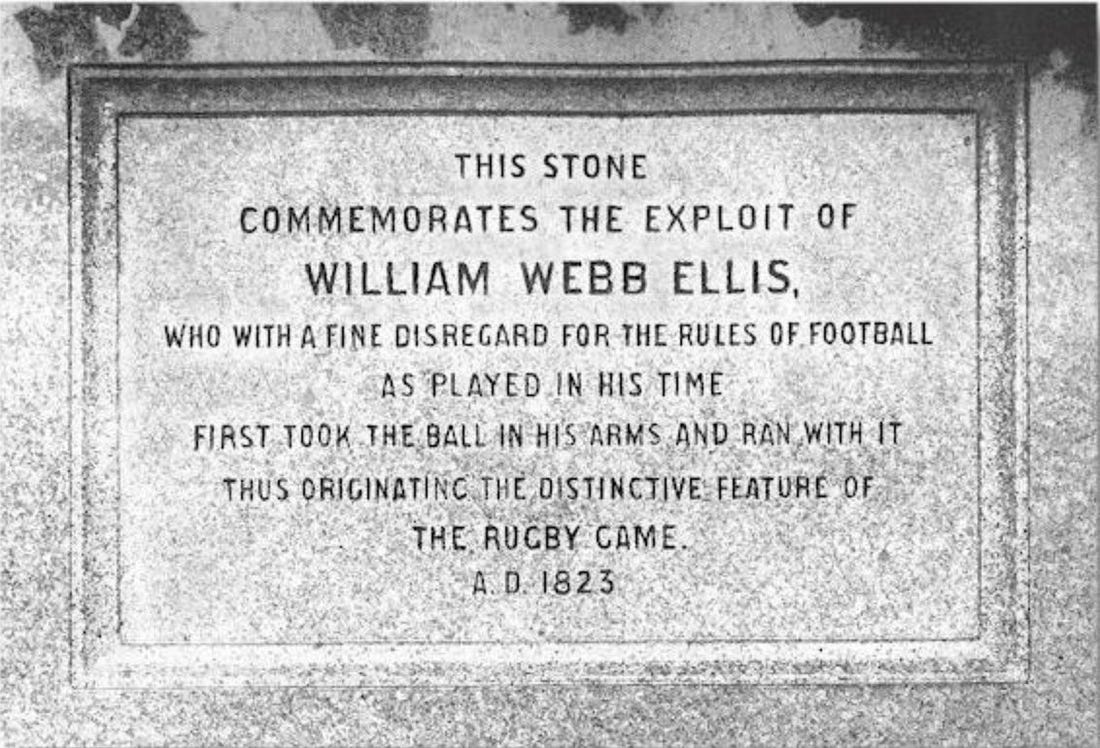
 Historically,
.png) TL;DR: In case you missed it, you can now see all of Every’s upcoming camps and workshops
TL;DR: In case you missed it, you can now see all of Every’s upcoming camps and workshops 
 TL;DR: If 2025 was the year every business got an agent, 2026 is the year they realize what those agents are missing: the right context. This is a problem that entrepreneurAndy Rossmeissl has spent his career on before LLMs even entered the picture. Knowing the right information about your customers, he argues, is key to making their buying experience feel bespoke. That can be as small as knowing when they are going for cocktails on Friday. His practical playbook to curating context shows you how to go from knowing everything about a customer to knowing the one thing that moves them.—



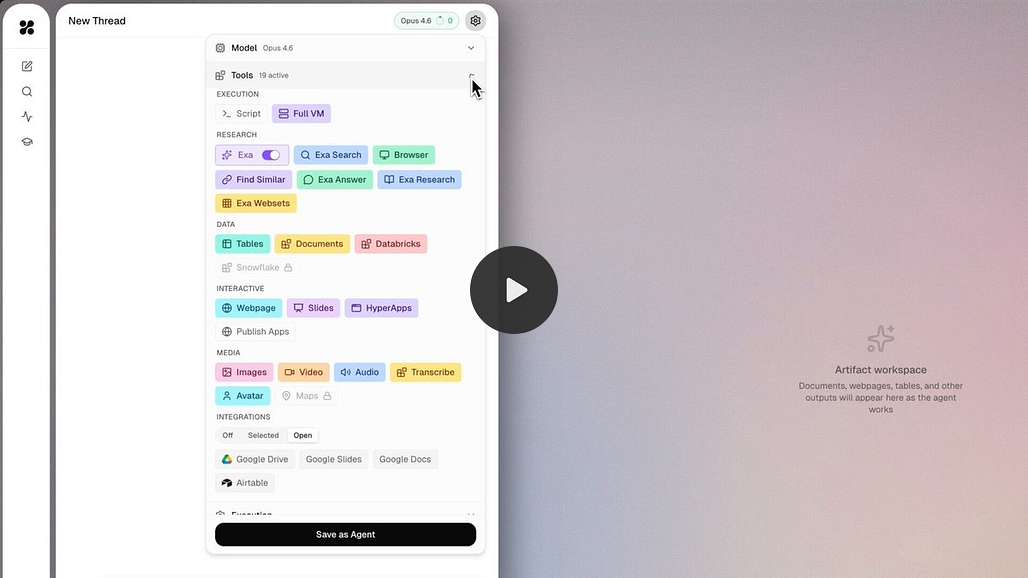
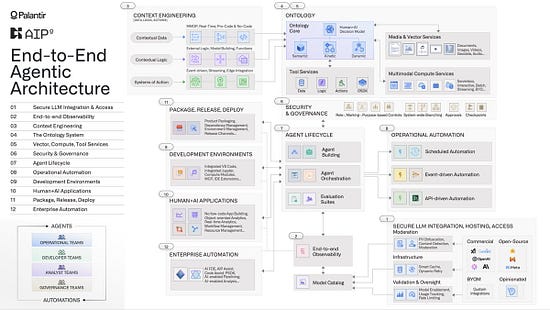
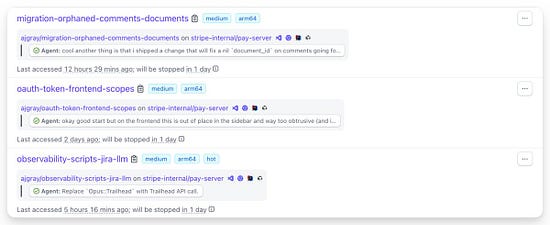

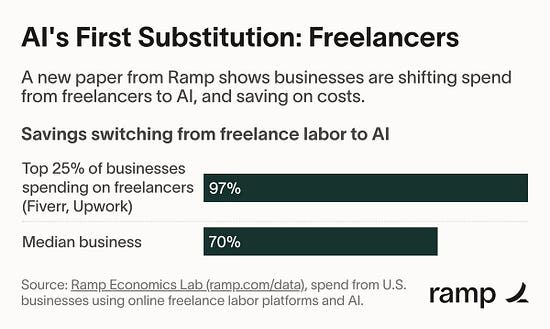
 Hello, and happy Sunday! to/events/claude-code-101-2) workshop led by AI engineer and Every writer