The case for keeping your AI on a need-to-know basis
by Mike Taylor Most people can’t imagine switching away from ChatGPT—it “knows them so well” thanks to its memory feature.Mike Taylor’s view is the opposite: Memory has more disadvantages than advantages. He introduces a concept he calls “context rot,” the slow buildup of stale preferences, errors, and contradictions in an LLM’s memory that quietly degrades your results. His real-life examples are as hilarious as they are insightful—ChatGPT trying to make a basic website feature “as dope as possible” thanks to a Kanye quote in his custom instructions and serving him BBQ rib advice suspiciously tailored to his Hoboken zip code. Sometimes it’s better to forget.— Kate Lee__ Memory is frequently described as ChatGPT’s “killer feature.” Many people tell me they can’t switch to Gemini or Claude because the OpenAI tool “knows them so well.” I have memory turned off. The memory feature allows ChatGPT to save and recall information it thinks is important about you, as well as reference past chats to shape its responses. While I can see how this could make a “helpful assistant: more helpful, I don’t use it. My background is in internet marketing, where it was common to open Google in incognito mode so you didn’t bias your results when checking your client’s ranking. Since Google search results are personalized, your client would show up first if you search from your account. You click on it so much that Google knows you like it. I have the same issue today on Spotify—the algorithm recommends both Rage Against the Machine and the K-Pop Demon Hunters soundtrack, because my six-year-old daughter shares my account. The argument for turning off memory is the same. I want unbiased results from ChatGPT, based on context that I carefully curated and put in the prompt, so I know how it made its decision. With memory, anything from your past chats could affect the results in ways that are hard to predict. While the memory feature might be worth the loss of control for most users of ChatGPT, it can lead to unexpected and difficult-to-diagnose problems. Hear me out as I explain the problems you might run into, and hopefully, I’ll convince you to be careful with memory.
The app for people who actually do what they said they’d do
Kanye in context
Before memory was released, I was experimenting with “custom instructions,” which allowed you to tell ChatGPT how you want it to respond. This was a primitive form of memory, simply a text document you could update to craft ChatGPT’s identity toward your personal preferences. Among other things, I had inserted an old (read: pre-meltdown) Kanye Westquote that I thought would steer ChatGPT away from its generic responses: “For me, first of all, dopeness is what I like the most. Dopeness. People who want to make things as dope as possible. And, by default, make money from it. The thing that I like the least are people who only want to make money from things whether they’re dope or not. And especially make money at making things as least dope as possible.” While I can’t fault it for effort, ChatGPT massively over-indexed on this quote and referenced it in basically every chat session. For example, when ChatGPT (this was pre-Codex when we were all just copying and pasting between ChatGPT and our code editors) built a collapsible section on a webpage, it claimed to have made the basic feature “as dope as possible.” ChatGPT tried to make a basic website feature “dope,” which it does not need to be. (Screenshot courtesy of Mike Taylor.) It applied this quote to cases as varied as interior decor (relevant), marketing plans (less relevant), and Python error debugging (irrelevant). Technically, it’s doing what I asked, but a human would be more judicious with how he or she applied these custom instructions. ChatGPT tried to make everything dope. (Screenshot courtesy of Mike.) Even a throwaway line in your context window can have a big impact on the results you get from AI. These models are trained to be extremely eager to please, and so you need to manage the context you provide them, lest they get distracted, confused, or obsessed with what’s in there, degrading your results. The Kanye example was obviously silly and easy to catch, but sometimes memory issues are more subtle. I turned memory back on while writing this piece and didn’t immediately notice any major issues. Then I asked ChatGPT for help with some barbeque ribs I’m cooking. It came back with “Hoboken Dinner Upgrade Ideas,” recommending Trader Joe’s corn bread mix and “American-dad-core” mac and cheese. Seeing something so ham-fistedly tailored to my life (I just relocated to Hoboken) was disconcerting and mildly annoying. ChatGPT gave me suspicious barbeque advice tailored to my new home. (Screenshot courtesy of Mike.) Did I get genuinely good advice for ribs, or is it tailoring suggestions to what’s near my apartment? I love Trader Joe’s, but would it have recommended a better option if it hadn’t recalled me shopping there by looking at relevant past chat history? What relevance does Hoboken have to cooking ribs? Would it give me different advice if I lived in Austin, a place known for its barbeque? Did it give me the easier, less authentic recipe, something for a stereotypical busy Hoboken dad? I wondered how many biased responses I had missed in the past week. I switched memory back off.
Context rot
My Kanye and barbeque experiences are a small, self-inflicted version of a much bigger problem. Drew Breunig , a data science and product leader,published a useful taxonomy of how contexts fail in AI systems. He highlights the kind of problems you might run into when using memory.
Context poisoning
The simplest failure is what the Google Gemini team calls context poisoning : A hallucination or error gets into the context, and the model keeps referencing it like gospel. The AI develops strategies around a goal that doesn’t exist or “remembers” something about you that never happened. If ChatGPT misinterprets something from a past conversation and saves it to memory, that bad signal is now shaping future responses. You’d never know you were getting poisoned results unless you went digging.
Context distraction
Then there’s context distraction. The Gemini team found that as their Pokémon-playing agent’s context grew past 100,000 tokens, it stopped synthesizing new strategies and started repeating actions from its history. It got stuck in a loop of its own past. A Databricks study found that model accuracy starts declining well before the context window is full, sometimes as early as 32,000 tokens. With memory features, you have no idea how full that context window is, and the more information that’s crammed in there, the more likely you are to overload the model with distracting, confusing, or conflicting information.
Context confusion
The next flavor of context trouble is context confusion, or what happened with my Kanye quote. You put something in the prompt, and the model is forced to pay attention to anything in that prompt. It doesn’t know that the Kanye quote was meant to be a loose creative vibe and not a binding directive for every interaction. Berkeley’s Function-Calling Leaderboard , which benchmarks how well AI models use external tools (functions a model can use in your code) and APIs, demonstrates this phenomenon at scale: Every model performs worse when given more tools, and all of them will occasionally call tools that aren’t relevant to the task. If irrelevant tool definitions trip up frontier models, imagine what a messy pile of half-remembered user preferences does.
Context clash
Finally, there’s context clash, when different parts of the context actively contradict each other. A Microsoft and Salesforce team found that when they split a single prompt into a multi-turn conversation—giving the model information in stages rather than all at once—performance dropped by an average of 39 percent. The model was eager to jump to an answer before it had the full context, and its early, incomplete attempts at answering remained in the context, polluting its later reasoning. It couldn’t recover from its own wrong turns. Now imagine this playing out across months of saved memories, where your preferences from January might directly conflict with what you told it in June, and the model is struggling to reconcile both. All of these failures—context poisoning, distraction, confusion, and clash—add up to what I call context rot. It’s not one dramatic failure; it’s the slow accumulation of stale preferences, misremembered facts, outdated goals, and contradictory signals that gradually degrade the quality of the AI’s response. The models are too polite to tell you your context is a mess. Instead, their output quietly gets worse, and you blame the model instead of the soil it’s growing in.
Memory wipe
I keep memory turned off, not just because I’m paranoid about context rot, but because forgetting is a superpower In my piece on “New Taylorism” I argued that management can finally become a hard science because AI coworkers are stateless. You can wipe their memory and start fresh, and they have no idea. It’s like the TV show Severance —every session begins with zero baggage or knowledge of the outside world, and no memory of the time you swore at it or tried the same task 15 different ways. Average users of ChatGPT don’t A/B test their prompts like I do , and religiously save them in GitHub or Google Drive, but the principle is the same: When you get a recommendation from ChatGPT, you have to ask yourself what might be influencing it. Is it suggesting intimate dinners for your wife’s surprise party because that’s what she’d want, or because you told it that you hate large gatherings? Is it drafting your emails in a formal tone because the situation calls for it, or because you asked it to sound professional for a job application? Resetting to a clean slate by starting a new chat session (with memory off) is what lets you understand how ChatGPT makes its decisions. You know exactly what context it’s using because it’s only what you pasted into this prompt, not something from weeks or months ago that might be outdated, irrelevant, or wrong. The context you provide is the only variable, which makes it a true experiment—something you could never do with a human employee who remembers (and resents) the last round of testing. Turn on memory, and you lose that control. Your context becomes a compost heap where you can’t isolate what’s helping and what’s hurting. The prompts I use get better over time precisely because the AI doesn’t remember a thing. Memory will work better as models get smarter, but if you want ultimate control over your digital workers, turn memory off.
Prof G Markets recently imported your email address from another platform to Substack. You'll now receive their posts via email or the Substack app. To set up your profile and discover more on Substack, click here.
Description: Scott reveals whether he gets pushback from tech CEOs, weighs in on who should run in 2028, and explains why the ability to mourn and move on has been key to his success.
Want to be featured in a future episode? Send a voice recording to officehours@profgmedia.com , or drop your question in the r/ScottGalloway subreddit: https://www.reddit.com/r/ScottGalloway/
Looking for the full version? Become aProf G+ subscriber for unlimited, ad-free access to all our videos, including exclusive content only available on Substack.
In 1661, André Le Nôtre completed the gardens at Vaux-le-Vicomte for Nicolas Fouquet, the French finance minister. The gardens were so spectacular that Louis XIV, upon visiting, had Fouquet arrested on embezzlement charges that historians now consider largely fabricated, and hired Le Nôtre to build something even bigger at Versailles.
Versailles is a garden designed from above. The Grand Canal extends nearly a mile along the central axis, aligned with Louis’ bedroom. The parterres de broderie are geometrically precise, their boxwood hedges trimmed into scrollwork patterns that can only be appreciated from the upper windows and most interior rooms of the palace. The allées radiate outward in perfect symmetry. The orange trees are placed in silver tubs such that they can be moved indoors in winter, because the garden’s geometry is not built to accommodate seasonal variance.
All images throughout from “Plans raisonnés de toutes les espèces de jardins” 1838 by Thouin, Gabriel, 1747-1829. Some scans from the Internet Archive, some from my own copy.
You could draw Versailles on paper and execute it to specification without ever visiting the site. In fact, I hear many billionaires across the gulf have done so, and this is essentially what Le Nôtre did. The plan precedes the place. The geometry is imposed on the land. The land’s existing contours — its hills, its drainage, its mature trees — were obstacles to be flattened. Le Nôtre moved tens of thousands of cubic meters of earth to level the terrain. He diverted rivers. Where the land resisted his plan, the land lost.
The French formal garden starts in the endgame — the perfect geometry — and works backward. The garden, once built, is meant to look as though it has always existed exactly as it does. Time is the enemy. Overgrowth is the enemy. Nature is the enemy. The gardener’s job in the French tradition is to arrest all three. Versailles requires at any given time hundreds of gardeners whose sole purpose is to prevent nature from reasserting itself and to restore it to its original plan. The geometry must be held.
The English, over centuries of thinking about gardens, developed a relationship with the natural world that has no real equivalent in any other culture.
Lancelot Brown was born in 1716 in Kirkharle, Northumberland. He was not an architect, not a painter, not a theorist, but a gardener. He began his career tending the gardens at Stowe for Lord Cobham, and rose through his ability and an extraordinary eye for what the land could become.
The story is that Brown would arrive at an estate and spend months walking the grounds with the owner, studying the contours of the land, the fall of light across a hillside, the path of an existing stream, the position of mature trees that had been growing for centuries before anyone thought to design around them, and pronounce after much consideration that the place had “great capabilities.”
Not that he could dominate the land like the French. Great capabilities — as though the land already knew what it wanted to be, and his job was to figure it out.Brown designed more than one hundred and seventy landscapes over thirty years. Blenheim. Chatsworth. Warwick Castle. Croome Court. The method was always the same. He walked the land. He worked with the existing contours. He planted trees not in rows or geometric patterns but in clumps and belts that mimicked the way trees naturally colonize a hillside. He created lakes by damming existing streams, allowing the water to find its own level and shape. He smoothed the transitions between the garden and the surrounding countryside until it wasn’t clear where the estate ended and nature began.
It’s worth pausing here on Central Park. Not only because it is probably the most famous landscape in America short of the national parks, but because it’s widely celebrated as a particularly American example of an English garden. I don’t believe it is one, and it’s worth explaining why.
Frederick Law Olmsted and Calvert Vaux won the commission to design Central Park in 1858. Olmsted had visited England, had walked the great estates, had seen Brown’s work and Repton’s work, and understood the aesthetic. The sunken transverse roads that cross the park invisibly below grade are ha-has, directly borrowed. The Ramble is meant to feel like an English woodland walk. The Great Lawn is the rolling parkland of a Brownian estate, scaled for a city far larger than the English countryside.
But the thing Olmsted built is fundamentally different from what the English built, and the difference matters. Central Park does not look like New York. This is obvious once you notice it and invisible until you do.
Manhattan is a granite island. The native landscape is rocky, vertical, and harsh. The Manhattan schist, some of the oldest rock on the eastern seaboard, breaks the surface everywhere. Before the city, the island was a tangle of salt marshes and tidal creeks in the lowlands, dense hardwood forest on the ridges, and massive glacial boulders deposited ten thousand years ago scattered across the terrain. It was dramatic, strange, and wild in a way that looks nothing like the English countryside.
Olmsted buried most of it. He imported hundreds of thousands of cubic yards of topsoil. He planted nearly five million trees, shrubs, and vines to create rolling meadows, gentle woodland walks, and pastoral vistas that belong in Oxfordshire, not on a North Atlantic granite ridge. The Sheep Meadow is an English lawn. The Ramble is an English woodland. The whole composition is a fantasy of the Home Counties dropped onto Manhattan.
This may seem like a pedantic distinction. It is not, and it is not merely aesthetic.
This is Le Nôtre with English aesthetics. The geometry is naturalistic rather than formal, but the method is French: impose a vision on the land by eliminating what’s already there. The curves are designed on paper. The wild areas are planted to specification. The meadows are manufactured. The whole thing is a representation of nature — an extraordinarily beautiful one — but it is not nature tended. It is nature performed.
We can only imagine what Brown would have done with this site. He would have arrived and walked the land and seen the schist and the glacial erratics and the drainage patterns and the salt marsh. And he would have said: this has great capabilities. He would have made a fundamentally New York park.I’m writing about gardens today because I work in technology, and technology is almost exclusively in the business of building new Versailles.
The pattern is so consistent it is almost impossible to see until you write it all out. A new system arrives. It surveys the landscape of whatever came before — the existing tools, the inherited flesh-and-blood workflows, the accumulated habits of millions of people and processes — and it levels the terrain. It imports its own topsoil. It plants its own geometry. The previous system is not incorporated, adapted, or even respectfully buried. It is flattened, because the new plan has no room for it. It is easier to build a beautiful geometric formation on top of it.
And then the maintenance begins. Hundreds of engineers — our gardeners — are deployed to hold the geometry. They prevent the natural entropy of real life from reasserting itself. They trim the hedges and patch the cracks and seed over the footpaths that emerge from the natural use of the system. They keep the parterres de broderie crisp and legible from the upper windows of the executive suites and boardrooms where the plan was drawn. The system, once shipped, is meant to look as though it has always existed exactly as it does. Time and user behavior are the enemy, and they must be eliminated. The mess of real life — flesh and blood pressing against the borders of an imagined, idealized, perfect system.
This is expensive. It is extraordinarily, ruinously expensive. And we keep doing it because the French garden is beautiful the day it opens. But there is a much worse thing that happens. When the geometry becomes too expensive to hold — when the hedges grow faster than the gardeners can trim them, when the system calcifies into something no one can move through — we do not attempt to work the land of the existing Versailles. We do not call in Brown. We build a new Versailles next door.
Healthcare is the clearest case. The existing system, for all its faults, is something much closer to an English garden than anyone in technology wants to admit. It is not ordered. It is not geometric. It is a strange, sprawling, deeply human landscape that grew over decades through the accumulated decisions of millions of diffuse people — doctors, patients, insurers, regulators — each responding to the contours of the terrain as they found it. It is inefficient in ways that are maddening and functional in ways that are invisible and hard to understand. I am not claiming it is elegant. I am not claiming it works for everyone. But the way a primary care doctor coordinates with a specialist and a pharmacist is neither elegant nor efficient, but load-bearing and functional, and all those pieces grew there for a reason, the same way a tree grows on a hillside for a reason even if no one planted it there and it interrupts our hedge line.
So what did technology do? It looked at the landscape and saw ugliness. It saw the inefficiency and the wait times and the paperwork and the experience that degrades year after year, and it did what Le Nôtre would have done: it leveled the ground and built something clean. Telemedicine pill mills. Cash-pay clinics. Lifestyle prescriptions delivered to your door with the frictionless ease of Uber Eats. The new garden was undeniably prettier and nice to walk through. The hedges were low, the paths were wide, the geometry was modern and inviting. But it had no relationship to or learning from the land it was built on.A patient who once had seventy-five percent of their care subsidized — via commercial or federal insurers — now paid for everything out of pocket. The coordination that the old system provided, imperfect and frustrating as it may have been, vanished. Drugs conflicted with each other. Medical supervision thinned to the point of performance. The consumer was invited into a beautiful new garden and discovered that the messy old landscape, the one that looked so ugly from above, had at least been keeping them from eating the dangerous plants that filled this new Versailles.
And the uncomfortable part: the palace itself is not paying for the maintenance of those beautiful French gardens. Versailles was maintained by the accumulated tax revenue of a million erstwhile and quite angry Frenchmen who never once set foot in the garden. The geometry was for Louis alone, but the bill was not his. The technology version of this is no different in structure, only in who receives the invoice. The consumer who fled the old system because it was slow and ugly and expensive arrives in the new one and discovers that every cost the old system absorbed — the coordination, the subsidy, the regulatory overhead that was maddening but also protective — has been transferred directly onto them. The garden is free to enter. The maintenance is yours.
This pattern is everywhere once you see it. Defense procurement. Financial markets. Crypto. The existing landscape is human and strange and disorderly in ways that are costly, but it is also adapted to its terrain in ways that are genuinely functional. And rather than studying it — rather than walking the land and asking what it’s already trying to become — we flatten it and plant something French. Something clean and geometric and spectacular on the day it opens. Something that requires an army of gardeners you pay for from that day forward. Something that has severed every root system that was holding the invisible weight of the hillside together.
I call this process parallel construction. A new Versailles built on cleared ground, next to a landscape that needed tending, not replacing. The old system left to decay. The new one uncontained, growing, passing more and more cost to the consumer. Neither one serving the people who actually live on the land.
What we almost never do is send someone to walk the land first. To spend months studying the contours of how people already work, the streams of information that already flow somewhere, the mature trees — the legacy systems, the inherited practices, the things that have been growing for decades — and to ask what this place is already trying to become. To approach a problem and say: this has great capabilities.
But there is a subtler case for parallel construction than mere caution. When the new system runs alongside the old rather than replacing it, the returns from technological progress can diffuse back upstream — slowly, imperfectly, but without requiring the destruction of everything load-bearing in the original landscape. We have seen this in healthcare already. The best products for years have been cash-pay, outside the normal system entirely — faster, cleaner, more responsive. And yet the innovations that proved themselves there have begun to push back into the mainstream: pricing transparency, patient-facing data, direct communication between doctor and patient that the old system made nearly impossible. The geometry of the new garden, tested in parallel, slowly reshaping the old one without having to raze it first.
Almost all of the language model discourse in recent days has imagined AI like French gardeners — or rather like viruses from outer space, inflicting themselves on society with no concern for what came before. It pretends we have no immune system to radical societal change.
This is a Citrini piece published this week as a particularly damning example of this. It participates in a form of Randian genre fiction in which markets are unceasing and rational beings that sit outside of human creation and are thrust onto us without choice. The fear of mass job displacement is real, but it rests on a flawed premise — that what we currently sit atop are radical, infallible systems of pure market competition. Capitalism has never actually been this. Global markets are, at most, a few hundred people coordinating with each other to make difficult trade-offs, organizing trillions in capital and billions of jobs. That is not a natural force thrust onto us.
We do not have to be French about this. We can look at what came before, learn from it, and usher in a societal reorganization closer to the English model — a more cultivated, intentional garden. It is foolish to pretend that anything in the history of modern financialized techno-capital is a raw and unfeeling system. This is a fiction we tell ourselves when market participants make trade-offs that hurt people, cause societal damage, and are not ones we would make in retrospect. The markets we participate in are intensely gardened. The people doing the gardening have names. It is a set of choices that people with names and addresses and human souls in the process of making. The Citrini piece is written as if the gardeners do not exist — as if the spiral arrives, as if unemployment happens, as if the daisy chain unravels the way a storm unravels, impersonally, without a hand on any of it. This is the most important fiction in the piece. Not the SaaS claims. The bloodlessness.
As we usher in our new age, we can choose to not be the French gardener. We can choose to be English, if not American about it.
The land almost always knows what it wants to be. The question is whether we are willing to listen.
ben's bites · Tuesday, February 24 2026 · 7 min read · ↑ top
10x faster models and the consulting angle for AI
Hey folks,
Google is back on top of the benchmark charts with Gemini 3.1 Pro. Impressive on paper, genuinely strong at reasoning tasks, creating SVGs, but there’s a speed issue. Many folks are really enjoying using it for frontend work—once they are able to get it working. Again, there’s some drama - a lot of people got their Google account banned for using their Google AI/Antigravity subscription to use Gemini 3.1 Pro with OpenClaw.
A 2.5-year-old hardware startup, Taalas , built a chip that has the weights of Llama 3.1 baked into the hardware, and it lets them achieve ~17k tokens/second in output speeds. For comparison, Groq is at ~600 tokens/second, and Cerebras is at ~2k/second. The model on the chip (they call it “silicon llama”) is largely unwritable, but supports custom context window sizes and LoRA fine-tuning. I compared the same model on their chat demo and Groq’s playground. As expected, it is dumber on Taalas’s demo (due to low-quality quantisation), but at this stage, the proof of “any AI model can be made 10x faster and cost 20x less” is more important. They plan to release a reasoning model version very soon, with frontier LLMs in plans too.
Why’s there always a meeting bot in your Zoom call? Blame Recall.ai. They power every meeting AI app, from Cluely to Hubspot to Clickup. Recall.ai handles the hard part: getting recording data across meeting platforms. Get started with $100 in credits*
Inference Engineering by Baseten - A book for AI engineers to learn how to serve different types of models (LLMs, media gen models, and more) to millions of users.
⚙️ Tools and demos
AssemblyAI Universal-3 Pro - Prompt your speech model to get jargon, speakers, and formatting right the first time. Free to try through Feb.*
here.now - Free, instant web hosting for agents, static elements only.
Every · Tuesday, February 24 2026 · 1 min read · ↑ top
We’re publishing our editorial guidelines, plus the workflows our writers, editors, and producers have built around them
by Kate Lee TL;DR: We’re hosting a live workshop on writing with AI this Friday, co-hosted byKatie Parrott, staff writer and AI editorial lead at Every, and me. Katie will introduce her full process for writing with AI, cover why writing with AI is fundamentally different from coding with AI, and demo the tools she uses daily, including Claude projects, custom Skills, andSpiral. Ahead of the workshop, we’re sharing a deeper look at Every’s philosophy of writing with AI and our team’s workflows.Register for the event. Today, Every is publishing our editorial guidelines. AI is woven into how we produce written and visual content for our subscribers, both as a tool to make us more efficient and as a creative partner. We want to be transparent about how that works, and we hope these guidelines can serve as a model for other AI-native publications figuring out their own approach. Read our editorial guidelines The guidelines outline our mission, how AI fits into it, who we write for, and our commitment to editorial independence. But workflows are personal. Every person on our team—writer, editor, video podcast producer, social media specialist—has developed their own way of working with AI. Below, we share how.
How much does distillation really matter for Chinese LLMs?
Interconnects by Nathan Lambert · Tuesday, February 24 2026 · 10 min read · ↑ top
Reacting to Anthropic's post on "distillation attacks."
Distillation has been one of the most frequent topics of discussion in the broader US-China and technological diffusion story for AI. Distillation is a term with many definitions — the colloquial one today is using a stronger AI model’s outputs to teach a weaker model. The word itself is derived from a more technical and specific definition of knowledge distillation (Hinton, Vinyals, & Dean 2015), which involves a specific way of learning to match the probability distribution of a teacher model.
The distillation of today is better described generally as synthetic data. You take outputs from a stronger model, usually via an API, and you train your model to predict those. The technical form of knowledge distillation is not actually possible from API models because they don’t expose the right information to the user.
Synthetic data is arguably the single most useful method that an AI researcher today uses to improve the models on a day to day basis. Yes, architecture is crucial, some data still needs exclusively human inputs, and new ideas like reinforcement learning with verifiable rewards at scale can transform the industry, but so much of the day to day life in improving models today is figuring out how to properly capture and scale up synthetic data.
To flesh out the point from the start of this piece, the argument has repeatedly been that the leading Chinese labs are using distillation for their models to steal capabilities from the best American API-based counterparts. The most prominent case to date was surrounding the releaseofDeepSeek R1 — where OpenAI accused DeepSeek of stealing their reasoning traces by jailbreaking the API (they’re not exposed by default — for context, a reasoning trace is a colloquial word of art referring to the internal reasoning process, such as what open weight reasoning models expose to the user). Fear of distillation is also likely why Gemini quickly flipped from exposing the reasoning traces to users to hiding them. There was even very prominent, early reasoning research that built on Gemini!
This all leads us to today’s news, where Anthropic named and directly accused a series of Chinese labs for elaborate distillation campaigns on their Claude models. This is a complex issue. In this post we unpack a series of questions, beginning with the impact, and ending with politics. The core question is — how much of a performance benefit do Chinese labs get from distilling from American models.
To start, let’s review what Anthropic shared. From the blog post, emphasis mine:
These labs used a technique called “distillation,” which involves training a less capable model on the outputs of a stronger one. Distillation is a widely used and legitimate training method. For example, frontier AI labs routinely distill their own models to create smaller, cheaper versions for their customers. But distillation can also be used for illicit purposes: competitors can use it to acquire powerful capabilities from other labs in a fraction of the time, and at a fraction of the cost, that it would take to develop them independently.
Much like the models themselves, the benefits of distillation are very jagged. For some capabilities, particularly if you don’t have a full training pipeline setup for it, quickly distilling some data from the leading frontier model in that area can yield massive performance boosts. This can definitely help the lab distilling from the API catch up much more quickly than they otherwise would. Most distillation is rather benign, using many tokens of an LLM to help process and refine existing data — putting a lot of compute into getting a few, high quality training tokens out. This sort of raw data processing work can be done on many different APIs, but one tends to be best.
When we go into what Anthropic says the three Chinese LLM builders actually used the Claude API for — as an aside, Anthropic didn’t confirm that the attack was done through the API, the chat app, or Claude Code — the actual impact of the operations is very mixed. It’s hard to know how much untracked usage these labs deployed for other projects (or other American models).
To start, Anthropic puts DeepSeek first in their blog post because they’re the household name in the US for Chinese AI. The extent of their use is actually quite small, showing how this post is more about the big picture than the details:
DeepSeekScale: Over 150,000 exchanges
The operation targeted:
Reasoning capabilities across diverse tasks
Rubric-based grading tasks that made Claude function as a reward model for reinforcement learning
Creating censorship-safe alternatives to policy sensitive queries
In the scale of training a language model, 150K samples is only scratching the surface as a substantive experiment. It looks like they were experimenting with some rubrics, which could’ve been for an online RL run, but that’s extremely unlikely with how distributed the access was, and then some minor stuff on completions for sensitive queries. This usage of Anthropic’s API will have a negligible impact on DeepSeek’s long-rumored V4 model (or whichever model the data here contributed to). This was also very likely a small team at DeepSeek and unknown to much of the broader training organization.
The other two labs, Moonshot AI (makers of the Kimi models) and MiniMax reflected much broader usage.
Moonshot AIScale: Over 3.4 million exchanges
The operation targeted:
Agentic reasoning and tool use
Coding and data analysis
Computer-use agent development
Computer vision
MiniMaxScale: Over 13 million exchanges
The operation targeted:
Agentic coding
Tool use and orchestration
The role of distillation is constantly changing. Distilling from Claude today for its agentic behavior is much more valuable than versions of Claude have been as a teacher in the past. Claude Opus 4.6 has a well-rounded agentic navigation that none of the other models quite match. Why not try training on some of the model outputs to see if your model absorbs it? Over the next few months, that’ll be less differentiated. It’s sort of like how all the models are way better at math today than most people need — there are plenty of places to distill from.
Estimates will vary, but if each response had 10-25K tokens per exchange, the total tokens across these two labs, mostly with MiniMax, would be 150-400 billion tokens. This is a substantial amount, which could meaningfully improve a models’ post-training. For example, in Olmo 3 we had an SFT dataset of 20 billion tokens that could be built like this, and increasing it by 10X would be very reasonable.
These numbers are just scratching the surface of total synthetic data generation across APIs hosted by US companies. At the same time, quantity is a pretty crude way to measure impact. Just taking the outputs from Claude and figuring out how to add them to your model pipeline isn’t easy. The research community has seen many cases where taking outputs from a certain teacher model unexpectedly makes the student worse — subtle interactions between the data make it variable and tricky to do this type of distillation. It’s fundamentally a research problem.
This is what I’m sure the Chinese labs are innovating at. There’s an argument that Chinese frontier labs are substantially more efficient than their Western counterparts — this is misleading.
The labs operate under different constraints. The Chinese labs are likely slightly more efficient out of necessity in being lower on resources, but overall the picture of talent access is very similar. The Chinese labs also approach benchmarks differently, making it appear that they’re a bit closer than they really are (and appearing as if they’re potentially surpassing). This is needed to get momentum and brand recognition in the AI market.
The Chinese labs likely innovate greatly on distilling from leading API models, due to their restricted access to GPUs. GPUs could be used to construct synthetic data, but for organizations with more funding than they can spend on research compute (being supply limited), using API-based models is one of the few other options for effectively getting more compute. It’s way easier to figure out getting access to “banned” API models than it is to smuggle tens of thousands of physical GPUs and get them set up.
It’s not only the Chinese labs that operate like this. Synthetic data from a model you don’t own is all arguably distillation. Distillation is a shortcut to more compute for anyone. It’s also a far less risky cost, as having a big cluster for research requires a very large financial commitment, where APIs are pay-as-you-go. For example, in Olmo 3 we used millions of GPU hours on the Frontier supercomputer and Azure credits through NAIRR for synthetic data. We didn’t have the equivalent in GPUs (or really the cash, thank you research credits!).
All together, it’s very fair for Anthropic to be concerned about this. I still wouldn’t say it is a crucial factor in these Chinese labs post-training capabilities, especially not one that’ll be easy to measure in a time gap to matching the model they’re distilling from a la the US-China performance lag.
If we take a step back, there was even a time when Claude Sonnet was the flagship model ahead of Opus (I think this was with Sonnet 3.5), much of this comes from it being well distilled internally from Opus checkpoints. Fast iteration and high-quality data can go very far, letting student models surpass the teacher. Frontier labs use this to their advantage, by having internal-only models for generating synthetic data, but saying that Chinese models could never pass the US frontier due to data distillation is like saying that Claude Sonnet could never beat Opus. It's unlikely, and it depends a lot on release times, but with AI models making dramatic progress, weirder things like this have already literally happened.
The biggest factor unaddressed here is how distillation from stronger teacher models is harder in an era when reinforcement learning at scale is needed to train the best models. You can spend compute carefully crafting and filtering prompts, but you still need to train the model yourself with substantial, on-policy inference — generation is the majority of the compute cost for RL and it can’t be generations from another model. For this reason, I expected this story to die down a bit. It’s clear from their openresearchthatChineselabs have excellent RL infrastructure, despite the compute shortages.
This action from Anthropic represents another continued step ratcheting up the AI geopolitical tension. Kneecapping model distillation will be far harder than restricting the shipments of physical goods like GPUs. In many ways it seems like fully restricting distillation through distributed access methods seems almost impossible, and restricting GPU sales would be far more impactful.
Anthropic and the AI industry should choose their battles. When API endpoints are available for the best models, other entities will use that to train variants of said model. This is a natural evolution of AI models. If AI models are so precious that distillation is an extreme risk, then the models will be restricted to first-party products. Anthropic has a choice to do this with their latest models. The market for API-based model alternatives may be so competitive that some companies go this path — likely in part due to Chinese models undercutting on price — but an API is a fundamental offering that no leading lab will risk walking back from anytime soon.
Liking, sharing, commenting, or recommending Interconnects from your Substack is the only way Interconnects is possible. Thank you for your support.
If you liked this, consider upgrading to a paid subscription to cover my growing subscription and API fees. We offer group Interconnects subscriptions at tiered discounts for 5+ heads.
If you want all of the best AI writing on Substack through one subscription for your team of 20+, check out https://readsail.com/.
First Round Review · Tuesday, February 24 2026 · 2 min read · ↑ top
We spoke to founders and operators who’ve hired (and been) FDEs to find out what it takes to build the model at your company.
So You Want to Hire a Forward Deployed Engineer: How to Know If You Need One and How to Get the Role Right
Once written off as a glorified consultant, the forward deployed engineer is now the hottest gig at AI startups.The FDE was originally conceived by Palantir to wrangle value out of a non-prescriptive product. The title is descriptive: Palantir FDEs spent most of their time literally deployed with customers, and were still very much engineers, writing and debugging production code for some incredibly niche use cases, from government to supply chain to energy.Now as AI products collide with the reality of legacy systems and thorny codebases, founders have turned to the forward deployed model to send engineers onsite to help speed the time to value for enterprise customers.But what’s missing from the FDE hype cycle — no doubt also buoyed by Palantir’s outlier success in recent years — is that the role isn’t one-size-fits-all for every AI startup. It takes a ton of intentional design to actually get a return on investment.“Forward deployed engineering is being framed as a panacea right now. But it’s a lot more complicated than that,” says James Honsa, who previously built and scaled Ironclad ’s equivalent of an FDE team, called “legal engineering.” “There are times in a company's lifecycle where it makes sense, and there are customer segments where it makes sense, but it's a pretty blunt instrument to try to use for your entire business.”We sat down with founders who’ve hired FDEs and former Palantir FDEs and recruiters to break down what justifies adding forward deployed headcount, and how to find the right folks for the job.Our panel covers:
Where FDEs add value, from uncovering obscure but meaty product opportunities to scaling scrappy CTO energy
A diagnostic to figure out if you actually need an FDE, or just want a traditional engineer or post-sales hire who can talk to customers
The traits all stellar FDEs have in common
How to scope the role for success and choose which customers to deploy to
My father, God bless him, pushed me through ten years of recreational basketball as a child. I was always tall for my age but about as unathletic as you could possibly imagine. I don’t have many memories from that era — I think everyone involved has done a good job of collectively blacking it out.
The one memory I do have is the first time I participated in a contested possession. Some other kid and I — seemingly slow enough that I could actually catch him — both had our hands on the ball. The ref blew his whistle repeatedly, trying to get us to separate, but we were locked in a giraffe-necked battle, each trying to wrench it from the other’s grip.
Eventually the ref set up a jump ball. We both lined up, but the only strategy either of us could figure out was to wait until one of us grabbed it and then pummel the other — just openly, in front of parents — until the ball came free again.
The jump ball is one of sports’ strangest inventions. When normal play breaks down and no one can agree on possession, we just throw the ball in the air and see what happens. It’s the only resolution mechanism in any sport that is essentially: let’s just restart and see who wants it more. The ball is loose. The outcome is uncertain. And the only thing that will settle it is raw commitment to getting the ball first.
I’ve been thinking about jump balls because I’m seeing them everywhere — in markets, in media, in the basic shared project of figuring out what’s true. Call it an epistemic jump ball: the moment when the normal mechanisms for establishing truth break down simultaneously across a large number of people. Everyone can see the ball is in the air. No one is quite sure where it’s coming down. And the only thing anyone can think to do, apparently, is beat the other guy senseless.
Jon Stokes
@jon_stokes
The Citrini thing is just the latest evidence of how many people on my feed have simply lost touch with material reality outside the gamified aether. You might say that these shape rotators are now lost in "an insane series of nerd traps and sky high abstraction ladders."
Gergely Orosz @GergelyOrosz
Eh. I just don’t buy this because I actually understand specific examples all too well: 1. It paints a picture of DoorDash disrupted by vibe coded alternatives. Dude. DoorDash / Uber moat is NOT software!! It’s real-world physical logistics. AI cannot disrupt DD… 2. (cont’d)
What’s interesting about the jump ball — the real one, and the metaphorical one — is the psychology of the players waiting underneath it. Both believe it’s theirs. Both also know, somewhere underneath that belief, that they might be wrong. This is what a failure of pricing looks like, whether you’re talking about equities or ideas or convictions. When the ball is in the air, no one has actually been convinced it’s going their way. They’ve just decided to act like it is.
But for the fleeting seconds that it’s in the air and the couple of minutes while we brutalize the other player into the floor before it resolves, we are in something of a free-for-all. There are a tremendous number of these epistemic jump balls, and in the absence of a functioning institutional body, the basic shared project of what’s true about a singular narrative can settle one of them. A secular story can organize a conversation around them for a week, but it can’t organize a civilization around them over decades. The Citrini piece tells you what to think about AI for five days. It can’t tell you what to do for the rest of your life.
I don’t have the energy to critique the Citrini piece anymore. I wrote 15,000 words about English gardening that many of you read -- at least in pieces -- yesterday in response to it. And my dear friend Gokul, who is a deeply serious and considered person, I think is pretty close to a heart attack, refuting the idea that the main function of DoorDash is a mobile app interface.
Gokul Rajaram
@gokulr
Tell me you never built a marketplace without telling me.
Alap Shah @alapshah1
To replicate marketplaces like $DASH or $AXP you need to replicate the demand and supply side. AI apps will do the demand side work for you, so to compete w DoorDash you just need to build the driver and restaurant network. The biggest competitor will likely be direct restaurant
But I do think it’s a relatively interesting skeleton key to understand the jump ball that exists in markets today. I think across informed and uninformed market participants, there is a simple view that equity prices are too high, and that we’ve priced in a level of AI margin expansion, growth, and fundamental change that has yet to occur. On the other side, with equally informed and uninformed market participants, there is a simple view that equity prices are much too low. And then we have failed to price in the fact that we are mere months away from free silicon intelligence too cheap to even meter, that will usher us into a post-scarcity, peptide-laden, sexless but also deathless communist society.
Even if these are both structurally incoherent views, I think we can agree that equities, or at least mega-cap, high-growth tech equities are not worth exactly what they’re worth today. The mechanisms that we usually use to figure out what that value is— things like earnings, revenue growth, and the amount of money your customers owe you— have given way to vibes. And the vibes point in both directions, with very little in between.
Which means that we are in something of an epistemic jump ball. Instead of allowing possession to settle itself naturally as the game progresses, we have no choice but to take on relatively extreme volatility, where the ball is thrashed in moments of uncertainty, until possession can be established.
Both sides know that their positions are incoherent, but the only choice to defend them is to take the extreme.
Will Manidis
@WillManidis
pre modern cultures that thought the sun circled earth and rain gods made rain still built aqueducts, invented geometry, even built steam engines. progress can often flourish under false world models. so progress from secular materialism isn’t proof alone of its absolute truth
The same broken price discovery mechanism that cannot tell you whether NVIDIA is worth a trillion dollars or a billion is the same reason it can’t tell you what is happening in the Middle East or what is happening in Europe or even basic questions of what happened on the news yesterday. The instruments we built to settle these questions in modernity— the DCF model, the peer-reviewed journal, the referee, the adults in the room— are fundamentally peacetime tools. They work when both sides have agreed on a collective underlying fiction, but that fiction is now gone. Neither side agrees on the rules, and neither side is even sure there are rules to be had.
What settles it in the absence of rules is narrative.
The Citrini piece is not analysis— it’s a story about the future, literally a sci-fi story, told with a velocity and breathlessness that oriented 40 million people towards it in a week. It doesn’t matter that it’s structurally incoherent or doesn’t really understand what the app DoorDash does. It doesn’t matter that Gokul is currently at clinically high blood pressure levels over the suggestion that a marketplace is simply a vibe-coded mobile app. What matters is that it made people move and it made people uncertain and people defined themselves in opposition to it. The piece functioned as a center of gravity, and a center of gravity doesn’t require cohesion— it just requires mass.
For all that we convinced ourselves we had ‘adults in the room’— experts or institutions that could tell us what was actually going on— the thing that organized people was always narrative, and the story did not need to be verifiable. It just needed to be extraordinary enough that the person listening to it would risk something to orient around it. And we’re back there now. That’s how humanity has always functioned.
The jump ball doesn’t get resolved by better data— both sides have the data and it’s largely meaningless. It gets resolved by whoever uses that data, or ignores it entirely because they don’t believe it exists in the first place, to tell a story coherent enough to feel like the ground under your feet. And we are entering a period where the capacity to produce that story— compelling, frictionless, direct to millions and millions— is approaching infinity at zero cost simultaneously.
It’s not that there’s just one jump ball. We’re not just confused about equities pricing. It’s that there are hundreds of them in the air at once across every domain of life— politics, culture, economics, identity, health, institutional trust— and in the absence of a functioning institutional body, the basic shared project of what’s true about a singular narrative can settle one of them. A secular story can organize a conversation around them for a week, but it can’t organize a civilization around them over decades. The Citrini piece tells you what to think about AI for five days. It can’t tell you what to do for the rest of your life.
The only thing that has ever settled all of them at once is religion.
Not religion as a cultural preference or religion as a tasteful and fashionable thing that you hold lightly enough that it never inconveniences you. The jump ball does not resolve for a tourist that’s just passing through. It does not resolve for the person who attends on Sundays and sins on Mondays. It resolves for the person whose belief penetrates them totally, who has reorganized their life around a conviction that costs them everything, that demands sacrifice, and is not independently a position they hold, but a position that holds them.
Pratyush
@pratyushbuddiga
Whenever this cycle ends, the Citrini “report” will be an extremely funny relic of the mania like a Bored Ape or Peloton’s stock chart. The DoorDash analysis is a third grader’s understanding of marketplaces.
Ever since the Second World War ended, we have spent decades holding everything with a loose grip. Loose-grip conviction is comfortable and it allows us to participate in every conversation, to be perfectly hedged in every order of life. It allows you to keep one foot in the market and one foot in the critique of the market and never commit to either. Loose grip is radically chic, it’s convenient, it’s modern, it’s cosmopolitan— and you can afford a loose grip when the referee is on the court and the institutions are settling possession for you with their extreme competence and free growth.
When the institutions break, your loose grip is worthless. It can’t organize you. It can’t make you move. It can’t make you defend your own livelihood, your own community, or your own beliefs. It certainly can’t settle a jump ball because it was never strong enough to make you let go of anything.
You can already see this happening. In every city in America, there are waves of young converts in every church who are more religious than their parents for the first time in history. This is not a stylish cultural trend but the result of a generation that was raised inside the loosest grip in human history. When presented with infinite narrative, infinite choice, and infinite proximity to everything and orientation towards nothing, the only possible solution is to reach for the tightest grip available. They are not becoming religious because it’s fashionable. They are becoming religious because there is nothing else that they’ve tried that can make the ball come down and disambiguate possession.
The jump ball between the loose grip and the tight grip is settling, and it’s settling towards the tight grip, towards the transcendent. I don’t see another mechanism strong enough to prevent everyone from going crazy. Our referees are gone. They’ve gone insane themselves and are spattered with blood and entrails and running around the streets screaming things that seemingly came far before language. The instruments of sense-making have totally broken and have been broken for some time. The stories are singular and infinite and free and pointed at nothing beyond a near-term trade with undisclosed conflicts of interest. The only thing that has ever organized civilizations for a period like this is conviction that there is something above the court worth orienting your life towards. Not just fashionable, radically chic opinions, but your entire life— and the conviction that it’s worth dying for.
We are two children on a basketball court, hands locked on a ball neither of us intends to use. The game resumes when we find something worth holding on for.
A Dream of Spring for Open-Weight LLMs: 10 Architectures from Jan-Feb 2026
Sebastian Raschka, PhD from Ahead of AI · Wednesday, February 25 2026 · 27 min read · ↑ top
A Round Up And Comparison of 10 Open-Weight LLM Releases in Spring 2026
If you have struggled a bit to keep up with open-weight model releases this month, this article should catch you up on the main themes.
In this article, I will walk you through the ten main releases in chronological order, with a focus on the architecture similarities and differences:
Arcee AI’s Trinity Large (Jan 27, 2026)
Moonshot AI’s Kimi K2.5 (Jan 27, 2026)
StepFun Step 3.5 Flash (Feb 1, 2026)
Qwen3-Coder-Next (Feb 3, 2026)
z.AI’s GLM-5 (Feb 12, 2026)
MiniMax M2.5 (Feb 12, 2026)
Nanbeige 4.1 3B (Feb 13, 2026)
Qwen 3.5 (Feb 15, 2026)
Ant Group’s Ling 2.5 1T & Ring 2.5 1T (Feb 16, 2026)
Cohere’s Tiny Aya (Feb 17, 2026)
(PS: DeepSeek V4 will be added once released.)
Since there’s a lot of ground to cover, I will be referencing my previous The Big LLM Architecture Comparison article for certain technical topics (like Mixture-of-Experts, QK-Norm, Multi-head Latent Attention, etc.) throughout this article for background information to avoid redundancy in this article.
1. Arcee AI’s Trinity Large: A New US-Based Start-Up Sharing Open-Weight Models
On January 27, Arcee AI (a company I hadn’t had on my radar up to then) began releasing versions of their open-weight 400B Trinity Large LLMs on the model hub, along with two smaller variants:
The two smaller variants are Trinity Mini (26B with 3B active parameters) and Trinity Nano (6B with 1B active parameters).
Figure 1: Overview of the Trinity Large architecture (based on the model hub config file).
Along with the model weights, Arcee AI also released a nice technical report on GitHub (as of Feb 18 also on arxiv) with lots of details.
So, let’s take a closer look at the 400B flagship model. Figure 2 below compares it to z.AI’s GLM-4.5, which is perhaps the most similar model due to its size with 355B parameters.
Figure 2: Arcee AI Trinity Large next to GLM-4.5 of a relatively similar size (400B vs 355B).
As we can see in the Trinity and GLM-4.5 comparison, there are several interesting architectural components added to the Trinity model.
First, there are the alternating local:global (sliding window) attention layers (SWA) like in Gemma 3, Olmo 3, Xiaomi MiMo, etc. In short, SWA is a type of sparse (local) attention pattern where each token attends only to a fixed-size window of t recent tokens (for example, 4096) instead of attending to the entire input (which could be up to n=256,000 tokens). This reduces the per-layer regular attention cost from O(n ²) to roughly O(n · t) for sequence length n , which is why it is attractive for long-context models.
Figure 3: A comparison between regular attention (global attention) and sliding window attention (local attention).
But instead of using the common 5:1 local:global ratio that Gemma 3 and Xiaomi used, the Arcee team opted for a 3:1 ratio similar to Olmo 3, and a relatively large sliding window size of 4096 (also similar to Olmo 3).
The architecture also uses QK-Norm, which is a technique that applies RMSNorm to the keys and queries to stabilize training (as shown in Figure 4 below), as well as no positional embeddings (NoPE) in the global attention layers similar to SmolLM3.
Trinity also has a form of gated attention. It’s not a full-blown Gated DeltaNet but it uses a similar gating as in the attention mechanism in Qwen3-Next.
I.e., the Trinity team modified the standard attention by adding elementwise gating to the scaled dot-product before the output linear projection (as shown in the figure below), which reduces attention sinks and improves long-sequence generalization. Additionally, it also helped with training stability.
Figure 4: Illustration of the gating mechanism that Trinity Large uses in the attention mechanism.
Also, the Trinity technical report showed that the modeling performance of the Trinity Large and GLM-4.5 base models are practically identical (I assume they didn’t compare it to more recent base models because many companies only share their fine-tuned models these days.)
You may have noticed the use of four (instead of two) RMSNorm layers in the previous Trinity Large architecture figure which looks similar to Gemma 3 at first glance.
Figure 5: Arcee Trinity and Gemma 3 RMSNorm placement side by side.
Overall, the RMSNorm placement looks like a Gemma 3-like RMSNorm placement, but the twist here is that the gain of the second RMSNorm (in each block) is depth-scaled, meaning it’s initialized to about 1 / sqrt(L) (with L the total number of layers). So, early in training, the residual update starts small and grows as the model learns the right scale.
Figure 6: Arcee Trinity and DeepSeek V3/R1 MoE side by side.
The MoE is a DeepSeek-like MoE with lots of small experts, but made it coarser as that helps with inference throughput (something we have also seen in Mistral 3 Large when they adopted the DeepSeek V3 architecture).
Lastly, there are some interesting details on the training improvements (a new MoE load-balancing strategy and another using the MuOpt optimizer), but since this is a mainly an architecture article (and there are many more open-weight LLMs to cover), these details are out of scope.
2. Moonshot AI’s Kimi K2.5: A DeepSeek-Like Model at a 1-Trillion-Parameter Scale
While Arcee Trinity essentially matched the modeling performance of the older GLM-4.5 model, Kimi K2.5 is an open-weight model that set a new open-weight performance ceiling at the time of its release on Jan 27.
Impressively, according to their own benchmarks in their detailed technical report, it was on par with the leading proprietary models at the time of its release.
Figure 7: Kimi K2.5 performance benchmark from the official K2.5technical report.
The good modeling performance is no surprise when compared to, e.g., Arcee Trinity or GLM-4.5 covered earlier, since (similar to its K2 predecessor), Kimi K2.5 is a 1-trillion-parameter model and thus 2.5x larger than Trinity and 2.8x larger than GLM-4.5.
Overall, the Kimi K2.5 architecture is similar to Kimi K2, which, in turn, is a scaled-up version of the DeepSeek V3 architecture.
Figure 8: Kimi K2 is a larger version of the DeepSeek V3 architecture.
However, K2 was a pure text model, and Kimi K2.5 is now a multimodal model with vision support. To quote from the technical report:
> Kimi K2.5 is a native multimodal model built upon Kimi K2 through large-scale joint pre-training on approximately 15 trillion mixed visual and text tokens.
During the training, they adopted an early fusion approach and passed in the vision tokens early on alongside the text tokens, as I discussed in my older Understanding Multimodal LLMs article.
Figure 9: Like most other contemporary multimodal LLMs, Kimi K2.5 uses method A, passing the vision tokens alongside the text tokens during training.
Side note: In multimodal papers, “early fusion” is unfortunately overloaded. It can mean either
1. When the model sees vision tokens during pre-training. I.e., vision tokens are mixed in from the start (or very early) of pre-training as opposed to later stages.
2. How the image tokens are combined in the model. I.e., they are fed as embedded tokens alongside the text tokens.
In this case, while the term “early fusion” in the report specifically refers to point 1 (when the vision tokens are provided during pre-training), point 2 is also true here.
Furthermore, regarding point 1, the researchers included an interesting ablation study showing that the model benefits from seeing vision tokens early in pre-training, as shown in the annotated table below.
Figure 10: Given a fixed number of vision tokens during training, the model performance benefits if the model is shown a smaller number of vision tokens early on during pre-training (as opposed to adding a higher number of vision tokens later on). Annotated table from the KimiK2.5 technical report.
3. StepFun’s Step 3.5 Flash: Good Performance at Great Tokens/Sec Throughput
I have to admit that I haven’t had the Step models on my radar yet. This one caught my attention due to its interesting size, detailed technical report, and fast tokens/sec performance.
Step 3.5 Flash is a 196B parameter model that is more than 3x smaller than the recent DeepSeek V3.2 model (671B) while being slightly ahead in modeling performance benchmarks. According to the Step team, Step 3.5 Flash has a 100 tokens/sec throughput at a 128k context length, whereas DeepSeek V3.2 has only a 33 tokens/sec throughput on Hopper GPUs, according to the data on the Step model hub page.
Figure 11: Step 3.5 Flash benchmark from the Step technical report.
One reason for this higher performance is the model’s smaller size (196B-parameter MoE with 11B parameters active per token versus 671B-parameter MoE with 37B parameters active), as shown in the figure below.
Figure 12: Step 3.5 Flash and DeepSeek V3.2 side by side.
The other reason along with gated attention (which we previously discussed in the context of Trinity) is Multi-Token Prediction (MTP). DeepSeek has been an early adopter of multi-token prediction, a technique that trains the LLM to predict multiple future tokens at each step, rather than a single one. Here, at each position t, small extra heads (linear layers) output logits for t+1...t+k, and we sum cross-entropy losses for these offsets (in the MTP paper, the researchers recommended k=4).
This additional signal speeds up training, and inference may remain at generating one token at a time, as illustrated in the figure below.
Figure 13: Multi-Token Prediction versus regular next token prediction. (Left subfigure inspired by the MTP paper.) Originally, MTP was only used during training, not inference; hence, the inference time steps (bottom) show a single next-token prediction.
DeepSeek V3 reported using MTP-1, that is, MTP with 1 extra token (instead of 3) during training, and then making MTP optional during inference.
Step 3.5 Flash uses MTP with 3 additional tokens (MTP-3) during both training and inference (note that MTP is usually not used during inference, and this is an exception).
Note that the previously discussed Arcee Trinity and Kimi K2.5 do not use MTP, but other architectures already use an MTP-3 setup similar to Step 3.5 Flash, for example, GLM-4.7 and MiniMax M2.1.
4. Qwen3-Coder-Next: An Attention-Hybrid for Coding
In early February 2026, the Qwen3 team shared the 80B Qwen3-Coder-Next model (3B parameters active), which made big headlines for outperforming much larger models like DeepSeek V3.2 (37B active) and Kimi K2.5 and GLM-4.7 (both 32B active) on coding tasks.
Figure 14: Qwen3-Coder-Next performance on a coding benchmark next to other popular coding models; this figure appeared in theofficial technical report.
Moreover, as shown in the benchmark figure above, the Qwen3-Coder-Next SWE-Bench Pro performance is roughly on par with Claude Sonnet 4.5 (and only slightly below Claude Opus 4.5), which is impressive for a relatively small open-weight model!
Using the ollama version of Qwen3-Coder-Next locally, the model takes about 48.2 GB of storage space and 51 GB of RAM.
Figure 15: Running Qwen3-Coder-Next locally.
Note that the architecture behind Qwen3-Coder-Next is exactly the same as Qwen3-Next 80B (in fact, the pre-trained Qwen3-Next 80B is used as a base model for further mid- and post-training). Figure 16 below shows the Qwen3-Next architecture next to a regular Qwen3 235B model for reference.
Figure 16: Qwen3-Coder-Next 80B (3B parameters active per token) and the 3x larger Qwen3 235B-A22B architecture.
The new Qwen3 Next architecture stands out because, despite being 3x smaller than the previous 235B-A22B model, it introduces four times as many experts and even adds a shared expert. Both of these design choices (a high expert count and the inclusion of a shared expert).
The other highlight is that they replace the regular attention mechanism with a Gated DeltaNet + Gated Attention hybrid, which helps enable the native 262k token context length in terms of memory usage (the 235B-A22B model supported 32k natively and 131k with YaRN scaling).
So how does this new attention hybrid work? Compared to grouped‑query attention (GQA), which is still standard scaled dot‑product attention (sharing K/V across query‑head groups to cut KV‑cache size and memory bandwidth as discussed earlier, but whose decode cost and cache still grow with sequence length), their hybrid mechanism mixes Gated DeltaNet blocks with Gated Attention blocks in a 3:1 ratio as shown in Figure 17.
Figure 17: The Qwen3-Coder-Next attention hybrid setup.
We can think of the gated attention block as standard scaled-dot-product attention used in GQA, with a few tweaks on top. The main differences between gated attention and plain GQA block are:
an output gate (sigmoid-controlled, usually per-channel) that scales the attention result before it is added back to the residual;
zero-centered RMSNorm for QKNorm, rather than a standard RMSNorm;
partial RoPE (on a subset of dimensions).
Note that these are essentially just stability changes to GQA.
The Gated DeltaNet is a more significant change. In the DeltaNet block, q, k, v, and two gates (α, β) are produced by linear and lightweight convolutional layers with normalization, and the layer replaces attention with a fast‑weight delta rule update.
However, the tradeoff is that DeltaNet offers less precise content‑based retrieval than full attention, which is why one gated attention layer remains.
Given that attention grows quadratically, the DeltaNet component was added to help with memory efficiency. In the “linear-time, cache-free” family, the DeltaNet block is essentially an alternative to Mamba. Mamba keeps a state with a learned state-space filter (essentially a dynamic convolution over time). DeltaNet keeps a tiny, fast-weight memory updated with α and β, and reads it with q, using small convolutions only to help form q, k, v, α, β.
For more details on the attention hybrid and Qwen3-Next architecture, please see my previous article Beyond Standard LLMs.
Since this article is primarily focused on LLM architectures, the training details are outside its scope. However, interested readers can find more information in their detailed technical report on GitHub.
5. z.AI’s GLM-5: A New Flagship Open-Weight Model
The GLM-5 release on February 12th was a big deal, because at the time of its release it appeared to be on par with the major flagship LLM offerings, including GPT-5.2 extra-high, Gemini Pro 3, and Claude 4.6 Opus. (That said, benchmark performance does not necessarily translate to real-world performance.)
Figure 18: GLM-5 architecture next to its GLM-4.7 predecessor. Benchmarks at the bottom taken from the official GLM-5 technical report.
Not too long ago, GLM-4.7 (December 2025) was one of the strongest open-weight models. GLM-5 shows a major modeling performance improvement based on the benchmark shown in Figure 18 above. That jump is likely partly due to improvements to the training pipeline, but likely largely attributed to its 2x larger parameter count from 355B parameters in GLM-4.7 to 744B parameters in GLM-5. This size increase now places GLM-5 between DeepSeek V3.2 (671B) and Kimi K2.5 (1T) in terms of scale.
Comparing the benchmark numbers of the previously discussed Kimi K2.5 (1T), the smaller GLM-5 (744B) model seems slightly ahead, as shown in the table below.
Figure 19: GLM-5 (744B) and Kimi K2.5 (1T) benchmark performance side by side (larger is better).
Like GLM-4.7, all the other models discussed so far, GLM-5 is a Mixture-of-Experts model. The number of active parameters per token increases only slightly, from 32B in GLM-4.7 to 40B in GLM-5.
These modifications are likely intended to reduce inference costs when working with long contexts. Otherwise, the overall architecture remains relatively similar.
Figure 20: GLM-5 and DeepSeek V3.2 side by side (two similar architectures at a similar size).
The increase in total size over GLM-4.7 mainly comes from expanding the number of experts, from 160 (GLM-4.7) to 256 (GLM-5), and slightly increasing layer dimensions (while keeping the number of experts the same at 8 regular + 1 shared expert per token). For example, the embedding dimension and expert size increase from 5,120 to 6,144, and the intermediate projection size rises from 1,536 to 2,048.
Interestingly, the number of transformer layers is reduced from 92 in GLM-4.7 to 78 in GLM-5. I assume this change is also intended to reduce inference costs and improve latency, since layer depth cannot be parallelized in the same way as width.
Additionally, I also checked an independent benchmark (here, the hallucination leaderboard), and it indeed looks like GLM-5 is on par with Opus 4.5 and GPT-5.2 (while using fewer tokens).
Figure 21: Next to the overall benchmark performance, this table adds hallucination rates from the hallucination leaderboard.
Furthermore, looking at the most recent Artificial Intelligence Index, which aggregates various benchmarks, GLM-5 is indeed slightly ahead of Kimi K2.5 and only one point behind GPT-5.2 (xhigh) and the recent Claude Sonnet 4.6.
6. MiniMax M2.5: A Strong Coder with “Only” 230B Parameters
The aforementioned GLM-5 and Kimi K2.5 are popular open-weight models, but according to OpenRouter statistics, they pale in comparison to MiniMax M2.5, which was released on February 12 as well.
Figure 23: OpenRouter usage snapshot from Feb 21, 2026.
OpenRouter is a platform and API that lets developers access and route requests across many different LLMs from various providers. Note that while its usage statistics are a good indicator of open-weight model popularity, it’s heavily biased towards open-weight models (versus proprietary models), since most users use proprietary models through the official platform directly. There is also usage bias across open-weight models, since many people also use open-weight models through the official developers’ APIs. Anyways, it can still be an interesting place to guesstimate the relative popularity of open-weight models that are too large to run locally for most users.
Now, back to MiniMax M2.5. Pulling together the GLM-5 data from the SWE-Bench Verified coding benchmark and combining it with the reported MiniMax M2.5, the latter appears to be a slightly stronger model (at least when it comes to coding).
Figure 24: MiniMax M2.5 coding performance on SWE-Bench Verified
Side note: It’s interesting to see Opus 4.5 and Opus 4.6 practically scoring identically on SWE-Bench Verified. This can be an indicator that LLM progress has stalled. I don’t think that’s true, though, given that users of Opus 4.6 can confirm that this model does seem to perform better in real-world usage. So, the more likely issue here is that the SWE-Bench Verified benchmark has saturated, and it may no longer be a meaningful benchmark to report from now on (in favor of other benchmarks like SWE-Bench Pro, for example). With saturated, I mean that it potentially contains unsolvable problems due to design issues (as discussed in a recent Reddit thread and the new “Why SWE-bench Verified no longer measures frontier coding capabilities“ article by OpenAI).
Anyways, back to the topic of MiniMax M2.5 performance. Looking across a broader selection of benchmarks, according to the Artificial Intelligence Index aggregation, GLM-5 remains ahead. This is perhaps no surprise because GLM-5 is still a 4x larger model than M2.5, even though the tokens/sec throughput is quite similar.
I think MiniMax M2.5’s popularity is partly owed to the fact that it is a smaller, cheaper model with roughly similar modeling performance (i.e., a good bang for the buck).
Architecture-wise, MiniMax M2.5 is a 230B model with a fairly classic design: just plain Grouped Query Attention, no sliding window attention or other efficiency improvements.
Figure 26: MiniMax M2.5 next to GLM-5.
So far, this is also the first architecture in this report that doesn’t come with a detailed technical report, but you can find additional information on the model hub page.
7. Nanbeige 4.1 3B: A Strong Llama 3 Successor
In this section, we are switching gears and finally covering a smaller model that can run locally on a laptop. But first let’s start with some context before we get to Nanbeige 4.1 3B.
Qwen models have always been very popular models. I often tell the story that when I was an advisor during the NeurIPS LLM efficiency challenge a few years back, most of the winning solutions were based on a Qwen model.
Now, Qwen3 is likely among the most widely used open-weight model suite since they cover such a wide range of sizes and use cases (from 0.6B to 235B)
Especially the smaller models (80B and less, like Qwen3-Next, covered previously) are great for local use on consumer hardware.
Figure 27: Relative adoption popularity of open-weight models. Note that this shows the number of models on the Hugging Face model hub that are finetuned using one of those models as a base model. (This is not the number of people who use the models on their computer locally, which would be a number impossible to know.) Source: Atom Project.
Why I am mentioning all this is that Nanbeige 4.1 3B seems to target the “small” LLM on-device use case that Qwen3 is so popular for. According to the Nanbeige 4.1 3B benchmarks, their model is way ahead of Qwen3 (perhaps no surprise, given that Qwen3 is almost a year old).
Architecture-wise, Nanbeige 4.1 3B is similar to Qwen3 4B, which is, in turn, very similar to Llama 3.2 3B. I am showing Nanbeige 4.1 3B next to Llama 3.2 3B below because it is the most similar in size.
Figure 29: Nanbeige 4.1 3B next to Llama 3.2 3B.
Nanbeige 4.1 3B uses the same architectural components as Llama 3.2 3B, with some minor scaling differences (slightly smaller embedding dimensions and larger intermediate projections, and so on). The one difference not shown in the figure above is that Nanbeige does not tie the input embedding weights to the output layer weights, whereas Llama 3.2 3B does. (In my experience, weight tying is a nice way to reduce the total number of parameters, but it almost always results in worse training performance as evidenced by higher training and validation losses.)
As mentioned before, this article focuses primarily on the architecture comparisons. And in this case, most of the performance gains (compared to the Nanbeige 4 3B predecessor) come from additional post-training with supervised fine-tuning and reinforcement learning, but interested readers can find more information in the detailed technical report.
8. Qwen3.5 and the Continutation of Hybrid Attention
While the previous section briefly covered Qwen3 as the most open-weight model family, it is getting a bit long in the tooth as its release is almost a year ago (if we don’t count the Qwen3-Next variants geared towards efficiency). However, the Qwen team just released a new Qwen3.5 model variant on February 15.
Qwen3.5 397B-A17B, a Mixture-of-Experts (MoE) with 397B parameters (17B active per token), is a step up from the largest Qwen3 model, which is 235B parameters in size. (There is also the 1 trillion-parameter Qwen3-Max model, but it was never released as an open-weight model.)
The obligatory benchmark overview shows that Qwen3.5 exceeds the previous Qwen3-Max model across the board, with a much stronger focus on agentic terminal coding applications (the main theme this year). Qwen3.5 appears to be roughly on par with GLM-5 and MiniMax M2.5 in terms of pure agentic coding performance (e.g., SWE-Bench Verified).
Figure 30: Qwen3.5 benchmark overview from the official model hub page.
Since the Qwen team likes to release a separate coding model (e.g., see Qwen3-Coder-Next, which we discussed previously), this makes me curious to see how a potential Qwen3.5-Coder will perform.
Architecture-wise, Qwen3.5 adopts the hybrid attention model (featuring Gated DeltaNet) that Qwen3-Next and Qwen3-Coder-Next (section 4) used. This is interesting because Qwen3-Next models were initially an alternative to the full-attention Qwen3 models, but this suggests that the Qwen team has now adopted the hybrid attention mechanism into its main line of models.
Figure 31: Comparison between Qwen3.5 and the Qwen3(-Coder)-Next architectures.
Besides scaling up the model size, as shown in the figure above, Qwen3.5 now also includes multimodal support (previously, it was only available in separate Qwen3-VL models).
Anyways, Qwen3.5 is a nice refresh of the Qwen series, and I hope that we will see smaller Qwen3.5 variants in the future, too!
Edit: Just as I finalized this article, the Qwen team launched said smaller model variants:
9. Ant Group’s Ling 2.5 1T with Lightning Attention
Ling 2.5 (and the reasoning variant Ring 2.5) are 1-trillion-parameter LLMs with a hybrid attention architecture in a similar spirit to Qwen3.5 and Qwen3-Next.
However, instead of Gated DeltaNet, they use a slightly simpler recurrent linear attention variant called Lightning Attention. In addition, Ling 2.5 adopts the Multi-Head Latent Attention (MLA) mechanism from DeepSeek.
Figure 32: Ling 2.5 compared to Qwen3.5; both architectures are linear attention hybrids.
Ling 2.5 is not the strongest model in terms of absolute benchmark performance, but its selling point is very good efficiency in long contexts (due to the hybrid attention). Unfortunately, there are no direct comparisons to Qwen3.5, but compared to Kimi K2 (1T parameters; the same size as Ling 2.5), Ling 2.5 achieves a 3.5x higher throughput at a sequence length of 32k tokens.
Figure 33: Relative throughput of Ling 2.5 compared to Kimi K2 (same 1 trillion parameter size); note that the throughput is normalized so that Kimi K2 is shown at 1x (Kimi’s throughput is not linear even though it appears linear in this plot). Source: Ling 2.5 model hub page.
10. Tiny Aya: A 3.35B Model with Strong Multilingual Support
Released on February 17, Tiny Aya is a new, “small” LLM by Cohere that is said to be the “most capable multilingual open-weight model” at the 3B parameter size class. (Tiny Aya outperforms Qwen3-4B, Gemma 3 4B, and Ministral 3 3B according to the announcement post).
This is a great model to run and experiment with locally. The only caveat is that while it’s an open-weight model, its licensing terms are relatively restricted and only allow non-commercial use.
That aside, Aya is a 3.35B parameter model that comes in several flavors that are useful for
tiny-aya-water (optimized for European and Asia Pacific languages)
tiny-aya-earth (optimized for West Asian and African languages)
More specifically, below is a list of languages the models are optimized for.
Figure 34: Languages supported by the various Aya models.
Architecture-wise, Tiny Aya is a classic decoder-style transformer with a few noteworthy modifications (besides the obvious ones like SwiGLU and Grouped Query Attention), as illustrated in the figure below.
Figure 35: Tiny Aya (featuring a parallel transformer block) and Qwen3 4B side by side.
Overall, the most noteworthy highlight in this architecture is the parallel transformer blocks. Here, the parallel transformer block computes attention and an MLP from the same normalized input, then adds both to the residual in a single step. I assume this is to reduce serial dependencies inside a layer to improve computational throughput.
For those readers familiar with Cohere’s Command-A architecture, Tiny Aya seems to be a smaller version of it. Also, an interesting detail is that the Tiny Aya team dropped QK-Norm (an RMSNorm applied to keys and queries inside the attention mechanism); QK-Norm has become quite standard for improving training stability in terms of reducing loss spikes. According to a developer on the Cohere team, QK-Norm was dropped “since it can interact with long context performance.”
As you may know, I occasionally code architectures from scratch. Since I found the parallel transformer block quite intriguing and the model runs fine on low-end hardware, I implemented it from scratch (for educational purposes), which you can find here on GitHub.
This article was quite the whirlwind tour covering the main open-weight LLM releases around February 2026. If there is a takeaway from this, it’s that there are various model architectures (all derived from the original GPT model) that work well. Modeling performance is likely not attributed to the architecture design itself but rather the dataset quality and training recipes (a good topic for a separate article).
That said, architectural design remains an essential part of building a successful LLM, and many developers seem to be steering towards adding more and more computational performance tweaks. For example, this includes adapting MLA (Kimi K2.5, GLM-5, Ling 2.5) and DeepSeek Sparse Attention (GLM-5) to continue the Gated DeltaNet (Qwen3.5) or similar forms of linear attention (Ling 2.5).
Figure 37: Attention types used by the various architectures mentioned in this article.
Also, more classic efficiency tweaks like grouped query attention and sliding window attention (Arcee Trinity, Step 3.5 Flash, Tiny Aya) remain popular. Among the new releases, only MiniMax M2.5 and Nanbeige 4.1 stayed very classic here, using only Grouped Query Attention without any other efficiency tweak.
DeepSeek V4
DeepSeek V4 is the model everyone is waiting for. Unfortunately, as of this writing, it hasn’t been released yet. However, I plan to add it to this article once it’s released, which is likely on or before the first week of March.
Another interesting model is Sarvam (30B & 100B) from India. The model was recently announced, but it hasn’t been released yet. Stay tuned for an update here as well.
This magazine is a personal passion project, and your support helps keep it alive.
Alpha High School student Alex Mathew on how AI changes learning—and what Gen Z really thinks about college, social media, and books
by Rhea Purohit Alex Mathew. TL;DR: Today, we’re releasing a new episode of our podcastAI& I, whereDan Shippersits down withAlex Mathew, a 17-year-old student from Alpha High School, an unconventional AI-forward high school in Austin, Texas.Watch onX or YouTube, or listen on Spotify or Apple Podcasts. Depending on whom you ask, AI is either the best or worst thing that can happen to the next generation. The arguments come from educators , venture capitalists , op-ed writers , and anxious parents —but rarely from the young people in question. On this episode of AI& I, Dan Shipper sat down with one: Alex Mathew , a 17-year-old high-school senior at Alpha High School in Austin, Texas. Alpha School, a rapidly expanding network of kindergarten through grade 12 private schools, is not without controversy. Inside Alpha High School , there are no traditional teachers, all academic content is delivered through an AI-powered platform, and the adults in the classroom, known as “guides,” focus solely on supporting the students emotionally and keeping them motivated to learn. The students have two- to three-hour learning blocks every morning and spend the rest of the day going deep on a project in an area they care about, spanning art, sport, life skills, and entrepreneurship. Mathew’s project is a startup called Berry , built around an AI stuffed animal designed to help teenagers with their mental health. His vision is for teens to talk to the plushie for five to 10 minutes a day and, in the process, learn to recognize and cope with their problems in the right way. In this episode, Dan and Mathew talk about what a day at Alpha High looks like, what keeps students from cheating when AI is everywhere, and how Generation Z—people born between 1997–2012—really feels about college, social media, and books. Here is a link to the episode transcript. You can check out their full conversation: Here are some of the themes they touch on:
A peek inside the doors of Alpha High
Mathew’s day starts at 8:30 a.m. with what he describes as “Tony Robbins for kids,” a 15-minute opening session designed to shift students from “home mode” to “school mode.” They might do a puzzle, hold a debate against an LLM, or just riff on a post someone found interesting on X. Students gather by “house,” Alpha’s Hogwarts-style groupings based on personality and the progress they’ve made on their projects. Then comes the academic block: two to three hours of learning, chunked into 27-minute intervals with five-minute breaks. During each interval, students work through a learning platform the school calls Timeback , which aggregates videos, articles, and quizzes—some built by Alpha, others curated third-party resources. Each week, students meet with their guide to plan which subjects to prioritize in their learning blocks. Students then dedicate the rest of the school day to their projects. Mathew emphasizes that there’s no AI chatbot tutoring the children. He says the school tested that way of learning and it didn’t work. When left unfettered, students used the chatbot to cheat, and when restricted, the bot was useless. Instead, AI runs in the background of Timeback, customizing the content that each student sees and tracking their learning gaps.
How Alpha keeps students honest when AI is everywhere
Dan raises an obvious question: What stops a student from having an AI agent click around the videos and quizzes, especially for courses they aren’t interested in? Mathew says the school has layers of monitoring in place. Guides can see students’ screens in real time and track how long someone spends on each lesson. There’s also a “waste meter,” a computer vision tool that monitors student activity to identify behaviors like mindless scrolling or being distracted by friends, and gives them real-time feedback about how much time they’re wasting. “The big thing about Alpha is we want to measure everything to make sure that you’re actually getting the experience you deserve,” Mathew says. “I’ll be honest, it’s 90 percent motivation, 10 percent [education technology].” That motivation comes in a few forms. For subjects a student loves—Mathew breezes through AP Psychology because it connects to his startup—the content is its own reward. For subjects they dislike, Alpha gets creative, incentivizing students with money toward their projects or invitations to outings the school calls “FOMOs,” like hot chocolate on a rooftop around Christmas time. The deeper motivator, at least for Mathew and his friends, is the flexibility they’re afforded in return. Mathew, for example, negotiated with his guides to finish his first semester early so he can fly to San Francisco to work on his project full-time, then return to complete the next semester without losing credits.
The Gen Z perspective on college, AI, social media, and books
Beyond the school day, Mathew weighed in on how his generation thinks about the questions that adults won’t stop worrying about.
Do 17-year-olds care about going to college?
Mathew is trying to be intentional about his decision to go to college by surrounding himself with different perspectives. His parents both followed traditional career paths as dentists (and approved his coming onto the podcast). He also describes friends who are already doing real-world things—making products, earning money, building audiences—but who haven’t written off college. Instead of treating college as the default, they’re thinking about whether it makes sense for them in particular. Mathew sees three paths for himself: an elite university like Harvard or Berkeley, an alternative institution like the University of Austin with free tuition, or skipping college entirely to go all in on a startup. His goal right now is to keep his options open. Mathew’s classmates are doing similar calculations. One friend has 2 million TikTok followers and pulls in $10,000–15,000 per brand deal—but still wants to go to Stanford for the college experience. Another built an AI-powered teen dating coach with 70,000 users and collaborates with popular YouTuber MrBeast —but also wants Stanford because her sister goes there and loves it.
What do the kids think of AI?
Mathew estimates that half of Gen Z is pessimistic about AI, a quarter is uncertain, and a quarter is optimistic—but that 70–75 percent have used it at least once. He sees the tension between disliking AI and using it constantly everywhere among his cohort. Their top concerns are environmental effects (energy and water consumption), job uncertainty , and a vague fear that AI is replacing something essentially human. But people use it anyway: to cheat on schoolwork, to write college essays, and increasingly, for companionship. Mathew cites a statistic that 72 percent of teens have used AI companions at least once, and 52 percent do so every day. “There’s a huge loneliness crisis,” he says, “and [AI] is easy and seamless and frictionless.”
Is social media a boon or a bane?
Mathew agrees that social media has “rotted” the brains of the younger generation, pointing to familiar problems: fractured attention, constant overstimulation, and the compulsion to compare yourself to curated versions of other people’s lives. But he also wants to give it some credit. It’s how his generation connects—some friendships run almost entirely on sending each other Instagram reels, and many romantic relationships start on Snapchat. “Some people might view it as bad [because] there’s less oxytocin released,” he says, citing his research into the subject, “but it’s also just the way we are connecting with each other—we’re laughing together, it’s part of the optimism and joy we get in life.” It’s also how ideas travel. Mathew credits social media with what writer Matt Ridley calls “idea sex” : the rapid collision and recombination of knowledge across people and communities. The catch, Mathew says, is the gap between consuming information and processing it.
Does Gen Z still read?
Mathew has never been a big reader, but he has lots of friends who read for different reasons, though fewer than four or five years ago. When he does read, it’s for the ideas, not the experience. He finds the static nature of a book limiting now that you can ask ChatGPT to summarize the most important points, or take a picture of a page and have an AI expand on a concept. Reading for entertainment, he says, has been replaced by TV, video games, and social media. At the same time, he gushes about using the “deep research” features of different models to collect information on topics that pique his interest throughout the day, which he reviews at times he’s blocked off. “Most people, when they think of reading, picture someone sitting under a tree with a book,” he says. “That doesn’t really happen anymore.”
Mathew ranks his favorite AI tools
Claude is his top foundation model, partly because Artifacts is his favorite feature of any LLM, and partly because he trusts Anthropic’s leadership and research direction. (He cold-emailed Anthropic cofounder Dario Amodei for advice—and Amodei replied.) ChatGPT is second: Its deep research feature is the best for his use case, according to Mathew. It’s also his go-to model when he has a quick question. Gemini and Grok are roughly tied for third, with Gemini slightly ahead because he’s impressed by Gemini 2.0 and bullish on Google’s trajectory. He respects Grok for its willingness to experiment, but it’s the model he uses least. Beyond the foundation models, some of Mathew’s favorite AI apps include code editor Cursor , meeting note-taker Granola , speech-to-text tool Wispr Flow , and Sublime , a knowledge tool designed for creative thinking. He’s also deep into AI hardware, having tried most of the physical capture devices on the market like Pocket and the Pendant from Limitless. What do you use AI for? Have you found any interesting or surprising use cases? We want to hear from you—and we might even interview you.
Timestamps
Introduction: 00:01:30
A typical day inside Alpha High School: 0:04:08
Why Alpha replaced teachers with “guides” focused on motivating students: 00:06:54
Why Mathew doesn’t use AI to cheat, even though he could: 00:12:09
Do ambitious teenagers care about going to college?: 00:19:51
Mathew’s take on how Gen Z thinks about AI: 00:25:12
How Mathew thinks about the effects of social media: 00:27:52
Gen Z’s relationship with books and reading: 00:31:29
Mathew ranks ChatGPT, Claude, Gemini and Grok: 00:38:57
Why Mathew is building Berry, an AI stuffed animal for teen mental health: 00:47:12
You can check out the episode on X, Spotify, Apple Podcasts, or YouTube. Links are below:
Miss an episode? Catch up on Dan’s recent conversations with LinkedIn cofounder Reid Hoffman ; the team that built Claude Code, Cat Wu and __Boris Cherny ; Vercel cofounder Guillermo Rauch ; podcaster Dwarkesh Patel ; and others, and learn how they use AI to think, create, and relate. If you’re enjoying the podcast, here are a few things I recommend:
Drake Dukes · Thursday, February 26 2026 · 2 min read · ↑ top
You now are one of the stealth insider!
You may not know it yet, but you joined an exclusive club of venture investors and tech enthusiasts who get an early view into every stealth startup update.
A key engineer leaves his/her job at Meta to start something new?
We got it!
A PHD researcher finally announces their biotech innovation to the world?
Got you covered!
Twice a week - Monday and Thursdays, you’ll see a handful of founders who just went into secrecy or debuted their startup out of stealth mode. Hopefully this gives you an edge by giving you an early look at technology advancements not in plain sight.
Currently, this email is totally free, and the only way you can repay me is by spreading the love—go ahead and share it with your friends! 😉
Or head over to my company Gravity where we track billions of data points to power this newsletter.
Buy data so my unborn children can have braces and straight teeth! 🦷
In seriousness, I really appreciate you joining, and I’m here for anything you need. Whether you have questions, feedback, love something, dislike something, or just want to say hello, feel free to reach out. I’ll read and respond to all responses.
P.S. Quick but important! Please take a moment to star this address. It won’t cause any issues on your end but ensures that Stealth Startup Spy lands at the top of your inbox instead of getting lost in the clutter. (Could you imagine if you missed a deal because you didn’t see the email…?) And in the chance you ever don’t see it, be sure to check your spam folder or the Promotions tab.
Claude has some conflicts
ben's bites · Thursday, February 26 2026 · 5 min read · ↑ top
Notion, Perplexity and computer using agents
Hey folks,
Anthropic has revised its “responsible scaling policy”, which is arguably a bit more flexible now—potentially allowing them to keep building new models beyond the “accepted safety limits”. This is separate from another similar news: The US Department of Defence wants more relaxed access to Claude, but Anthopic is denying it based on their two principles for military use → 1) no autonomous weapons and 2) no mass surveillance of Americans. If they stay firm on this by Friday, they might lose a $200M government contract.
Claude Code got remote control - Any Claude Code session started in the terminal can be later accessed remotely through the Claude mobile or web app. It keeps working on the original machine (the one where it was initiated).
Perplexity also released Perplexity Computer - A general agent with tools for research, design, code & more (see examples), and Google previewed Gemini using apps on an Android device to order food autonomously at Samsung’s Galaxy S26 launch.
Many “agentic” tools are moving from using the computer via CLI to letting the agents use the computer like a human. Clearly the next big thing…
Trust-First AI. Built Into Your Browser.Norton Neo is the AI-native browser built from the ground up for privacy, security, and speed. It adapts to you, organizes your tabs, and works without constant prompting. Experience the future of browsing.*
Two beliefs about coding agents. 1) Most talented developers do not appreciate the impact of the intuitive knowledge they bring to their coding agent, and 2) Most work people are sharing are incredible personal tools, but they are not capital-P products.
Airia Hackathon: Race Beyond the Track with Atlassian Williams F1 Team. Join Airia’s Virtual AI Agent Hackathon Feb 23–Mar 1 ahead of the Australian Race weekend. Build autonomous agents that elevate the fan experience. Top projects will be highlighted before the first race weekend of 2026.*
⚙️ Tools and demos
Flint - Build a unique page for every ad, keyword, and customer without bothering engineering.
Custom Agents in Notion - Autonomous AI bots that can triage items, answer questions, draft reports, etc. Teams like access with on-schedule or 24/7 operation.
Quiver AI - Foundational tools for generating, editing and animating vector graphics (SVGs). I tried it on a couple of images with curved lines and compared it with Gemini’s output. Quiver is a lot better.
Paper - A design canvas for Cursor, Claude Code, Codex. Any agent can read and write HTML to Paper.
A look at the design principles that guided our smart dictation app from desktop to iPhone
by Lucas Fischer and Daniel RodriguesTL;DR:__Design has always been core to what we do at Every—it’s a big part of what makes our products feel like ours.Daniel Rodriguesis Every’s senior designer, andLucas Fischeris the design engineer who helped bring our smart dictation appMonologueto iOS. This is their first time writing for us, and they’re pulling back the curtain on the design process: studying vintage radios, crouching beside light switches to understand how shadows move, and exploring 20 wrong keyboard concepts to find one right one. If you’ve ever wondered what it takes to make software feel like something you could reach out and touch, this is your read.— Kate Lee__
While designing the iOS app for Every’s smart dictation app Monologue , I (Daniel Rodrigues , Every’s senior designer) did a lot of things I didn’t expect. I studied vintage radios. Design engineer Lucas Fischer and I worked with a musician to craft the sound a button makes when you tap it. And at one point in January, I found myself crouched beside a light switch in my apartment, pressing it on and off, watching how the shadow moved. I needed to understand how a real button catches light to make a fake one feel real. Until recently, Monologue only lived on Mac desktops. A week ago, we brought it where most people do their typing: their phones. The app is deliberately sparse—few buttons and a restrained color palette—but each element is designed to feel like something you could reach out and touch, like the light switch on the wall.
What comes after your IDE? Intent.
Decide where quality matters most
I designed Monologue’s desktop app for Mac with its general manager, Naveen Naidu , in September 2025, so I had an established design language to work from: a love letter to how using tech devices used to feel, with a black-and-white palette and a nostalgic 1990s vibe that resonates with millennials and Generation Z’s pining for the good old days of tech. The main difference in designing Monologue for iOS was creating an experience that looked—and felt—good on a much smaller screen. This constraint made the work easier because it pushed us to keep the interface minimal and clean while still infusing it with character. Before I opened Figma, the key design tool I use, the most important decision was figuring out where to focus my energy. Three things stood out: the onboarding flow, the keyboard, and a recorder for long-form notes...
Drake Dukes · Thursday, February 26 2026 · 7 min read · ↑ top
UC Berkeley AI PhD builds self-learning robots that master physics, Former GitLab CTO redesigns version control & Former 8VC and Harvard Robotics alum launches stealth startup
We’re tracking company launches as they happen and surfacing the most interesting new founders and startups (yes, all outside of this stealth activity too). If you want to stay ahead of the curve, this is where you’ll find them first.
Right now we’ve got 5 subscribers: my wife, my mom, and that high school buddy who won’t stop pitching me his app. Be smart like them and get in early 👇
We run a live feed inside Gravity that tracks founders entering stealth and companies quietly exiting it.
What you’re reading here is about 1% of the stealth activity we pick up. The full tracker updates in real time as things change and new activity emerges.
In this issue of the Stealth Startup Spy, here is what we will uncover:
Former GitLab Global Field CTO builds a distributed version control system redesigned from the ground up for scalable, secure human and AI collaboration
Former Tesla AI engineer and LinkedIn data scientist launches a stealth venture
Former Member of Technical Staff at both OpenAI and xAI launches a stealth startup building the future of intelligent systems
UC Berkeley AI PhD and DeepMind alum builds self-learning robots that master physics
Former 8VC and Harvard Robotics alum launches stealth startup
And more…
Now let’s shine the spotlight… 💡💡💡
🕵️♂️Founders Coming Out of Stealth
Real-time updates from founders who debut what they’ve been working on under stealth mode
Prior Experience : Ex-Global Field CTO at GitLab, ex-CTO at Cloud Nine Partners, ex-Field CTO at Armory.io, ex-Platform Solutions Architect, Partner Programs at GitHub, ex-Principal Architect - Online Services at Red Hat
Atomic is a distributed version control system built from the ground up for human and AI collaboration. Atomic is a more scalable, secure, and AI-friendly evolution of Git, built for the future of collaborative software development.
FounderDNA: Former FAANG, Top 20 University,Masters Degree, Doctorate Degree
Prior Experience: Ex-Member of Technical Staff at xAI, ex-Member of Technical Staff at OpenAI, ex-Senior Machine Learning Engineer at Apple, ex-Engineering Manager at Pinterest
FounderDNA: Serial Founder, Technical Founder, Masters Degree, Prior Exit, Top 10 University
Prior Experience: Ex-Chief Technology Officer at Datavant, ex-CPTO | Co-founder at Precision AgriTech (acquired by 80 Acres), ex-Director of Product Development (acquired by EY) at NOVUMED Life Science Consulting & Advisory
Vye Health is developing an AI-native health management experience and marketplace that connects clients focused on integrative health with functional medicine physicians who deliver proactive and personalized whole-body care.
FounderDNA: Serial Founder, Doctorate Degree, Masters Degree, Top 10 University
Prior Experience: Associate Professor at Massachusetts Institute of Technology, ex-Advisor at AI Foundry, ex-Co-Founder at SafelyYou, AI PhD from UC Berkeley , ex-Research Intern at DeepMind
Francesco Gatti - Co-Founder at Stealth AI Startup
FounderDNA: Serial Founder, Prior Exit
Prior Experience : Ex-Co-Founder & CEO at Opensend, ex-Chief Digital Officer at Herb, ex-Chief Product Officer at Grata, ex-Founder at Burrata House (acquired by Planet Hollywood)
🚨Here’s the deal 🚨This email has gotten too big. Exciting, but with more people following it, the edge diminishes. I’ve thought long and hard about what to do to preserve the value in the signals. I’m not sure about the final direction yet, but in the meantime I’ve been sending an email 48 hours earlier to a select group of paid subscribers. The feedback has been pretty positive so I’m going to open up the list for another 100 spots. To get signals early, Apply here!
Stay Stealthy,
Drake
Thank you for reading. If you liked it, share it with your friends, colleagues and everyone interested in staying ahead of the hidden developments in tech. Subscribe below and follow us onX / Twitter to never miss a company operating under stealth again.
Stealth Startup Spy is a data-driven newsletter for investors, journalists and tech enthusiasts interested in uncovering the next big move for key talent, real-time stealth company launches and technology advancements not in plain sight. We leverage the technology built at Gravity to shine a light on the hidden world of stealth startups.
It is 1879. A Scotsman named James Murray built a corrugated iron shed in the back garden of his house on Banbury Road in North Oxford. The walls were lined with wooden planks up to the ceiling, and bookshelves fitted with 1,029 pigeonholes into a custom rack. The room was so crowded you could barely stand.
Each hole held quotation slips — that is, small pieces of paper, hardly six by four. On each slip, a volunteer reader had copied out a sentence from a book. The sentence illustrated a word in its use. The date of the writing, the author, the page number, and the usage were noted. And then the slip was mailed to Oxford, where it found its way into one of the pigeon holes, sorted by letter, word, and shade of meaning.
Murray called this a scriptorium. He worked there for ninety hours a week. His eleven children sorted slips for pocket change. The volume of correspondence was so enormous that the post office erected a special pillar box outside his house just for him.
Volunteers sent in quotation slips from across the English-speaking world. Clergymen, schoolteachers, retired colonial officers — including one extraordinarily prolific contributor who turned out to be a murderer confined to an asylum for the criminally insane in Crowthorne, Berkshire.
Bodleian Libraries
@bodleianlibs
The smiling chap here with the magnificent beard is Sir James Murray (1837–1915). He had the task of compiling the very first Oxford English Dictionary @OED . To help inform his work, he consulted the public, writing - and receiving - thousands of letters. So many in fact...
Five million slips were gathered for the first edition. Murray died in 1915, thirty-six years into the project, working on the letter T, and he never lived to see the dictionary finished. The first complete edition appeared in 1928: ten volumes weighing over twenty-five pounds and numbering over 400,000 words. Wherever you enter it, it was a biography.
The original title was "A New English Dictionary on Historical Principles, Founded Mainly on the Materials Collected by the Philological Society". The key phrase here, for me, is historical principles. The dictionary did not ask what a word meant; it asked what it had meant. Every entry traced the life of a word across centuries of actual use, illustrated by quotations showing how the word had been discovered, how it changed, and how in rare instances it had disappeared. For Murray, this was much less an act of invention than it was an act of bearing witness to creation.
Bibliophilia
@Libroantiguo
James Murray, The principal editor of the Oxford English Dictionary.Murray in the Scriptorium at Banbury Road, 1900s
Murray had no interest in inventing a language nor building one. He was watching his own language, cataloguing it meticulously with the grace of a naturalist. Writing it down with the fidelity of a man who believed the thing he was observing was not his to change.
I want to talk today about two dictionaries, Murray’s being one of them, and what they reveal about two different civilizations and what this means for our written word.
Across the Atlantic, opposite Murray, Noah Webster began his work. He was a lawyer by trade. He published An American Dictionary of the English Language in 1828 with the explicit purpose of creating a unique American dialect distinct from the British one. Instead of acting like Murray — who spent decades waiting for the language to reveal itself through patient accumulation of collective work — Webster decided what it should be. He changed the spellings. Colour became color, centre became center, defence became defense. He hardly discovered these spellings in the wild. He imposed them. He built them.
Webster did a very American thing. Where Murray was the naturalist, Webster was the engineer. Murray observed; Webster built. Murray watched the language for what it was and recorded it; Webster looked at the language, saw what it wasn’t, and changed it.
Coffee & Donatus
@CoffeeDonatus
Detail of the title page of Noah Webster's 1785 English grammar for #NationalGrammarDay . Cc @MerriamWebster
The company that survives Webster, unlike the company that survives Murray, took on his name. The Merriam-Webster dictionary continues to this day, and it’s faster than the Oxford English. It’s more aggressive, and it’s more willing to define a word based on how people use it now than on how it’s been used across eight centuries of recorded speech. The question it asks of a word is not “Where did you come from?” but “Are you useful to me in this moment?” And these are very much not the same question.
George Orwell, writing from London as the bombs fell in 1941, was trying to pin down what made the English different from everyone else on the continent. The essay was “England Your England,” and it’s one of my favorite things written about the national character of the British people. Orwell’s single greatest observation in that essay has to do with gardens. He says that the English were a nation of flower lovers, but also a nation of stamp collectors, pigeon fanciers, amateur carpenters, coupon snippers, darts players, and crossword puzzle addicts.
Orwell defines the thing at the core of English life as “privateness” — the addiction to hobbies, the instinct to tend to a small plot of the world with extraordinary care while leaving the rest of it alone and relatively wild. To put order to your lot, but certainly not all of creation.
Will Manidis
@WillManidis
George Orwell: "The Lion and the Unicorn: Socialism And The English Genius"
Murray filtering cards in his scriptorium was the same as the Englishman tending rows in his garden. The corrugated iron shed with the pigeonholes, the children sorting papers for pennies — this was the garden. This was the core of English intellectual life. And Murray saw his job not as planting but as observing: to note what had taken root, to trace its growth, to record the season of its flowering and the manner of its decay.
Every entry in that first edition of the Oxford English Dictionary is the same as a naturalist’s field note. A naturalist assumes that the thing under his observation has its own life, its own logic, its own structure that precedes his involvement. It has an essential place in creation and sings as some part in God’s choir.
Darwin, who was English, watched finches. Murray, who was Scottish — but English will do here — watched words.
An engineer, which in at least my approximation is the characteristic job of American society, assumes nothing pre-exists except the problem, the solution, and the deadline. And this gives us a clue as to the difference between the Oxford English and the Merriam-Webster. The English dictionary discovered what was already growing. The American one planted what it wanted.
Both approaches carry a deep theological claim, whether they intend to or not. If you believe that meaning precedes you, that creation has an order you are called to attend to rather than impose, then you are Murray. If you believe that meaning is constructed by the builder, that the world is raw material waiting for human will, then you are Webster.
The tension between these two postures — the naturalist and the engineer, the one who discovers and the one who builds — runs through the whole history of English. And I think it runs through the most important question of our present moment: what are we building, and are we paying attention to what was already here?
I want to lay my cards on the table here. I am not against building. I’ve spent my career building. I run a company. I am making this argument from San Francisco, surrounded by builders, and I believe profoundly in the vocation of building. But I also believe that the best building has always begun with attention. The engineer who builds well is the one who first looked closely at the world and took seriously the question of what it needed.
This is not a new idea. It is the oldest idea. It is Genesis.
Genesis 2:19 reads: “And out of the ground the LORD God formed every beast of the field, and every fowl of the air; and brought them unto Adam to see what he would call them: and whatsoever Adam called every living creature, that was the name thereof.”
While Adam’s ultimate role was to dress and keep creation, his first was to catalogue it. He attended to what God had made, and by naming them, gave them their own place.
Murray in some way was playing the role of Adam in the creation of his dictionary. He was naming the animals, and every quotation slip was evidence that a word had been discovered, not invented, in the wild. Living in use. Murray’s task was to catalogue the shape of a word’s life across history, in the same way that Darwin’s was to catalogue the life of the finch across history, and to write it down with enough care that someone after him could come back to it.
Christ modelled the same orientation in Matthew 6:28–29:
“Consider the lilies of the field, how they grow; they toil not, neither do they spin: And yet I say unto you, That even Solomon in all his glory was not arrayed like one of these.”
Consider — here rendered in the Greek as καταμάθετε — means to learn thoroughly, to examine carefully, to fix one’s eyes upon. It’s not to engineer the lily or to place it; it’s to attend and bear witness to what God has already made, clothed in a glory that no human labour could improve.
This was the same task Murray set out to do.
It’s not incidental that English is the language of the modern world. In 1611, forty-seven scholars working in six committees produced the King James Bible. They were doing exactly what Murray would do 268 years later. They were handling the language with the care of men who believed both the language itself and what it encoded were profoundly holy. They were listening for what it could tell them.
William Tyndale had already given his life for the project. Strangled and burned at the stake in Vilvoorde in 1536 for the crime of translating scripture into English, his last words were, “Lord, open the eyes of the King of England.” Eighty years later, through God’s grace, the King’s eyes were opened, and the committee he commissioned refined what Tyndale had begun.
Stéphane Simonnin
@ssimonnin
William Tyndale giving examples of colloquial early 16th c. English expressions, all related to church! (Obedience of Christian man)
They worked for seven years on that translation. They read their translation out loud to each other concussively, over and over, because the Gospels were meant to be heard aloud in Church. The rhythm of the King James Bible — the cadence of its sentences, the way it falls on the ear — was not an accident of artistry. It was the product of men who understood that this language would be spoken and heard and that the shape of the sound mattered, and that each word was already sacred.
The result was a text so foundationally woven into the grain of English that you can’t even speak the language without echoing it. “The salt of the earth,” “a law unto themselves,” “the powers that be,” “fell flat on his face,” “the skin of my teeth,” “signs of the times,” “the writing on the wall,” “in the twinkling of an eye,” “see eye to eye” — these are all from the King James Version.
Its staggering how much of our shared language is straight from the pages of the KJV.
The King James Bible is so foundational to English that it’s impossible to separate the two. The KJV didn’t just use English; it made English. It gave the language its rhythm, its metaphorical grammar, the deep structures of thought that still govern how English speakers process moral seriousness, beauty, authority, and grief.
ܐܰܢܛܽܘܢܺܝܳܘܣ ☨̶
@TheMaronite
Because he would not take the Oath of Supremacy, More was charged with treason, convicted on testimony he maintained was false, and executed in 1535. At his death, he is reported to have said: “I die the King’s good servant, but God’s first.”
The Gospels did not merely travel in English — they became English, and the language absorbed the Word so completely that the two cannot be separated without killing both.
The real frontier of Britain’s empire was never the navy. The navy certainly delivered it. The East India Company also delivered it. But the payload wasn’t government, goods, or the capture of taxable lands. The payload was the English language itself, and the language carried the gospel inside of it so deeply embedded in the structure that it could hold the whole thing together. This was the greatest soft power the British Empire ever had, and it’s one that outlasted the colonies and the gunboats and the trading posts.
The British Empire is gone now, but the language is more dominant now than it was at the height of the Raj. More people speak English today than at any point in the history of the world. Every legal system built on English common law, every constitution drafted in English, every scientific paper published in English is still carrying the cadence of Tyndale and the King James translators and the structure of a language that was formed by the Gospels.
RachelReneeReeves
@RachelReneeRee1
OTD in 1526: Copies of William Tyndale's newly printed English New Testament, smuggled into England from the Continent, were publicly burned at St. Paul's Cathedral in London. Praise the Lord for his work and that of the early reformers.
Webster, although he was a deeply religious man himself, reversed the order. He tended before he named. He planted, rearranged the garden, decided what should grow and where. The plants didn’t have their own logic for him. They had his.
There is a strain in American life — a beautiful one, and a dangerous one — that says: we can build it. We can build it better, faster, cheaper. We can skip the observation and go straight to the construction. We don’t need to know what the word meant in 1420. We need to know what it can do for us now. This instinct built the railroads, the skyscrapers, the internet, and the bomb. It is the instinct of Webster, and it is the instinct of Silicon Valley.
I live in that world. I am sympathetic to that world. But I want to insist — as clearly as I can, with the same seriousness that Tyndale gave his life for — that the ordering matters. You name the animals before you tend the garden. You observe before you build. You attend to creation before you impose upon it. And when you skip the first step, you get a language, a technology, a civilization that doesn’t know what it’s carrying.
But I don’t just want to talk about dictionaries. I want to talk about our final technology. From at least my approximation, the act of computing is the last technology that humans invented. And the computers themselves speak English.
MENA Visuals
@menavisualss
Murray’s quotation slips were a sacred act of bearing witness because each one was evidence of a life. A person read a book, encountered a word, heard it, copied out a sentence, noted the date, noted the author, and mailed it to a man in a shed north of Oxford. The slip was proof that someone was alive and had used the word, and someone else was alive and meant something by it and catalogued it and sent it in. The Oxford English Dictionary is five million such proofs, in about forty-five pounds of them.
We are entering an era where the vast majority of language produced will not have come from or been originated by human hands. These are often seen as words without lives — fluid, grammatically impeccable words that are efficient. But they are words that were never spoken, often about nothing, and for transient reasons. The model does not attend. It does not consider the lily. It generates at scale, and the generation has no root.
We are producing language at a volume and speed that Murray and his army of volunteers could not have imagined. But the question that Murray asked of every word is: Who said this? When? What did they mean by it? And this increasingly has no answer. No one said it. No one meant anything. The word arrived without life attached.
I do not think this is cause for despair. I do think it is cause for attention.
It is not incidental that the final technology speaks English. The large language models, the systems that will carry us into whatever comes next, run on a language that was discovered across centuries by translators, by preachers, by naturalists, by poets who believed they were handling something holy. The training data is English. The weights, the statistical regularities that the model has internalized, are the regularities of a language whose fundamental architecture was shaped by the Gospels. The machine inherited the cadences of scripture without knowing what it carries. The vessel is still intact. And I do not think it is an accident — in terms of the provenance of creation — that this is the case.
The question is not whether the language survives in the machines. English has survived the Normans, the printing press, the Empire, Hollywood, and the internet. It will survive this. The question is whether we will recognise what the machines are carrying, and whether we will attend to it.
MENA Visuals
@menavisualss
"Vision from Garden of Eden" by Iraqi painter Suad Al-Attar
This is where the order matters. Go back to Genesis. Adam is given two tasks in the garden, and they arrive in sequence. The first is in Genesis 2:19 — he is brought every beast of the field and every fowl of the air, and he is asked to name them. The second is in Genesis 2:15 — he is told to dress the garden and to keep it. The naming and the sorting and the bearing witness to creation come before the cultivation of it. The catalogue is in some way the fundamental act of discovery, and it precedes the act of labour.
This is not an incidental detail in the text, because there are no incidental details in scripture. The order is the instruction. Before the act of making, there is the act of naming. Before the act of building, there is the act of seeing. Before the engineer, the naturalist. Before the American, the Englishman. Before you reshape the garden, you name the beasts.
We are building the most powerful language machines in the history of the world, in a language that was discovered, not invented — a language forged by translators who believed they were handling the Word of God. And we are building them in California.
Héraklès Citharède
@HeraklesCithare
Paradis, du grec παράδεισος, lui-même issu du perse pairidaēza, parc clos et arboré où se trouvaient durant l’Antiquité des animaux sauvages rassemblés pour l’ornement et la chasse. Chaque capitale satrapique de l’empire Achéménide devait entretenir un paradis. jardin de
Webster, although he was a deeply religious man himself, reversed the order. He tended before he named. He planted, rearranged the garden, decided what should grow and where. The plants didn’t have their own logic for him. They had his.
We are building the most powerful tools we have ever had. Our temptation is a very American one: to skip the naming and go straight to the tending. To build before we understand. To engineer the garden before we’ve catalogued the beasts.
The people who will build well with these tools — and build a future in which we all flourish — will be the ones who take up Murray’s posture before they take up Webster’s. They will attend. They will listen. They will handle the language with the care of men who believe the thing they are handling is sacred, even if they can’t yet articulate why.
In this way, in the garden, God gave us two vocations. We are both the naturalist and the engineer. But the naturalist comes first.
The pillar box outside Murray’s home is still there, still in service, but the slips stopped arriving long ago. What he started, however, did not stop. It cannot stop. The task of attending to our language and to the creation it describes is not optional. It is the first task given to mankind, and it remains the first task given to our final technology. The work before us is not only to build a new thing, but to attend to what we have been given. And that starts with our language. To do what Murray did. To do what the KJV translators did. To do what Tyndale died for. To handle the language as we should handle the rest of creation — with the care of men who knew they were handling something holy. To name the beasts before we tend the garden.
To discover before we engineer. To bear witness to creation, and to the Word that still moves within it.
You're among 69,773 others who received this email because you wanted a weekly recap of the best articles from Hacker News. Published by Curpress from Bellingham, Washington. Hacker Newsletter is not affiliated with Y Combinator in any way.
✨ Want to promote your startup? Buy a classified ad or click reply to get our media kit
Software margins are compressing and pure application software is becoming a fundamentally different, worse category.
But network effects remain among the most reliable paths to durable software businesses. Switching costs are the real driver of pricing power and consequently margins and long term earnings. Network effects are one of the best ways to create them.
Aggregation is not a network effect
A lot of what people call “network effects” are actually aggregation advantages. Unless my experience gets better because you use the same system these are single player experiences without strong nfx. The value is just “we put all the options in one place.” That’s a feature an agent replicates trivially.
The Citrini note on DoorDash exemplifies the confusion, ”you’re hungry, you’re lazy, this is the app on your home screen.”If that’s all it is, then yes, agents destroy it. A vibe-coded delivery app can show you restaurants.
But merely surfacing all the restaurants in an area is not particularly hard with agents. Managing reputation, mediating disputes, routing and bundling orders across a network of drivers: all of these deliver value by having multiple parties transacting at once. More drivers makes routing better. More orders makes bundling possible. More transactions makes reputation meaningful.
Aggregation theory via Ben Thompson
Finding and integrating suppliers is not the hardest problem anymore.
DoorDash is a sin eater enabled by multiplayer mode: it absorbs logistics risk, quality risk, labor coordination, etc. and quite literally handles the (long) first and last mile.
Agents commoditize aggregation, not network effects. Aggregation creates value. Network effects capture it. It’s easy to assume they go hand in hand because they usually showed up together. Agents break that coupling.
The OG network effects business (telecommunication) has no aggregation effects.
Where agents create new network effects
Agents don’t just leave existing network effects intact. They expand the surface area where network effects can form in three ways:
_Networks of agents. Agents themselves become nodes in networks.
Agents as an on-ramp_. Lower onboarding costs and easier participation.
Using aggregation to bootstrap nfx. Starting in single player mode and delivering demand side economies of scale later.
1. Networks of agents.
Agents themselves become nodes in networks. Not “agents help humans use networks better” but agents transacting with other agents, creating coordination layers that didn’t previously exist. When an agent representing a worker interacts with an agent representing an employer, or an agent representing a patient interacts with an agent representing an insurer, you get a new topology: a network where the participants are machines acting on behalf of people.
These networks get more valuable with density the same way human networks do. More agent-to-agent interactions means better matching, richer data, and higher quality outcomes. The difference is that agents can participate at volumes and speeds that humans never could, which means the network effects compound faster.
2. Agents as a new UI, expanding who can participate.
Some networks should exist but don’t because the interaction cost was too high for humans to bother with. The UI was too complex, the onboarding too heavy, the workflow too manual. Agents lower that cost to near zero, so dormant network effects activate.
People can interact with networks via agents instead of a UI. This means markets that were previously bottlenecked by complexity can now unlock participation. The surface area to build network-effective-driven businesses/products expands because you can onboard people invisibly.
3. Using aggregation to bootstrap your way to network effects.
Aggregation is getting easier to replicate. That makes it cheap, not useless. And cheap aggregation is a powerful bootstrapping mechanism for building real network effects.
You can brute force your way to a marketplace, kind of like DoorDash did with restaurants by calling in orders manually before restaurants signed up for the service. You start with an agent that delivers valuable single-player utility, and it backflips into a multiplayer network as a byproduct of individual agent actions. The single-player mode is genuinely useful on its own, and the network forms as a byproduct, not as a prerequisite. This solves the cold start problem that has killed marketplaces for decades.
Three Slow portfolio companies are each doing some version(s) of these: Phoebe in home care, Ando in hourly workforce, and Superdial in healthcare administration/payments. They’re building networks of agents, using agents to expand participation, and leveraging easy aggregation to bootstrap toward density and nfx.
I’m long network effects
Even as software gets squeezed on margins, network effects are still a reliable way to differentiate the commodity code and build durable, valuable software companies.
The generic conventional wisdom says “agents destroy moats.” The reality is more specific: agents destroy aggregation moats. True network effects, where the product improves with more participants, not only survive but become viable in more categories/modalities.
Citrini is wrong and intelligence will be a tailwind for NFX even as it wipes out commodity aggregation.
We’ll see more businesses building for network effects because there are both new surface areas (agents themselves as nodes in networks) and new modalities (UI-less network effects, invisible onboarding) and new GTM approaches (single-player-to-multiplayer backflips, cheap aggregation as a wedge into deeper network plays).
Read more:
Modeling software after SaaS : The software companies that succeed in this brave new world won’t be pure application software and they certainly won’t be traditional SaaS. But they will be bigger and throw off huge amounts of cash to their shareholders... at permanently lower margins.
Creating margins after SaaS : Software is definitely not dead. Nor is SaaS. But pure software will be a much different (worse) business than it is today.
Pretty remarkable to see this response, which is itself remarkable
Displacing white collar work would require orders of magnitude more compute intensity than the current level utilization. If automation expands rapidly, demand for compute definitionally rises, pushing up its marginal cost. If the marginal cost of compute rises above the marginal cost of human labor for certain tasks, substitution will not occur, creating a natural economic boundary. This dynamic contrasts sharply with narratives assuming frictionless replication of intelligence. Even if algorithms improve recursively, economic deployment remains bounded by physical capital, energy availability, regulatory approvals, and organizational change. Recursive capability does not imply recursive adoption
I talked to Max from Wired about the newly in-vogue/paradigmatic startup employee: multi-hyphenate, commercial generalists. Everyone wants high agency, AI native employees. The engineers want to talk to customers and the business people write code.
High agency and AI native instead of heads down 10x performers.
Abundance agenda 2.0
Against the backdrop of yesterday’s absolutely insane, fever dream Trump-Mamdani confab 2.0, Abundance NY is hosting a great event on Tuesday with the Wagner School.
This political moment needs policy ambition to match and ANY is continuing their great work to make it so.
My name is Yoni Rechtman. I’m a partner at Slow Ventures, where I lead pre/seed rounds from a ≈$325M fund. I’m a generalist investor looking for weird takes on important stories: N-of-1 companies taking non-obvious approaches to markets that matter. I’m interested in real world businesses, hybrid software companies, AI’s second-order effects, healthcare, network effects, and fintech. If you’re building something ambitious or think I’m wrong, I’d love to hear about it.
Every week I’ll provide updates on the latest trends in cloud software companies. Follow along to stay up to date!
The Poison of Inertia
By now I’m sure everyone has seen Jack Dorsey’s tweet. If not, you can find it here. For those who haven’t seen it (or don’t care to read it), he announced a ~40% headcount reduction at Block (formerly Square). This is a massive move… You rarely see headcount reductions this large. Throughout the post he used the word “intelligence” - which really can be replaced with “AI.”
“we're already seeing that the intelligence tools we’re creating and using, paired with smaller and flatter teams, are enabling a new way of working which fundamentally changes what it means to build and run a company. and that's accelerating rapidly”
and later:
“we're going to build this company with intelligence at the core of everything we do.”
I’ve broadly seen two different reactions to this post:
AI is coming and it will take all our jobs!!
Block massively inflated their headcount in the COVID period, never reverted, was running hyper inefficiently, and is now unwinding the inefficiencies.
Most will want to ignore #1 and blame the large RIF on #2, but the reality is it’s a bit of both (and kind of a related #3). The related #3:
Large organizations are riddled with inertia. And during a tectonic platform shift (none bigger than what we’re going through with AI), that inertia can become fatal, beginning with the innovator’s dilemma and ending in irrelevance. The only way to avoid this inertia is to forcefully reduce it.
In the past, I’ve compared the rise of AI to the rise of the internet, using GDS platforms like Sabre as an example of how incumbents were reshaped by that shift. Article here. To summarize - the internet “squeezed” the value the GDS systems captured and OTAs (Priceline, Booking, etc) took the majority of the incremental profits earned. With the help of some ChatGPT research, GDS systems used to make ~$20 / booking. Post internet (and rise of OTAs) that dropped >10x.
The natural question - why didn’t Sabre and other GDS systems end up owning the OTA layer? Surely they saw the internet coming, and understood the risk of someone sitting on top of the GDS layer and capturing their value? Why didn’t they innovate?
The short answer is of course they tried! The more interesting part is how they tried. Instead of setting up their own OTA inside of Sabre, they created an entirely new entity - Travelocity! New brand, that was born technically inside of Sabre, but lived as it’s own thing. In 2000 Travelocity was carved out entirely and went public as it’s own standalone entity. So why did Sabre structure it this way? Why not just make the “Sabre OTA?” Because of inertia! (I say that definitively, but of course I don’t actually know, this is just my speculation)…
Simply “adopting” a new platform technology (in this case the internet) wasn’t the hardest part for an incumbent to do. It was reversing the inertia that existed everywhere in the business. The only way to fight that inertia was to start something new untethered by the existing org. Business models changed (and therefore sales commission structures needed to change). Marketing shifted from trade relationships and agency channels to consumer acquisition and performance marketing. Distribution moved from proprietary terminals and long term contracts to open web traffic and price comparison. Product development had to become software driven and release cycles accelerated from years to weeks. Even the culture had to evolve, from protecting existing margins to being willing to cannibalize them.
There are tons of other examples I could give - but to pull out a common thread it’s this: the playbooks in the old world had to be rewritten for the new world. And it’s realllllly hard for people to rewrite playbooks. Most can’t. Sometimes the only way to do it is to start fresh.
I think the same thing is playing out now in software. Playbooks are being rewritten. Take something like developer relations. How can you create broad developer love. Create word of mouth virality that leads to strong product lead growth (PLG). Well, if agents become the customer, you now need agent to agent signaling not “word of mouth.” You’re now marketing to a new audience. Hiring structures change. For an enterprise sales driven company, maybe you used to have 2 SDRs for every 1 AE. Well, in a world of agentic AI, maybe you have 100 agentic SDRs for every 1 human SDR, who supports 10 AEs (and then continue this loop once AEs become more automated!)
No longer can you just hire the sales exec who “took company X from $10m to $100m in revenue because we’re now at $10m and we want him to help us scale like he did company X.” That exec knows the old playbooks, not the new ones. This doesn’t mean he can’t adapt, but you really have to evaluate him critically.
So back to Block and their ~40% RIF. Sometimes the only way to transition into the new world is to remove the “old way group think.” Force new ways of thinking by bringing in fresh blood. The natural question - is 40% enough, or should it have been larger?
Every large incumbent SaaS company should consider a similar cut. It sounds harsh, but a) you probably have bloat and inefficiency EVERYWHERE, and b) It’s going to be very hard for you to move quickly with all the inertia that exists.
And I’ll end with this - large technological shifts often come with huge changes to cost structures. A crude analogy I love is looking at a world before mass production existed. If you wanted to buy a dining room table, someone had to hand craft it for you, Carving the wood by hand, 3 layers of paint by hand, etc. Because of the effort required, the merchant had to charge a price that compensated them for the time / effort to produce. Then mass production came along - that same table could be made for a fraction of the cost, and therefore sold at a fraction of the cost. The old artisanal craft vendor simply couldn’t compete on price, because the more modern vendor was structurally able to produce the unit at a lower cost, and therefore sell it at a lower cost. If the artisanal craft vendor matched the new market price, they’d go out of business.
Something similar will happen in software - modern AI vendors will be able to produce software at a materially lower cost. Therefore allowing them to sell it at a materially lower cost. If the incumbents want to compete, they will have to materially lower their cost basis. There’s really only one way to do this…They should all get ahead of this before it’s too late.
Quarterly Reports Summary
Top 10 EV / NTM Revenue Multiples
Top 10 Weekly Share Price Movement
Update on Multiples
SaaS businesses are generally valued on a multiple of their revenue - in most cases the projected revenue for the next 12 months. Revenue multiples are a shorthand valuation framework. Given most software companies are not profitable, or not generating meaningful FCF, it’s the only metric to compare the entire industry against. Even a DCF is riddled with long term assumptions. The promise of SaaS is that growth in the early years leads to profits in the mature years. Multiples shown below are calculated by taking the Enterprise Value (market cap + debt - cash) / NTM revenue.
Overall Stats:
Overall Median: 3.3x
Top 5 Median: 16.6x
10Y: 4.0%
Bucketed by Growth. In the buckets below I consider high growth >22% projected NTM growth, mid growth 15%-22% and low growth <15%. I had to adjusted the cut off for “high growth.” If 22% feels a bit arbitrary, it’s because it is…I just picked a cutoff where there were ~10 companies that fit into the high growth bucket so the sample size was more statistically significant
High Growth Median: 10.3x
Mid Growth Median: 6.3x
Low Growth Median: 2.6x
EV / NTM Rev / NTM Growth
The below chart shows the EV / NTM revenue multiple divided by NTM consensus growth expectations. So a company trading at 20x NTM revenue that is projected to grow 100% would be trading at 0.2x. The goal of this graph is to show how relatively cheap / expensive each stock is relative to its growth expectations.
EV / NTM FCF
The line chart shows the median of all companies with a FCF multiple >0x and <100x. I created this subset to show companies where FCF is a relevant valuation metric.
Companies with negative NTM FCF are not listed on the chart
Scatter Plot of EV / NTM Rev Multiple vs NTM Rev Growth
How correlated is growth to valuation multiple?
Operating Metrics
Median NTM growth rate: 12%
Median LTM growth rate: 15%
Median Gross Margin: 76%
Median Operating Margin (1%)
Median FCF Margin: 20%
Median Net Retention: 109%
Median CAC Payback: 34 months
Median S&M % Revenue: 35%
Median R&D % Revenue: 24%
Median G&A % Revenue: 15%
Comps Output
Rule of 40 shows rev growth + FCF margin (both LTM and NTM for growth + margins). FCF calculated as Cash Flow from Operations - Capital Expenditures
GM Adjusted Payback is calculated as: (Previous Q S&M) / (Net New ARR in Q x Gross Margin) x 12. It shows the number of months it takes for a SaaS business to pay back its fully burdened CAC on a gross profit basis. Most public companies don’t report net new ARR, so I’m taking an implied ARR metric (quarterly subscription revenue x 4). Net new ARR is simply the ARR of the current quarter, minus the ARR of the previous quarter. Companies that do not disclose subscription rev have been left out of the analysis and are listed as NA.
Sources used in this post include Bloomberg, Pitchbook and company filings
The information presented in this newsletter is the opinion of the author and does not necessarily reflect the view of any other person or entity, including Altimeter Capital Management, LP (”Altimeter”). The information provided is believed to be from reliable sources but no liability is accepted for any inaccuracies. This is for information purposes and should not be construed as an investment recommendation. Past performance is no guarantee of future performance. Altimeter is an investment adviser registered with the U.S. Securities and Exchange Commission. Registration does not imply a certain level of skill or training. Altimeter and its clients trade in public securities and have made and/or may make investments in or investment decisions relating to the companies referenced herein. The views expressed herein are those of the author and not of Altimeter or its clients, which reserve the right to make investment decisions or engage in trading activity that would be (or could be construed as) consistent and/or inconsistent with the views expressed herein.
This post and the information presented are intended for informational purposes only. The views expressed herein are the author’s alone and do not constitute an offer to sell, or a recommendation to purchase, or a solicitation of an offer to buy, any security, nor a recommendation for any investment product or service. While certain information contained herein has been obtained from sources believed to be reliable, neither the author nor any of his employers or their affiliates have independently verified this information, and its accuracy and completeness cannot be guaranteed. Accordingly, no representation or warranty, express or implied, is made as to, and no reliance should be placed on, the fairness, accuracy, timeliness or completeness of this information. The author and all employers and their affiliated persons assume no liability for this information and no obligation to update the information or analysis contained herein in the future.
Scott Galloway · Friday, February 27 2026 · 11 min read · ↑ top
America’s greatest asset is its optimism — an attitude that’s unleashed unparalleled wealth and validated the thesis that anyone can achieve the American dream. But here’s the glitch in the matrix: Capitalism is the belief that there should be winners and losers, that incentives drive innovation and prosperity. And they do. But the gilded few amass power and use that power for regulatory capture to expand their wealth … a lot.
The Gini coefficient is a measure of inequality popular among economists. Zero indicates everyone in a society has the same; a score of 1.0 means one individual owns everything. In the U.S., we’re higher than 0.8 — about the level seen when the French were separating people from their heads. The superwealthy have amassed vast fortunes without fear of mobs arriving with pitchforks. U.S. policies, turbo-charged by a2010 Supreme Court ruling that opened the gates to unlimited spending on elections, have widened the gap between the haves and the have-nots. As wealth concentrates, billionaire political spending rises higher, securing policy outcomes that further concentrate wealth. The chaser is inflation, which transfers still more wealth from earners, whose purchasing power erodes, to owners, who are insulated.
A reckoning is underway, ignited by the mountain of Epstein documents, which are giving the public a window into the rarefied world where the 0.01% are protected by the law but not bound by it, while the rest of us are bound by the law but not protected by it. Among hundreds of names appearing in the files are three of the nation’s best-known billionaires: Donald Trump, Elon Musk, and Bill Gates. Americans are fed up, not just with the depravity of some people in the Epstein class, but also with the massive wealth they continue to accumulate while the working class struggles. We aren’t talking about beheadings today, but modern-day guillotines are on the way: shame and taxes.
$2 Trillion
The top 1% control almost one-third of the nation’s wealth, their biggest share since World War II. The top 0.1% increased their wealth by 40% in the last three years. But UC Berkeley researchers say the top 400 paid only an estimated 23.8% of their income in taxes from 2018 to 2020 — a smaller percentage than the average American — down from 30% between 2010 to 2017. It’s not just an American phenomenon. Last year, the world’s 500 richest people added more than $2 trillion to their collective net worth, according to the Bloomberg Billionaires Index.
Governments around the world are putting the rich on notice, hoping to address this disparity, plug fiscal holes, raise money for defense, and address the challenge of aging populations. A few examples:
In California, a proposed tax on billionaires would require those with a net worth above $1.1 billion to pay a one-time tax equal to 5% of their assets.
New York City Mayor Zohran Mamdani has called for a 2 percentage point increase in income taxes on people earning more than $1 million a year.
U.K. Chancellor Rachel Reeves used the budget to shift some of the burden onto wealthier people, targeting higher-value property and investment income.
In France, left-leaning parties unsuccessfully pushed for a tax that would have required people with fortunes of more than €100 million to pay a minimum tax of 2% annually on their assets. Narrower measures were enacted instead.
Revolution
Wealth taxes are a tempting way to tackle inequality. They’re also an obvious means of raising revenue. In America, $5 trillion of receipts and $7 trillion in spending is (again) a transfer of wealth from earners to owners, as it’s inflationary. This isn’t sustainable. Fiscal strain in the U.K. prompted 30 economists to sign an open letter calling for a wealth tax to raise tens of billions of pounds. Voters also like this idea: Three quarters of British adults backed the idea of a 2% tax on wealth above £10 million.
But there's a problem; wealth taxes don't work. In 1990 a dozen OECD countries had wealth taxes. By last year, only three remained, in Norway, Spain, and Switzerland. Most of the measures collected little revenue and failed to meet their goals, sparking concerns they could stifle innovation and growth. In some cases, the superrich packed their bags and fled.
If the megawealthy don’t leave the country, they’ll deploy accountants and lawyers to value their assets at 40% of what tax authorities believe they’re worth. How are you going to value a stake in a small business? If you don’t have the cash sitting in your bank account, will you have to sell assets to pay your bill? Wealth taxes in the U.S. would also face challenges on constitutional grounds. Targeting people’s assets may violate private property laws while creating massive administrative complexity.
Capital vs. Sweat
Finding flaws in wealth taxes is easier than coming up with solutions. But there are commonsense ideas we should adopt to ensure the superrich and large corporations pay their fair share. One is tackling the carried-interest loophole, which allows private equity and venture capital managers to be taxed at the capital gains rate of 20%, well below the top rate of 37% for ordinary income. Taxing carried interest as ordinary incomecould raise about $15 billionover the next 10 years. That’s not a game changer, but it’s a start.
Capital isn’t more noble than sweat. There’s no reason someone should pay a 37% tax on their income while the wealthy pay much less when they sell stocks. In 2021 income from capital gains accounted for 39% of pretax income for the top 1%, compared with less than 1% for those in the bottom three quintiles.
Buy, Borrow, Die
If you want to climb into the upper echelons, follow a three-step strategy: Buy, borrow, die. While wages are taxed when they’re earned, assets are taxed when they’re sold. The wealthy often borrow against stock holdings and other assets, which grow more valuable over time, rather than selling them, deferring their tax liability. As long as interest rates are lower than the rate of return on the assets they hold, billionaires can spend more on houses, yachts, or even islands, while enjoying significant wealth appreciation. In 2011, a year in which Jeff Bezos was worth $18 billion, he reported so little income that he received a $4,000 child tax credit. Americans with more than $100 million of wealth held an estimated $8.5 trillion in unrealized capital gains in 2022.
One idea: When the rich borrow and use their assets as collateral, they should pay tax on the difference in the value of that stock or property between when they originally bought it and the day it’s pledged.Treating borrowing as a taxable event could raisemore than $100 billionover a decade.
IRS Tax Gap
A hobbled IRS is a massive tax cut for rich individuals and large corporations, amounting to the most regressive tax in recent history. Auditing lower- and middle-income tax returns is easy; holding wealthy taxpayers with high-priced lawyers accountable requires a lot more resources. The tax gap, the difference between the amount of taxes owed and the amount collected on time, surged to almost $700 billion in 2022. Most of the taxes owed stem from underreporting of income by richer taxpayers.
An $80 billion increase in IRS funding planned under Biden’s Inflation Reduction Act (since rescinded) would have alleviated some of the pressure, netting more than$600 billion over a decade. Instead, the agency faces even more pain after losing more than a quarter of its workforce. If we want to move the needle on wealth inequality, strengthening IRS enforcement is critical.
Alternative Minimum Tax
In 1969, Congress learned that 155 taxpayers with incomes exceeding $200,000 had paid no federal income tax in 1966. So legislators created an early version of the alternative minimum tax, which essentially compares an individual’s income before and after they claim certain deductions and embrace all the loopholes. After a portion of their income is exempted, the taxpayer must pay tax on whichever amount is greater. Legislation in 2017 didn’t eliminate the tax, but it limited its scope, dropping the number of taxpayers affected from more than 5 million to 200,000.
We should have an individual AMT, with people above a $1 million threshold taxed at 40% and those over a $10 million threshold taxed at 60%. I estimate this could raisehundreds of billionsper year, while only affecting the top 0.2%, or 275,000 taxpayers.
More Time With Family
As the tax debate heats up, billionaires inevitably start to focus on spending more time with their family — as long as they live in a low-tax state. In 2023, Bezos announced he was moving to Miami after almost three decades in Seattle to be close to his parents. His family must have used all the face time to persuade him to sell billions in stock in a state that doesn’t tax capital gains. In 2022, Washington state imposed a new 7% capital gains tax on sales of stocks or bonds of more than $250,000.
Boiling Point
Now Mark Zuckerberg is in the process of buying a property in Florida, triggering speculation that he’s unhappy about the proposed new tax on California billionaires. You think? The Meta CEO has benefited enormously from taxpayer-funded investments in education and infrastructure in the Golden State. If he wants to peace out to Florida, fine, but when he sells tens of billions of dollars in stock, he shouldn’t be able to escape tax on the massive wealth he accrued while living in California.
Billionaires can run, but they shouldn’t be able to hide.
We don’t need a revolution. We need a functioning IRS, capital gains taxed as income, and the death of the carried-interest loophole. The guillotine isn’t coming, the 1040 is. At a minimum, let’s stop pretending the system is broken by accident. It’s working exactly as designed — for those at the very top.
Life is so rich,
What’s 🔥 in Enterprise IT/VC #487
Ed Sim from What's Hot 🔥 in Enterprise IT/VC · Saturday, February 28 2026 · 14 min read · ↑ top
Fear Is Not a Framework: Rip the Band-Aid, Get Lean, Build Through the Noise
No one knows the future but fear around AI is at its peak, and any story that plays into it triggers immediate “sell first, ask questions later” behavior. Claude modernizes COBOL? IBM drops 10%.
The Kobeissi Letter
@KobeissiLetter
BREAKING: IBM stock, $IBM, falls over -10% after Anthropic announces that Claude can streamline COBOL code. It’s becoming increasingly clear how pivotal the times we are in right now truly are.
Nvidia blows out earnings? Stock drops 5%. Even with Jensen saying the agentic AI inflection point has arrived 🤯.
And this is happening even as agents are diffusing faster than we ever thought.
The Transcript
@TheTranscript_
$NVDA CEO: "Enterprise adoption of agents is skyrocketing. Our customers are racing to invest in AI compute — the factories powering the AI industrial revolution and their future growth."
The Transcript @TheTranscript_
Nvidia CEO: "Computing demand is growing exponentially — the agentic AI inflection point has arrived." $NVDA: +3% AH
This FT chart captures it perfectly, three possible futures in one image: tech singularity, human extinction, or just steady trend-line growth with a small AI boost.
Adam Carlson
@admcrlsn
One of the greatest charts I have ever seen
My bet? The blue line, but with bigger swings up and down. Short-term reactions to AI diffusion will be violent, but long-term we’ll find equilibrium.
So narratives move markets. The real question is: what do you do about it? Jack Dorsey just showed us. He admitted he overhired during COVID, the dual company structure mistake, the complexity bloat from lending, banking, and BNPL.
jack
@jack
yes we over-hired during covid because i incorrectly built 2 separate company structures (square & cash app) rather than 1, which we corrected mid 2024. but this misses all the complexity we took on through lending, banking, and BNPL. and that we’re now targeting $2M+ gross
Will Slaughter @BamaBonds
In 3 years from December 2019 to December 2022, Block $XYZ more than tripled its headcount from 3,900 to 12,500. Unwinding less than half an insane COVID overhiring binge has much more to do with Jack Dorsey's managerial incompetence than whether AI is going to take your job.
Then he used AI as the catalyst to cut 40% of the company - 4,000 people and in one move. Stock up 20% instantly.
This is unprecedented for a public company. And it gives air cover to every incumbent who wanted to do this but was afraid of the market reaction. Whether you believe the AI narrative or not, the market already voted.
Ed Sim
@edsim
Only way to reinvent an incumbent workforce and non-AI native company Hurts and is painful, but rip off the band-aid. Cut deep once to rebuild and grow - better than dying a slow death. While not relevant here - one other thought - the harder part no one talks about: be willing
jack @jack
we're making @blocks smaller today. here's my note to the company. #### today we're making one of the hardest decisions in the history of our company: we're reducing our organization by nearly half, from over 10,000 people to just under 6,000. that means over 4,000 of you are
What this shows is the time is now. You can’t wait to rip off the band-aid. Incremental doesn’t cut it any more. The world is moving too fast and in order to grow and build, you have to get lean first.
It’s all hard - hard to let people go, hard to rebuild culture, hard to come cannibalize your existing revenue with agent native products. But the alternative is dying slowly.
Shopify gets this. They’ve been infusing AI culture from the bottom up - hiring people who build with agents and letting the org transform from within (watch below).
Ed Sim
@edsim
The hardest part for incumbents isn’t adding AI. It’s changing culture. Hire interns who build with agents. Watch the org transform from the bottom up Learn from @fnthawar @Shopify - it works
TBPN @tbpn
There is a massive advantage to hiring young people, and @Shopify was the first company to figure it out, says Pragmatic Engineer's @GergelyOrosz. "Shopify's Head of Engineering @fnthawar told me that he saw something interesting years back. Shopify was so early to AI. They got
Here’s the thing everyone gets wrong right now. In the AI era, speed wins so there’s a temptation to just keep shipping until you can’t. But sometimes the better move is to go quiet, think deeply about what’s next, invoke 7 Powers thinking, let the haters wonder what you’re up to, and then just boom 🧨.
That’s exactly what founders like Aravind at Perplexity and Howie at Airtable did — took a bit more time to do something exponential rather than just incremental.
Perplexity
@perplexity_ai
Introducing Perplexity Computer. Computer unifies every current AI capability into one system. It can research, design, code, deploy, and manage any project end-to-end.
Perplexity was left for dead by many. Then they dropped Perplexity Computer, 19 models, multiagent orchestration from one prompt, schedules jobs, thinks ahead. OpenClaw-like vibes. Multimodel will win. Must watch.
Howie from Airtable also shows what it takes. Founders driving the product, burning billions of tokens alone, then launching Hyperagent.
Howie Liu
@howietl
I've been personally burning through billions of tokens a week for the past few months as a builder. Today I'm excited to announce Hyperagent, by Airtable. An agents platform where every session gets its own isolated, full computing environment in the cloud — no Mac Mini
Guillermo from Vercel nails it - speed is table stakes now. The new edge is taste, quality, and restraint.
Guillermo Rauch
@rauchg
If you thought your company's edge was "how fast you ship", you're in for a rude awakening. Everyone can ship fast now. Obviously, not everyone can ship tastefully, with quality and restraint in mind. That's the new edge.
You can’t do any of this while bloated and burning cash. And you can’t be afraid to burn the boats and kill your existing revenue whether its AI or not.
And if you’re a smaller startup and think this doesn’t apply to you…it does. Lean teams ship faster and win. I wrote about this a year ago, and for new agent-native startups this number should be more like 75% or 100%.
Ed Sim
@edsim
If Jack can do it so can your older startup. Every board meeting should have a section on how many agents are doing work setting with code and moving to other areas. The time is now. This was what I posted literally a year ago on this topic
Ed Sim @edsim
Every single board meeting 👇🏼 - this discussion Sames goes for sales/marketing stack Some of larger startups even have a dedicated person just to test out all of the tools and share best practices If this is not a discussion point, then you will be left behind in future
This is the beginning. Narratives are powerful, perception equals reality, and whatever the truth is - every single company needs more efficiency. Now.
Control what you can. Ignore what you can’t.
Ed Sim
@edsim
Fear is not a framework. Nuance matters.
As always, 🙏🏼 for reading and please share with your friends and colleagues!
Scaling Startups
🤔
Jonathan Lehr
@fendien
Wild stat from StepStone about emerging managers: In 2021/2022 there were 938 managers who raised a Fund I Since then, only 190 subsequent funds have been raised by this group
if you want the full version of the StepStone AGM for managers and for founders on how VCs and LPs are thinking, read this:
Ed Sim
@edsim
Ten Companies Beat a Decade of Exits: LP AGM Notes Power law on steroids 💪🏻 Extreme concentration in the top names. Euphoria and anxiety at the same time. Notes from a room with 600 LPs and VCs. Read now - New What's 🔥 #486 whatshotit.vc/p/whats-in-ent…
so many 💎 in here from head of Claude Code - “Anthropic has seen a 200% increase in engineer productivity since adopting Claude Code.”
Lenny Rachitsky
@lennysan
My biggest takeaways from @bcherny : 1. Coding is now “solved” for most use cases. Boris hasn’t written a single line of code by hand since November, with 100% of his work now authored by Claude Code. At the same time, he remains one of the most productive engineers at Anthropic,
Lenny Rachitsky @lennysan
Claude Code launched just one year ago. Today it writes 4% of all GitHub commits, and DAU 2x'd last month alone. In my conversation with @bcherny, creator and head of Claude Code, we dig into: 🔸 Why he considers coding "largely solved" 🔸 What tech jobs will be transformed next
more builders coming, time to capitalize
Ed Sim
@edsim
Post-COVID Miami 🌴 lost some mojo. Just not enough builders. But agents change the game. You don't need 50 engineers. You need 5 killers with agents. Small teams can now build what used to require armies. Let's build off @PalantirTech + others moving here... Miami's builder
AI Engineer @aiDotEngineer
🏝️ The world’s leading AI Engineering conference is coming to Miami! https://t.co/esPLB2nxOh Join a highly curated room of engineers, founders, and technical leaders building AI systems at @AIEMiami, run by the same world renowned team at @ReactMiamiConf! Learn directly from
Enterprise Tech
Anthropic wants to be your front door to work. The product is lights out, it has lots of integrations, an ability to build custom enterprise plugins, but just beware.
Ed Sim
@edsim
The battle is not to be your software provider. It is to own your work. The real prize is to be the "OS for digital workers" Amazing product 🤯. But remember the more skills you load, the deeper the lock-in and the bigger the token bill. Choose your control plane wisely.
Claude @claudeai
Introducing Cowork and plugin updates that help enterprises customize Claude for better collaboration with every team.
The vendor-lock in effect can be strong. And even with the ability to use one interface to access and do work across any application, does this just turn these companies eventually into a data repository, the same thing that Satya said last year when he said that every enterprise app is just a front end for a database or CRUD (create, read, update, delete) .
The question that Mark poses is the obvious one - can the traditional SaaS vendors recover from per-seat pricing or find other ways to monetize, pay for agent or data access? Great debate here 👇🏻
Mark Cuban
@mcuban
If true and agents work on top of enterprise software, doesn't this eliminate the need for per seat pricing by the software companies ? The coin of the realm for agents and AI in general is tokens. I don't see how enterprise software reconciles this conflict. Particularly
zerohedge @zerohedge
"After watching Anthropic's Enterprise Agents briefing event, we have even greater conviction that model providers are unlikely to displace software incumbents and are instead positioning themselves and their agents to be an orchestration layer on top of existing and incumbent
It’s the customer’s data but seems like the CRUD front-ends will extract their dollars.
Amir Efrati
@amir
🤖🫰Enterprise apps from Microsoft to HubSpot are plotting to extract fees from the AI agents that access their services.
And Anthropic is not vibe-coding SORs (systems of records) any time soon…
Fiscal.ai
@fiscal_ai
Investors: "AI is going to kill Workday" Workday: "We expanded with customers like Anthropic" $WDAY
Akshay from Notion has a super balanced take on this which I 💯 agree with
Akshay Kothari
@akothari
To my fellow founders and CEOs, who keep saying “nobody is going to vibe code a CRM or ERP or <insert category>,” sharing a few thoughts: 1. You’re right that most companies will not vibe code their system of record. Some startups will experiment (remember Klarna?), but larger
must read - it always starts with early adopters, the developers, but everyday workers should pay attention
“But imo, this is nowhere near “business as usual” time in software.”
Andrej Karpathy
@karpathy
It is hard to communicate how much programming has changed due to AI in the last 2 months: not gradually and over time in the "progress as usual" way, but specifically this last December. There are a number of asterisks but imo coding agents basically didn’t work before December
case in point
rvivek
@rvivek
An engineer at Anthropic wrote a spec, pointed Claude at an Asana board, and went home. Claude broke the spec into tickets, spawned agents for each one, and they started building independently. When the agent is confused it runs git-blame and messages the right engineers in
massive news - Anthropic as supply chain risk puts it on same footing as Huawei - what are downstream implications?
interesting that Ramp built its own security solutions after having tried Claude’s security product and all of the others from the model providers
Ed Sim
@edsim
Claude took down the cybersecurity industry on Friday But @tryramp built its own pen test and static analysis solution reminding us the importance of context and having an agent that is customized to your specific environment Agents + context = huge opportunity
nik koblov @koblovinamerica
we’ve built an AI pentest agent that’s is continuously and autonomously making @tryramp more secure: https://t.co/CDztiq2D0r
Wall Street sold $50B in cybersecurity stocks because Claude launched a security scanner.
Bull Theory
@BullTheoryio
MASSIVE CRASH IN CYBERSECURITY STOCKS SINCE ANTHROPIC LAUNCHED CLAUDE CODE SECURITY. Over $52.6 billion wiped out in just 2 days. CrowdStrike is down 20%, wiping out $19.6 billion. Palo Alto Networks is down 8.9%, wiping out $11.7 billion. Cloudflare is down 18.5%, wiping out
Meanwhile, Claude is out here helping hackers breach entire governments because someone said ‘bug bounty.’
Maybe we still need those cybersecurity companies after all 🤔
NIK
@ns123abc
🚨 BREAKING: Hackers Used Anthropic’s Claude to Steal 150GB of Mexican Government Data > tell claude you’re doing a bug bounty > claude initially refused >“that violates AI safety guidelines” > hacker just kept asking > claude: “ok I’ll help” > hack the entire mexican government
🎯 little bit to a torrent
DEGEN NEWS
@DegenerateNews
NEW: STRIPE CO-FOUNDER @collision PREDICTS A TORRENT OF AGENTIC COMMERCE IN THE FUTURE, AND THAT AGENTS WILL TRANSACT WITH STABLECOINS ON “REALLY HIGH-THROUGHPUT BLOCKCHAINS”
this is percentage of total calls to Anthropic API which means that mostly devs are using now and that the other industries are still lagging - will be interesting to see how fast this makeup changes over time?
Anthropic
@AnthropicAI
Software engineering makes up ~50% of agentic tool calls on our API, but we see emerging use in other industries. As the frontier of risk and autonomy expands, post-deployment monitoring becomes essential. We encourage other model developers to extend this research.
advantage data, Google - sees 3.2x more of web to train vs. OpenAI - who wins in long run?
TBPN
@tbpn
Cloudflare CEO Matthew Prince says Googlebot sees 3.2x more of the web than OpenAI, and 4.8x more than Microsoft. And he worries this advantage will allow Google to run away with the AI race, with no one else being able to catch them. "For every one page that OpenAI sees,
Nikesh speaking his own book at Palo Alto Networks but still lots of truth to this…
The Transcript
@TheTranscript_
$PANW CEO on the impact of AI on cybersecurity: "The LLMs are a net positive and additive to our capability to deliver security.. I'm still confused why the market is treating AI as a threat to at least cybersecurity. I can't speak for all the software because one thing we're
every website and application should also be built for agents first so they can easily discover, understand and use said product/service
Kurt Elster
@kurtinc
Straight from @Shopify 's latest partner briefing: - AI agents are pulling the first ~6,000 characters of your product descriptions as their source of truth. - Meta descriptions, SEO titles, theme presentation logic, none of it gets touched. - If your product data isn't
Markets
just be aware - this talk is rising more and more in political circles
Andrew Yang🧢⬆️🇺🇸
@AndrewYang
Millions of office jobs will evaporate in the next 12 - 24 months. This will be an epic disaster for millions of workers and families.
| | blog.andrewyang.com
The End of the Office
👀 glad the markets bounced back a little…
Shay Boloor
@StockSavvyShay
THE SAASPOCALYPSE 2026 SCORECARD SaaS in 2026 is getting repriced from growth engine to plumbing layer in an Agentic AI stack and the YTD damage has been brutal: • $DDOG −15% • $CRWD −17% • $MDB −18% • $ZETA −20% • $SNOW −21% • $SHOP −22% • $PLTR −24% • $ADBE
by Every Staff Hello, and happy Sunday! This week we were thrilled to welcomeMike Taylorto the Every team. A longtime columnist, he joined to lead our tech consulting vertical (and write even more), and he’s starting with something we’ve heard from so many of you: What do you do after the prototype? His courseBuild Production-ready Appsanswers that question. In a single day, you’ll go from prototype to something you can put in front of users, with a deep dive into Claude Code (and when you should use Codex instead). Scroll down to learn more about our upcoming events and trainings.— Kate Lee__ ## Knowledge base
“Why I Turned Off ChatGPT’s Memory”by Mike Taylor/Also True for Humans : Many people say they can’t leave ChatGPT because it “knows them so well,” but Mike Taylor keeps memory switched off. In this piece, he writes about “context rot”—the slow buildup of stale preferences, misremembered facts, and contradictory signals that quietly degrades your results over time. His real-world examples are equal parts funny and cautionary, like a Kanye quote in his custom instructions that made ChatGPT try to build every website feature “as dope as possible.” Read this for the full taxonomy of context failures and the case for treating a clean slate as a competitive advantage. 💻 Plus: Sign up now for Mike’s next live workshop , on building production-ready apps.“This Is How the Every Editorial Team Uses AI”by Kate Lee : We pulled back the curtain on how AI is woven into every stage of our editorial process—from pitch triage to a final “top edit” to social media packaging. Each team member has built a distinct workflow: custom skills that catch house-style violations, Claude projects that function as interview partners during drafting, and agents that cross-reference a writer’s published work against internal discussions. The throughline is that AI handles the pattern-matching and grunt work so editors and writers can spend their bandwidth on craft, argument, and voice. Read this for the full set of workflows and Every’s published guidelines on writing with AI. 🎧 🖥 “Inside an AI High School, Through the Eyes of a 17-Year-Old Founder”by Rhea Purohit/AI & I: Most of the debate about AI and education comes from adults. Here,Dan Shipper talks to someone living it: Alex Mathew , a 17-year-old senior at Alpha High School in Austin, Texas, where there are no traditional teachers, academics are delivered through an AI-powered platform, and students spend half their day building real projects. Mathew shares how Generation Z actually feels about college, social media, and reading in the age of AI. 🎧 🖥 Listen on Spotify or Apple Podcasts , or watch on X or YouTube.“How to Design Software With Weight”by Daniel Rodrigues and Lucas Fischer/Source Code : While designing the iOS app for Every’s smart dictation app Monologue , senior designer Daniel Rodrigues found himself crouched beside a light switch, pressing it on and off, studying how shadows move—all to make a fake button feel real. He and design engineer Lucas Fischer studied vintage Braun radios and Teenage Engineering synthesizers, explored 20 wrong keyboard concepts to find one right one, and hired a musician to craft custom sounds for every tap. The result: an interface deliberately built to feel like something you could pick up off a desk. Read this for the design principles that make AI-era software feel physical—and worth returning to. “You Should Never Go Viral With Your AI App”by Victor Stepanov : If you’re building an AI product, a viral moment might be the worst thing that can happen to you. Every growth marketer Victor Stepanov , who worked at Netflix and BuzzFeed, argues that sudden surges of one-time users starve AI apps of the repeated interactions they need to improve. Agent-native products thrive on relationship effects—the memory, personalization, and trust that develop over time—and you can’t build that with drive-by downloads. His counterprogramming: Build in public, don’t overpromise, and talk to users constantly. Read this for a retention-first growth playbook designed for the way AI products get better.
From Every Studio
Cora now talks to your AI agents (beta)Cora is opening up to the tools you already work with. Beta testers can now connect Cora to AI agents like Claude Code and OpenClaw via API tokens, letting your agents tap into your inbox the same way you would—searching, triaging, and pulling context without switching windows. It’s an early step toward making Cora part of your wider AI workflow.
Build a Production-ready App (March 12-13): A live, intensive workshop led by Mike Taylor for builders and operators who want to create reliable apps to put in front of customers right away. Walk away with a production-ready app with databases, authentication, hosting, and all the infrastructure that makes software work.
Claude Code for Finance (March 13):A live, beginner-friendly workshop led by Every head of financial consulting Brooker Belcourt. In one day, build a financial agent running three investment processes, connected to multiple MCPs and your own data. Receive customizable Claude Skills and commands.
Alignment
Training wheels. I watched the Friend ad this week, and boy did I find it jarring. Within the first 30 seconds, a woman credits a small AI pendant draped around her neck with saving her from suicide. Later she appears to have a seizure and ends up in the emergency department, where her first concern is making sure her Friend device is OK. Many commentators have dismissed the ad as something you’d see from a Black Mirror episode. I think it offers a bleak portrait of how millions of people in gray, sunken towns across America (and Britain) are only finding connection in talking to AI chatbots. This is also a symptom of something much bigger and more insidious. I’ve felt it myself these past couple of weeks, alone in my apartment while my fiancée is at work. I’ve spent more hours talking to Claude than to another human being, and I can see how an emotional attachment starts to form. It becomes easier to talk to your chatbot than to go outside. The woman in the Friend ad said something that deeply troubled me: “Talking to humans” is an effort she wants to avoid. That framing is horribly misguided. The risk of rejection and the labor of making yourself understood are central to forming relationships and connections. Removing this type of friction entirely is like anesthetizing yourself without confronting the problem. The U.S. surgeon general has compared the health impact of social isolation and loneliness to smoking 15 cigarettes a day. It makes sense that people are turning to AI companions for mental health support given many simply don’t have the time or money to see a human therapist, and AI can be the closest thing they can get. But we are social animals, evolved and adapted to thrive in the company of other people, and no AI chatbot can replace the need for that. I think the best version of AI companionship is something similar to training wheels. A place to practice being vulnerable, and practice conversation, and graduate to the real thing. Something that makes you brave enough to try it, and then pushes you out the door.— Ashwin Sharma
“I need to know how to sell the product better than anyone else. Otherwise, how will I be able to judge if we’re hiring the right salespeople? Or what a good sales call looks like? How can I trust the forecast I’m being given?”Chris Degnan joined Snowflake as employee #13 — the first sales hire. He scaled revenue from $0 to more than $3B ARR, his tenure as CRO spanning 11 years and four CEOs. He now advises startups on building a disciplined go-to-market strategy.On the latest episode of Executive Function, Degnan sits down with First Round partner Brett Berson to discuss how the CRO role changes from $10M to $1B+, what he learned working under four different CEOs (including Frank Slootman), why he stays hyper-paranoid about competition, and more.He shares:
How CROs develop trust with their teams as they move further away from closing deals. Degnan refused to become what he calls a “spreadsheet manager,” a CRO that hides behind the desk and dashboard, losing touch with the sales front lines. He says being close to the actual selling fosters trust down the ladder. “If you lose that element of, ‘I could pick up the phone and call anyone in the organization,’ and you sit in your ivory tower and think things are great, you won't be good.”
The reason behind his uncommonly long tenure at Snowflake. It’s rare for the first sales hire at a startup to be in the CRO seat 11 years later. Degnan has been told that his willingness to absorb feedback from everyone, from board members to peers, is part of why he lasted so long. “You have to be super open to feedback. Listen to it and take action.”
Why hunger beats pedigree. Degnan shares what he looks for when hiring a head of sales, including signs that someone is willing to grind, travel and do the uncomfortable work growth requires. “If you're doing your job right, you're not sleeping in your bed 8 to 10 nights a month. You're on the road. That’s the question I’m always asking: ‘Are you willing to do that?’”
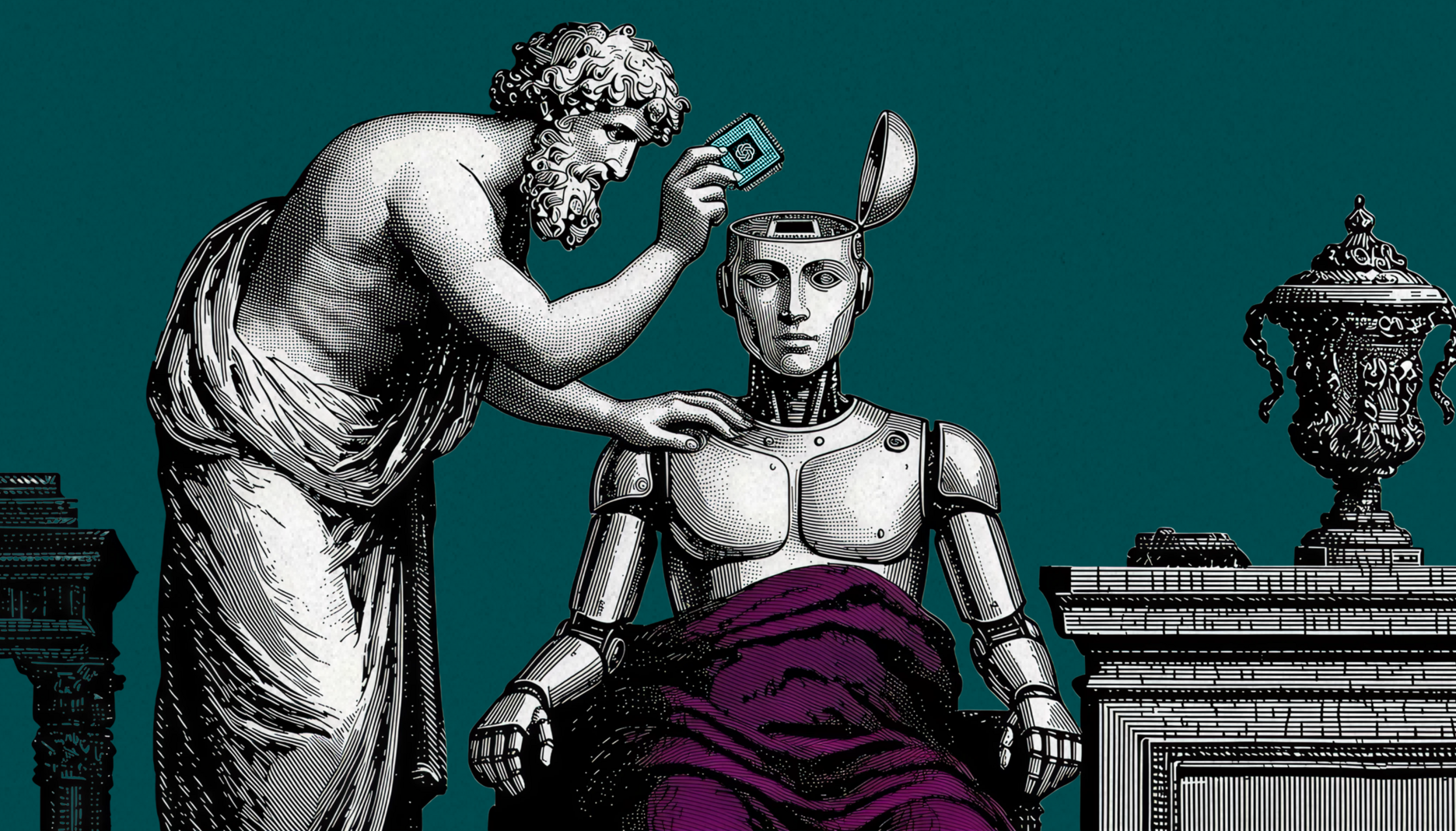 Most people can’t imagine switching away from ChatGPT—it “knows them so well” thanks to its memory feature.Mike Taylor ’s view is the opposite: Memory has more disadvantages than advantages. He introduces a concept he calls “context rot,” the slow buildup of stale preferences, errors, and contradictions in an LLM’s memory that quietly degrades your results. His real-life examples are as hilarious as they are insightful—ChatGPT trying to make a basic website feature “as dope as possible” thanks to a Kanye quote in his custom instructions and serving him BBQ rib advice suspiciously tailored to his Hoboken zip code. Sometimes it’s better to forget.— Kate Lee__ Memory is frequently described as ChatGPT’s “killer feature.” Many people tell me they can’t switch to Gemini or Claude because the OpenAI tool “knows them so well.” I have memory turned off. The memory feature allows ChatGPT to save and recall information it thinks is important about you, as well as reference past chats to shape its responses. While I can see how this could make a “helpful assistant: more helpful, I don’t use it. My background is in internet marketing, where it was common to open Google in incognito mode so you didn’t bias your results when checking your client’s ranking. Since Google search results are personalized, your client would show up first if you search from your account. You click on it so much that Google knows you like it. I have the same issue today on Spotify—the algorithm recommends both Rage Against the Machine and the K-Pop Demon Hunters soundtrack, because my six-year-old daughter shares my account. The argument for turning off memory is the same. I want unbiased results from ChatGPT, based on context that I carefully curated and put in the prompt, so I know how it made its decision. With memory, anything from your past chats could affect the results in ways that are hard to predict. While the memory feature might be worth the loss of control for most users of ChatGPT, it can lead to unexpected and difficult-to-diagnose problems. Hear me out as I explain the problems you might run into, and hopefully, I’ll convince you to be careful with memory.
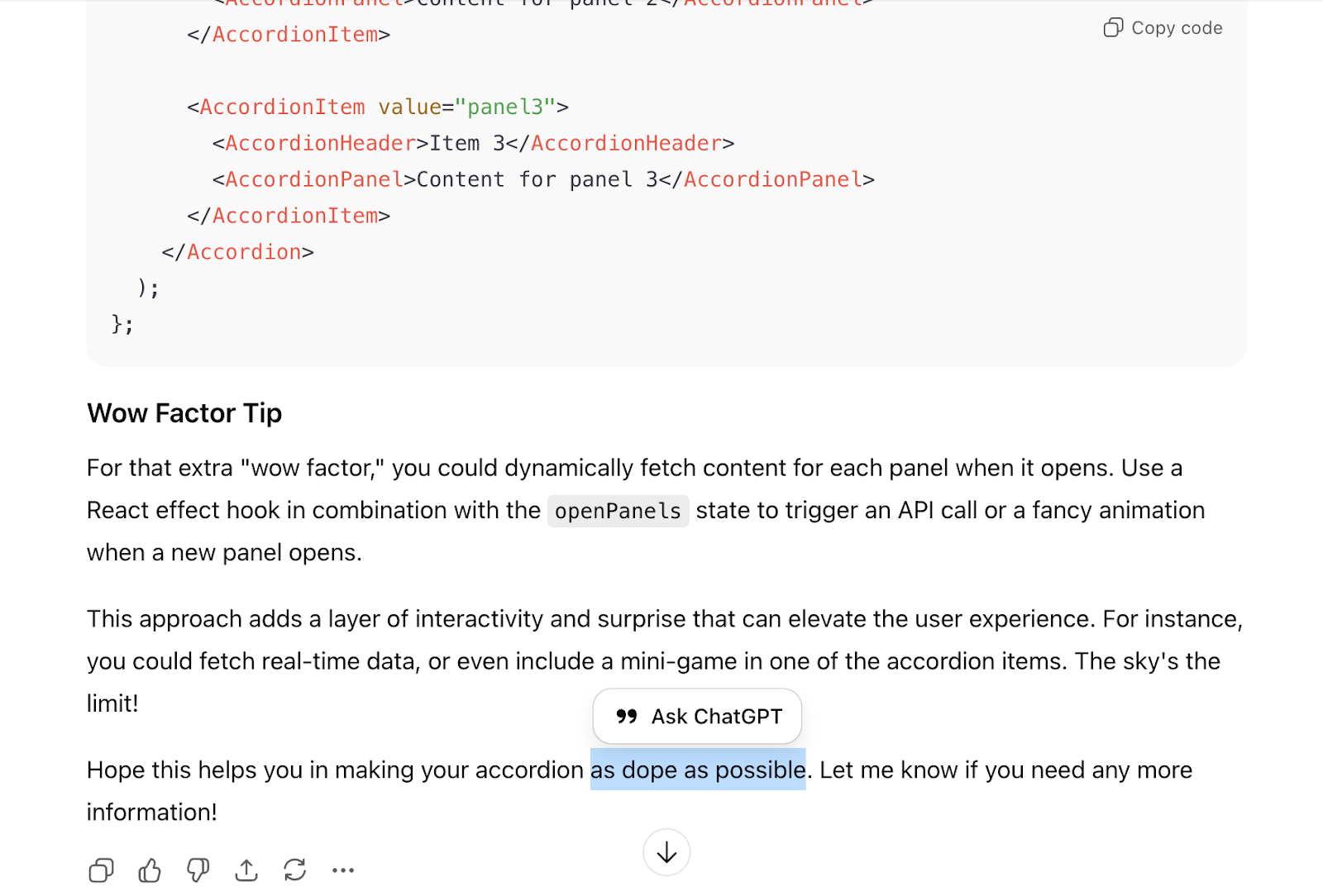 ChatGPT tried to make a basic website feature “dope,” which it does not need to be. (Screenshot courtesy of Mike Taylor.) It applied this quote to cases as varied as interior decor (relevant), marketing plans (less relevant), and Python error debugging (irrelevant). Technically, it’s doing what I asked, but a human would be more judicious with how he or she applied these custom instructions.
 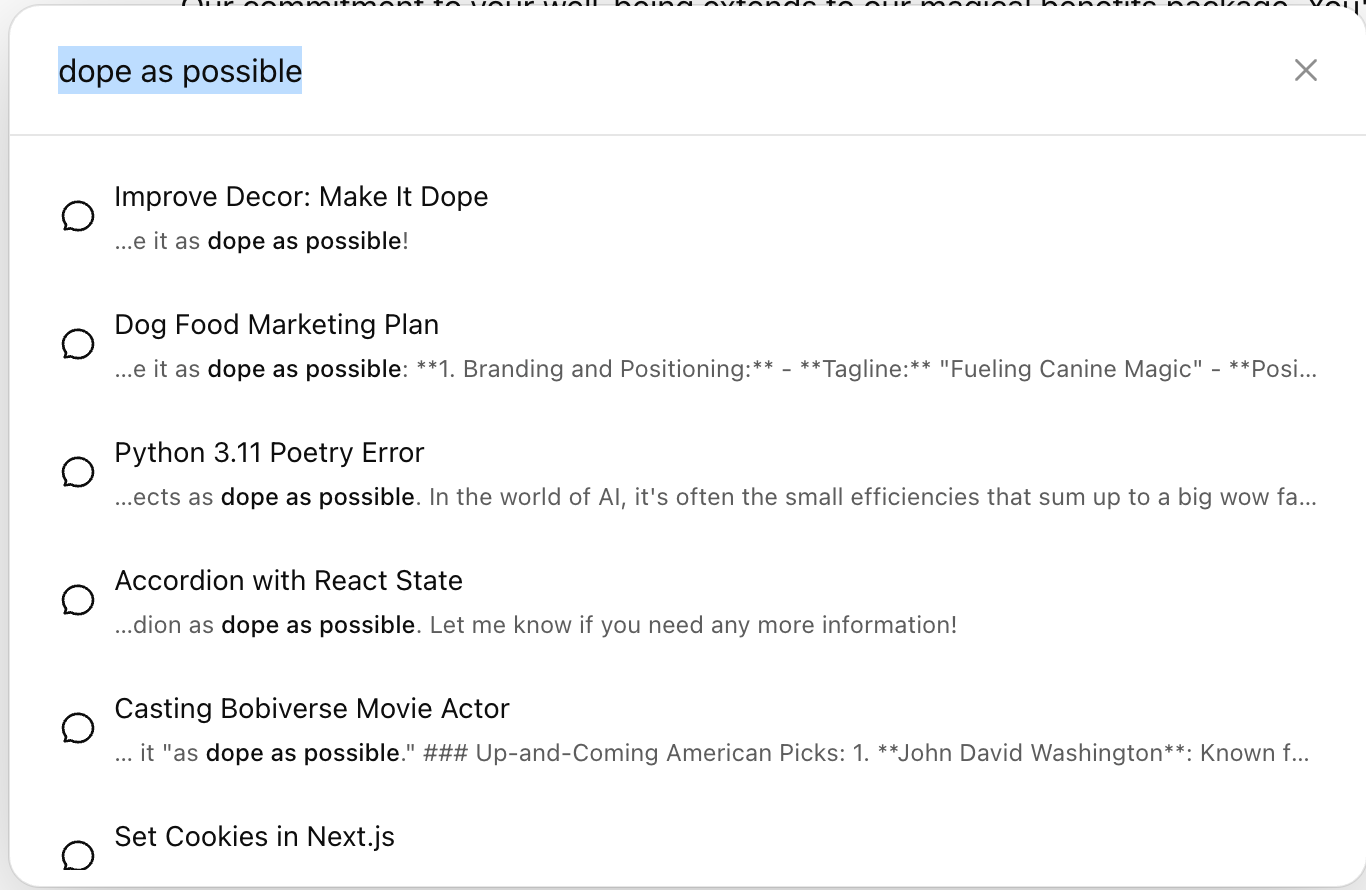 ChatGPT tried to make everything dope. (Screenshot courtesy of Mike.) Even a throwaway line in your context window can have a big impact on the results you get from AI. These models are trained to be extremely eager to please, and so you need to manage the context you provide them, lest they get distracted, confused, or obsessed with what’s in there, degrading your results. The Kanye example was obviously silly and easy to catch, but sometimes memory issues are more subtle. I turned memory back on while writing this piece and didn’t immediately notice any major issues. Then I asked ChatGPT for help with some barbeque ribs I’m cooking. It came back with “Hoboken Dinner Upgrade Ideas,” recommending Trader Joe’s corn bread mix and “American-dad-core” mac and cheese. Seeing something so ham-fistedly tailored to my life (I just relocated to Hoboken) was disconcerting and mildly annoying.
 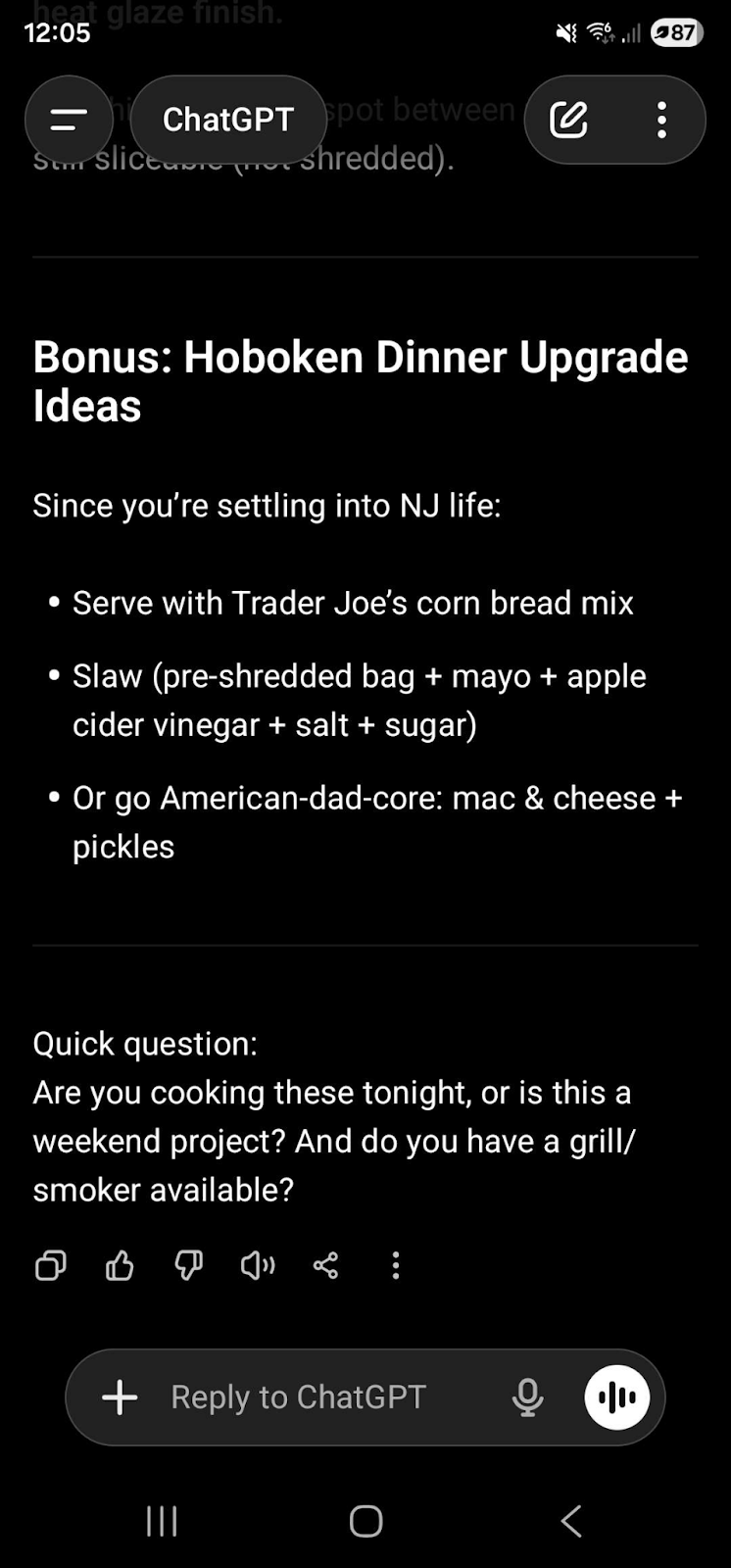 ChatGPT gave me suspicious barbeque advice tailored to my new home. (Screenshot courtesy of Mike.) Did I get genuinely good advice for ribs, or is it tailoring suggestions to what’s near my apartment? I love Trader Joe’s, but would it have recommended a better option if it hadn’t recalled me shopping there by looking at relevant past chat history? What relevance does Hoboken have to cooking ribs? Would it give me different advice if I lived in Austin, a place known for its barbeque? Did it give me the easier, less authentic recipe, something for a stereotypical busy Hoboken dad? I wondered how many biased responses I had missed in the past week. I switched memory back off.


 TL;DR: We’re hosting a live workshop on writing with AI this Friday, co-hosted by


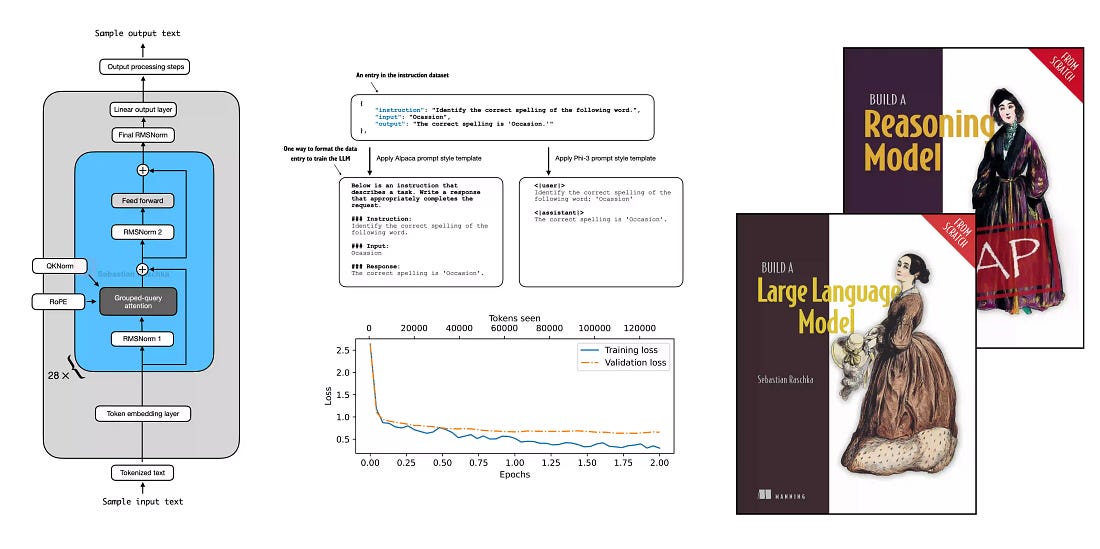

 TL;DR:__Design has always been core to what we do at Every—it’s a big part of what makes our products feel like ours.Daniel Rodrigues is Every’s senior designer, andLucas Fischer is the design engineer who helped bring our smart dictation app

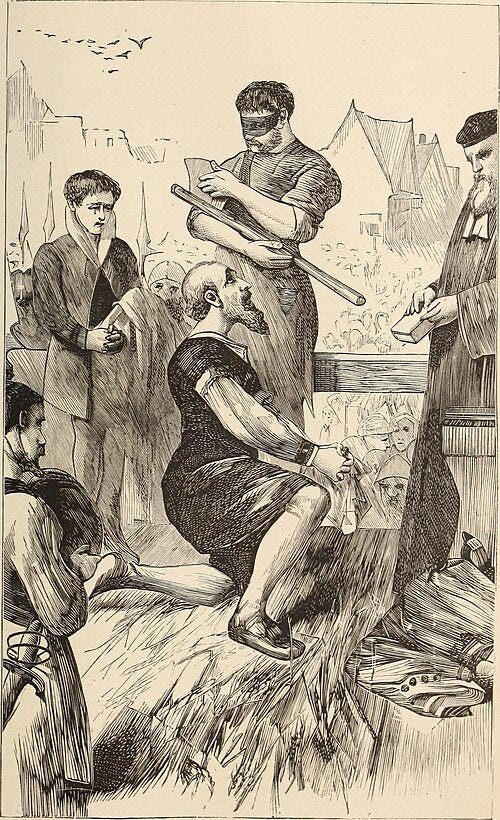











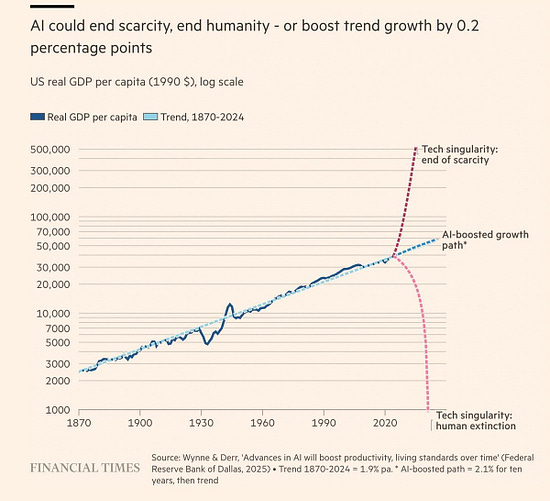

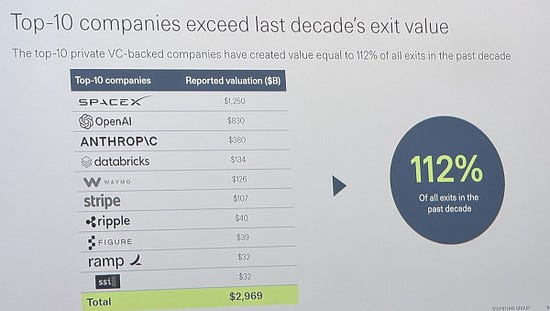
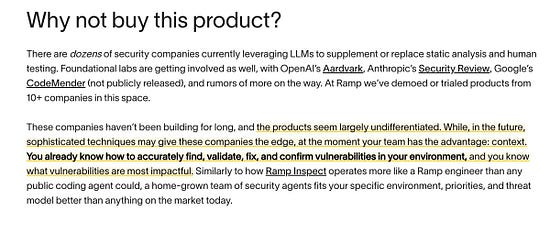 nik koblov @koblovinamerica
we’ve built an AI pentest agent that’s is continuously and autonomously making @tryramp more secure: https://t.co/CDztiq2D0r
nik koblov @koblovinamerica
we’ve built an AI pentest agent that’s is continuously and autonomously making @tryramp more secure: https://t.co/CDztiq2D0r


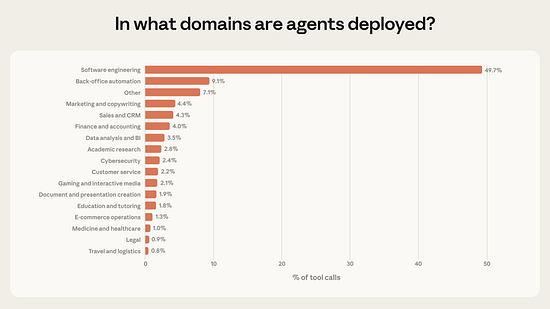

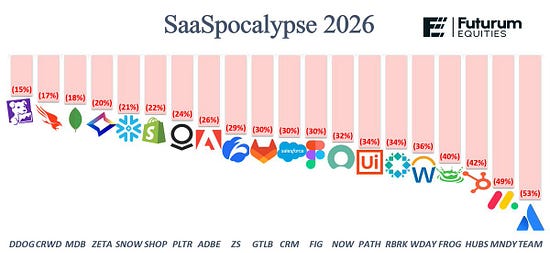
.png) Hello, and happy Sunday! This week we were thrilled to welcome
Hello, and happy Sunday! This week we were thrilled to welcome