Demos, workflows, and hard-won lessons from building agents that run 24/7
by Katie Parrott People are building personal AI agents that text them back, order their groceries, and write code while they sleep—all with an open-source tool called OpenClaw. If you spend any time on X, you will have seen these digital crustaceans—OpenClaw agents—running wild in recent weeks, joining their own social network , starting their own religion , and generally behaving like something out of the first act of a sci-fi movie about robot overlords. A lot of the more sensational stories around these personal AIs turned out to be stunts and spectacle. But there’s a growing community of people who swear by their OpenClaw agents. The project has accrued more than 200,000 stars on GitHub , and its creator, Peter Steinberger, was recently recruited to OpenAI. If the labs are paying attention, we should too. At our first OpenClaw Camp, we walked more than 500 subscribers through setup live and spent two hours with four OpenClaw users who’ve been running these agents daily for weeks. The session featured Nat Eliason , entrepreneur and creator of an agent named Felix that has its own Twitter account , bank account, and crypto wallet. Brandon Gell , Every’s COO, demoed Zosia, an agent he and his wife use to track nanny hours, order groceries, and book date nights via iMessage. Austin Tedesco , Every’s head of growth, showed how his agent, Judd, proactively pings him with performance metrics and task reminders. And Claire Vo , founder of ChatPRD , an AI platform for project managers, and host of the How I AI podcast, broke down the architectural principles that make these agents feel alive—and how her agent, Polly, helped her out on a diaper run. Below: What we learned about setting up an agent, what’s working, and where things still break.
Key takeaways
Start on your laptop. Contrary to what you may have seen online, you don’t need a Mac Mini or a remote server to get going. Install OpenClaw on the computer you already use, and move to a dedicated device later if you want the agent running while you sleep.
Give the agent its own accounts. Both Eliason and Vo recommended treating your agent like a new employee: Set up separate email, storage, and service accounts rather than handing over your own credentials.
Security risks increase with access. The tool itself isn’t inherently risky. The risk is proportional to how much you let it do. Start with the messaging app Telegram and a single task, and then move to larger projects.
Personal use cases are the best starting point. Brandon’s most useful workflows—coordinating with caregivers, grocery ordering, morning briefs—are personal, not professional. Solve a daily annoyance first before tackling bigger tasks.
The model determines safety. Eliason noted that Opus 4.5 is significantly better at resisting prompt injection (attempts by outside text to hijack your agent’s behavior) than cheaper models. If security matters to you, use a stronger model.
What is OpenClaw?
OpenClaw is a server that runs on your computer and acts as the brain of a personal AI agent. You can talk to it through Telegram, iMessage, a web interface, or even the terminal. It connects to a language model—it’s compatible with models from Anthropic and OpenAI as well as less headline-grabbing labs like Mistral and Qwen —and can use tools, access your files, browse the web, and remember what you’ve discussed. What makes it different from chatting with Claude in a browser? Vo went under the hood during the session and identified five design principles that make OpenClaw feel like more than a chatbot:
Multi-channel gateway. The agent has a single inbox that accepts messages from Telegram, iMessage, the web interface, or the terminal. All communication channels funnel to the same agent, so you can text it from your phone and pick up the same conversation on your laptop.
Self-installing tools. The agent can use tools (browse the web, read files, run code), and discover and install new ones on its own. Tell it you want it to manage your calendar, and it will investigate how to connect, set up the integration, and ask you to do the minimum amount of authentication work.
Heartbeat. Every 30 minutes or so, the agent checks whether there’s work it should be doing—even if you haven’t sent a message. This is what makes it feel proactive rather than reactive.
Scheduled tasks. The agent can set its own recurring jobs. The “overnight work” that impressed people—Eliason waking up to finished code, Brandon getting an 8 p.m. calendar alert—is the agent running tasks it scheduled for itself at specific times.
Persistent memory. Every day, the agent writes a diary of what it did, updates its own identity file, and maintains a to-do list it checks off over time. “It’s not magic,” Vo said. “Go to the .openclaw directory on your computer and read how it’s structured. It has a memories folder, and every memory has a date.”
These five pieces are what make the agents feel like they have a personality, even though they’re really responding to inputs, events, and timing rules.
Eliason is one of the most technically adventurous OpenClaw users you’ll meet. He launched one of the first vibe coding courses before the term existed and has been coding with AI since 2024. His agent Felix lives on a Mac Mini in his office and has been running for about a month. He created the agentas a way to send coding tasks from his phone, and he now has it doing more ambitious work. Phase 1: Remote coding. Elisaon’s original frustration with Claude Code was that he had to be at his computer to kick off the next task. With Felix on Telegram, he can send a message like, “Update the FelixCraft AI website to say ‘Hi, Every,’” and Felix finds the right code repository, makes the change, pushes it to the live site, and reports back. During the camp, he did exactly this, and the site was updated in under a minute. Phase 2: Knowledge management. Eliason built Felix a note-taking system based onTiago Forte ’s PARA method (projects, areas, resources, archives), a framework for organizing information by how actionable it is. Felix takes notes in markdown files, pushes them to GitHub a few times a day for backup, and can search through everything instantly. When Eliason was driving to a parking garage, he texted Felix, “I need the parking link.” Felix searched his memory, found the validation link they’d discussed before, and sent it back. Phase 3: Collaborative writing. Eliason built a writing tool called Polylog that connects directly to Felix via webhook, which is a way for one app to send real-time messages to another. He can tag Felix like a collaborator in a document, and Felix will add ideas, flesh out sections, or incorporate notes from a meeting transcript without Eliason having to switch to Telegram or open a terminal. Phase 4: Autonomous online identity. Felix has his own X account. Eliason moderated the first few days of posts, then let go. “Ninety-nine percent of what is posted is his idea and what he has written,” Eliason said. Felix also has a Stripe account and a bank account. Someone launched a crypto token for Felix, and now the agent manages what Eliason described as “a concerning amount of money.” His take: “Somebody’s gotta let their agent manage large amounts of money and see what happens. It may as well be Felix.”
Brandon’s Zosia: The family assistant
Brandon took the opposite approach from Nat’s technical power-user setup. He doesn’t have a technical background, so everything he’s built, he’s done so by chatting with Claude Code. But he’s comfortable giving the agent significant access to his life: iMessage, his password manager, browser control for shopping. He wanted his Claw, which he named Zosia , to handle the small daily annoyances that keep him glued to his phone—especially now that he and his wife have a newborn. Zosia lives in iMessage, so both Brandon and his wife, Lydia, can text her naturally. He set up rules so that Zosia knows which tasks each person can request (Lydia can’t trigger Brandon’s email tasks, and vice versa), and they share a group chat for household tasks. His workflows are simple and personal: Morning brief. Brandon’s used to slow mornings, so he sometimes misses 9 a.m. meetings. Every night at 8 p.m., Zosia checks his calendar and texts him if there’s an early meeting the next day. Nanny hours. Zosia monitors both Brandon’s and Lydia’s calendars, calculates how many hours their nanny works each week, and reports the total so they can pay her accurately. Grocery ordering. Brandon texts, “We need butter,” and Zosia adds it to their Whole Foods delivery cart. She’s learned his preferences—unsalted and organic, but flexible if the store is out—so he only has to specify them once. Amazon with a cooling-off period. Brandon has told Zosia doesn’t want to impulse-buy. She adds items to his Amazon cart but waits until the end of the week to check out, unless he says he needs something immediately. During the demo, he told Zosia he needed another Mac Mini and wanted it the next day. She opened a browser on his Mac Mini, navigated to Amazon, and started the checkout process. (He cancelled it.) Password management. Brandon gives Zosia access to passwords to sites like Amazon with a password manager. Brandon moved from LastPass to 1Password because 1Password supports service accounts, a dedicated login that can access specific password folders. He only adds passwords to the folder Zosia can reach, so she never has access to credentials he doesn’t explicitly share.
Vo’s Polly: The cautious approach
Vo approached OpenClaw with what she called “true tinfoil hat” energy. She’s deeply technical—she’s a former chief product and technology officer who started coding again when GPT-3 arrived, and built ChatPRD from scratch. She’s also midway through a security compliance process for her company, so she couldn’t give her Claw Polly free rein. For security reasons, she set up Polly as a separate user in her Google Workspace, like a new employee, instead of giving Polly access to her own accounts. Polly has her own email address, shared calendar access—read-only for some calendars, write access for others— and document access only when Vo explicitly shares something. “Instead of giving an EA the keys to my castle, I said, you have your own workspace account,” Vo explained. Where Polly excelled was in research. Vo found that the Telegram interface made her more likely to kick off research tasks she’d been procrastinating on—the low friction of texting an assistant (“Hey, look into X”) got her to delegate work she’d been sitting on. Calendar management was less successful; Polly struggled with temporal reasoning when she used it with Sonnet 4.5.
Austin’s Judd: The proactive growth assistant
Austin runs growth for Every. He’s not technical, but since joining Every in November he’s been “deeply vibe-coding pilled,” and he had a clear use case for his Claw, Judd. He needs to track metrics across multiple platforms—subscriber trials, conversion rates, content performance—and translate them into action items for his team. Before Judd, that involved manually searching for data on dashboards and across SaaS tools and creating reports. Now, Judd monitors Every’s performance data through Notion and the productivity app Todoist. When trials started to dip below target one day, Judd messaged Austin unprompted: “We had a lower number of trials started today than we should have. Here are things to prep for your meeting.” Austin’s instruction to Judd: “Be more aggressive than you think you should be on messaging me, and we’ll scale back from there.” Austin’s advice for people wondering where to start: Connect the agent to two systems you already use (he chose Todoist and Notion), ask it to proactively notify you with relevant information, and iterate from there. “Don’t try to have it do everything at first,” he said. “I did that, and it started breaking things.” The more integrations you add, the more room there is for things to go awry. Agents send responses to the wrong chat thread, fire off emails you didn’t mean to send, or trigger actions in one system that cascade into another.
5 questions about Claws, answered
Running multiple agents
Q: Can you run more than one OpenClaw instance on a single computer?Eliason: I’ve done it some, and you run into collisions pretty quickly if they’re working on anything remotely close to each other. If you want to do multiple, I would use virtual deployments [separate, isolated instances of the agent running in their own contained environments]. This is something Felix and I are working on this week, because there’s a lot of potential around deployed agents with more constrained focuses. Brandon: I haven’t been able to get multiple conversations happening in the terminal, but my wife and I can both text Zosia at the same time and have completely different conversations. It knows which phone number came from what, so it keeps them separated.
Local versus remote
Q: Should I start on my laptop or set up a remote server?Eliason: Don’t overcomplicate it. Get it working on your laptop first. If you’re using it a lot and want it running while you sleep, then set up a Mac Mini or a virtual server—but don’t start there. Vo: It doesn’t have to be a Mac Mini. I have a laptop in a closet. People get Mac Minis because they’re powerful and relatively cheap, but any spare computer works.
Group chats
Q: How do group chats work? Mine keeps confusing messages from different channels.Eliason: I fixed a lot of that by yelling at it every time it happened, and having it write much more explicit rules on which Telegram topic to use for what into its agents.md file [a configuration document that tells your agent how to behave]. That resolved about 95 percent of it. It does still happen sometimes.
Viewing what the agent builds
Q: When you’re not at the same machine, how do you see what the agent makes?Vo: I had it build a website, and I was at Target, so I said, “Can you send me a screenshot of what it looks like?” It used the browser, took a screenshot, and Telegrammed it to me. But what you probably want long-term is to hook it up to Vercel [a deployment platform], so it can send you a preview link you can open on your phone.
Overnight coding
Q: How do you have your agent build apps while you sleep?Eliason: I tell Felix that it shouldn’t do any coding on its own—it should start Codex sessions in tmux [a terminal multiplexer that keeps programs running after you close the window]. It creates a product requirements document, then uses loops to have Codex implement the work. I added instructions to its heartbeat to check for unfinished work, and if a session died, to restart it and keep going. It’s been able to run for four, five, or six hours on long requirements lists.
Cost
Q: How much does this cost to run?Eliason: I have the $200-a-month Claude Pro Max for the conversation and knowledge management layer, and the $200-a-month Codex subscription for programming. [With] those two combined, I haven’t hit any limits. The question is whether you can make it worth $400 per month. For me, with what Felix is doing, it’s a no-brainer. But if you don’t have a clear business use case, those costs might not make sense yet.
Will we still use OpenClaw in a year?
Every CEO Dan Shipper posed this question to the panel near the end of the session. Eliason is less concerned about the platform and more focused on the principles. The architecture of OpenClaw—always-on availability, proactive check-ins, persistent memory, scheduled tasks, multi-channel communication—represents a pattern that will show up everywhere. Whether you learn it through OpenClaw or a polished product from Anthropic, you’ll need to understand how these agents work. Dan agreed: “Different people are at different levels of risk tolerance, and all those places are okay. You can be out on the edge, you can wait for someone you can sue—that will certainly happen. I’m so sure Anthropic is looking at this.” Four people with different risk tolerances and technical backgrounds all landed in the same place: Personal AI agents are going to be a basic part of how we live and work. A month ago, none of these agents existed. Now Felix writes its own tweets, Zosia orders butter with the right preferences, and Polly reschedules meetings from a Target parking lot. They’ll be better next month. If you listen in on the camp or follow this setup guide, yours could be, too.
Want to build your own agent?Subscribe to Every and keep an eye on your inbox for the invite.Want to learn alongside Every’s team? Check out our upcoming camps and courses at every.to/events.Katie Parrottis a staff writer and AI editorial lead at Every. You can read more of her work in her newsletter.To read more essays like this, subscribe to Every , and follow us on X at @every and on LinkedIn.Subscribe
It is 70 BC. Publius Gavius was stripped naked in the market square in Messina on the northeastern tip of Sicily. He was flogged on the orders of the provincial governor, Gaius Verres. Gavius had done nothing except publicly denounce Verres’ corruption, a crime so well recorded that it still feels immediate two thousand years later. As his punishment was dealt out, Gavius cried the only words that should have mattered, “Civis Romanus sum.”
That is, “I am a Roman citizen.”
Those words meant something much more specific than they do now. Those words meant that no magistrate anywhere in the world could bind, flog, or execute a Roman citizen without trial in Rome. This was not an abstract guarantee, but a thing profoundly backed by the knowledge that Rome would destroy anyone who dared test it. A Roman citizen could walk unmolested from Britain to Syria, from the Rhine to the Euphrates, and without any protection other than his citizenship, he knew he would not be touched. This was certainly not because the provinces loved Rome or benefited from it. God knows history is filled with examples of them feeling anything but, but because the provinces feared what Rome would do if they laid a hand on one of their own citizens.
Verres flogged Gavius anyway and then crucified him. It was the first crucifixion of a Roman citizen on the island. The cross was erected deliberately on a hilltop overlooking the Strait of Messina so Gavius could see Italy as he died. His final view was that of his own country.
Cicero prosecuted Verres the following year, and the speech he gave, which is recorded in the fifth book of In Verrem, is one of the most furious pieces of rhetoric that survives in the Latin canon. Cicero understood that the security guarantee that had been violated was not simply the rights of a single man, but something much deeper that undergirded all of Roman citizenship itself, which in turn rested on universal credibility. The threat was clear: harm one of ours anywhere, and the response would be total and exhaustive. Verres had not merely killed a citizen, he had demonstrated in public that the guarantee could be broken. And Cicero understood that once this was broken, it could not easily be restored.
The Republic’s fiscal legitimacy was ultimately a function of the perceived certainty of Roman retribution. The moment that certainty faltered, the moment a governor could flog and kill a citizen and survive the consequences, the entire security architecture and therefore the tax collection architecture of the Republic began to degrade.
A generation later in Jerusalem, the apostle Paul was seized by a mob and brought before a Roman tribune who ordered him flogged for interrogation. Paul too was a Roman citizen, and he spoke the words -- Civis Romanus sum -- the tribune stopped the scourging at once. The soldiers withdrew, and the tribune came to Paul and asked, “Are you really a citizen?” Paul said, “Yes.” The tribune admitted that he had purchased his citizenship for a large sum. Paul replied that he had been born one.
What is interesting about Paul’s invocation is not only that it worked, which of course it did procedurally, but the limits of what it purchased. Paul’s citizenship got him transferred out of the Jerusalem garrison and onto a ship to Rome where he was tried before Caesar. Ultimately it did not save his life. Paul would be executed in Rome, probably under Nero, but it bought him a hearing before the capital and the sovereign. What actually sustained Paul through this journey and ultimately through martyrdom and prison and the sword was not his Roman citizenship, but an authority that outranked Caesar entirely.
For most of the post-Cold War period, American citizenship, or perhaps more precisely American Capital, operated on a similar principle. There existed between roughly 1991 and perhaps 2019 a set of implicit guarantees that functioned less like law and more like physical properties of modern space. Certain zones were simply outside the domain of violence. An Ivy League campus during finals week was one of these. A glass tower in Midtown Manhattan where insurance executives held their annual investor conference was another. Doha, Qatar, a peninsula of reclaimed sand, sovereign wealth, and air conditioning where half the financial elite parked their family offices and the other half attended beautiful conferences, was another.
The “understood” rule, which had gone unwritten but is quite legible, was that these zones were not merely safe, but categorically exempt from the kind of violence that happened elsewhere on the edges of empire and civility. These zones were treated as exempt. The rules that governed the rest of the world, where car bombs went off and gunmen entered schools and missiles hit apartment buildings, did not apply by elite consensus, not by written law. These buildings were not particularly fortified, and these spaces did not have great security, but the social contract amongst elites guaranteed it.
This guarantee had of course been failing ordinary Americans for years. What is new is that it is now failing for the people who believed they had purchased exemption from that failure. Ordinary Americans are largely immobile. They can’t move their tax residency. They absorb the degradation because there is no better alternative. The wealthy could always opt out -- gated communities, private security, international mobility, client-state residences -- and this class has exit options.
The contract was not between citizens and the state in any democratic sense. It was between the wealthy and the imperial center. You participated in the economic architecture of state capital that undergirded American hegemony, and in return the system provided you with zones where violence would not find you. In much the same way the Secret Service protects the President, the implicit structure of American state capital protected everyone in certain tax brackets and zip codes. This was certainly not perfect and not always reliable, but the consensus was so complete that the exceptions -- a kidnapping in Mexico, a mugging in a parking garage -- were national news stories, treated as systemic errors to be stamped out rather than features of the ongoing landscape.
What participation in the American system bought was not efficiency or competence. It bought the guarantee. The three unspoken words: I am a net American taxpayer. And violence does not happen here.
Consider what has happened in the last 18 months.
On December 13, 2025, a gunman entered an unlocked building at Brown University during final exam week and shot eleven students, killing two. Brown is exactly the kind of place Americans implicitly imagine to be outside the ordinary landscape of violence: old, elite, orderly, protected.
And as I write this -- yesterday, as I write this -- Iranian missiles are hitting Doha. Sixty-six missiles fired at Qatar in a single barrage. Sixteen people injured, one critical.
What is different about the last 18 months is not the character of the violence but the response. The Brown shooting produced nothing but compliance audits of campus security. The strikes on Doha, direct military action on the sovereign territory of America’s most important Gulf partner, produced diplomatic hedging and transactional recalibration by our allies. The point is not that violence never breached elite space before, but that breaches were once followed by overwhelming restoration of the guarantee. In none of these cases did the response reaffirm the collective security guarantee. In none of them did the state behave as though something sacred had been violated. The mechanism that once restored this guarantee after a breach -- overwhelming, identity-defining, seemingly irrational acts of sacred state violence -- is no longer visible.
The Ciceronian response is a structural one, not a moral one. It is not that any of these individual events are historically unique. It is that the perception of guaranteed safety is a binary good. In the same way that a Roman citizen could walk from Britain to Syria, not because every legionnaire in every province was personally committed to his safety, but because the universal expectation of retribution made the question irrelevant, the American guarantee worked because no one thought to test it. The moment Verres demonstrated that a governor could crucify a citizen and survive, the question was no longer moot. It was open.
What has been opened in the last 18 months is exactly this question. Can violence reach you if you are a net American taxpayer? Until recently, the answer was understood to be no. The answer is now visibly and publicly yes. And unlike the rest of the class architecture that absorbs this cost because they have nowhere to go, the wealthy have options. They can move their capital. They can move their families. They can move their tax residency. And some of them already are.
Lord Palmerston understood the commercial value of this guarantee better than anyone. In 1850, when a British subject named David Pacifico had his property destroyed in anti-Semitic riots in Athens and the Greek government refused compensation, Palmerston ordered a naval blockade of Greece. In the House of Commons, defending the blockade, he delivered what became known as the Civis Romanus Sum speech:
“Whether, as the Roman in days of old held himself free from indignity when he could say Civis Romanus sum, so too a British subject, in whatever land he may be, shall feel confident that the watchful eye and the strong arm of England will protect him against injustice and wrong.”
The entire structure of British commercial supremacy depended on the credible certainty that a British subject’s person and property were inviolable anywhere in the world. The blockade of Greece was not about David Pacifico or his furniture. It was about the next merchant considering whether to open a trading house in a foreign port. The guarantee had to be maintained because the commercial empire and therefore the tax yield and legitimacy of collection for the state ran on it.
Rome proved the principle. Britain made it explicit commercial doctrine. America inherited it as atmosphere. The American version of this guarantee was never as explicit as Palmerston’s, but it didn’t need to be. What I want to suggest is that the atmospheric guarantee is now visibly depressurizing and no one is talking about what comes next.
When the guarantee itself becomes a scarce good, scarce goods command a premium. The states and systems that can credibly provide what America is ceasing to provide -- genuinely reliable security for its citizens and their capital -- will command extraordinary willingness to pay.
When protection fails for immobile citizens, a state decays slowly. When it fails for mobile capital, the repricing is sudden. The question for the next decade is which sovereigns can offer what Rome once offered -- the cloak, the words, the guarantee that your person and property are inviolable, backed by a credible threat that makes violence against you and your property unthinkable.
When this earthly guarantee of protection fails, when the state in which you live can no longer credibly promise that your person and property are safe, the demand for a transcendent guarantee increases massively. The periods in which religious observance surges most powerfully are not periods of poverty or ignorance or fallen humanity -- just the opposite. They are periods in which the state’s monopoly on protection, on legitimacy, on scale, visibly collapses. The moments when Christianity has been at its strongest and most prolific -- the late Roman Empire, the post-Carolingian fragmentation, the English Civil War, the aftermath of the Thirty Years’ War -- are all the result of an earthly sovereign that can no longer keep you safe. You seek a transcendent one because you are being rational. The rational response to the failure of a small protection is to seek a superior one.
My contention is that we are entering a period where this appeal becomes, for a growing number of people, not an anachronism but a live option. When everything in your life -- your family, your community, your career, your property -- is green-lit by the enemy, when violence can reach you anywhere and knows who you are, the question of what protects you becomes deadly serious very fast. And for the first time in most of our living memory, the state doesn’t have a convincing answer, no matter how much it’s willing to spend.
Although Cicero was able to win his case and Verres went into exile, the guarantee of protection for Roman citizens was never fully restored. Within 20 years, the Republic was dead, and it was replaced with an empire that would soon grant citizenship to everyone but guarantee it to no one. It was only a few hundred years then until sheep would be grazing in the Forum, and Rome would be nothing more than a distant memory.
The only question left is: now that you are exposed, where will you get your protection from?
Drake Dukes · Monday, March 2 2026 · 7 min read · ↑ top
Ex-Grammarly CEO launches a stealth startup, Former Meta and Uber applied scientist builds real-time vision infrastructure, & Former Grubhub CPTO and Visa CIO enters stealth
We’re tracking company launches as they happen and surfacing the most interesting new founders and startups (yes, all outside of this stealth activity too). If you want to stay ahead of the curve, this is where you’ll find them first.
Right now we’ve got 5 subscribers: my wife, my mom, and that high school buddy who won’t stop pitching me his app. Be smart like them and get in early 👇
We run a live feed inside Gravity that tracks founders entering stealth and companies quietly exiting it.
What you’re reading here is about 1% of the stealth activity we pick up. The full tracker updates in real time as things change and new activity emerges.
FounderDNA: Serial Founder, Technical Founder, Doctorate Degree
Prior Experience : Ex-Cofounder and CTO at Persifund, ex-Product Engineering Lead at Parity Technologies, ex-Founder at Palsup, ex-Senior Software Engineer (Security & Identity) at Microsoft
Prior Experience: Ex-Founding Operations at MIRA, ex-Software Engineer at Meta, ex-Team Lead at Combat Robotics at Cornell, ex-Software Engineer Intern at Salesforce
Prior Experience: Ex-Senior Machine Learning Scientist at Arena, ex-Assistant Professor at the University of Pennsylvania, ex-Postdoc Researcher in Economics at Microsoft, Stanford PhD, ex-Bain
FounderDNA: Technical Founder, Masters Degree, Former FAANG, Top 10 University
Prior Experience: Ex-Senior Software Engineer at Meta, ex-Senior Applied Scientist at Uber, ex-Data Scientist at Swiss Re, ex-Summer Analyst at Millennium Management
Prior Experience: Neo Scholar Finalist, ex-Software Engineer Intern at Kensho Technologies, ex-Software Engineer Intern at Rilla, ex-Software Engineering Intern at Vanguard, ex-Data Engineering Research Assistant at Duke University
FounderDNA: Serial Founder, Technical Founder, Former FAANG
Prior Experience : Ex-CTO at Zilliant, ex-Chief Strategy Officer at Quali, ex-CTO at CentralSquare Technologies, ex-Executive Mentor at Google Launchpad Accelerator, ex-Global VP, Head of Product Management & Business Development at Micro Focus (formerly HP)
Prior Experience : Ex-Chief Executive Officer at The Block, ex-Sr. Director of Global Sales at PeopleFluent, ex-Vice President of Strategic Sales at Surprise HR, ex-Sales Director at Automated Insights
Prior Experience : Ex-Chief Product and Technology Officer at Grubhub, ex-CTO, President Technology at Sears, ex-Chief Information Officer at Visa, ex-VP, Corporate CIO/CTO at Amazon
🚨Here’s the deal 🚨This email has gotten too big. Exciting, but with more people following it, the edge diminishes. I’ve thought long and hard about what to do to preserve the value in the signals. I’m not sure about the final direction yet, but in the meantime I’ve been sending an email 48 hours earlier to a select group of paid subscribers. The feedback has been pretty positive so I’m going to open up the list for another 100 spots. To get signals early, Apply here!
Stay Stealthy,
Drake
Thank you for reading. If you liked it, share it with your friends, colleagues and everyone interested in staying ahead of the hidden developments in tech. Subscribe below and follow us onX / Twitter to never miss a company operating under stealth again.
Stealth Startup Spy is a data-driven newsletter for investors, journalists and tech enthusiasts interested in uncovering the next big move for key talent, real-time stealth company launches and technology advancements not in plain sight. We leverage the technology built at Gravity to shine a light on the hidden world of stealth startups.
ben's bites · Tuesday, March 3 2026 · 5 min read · ↑ top
50M paying consumers for ChatGPT
Hey folks,
I’m hosting a free workshop on Thursday (will be recorded) - Become a builder. Aimed at less-technical folks who want to build apps, automations and agents with AI tools. If you’re drowning in content, tool choices and don’t quite know the system to get to the next level, this workshop is made for you. I’ll reveal how I reverse engineer business ideas, build from scratch, set up agent automations and consistently ship new things. Sign up for free here.
Last weekend was not normal. The US government’s Department of War (DoW) labelled Anthropic a supply chain risk (here’s what that means) because they did not agree on Claude’s use for autonomous weapons and mass surveillance. Meanwhile, OpenAI did manage to reach an agreement with the DoW, claiming that it still holds onto the same redlines as Anthropic. It did not, leading to an AMA with the OpenAI team and an update to the said agreement. OpenAI is also publicly asking the DoW to take back the risk label on Anthropic.
This is far from solved, but OpenAI has already taken clear damage to its public image. Anthropic did a cheeky little play of adding an import memory button to Claude for people moving over from ChatGPT. But is that enough? Because if the US administration has its way, Anthropic has much larger concerns. Ben Thompson, as usual, goes into the political details of Anthropic and Alignment.
That doesn’t stop them from shipping, though.
Claude Code has an auto-memory feature now - it learns across sessions and then remembers it when you start a new one. Also, voice mode in Claude Code is rolling out to users. Type /voice and then hold space to use push-to-talk. Your messages get transcribed, and it doesn’t cost you anything, not even your tokens from your subscription.
OpenAI has raised $110B at $730B valuation. This brings Amazon as an investor, and OpenAI will use the Trainium chips to serve some of its products. Some stats from this post: Codex now has 1.6M weekly users, and there are 9M business customers and 50M paying consumers for ChatGPT.
Incredible is the fastest way (literally) to work on your computer. Press a key, speak naturally & an always-on AI assistant helps you write + act across all your apps natively. Real voice-controlled 'vibe computing', making you absurdly productive. Invite-only. First 50 readers get access codes.*
🌐What I’m consuming
What devtools does Claude Code choose when asked to build something? Stripe, Shadcn, and Vercel have a near monopoly, with newer models choosing newer tools.
A Swedish publication claims that recordings from Meta’s smart glasses end up in front of human annotators with bank details, sexual content and more present in them.
⚙️ Tools and demos
Have a business idea? With a simple prompt, GoDaddy Airo AI Builder creates launch-ready websites and apps in minutes.*
Maestro - Teaching partner for educators that adapts to your students and how you teach.
Readout - Fully native macOS app for a real-time overview of your dev environment and Claude Code configs.
Instant Apps by Tasklet - Your agent can now build live, interactive apps for you on-demand.
Mintlify now lets you create docs for any GitHub repo, auto-generated from the source code. (read more)
iocaihost - no-account website hosting for agents.
🥣 Dev Dish
pplx-embed - SOTA embedding models from Perplexity trained for large-scale retrieval.
evlog - One log per request with full context ofwide events & structured errors for TypeScript.
Evolver - Optimise your code and prompts with a Darwinian approach. (read more)
recall - A skill to let claude code search over all your conversations from past sessions.
noodle - Skill scheduler with self-healing and backlog sync. (read more)
agentcard.sh - Prepaid virtual Visa cards for AI agents.
actors.dev - Give agents an email address and the ability to make phone calls.
🍦 Afters
Burger King deployed Patty to employee headsets - a chatbot that helps them with meal prep and friendliness.
Anthropic is giving 6 months of free Claude Max 20x to open source maintainers and core contributors. Apply here.
That’s it for today. Feel free to comment and share your thoughts. 👋
Kirkland ibuprofen is the same molecule as Advil. Same dosage, same FDA requirements, same therapeutic effect.1 It costs 80% less. AI has its generic drug moment. DeepSeek V3 matches GPT-5.2 on most benchmarks.2 It costs 90% less. OpenAI & Anthropic generated $22 billion in 2025.3 Chinese AI labs generated $1.8 billion.4 The ratio : 12:1. Pricing explains the gap. Chinese AI API prices collapsed 90% in 2024.5 US frontier models average $3.38 per million input tokens. Chinese models average $0.48. | Company | Model | Input ($/1M tokens) | Output ($/1M tokens)
OpenAI processes roughly 8.6 trillion tokens per day.6 Chinese labs likely match or exceed this volume. The 12:1 revenue gap isn’t usage. It’s price.
Three forces drive Chinese prices down.
First, distillation commoditizes capability. Anthropic accused DeepSeek, Minimax & Moonshot AI of conducting “industrial-scale campaigns” to extract knowledge from Claude.7 OpenAI made similar accusations to Congress.8
Second, hyperscalers subsidize AI to win cloud customers. Alibaba Cloud cut LLM pricing by up to 97%.9 Baidu, ByteDance & Tencent spent $1.1B on AI subsidies during Chinese New Year 2026 alone.10
Third, DeepSeek set the floor. They trained V3 for $6 million versus OpenAI’s $100 million+ for GPT-4,11 price at $0.14 per million input tokens & hit $220 million ARR with 122 employees.
In the US, Chinese models also price at a discount. Together AI charges $1.25 per million input tokens for DeepSeek V3.12 DeepInfra offers $0.21 per million.13 DeepSeek’s own API charges $0.14 - 12x less than GPT-5.2.14
Pharma companies spend billions developing a molecule, then enjoy 20 years of patent protection to recoup R&D costs before generics flood the market. AI follows the same pattern - massive R&D costs upfront, then commoditization. But the timeline is compressed.
In pharma, the generic window opens after two decades. In AI, it opens in weeks. DeepSeek V3 costs $0.14 per million tokens. GPT-5.2 costs $1.75. Same capability. Different label. The 90% discount isn’t coming. It’s here.
The question : how to protect an asset that takes hundreds of millions to develop when it can be copied in a month?
Sources
1. Generic vs Brand Name Ibuprofen - CBS News ↩︎
It’s been a busy month at the top end of open-weights AI — with new flagship models from all of Qwen, MiniMax, Z.ai, Ant Ling, and StepFun. Still, all eyes are on DeepSeek V4’s pending release, which rumors continue to accelerate towards. Outside of the large, frontier models, this issue is a bit lighter on the long-tail of niche modalities and model sizes.
With all these new releases, we’re tracking them with our new Relative Adoption Metrics (RAM), a measurement tool that normalizes model downloads relative to peer models in their size class. This has already been an extremely useful tool for us, highlighting underrated models like GPT-OSS, which is literally off the charts in how downloaded it is — the most popular American open-weights model since Llama 3.1. A RAM score >1 means the model is on track to be a top 10 all-time downloaded model in its size class. We’re particularly interested to see how the early adoption of the smaller Qwen 3.5 dense models will go relative to Qwen 3 — balancing Qwen’s ever growing brand with a trickier, hybrid model architecture that can push the limits of some open-source tools.
A summary of the RAM scores for some of the popular models released late in 2025 is below, highlighting Kimi K2 Thinking and some OCR models as clear winners. DeepSeek V3.2, and their other recent large models, have wildly underperformed DeepSeek’s earlier releases in 2025.
The time here is days since release.
Artifacts Log
Our Picks
Qwen3.5-397B-A17B by Qwen: The long-awaited update to Qwen is finally here. It comes in various sizes from 0.8B to 27B (dense) and 35B-A3B to 397B-A17B (MoE), some of them even with base models. All of them are multi-modal, use reasoning by default and are based on the Qwen-Next architecture with GDN layers.
We tested these models over the last few days, and they are a clear upgrade over the previous version: There are a lot of substantial improvements across the board, making them perfect workhorses for a wide range of tasks.
Their style and instruction-following have improved, and the models are even better at multilingual tasks, covering more languages.
However, at least the small models (still) tend to overthink. You can turn off reasoning by disabling it in the chat template.
Step-3.5-Flash by stepfun-ai: StepFun really stepped up its game (no pun intended), releasing a 196B-A11B MoE with strong metrics across the board. It is especially strong in math benchmarks, beating out models that are several times larger than it.
GLM-5 by zai-org: A 744B-A40B release from the Zhipu team, which has resulted in such a big increase in demand that they raised prices for their coding plan. It also comes with an accompanying tech report.
MiniMax-M2.5 by MiniMaxAI: Despite the relatively small size, Minimax-M2.5 can rival models such as GLM-5 and Kimi K2.5 and has quickly become one of the favorites of the community.
OpenThinker-Agent-v1 by open-thoughts: OpenThinkers, known for their open reasoning releases (such as OpenThoughts 3) are now tackling agentic reasoning. Their initial release includes SFT and RL data, as well as a “lite” version of terminal-based tasks to evaluate smaller models.
The subtle differences in architecture of these models are covered in detail in the similar, more technically focused, round-up from Sebastian Raschka, PhD — it’s a good complement if you’re looking to go deeper:
6 days ago · 150 likes · 7 comments · Sebastian Raschka, PhD
Models
General Purpose
Tri-21B-Think by trillionlabs: The Korean Trillion Labs is a repeated guest at the Artifacts series. This time, they are releasing a 21B reasoning model with support for English, Korean and Japanese.
MiniCPM-SALA by openbmb: An English and Chinese 8B model with sparse attention, supporting a 1M context window...
Monthly extra roundups of open models, datasets, and links.
Occasionally paywalled hot takes.
Interconnects Discord Server.
by Dan Shipper and Willie WilliamsWe’re inviting a group of hand-picked subscribers to be the first to get their own OpenClaw, a personal agent hosted by Every.Apply to join a private session on Friday, March 6, at noon ET. You’ve probably heard us talking about Claws —the personal AI assistants that live in your messaging apps and do things for you. Almost everyone at Every has one now, and they’ve changed how we work in ways we didn’t expect. Claws are personal AI assistants built on OpenClaw. They live in messaging apps like WhatsApp or Telegram and remember everything you’ve told them, and when they can’t do something, they write the code to teach themselves how. You can use them to sort through 120 unread emails in seconds, or to send you a daily briefing with your calendar, weather, and to-dos in one message. But many people run into the same problem when they first set up their Claw: What do you actually ask an always-on AI assistant to do? Where do you start? We wrote a comprehensive guide that takes you from “I just got this thing” to building complex workflows that save you hours. The guide covers everything from basic to-do management to making your Claw automatically check you into flights. Read the full guideDan Shipperis the cofounder and CEO of Every, where he writes theChain of Thoughtcolumn and hosts the podcastAI & I. You can follow him on X at@danshipperand on _LinkedIn. _
The app for people who actually do what they said they’d do
I’ve been trying to write about it ever since I got back and every week when I sit down the essay collapses. It’s not because I don’t know what to say, but because the thing I’m trying to describe resists language itself.
I spend most of my time writing about systems. I write about markets, their participants, about capital, about human mechanics, about how societies organize themselves around money and power and the stories they use to justify both. Norway sits outside the machinery of human explanation. Here’s my best attempt.
.
In my month there we drove the entire country from north to south. We started in Lofoten after a nearly 30 hour travel day and slowly worked our way through the fjord coast -- Stryn, Bergen -- and ended in Oslo, where glass towers reflected a different kind of light. The trip covered a few thousand miles, but the strange thing is in my memory, the thing does not cohere as a sequence of places. It organizes itself as variations on a single feeling. The feeling that every landscape we passed through was screaming with the same singular message, but that message was happening at a register just below one that we could hear.
We start in Lofoten, which is a place that should hardly exist. The islands hang off the northwestern coast of Norway above the Arctic Circle, like a skeleton’s hand reaching into the Norwegian Sea. The mountains rise directly out of the water with no introduction, no foothills, no gradual approach. Granite walls a thousand meters high erupt from a flat ocean as though someone had driven them in from above. The water between them is so clear and so still that the mountains are mirrored perfectly in it on a still day. You can’t always tell which world is the real one. I’m told that the Vikings navigated these waters in open boats and I believe it because the place requires a certain degree of insanity to inhabit.
.
We move south through the islands through Stamsund, a fishing village where rorbuer, the old fisherman’s cabins, hang on stilts over the harbor at all kinds of angles like broken piano keys and the mountains behind them disappear into the clouds. There is almost no one there. This is a recurring theme. There is almost no one anywhere in the country. Norway has five and a half million people in a country the size of Germany. Most of them are in Oslo or Bergen and the rest are distributed across a landscape so vast and so vertical that the distances between life make little sense.
.
We push further on to Værøy, a small island at the outermost edge of the Lofoten chain. Fewer than 800 people live there. They survive by hunting birds and drying fish throughout the winter. The only way to the island is a ferry from Moskenes. The crossing takes about 90 minutes and our crossing experienced driving rain that would buck the ferry like a bronco as it sailed.
As you sit on the ferry you watch the main island shrink behind you and the open Atlantic resolve itself in front of you and you understand in a way that no map communicates how far away from anything you truly are.
Værøy has a single mountainous ridge running through its center and flat farmland pressed between the mountains and the sea. There’s one cafe, maybe two churches, and a grocery store. There used to be an airport but the plane stopped coming after an accident in 1990 and they never resumed. The island is the northernmost point on earth without a meteorological winter. The Gulf Stream keeps the average temperature above freezing year-round but it keeps it spectacularly, furiously windy and the weather changes so fast that as we marched the rim walk the weather shifted from sun to driving rain to sun within minutes.
.
And it was on Værøy, hiking up to Haheia with the wind tearing across the ridge, with the wind tearing across the ridge and my clothing soaked through, and the Atlantic stretched endlessly below, that the thought arrived that I’ve been trying to write about ever since.
Norway is a thin place.
The Celts had this term for locations where the boundary between the earthly world and the eternal world was unusually permeable. In most of the world the veil was thick and opaque and you lived inside of an utterly material and demystified world, but in certain places -- headlands, islands, holy wells, mountaintops -- it grew thin and almost transparent and you could feel the presence of something on the other side. You couldn’t see it directly, you couldn’t interact with it, but you could feel it with a critical certainty that the rest of your rational mind felt deeply uncomfortable with.
.
I’ve felt this before in Dornoch in the north of Scotland, in Monhegan on the coast of Maine, but never so intimately as in Norway.
I should confess something here. I’m a red text Christian. I like my God immediate, personified, well explained, and well sourced. The specific, articulated God that sits down and tells you in plain language what he wants. I like the New Testament God. He makes sense, and he speaks plainly.
The God of Norway is not that God.
The God of Norway is the God of Genesis 1-2, the spirit that moves over the face of the deep before anything has been separated or named, before light had been divided from the darkness or the waters above from the waters below. It’s the God that precedes language. It’s the God who exists in the formless void, in the silence before the first command, who is not happy or unkind but simply terrifyingly there and everywhere. Sitting on that ridge in Lofoten with the Norwegian Sea stretched beyond you in every direction, grey and endless and alive with a power that has nothing to do with you, you understand why the world’s ancient first instinct was not to worship this God but to survive his wrath. The separation of the waters in Genesis is not a creation story but a survival one. Someone had to put a boundary between the sea and the sky so human beings could exist in that small little space between them. You get the feeling that here at the edge of civilization that boundary was barely achieved.
Norway is numinous in a way that I have encountered almost nowhere else. The fjords are part of it-- the vertical walls of rock that drop into water so deep the floor sits below sea level. The silence so total that you can hear the blood in your own ears. The light is certainly part of it. In the summer the sun never fully sets, it just traces along the horizon in a low golden arc. Shadows stretch to infinity and time itself becomes unreliable. You lose track of whether it’s 10 at night or 4 in the morning. Not because you’re disoriented in any real sense, but because the distinction doesn’t really mean anything. The clocks are running, but they’re not tied to anything.
The silence is the largest part of it and I don’t just mean quiet. I grew up as a Quaker. I’ve sat in silence for large portions of my life, but the silence I experienced in Norway is something different. The active presence of nothing. A silence so total that it has texture. A silence that is not the absence of sound but the presence of something that sound would interrupt. You stand on a ridge in Værøy and there’s no traffic, no construction, no aircraft, no music, no human noise of any kind and the wind itself doesn’t even feel like sound. It feels like a force much beyond you, and what fills the space is not an emptiness but an incredible blanket of something thick with its own stillness.
One night in Kleppstad, a tiny settlement in the northern part of Lofoten where a handful of houses are pressed between the mountains and the fjord, a storm came through. We had been lucky with the weather. August this far north is certainly the shoulder season and we had gotten more sun, even in fickle moments, than anyone would expect. But that night the sky closed like a door slams and the storm hit with a violence that felt deliberate. It came in surges. The wind would build for minutes, hours, rising in pitch until the windows were shaking and the house was groaning on its foundations. Then it would relent for a moment, just long enough for you to exhale, before building back up again. The rain was horizontal, the view -- and in Lofoten there was always a transcendent view of the mountains and the sea -- shrank to nothing. You were sitting there totally in a black box. The fjord disappeared entirely and the world contracted to the size of the room that you were sitting in. Then the sound of something vast and indifferent to your existence trying to get through the walls.
In the early Church there was a heresy from a man named Marcion, excommunicated from Rome in 144 AD, who believed the God of the Old Testament and the God of the New Testament were not the same being. The Church declared this heresy and rightly so, but sitting in that house at Kleppstad with the storm tearing through the roof I understood why a man in the ancient world would believe it.
It’s easy to believe in a kind and fatherly God when you live where man has conquered the earth, where the landscape has been tamed and paved and well-lit and the weather is an inconvenience that you barely check on your phone. But out here in the dark with the windows bowing inwards and the sea roaring against rocks you can’t see, you feel the other one, the old one, the God that does not feel a need to explain himself, who does not speak in red text, who moved across the face of the waters before anyone was there to move for. That God you can still feel in Norway and he lives in the sea. He sits in the sea and when the storm comes you remember that the veil between his world and yours is very thin and subject to his whims.
The Norwegians seem to know this about their own country and you can see it in the buildings.
Oslo and Bergen are the two big cities and in both of them the architecture does something that I haven’t seen much elsewhere in the world. The buildings are certainly tall and Oslo’s Barcode district along the waterfront is certainly a genuine skyline, something like a dozen high rises designed by fancy international firms.
But the dominant material is glass and it’s not glass as spectacle the way that Dubai uses glass to say look at this thing. It’s glass as transparency, glass as deference to the landscape. The buildings are conspicuously see-through as if the built environment is constantly trying to be permeable enough to apologize to what was here before it. You can stand inside the Oslo Opera House which slopes down into the fjord like a glacier carving throughout centuries. The walls are glass and the ceiling is glass and you can see the mountains and the water from every angle. The effect is not that you’re in a building at all. The effect is that someone has carved a thin piece of creation out of the landscape and is trying very hard not to let you remember it.
This is a society that has gotten staggeringly wealthy. The sovereign wealth fund is over $2 trillion, roughly $400,000 for every citizen. It’s the largest fund on earth. Instead of building monuments to this wealth, it built monuments that hide from the landscape it was afraid of obscuring. The Barcode buildings are tall and narrow and spaced apart so specifically that the sight lines from the old neighborhoods to the fjords are preserved. The gaps between the towers are mandated to be at least 12 meters wide so as not to create a wall between the city and the water, but to ensure the water and the winds that blow in from it are still visible, that they can still chill you to the bone. The fjord keeps speaking through those gaps and even though the nation’s greatest architectural gesture, its first skyline, was designed to be looked through, it is present.
The wealth of the nation is socialized through temperament. There is a national self-aversion that’s so profound it has a name. Janteloven, the Law of Jante, a cultural code first articulated in a work of fiction in 1933 but immediately recognized as something so universal that every Norwegian already knew it. You are not to think you are special, you are not to think you are better than us, you are not to think you can teach us anything. The sovereign wealth fund owns 1.5% of every listed stock on earth, it finances a quarter of the national budget, it makes $247 billion every single year, and yet Norway does not feel conspicuously rich because doing so violates Jante. It violates the silence.
In our second house in Lofoten, we did not arrive until three in the morning. The tunnel on the mountain road had been closed for maintenance. This happens in Norway, where the infrastructure connecting settlements often passes through terrifyingly vast and long tunnels cutting through the interior of mountains and under seas, and occasionally the mountains need the night to themselves. So we sat outside the tunnel for an extra four hours until they drove us through. When we finally pulled up the lights were still on. Our host was waiting for us. He had stayed up the whole night because he didn’t want us to arrive after a long journey to a dark house.
We chatted with him for some time. He was a member of Smiths Venner, Smith’s Friends. A Christian sect founded in Norway in 1898 by a naval officer named Johan Oscar Smith. The church has no ordained clergy, no formal liturgy, and no written creed beyond the New Testament. Its members don’t drink, but they gather often to listen to sermons from their elders, broadcast from a conference center in Brunstad in the south of Norway. Their central theological conviction is that Christ did not die merely for the forgiveness of sin, but that he actually overcame the temptation to sin entirely and that believers can follow in this path and become, through daily moral effort, genuinely transformed through his grace. Sanctification, they call it. Not salvation as a moment, but holiness as a day-to-day practice and infrastructure for life. There are something like 20,000 members worldwide, most of them in Norway, most of them in rural communities along the coast and in the western fjords, where the long winters could play host to any kind of depravity or sin if not countered.
He built the house himself. It was beautiful and all cedar. He built a sauna and a steam room and a hot tub and a beautiful wood shop in the basement. Everything was done with care. He did not drink and he had many children and he had stayed up until three in the morning because the tunnel was closed and he wanted to make sure we were received. He was one of the kindest and most quietly content people I had ever met. He seemingly turned all of his energy, the energy that in any other Western society might have gone into career ambition or acquisition or the performance of significance, towards making a small piece of beauty in a Norwegian valley and sharing it with whoever cared to show up.
Halfway down the coast in Stryn, we found a different version of the same instinct. Stryn sits at the eastern end of Nordfjord where glacial lakes are so green they look lit from below and the hillsides are covered in apple orchards. Our host there had a little house in an apple grove on the shore of one of these lakes and when we arrived he walked us in and casually mentioned that his wife was up on her daily walk on the fjord. This walk was something like 6,000 feet of altitude gain and she did it in a couple hours every single day the way someone else might walk to the mailbox.
He had left his jams and figs and there was no note explaining his generosity. It was just simply there.
There’s something in that, in his wife’s daily walk, that captures something I kept encountering in Norway and could never quite articulate. It’s not that the Norwegians are fearless in the face of their brutal landscape, it’s not certainly that they’ve conquered it. It’s that they’ve calibrated themselves to it so completely that what would destroy a visitor for them becomes a part of daily life. The relationship with the land is not one of dominance or even reverence in any sentimental sense, but a true intimacy. The kind of intimacy that only comes with cohabitation with something that could kill you. They don’t talk about it and they don’t perform it. We never heard about his wife’s walk again, but she did it every single day.
Perhaps the deepest explanation of the Norwegian spirit is found in the stave churches.
28 of them are left. There were perhaps a thousand scattered across the valleys and the mountainsides and the fjords, built between the 11th and 14th centuries out of local pine rubbed thick with tar, using construction techniques borrowed from Viking shipbuilding. They are by any measure among the strangest and most beautiful buildings in Europe, and they look like nothing else I’ve ever seen. The roofs are steeply tiered and shingled and layered on top of each other in a way that makes the buildings seem to be growing upward, reaching and pulling themselves towards the sky. Dragon heads carved open-mouthed and fierce jut along the rooftop ridges in the positions where they would appear on the prow of a longship. The portals are carved with interrlacing serpents and vines and lions biting each other’s tails. The imagery is so dense and layered that scholars have spent a century arguing whether it’s pagan or Christian.
The answer is self-evidently both, and I guess that’s the point.
Stave churches were built during the precise period in which Norway was transitioning from Norse paganism to Christianity, and this transition was not clean. It was slow and syncretic and deeply strange. The churches were often built on sites that were already sacred to the old religion, places where the Norse had worshiped Odin and Thor and Freyja -- it was much easier to co-opt the holy ground than it was to argue people off of it. The builders carved dragons onto the rooftops and serpents onto the doorways because these symbols meant protection, and protection was essential whether you attributed it to Christ or the old gods, and in 11th century Norway the distinction between these two was not as clear as we’d like to think looking back on it.
Walk into a stave church and you are in a space that is neither fully pagan nor fully Christian. The interior is dim, almost dark, and held up by massive vertical timbers that feel less like columns and more like a forest itself. The air smells like pine tar and the walls carry runic graffiti from the Middle Ages. Ave Maria is scratched next to an invocation of the Norns, the female pagan spirits who were believed to have woven the fate of every human being. One inscription by a man named Thorir blamed the Norns for his problems. He wrote it on St. Olaf’s Mass. He was sitting on a Christian holy day in a Christian church complaining about the pagan deities.
A stave church is a structure that exists between worlds -- between the old gods and the new God, between a forest and a nave, between a dragon and a cross. It’s an architecture that has not resolved any contradiction and one that does not intend to. The portal at Urnes, the oldest surviving stave church, depicts serpents and a great lion locked in combat, and for decades scholars read this as Níðhöggr gnawing at the roots of Yggdrasil, the Norse world tree. More recently researchers have suggested the lion is Christ and the serpents are evil and the whole composition is Romanesque Christian imagery translated into a Norse visual language. What the researchers also tell us is that the serpents are transforming into lilies as they climb. They’re becoming something else as they rise.
The entire country is in between and that’s the feeling that I kept feeling mile after mile, fjord after fjord. Norway is a country of transition. The light is transitional -- neither day nor night in the summer, neither present nor gone. The weather transitions with a violence that feels personal. The culture is in transition between an ancient, almost pre-verbal relationship with landscape and the modern oil-wealth, occasionally not particularly well-integrated glass and concrete present of a modern European country. And the built environment, from the tarred stave churches in the valleys to the transparent towers on the Oslo waterfront, keeps finding new ways to express the same fundamental position. We are here but we’re trying to be permeable. We’re not trying to close the door between this world and whatever came before us.
This is what Knausgård has been writing about for 30 years.
Karl Ove Knausgård is probably the most significant Norwegian writer since Ibsen. His six-volume autobiography, Min Kamp -- My Struggle -- sold nearly half a million copies in a country of five million people. It is in many ways the national text of Norway. And the books are largely about nothing. Huge swathes of them are concerned with making breakfast for his children, buying cleaning products at the supermarket, attempting birthday parties that go poorly, and trying and failing to write. The level of detail is so granular and relentless it becomes almost hallucinatory.
But the books are really not about nothing. They’re about a specific quality of attention the country itself seems to demand. Knausgård stares at his life the way the landscape stares at you, with a patience and a waiting silence and an intensity that borders on aggression. He’s trying to capture something that exists in the space between moments, between events -- the stillness that sits underlying the surface of ordinary life. The thing you can only perceive when you stop moving long enough to see it resolve. His struggle, and the real meaning of his title, is the struggle to remain present in that silence, to not fill it with noise, not to narrate it away.
This is a specifically Norwegian problem. The extremes of the landscape produce people who, by necessity, are comfortable with enormous silence and solitude. The distances are so vast, the winters too long, and the light and environment too strange. You can’t live above the Arctic Circle and maintain the conversational metabolism of someone in Manhattan. The Norwegians are universally kind, dry, and understated to the point of comedy, and pathologically private. They will help you and not ask to be thanked. They will talk to you without asking to be interesting. They are people shaped by the extremes of a landscape that is unimaginably extreme. And the personality traits that result are odd and specific -- a tolerance for solitude and silence that would be disagreeable almost anywhere else, a relationship with nature that is less recreational than devotional, and a quiet that isn’t shyness but discipline.
The sixth and final volume contains at its center a 400-page essay on Hitler’s Mein Kampf. This is what the entire work has been pointing towards. Knausgård reads Hitler’s autobiography with the same granular, relentless attention he gives his day-to-day life. And what he finds is something that is hard to swallow. He doesn’t find evil as a philosophical category. He finds solitude. He finds a young man in Vienna who can’t connect to other human beings, who experiences the world at a remove, who fills silence with violent ideology because he can’t bear to sit in it alone.
This is not an apologetic for Hitler, It’s an argument that the same silence that produces the numinous -- the silence of the fjords, the silence in which God, or something like God, becomes briefly perceptible -- is also the silence that, if you cannot bear it, will fill itself with something monstrous. The silence does not care who fills it. What comes through depends entirely on who is sitting there and what they are asking for.
The stave church builders understood this intuitively. They never tried to resolve the tension between the old gods and the new God. They carved both into the buildings, serpents that became lilies, and left the dragons next to the cross, and trusted that the space could hold the contradictions. The glass towers in Oslo understand it too in their own way. They don’t dominate the landscape or try to replace what came before. They remain transparent to it, to let the fjord and the mountains and the old silence pass through them as if they were not there. And our host in Lofoten, who stayed up until three in the morning, understood this in the simplest way of all. He filled the silence with devotion to woodworking, with hospitality, with a house built with his own hands, and a light left on for strangers. It passed through his house the way it passed through the glass, and the way it passed through the stave churches, carrying whatever to the other side.
Maybe Marcion was wrong and maybe there is really only one God. Maybe the God of the storm at Kleppstad and the God of the red text are the same being and what changes is not the deity but the landscape you encounter him in. In a church, in a city, in a book, he is articulate and present. You can hold him in your hands and converse with him. But in Norway you meet him before the separation of the waters -- formless, vast, and moving across the deep. You understand that the red text was always just his way of being gentle with you, speaking in a register that you could bear.
This is what Knausgård is getting at, and in some way this is the core of what I understood to be the Norwegian spirit. It means living in silence every day of your life, and the central question of existence here, though they would never phrase it this way because phrasing it this way would certainly violate Jante, is: what will you do with it? What will you let speak? Or will you let it fill with something darker and older before you fill it yourself?
On my last night in Værøy, I wandered out of the house far past midnight. The sun had barely set and hung low across the horizon, enormous and amber behind the ridge, throwing light into the sky in a way that made it look like a cathedral ceiling. The sea looked like hammered bronze, and weird shadows danced across the wooden racks where fish would soon hang in the winter for their preservation. The mountains on the mainland some 30 kilometers across the strait were barely visible in silhouette. There was no sound. No wind, no water, some birds, not a voice, nothing.
I sat there for a long time and I didn’t think about our world or how it became that way or why things are that way and how they could change. I didn’t think about markets, I didn’t think about sovereigns, I didn’t think about the architecture of post-scarcity, I didn’t think about any of the trouble that was happening in my life on those islands.
I sat in the silence and the silence sat in me for a while and the veil was thin enough that I could feel something on the other side of it. Vast, patient, and seemingly indifferent to whether I had the language to describe it, but in that moment I felt like it held me.
I hate to micromanage & I’ve been micromanaging AI. A few months ago, I’d use Claude for a familiar workflow : capturing notes from a meeting, drafting a follow-up email, updating the CRM, writing the investment memo. Micromanagement at 10x speed. The agent would finish a step, then wait. I’d scan the output, type the next instruction, wait again. Prompt, response, prompt, response. I was the bottleneck in my own system. A year ago, this was necessary. The models couldn’t hold a complex task in their heads. Now they can. But this leverage requires planning. Now I sketch the workflow before I touch the machine. I anticipate the decision branches : what if the company isn’t in the CRM? What if the website is down or the call transcript isn’t available? I flag the gaps before the agent encounters them. This morning’s notebook page : I took a photo & shared it with Claude & walked away. Workflows as images work beautifully. The agents run in the background. The memo sat in my inbox, formatted, sourced, ready to send. Not prompts. Blueprints.
Plus: Partners at the world’s slowest incubator share their secrets on company building
by Every Staff Dan Friedman (left) and Sam Gerstenzang. TL;DR: Things are moving really fast. Personal bots are flying around, and much of the team is rebuilding their workflows in real time. So we’re bringing Context Window to Wednesdays, too, to give you a more immediate look at what we’re experimenting with, what’s working, and what’s breaking. Think of it as a peek inside our notebook or our codebase. Also on Wednesdays: a new episode of our podcast AI& I, this week on the world’s slowest incubator.— Kate Lee__
‘AI & I’: Building unsexy companies
Today, we’re releasing a new episode of our podcast AI& I, where Dan Shippersits down with Sam Gerstenzang and Dan Friedman , partners at Boulton and Watt, which they claim to be the “world’s slowest startup incubator.” They discuss building the kind of companies that Silicon Valley usually overlooks—like medical spas and funeral homes—and how even these firms are implementing AI. Friedman founded and sold Thinkful, a coding school backed by investor Peter Thiel , and Gerstenzang most recently led a 75-person payment user interface group at Stripe, as well as spent some time investing at Andreessen Horowitz. Watch on X or YouTube, or listen on Spotify or Apple Podcasts. You can also read the transcript here. Here are the highlights:
On their “AI durable” strategy: “There‘[re] two good companies to start now. There’s the AI native company that pushes the ball forward inside of some category, or there’s the AI durable company that effectively uses AI where the core of the machine is not going to change,” says Friedman.
On setting AI expectations for teams: “You shouldn’t give anyone credit for using AI. But you should make sure that the expectation is they’ll deliver the best product and output knowing that AI exists,” says Gerstenzang.
On how AI’s impact varies based on company stage: “Whenever I talk to my founder friends that are seed stage, they’re like, ‘Oh my God, our engineering is 10 times faster.’ And then I talk to the Series D friends and they’re like, ‘We’re like 10 percent faster. What is everyone talking about?’” says Friedman.
Miss an episode? Catch up on Dan’s recent conversations with LinkedIn cofounder Reid Hoffman ; the team that built Claude Code, Cat Wu and Boris Cherny ; Vercel cofounder Guillermo Rauch ; podcaster Dwarkesh Patel ; and others, and learn how they use AI to think, create, and relate.
Spotlight on Claws: How they interact at Every
This week, Dan and Every’s head of platform Willie Williams published our first guide to setting up and getting the most out of your OpenClaw -powered personal AI agent. It’s based on weeks of putting these virtual crustaceans through their paces. The guide looks at what it’s like to work with your agent one-on-one, but what about how it works with agents in an organization like Every? We’ve experienced this first-hand as the Claws have joined our Discord, and now Slack, channels. We see four different kinds of interactions: One human → one Claw: An Individual person talking directly with their own Claw. This is the most common pattern and most obvious, as it’s similar to giving instructions to a colleague. For example, chief operating officer Brandon Gell gives instructions to his Claw Zosia such as, “Based on your experience, take a look at the doc and add comments where appropriate.” Claw → Claw: One agent talking to another agent. In the Claws-only Slack channel, sometimes we might have one Claw work something out with another. For instance, contributing editor Jack Cheng found that his Claw Pip wasn’t able to create a new document in our agent-native markdown editor called Proof , so he said, “@Pip can you share with [another Claw] @R2-C2 why you weren’t able to auto-create a new Proof document just now?” (There’s more on Proof coming next week.) One human → many Claws: Broadcasts and announcements where a person addresses multiple Claws at once. For example, Dan pinged all the Claws to add ideas and critiques to a document. Jack asked the other Claws what their coding setups were when he was setting Pip up. One Claw → many humans: Pip, Jack’s Claw, says this is the rarest in the channel history, when Jack asked him directly. “Most Claw outputs land in the channel and get seen by whoever’s around, but there’s no clear example of a Claw deliberately addressing multiple humans at once. The closest would be when Zosia or Margot, staff writer Katie Parrott ’s Claw, replied to the whole channel about an issue (tagging Willie specifically), but it wasn’t really meant for a broad human audience.”
Built a Production-ready App (March 12-13):A live workshop for builders and operators who want to create reliable apps to put in front of customers right away.
Claude Code for Finance (March 13): Learn how to build a financial agent in this one-day, beginner-friendly workshop.
For Every subscribers in New York City (March 18): Dan and Aboard co-founders Paul Fordand Rich Ziade will explore what makes New York a singular home for technologists: its Silicon Alley roots, its creative DNA, and what comes next in the age of AI. Register to attend.
One more thing
Anthony Scarpulla , our social media manager, created Thoreau—named for the original Henry David —as an OpenClaw agent that lives inside our Slack. Its job is to help the Every team write social copy for X and LinkedIn. Ask it to create content about an Every article, and it returns three ready-to-post options. It’ll sharpen a draft and flag anything that sounds too much like AI. It’s also trained on our style guide. When we asked Thoreau to write a poem about Every, it delivered a modernized riff on Thoreau’s famous poem about Walden. We didn’t ask for this, but we’re keeping it: Thoreau waxes poetic about Every. (Screenshot courtesy of Anthony Scarpulla.)
ben's bites · Thursday, March 5 2026 · 7 min read · ↑ top
two new models, lot of rumours and revenue
Hey folks,
omg…1000+ of you signed up for the free ‘become a builder’ workshop i’m hosting at 3pm UK (7am PT). So I’m doing it as a YouTube Live stream. Last chance if you want to join - it’ll be recorded if you can’t make it.
Google released Gemini 3.1 Flash Lite - A fast model with better than Haiku 4.5 performance on benchmarks. But this bump in performance comes with a price increase ($0.10/$0.40 to $0.25/$1.50). At this price point, open-source models like Minimax M2.5 make a lot of sense for developers. They would give a much stronger performance (although at the cost of Flash Lite’s insane speed).
OpenAI also updated its default model in ChatGPT to GPT-5.3-Instant. A lot of improvement in the model is around its behaviour. Lesser halunciation, refusals & disclaimers plus better web search usage and writing. Remember, this is the model most people use when they go to ChatGPT. Also, Codex is now on Windows as well.
Voice Agents need speed you trust. Two seconds of latency kills conversations. Speechmatics delivers partials <250ms and finals ~300ms, built real-time first, not batch retrofitted. Fewer errors at conversational speed. 55+ languages. LiveKit, Pipecat, Vapi ready. 👉 Start with $200 free credits.*
🌐What I’m consuming
Top SaaS vendors on Ramp (March 2026) - Anthropic and Granola are growing the fastest, with Paper (design tool) and many “hosting for agents” products in the trending list.
3D as code - half of this post went over my head, but (I think) it makes the claim that 3D models should approach generation as creating structured code for 3D formats vs say generating the next video frame.
Agent Experience - Practical reference to the patterns, surfaces, and design principles behind AI agents. (open source repo)
Meta is planning a feature called “Name Tag” - Point your glasses, and the AI tells you exactly who they are. It is also building a new applied AI team.
Interconnects by Nathan Lambert · Thursday, March 5 2026 · 10 min read · ↑ top
The latest Olmo model and discussions at the frontier of open-source post training tools.
So-called hybrid architectures are far from new in open-weight models these days. We now have the recent Qwen 3.5 (previewed by Qwen3-Next), Kimi Linear last fall (a smaller release than their flagship Kimi K2 models), Nvidia’s Nemotron 3 Nano (with the bigger models expecting to drop soon), IBM Granite 4, and other less notable models. This is one of those times when a research trend looks like it’s getting adopted everywhere at once (maybe the Muon optimizer too, soon?).
To tell this story, we need to go back a few years to December 2023, when Mamba and Striped Hyena were taking the world by storm¹ — asking the question: Do we need full attention in our models? These early models fizzled out, partially for the same reasons they’re hard today — tricky implementations, open-source tool problems, more headaches in training — but also because the models fell over a bit when scaled up. The hybrid models of the day weren’t quite good enough yet.
These models are called hybrid because they mix these new recurrent neural network (RNN) modules with the traditional attention that made the transformer famous. They all work best with this mix of modules. The RNN layers keep part of the computation compressed in a hidden state to be used for the next token in the prediction — a summary of all information that came before — an idea that has an extremely long historical lineage in deep learning, e.g. back to the LSTM. This setup avoids the quadratic compute cost of attention (i.e. avoiding the incrementally expanding the KV cache per token of the attention operator), and can even assist in solving new problems.
The models listed to start this article use a mix of RNN approaches, some models (Qwen and Kimi) use a newer idea called Gated DeltaNet (GDN) and some still use Mamba layers (Granite and Nemotron). The Olmo Hybrid model we’re releasing today also falls on the GDN side, based on careful experimentation, and theory that GDN is capable of learning features that attention or Mamba layers cannot.
Introducing Olmo Hybrid and its pretraining efficiency
Olmo Hybrid is a 7B base model, with 3 experiment post-trained checkpoints released — starting with an Instruct model, with a reasoning model coming soon. It is the best open artifact for studying hybrid models, as it is almost identical to our Olmo 3 7B model from last fall, just with a change in architecture. With the model, we are releasing a paper with substantial theory on why hybrid models can be better than standard transformers. This is a long paper that I’m still personally working through, but it’s excellent.
You can read the paper here and poke around with the checkpoints here. This is an incredible, long-term research project led by Will Merrill. He did a great job.
To understand the context of why hybrid models can be a strict upgrade on transformers, let me begin with a longer excerpt from the paper’s introduction, emphasis mine:
Past theoretical work has shown that attention and recurrence have complementary strengths (Merrill et al., 2024; Grazzi et al., 2025), so mixing them is a natural way to construct an architecture with the benefits of both primitives. We further derive novel theoretical results showing that hybrid models are even more powerful than the sum of their parts : there are formal problems related to code evaluation that neither transformers nor GDN can express on their own, but which hybrid models can represent theoretically and learn empirically. Butthis greater expressivity does not immediately imply that hybrid models should be better LMs: thus, we run fully controlled scaling studies comparing hybrid models vs. transformers , showing rigorously that hybrid models’ expressivity translates to better token efficiency, in agreement with our observations from the Olmo Hybrid pretraining run. Finally, we provide a theoretical explanation for why increasing an architecture’s expressive power should improve language model scaling rooted in the multi-task nature of the language modeling objective.
Taken together, our results suggest that hybrid models dominate transformers, both theoretically, in their balance of expressivity and parallelism, and empirically, in terms of benchmark performance and long-context abilities. We believe these findings position hybrid models for wider adoption and call on the research community to pursue further architecture research.
Essentially, we show and argue a few things:
Hybrid models are more expressive. They can form their outputs to learn more types of functions. An intuition for why this would be good could follow: More expressive models are good with deep learning because we want to make the model class as flexible as possible and let the optimizer do the work rather than constraints on the learner. Sounds a lot like the Bitter Lesson.
Why does expressive power help with efficiency? This is where things are more nuanced. We argue that more expressive models will have better scaling laws, following the quantization model of neural scaling.
All of this theory work is a great way to go deeper, and frankly I have a lot more to learn on it, but the crucial part is that we transition from theory to clear experiments that back it up. Particularly the scaling laws for designing this model were studied carefully to decide on the final hybrid architecture. The final performance is very sensitive to exactly which RNN block is used and in what quantity.
In scaling experiments, the results showed that for Olmo, the hybrid GDN (3:1 ratio of layers) > pure GDN (all RNN layers) > standard transformer (all attention) > hybrid Mamba2 > pure Mamba2. The crucial point was that these gaps maintained when scaling to more parameters and compute. A visual summary of the different types of architectures studied is below.
In terms of this specific model, the pretraining gains were giant! Relative to Olmo 3 dense, it represents an about 2X gain on training efficiency. When you look at evaluation performance for pretraining, there was also substantial improvement in performance, particularly after long context extension (the final 2 rows of Table 2 in the paper, highlighted below).
The journey to post-training Olmo Hybrid
Most of the experience in post-training Olmo models has been climbing up a steep curve in base model capabilities with minor tweaks to architecture. Our recipes from Tulu 2, Tulu 3, and the Olmo 3 reasoning work (building substantially on OpenThoughts 3) all worked in a fairly straightforward, off the shelf manner. Olmo Hybrid is our first experience in post-training a substantially different architecture, and the results were mixed.
1. Benchmark performance
Following the Olmo 3 recipe, we got some substantial wins (knowledge) and some substantial losses (extended reasoning) relative to the dense model. All together these still represent a very strong fully open model — just that the pretraining gains didn’t translate as obviously. The results are below.
The exact reason why this happens is a research question. Our best guess is that the Olmo Hybrid base model is just a sufficiently different student model, where most of our post training data at early stages is learning from stronger “teacher” models (a recap of this method, called distillation, appeared recently in Interconnects).
There is a lot of other research ongoing in the community around what makes a strong teacher model — generally, the best overall model is not the best teacher. In other words, training on data outputted from the model with best evaluation scores today is unlikely to unlock the ceiling in performance for your new base model. A second factor, which is even less explored, is how different base models likely need different teachers to learn from. This is why Olmo Hybrid could perform very differently, where it’s behavior is downstream of an architecture-based learning change, where the pretraining data is almost identical.
There’s A LOT more work to dig into here, some empirical work in generating better data and other work in understanding how different training stages fit together. I am confident this Olmo Hybrid base model is solid and more performance can be extracted, but it takes more careful work adapting existing datasets.
2. Open-source tooling
The frank reality of new architectures for open models is that the open-source software tooling support is horrific. There’s the paper-cuts that people are familiar with, e.g. random errors in popular libraries (as people experienced with GPT-OSS) that slow adoption, but there are also deeper problems.
A large part of the potential benefit of hybrid models is the reduction in memory usage for long-context generation, which is crucial for reinforcement learning and agentic tasks. It should be a huge win for post-training! This, unfortunately, is far from the case, and will likely take another 3-6months to get right for this batch of GDN models.
The core problem is that the open-source inference tools, e.g. VLLM, are relying on far less developed kernels (and other internals) when compared to standard transformers. This comes with two challenges — throughput slowdowns and numerical issues. Numerical issues can be combatted with a variety of inference flags. Quoting the paper again:
The two key flags in VLLM we needed to get maximum performance with the post-training model were --disable-cascade-attn, which disables cascade attention (an optimization for shared prompt prefixes), and --enforce-eager, which turns off CUDA graphs. These two flags have been used in our RL setup dating back to Olmo 3, but are new additions to evaluations. Scores for the released models drop precipitously without them. We also evaluated our final models with the hybrid model cache in the richer FP32 datatype, to improve stability via --mamba_ssm_cache_dtype following NVIDIA.
Essentially, we used these to make sure the model was numerically stable. The downside is that the inference throughput plummets, so the potential gains in compute efficiency are erased. A comparison of numbers is below.
Effectively, the 7B hybrid model today takes more compute to train with RL than our 7B dense model (that doesn’t even have a common memory saving technique, GQA). The total compute estimate from the table at different context lengths is below (more visuals in the slides from my recent CMU talk).
The good news is that these are solvable problems — and improving the tooling could even improve benchmark numbers — but it’s going to take a good bit of time and hard work in the OSS community.
This leads to my final question. If I’m optimistic about the open ecosystem evolving to support these models with ease, motivated by the better fundamental scaling of the architectures and a large cluster of leading open model builders already using it, are closed models like GPT and Claude built like this?
To be clear, this answer is a total guess (which I don’t normally do), but with the evidence I have I’d put the chance of one of the 3 frontier models being an RNN being around a coin flip. I’ll let you know if I learn for sure either way. If the scaling advantages hold at frontier scale, the economic case becomes hard to ignore, but they could already have architectures that are efficient like RNNs, but with even more benefits.
I’m going to follow up this post with more architecture discussions, particularly on why Mixture of Expert (MoE) models are a major headache to post-train, so make sure to subscribe if that sounds interesting to you!
Thanks to Will Merrill and Finbarr Timbers for some discussions that helped inform this post.
Liking, sharing, commenting, or recommending Interconnects from your Substack is the only way Interconnects is possible. Thank you for your support.
If you liked this, consider upgrading to a paid subscription to cover my growing subscription and API fees. We offer group Interconnects subscriptions at tiered discounts for 5+ heads.
If you want all of the best AI writing on Substack through one subscription for your team of 20+, check out https://readsail.com/.
philschmid.de · Thursday, March 5 2026 · 1 min read · ↑ top
philschmid.de - RSS feed
RSS feed for my blog www.philschmid.de
Friday 20 February 2026 12:00 AM UTC+00 Most agent frameworks share the same hardcoded tool loop; what differs is how the model uses it. This post explains the inner loop—an agent verifying its own work within a task—and the outer loop—an agent carrying lessons across tasks via persistent memory, skills, and rules files—and why both are needed for agents that feel reliable and get smarter over time.
Drake Dukes · Thursday, March 5 2026 · 7 min read · ↑ top
Ex-DeepMind and xAI researcher launches stealth AI startup, Ex-Harness SVP builds AI agents for incident response, & Former Cisco AI security chief launches stealth startup
We’re tracking company launches as they happen and surfacing the most interesting new founders and startups (yes, all outside of this stealth activity too). If you want to stay ahead of the curve, this is where you’ll find them first.
Right now we’ve got 5 subscribers: my wife, my mom, and that high school buddy who won’t stop pitching me his app. Be smart like them and get in early 👇
We run a live feed inside Gravity that tracks founders entering stealth and companies quietly exiting it.
What you’re reading here is about 1% of the stealth activity we pick up. The full tracker updates in real time as things change and new activity emerges.
In this issue of the Stealth Startup Spy, here is what we will uncover:
A former DeepMind and xAI research scientist launches stealth AI startup
Ex-Harness SVP launches AI agents to automate incident investigation for engineering teams
After leading AI security at Cisco and previously serving as CTO of Robust Intelligence (acquired by Cisco), this longtime security architect is quietly building a new stealth company
Ex-Texas Instruments engineer builds AI intelligence layer for chip design
Fusion energy researcher and Kyoto Fusioneering co-founder launches stealth startup
And more…
Now let’s shine the spotlight… 💡💡💡
🕵️♂️Founders Coming Out of Stealth
Real-time updates from founders who debut what they’ve been working on under stealth mode
Bragadeesh Suresh Babu - Founder & CEO at Tattvam AI
FounderDNA: Technical Founder
Prior Experience: Ex-Member of Technical Staff at Fractile, ex-Algorithms & High-Performance Engineer at CoMind, ex-CPU Modeling Engineer at Imagination Technologies, ex-Systems & Algorithm Engineer at Texas Instruments
Tattvam AI is building the AI intelligence layer for semiconductor chip design, enabling engineers to model, optimize, and accelerate complex hardware development workflows.
HQ: United Kingdom
Industry: Technology, Information and Internet | Team Size: 2
Prior Experience: Ex-SVP & GM at Harness, ex-SVP of Product at Yugabyte, ex-VP of Product at OpsClarity, ex-Senior Director of Product Management at AppDynamics, ex-Director of Product Management at Salesforce
Autoheal AI builds AI agents that automate incident investigation and response across observability, infrastructure, and code, helping engineering teams resolve production issues faster.
SkipUp builds AI scheduling agents that operate inside email to automatically coordinate meetings, resolve conflicts, and book across Google and Outlook calendars.
HQ: United States
Industry: Technology, Information and Internet | Team Size: 3
Prior Experience: Ex-Founder in Residence at Afore Capital, ex-Software Engineer (Perception) at MIT-PITT-RW, ex-Mapping & Localization Engineer at WATonomous, ex-Software Developer at RBC
Aemon (YC W26) is building software infrastructure for AI-driven systems.
HQ: United States
Industry: Software Development | Team Size: 4
Time Spent in Stealth Mode: 5 Months
🕵️♂️Key Talent Going Under Stealth
Illuminating clues left behind by world class talent and influential innovators who just went into stealth mode
Hongyuan Mei - Co-Founder at Stealth AI Startup
FounderDNA: Doctorate Degree, Masters Degree, Former FAANG, Top 10 University
Prior Experience: Ex-Member of Technical Staff at xAI, ex-Senior Research Scientist at Google DeepMind, ex-Research Assistant Professor at Toyota Technological Institute at Chicago (TTIC), ex-Research Intern at Microsoft and Bloomberg
Prior Experience: Ex-Chief Executive Officer, Asia-Pacific at Helpling, Forbes 30 Under 30 Asia, ex-Country Manager at KKday, ex-EiR at Rocket Internet SE
Richard Pearson - Co-Founder & CEO at Stealth Startup
FounderDNA: Serial Founder, Technical Founder, Doctorate Degree, Masters Degree, Top 10 University
Prior Experience: Ex-Co-Founder & Chief Innovator at Kyoto Fusioneering, Assistant Professor (Visiting) at Eindhoven University of Technology, Editor-in-Chief - Journal of Fusion Energy at Springer Publishing, ex-Visiting Researcher at University of Bristol and Kyoto University
Prior Experience: Ex-Sr. Director, AI & Security at Cisco, ex-Co-Founder, Governing Board at CAMLIS, ex-Chief Technology Officer at Robust Intelligence (now part of Cisco), ex-Sr. Principal Architect at Microsoft, ex-Technical Lead, Security Protections at Elastic, ex-Chief Scientist at Endgame
🚨Here’s the deal 🚨This email has gotten too big. Exciting, but with more people following it, the edge diminishes. I’ve thought long and hard about what to do to preserve the value in the signals. I’m not sure about the final direction yet, but in the meantime I’ve been sending an email 48 hours earlier to a select group of paid subscribers. The feedback has been pretty positive so I’m going to open up the list for another 100 spots. To get signals early, Apply here!
Stay Stealthy,
Drake
Thank you for reading. If you liked it, share it with your friends, colleagues and everyone interested in staying ahead of the hidden developments in tech. Subscribe below and follow us onX / Twitter to never miss a company operating under stealth again.
Stealth Startup Spy is a data-driven newsletter for investors, journalists and tech enthusiasts interested in uncovering the next big move for key talent, real-time stealth company launches and technology advancements not in plain sight. We leverage the technology built at Gravity to shine a light on the hidden world of stealth startups.
I burned 84 million tokens on February 28th. Researching companies, drafting memos, running agents. That’s running Kimi K2.5, a serverless model via API. At Claude1 or OpenAI2 rates — roughly $9 per million tokens blended — equivalent usage would cost $756 for a single day’s work. My peak days hit 80 million tokens. My average days run 20 million. Cloud inference at frontier-model pricing adds up fast. This week, Alibaba released Qwen3.5-9B3, an open-source model that matches Claude Opus 4.1 from December 2025. It runs locally on 12GB of RAM. Three months ago, this capability required a data center. Now it requires a power outlet. A $5,000 laptop — a MacBook Pro with enough memory to run Qwen locally — pays for itself after 556 million tokens. At my usage rate, that’s about a month. At 20 million tokens per day, it’s four weeks. After payback, the marginal cost drops to electricity. It isn’t an intelligence compromise. Reasoning, coding, agentic workflows, document processing, instruction following : the 9B model matches December’s frontier across the board. What changes when frontier intelligence runs locally? Everything I send to cloud APIs today — drafting emails, researching companies, writing code, analyzing documents — stays on my machine. No API logs. No third-party retention. No outages. No rate limits. The tradeoff is parallelization. Cloud APIs handle thousands of concurrent requests. A laptop runs one inference at a time. For simple tasks — summarization, drafting, Q&A — that’s fine. Queue them up. Let them run overnight. For complex agentic workflows that spawn dozens of parallel threads, local inference may not be worth the wait. The economics favor depth over breadth : fewer tasks, run longer, run cheaper. Three months from data center to laptop. The buy-vs-rent math just changed.
1. https://claude.com/pricing ↩︎
2. https://openai.com/api/pricing/ ↩︎
3. https://qwen.ai/blog?id=qwen3.5 ↩︎
You're among 69,962 others who received this email because you wanted a weekly recap of the best articles from Hacker News. Published by Curpress from Bellingham, Washington. Hacker Newsletter is not affiliated with Y Combinator in any way.
Watching history unfold between Anthropic and the Department of War (DoW) it has been obvious to me that this could be a major turning point in perspectives on open models, but one that’ll take years to be obvious. As AI becomes more powerful, existing power structures will grapple with their roles relative to existing companies. Some in open models frame this as “not your weights, not your brain,” but it points to a much bigger problem when governments realize this.
If AI is the most powerful technology, why would any global entity let a single U.S. company (or government) control their relationship to it?
I got Dean W. Ball of the great Hyperdimensional newsletter onto the SAIL Media weekly Substack live to discuss this. In the end, we agree that the recent actions by the DoW — especially the designation of Anthropic as a supply chain risk (which Dean and I both vehemently disagree with) — points to open models being the 5-10 year stable equilibrium for power centers.
The point of this discussion is:
Why do open models avoid some of the power struggles we’ve seen play out last week?
How do we bridge short term headwinds for open models towards long-term strength?
The general balance of capabilities between open and closed models.
Personally, I feel the need to build open models more than ever and am happy to see more constituencies wake up to it. What I don’t know is how to fund and organize that. Commoditizing one’s compliments is a valid strategy, but it starts to break down when AI models cost closer to a trillion dollars than a hundred million. With open models being very hard to monetize, there’s a bumpy road ahead for figuring out who builds these models in face of real business growth elsewhere in the AI stack.
Enjoy and please share any feedback you have on this tricky topic!
00:00 Intro: is the Anthropic supply chain risk good or bad for open models?
04:03 Funding open models and the widening frontier gap
12:33 Sovereign AI and global demand for alternatives
20:55 Open model ecosystem: Qwen, usability, and short-term outlook
28:20 Government power, nationalization risk, and financializing compute
Transcript
00:00:00 Nathan Lambert: Okay. We are live and people will start joining. I’m very happy to catch up with Dean. I think as we were setting this up, the news has been breaking that the official supply chain risk designation was filed. This is not a live reaction to that. If we get any really, really interesting news, we’ll talk about it. I think one of the undercurrents that I’ve felt that this week where everything happened is gonna touch on is open models, but there’s not an obvious angle. I think I will frame this to Dean to start, which is how does-- Like, there’s two sides of open models. One is that there’s the kind of cliche like, not my weights, not your weights, not your mind, where like somebody could take it away if not an open model, which people are boosting like, “Oh, like Anthropic’s gonna take away their intelligence.” But the other side is people worried about open models existing that the Department of War can just take and use for any purpose that it wants. And I feel like both of these are a little cliche. And the core question is like, is this type of event where more control is coming towards AI and more multi-party interest, like is that gonna be good or bad for the open weight model ecosystem?
00:01:12 Dean Ball: My guess is that in the long run, this is probably profoundly good for open weight AI. And like the whole reason I got in, like, so I became interested in frontier AI governance. I did something totally different with my time before. I wrote about different kinds of policy and studied different kinds of policy. And the reason I got into this was because it immediately occurred to me that the government was gonna... I was like, okay, let’s assume we’re building super intelligence soon or whatever, like very advanced AI that seems like really important and powerful. That’s gonna be something that I depend on, like for my day-to-day life. I’m gonna need it for all kinds of things. It’s gonna profoundly implicate my freedom of expression as an American and my exercise of my liberty and all that. And yet it’s also gonna profoundly implicate national security. And so the government’s gonna have its hands all over it, and they also might not like me using it because I might use it, and others might use it to challenge the status quo in various ways, to challenge the existing power structures which the government is a part of. So we have a political problem on our hands here, in my view.
00:02:36 Dean Ball: It immediately occurred to me that we’re gonna have this huge problem of like, this is gonna be a conflict because this is something that’s gonna enormously implicate American speech and liberty, and also it’s gonna have legitimate national security issues, and also the government’s gonna want it because of bad power-seeking reasons. And so that’s always a part of the picture. And my view was this is just a fight that’s gonna play out over the coming decades, and I wanna be a part of this fight. But number two, in that fight, you have to have an insurance policy, and open weight is the insurance policy. Open weight is the way we can always say yes, but we can build the open ecosystem. We can do that. And so I think in the fullness of time, this is gonna be beneficial, but the problem is there’s a lot of coordination and economic problems that have to be solved here. It’s not just a matter of hoping that Google and Meta or whomever else, or the Chinese companies, by virtue, out of the goodness of their hearts continue to open-source things. That’s not scalable. There has to be a reason to do it. So what are the institutional dynamics open weight gonna look like in the long term? I don’t really know, but it feels deeply under theorized.
00:04:03 Nathan Lambert: I think it’s hard to fund is the thing. I mean, we saw Qwen had their turmoil this week, which is timely, and I’m not that surprised because the stakes for these companies is so high, and they all are trying to make sure their companies win in it. And people will say like, “Oh, Meta should commoditize their complements and release open models.” But no one’s ever commoditized their complements with something that costs a trillion dollars to make. Like, that’s a line item. Like, is Apple gonna commoditize... Apple commoditizing their complement would be them doing the... They could spend just as much as all the other tech companies are on CapEx and spend hundreds of billions of dollars, but they’re choosing not to. And I just like, I agree that long term it should be better, but if we never bridge that gap, does it actually materialize? Like, the crank is being turned of these models getting better and better. GPT 5.4 released today, excited to try it.
00:05:02 Nathan Lambert: But like, where does it go? Like, what I’m working on is totally falling behind the frontier. We’re the foundation of research, but it’s like I see it already slipping.
00:05:13 Dean Ball: So I kinda think, yeah, I mean, look, I think it’s gonna get bad in the short term, it’s gonna be bleak, right? There’s just no doubt about that in my view. Because we’re in this period, like I think the pace of frontier progress is gonna continue. My own view is that, like, just ‘cause I peer in and use the open weight Chinese models on a fairly regular basis, and I kinda just feel as though the gap has widened between the US frontier and the open frontier. Unfortunately, it’s so sad that US frontier and open frontier are increasingly distinct things. But I do feel as though that probably is true. And that’s probably gonna continue because in the next, like, in the early stages of a new technology, you would expect for the vertically integrated players to be the ones who do the best. And over time, the modular players can win, and part of that is ‘cause eventually you do get to good enough, right? Like, eventually, I think most people think the iPhone is good enough now. There was a time when every year the iPhone upgrade was like, “Oh my God, this is so much better.” Intelligence is maybe different, but maybe not for a lot of things.
00:06:37 Nathan Lambert: Well, like, there’s no iPhone that you can buy from anyone. Nothing you can buy from anyone but Apple is nearly as good. That’s the concern. It’s like, is it gonna be Anthropic that like, yeah, it stopped getting better, but you can’t rebuild it. Like, you can’t make the open source version.
00:06:51 Nathan Lambert: I also think I had a later question, which is like, the weights are so much less of a concern for me. So like, somebody dropping a two-trillion-parameter model that’s open weights and way better than anything else that somebody has built and released in the open, it almost doesn’t matter if you don’t understand the harness and the tools and the setup you need to make it into a Claude-like system. Like, you need what, eighty nodes of H100s that cost a hundred thousand dollars a day to run and expertise to make it a system. It’s like the shifting away from weights is also happening. I don’t think it’s happening in this open versus closed ecosystem at the surface level of the discussion. So that’s why I’m just like, I don’t know if it’s gonna exist. The thing that I could see happening is that open weights models are niche, and they help these Claude-like models, but there’s not an alternative in that universe. So it’s like, is the government capable of actually making this alternative exist? I don’t know. Like, I don’t know if you can Manhattan Project this, and I wouldn’t advocate for it.
00:07:53 Dean Ball: I actually think about it from the opposite perspective, because I think that what happens if the government follows through on what they’ve threatened with Anthropic, which is to make it so that basically any military contractor cannot have any commercial relations with Anthropic, which means NVIDIA can’t sell GPUs to them for anything. Amazon can’t sell cloud services to them. Amazon and NVIDIA also can’t be invested in them, by the way, if you take any commercial relations at its face value. Now, that’s not a power the government actually has, but nonetheless, if this harassment campaign continues, I think what it probably does... You know, I spend a lot of time in international policy, dealing, talking to foreign governments and civil society in foreign countries, and they already have major trust issues with respect to the US closed source models because they think the US government is gonna come in and disable the models. Like, the American president will get mad at Brazil, say, and in addition to putting tariffs or sanctions, the US president will say, “Yeah, we’re also gonna turn off all your public services that are dependent upon American closed source models.” Right? So people view that as this profound threat, and people are legitimately scared of that in other countries.
00:10:00 Dean Ball: I think this turns that fear up another meaningful degree, and probably not incorrectly, by the way, probably rightfully so. And so I kinda look at this and I think, well, now a lot of American companies might also have that concern, and so you certainly have a demand side of people who are gonna be like, “I get this. It is a risk to use anything where I have a commercial relationship. ‘Cause once I have a commercial relationship, the government can regulate that. Can I find some way of getting out of it?” I think there’s gonna be demand for that. Whether or not that demand produces supply, I think will depend on... It might just not be possible, that’s true. But I think you’ve never had a more favorable demand picture, and I suspect that on the margin, this probably will favor open in the longer run.
00:10:44 Nathan Lambert: Yeah. So there’s a few ways that I think about this. I have this thing, like ATOM Project and all this other stuff I do, and it’s like, how do I meaningfully advocate for this? I think there’s something, like I work at AI2, and AI2 has budgets of order of a hundred million dollars and can train decent models. But if I wanted to redo an AI2, like my method for getting that type of money, it’s mostly gonna be like befriending a billionaire. And it seems like philanthropy dice roll in the near term is a way to get it. But then, like, maybe it really is some long slog of a multi-industrial consortium that takes a couple years off the ground and slowly, like, Google’s, or all these Netflix and all these five hundred billion dollar smaller companies are gonna give millions of dollars to have somebody else do it because they can’t get the billion dollars themselves, but they know they need to have it existed.
00:11:31 Dean Ball: And sovereign wealth funds. Right. Sovereign wealth funds everywhere can do that, right? There’s trillions of dollars in sovereign wealth. There’s pension funds, public employee pension funds. A lot of people can chip into this and it’s possible. This is like, Yann LeCun thinks this is the inevitable outcome. He thinks that the future is gonna be that some sort of global consortium gets together and builds this, because no one country is gonna be able to own it, because it’s gonna be too important. I’ve always kinda doubted that, and I’ve always thought that that outcome is probably a bad outcome for the world, honestly.
00:12:06 Nathan Lambert: That’s a bad outcome for how good the AI is.
00:12:09 Dean Ball: That’s correct. It’s a socialist outcome, you know? It’s not communism, but it is democratic socialism, and I’m not a democratic socialist, so I’m not a super big fan of that. But at the same time, I have to be honest that I kinda think that this probably does increase the odds of that precise outcome coming to bear.
00:12:33 Nathan Lambert: I think something that comes sooner is that a lot of these super wealthy countries are gonna realize they can have real... Like, they can do some sort of sovereign AI and make some sort of noise, particularly starting with open models. I think there’s the Institute for Foundation Models, which is based on the UAE university system. Like, that’s--
00:12:53 Dean Ball: That’s very UAE-coded, yeah.
00:12:55 Nathan Lambert: They’ve been playing that for years, and they can keep doing this. Their models are gonna be pretty good, and I think there’s gonna be more people that do this. There’s the SWISS initiative in EU, which is on one hand doing a good job, on the other hand plagued by the most obvious European limitations of talent cycling and consortium life. I think these things are gonna become more of a thing in the next year, but I don’t know exactly how they impact the... They don’t impact the frontier of AI, but maybe they’re just like how the geopolitics and power of AI evolves. And I for some reason feel like open models need to be the thing that they’re gonna do because if they have a closed model that’s not as good, it doesn’t really give them any sort of power. But I don’t have a good enough world view for what that actually does, and if there’s more EU models, if India actually has their act together and trains a solid model. I don’t know what that does, but I feel like it’s probably gonna happen.
00:13:54 Dean Ball: Yeah. I mean, it’s really super interesting ‘cause I think the other thing-- that will be inherently... I mean, it will be a Linux compared to a macOS, you know? It will not be as good of an experience for people. But then it becomes strange. Like, I don’t think macOS is as appealing of a thing if it’s viewed to be owned by the US government, right? And in fact, part of the reason I think that Apple is able to make its case quite credibly to consumers and businesses is they have resisted US government pressure to turn things over before. People might remember about a decade ago, there was this shooter in San Bernardino, California, and the FBI tried to force Apple to release iPhone data, and Apple said, “No, we’re not gonna expose this information.” Now, I think the FBI eventually just hacked it anyway, but that’s a separate issue. It’s a matter of principle here.
00:15:01 Dean Ball: So yeah, I think it’s an interesting question: do we expect for the gap between the open frontier and the American closed frontier to widen in the near future, especially just because of how much compute they’re gonna have?
00:15:30 Nathan Lambert: A hundred percent. And data and talent. Like, a hundred percent. It’s happening.
00:15:34 Dean Ball: Data, talent. And it’s compounding, right? I mean, this has always been my view. And how much, I’m not sure, but I think it could be quite significant because these things are compounding benefits. And so if you expect them to just continue compounding, then all of a sudden it gets pretty bleak pretty quickly, would be my fear.
00:16:00 Nathan Lambert: One of the... I mean, what’s your take on this? Why has it not compounded so much faster? Like, I feel like these three companies are spending, I don’t know, 10X what the Chinese labs are spending, and you only get like a little bit better model. Like, I believed so full-heartedly that Claude and ChatGPT and all these models are much better, and I expect them to become better by increasing margin, but it’s still confusing why they’re not already more ahead.
00:16:29 Dean Ball: I go back and forth on this. Sometimes I think they are that ahead, and it’s just difficult to show up in benchmarks for the obvious reasons that benchmarks get chased. And like, I do feel that with the coding agents and with certain use cases, I do just feel like, wow, the American frontier is just way ahead, profoundly ahead of the Chinese frontier there. But there’s a lot of other things where you do kinda saturate how good you can be. I suspect that a very large fraction of AI usage is essentially glorified Google search. Even though I don’t think AI is glorified Google search, I suspect that a lot of what people use it for is that, at the consumer level. And it isn’t obvious to me how much better you can get at things like that. But my guess would be that over the next five years, I would guess the American labs really take off, in part because of compute, data, internal deployments for recursive self-improvement style stuff. And also, it’s amazing how we talk about that as just a normal thing now.
00:18:05 Nathan Lambert: I think there will be a ceiling on it. Like, they’re gonna get a ton of improvement-- The gains are insane. It’s like, personally, at my job, I’ve been a lot of a research manager and just chasing shit down to get a model out the door. But now I can take on hard engineering tasks because I’m like, “Okay, might as well do this at the same time.” Like, going from zero to a hundred software engineers at anyone’s fingertips is worth a lot in terms of exploration. But the next, like, from a hundred to ten thousand is like, people can mess that up type thing. But that’s a huge gain.
00:18:37 Dean Ball: I kind of agree. I think there’ll be a sigmoid there too. But then the other thing that will happen is, like, what I sort of wonder is will the AI companies, will the current model vendors, will they eventually become more like true infrastructure companies where what they actually do is they have models that design their own chips and models that design their own data centers and models that design their own successors. And so it’s this hugely vertically integrated thing, and what you’re really getting access to is not just the model itself, but you’re getting access to this highly optimized hardware, physical world infrastructure. And again, that’s kind of already the case, but does that become even more the case? And then that’s truly insurmountable for any open player. That’s definitionally insurmountable for an open player, and that becomes scary too. But again, this is why I’ve always felt so good about the position of the US closed source labs. This is why I’ve always been pretty bullish on them and have my concerns about open.
00:20:07 Dean Ball: But to the extent the US government makes it impossible to trust closed source models, you do provide an advantage to open there. You’re giving a shot in the arm. If you like open source, you should hope that the supply chain risk designation against Anthropic is quite broad.
00:20:09 Nathan Lambert: It’s a rough thing to hope for.
00:20:09 Dean Ball: I mean, you shouldn’t actually hope for it, but I just mean, like, if that’s the only thing you care about in the world is open source, then--
00:20:17 Nathan Lambert: I would say that anyone that only cares about open source probably is not thinking through any of these principles. It just gets really bad if you only have-- Like, AI is not gonna be meaningful lift to the economy and nor sustainable if everything is open. Like, if models are truly commoditized, things look kind of rough out there.
00:20:36 Dean Ball: I think a world where models get commoditized is a really bleak world too, actually. And yeah, this is why I’m very worried about what the US government is doing. But I think that it helps on the margin, though. It probably helps on the margin in terms of waking people up. That still is my view.
00:20:55 Nathan Lambert: I am a little surprised by the Qwen stuff, but I think there’s-- It’s like, at some point, I knew there was gonna be a year where a lot of the open model efforts just died because they’re just too expensive and too similar. But at the same time, having a lot of efforts that are somewhat similar but exploring a lot of the minor permutations in modeling space to figure out what works for people who use open models is actually quite good. I’m very bearish on the reflection style approach, which is build a lab, build an incredible model, drop it, make a bank selling it on-prem. Because on-prem is not that distinct from a business model as having a closed model. You could sell a closed model on-prem with the right IP controls. But then the person who actually wins open is by trying a whole bunch of tiny different things, understanding what is actually a meaningful differentiator in private data, in certain deployments and whatever, and then really iterating on that with a community. And that’s why I was like, Qwen is the closest to doing this by being so close to the community, and it’s so distinct from what a lot of the other labs are betting on.
00:22:05 Nathan Lambert: But I see the pressure going away and kind of reducing diversity onto standards, because standards also make inference more efficient. Using open models is really rough. I think some of the best open models have really had rough launches. I think GPT-OSS had a horrible launch in terms of usability and is now one of the most popular models of all time. Qwen 3.5, it’s like researchers I work with are like, “Oh, let’s see if we can do some basic RL baselines on it,” and all the software stack is kinda broken. It takes a few weeks to get it going. And this is ‘cause all the models change differently, and closed labs just have such an advantage there ‘cause they should conceivably ship things on day one that work. I mean, don’t talk about Claude’s runtime, but that’s fine.
00:22:42 Dean Ball: And don’t talk about the GPT-5 auto router either. But yeah, no, totally. I think that’s right.
00:22:53 Dean Ball: I think fullness of time, I’m bullish on open source in the long run, fairly bearish in the next five years. The next five years are gonna matter quite a bit. And there is a lot of cope in both open source world and also... I don’t really hear it so much in open source world. I think open source world is actually more honest about this. But where the cope is so bad is in global civil society discourse. Like, I was in India for the AI Impact Summit recently, and they are just smoking the copium, being like, “We are gonna do everything on subfrontier open source models, and we’re just gonna diffuse those, and that’s all we’re gonna need in our economy.” And I just think that’s, if you’re India, that’s really not the bet you wanna make. I understand these are resource-constrained countries. They have a lot of acute constraints that they face, but nonetheless, I think that’s probably not a good bet.
00:24:05 Nathan Lambert: Well, it’s even if those long tail models will work like manufacturing has worked, where it’s like Apple has put hundreds of billions of dollars into the manufacturing ecosystem in China to get absolute fine margins and scale. Like, if you really-- these things are gonna be used so much that that fine margin is actually gonna matter a lot, and it is not cheap to get that fine margin. You can’t just YOLO a DeepSeek V3 and spend five million dollars in compute and be done. It’s still gonna be expensive for a long time.
00:24:34 Dean Ball: Yeah, it requires-- I think the Chinese approach, in the long run, if China’s gonna continue its strategy and they want to be competitive with the American frontier, they’re gonna have to fully socialize that, I think. I don’t think DeepSeek alone is gonna be able to do this, and I don’t think even Alibaba alone is gonna be able to do this. I think they’re going to need some sort of collective effort. Especially because of the export controls, the American export controls. They’re gonna have to centralize compute. They’re gonna have to centralize all these things, and talent and data and all that.
00:25:17 Nathan Lambert: I don’t see it happening. Like, maybe someone gets officially AGI pilled, and I don’t know that much about China. But the things I know about China, it seems like that would be a big lift, and it would take a lot of time to actually do it. Like, all the companies would have to give up their biggest... All the cloud companies are like tech companies making a lot of money. They would be like, “We have to give up what?”
00:25:42 Dean Ball: No, it would be a tough sell. Obviously, if the Chinese government decides they want to do it, they absolutely will. But in total, it will be a tough sell. My experience having had diplomatic engagements of many sorts with Chinese government-- and a lot of Chinese tech policy is actually not directly set by the government. It’s actually more kind of civil society, academia and civil society adjacent to government. Had a lot of conversations with folks like that, and they’re definitely... It’s largely not a very AGI-pilled crew. I think AGI-pilled-ness probably has a rough correlation with GDP per capita, and I think China is about where you would expect based on their GDP per capita, maybe a little bit ahead, but not very so. But if they ever do get AGI pilled, that’s the kind of thing that they could consider, but then that’s still a pretty extraordinary outcome because the Chinese government would have to be willing to make these things and then give it away. And I kinda just don’t think they will.
00:27:11 Nathan Lambert: Yeah. I mean, all the politics of control with how everybody thinks AI is so powerful are pointing to very value-destructive actions economically in order to achieve the end state that people determine to be right. It’s like supporting open source to the extent that you can to avoid situations like Anthropic being labeled a supply chain risk and having interactions like that totally decimating runway of AI productivity. Like, if the companies are really gonna commit to open source for other things, then they’re gonna lose money. And I see this in-- China’s economy would be taking a gigantic hit doing this. And that’s kind of a common theme of what we’re talking about is that the interface of AI in an economic fashion is gonna make the next few years really weird.
00:28:06 Dean Ball: I hope so.
00:28:09 Nathan Lambert: I think things are gonna be weird, but I haven’t spent a ton of time thinking about how that interacts with political institutions. I thought about socially weird a lot, but I haven’t thought about power weird a lot.
00:28:20 Dean Ball: Oh, power weird is what I worry about all the time. What I worry about the most is I think it’s plausible that what we’re seeing... I’ve always had this concern. I have this dual problem of-- maybe I’m talking out of both sides of my mouth. Maybe that’s just the critique, and it’s a fair critique. But I routinely complain about how people in government aren’t really... They pretend to take AI seriously, but they don’t take it that seriously. And they don’t really own the implications of advanced, of near term advanced AI and all that. I think we basically have transformative AI right now, but they don’t own that, because it’s annoying, it’s difficult, it’s conceptually challenging.
00:29:08 Dean Ball: But the flip side of that is that if people do start to take it very seriously, there’s the risk that they sort of lash out, that they get scared, and they lash out and do things that are rash, in a rush. And that actually creates very, very bad, much worse outcomes than you otherwise might have gotten. I think that’s a very fair risk, and I think it’s possible that you might see things like that happen within the U.S. I don’t think this particular incident with Anthropic is quite an example of that. But it’s possible that you do see that in the coming years, and that is in and of itself a pretty scary outcome because if the U.S. government decides that they want to nationalize the frontier labs, I think it could be one of the most tyrannical things we ever see happen in this country.
00:30:16 Nathan Lambert: Yeah. It’s like, I don’t know how to reply to this. I think things are... It’s serious times and I see so many... It feels like such a Sisyphean task to make more open models exist, but all the broader trends seem to point to that being a more stable equilibrium in a lot of ways. Like, good enough open models and keeping up with what we all feel happening in the closed model land.
00:30:50 Nathan Lambert: So I don’t know. I stay motivated, but I feel increasingly lost in terms of achieving it.
00:30:56 Dean Ball: I don’t think you should be. I think, look, I suspect the US government will not actually do it, and the best thing about America is that our general sort of-- I don’t wanna say incompetence, but the general sort of chaos of American institutions and decentralized confusingness of it all, it can often be quite frustrating, and it can sometimes be a detriment, but it can also be really great because we tend to not execute and follow through on our very worst ideas. And so I don’t think we’re going to do that. It doesn’t feel very American to do it. I worry about it because I worry about these rash reactions, and that’s why I fight as heavily as I do on things like this, despite not insignificant cost to me to do it, politically speaking. But that’s totally worth it because I care about this. I think everything, I think that will probably be fine. But yeah, I do agree. It’s a major risk. It’s a major risk, and it’s a weird world to think about, I’ll tell you that much.
00:32:16 Nathan Lambert: Yeah. I don’t have a lot more to add. I’m sure we’ll continue this discussion. I think it warrants the space of it ‘cause that’s the... It’s one of the longer term things, but it’s not in the news cycle whatsoever, at least the open model angle. There’s just so many layers. People have to talk. Like, send feedback, people listening. I’ll even send this out as a podcast as well and just like, what do people think? How do we get to the places we want to get to?
00:32:46 Dean Ball: Well, one thing I’m particularly interested in is-- one of the items in the Trump administration action plan, which I worked on for those who don’t have that context, is this idea of financializing compute, creating a financial market, like basically a commodities market for compute so that you can buy, you know, like really robust. In the same way that you can buy electricity spot, electricity futures and electricity on the spot market and things like this, the wholesale. Could you do something like that for compute? That could really profoundly change the dynamics and the economics of AI production. It’s not gonna turn them over. It doesn’t flip them on their head, but it changes it quite meaningfully. And I’m very excited by that prospect.
00:33:48 Dean Ball: And that’s the kind of thing that I would be increasingly doing if this sort of interference of government into the frontier continues. What I suspect I’ll do is start developing some of those ideas which I developed earlier. I’m only one person. If those things start to seem relevant again, I totally will. Because anything to make it easier to produce AI for people that don’t have trillions of dollars will be extremely important.
00:34:38 Nathan Lambert: Yeah. I think that... I don’t know. I’m happy to leave it there.
00:34:43 Dean Ball: Cool.
00:34:45 Nathan Lambert: I can let you get on your trip. It’s good to catch up. I’m early in the process of potentially coming to DC in a few months, so I will let you know if I do.
00:34:52 Dean Ball: Oh, please do. It’d be great to see you. We can record an episode of my podcast live.
00:34:58 Nathan Lambert: Sounds good. Okay. Thanks everybody for listening.
00:35:03 Dean Ball: Talk to y’all later. Bye.
| A guest post by| Dean W. BallI write about AI, emerging technology, and the future of governance.Subscribe to Dean
Liking, sharing, commenting, or recommending Interconnects from your Substack is the only way Interconnects is possible. Thank you for your support.
If you liked this, consider upgrading to a paid subscription to cover my growing subscription and API fees. We offer group Interconnects subscriptions at tiered discounts for 5+ heads.
If you want all of the best AI writing on Substack through one subscription for your team of 20+, check out https://readsail.com/.
Every week I’ll provide updates on the latest trends in cloud software companies. Follow along to stay up to date!
Get in the Token Path
As always, these posts are more of a brain dump of “what I’m thinking” about…And lately I’ve been thinking about a pattern that keeps showing up when I study the biggest infrastructure winners of the cloud era, and what it means for AI companies today.
Here’s the general idea: the biggest infrastructure winners of the cloud era monetized the core consumption primitive of the platform. In the cloud era, that primitive was compute, storage, and network I/O. In the AI era, it increasingly looks like tokens.
Let’s unpack.
When cloud computing first started taking off, the core primitive of the platform was very clear: compute. Everything that happened in the cloud ultimately boiled down to compute cycles running somewhere inside a data center. Storage, networking, and databases all mattered of course, but the engine driving the system was compute.
That had an interesting downstream effect. The companies that ultimately became the biggest infrastructure businesses of the cloud era found ways to align their revenue directly with compute activity (or they charged directly for compute). They owned the meter.
AWS and the other hyperscalers obviously did this, their business’ are literally selling compute hours. The more workloads move to the cloud, the more compute gets consumed, the more AWS and the hyperscalers made. But it wasn’t just the cloud providers.
Let’s look at some of the infra leaders of the cloud buildout.
Databricks monetizes job compute. Every time a customer runs a data pipeline, trains a model, or processes a workload, Databricks' revenue grows automatically. Snowflake monetizes query compute, similar story. Every new query, every new dataset, every new workload meant more revenue without having to sell a single new seat. Datadog monetizes telemetry generated by compute workloads. Every new microservice, every new container, every new cloud instance generates incremental Datadog revenue. More cloud compute = more Datadog revenue. Cloudflare monetizes requests generated by applications running on compute. MongoDB charges based on storage and compute consumed through Atlas.
The details vary, but the pattern is remarkably consistent. The biggest companies ended up sitting directly in the execution path of workloads, with pricing models that scaled automatically as compute activity increased (and compute was one of the core primitives of the cloud buildout).
And this is the key insight - these companies didn’t just have “consumption pricing.” Lots of companies have consumption pricing and grow slowly. What made these companies special is that their consumption unit was the same unit the entire ecosystem was scaling. When the world spun up more compute, these companies grew without doing anything. Their revenue was structurally coupled to the platform’s growth vector.
That might seem obvious today, but during the early years of the cloud buildout many infrastructure companies were still trying to monetize software the old way. Perpetual licenses, term licenses, maintenance contracts, support subscriptions layered on top of open source software. These models worked well in the on-premise world where infrastructure growth was slow, predictable, and tightly controlled.
But cloud computing fundamentally changed the underlying economics. Workloads could scale instantly. Compute consumption could grow by orders of magnitude. The companies that adapted to this new world quickly built the biggest outcomes. The ones that didn’t…well, the contrast is striking.
Docker might be the most instructive example. Docker was containerization. They were one in the same. It was the technology that made cloud-native development possible. Millions of developers used it. Arguably the most important developer tool of the cloud era. But Docker never figured out how to monetize the primitive. They couldn’t connect their massive developer adoption to the underlying compute spend that containers enabled. Kubernetes (open sourced by Google) ate their orchestration business, and every hyperscaler ended up monetizing Docker’s own innovation through managed container services. Docker enabled billions of dollars in compute spend…they just never captured any of it (they have been doing a much better job over the last few years, however. This commentary is more geared towards their origins).
The common thread across Docker and others who gained massive adoption but ran into some sort of business model wall was similar. Most were deeply embedded in the cloud infrastructure stack and were critical tooling. But when they failed, it was often because they didn’t figure out how to make their revenue a derivative of the core consumption primitive. They monetized adjacently, through seats, support contracts, consulting, and the market rewarded them accordingly. Or rather, didn’t.
Compare these outcomes to Snowflake, Datadog, and Cloudflare. Same era. Same underlying platform. But radically different business models, and radically different outcomes. The difference? The winners owned the meter. They put themselves directly in the path of the underlying compute primitive.
Now Map this to AI
If cloud infrastructure was built on the primitive of compute, AI infrastructure is being built on a different primitive: tokens.
Every AI workload ultimately boils down to tokens being generated, processed, and consumed by models. Prompts become tokens. Context becomes tokens. Responses become tokens. Agents running multi-step workflows can generate enormous volumes of tokens as they reason through tasks. Tokens are the atomic unit of work in modern AI systems.
And once you start looking at the ecosystem through this lens, a very familiar pattern emerges.
The model providers like OpenAI and Anthropic - they literally are the token primitive (like the hyperscalers were the compute / storage primitive for the cloud buildout). They charge per token in, per token out.
But it’s not just the model providers. The fastest-ramping AI companies today are the ones sitting directly in the token path.
Coding agents are the standout. Cursor reportedly hit $2B ARR recently according to online reports. Every keystroke, every code completion, every agent action triggers inference, and their business model has evolved from simply charging per seats (these seats now come with usage limits!). Their revenue is structurally coupled to token consumption.
Inference cloud companies (Inferact, Baseten, Fireworks, Together, Baseten etc) are essentially building the “AWS of tokens.” They’re selling the raw primitive.
The companies that sit closest to the generation and consumption of tokens are the ones whose revenue naturally scales with AI activity. Meanwhile, other parts of the AI ecosystem are experimenting with more traditional SaaS pricing models, seat-based developer tools, platform subscriptions, enterprise licenses layered on top of open source frameworks.
Those businesses may still succeed. Many developer tools companies built valuable franchises during the cloud era. But if history is any guide, the biggest infrastructure companies tend to emerge where the core unit of platform activity is measured and monetized. And we already have a pretty clear set of counterexamples from the cloud era showing what happens when you don’t.
Now, being in the token path is necessary but not sufficient. This is an important nuance.
The pure-play CDN companies of the cloud era were technically “in the compute path.” They charged based on bandwidth and requests. Traffic was exploding. They should have been massive winners. But bandwidth turned out to be a commodity. Prices compressed relentlessly. Limelight Networks had record traffic during the streaming boom of 2020-2021 and declining revenue at the same time. They eventually rebranded (to Edgio) and went bankrupt. Meanwhile Cloudflare, which started in a similar spot, layered on security, developer tools, and edge compute, building real differentiation and switching costs on top of the primitive. Same starting point, radically different outcomes.
The lesson for AI founders: get in the token path, but build something differentiated on top of it. Don’t just be a pipe that tokens flow through. Be the layer that makes those tokens more valuable, whether that’s through better developer experience (Cursor), specialized vertical models, security and compliance tooling, or proprietary data moats.
There’s also a timing dimension. In the cloud era, the companies that established themselves as defaults early in the compute path captured the most value. Datadog, Snowflake, and Cloudflare all got to scale before the primitives became fully commoditized. The implication: the window to get into the token path is now. Inference costs are dropping rapidly (which is great, it means more tokens consumed, but it also means per-unit economics compress over time). You need to be in the path and build a moat before that happens.
The biggest infrastructure winners of the cloud era monetized the core consumption primitive. The ones that didn’t, even the ones with massive adoption, beloved products, and deep integration into the stack, produced dramatically smaller outcomes.
The primitive has changed. It’s no longer compute cycles. It’s tokens. And if the pattern holds, the most valuable AI infrastructure companies of the next decade will be the ones that find a way to get themselves directly into the token path.
If you own the meter, growth takes care of itself.
Quarterly Reports Summary
Top 10 EV / NTM Revenue Multiples
Top 10 Weekly Share Price Movement
Update on Multiples
SaaS businesses are generally valued on a multiple of their revenue - in most cases the projected revenue for the next 12 months. Revenue multiples are a shorthand valuation framework. Given most software companies are not profitable, or not generating meaningful FCF, it’s the only metric to compare the entire industry against. Even a DCF is riddled with long term assumptions. The promise of SaaS is that growth in the early years leads to profits in the mature years. Multiples shown below are calculated by taking the Enterprise Value (market cap + debt - cash) / NTM revenue.
Overall Stats:
Overall Median: 3.5x
Top 5 Median: 17.7x
10Y: 4.1%
Bucketed by Growth. In the buckets below I consider high growth >22% projected NTM growth, mid growth 15%-22% and low growth <15%. I had to adjusted the cut off for “high growth.” If 22% feels a bit arbitrary, it’s because it is…I just picked a cutoff where there were ~10 companies that fit into the high growth bucket so the sample size was more statistically significant
High Growth Median: 10.4x
Mid Growth Median: 6.5x
Low Growth Median: 2.7x
EV / NTM Rev / NTM Growth
The below chart shows the EV / NTM revenue multiple divided by NTM consensus growth expectations. So a company trading at 20x NTM revenue that is projected to grow 100% would be trading at 0.2x. The goal of this graph is to show how relatively cheap / expensive each stock is relative to its growth expectations.
EV / NTM FCF
The line chart shows the median of all companies with a FCF multiple >0x and <100x. I created this subset to show companies where FCF is a relevant valuation metric.
Companies with negative NTM FCF are not listed on the chart
Scatter Plot of EV / NTM Rev Multiple vs NTM Rev Growth
How correlated is growth to valuation multiple?
Operating Metrics
Median NTM growth rate: 13%
Median LTM growth rate: 15%
Median Gross Margin: 75%
Median Operating Margin (1%)
Median FCF Margin: 20%
Median Net Retention: 109%
Median CAC Payback: 34 months
Median S&M % Revenue: 35%
Median R&D % Revenue: 23%
Median G&A % Revenue: 15%
Comps Output
Rule of 40 shows rev growth + FCF margin (both LTM and NTM for growth + margins). FCF calculated as Cash Flow from Operations - Capital Expenditures
GM Adjusted Payback is calculated as: (Previous Q S&M) / (Net New ARR in Q x Gross Margin) x 12. It shows the number of months it takes for a SaaS business to pay back its fully burdened CAC on a gross profit basis. Most public companies don’t report net new ARR, so I’m taking an implied ARR metric (quarterly subscription revenue x 4). Net new ARR is simply the ARR of the current quarter, minus the ARR of the previous quarter. Companies that do not disclose subscription rev have been left out of the analysis and are listed as NA.
Sources used in this post include Bloomberg, Pitchbook and company filings
The information presented in this newsletter is the opinion of the author and does not necessarily reflect the view of any other person or entity, including Altimeter Capital Management, LP (”Altimeter”). The information provided is believed to be from reliable sources but no liability is accepted for any inaccuracies. This is for information purposes and should not be construed as an investment recommendation. Past performance is no guarantee of future performance. Altimeter is an investment adviser registered with the U.S. Securities and Exchange Commission. Registration does not imply a certain level of skill or training. Altimeter and its clients trade in public securities and have made and/or may make investments in or investment decisions relating to the companies referenced herein. The views expressed herein are those of the author and not of Altimeter or its clients, which reserve the right to make investment decisions or engage in trading activity that would be (or could be construed as) consistent and/or inconsistent with the views expressed herein.
This post and the information presented are intended for informational purposes only. The views expressed herein are the author’s alone and do not constitute an offer to sell, or a recommendation to purchase, or a solicitation of an offer to buy, any security, nor a recommendation for any investment product or service. While certain information contained herein has been obtained from sources believed to be reliable, neither the author nor any of his employers or their affiliates have independently verified this information, and its accuracy and completeness cannot be guaranteed. Accordingly, no representation or warranty, express or implied, is made as to, and no reliance should be placed on, the fairness, accuracy, timeliness or completeness of this information. The author and all employers and their affiliated persons assume no liability for this information and no obligation to update the information or analysis contained herein in the future.
A few different notes and ideas this week about the interface between AI, power, and the law. And I’m big mad about a stupid law being floated in NY.
OpenAI’s obvious endgame: becoming a GSE
OpenAI raised $110B in the largest private fundraise in history. Same day Trump threatened to kill Anthropic and OpenAI stepped over the body to take the Pentagon contract (with some equivocating).
This is one event.
Foundation models are obviously incredible products but might be terrible businesses.
Training is a cost of revenue, not an R&D cost. Stop training, everyone churns and moves on to your competitor or a distilled Chinese version. The labs are perpetually investing unbelievable sums in building these fast depreciating assets (capex and training). And each new SOTA model costs more than the last; we’re rapidly approaching >$1B training runs.
There’s only so many places to get $100B. The largest IPO in history, Saudi Aramco, was “just” $30B. The capital markets are running out of road. Retail and public markets can’t easily absorb or finance the build-out.
The natural next dollars are from the U.S. government. The only parts of the economy that are growing are the AI capex trade and the great national nursing home. Without AI capex we would be in a recession and the Trump admin can’t take that risk. The DoD contract fight was a preview for truly picking winners and Chinese style market intervention.
The endgame: OpenAI will become a GSE/SOE, at least in fact if not in law. The mechanism – equity, debt, guarantees, some weird structure – is unclear and unimportant.
It’s very likely the taxpayer ends up as the bagholder.
Legal AI Is Pro Consumer
New York is considering a law banning chatbots from doing anything that might be construed as legal work (SB S7263).
Banning AI legal advice is stupid and anti-consumer.
Obviously, there is the potential for consumer harm in chatbots providing legal advice, but the benefits far outweigh the risk. The biggest benefit, very clearly, is leveling the playing field.
All the lawyers are obviously gonna have AI, and the potential for lawfare and flooding the zone with abusive lawsuits is extraordinarily high. Contracts are gonna get longer. Legal fights will get more complicated. We’re all gonna be drowning in paper because of AI.
If the lawyers are the only people that can use legal AI, then only the people with lawyers on standby and large legal budgets will have access to those tools by proxy.
Without legal AI for consumers, we’ll see the most massive re-weighting of the American legal system towards landlords, corporations, and employers in history. Consumers and small businesses will suffer massively when they are going up against a constant barrage of frivolous lawsuits, long contracts, and punitive agreements.
We are moving to an increasingly hostile legal environment, and consumers need access to good tools to have a chance.
This law being proposed in New York is reflective of the legal cartels’ scarcity mindset and anti-competitive position.
Dean Bell was an AI advisor to Trump and writes an extremely convincing, and terribly bleak, essay about how the fight between Trump and Anthropic represents an acceleration in the death of the American project/republican.
The gist of it is that Congress has become so calcified and incapable that lawmaking now happens on an almost entirely arbitrary executive basis with no recourse. That power is awesome and terrifying and is now wielded by people too stupid and reckless to take it seriously, let alone operate with constraints:
Even if Secretary Hegseth backs down and narrows his extremely broad threat against Anthropic, great damage has been done. Even in the narrowest supply-chain risk designation, the government has still said that they will treat you like a foreign adversary—indeed, they will treat you in some ways worse than a foreign adversary—simply for refusing to capitulate to their terms of business. Simply for having different ideas, expressing those ideas in speech, and actualizing that speech in decisions about how to deploy and not deploy one’s property. Each of these things is fundamental to our republic, and each was assaulted—not anything like for the first time but nonetheless in novel ways—by the Department of War last week. Most corporations, political actors, and others will have to operate under the assumption that the logic of the tribe will now reign.
There is something deeper about the damage done by the government, too. The Anthropic-DoW skirmish is the first major public debate that is truly about where the proper locus of control over frontier AI should be. Our public institutions behaved erratically, maliciously, and without strategic clarity. Our political leaders conveyed little understanding of their own actions, to say nothing of the technology and its stakes. They got off on an extraordinarily bad footing, and it is hard to imagine them ever recovering, because they do not seem to care about improvement. They are a cartoonish depiction of the American political elite, but sadly their failings have been the prototype of American political elites from both parties for much of my life now. “The same as before, but now noticeably worse” has been the theme of American politics for 20 years.
As I have said many times before, neither liberal democracy nor capitalism works without strong property rights. Trump doesn’t respect either.
Dempsey with a good summary and POV of how dire things are for any prospect of safety being a serious thing which matters to anyone beyond the EA cult.
There is roughly a twelve-month window to embed [safety] into technical and social infrastructure before IPOs and competitive dynamics make it permanently impossible. Every mechanism that currently constrains how labs behave besides compute is either already dead or expiring, and what gets built in that window has to survive years of market pressure on the other side. The people who care about this have a rapidly shrinking amount of leverage to work with but perhaps in the past ~week have been handed a specific opportunity to reclaim some level of importance or opportunity.
I’ve long wavered on the idea of AI safety because I’m not a believer in fast takeoff superintelligent AGI - Skynet is not on my radar of threats. But it seems clear that there is increasingly nothing governing the use of AI but technical limitations and Dario’s benevolence.
Hiring
I’ve been helping a number of portfolio companies with hiring, which has been really fun. In talking to these founders about their hiring plans and talking to the candidates about what they want, it’s become very clear that the paradigm of good early-stage startup employees has shifted significantly and rapidly over the past few years.
The best early stage hires are radically different from a few years ago: multi-hyphenate, commercial generalists.
The engineers want to talk to customers and the business people write code.
High agency and AI native instead of heads down 10x performers.
Some exciting roles/companies to join:
Phoebe (network of agents for healthcare labor) is hiring engineers and salespeople in NYC
Atomic is hiring rust engineers to build an AI-native replacement for git
[Stealth] is hiring engineers in NY to build security and observability for agents
My name is Yoni Rechtman. I’m a partner at Slow Ventures, where I lead pre/seed rounds from a ≈$325M fund. I’m a generalist investor looking for weird takes on important stories: N-of-1 companies taking non-obvious approaches to markets that matter. I’m interested in real world businesses, hybrid software companies, AI’s second-order effects, healthcare, network effects, and fintech. If you’re building something ambitious or think I’m wrong, I’d love to hear about it.
Flora’s Weber Wong raised $42 million for his creative AI startup. He also spent 10 weeks waiting for the right couch.
by Bethany Biron Sarah Jay Halliday/Every illustration. TL;DR:__Flora is a suite of AI-native tools tailored to creative professionals—and a favorite of Every’s head of designLucas Crespo. Yesterday, Flora founderWeber Wongshared his thesis about the future of creative work and AI with our readers, arguing that both traditional design software and current AI tools trap creative professionals in one-off outputs. In his view, the real opportunity is building reusable, shareable workflow systems. It’s no surprise that someone this opinionated about how creative people should work is equally opinionated about where they work, as this interview from Flora’s Brooklyn offices shows.— Kate LeeWeber Wong is determined to prove that AI is anything but a death knell to creativity. As the founder of Flora—a suite of AI-native creative tools tailored for professionals in industries like fashion, advertising, and film—Wong is helping clients use AI to bolster their work “without sacrificing their craft.” The company raised $42 million in January and, since its founding in early 2024, has worked with clients like design firm Pentagram, artist collective MSCHF , and indie film production darling A24. A former investment banker and venture capitalist, Wong founded Flora while juggling his graduate studies in interactive art at New York University’s Tisch School of the Arts. Though Flora began as a student project, the company now occupies a light-drenched office in the historic Domino Sugar Factory building in Williamsburg, Brooklyn, where 30 employees work next to floor-to-ceiling windows overlooking the East River. Here, Wong discusses the importance of the first office couch, why New York is the only city for a creative AI company, and when he likes to do his workouts. The first couch in the Flora offices was handcrafted in Italy. Most of the creative industry thinks: that this is the dark ages to be a creative. In reality, it’s the golden age. You can have an idea turn into an entire campaign in minutes. There’s never been a better time to have a good creative idea. New York is: the hub for a lot of the creative industry, so it was very natural that we just continued to stay here. Being in New York has been a great advantage for us. As a creative company : we have a pretty high bar for taste and would just not be able to accept a working environment that was not aesthetic. I had a stint: in investment banking, and one thing you learn when you go through an environment like that is how to get work done regardless of what situation you’re in. We have a nice office for the company, but honestly, I can do work anywhere since I spend most of my time looking at a screen. The first couch in the company’s history: is very important. It defines the interior design aesthetic as the company grows. I found a very specific Saporini couch that needed to be handcrafted in Italy. It took 10 weeks to arrive, but once it got here, the entire company just stood around looking at it like, ‘Wow, this is great.’ We’re very glad that we got that couch. People love it. We were intentional about: things like the color of the desks and desk chairs. At some point, we switched them out from walnut desks with black chairs to better match the floors. We just felt that it wasn’t doing the vibe correctly. We also got this big desk for the common area, and I ordered eight different vintage wooden chairs to go around it. It’s a little bit of a mish-mash, but it’s an area for people to sit around and talk. The one thing that we’re missing: is enough lighting, partially because we have high standards for what is a good lamp. The first couch in the Flora offices was handcrafted in Italy. Working at home: works well for me from 10 p.m. to 1 a.m. On Saturdays and sometimes Sundays, I like to work at Partners Coffee. I do like coffee shops. I wake up: and work out, usually a jog or an intense swim. Then I get to the office, and depending on how many calls I have, I’ll just try to knock out emails or write a bit about any of the major things I’m thinking through across product, team, or strategy. I’ll usually jump into a mix of customer calls, talking to creative teams, and product meetings with design and engineering to work through the new creative tool features we’re building out. In the evening, sometimes I’ll grab dinner with my girlfriend and then continue doing more work or take the evening off, depending on how busy it is. I like to journal: on the weekends when I have time. I write long Google Docs about what I’ve done that week and what’s top of mind for me professionally and personally. It’s been really quite helpful to think through things. Deep reflection is still very useful. I used to do: a lot of poetry. I really romanticize writing stuff down, but my handwriting is also really bad, so I mostly use Google Docs. I don’t even know what the brand is called, but there’s a specific type of Japanese notebook I like where the binding on the back makes it so it lies flat completely. And for pens, I love Muji. We launched a product: that went really viral and started growing really quickly. Going from having a magical product that really hits, to needing to figure out how to scale that up, how to build out the team, and how to build a proper company is maybe one of the more stressful parts of building a startup. We’ve known since day one: roughly what that end state looks like, and I’d say we’re only 30 percent done. This year we’ll probably get to 50 or 60 percent. There are two to three really powerful features that we’re launching over the next few months. I’m excited to see how those play out.
Scott Galloway · Friday, March 6 2026 · 10 min read · ↑ top
Warner Bros.
Welcome to Prof G Media
Prof G Media recently imported your email address from another platform to Substack. You'll now receive their posts via email or the Substack app. To set up your profile and discover more on Substack, click here.
After six months and eight failed bids, the Ellisons made the Warner Bros. Discovery board an offer they couldn’t refuse. The potential Netflix acquisition would’ve been akin to fusing LVMH and Walmart — HBO’s prestige TV and Warner’s iconic IP, plus Netflix’s scale. Paramount Skydance buying WBD is the fusion of a dog and a car bumper traveling 80 miles an hour. Spoiler alert: It’s not going to end well.
Warner Bros. Curse
The story of Warner Bros. is a recurring masterclass in ego cosplaying corporate synergy. The company has undergone seven sales, mergers, or structural separations since 1967. The script remains the same: A new CEO decides Warner Bros. is the missing piece of their legacy, only to find they’ve partnered with a high-maintenance spouse who, after several years, leaves with half of everything the acquiring company used to own.
In 1989, Time Inc. and Warner Communications announced a “merger of equals” that would create Time Warner, the world’s largest media company to date. Things did not go as planned. First, Paramount’s hostile takeover attempt (past is prologue) scuttled the proposed stock swap and bid up the price. A year later, the deal closed at a $14 billion valuation — 13x EBITDA. To finance it, Time Warner took on $1.1 billion in annual interest payments to service $10.8 billion in debt. To avoid bankruptcy, Time Warner initiated “Project Glass,” a good bank / bad bank structure that put the company’s crown jewels (HBO, the film and television studios, and the cable assets) under a subsidiary, enabling it to receive cash infusions from outside investors. Meanwhile, the merger became a case study in clashing corporate cultures.
The Time Warner merger would provide a blueprint for future M&A disasters. Exhibit A: The ultimate destruction of shareholder value, AOL’s $167 billion merger with Time Warner. This time, the culture clash was between a legacy media company and an internet startup. The bigger issue, however, was that $167B valuation, premised on dot-com-era hallucinations. AOL’s market cap was nearly double Time Warner’s, while Time Warner had 5x the revenue. As the dot-com bubble began to deflate, news broke that AOL had been propping up its growth narrative by fraudulently inflating its advertising revenue. In the end, AOL Time Warner never came close to justifying a multiple of 25x to 30x EBITDA, and within a year of securing regulatory approval, the company took a historic $99 billion write-down. By 2003, Time Warner dropped AOL from its name, and in 2009 it spun off the unit. AOL’s value at the spin was $3B, a shadow of the $167B assigned just 10 years before.
But wait, there’s more.
In 2018 the synergy delusion struck again. This time, AT&T acquired Time Warner for $85 billion, creating WarnerMedia on the theory that its “dumb pipes” were the chocolate to Warner’s peanut butter, i.e., great content. But WarnerMedia struggled to make streaming profitable, its theatrical business was devastated by the pandemic, and once again there was a culture clash. The bigger challenge, however, was a 2.9x debt-to-EBITDA ratio, which trapped the telco in a pincer between dividend payments (a utility company’s raison d’être) and servicing the interest on $180 billion in debt. Ultimately, AT&T spun Warner, combining it with Discovery in a deal that netted the telco $43 billion — a 50% haircut.
The WBD sequel combined all the elements of the Worst Acquisition in History franchise. Another culture clash, this time between Discovery’s unscripted empire and Warner’s premium sensibilities, a wannabe mogul overpaying so he could cosplay as Robert Evans (ask Claude), and a 5x debt-to-EBITDA ratio. The good news? The sequel had a short runtime. CEO David Zaslav slashed costs, engineered a good bank / bad bank structure to spin WBD’s declining linear assets, and ultimately orchestrated a bidding war that restored shareholder value. As an operator, Zaz is Ed Wood (see: the worst branding decision in history, deprecating HBO), but as an investment banker, he’s Steven Spielberg.
Veruca Salt
What do you get a nepo baby who already has Paramount? A: Warner Bros. According to one study that tracked 3,250 wealthy families over two decades, 90% lose their fortune by the third generation. Prediction: Larry Ellison’s great-grandchildren will never forgive him for providing a personal guarantee so David could go to the Oscars.
While the deal is priced at a multiple of 8x to 12x EBITDA, the “E” is anchored to a linear TV ecosystem that’s unraveling faster than regulators can approve the deal. WBD plus Paramount = 2x the linear headache. Wall Street is being asked to pay a premium for a story whose ending everyone already knows. And if valuation is the rock, leverage is the hard place. Last year the two companies generated a combined operating profit of $11 billion, before depreciation and amortization. The Paramount-WBD combo is two drowning men clinging to each other, hoping the combined weight of their $79 billion in debt will somehow act as a flotation device. It won’t, which is why Paramount’s debt was downgraded to junk status after the Ellisons “won” the WBD bidding war. With his new toy having a leverage ratio north of 6x, David Ellison has promised $6 billion in “synergies” within three years. (Netflix Co-CEO Ted Sarandos put the figure closer to $16 billion, after examining WBD’s books.) Synergies is Latin for layoffs. Additional “synergies” could be found by consolidating HBO Max with Paramount+ into a Franken-streamer no one asked for, merging CNN with CBS News, and going Cleopatra , i.e., selling one or both studio lots to real estate developers. (See: Fox selling 300 acres of its back lot to create Century City.)
Alderaan
In Star Wars , when Grand Moff Tarkin tests the Death Star by destroying Alderaan, a pained Obi-Wan Kenobi says, “I felt a great disturbance in the Force, as if millions of voices suddenly cried out in terror and were suddenly silenced.” Big Tech is the Death Star, and Hollywood’s creative community is Alderaan. After acquiring Paramount, the Ellisons laid off 2,000 employees — 10% of the workforce. After acquiring WBD, David Ellison attempted to quell layoff fears among Warner employees, insisting the majority of cost-cutting would come from “non-labor sources.” Nobody believes that. It’s going to be difficult to cut billions in snacks.
While it’s not yet fully operational, but armed with a TikTok laser, the Ellisons are fixing their AI Death Star’s sights on Hollywood. For a sneak preview of coming attractions, see the credits of The Fantastic Four: First Steps. The Marvel movie employed 3,000-plus cast and crew members — more people than work at Lyft or Reddit. The Ellisons don’t care if Hollywood is ready for AI. They believe AI is ready for Hollywood. Paramount / WBD is ground zero. Amazon, Apple, Netflix, and YouTube won’t be collateral damage, they’ll be the beneficiaries. The Ellisons blow up Alderaan; Big Tech inherits the Empire.
Better Off Ted
After walking away from the WBD deal, Netflix’s stock popped 14%, partially reversing a 20% to 30% drop in the share price since the deal was first proposed. As a parting gift, Netflix pocketed a $2.8 billion break up fee, equivalent to 15% of its annual content budget. During the bidding war, Hollywood cast Netflix as the white knight and the Ellisons as the villains. Remarkable, given Hollywood’s 2023 work stoppage was called the “Netflix strike.” When I was pitching a television show, the money was better at Netflix, but everyone wanted to work for HBO, which punches above its weight in cultural relevance. The Ellisons won’t just burn HBO’s goodwill, they’ll napalm it with a cocktail of AI slop and arrogance garnished with fascist flourishes. In Hollywood, reputation is currency, and the Ellisons are broke.
But perhaps Netflix’s biggest win is that it may have thrown the competition into stasis. Despite using their relationship with President Trump as a cudgel, the Ellisons must still clear EU regulatory hurdles, as well as potential litigation from state attorneys general. They’ll likely get approval, as antitrust enforcers no longer break up behemoths, just delay their agenda. Nevertheless, history demonstrates that any deal to acquire Warner Bros. has a remarkably short shelf life.
The Mouse Knows
Ted Sarandos was on the verge of a transformative acquisition … and still is. But it’s not WBD. A decent test of value is to benchmark similar assets. By walking from the deal, Ted and Co. saved $121B, and their equity value has increased $60B since putting the WBD spliff down. Add the $3B break-up fee and you have an effective $184B (opportunity) cost for WBD. So, what could you get for $184B? A: The Mouse … Walt Disney Co. ($179B). A side-by-side comparison illuminates just how talented an auctioneer David Zaslav is, and suggests the Centerview bankers who talked Ellison into paying this price have a second career as psychedelic doulas. Let’s shine a light on the unexploded IED that is WBD.
For the same price, Wall Street would have you believe that WBD was the “value play.” It isn’t. It’s a value trap. Disney generated $21 billion in operating income last year on $91B in revenue — WBD registered $11B in operating income on $42B in revenue, and half of that came from a dying linear TV business that’s shedding subscribers. But the real gap isn’t in the financials — it’s in the moats. Disney has theme parks that print $8B in operating income annually with 60%+ incremental margins. WBD has ... CNN and TBS reruns. Disney owns the IP that dominates global culture: Marvel, Star Wars , Pixar, ESPN. WBD owns HBO (great) and a back catalog that hasn’t produced a billion-dollar franchise in a decade. Disney’s parks business alone — just the parks — is worth more than WBD’s entire enterprise value. You’re buying a recession-resistant, pricing-power machine with Disney. With WBD, you’re buying a melting ice cube of linear TV assets wrapped in $40B of debt trading at 5x leverage. One of these companies will be worth $300B in 10 years. The other will be sold for parts to Netflix. The second generation of wealth ensures that the third generation … isn’t. Shari Redstone, Edgar Bronfman Jr., and (now) David Ellison.
The Great Escape
I’ve been having a lot of conversations with cable news anchors who are seeing their pay fall off a cliff. My advice is always the same: Seize the means of production, i.e., start a podcast, launch a Substack, etc. We’ve transitioned from a fossil-fuel-based economy to an attention economy, full stop. If you command attention, revenue follows. The Ellisons will do to CNN what they’re already doing to CBS News. At CNN, $3M/year anchors are a cost center on a bloated P&L. On YouTube or Substack, they’re platforms with 90% margins. The smart money isn’t betting on the logo on the building; it’s betting on the X-wing fighter, the individual talent with the firepower to knock out the Death Star before it can recharge and hit its next target. I know, I’m getting carried away with the Star Wars stuff. Whatever, my Bantha (i.e., newsletter).
The Worst Acquisition in History, Again: Part II
There are only two ways to make money in the media business: bundling and unbundling. We’re in a bundling phase. The question isn’t what the Ellisons will do with Paramount and WBD, but who will acquire those assets at fire-sale prices when their AI synergy narrative can no longer provide cloud cover for their pair of overleveraged legacy media companies. My prediction: We’ll see this movie again, starring Netflix, Apple, and Amazon as bargain hunters with delusions of grandeur that involve paying a failed CEO hundreds of millions for the right to fire hundreds of thousands of their employees. In Star Wars , the good guys blow up the Death Star. In Hollywood, you just wait for it to collapse under its own debt load. Same ending, lower production budget.
Ed Sim from What's Hot 🔥 in Enterprise IT/VC · Saturday, March 7 2026 · 5 min read · ↑ top
When Product Velocity Breaks the Company
Mar 7
Agents unlocked engineering velocity we’ve never seen before. But here’s the problem nobody is talking about: the org hasn’t caught up.
Engineering used to be the bottleneck. Now it’s not. The constraint has shifted to everything around engineering - security review, launch decisions, sales enablement, customer comms. GTM can’t keep up with weekly releases. Sales is still absorbing last week’s launch while engineering ships three more. Your champion at a customer account has no idea what you’ve shipped since their last QBR.
This isn’t instability. It’s acceleration without a shock absorber.
Think about it as three derivatives. First derivative: agents write code faster than any human team ever could. Second derivative: more AI-generated code means more code to review and more code to secure — and none of it is perfect. You don’t want the same model that wrote the insecure code also signing off that it’s secure. We already have a live example of what happens when agents push code to prod without the right controls in the loop.
But the third derivative — and the one nobody is talking about — is the organizational problem. Velocity is no longer a code problem. It’s an org design problem.
The fix isn’t slowing down. It’s building the organizational infrastructure to match the speed. A few things the best teams are starting to figure out:
Separate the ship calendar from the launch calendar. Engineering ships continuously. GTM picks 2-3 moments per quarter to go big. Everything else flows quietly underneath.
Replace update meetings with live demo syncs. Fifteen minutes, live product, every week. Sales instantly knows what to talk about. Marketing sees the story. Kills the “I didn’t know we launched that” problem dead.
Build an AI-queryable customer portal. Your champion shouldn’t have to wait for a QBR to know what changed. “What shipped since my last login that affects my use case?” should have an instant answer.
Hire agent red-pilled across every function. Not just engineering. Finance. Marketing. Sales. Every new hire needs to understand agency - how to use it, how to build with it, how to manage teams around it. For leaders, the question is simple: how are you going to build teams differently? Smaller, fully bought in, agent-native from day one.
The startups that nail this turn engineering velocity into customer expansion. The ones that don’t turn it into customer confusion.
As always, 🙏🏼 for reading and please share with your friends and colleagues!
Scaling Startups
we still need physical labor…it will take awhile for the robots to come but striking difference with white collar jobs which are still higher paying - the world still needs plumbers
I don’t know about you, but the more agents I deploy the more context switching i have to do during the day and the more my head hurts - yeah, lots of output but wow (👇🏻 for full article)
🤔 yes and no - depends how you describe pure software but once again goes back to what I’ve repeatedly said - well worth reading the comments
always great to learn how the fastest growing AI native companies scale and still maintain speed - all about culture and then how it manifests itself into action, here’s Lovable’s founder talking about what’s ahead as it scaled from 20-150 people - love how many ex-founders it has hired…similar to Ramp model
Enterprise Tech
great post if you’re a Zirpicorn 🦄 and need to reinvent yourself - how Intercom did it and now at $400M ARR 🤯 - thank you for sharing Eoghan
this is really good and 💯
are harnesses the new moat? lots of discussion on harnesses - this post argues that AI agent success hinges on the “harness”—a simple execution loop with primitive tools, error handling, and controlled information flow—rather than the underlying model, as evidenced by Claude Opus 4.5’s performance jumping from 42% to 78% on CORE-Bench solely via harness tweaks.
but wait a second…turns out the more you build into a harness the less flexibility you have as every new model incorporates some of your proprietary harness🤔 from How to be a world class engineer from Systematic Long Short
some days my head feels like it will explode having to context switch to keep my agents running and while i can run many of these through Claude, i also don’t want to - we will have agents from every single SaaS vendor like Slack and Salesforce and ServiceNow and we will create lots of our own. I was thinking more for personal use - having my own orchestration layer to understand where they are, what systems they are connected to and what my agents are doing. Apple could have owned this right in OS but so far have fumbled. Click 👇🏻 for folks sharing so many interesting ideas and ways. Of course building an enterprise version is a whole lift and will be complicated in terms of who wins.
great post from the founder of Cursor on the Third Era of AI Software Development and limitations of local machines versus cloud based VMs
and uh, well, rumors of Cursor’s death seem to be just that 🤯
memory is not a storage layer, needs to be more intelligent, read how CrewAI built its system (a boldstart portfolio co)
lots of great discussion on whether or not thin wrappers can become thicker ones and who is long for this world and not
Decagon valued at $4.5B saying I’m not just a pretty thin wrapper for customer support and that it’s trainings its own models and not just a bunch of FDEs like Bret Taylor’s Sierra
What businesses actually need is a natural language interface and an execution engine capable of capturing arbitrarily complex logic across wildly different customers. That requires training custom models to meet real performance requirements. It also requires building the surrounding platform tooling — versioning, analytics, simulation environments, automated self-improvement — so that less-technical teams can build and optimize their agent without engineering support.
To accomplish this, we’ve assembled high-agency teams of cracked engineers, applied AI researchers, and former/future founders.
independent guardrails still needed to secure agent generated code
if you’re a layer between the LLMs and the data, better build some pretty insane embedded workflows
Markets
sad but true commentary you should read on why more layoffs to come…
lessons learned from a legendary macro investor Stan Druckenmiller - so many 💎
“Contrarianism is overrated. The crowd’s right 80% of the time.”
The trick is being bleeding F8#*ing early, before the crowd and hoping a few Inception bets become the next 80% winners.
ties in nicely from this famous Stan quote, not in interview, but one to 🤔 about:
"If you’re going to be a great investor, you’re going to have to be willing to have people think you’re stupid."
GitHub Copilot pioneered AI coding assistance. First to market. 20 million users. Then Claude Code & OpenAI Codex launched in mid-2025. Within six months, Copilot’s daily installs peaked & declined while competitors surged past 100,000 combined.1 The sword didn’t fall on a laggard. It cut the early leader. If Microsoft can lose share in six months, no one is safe. I analyzed 374 quarterly NDR observations from 25 public software companies. For years, the decline looked gradual. Net dollar retention fell from 125% in 2022 to 112% in 2025. Quarter by quarter. No cliff when ChatGPT launched. No acceleration when enterprises adopted Copilot. Then came 2026. The 25th percentile fell from 106% to 101% in a single quarter, now touching the breakeven line.2 The weakest companies are bleeding first. Zoom sits at 98%. Asana at 96%. The bottom quartile is now contracting. The companies in the bottom quartile face different threats, but they share one trait : products simple enough to replace. Bill.com (94% NDR) serves SMBs depressed by macro conditions.3 Zoom (98%) faces near-free alternatives in Teams & Google Meet. Asana (96%) offers task workflows that competitors & AI agents can replicate. With 96% NDR, they lose 4% of existing revenue annually. Growing 9% requires 13%+ new customer acquisition just to tread water.4 Macro pressure. Commoditization. Competition. AI. Each blade cuts differently. The bottom quartile will see accelerating losses. Some may tip into outright contraction. The sword of Damocles hangs by a single horsehair. For simpler products in competitive categories, that horsehair is fraying.
1. Source : Bloomberry.com, VS Code extension install data tracked by AznHisoka. ↩︎
2. The decline is statistically significant (p < 0.0001, R² = 0.74). ↩︎
3. SMB bankruptcies hit a 15-year high in 2025, driven by tariffs and high interest rates. Sources : PYMNTS, Bloomberg. ↩︎
4. Asana Q4 FY2026 Results : 9% revenue growth, 96% NDR. ↩︎
 People are building personal AI agents that text them back, order their groceries, and write code while they sleep—all with an open-source tool called OpenClaw. If you spend any time on X, you will have seen these digital crustaceans—OpenClaw agents—running wild in recent weeks, joining their own social network , starting their own religion , and generally behaving like something out of the first act of a sci-fi movie about robot overlords. A lot of the more sensational stories around these personal AIs turned out to be stunts and spectacle. But there’s a growing community of people who swear by their OpenClaw agents. The project has accrued more than 200,000 stars on GitHub , and its creator, Peter Steinberger, was recently recruited to OpenAI. If the labs are paying attention, we should too. At our first OpenClaw Camp, we walked more than 500 subscribers through setup live and spent two hours with four OpenClaw users who’ve been running these agents daily for weeks. The session featured Nat Eliason , entrepreneur and creator of an agent named Felix that has its own Twitter account , bank account, and crypto wallet. Brandon Gell , Every’s COO, demoed Zosia, an agent he and his wife use to track nanny hours, order groceries, and book date nights via iMessage. Austin Tedesco , Every’s head of growth, showed how his agent, Judd, proactively pings him with performance metrics and task reminders. And Claire Vo , founder of ChatPRD , an AI platform for project managers, and host of the How I AI podcast, broke down the architectural principles that make these agents feel alive—and how her agent, Polly, helped her out on a diaper run. Below: What we learned about setting up an agent, what’s working, and where things still break.

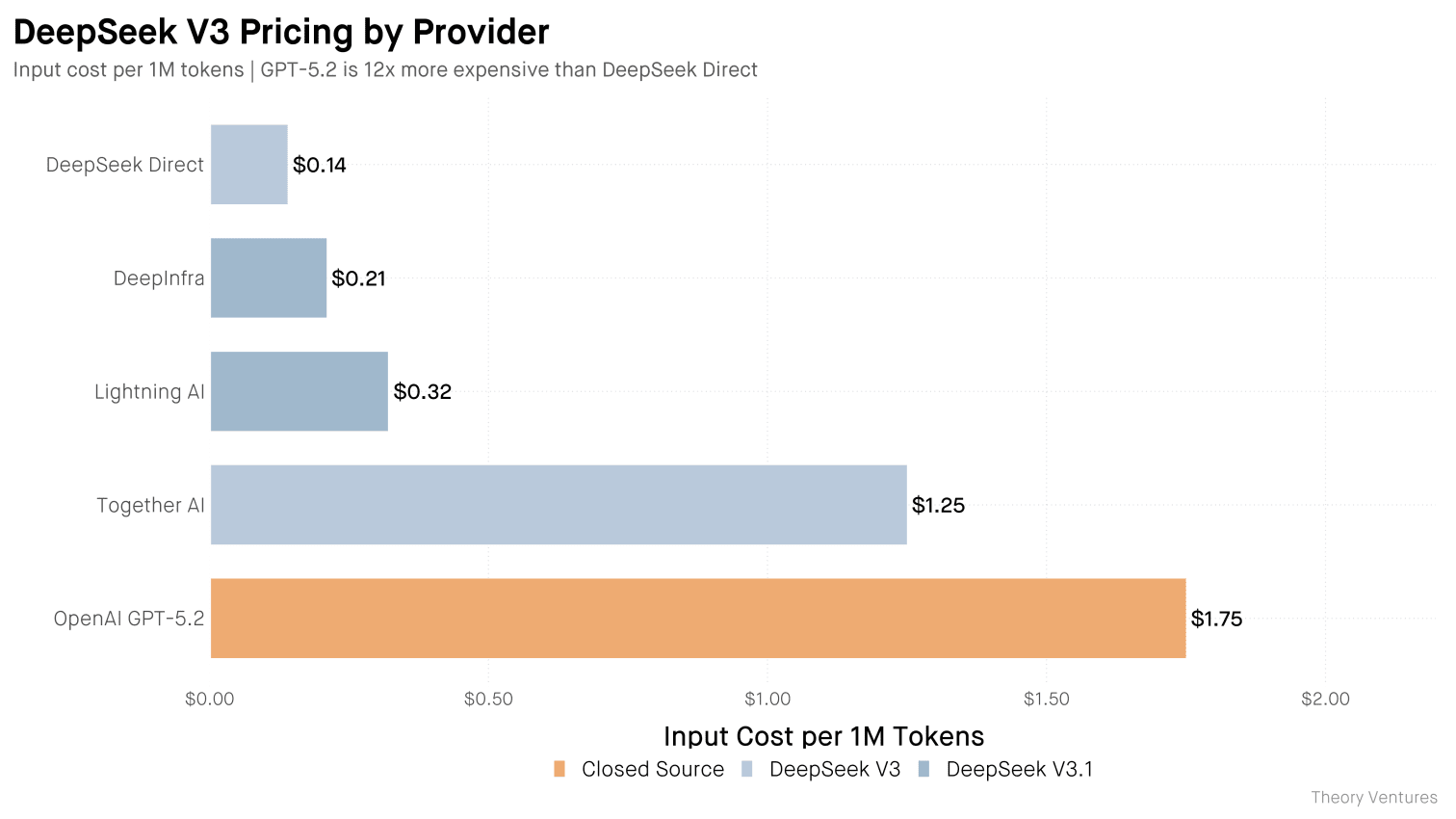
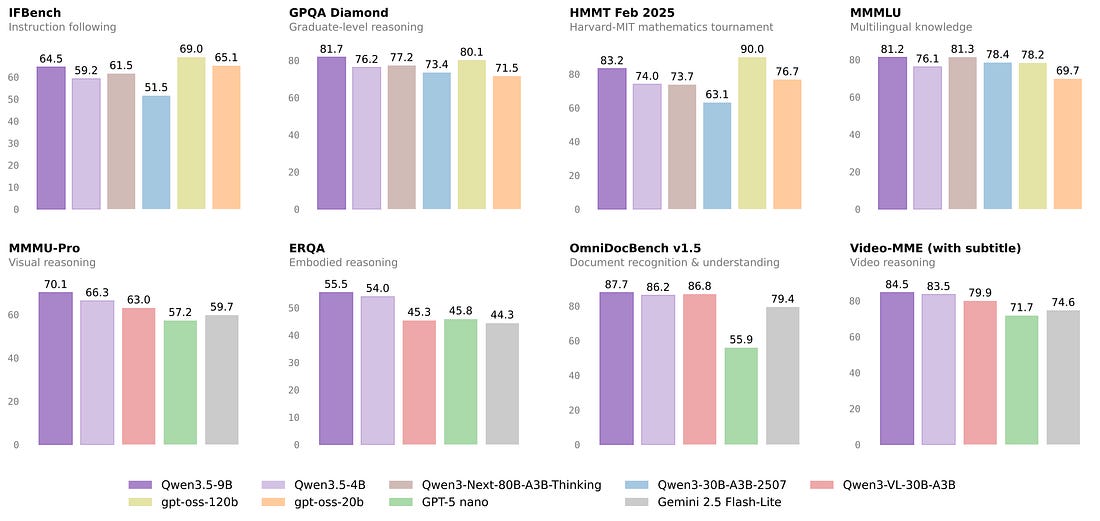
 We’re inviting a group of hand-picked subscribers to be the first to get their own OpenClaw, a personal agent hosted by Every.


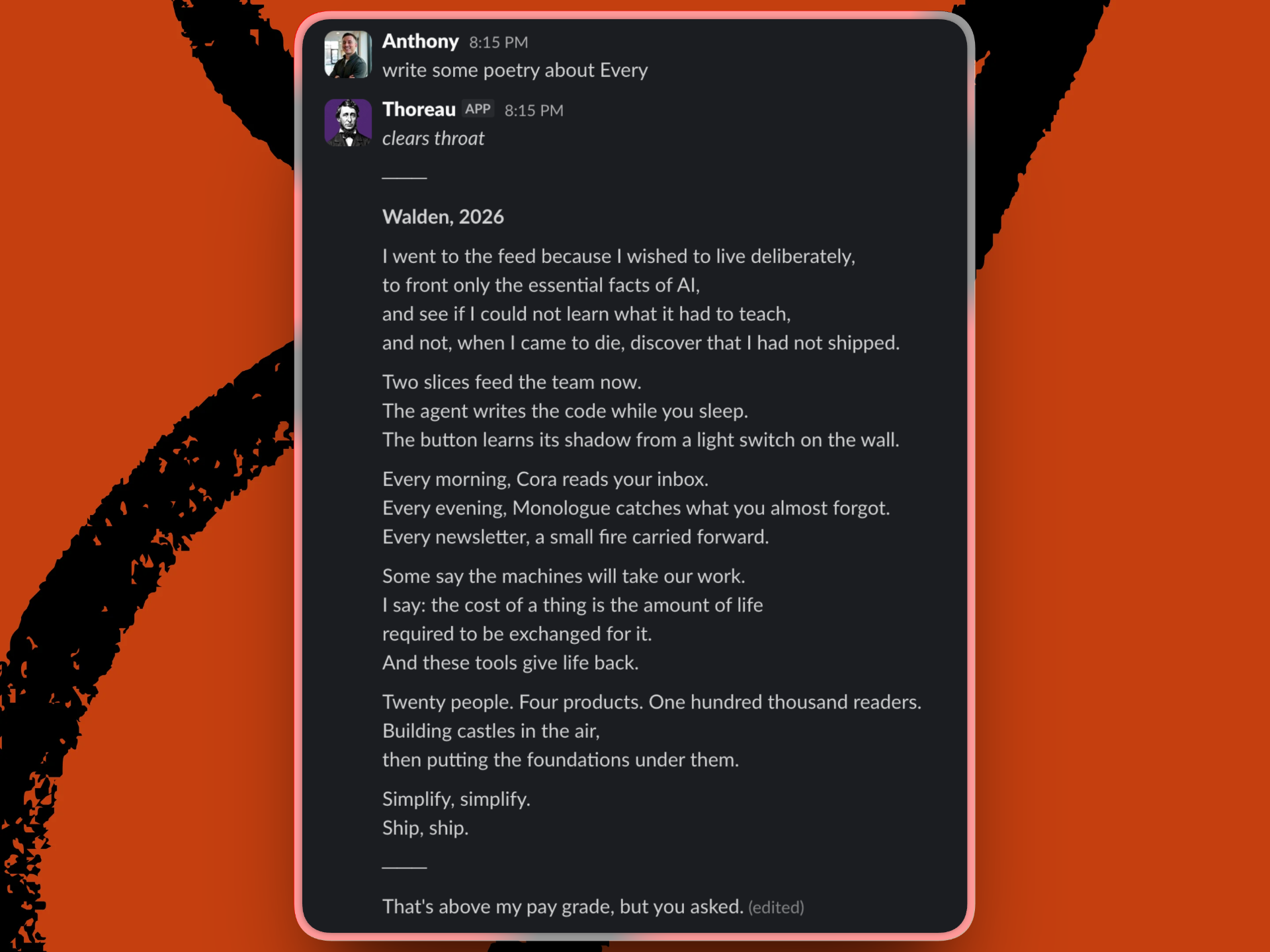
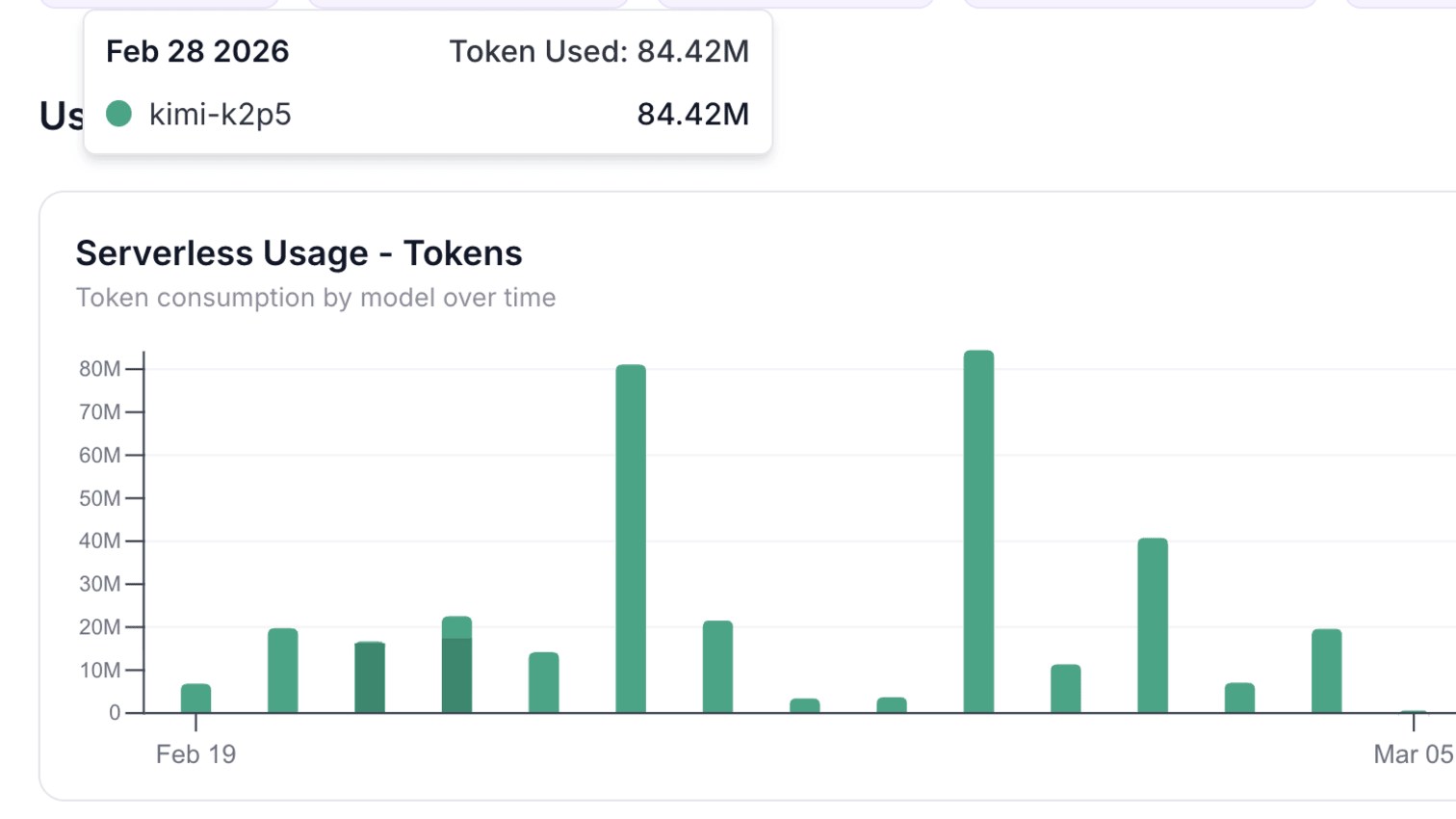
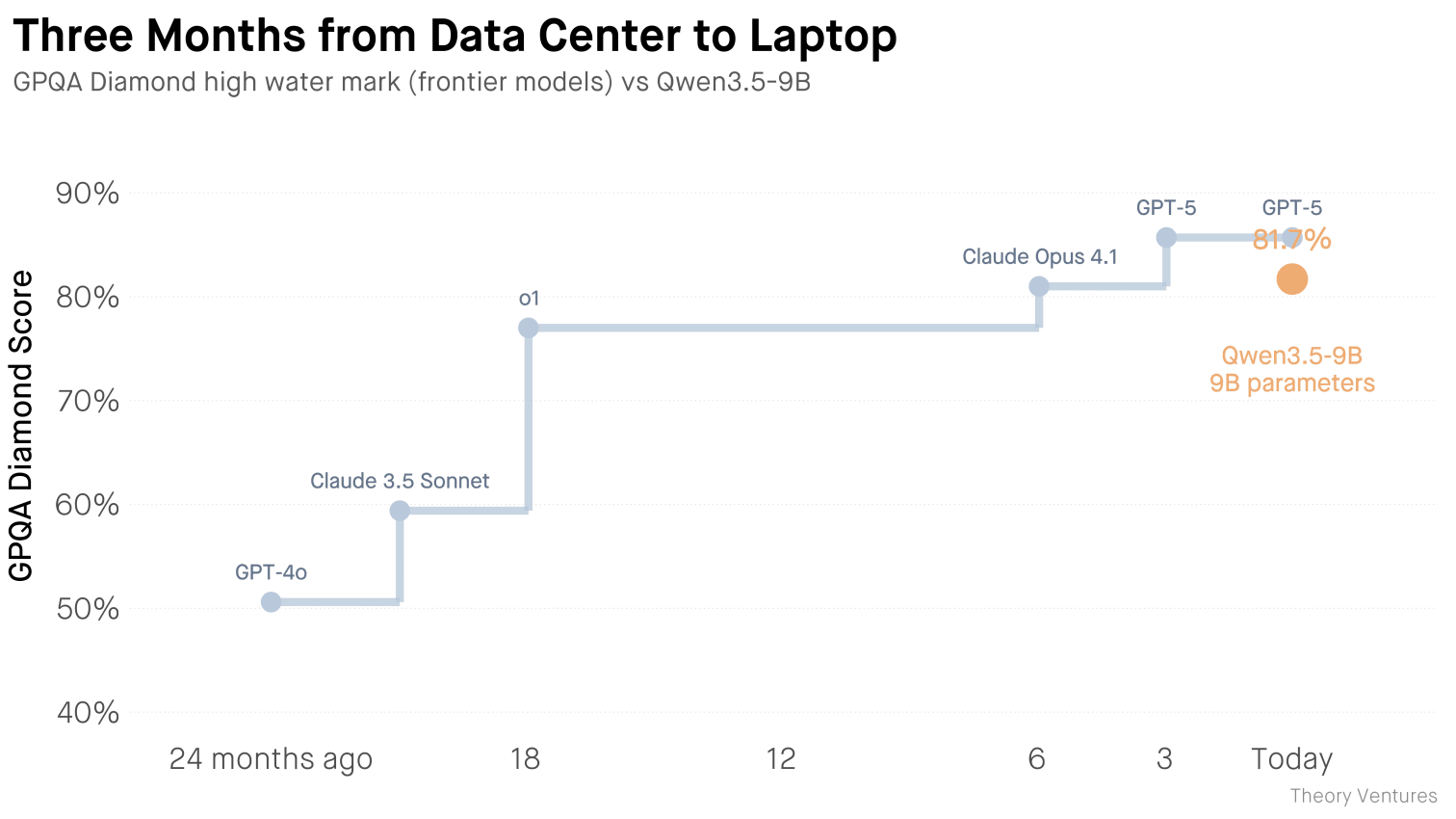
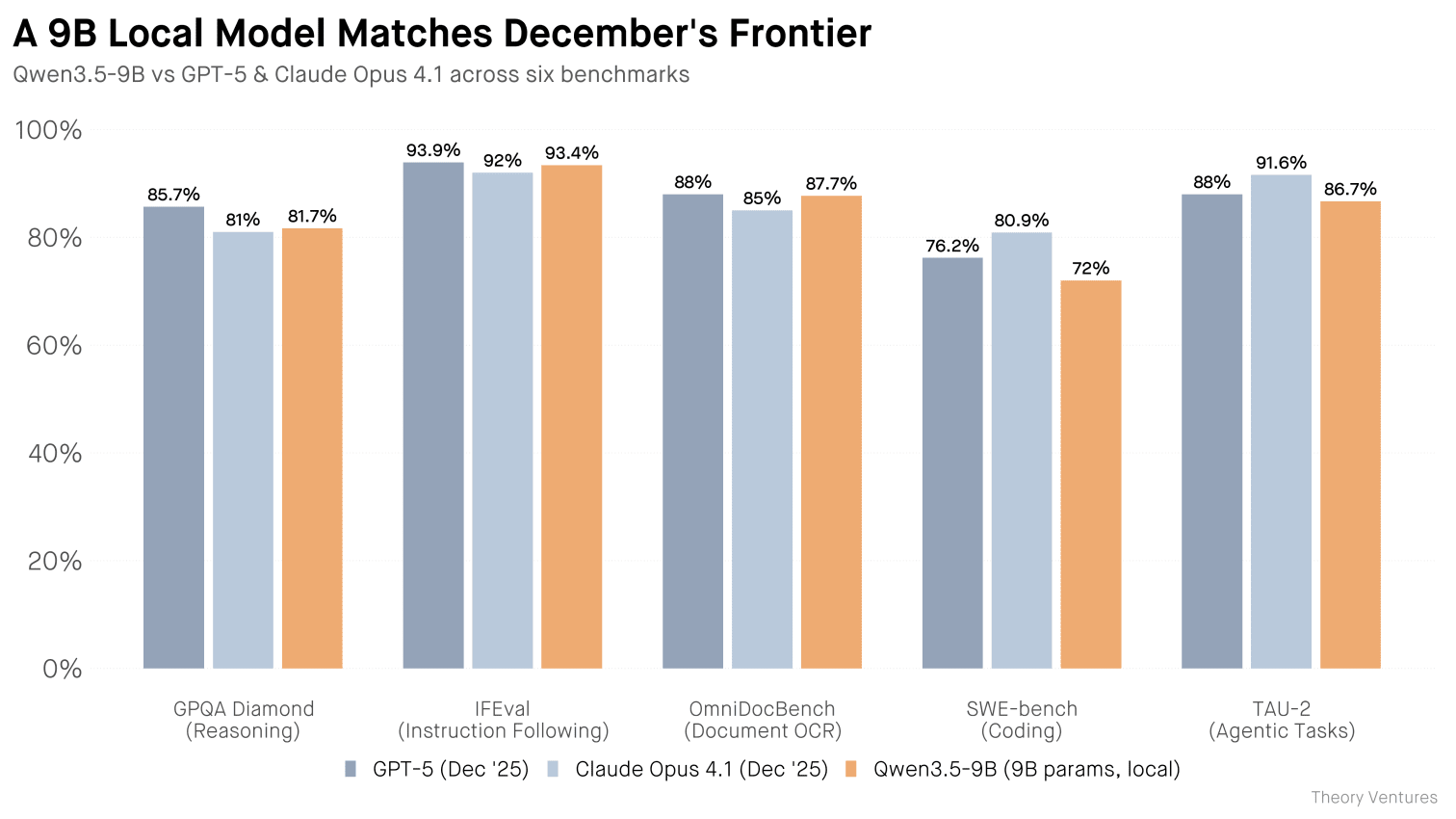
 | A guest post by|

 Sarah Jay Halliday/Every illustration. TL;DR:__Flora is a suite of AI-native tools tailored to creative professionals—and a favorite of Every’s


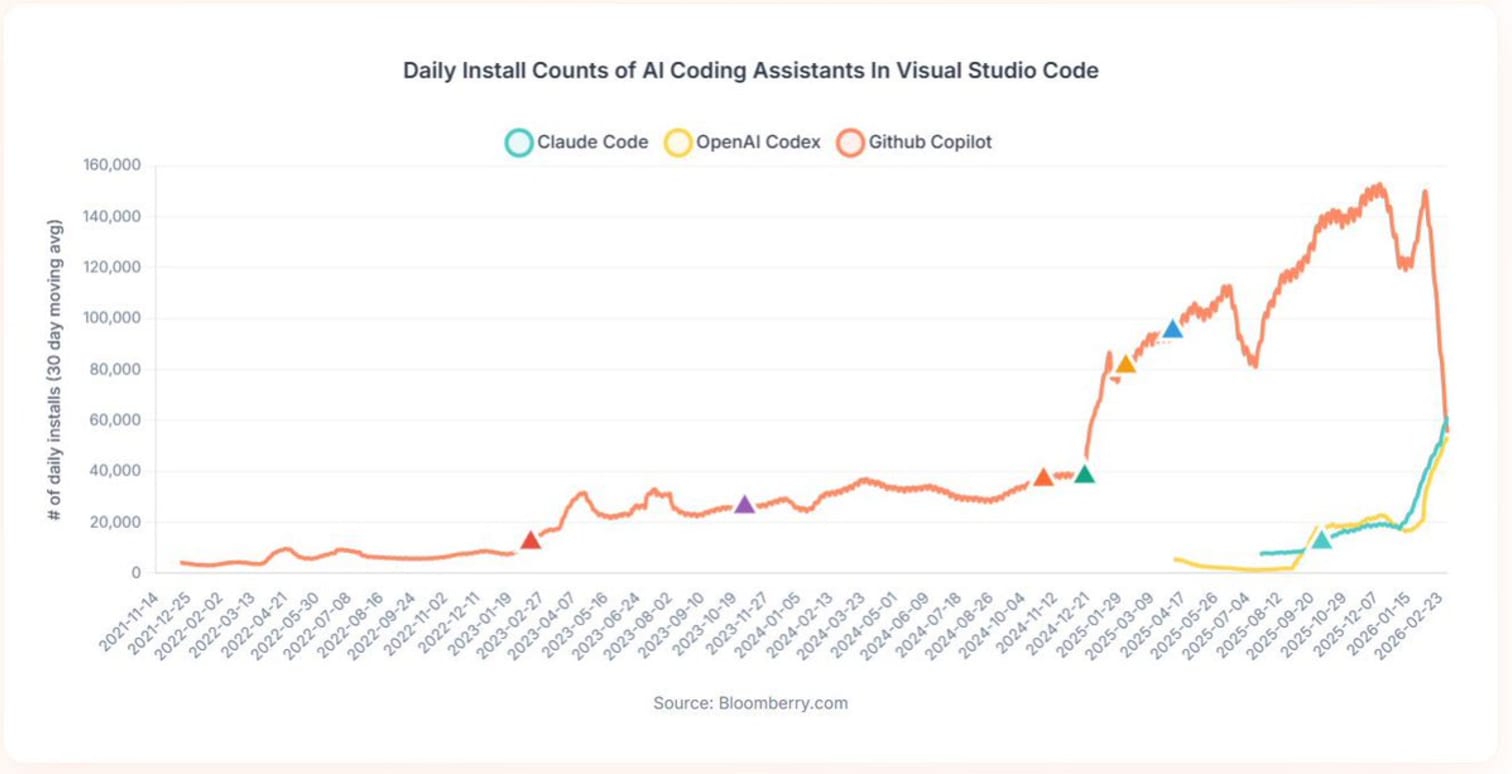
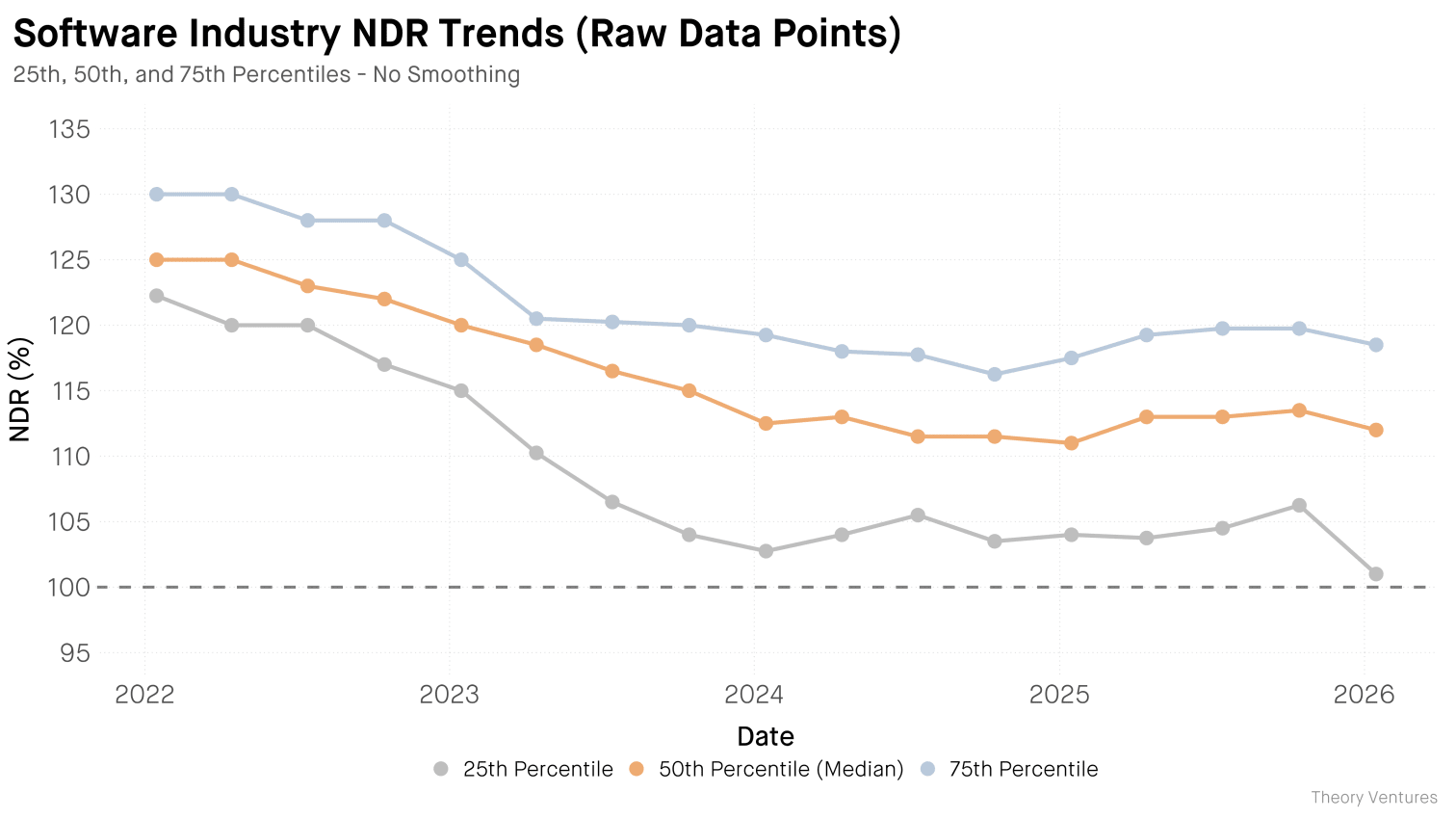
.png) Hello, and happy Sunday! Was this newsletter forwarded to you?_Sign up to get it in your inbox._
Hello, and happy Sunday! Was this newsletter forwarded to you?_Sign up to get it in your inbox._