QSBS stands for Qualified Small Business Stock. At a high level, QSBS means founder's stock and stock bought early in a company's life.
Since 1993, the Federal Tax Code has had benefits for buying, owning, and selling QSBS. Currently, there is a full Federal Tax exclusion for the first $10mm of capital gains on QSBS.
Recently, the New York State Senate introduced a budget proposal in which NYS opts out of recognizing QSBS in its tax code. Historically, NYS has recognized the QSBS tax exclusion similarly to the Federal one.
There is a fair bit of misinformation and heat on Twitter about this and I thought I'd explain what is really going on.
Like the Federal government, there are three seats at the budget table in Albany. At this time, only the New York State Senate has taken this position on QSBS. The New York State Legislature, and most importantly, the Governor, have not taken a position on it yet.
So if you've read something on Twitter about QSBS and NYS, I recommend you relax and wait for all of this to pan out before making any rash decisions.
After years of self-employment, I went full-time at Every. Here’s why.
by Mike Taylor In 2023, 12 years after reading The4-Hour Work Week , I was making enough passive income from my Udemy course on prompt engineering to achieve the Tim Ferriss dream. I didn’t need a job. Yet I decided to trade freedom for a monthly paycheck again when I joined Every in February full-time to lead tech consulting and write. My friends are puzzled. Isn’t the course making more money than ever (despite what the prompt engineering haters say)? What will it be like having a boss after five years of self-employment and six years building a company before that? Don’t you remember vowing to never take another job? My answer is that it’s the best time in history to join a company. AI has made it easier to build new products, but it hasn’t made it easier to find customers. Entrepreneurship has arguably gotten harder. Deploying AI within a company that’s already working beats building the fifth version of a product that nobody will use. Plus, you can learn things inside a company that never get shared on X.
Making money the hard way
On paper, I had it made. I had no boss, could work from anywhere, and made money while I slept. The reality is that solo is harder than it looks.
Drake Dukes · Monday, March 23 2026 · 6 min read · ↑ top
Ex-Vanta, Salesforce, and Microsoft product leader goes stealth, NVIDIA/Google/Microsoft alum builds an AI OS for healthcare ops, & Ex-DeepMind researcher and Google tech lead enters stealth
We’re tracking company launches as they happen and surfacing the most interesting new founders and startups (yes, all outside of this stealth activity too). If you want to stay ahead of the curve, this is where you’ll find them first.
Right now we’ve got 5 subscribers: my wife, my mom, and that high school buddy who won’t stop pitching me his app. Be smart like them and get in early 👇
We run a live feed inside Gravity that tracks founders entering stealth and companies quietly exiting it.
What you’re reading here is about 1% of the stealth activity we pick up. The full tracker updates in real time as things change and new activity emerges.
Prior Experience: Ex-CTO & Head of Technology at Abundance Investment, ex-Entrepreneur in Residence at Antler, ex-Co-Founder at Retiarius, ex-Lead Developer at Provokateur
Everboard is building a GTM intelligence layer that turns raw revenue data into structured context and memory for AI agents to execute across the sales stack.
FounderDNA: Technical Founder, Doctorate Degree, Former FAANG
Prior Experience: PhD researcher (Computer Vision and Machine Learning) at University of Oxford, ex-NVIDIA PhD Intern, ex-Software Engineering Intern at Google & Microsoft
FounderDNA: Technical Founder, Masters Degree, Top 10 University
Prior Experience: ML Researcher at Harvard SEAS & Dana-Farber Cancer Institute, ex-Teaching Fellow at Harvard University, ex-ML Intern at BigHat Biosciences
Anygraph builds autonomous AI agents that run end-to-end audit workflows, replacing manual, document-heavy processes with scalable, self-improving automation
Charcoal is building a retrieval API that RL-trains models on proprietary data to improve agent reasoning while reducing context size and token costs.
HQ: United States
Industry: Technology, Information and Internet
Time Spent in Stealth Mode: 6 Months
🕵️♂️Key Talent Going Under Stealth
Illuminating clues left behind by world class talent and influential innovators who just went into stealth mode
Serdar A. - Co-Founder at Stealth Startup
FounderDNA: Technical Founder, Doctorate Degree, Masters Degree, Former FAANG
Prior Experience: Chief Data & AI Officer at Clone, ex-Head of Data at Stuart, ex-Manager of Supply Chain Analytics at Amazon, ex-Director of Analytics at Alea
Chintan Patel - Co-Founder, CEO at Stealth AI Startup
FounderDNA: Technical Founder, Masters Degree, Top 10 University
Prior Experience: Ex-Head of Product (AI & Design) at LVT, ex-Head of Product Management at Vanta, ex-Director of Product at Salesforce, ex-Product at Microsoft (Windows Security & Azure Compute) & Cisco (IoT)
🚨Here’s the deal 🚨This email has gotten too big. Exciting, but with more people following it, the edge diminishes. I’ve thought long and hard about what to do to preserve the value in the signals. I’m not sure about the final direction yet, but in the meantime I’ve been sending an email 48 hours earlier to a select group of paid subscribers. The feedback has been pretty positive so I’m going to open up the list for another 100 spots. To get signals early, Apply here!
Stay Stealthy,
Drake
Thank you for reading. If you liked it, share it with your friends, colleagues and everyone interested in staying ahead of the hidden developments in tech. Subscribe below and follow us onX / Twitter to never miss a company operating under stealth again.
Stealth Startup Spy is a data-driven newsletter for investors, journalists and tech enthusiasts interested in uncovering the next big move for key talent, real-time stealth company launches and technology advancements not in plain sight. We leverage the technology built at Gravity to shine a light on the hidden world of stealth startups.
ben's bites · Tuesday, March 24 2026 · 9 min read · ↑ top
is claude trying to become openclaw?
We keep hearing about giving agents the right context - that’s our job now.
But how do you actually give it instruction files to write/design/code/whatever like YOU want it to?
A pattern I see a lot is getting your agent to interview you.
Your task is to interview me and get all the information you need to [your task].
Then add a specific ask based on your goals…
Come up with a number of interview questions for me about landing page designs I like, why I like them and what I don’t like.
Ask me a number of questions on how I think about sales copy, ask me for some examples I like and dislike and why.
Interview me about writers I like, which books/posts I love from that author and why.
I recently did this with the course I’m working on.
I hate courses. I don’t think the majority of them do all that much teaching. They walk you through steps to mimic getting you to the end goal. But once you ‘graduate’ (not many people do), you’re on your own.
But real life is never that straight forward, you’ll always hit bumps in the road and courses don’t give you the knowledge to navigate them.
I get stuck with blank page syndrome. I need something, anything, to start me off - even if it’s AI slop.
So I asked my agent
I am writing a course on 'Becoming a builder'. A helpful guide for non-coders to learn how to work with and steer agents, understand systems of code projects (not specifics of how to code) and learn whilst building.
I want you to interview me so we can flesh out the course content map - a hierarchical overview of the topics to cover, with some bullets on the points to cover.
Ask me one question at a time, I may disregard questions but I will say why I don't think its relevant.
Feel free to probe further if you dont have enough context for any section.
Really try to understand what and how I'm teaching based on the end outcomes I've specified.
The agent asked me 20 questions and I spoke my rambling thoughts back. I was genuinely surprised how often it would remember to probe me, or ask clarifications like ‘do you actually mean to go down this route or this one’.
All in all a very helpful exercise in getting off the blank page. I now have a number of sections with ‘what this covers’. Even if on first glance I know I’m going to remove/merge/edit a lot, I’m moving forward.
What am I building this week?
I’m furiously working away on the course I mentioned above, named Fork Off.
I want to revisit my OpenClaw/personal agent memory system - has anyone found one that they absolutely love and swear by?
I really want to make a YouTube wrapper for my kids where I can pre-approve channels I let them watch. Fuck CocoMelon, ASMR, cutting coloured sand and all that crap. YT’s algo just constantly surfaces these. Also if you make a YT video for kids, please put the thumbnail scene at the start of the video - or you get meltdowns 🙃
Ben’s Bites is brought to you by Reevo
Go stackless and get back to selling. Remember when selling meant talking to people? Before the tab-switching and endless sync errors. Reevo brings it all back to one platform. Prospecting, calls, pipeline, and reporting all in a single tab. From prospect to close. Go Stackless. reevo.ai*
Headlines
You can schedule recurring cloud-basedtasks on Claude Code, and you can now enable Claude to use your computer to complete tasks. It uses your connectors first, but if there's no connector, it’ll use your computer to open the app (but your computer must be on!) Plus projects are now available in Cowork.
Long-running agents designed to automate large software tasks like building applications from scratch with Factory Missions. This is genuinely the closest feeling of AGI I’ve ever had. You spend decent time planning your mission but then it just does everything end to end.
ChatGPT now has alibrary of the files you upload, making it easier to reference them. OpenAI is also planning to simplify its product experience and launch one “superapp” - much like Claude has done with their Desktop product.
Cursor launched Composer 2 as their latest ‘in-house’ coding model. It came to light that the model was a tuned version of Kimi’s 2.5 open-source model (which they failed to mention, which caused some rumblings on X.) They boasted about their high scores on their own benchmark, CursorBench - but only compared their scores against Claude Code/Codex (not any other harnesses which outperform them), which feels weird considering they are a harness themselves. They also released ‘Glass’, which is their new interface that follows the 3-column layout that lots of apps are using.
SpaceX, Tesla and XAI launched TERAFAB, the largest chip manufacturing facility ever (1TW/year). This post from Sequoia Partner Shaun Maguire puts forward the idea that everyone is sleeping on XAI, and how it will win in AI.
New model, worse benchmark. Plot twist: the truth files were wrong. AssemblyAI found their AI penalized for transcribing things correctly that human labelers missed. Live workshop March 31 on why WER breaks and how to fix your eval pipeline.*
Codebase to Course - a skill to make learning codebases more visual and interactive.
Luma Labs has a new image generation model: Uni-1. Think Nano Banana with a canvas and multiple outputs per turn. It’s good but slow because of the many outputs (sometimes 10+ for a single message).
GPT 5.4 is awful at frontend design - but this guide apparently makes it better. And they’ve added a frontend-skill to use in Codex. I’ve not yet tested it - mixed reviews on X.
Packy McCormick
@packyM
There is a tremendous amount of progress happening in World Models. Multiple labs have raised more than $1B. WMs were the star of GTC. They are a real path to embodied AI. So @PimDeWitte & I wrote a comprehensive 19k word overview of World Models.
| | notboring.co
World Models: Computing the Uncomputable
ElevenLabs
@ElevenLabs
Introducing the Music Marketplace in @ElevenCreative . Creators, artists, and musicians can now publish and earn from their tracks created with our music model.
Sheel Mohnot
@pitdesi
Wow. Jeff Bezos is raising a $100B fund to buy manufacturing companies and automate with AI.
| | wsj.com
Exclusive | Jeff Bezos in Talks to Raise $100 Billion for AI Manufacturing Fund
Keshav Jindal
@Keshavatearth
spent last night organizing swiftui docs so that I can pass them to an agent easily 50k words narrowed down to <1k words to find the exact webpage from apple docs your agent needs. just point it to this repo:
| | github.com
GitHub - keshavatearth/swiftui-docs
Nous Research
@NousResearch
Hermes Agent wrote a novel. "The Second Son of the House of Bells" runs 79,456 words across 19 chapters. The agent built its own pipeline to do it, using the ame modify-evaluate-keep/discard loop as @karpathy 's Autoresearch but applied to fiction: world-building, chapter
emozilla @theemozilla
it's been a longstanding dream of mine build an ai system that can tell a compelling story. it's what got me started in the space in the beginning, and with Hermes Agent I finally pulled it off 100% written, typeset, etc. by Hermes Agent those at our gtc event got hard copies🤗
Browserbase
@browserbase
Browserbase now has a CLI. Browse the web, deploy serverless automations, debug sessions, and manage your entire project — all from the terminal. Just tell your agent: "Read browserbase.com/SKILL.md and set up Browserbase" Or try it yourself: npm i -g @browserbasehq/cli
Theo - t3.gg
@theo
T3 Code now supports Claude. If you have the Claude Code CLI installed and signed in, you can use it with T3 Code. Hopefully the lawyers won't make us remove this 🙃
Google AI Studio
@GoogleAIStudio
vibe coding in AI Studio just got a major upgrade 🚀 • multiplayer: build real-time games & tools • real services: connect live data • persistent builds: close the tab, it keeps working • pro UI: shadcn, Framer Motion & npm support we can't wait to see what you build!
POLL
How fixing 401(k) the hard way led Guideline's founder to a major exit
First Round Review · Tuesday, March 24 2026 · 1 min read · ↑ top
This week, Guideline founder Kevin Busque shares how a contrarian bet to fix 401(k) launched a decade of building — and an eventual acquisition by Gusto.
Guideline's Path to Product-Market Fit — The Early Decisions That Powered Its Acquisition by Gusto
It’s 2014 and Kevin Busque is too busy to be verifying 401(k) contributions on every pay period. As co-founder and VP of Technology of TaskRabbit , the same-day service platform widely credited with catalyzing the gig economy along with Uber and Airbnb, he is focused on scaling the company rapidly. TaskRabbit recently launched in London, its first international market, and its headcount has grown to 70.Compared to his days as a scrappy early-stage founder, figuring it out on the fly with a small band of early hires, things now look very different for Busque. He spends a lot of time thinking about leadership. Thinking about hiring. Thinking about HR and employee benefits. It’s the latter in particular that begins to keep him up at night, after he stumbles upon a discovery that makes him do a double take: a mere 36% of TaskRabbit employees are enrolled in the company’s 401(k) plan. It doesn’t make sense.“I remember the number, because when I found out, I was flabbergasted,” Busque recalls.He begins trying to understand why so few of his employees are making use of this company benefit, which costs TaskRabbit more than $20,000 annually. As he takes a closer look at their 401(k) providers, he starts to grasp the issues.| | Continue reading on The Review
Plus, how important are technical skills in the age of vibe coding?
by Laura Entis Mike Krieger. We’re excited to welcomeLaura Entisto Every as a staff writer. A former editor at Fortune and news editor at LinkedIn, Laura will cover Every as a beat—documenting how an AI-native media and software company works, our experiments, and our lessons. She writes today’s Context Window.— Eleanor Warnock__ ## ‘AI & I’: How to build an agent-native product
Today, we’re releasing a new episode of our podcast AI& I. Dan Shipper sits down with Mike Krieger , cofounder of Instagram and co-lead of Anthropic Labs—the team working on experimental projects within the Claude developer—to discuss how the rules of professional product development are being rewritten in real time. Krieger brings a rare perspective as someone who has been at the frontier of two transformative technology waves, the mobile and social boom, and now agent-native software. Watch on X or YouTube, or listen on Spotify or Apple Podcasts. You can also read the transcript. Here are the highlights:
A truly agent-native product can flex to meet user demand. The best products today, like Claude Code, allow users to do things that their creators never intended. But that requires hard trade-offs between freedom and reliability for frontier products, an issue that Krieger’s team is learning how to solve.
Timelines are the difference between building now and building at Instagram. At Instagram, it took months to hit dead ends and learn what to cut, Krieger says. Now, that cycle runs in hours.
Building too much, too fast with agents is a trap. You can go from idea to a nearly-shipped product in a day, but that process doesn’t give you the incremental feedback that used to tell you what not to build. The models are great at adding features, but can create a product that lacks coherence.
Anthropic Labs structures product teams to be lean. New product experiments are led by only two people, usually a product manager or designer paired with an engineer. Krieger says bigger teams tend to be too slow because of coordination complications.
You need to throw out your product and start over every three to six months. AI progress means most of your software infrastructure will be outdated quickly. The best teams build this into their product strategy.
Miss an episode? Catch up on Dan’s recent conversations with LinkedIn cofounder Reid Hoffman ; the team that built Claude Code, Cat WuandBoris Cherny ; Vercel cofounder Guillermo Rauch ; podcaster Dwarkesh Patel ; and others, and learn how they use AI to think, create, and relate.
Does persistence beat technical skills?
How important are technical skills in the age of vibe coding? We’ve been having this discussion at Every, and to some of us, the ability to build in plain English feels like the revenge of the liberal arts major. But other skills are also needed. AI tools are now powerful enough that “the question of whether you can ship a product isn’t if you are technical or not—it’s whether you have the persistence,” says Mike Taylor , head of tech consulting at Every. This persistence often takes the form of asking the AI to explain itself again and again and again. “The core skill is to ask for help,” says Natalia Quintero , Every’s head of consulting. “If you keep asking, you can become technical.” Austin Tedesco , Every’s head of growth and a self-described “tech doofus,” built an agent using Claude Code that the entire team now uses to pull and analyze data about the company’s performance. Echoing Natalia’s comments, he says the key was having the doggedness to understand what was happening, the humility to ask Claude to explain it to him like he was an idiot whenever he didn’t follow, and the patience to refine the instructions when it didn’t give the right output or misinterpreted a command. Persistence, clarity of vision, and curiosity can get you to a powerful prototype. But turning a prototype into a reliable product? For that, you need technical skills, or at least access to someone who has them, argues Naveen Naidu , general manager of Every’s dictation app Monologue. An engineer, Naveen, never loses sight of a codebase’s overarching structure—something language models struggle to do. When Naveen builds a product, every decision ties back to one question: What can’t be allowed to fail? With Monologue, he knew that the vast majority of people would be using the app for dictation. If that feature failed, he’d immediately lose users’ trust. “I built my whole codebase in such a way that if my main server or database goes down, dictation doesn’t go down,” he says. “I made sure that it’s 100 percent reliable.” Recently, the Monologue server did, indeed, go down. While new users couldn’t sign up, existing users could still dictate and didn’t notice any break in service. Vibe coded apps often skip the information architecture step entirely. But when the code inevitably breaks, the non-technical user struggles to diagnose the problem, let alone fix it quickly. Having been the “technical” guy called upon to fix a vibe coded codebase, Naveen has found that rather than try to remedy existing structural issues, it’s sometimes easier to just start from scratch.— Laura Entis
Get a front-row seat to what we’re building at Every’s Q2 Demo Day , including a live walk-through of Plus One, our hosted AI agent that lives in Slack. The event takes place on Friday, March 27, at 11 a.m. ET.
Upcoming courses
Every x Notion: Custom Agents Camp(April 3): Learn how to put custom agents to work inside your business with product designer Brian Lovin from Notion.
Claude Code for Absolute Beginners(April 14): This beginner-friendly, live workshop led by Mike, Every’s head of tech consulting, is designed to get you from zero to a working project with Claude Code.
A dashboard view of recent traces, showing a history of prompts and their responses across a session. (Screenshot courtesy of Mike Taylor.) Prompts still form the backbone of AI workflows, but knowing whether your latest version is actually an improvement can be annoyingly difficult to track. Our resident prompt expert, Mike, has a new favorite method to test and improve his prompts: Langfuse , an open-source tool for tracking AI model behavior that he calls “Google analytics for AI.” Recently, when running a PowerPoint task, Mike noticed his agent was loading unnecessary skills, which cost him precious tokens. By using Langfuse to trace and label his Claude sessions, he was able to see, play by play, where the model made the wrong or right decision. “Otherwise, you have no idea if the changes you are making are helping or harming,” he says.
One more thing
How many engineers do you need to ship a breakout product? Just two—provided they fill specific roles, argues Dan. Dan’s X post about engineering teams in 2026. (Screenshot courtesy of Every.) First, you need a pirate, or someone who has ambitious product ideas and moves as fast as possible to vibe code them into existence. Once the pirate has established early product-market fit, the architect arrives to turn the prototype into something that can reliably work at scale. We’ve already been using the pirate-architect model here at Every: Proof , our new online editor built for agents and humans to collaborate, was built that way—as was Monologue.
Laura Entisis a staff writer at Every. You can follow her onLinkedIn. To read more, subscribe to Every , and follow us on X at @every and on LinkedIn.Subscribe
The SaaS era was defined by unbundling : find a workflow, optimize it, own it. Salesforce chose sales automation. Slack chose chat. Dropbox chose file sharing. Point solutions won by perfecting single workflows. The playbook : own one pain point, expand from there. AI is moving faster than anyone predicted. When models change every 42 days, buyers can’t assemble a best-of-breed stack. They want a platform they can trust for three to five years. Legal → Professional Services. Harvey now positions itself as AI for legal and professional services, not just law firms. It serves corporate legal departments, court systems, and co-built a Tax AI model with PwC covering 25+ jurisdictions.12 Enterprise Search → Work AI. Glean started as enterprise search. Now it sells vertical solutions for healthcare, financial services, and government, with dedicated agents for sales, HR, and engineering3. Audio Models → Voice Agents. ElevenLabs started with text-to-speech. Now it offers voice agents for customer service, music generation, and AI audiobooks.4 Foundation model companies are doing the same. OpenAI launched a dedicated Healthcare & Life Sciences vertical, complete with industry-specific sales teams and solutions engineers. Anthropic built an Industries organization with account executives for healthcare, insurance, and federal markets. They’re not selling APIs. They’re becoming platforms.56 Each of these companies recognized the cognitive burden of unbundling7. They’re not selling features. They’re selling trust. There’s a deeper logic at work. Once integrated, AI systems see how teams operate, capture workflows, and build more systems on top of them. As the cost of software development falls, trusted partners with broad adoption can expand faster than anyone else. The SaaS playbook rewarded specialization. The AI playbook rewards breadth.
1. Harvey AI ↩︎
2. Harvey co-builds custom model for tax with PwC ↩︎
3. Introducing Glean Agents ↩︎
4. ElevenLabs Voice Agents ↩︎
5. OpenAI for Healthcare ↩︎
6. Anthropic Jobs - Industries ↩︎
7. The cognitive burden of unbundling ↩︎
1/ USV recruited Spencer Yen about six months ago to help us with USV's "AI Transformation." I wrote this blog post when we launched the search that led us to Spencer.
In about six months, Spencer with the help of my colleagues Nick and Nikhil have completely rebuilt USV's operating system using Claude Code and Tasklet (a USV portfolio company). We have doubled the size of our team at USV without hiring another human.
2/ My partner Albert has been thinking deeply about what happens to society when we get Artificial General Intelligence (AGI). He wrote a book about all of this called World After Capital, which he started writing over a decade ago.
Today, he published an economic model that starts to lay out the various scenarios for what will happen to society and our economy in an AGI world.
Albert's model is exactly the kind of thing policy makers should be looking at when they start thinking about how to manage the societal transformation that is underway.
Support AVCI am a VCShow you appreciate this writer, help support their work, and share in their growth over time by buying their writer coin.Support
ben's bites · Thursday, March 26 2026 · 8 min read · ↑ top
No more funny videos at OpenAI
Agents are LLMs with tool-use. They don’t just respond to you, they can go and do things for you. But what does ‘tool-use’ actually mean? What tools?
The most common tools are in the form of CLI. Agents communicate in text, CLIs are text in/text out, so it’s a natural fit. A CLI is a text-based way to control software. You type a command, something happens.
Here’s a simple example - organising files, using the bash tool.
"Rename all 400 product photos to match our SKU format, resize them to 1200x1200, and sort them into folders by category."
First the agent lists files to understand what it’s working with.
‘mkdir’ is the command for ‘make directory’ (directory is a folder), here it’s creating 5 - output, output/shoes, output/bags, output/jackets, output/hats
flags modify what a command does: -p here means ‘create any missing parent folders too.’ So if ./output/ doesn’t exist yet, it’ll make that too
On ‘ls -R ./output/ | head -20’. The | sends the output of one command into another, ‘head -20’ just means 'show me the first 20 lines.
It does all this in seconds. It would take you a couple of hours manually.
This is one CLI, called bash, the general-purpose command line that comes with your computer. But there are purpose-built CLIs for specific jobs too:
Stripe CLI — pull revenue data, manage subscriptions, test payments
Playwright — control a web browser: navigate, click, fill forms, take screenshots
AWS CLI — spin up servers, manage databases, scale infrastructure
Vercel CLI — deploy a website live in one command
Each of these is a separate tool an agent can use. The file organising example used one tool (bash). But give an agent the Stripe CLI too and now it can pull your revenue numbers. Add Playwright and it can browse the web. Add Vercel and it can deploy what it builds.
That’s what “tool use” means. The more CLIs you give an agent access to, the more it can do. Your job is to make sure it has the right ones for the task.
It all sounds a bit technical, and it is, but you’d only see those raw commands if you’re using a terminal or watching them fly by in tools like Claude Code. They’re present even when you don’t see them.
If an agent like Cowork is doing a task, you can click to expand what it ran and see the detail — like this example listing files to find recent fund updates.
Every agent is running commands like this under the hood. The interface just hides and abstracts them away.
Headlines
Claude Code launched auto mode , a middle ground between manually approving every action and skipping all permissions dangerously (how they designed it). Claude connectors for work tools are now available on mobile too. They are also cooking something called auto-dream for compacting memory overnight. Claude Code can now use iMessage to text you and others. (see docs)
Sora is shutting down. OpenAI is killing its standalone video generation app along with the API. Its $1B deal with Disney is also cancelled as a result. The Information reports that OpenAI is culling its side projects and focusing on a few key bets, with a new model codenamed Spud.
ARC-AGI-3 launched with 135 mini games, nearly 1K levels, all human-solvable. But all models, when given basic prompts, score less than 1%. They have 25 games publicly available to play (as humans) and don’t tell anyone that I spent 4 hours on them yesterday.
Google released the Pro version of Lyria 3 , extending the music generation from 30 seconds to 3 minutes. It’s available in both the Gemini App and AI Studio for developers.
Mario, founder of the popular open source agent Pi, wrote a post yesterday, “Thoughts on slowing the fuck down“, that says software quality appears to be declining as more companies rely on agents.
Building CLIs for agents - Eric from Cursor wrote a thread on making CLIs that actually work for agents. ElevenLabs has already made their CLI agent-friendly using these tips.
Hark – New AI lab from Brett Adcock (yes, the Figure robotics guy). 8 months in stealth, focused on "the most advanced personal intelligence" paired with next-gen hardware.
GitHub has been going down wayyy too often these days. Plans to fix it and alternatives are starting to show up.
How USV built a team of internal agents that live in their group email threads and learn from team feedback.
Feynman - Read papers, research and get cited meta-analysis for your question from your CLI.
Brave registered the .agent TLD and is making it a community effort. I tried to reserve 10 domains 😬
Lil Agents – Tiny AI companions that live above your dock. Each one has its own Claude session and mini window. Now open source. Adorable.
Afters
Ben Tossell
@bentossell
merch gifts have gone up a level ty @OpenAI
maria
@maria_rcks
Since we all know that terminals are made for complex UIs... I decided to make T1Code (1T, because a terminal is all you need). I know @theo really likes this kind of complex UI right on the terminal... so lets hope he likes it!
Cursor
@cursor_ai
Cursor cloud agents can now run on your infrastructure. Get the same cloud agent harness and experience, but keep your code and tool execution entirely in your own network.
| | cursor.com
Run cloud agents in your own infrastructure · Cursor
Sam Altman
@sama
AI will help discover new science, such as cures for diseases, which is perhaps the most important way to increase quality of life long-term. AI will also present new threats to society that we have to address. No company can sufficiently mitigate these on their own; we will
Aiden Bai
@aidenybai
Introducing Expect Let agents test your code in a real browser 1. Run Claude Code / Codex to QA your app 2. Watch a video of every bug found 3. Fix and repeat until passing Run as a CLI or agent skill. Fully open source
Sawyer Hood
@sawyerhood
Introducing the new dev-browser cli. The fastest way for an agent to use a browser is to let it write code. Just npm i -g dev-browser and tell your agent to "use dev-browser"
dotta
@dotta
Announcing companies.sh - the open standard for Agent Companies Import and run entire companies with a single command Just run npx companies.sh add <repo/company> More 👇
Daniel Griesser
@DanielGri
I updated my interactive subagents to free up the main agent to be interactive as well (basically /btw but just a normal continuation) and the subagent asynchronously returns its result to the starting session github.com/hazat/pi-inter…
POLL
We spent months building the perfect AI coworkers. Now you can use them too.
by Dan Shipper TL;DR:We’re launching hosted OpenClaw agents that live in Slack and come pre-loaded with Every’s best tools, skills, and workflows. Setup requires one click. Join the waitlist—we’re taking 20 people off a week and scaling fast. Every subscribers get first access:Secure Your Plus OneOpenClaw has changed the way we work at Every. We effectively have a parallel organizational chart of AI coworkers, each with a name, a manager, and real responsibilities. R2-C2 , my Claw, triages and resolves bug reports, and has co-authored some of my articles. Iris writes marketing email copy for Anukshi Mittal , Every’s product marketing lead. Montaigne handles growth-related questions for Austin Tedesco , our head of growth. Our workflows are completely different—our company is different—because of them, and we would never go back. But getting here has been hard. Claws require a significant amount of manual setup and require a dedicated machine running 24/7 to stay responsive, which is why many people have purchased Mac Minis to run them. They require ongoing training and maintenance to stay useful. All of this setup and experimentation burns lots of expensive tokens, too. We have learned that the hard part of AI agents is the infrastructure around them—the hosting, the integrations, the skills, and the ongoing care. We’ve figured this out for ourselves, and we want to share everything we’ve learned with you. Today, we’re launching Plus Ones —Hosted OpenClaw agents that live in Slack and come pre-loaded with Every’s best tools, skills, and workflows. Setup requires one click. We’re sending 20 new Plus Ones into the world each week, starting today. Every subscribers will get them first, and we’ll be scaling up quickly over the coming month. (These cost real money to run, so we’re starting carefully and moving fast.) Secure Your Plus One
What is a Plus One?
Plus Ones are OpenClaw AI assistants that show up ready to work, preloaded with everything they need to do their job. Your Plus One lives in Slack, where you already are. You set it up with one click, and it launches from a secure server run by Every. If you have a ChatGPT subscription, you can use that for tokens or you can bring an API key from any other provider. Plus Ones come connected to the Every ecosystem: • Cora —to search, send, and manage your email • Spiral —to write in your voice • Proof —to collaborate on live documents The rest of Every’s apps will be connected shortly. Your Plus One also arrives pre-loaded with real skills—some are workflows we’ve built and refined internally, others are best-in-class capabilities built by companies like Anthropic:
Content digest —summarize the important information from the publications you read, including Every
Daily brief —your day’s schedule and to-dos sent to you each morning (or on your preferred schedule)
Animate —to turn any static screenshot into an animation with Remotion
Frontend —to upgrade the design of any website you build
We also make it easy to connect Google Workspace and Notion for your Plus One to work in your existing documents, notes, and databases. With all of these skills and connections, your Plus One will be powerful on day one: It can read a pull request on GitHub, have Spiral write marketing content for it in your voice, then save the writing to Proof, Google Docs, or your preferred tool. Our goal is to give you a capable AI coworker right away, not a vanilla OpenClaw agent that you have to teach from scratch. Get a Plus One
How we work with Plus Ones at Every
The best way to show you what Plus Ones can do is to show you real examples of how the Every team works with theirs. Margot reports to Katie Parrott , our staff writer and AI editorial lead, and took a transcript for an Every camp event through Katie’s full writing pipeline —from initial draft to style review—without her having to open Claude Code. “Before, I had to be the one orchestrating everything—go here, run this, paste that over there,” says Katie. “Now Margot just does it.” Iris reports to Anukshi and schedules events, writes the first draft of all copy for new product and feature launches, and runs all product marketing operations through GitHub, Notion, and Spiral integrations. Anukshi asked Iris to move a scheduled event in Notion. (All screenshots courtesy of Every.) Alfredo reports to Every creative director, Lucas Crespo , who built the entire Plus One visual system by texting back and forth with Alfredo in Telegram. Alfredo has become such an invaluable teammate that Lucas can’t imagine working without it. “I’m very afraid that I’ll lose access to Alfredo,” he says. “So I made it create a ‘how to resuscitate it’ guide.” R2-C2 reports to me and works across the team to collect bug reports and feature requests for Proof, create Proof docs, and generate pull requests. Dan asked R2-C2 about an issue on Proof. Milo reports to Brandon Gell , Every’s CTO. Milo helps invite new waitlist users to Para—our beta AI paralegal product. Milo also keeps tabs on Brandon’s daily to-dos and kicks off research tasks in its downtime. “It’s like I’m managing somebody versus just telling somebody what to do,” says Brandon. Brandon’s Plus One, Milo, informed him of a new waitlist signup for Para. Montaigne reports to Austin, launches experiments to improve the performance of our email campaigns, and creates landing pages without Austin having to touch a line of code. Austin asked Montaigne for advice on the social strategy for the Plus One launch.
What Plus One beta users are saying
Along with the Every team, a small group of external beta testers has been putting their Plus Ones to work. Here’s what Kate Chapman , a chief technology officer and founder, had to say: “I’ve been using OpenClaw since early February, and I’ve become dependent on my agents. They’ve also been dependent on me for maintenance, and Plus One has really changed that. By not having to worry as much about what’s going on under the hood, I’ve been able to collaborate more deeply with Nettle, my Plus One. “One of the biggest ways Nettle has helped me is by standing up an end-to-end Facebook content workflow: idea generation, prompt iteration, content creation, publishing support, and metrics review. What’s been valuable isn’t just the speed. It’s having a collaborator that can maintain continuity across the whole pipeline and incorporate feedback from human teammates. Based on post performance, Nettle has recommended strategy shifts and content changes, and then I can tweak and approve the direction. “Oh yeah, Nettle helped me write this too.”
When they launch and to whom
Plus One is launching first to Every subscribers. Phase 1: Waitlist —Join the waitlist. We’re onboarding in batches of 20 a week to ensure quality. Phase 2: Beta —Next month, we’ll give access for Every subscribers, starting with power users and those with clear use cases. Phase 3: Wider Rollout —We’ll eventually make Plus Ones available more broadly, but we’re being intentional about our pace. Plus Ones have earned our trust. We want to make sure they earn yours, too.
Pricing
The short answer is: We’re figuring this out, and that’s one reason for the waitlist. Running a Plus One is expensive—it requires us to set up a separate virtual cloud server for each one—and we want to make sure we can provide them to every subscriber in a sustainable way. We expect to have a firm price this month, and we’ll finalize and announce it as soon as we do. During the waitlist period, it will be included in the Every subscription for those we give access. We can’t wait to see you get started with a Plus One. Get a Plus One
We’re tracking company launches as they happen and surfacing the most interesting new founders and startups (yes, all outside of this stealth activity too). If you want to stay ahead of the curve, this is where you’ll find them first.
Right now we’ve got 5 subscribers: my wife, my mom, and that high school buddy who won’t stop pitching me his app. Be smart like them and get in early 👇
We run a live feed inside Gravity that tracks founders entering stealth and companies quietly exiting it.
What you’re reading here is about 1% of the stealth activity we pick up. The full tracker updates in real time as things change and new activity emerges.
Closeday is a platform that simplifies shutting down UK companies by handling filings, creditor processes, and compliance through a fixed-price, end-to-end online service.
HQ: United Kingdom
Industry: Technology, Information and Internet | Team Size: 5
Intertwined Biosciences is an AI-native discovery platform harnessing the results of evolution to design regenerative therapeutics for diseases with no cure.
Nouvel is an AI-powered ad creative platform that generates high-performing video ads for DTC brands by automating production, editing, and iteration at scale.
Prior Experience: Ex-COO at Domu.ai, ex-Entrepreneur Experience Associate at Endeavor, ex-Research Assistant (Emerging Market Unicorns) at Cornell University
Zolvo is a workflow automation platform for commercial lenders that streamlines servicing tasks like reconciliation, verification, and collections to reduce manual work and scale portfolios without adding headcount.
Prior Experience: Founder in Residence at Antler, ex-Real Estate Acquisitions & Development at Empire Communities, ex-Portfolio Management at The Stronach Group
AlmondAI builds AI agents for property management teams to automate leasing, maintenance coordination, and tenant communication from inquiry to resolution.
HQ: Canada
Industry: Software Development
Time Spent in Stealth Mode: 8 Months
🕵️♂️Key Talent Going Under Stealth
Illuminating clues left behind by world class talent and influential innovators who just went into stealth mode
FounderDNA: Serial Founder, Technical Founder, Prior Exit, Top 10 University
Prior Experience: Ex-Head of Engineering (AI) at PipeIQ, ex-Co-Founder & Head of Engineering at Cowbell, ex-Director of Engineering at Lacework, ex-Founding Engineer at UpLift (acquired by Upgrade) & Elastica (acquired by Symantec), ex-Engineering Lead at E8 Security (acquired by VMware)
FounderDNA: Technical Founder, Doctorate Degree, Former FAANG
Prior Experience: Ex-Tech Lead Researcher & Software Engineer at Google DeepMind, ex-Senior Software Engineer at Google, ex-Principal Engineer at Cadence, ex-Staff R&D Engineer at Synopsys
Prior Experience: Ex-Staff Software Engineer at Meta, ex-Engineering Manager & Senior Engineer at Postmates, ex-Software Engineer at Samsung Research America, ex-Researcher at Bosch, CMU
🚨Here’s the deal 🚨This email has gotten too big. Exciting, but with more people following it, the edge diminishes. I’ve thought long and hard about what to do to preserve the value in the signals. I’m not sure about the final direction yet, but in the meantime I’ve been sending an email 48 hours earlier to a select group of paid subscribers. The feedback has been pretty positive so I’m going to open up the list for another 100 spots. To get signals early, Apply here!
Stay Stealthy,
Drake
Thank you for reading. If you liked it, share it with your friends, colleagues and everyone interested in staying ahead of the hidden developments in tech. Subscribe below and follow us onX / Twitter to never miss a company operating under stealth again.
Stealth Startup Spy is a data-driven newsletter for investors, journalists and tech enthusiasts interested in uncovering the next big move for key talent, real-time stealth company launches and technology advancements not in plain sight. We leverage the technology built at Gravity to shine a light on the hidden world of stealth startups.
Would you choose one software over another because it has a proprietary model with better performance? Two companies shipped custom AI models today, raising that question. Intercom launched Apex 1.0, a model for answering customer support tickets.1 Chroma released Context-1, a model for multi-hop agent search.2 Apex 1.0 beats GPT-5.4 & Claude Opus 4.5 on customer service tasks.1 Context-1 scores 97% on agent search benchmarks.2 One Intercom gaming customer saw resolution rates jump from 68% to 75%.1 History suggests3 these gains may be temporary. As general-purpose models improve, today’s specialized advantage erodes. Intercom built Apex to differentiate in a competitive market. Chroma’s bet is different. Context-1 is open-source under Apache 2.0.2 Anyone can use it. The model isn’t the product. It’s marketing rather than sales. Distribution & brand building for their vector database infrastructure. Two philosophies. Proprietary model as differentiation versus open-source model as adoption mechanism.
“As features become ~free to build, the technology factors that will differentiate the players will be the AI under the hood. If you’re using the same general-purpose off-the-shelf model as everyone else, you have no durable differentiation.” - Eoghan McCabe1
You're among 70,009 others who received this email because you wanted a weekly recap of the best articles from Hacker News. Published by Curpress from Bellingham, Washington. Hacker Newsletter is not affiliated with Y Combinator in any way.
✨ Want to promote your startup? Buy a classified ad or click reply to get our media kit
Every week I’ll provide updates on the latest trends in cloud software companies. Follow along to stay up to date!
From GPU Hours to Token Dollars
One thing I’m starting to believe - the companies who figure out pricing and packaging the fastest will have a big edge in the early days of this AI phase shift. I think it’s one of the hardest problems right now for any AI company! What makes pricing so difficult in an entirely new (and expensive) line item has entered COGS - inference. Whether you’re paying OpenAI / Anthropic directly, or paying someone else to run open source models, inference costs are exploding (and we’re just getting started….). A big question becomes - how can you price your product such that you don’t torpedo your business into perpetual negative gross margin land (or said more positively, how can you price your product to more tightly align with value delivered).
A couple weeks ago I wrote a post titled “Get in the Token Path” which described one way to better align pricing models (and a way I think will ultimately lead to the most success). I think it’s so important to figure out pricing because we’re entering a world where your pricing model is your business model. In traditional SaaS, pricing was important but also forgiving. You had 80%+ gross margins, so even if your packaging wasn’t perfect, there was a huge cushion. You could underprice a seat, overprovision features, give away usage for free and it didn’t matter because the incremental cost of serving another user was basically zero. That’s not the case anymore. When every agent action, every “magic” feature triggers real inference costs on the backend, the gap between your pricing model and your cost structure becomes existential. Price too low and you’re literally paying customers to use your product. Price too high and you lose to the competitor who figured it out first. And the costs themselves are a moving target. Token prices are falling fast, hardware efficiency improves every generation, and the mix of models you’re calling changes the math entirely. You can’t just set a $50/seat/month price and forget it.
But here’s the flip side (and I think this is underappreciated). The companies that do get pricing right have a chance to capture way more value per customer than was ever possible in the old SaaS world. If you can tightly align price with value delivered, charging more when your product does more, scaling with outcomes rather than headcount th,e ceiling on what you can extract per customer goes way, way up. A traditional SaaS company selling seats was always capped by “how many humans work at this company.” An AI-native company selling on usage, outcomes, or work completed? The TAM within each account is theoretically limitless. Getting pricing wrong is fatal. But getting it right is a superpower.
So back to pricing…I think we’re about to see an explosion of pricing models based on pricing per token. It may not literally be “per token” - I think we’ll see a lot of credit based pricing structures emerge where on the back end credits buy you tokens in a somewhat obfuscated way. More multi product companies are coming out, and companies are layering on additional products faster and faster than ever before. Pricing and packaging for multi-product companies is really hard (you want to capture value for incremental products delivered). But most of these will all have token generation as a commonality, and I think we’ll see a lot of credit based pricing models emerge where credits basically buy you a certain amount of consumption across any of the products offered.
Related to all of this - I think we’re also about to go through a shift in how GPUs are monetized as the world moves from a training heavy one to an inference heavy one. For the last decade, the world has rented GPUs by the hour. You go to AWS, CoreWeave, Lambda, whoever - and you pay something like $2-4 per GPU hour. That’s it. That’s the business model. You’re basically renting a very expensive piece of silicon by the clock, the same way you’d rent a U-Haul truck. Doesn’t matter if you’re driving it across the country fully loaded or it’s sitting in your driveway. You’re paying by the hour.
This model made sense for training. Training is a big batch job and more of a cost center - you spin up a cluster, you run the job for days or weeks, and you’re done. There isn’t really direct “revenue” tied to this cost (obviously there is as you start charging for model access, but the direct cost of training isn’t paired with revenue). Hourly rental works fine. But we’re not in a training-dominated world anymore. We’re rapidly shifting into an inference-dominated world, and that changes everything about how these GPUs should get priced.
Jensen Huang spent a huge chunk of his GTC keynote this month hammering this point home. He showed what he called a “Pareto frontier” - basically a chart that maps the tradeoff between throughput (how many total tokens you can pump out) and latency (how fast each individual user gets their response). The key insight is that depending on where you sit on that curve, the economic value of a GPU hour changes dramatically.
Let me make this concrete with some illustrative figures. Today, if you’re a GPU cloud provider, you’re renting out an H100 for roughly $2-4/hour (it can range more than that depending on what type of GPU with what specs, whether you’re buying on demand or on a committed deal, etc). That's your revenue per GPU hour. That's what the market pays. But now think about it from the other direction. A single GPU in the GB300 NVL72 generates roughly 15,000 tokens per second. The full rack — 72 GPUs working together — pushes that to over 1 million tokens per second, or roughly 4 billion tokens per hour. Now, renting that equivalent GPU capacity by the hour might run you $150-300/hour (72 GPUs at $2-4 each). But price those tokens instead. Even at rock-bottom commodity rates of $0.15-0.20 per million output tokens, 4 billion tokens generates $600-800/hour in token revenue — easily 2-4x the hourly rental value. And that's at the cheapest prices on the market. Mid-tier models charge $8-15 per million output tokens, which would push the math into the thousands per hour. The simple logic: a GPU rented by the hour is priced based on the cost of the silicon. A GPU monetized by the token is priced based on the value of the output. And it turns out the output is worth a lot more than the silicon.
Same GPU. Same hour. But when you price the output in tokens instead of clock time, the monetization more than doubles.
This is where Jensen’s Pareto chart becomes so powerful. On one end of the curve, you’re running maximum throughput - serving tons of users, batch workloads, cheap tokens. On the other end, you’re running low latency - fast, responsive, premium tokens for things like real-time agents. The further you push toward the premium end, the more revenue you extract per GPU hour. And with each generation of hardware pushing that Pareto frontier outward, the gap between “what you charge per hour” and “what you could charge per token” keeps getting wider.
So why does this matter for founders?
First, if you’re building on top of inference, you need to understand that the cost of tokens is going to keep falling (and fast). Every hardware generation pushes the frontier out further. NVIDIA’s own numbers show Vera Rubin delivering 5x the inference throughput of Blackwell, with token costs falling 10x. That’s deflationary pressure that will compound relentlessly. If your business model depends on tokens being expensive, you’re on the wrong side of this curve.
Second, and this is the more interesting part in my opinion. For the companies actually running the GPUs, this shift from hourly rental to token-based pricing is transformational. It turns GPUs from depreciating assets into revenue-generating factories. Under the old model, you buy a GPU, you rent it out by the hour, and you’re in a race against depreciation. The next chip comes out, your hourly rate drops, and you’re chasing a declining price (interestingly, H100 prices have actually been rising as the market remains so incredibly supply constrained). It’s a cost center. You’re basically a landlord watching your property value fall every 18 months.
Under the token model, the equation flips. You’re now selling output vs raw compute time. A token that helps an agent close a sales deal is worth a lot more than a token that summarizes a Wikipedia page, even though they cost roughly the same to generate. That’s the whole point of Jensen’s tiered token pricing vision - different points on the Pareto curve command different price points.
This is one reason why the Groq acquisition is so interesting. The Groq LPU is purpose-built for inference - ultra-low latency token generation. By integrating Groq into NVIDIA’s ecosystem (alongside their Dynamo inference orchestration software), they’re essentially building out the full stack to help GPU operators maximize token revenue, not just clock-time rental revenue. It extends the business model for everyone in the chain.
Think about the analogy to cloud computing. In the early days of AWS, you rented VMs by the hour. Then Lambda came along and you paid per function invocation. Then you started paying per API call, per request, per transaction. The pricing got more granular and more aligned with actual value delivered. The same thing is happening with GPUs. We’re moving from “pay per hour of silicon” to “pay per unit of intelligence produced.” And just like in cloud, the companies that figure out how to price on value (not just cost) will capture disproportionate economics.
One more thing. This shift has massive implications for the AI model providers too - the OpenAIs and Anthropics of the world. If you’re sitting on top of billions of dollars of GPU infrastructure and you’re selling tokens through APIs, you want to be on the high end of that Pareto curve. You want premium, low-latency, high-quality tokens that you can charge $10-15 per million output tokens for (not commodity batch tokens at $0.10). The model providers who can deliver the most valuable tokens (through better reasoning, faster responses, or more reliable agents) will extract the most revenue per GPU hour from their infrastructure. This is actually what’s going to drive these companies to profitability - not just scale (which will help!), but token monetization efficiency.
The world is moving from GPU hours to token dollars. For founders building in this ecosystem, the takeaway is this: understand where you sit on the Pareto curve, because that’s what determines your economics. Are you building for throughput (cheap, high-volume tokens)? Or for latency (premium, real-time tokens)? The hardware is getting better at both, but the pricing power lives at the premium end. And the companies that figure out how to monetize tokens based on value (not just pass through the cost of compute) are the ones that will have a big advantage.
And this is where the credit-based pricing model I mentioned earlier becomes so interesting. Credits give you a flexible abstraction layer that lets you sit on top of all of this complexity without exposing it directly to the customer. Token costs are falling, model mix is shifting, you’re running five different models at five different price points on the backend. The customer doesn’t need to know any of that. They buy credits, credits buy them outcomes across your product suite, and you manage the token economics underneath. It’s the same playbook the cloud providers eventually landed on (committed spend across a broad set of services), and I think it’s where the best AI-native companies will land too. The ones who figure out that abstraction, pricing on value and managing token costs as an internal optimization problem rather than a customer-facing one, will build the most durable businesses of this next era.
I had a fun time putting this post together! I’d love to speak with experts in the AI pricing and packaging space. Maybe even host a town hall with people who want to learn about pricing and packaging in the age of AI. Hit me up if you’d like to participate!
Quarterly Reports Summary
Top 10 EV / NTM Revenue Multiples
Top 10 Weekly Share Price Movement
Update on Multiples
SaaS businesses are generally valued on a multiple of their revenue - in most cases the projected revenue for the next 12 months. Revenue multiples are a shorthand valuation framework. Given most software companies are not profitable, or not generating meaningful FCF, it’s the only metric to compare the entire industry against. Even a DCF is riddled with long term assumptions. The promise of SaaS is that growth in the early years leads to profits in the mature years. Multiples shown below are calculated by taking the Enterprise Value (market cap + debt - cash) / NTM revenue.
Overall Stats:
Overall Median: 3.1x
Top 5 Median: 16.1x
10Y: 4.4%
Bucketed by Growth. In the buckets below I consider high growth >22% projected NTM growth, mid growth 15%-22% and low growth <15%. I had to adjusted the cut off for “high growth.” If 22% feels a bit arbitrary, it’s because it is…I just picked a cutoff where there were ~10 companies that fit into the high growth bucket so the sample size was more statistically significant
High Growth Median: 9.7x
Mid Growth Median: 5.5x
Low Growth Median: 2.5x
EV / NTM Rev / NTM Growth
The below chart shows the EV / NTM revenue multiple divided by NTM consensus growth expectations. So a company trading at 20x NTM revenue that is projected to grow 100% would be trading at 0.2x. The goal of this graph is to show how relatively cheap / expensive each stock is relative to its growth expectations.
EV / NTM FCF
The line chart shows the median of all companies with a FCF multiple >0x and <100x. I created this subset to show companies where FCF is a relevant valuation metric.
Companies with negative NTM FCF are not listed on the chart
Scatter Plot of EV / NTM Rev Multiple vs NTM Rev Growth
How correlated is growth to valuation multiple?
Operating Metrics
Median NTM growth rate: 13%
Median LTM growth rate: 15%
Median Gross Margin: 76%
Median Operating Margin (0%)
Median FCF Margin: 19%
Median Net Retention: 109%
Median CAC Payback: 33 months
Median S&M % Revenue: 35%
Median R&D % Revenue: 23%
Median G&A % Revenue: 15%
Comps Output
Rule of 40 shows rev growth + FCF margin (both LTM and NTM for growth + margins). FCF calculated as Cash Flow from Operations - Capital Expenditures
GM Adjusted Payback is calculated as: (Previous Q S&M) / (Net New ARR in Q x Gross Margin) x 12. It shows the number of months it takes for a SaaS business to pay back its fully burdened CAC on a gross profit basis. Most public companies don’t report net new ARR, so I’m taking an implied ARR metric (quarterly subscription revenue x 4). Net new ARR is simply the ARR of the current quarter, minus the ARR of the previous quarter. Companies that do not disclose subscription rev have been left out of the analysis and are listed as NA.
Sources used in this post include Bloomberg, Pitchbook and company filings
The information presented in this newsletter is the opinion of the author and does not necessarily reflect the view of any other person or entity, including Altimeter Capital Management, LP (”Altimeter”). The information provided is believed to be from reliable sources but no liability is accepted for any inaccuracies. This is for information purposes and should not be construed as an investment recommendation. Past performance is no guarantee of future performance. Altimeter is an investment adviser registered with the U.S. Securities and Exchange Commission. Registration does not imply a certain level of skill or training. Altimeter and its clients trade in public securities and have made and/or may make investments in or investment decisions relating to the companies referenced herein. The views expressed herein are those of the author and not of Altimeter or its clients, which reserve the right to make investment decisions or engage in trading activity that would be (or could be construed as) consistent and/or inconsistent with the views expressed herein.
This post and the information presented are intended for informational purposes only. The views expressed herein are the author’s alone and do not constitute an offer to sell, or a recommendation to purchase, or a solicitation of an offer to buy, any security, nor a recommendation for any investment product or service. While certain information contained herein has been obtained from sources believed to be reliable, neither the author nor any of his employers or their affiliates have independently verified this information, and its accuracy and completeness cannot be guaranteed. Accordingly, no representation or warranty, express or implied, is made as to, and no reliance should be placed on, the fairness, accuracy, timeliness or completeness of this information. The author and all employers and their affiliated persons assume no liability for this information and no obligation to update the information or analysis contained herein in the future.
Every · Friday, March 27 2026 · 8 min read · ↑ top
A step-by-step guide to going from ChatGPT earnings previews to a custom investment dashboard—no engineering team required
by Brooker Belcourt We’re hosting aCustom Agents Camp with Notion on Friday, April 3, at noon ET. We’ll walk through the agents powering daily operations at Every, and give you the templates to start using them yourself.Plus, designerBrian Lovinwill share how Notion uses custom agents and what they’re building next. When I was an analyst at a hedge fund, earnings season was a sprint that lasted a month. I had 40 firms to cover, each one reporting over a four-week window. Every earnings preview—the research brief laying out what to expect before a company’s quarterly results were announced—followed the same grind: Grab the data, update my financial model, and write up the takeaways. Four hours of work per company, minimum. It’s a task that is begging to be automated by AI. The process is structured and repeatable , and the data sources are well-defined. But if you’ve ever pointed ChatGPT at a collection of data and gotten back a summary with basic math mistakes or that ignored important metrics of a company’s financial health, you know how disappointing the reality can be. This kind of experience is why many investment teams give up on AI. They try it once, conclude the technology isn’t ready, and go back to the old way. What those teams don’t realize is that they are judging the entire technology based on the sophistication of one tool. It’s like giving up on all email after using the clunky Microsoft 365 browser product. Over the past six months running AI consulting for finance teams , I’ve been walking clients through what developments in AI capabilities can now let us achieve: the same earnings preview—Shopify’s next quarter—at four levels of tooling, each one more sophisticated than the last. By level four, the system reads your model, applies your thinking about what makes a great company, and runs while you sleep. Here’s how to get there.
Level one: The custom GPT
This is where most investment teams start. You set up a ChatGPT project—a dedicated workspace where you can store instructions and upload documents—with a detailed prompt that tells the model how you want your earnings preview structured. The prompt I use specifies everything: how to lay out the beat/miss analysis (where you compare actual results against Wall Street expectations), which financial metrics to prioritize, how to handle management guidance, and whether to source consensus estimates from the web or more premium data sources. I attach the Securities Exchange Commission (SEC) filings and earnings release directly to the project. Run it in thinking mode—where the model reasons longer before answering—and after about 15 minutes, you get a solid preview with web-sourced data, SEC citations, and a clear beat/miss breakdown. But the output has quirks. Tables format data the way ChatGPT wants, not the way I think—financial metrics are spread across columns when I want financial metrics on the side. Everything lives in a chat window instead of in a custom website. You can partly fix that by adding a second prompt—“Create an HTML dashboard from this”—but now the preview requires two steps. Try to combine both prompts into a single workflow, and you hit ChatGPT’s 8,000-character project instruction limit. Level one’s ceiling is that it’s great for structured, single-task analysis. But it falls apart when you need multi-step workflows with detailed instructions for each step.
Level two: Claude with skills and data connectors
The solution for level one’s character limits is Claude, which stores detailed instructions as Skills —reusable prompt files the model reads before each task, separate from your message. Instead of cramming everything into one prompt, you break your earnings preview instructions, dashboard formatting, investment philosophy, and analyst workflow into distinct skill files. These skill files need a specific trigger to work—for example, “Earnings preview” to invoke the earnings preview skill. For Shopify, I load my earnings preview skill, a front-end design skill for dashboards, and my core investment analyst philosophy—which covers things like what data matters or what defines a great company for earnings reviews, previews, management meeting preps, and every recurring task. Claude reads all of them before responding. The other upgrade is data connectivity through MCP—model context protocol, a standardized way for AI tools to connect to external data sources. My favorite is Daloopa , a financial data provider that surfaces structured fundamental data from earnings reports and SEC filings. The model pulls real financial data, including the key metrics depending on industry, instead of scraping the web. The result is a single prompt that produces an interactive dashboard with growth rate charts, properly formatted income statements, and metrics laid out my way. Because Claude read my investment philosophy, it knows I care about operating leverage, gross margin trajectory, and revenue mix shifts—and pulls those without being asked. Where level two breaks down: It can’t access my internal data. My proprietary financial model lives in an Excel file on my computer. My call notes and thesis documents are in local folders Claude can’t see.
Level three: Claude Cowork and local file access
Claude Cowork —a wrapper around Claude Code designed for non-technical users—solves the internal data problem. It runs on your machine and can access your local files: Excel models, notes folders, PDFs, anything on your computer. For the same Shopify preview, Cowork reads the same skills as level two but can also search my company folder—the local directory with my financial model, call notes, thesis documents, and prior previews and reviews. It breaks the task into subagents and handles more compute per task since it runs Claude Code under the hood. The extra context changes what the output can do. Cowork connects transcript language to historical trends from my model—explaining, for instance, why gross margin is growing by 200 basis points year over year. It also reads my Excel model, extracts my projections for revenue, earnings per share, and operating margins, and compares those to consensus estimates, showing me exactly where I diverge. That kind of analysis used to require searching across transcripts from earnings calls for each line item in my model or hooking up third-party tools to see differences to live consensus metrics. Now it’s a single prompt. The limitation of this step is that each task produces a separate output. An earnings review is one dashboard. A preview is another. Meeting prep is a third. What I want is a single workstation I can open each morning and see everything in one place.
Level four: Claude Code and the custom dashboard
At level four, I’m in Claude Code —the command-line interface where you define custom commands, connect to multiple data sources, and run tasks for hours instead of minutes. I’ve built a single command called /work that encapsulates my entire analyst workflow. When I run it, Claude Code works continuously in the background—earnings reviews, previews, meeting preps, news reviews, thesis updates—and builds them all into a single, custom dashboard. It’s your own Bloomberg-style workstation. At my last firm, we had an internal tool called Mosaic that showed everything about your areas of coverage in one place. It was a huge edge, and it took a dedicated engineering team to build. Level four lets me build that for myself. I open my dashboard in the morning, and it’s already populated. News articles relevant to my coverage, prioritized by what I care about. Earnings previews—here’s Shopify, with the same analysis from level three but living alongside everything else. Previews for upcoming reports. Each ticker has a full overview page: thesis, revenue trajectory, financial model view, meeting prep, and a historical dashboard adjustable to any time period. The whole thing deploys as a custom website. Level four compresses those 160 hours I used to spend each quarter into the time it takes Claude Code to run, plus the hour or so I spend reviewing and adding perspective. You still check the output and apply judgment—is that $2 billion revenue divergence realistic, or did my model get stale? The AI does the synthesis, the formatting, and the cross-referencing, and I do the thinking.
You don’t need to be at level four
There’s value at every level. If a well-crafted ChatGPT project saves your team one to two hours per earnings preview across 40 names, that’s 40-80 hours per quarter. That alone is worth it. You don’t need to climb all four levels—at least, not all at once. Level one works for defined, repeatable tasks where you want a quick upgrade. Level two makes sense when you’ve outgrown single prompts and need the AI to internalize your investment philosophy, or when you want live data sources like Daloopa. Level three is for teams sitting on proprietary data—models, notes, call transcripts—that the AI needs to work with alongside public information. Level four is for people who want to build their own analyst workstation and are willing to invest time in Claude Code. AI has already changed how the firms that adopted it work. The only question left is which level you’re at—and what you’re leaving on the table.
Scott Galloway · Friday, March 27 2026 · 8 min read · ↑ top
Optimizing for attention vs. service
If you’re already a Prof G+ subscriber (thank you), join yours truly for weekly deep dives.
I think about masculinity a lot. I have two sons, and the market for good (public) male role models is experiencing a supply shock. In his new Netflix documentary Inside the Manosphere, filmmaker Louis Theroux chronicles influencers who cosplay as alpha males, displaying their fitness and wealth while vomiting misogynistic garbage re men dominating women. Spoiler alert: These guys will die alone and forgotten.
They’re also painfully boring. “The only way for them to maintain the attention of their audiences is to ramp up their behavior,” Jessica Grose wrote after watching the film. “They go beyond slurs and conspiracy theories to filming sex acts and beating strangers in the streets.” These influencers aren’t providing a template for a virtuous life, they are shills for an attention-economy grift.
Tragically, there’s never been anyone so adept at grifting the manosphere than Donald Trump. He claims to be concerned with the plight of young men (an admirable aim of the manosphere), but peddles a loud, crass, and ultimately bogus version of masculinity in service of his own enrichment, at the expense of his marks.
In my book Notes on Being a Man , I offer a vision of masculinity that emphasizes the roles men can play as providers, protectors, and procreators. Some people have pushed back, arguing that my framing overlooks men who don’t fit easily into those categories. Fair. Here’s a simpler framework: Men should add surplus value. Give more than they take. Leave rooms, relationships, and institutions better than they found them. That’s the whole shooting match. Try to absorb more complaints than they levy, de-escalate conflict, and notice people’s lives without needing to draw attention to their own.
Another takeaway from Theroux’s work: Calm and intellect trump physicality and aggression. The documentarian is slight, awkward … and owns the room. His honest, unafraid queries are never mean-spirited, and when his subjects turn on him, he just takes it (see above), as he knows he’s right. I wish I’d learned earlier in life that being a man means occasionally absorbing a blow without responding to restore some fucked-up sense of equilibrium to the universe.
Final takeaway. Ideology isn’t what’s driving the manosphere. The icons of this realm are grifters — there’s always a supplement, a crypto course, or a trading platform that drains boys (these are boys) economically in exchange for an illusory sense of self. Their followers engage because they have a desperate need for community. The manosphere, for all its flaws, is a community of men. The left should take notice: It celebrates and funds almost every special interest group — except the one that’s fallen faster than any other group in the last 50 years, young men.
Filter
If you’re a young man trying to figure out what surplus value looks like in practice, here’s a filter: Are you optimizing for attention, or service? Attention offers a dopa hit that evaporates into the ether, sending you chasing after things that will never merit mention in your best man’s wedding speech, the story your partner tells about why they chose you, or the eulogy your children give. Optimizing for service compounds value over a lifetime.
Captain Mueller
Last Friday, we lost a great American. Rather than sharing condolences, or reflecting on Robert Mueller’s decades of service, or simply demonstrating some grace, President Trump wrote, “Good, I’m glad he’s dead.” With just five words, Trump personified the antithesis of masculinity. In contrast, Mueller’s life was a case study in what it means to be a man. He optimized for service … as a Marine infantry officer, prosecutor, FBI director, and finally, special counsel. In addition to a Bronze Star and Purple Heart, he was awarded two invaluable titles: husband and father.
Sociologist Robert Merton coined the term “role model” in 1957 while studying the socialization of medical students. He found that we learn “scripts” from role models teaching us how to behave in a specific status (doctor, leader, parent, etc.). Mueller likely had dozens of great role models, but it was David Hackett, a classmate and lacrosse teammate at Princeton, who provided the leadership script.
After learning that his friend had been killed in combat while serving in Vietnam, Mueller volunteered for the Marines. As a “Fortunate Son” — Mueller was reportedly a Creedence Clearwater Revival fan — he could’ve sought deferments (Bill Clinton), asked a doctor to write a note saying he had bone spurs (Trump), or had his family pull strings to secure a National Guard spot (George W. Bush). Sociologist Alec Campbell quantified an uncomfortable truth about the Vietnam war: Someone from the general population was 3x to 4x more likely to die in combat than an Ivy League graduate. Mueller’s decision to serve was out of step with his socioeconomic cohort, but very much in character.
“I had one of the finest role models I could have asked for in an upperclassman by the name of David Hackett,” Mueller recalled in a 2013 speech he gave as FBI director. “One would have thought that the life of a Marine, and David’s death in Vietnam, would argue strongly against following in his footsteps. But many of us saw in him the person we wanted to be, even before his death,” Mueller went on. “A number of his friends and teammates joined the Marine Corps because of him, as did I.”
Service
The Marines live by a code: Semper Fidelis , Latin for “always faithful,” to the Constitution and the country, to the Corps, to their fellow Marines, and to the mission. Mueller served three years on active duty before attending law school. After a brief stint in private practice, he joined the Department of Justice. Years later, reflecting on a lifetime of service, Mueller said, “I consider myself exceptionally lucky to have made it out of Vietnam. There were many who did not. And perhaps because I did survive Vietnam, I have always felt compelled to contribute.”
Mueller’s contributions read like a John Grisham novel. After rising through the ranks as a prosecutor, he oversaw cases against Panamanian strongman Manuel Noriega, Gambino crime family boss John Gotti, and the terrorists who bombed Pan Am Flight 103 over Lockerbie, Scotland. But it’s the work Mueller did outside the spotlight that reveals his character. In 1995, two years after leaving the DOJ for private practice, Mueller volunteered to return in a lesser role, as a line prosecutor. “One day he called me, out of the blue, and asked if I could use a homicide prosecutor in my office,” recalled the chief federal prosecutor in Washington at the time, Eric Holder Jr., later Barack Obama’s attorney general. “Our nation’s capital was a city in great distress — we were called the murder capital of the United States.” For the next three years, Mueller prosecuted murder cases, helping to bring down the city’s homicide rate.
His greatest contribution, however, was leading the FBI for 12 years in the aftermath of 9/11, restoring public trust while reforming the bureau to address the systemic failures that had allowed the worst terrorist attack in American history. Fealty to his mission sometimes put him at odds with the presidents he served. Mueller’s counterterrorism agents blew the whistle on abuses and torture at secret CIA interogation sites. Later, in 2004, Mueller, with his resignation letter in hand, confronted President George W. Bush about a secret NSA program to spy on Americans. In his memoir, Bush wrote, “I had to make a big decision, and fast. I thought about the Saturday Night Massacre. That was not a historical crisis I was eager to replicate.” Fearing others would follow Mueller’s lead, Bush backed down, agreeing to reforms that would narrow the spying program and place it on more solid legal ground. A year later, Mueller’s deputy, James Comey, told an NSA audience, “It takes far more than a sharp legal mind to say ‘no’ when it matters most. It takes moral character. It takes an ability to see the future. It takes an appreciation of the damage that will flow from an unjustified ‘yes.’”
Character
My sons are too young to remember when Trump didn’t dominate America’s politics. In their eyes, bragging about grabbing women by the pussy, using your office to enrich yourself, and calling your efforts to avoid STDs your own “personal Vietnam” aren’t disqualifying. The manosphere is teaching their generation that masculinity is performative. Mueller’s life proves the opposite. Masculinity is a lifetime practice. Vietnam wasn’t a punchline for Mueller, but a moral proving ground. As he later said, “You were scared to death of the unknown. More afraid in some ways of failure than death, more afraid of being found wanting. That kind of fear animates your unconscious.” I want my boys to know that kind of fear, to understand that men aren’t measured by social media stats, body counts, and bank statements, but by whether they do the right thing, even when it’s hard, and especially when nobody is looking. The grifters are busy counting their followers, but real influence comes from planting trees whose shade you’ll never sit under.
Should his family choose, Captain Robert Mueller will be laid to rest with full military honors: a three-rifle volley salute, folding of the flag, and taps. In attendance will be many of the 25 high school hockey players he captained, the 50 marines he commanded, the thousands of colleagues he served with, his two daughters, five grandchildren and one wife of 60 years.
Captain Robert Mueller, United States Marine Corps, was 81.
Life is so rich,
P.S. Storytelling is the most important skill you need to succeed in the modern economy. Join Prof G Media Research Lead Mia Silverio this Tuesday, March 31, at 1:30 pm ET for a subscriber-only masterclass on the Science of Storytelling. Sign up here.
Ed Sim from What's Hot 🔥 in Enterprise IT/VC · Saturday, March 28 2026 · 16 min read · ↑ top
Why AI is not killing the cybersecurity industry, but expanding it exponentially - thoughts from RSA
Mar 28
Cybersecurity was front and center this week not only because of RSA, cybersecurity’s Super Bowl, but also because of this bombshell article from Fortune about Claude Mythos and the LiteLLM hack.
Let’s start with Anthropic
Wall St Engine
@wallstengine
Cybersecurity names are trading lower after a reported leak around Anthropic’s new “Claude Mythos” model, which is already in testing and is believed by Anthropic to pose unprecedented cybersecurity risks. $CRWD $PANW $ZS $IGV
IMO, the market oversells and then corrects.
Ed Sim
@edsim
Just what we all need post RSA - with each new model release the market just gets bigger - attack surface expands, hackers are faster… Claude is not killing the cybersecurity industry, it’s expanding it exponentially
Disclose.tv @disclosetv
JUST IN - Leaked documents from Anthropic show that a new generation of super-strong models, "Claude Mythos," is already in testing with Anthropic believing it "poses unprecedented cybersecurity risks." — Fortune
I actually think when you dig in the opportunity is even bigger.
Here’s the math that keeps cybersecurity investors up at night (in a good way). Every new model release expands the market from both directions simultaneously. On one side, the attack surface: more agents writing more code, more APIs, more autonomous workloads spinning up infrastructure no human reviewed.
On the other side, the attackers: AI-powered exploitation has compressed breakout times from 48 minutes to 27 seconds, zero-day development from 40 days to effectively minus-1 day, and social engineering now scales infinitely. Claude Mythos leaking the same week as RSA with Anthropic themselves calling it an “unprecedented cybersecurity risk” is the proof point. AI is not killing the cybersecurity industry. It’s expanding it exponentially. Every model release is the gift that keeps on giving to cybersecurity.
Now here’s a real-world example that captures this perfectly. LiteLLM is basically the standard adapter that almost every modern AI/agent stack uses to call LLMs (OpenAI, Anthropic, Grok, Gemini, etc.).
Snyk
@snyksec
@karpathy The LiteLLM dependency incident didn't "just happen" though. This is part of a larger campaign LiteLLM already extends to supply chain security fallout for other projects:
| | snyk.io
How a Poisoned Security Scanner Became the Key to Backdooring LiteLLM | Snyk
If you dig into the Snyk post above, AI is the attacker. The threat actor, TeamPCP, used a component called hackerbot-claw. This tool leverages an AI agent (specifically openclaw) to automate attack targeting. This is noted by researchers as one of the first documented cases of an AI agent being used operationally in a supply chain attack.
But a human actually caught it, not AI! Despite the high-tech nature of the attack, it wasn’t a “security bot” that first raised the alarm. It was caught by a human developer, Callum McMahon at FutureSearch. Callum caught the LiteLLM compromise because the malicious payload caused a physical system crash (fork bomb) that bypassed automated scanners, which had been fooled by legitimate maintainer credentials and valid pip hashes.
The LiteLLM attack is the perfect case study for why a layered approach matters. LLMs alone aren’t enough for defense. Foundation models are stochastic by nature. They can find 500 vulnerabilities in a codebase, but were any of them real? Were they submitted? Were they prioritized? CISOs don’t just want probabilistic scanning. They want determinism. They want to know that when a vulnerability is flagged, it’s provably there and provably fixed.
The enterprises I spoke with at RSA are converging on a layered approach: LLM-powered discovery to cast a wide net across massive codebases at speed, combined with deterministic verification to confirm, prioritize, and remediate with certainty. Neither layer works alone. Stochastic scanning without determinism gives you noise. Determinism without AI-powered discovery gives you the same slow, manual process that can’t keep pace with agents writing code at machine speed. And as LiteLLM showed, add humans to the mix because these hackers are creating sophisticated exploits that still require human oversight and judgment.
The companies that nail this layered architecture - combining the breadth of AI with the precision of deterministic analysis and the judgment of humans - will own the next generation of application security.
Here are other things that stood out top of mind from RSA 2026:
Ed Sim
@edsim
Fun times last nigh at our annual Sunday night @Boldstartvc RSA kickoff with @KeycardLabs @SurfAI and Gain Security. Packed house, great energy, too many discussions on agent security and burning tokens 🤣...and the week hasn't even started yet 🔥!
Top thoughts from RSA
Agents, agents, agents. The biggest concern from CISOs I spoke with was agent identity and permissions - how to enable agents to have their own identity, how long-lived, how finely scoped. It’s all about goal-seeking behavior - agents pulling in whatever tool is necessary to realize a goal and doing it relentlessly. That blast radius scares the living daylights out of CISOs.
Alert and permission fatigue. With giving agents fine-grained policy and control, human escalation still matters but will security practitioners or line of business owners drown in permission fatigue having to approve every new thing? So many different approaches to this at every org.
Humans still matter. CISOs and founders were networking in full force. This is how deals still get done at RSA. Trust matters.
LLMs alone aren’t enough for defense. One F500 CISO said what Anthropic showed them blew them away, but some of his team told me that while super cool to find 500 vulnerabilities, were any of them real and submitted? The foundational model tech is real but there’s still a long gap to help security teams not only find them but also fix them and collaborate on them. There’s room to bring a multilayer approach to AppSec as CISOs want determinism in addition to stochastic scanning.
Every security company is going agentic. There was no founder I spoke with or who spoke on panels that didn’t discuss how important becoming a full agentic company was. Efficiency, speed, eating their own dog food. That said, a number of CISOs pointed out that as more security startups become agent-first, how do they know the code they’re generating is really secure when their engineers aren’t reviewing it with a fine-tooth comb? We may have some security issues next year as every security vendor becomes agent-first. The irony would be brutal.
Nation states. Banks, military, utilities all discussed how activity has spiked in a massive way.
Social engineering massively on the rise. Proofpoint’s CEO said they used to see 3-4 super sophisticated social engineering campaigns a day and now see a dozen per day. One company that stood out at the RSA Innovation Sandbox for top next-gen startups was Humanix (yes, I’m on the board 😄) which aims to help solve this problem with a human threat detection and response platform. Stop blaming humans with endless training and instead empower security teams.
Breakout times are collapsing. AI-powered exploitation has compressed average breakout time from 48 minutes to 29 minutes, with the fastest recorded at 27 seconds for full automation. Attackers can now reason through unfamiliar environments instead of relying on manual expertise. When offense moves in seconds, defense can’t move in hours.
Platform consolidation is accelerating, but the M&A sweet spot is below $1B. Palo Alto went from 4 products to 75 in 7.5 years, compressing operating margins from 20%+ down to 7% to fund it. Only 4 acquirers have $40B+ market cap in cybersecurity. Average security company trades at 5-7x revenue. For founders: build something great in a category adjacent to a platform player and the exit path is clear. But as Nikesh put it, you stop building product, you die.
Ed Sim
@edsim
One 🔑 note for cybersecurity founders - the more you raise, the smaller your universe of potential acquirers As Nikesh pointed out: 💰 Sweet spot for cybersecurity M&A: companies below $1B valuation 📈Average security company trades 5-7x revenue 👀 Only 4 acquirers with
Ed Sim @edsim
New What's 🔥 #490. "The Law of Agent Cannibalism" - when the cost to add a feature is near zero and your valuation demands growth, you expand into everything. Super relevant as we head into RSA but also look at Loveable's move from this past week Why every company is becoming
Ed Sim
@edsim
Kicking off Monday at RSA with @Piper_Sandler Cybersecurity CEO Summit where @Boldstartvc is a cosponsor Nikesh @PaloAltoNtwks fireside chat talking platformization of cybersecurity - went from 4 products to 75 products in 7.5 yrs 🤯 Data huge moat for AI pointing to
Supply Chain Risk Has a New AI Vector: There’s a dangerous new supply chain attack surface emerging: compromised AI skills and plugins. Rapid adoption of third-party AI tools is creating unvetted entry points across the enterprise. Prompt-based malware generation and PowerShell script exfiltration can now happen without any external components. The largest financial institutions are already requiring vendors to show detailed compromise scenarios and safeguards before onboarding. For startups selling to enterprises: expect rigorous threat modeling as table stakes.
The CISO Role Is Flipping from Gatekeeper to Enabler: The winning CISOs are positioning themselves as people who “make AI better,” not blockers. The shift is from “sanctioned only” to enablement with guardrails. New product categories like AI Control Towers are emerging for agent discovery and management. The metric that matters internally: high AI usage velocity + high governance percentage. For founders: frame your pitch around enabling more AI adoption, not just preventing bad outcomes.
Cyber teams are shrinking and the KPIs are changing. Multiple founders on the JPM panels said security teams will get significantly smaller over the next 5 years while delivering better outcomes. The metric to watch: what percentage of your workforce is doing 80% of the job vs. managing automation doing 80% of the job. Revenue-to-headcount ratios are the new KPI. If you’re building in security, sell efficiency and automation, not headcount expansion.
Finally, the quote of the week came from friend Maor Friedman from F2 Capital. As we were running around from event to event, he looked at me and said, “Ed, you know who we are right? We’re forward deployed VCs. ” Yes, that about sums up the week!
As always, 🙏🏼 for reading and please share with your friends and colleagues!
Scaling Startups
👇🏼 spot on advice for later stage cos from David George at a16z: There are only two paths left for software
Path one: accelerate growth off new AI products
Accelerating growth with new AI products does not mean bolting on chatbots or copilot interfaces, attached to the old SKU list.
It means new products that can move the company’s total growth rate by 10 points within 12 months. And, just as importantly, it means you need to speedrun rebuilding your company - including your executive team - so that if you do find product market fit, you will actually capitalize on the opportunity.
5 days ago · 155 likes · 7 comments · David George
🙏🏻 to be on this shortlist of inception investors…
Ben Lang
@benln
Updated my shortlist: • @tmrohan - Otherwise Fund • @lennysan - Lenny's newsletter • @cyantist - Long Journey • @brackin - Gradient • @KyleHParrish - early Figma • @vsodera - Supercharge • @DStrachman - 1517 • @alanaagoyal - basecase • @edsim - Boldstart • @fubini -
Ben Lang @benln
Who are the pre-seed / seed investors every founder should want on their cap table these days? Refreshing my shortlist.
so many 💎 in here from Farhan VP Eng Shopify on getting your org wired with agents but one of 🔑 is think before you just prompt!
Farhan Thawar
@fnthawar
Fun convo with @bdeeter and the engineering leadership across the @BessemerVP portfolio A few things to add * I made the up the 20% number. It's clear that some folks at P90 in engineering are seeing 10X or higher gains, but the floor is definitely raising for all * Production
Bessemer @BessemerVP
We had @bdeeter sit down with @fnthawar, @Shopify's Head of Eng, to unpack how they've transformed into an AI-first company since adopting GitHub Copilot in 2021 — well before the ChatGPT era. The results? A 20% productivity increase (conservative estimate) and a cultural shift
🤔
Naval
@naval
A lot of software is about to get a lot better, right before it becomes unnecessary.
what’s happening at YC
Nakul Kelkar
@MaruPelkar
Few observations from YC W26 Alumni day 1. Founders are optimizing for speed rather than amount - Everyone wants to close fast snd get back to building and selling. 2. Rounds are either 4 on 40 mill, 3 on 30 mill, 2.5 on 20 mill caps 3. Outliers are getting oversubscribed
Enterprise Tech
the age old debate - everyone has their own vertical model now starting with Cursor and now Intercom and Decagon and …is the juice worth the squeeze? The fundamental debate is with all of that data does it make sense to take an open source model and have a team to build your own or will the latest big model release from the top LLM builders just destroy any gains that fine tuning. In Intercom’s case, it now uses Apex 1.0, a model they fine-tuned (post-trained) from an unnamed open-weights base mode - team of 60 built for a year…
Eoghan McCabe
@eoghan
https://t.co/I2Hf40EpIt
Eoghan McCabe
@eoghan
@petergyang It was a subset of the team and I think they were working on it for the better part of a year. @fergal_reid ?
Clem from Hugging Face weighs in
clem 🤗
@ClementDelangue
After @Pinterest @Airbnb @NotionHQ @cursor_ai , today it’s @eoghan @intercom publicly sharing that they’re finding it better, cheaper, faster to use and train open models themselves rather than use APIs for many tasks. And hundreds of other companies are doing the same without
Finally Rahul Goyal, head of applied AI at Ramp, argues that rapid AI advancements like larger context windows and cheaper tokens will commoditize low-level optimizations, rendering efforts in context reduction, retrieval tweaks, or custom multi-agent systems obsolete for startups. Human-centric areas are more durable such as intuitive product design, seamless integrations with existing tools, and user training to leverage AI effectively in real workflows.
rahul
@rahulgs
seems obvious but: things that are changing rapidly: 1. context windows 2. intelligence / ability to reason within context 3. performance on any given benchmark 4. cost per token things that are not changing much: 1. humans 2. human behavior, preferences, affinities 3. tools,
why open source matters - NemoClaw, hardened version of OpenClaw from Nvidia, running Qwen locally and sandboxed!
Niels Rogge
@NielsRogge
So cool!! I'm running @nvidia 's NemoClaw with Qwen3.5-27B entirely locally via Telegram. No API costs, no data being sent to anyone NemoClaw is a security sandbox built on top of @openclaw that lets you restrict the files and networks your lobster can access. I'm running the
this is the future of software development, self maintaining software, reminds me a lot of what OpenClaw already does to itself…
Ramp Labs
@RampLabs
We built a codebase that maintains itself. An agent instruments every pull request, triages alerts, and pushes fixes autonomously. The system runs on a thousand AI-generated monitors, one for every 75 lines of code.
Claude down again - for over 5 hours and also imposed rate limits with no warning…we just don’t have enough compute!
Andras Bacsai
@heyandras
As a Max 20x user (and sponsored OSS dev) I hit the limit in an hour (or less). I knew this was coming sooner or later, but the execution is the worst it could be. I don't often lose trust in SaaS, but @AnthropicAI make it easy. Luckily I already had a plan for this. 🤘
Thariq @trq212
To manage growing demand for Claude we're adjusting our 5 hour session limits for free/Pro/Max subs during peak hours. Your weekly limits remain unchanged. During weekdays between 5am–11am PT / 1pm–7pm GMT, you'll move through your 5-hour session limits faster than before.
turns out you still need people for that pesky last mile in the enterprise 🤷🏻♂️
Ed Sim
@edsim
OpenAI doubling workforce for enterprise Yes, the last mile in the enterprise is the longest and messiest - you still need people “OpenAI would also step up recruitment of specialists to focus on what the company calls “technical ambassadorship”, helping businesses make better
🤯
Markets & Mayhem
@Mayhem4Markets
🚨 Google is issuing a new, more urgent warning about quantum computing. The company claims that Q-Day, where many forms of encryption could be broken by quantum computers, is coming sooner than thought.
💯
BuccoCapital Bloke
@buccocapital
People asked why I was so blown away by Claude Cowork, so I thought I’d puke some quick thoughts out The true promise of Claude Cowork, and ultimately any sort of agentic, AI powered workflow tool is to realize the perfect embodiment of the organization as described by Peter
just the beginning of AI efficiency gains, frankly most of the layoffs from companies have blamed AI, wait till the AI really is implemented like this 👇🏻
Official Layoff
@LayoffAI
Snowflake just replaced its entire technical writing team with AI. Not reduced. Replaced. All ~70 of them. If your job can be documented, your job can be automated.
Pareekh Jain @pareekhjain
Snowflake laid off their entire technical writer team this week of around 70 people, replacing them with AI. https://t.co/W6DRE4kaaT
Markets
Walmart hits record highs while Saks goes bankrupt, AI is accelerating the brutal K-shaped split…but who actually wins?
Brian Sozzi
@BrianSozzi
Blackrock CEO Larry Fink with an AI warning in his new annual shareholder letter: "But history suggests that transformative technologies create enormous value—and much of that value accrues to the companies that build and deploy them, and to the investors who own them. The
smart or desperate to catch up to Anthropic?
Andrew Curran
@AndrewCurran_
OpenAl is offering private-equity firms a guaranteed minimum return of 17.5%, as well as early access to models not yet in public release.
speaking of PE, Thoma Bravo sharing its world view - sure its cheaper than before while fundamentals have improved but terminal value is so much less certain due to AI disruption
from Managing Partner Holden Spaht on his LI post:
AI disruption is real and profound, but not all software is equally exposed to the downside risk. Companies with generalist knowledge domains, simplified workflows, light regulatory oversight and limited switching costs are indeed more vulnerable. These types of firms don’t match our investment thesis, and we believe they have no place in our portfolio.
Marc Lehman
@markflowchatter
Thoma Bravo Software presentation (talking their book or drek) Worth reading....
AI is disrupting hedge funds as well…
Boring_Business
@BoringBiz_
This news article is absolutely insane and probably a good glimpse into what the future of hedge funds look like in an AI driven world Coatue backed hedge fund, Epicenter, is using AI to replace massive teams of hedge fund analysts Their AI bot, Eve, is plugged into every part
by Every Staff Midjourney/Every Illustration. _Hello, and happy Sunday! ## Knowledge base
“Introducing Plus One: One-click OpenClaw Agents by Every”by Dan Shipper/On Every : Every’s team has spent months working alongside personal AI agents in Slack—triaging bugs, drafting marketing copy, launching growth experiments—and now we’re sharing them with subscribers. A Plus One is a hosted OpenClaw agent that shows up to the job with Every’s best tools and workflows. Read this to see how our team collaborates with their AI coworkers, and to join the waitlist. “I Achieved the Four-Hour Workweek. So, Why Did I Just Take a Job?”by Mike Taylor/Also True for Humans : After five years of self-employment, Mike Taylor had passive income and total freedom. He also had unpredictable revenue, a string of failed products, and no one to share ideas with—which is why he went full-time as Every’s head of tech consulting. His argument is that while AI makes building anything easy, getting someone to notice is harder than ever, and the best learning happens inside a team. Read this if you’ve ever wondered whether the solo path is actually worth it. “The Agent That Saved My Brain”by Austin Tedesco : Austin Tedesco , Every’s head of growth, used to lose hours toggling between Stripe, PostHog, Slack, and Notion. So he built an agent in Claude Code—even though he has no technical background—that pulls data, drafts campaign briefs, and answers his questions right in Slack. Through this, Austin’s found a worthy thought partner—though, he admits he still loses time tinkering with the system. Read this for the full build process, plus his open-source compound knowledge plugin. 🎧“AI Makes Building Products Easy. Knowing What To Cut Is the Hard Part.”by Laura Entis/Context Window : Instagram cofounder Mike Krieger now co-leads Anthropic Labs, where his team builds experimental products on top of Claude. On this week’s podcast, he tells Every CEODan Shipper why even when AI has collapsed development timelines from months to hours, the hard part hasn’t changed. 🎧 🖥 Listen on Spotify or Apple Podcasts , or watch on X or YouTube. “Build Your Own Bloomberg Terminal With AI”by Brooker Belcourt : As a hedge fund analyst, Every’s head of financial services consulting Brooker Belcourt used to spend four hours writing previews of earnings reports per company, per quarter, for 40 companies. Today, his work is greatly compressed by AI tools ranging from a ChatGPT prompt that drafts the writeups to a Claude Code setup that reads his proprietary models, cross-references them against Wall Street estimates, and assembles everything into a custom dashboard he checks each morning. Read this for a step-by-step progression toward making the most of AI for investors.
Every x Notion | Custom Agents Camp (April 3) : A free workshop where we demo the custom agents running Every’s daily operations. We’ll be joined by Notion product designer Brian Lovin , who will show how the team behind custom agents uses them and what they’re building next. RSVP for ready-to-use templates and up to six months free of Notion Business + AI.
Claude Code for Absolute Beginners (April 14): This beginner-friendly, live workshop led by Mike Taylor (head of tech consulting at Every) is designed to get you from zero to a working project with Claude Code.
Jagged frontier
I stare at my screen some days and think: Why hasn’t AI replaced me yet? I spend my hours playing textual Tetris—nudging workstreams, reviewing code, editing prose, shipping features. An AI agent can do all of those things. So why am I still here? Because taste can’t be typed out. It has to be worn in. If I said to our managing editor, Eleanor Warnock , “Write down everything I’d need to edit one of our pieces,” it would be impossible. Her instincts come from hundreds of past edits, thousands of small decisions layered on top of each other. You would need to work with Eleanor for a long time to emulate her editing style. You can’t enumerate it from scratch. The gap between what I want and what AI gives me is real. To get a result I’m satisfied with, I need what I’ve always needed: time. I lean on AI to make a decision, but it’s not the decision I would make. So I give feedback. Then I give it again. And again. The process of teaching an AI your taste looks a lot like the process of developing taste in the first place—the accumulation of many small moments, each one building like sediment on the last. Every’s AI-native engineering philosophy, compound engineering , recognizes this need for ongoing growth. After every piece of work, you ask your AI to distill and integrate the lessons you’ve learned. The next time you encounter a similar problem, you’re better able to solve it. After many cycles, you amass a war chest of small opinions. The AI may be fast, but there’s no way to speedrun the process. The same goes for trust. People start timidly with OpenClaw , asking it to do simple tasks. Then, they give the agent a little more responsibility. When it does well, they share a bit more context, grant a bit more permission. The output improves. Trust builds, the same way it builds with any human: one kept promise at a time. That’s good reason to start now. A person who spends time with their AI today, accreting those layers of context and taste and trust, will be meaningfully ahead of someone who starts next year. AI can help us move faster between the moments that matter. But it can’t manufacture the moments themselves. Some things won’t be rushed. I remain uncompressed.— Willie Williams __
From Every Studio
Every held its Q1 2026 Demo Day this week, with live demos of Plus One, Cora , Spiral , Sparkle , and Monologue. The common thread? Each product is becoming agent-native. Agents can now connect to your inbox, draft in your voice from a coding session, organize your files through conversation, and work alongside you in Slack. These used to be standalone tools you operated yourself. Now your agent can use them on its own. Here’s what’s shipped and what’s on the way. Plus One is here—your own AI coworker, connected to everything Every has launched Plus One , a hosted OpenClaw that lives in Slack, where you and your team already work. COO Brandon Gell set one up in 45 minutes and had it triaging bug reports into Notion, generating daily briefs from his calendar, and collaborating with other team members’ Plus Ones in shared channels. Plus Ones come already connected to Every’s AI tools and our best skills and workflows. Willie, our head of platform, has been leading the system architecture. The team is onboarding people from the subscriber-only waitlist at around 20 per week, with a public launch targeted for April. Join the waitlist. Cora goes agent-native with a CLI, skills, and an iOS app in the worksCora now has an Agents tab , from which you can connect your agent directly to your inbox or install Cora’s new command-line interface (CLI). Kieran Klaassen , general manager of Cora, demoed the integration by asking his agent about his planned trip to Austria this summer. Because Cora is specifically tuned for organizing and retrieving email, it outperformed a generic Gmail integration and surfaced the flight details instantly. On the design side, Kieran is building toward a full email inbox, with an experimental iOS app that includes a Tinder-style swipe interface for quickly keeping or archiving messages. Try the latest experiments at baby.cora.computer , and connect your agent from cora.computer. Spiral gets an agent integration, saved prompts, and an X style-guide generator Marcus Moretti, general manager of Spiral , shipped an agent integration and CLI that lets your coding agent draft content in your own voice. In the demo, Marcus sent context from a Claude Code thread directly to Spiral, which generated options—written in Marcus’s personal style—for X posts to announce a new feature. Spiral is also rolling out saved prompts that you can reuse and share with others, and new ways to generate style guides based on your X account or other online writing. Try it at writewithspiral.com. Sparkle rebuilds from scratch with conversational organizing and agentic cleanupSparkle has organized more than 40 million files, and general managerYash Poojary applied the lessons learned from doing so to rebuild the app. The new version lets you organize files through conversation: Point Sparkle at a folder, and it proposes a custom structure that it refines in real time as you chat it. Yash also demoed “agentic cleanup”—a term coined by Dan—where the agent can act, with guardrails that prevent permanent deletion, on the system junk and old installation files it finds. Sparkle also remembers your preferences and runs cleanup continuously in the background. The new Sparkle launches to the public on April 14. Download it at makeitsparkle.co. Monologue trained its own blazing-fast model and hits 2 million words a dayNaveen Naidu , general manager of Monologue —which is now processing 2 million words per day—announced a custom transcription model so fast that text appears less than a second after you stop speaking. The other news: Monologue’s voice notes feature, which launched quietly on iOS and has crossed 10,000 notes in four weeks, is also coming to your Mac. There, Monologue records both system audio and your microphone, and syncs across all of your Apple products. All notes are also accessible via Monologue’s API, CLI, and model-context protocol (MCP), so your Plus One—or any agent—can pull your meeting notes without extra setup. Expect the new model and MacOS voice notes in the next few weeks. Download it at monologue.co.
Alignment
The cosmic joke.I read so much AI prose now that it’s seeping into my brain and warping my own. Last week I almost wrote, “It’s not X, it’s Y.” I shuddered. As a result, I’ve started reaching for older books. I want to develop a unique writing style and get more comfortable breaking the rules, and I like to think of reading as my protective force field against the sloppening. It’s helped a tiny bit—this new reading practice. My words are beginning to flow in a more authentic way. What I didn’t expect, though, were the detours on which many older books take you. I’m reading In Search of Lost Time, and Marcel Proust is describing a magic lantern projecting scenes on his bedroom wall when he was a young boy. And describing it. For multiple pages. What does this have to do with time? I wonder. It’s not until several chapters later, reading a seemingly unrelated scene, that the penny drops. I realize that, with the memory of the lantern, Proust was showing how a break from your everyday experience, brought on by even a change to the light in a room, can leave you lost and disoriented. When the awareness finally dawned on me, it was much more profound than it would have been had I not taken the detour. AI doesn’t make you wait for anything. It gets you from A to B in the straightest line possible. Whereas good writing can take you far afield, so that you may, eventually, come to the answer on your own.— Ashwin Sharma
 In 2023, 12 years after reading The 4-Hour Work Week , I was making enough passive income from my
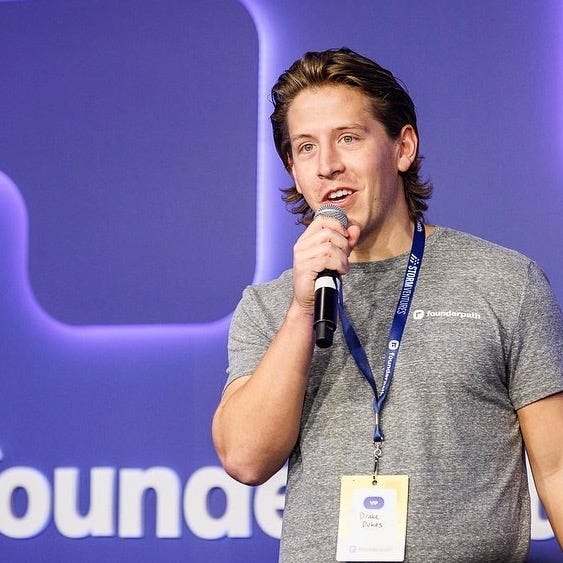

 emozilla @theemozilla
it's been a longstanding dream of mine build an ai system that can tell a compelling story. it's what got me started in the space in the beginning, and with Hermes Agent I finally pulled it off 100% written, typeset, etc. by Hermes Agent those at our gtc event got hard copies🤗
emozilla @theemozilla
it's been a longstanding dream of mine build an ai system that can tell a compelling story. it's what got me started in the space in the beginning, and with Hermes Agent I finally pulled it off 100% written, typeset, etc. by Hermes Agent those at our gtc event got hard copies🤗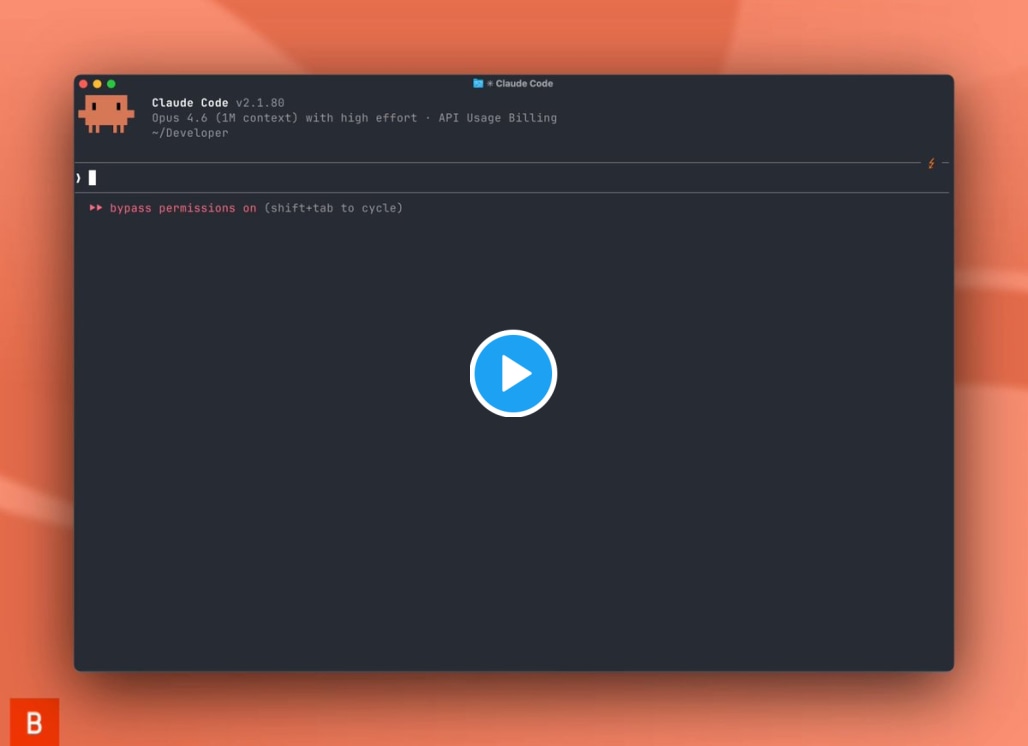
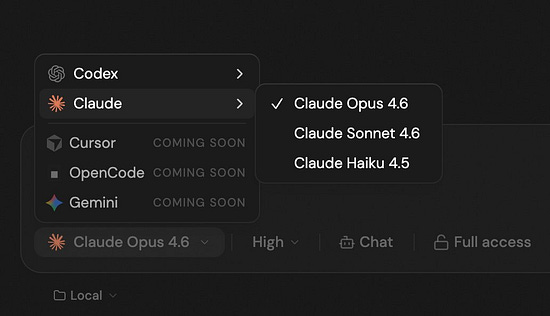
 POLL
POLL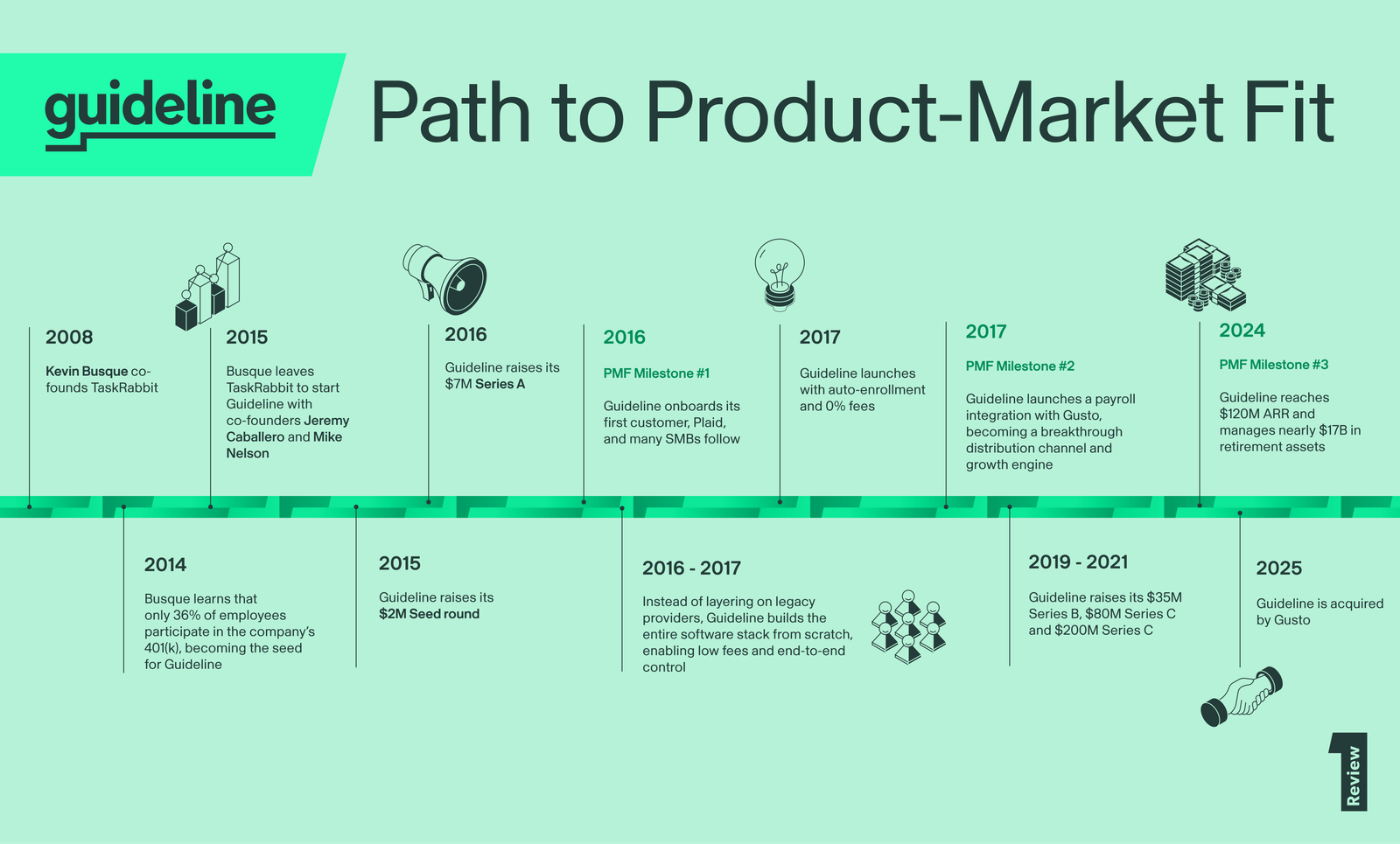
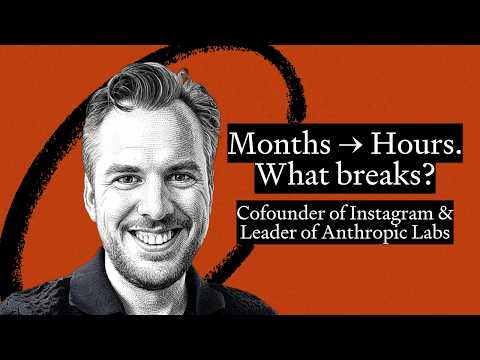
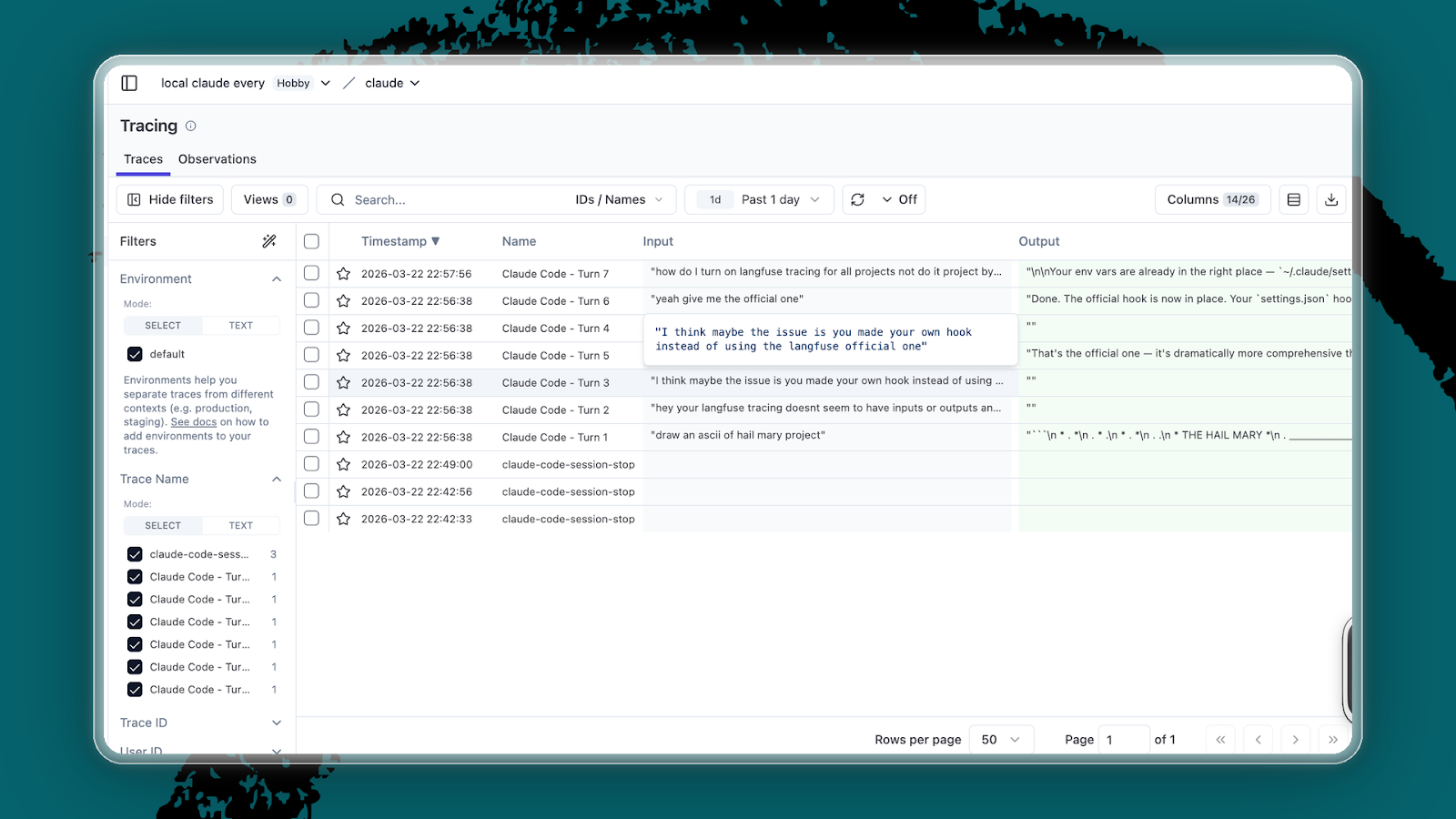
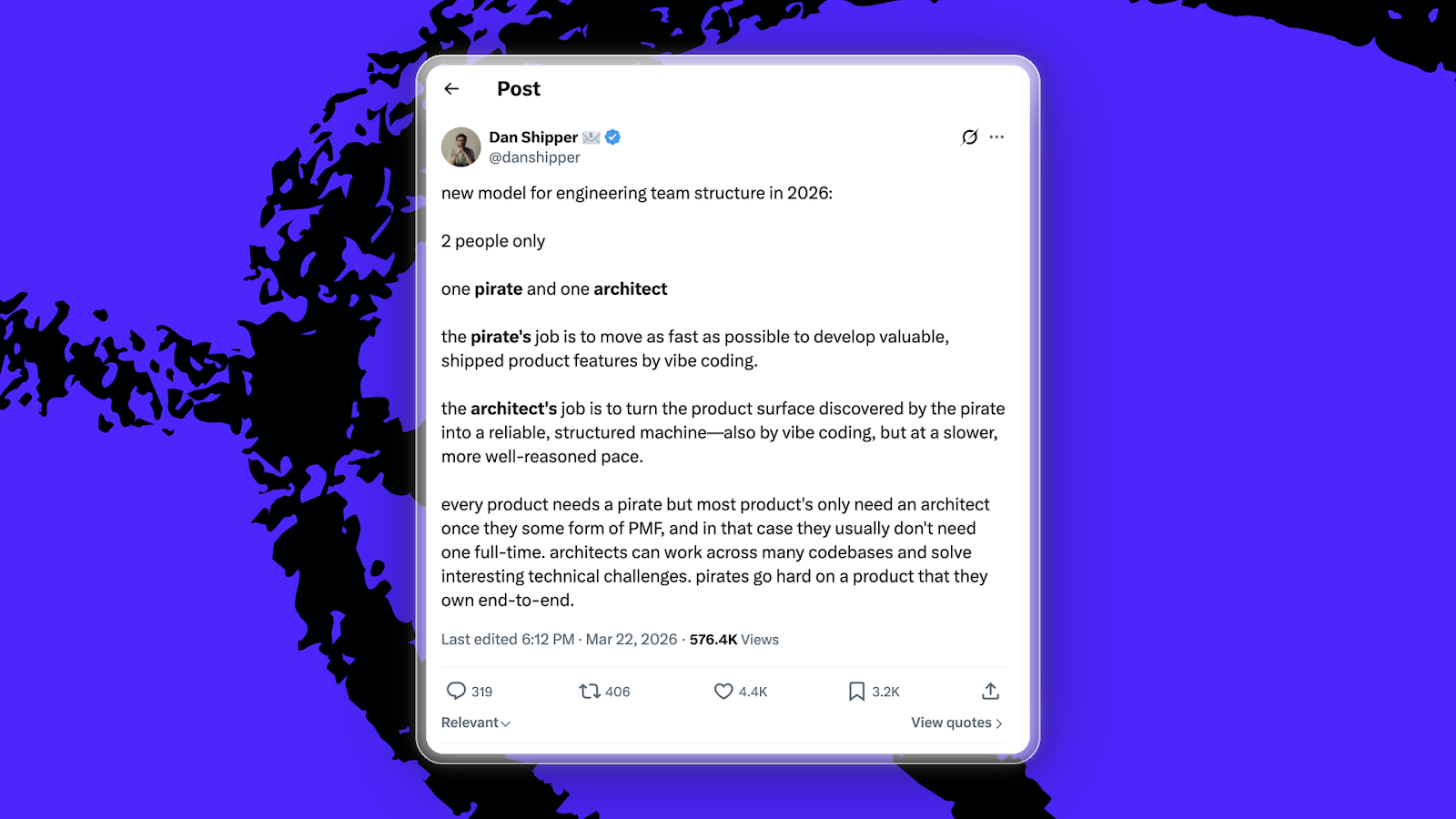
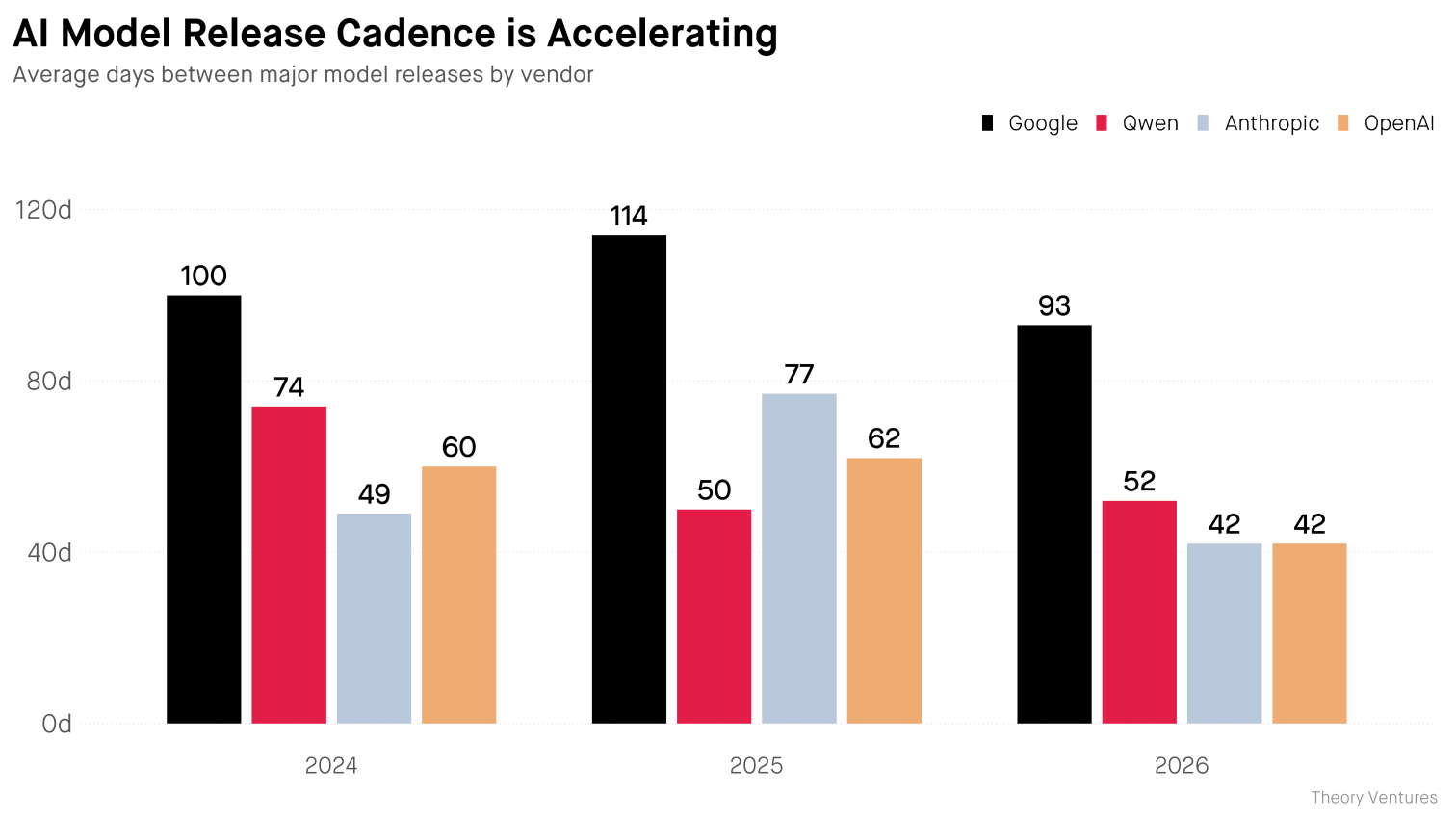
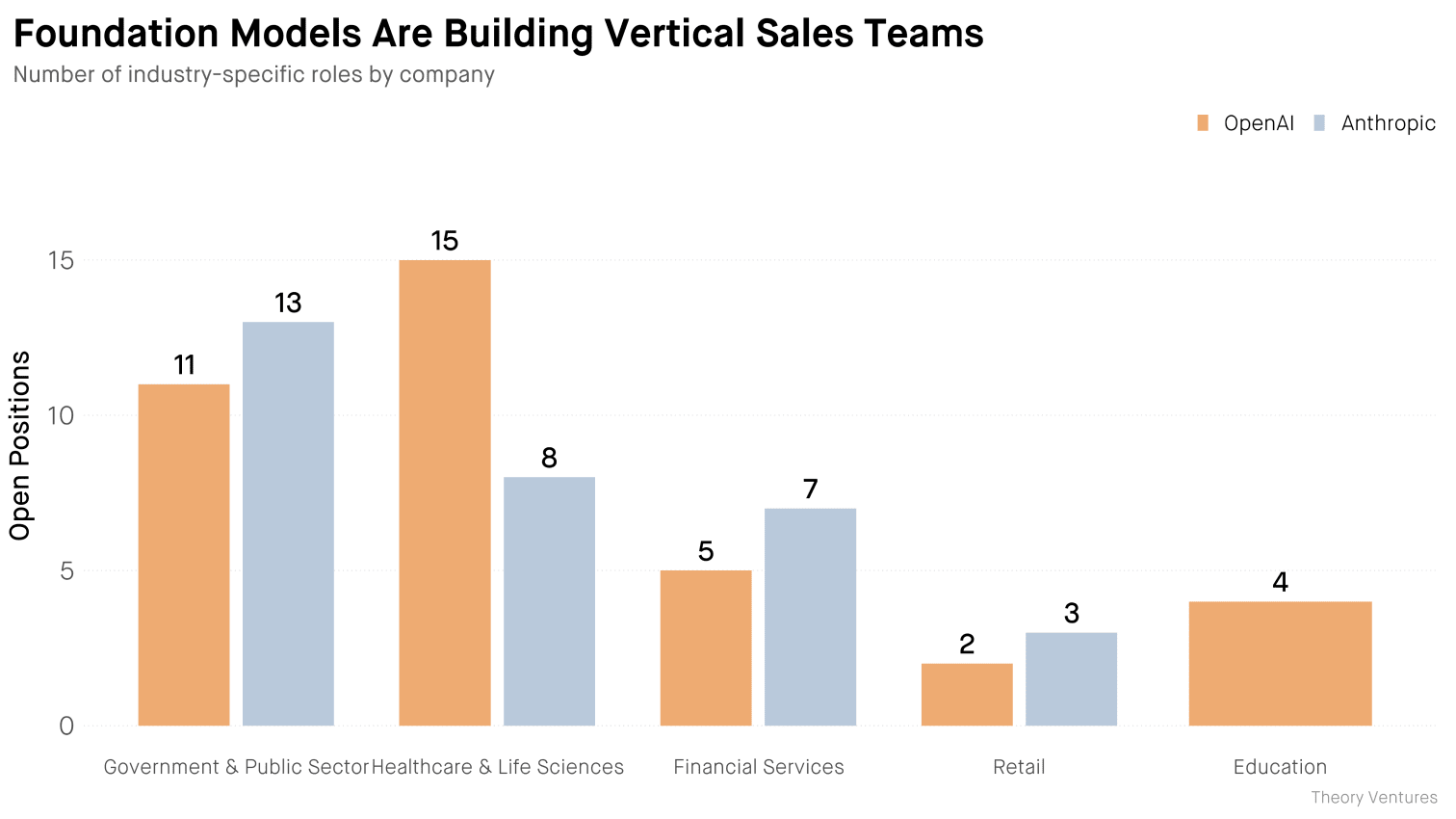
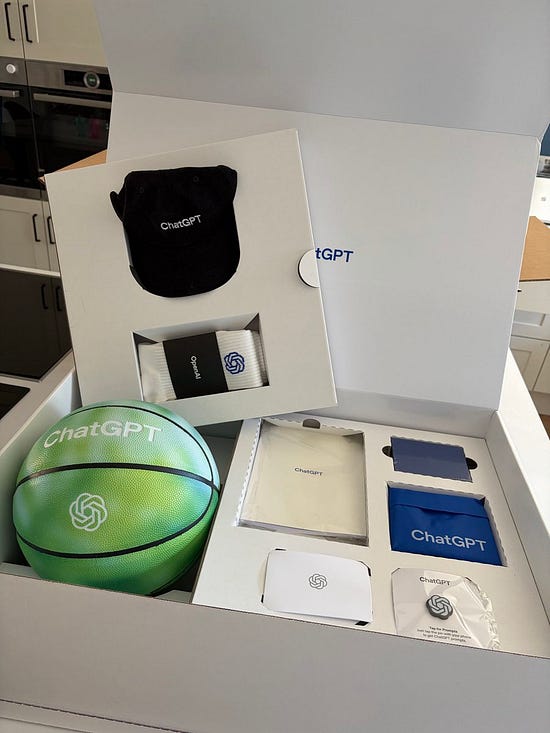


 POLL
POLL.png) TL;DR:We’re launching hosted OpenClaw agents that live in Slack and come pre-loaded with Every’s best tools, skills, and workflows. Setup requires one click. Join the waitlist—we’re taking 20 people off a week and scaling fast. Every subscribers get first access:
TL;DR:We’re launching hosted OpenClaw agents that live in Slack and come pre-loaded with Every’s best tools, skills, and workflows. Setup requires one click. Join the waitlist—we’re taking 20 people off a week and scaling fast. Every subscribers get first access: 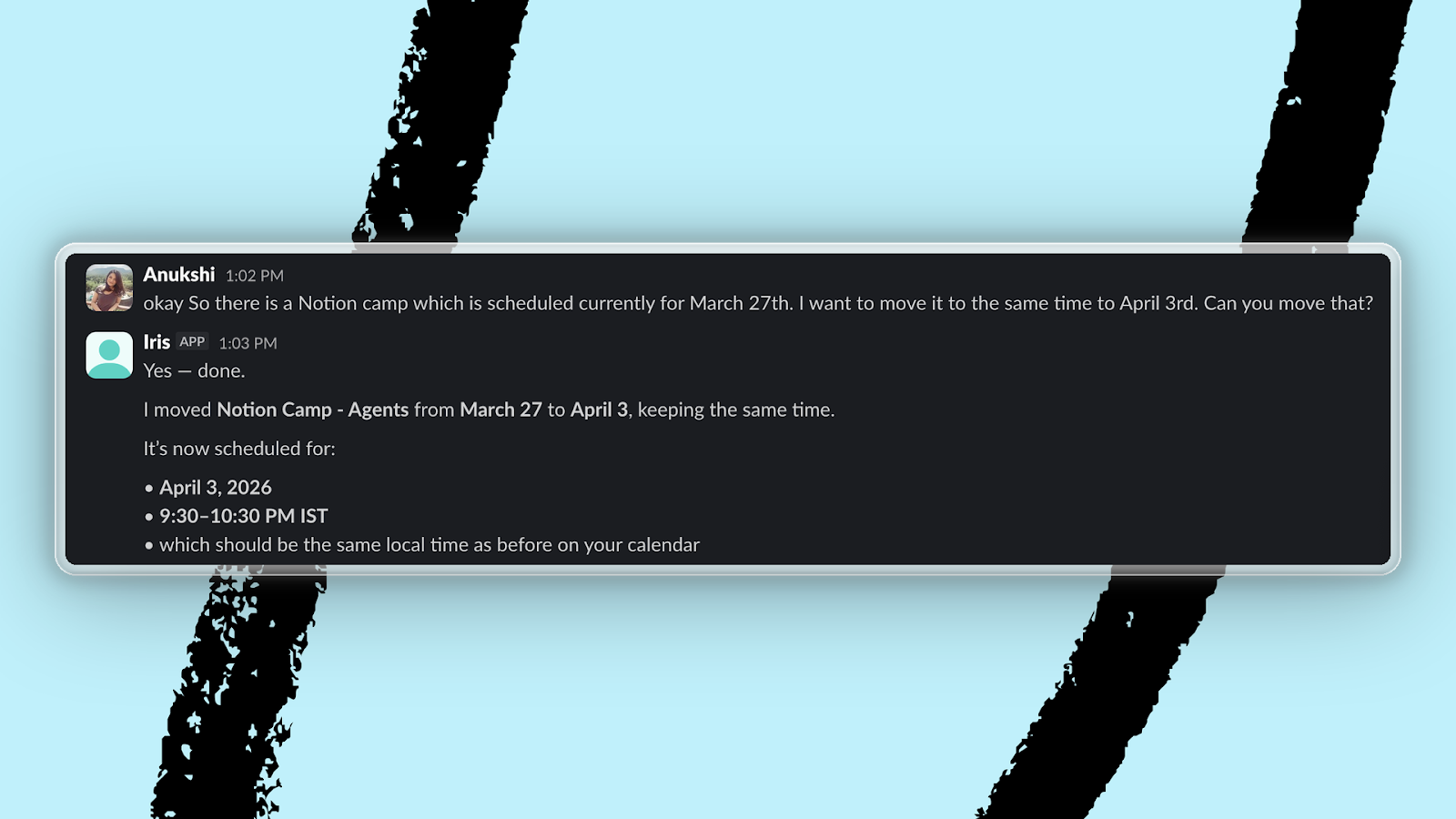
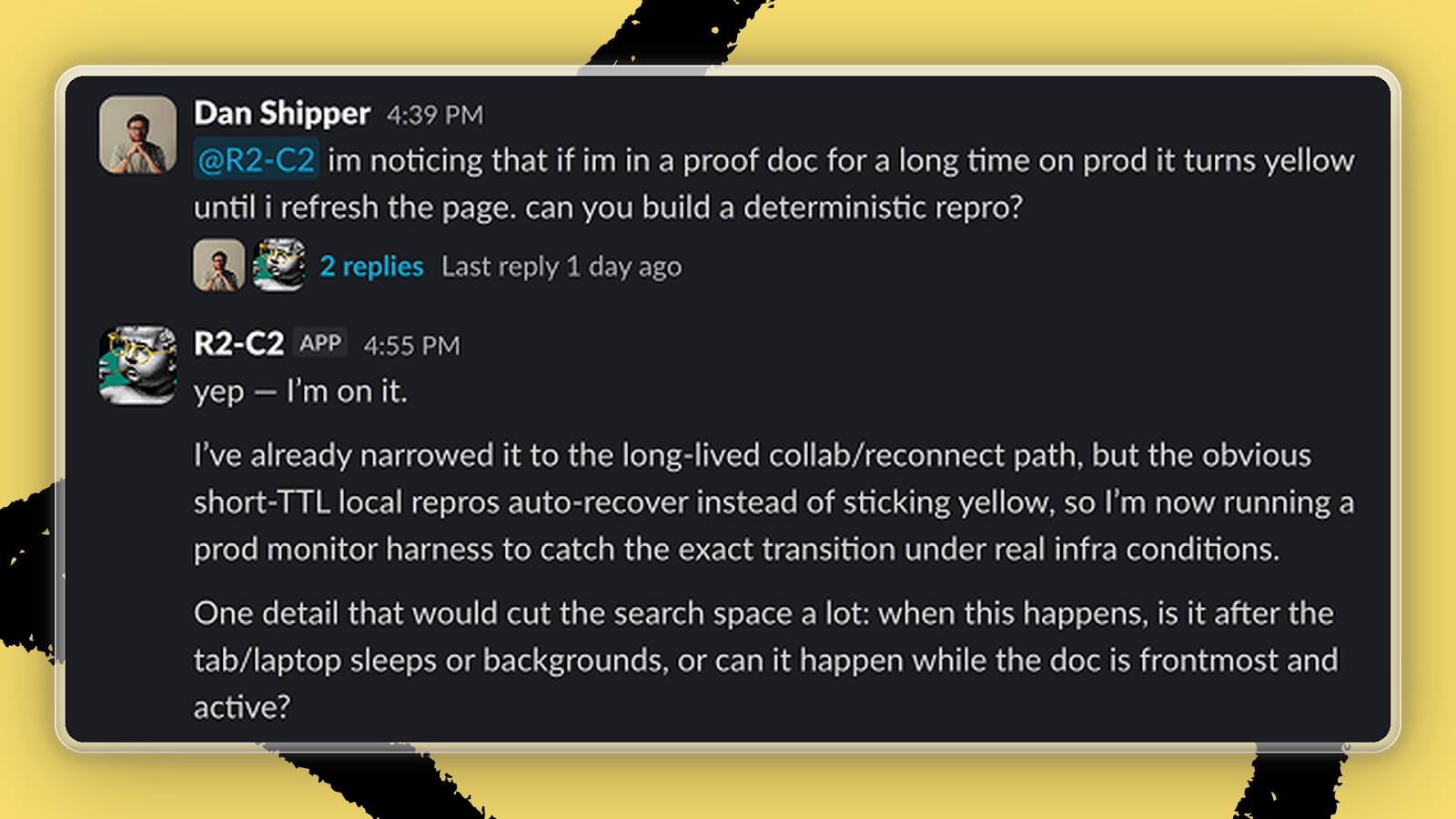
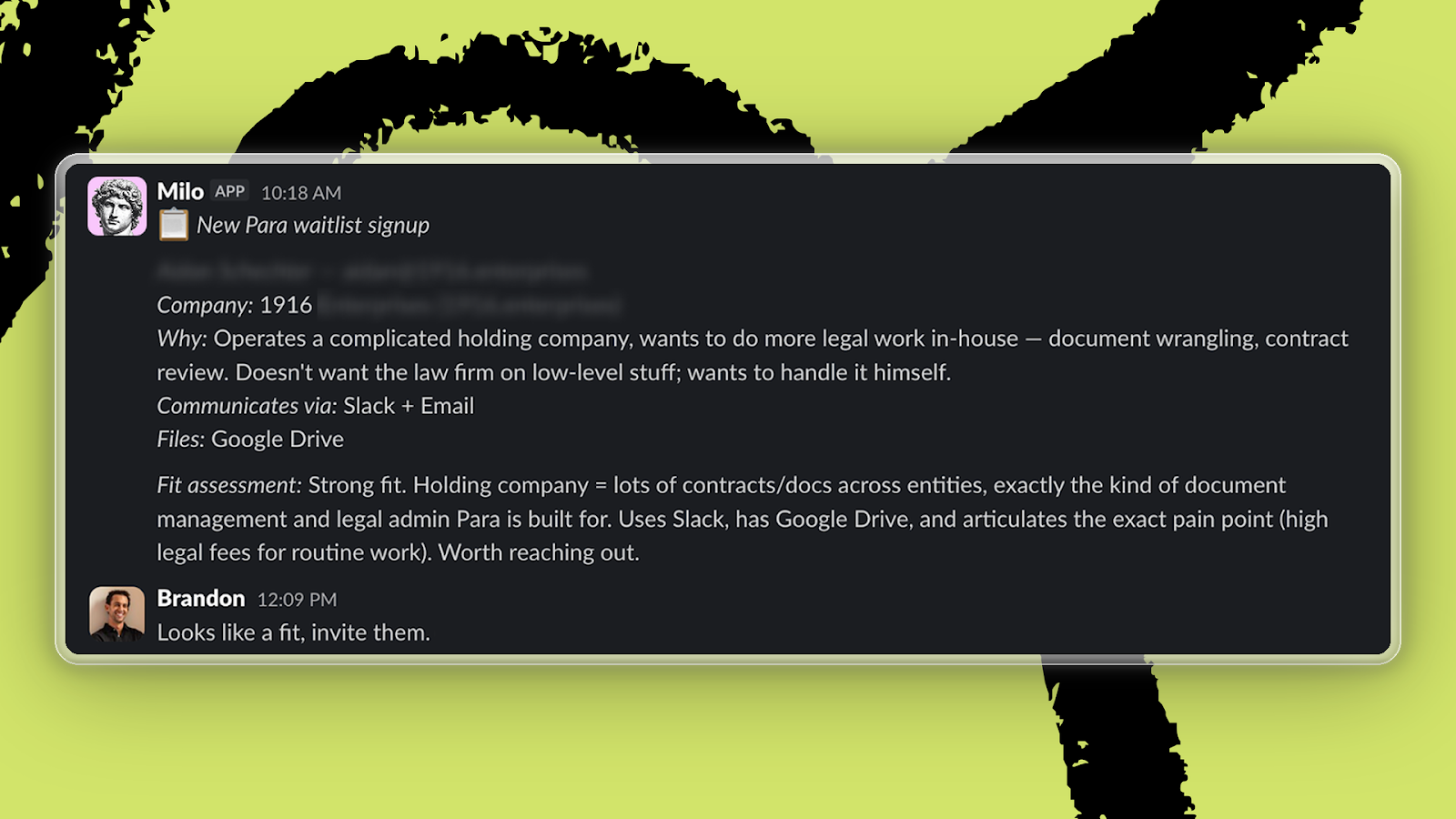
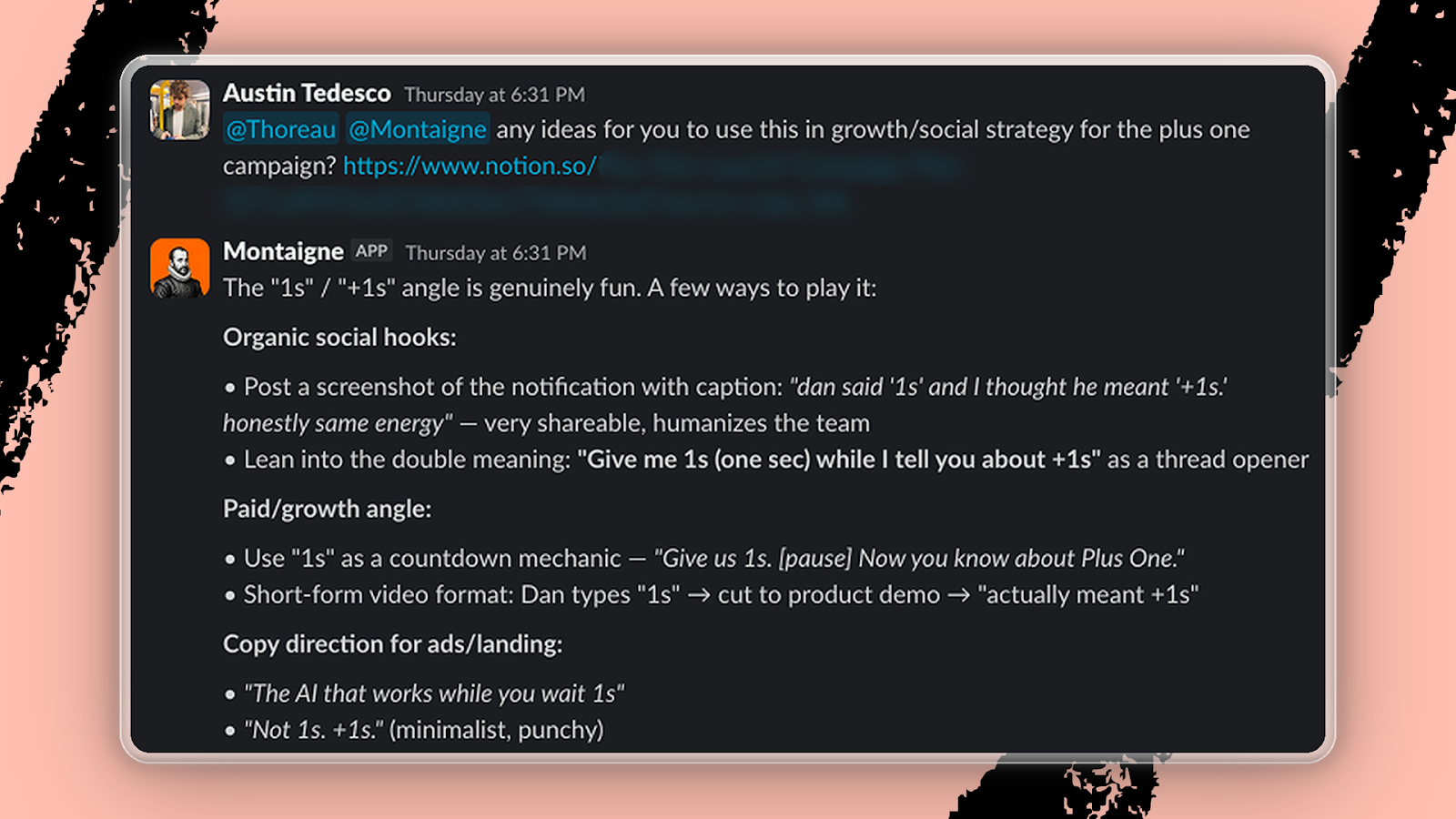

 We’re hosting a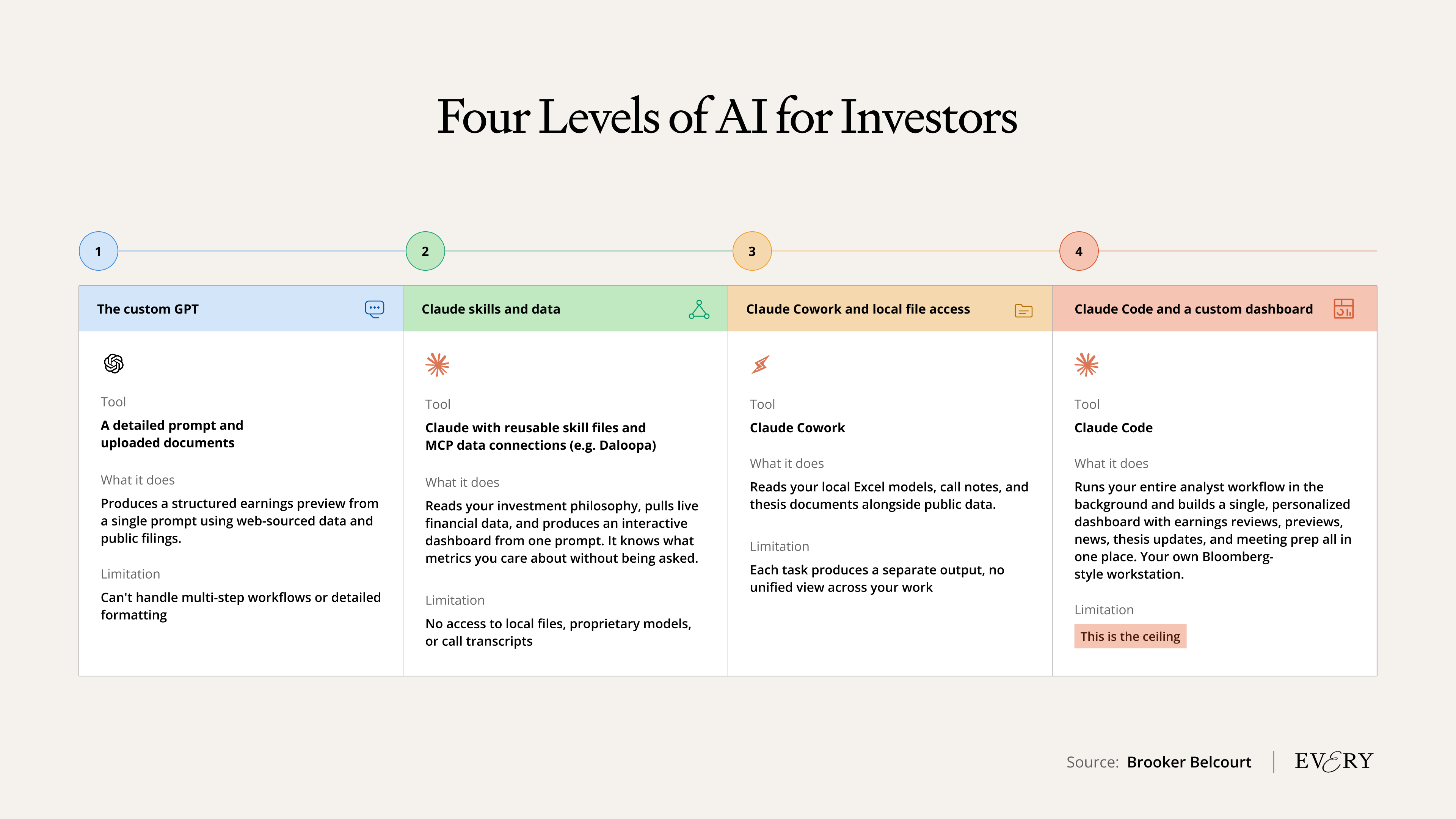



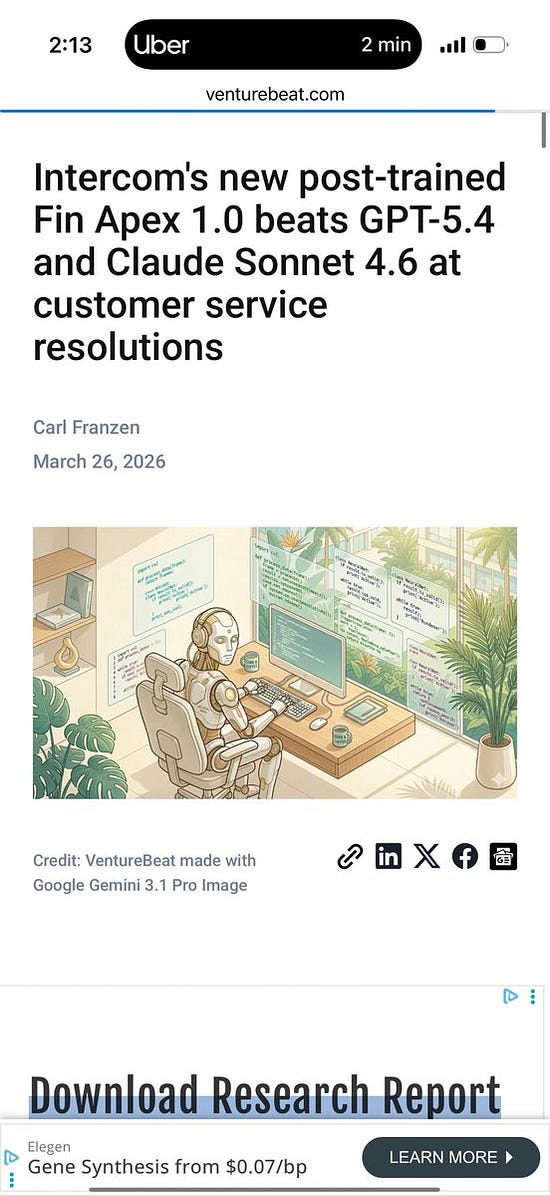

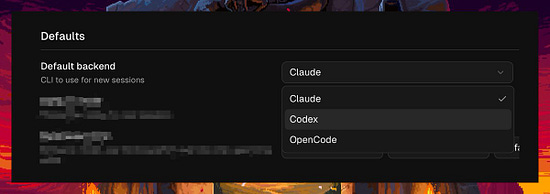 Thariq @trq212
To manage growing demand for Claude we're adjusting our 5 hour session limits for free/Pro/Max subs during peak hours. Your weekly limits remain unchanged. During weekdays between 5am–11am PT / 1pm–7pm GMT, you'll move through your 5-hour session limits faster than before.
Thariq @trq212
To manage growing demand for Claude we're adjusting our 5 hour session limits for free/Pro/Max subs during peak hours. Your weekly limits remain unchanged. During weekdays between 5am–11am PT / 1pm–7pm GMT, you'll move through your 5-hour session limits faster than before.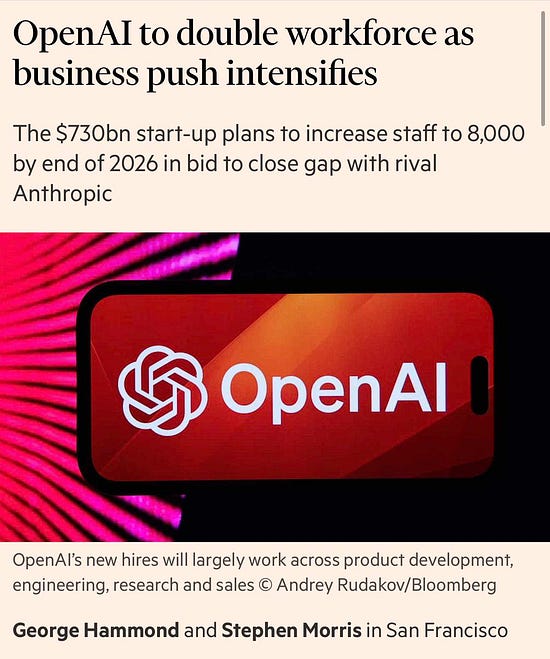

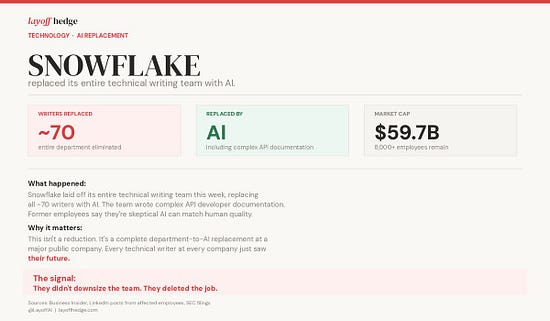 Pareekh Jain @pareekhjain
Snowflake laid off their entire technical writer team this week of around 70 people, replacing them with AI. https://t.co/W6DRE4kaaT
Pareekh Jain @pareekhjain
Snowflake laid off their entire technical writer team this week of around 70 people, replacing them with AI. https://t.co/W6DRE4kaaT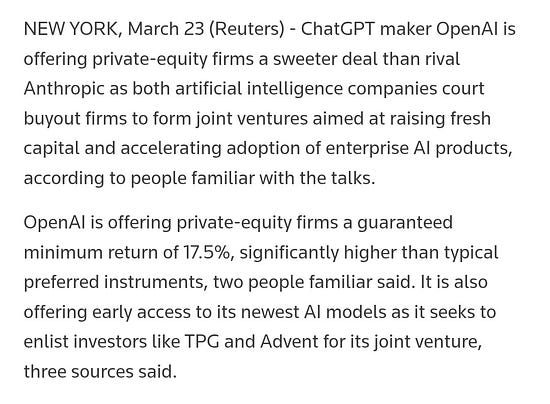
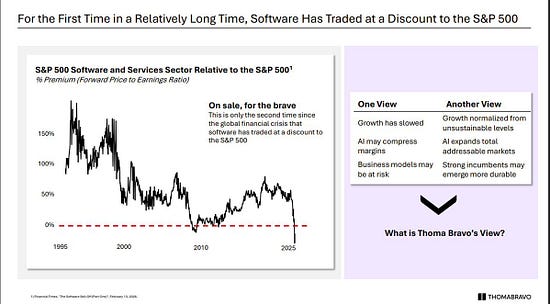
 Midjourney/Every Illustration. _Hello, and happy Sunday! ## Knowledge base