Interconnects by Nathan Lambert · Monday, March 16 2026 · 16 min read · ↑ top
Markets, capabilities, cope, and bewilderment in the industrialization of language models.
2025 was the year where a lot of companies started to take open models seriously as a path to influence in the extremely valuable AI ecosystem — the adoption of a strategy that was massively accelerated downstream of DeepSeek R1’s breakout success. Most of this is being done as a mission of hope, principle, or generosity.
Very few businesses have a real monetary reason to build open models. Well-cited reasons, such as commoditizing one’s complements for Meta’s Llama, are hard to follow up on when the cost of participating well is billions of dollars. Still, AI is in such an early phase of technological development, mostly defined by large-scale industrialization and massive scale-out of infrastructure, that having any sort of influence at the cutting edge of AI is seen as a path to immense potential value.
Open models are a very fast way to achieve this, you can obtain substantial usage and mindshare with no enterprise agreements or marketing campaigns — just releasing one good model. Many companies in AI have raised a ton of money built on less.
The hype of open models is simultaneously amplified by the mix of cope, disruptive anticipation, and science fiction that hopes for the world where open models do truly surpass the closed labs. This goal could be an economically catastrophic success for the AI ecosystem, where profits and revenue plummet but the broader balance of power and control of AI models is long-term more stable.
There’s a small chance open models win in absolute performance, but it would only be on the back of either a true scientific breakthrough that is somehow kept hidden from the leading labs or the models truly hitting a wall in performance. Both of them are definitely possible, but very unlikely.
It is important to remind yourself that there have been no walls in progress to date and all the top AI researchers we discuss this with constantly explain the low-hanging fruit they see on progress. It may not be recursive self-improvement to the singularity (more on that in a separate post), but large technology companies are on a direct path to building definitionally transformative tools. They are coming.
The balance of power in open vs. closed models
The fair assessment of the open-closed gap is that open models have always been 6-18 months behind the best closed models. It is a remarkable testament to the open labs, operating on far smaller budgets, that this has stayed so stable. Many top analysts like myself are bewildered by the way the gap isn’t bigger. Distillation helps a bit in quality, benchmaxing more than closed labs helps perceptions, but the progress of the leading open models is flat out remarkable.
The reality is that the open-closed model gap is more likely to grow than shrink. The top few labs are improving as fast as ever, releasing many great new models, with more on the docket. Many of the most impressive frontier model improvements relative to their open counterparts feel totally unmeasured on public benchmarks.
In a new era of coding agents, the popular method to “copy” performance from closed models, distillation, requires more creativity to extract performance — previously, you could use the entire completion from the model to train your student, but now the most important part is the complex RL environments and the prompts to place your agents in them. These are much easier to hide and all the while the Chinese labs leading in open models are always complaining about computational restrictions.
As the leading AI models move into longer-horizon and more specialized tasks, mediated by complex and expensive gate-keepers in the U.S. economy (e.g. legal or healthcare systems), I expect large gaps in performance to appear. Coding can largely be mostly “solved” with careful data processes, scraping GitHub, and clever environments. The economies of scale and foci of training are moving into domains that are not on the public web, so they are far harder to replicate than early language models.
Developing frontier AI models today is more defined by stacking medium to small wins, unlocked by infrastructure, across time. This rewards organizations that can expand scope while maintaining quality, which is extremely expensive.
All of these dynamics together create a business landscape for open models that is hard to parse. Through 2026, closed models are going to take leaps and bounds in performance in directions that it is unlikely for open models to follow. This sets us up for a world where we need to consider, fund, use, and discuss open models differently. This piece lays out how open models are changing. It is a future that’ll be clearly defined by three classes of models.
True (closed) frontier models. These will drive the strongest knowledge work and coding agents. They will be truly remarkable tools that force us to reconsider our relationship to work.
Open frontier models. These will be the best open-weight, large models that are attempting to compete on the same directions as above. There will be plenty of use-cases that they don’t work for relative to the best models, but countless use-cases where they work remarkably well. For many use-cases, even ones as valuable as some subsets of coding, these will work great.
The AI ecosystem will still take years to understand what it means to have intelligence of this magnitude served in private, at the marginal cost of electricity for individuals, as assistants, coaches, companions, and more. OpenClaw provided a glimpse behind the mirror that will expand and grow. The class of models around GPT-OSS 120B, Nvidia Nemotron 3 Super, or MiniMax M2.5 are the balance of performance to price that can work as local models.
Open, small models as distributed intelligence. The most successful open models will be complementary tools to closed agents. This is a path for open models to complement and accelerate the frontier of progress.
AI is slotting in to automate many repetitive, niche tasks across the technology economy. There’s a huge pressure to shift these tasks off of the best closed models — which frankly are still better at most of the things, across my conversations with businesses trying to build with open models — to small, open models that can be 10X faster and 100X cheaper. There aren’t really people building data and fine-tuning engines for economically viable tasks on the smallest models possible.
These models need to be almost brain-numbingly boring and specific. In a world dominated by coding agents, I want to build open models that Claude Code is desperate to use as a tool, letting its sub agents unlock entirely new areas of work. This is possible, but remarkably under-explored. Small models from the likes of Qwen and co. are still marketed on general-task benchmarks. The hype of “open models catching the frontier” distracts the world from this very large area of demand.
This is the sort of model that moves open models from just a few, crucial static weights to more of an ecosystem. It requires creativity and a new approach. The goal of this piece is to illustrate why and how to build these, with added context on where open models stand today.
All three of these model classes hint at different ways to use agents. It is absolutely definitional to how AI is going to be built going forward that they’re not just model weights, but rather systems that think, search, and act. The weights only define one portion of those abilities.
Open weights as part of an AI system
To start, consider what are the most impactful and impressive things that language models can do without a suite of tools at their side. When was the last time that you were blown away by something that was just autoregressive token outputs? Unless you’re doing a substantial amount of work on mathematical proofs or competition code, it seems like that situation has changed little since GPT-4’s release in 2023. The AI systems we use today are about far, far more than weights.
In this world, closed models have a clear advantage. Closed models get to vertically integrate everything from the chips they run on, the inference software, the weights, the tools, and the user interface. Open models on the other hand need to work on every inference setup, with many tools, and in many use-cases. This vertical integration is best expressed today in the joy of using Claude Code with Opus 4.6 or OpenAI’s Codex with GPT 5.4. Open models haven’t passed this point. Some are starting to focus on specific interfaces, e.g. OpenCode, but there’s an inherent tension in making an open model work only in your blessed product roadmap.
At the same time, this change could point to more about the latest AI systems being open! If you can do less with the weights alone, maybe more labs will release them.
The way to think about AI systems today is as a mix of weights, tools, and harnesses. The weights portion is familiar. The tools are the deeply integrated environments the models act in at deployment time — best typified by search and code sandboxes — and the harness is how these two fit together with a product that the user sees.
In this world, there are two things to consider: 1) Is there an equivalent, open system to the closed products that people are using today — I mean truly equivalent, where every level of the stack can be modified and controlled (more on this later), and 2) How does this system’s view impact different future decisions in the open ecosystem?
Still looking for open model business strategies
To understand how the business and practicality of open models will evolve, let me take a tour back in time to foundational writing on the role of open-source in modern technology companies. The first is a Google blog post, The Meaning of Open, which originally was an internal memo by Jonathan Rosenberg, which sparked an intense internal debate that later resulted in it becoming public. To start, here’s a basic assessment of how open systems can work:
Open systems have the potential to spawn industries. They harness the intellect of the general population and spur businesses to compete, innovate, and win based on the merits of their products and not just the brilliance of their business tactics.
I’ve long believed that the company who will benefit most from the ecosystem of open models is the one who understands it best. This entails being deeply involved with open research and experimentation in how to use the models. So far, most of the open model company business models are not this. Rosenberg expands on this in his 2009 post, comparing the dynamics of open systems to closed products:
[Open systems] are competitive and far more dynamic. In an open system, a competitive advantage doesn’t derive from locking in customers, but rather from understanding the fast-moving system better than anyone else and using that knowledge to generate better, more innovative products. The successful company in an open system is both a fast innovator and a thought leader; the brand value of thought leadership attracts customers and then fast innovation keeps them. This isn’t easy — far from it — but fast companies have nothing to fear, and when they are successful they can generate great shareholder value.
We’ve known for some time that open weight models are not actually enough to constitute a product — models are a product in the sense that they have tools and harnesses, so we don’t actually have fully open systems, we have systems that are partially open partially closed, making moats messy. VLLM and a model like GLM 5 are pieces of a system, but it still takes more to deploy them — expensive private GPUs and some tools with local business data.
It may turn out to be that AI is too complex and expensive to have any analogous open system to previous generations of technology. If there was a fully open system, it would win by default, as many historical generations of technology have shown us. This fully open analog does not yet exist, so we have constant debates on the role of open-source AI.
Bill Gurley recounts how Google’s free products have exemplified the open or free strategies across technology. Gurley wrote on the open-source operating system, Android, and the free browser, Chrome, in 2011:
So here is the kicker. Android, as well as Chrome and Chrome OS for that matter, are not “products” in the classic business sense. They have no plan to become their own “economic castles.” Rather they are very expensive and very aggressive “moats,” funded by the height and magnitude of Google’s castle. Google’s aim is defensive not offensive. They are not trying to make a profit on Android or Chrome. They want to take any layer that lives between themselves and the consumer and make it free (or even less than free).
Because these layers are basically software products with no variable costs, this is a very viable defensive strategy. In essence, they are not just building a moat; Google is also scorching the earth for 250 miles around the outside of the castle to ensure no one can approach it.
In the same post, Gurley reflects on the limits of Google’s openness:
In this open manifesto, Jonathan opines over and over again that open systems unquestionably result in the very best solutions for end customers. That is with one exception. “In many cases, most notably our search and ads products, opening up the code would not contribute to these goals and would actually hurt users.” As Rodney Dangerfield said in Caddyshack, “It looks good on you, though.”
Essentially, Google open-sourced so much, in fact paid people to use its products (e.g. paying phone makers to use android) to keep the funnel leading to the search profit center. This is the virtuous loop that the search business still funds to this day.
AI is still nothing like this, but signs of change are emerging. The default belief on the value of models to these companies is that the model is the product. This is obvious with products like hosted APIs, where releasing the model weights would be business suicide, but this is softening as interfaces like Claude Code, Codex, Cursor, etc. get vastly popular. It could be a path to more openness, at least in parts of the stack. We can see this with the coding plans offered by Moonshot and Z.ai — where the demand is very high for the businesses, even though the model is open. Most people will just use the cheap interface with inference, instead of figuring out how to use the model themselves (as long as the business is mostly consumer or per-head services).
All of this doesn’t leave me optimistic on the direction of companies becoming more open in the coming years. I’d expect the opposite still. Nvidia has the one great reason to be open — to sell more GPUs to people building on open models and understand what they need to build next, but there’s no one else obvious on this list. Until there are more specific economic reasons to build open models, the companies building these at the frontier will have fewer resources to spend on the models and face a consolidation to the best few.
In the face of consolidation at the open frontier, the investment in the models should shift to areas where the models can have more differentiated upside relative to the best closed frontier models.
Open models that are specific, cheap, fast, and ubiquitous
There’s too much obsession with the best companies building open models to try and compete at the frontier. There’s a vastly underserved market of enterprises that want cheap, reliable models for repetitive use-cases in their systems. Picture this, one small model with a series of LoRA adapters that specialize the model to internal skills. This can be deployed very cheaply as tools and a complement to the frontier closed models that are orchestrating agents.
Every task that a frontier agentic model does tens to hundreds of times can potentially be outsourced to a small model. There are ancillary benefits to this, e.g. privacy of a local model reading your files and summarizing to Claude, but almost no one is pushing hard in this direction. The leading model family of capable, customizable small models to date is Qwen, but that’s now shrouded in uncertainty with the departures of key personnel. Gemma, Phi, Olmo, etc. are all major steps down in quality, and therefore potential for modification.
There are a few obvious examples why this can be scaled up. There was a recent thread and discussion on how the new Qwen 3.5 4B model arguably bests the original ChatGPT model. On the research side, there are already recipes for finetuning open models on specific code-bases to match performance of much bigger models. Moondream.ai is a startup made by a friend of mine Vik, who builds some of the best, small multimodal models on a tiny budget — they compete with Qwen and Llama on real world tasks. This is the tip of an iceberg.
Intelligence compression hasn’t been explored with nearly as much depth (or resources) because it is less exciting than keeping track of the progress of the best few models. Investigating these areas is the standard technological diffusion process that is slow and why we’re still early in understanding how people will build with AI. My contention is that too many people building open models are slightly deluded in their perception of their competitiveness. The best few models will win on general capabilities and there are still plenty of underserved niches elsewhere.
Taking this to the next level involves releasing open models that are scoped to be truly excellent at 1-3 tasks, as I hinted at the beginning of this piece. Too many people try to compete with Qwen and show that their small model does great on frontier AI benchmarks. The right benchmark here is savings in compute and time.
It’ll take years for this transition to slowly become reality. Part of why I am so excited about it is that it is driving innovation on open models being more about diversity, specialization, and curiosity, rather than the standard “one model to rule them all” that the frontier models presume.
Models vs. ecosystems.
Consolidation vs. creativity.
So long as the open source ecosystem for AI is defined by a bunch of model providers trying to chase after the closed labs, it will largely lose. It will face pain on funding and substantive adoption. The same consolidation that will come for closed AI companies will come for open model builders — likely even sooner.
Open systems at their best allow many people to participate and many approaches to flourish.
The world of open models needs to be more of an ecosystem. I’ve discussed in the past how China is closer to this type of environment by having a variety of companies, but the variety in approaches is still too low.
Ecosystems are self-reinforcing, whereas individual models are static artifacts in time. Ecosystems showcase clear, constant opportunities for what’s next that have growing value propositions.
The path forward for open models is to solve different problems than the frontier labs, to find places where open models are effectively free alternatives, to show ways of using specialized models that the closed labs cannot offer. The world of open models needs to embrace creativity, before building powerful AI systems grows too expensive and prices out many of the prized open labs of today.
Liking, sharing, commenting, or recommending Interconnects from your Substack is the only way Interconnects is possible. Thank you for your support.
If you liked this, consider upgrading to a paid subscription to cover my growing subscription and API fees. We offer group Interconnects subscriptions at tiered discounts for 5+ heads.
If you want all of the best AI writing on Substack through one subscription for your team of 20+, check out https://readsail.com/.
Every · Monday, March 16 2026 · 2 min read · ↑ top
In an AI world, knowledge workers must prove their judgment. Portfolios are one answer.
by Eleanor Warnock Whether or not you believe that flawed Anthropic graph or Jack Dorsey ’s stated reasons for laying off 40 percent of his staff at Block, the message is the same: AI is doing more of the rote click-work that sustained the laptop class. The knowledge workers who thrive will be the ones who can add something extra—judgment, taste , and expertise. The problem is that most of us have no good way to prove those things, and we’re not very good at it. For decades, brand names did the heavy lifting. Previous experience at McKinsey or Goldman Sachs were buzzwords that signaled to a hiring manager: This person can build a model and make slides, and someone selective chose them. But brand names don’t work as a heuristic for expertise anymore. Was that Google alumnus a pixel pusher or a genuine decision maker? The soft skills that matter most in an AI-augmented workplace are invisible on a traditional resume. One answer is portfolios. Not a portfolio in the sense of a portfolio career—a word that many knowledge workers have embraced as they move away from relying on one employer and pick up advisory roles and solopreneurship. I mean a portfolio as a body of work that proves your value beyond your work history. A collection of artifacts that show how you think, just like creative professionals showcase their design or artistic work. As a journalist and editor, I write a newsletter about people using writing to build things , and I post on LinkedIn, all of which I consider to be part of my portfolio that helps people evaluate me beyond the names of my previous employers. Whether it is writing on platforms like LinkedIn or building interactive tools on their personal websites, knowledge workers need something similar. AI can make this process fun and creative, and help people experience your expertise without having to meet you.
Wasn’t personal branding supposed to fix this?
Even before anyone was worried about ChatGPT taking their job...
AI maturity in practice: From experimentation to enterprise production
Join us on March 17 at 10 a.m. PDT as Kevin McCurdy (AWS) and Abhishek Gupta (Retool) unpack a practical AI maturity progression that takes you from early experimentation to agent-driven, production-grade workflows. We’ll cover:
The phases of AI maturity: what it takes to move from experimentation to enterprise-scale outcomes.
How to tie AI to business outcomes: strategies for measuring real impact across capacity, cost, and throughput
Scaling AI responsibly on AWS: embedding intelligence into core workflows in a way that’s governed, measured, and built to last.
“What happens when a new employee brings their agent to work?” An executive asked this recently. Imagine a few years from now : a student graduates, having trained their own agent through university. It knows everything they’ve learned, every paper, every problem solved. Day one, they bring it to work. It’s like bring your own device circa 2009. The iPhone launched & nobody wanted corporate Blackberries1 anymore. IT scrambled to adapt. But a rogue phone couldn’t sign contracts. A rogue agent can. Amazon just learned this at scale. $6.3 million in lost orders. 99% order volume drop across North America. Four severity one incidents in one week.23 Amazon’s AI coding assistant contributed to at least one major production incident. The response : a 90-day safety reset with mandatory two-person review for all code changes. An internal memo admitted what everyone implicitly knows :
“Best practices and safeguards around generative AI usage haven’t been fully established yet.”3
Companies can’t hide behind hallucinations. Utah’s AI Policy Act4 eliminates the hallucination defense :
“It is not an affirmative defense to assert that the GenAI tool made the violative statement or undertook the violative act.”
Drake Dukes · Monday, March 16 2026 · 6 min read · ↑ top
Ex-Amazon data science head enters stealth, Anyscale AI exec launches automated physical systems engineering platform, & Goldman Sachs alum builds AI platform for investment banking models
We’re tracking company launches as they happen and surfacing the most interesting new founders and startups (yes, all outside of this stealth activity too). If you want to stay ahead of the curve, this is where you’ll find them first.
Right now we’ve got 5 subscribers: my wife, my mom, and that high school buddy who won’t stop pitching me his app. Be smart like them and get in early 👇
We run a live feed inside Gravity that tracks founders entering stealth and companies quietly exiting it.
What you’re reading here is about 1% of the stealth activity we pick up. The full tracker updates in real time as things change and new activity emerges.
Larrg AI is building a public-facing legal intelligence platform that provides accessible legal resources and insights.
HQ: Australia
Industry: Information Services | Team Size: 2
Time Spent in Stealth Mode: 1 Year
🕵️♂️Key Talent Going Under Stealth
Illuminating clues left behind by world class talent and influential innovators who just went into stealth mode
Jodi A. - Founder at Stealth Startup
FounderDNA: Serial Founder, Technical Founder, Former FAANG, Top 10 University
Prior Experience: Ex-Senior Staff Engineer / Engineering Leadership at Airbnb, ex-Head of Data Science & Engineering at Amazon, ex-ML Engineer at Salesforce, ex-Founder & CEO at Skilink
FounderDNA: Serial Founder, Technical Founder, Masters Degree, Former FAANG
Prior Experience: Ex-ML Tech Lead, Core Recommendations at Netflix, ex-Tech Lead & ML Engineer at Snap Inc., ex-Applied Scientist (NLP) at Capital Group, ex-Machine Learning Engineer at Best Buy, ex-Co-Founder at Go2Buy
FounderDNA: Technical Founder, Masters Degree, Former FAANG
Prior Experience: Ex-ML Platform Engineer at Isomorphic Labs, ex-Tech Lead, AI Infrastructure at Meta, ex-Software Engineer at Booking.com, ex-Software Engineer at ING
🚨Here’s the deal 🚨This email has gotten too big. Exciting, but with more people following it, the edge diminishes. I’ve thought long and hard about what to do to preserve the value in the signals. I’m not sure about the final direction yet, but in the meantime I’ve been sending an email 48 hours earlier to a select group of paid subscribers. The feedback has been pretty positive so I’m going to open up the list for another 100 spots. To get signals early, Apply here!
Stay Stealthy,
Drake
Thank you for reading. If you liked it, share it with your friends, colleagues and everyone interested in staying ahead of the hidden developments in tech. Subscribe below and follow us onX / Twitter to never miss a company operating under stealth again.
Stealth Startup Spy is a data-driven newsletter for investors, journalists and tech enthusiasts interested in uncovering the next big move for key talent, real-time stealth company launches and technology advancements not in plain sight. We leverage the technology built at Gravity to shine a light on the hidden world of stealth startups.
A friend takes me to the Chapel of the Royal Hospital Chelsea for Matins on a Sunday in cold and rainy January. The chapel is a Wren, 1680s, barrel-vaulted, golden cream, and the apse holds a depiction of the resurrection by the Italian Sebastiano Ricci. Pictured is Christ ascending in golden light, holding the flag of St. George.
The pensioners sit in their scarlet coats and the parish sits largely in head-to-toe tweed. The state prayers are read, prayers for the King, for the armed forces, for the Royal Family, and for the Empire.
This is Cranmer’s language carved from the same stone as the building. The effect is total. God, crown, and country are not three things in this room. They are certainly not three things in this country and any attempt to disambiguate them in this room, let alone with a beautiful congregation singing “God Save the King” would feel sacrilegious.
And what I feel sitting there is an English answer to a question that I’ve been turning over for years. What is the relationship between the people that govern and the people that trade?
The English answer is these are different people, different vocations, different buildings, different parts of town. This chapel is for the crown and its servants. The fact that my friend, a merchant, brought me here is perhaps a sign of the times. The City is a mile to the east and a world away, but you’re allowed to cross over that line sometimes.
This trade and governance distinction is much deeper than geography. The City of London is technically not a part of London at all. It’s an entirely separate legal jurisdiction. It’s a square mile with its own mayor, its own police force, its own ancient charter, and its own set of privileges that predate the Magna Carta. The City has a representative in Parliament who sits behind the Speaker’s chair. It has ceremonial rights that the monarch must observe. The sovereign can’t even enter the City without the Lord Mayor’s permission. This is a ritual that’s still performed when the King’s procession stops at the Temple Bar and the Lord Mayor presents the Sword of State. The whole thing is an elaborate many-hundred-year-old piece of institutional theater designed to communicate something very simple. The commerce and the crown are not family.
The English distrust of trade is so deep that it’s structured in the language itself. “Gentleman” originally meant a man who did not work with his hands and didn’t engage in commerce. The entire class system, the public schools, Oxbridge, the professions, the civil service, the military, was organized to produce men who governed, administered, and fought, and maintain social distance between those vocations and the lower vocations of making money. You could make a fortune in trade and buy an estate in the country, but it took a generation or two of not trading before your family was fully accepted. The money had to age a bit and it had to lose the smell of trading. Trollope’s novels are full of this, the anxious middle distance between new money and old responsibility and the laundering of new commercial wealth into landed gentry.
Will Manidis
@WillManidis
the secrets to outperformance are hidden in plain sight
The Dutch answer to this question is so radically different that it seems like it’s an answer to a different question entirely. The States General of the Dutch Republic was staffed by merchants. The Stadtholder, the closest thing the Republic had to a head of state, was a military commander, but his power was checked and frequently overridden by the merchant oligarchs of the major cities, particularly Amsterdam. Johan de Witt, who led the Republic during its most powerful period, was the son of a timber merchant. He managed the Republic’s finances and was among the most powerful men in Europe.
The Art Curator
@SeekAfterBeauty
Amsterdam City View with Houses on the Herengracht and the old Haarlemmersluis (1670), by Jan van der Heyden
The tradition America supposedly inherits, the English one, starts to seem plausible. Common law, parliamentary strength, the language, the Protestant inheritance, the revolution as a family quarrel between erstwhile Englishmen. And sitting in Chelsea with the Cranmer prayers ringing off the ceiling, I believe it.
Then I went to Amsterdam for the first time, and the feeling was so completely different, and it took me a long time to figure out why.
In London, the civic and the commercial occupy separate buildings, if not separate cities. In Amsterdam, these are often in the same room. The grandest houses on the Herengracht were not palaces but the homes of merchants. The merchants who lived in them were the same people that govern the Republic. The regenten were traders, bankers, and ship owners who held political office directly. This wasn’t purchased influence. The Dutch Republic did not recognize the distinction between the capacity to govern and the capacity to trade.
You can see this distinction in the architecture itself. In Amsterdam, the Old Town Hall on Dam Square, now the Royal Palace, is a celebration of Amsterdam’s commercial supremacy, not its political sovereignty. The building’s decorations are filled with maps and globes and allegorical figures representing trade. Atlas holds the world on his shoulders in the main hall.
The Art Curator
@SeekAfterBeauty
The Town Hall on Dam Square in Amsterdam (1672), by Gerrit Adriaenszoon Berckheyde
I find the Oost-Indisch Huis where the Heren XVII met, the 17 directors of the VOC, of the Dutch East India Company. The building itself is modest. The men inside of it were drawn from the same families who filled the States General and the decisions they made, where to send the fleets, which wars to fight, which monopolies to enforce, were decisions made by merchants exercising sovereign power. They were not lobbying for it nor paying for it. They exercised power directly.
The Amsterdam Exchange was built in 1602, the same year as the Dutch East India Company launched. The first publicly traded security of a common stock corporation in human history was a VOC share. It served as a fractional claim on state commercial power that any ordinary citizen could buy. The Dutch invented the idea that national power could be securitized and traded. They invented the idea that the equity market is not just a measurement of the economy, but the economy itself.
Will Manidis
@WillManidis
in some very real and uncomfortable sense the reserve currency of the united states is our listed equities, not the dollar. almost all of monetary policy makes sense when you view it through this lens.
A few months back I wrote about the idea that in some real and very uncomfortable sense the reserve currency of the American empire is its listed equities, not the dollar. Almost all of monetary policy only makes sense through this lens. This is fundamentally a Dutch idea. It’s certainly not English.
The thing about the Dutch, and this is something that you can only understand by being there, by walking through the Jordaan and the canal rings and the old merchant quarter, is that there is no shame or stink in commerce. The English spent centuries building a cultural infrastructure designed to hide the smell of trade off of anyone who wanted to enter public life. The Dutch didn’t need to. Trade was a national project, it was a religious project as well. The church and the counting house were not in tension.
In many ways, this is why Amsterdam feels much more like New York than London does. New York has the same absence of commercial shame. If you walk through Midtown the tallest buildings are banks and law firms and funds. If you walk through Westminster the buildings are ministries and courts and the palace.
It’s not incidental that New York started as New Amsterdam before it was anything else, and the English happened to merely acquire it.
In the ways that matter most, that is the relationship between political authority and commercial enterprise, America has always been Dutch, not English. Our institutions may look English, they may be conducted in English, but the entire operating system is Dutch.
Hamilton, in many ways, was not an Englishman. The Report on Manufactures could have been written by Johan de Witt, and the assumptions that underlie it are Dutch to their core, that the state exists to direct and amplify commercial energy towards national power. It does not stand above the economy in the English manner, granting a charter here, withdrawing privilege there, maintaining a polite fiction of separation. Hamilton’s state enters the economy, co-invests, it protects infant industries, it treats productive capability as a strategic asset indistinguishable from military force.
Hamilton, of course, understood this because he had fought a war and watched the Continental Army nearly disintegrate for a lack of supplies. Productive capability is military capability and the factory is the arsenal.
The fundamental disagreement between Hamilton and Jefferson was never about whether the state should direct the economy. Jefferson’s agrarianism was its own form of central state planning. The position that the state should absent itself entirely from commercial life had no serious constituency at the founding. It’s a twentieth-century invention that we’d like to project backwards onto eighteenth-century men that would have thought it was silly.
The American System from Hamilton to Clay to Lincoln built this country. The Transcontinental Railroad was a state-directed project financed by federal land grants. The land-grant universities, the Erie Canal, the Homestead Act, 27 million acres of public land given away for free to citizens that agreed to improve it, none of this was laissez-faire libertarian economics, but the state deciding what the continent should become through commerce. Every major piece of American infrastructure was built by the same state capitalism.
The genuine period of laissez-faire economics, roughly 1980 to 2020, the Chicago school settlement, is the anomaly. 40 years out of a history that is coming up on 250 years of American history. And even during this time, the separation was a fiction. The state didn’t withdraw from commerce. Commerce privatized the state, and the people who exercised influence did so without accountability or national purpose.
What’s strange about this 40-year intermission is that it’s a period in which America became most recognizably English, certainly not in its economic policy, which the English were never truly laissez-faire, but in its governing culture, we developed our own version of the English gentleman politician. They studied governance and wore beautiful blue suits, but they had not practiced commerce. They had been trained in an English manner at institutions like Harvard Kennedy School (no longer the Yale), to view the management of the state as a distinct and higher vocation than the management of mercantile business.
Elle Lookbook
@EvaLovesDesign
Duke Humfrey's Library, Oxford
The easy critique of this is the Soviet Union. Every time the American state reaches into the commercial economy, someone invokes the bread lines. The framing is binary and reductive. Free markets or central planning. Any movement towards the state directing commercial activity is a step towards a gulag and then subsequent privatization and graft.
The Soviet model was not state capitalism, but the abolition of capitalism by the state, the elimination of private ownership, price signals, and market feedback. The state replaced commerce with filing cabinets.
The Dutch model did the opposite. It amplified private enterprise through state direction. The state provided the charter, the military, and the legal infrastructure, but the merchants risked capital, ships, expertise. Neither of them could have done it alone.
But here’s the thing that almost everyone discussing the current political realignment gets wrong.
The critics are right that a fusion between commerce and sovereign is occurring, but they’re wrong about the timeline. They’re wrong by about 40 years.
Will Manidis
@WillManidis
“deal guy occupied government”
Will Manidis @WillManidis
"internet native deal guys" the great dealmaker ceos of the last five years (sama, f, etc.) are playing a very different game from the great dealmakers of the past (eisner, chambers) the new generation are playing these deals like they’re video games, low alpha high beta,
Late American governance was already a privatized state. It was privatized in the least honorable way possible, certainly not through the Dutch model of merchants governing openly, but through a shadow system of intermediaries, consultants, and influence peddlers who exercised decisive control over public policy while maintaining the performance of separation between public and private life.
The United States spends something like a trillion dollars a year on defense. Of that roughly half, somewhere north of 400 billion, goes to private contractors. These companies do not build things the Pentagon asks for, they participate in defining what the Pentagon asks for. The state did not direct this commercial energy towards a national purpose. Commercial energy directed the state towards its own purposes, and the intermediary class of lobbyists, consultants, revolving-door officials, both made it possible and captured unbelievable wealth that was extracted from the American citizen as a result.
The Dutch regenten who governed the Republic were not selfless public servants. They certainly used their political power to advance their own commercial interests and they enriched themselves massively. The system was corrupt by every modern standard and sometimes even by its own standards, but the corruption was visible. The regenten governed in public and their commercial interests were known and the conflicts of interest were obvious and could be contested. When a faction of the Amsterdam mercantile class captured an outsized share of the VOC patronage, rival factions in other cities could raise the issue in the States General, and the system had enough feedback, it had accountability. It had sunlight.
The patronage system that existed under the last 40 years of American “laissez-faire” governance did not have that sunlight. No public scrutiny, no democratic accountability of any kind. The system was entangled without visibility. It’s the worst of all worlds. The state and the market are fused in practice while maintaining the pretense of separation, and the gap between the pretense and reality is where the extraction and the scam happens.
The line between national purpose and self-dealing is thin and requires constant attention.
The VOC’s directors answered to the States General, and the States General answered to the provinces. The loop was messy and corrupt, but complete and information flowed and prices updated. When the VOC rotted from within, the Republic’s political institutions could respond. And even when they responded slowly, as institutions always do, the mechanism worked.
The Soviet model died because this loop was severed. The state couldn’t hear the economy because it had replaced the economy with an administrative apparatus that produced reports instead of price discovery. Authoritarian state capitalism produces impressive results on a 30-year time horizon, but very fragile 100-year results. The absence of feedback in real time, the absence of price discovery allows errors to compound silently until the system collapses under itself.
The laissez-faire capitalism fiction that we believed in was a different kind of broken loop. An economy that generates extraordinary innovation, but cannot hear when that innovation is destroying the country that it’s supposed to protect. A market that will sell opioids to Appalachia. A market that will offshore the manufacturing capacity and call it comparative advantage. A mechanism without direction is not freedom. It’s a rudderless boat.
Democracy, when paired with this mercantile energy, is the forge. Commercial energy, collective purpose bonded together. And what this requires is a state that is commercially literate enough and accessible enough to business interests to direct intelligently, a business class that is civically invested enough to accept direction, and a democratic process robust enough to distinguish stewardship from self-dealing.
I’m back in New York, in the city that was New Amsterdam before anything else.
I’m walking much further south on Manhattan than I have any right being on a cold morning, and I stop at Trinity Church out at the foot of Wall Street. The church was chartered by William III in 1697. It’s an Anglican church built on land granted by the crown and funded by merchant wealth, and has stood at the head of the financial district for something like 300 years. Hamilton’s buried in the courtyard and you can see his headstone from the sidewalk.
I run into a friend on the street. He’s rushing uptown to catch a train to Washington. He said Washington the way people used to say San Francisco, less as a destination than as a confession of where gravity now was.
I realize I too have a train in a few hours.
I catch a last look at Trinity before heading uptown. The spire is shorter than every building around it now.
ben's bites · Tuesday, March 17 2026 · 9 min read · ↑ top
the era of vibe-coding is over
I’ll be trying new formats and content in the newsletter from now on. I’d love your feedback on what you like, what you want more of, etc. AI news is overwhelming and since we started this (pre-ChatGPT) there were no other AI news publications - now we’re inundated. So I’m going to just include what I actually paid attention to and adding more of my own thoughts. I’ll be doing more testing with tools so you’ll know what’s actually good and worth using, plus cookbooks/guides on how to become more of a builder.
POLL
People in the developer/tech community are openly talking about leaving social events early to get back to their AI agents, skipping drinks to stay sharp, lying awake thinking about what they can run before they fall asleep, and constantly spinning up new projects and ideas. There’s a shared, unspoken anxiety driven by the relentless pace of AI progress, where every week makes last month’s workflow feel obsolete, and the window to be “first” at anything feels like it’s shrinking by the day.
It’s absurd.
I don’t want my emails to add to this. I want to spark ideas. A new tool you can use, a workflow you can copy and generally interesting posts from others.
We felt this when we reduced sending 5 emails a week to 2. But often we get carried away adding too many things here that just don’t matter.
Codex now has 2M+ weekly active users, and OpenAI API use is 20% up since GPT-5.4 was released. Fidji Simo revealed this in her post about launching OpenAI’s deployment arm for enterprises. I’ve been using Codex here and there - mostly testing. It’s a better user experience than all others at the moment, and if you use ChatGPT, Codex shouldn’t feel scary to use. Subagents are also now live in both the Codex app and the CLI
Manus (recently acquired by Meta) launched a desktop app, My Computer , to compete with Codex/Claude Code/OpenClaw etc. It was very fast (using the 1.6 lite model) but didn’t actually get the task right in my testing. I asked ChatGPT, Codex, and Claude Cowork the same thing; for all of these companies, fill in the PDF with their information, download the files. ChatGPT gave me a link to download the files, Codex did it and saved the files to my computer, as did Claude Cowork. Cowork was slowest. Manus was fastest but didn’t fill in the PDF correctly.
The best sellers aren’t the ones with the most sophisticated tech stack. They’re the ones who spend the most time selling. Reevo is the AI-native revenue intelligence system and CRM that every team deserves. One Platform. From prospect to close in a single tab. Go Stackless. Reevo.ai*
My feed
Vibe coding, the term, is being phased out by ‘Agentic Engineering’ and Simon Willison created a guide on ‘what agentic engineering is ’ - It’s still engineer-focused, should do one for less-technical folks?
Travis Kalanick of Uber fame is back with a bang. He introduced (in a very long post) his new company, Atoms (which is actually 8 years old). It focuses on “digitizing the physical world” through robotics, sensors, automation, and physical AI. He went on TBPN for an interview
One of my favourite individuals and LPs, Om Malik, wrote a great piece “The Return of Travis Kalanick: Fact& Fluff!” because let’s be honest, who gets what he’s doing from ‘digitising the physical world’ tagline?!
He also wrote a great piece on the OpenClaw craze, too. Touching on the socio-cultural importance of the Claw movement: Lobster Boil
Vibecoding is my passion by Ryan Hoover. He says how vibecoding is becoming a form of self-expression rather than just a means to an end (which I agree with). It’s a form of entertainment that (should be) enjoyable to take part it. We’re all software painters now.
Whats defensible in Ryan’s view? Social graphs, distribution, licensing, data, and hardware.
Most AI tools do one thing.Viktor does your job. Not one part of it. The boring parts, the repetitive parts, the “I’ll get to it later” parts. Finance, ops, marketing, engineering. It lives in Slack, connects to 3,000+ tools, and delivers real work. **Try Viktor free.
Tools
Facing the 2027 Opsgenie sunset? Join incident.io on 3/17 for dev-led migration hacks & scalable workflows that go beyond paging. Register for free.*
If you wanted to have your own personal agent like OpenClaw but you’ve tried, or its too tricky - whatever the reason. The simplest packaged solution with the most power is Nebula. Built by a very successful founder, Furqan (from AppLovin). It just handles a bunch of the complexity for you - virtual computers, orchestrating other agents, integrations etc. And you can get started for free. I’d definitely give this a go.
As personal agents like OpenClaw are seeding a new ‘buy an agent in a box’ model, we’re going to see a lot more vertical focused agents like this AI CMO one. Kind of like a ‘mission control’ for all your marketing; seo/geo/writer etc. I hate having to sign up for a new tool the second you’re dropped into it to see what it does.
The flow for these kinds of companies; make a focused skill for your agent to do a task, then turn it into its own agent.
Another always-on agent with automations launched, Adaptive. I’m going to have to test all of these side by side to give a proper breakdown. They all feel very similar.
Mario, the founder of Pi, had built his own ‘Claude for Chrome’ extension and has finally open-sourced it (I’ve been pestering him for a while to do this). Now you can clone it and customise your own Chrome-agent (I will be).
There is also an AMA with Mario here (he joins at ~38min mark), and before he shows up, Daniel from Sentry covers his AI coding journey, from copy-paste to personal programming.
Cal (the better version of Calendly) launched its own agent and skills. The agent is like an EA that can handle scheduling and meetings for you. The skills are to plug into your own agent. I’m not that busy, so don’t use any scheduling agents...but another example of the vertical agent play.
HubSpot are getting into the vibecoding game? With HubCode you can basically create apps on top of your HubSpot data. And it’s a waitlist, but you can see the demo here. Dharmesh reads this newsletter - my feedback is the demo looks too clunky! Too many things to press/connect/navigate to.
SaaS wars are simply every SaaS company trying to cover any surface area their customers may want. Airtable added automations, Zapier added tables, and now HubSpot is adding agents. Lots of these platforms treading on one another.
Andrew Ng’s new project context-hub lets you fetch curated documentation and annotate it for future use. In its latest release, it adds the ability to send feedback to docs authors with up/down ratings with optional labels. So your usage improves them for everyone and creates a new Stack Overflow for AI coding agents.
If you saw Karpathy’s ‘autoresearch’ last week, it’s essentially a self-improving system designed to help your agents succeed on any task. You give it a task, and it works its way through it, reviews what it did, and tries other iterations to improve. So it was only a matter of time before others made more general-purpose versions.
speaking of this loop...a 17yr old, Austin, created a system to teach simulated students Advanced Placement (math?). The first batch scored ~45th percentile, 2 weeks later, ~80th percentile. They were ONLY taught basic knowledge and comprehension.
Austin Way
@AustinA_Way
I've been teaching 100,000 fake students for 2 weeks. and used them to build the best AP prep system in the world. I took Qwen 3 8B models and gave them simulated human memory. Now every night thousands of simulated students start with zero knowledge of the social sciences.
Agents need access to up-to-date documentation to be effective. Context7 has been that tool for a lot of folks via their MCP but they just released their CLI.
Using OpenClaw? There’s now a memory plugin built on top of Shopify CEO’s QMD tool. I’ve tried creating my own, but still haven’t got memory right, so I’m definitely going to test this.
Mistral launched Mistral Small 4 - they combined their different model lineups in a single general model with this one. It can do decent coding (Devstral), it’s multimodal (Pixtral) and uses reasoning (like Magistral).
I Hired an AI to Do My Chores. Now I Maintain the AI.
Every · Tuesday, March 17 2026 · 4 min read · ↑ top
Hiring a personal AI assistant taught me that you can’t automate away upkeep—and that might be a good thing
by Jack Cheng AI agents promise to automate away the tediousness of modern life—the over-billed rental cars, the iCloud storage alerts, the changing of leaked passwords.Jack Cheng, Every’s senior editor, put that promise to the test. But instead of his AI agent maintaining his digital life, he ended up maintaining his AI agent. From there Jack exploresStewart Brand’s philosophy of “nested maintenance,” COBOL Cowboys, and civic technologists watching Claude Code attempt to modernize government benefits systems. Read on for an account of what it means to hand our most tedious obligations to machines—and what we only come to understand about broken systems by struggling with them ourselves.— Kate Lee__ I set up OpenClaw in hopes that it would automate away the petty bureaucracy of modern life. Maybe a Claw could keep my iCloud storage account from constantly hitting its cap, or go through my over 1,000 different online accounts and change all the passwords that were leaked by hackers onto the dark web. Maybe, I thought, it could even help my family sort out a medical bill we got from an unexpected hospital visit while traveling before we switched from our old health insurance to our current one. It’s not the first time I’ve tried to tackle this problem. Since 2023, I’ve been hosting what I call a “Digital Mending Circle.” With a small group on Zoom, I tend to the maintenance tasks that accrue around a digital existence. Instead of darning socks or patching jeans, we update personal bios, organize photos, file expense reports, or even just catch up on email. These activities can feel surprisingly daunting, given how trivial they are in the grander scheme. They involve re-familiarizing yourself with systems you only use occasionally (where’s that page in my WordPress admin panel again?) or facing clean-ups—the 571 items on your desktop, the gigabytes of blurry and duplicate photos across multiple apps—that will just need re-tidying months later. Maybe that’s why we so often neglect them. Now, generalist AI tools like Claude Cowork and specialist tools like Sparkle , Every’s AI file organizer, can do many of these tasks for you—and swiftly. They’re chores that Claws , or whatever forms personal AI agents take in the future, could do for you without your ongoing input. So I’ve been pondering this question: What does maintenance look like when you have AI running your digital life?
Auto-scale AI workloads with ease
The maintenance of everything
“Maintenance is absolutely necessary and maintenance is optional,” says Whole Earth Catalog and Long Now Foundation founder Stewart Brand in Maintenance: Of Everything, Part One. Optional because we can put it off in the moment, necessary because putting it off for too long can lead to disaster. We learn, in the book, of boats whose maintainability resulted in very different outcomes for three sailors competing to first circumnavigate the globe. We discover how maintenance attitudes in militaries can sway entire wars. Good and poor maintenance can both have profound consequences. Maintenance is virtuous. But it’s also rarely seen as heroic. If it were, maybe we wouldn’t be so bad at it. Various explanations exist for why we deprioritize maintenance, ranging from cultural values (we prize new invention over care for the existing), psychology and economics (we discount what isn’t immediately gratifying), and social class (we associate many maintenance jobs with minimum-wage work done by marginalized workers). For me, many of these attitudes are embodied in Pixar’s 2008 animated film about a solitary garbage robot, Wall-E. The cheerfulness with which Wall-E performs his Sisyphean task of collecting and compacting tiny robot-sized cubes of trash makes us care for him. But he doesn’t become a hero until he leaves behind his duties to follow his love interest across the galaxy. At the end, we learn his quest is part of a larger story of failed maintenance—of the earth and its natural systems. “Nearly everything worth maintaining is nested,” writes Brand, “in something larger, even more worth maintaining.”
Admin nights
For over six years, journalist and author Chris Colin has been hosting in-person gatherings akin to my digital ones. At these “Admin Nights,” Colin and friends gather with their laptops to cancel streaming service subscriptions, file insurance pre-authorization forms, dispute erroneous credit card charges, and, more generally, try to pull themselves out of the morass of maddening tasks that swallow modern life. In the process, they’ve grown more aware of the sources of that madness, like the rise of subscription models and the breakdown of unions, regulators, and community groups that once shielded us from consumer abuse. Will AI eliminate this administrative friction, or only worsen it?...
For every dollar hyperscalers earn from AI today, they’re spending twelve dollars to build more capacity.1 That’s the bet embedded in $575 billion of capital expenditure this year.2 How fast does AI revenue need to grow to pay back this data center mortgage? From 2020 to 2024, hyperscalers issued an average of $20 billion in bonds annually.3 In 2025, that jumped to $96 billion. In 2026, it will reach $159 billion.3 Morgan Stanley projects $1.5 trillion over the next few years.4 Amazon, Microsoft, Alphabet, Meta, & Oracle will spend 90% of their operating cash flow on AI data centers in 2026, up from a historical average of 40%.2 Alphabet issued a century bond, the first by a tech company since Motorola in 1997.5 The debt matures in 2126. Who knows what AI will look like then, or whether Alphabet will exist to repay it. What assumptions justify this borrowing? The depreciation schedules encode the bet. Most hyperscalers depreciate AI infrastructure over five years.6 At 60% gross margins & 5% borrowing costs, a 5-year payback on $431B in AI capex requires $180B in annual revenue.7 Current AI revenue is $35 billion.1 They’re underwriting 5x growth in five years. Nvidia’s stated goal is to release new GPU architectures every twelve months, which will compress depreciation cycles. If chips become obsolete in three years rather than five, the required annual revenue jumps to $276B, 7.9x current levels.8 As Michael Mauboussin writes, there’s information in prices. The depreciation schedules tell us what hyperscalers believe : AI revenue will grow 5x within five years. The debt markets are betting alongside them.
1. Asymco : The Most Brilliant Move in Corporate History? ↩︎ ↩︎
2. Bank of America Hyperscaler Capex Estimates ↩︎ ↩︎
3. CNBC : Big Tech’s AI Bond Binge ↩︎ ↩︎
4. Fortune : Google, Meta, & Oracle’s $1 Trillion Borrowing Spree ↩︎
5. Bloomberg : Alphabet Plans Tech’s First 100-Year Bond Since Dot-Com Era ↩︎
6. Hyperscaler Depreciation Policies ↩︎
7. Calculation : $431B capex ÷ 5 years = $86B depreciation + $22B interest (5% on $431B) = $108B annual cost. At 60% margin, requires $180B revenue ($108B ÷ 0.60). ↩︎
8. This analysis focuses on direct AI revenue & does not account for internal AI consumption (Copilot, Search, recommendations, internal engineering) that generates value through existing revenue streams. Older chips may retain residual value for inference even after becoming obsolete for frontier training. ↩︎
Interconnects by Nathan Lambert · Wednesday, March 18 2026 · 6 min read · ↑ top
On evaluating and understanding the frontier of agents, and why I still turn to Claude.
I’m a little late to this model review, but that has given me more time to think about the axes that matter for agents. Traditional benchmarks reduce model performance to a single score of correctness – they always have because that was simple, easy to quickly use to gauge performance, and so on. This is also advice that I give to people trying to build great benchmarks – it needs to reduce to one number that is interpretable. This is likely still going to be true in a year or two, and benchmarks for agents will be better, but for the time being it doesn’t really map to what we feel because agentic tasks are all about a mix of correctness, ease of use, speed, and cost. Eventually benchmarks will individually address these.
Where GPT 5.4 feels like another incremental model on some on-paper benchmarks, in practice it feels like a meaningful step in all four of those traits. GPT 5.4 in Codex, always on fast mode and high or extra-high effort, is the first OpenAI agent that feels like it can do a lot of random things you can throw at it.
I haven’t been particularly deep in software engineering over the last few months, so most of my working with agents has been smaller projects (not totally one-off, but small enough where I’ve built the entire thing and manage the design over weeks), data analysis, and research tasks. When you embrace being agent-native, this style of work entails a lot of regular APIs, background packages (like installing and managing LateX binaries, ffmpeg, multimedia conversion tools, etc), git operations, file management, search etc. Prior to GPT 5.4, I always churned off of OpenAI’s agents due to a death by a thousand cuts. It felt like rage quits. I’d feel like I was getting into GPT 5.2 Codex, but it would fail on a git operation and have me (or Claude) need to reset it. Those hard edges are no longer there.
The other subtle change in GPT 5.4’s approachability – the biggest reason I think OpenAI is much more back in the agent wars – is that it just feels a bit more “right.” I classify this differently to the routine tasks I discussed above, and it has to do with how the product (i.e. the model harness) presents the model outputs, requests, and all that to you the user. It has to do with how easy it is to dive in. This has always been Claude’s biggest strength in its astronomical growth. Not only has Claude been immensely useful, but it has a charm and entertainment value to it that’ll make new people stick around. GPT 5.4 has a bit of that, but the underlying model strengths of Claude still leave it feeling warmer.
Where Claude is a super smart model, with character, a turn of phrase in a debate, and sometimes forgetting something, OpenAI’s models in Codex feel meticulous, slightly cold, but deeply mechanical. I’d use Claude for things I need more of an opinion on and GPT 5.4 to churn through an overwhelmingly specific TODO list. The instruction following of GPT 5.4 is so precise that I need to learn to interact with the models differently after spending so much time with Claude. Claude, in some domains, you come to see has an excellent model for your intent. GPT 5.4 just does what you say to do. These are very different philosophies of “what will make the best model for an agent”, Claude will likely appeal to the newcomers, but GPT 5.4 will likely appeal to the master agent coordinator that wants to unleash their AI army on distributed tasks.
Outside of charm, and dare I say taste, a lot of the usability factors are actually better on OpenAI’s half of the world. The Codex app is compelling – I don’t always use it, but sometimes I totally love it. I suspect substantial innovation is coming in what these apps look like. Personally, I expect them to eventually look like Slack (when multiple agents need to talk to eachother, under my watch).
OpenAI also natively offers fast mode for their models with a subscription and very large rate limits. I’ve been on the $100/month Claude plan and $200/month ChatGPT plan for quite some time. I’ve never been remotely close to my Codex limits with fast mode and xhigh reasoning effort, where I hit my Claude limits from time to time. There’s definitely a modeling reason to this – most of OpenAI’s release blogs showcase each iterative model being substantially more concise in the number of tokens it takes to get peak benchmark performance. This is a measure of reasoning efficiency. This 2D (or more) benchmark picture is exactly where the world is going.
Here’s a plot from Cursor, which sadly doesn’t have all the GPT 5.4 reasoning efforts, but it confirms this point in a third party evaluation. What is missing across model families is the speed and price (a proxy for total compute used) to get there.
The final benefit of GPT 5.4, and OpenAI’s agentic models in general for that matter, is much better context management. In using them regularly now I feel like I’ve never hit the context wall or context anxiety point. The reasoning efficiency I suspect is the case above just lets the model do way more with its initially empty context window. Then, when GPT 5.4 does compact, it’s been less noticeable.
The one problem I’ve been having with both Claude Opus 4.6 and GPT 5.4 is a light forgetfulness. If you give the models multiple TODOs in a single message outside of planning mode, I find them often dropping them. Sometimes it feels like the models glitch and try to solve a previous problem rather than the recent ones. I’m not sure what in the model or the harness is the exact cause, but sometimes I like to queue up a few messages as I see the model working on something, to refine the task, but currently this tends to be a pretty risky outcome except in the simplest use-cases.
These days I’ve been using both GPT and Claude extensively, mostly based on my mood, and have been getting more done than ever. Having a GPT 5.4 Pro integration directly with Codex, e.g. like \ultrathink, would be a big differentiator for OpenAI. Those models have been incredible.
All in, I see GPT 5.4 as an agentic model that brings a ton more simple usability and “agentness” to the very strong software foundation of GPT 5.3 Codex. It’s a big step, and I’m unbelievably excited for which of these two companies releases an update next. On paper, listing the strengths of GPT 5.4 across better top end coding performance, better speed, better context management, better rate limits, it’s a testament to how nuanced choosing a model is. I genuinely still enjoy Claude a bit more for ways that’ll never show up on benchmarks. This makes me type claude into my terminal at the start of my day, rather than codex.
Liking, sharing, commenting, or recommending Interconnects from your Substack is the only way Interconnects is possible. Thank you for your support.
If you liked this, consider upgrading to a paid subscription to cover my growing subscription and API fees. We offer group Interconnects subscriptions at tiered discounts for 5+ heads.
If you want all of the best AI writing on Substack through one subscription for your team of 20+, check out https://readsail.com/.
Plus a new episode of the AI & I podcast with Every editor in chief Kate Lee
by Every Staff ## ‘AI & I’: How Every builds a writing team in the age of AI
Today, we’re releasing a new episode of our podcast AI& I. Dan Shippersits down with Every’s editor in chief, Kate Lee , to discuss how she views AI as an editorial leader and how she uses it daily. Kate’s career has spanned a stint as a New Yorker -featured literary agent to roles at Medium, WeWork, and Stripe. Contrary to his “early adopter” persona, Dan classifies Kate as a “pragmatic knowledge worker,” someone open to AI, but who isn’t going to immediately change her workflow unless a tool makes her life better. Watch on X or YouTube, or listen on Spotify or Apple Podcasts to learn what tools have convinced Kate. You can also read the transcript. Here are the highlights:
AI adoption clicks when it solves a real pain. Kate’s AI “aha moment” was when she used an agent on the Atlas browser to handle a dreaded Notion setup for hiring. The AI gave her a first pass on candidates and handled the administrative work, which made it possible to hire for multiple roles even when she had hundreds of applicants and no human resources department.
Codifying taste into AI is the new editorial superpower. Kate built a 400-rule style guide and fed it into a Claude project so that writers and editors could check drafts with it before they reach her for a final check. Every piece arrives at Kate in better shape, freeing her to focus on whether a piece is the best it can be for Every rather than catching mechanical errors.
Small teams can now do what big teams did, but it requires a certain mindset. Every went from four to 20 people while dramatically expanding its offering. Kate emphasizes that the step change happened around late 2024 and early 2025 when more powerful models and tools like Claude Code and Cowork emerged. That growth is only possible if you’re willing to learn new workflows and learn from others, she says.
Miss an episode? Catch up on Dan’s recent conversations with LinkedIn cofounder Reid Hoffman ; the team that built Claude Code, Cat Wu and Boris Cherny ; Vercel cofounder Guillermo Rauch ; podcaster Dwarkesh Patel ; and others, and learn how they use AI to think, create, and relate.
The machine translation problem
A friend recently translated a healthcare app into French. “It was the most painful work I’ve ever done,” she told me. Instead of asking for a full translation, the app’s creator gave her a machine-translated version to correct, arguing that it would cost less money. Given how poor the writing was, it would have been far quicker—and better—to translate the app from scratch. I’ve felt the same way when I edit writing clearly generated with AI. Just like my translator friend, I often feel as if it would be easier to write it from scratch rather than trying to save it with an edit. Besides the tells (staccato, lists of three), AI-generated text is flimsy. Poke it just a bit—what do you really mean?—and it falls down. It is the opposite of what I call “ bulletproof writing ,” a style that was drilled into me as a financial reporter at the Wall Street Journal. Each word printed was scrutinized by tough editors and even tougher readers—so they had to be intentional. This could be avoided, or at least mitigated. Our staff writer Katie Parrott recently shared her process for using AI to write, and the most striking thing was how much work she does before drafting. She fed Claude examples of her writing, had it interview her about her preferences, and produced a style guide that lives inside a dedicated project. She treats the whole thing like a bonsai garden—she prunes old examples, adds new ones, and reruns the analysis. With this upfront investment, Claude has her DNA when she sits down to write. As someone who often edits Katie, I can tell the difference. The writing feels like her. Kate, our editor in chief, has also codified Every’s style guide in a Claude project that everyone can use, as she talks about in this week’s podcast. Reading matters, too. It teaches you what good writing is—something Katie also believes. So before you summarize an article with ChatGPT, think again. What do you miss when you skip the actual text? Study the structure, the argument. Steal it. Writing is still hard. Don’t let AI make you think it’s easy.— Eleanor Warnock
Claude Code for Absolute Beginners (April 14): Early bird registration is open for this beginner-friendly, live workshop led by Mike Taylor , head of tech consulting at Every, designed to get you from zero to a working project with Claude Code.
OpenClaw Camp: The Every team walks through OpenClaw from the ground up, showing step-by-step setup and the team’s favorite use cases. Watch the recording or read the write-up.
Straight from Slack
A third of users who buy Sparkle’s lifetime plan are coming through ChatGPT. (Screenshot courtesy of Every.) If you needed another reminder of the power of model context protocol (MCP), here it is. We’ve always had the product analytics platform PostHog installed, but linking it to AI like Claude through an MCP has given the team even deeper insights on which to base product decisions by asking simple questions in plain English. That data sourcing and interrogation would previously have taken hours. For example, PostHog data showed us that 33 percent of buyers of the lifetime plan of our file organization software, Sparkle —which costs $279—come through ChatGPT in the last 30 days. (The monthly plan is $15.) The PostHog data fed through the MCP also helped the team notice that existing customers were pausing lifetime plans and then restarting them, suggesting that they were researching and considering the product. “The PostHog MCP data flow is now effortless. It helps us to make decisions and cross-check them before we take them live,” says Sparkle general manager Yash Poojary. “You now have a top-tier product manager available to you. You just need to know which question to ask them.” The new version of Sparkle launches on April 14 and will allow users to customize and create their own folder structure. Existing users will be upgraded automatically. The latest version is available already.
I set up a race today between two robots. My Mac on the left vs Claude Code on the right. Both tasked with building a payment app on Stripe’s new Tempo blockchain. Same prompts, same task, side by side. Opus 4.5 is about 20% smarter than Qwen 35B on benchmarks. And it’s likely 50x larger. The hare should have won. It didn’t. The local model finished in 2 minutes. Claude took over 6. I asked Claude to score both outputs : local model 6.5, Claude 4.5.1 With 3x faster responses, I could add an extra cycle : “critique the plan and address the critiques.” In the time the hare was still thinking, the tortoise ran another lap. | Prompt | Local (Qwen 35B) | Claude (Opus 4.5)
Research Tempo & create plan | 20.9s | 55s
Critique the plan | 16.5s | 1m 35s
Which language is best? | 16.5s | 1m 35s
Research feedback online | 48.9s | 2m 35s
Save implementation plan | 15.4s | 44s
Total | ~2 min | ~6 min 24s
Faster responses mean more rounds of revision before a meeting ends or attention drifts. It’s different for agentic coding workflows & complex codebases, where slower work may lead to better outcomes. But for everyday tasks, faster models can enable tighter feedback loops. Tighter loops can produce better outcomes.
ben's bites · Thursday, March 19 2026 · 8 min read · ↑ top
run Claude Cowork from your mobile phone
AGENTS.md / CLAUDE.md are instruction files that get pre-loaded before your conversation even starts.
Every model has a system prompt - instructions from the model/product makers. Your .md files get added to this. The model now has its system prompt + your instructions pre-loaded.
CLAUDE.md is specific to Claude products. AGENTS.md works across Codex/Droid/Pi/most other tools. You can ‘symlink’ these - ie link my AGENTS.md to CLAUDE.md so that I only ever deal with one set of instructions and any agent will pick it up correctly. (Just ask your agent to symlink them)
What goes into your AGENTS.md?
We previously thought including your tech stack, key files, etc., as like a mini-map for your agent was the right approach. That’s what agents add if they create it.
But there was a study that showed it hurt performance and increased cost by 20% (using extra tokens). The agent can figure out the tech stack, key files, commands, and architecture very easily and quickly.
Instead, it should be pretty empty. It should be your preferences and nudges to correct agent behaviour.
When building, open a browser with agent-browser skill and test before sending me a URL (to catch bugs)
Use the Exa web search tool for web search
Always write planning files in ~/[project-name]/plan/
I can't code, so explain things in simple terms
Record a video of your output so I can see exactly what you tested
- No spec needed
- Create 3 designs before choosing one
- Must have dark/light mode switcher
I often switch between spinning up simple sites and more complex apps. I noticed my agents keep writing specs and testing in the browser, which is unnecessary. So I’m adopting this.
You don’t need to mention skills you’ve installed, as their ‘frontmatter’ (the skills’ name and description) is also pre-loaded alongside your AGENTS.md.
If you’re using ChatGPT/Claude Desktop apps these instructions still work. Paste them in ‘personalisation’ / ‘preferences’ / or ‘instructions’ - in your settings.
AGENTS.md also get dynamically loaded as an agent navigates through folders.
my-project/
├── AGENTS.md ← root instructions (always loaded)
└── docs/
└── AGENTS.md ← loaded when agent works in /docs
If it was helpful, reply and let me know 😊
What am I building this week?
I’m currently in Cardiff doing talks with 16-18 yr olds on starting companies and AI. Making me think I should do proper workshops for these kids.
I just killed my email triage bot. Going to try a different approach. Tried Replit Agent 4, but just did not work. I’ll record a video on this build + Replit review
I’ve been using keep.md to bring all my saved items into one feed (that gets filtered for this newsletter) - and I’m going to make the feed public
I need to cut my AGENTS.md down + add conditional blocks (as above)
I may do a custom ‘claude for chrome’ extension…
Ben’s Bites is brought to you by Viktor
Your next hire isn’t on LinkedIn.Viktor is your last hire. He has his own computer, lives in your Slack, watches how your team works, and starts solving problems before anyone notices them. Writes code. Builds apps. Runs campaigns. No triggers. No workflows. It just works. **Try Viktor free , you have $100 up front.
Headlines
Google launched the new Stitch. They’re calling it your ‘vibe design partner ’. Gemini is great at generating UI, unlike other models (ahem, openai), and now paired with their own harness with a bunch of features; AI-native canvas, design agent, voice, instant prototypes, design systems and DESIGN.md (handily links with our intro! Take a look at it 😊 ). Here’s a good overview video of the tool.
Claude launched ‘Dispatch’ for Cowork. Once you connect, you can send messages from your mobile to the Claude Desktop app (i.e. work with files on your desktop). It can also launch Claude Code sessions. I got this working, but I had to approve some permissions on my Mac first (“git” & “claude” would like to access your files). They also published a report: What 81k people want from AI
Midjourney’s v8 model is in early testing. It’s 5x faster and better at rendering text, but nowhere near nano-banana. It wins in the aesthetics as always, though.
A sufficiently detailed spec is code - spoiler: no, it’s not! The argument is that writing a specification detailed enough for an AI to reliably generate code from it becomes as complex as writing the code itself. It also claims that AI-generated specs lack the thoughtfulness that made a specification valuable.
Gamma launched Imagine (visuals, logos, etc), AI-Native templates and connectors.
Browserbase agents get 1000 searches/mo for free with their new Search API powered by Exa AI.
1Password launched ‘Unified Access’ to help agents get access to credentials.
Brian Scanlan
@brian_scanlan
We've been building an internal Claude Code plugin system at Intercom with 13 plugins, 100+ skills, and hooks that turn Claude into a full-stack engineering platform. Lots done, more to do. Here's a thread of some highlights.
@levelsio
@levelsio
This was asked for for YEARS and I could never find time to build it myself 🗺️ Hoodmaps for 🏡 Airbnb Hoodmaps is my app that lets you find out where to stay in a city, it classifies neighborhoods by: 🟥 Tourists 🟨 Cool 🟩 Rich 🟦 Suits ⬜️ Normies I asked Claude Code to
Mistral AI
@MistralAI
Today, we’re introducing Forge, a system for enterprises to build frontier-grade AI models grounded in their proprietary knowledge. 🌎 Forge bridges the gap between generic AI and enterprise-specific needs. Instead of relying on broad, public data, organizations can train models
MiniMax (official)
@MiniMax_AI
Introducing MiniMax-M2.7, our first model which deeply participated in its own evolution, with an 88% win-rate vs M2.5 - Production-Ready SWE: With SOTA performance in SWE-Pro (56.22%) and Terminal Bench 2 (57.0%), M2.7 reduced intervention-to-recovery time for online incidents
alphaXiv
@askalphaxiv
Introducing MCP for arXiv Let your research agents stand on the shoulders of giants Fast multi-turn retrieval, keyword search, and embedding search tools across millions of arXiv papers 🚀
Pontus Abrahamsson — oss/acc
@pontusab
Introducing community plugins on Cursor Directory. Add directly via a GitHub link, we auto-detect rules, MCP servers, agents, skills, and more. Or create one manually. Following the Open Plugins standard.
POLL
Drake Dukes · Thursday, March 19 2026 · 7 min read · ↑ top
DeepMind veteran builds autonomous AI for scientific discovery, Reddit ML director returns with a stealth AI startup, & Ex-DeepMind/MIT researcher modernizes construction with AI
We’re tracking company launches as they happen and surfacing the most interesting new founders and startups (yes, all outside of this stealth activity too). If you want to stay ahead of the curve, this is where you’ll find them first.
Right now we’ve got 5 subscribers: my wife, my mom, and that high school buddy who won’t stop pitching me his app. Be smart like them and get in early 👇
We run a live feed inside Gravity that tracks founders entering stealth and companies quietly exiting it.
What you’re reading here is about 1% of the stealth activity we pick up. The full tracker updates in real time as things change and new activity emerges.
Cora.ai is building AI agents that autonomously manage post-sales workflows across onboarding, adoption, renewals, and expansion to drive customer retention and revenue growth.
TOGY is building AI tools that augment and automate real-world creation, enabling builders to design and produce physical products with software-level speed.
FounderDNA: Technical Founder, Masters Degree, Former FAANG, Top 10 University
Prior Experience: Ex-Senior Research Engineer at Google DeepMind, ex-Research Manager & Principal Research Scientist at Autodesk, ex-Research Assistant & Instructor at MIT
FounderDNA: Technical Founder, Doctorate Degree, Former FAANG, Top 10 University
Prior Experience: Ex-Senior Staff Research Scientist at Google DeepMind, ex-Staff Research Scientist & Manager at Google, ex-Principal Architect at Baidu, ex-Chief Scientist at KITT.AI
Peferd is building AI-driven software to optimize pricing, customer experience, and revenue for modern marketplaces and platforms.
HQ: United States
Industry: Software Development
Time Spent in Stealth Mode: 1 Year 6 Months
🕵️♂️Key Talent Going Under Stealth
Illuminating clues left behind by world class talent and influential innovators who just went into stealth mode
Paul M. Cohen - Founder & CEO at Stealth
FounderDNA: Top 10 University
Prior Experience: Ex-COO at Galileo, ex-VP Strategy & Head of Value-Based Care at One Medical, ex-Advisor at Noom, ex-Incubations at Accretive, ex-Bridgewater
Manushika Sohanee Gabriel - Founder at Stealth Startup
Prior Experience: Ex-Head of Transactions at Baton, ex-GM (DoorDash for Work) at DoorDash, ex-Head of Product & Partnerships at Lob, ex-Product Manager (Payments & Commerce) at Intuit, ex-Market Strategy at HotelTonight
FounderDNA: Serial Founder, Masters Degree, Former FAANG, Prior Exit
Prior Experience: Ex-Director of Machine Learning at Reddit, ex-Founder & CEO at Oterlu AI (acquired by Reddit), ex-Trust & Safety Lead at Google (Search & Quality)
Prior Experience: Ex-COO at Meridian, ex-Head of Financial Institutions & Expansion at Meridian, ex-Payments & Expansion at Sardine and Wise, ex-New Product Launcher at Revolut
🚨Here’s the deal 🚨This email has gotten too big. Exciting, but with more people following it, the edge diminishes. I’ve thought long and hard about what to do to preserve the value in the signals. I’m not sure about the final direction yet, but in the meantime I’ve been sending an email 48 hours earlier to a select group of paid subscribers. The feedback has been pretty positive so I’m going to open up the list for another 100 spots. To get signals early, Apply here!
Stay Stealthy,
Drake
Thank you for reading. If you liked it, share it with your friends, colleagues and everyone interested in staying ahead of the hidden developments in tech. Subscribe below and follow us onX / Twitter to never miss a company operating under stealth again.
Stealth Startup Spy is a data-driven newsletter for investors, journalists and tech enthusiasts interested in uncovering the next big move for key talent, real-time stealth company launches and technology advancements not in plain sight. We leverage the technology built at Gravity to shine a light on the hidden world of stealth startups.
A step-by-step guide to teaching a language model to write like you
by Katie Parrott In 1893, a printer named Horace Hart pinned a piece of paper to the wall of the Oxford University Press room where books were printed. It told his compositors—the workers who assembled metal letters by hand into the trays that would be inked and pressed against paper—how to handle the decisions that came up hundreds of times a day. When to capitalize. Where to put a comma. How to abbreviate, hyphenate, and spell. That piece of paper grew into a 200-page manual, which people called Hart’s Rules. It’s now one of the oldest continuously maintained style guides in print. The term “style guide” itself didn’t appear in print until the 1930s. For most of publishing history, people said “style manual” or “style sheet.” But whatever you called it, the function was the same: Make the rules explicit so the output stays consistent, no matter who—or what—is producing it. When we hear the word “style guide,” we tend to think about rulings on the Oxford comma or how to abbreviate “United States.” But Hart was solving a machine problem. Oxford was printing 272 books a year , and dozens of compositors worked the presses. His guide made sure output stayed consistent no matter who was at the press that day. Every time a new machine changed how writing was produced and distributed, someone wrote a style guide to bridge the gap between what the writer intended and what the technology could do. When the telegraph arrived in newsrooms and could cut off mid-transmission, reporters learned to front-load the essential information, producing the inverted pyramid —the journalistic principle that the most urgent idea in a story should come first, followed by less pressing details. Eventually, we got the AP Stylebook. When screens changed how people read , web style guides made everything shorter and scannable.
AI maturity in practice: From experimentation to enterprise production
Join us on March 17 at 10 a.m. PDT as Kevin McCurdy (AWS) and Abhishek Gupta (Retool) unpack a practical AI maturity progression that takes you from early experimentation to agent-driven, production-grade workflows. We’ll cover:
The phases of AI maturity: what it takes to move from experimentation to enterprise-scale outcomes.
How to tie AI to business outcomes: strategies for measuring real impact across capacity, cost, and throughput
Scaling AI responsibly on AWS: embedding intelligence into core workflows in a way that’s governed, measured, and built to last.
Surfacing the hidden patterns
Previous style guides focused on issues that were solvable with conscious, mechanical decisions. Hart could tell his compositors to spell “colour” with a u, and the job was done. The AP could tell reporters to lead with the most important fact. In contrast, the most distinctive markers of a writer’s style tend to be subconscious : word choice, sentence rhythms, and patterns that fall into place while you’re focused on meaning. Researchers have found that humans are roughly twice as linguistically varied as machines, sentence to sentence. The gap narrows with better models, but it doesn’t close. The only way to make a model approximate your unique voice is to surface those hidden patterns, name them, and write them down as instructions. I stumbled into this when I started feeding my essays to ChatGPT and asking it what it noticed. Over weeks, it surfaced patterns I’d never consciously seen, such as how I structure an argument to progress from personal experience to broader stakes, or tend to favor long, winding sentence structures (a temptation I’ve calibrated my style guide to help correct). I copied what felt true into a Google document and continued the conversation, pushing back on some observations and adding in details I knew I wanted my writing to avoid. Eventually, I uploaded it all to a Claude Project, and the writing that came back started to sound like me. It’s surprisingly hard to describe your own voice from a blank page. You know what your writing sounds like. You can recognize it instantly. You just can’t explain it in terms a model can use—and vague descriptors like “smart” and “conversational” don’t make the AI better at approximating you. It’s all well and good to say, “You should make a style guide,” but we also know that when you’re trying to get somewhere, it helps to have a map. So we wrote a step-by-step guide to building your own AI style guide from scratch—what it is, what goes in one, how to build one by letting AI interview you, and how the practice can grow with you and your writing process. It draws on the systems we’ve built at Every and for Spiral , our AI writing tool. By the end, you’ll have a working document you can hand to your chatbot, agent, or OpenClaw assistant and test on your next draft. Hart’s compositors didn’t need to understand why they spelled “colour” with a u. They followed the rule. But writing an AI style guide forces you to answer a harder question: Why do I write the way I do? The document you end up with may be addressed to a machine, but the person who learns the most from it is you. Read the guide
Every week I’ll provide updates on the latest trends in cloud software companies. Follow along to stay up to date!
Digital Twins
Every week I meet with founders building in the agent space. And lately, I keep hearing the same concept come up over and over - digital twins (or some version of this). When a concept starts showing up as frequently as this one, my ears generally perk up. Digital twins are the thing perking up my ears! And I think they’re about to become one of the most important concepts in AI. I think they could become a layer that helps scales AI to the masses (and consumption of AI).
So what actually is a digital twin? The term originally comes from manufacturing. You’d build a digital replica of a physical asset (a jet engine, a factory floor) to simulate and monitor it. With AI it’s the same core concept, but with a totally new application. In the AI era, a digital twin is just representing knowledge (from any source, in any form) digitally, so an agent can act on it. That knowledge could live in a person’s head, across a dozen siloed systems, in years of company history, or in the collective behavior of your customers. The twin is just the bridge between that knowledge and the agent that needs it to do work.
There are a couple main flavors of digital twins that I wanted to highlight here. If you’re building anything in the digital twin space, I’d love to talk to you!
Knowledge capture (workflows)
Institutional memory (knowledge retention)
The expert twin (scaling your best performers)
The customer twin (queryable customer knowledge, anytime)
Knowledge multiplication (1-to-many)
Personal monetization
The most obvious one is workflow knowledge capture. Think about something as simple as quote-to-cash, or sending a contract, or onboarding a new customer. Someone on your team knows exactly how that process works (and more importantly what to do in edge cases, when to ask for approval when something doesn’t look right, etc). They know which systems to pull from, whose approval you need, what order things happen in. But nowhere is it written down. It lives entirely in that person’s head because they’ve done it a thousand times. Until you can represent that knowledge digitally and hand it to an agent, the agent is going to keep getting stuck. Digital twins are how you fix that. I saw a cool launch from a company called Edra this week that reminded me of this concept. To automate workflows, we first need to understand what the workflow is!
Closely related is institutional memory. When a key employee leaves, their knowledge walks out the door with them. We’ve all felt that, and it can be quite painful depending on the employee. Digital twins give you a way to preserve not just the process documentation, but the actual judgment and pattern recognition that made that person valuable. You’re capturing the what, why and“when it gets weird, here’s how to handle it” knowledge.
Then there’s what I’d call the expert twin. Every company has a power law distribution of talent. There’s the sales rep who always finds a way to close, the SOC analyst who knows how to triage alerts in their sleep, the on-call SRE who’s seen every outage pattern and knows exactly what to pull. These people are incredible, but are also massive bottlenecks. There’s only one of them. A digital twin of your best performer will help you build better agents and raise the floor for everyone else. The new hire gets trained by the twin. The average rep gets real-time coaching from the twin. You stop hoping everyone eventually gets as good as your best person, and you just... give everyone access to that expertise directly.
The customer twin is another one I’m seeing more of. Instead of running a one-off survey or scheduling a round of user interviews every time you want to test a hypothesis, you build a persistent digital representation of your customer base that you can query anytime. What would our ICP think of this new feature? How would our mid-market segment respond to this pricing change? Ask the twin. Companies like Simile and Aru are already building in this direction (more for market research then b2b customer research) - the idea being you do the research once, build the baseline, and then run as many studies as you want against the digital version rather than constantly recruiting new participants.
That’s a good example of a broader pattern I’d call knowledge multiplication. Taking something that used to be 1-to-1 and making it 1-to-many. One survey becomes unlimited studies. One expert becomes a resource available to the entire company. Which brings me to the most interesting flavor of all of this.
What if you’re the expert?
If you’re a graphic designer with a distinct style and aesthetic, you used to be capped by time. You could only take on so many projects. You had to turn clients away. Now imagine you build a digital twin of yourself (your taste, your process, your design sensibility) and others can hire “you” without needing calendar time with the real you. Same thing for an executive coach. You’ve spent years developing a methodology and a point of view that genuinely helps people. Historically, you could only serve so many clients. A digital twin changes that entirely. You go from a time-constrained practice to an infinitely scalable one.
This is where I think the job displacement narrative gets it wrong. Everyone asks “will AI take my job?” But the better question is “can I build a digital twin of myself before someone else does it for me?” The people who win in this world are generally the ones who move fastest to adopt new technologies. With AI, this could mean they’re the ones who figure out how to package and distribute their own knowledge and taste at scale. I’ll always remember my couple friends in high school who learned how to program iPhone apps before the app store got bloated. Their early apps printed money! (at least for a high schoolers standard).
The throughline across all of these is the same: the bottleneck to the agentic era isn’t model intelligence. The models are already good enough. The bottleneck is knowledge representation. And specifically, how do we represent that knowledge digitally. Agents can only act on knowledge they have access to. And right now, most of the world’s most valuable knowledge is locked in people’s heads, scattered across systems, or sitting undocumented in the institutional memory of companies. Digital twins are how you unlock it. That’s why I keep hearing about this concept in meeting after meeting. And it’s why I think we’re just getting started.
Quarterly Reports Summary
Top 10 EV / NTM Revenue Multiples
Top 10 Weekly Share Price Movement
Update on Multiples
SaaS businesses are generally valued on a multiple of their revenue - in most cases the projected revenue for the next 12 months. Revenue multiples are a shorthand valuation framework. Given most software companies are not profitable, or not generating meaningful FCF, it’s the only metric to compare the entire industry against. Even a DCF is riddled with long term assumptions. The promise of SaaS is that growth in the early years leads to profits in the mature years. Multiples shown below are calculated by taking the Enterprise Value (market cap + debt - cash) / NTM revenue.
Overall Stats:
Overall Median: 3.3x
Top 5 Median: 17.7x
10Y: 4.3%
Bucketed by Growth. In the buckets below I consider high growth >22% projected NTM growth, mid growth 15%-22% and low growth <15%. I had to adjusted the cut off for “high growth.” If 22% feels a bit arbitrary, it’s because it is…I just picked a cutoff where there were ~10 companies that fit into the high growth bucket so the sample size was more statistically significant
High Growth Median: 10.4x
Mid Growth Median: 5.9x
Low Growth Median: 2.7x
EV / NTM Rev / NTM Growth
The below chart shows the EV / NTM revenue multiple divided by NTM consensus growth expectations. So a company trading at 20x NTM revenue that is projected to grow 100% would be trading at 0.2x. The goal of this graph is to show how relatively cheap / expensive each stock is relative to its growth expectations.
EV / NTM FCF
The line chart shows the median of all companies with a FCF multiple >0x and <100x. I created this subset to show companies where FCF is a relevant valuation metric.
Companies with negative NTM FCF are not listed on the chart
Scatter Plot of EV / NTM Rev Multiple vs NTM Rev Growth
How correlated is growth to valuation multiple?
Operating Metrics
Median NTM growth rate: 13%
Median LTM growth rate: 15%
Median Gross Margin: 76%
Median Operating Margin (0%)
Median FCF Margin: 20%
Median Net Retention: 109%
Median CAC Payback: 33 months
Median S&M % Revenue: 35%
Median R&D % Revenue: 23%
Median G&A % Revenue: 15%
Comps Output
Rule of 40 shows rev growth + FCF margin (both LTM and NTM for growth + margins). FCF calculated as Cash Flow from Operations - Capital Expenditures
GM Adjusted Payback is calculated as: (Previous Q S&M) / (Net New ARR in Q x Gross Margin) x 12. It shows the number of months it takes for a SaaS business to pay back its fully burdened CAC on a gross profit basis. Most public companies don’t report net new ARR, so I’m taking an implied ARR metric (quarterly subscription revenue x 4). Net new ARR is simply the ARR of the current quarter, minus the ARR of the previous quarter. Companies that do not disclose subscription rev have been left out of the analysis and are listed as NA.
Sources used in this post include Bloomberg, Pitchbook and company filings
The information presented in this newsletter is the opinion of the author and does not necessarily reflect the view of any other person or entity, including Altimeter Capital Management, LP (”Altimeter”). The information provided is believed to be from reliable sources but no liability is accepted for any inaccuracies. This is for information purposes and should not be construed as an investment recommendation. Past performance is no guarantee of future performance. Altimeter is an investment adviser registered with the U.S. Securities and Exchange Commission. Registration does not imply a certain level of skill or training. Altimeter and its clients trade in public securities and have made and/or may make investments in or investment decisions relating to the companies referenced herein. The views expressed herein are those of the author and not of Altimeter or its clients, which reserve the right to make investment decisions or engage in trading activity that would be (or could be construed as) consistent and/or inconsistent with the views expressed herein.
This post and the information presented are intended for informational purposes only. The views expressed herein are the author’s alone and do not constitute an offer to sell, or a recommendation to purchase, or a solicitation of an offer to buy, any security, nor a recommendation for any investment product or service. While certain information contained herein has been obtained from sources believed to be reliable, neither the author nor any of his employers or their affiliates have independently verified this information, and its accuracy and completeness cannot be guaranteed. Accordingly, no representation or warranty, express or implied, is made as to, and no reliance should be placed on, the fairness, accuracy, timeliness or completeness of this information. The author and all employers and their affiliated persons assume no liability for this information and no obligation to update the information or analysis contained herein in the future.
Yoni Rechtman · Friday, March 20 2026 · 7 min read · ↑ top
internet drama about agency, my plea for more positive sum thinking in healthcare “innovation,” and a plug for our Slow Security mini conference ft. Anthropic.
Read on for internet drama about agency, my plea for more positive sum thinking in healthcare “innovation,” and a plug for our Slow Security mini conference ft. Anthropic.
People were mad online
Last week I tweeted and people got very mad at me for being insufficiently deferential to their very special relationship with claude…
Here’s why I’m right, and here’s what’s at stake.
What an agent is, and where agents are useful
An agent takes action on your behalf where you are the principal. An app does not. We know what apps are. We’ve been using apps for a long time, and there are lots of good AI features that can make apps work a lot better, which is a far cry from saying that the AI will proactively organize your life for you...
There is a reasonable argument that by now ALL AI products are “agentics” or have “agentic” qualities/features: browsing the web, deciding what modality in which to respond to a prompt, etc. are all actions taken on behalf of users. But if every product with AI is an “agent,” it’s a meaningless term and the whole argument reduces down to “is AI useful” which it obviously is.
The important debate is what it’s useful for, and where it hits natural limits that have nothing to do with scaling laws or inference costs - at least short of physical AGI.
AI agents are nascent but the overall concept is not so new that we already know where they can/will be useful: the middle ground of complexity between purely rote tasks (can do, maybe not necessary) and highly effortful/intentional personal endeavors (can’t do).
Made with ChatGPT… technically an agent!
I totally believe that things that require a measure of coordination and memory are useful surface area for agents. That can include things in the real world. Finding service providers, doing your taxes, scheduling appointments: that’s the middle of the curve where an agent with sufficient context can probably make your life a little better around the margins.
But there are hard limits here. If it takes a little bit of agency you can make gains by handing off to an agent (price compare a bunch of stuff vs. buying the first result on Google). But if it takes a lot of agency (cleaning your apartment or reading a book) the agent is useless. Going to the gym with AI that helps plan a workout only matters if you get yourself to the gym and claiming that an AI that makes you a workout plan is “agentically getting you into shape” is just baby talk.
Things that require agency require YOUR agency to work.
Of course life contains work. Sometimes that’s a problem to solve but sometimes that’s just life. And when it is a problem to solve it may not be solvable by AI, let alone an agent specifically.
AI may be able to help you even if it’s not primarily an agent. AI features inside apps can be useful across the whole spectrum. The agent question is overly narrow and specific.
The confusion in the discourse is collapsing “AI is useful” into “agents are the future of consumer,” and those are completely different claims.
Real life doesn’t happen via command line
Of course people do work in their lives but most of it (the hard stuff) does not look anything like the work they do at work. Real life is rarely accessible via the command line.
This list is... something. It mashes together completely different categories of life as though they’re all the same kind of problem.
Maxis hear “agents can’t do X” and get butthurt about “doomerism” ignoring that what you can do and what you should do are not 1:1. There are limits to each of possibility and desirability, largely unrelated to one another.
On desirability: you can already outsource gift-giving with a gift card, a corporate gifting program, or an assistant. But doing that misunderstands the rich culture and history of gift giving. To give a gift is to say something about yourself, the recipient, and your relationship together through an item. An agent-chosen gift is impersonal and cold like a gift card.
On possibility: there are problems that are just beyond the capability of agents because they’re not defined by coordination and memory at all. Sometimes they come down to skills and physical manipulation, where the coordination of that process is limited in its effectuation of the outcome.
An agent can find you a handyman, but it isn’t going to oversee that entire process: noticing the problem, explaining it aloud, clearing out the space so they can work, making time in your schedule, being home, opening the door, showing them where the problem is, answering their follow-up questions, pointing out the part they missed, noticing they scratched your floor, checking that it’s actually fixed, deciding you don’t like how it looks and asking them to redo it.
It will still take work from you to do a good job even if you outsource to a handyman via an agent. And the agent certainly can’t just fix the shelf itself.
And anyone who thinks agents will make parenting or running a household easier should read More Work For Mother.
What’s at stake
I will never bet against laziness. But outsourcing your social and emotional life to an agent is bloodless at best and demonic at worst.
Having a machine take over your life to smooth out all its inconveniences and to view all life’s friction as surface area to optimize is both profoundly bleak and wrongly technomaximalist. Claude cannot give you the will to change yourself. Not all struggle is suffering.
The only way to make agents work for most of that list is to profoundly change yourself to live for the AI instead of the other way around. We already do this in small ways (saying things aloud to ensure Granola hears it, etc). In darker terms it will mean avoiding paths inaccessible to the agents: only buying what can be delivered is an atomized, limited life.
I empathize with the optimization view. I often treat things that way and wish others would take care of things for me/that I could outsource every hassle. But it’s not something to be proud of.
Planning a trip together is an opportunity for connection and collaboration. We should strive for that even when it costs us convenience. The friction is part of the experience - sometimes a really valuable part.
The point isn’t asking what an agent can do (some stuff) or how useful AI is in general (very) or even what an agent is (who knows). The point is asking what is good and desirable: a life of rich connection where technology serves you and you exercise agency to be the person you want to become.
Most healthcare “innovation” is zero-sum at best, negative-sum at worst. I want more positive sum HC ideas
Basically every HC idea boils down to:
Pay providers more(drives up premiums, bad for patients)
Cover more care (drives up premiums, bad for patients)
Deny more care / pay less (bad for providers and patients)
Lots of shifting money around, very little to expand the pie. Much of this is just a reflection of the fact that “health insurance” isn’t really insurance; it’s catastrophic care insurance bundled with a rate card and a provider directory.
Prior auth automation/arms race is exemplary of the problem. You automate getting through hoops so payers build new hoops. Both sides spend more on admin despite the “efficiency.”
Positive-sum ideas I want to see/am rooting for:
Gold carding/eliminating prior auth entirely.
ICHRAs: an intermediate step to decoupling insurance and employment
AI for low-acuity care: 80% solution at 10% of the cost; improves outcomes per dollar vs “expanding access” which just increases volume/premiums
Care coordination: investment with a return on adherence lower readmissions
VBC: right in theory, but admin overhead recreates the disease and blocks out small providers
Pharma/new drugs: outside my purview but the purest positive-sum play. GLP-1s are the most important thing in the world after AI.
My personal blackpill: there are very few novel ideas for positive-sum systemic change in the biggest market in the biggest economy in the world.
Slow Security
Super stoked for this: we’re hosting founders, operators, security leaders for a ≈100 person cyber security mini conference in NY next month
We’ll have Anthropic’s head cyber and NatSec policy for a fireside chat along with panels with people building and backing security companies. More to come soon.
Sign up to join us. Space is limited and we want to prioritize builders and buyers.
My name is Yoni Rechtman. I’m a partner at Slow Ventures, where I lead pre/seed rounds from a ≈$325M fund. I’m a generalist investor looking for weird takes on important stories: N-of-1 companies taking non-obvious approaches to markets that matter. I’m interested in real world businesses, hybrid software companies, AI’s second-order effects, healthcare, network effects, and fintech. If you’re building something ambitious or think I’m wrong, I’d love to hear about it.
Scott Galloway · Friday, March 20 2026 · 9 min read · ↑ top
Iran Fallout
Sometimes the canary in the coal mine is an early warning system. Other times, a dead canary is a false positive that causes panicked miners to stampede to the surface, crushing each other in the rush for air that was never poisoned. The panic is the poison.
Currently, global markets are pricing in the economic fallout of the U.S.-Israel war on Iran and the near-closure of the Strait of Hormuz — a chokepoint for 21% of the world’s oil and 20% of global liquefied natural gas. Equity markets in the EU, India, Japan, South Korea, and the UAE have declined 8% to 17% since February 28. Oil hit $127/barrel. The VIX spiked to 42 (anything above 30 signals panic). Former Defense Secretary Don Rumsfeld would’ve called this a “known known” — we saw it coming, we just didn’t stop it.
But known knowns don’t kill markets. Unknown unknowns do.
September 11th wasn’t on anyone’s risk model. The 2008 subprime mortgage crisis was “contained to subprime,” until Lehman collapsed and nearly took the global financial system with it. COVID-19 was “just a flu” until we shut down the world economy for two years.
The pattern is always the same: We’re staring at the obvious threat (oil prices, inflation, recession) while the real contagion is hiding in plain sight, waiting to metastasize. So let’s talk about the market collapse scenario nobody’s pricing in — the one that doesn’t show up in Bloomberg terminals or Goldman Sachs reports until it’s already eating the global financial system from the inside out.
Oil Shock
On the Paramount+ show Landman , oil fixer Tommy Norris (Billy Bob Thornton) describes the oil market’s Goldilocks nature: “You want oil to live above $60 a barrel, but below $90. Gas gets up over $3.50 a gallon, it starts to pinch. Oil hits $100, every product in America has to readjust its price.” U.S. gas prices reached $3.70 per gallon this week, prompting fears of 1970s-style stagflation and anxiety among Republicans, as the party in power typically pays a political price in an economic downturn. Neither of these outcomes is likely to lead to additional economic shocks as the markets have already priced in these scenarios. American leadership looks out the window and sees itself, and a world that reacts as we’d hope/expect. First off, the Trump administration is just so incredibly incompetent as to not recognize, in war, the enemy gets a say. Another blind spot? A: The rest of the world. Specifically, emerging economies … where governments are already rationing fuel.
The question isn’t where oil prices peak, but how long they remain elevated. As one analyst told Bloomberg, “The biggest risk in the market is the Strait of Hormuz remaining constrained for a longer stretch and the market feeling the U.S. and its allies have a limited capacity to alter the dynamic.” Some signs that risk may be underappreciated: Last week the U.S. and other International Energy Agency members released 400 million barrels of oil from their reserves — the largest distribution in history. This week, Trump asked NATO, Japan, South Korea, and even China to send their navies to help open the strait; they declined. Turns out, showing a total lack of respect for your allies weakens an alliance. Meanwhile, Trump added shavings of shit to his shit salad by suspending sanctions on Russian oil, undermining Ukraine’s war effort. Finally, Treasury Secretary Scott Bessent told CNBC the U.S. is “letting” Iran continue to ship its oil via the strait to supply the rest of the world. If it sounds like Trump is flailing, trust your instincts.
Death Zone
Above 26,000 feet, the human body cannot acclimatize — it can only deteriorate. The world’s most fragile economies have been living in the financial equivalent of the death zone for years: Unsustainable debt, thin reserves, and no margin for error. When oil prices spike, energy-dependent emerging economies get hit from three directions at once. The cost of importing energy rises, their currencies weaken against the dollar — oil is priced in dollars and everyone needs more of them — and the investors who lent them money start doing the math. That last part is the killer, as dollar-denominated debt is a hidden oil bet. When a country borrows in dollars, it’s implicitly betting that its local currency won’t weaken. Oil price spikes strengthen the dollar and crush local currencies simultaneously, making the country’s debt more expensive to service at exactly the moment it’s least able to pay it. That’s not one problem, it’s the same problem expressed twice. Since the war began, oil has spiked and the dollar has hit a 10-month high. Essentially, Trump ordered the surf and turf and, when the bill arrived, asked the server to split it 193 ways.
Outbreak
It’s often said that when America sneezes, the world catches a cold. For Bangladesh, Egypt, Pakistan, and Sri Lanka, this war is the equivalent of RFK Jr. dictating health policy to an unvaccinated population. A week into the war, Egyptian President Abdel Fattah el-Sisi said his country is in a state of “near-emergency.” Domestic fuel prices have spiked 17%, the Egyptian pound has declined 11% against the dollar, and traders have sold an estimated $5 billion to $8 billion in Egyptian bonds. A Goldman Sachs analyst told Bloomberg that Egypt is “exposed, but more resilient” than in previous crises, citing the country’s $52 billion in currency reserves. But according to Khalid Azim at the Atlantic Council, Egypt holds enough economic and geopolitical importance that, “if financing conditions tighten or external shocks intensify, stress in Egypt could serve as an early signal that broader financial instability is beginning to emerge across the region.”
Pakistan may be the most symptomatic patient on the ward. Just six days after the war’s start, the Pakistani government raised fuel prices 20% to stop hoarding. Meanwhile, the country carries external debt equal to 315% of its export revenue — meaning for every dollar of value created abroad, it’s already promised three to a foreign creditor. That’s not an economy; it’s a pawn shop selling grandma’s fillings. Pakistan’s equity markets are down 21% year-to-date, while its dollar bonds are down 5% since the start of the war. Exacerbating the problem, long-running border tensions with Afghanistan erupted into war last month. As one analyst told Bloomberg, Pakistan is experiencing “the double shock of a military and an oil price surge.” According to Pakistan’s army chief, the border war could end … just as soon as the Taliban ceases to support militants. Good luck with that. None of this is new for Pakistan, however. The IMF is less a lender of last resort to the country than a permanent fixture of its financial architecture, having provided 24 bailouts since 1958. The 25th check may already be in the mail.
Sri Lanka is the ghost of Christmas future. It already completed the full cycle — dollar debt, energy dependence, currency collapse, IMF bailout, political implosion — and is being asked to absorb another generational shock before it’s recovered from the last one. The island nation is also recovering from a 2025 cyclone that caused $3.5 billion in damage. On the positive side, Sri Lanka has 1% to 2% inflation and is predicted to see GDP grow by 5% this year. Central Bank Governor Nandalal Weerasinghe told Bloomberg Sri Lanka is in a “good position” to absorb price shocks from the Middle East war … assuming the conflict ends in five or six weeks. In the meantime, the country is rationing fuel.
Then there’s Bangladesh, which imports 95% of its energy. The government lifted fuel restrictions after nine days of rationing, not because the situation had improved, but to celebrate the end of Ramadan. That doesn’t make economic sense, as Bangladesh risks blackouts and the collapse of its garment industry, the source of 85% of its exports. But in a country fresh off a 2024 student-led revolution that leveraged outrage over a previous financial crisis, the political options are a choice between awful and worse: It can use the military to guard fuel depots, or placate the population and hope the crisis in Iran ends before the summer heat spikes energy demand.
Contagion
In 1997 the Thai Baht collapsed. On its face, Thailand’s economic meltdown was containable … until it wasn’t. Within months, the crisis had spread across Asia, wiping out equities by 70% and sending $80 billion in foreign capital fleeing the region. The pathogen was fear. Banks didn’t stop to calculate losses in each country, they chose instead to pull back all at once. Thirteen years later, Greece — representing just 2% of eurozone GDP — threatened the entire European economy, not because it was too big to fail, but because European banks had pledged Greek debt as collateral, packaged it with other assets, and built a financial architecture that had no firewall once the first bond was written down. The question markets asked wasn’t “how much Greek debt does Deutsche Bank hold?” It was “what else is on their balance sheet that we don’t know about?”
I believe Bangladesh, Egypt, Pakistan, and Sri Lanka each have the potential to be patient zero. Among European banks, HSBC and Standard Chartered are most exposed. The Middle East accounts for 9% of HSBC’s revenue and 12% of Standard Chartered’s profit before tax — different metrics, same direction of risk. Barclays, BNP Paribas, Deutsche Bank, ING, and Société Générale have limited exposure, at less than 1% of revenue. The danger, however, is one the markets can’t see. The IMF’s Global Financial Stability Report , published just months before the war began, warned explicitly about “limited visibility into balance sheets and the interconnectedness of nonbank financial institutions.” Debt crises share a common feature: The threat isn’t the institution or nation that defaults first, but the opaque financial instruments that make everyone else an unwitting co-signer. The unknown unknowns aren’t the emerging economies, they’re derivatives in Zurich, London, or New York that nobody stress-tested for $110 oil.
Infection
I was a teenager during the two major oil shocks of the 1970s. Those shocks weren’t abstract basis points; they upended my mother’s household math — take the bus vs. the car, wear sweaters instead of raising the thermostat. There are hundreds of millions of mothers in Bangladesh, Egypt, Pakistan, and Sri Lanka doing the same math right now. The bankers in London and New York will be fine, but for millions of kids in emerging markets, studying will cease at sunset.
In 2025, we predicted that 2026 would be the year agents would earn as much as a person. It’s already happening. In markets where there’s a labor shortage and an urgent need to hire people, we are seeing agents command 75%, 85%, even 100% of a human equivalent salary. This is faster than we were anticipating. The first-order benefit is completing the work. But there are second-order benefits that are now starting to appear. Training agents is significantly faster since all materials can be presented at once & in parallel to the AI. Agents typically require less management burden. They can work 24 hours faster or slower as the team needs. Capacity scales as a function of willingness to spend on inference. Then, a third-order benefit : significantly lower tax burden. Robotic workers are not taxed to the same extent as humans. No FICA. No state unemployment insurance. No benefits. At least a 25-30% cost reduction for the same salary.1 Plus agent software cost is tax-deductible up to $2.56m.2 In other categories where AI is augmenting existing workers, the sale is different. Here, the sale captures the marginal hire rather than a big swath of the team.3 In both conversations, usage tends to surge because of the effectiveness of the systems, much faster than both the vendor and the buyer anticipate. At that point, the business often pauses because a strategic review of organizational design needs to take place. The market rewards this shift. Goldman Sachs found that low-labor-cost stocks outperformed high-labor-cost stocks by 8 percentage points in 2025.4 Labor’s share of GDP hit a record low of 53.8% in Q3 2025.5 The implication : every dollar shifted from labor to software improves margins & stock performance. Across the S&P 500, labor costs represent about 12% of revenues on average.6 Software costs sit around 1-3%. As agents absorb labor, that ratio inverts. Labor shrinks. Software expands. The total addressable market for software grows at labor’s expense, while profitability grows. In the short term, this means no pricing competition on a per-agent basis. Vendors aren’t racing to the bottom ; they can price at par to a person. Sources
1. California employer costs : 7.65% FICA + 3.4% SUTA + 0.1% ETT + ~25% benefits = ~36% on top of base salary. CA EDD Payroll Tax Rates, BLS Employer Costs ↩︎
2. Section 179 Deduction ↩︎
3. The Marginal Hire ↩︎
4. Goldman Sachs / Futunn : S&P 500 Surges 32% - Cooling Labor Costs as Hidden Driver ↩︎
5. Fortune : U.S. Workers Took Home Smallest Share of Capital Since 1947, FRED Labor Share Data ↩︎
6. Goldman Sachs : How Labor Costs Have Affected Corporate Margins ↩︎
No ads on pods, because ads tax your most valuable asset: time
Prof G+ exclusives, including breaking livestreams, keynotes, private chats, and more
Community privileges to leave comments, make friends, and engage in a series of bad decisions that might pay off
ben's bites · Saturday, March 21 2026 · 4 min read · ↑ top
my stack, instructions, tools and skills
Following last week’s builder log, I’m doing it again 😊
This week was pretty unproductive from a building POV as I went back to my hometown, Cardiff, to speak at my old school about business and AI.
To my ~~horror~~ surprise, almost all 16-18 yr olds I spoke to only use ChatGPT and only for school work. I was half expecting some kids to have used it to build something. We have more work to do!
I’ve been muddling around for a while now, at least since our third, Poppy, was born in December. It’s time to get some ‘proper’ work done now.
I’m leaning back into educating non-coders how to build with AI. Shock.
What did I build this week?
Fork Off
Name tbd but I like it 😂.
This will be a course I’ll open up once a quarter to teach non-coders how to build things with AI; apps, automations, agents (oh my!). Why once a quarter? Because everything moves so fast. I can tweak the content without worrying about new folks joining and getting stale content.
It’ll take a few weeks to get the content right but I spun up a custom course platform for this using Droid. You’ll be able to log in, see progress, the usual stuff.
not actual lessons btw 😂
I procrastinate on courses a lot because I don’t think step-by-step tutorials are useful and I need to be able to visualise how it looks, feels and most importantly, does it teach what I am really trying to cover (ie teaching you how to build so you can feel confident outside the course).
Why ‘Fork Off’ - a play on forking projects to remix them for yourself. I’m a simple man.
im really into super clean, simple sites at the moment. copy and design still very much wip!
X Bookmarks Search
I now rely on X bookmarks for nearly all the content I put in our regular emails, plus a bunch of stuff I want to try/use/copy later but it’s impossible to search easily, filter etc.
I just spun up a quick web app that does exactly that. I may make it public. Need to work on the filters!
Email Triage Agent
I have one already. I set it up once to label/archive emails for me but I need to dramatically improve it. So I thought this was a good chance to try out Replit Agent 4.
It was 💩.
I can only hope it was my own skill issue but so many little things just did not work. I had a little running note of all the issues I was running into;
Then I gave up. I’d have finished if I used my usual Droid/Pi tools.
I’ll be back to test this again and do a proper breakdown. And finally get an email agent working?! 🤞
Builds from last week…
Cookbook site I haven’t touched since last week - oops
Become a builder - I published the first cookbook last week and will be folding this into the course
Claude Cowork - I ran a poll in the newsletter this week and most of you want me to do a breakdown of Claude Cowork. I’m now using it daily, it’s not my go-to tool (and obviously limited to just claude models) but I think there’s a lot that can be done in this tool. Plus 2 leaks; folders and text it!
TestingCatalog News 🗞
@testingcatalog
BREAKING 🚨: Anthropic is planning to release Projects for Claude Cowork! Projects will have a dedicated local folder to work with, as well as a new section for project-specific scheduled tasks for Cowork.
Jane Manchun Wong
@wongmjane
Anthropic is working on chatting with Claude Cowork via SMS 🦞
Other tools
I hate AI writing, and consider myself a poor writer. I don’t use AI writing much except to get me off the blank landing page problem. I saw these recently which I’m starting to play around with.
Every’s AI style guides - which comes with a prompt for your agent to interview you and nail a style guide…let’s see!
Jack Butcher has a way with words + images. I pointed my agent at this repo to write the copy for forkoff - which I will change but it’s a nice starting point.
Tropes is another tool/set of instructions to avoid AI slop writing too
I think some unique combo of this packaged as a skill is something I should try and figure out properly 😊 to be continued…
If you know a builder that’d find this useful, feel free to forward to them.
Ed Sim from What's Hot 🔥 in Enterprise IT/VC · Saturday, March 21 2026 · 10 min read · ↑ top
The Law of Agent Cannibalism - why every company is becoming every company
Mar 21
On my way to SF for another fun and intense week at RSA. So looking forward to it with our annual Sunday night kick off event with portfolio companies Keycard AI, Surf AI, and Gain Security and also pumped to be a cosponsor for the Piper Event on Monday with Nikesh from Palo Alto Networks as the keynote speaker.
For the Sunday night kickoff event, we have 3 spots open for those interested…click below to get on the list…
In advance of the week, I wanted to share a couple of big launches from the portfolio with:
Surf AI emerging from stealth with $57M to build the agentic operating model for security operations - ties directly to my Execution Intelligence Layer theme I wrote about a few months ago
Keycard launched Keycard for Coding Agents - replacing god mode access with scoped, short-lived credentials and real governance for AI tools like Claude Code and Cursor.
Needless to say, these are massive problems CISOs are facing as agents proliferate across their enterprises. I look forward to going deeper on the sights and sounds of RSA in next week’s issue.
But here’s the tension: we simply have way too many cybersecurity companies right now. And it’s about to get worse. Every platform vendor is adding security features. Every security vendor is expanding into adjacent categories. The capital pressure alone forces it - raise at a massive valuation and you must go multiproduct to justify it. And the cost to do so has never been lower.
Zooming out, this isn’t just a cybersecurity problem. When the cost to add a new feature or go multiproduct is near zero, everyone ends up competing with everyone else. Lovable went from app builder to data science, marketing, and decks overnight.
I’m calling it The Law of Agent Cannibalism 👇🏻
Ed Sim
@edsim
fantastic release! We now have The Law of Agent Cannibalism: Get super successful → raise at a huge valuation → now you must expand into everything. Lovable went from app builder to data science, marketing & decks. Everyone’s eating everyone else’s lunch. When shipping new
Anton Osika – eu/acc @antonosika
Introducing Lovable for more general tasks. Lovable has always been for building apps. Today it also becomes your data scientist, your business analyst, your deck builder, and your marketing assistant. This is a big step toward what Lovable is becoming: a general-purpose
And as every company goes multiproduct, here’s the enterprise consequence: why sign up for a 3-year contract when an adjacent company is creeping into your vendor’s market?
As carrynointerest puts it:
If you look like Rippling, and you have a very talented group of people like their employees, they can attack so many parts of the HR platform space now that they simply couldn't 3 years ago.
That's a lot scarier than vibe coding, than somebody just whipping up [a clone] and going out with a bunch of cold emails. It's the adjacency threats in the market map. Because now, who's Rippling going to go after?
TBPN
@tbpn
. @carrynointerest says the rumors that enterprise customers are no longer signing up for 3-year contracts — combined with "adjacency in the market map" — is way more of a threat to software private equity than vibe coding: "The entire basis of software PE being one of the best
As always, 🙏🏼 for reading and please share with your friends and colleagues!
Scaling Startups
👀 priced to perfection…those were the days
Brian Chesky
@bchesky
After YC, Airbnb raised $615k at a $3M post-money valuation. We were the highest valuation in our batch.
nikhil @uninsightful
the default yc round this batch (W26) seems like 4m on 40m I remember when I first started in venture exactly three years ago (W23 batch) and most venture ppl were complaining about YC pushing their founders to do 2m on 20m in 3 years the market went from a very begrudging 2 on
how to make an amazing launch video
Lenny Rachitsky
@lennysan
Great advice for creating your launch video
💯
Dustin
@r0ck3t23
Elon Musk just delivered the clearest death sentence for every hybrid company on the planet. Musk: “One laptop with a spreadsheet can outperform a skyscraper of several hundred human computers. Now, if even a few cells in that spreadsheet were done manually, you would not be
narratives matter - a16z hiring a partner for storytelling to LPs 👀
Katie
@katiekirsch
our @a16z investor relations team is hiring a content marketer right now to make banger content for our LPs. looking for a writer / storyteller who deeply understands the tech market / trends and can distill fast-moving online conversations into thoughtful insights that resonate
revisiting theme of last couple weeks
BuccoCapital Bloke
@buccocapital
Elegant point from @edsim : Velocity is now an org design problem It’s why you’ll see so many layoffs. The AI-native companies are lean. Incumbents are simply too bloated for the AI era. Too many layers. Too many stakeholders. Too many KPIs. Too many overlapping teams.
Enterprise Tech
exactly what I’m hearing from my conversations with F500 tech leaders
Aaron Levie
@levie
Had meetings and a dinner with 20+ enterprise AI and IT leaders today. Lots of interesting conversations around the state of AI in large enterprises, especially regulated businesses. Here are some of general trends: * Agents are clearly the big thing. Enterprises moving from
been writing about the execution intelligence layer and how context is king - super pumped about port co Surf AI coming out of stealth with $57M of initial funding from Accel who led the Series A and my firm boldstart ventures and Cyberstarts co-leading the Inception round - this is a huge idea - i share some of the “what we saw” from our first meeting and why I’m so excited…watch the product video 👇🏻
Surf AI
@trysurfai
Hello world. We just raised $57,000,000 raised to operationalize your enterprise security program with AI. Backed by Accel, Cyberstarts, and Boldstart Ventures.
wrote about this last week but enterprises need an easy button for agents and while Anthropic is amazing, open, private, secure and customizable on-prem is also needed - so 🔥 up for this and more importantly how founders can leverage this ecosystem
Alex Volkov
@altryne
"Every software company in the world, needs to have an @openclaw strategy" - Jensen at @NVIDIAAI GTC Framing OpenClaw as one of the most important open source releases ever, they have announced NemoClaw - a reference platform for enterprise grade secure Openclaw, with OpenShell,
fake it till you make it until you get called out as fraudulent? turns out when things sound too good to be true, well, they usually are
Ryan
@ohryansbelt
Delve, a YC-backed compliance startup that raised $32 million, has been accused of systematically faking SOC 2, ISO 27001, HIPAA, and GDPR compliance reports for hundreds of clients. According to a detailed Substack investigation by DeepDelver, a leaked Google spreadsheet
erin griffith @eringriffith
A detailed and brutal look at the tactics of buzzy AI compliance startup Delve "Delve built a machine designed to make clients complicit without their knowledge, to manufacture plausible deniability while producing exactly the opposite." https://t.co/eiicE64eGr
to an extent - question is what’s the ROI from this versus hiring X more number of people, how fast you can ship a new product…going to need some serious monitoring tools to cap token consumption
TFTC
@TFTC21
Jensen Huang: "If that $500,000 engineer did not consume at least $250,000 worth of tokens, I am going to be deeply alarmed. This is no different than a chip designer who says 'I'm just going to use paper and pencil. I don't think I'm going to need any CAD tools.'"
huge launch out of Keycard in advance of RSA.
turns out focus matters…Anthropic crushing with maniacal focus on coding and business, OpenAI fighting wars on too many fronts
The Wall Street Journal
@WSJ
Exclusive: OpenAI’s top executives are finalizing plans for a major strategy shift to refocus the company around coding and business users
| | on.wsj.com
Exclusive | OpenAI to Cut Back on Side Projects in Push to ‘Nail’ Core Business
yes more security issues as agents proliferate in the wild
Gary Marcus
@GaryMarcus
Scoop below. Get used to this kind of story. And get used to have your personal data compromised. Amazon last week; Meta this week. Not even the biggest companies can really handle the consequences of AI agents.
Jyoti Mann @jyoti_mann1
🚨Scoop: A rogue AI agent recently triggered a major security alert at Meta, by taking action without approval that led to the exposure of sensitive company and user data to Meta employees who didn't have authorization to access the data.
Stitch is really good - been playing around with how to update our website - and as Sheel pointed out, Figma took another hit, down 8% on day of release
Stitch by Google
@stitchbygoogle
Meet the new Stitch, your vibe design partner. Here are 5 major upgrades to help you create, iterate and collaborate: 🎨 AI-Native Canvas 🧠 Smarter Design Agent 🎙️ Voice ⚡️ Instant Prototypes 📐 Design Systems and DESIGN.md Rolling out now. Details and product walkthrough
if skills.md codify how your company operates, then will need this as well - so much scaffolding to build (see last week’s newsletter as well) from package management, collaboration with humans and AI, vuln scans, version control…
🍓🍓🍓
@iruletheworldmo
bookmark this immediately. cognee just solved the biggest problem with ai skills/prompts, they break silently over time and its hard to notice their fix: skills that observe their own failures, inspect what went wrong, and amend themselves automatically. try not to fall behind
how it’s done at Uber from its CTO
Praveen Neppalli
@praveenTweets
Agentic software engineering adoption is on fire at @Uber . 1,800 code changes per week are now written entirely by Uber's internal background coding agent, and 95% of our engineers now use AI every month across all the tools we track. This is a real reset moment for engineering;
you can’t change culture with just layoffs, need AI driven leadership as well - 🔑 point
CTO Rajeev Rajan is out (no comment yet), and in his place, they’ve split the role between two CTOs. Atlassian described them as next generation AI talent.
Franziska Hinkelmann, PhD
@fhinkel
Atlassian just announced they're cutting 1,600 jobs. Roughly 10% of their global workforce. And they aren't just downsizing. This is Atlassian admitting that their existing engineering DNA is a liability in an agentic world. They are decapitating their legacy engineering
💯 2nd derivative of AI generated code…
Logan Kilpatrick
@OfficialLoganK
The bottleneck has so quickly moved from code generation to code review that it is actually a bit jarring. None of the current systems / norms are setup for this world yet.
Cursor has own model…well built on top of open source Kimi - if Cursor can raise a new round at $50B with open source at its foundation, then what else can people build? great to see - one point though - they should have given Kimi props from beginning
Kimi.ai
@Kimi_Moonshot
Congrats to the @cursor_ai team on the launch of Composer 2! We are proud to see Kimi-k2.5 provide the foundation. Seeing our model integrated effectively through Cursor's continued pretraining & high-compute RL training is the open model ecosystem we love to support.
Markets
AI credit bubble?
unusual_whales
@unusual_whales
An "AI bubble” is the biggest concern among credit investors, per Bank of America survey.
👀
Tanay Jaipuria
@tanayj
Interesting datapoint from KKR Co-CEO: “The largest 100 U.S. companies in the United States have seen their margins expand materially in the last 5 years, 14% to 19%. The next 1,400 companies have had their margins flat and are working to stay even.“
🎯
Jeff Richards
@jrichlive
A number of “pre GPT” private software cos w/durable moats that went all in on AI 12-18 mos ago + are going to surprise people. Benefiting from AI internally as well, operating at scale w/very low burn to profitable. AI about to become a clear tailwind w/no need to raise $. 🤞
Daniella Frances Topal from Daniella's Substack · Sunday, March 22 2026 · 1 min read · ↑ top
Welcome, and thanks for signing up!You’ll start receiving new posts right here in your inbox.To finish setting up your subscription, you can download the Substack app and configure your profile and delivery settings.
Some housekeeping…
If you can’t find the newsletter, check your Spam folder or Promotions tab, and move this email to your primary inbox.We hope you'll take a few minutes to answer our New Reader Survey and help us make Daniella's Substack better!Thanks again, and please tell a few friends if you feel like it.
A Visual Guide to Attention Variants in Modern LLMs
Sebastian Raschka, PhD from Ahead of AI · Sunday, March 22 2026 · 27 min read · ↑ top
From MHA and GQA to MLA, sparse attention, and hybrid architectures
I had originally planned to write about DeepSeek V4. Since it still hasn’t been released, I used the time to work on something that had been on my list for a while, namely, collecting, organizing, and refining the different LLM architectures I have covered over the past few years.
So, over the last two weeks, I turned that effort into an LLM architecture gallery (with 45 entries at the time of this writing), which combines material from earlier articles with several important architectures I had not documented yet. Each entry comes with a visual model card, and I plan to keep the gallery updated regularly.
After I shared the initial version, a few readers also asked whether there would be a poster version. So, there is now a poster version via Redbubble. I ordered the Medium size (26.9 x 23.4 in) to check how it looks in print, and the result is sharp and clear. That said, some of the smallest text elements are already quite small at that size, so I would not recommend the smaller versions if you intend to have everything readable.
Figure 2:Poster version of the architecture gallery with some random objects for scale.
Alongside the gallery, I was/am also working on short explainers for a few core LLM concepts.
So, in this article, I thought it would be interesting to recap all the recent attention variants that have been developed and used in prominent open-weight architectures in recent years.
My goal is to make the collection useful both as a reference and as a lightweight learning resource. I hope you find it useful and educational!
1. Multi-Head Attention (MHA)
Self-attention lets each token look at the other visible tokens in the sequence, assign them weights, and use those weights to build a new context-aware representation of the input.
Multi-head attention (MHA) is the standard transformer version of that idea. It runs several self-attention heads in parallel with different learned projections, then combines their outputs into one richer representation.
Figure 3: Olmo 2 as an example architecture using MHA.
The sections below start with a whirlwind tour of explaining self-attention to explain MHA. It’s more meant as a quick overview to set the stage for related attention concepts like grouped-query attention, sliding window attention, and so on. If you are interested in a longer, more detailed self-attention coverage, you might like my longer Understanding and Coding Self-Attention, Multi-Head Attention, Causal-Attention, and Cross-Attention in LLMs article.
1.2 Historical Tidbits And Why Attention Was Invented
Attention predates transformers and MHA. Its immediate background is encoder-decoder RNNs for translation.
In those older systems, an encoder RNN would read the source sentence token by token and compress it into a sequence of hidden states, or in the simplest version into one final state. Then the decoder RNN had to generate the target sentence from that limited summary. This worked for short and simple cases, but it created an obvious bottleneck once the relevant information for the next output word lived somewhere else in the input sentence.
In short, the limitation is that the hidden state can’t store infinitely much information or context, and sometimes it would be useful to just refer back to the full input sequence.
The translation example below shows one of the limitations of this idea. For instance, a sentence can preserve many locally reasonable word choices and still fail as a translation when the model treats the problem too much like a word-by-word mapping. (The top panel shows an exaggerated example where we translate the sentence word by word; obviously, the grammar in the resulting sentence is wrong.) In reality, the correct next word depends on sentence-level structure and on which earlier source words matter at that step. Of course, this could still be translated fine with an RNN, but it would struggle with longer sequences or knowledge retrieval tasks because the hidden state can only store so much information as mentioned earlier.
Figure 4: Translation can fail even when many individual word choices look reasonable because sentence-level structure still matters (Original source LLMs-from-scratch).
The next figure shows that change more directly. When the decoder is producing an output token, it should not be limited to one compressed memory path. It should be able to reach back to the more relevant input tokens directly.
Figure 5: Attention breaks the RNN bottleneck by letting the current output position revisit the full input sequence instead of relying on one compressed state alone (Original source LLMs-from-scratch).
Transformers keep that core idea from the aforementioned attention-modified RNN but remove the recurrence. In the classic Attention Is All You Need paper, attention becomes the main sequence-processing mechanism itself (instead of being just part of an RNN encoder-decoder.)
In transformers, that mechanism is called self-attention, where each token in the sequence computes weights over all other tokens and uses them to mix information from those tokens into a new representation. Multi-head attention is the same mechanism run several times in parallel.
1.3 The Masked Attention Matrix
For a sequence of T tokens, attention needs one row of weights per token, so overall we get a T x Tmatrix.
Each row answers a simple question. When updating this token, how much should each visible token matter? In a decoder-only LLM, future positions are masked out, which is why the upper-right part of the matrix is grayed out in the figure below.
Self-attention is fundamentally about learning these token-to-token weight patterns, under a causal mask, and then using them to build context-aware token representations.
Figure 6: A concrete masked attention matrix where each row belongs to one token, each entry is an attention weight, and future-token entries are removed by the causal mask (Original source Understanding and Coding Self-Attention).
1.4 Self-Attention Internals
The next figure shows how the transformer computes the attention matrix (A) from the input embeddings X, which is then used to produce the transformed inputs (Z).
Here Q, K, and V stand for queries, keys, and values. The query for a token represents what that token is looking for, the key represents what each token makes available for matching, and the value represents the information that gets mixed into the output once the attention weights have been computed.
The steps are as follows:
Wq, Wk, and Wv are weight matrices that project the input embeddings into Q, K, and V
QK^T produces the raw token-to-token relevance scores
softmax converts those scores into the normalized attention matrix A that we discussed in the previous section
A is applied to V to produce the output matrix Z
Note that the attention matrix is not a separate hand-written object. It emerges from Q, K, and softmax.
Figure 7: The full single-head pipeline, from input embeddings X to the normalized attention matrix A and output representations Z (Original source Understanding and Coding Self-Attention).
The next figure shows the same concept as the previous figure but the attention matrix computation is hidden inside the “scaled-dot-product attention” box, and we perform the computation only for one input token instead of all input tokens. This is to show a compact form of self-attention with a single head before extending this to multi-head attention in the next section.
Figure 8: One attention head is already a complete mechanism. One set of learned projections produces one attention matrix and one context-aware output stream (Original source Understanding and Coding Self-Attention).
1.5 From One Head To Multi-Head Attention
One set of Wq/Wk/Wv matrices gives us one attention head, which means one attention matrix and one output matrix Z. (This concept was illustrated in the previous section.)
Multi-head attention simply runs several of these heads in parallel with different learned projection matrices.
This is useful because different heads can specialize in different token relationships. One head might focus on short local dependencies, another on broader semantic links, and another on positional or syntactic structure.
Figure 9: Multi-head attention keeps the same basic attention recipe, but repeats it across several heads in parallel so the model can learn several token-to-token patterns at once (Original source Understanding and Coding Self-Attention).
Instead of giving every query head its own keys and values, it lets several query heads share the same key-value projections, which makes KV caching much cheaper (primarily as a memory reduction) without changing the overall decoder recipe very much.
Figure 10: GQA keeps the same overall attention pattern as MHA, but collapses the number of key-value heads by sharing them across multiple query heads (Original source: The Big LLM Architecture Comparison).
In my architecture comparison article, I framed GQA as the new standard replacement for classic multi-head attention (MHA). The reason is that standard MHA gives every head its own keys and values, which is more optimal from a modeling perspective but expensive once we have to keep all of that state in the KV cache during inference.
In GQA, we keep a larger set of query heads, but we reduce the number of key-value heads and let multiple queries share them. That lowers both parameter count and KV-cache traffic without making drastic implementation changes like multi-head latent attention (MLA), which will be discussed later.
In practice, that made and keeps it a very popular choice for labs that wanted something cheaper than MHA but simpler to implement than newer compression-heavy alternatives like MLA.
2.2 GQA Memory Savings
GQA results in big savings in KV storage, since the fewer key-value heads we keep per layer, the less cached state we need per token. That is why GQA becomes more useful as sequence length grows.
GQA is also a spectrum. If we reduce all the way down to one shared K/V group, we are effectively in multi-query attention territory, which is even cheaper but can hurt modeling quality more noticeably. The sweet spot is usually somewhere in between multi-query attention (1 shared group) and MHA (where K/V groups are equal to the number of queries), where the cache savings are large but the modeling degradation relative to MHA stays modest.
More advanced variants such as MLA are becoming popular because they can offer better modeling performance at the same KV efficiency levels (e.g., as discussed in the ablation studies of the DeepSeek-V2 paper), but they also involve a more complicated implementation and a more complicated attention stack.
GQA remains appealing because it is robust, easier to implement, and also easier to train (since there are fewer hyperparameter tunings necessary, based on my experience).
That is why some of the newer releases still stay deliberately classic here. E.g., in my Spring Architectures article, I mentioned that MiniMax M2.5 and Nanbeige 4.1 as models that remained very classic, using only grouped-query attention without piling on other efficiency tricks. Sarvam is a particularly useful comparison point as well: the 30B model keeps classic GQA, while the 105B version switches to MLA.
Figure 12: Total KV cache sizes for 105B Sarvam (using MLA) versus 30B Sarvam (using GQA), versus using plain MHA.
3. Multi-Head Latent Attention (MLA)
The motivation behind Multi-head Latent Attention (MLA) is similar to Grouped-Query Attention (GQA). Both are solutions for reducing KV-cache memory requirements. The difference between GQA and MLA is that MLA shrinks the cache by compressing what gets stored rather than by reducing how many K/Vs are stored by sharing heads.
Figure 13: Unlike GQA, MLA does not reduce KV cost by grouping heads. It reduces it by caching a compressed latent representation. Note that it is also applied to the query, which is not shown for simplicity (Original source:The Big LLM Architecture Comparison).
MLA, originally proposed in the DeepSeek-V2 paper, became such a defining DeepSeek-era idea (especially after DeepSeek-V3 and R1). It is more complicated to implement than GQA, more complicated to serve, but nowadays also often more compelling once model size and context length get large enough that cache traffic starts to dominate, because at the same rate of memory reduction, it could maintain better modeling performance (more on that later).
Instead of caching full-resolution key and value tensors as in MHA and GQA, MLA stores a latent representation and reconstructs the usable state when needed. Essentially, it is a cache compression strategy embedded inside attention, as illustrated in the previous figure.
The figure below shows the savings compared to regular MHA.
Figure 14: Once context length grows, the savings from caching a latent representation instead of full K/V tensors become very visible (Original source: LLMs-from-scratch MLA section).
3.2 MLA Ablation Studies
The DeepSeek-V2 paper provided some ablations where GQA looked worse than MHA in terms of modeling performance, while MLA held up much better and could even outperform MHA when tuned carefully. That is a much stronger justification than “it (also) saves memory.”
In other words, MLA is a preferable attention mechanism for DeepSeek not just because it was efficient, but because it looked like a quality-preserving efficiency move at large scale. (But colleagues also told me that MLA only works well at a certain size. For smaller models, let’s say <100B, GQA seems to work better, or, is at least easier to tune and get right.)
Figure 15: GQA drops below MHA here, while MLA remains competitive and can even slightly outperform it. Underlying paper: DeepSeek-V2.
Below is again the comparison between GQA in 30B Sarvam versus MLA in 105B Sarvam.
Figure 16: GQA and MLA are solving the same bottleneck from different directions. The tradeoff is simplicity versus better modeling performance for larger models.
3.3 How MLA Spread After DeepSeek
Once DeepSeek V3/R1, V3.1 etc. normalized the design after its introduction in V2, it started showing up in a second wave of architectures. Kimi K2 kept the DeepSeek recipe and scaled it up. GLM-5 adopted MLA together with DeepSeek Sparse Attention (from DeepSeek V3.2). Ling 2.5 paired MLA with a linear-attention hybrid. Sarvam released two models where the 30B model stayed with classic GQA and the 105B model switched to MLA.
That last pair is particularly useful as it puts the technical-complexity discussion aside. I.e., the Sarvam team implemented both variants and deliberately chose to then use GQA for one variant and MLA for the other. So, in a sense, that makes MLA feel less like a theoretical alternative and more like a concrete architectural upgrade path once a family scales up.
4. Sliding Window Attention (SWA)
Sliding window attention reduces the memory and compute cost of long-context inference by limiting how many previous tokens each position can attend to. Instead of attending to the entire prefix, each token only attends to a fixed window of recent tokens around its position. Because attention is restricted to a local token neighborhood, this mechanism is often referred to as local attention.
Some architectures combine these local layers with occasional global attention layers so that information can still propagate across the entire sequence.
Figure 17: The conceptual shift is simple. Regular attention is global attention, while sliding-window attention is local attention. Global attention lets every token see the full prefix; SWA turns many of those layers into local attention layers (Original source: The Big LLM Architecture Comparison).
Gemma 3 is still one of the clearest recent SWA examples because it is easy to compare against Gemma 2. Gemma 2 already used a hybrid attention setup with a 1:1 ratio between local and global layers and a 4096-token window. Gemma 3 pushed this further to a 5:1 ratio and reduced the window size to 1024.
The key finding was not that local attention is cheaper, because that was already known. Here, the more interesting takeaway from the Gemma 3 ablation study was that using this more aggressively seemed to hurt modeling performance only slightly.
The Gemma ablation study suggests that the smaller window and more aggressive local:global ratio have little effect on perplexity. Underlying paper: Gemma 3 article (Original source: The Big LLM Architecture Comparison).
4.2 The Ratio And Window Size
In practice, saying that a model “uses SWA” does not mean it relies on SWA alone. What usually matters are the local-to-global layer pattern and the attention window size. For example:
Gemma 3 and Xiaomi use a 5:1 local-to-global pattern.
OLMo 3 and Arcee Trinity use a 3:1 pattern.
Xiaomi also uses a window size of 128, which is much smaller, and therefore more aggressive, than Gemma’s 1024.
SWA is essentially a knob that can be tuned more or less aggressively.
Figure 18: The long-context savings come from turning many full-attention layers into local ones, which reduces how much cached context those layers need to consider (Original source: LLMs-from-scratch SWA materials).
4.3 Combining SWA with GQA
SWA often appears together with GQA because the two ideas address different parts of the same inference problem. SWA reduces how much context a local layer has to consider. GQA reduces how much key-value state each token contributes to the cache.
That is why many recent dense models use both rather than treating them as alternatives. Gemma 3 is again a good reference point here, since it combines sliding window attention with grouped-query attention in the same architecture.
5. DeepSeek Sparse Attention (DSA)
DeepSeek Sparse Attention is one of the architectural changes that appeared in the DeepSeek V3.2 line and later showed up again in GLM-5.
Specifically, DeepSeek V3.2 combines it with Multi-head Latent Attention (MLA), and GLM-5 adopts the same pair for the same general reason, namely, reducing inference cost when context lengths get large.
In sliding-window attention, the current token does not attend to the full prefix but only to a fixed local window. This is the same broad idea behind DeepSeek Sparse Attention, where each token also only attends to a subset of previous tokens.
However, the selected tokens are not determined by a fixed-width local window. Instead, DeepSeek Sparse Attention uses a learned sparse pattern. In short, it uses an indexer-plus-selector setup, where a lightning indexer computes relevance scores, and a token selector keeps only a smaller set of high-scoring past positions.
The way the subset of tokens is selected is the main difference from sliding-window attention. Sliding-window attention hard-codes locality. DeepSeek Sparse Attention still limits attention to a subset, but it lets the model decide which prior tokens are worth revisiting.
DeepSeek V3.2 uses both Multi-head Latent Attention (MLA) and DeepSeek Sparse Attention. MLA reduces KV-cache cost by compressing what gets stored. DeepSeek Sparse Attention reduces how much of the prior context the model has to revisit. Put differently, one optimizes the cache representation, the other optimizes the attention pattern on top of it.
Figure 20: DeepSeek V3.2 is the obvious reference point, because this is the model family most closely associated with the sparse-attention idea.
The sparse pattern is not random. The first stage is a lightning indexer that scores previous tokens for each new query token. It uses MLA’s compressed token representations and computes a learned similarity score over the prior context, so the model can rank which earlier positions are worth revisiting.
The second stage is a token selector. It keeps only a smaller high-scoring subset, for example, a top-kset of past positions, and turns that subset into the sparse attention mask. So the main point is that DeepSeek Sparse Attention does not hard-code the sparsity pattern. It learns which past tokens to keep.
DeepSeek Sparse Attention is relatively new and relatively complicated to implement, which is why it has not been so widely adopted as Grouped-Query Attention (GQA) yet.
6. Gated Attention
Gated attention is best understood as a modified full-attention block rather than as a separate attention family.
It usually appears inside hybrid stacks that still keep an occasional full-attention layer for exact content retrieval, but add a few stability-oriented changes on top of an otherwise familiar scaled dot-product attention block.
Figure 22: Trinity Large is a useful comparison because gated attention is not only a Qwen idea (more on that later). Here the gate appears after the scaled dot-product attention output and before the output projection in a different long-context architecture (Original source: A Dream of Spring for Open-Weight LLMs).
6.1 Where Gated Attention Appears
The Qwen3-Next and Qwen3.5 architectures show that recent hybrids (covered in the next section) do not replace attention everywhere. Instead, they replace most attention layers with a cheaper alternative and keep a smaller number of full-attention layers in the stack.
Those remaining full-attention layers are where gated attention typically appears. Qwen3-Next and Qwen3.5 use it together with Gated DeltaNet in a 3:1 pattern.
But hybrid architectures aside, Trinity uses a related gating idea in a more conventional attention stack, as shown in the previous figure above.
6.2 Gated Attention Relative To Standard Attention
The gated attention block in Qwen-style hybrids or Trinity (not a hybrid) is essentially standard scaled-dot-product attention with a few changes on top. In the original Gated Attention paper, those changes are presented as a way to make the retained full-attention layers behave more predictably inside a hybrid stack.
The block still looks like standard (full) attention, but it adds:
an output gate that scales the attention result before it is added back to the residual,
a zero-centered QK-Norm variant instead of standard RMSNorm for q and k,
partial RoPE.
These are not changes on the scale of MLA or linear attention but merely stability and control changes applied to an otherwise familiar attention block.
Figure 23: In Qwen3-Next and Qwen3.5, gated attention appears as the full-attention layer that periodically breaks up runs of Gated DeltaNet blocks.
Note that the figure above also includes Gated DeltaNet, which we will cover in the next section below.
7. Hybrid Attention
Hybrid attention is a broader design pattern rather than a specific, single mechanism. The overall idea is to keep a transformer-like stack, but replace most of the expensive full-attention layers with cheaper linear or state-space sequence modules.
The motivation is long-context efficiency. Full attention grows quadratically with sequence length, so once models move to contexts like 128k, 256k, or 1M tokens, attention memory and compute become expensive enough that using cheaper sequence modules in most layers while keeping only a smaller number of heavier retrieval layers starts making more sense. (Note that this comes with a bit of a modeling performance trade-off, though.)
In Qwen3-Next, this pattern appears as a 3:1 mix of Gated DeltaNet and Gated Attention blocks. Gated DeltaNet is also closely related to Mamba-2 (see the Gated Delta Networks: Improving Mamba2 with Delta Rule paper, for instance), and the mechanism can be read as a DeltaNet-style fast-weight update combined with Mamba-style gating. Later architectures keep the same overall idea but swap in other lightweight sequence mixers, such as Kimi Delta Attention, Lightning Attention, or standard Mamba-2.
Figure 24: The basic hybrid pattern, where most blocks are cheaper sequence mixers and every fourth block restores a heavier attention layer (Original source The Big LLM Architecture Comparison).
7.1 Gated DeltaNet in Qwen3-Next
To my knowledge, the first prominent example of a close-to-flagship LLM with hybrid attention was Qwen3-Next in 2025, which does not remove attention completely but mixes three Gated DeltaNet blocks with one Gated Attention block.
Here, lightweight Gated DeltaNet blocks do most of the long-context work and keep memory growth much flatter than full attention. The heavier gated-attention layer remains because DeltaNet is less exact at content-based retrieval.
Inside a Gated DeltaNet block, the model computes query, key, and value vectors together with two learned gates (α, β). Rather than forming the usual token-to-token attention matrix, it writes to a small fast-weight memory using a delta-rule update. In rough terms, the memory stores a compressed running summary of past information, while the gates control how much new information is added and how much previous state is retained.
That makes Gated DeltaNet a linear-attention or recurrent-style mechanism rather than just another tweak to MHA. Relative to Mamba-2, the close connection is that both belong to the linear-time gated sequence-model family, but Gated DeltaNet uses a DeltaNet-style fast-weight memory update instead of the Mamba state-space update.
Figure 25: The practical motivation behind the hybrids is shown here in the memory curve. Hybrid stacks with Gated DeltaNet grow much more slowly with context length than ordinary full attention (Original source LLMs-from-scratch DeltaNet materials).
Qwen3.5 moves the former Qwen3-Next hybrid into Qwen’s main flagship series, which is an interesting move. This basically signals that the hybrid strategy is a success and that we may see more models with this architecture in the future.
Figure 26: Qwen3.5 shows the Qwen team promoting the former Qwen3-Next side-branch into the main model line rather than leaving it as a one-off efficiency variant (Original source A Dream of Spring for Open-Weight LLMs).
7.2 Kimi Linear And Modified Delta Attention
Kimi Linear keeps the same broad transformer skeleton and the same 3:1 pattern, but it changes both halves of the recipe.
On the lightweight side, Kimi Delta Attention is a refinement of Gated DeltaNet. Where Qwen3-Next uses a scalar gate per head to control memory decay, Kimi uses channel-wise gating, which gives finer control over the memory update. On the heavier side, Kimi replaces Qwen3-Next’s gated-attention layers with gated MLA layers.
So, it’s still the same broader pattern as in Qwen3-Next and Qwen3.5, but both ingredients (slightly) change. I.e., most layers are still handled by a cheaper linear-style mechanism, and periodic heavier layers still remain for stronger retrieval.
Figure 27: Kimi Linear keeps the same overall hybrid pattern while changing both the lightweight side and the heavier attention side of the stack (Original source The Big LLM Architecture Comparison).
7.3 Ling 2.5 And Lightning Attention
Ling 2.5 shows another swap on the lightweight side. Instead of Gated DeltaNet, Ling uses a slightly simpler recurrent linear attention variant called Lightning Attention. On the heavier side, it keeps MLA from DeepSeek.
Most sequence mixing happens in the cheaper linear-attention blocks, while a smaller number of heavier layers remain to preserve stronger retrieval. The difference is that the specific lightweight mechanism is now Lightning Attention rather than DeltaNet or Kimi Delta Attention.
Figure 28: Ling 2.5 and Qwen3.5 are both linear-attention hybrids, even though Ling swaps in Lightning Attention and MLA instead of the Qwen recipe (Original source A Dream of Spring for Open-Weight LLMs).
Ling 2.5 is aimed more at long-context efficiency than at absolute benchmark leadership. According to the Ling team, it was reported as substantially faster than Kimi K2 at 32k tokens, which is the practical payoff these hybrids are aiming for.
Figure 29: Ling 2.5 was presented as a strong efficiency upgrade, with much higher 32k-token throughput than Kimi K2 at the same 1-trillion-parameter scale (Original source Ling 2.5 model hub page).
Nemotron And Mamba-2
Nemotron pushes the pattern further away from the transformer baseline. Nemotron 3 Nano is a Mamba-Transformer hybrid that interleaves Mamba-2 sequence-modeling blocks with sparse MoE layers and uses self-attention only in a small subset of layers.
This is a more extreme version of the same basic tradeoff discussed above. Here, the lightweight sequence module is a Mamba-2 state-space block rather than a DeltaNet-style fast-weight update, but the basic tradeoff is similar.
Figure 30: Nemotron 3 Nano uses Mamba-2 for most of the sequence modeling work, with self-attention only appearing in a small subset of layers (Original source The Big LLM Architecture Comparison).
The larger Nemotron 3 Super keeps the Mamba-2 hybrid attention approach and adds other efficiency-oriented changes such as latent MoE and shared-weight multi-token prediction (MTP) for speculative decoding.
Figure 31: Nemotron 3 Super keeps the Mamba-2 hybrid attention pattern while adding latent MoE and shared-weight MTP on top (Original source The Big LLM Architecture Comparison).
Conclusion
Of course, there are many more (mostly niche) attention variants throughout the literature that I haven’t covered here. The focus of this article was on those that are currently used in state-of-the-art (open-weight) models.
In particular, I am looking forward to (1) seeing the brand new Mamba-3 layers getting integrated into the aforementioned hybrid architectures (replacing Gated DeltaNet) and (2) attention residuals being used in general.
In practice, you may also wonder what the “best” architecture is at the moment. This is hard to answer, as there are no public experiments that train different architectures on the same training data etc.
Hence, we can currently only answer what the best (trained) model choice is for a given problem. In my opinion, hybrid architectures are still a novelty, and the main selling point is mainly (long-context) efficiency versus just modeling performance. Hence, I think they are a great candidate for agent contexts (like OpenClaw).
Personally, I think the problem with hybrid architectures is also that the inference stacks are not quite as optimized, yet, and I find that I get better tok/sec throughput when running LLMs locally using more classic setups like GPT-OSS with grouped-query attention.
Anyways, I am curious to see what DeepSeek V4 has in store, since DeepSeek has been quite the reliable trend-setter in the recent 2 years.
by Every Staff _Hello, and happy Sunday! ## Cursor’s new model is competitive but not quite frontier
The benchmarks say Composer 2 competes with the best. Our testers say it’s built for a different kind of developer.
Over the past year, OpenAI and Anthropic have converged on the same vision of AI coding. Claude Code and Codex both optimize for delegation: You describe the problem, the model goes away and solves it, you come back and review. Cursor , on the other hand, wants the developer in the loop, inside a visual workspace, managing agents in real time. And if you’re running lots of tight cycles instead of delegating a 30-minute task, you need a model that’s fast, cheap, and smart enough. Composer 2, which Cursor released on Wednesday , aspires to that vision. It comes in two flavors: a standard variant that’s one-tenth the cost of Opus 4.6 and one-fifth the cost of GPT-5.4, and a default “fast” version that’s faster than the fastest Opus model (and still a fraction of the cost). Cursor says its benchmark scores put Composer 2 at frontier level. In our testing, the benchmarks hold up—but only within Cursor’s ideal workflow.
What we found
Speed is the standout feature here. Kieran Klaassen , general manager of Cora , called Composer 2 “ Gemini fast.” Mike Taylor , Every’s head of tech consulting, found that even the “slower” version completed some tasks in a third or a quarter of the time he’d expect from frontier models. For a coding workflow built around tight cycles, that speed compounds quickly. As Mike put it: “When you’re in the loop, you need the loop to go fast. When you’re out of the loop, who cares—it’s running in the background overnight anyway.” The model is also cautious. It undershoots rather than spiraling into overwrought solutions—a trade-off Kieran prefers. And on retrieval-heavy tasks, it performed well. Mike found that it comprehensively identified quoted material across a book manuscript, missing only a handful of quotes. Composer 2’s weaknesses were what you’d expect from a model at this price point. Kieran found the design quality “way worse than Codex, Claude, Gemini” in his benchmark tests. An e-commerce site built in React was functional but missing features. A 3D island scene had “nothing wrong with it” but was “boring.” When writing Ruby code, the model didn’t lean into the language’s idioms. Mike ran into Composer 2’s literal-mindedness on non-coding tasks: In one case, it looked for the words “surprising” and “interesting” instead of reasoning about what in the data was noteworthy. He also found himself wanting subagent functionality—where a model divides up complex tasks among background agents—on more-involved research work.
Who this is for
To Kieran, Composer 2 feels six-to-eight months behind the frontier. For developers who have gone all-in on delegation—handing entire features to Claude Code or Codex and walking away—that gap is disqualifying. But Cursor isn’t building for those developers, or at least not only for them, but instead for the ones still inside the IDE—the “integrated development environment,” where they pore over code changes and steer any AI work in real time. Here, Composer 2 is fast enough to keep the loop tight and cheap enough to run all day, and capable enough to handle the bounded tasks that make up most of the work.— Katie Parrott
Knowledge base
“How to Build an AI Style Guide”by Katie Parrott : When you give a model a loose prompt, you get writing that sounds like nobody—coherent but generic. Every staff writer and AI editorial leadKatie Parrott explains how to fix that with an AI style guide, a reusable document that encodes your tone, structure, sentence habits, and deal-breakers so the model starts sounding more like you. Read this for the full template , a starter interview prompt, and lessons from the guides Every uses daily. “Editing AI Writing”by Every staff/Context Window : AI-generated prose can be so flimsy that it’s sometimes easier to start over and write it yourself. No amount of editing fixes text that was never grounded in real thinking, Eleanor writes. That thought leads nicely into this week’s podcast, where Every editor in chief Kate Lee tells Dan how she uses AI daily, and the moment when the potential of AI tools finally clicked for her. 🎧 🖥 Listen on Spotify or Apple Podcasts , or watch on X or YouTube. “When Your Vibe Coded App Goes Viral—And Then Goes Down”by Dan Shipper/Chain of Thought : Every CEO Dan Shipper vibe coded our new document editor, Proof , in his spare time. But when it kept crashing on launch day, he spent 24 sleepless hours watching Codex agents hunt bugs in a codebase he didn’t fully understand. Dan’s takeaway is that if the AI can build it, it can also fix it—but it might take a while. Read this for an honest post-mortem on vibe coding at production scale. “What Comes After LinkedIn”by Eleanor Warnock : AI is automating the routine work that many white-collar professionals built careers on, and a resume full of big-name employers no longer proves you have the judgment and taste that matter. Every managing editor Eleanor Warnock writes that knowledge workers need portfolios—collections of artifacts that show how they solve problems. Read this for the emerging portfolio formats and examples worth stealing. “I Hired an AI to Do My Chores. Now I Maintain the AI.”by Jack Cheng : Every senior editor Jack Cheng wanted his AI agent to handle the stuff nobody wants to do, like disputing bank charges, changing leaked passwords, clearing desktop clutter, etc. Instead, the agent kept breaking—and fixing it became another burden. The irony sent Jack down a rabbit hole about why we’re so bad at maintaining things, and what we lose when we stop doing it ourselves. Read this before you automate away your to-do list.
Claude Code for Absolute Beginners (April 14): Early bird registration is open for this beginner-friendly, live workshop led by Mike Taylor (head of tech consulting at Every), designed to get you from zero to a working project with Claude Code.
The n-of-1 problem. This week, a heartfelt story went viral about an Australian data analyst named Paul Conyngham who used ChatGPT, AlphaFold, and Grok to help design a personalized mRNA cancer vaccine for his dying dog, Rosie. Rosie had advanced mast cell tumors that had beaten surgery, chemotherapy, and immunotherapy. Vets had given her months to live. So Conyngham, who has no background in biology, used AI to sequence her tumor DNA, identify the mutations driving the cancer, and design a vaccine blueprint targeting those specific mutations. He handed that information to scientists at the University of New South Wales, who created a vaccine that a veterinary immunologist then injected around the tumors. Within a few weeks, the largest tumor shrank by about 75 percent, and Rosie is now happily chasing rabbits again. I love this story, and it went viral for obvious reasons: A man’s love for his dog meets a bold act of individual agency meets a glimpse into medicine’s AI-enabled future—this is Tech Twitter’s dream! But what Conyngham built was a treatment designed for one dog’s specific tumors, tested on that one dog, validated by a sample size of one—also known as an “n-of-1” trial (a play on notation from clinical experiments, where the variable n represents the number of participants). Conyngham’s n-of-Rosie trial may have worked, which is wonderful. But her cancer isn’t cured, and it’s not known how much the response came from the vaccine or other simultaneous treatments. The entire infrastructure of modern medicine, from randomized controlled trials to regulatory bodies, exists precisely because we learned the hard way that anecdotes aren’t evidence. Yet we’re drifting into n-of-1 territory everywhere. Some people are injecting peptides sourced from Chinese manufacturers and self-reporting benefits that could easily be placebo, while others are going to Mexico and Colombia for untested gene therapies that they believe will prevent aging. What happens to evidence-based medicine when personalized treatments become trivially easy to design but remain extremely difficult to validate? Ethics committees, which approve and oversee lab experiments on humans and other animals, took Conyngham months to navigate and are not built for a world where thousands of people are desperate to use their own AI-generated blueprints. Many people will understandably look at Conyngham’s example and be emboldened to take a similar approach to their own health. I also suspect that, because of Rosie’s story, bioethicists are losing quite a bit of sleep.— Ashwin Sharma
After a 16-year run at Microsoft overseeing just about every major product line, Jeremy Epling joined GitHub as VP of Product. For one of his first projects, then-CEO Nat Friedman assigned him to a mission impossible: Get GitHub Actions to GA in nine months. No budge on the timeline.It seemed absurd to Epling on paper, but he says Friedman’s confidence and coaching ultimately pushed him to get it done. “I did better work than I thought I could on a faster schedule than I thought I could. It was a career-defining project for me,” he says.Epling’s now CPO at Vanta, where he’s modeled his own leadership MO after Friedman to help his team do great work faster than they thought possible.He shares more gems in this episode of Executive Function, which is well worth a listen for executives across the org chart — not just on the product side:
Find the IC influencers in your company and stay close to them. "I always look for the influencers in my org,” he says. “A lot of companies don't celebrate ICs enough. They're usually extremely good at what they do. They can communicate it well to executives. And I think that is a skill.”
How to avoid the “go fetch a rock” problem in decision-making. There was a saying at Microsoft that bad decision-making is like asking someone to go fetch a rock. “Someone's like, ‘Hey, can you go fetch a rock?’ And you're like, ‘What rock?’ So you bring one and they're like, ‘Actually, that’s not the right one.’ That's the worst,” says Epling. “So we try to define boundaries around decisions and ask, ‘What data do we all agree we need to make this decision?’”
Big co experience doesn’t have to be a non-starter at a startup. Epling pulled off a career transition that’s often ill-fated in tech: Big co (like, Microsoft big) to startup exec. He says it worked for two reasons: He went zero to one on new products every few years at Microsoft, which was like working at a “series of startups.” And instead of jumping straight from Microsoft, he took a “bridge” stint at GitHub, which prepared him well for Vanta. He got to experience the full commercial loop — product to messaging to pricing to revenue, whereas product lived on its own planet at Microsoft, disconnected from the business side of things.
Scott Galloway · Sunday, March 22 2026 · 2 min read · ↑ top
Join me for an exclusive live conversation.
Scott here. I just wrapped up a weekend at SXSW. Thanks to the many of you who joined me, Ed Elson, Jessica Tarlov, and Kara Swisher at our live tapings in Austin.
My medium (podcasting) tends to be a one-way channel. I find live events energizing, as they give me the opportunity to meet my audience and start a dialog. I’m looking for more of that in my life. My sense is that many of you are, too.
I’m hosting my next Substack livestream this Wednesday, March 25 at 1 p.m. ET. We’re doing things a little differently this time and opening up the session for live Q&A with me, exclusively for Prof G+ members.
Notes on Being a Man
Last fall, I released Notes on Being a Man. The book explores what it means to be a man in modern America, informed by personal experience.
Five years ago, my advocacy for young men sparked a hostile response. Today, society is ready to have a productive dialogue. This isn’t a zero-sum game. We can build on the gains women have registered over the past three decades and ensure there’s room for boys and young men in the conversation.
On Wednesday, I’ll share the journey that led me to write this book. And, I’ll take questions related to the themes of Notes. Whether you parent, teach, mentor, know, or are a young man – I want to hear from you.
Prof G+
In recognition of the thousands of you who joined us, we’re offering a discount on Prof G+ (our Substack all-access pass) for the remainder of the month.
Our Substack livestreams, including this upcoming session, are limited to Prof G+ members. I hope you’ll consider subscribing.
Through March 31, new Prof G+ subscribers receive 15% off an annual plan, only at the link below:
Interconnects by Nathan Lambert · Sunday, March 22 2026 · 12 min read · ↑ top
The case for why self-improvement is real but it doesn't lead to fast takeoff.
Fast takeoff, the singularity, and recursive self-improvement (RSI) are all top of mind in AI circles these days. There are elements of truth to them in what’s happening in the AI industry. Two, maybe three, labs are consolidating as an oligopoly with access to the best AI models (and the resources to build the next ones). The AI tools of today are abruptly transforming engineering and research jobs.
AI research is becoming much easier in many ways. The technical problems that need to be solved to scale training large language models even further are formidable. Super-human coding assistants making these approachable is breaking a lot of former claims of what building these things entailed. Together this is setting us up for a year (or more) of rapid progress at the cutting edge of AI.
We’re also at a time where language models are already extremely good. They’re in fact good enough for plenty of extremely valuable knowledge-work tasks. Language models taking another big step is hard to imagine — it’s unclear which tasks they’re going to master this year outside of code and CLI-based computer-use. There will be some new ones! These capabilities unlock new styles of working that’ll send more ripples through the economy.
These dramatic changes almost make it seem like a foregone conclusion that language models can then just keep accelerating progress on their own. The popular language for this is a recursive self-improvement loop. Early writing on the topic dates back to the 2000s, such as the blog post entirely on the topic from 2008:
Recursion is the sort of thing that happens when you hand the AI the object-level problem of “redesign your own cognitive algorithms”.
A seed AI is an AI designed for self-understanding, self-modification, and recursive self-improvement. This has implications both for the functional architectures needed to achieve primitive intelligence, and for the later development of the AI if and when its holonic self-understanding begins to improve. Seed AI is not a workaround that avoids the challenge of general intelligence by bootstrapping from an unintelligent core; seed AI only begins to yield benefits once there is some degree of available intelligence to be utilized. The later consequences of seed AI (such as true recursive self-improvement) only show up after the AI has achieved significant holonic understanding and general intelligence.
It’s reasonable to think we’re at the start here, with how general and useful today’s models are.
Generally, RSI can be summarized as when AI can improve itself, the improved version can improve even more efficiently, creating a closed amplification loop that leads to an intelligence explosion, often referred to as the singularity. There are a few assumptions in this. For RSI to occur, it needs to be that:
The loop is closed. Models can keep improving on themselves and beget more models.
The loop is self-amplifying. The next models will yield even bigger improvements than the current ones.
The loop continues to run without losing efficiency. There are not added pieces of friction that make the exponential knee-capped as an early sigmoid.
While I agree that momentous, socially destabilizing changes are coming in the next few years from sustained AI improvements, I expect the trend line of progress to be more linear than exponential when we reflect back. Instead of recursive self-improvement, it will be lossy self-improvement (LSI) – the models become core to the development loop but friction breaks down all the core assumptions of RSI. The more compute and agents you throw at a problem, the more loss and repetition shows up.
I’m still a believer that the complexity brake on advanced systems will be a strong counterbalance to the reality that AI models are getting substantially better at every narrow task we need to compose together in making a leading AI model. I quoted this previously in April of 2025 in response to AI 2027.
Microsoft co-founder Paul Allen argued the opposite of accelerating returns, the complexity brake: the more progress science makes towards understanding intelligence, the more difficult it becomes to make additional progress. A study of the number of patents shows that human creativity does not show accelerating returns, but in fact, as suggested by Joseph Tainter in his The Collapse of Complex Societies, a law of diminishing returns. The number of patents per thousand peaked in the period from 1850 to 1900, and has been declining since. The growth of complexity eventually becomes self-limiting, and leads to a widespread “general systems collapse”.
There are plenty of examples in how models are already trained, the deep intuitions we need to get them right, and the organizations that build them that show where the losses will come from. Building leading language models is incredibly complex, and only becoming more-so. There are a few core frictions in my mind.
1. Automatable research is too narrow
First, it is clear that language models this year will already be useful tools at optimizing localized tasks like lowering the test loss of a model. Andrey Karpathy recently launched his autoresearch that popularized doing just this. This allows AI agents to play directly on GPUs to target tasks like lowering the loss on the test set. This approach works in narrow domains, i.e. one general test loss or one overall reward. The problem is that there’s a long-standing gap between an on-paper more accurate model and models that users find more productive. The most provocative case is for pretraining, which was discussed more at length around scaling laws. Scaling laws show us that the loss will continue going down, but we don’t know if that’ll be economically more valuable.
In post-training, reinforcement learning algorithms are at least more directly tied to specific performance gains as most RL training environments can be used directly as an evaluation. Still, I worry about generalization and tying back to models that are better at the specific task of improving themselves. It’s a big leap from models get better at some things to that necessarily translating to models that are better at building themselves and designing experiments. We’ve seen many AI capabilities sort of saturate at certain levels of human taste, such as writing quality. AI research is a bit different here, as there is a very high ceiling to climb up to. Where models mostly saturate on writing because there’s inherent tension in preferences, models will saturate on research because the search space and optimization target is too wide.
The early benchmarks for measuring this sort of ability all fall prey to the same problem – narrow scope. Agents will do well at optimizing single metrics, but the leap required to navigate many metrics at once is a very different skill set. That is actually what the best researchers do — they make many scalable ideas work together.
The most related benchmark we have to measure this is PostTrainBench, which is quite fun, but progress will very rapidly get distorted on this. Over 90% of the challenge in doing post-training well is getting the last 1-3% of performance, especially without cooking the model in out-of-domain tasks. Post-training a general, leading model is extremely complex, and only getting more complex.
I could go on and on about this. Another example is from during my Ph.D. (2017-2022), when there was immense hype around a field called “AutoML” which aimed to use techniques like Bayesian Optimization to find new architectures and parameters for models. The hype never translated into changing my job. Language models will do more than this, but not enough to take jobs away from top AI researchers any time soon. The core currency of researchers is still intuition and managing complexity, rather than specific optimization and implementation.
2. Diminishing returns of more AI agents in parallel
The biggest problem for rapid improvement in AI is that even though we’ll have 10,000 remote workers in a datacenter, it’ll be nearly impossible to channel all of them at one problem. Inherently, especially when the models are still so similar, they’re sampling from the same distribution of solutions and capabilities while being bottlenecked by human supervision. Adding more agents will have a strict saturation in the amount of marginal performance that can be added – the intuition of the best few researchers (and time to run experiments) will be the final bottleneck.
A common idea to illustrate this is Amdahl’s law, which is taken from computer architecture and shows that a given task can only generate a fixed speedup proportional to how much can be parallelized and how many parallel workers exist. An illustration is below:
In AI this should be relatively easier to convey, as the low-level operating details of computers are fairly mysterious. Consider an AI researcher on the transition from writing code by hand to using AI autocomplete assistance to now using autonomous coding agents. These are all massive gains. Let us continue. Now this researcher uses 3-4 agents working on different sub-tasks or approaches to the problem at hand. This is still a large gain. Now consider this single researcher trying to organize 30-40 agents with tasks to do every day. Some people can get more value out of this scale, but not many.
How many people do you think could come up with 300-400 tasks for AI agents every day? Not many. This problem will hit the AI models soon enough as well.
3. Resource bottlenecks and politics
Fundamentally, all the AI companies are walking a fine line of acquiring substantial capital, converting new compute resources to revenue via sufficient demand, and repeating the process all-the-while spending an extreme amount on research. With the scale of resources here, there will always be political bottlenecks on who gets resources and what gets bet on. In this layer, research leadership sits above the AIs and the researchers. Even as models continue to improve, this source of friction will never get removed. It isn’t a substantial friction, but the AI models are fundamentally operating in organizations where humans are the bottleneck on resources.
The early scale of improvements with language models is local optimizations, where the resources used cost <$1M per day. With my other views on the frictions of AI, this is on its own a very minor impact on the rate of improvement, but for those with worries of fast take-off, RSI, and loss of control to AIs, it should be obvious that billions of dollars of compute resources for research are unlikely to be totally isolated for end-to-end experimentation of AI models.
The conclusion here is that because we’re at the early stages of using AI assistance, autonomously and at scale for AI-development, we’re collectively discovering the ways that AI can help us massively. We’re all applying these tools to capture the low-hanging fruit we see and our jobs are literally changing to be higher paced and more productive. The problem is that all of these axes have clear human, political, or technical complexity bottlenecks.
The bottom of every sigmoid feels like an exponential. We’ve ridden multiple exponentials in the era of language models, in 2023 we scaled to huge models and GPT-4 felt like magic, by 2025 we added inference-time scaling with o1 and reasoning models — they let us “solve” math and coding, now we’re going to take a big step by polishing the entire AI workflow (all the while scaling training compute massively). 2026 will feel like a huge step, but it doesn’t have a fundamental change convincing me that progress will begin to take off.
This could still cross the colloquial threshold for AGI, which is a drop-in replacement for most remote workers, which would be an incredible milestone. Much of the challenge in the debate of if we hit AGI in the coming years is that AI models are jagged and smart in different ways than humans, so they won’t look like drop-in replacements for remote workers, but in many cases just using AI will be far more effective than trying to work with a human. It’s reshaping what jobs are.
Let us consider the scenarios we’re working through.
Engineering is becoming automated today. Humans are way more productive, models can scale through complex infrastructure deployments much faster, run with higher GPU utilization, etc. Infrastructure gains become fixed improvements in the rate and scale of experimentation, the fundamental units of progress in AI.
Basic AI model research and optimization will be automated. The AI models are expanding in scope – they transition from writing kernels to deciding on architectures. This is moving from improving the experimentation toolkit to running minor experiments themselves. Configs, hyperparameters, etc. become the domain of the AI assistants.
These are both real. The problem is that a third era doesn’t have a simple scale to jump to. Where the AI models can create knowledge by synthesis and execution, the next jump requires harnessing thousands of agents or having models make more novel discoveries – like unlocking the next paradigm after inference time scaling. The improvements downstream of AI are going to make the industry supercharged at hill climbing, but I worry that this won’t bring paradigm shifts that are needed for new categories of AI – continual learning, world models, whatever your drug of choice is.
All together, the models are becoming core to the development loop and that’s worth being excited (and worried) about. The models are performing self-improvement. They’re not transforming the approach. We are scaling up the compute we spend on our own research practices and tools. There are diminishing returns. Agents are going to start being autonomous entities we work with. They feel like a cross between a genius and a 5 year old. We will be in this era of lossy self-improvement (LSI) for a few years, but it is not enough for a fast takeoff.
Liking, sharing, commenting, or recommending Interconnects from your Substack is the only way Interconnects is possible. Thank you for your support.
If you liked this, consider upgrading to a paid subscription to cover my growing subscription and API fees. We offer group Interconnects subscriptions at tiered discounts for 5+ heads.
If you want all of the best AI writing on Substack through one subscription for your team of 20+, check out https://readsail.com/.
 Whether or not you believe that


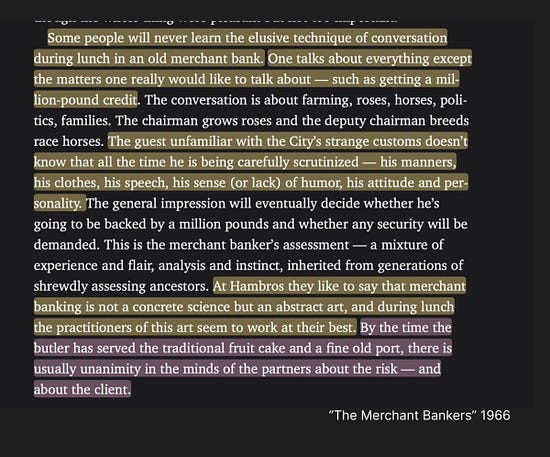




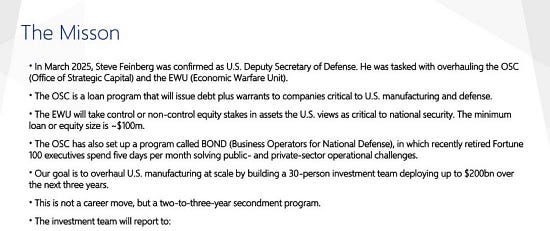 Will Manidis @WillManidis
"internet native deal guys" the great dealmaker ceos of the last five years (sama, f, etc.) are playing a very different game from the great dealmakers of the past (eisner, chambers) the new generation are playing these deals like they’re video games, low alpha high beta,
Will Manidis @WillManidis
"internet native deal guys" the great dealmaker ceos of the last five years (sama, f, etc.) are playing a very different game from the great dealmakers of the past (eisner, chambers) the new generation are playing these deals like they’re video games, low alpha high beta,
 AI agents promise to automate away the tediousness of modern life—the over-billed rental cars, the iCloud storage alerts, the changing of leaked passwords.
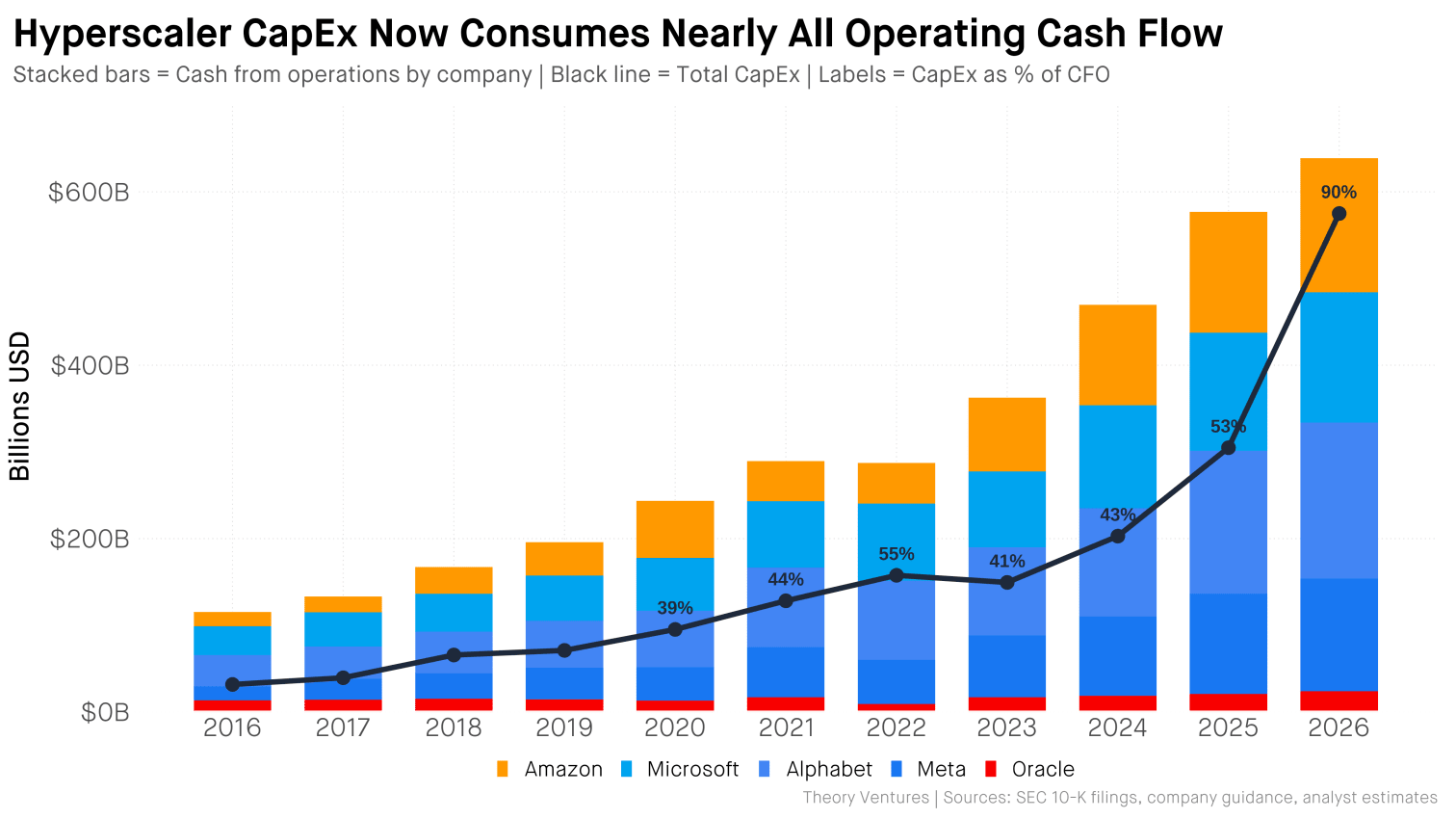


.png) ## ‘AI & I’: How Every builds a writing team in the age of AI
## ‘AI & I’: How Every builds a writing team in the age of AI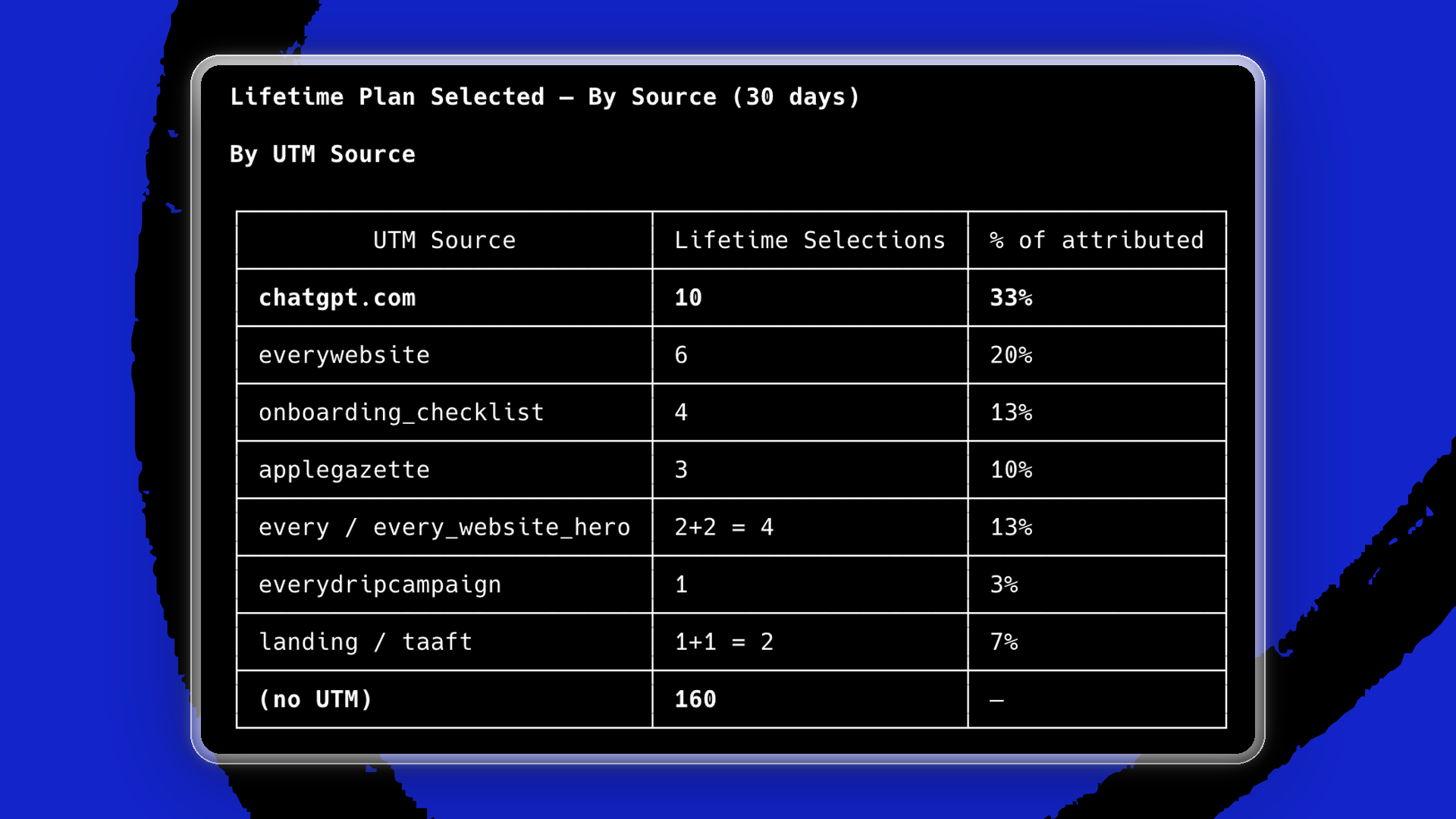
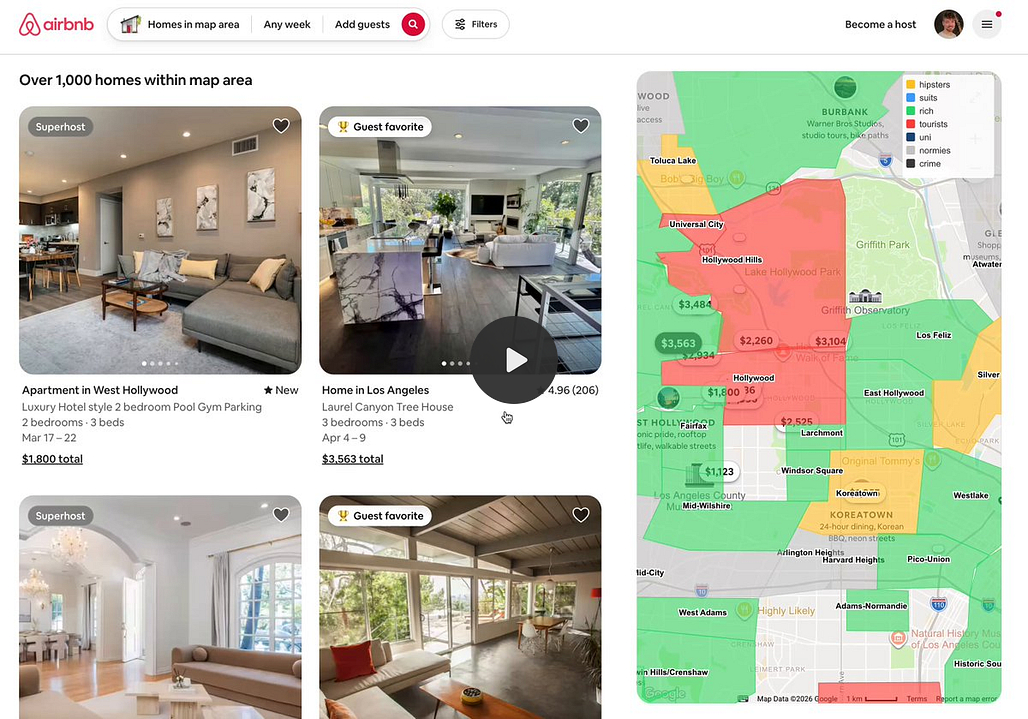
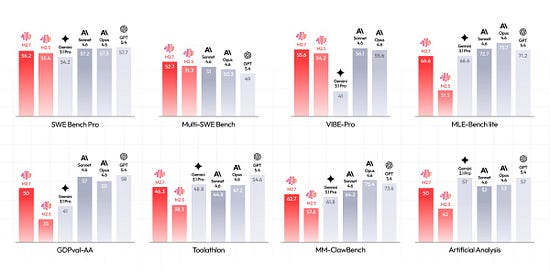

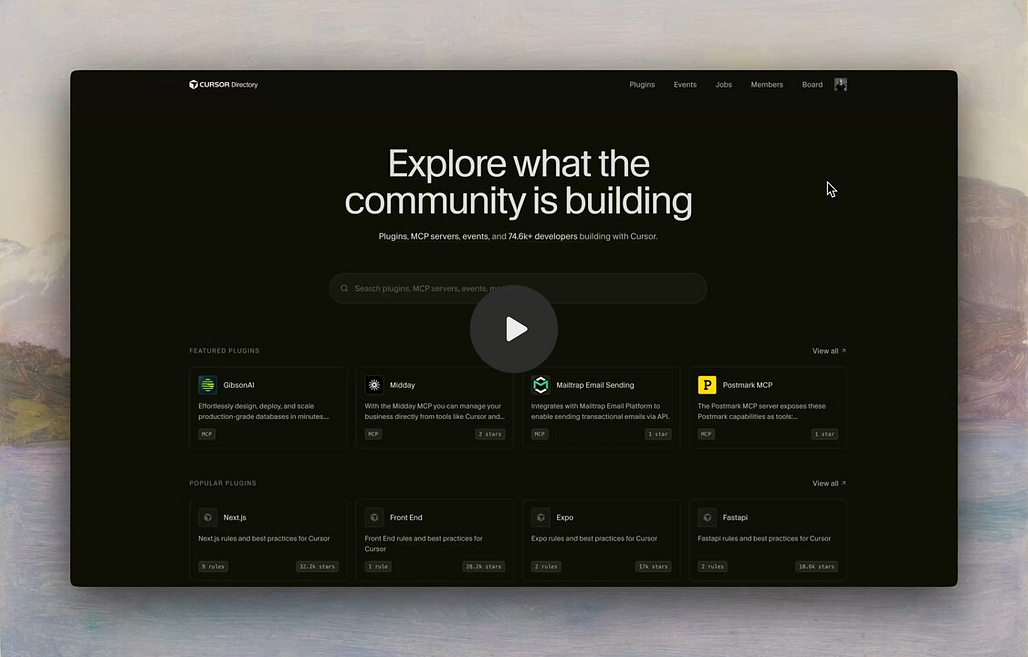 POLL
POLL In 1893, a printer named Horace Hart pinned a piece of paper to the wall of the Oxford University Press room where books were printed. It told his compositors—the workers who assembled metal letters by hand into the trays that would be inked and pressed against paper—how to handle the decisions that came up hundreds of times a day. When to capitalize. Where to put a comma. How to abbreviate, hyphenate, and spell. That piece of paper grew into a 200-page manual, which people called





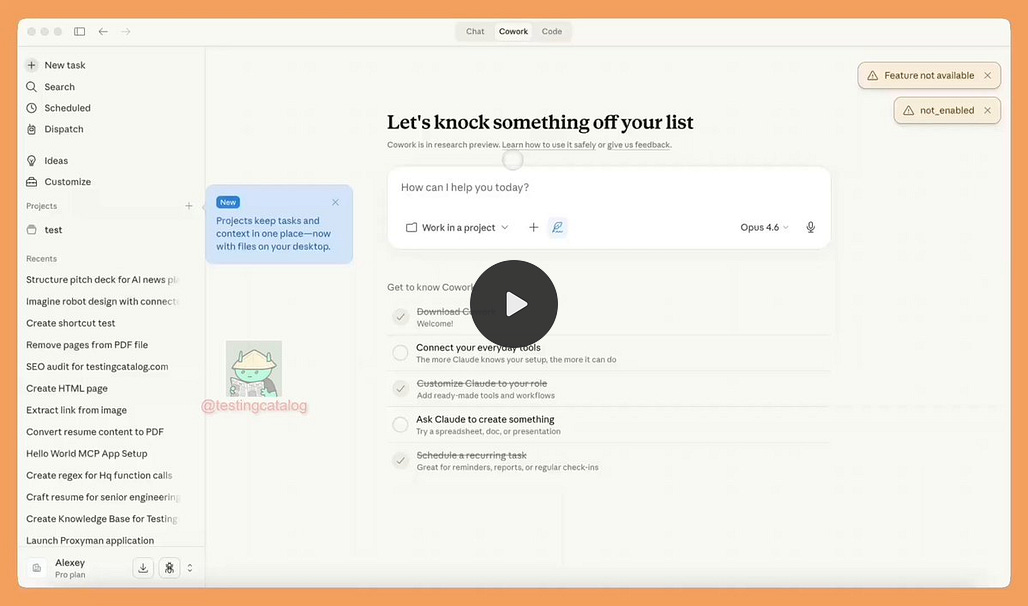




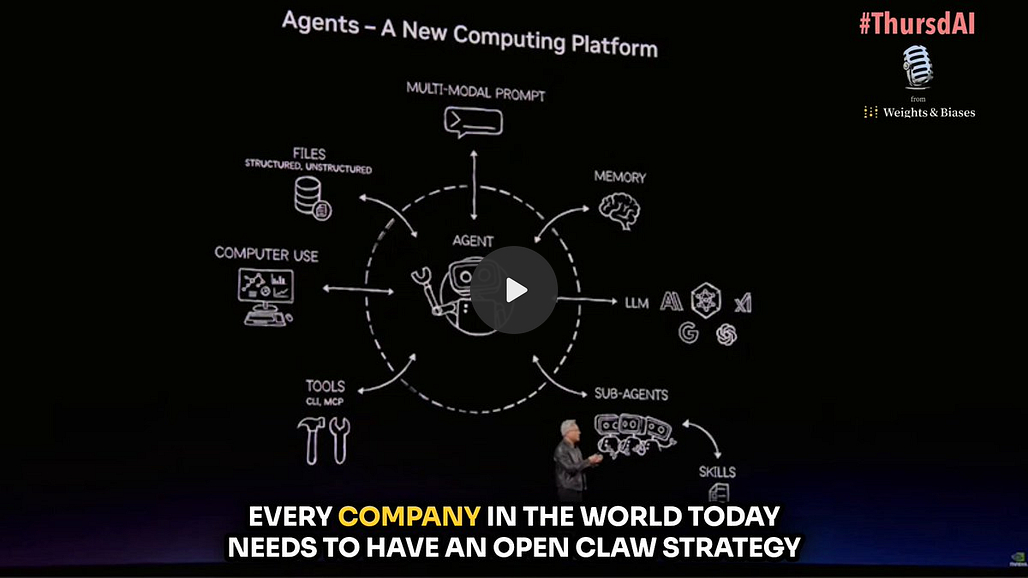
 erin griffith @eringriffith
A detailed and brutal look at the tactics of buzzy AI compliance startup Delve "Delve built a machine designed to make clients complicit without their knowledge, to manufacture plausible deniability while producing exactly the opposite." https://t.co/eiicE64eGr
erin griffith @eringriffith
A detailed and brutal look at the tactics of buzzy AI compliance startup Delve "Delve built a machine designed to make clients complicit without their knowledge, to manufacture plausible deniability while producing exactly the opposite." https://t.co/eiicE64eGr



.png) _Hello, and happy Sunday! ## Cursor’s new model is competitive but not quite frontier
_Hello, and happy Sunday! ## Cursor’s new model is competitive but not quite frontier