Scott Galloway · Tuesday, January 6 2026 · 1 min read · ↑ top
Thanks for subscribing to Ahead of AI!
Sebastian Raschka, PhD from Ahead of AI · Tuesday, January 6 2026 · 2 min read · ↑ top
Ahead of AI is a magazine dedicated to the latest developments in artificial intelligence (AI) and machine learning (ML). It not only covers recent research insights but also offers tutorials for those looking to grasp the essentials, with a balanced mix of news and educational content in the AI and ML realms.Ahead of AI is a personal passion project, that I create independently to bring you quality content. If you'd like to support me in continuing this work, please consider purchasing a copy of my books or upgrading to a paid subscription. These contributions help me maintain and grow Ahead of AI for all readers. If you find my books valuable, Amazon reviews and recommendations to friends and colleagues are also hugely appreciated!If the newsletter isn’t in your inbox, please check your spam folder and mark this address as "not spam." And if it's still missing, the Ahead of AI website always has the latest updates.Thank you for being part of this journey, and I hope you enjoy the content!—Sebastian
Keep Getting Ahead of AI Without Interruption
Email providers like Gmail have tightened their filtering rules recently, which means even newsletters you have subscribed to might get misrouted. To prevent that, here are a few quick things you can do:
Addsebastianraschka@substack.comto your contacts. This tells your email provider these messages are wanted.
If an issue shows up in Spam or Promotions, drag it into your Primary tab. This helps your email client learn where it belongs.
Open and engage with the emails you receive. Even just opening them regularly signals to your provider that the content is wanted.
Consider bookmarking theAhead of AIarchive: Consider bookmarking magazine.sebastianraschka.com in case an issue slips through, you can always catch up there later.
Taking these small steps helps ensure the continuous delivery of future Ahead of AI issues.
You're on the list!
Interconnects by Nathan Lambert · Tuesday, January 6 2026 · 7 min read · ↑ top
Quick request: To help emails get delivered, please reply to this email with your favorite recent paper or model!
Breaking down the latest AI news with real-world frontier model experience
Interconnects is a newsletter covering the latest AI models, the methods used to train them, and the trajectory of the technology. 1 to 3 times a week you’ll receive a mix of essays, model reviews, interviews with researchers, and surveys of the open model ecosystem. Interconnects is founded and operated by Nathan Lambert — a senior research scientist and post-training lead at the Allen Institute for AI (Ai2). At the non-profit Ai2, Nathan trains open language models (Olmos) and shares cutting edge research. Interconnects serves his broader goals of creating a more informed AI ecosystem built on openness and transparency.|
Interconnects’ value
Interconnects grew out of a longer history of Nathan trying to share educational resources in the AI space. Soon after the release of ChatGPT, Nathan transitioned a hobbyist approach to writing into a weekly commitment with over 300 posts to date. This is now deeply intertwined with his research practice and taste — trying to transfer the feeling of understanding a cutting edge research topic in AI to his readers.
Many of the most popular pieces on Interconnects are frontier model reviews, such as recapping the DeepSeek R1 recipe or explaining o3’s odd over-optimization. For some more timeless pieces, consider exploring:
All essays and model reviews are voice-overed by Nathan and available in podcast feeds along with the interviews.
How to support Interconnects and its mission
The most valuable thing is to subscribe and spread the word with friends. On Substack, likes, comments, re-stacks, and any engagement meaningfully shift visibility.
To build on this, upgrading to a paid subscription pays for trial AI services — Nathan uses all the products costing $100s per month so you only need to buy those that are worthwhile — and supports a small team that help enable smooth operations of Interconnects while Nathan focus on my full-time research job. Paid subscribers get access to paywalled essays and monthly roundups of open models and datasets. In addition to this content, paid subscribers get access to:
The Interconnects Discord server, with 300+ members comprised of paying readers and Nathan’s network of researchers building frontier models and other AI systems.
Access to Interconnects Dinners & Events at leading AI conferences with leading researchers, founders, and investors.
One piece of housekeeping — if my emails are landing in your “promotions”, “updates”, or “spam” folders in Gmail (or whatever email service you use), and you’d like to see them more often, please consider moving Interconnects to the “primary” folder instead! Just click and drag it like this:
A dialogue box will then show up asking “Conversation moved to Primary. Do this for future messages from Interconnects.ai” If you click “yes”, all future newsletters will be delivered directly to your main inbox, and won’t get lost among junk email.
Related projects
Nathan is building a coalition for truly open models in America with The ATOM Project.
Nathan is writing the first textbook on reinforcement learning from human feedback (RLHF) and its role in post-training.
Nathan continues to train leading open-source AI models at Ai2 under the Olmo, Molmo, and Tülu brands.
Testimonials
Interconnects (and Nathan’s work broadly) has received praise and recommendations from numerousprominent AI researchers. Some highlights, include…
John Schulman, Co-founder at Thinking Machines, Co-founder of OpenAI, fmr. ChatGPT lead, Anthropic:
Reinforcement learning from human feedback has exploded in popularity over the last few years since its pivotal role in ChatGPT. Nathan’s Interconnects blog is the best blog on this topic, and I’ve recommended it as further reading material in my talks.
For information on contacting Nathan, see his contact page. For Interconnects partnerships or opportunities, email mail at interconnects.ai.
If you want to propose a guest post , please email me a completed draft.
Interconnects AI is a newsletter owned and operated by Interconnects AI, LLC.
No LLMs used to write this
I only use LLMs for editing in the form of Grammarly for typo detection and a secondary full pass of Claude and/or ChatGPT (which does normally find interesting typos). LLMs are not used for prose or diagrams; just occasionally for title brainstorming.
Otherwise, I have accepted no advertising dollars and pay for the services I use.
Private podcast setup:
To set up your podcast app, click this link on your phone.
How I code with agents, without being 'technical'
ben's bites · Tuesday, January 6 2026 · 20 min read · ↑ top
i went viral on New Year's Eve
The newsletter for the technically curious. Updates, tool reviews, and lay of the land from an exited founder turned investor and forever tinkerer.
Hey folks, Happy New Year!
I accidentally went viral last week. I’d been thinking of a post to write about how I use coding agents while being ‘non-technical’ but I couldn’t ever get it done. But New Year’s eve I just blurted out my thoughts through a voice tool and then published it.
And it blew up. Nearly 4M impressions on X 🤯. So I’m posting it here to kick off 2026. I will caveat that whilst I’m not technically technical, there will be plenty in the post that sounds rather technical.
My goal this year is to help more non-technical become more technical. So I’ll dive more into these topics, write more, record more and publish more.
I’ve spent 3 billion tokens in four months. Every single one through a terminal, watching an agent write code I couldn’t write myself.
You may class me as a ‘vibe-coder’. But I think that term overlooks any kind of skill involved in the work itself. Much like ‘no-code’ did circa 2019 (when I started my no-code education company later acquired by Zapier).
I don’t read the code. But I read the agent output religiously. And in doing so, I’m picking up a ton of knowledge around how code works, how projects work, where things fail, where they succeed.
That’s my version of learning to program. The new technical class.
What I’ve actually shipped
A few things I’ve actually shipped in these last few months:
Personal Site. I revamped my personal site and made it look like a terminal CLI tool and it was so much better than my previous attempt at the start of this year.
Feed. I built a simple social tracker for mentions of Factory on Twitter, posts from our subreddit, and GitHub issues. It’s open-source and I’ve gotten 100+ stars on it with several folks cloning for themselves.
FactoryWrapped. I built the first version of our ‘wrapped’ product. Showed it to the team and they loved it, so they wanted to bake it into the actual product itself, which is now live. Adding new guides, rearranging things. This wouldn’t technically feel like coding, but to me it is. It’s still the same process.
CustomCLIs. I’ve created a few CLIs—like a Pylon CLI which then has been picked up by the team to help with customer support queries. I built a CLI to help users with adding tokens to their accounts. Plus a Linear and Gmail CLI.
Acryptotracker. I invested in a co that accurately predicts positive, negative or neutral signals in dynamic data (financial, weather, fitness, protein folding). So I built a tracker that automatically opens and closes short/long positions based on the predictions - kinda like a mini-hedge fund.
Droidmas. Twelve days, twelve experiments or games that touched the different themes people are talking about on Twitter—memory, context management, vibe coding, things of that nature.
An AI-directed video demo system. Effectively, I give it a prompt to create a video. It opens up ghostty, runs the commands, can open other windows like a browser, records the screen. Acts as its own director, producer and editor. The agent itself is watching what’s happening during the recording and can respond as and when things happen. If there’s an issue or a bug or it needs to wait for a response, it will do that. I used this to create a video that was posted by OpenAI.
A Telegram bot powered by Droid Exec so I could have my local repos synced on a VPS and just chat to my repos as a chatbot. I try to as closely mimic the CLI experience but from a messaging app (I dislike Telegram but couldn’t be bothered with the arduous Whatsapp for Business setup).
And about 50 other things I’m not mentioning or have been left to die.
How I actually work
I use a CLI exclusively. Terminal over web interfaces, always. It’s just more capable as a general agent, and I get to see it work.
I may have an idea for something, or a pain, or there’s an issue with something that I feel like could be solved with code (basically everything these days). So I’ll just spin up a new project in Droid (Factory’s CLI).
I generally just talk to the model a couple of times to start feeding in context about what I’m trying to do, then I’ll switch into spec mode to start getting a plan going on what I wanna build.
In spec mode I’ll basically question a bunch of things. Like I don’t understand what this is, or why would we need that over this, can’t we do it this way?
I’ll link docs and GitHub repos for the agent to explore.
Then I let Opus 4.5 with autonomy high just rip. I’ll watch the stream, see what’s happening, and when there are any errors. I may jump in to question it or guide it down a different path.
I start the server, test it, give feedback and iterate.
So I kind of build ahead of myself first. I try and just build the thing. And then all of the gaps and all of the issues that I run into are the opportunities for me to learn. Is that a thing that is part of the system that I’ve seen across other repos that I should build up a sort of templated system to handle? Should this go into an agents.md that actually follows me around and does the same thing on all of the other repos I’m going to be working on?
I’ve been spending more time trying to figure out the best agents.md setup for myself because this is effectively like the instruction manual.
I’ve got a repos folder locally—that’s where all my coded projects go. In that repos folder is an agents.md that says to explicitly set up each new repo with what to do and not to do, how to do things with GitHub, how to commit, all that kind of stuff. And whether it should use my work GitHub account or my personal GitHub account.
Running tests. End-to-end tests is one of these things I never really paid attention to previously. But now I’m really keen to have end-to-end tests on everything. Given my current knowledge and capability, when I’m building things and testing them, there often might be silly bugs that I just should have caught or tested had there been tests in the first place.
And I often look at others’ agents.md files to see what I can borrow for my own. I’m constantly trying to improve my doc to make each and every new working session smoother.
Coding on the go
I’m also making sure that I install the Droid GitHub app on every repo that I create. So when I’m deploying to GitHub, I make sure I’m submitting pull requests so I can have Droid review it—and I can tag Droid to make fixes itself with a custom prompt. I can trigger it from issues or from pull requests.
It lets me code from my phone, and add new things when I’m out and about. That in combination with my Telegram bot makes it really easy for me to do things when I’m not at my desk.
I also use Slack with my agent. I create a new channel for each repo and just fire off things as and when. I often spin up new channels for new ideas. Slack’s a great 1-person product (+ agent(s)).
What I’ve been learningBash commands. It really clicked for me when I’d been running the changelog process for a while—it’s the same process over and over. I finally understood the ‘workflow’. So I got droid to create the slash command flow and it’s the first slash command that I actually have used properly, which runs a number of bash commands and also prompts the model to do certain things like reading through GitHub diffs, checking what is behind a feature flag and what’s not, putting things into the right sections of new features, bug fixes, that kind of thing.
From there I started getting more into bash + cli’s. I’ve stopped using MCPs—I use the CLI versions of most things over MCPs. Yes, because MCPs take up context but mostly I feel like it’s simpler - I usually only need a few of the tools an MCP would include. So with Supabase, Vercel and Github, I’m always using the CLI’s over the MCP’s.
I often build my own CLIs for things. For example, I built my own Linear CLI so I could query my own issues and run everything from the terminal instead of going to the desktop or web interface.
VPS. I abstractly knew what it was—it’s like another computer that is on all the time somewhere else. But until I truly needed one I didn’t really know what I needed to do there, and there’s still a lot I need to learn. But effectively, now when I’m running the crypto tracker, I have a ton of data that’s being pulled every single minute and I need that to always stay on.
I also use the VPS when using my Droid Telegram bot and use something called SyncThing to sync my local repos to my VPS so that my repos are always up to date and they’re in the same state as I left it. So I can just pick it up on the go.
Skills. I’ve tried to use them a bit more. I’ve been using them not only just as knowledge, but also with bash commands + CLIs. I’ve got a Gmail CLI that I can pull into any projects, it’s portable, it lives at my root directory. So anytime I need Gmail in my system—I’ve got a Gmail triage system that I use—it just uses the CLI.
The new programmable layer of abstraction
Not to be like everyone else on Twitter when they see Andrej Karpathy tweeting something, but this really rang true to me: there’s a new programmable layer of abstraction to master.
When it was the no-code days, the abstraction layer that I was mastering was drag and drop tools like Webflow, Zapier, and Airtable—stitching them together and making it feel like real software (until you hit a limit).
But now instead of me thinking I’ve got to learn to write code from scratch in order to be able to do all of this, what I need to learn is actually how to work with an AI agent. How can I prompt it well? How can I make sure it’s got the right context? And also how can it help me understand what we’re doing, how do the pieces work together, how can I improve my own system over time?
Including all of the things like agents, subagents, prompts, context, memory, skills, hooks, etc.
Learning from others
I read people like Peter Steinberger who is an * actual * programmer and is shipping a ton like crazy. And seeing in his posts almost the simplicity of his system, where he just talks to the model, lets it do its thing, doesn’t really worry about extra slash commands, subagents, hooks, skills(although he’s coming round to skills) - this just gives me permission and confidence that I don’t need some ultra complex system.
Looking at Twitter you see a lot of people really optimising or potentially over-optimising their own system. That can feel daunting for folks like me, but also that’s what I think some of the beauty of this is: it’s a completely customizable system, so you can make it work for you however you’d like it to work. You can have a plan mode that you create with a custom slash command that runs for twenty minutes like Kieran does, or you can just talk to the model like Peter does.
Another thing while following other engineers is seeing their open source software, cloning it, using it myself, trying to improve it, or just taking parts of it and making that my own. Like Peter’s recent summarize YouTube for example, I just took it, removed the Chrome extension part, kept it as the CLI, and now I can just talk to that anywhere I want to.
And like Mario, reading things like his MCP post where he talks about CLIs over MCPs, gave me the nudge to dive in more to bash and CLIs.
The learning process
I’m not building things for tens of thousands of people to use in production. So there are going to be bugs, there are gonna be issues, and I run into them plenty. And it’s just a reminder that this is a gap in your knowledge, not in the capability that you have now.
My role is identifying the gaps or finding those gaps and thinking: how do I make sure this never happens again? Or how do I make sure I understand this part of the system enough that if it’s gonna happen again, I’ll catch it.
Even the simplest things from when I first started using agents to code—like, why can’t I use GitHub Pages when I’ve got dynamic data and I want multiple users to be able to use something? That’s a very, very simple thing that programmers know. But it was something I just learned because I was building something, I was trying to build something different than the tools allowed me.
So then I said, okay, so what do we need to do? Like all you need to do is just ask the model. The model knows everything that you don’t. You can just keep asking it. It’s your ever patient, over-your-shoulder, expert programmer. You can add in your agents.md “I am not a programmer, you need to explain things very simply for me.” You can just tweak it exactly how you want to.
Contributing to real products
I’ve even contributed improvements to our own product—some simple things, but improvements nonetheless. There’s a team of engineers at Factory that are extremely experienced and good at what they do, and I’m learning a lot by just watching them, looking at their PRs. We have internal lunch and learns where people say “this is how I scope new product features”, “here’s how I bug fix”, things like that, which have been really helpful.
So this whole thing is just a really big learning experience for me, and I’m really enjoying learning “to code”, or, learning to work with code.
Why this is different
I’ve tried to learn to code many times in my life, and every time it was type in these characters, hit enter, and do you see hello world? It was kind of do this, then that, then this happens. And maybe it would have been helpful for me to learn all that, but I just still think that’s so different to what it is today.
For me to be able to build the things I’ve built now, if I’d taken that other path, I would have had to code for many months, many years to get to a point where I could feel like I could write the code myself.
So instead I’m coming at it from a point of view of I understand systems thinking for projects built with code. I accidentally learned that when I was running my last company with no-code education. You’re still learning that okay, Webflow is the front end, Zapier is the API routes, the connective tissue, the data flows, and Airtable is your database. So I learned the systems of that previously, and I think that’s helping me today understand some of those pieces.
There is so much you can learn. And often I’ll see something that someone posts on Twitter and I’m like, I have no idea what that is or what I can do with it, but I’ll bet you I can play around with it.
No piece of software feels unattainable. I can just git clone it and say, what the hell does this thing do? Okay, I’ve been thinking about this—is this thing gonna do anything related to what I thought? And it’s just all exploration. It’s so much fun.
Asking the “silly” questions
There have been countless times where I think about silly questions—to me or silly questions that other programmers would never ask—that I have the permission to ask, because there’s no one watching me and no one shooting me down for being stupid or saying the wrong thing.
Like, why do we use all these frameworks, these different types of frameworks? Because they are abstractions for humans writing code. So why—if an LLM is super smart—why couldn’t it just be simpler code written, less dependencies, less potential surface areas for bugs? Is that a silly thought or a good thought?
And I can learn that it might not be a silly thought. But okay, yes, there are these many projects that the model has been trained on, which is why often things will be built in certain frameworks.
So it’s just building up this understanding of the code world, the engineering world that I didn’t deserve to be in, but I’m absolutely part of now.
Beyond “vibe coding”
Yes, you can call it vibe coding, but I think vibe coding misses the point. I’m trying to actually learn the systems. I’m trying to really understand what is going on, how can I improve, how can I be a new age programmer, what is this new technical class?
That’s what I think is the most interesting thing here. I can’t categorically call myself non-technical but I also can’t call myself a programmer. Nor would I want to. I’m part of this new technical class and I don’t know what it’s called. But I think vibe coding gives a negative connotation to it, much like no-code gave a negative connotation to that group.
It feels like a game
Some people have likened this new way of programming to a game. Factorio is the one that people talk about. I’ve never played it. I’m not much of a gamer.
But this whole paradigm feels like a real game to me, and the output is I’m building stuff that I want to build. A ton of things just don’t end up anywhere on GitHub. They don’t end up live. They are just mere explorations of parts of a system or a topic. Others end up published and other people use it - I had a CTO fork my personal site and use it for himself! Big boss stuff (for me!)
If someone posts “oh, I built this React grab tool for example”. Okay, cool, can I build my own? Like why? This one looks really good. Well, just because I want to. I can just explore things for the sake of exploring things.
Every idea you’ve ever had can be exercised, can be explored, and it doesn’t need to be good. And you’ll learn along the way.
Permission to throw things away
Previously, if I’d learnt to code to build a really crappy version of something I was thinking of, like a big idea that I had, and then no one wanted it, I’d be too emotionally invested in that idea to be able to just throw it away.
With no-code, I could effectively build a version of that big idea in an hour, a couple of hours, a weekend. And if no one liked it, no one wanted to pay for it, it was rubbish, then I could just throw it away. It wasn’t that much of my time or my energy into something that ultimately wasn’t going to be something good for someone else.
And I feel like the same is true today. We’re gonna see an explosion of software. Many of it won’t be good, but lots of it is already great. There are expert programmers who are shipping things like absolute crazy that are all good projects. So we’re just gonna have this absolute plethora of coded projects out there that you can use, clone, tweak, remix.
It’ll take a lot less time than if you had to learn to code or if you’re reading the files or you’re writing the files or anything like that. It’s just a lot quicker. The feedback loop is quicker. The process is quicker. You can just do anything at any time and just consistently keep churning out stuff.
Fail forward
The way to learn about code is to build ahead of your capability and fail forward.
I feel like everyone who is not technical today who wants to be in this world, who wants to do stuff like this, can absolutely do it. They just need some permission to do that. To play around. You must think of it like play.
Sign up to a CLI agent like Droid. Say you want to build a personal website. Say you want to build a little RSS feed tracker, a little to-do list, a little workout app. Whatever you want to do, you just spin it up, start working on it. Every little hiccup, bug, or issue you run into—question it. Okay, why did this come up? Why did you hit those errors? You know you don’t know how to code, so you shouldn’t get bogged down with bugs - expert programmers hit bugs all the time.
And you can take it to other places. You can go to ChatGPT or Claude and give it to different models for different perspectives. You’re always gonna have all of the choice up there and all the different variations.
Just pick one
There are just so many different tools, so many different options. Ultimately, just pick one and just stick with it. Just learn that system. They all look fairly similar. They all work similarly.
Obviously, I use Droid because I work at Factory. But also they get the best output of any models. (yay for model agnostic)
Ultimately, what I want and what I need from a tool is: is this one gonna help me get the furthest I can in the least amount of time with the least amount of trouble? The more I have to do with using the tools themselves, the harder it is.
Things like IDEs—I’ve tried a bunch. I used to use one in particular for a long time. It’s just got so much extra stuff that I just don’t need or care about. I just want to talk to a model, have code written. If I need to inspect some markdown files, I can now use what I’ve just recently discovered is a file manager in the terminal. So I can just look through that, or I can open it up in Zed, which is what I use now, just to view markdown files, edit them. If it’s a changelog, for example, I want to tweak something briefly, go back to the CLI, and then just let it rip from there.
And any tool or feature I think I’m missing, I’ll have a crack at building it myself - like a terminal file viewer.
**This whole thing is just a really big learning experience for me, and I’m really enjoying it. Build, fail forward, and keep shipping.
I operate on the baseline assumption that I’m about to be fired at all times. It doesn’t matter how many managers tell me I’m doing great or how many positive performance reviews I receive, every piece of feedback gets filtered through my self-doubt. I had asked AI about my career before, but never about my job performance. So when I finally did, I didn’t expect to believe its answer anymore than I believed when a human said I was doing okay. It started as routine year-end planning at Every in mid-December. Kate Lee , our editor in chief, asked me to put together 2026 goals based on the performance of my articles. My entire career, I’d been told to use numbers to show results—in performance reviews, in job interviews—but I’d never had the data fluency to do that. Yet when I fed the fourth quarter numbers on my articles to Claude and ChatGPT and started to see proof that my work was making an impact in terms of driving traffic and sheer output, some dormant part of my brain activated like a sleeper agent, and suddenly I was three hours deep in spreadsheets. AI helped me do something I’d never managed on my own: believe I’m good at my job. If AI can democratize business intelligence for someone with my particular brand of professional self-loathing, it can probably help you understand your own value, too. Here’s how I ran the analysis.
Yearly review gave me proof of my performance
Step one of my AI analysis: manually exporting data from Every’s content management system into Google Sheets like it was 2009. Not exactly the future we were promised, but a necessary evil. I uploaded the spreadsheets to Claude with this prompt: “I’ve given you four different sets of data from the Every newsletter: overall performance for Q4, as well as performance for two columns I am involved with... I’d like us to conduct a thorough retrospective on my contributions to the Every ecosystem that we can use as a basis for 2026 planning.”The initial prompt I gave to Claude (set to Opus 4.5) in order to kick off my Q4 retrospective. (Screenshot courtesy of Katie Parrott.) I discovered that I was driving a third of the fourth quarter’s traffic with a fifth of the content. My Working Overtime column was running 13 points above Every’s average satisfaction rating as measured by the ratings that readers can give our articles at the end of every post. A normal person might have called it there. But at this point I was obsessed with seeing my own performance reflected back to me in the numbers. So I pulled the full year’s data and gave Claude a new role: “Act as an editorial analyst and strategist. Tell me everything you can about what this data tells us.” If the fourth quarter was a fluke, I thought, the full year would expose it. The prompt I gave Claude (and ChatGPT) to kick off the full-year analysis. It didn’t. In 2025, I wrote 54 articles for Every—15 percent of everything we published. Those pieces drove 25 to 27 percent of our subscription trials and web views. In the final quarter alone, I contributed 18.8 percent of content output and 29.3 percent of views. Every way I sliced it, I was punching above my weight by a factor of 1.5 to two. But the more interesting finding was how different types of work drove different kinds of value. Each column I contribute to at Every moves a different needle. Vibe Checks , our day-zero reviews of new models, drive trials to Every. When someone’s searching for information about a new AI tool and lands on our coverage, they’re primed to subscribe. Pieces about what our engineers are building pull in traffic from people interested in the frontier of software engineering. My own column about AI’s impact on my work experience drives something harder to quantify: reader satisfaction, as reflected by the ratings at the bottom of each Every essay. According to the numbers, I outperformed in all three. I didn’t believe it. LLMs have a reputation for sycophancy—telling you what you want to hear—so I wanted to test on another model to make sure that Claude wasn’t just buttering me up. But ChatGPT gave me the same verdict based on the same data, and pushed back when I asked whether my performance had been a virtue of writing about popular topics or producing work that anyone could have produced. “You’re pattern-matching to an explanation that protects you from having to believe the data,” it told me.
Did the data mean I was good at my job?
I typed it before I could talk myself out of it: “Does this mean I’m good at my job?” The exchange where ChatGPT gave me the answer I was craving: Yes, you are good at your job. ChatGPT’s answer was immediate and unequivocal: Yes. It walked through the evidence point by point: the output-to-impact ratio, the pattern of high performers, the fact that pieces with more vulnerability to them—like the one about bipolar disorder or the piece about using AI as a career coach after I was fired—-consistently outperformed content that was pure analysis without the context of my experience. ChatGPT had a counterargument whenever I tried to prove it wrong. “What about the fact that I had good source material to work with?” ChatGPT replied that it was a credit to my editorial judgment, not a discount on the work. “But anyone could have written those Vibe Checks—” ChatGPT reminded me that I wrote 18 percent of content in the fourth quarter and drove 29 percent of views. I went back to Claude and asked the same question. Claude is more willing to push back and more likely to tell you when you’re fooling yourself. I figured if anyone was going to poke holes in this, it would be Claude. It returned the same answer. At one point, the AI asked me point blank: Why are you asking this? What is it about it that’s so hard to believe? That’s when I said the thing I’d never said to a manager or a therapist or even, really, to myself: “I don’t know. I guess just pathological self-hatred and an inability to trust that I do good work.” I could say it to a chatbot because there was no social cost, and I didn’t have to be worried about burdening someone on the other end with my baggage. If I believed the data, the next step was to believe myself.
Claude proved that being me paid off
I went back to Claude with a new prompt: “Let’s hold up the Working Overtime performance overall with the other content I was involved with in Q4 and think hard about what drives the most value for Every.” Before giving me an answer, Claude asked me questions I hadn’t thought to ask myself: What’s Every’s current constraint—new subscriber acquisition or retention? What’s your role supposed to be? What can you realistically sustain? High-vulnerability writing is more draining than tool reviews. What’s the right mix for your energy? Then it came back with scenarios:
Option A: You’re a conversion engine. Focus on Vibe Checks and Source Code [our columns about what Every is building]. Maximize trials. Working Overtime becomes a monthly luxury. The business case is clear: more Vibe Checks equals more subscribers.
Option B: You’re a brand builder. Focus on Working Overtime. Build the most devoted audience segment. Accept lower trials but create readers who will follow Every anywhere. The bet: Satisfaction compounds into long-term loyalty.
Kate had already told me that we want to publish more of my column in 2026. But I wasn’t prepared to accept it. Coming from a person, I would have brushed it off as encouragement, the kind of thing a good manager says to keep you motivated. Coming from a system that had just walked me through the data and played out scenarios for what each choice would mean, it landed differently. I asked Claude to help me think through where I should put my focus in 2026 based on Q4’s performance numbers. The data backed this up. When I looked at which pieces performed best—earned high ratings and sparked reader responses—the pieces where I was most myself, most willing to be weird or vulnerable or uncertain, consistently outperformed the ones where I played it safe. I’d convinced myself that the personal stuff was indulgent—a risk I was getting away with, not a strategy that was working. The data said otherwise.
Build your own case
The doubt is still there, lurking, ready to flare up the next time a piece underperforms or an edit comes back marked up with a hundred comments. But my relationship to the doubt has shifted because now I have the data. I can look at the numbers instead of believing the narrative that my mind tells me. Instead of panicking, I can spend time thinking about where I should be spending my time and where I can do even more of my best work. This also solves the problem with most performance reviews that act as lagging indicators of performance—summaries of human impressions, filtered through whatever your manager happened to remember. This does not have to be the case with AI. You don’t need to be a data analyst. You don’t need special access or technical skills. You need a dataset—whatever metrics you can get your hands on, so don’t be afraid to ask—and a willingness to ask the questions you’ve been avoiding. Don’t wait for someone else to tell you your value. Build the case yourself.
Feedrabbit · Tuesday, January 6 2026 · 1 min read · ↑ top
Thank you for joining Feedrabbit!
Please click the following URL to activate your account, Feedrabbit will not start delivering your subscriptions until your account is confirmed:
https://feedrabbit.com/signup/confirm/20676/92ca81cf579f20f328f60d9d2a1a9df21b3e22df
We received the request from 76.103.252.31, if you did not signup, ignore this email. Feedrabbit does not spam and this is the only email you will receive.
The Feedrabbit Team
https://feedrabbit.com/
Welcome to Chip’s Substack
Chip Huyen from Chip’s Substack · Tuesday, January 6 2026 · 1 min read · ↑ top
It’s good to have you here!You will start receiving updates right here in your inbox. You can also log in to the website to read the full archives and other posts as they are published.Some housekeeping… If you can’t find the newsletter, check your spam folder. And please mark this address as ‘not spam.’ If the newsletter isn’t in your spam folder, either, you should look in the Promotions tab.You can always see everything on the website.Thanks again, and please tell a few friends if you feel like it.
Important: confirm your subscription
Jason Liu · Tuesday, January 6 2026 · 1 min read · ↑ top
Forwarded this newsletter? Click here to subscribe.
Thanks for signing up. Click the link below to confirm your subscription and you'll be on your way.
EDS #0: Hi there! Welcome to Effective Data Science
Eugene Yan · Tuesday, January 6 2026 · 1 min read · ↑ top
Hello! And thank you for signing up for my email course on Effective Data Science.
Who am I? I'm Eugene, and I work at the intersection of machine learning & product to build pragmatic ML systems that serve customers. I also write & speak about data science, ML in production, and career growth. Why did I start this course? In my chats with other data scientists, one question comes up time and again—How can I be more effective as a data scientist? Well, to seek answers, I reached out to other data science leaders and rockstars. Though some of their answers were predictable, a couple were surprising—I had not considered these back then. Through my own experience applying those lessons, as well as observing other effective data scientists, I confirmed that their advice worked. In this email course, I’ll share the top five lessons with you. The course will discuss one lesson each day. I promise to keep them short so you can fit them in your busy schedule. In return, please attempt the short exercise that comes with each email—30 minutes, that’s all I ask. Here’s what we’ll cover:
How I was learning the wrong way and the fix
How effective data scientists experiment differently
Amazon’s key strength and how you can gain it
A key concept from engineering that data scientists should know
The skill that becomes more important as your career progresses
As any time, you can reach out by replying directly to these emails—I’m excited to hear about your progress and feedback. Till tomorrow, Eugene P.S., If you’re new to data science and wondering how to get started, you might find this article useful. To understand more about what a data scientist really does, check this out.
Interconnects by Nathan Lambert · Wednesday, January 7 2026 · 6 min read · ↑ top
Measuring the impact of Qwen, DeepSeek, Llama, GPT-OSS, Nemotron, and all of the new entrants to the ecosystem.
Starting 2026, most people are aware that a handful of Chinese companies are making strong, open AI models that are applying increasing pressure on the American AI economy.
While many Chinese labs are making models, the adoption metrics are dominated by Qwen (with a little help from DeepSeek). Adoption of the new entrants in the open model scene in 2025, from Z.ai, MiniMax, Kimi Moonshot, and others is actually quite limited. This sets up the position where dethroning Qwen in adoption in 2026 looks impossible overall, but there are areas for opportunity. In fact, the strength of GPT-OSS shows that the U.S. could very well have the smartest open models again in 2026, even if they’re used far less across the ecosystem.
The following plots are from a comprehensive update of the data supporting The ATOM Project (atomproject.ai) with our expanded ecosystem measurement tools we use to support our monthly open model roundups, Artifacts Log.
1. China has a growing lead in every adoption metric
Models from the US and the EU defined the early eras of open language models. 2025 saw the end of Llama and Qwen triumphantly took its spot as the default models of choice across a variety of tasks, from local LLMs to reasoning models or multimodal tools. The adoption of Chinese models continues to accelerate.
These first two plots show the cumulative downloads of all LLMs we consider representative of the ecosystem (we’re tracking 1152 in total right now), which were released after ChatGPT.
2. The West isn’t close to replacing Llama
Where we’ve seen China’s lead increase in overall downloads in the previous figure, it feels increasingly precarious for supporters of Western open models to learn that Llama models — despite not being updated nor supported by their creator Meta — are still by far the most downloaded Western models in recent months. OpenAI’s GPT-OSS models are the only models from a new provider in the second half of 2025 that show early signs of shifting the needle on the balance of overall downloads from either an American or Chinese provider (OpenAI’s two models get about the same monthly downloads at the end of 2025 as all of DeepSeek’s or Mistral’s models).
3. New organizations barely show up in adoption metrics
While much has been said (including by me, on Interconnects) about new open frontier model providers, their adoption tends to look like a rounding error in adoption metrics. These models from Z.ai, Nvidia, Kimi Moonshot, and MiniMax are crucial to developing local ecosystems, but they are not competing with Qwen as being the open model standard.
Note the different y-axes from this plot and the previous, where DeepSeek and OpenAI are included in both for scale. This plot shows the downloads just since July 2025 to showcase recent performance.
4. Qwen’s weakness is in large model adoption
One of the most surprising things in the data is just how successful DeepSeek’s large models are (particularly both versions of V3 and R1). These 4 large models dominate the adoption numbers of any of Qwen’s large MoE/dense models over the last few years. It’s only at these large scales where opportunities to compete with Qwen exist, and with the rise of more providers like Z.ai, MiniMax, and Kimi, we’ll be following this closely. These large models are crucial tools right now for many startups based in the U.S. trying to finetune their own frontier model for applications — e.g. Cursor’s Composer model is finetuned from a large Chinese MoE.
5. A few models from Qwen dwarf new entrants
While Qwen has one Achilles’ heel right now, its recent models totally dominate any HuggingFace metric. If we look at the top 5 Qwen3 downloaded models just in December (Qwen3-[0.6B, 1.7B, 4B (Original), 8B, & 4B-Instruct-2507]), they have more downloads than all of the models we’re tracking from OpenAI, Mistral AI, Nvidia, Z.ai, Moonshot AI, and MiniMax combined.
This is the advantage that Qwen has built and will take year(s) to unwind.
6. In December Qwen got more downloads than roughly the rest of the open ecosystem
If we account for every meaningful Qwen LLM released since ChatGPT, the downloads Qwen got in December well outnumber literally every other organization we’re tracking combined. This includes the 6 from the previous figure, along with DeepSeek and Meta, who are the second and third most downloaded creators.
7. People are still finetuning Qwen more than anything else
The other primary way we can measure Qwen’s adoption lead is to look at the share of derivative models on HuggingFace (filtered to only those with >5 downloads to indicate a meaningful finetune) that come from a certain base model. Qwen’s share here continued to grow throughout 2025, and we’ll be watching this closely around the likely release of Qwen 4.
Despite the dramatic increase in the number of players releasing open models in 2025, the share of finetuned models has concentrated among the 5 organizations we highlighted below (Qwen, Llama, Mistral, Google, and DeepSeek).
8. China still has the smartest open models
The primary factor that drives the adoption and influence of Chinese open models today is that they’re the smartest open models available. There’s a variety of second order issues, such as licenses, model sizes, documentation, developer engagement, etc., but for over a year now, Chinese open models have been the smartest on most benchmarks.
GPT-OSS 120B was close to retaking the lead (slightly behind MiniMax M2), but it wasn’t quite there. It’ll be fascinating to watch if upcoming Nemotron, Arcee, or Reflection AI models can buck this trend. If you look at other metrics than the Artificial Analysis intelligence index, the same trends hold.
Thanks for reading! Please reach out or leave a comment if there’s a corner of the data you think we should spend more time in. Stay tuned for more updates on The ATOM Project and related efforts in the near future.
Liking, sharing, commenting, or recommending Interconnects from your Substack is the only way Interconnects is possible. Thank you for your support.
If you liked this, consider upgrading to a paid subscription to cover my growing subscription and API fees. We offer group Interconnects subscriptions at tiered discounts for 5+ heads.
If you want all of the best AI writing on Substack through one subscription for your team of 20+, check out https://readsail.com/.
LinkedIn’s cofounder on agents beyond coding, AGI, and the skill that matters next
From cofounding LinkedIn to backing OpenAI early, Reid Hoffman is in the habit of being right about the future, so we wanted to know what he saw coming in 2026. In his thirdappearance on AI& I, Hoffman lays out his predictions for where AI will go in the 12 months ahead. He talks to Dan Shipper about how agents will break out of coding into other domains and who’s winning the coding agent race. They also get into how Hoffman defines artificial general intelligence , the way he believes enterprises will use AI, and why public debate on AI might turn more negative, even as the technology becomes more empowering for individuals. Hoffman’s other bets on the future include cofounding AI drug discovery startup Manas AI , investing at venture capital firm Greylock Partners , writing books , and hosting the Masters of Scale podcast. He’s also an investor at Every. Here is a link to the episode transcript. You can check out their full conversation here: Here are some of the themes they touch on:
#1 Coding agents are the foundation for all AI tools
Hoffman sees coding as the category frontier AI labs have to get right, because the foundations that make coding agents powerful—such as planning , making agents work in parallel, and orchestrating complex tasks —are the same patterns needed to build AI tools for every other form of knowledge work.
Agents will break out of coding—and spread everywhere else
While manymarked 2025 as the year of AI agents, Hoffman doesn’t think we’re quite there yet. There was significant development in agentic coding capabilities—which we saw in the rise in popularity of tools like Claude Code and Codex —but only a relatively small number of people benefited. He sees 2026 as the year we move from “agentic coding” to “agents in everything else.” In practice, that means that exponentially more people will know what it’s like to walk away from their computer, grab a coffee, and return to find productive work completed in their absence. Going a level deeper, Hoffman predicts that as agents become more widespread, “orchestration,” or managing agents working in parallel, will become an important skill for knowledge workers. He expects this trend to accelerate in the last quarter of 2026 and land even more strongly in 2027.
Plan for a crowded field in the coding agent race
On the competitive landscape for companies making agentic coding tools, Hoffman expects 2026 to look like a horse race: the leaders such as OpenAI and Anthropic staying neck-and-neck, trading the front position back and forth as new launches push one contender slightly ahead, then the other. According to him, the era of OpenAI “blazing ahead alone” is over, and he credits Anthropic for what they achieved with Opus 4.5 and Claude Code using less capital and compute than competitors. None of the front-runners will fall out of the race completely, he predicts, while noting that companies who have scarcely entered, such as Apple, will only find it harder to catch up. Meanwhile, Hoffman is watching for breakout moves from smaller players like Replit and Lovable, predicting that “with pretty high probability, something will surprise us here.”
#2 AGI in 2026 will be one person with the capacity of a team
When asked for his take on humanity’s timeline for achieving AGI, Hoffman quips that his go-to joke is that AGI is “the AI we haven’t invented yet” because by some definitions, we already have it. For example, AI can already write research reports faster than humans, so a more useful question is what meaning we will give to the term AGI in 2026. While Hoffman doesn’t expect the sci-fi version—a “press-a-button, fully human-capable software engineer”—he does anticipate humans doing high-leverage work by directing teams of agents, so that a single person operates with the capacity of an entire team. That agent-driven “AGI,” Hoffman predicts, will expand beyond coding into broader domains in 2026.
#3 Enterprises that sleep on AI will be left behind
The current narrative is that enterprise AI deployments haven’t lived up to the hype. Hoffman thinks that will change—but big companies need to get out of their own way first. By the end of 2026, he predicts, any company that wants to be “a thriving, growing concern” will need to be recording every meeting and running agents on the output, to identify who should be notified, surface action items, and prepare briefings for the next meeting. If you’re not doing it by then, it’s like insisting “cars won’t be a big thing, we can keep doing horses and buggies.” Beyond meetings, he expects companies to systematically deploy groups of agents to solve problems across the organization—another reason he sees orchestration as the defining capability of the next phase.
#4 Discourse around AI might get uglier—even as the tools improve
Most people have never experienced what it feels like to succeed at creating something, and tools like Claude Code and OpenAI’s Sora are changing that, Hoffman says. However, he expects popular discourse about AI to become even more negative as the technology is blamed for causing broader social change. While he does believe that as AI becomes more capable and integrated, its real impacts will grow—job roles will change, for example—according to Hoffman, the technology will become a catch-all scapegoat for “things being…different than [people] would like.”
#5 Biology will be the next ‘language’ AI learns
When asked to name an unsung AI category we’ll be talking about by the end of 2026, Hoffman points to biology, an area he’s been focusing on through his work at drug discovery startup Manas AI. Right now, the frontier is dominated by AI that stays close to human language—either natural language itself or code. But he expects everything we’ve learned about building AI to be applied to “language sets” further from human language, like biological systems. In essence, that means treating biology as a kind of language to model molecules and pathways, and generate new hypotheses about how life works. What do you use AI for? Have you found any interesting or surprising use cases? We want to hear from you—and we might even interview you.
Timestamps
Introduction: 00:00:52
The future of work is an entrepreneurial mindset: 00:02:20
Creation is addictive (and that’s okay): 00:05:22
Why discourse around AI might get uglier this year: 00:09:22
AI agents will break out of coding in 2026: 00:17:03
What makes Anthropic’s Opus 4.5 such a good model: 00:24:18
Who will win the agentic coding race: 00:28:46
Why enterprise AI will finally land this year: 00:36:13
How Hoffman defines AGI: 00:43:16
The most underrated category to watch in AI right now: 00:55:33
You can check out the episode on X, Spotify, Apple Podcasts, or YouTube. Links are below:
Miss an episode? Catch up on Dan’s recent conversations with founding executive editor of WiredKevin Kelly , star podcaster Dwarkesh Patel , LinkedIn cofounder Reid Hoffman , ChatPRD founder Claire Vo , economist Tyler Cowen , writer and entrepreneur David Perell , founder and newsletter operator Ben Tossell , and others, and learn how they use AI to think, create, and relate. If you’re enjoying the podcast, here are a few things I recommend:
Eugene Yan · Thursday, January 8 2026 · 2 min read · ↑ top
When I was starting in data science, I devoured online courses, videos, and articles. (My degree was in Psychology, so I had a lot of catching up to do!). These lessons were well taught—after all, the teachers were top professors and writers and were considered the best in the world.
But when I tried to apply them, I struggled. The videos and articles imparted knowledge, but not how to apply them. The coding assignments shielded students from the nitty-gritty details so we could focus on learning the fundamental theory. I realized that, for me, learning comes from doing. Not watching, reading, or listening. You can’t learn to ride a bike by just watching others—you have to try it yourself. Especially so for data science as:
Real-world data is dirty —but most courses start you with clean structured data.
Data science is technical—hand-on coding is necessary to learn it well.
Data science is experimentation—you need to try different methods on different problems beyond what is taught in class
“I hear and I forget. I see and I remember. I do and I understand.” – Confucius I know of effective data scientists that tinker now and then. Trying this library, building that app, demoing cool stuff. Through this, they learn a lot. Imagine building an ML product for fun. Along the way, other than practising your data and ML skills, you learn what’s not taught in class, such as:
How to write working production code
How to build a simple user-interface
How to deploy your app on AWS (or any cloud provider)
And this really helps them at work. Their improved coding and production skills help with building and deploying ML systems faster. Basic UI and Flask abilities come in handy when trying to demo a prototype to non-technical stakeholders. As a bonus, the web app now becomes a portfolio that opens doors of opportunity. It could be shared at meet-ups. It could be demo-ed at interviews—it shows they can apply ML in production to create value. By learning through projects, their growth (as a data scientist) has accelerated. I believe it will help you too. Here’s our exercise for Lesson #1: Think of a simple project to attempt. Perhaps an interactive dashboard or an app. Something you can accomplish over a couple of weekends. What’s important is to start and finish v1.0—you can extend it later. If you like, I would be happy to look over these ideas and provide feedback. Need inspiration on your next project? Here's a ⭐️ repository on Applied Machine Learning resources.
Looking forward to it,
Eugene P.S. I followed in the footsteps of others and built an app too. While it’s now deprecated (it was so old that it was Python 2.6 and Theano), here’s some write-up on it:
I picked up my new Meta "Display" smartglasses a few days ago and have been playing with them a bit since.
The one feature that feels really important and powerful to me is "live captions."
Most people are familiar with closed captioning on TVs and in theaters, where the speech is translated into text and shown at the bottom of the screen.
The Display smart glasses have this feature on the lower portion of the lenses. You can turn it on to understand someone speaking your native language better and you can use it for real-time translation of foreign language speakers.
I tried to take a photo of live captions running in my Display glasses but could not figure out how to do that. So here is an image I took from Meta's marketing assets:
I have had moderate hearing loss for at least a decade and struggle to hear in loud environments (busy restaurants, large events, sports arenas, etc). I hear fine in most places but certain environments give me real problems.
I've tried traditional hearing aids a few times and they have not worked well for my issues. I am a personal investor in one startup making advanced AI powered hearing aids that are delivered in eyeglass frames. I am excited to try them when the first units are ready soon and will blog about them then.
But it is also possible that a solution for people like me is live captioning. I am already familiar with captioning and we use it frequently on our TV at home, even for english language TV shows. So the idea of using the same approach to deal with hearing loss is very interesting to me. I plan to take the Display glasses with me the next time I dine at a loud restaurant or big event and see how they work.
I am also excited about using the foreign language translation when we travel overseas. It won't help me speak back in a foreign language but it will certainly help me understand.
Like most technologies when they arrive, live captioning feels "early." The UX around turning it on and off is clunky. For it to work well, it needs to just know when I need it to come on and when I don't. The current version of live captioning only works if you look directly at the speaker. These issues and others make it suboptimal in its current form. But I am confident all of that will improve in time.
But experiencing live captioning in my smartglasses has been an "aha" moment for me. I think the possibilities of this technology are quite powerful and important.
Support AVCI am a VCShow you appreciate this writer, help support their work, and share in their growth over time by buying their writer coin.Support
ben's bites · Thursday, January 8 2026 · 3 min read · ↑ top
Claude desktop app has Claude Code now
The newsletter for the technically curious. Updates, tool reviews, and lay of the land from an exited founder turned investor and forever tinkerer.
Hey folks,
OpenAI is launching a dedicated space for health-related conversations in ChatGPT - ChatGPT Health. It will be able to connect to fitness devices and your health records. These conversations will also be encrypted, not used for training, and separate from your normal chats. You can join the waitlist, and once live, ChatGPT will suggest that you move your health-related chats to this space.
Claude Code released its version 2.1.0 with a lot of minor but relevant updates. These include hot reloading for skills, teleporting sessions between web and terminal, shift+enter for new lines, demo mode for streaming, respecting gitignore, etc. Full changelog here.
Also, if you missed it, Claude Code is now available on the Claude Desktop app. Update to the latest version, and you’ll see a code tab in the sidebar where you begin new chats. It’s non-coder friendly, and you can work on files and folders locally (i.e., on your computer). Let it write code; you don’t need to look at it, you can ask it to clean up once your work is done.
Behind the scenes of a coding agent asking follow-ups on a Kanban board.
Voice AI startups fail when they rely on low-quality models and lose early user trust. Speechmatics’ production-grade speech APIs are built for messy, real-world audio – accents, noise, and 55+ languages. Their Startup Program offers $50k in credits plus hands-on support. **Apply for $50k.
⚙️ Tools and demos
Interlude - log on anonymously and draw together, anytime.
Context7 - The (most?) popular MCP server for documentation now returns 65% fewer tokens per query to keep your context lean.
Control Tower - Manage projects, revenue and your team—all in one place.
Huxe - Your personal audio companion, built by the team behind the og notebookLM experience.
Scouts are always-on AI agents that monitor the web for news, price drops, or flights.
🥣 Dev Dish
system.surf - Personal agent that controls your Mac from anywhere.
Diffs - Open source diff and code rendering library.
Claude Canvas - Let claude code spawn interactive terminal interfaces for emails, calendars, flight bookings, and more.
Ralph Wiggum Copywriter - Learns your voice, critiques its own work, rewrites until it’s actually good.
And most of Groq’s staff and leadership joined Nvidia via a “non-exclusive partnership” worth $20B (Nvidia bought the company without technically buying it).
That’s it for today. Feel free to comment and share your thoughts. 👋
Every · Thursday, January 8 2026 · 5 min read · ↑ top
How some of the world’s most famous investors and operators stand out—and why AI sharpens this edge
by Eleanor Warnock AI makes it trivially easy to generate content—so does the advantage of being a prolific public writer disappear when everyone can write?Eleanor Warnock, Every’s new managing editor, argues the opposite: In a world flooded with AI-generated text, “writing-first practitioners” likeFred Wilson,Julie Zhuo, andWarren Buffetthave an edge that only sharpens. These are professionals who write to think, not just to market—and their cultivated voice and hard-won networks can’t be prompted into existence. Her piece maps where this archetype thrives, why companies should hire them (and let them keep writing), and the tech stack she uses herself.— Kate Lee__ _
Ten minutes into a professional meet-cute at a Parisian café, the venture capitalist who had reached out on LinkedIn laid her cards on the table: “I want you to help our firm with marketing.” “Why me?” I asked. She hadn’t asked for references, and the few minutes we spent together could hardly count as an interview. “Because I like your writing,” she said. “It’s no-bullshit.” This wasn’t the first time writing had opened a door for me. And I’m not the only one. Across knowledge work fields, I see what I call writing-first practitioners: professionals who use consistent public writing—on blogs, in newsletters, through op-eds, on social media—to sharpen their thinking, build networks, and attract opportunity. Fred Wilson , the legendary venture capitalist who started his blog in 2003, fits this archetype. He credits his writing with helping him win deals and hone his investment judgment. So does Julie Zhuo , former vice president of product design at Facebook, who turned her insights on management into a bestselling book and now writes regularly on Substack. Similarly, longtime blogger Alex Danco was hired last year by venture capital firm Andreessen Horowitz as an editor at large from his role as director of product at Shopify. And of course, we can’t forget the OG: legendary investor Warren Buffet … more on him later. Though the glow of brand building and content marketing are usually the things that make people jealous of these individuals, that’s not why they write and, indeed, not the greatest benefit of their urge to scribble. These individuals write first and foremost for themselves. Through the personal and often intimate act of putting words down, taking an intellectual stance and sharing that with the world, they end up making better decisions about where to invest their money or time. Writing-first practitioners have always competed on distribution; anyone can start a blog or post on LinkedIn. Now, with AI, they’re competing on production, too. As tools like Claude and ChatGPT make it trivially easy to generate content, does the writing-first edge disappear when everyone can write? After years of sharing my own perspectives publicly as a business and tech journalist , newsletter writer , and coaching investors and early-stage founders on how to share theirs, I believe that if anything, AI will sharpen the advantage that these practitioners have. That’s also why I joined Every late last year as managing editor. Drawing on these experiences, I’ll demonstrate where writing-first practitioners shine and why companies should want to hire them in 2026.
Where writing creates disproportionate leverage
The writing-first archetype exists in any profession built on expertise and trust, from roles like marketing to professions that require formal credentials, such as medicine. Writing creates disproportionate advantages under these conditions:
Results and track record lag or stay hidden. It takes a decade to know if a venture capitalist is a good company picker. An executive coach’s impact on a client’s career after years of counseling may never be shared publicly. In fields where results and track record lag or stay hidden, writing is an interim signal of competence. AI can generate content, but it can’t demonstrate judgment accumulated over years of experience.
Profit opportunities flow through networks. In venture capital, access to the best deals directly impacts returns, something that communications professional Lulu Cheng Meservey (and her LPs) keenly understood when she raised a $40 million fund last month. For executive recruiters, access to talent can determine success or failure. Writing makes investors, collaborators, and candidates aware of you even before you need them. AI-generated content might fill a feed, but it doesn’t build the trust that makes someone open your cold email.
Fast-moving or emerging industries. In fast-moving or emerging industries like tech, the window to act is short. Writing forces real-time synthesis; you process what’s happening, form a view, and spot openings while others are still waiting for clarity. AI tools can summarize what’s already known, but they can’t give you a point of view on what you don’t yet know.
Output is subjective, and clients aren’t experts. In fields like design, branding, consulting, and coaching, clients often lack the expertise to judge quality directly. When a Fortune 500 company hires a branding agency, the decision-makers usually aren’t designers. Instead, these clients rely on proxies such as referrals and reputation. Writing positions you as someone worth trusting.
One could argue that podcasts and, in particular, video podcasts, can serve a similar purpose as a medium that allows professionals to publicly share and gain recognition for a point of view. There is a larger umbrella of “content-first practitioners” that includes podcasters like investor Harry Stebbings , who parlayed his 20VCpodcast into founding a venture firm. While podcasting can be a way to process and shape ideas in real time—particularly if the podcast involves conversations with other smart practitioners—writing imposes a discipline on thought that podcasts do not. Writing publicly requires one to commit to an angle and a view, distilled into something clear and concise. You are forced to take a decisive step in one direction or another, a process that, done over and over again, becomes progress. Compared to this, hours-long podcasts feel more like a first draft of thinking.
Why AI sharpens the edge
Why AI makes the writing advantage stronger, not weaker
The uncomfortable truth about who can—and can’t—become a “writing-first practitioner”
The hiring mistake companies keep making with their most publicly visible talent
EDS #2: Learn More by Experimenting and Iterating Quickly
Eugene Yan · Friday, January 9 2026 · 3 min read · ↑ top
In “The Lean Startup”, Eric Ries shares how small teams, with limited resources, can quickly learn what works: Build a minimum viable product (MVP), test, iterate. He called this the “Build-Measure-Learn” feedback loop. To build an MVP, he advised to “remove any feature, process, or effort that does not contribute directly to the learning you seek”. This is very much applicable to data science too.
At work, I noticed that effective data scientists often delivered 2 - 3x as much value as their peers. What were they doing differently? After putting aside the different tools, abilities, and hours worked, I found my answer. It was their workflow. They adopted—you guessed it—the lean startup approach. While others delivered projects in one or two years, they delivered projects in one or two quarters. Granted, their projects smaller in scale, but they were great MVPs to test their hypotheses. These MVPs start as interpretable linear models with daily updates instead of deep neural networks with real-time predictions.
On hindsight, it makes a lot of sense. This story from “Art & Fear” explains it well:
The ceramics teacher announced on opening day that he was dividing the class into two groups. All those on the left side of the studio, he said, would be graded solely on the quantity of work they produced, all those on the right solely on its quality.
__
His procedure was simple: on the final day of class he would bring in his bathroom scales and weigh the work of the “quantity” group: fifty pounds of pots rated an “A”, forty pounds a “B”, and so on. Those being graded on “quality”, however, needed to produce only one pot – albeit a perfect one – to get an “A”.
__
Well, came grading time and a curious fact emerged: the works of highest quality were all produced by the group being graded for quantity. It seems that while the “quantity” group was busily churning out piles of work – and learning from their mistakes – the “quality” group had sat theorizing about perfection, and in the end had little more to show for their efforts than grandiose theories and a pile of dead clay.
Quantity led to Quality. Effective data scientists experimented and shipped fast and were as quick to abandon dead-ends. If a project did well (e.g., via an A/B test), they doubled down. Each year, though they had several failed experiments, they also had a few big wins. You can apply the same mindset to your work too. At the micro-level, have a streamlined workflow for machine learning experiments. It should allow easy extension of an initial prototype to dozens of experiments. It should also automatically log ML parameters, results, and even output. (We’ll try this in today’s exercise). At the macro-level, iterate fast on projects. Instead of having an unbounded timeline for a big bang result, have time-boxed iterations. Start with a 2 - 4 week feasibility assessment. If the problem can be solved with available data, move on to a POC; else, start data acquisition and move on to another project. Get regular feedback and don’t hesitate to pivot (I’ll share an article on this.) Here’s our exercise for Lesson #2:
Read this post on Scrum in Data Science. The first practice (time-boxed iterations) is the most relevant in this context, but you might find the others useful too.
I leave you with this quote by Eric Ries: “The only way to win is to learn faster than anyone else.” Happy iterating, Eugene
You're among 69,038 others who received this email because you wanted a weekly recap of the best articles from Hacker News. Published by Curpress from Bellingham, Washington. Hacker Newsletter is not affiliated with Y Combinator in any way.
✨ Want to promote your startup? Buy a classified ad or click reply to get our media kit
Every week I’ll provide updates on the latest trends in cloud software companies. Follow along to stay up to date!
The Education Advantage in AI
I have been thinking a lot lately about education in AI. More often than not, I am seeing education as a core go to market problem (but sometimes an advantage) in AI. The companies that are best able to educate the world and their prospects are winning. Part of the reason for this is that everything in enterprise AI is still so new. Many people, teams, and organizations are facing what I think of as a blank canvas problem. They know AI is powerful, but they don’t even know where to start. Where to use it, where to augment existing workflows, where to create net new workflows, etc.
What surprises me the most - even when teams think they know what functionality they want build, it’s not obvious to them how to build it. Build versus buy is just where it starts. Even inside “build,” there are dozens of options / design philosophies / tradeoffs. Do you build with an opinionated platform or something more composable? Managed service versus self hosted? General purpose vs specialized tooling? Vendor A’s worldview vs Vendor B’s? In practice, a huge amount of education in AI is not about buy versus build at all. What it’s really about is how you want to build something in the first place
This is what makes education such a powerful advantage. There are a million things people can do with AI. The companies seeing early traction are the ones that can convince the market of three important things. First - a specific problem is worth prioritizing. Second - this problem should be solved in a particular way (typically in the way that the vendor approaches it). And third - their product is the best embodiment of that approach.
What makes this especially hard is that almost every AI company is still selling against a similar alternative: we will (try to) build this ourselves. And at the beginning, that instinct feels rational. Models are accessible, APIs are cheap, and early demos aren’t that hard to put together. From the outside, it can feel more like an engineering project.
The catch is that no vendor can talk a customer out of this belief. You cannot educate someone into believing they should not build. Every explanation sounds like salesmanship (because of course every vendor is biased). Every warning about edge cases sounds theoretical. Until a team tries to build and operate something themselves, they simply do not believe it.
But even once teams commit to building, the education problem does not go away. It just changes shape. Teams now need to learn which architectural choices matter, which ones do not, and which ones will come back to bite them later. They need to understand where abstraction helps and where it hides complexity. This is where vendors are no longer competing just on features, but on worldview. Each product encodes a point of view about how AI systems should be built and operated.
This is also why traditional education still falls short. Blog posts, webinars, and docs can explain what a product does, but they rarely teach why an approach works better in practice. You are still asking users to reason abstractly about systems they have not lived with. If you do not know where the sharp edges are, every approach sounds roughly equivalent.
The real education happens through experience. Teams learn by building something, watching it break, feeling the operational burden, and discovering where complexity actually accumulates. That process is slow, but it is unavoidable. And it is why so many AI buying decisions feel stalled - people are learning in progress.
The best AI companies design their products to accelerate this learning. They demonstrate capability while also surfacing tradeoffs. They make certain paths easy and others intentionally hard. In doing so, they teach users not just how to use the product, but how to think about the problem itself. The product becomes an opinionated guide.
This is also why free tiers, sandboxes, and fast time to first value matter so much in AI. They’re educational tools! They help users move from thinking about things in the abstract to concretely understanding them. Once that happens, the conversation shifts. Build versus buy becomes a little bit clearer. Vendor choice becomes clearer. What felt like an open ended design space starts to coalesce around a smaller number of viable approaches.
Stepping back, this helps explain why AI adoption can feel slow and fast at the same time. Slow at the beginning of a cycle or wave, because education cannot be rushed. Fast when markets start to ever-so-slightly mature, because once users internalize the right mental model decisions snap into place. Teams move from the experimention phase to the standardizing phase. And this is the crux of the post - as a startup, once you’ve crossed this chasm, the “takeoff” can be extraordinary. The revenue ramp can be extraordinary.
The AI companies that win will not just explain their value better. They will teach the market how to build, and then convince the market that their way is the right one.
Top 10 EV / NTM Revenue Multiples
Top 10 Weekly Share Price Movement
Update on Multiples
SaaS businesses are generally valued on a multiple of their revenue - in most cases the projected revenue for the next 12 months. Revenue multiples are a shorthand valuation framework. Given most software companies are not profitable, or not generating meaningful FCF, it’s the only metric to compare the entire industry against. Even a DCF is riddled with long term assumptions. The promise of SaaS is that growth in the early years leads to profits in the mature years. Multiples shown below are calculated by taking the Enterprise Value (market cap + debt - cash) / NTM revenue.
Overall Stats:
Overall Median: 4.7x
Top 5 Median: 20.2x
10Y: 4.2%
Bucketed by Growth. In the buckets below I consider high growth >22% projected NTM growth, mid growth 15%-22% and low growth <15%. I had to adjusted the cut off for “high growth.” If 22% feels a bit arbitrary, it’s because it is…I just picked a cutoff where there were ~10 companies that fit into the high growth bucket so the sample size was more statistically significant
High Growth Median: 13.9x
Mid Growth Median: 7.7x
Low Growth Median: 3.5x
EV / NTM Rev / NTM Growth
The below chart shows the EV / NTM revenue multiple divided by NTM consensus growth expectations. So a company trading at 20x NTM revenue that is projected to grow 100% would be trading at 0.2x. The goal of this graph is to show how relatively cheap / expensive each stock is relative to its growth expectations.
EV / NTM FCF
The line chart shows the median of all companies with a FCF multiple >0x and <100x. I created this subset to show companies where FCF is a relevant valuation metric.
Companies with negative NTM FCF are not listed on the chart
Scatter Plot of EV / NTM Rev Multiple vs NTM Rev Growth
How correlated is growth to valuation multiple?
Operating Metrics
Median NTM growth rate: 12%
Median LTM growth rate: 13%
Median Gross Margin: 76%
Median Operating Margin (1%)
Median FCF Margin: 19%
Median Net Retention: 108%
Median CAC Payback: 36 months
Median S&M % Revenue: 37%
Median R&D % Revenue: 23%
Median G&A % Revenue: 15%
Comps Output
Rule of 40 shows rev growth + FCF margin (both LTM and NTM for growth + margins). FCF calculated as Cash Flow from Operations - Capital Expenditures
GM Adjusted Payback is calculated as: (Previous Q S&M) / (Net New ARR in Q x Gross Margin) x 12. It shows the number of months it takes for a SaaS business to pay back its fully burdened CAC on a gross profit basis. Most public companies don’t report net new ARR, so I’m taking an implied ARR metric (quarterly subscription revenue x 4). Net new ARR is simply the ARR of the current quarter, minus the ARR of the previous quarter. Companies that do not disclose subscription rev have been left out of the analysis and are listed as NA.
Sources used in this post include Bloomberg, Pitchbook and company filings
The information presented in this newsletter is the opinion of the author and does not necessarily reflect the view of any other person or entity, including Altimeter Capital Management, LP (”Altimeter”). The information provided is believed to be from reliable sources but no liability is accepted for any inaccuracies. This is for information purposes and should not be construed as an investment recommendation. Past performance is no guarantee of future performance. Altimeter is an investment adviser registered with the U.S. Securities and Exchange Commission. Registration does not imply a certain level of skill or training. Altimeter and its clients trade in public securities and have made and/or may make investments in or investment decisions relating to the companies referenced herein. The views expressed herein are those of the author and not of Altimeter or its clients, which reserve the right to make investment decisions or engage in trading activity that would be (or could be construed as) consistent and/or inconsistent with the views expressed herein.
This post and the information presented are intended for informational purposes only. The views expressed herein are the author’s alone and do not constitute an offer to sell, or a recommendation to purchase, or a solicitation of an offer to buy, any security, nor a recommendation for any investment product or service. While certain information contained herein has been obtained from sources believed to be reliable, neither the author nor any of his employers or their affiliates have independently verified this information, and its accuracy and completeness cannot be guaranteed. Accordingly, no representation or warranty, express or implied, is made as to, and no reliance should be placed on, the fairness, accuracy, timeliness or completeness of this information. The author and all employers and their affiliated persons assume no liability for this information and no obligation to update the information or analysis contained herein in the future.
Scott Galloway · Friday, January 9 2026 · 11 min read · ↑ top
Last week, U.S. forces entered Venezuela and arrested President Nicolas Maduro. Regardless of your politics, this was a serious flex from the best-performing organization in history: the U.S. military. Army Delta Force and 160th Special Operations Aviation Regiment (specialized helicopters)accomplished in 35 minutes what Putin has been unable to accomplish in Ukraine in 35 months. But, like most Bond films, our overseas adventures begin strong but then come off the tracks.
Ostensibly, the goal was to stop the flow of fentanyl into the U.S., but there is no flow; according to the DEA, Venezuela has nothing to do with smuggling fentanyl. Trump’s real objective is oil. In a press conference announcing Maduro’s capture, the president mentioned drugs just five times, while talking about oil 27 times. Like so many things with Trump, the “Donroe Doctrine” is a noxious cocktail of greed and stupidity, garnished with calcified ideas from the past. Oil still matters to the global economy, but launching a regime change for oil is like invading Costa Rica for sand. Venezuela’s black gold is heavy crude; it costs upwards of $70 a barrel to extract oil you can sell for $58. The world power curve has been shaped by oil for decades, but a different resource is bending that curve. So, for a moment, let’s ignore that masked government agents are murdering people in American cities — and talk about the new oil. BTW, America’s very founding was an attempt to escape this type of state-sponsored depravity. But I digress.
Rare earths is an umbrella term for 17 metallic elements. Despite the name, they aren’t especially rare, just difficult to extract and refine. Like petroleum, which is a raw input for more than 6,000 products, rare earths find their way into a wide range of modern technologies, including smart devices, solar panels, medical imaging equipment, and vehicles (both electric and internal combustion). Also, similar to petroleum, rare earths are vital to U.S. defense capabilities, from tanks and Tomahawk missiles to satellites. RAND estimates an F-35 fighter contains more than 900 pounds of rare earth materials in its engines and electronics. An Arleigh Burke–class destroyer requires approximately 5,200 pounds, and a Virginia–class submarine uses about 9,200 pounds. The question isn’t what do we need rare earths for, but what do we not need rare earths for? A: Nothing important.
Interests: Salt, Bird Shit, Rubber, Oil
The idea that nations don’t have friends, only interests, is a worldview variously attributed to Lord Palmerston, Charles de Gaulle, or Henry Kissinger. The maxim doesn’t capture the idealism that (sometimes) drives American foreign policy, but it does sum up how statesmen explain the logic of sacrificing blood and treasure in the pursuit of national interests. A nation that secures its interests, oftentimes natural resources, controls its destiny.
For the ancient Romans, salt was more than seasoning, it was the backbone of commerce. In Rubicon: The Last Years of the Roman Republic , historian Tom Holland views control of the salt trade as the key building block of Rome’s early wealth and military dominance, noting that Rome’s location was desirable, in part, because of its proximity to the salt pans at the mouth of the Tiber River. In SPQR: A History of Ancient Rome , historian Mary Beard argues that Rome’s government saw salt as a strategic resource akin to how modern states view energy. Rome built roads to transport salt (in particular, the Via Salaria) and even subsidized salt prices to preserve domestic order.
In the 19th century, Peru held a near-monopoly on guano (bird shit), a critical input for fertilizer as well as gunpowder. In response, the U.S. Congress passed legislation in 1856 authorizing the seizure of more than 100 guano islands. In How to Hide an Empire , historian Daniel Immerwahr notes that guano was so valuable that many called it “white gold.” As Immerwahr writes, “It was the pursuit of this ‘white gold’ that made the U.S. an oceanic empire and laid the foundations for overseas territorial conquests to come.”
During World War II, Japan’s push into Southeast Asia cut off 90% of the global supply of natural rubber, spurring the U.S. to launch a program to mass produce a synthetic alternative. Without rubber, America couldn’t produce tires for trucks and planes, life rafts, oxygen masks, pontoon bridges, certain medical supplies, raincoats, boots, and thousands of other products necessary for waging war. In The Economic Consequences of U.S. Mobilization for the Second World War , Alexander J. Field, professor of economics at Santa Clara University, argues, “Redressing the loss of Southeast Asian rubber imports was more important than the Manhattan Project in making Allied victory possible.”
In 1973, Americans got a crash course in the geopolitics of oil when the OPEC nations flexed their economic muscle to undermine U.S. support for Israel during the Yom Kippur War. The fallout from the embargo caused the U.S. to reassess our dependence on Middle Eastern oil, leading to increased domestic production and a greater emphasis on energy efficiency. Beginning in 2019, nearly 50 years after OPEC’s embargo, the U.S. is now a net exporter of oil. Though we still import some oil, 52% comes from Canada and another 11% from Mexico. Notwithstanding the Donroe Doctrine, which can be summed up as “alienating allies and comforting enemies,” the U.S. oil supply is no longer vulnerable to exogenous shocks.
Leverage
If rare earths are the new oil, China is the new OPEC. Chinese mines supply nearly 70% of the ore from which rare earth elements are extracted, and more than 90% of the refined materials. Meanwhile, the U.S. imports 70% of its rare earths from China. This asymmetry is a strategic vulnerability. According to a 2025 report from the Center on Strategic and International Studies, China has demonstrated a willingness to “weaponize” rare earths. In 2010, for example, China cut off rare earth exports to Japan over a maritime dispute, threatening to halt its automotive production. Japan responded by importing more rare earths from Australia in the short term and ramping up domestic production long term. Since then, Japanese rare earth imports from China have fallen from 90% to 60% — still too high, but low enough that Tokyo has options if Beijing restricts access. This week, China again banned the export of rare earths to Japan over its support for Taiwan, but, notably, the ban included a far broader category of goods, suggesting China’s rare earth leverage over Japan has weakened.
It’s a different story for the U.S. In April, China retaliated against Trump’s so-called reciprocal tariffs by restricting the export of seven types of rare earths. Trump folded, naturally, but even after reaching a deal in October to resume exports, the U.S. remains at China’s mercy. According to a recent Bloomberg report, continued restrictions on deliveries of raw materials “hamstring” U.S. efforts to build domestic rare earth processing capacity. Meanwhile, the president’s plans to secure alternative sources of rare earths would be laughable if they weren’t so stupid, i.e., hurting others while hurting ourselves. We’re threatening to seize Greenland from Denmark, a NATO ally, despite Greenland’s rare earth deposits being low-grade and costly to extract. We also shook down Ukraine for rare earths, but that deal could take more than a decade to bear fruit, as 40% of Ukraine’s mineral resources are inaccessible due to Russian occupation. While we flounder, China dominates. As Deng Xiaoping famously said back in 1992, “The Middle East has oil, China has rare earths.”
Bonanza?
In 2024, reports out of Wyoming suggested that the U.S. had hit a rare earth mother load at Halleck Creek. Geo Hussar, an (outstanding) influencer who focuses on geopolitics, believes Halleck Creek, with an estimated 2.3 billion metric tons of ore, 50x China’s reserves, will eventually break Beijing’s stranglehold over rare earths. But according to Karl Friedhoff, a fellow at the Chicago Council on Global Affairs, Halleck Creek is likely to net closer to 7.5 million metric tons of usable rare earth material after extraction and processing. Even using the lower estimate, that’s enough to catapult the U.S. from seventh to third place, just behind Brazil. Still, the objective is getting rare earths out of the ground and into the supply chain. Unfortunately, it takes American mining firms an average of 29 years to go from discovery to operations, putting the U.S. next to last worldwide, just ahead of Zambia.
Long Game
China monopolized rare earths by providing capital to its leading firms, encouraging rare earth acquisitions abroad, banning foreign companies from buying domestic mines, and eventually consolidating its industry into a few giant players, giving it leverage over prices. In other words, China played the long game. According to a 2025 Carnegie Endowment for International Peace analysis, both the Biden and Trump administrations correctly identified the need to contest China’s rare earth dominance. But to do so, the U.S. must marshal a combination of innovation, international cooperation, and long-term industrial planning. Based on our history, I’m optimistic. Based on our present, however, the good money is on pessimism / catastrophe. Cutting research funding and pursuing a xenophobic immigration policy undermine innovation. Careening from one budget crisis to the next renders long-term industrial planning nearly impossible. And alienating allies while comforting dictators squanders the soft power that made the U.S. the indispensable nation.
One of my favorite aphorisms says “old men should plant trees whose shade they know they’ll never sit in.” Our rare earths deficit developed at the speed Hemingway attributed to bankruptcy — gradually, then suddenly. Our failure is bipartisan, and blame goes to the public and private sectors alike. Rare earths aren’t rare. Long-term, strategic investment is. And the scarcest resource in America today is leaders who will invest in a future we don’t immediately profit from.
Life is so rich,
P.S. My Prof G Markets co-host Ed Elson has launched a Substack. How original. Ed’s first installment is a deep dive into the business that defined 2025: OnlyFans. Read it here.
Stop Drowning In AI Information Overload
Your inbox is flooded with newsletters. Your feed is chaos. Somewhere in that noise are the insights that could transform your work—but who has time to find them?
The Deep View solves this. We read everything, analyze what matters, and deliver only the intelligence you need. No duplicate stories, no filler content, no wasted time. Just the essential AI developments that impact your industry, explained clearly and concisely.
Replace hours of scattered reading with five focused minutes. While others scramble to keep up, you'll stay ahead of developments that matter. 600,000+ professionals at top companies have already made this switch.
Join them today, for free.
Claude Code Hits Different
Interconnects by Nathan Lambert · Friday, January 9 2026 · 5 min read · ↑ top
Coding agents cross a meaningful threshold with Opus 4.5.
There is an incredible amount of hype for Claude Code with Opus 4.5 across the web right now, which I for better or worse entirely agree with. Having used coding agents extensively for the past 6-9 months, where it felt like sometimes OpenAI’s Codex was the best and sometimes Claude, there was some meaningful jump over the last few weeks. The jump is well captured by this post, which called it the move of “software creation from an artisanal, craftsman activity to a true industrial process.” Translation: Software is becoming free and human design, specification, and entrepreneurship is the only limiting factor.
| Sergey Karayev
@sergeykarayev
Claude Code with Opus 4.5 is a watershed moment, moving software creation from an artisanal, craftsman activity to a true industrial process. It’s the Gutenberg press. The sewing machine. The photo camera.
What is odd is that this latest Opus model was released on November 24, 2025, and the performance jump in Claude Code seemed to come at least weeks after its integration — I wouldn’t be surprised if a small product change unlocked massive real (or perceived) gains in performance.
The joy and excitement I feel when using this latest model in Claude Code is so simple that it necessitates writing about it. It feels right in line with trying ChatGPT for the first time or realizing o3 could find any information I was looking for, but in an entirely new direction. This time, it is the commodification of building. I type and outputs are constructed directly. Claude’s perfect mix of light sycophancy, extreme productivity, and an elegantly crafted application has me coming up with things to do with Claude. I’d rather do my work if it fits the Claude form factor, and soon I’ll modify my approaches so that Claude will be able to help. In a near but obvious future I’ll just manage my Claudes from my phone at the coffee shop.
Where Claude is an excellent model, maybe the best, its product is where the magic happens for building with AI that instills confidence. We could see the interfaces the models are used in being so important to performance, such that Anthropic’s approach with Claude feels like Apple’s integration of hardware, software, and everything in between. This sort of magical experience is not one I expect to be only buildable by Anthropic — they’re just the first to get there.
The fact that Claude makes people want to go back to it is going to create new ways of working with these models and software engineering is going to look very different by the end of 2026. Right now Claude (and other models) can replicate the most-used software fairly easily. We’re in a weird spot where I’d guess they can add features to fairly complex applications like Slack, but there are a lot of hoops to jump through in landing the feature (including very understandable code quality standards within production code-bases), so the models are way easier to use when building from scratch than in production code-bases.
This dynamic amplifies the transition and power shift of software, where countless people who have never fully built something with code before can get more value out of it. It will rebalance the software and tech industry to favor small organizations and startups like Interconnects that have flexibility and can build from scratch in new repositories designed for AI agents. It’s an era to be first defined by bespoke software rather than a handful of mega-products used across the world. The list of what’s already commoditized is growing in scope and complexity fast — website frontends, mini applications on any platform, data analysis tools — all without having to know how to write code.
I expect mental barriers people have about Claude’s ability to handle complex codebases to come crashing down throughout the year, as more and more Claude-pilled engineers just tell their friends “skill issue.” With these coding agents all coming out last year, the labs are still learning how to best train models to be well-expressed in the form factor. It’ll be a defining story of 2026 as the commodification of software expands outside of the bubble of people deeply obsessed with AI.
There are things that Claude can’t do well and will take longer to solve, but these are more like corner cases and for most people immense value can be built around these blockers.
The other part that many people will miss is that Claude Code doesn’t need to be restricted to just software development — it can control your entire computer. People are starting to use it for managing their email, calendars, decision making, referencing their notes, and everything in between. The crucial aspect is that Claude is designed around the command line interface (CLI), which is an open door into the digital world.
The DGX Spark on my desk can be a mini AI research and development station managed by Claude.
This complete interface managing my entire internet life is the beginnings of current AI models feeling like they’re continually learning. Whenever Claude makes a mistake or does something that doesn’t match your taste, dump a reminder into CLAUDE.md, it’s as simple as that. To quote Doug OLaughlin, my brother in arms of Claude fandom, Claude with a 100X context window and 100X the speed will be AGI. By the end of 2026 we definitely could get the first 10X of both with the massive buildout of compute starting to become available.
Liking, sharing, commenting, or recommending Interconnects from your Substack is the only way Interconnects is possible. Thank you for your support.
If you liked this, consider upgrading to a paid subscription to cover my growing subscription and API fees. We offer group Interconnects subscriptions at tiered discounts for 5+ heads.
If you want all of the best AI writing on Substack through one subscription for your team of 20+, check out https://readsail.com/.
EDS #3: Deliver the Right Things By Working Backwards
Eugene Yan · Saturday, January 10 2026 · 2 min read · ↑ top
Amazon is one of the most successful companies in the world. It started as an online bookstore and has transformed itself into the world’s largest retailer. It’s also the market leader in cloud and is a giant in film and television.
What’s their secret? It’s an approach curiously named “Working Backwards”. In this Quora thread, Ian McAllister, Director of Airbnb and former GM of Amazon, shares that it begins by “working backwards from the customer , rather than starting with an idea for a product and trying to bolt customers onto it.” Makes perfect sense, no? Instead of starting with the shiniest ML libraries or the latest research, start with the customer. This ensures that what you build will be useful for them. If you’re an e-commerce, figure out what features customers use, or request for, most; find out what they’re complaining about. If you’re serving internal stakeholders, probe to figure out their real requirements—you might not need deep learning for a simple task. After you have a few ideas on how to serve the customer, how do you prioritise? I find a simple return-on-investment (ROI) based approach useful. What are the potential benefits and costs for each idea? Quantify them in numbers—increase in conversion, additional revenue, developer days, compute costs. Imagine your boss asks you to “improve conversion”—that’s a pretty vague request. Where should you focus? Search? Recommendations? Category pages? Marketing? Well, we can look at the data. If 40% of sales come from search and 40% from recommendations, that’s where we want to focus our efforts on. Then, we consider the constraints. Search will need to be real-time while recommendations can be pre-computed and cached. What’s the compute cost involved with supporting such systems? With some initial research, you can figure out each projects potential ROI and target those that hive the best bang for buck. (Don’t worry if it seems too difficult now; it comes with experience.) You can apply this same process to your work. Start with the customer and the desired outcome. Then, work backwards on what you need to do to achieve that outcome. This ensures your efforts are meaningful and don’t go to waste. Here’s our exercise for Lesson #3 (it’s relatively chill):
Read more about Amazon’s Working Backwards process.
Ed Sim from What's Hot 🔥 in Enterprise IT/VC · Saturday, January 10 2026 · 8 min read · ↑ top
Competing and winning when 4 firms account for 40% of all capital raised in 2025 🤯
Jan 10
The changing of venture has been happening for a long time, but these numbers are simply astounding. a16z just raised $15B, or 18% of all venture raised last year. Just four firms accounted for 40% of it 🤯.
When capital concentrates like this, winning is no longer optional. It becomes the strategy.
Here’s Jack Altman interviewing Ben Horowitz on what really matters in venture returns: the ability to win. Not as a slogan, but as an operating model.
I definitely agree with this assessment especially as the world moves from too early or not interesting to consensus and hot. To deploy that much capital and to get that much ownership for the right to lead rounds means winning is by far the most important trait. As investors move up the stack and write larger checks at Series A, B, C, and beyond, competition intensifies. The pool of obvious winners narrows, capital crowds in faster, and the right to lead is fought over. Winning compounds.
Which is why, more than ever, investors need to be honest about what game they are playing.
For us at boldstart, that game is Inception. Being first. Partnering with technical founders at the ideation stage, before markets are obvious and competition explodes. While many inception rounds are competitive, being there early dramatically reduces the universe of competitors and changes the risk profile.
Winning still matters, but so does intuition. Not overthinking opportunities. Not anchoring too tightly to early market maps. Remembering that it’s not the TAM you start with that matters most, but the TAM you exit with.
I call this Intuitive TAM. It’s a different style of investing. It underwrites conviction about what the world can become, not just what it is today.
But it’s clear the world is bifurcating even more where IMO the only way to win in venture is to go big, go niche and specialize by stage and expertise, or go home as it’s tough to compete in the middle.
In our case at boldstart, it’s all about Inception, being first, and funding the autonomous enterprise. We focus exclusively on company formation. That discipline carries through to fund size. Fund VII at $250M gives us the flexibility to lead small rounds while also writing $15M inception checks for truly exceptional, experienced founders.
For founders raising their first round, remember this simple rule of thumb: your round size picks your investors. Around the $5M mark, the investor universe changes materially.
The world is completely different as we head into 2026 with numbers like this.
Finally, while not a $1B headline, I’m super pumped for Tal Zackon and Eilon Lotem, co-founders of Tres Finance, on their $130M exit to Fireblocks. For us at boldstart, it’s also a meaningful win as we led from Inception. A key lesson for founders: who’s on your cap table matters. Managed thoughtfully, angel allocation can pay significant dividends over time. Here’s how we help founders get this right from day one.
As always, 🙏🏼 for reading and please share with your friends and colleagues!
Scaling Startups
not surprising but EIQ and people skills always mattered but even more in age of AI
i’ll keep reminding all of us, authenticity will matter more…great read from Lulu
from the legendary music producer Rick Rubin’s book, The Creative Act which I wrote more in depth about below
🎯 creating a culture of winning - super impressive from Indiana football coach who turned the program around in a couple of years to play for the national championship
Enterprise Tech
important read as everyone plays around with Claude Code building apps and writing to your file system on your laptops…a world of apps running on your own machines equals incredibly intelligent and private
celebrate your wins - big stuff coming in crypto infra in 2026 as most TradFi institutions get onboard
to my point above
RBC CIO Survey - no surprise here, mostly everyone increasing spend on AI and cybsersecurity
💯 must build for agent first world
which kind of crushed this open source company Tailwind
And more specifically in the audio note from Adam summarized here:
They made Tailwind CSS so accessible and well-documented, it became a favorite for AI tools (like LLMs and code agents) to reference and integrate, which exploded its adoption and popularity. However, this backfired on the business side because those AIs pull info directly without driving users to the official docs site—Tailwind’s primary funnel for upselling paid products like UI components and themes. Traffic dropped 40% from its peak, starving revenue despite the framework thriving in the wild. He even mentioned frustration with OSS contributors pushing for more AI-friendly features (e.g., “copy code” buttons in docs) that could exacerbate the issue. It’s a classic open-source monetization trap: great for the ecosystem, deadly for sustainability without pivots.
that feeling everyone got over the holidays using Claude Code as it wrote software, created files, opened them and changed them, and kept building and building while you watched a movie
🤔 wait till Claude Code really goes enterprise and learns on those massive code bases, right now super amazing for new new creation, huge opportunity to understand and update existing legacy codebases
2026 is where agents force a new control plane: guardrails, context, and accountable intent. Execution shifts upstream. You can read more on my earlier post on the Execution Intelligence Layer 👇🏻
robotics will be huge in 2026 - the end shows how it learns from teleoperations with sensors to understand grip, etc - much different from the pure data based approach from port co Generalist AI
Woohoo – finally out of stealth! Our excitement for the autonomous enterprise at Boldstart Ventures also extends to Physical AI, with investments in several domain-specific models powered by proprietary data from GeneralistAI in robotics, and backed by Boldstart, Nvidia, Spark, and Jeff Bezos, to ToposBio, an AI-powered drug discovery platform.
merging of observability/sec ops/data infra continues as Observe is bought by Snowflake for a rumored $1B+, last round done at $750M post in July 2025, so slight uptick but once again, super solid retuns for the early investors (The Information)
Observe was on track to generate $70 million in annualized revenue by the end of its fiscal year ending this month, up from $30 million in annualized revenue a year earlier…
But the company, which already shared close ties with Snowflake, was recently burning cash at a pace of about $60 million annually.
another Palo Alto Networks/Israeli startup acquisition in works - Koi for $400M just 2 years after founding and raising $48M 🤯 (Ctech)
Koi has since built a platform designed to fill a crucial gap in enterprise security. Its main product, Supply Chain Gateway, serves as a central checkpoint for all incoming software. It provides software inventory management, real-time risk analysis, automatic policy enforcement, and proactive blocking of dangerous code. At the heart of the system is Wings, an AI engine that classifies software components, tests them in isolated environments, and identifies threats that traditional scanners often miss. This allows security teams to control software installation proactively, rather than reacting after breaches occur.
what’s holding agents back - lots of talk about truly securing agents but still so much to build to offer decision-time understanding and truly dynamic, runtime authentication and authorization along with cryptographically proving the agent continues to be the agent as it moves from app to app
Markets
which is why Crowdstrike paid $740M for SGNL
👀
Models raising massive rounds - Anthropic raising $10B at a $350B valuation (WSJ) up from $183B valuation just 4 months ago 🤯 and X.ai raises $20B at a $230B valuation (CNBC)
Cyera in security DSPM space just raised at $9B valuation (CTech)
AI and data security company Cyera announced on Thursday a $400 million Series F funding round, bringing its total capital raised to over $1.7 billion. The round, led by funds managed by Blackstone and supported by existing investors including Accel, Coatue, Cyberstarts, Georgian, Greenoaks, Lightspeed Venture Partners, Redpoint, Sapphire, Sequoia Capital, and Spark, comes just over six months after the company’s previous funding event and lifts its valuation to $9 billion, a threefold increase from a year ago.
The rapid escalation reflects the growing urgency for enterprises to secure data in an era of accelerating AI adoption. Agentic AI, which operates with autonomous decision-making capabilities, is gaining traction across industries.
EDS #4: Deliver Sustainably By Being Production-Aware
Eugene Yan · Sunday, January 11 2026 · 2 min read · ↑ top
In 2014, Google published the paper “Machine Learning: The High-Interest Credit Card of Technical Debt”. In 2015, they follow-up with “Hidden technical debt in machine learning systems” at NIPS. Together, both papers have been cited more than 400 times.
Tech debt is common. What makes machine learning debt different? Why does it have a much higher interest rate? The authors explained that the “nebulous nature of machine learning” makes dealing with tech debt harder. It’s difficult to pin down changes in the machine learning model. Was it due to upstream data differences? Or a configuration update? Or something else? In machine learning, “Change Anything, Change Everything”—any tweak could change ML output. This is exacerbated by data pipeline jungles, one-off glue-code, and real-world data drifts. How does this matter to you, as a data scientist? You need to be aware of the machine learning debt incurred as you develop and deploy more ML systems. Maintaining ML systems is challenging—perhaps more challenging than deploying them. How do you monitor upstream data quality? How do you maintain a fragmented codebase across Python, Scala, and SQL? How do you track all those configs and hyperparams? These questions—and more—will affect how sustainably you can ship project after project. Here’s a story about how Instagram, a 13-person start-up, served tens of millions of users. To scale and keep operational burden low, they stuck to proven technologies instead of new, shiny ones. While other start-ups adopted trendy NoSQL data stores and struggled, they kept it lean with battle-proven and easy to understand PostgreSQL and Redis. In 2012, when it was acquired by Facebook, it had 3 million users to each engineer. They scaled by keeping things simple in production. Lesson 2 showed us that effective data scientists launch and iterate over several ML systems each year. To maintain that pace, they have to be production-aware and take efforts to minimize operation burden. Fortunately, we can learn and apply these dozen or so best practices too. However, covering these post-deployment challenges and best practices would make this a very long email ; I did promise to keep it short. Thus, we’ll read about them as an exercise for Lesson #4 :
Set your Python project for automation and collaboration with this ⭐️ template.
Reflect on your production challenges—what simple best practices can you adopt?
Tomorrow, we’ll discuss our final, and perhaps the most important, lesson. Happy reading, Eugene P.S. Here are the links to the two google papers mentioned:
Plus: Personal projects took over the holiday break
by Every Staff Hello, and happy Sunday! When the Every staff convened after the holiday break, the biggest topic of conversation was personal projects. It wasn’t just our team that was tinkering around; on X, there was an explosion of people who used the downtime to take their first steps with Claude Code and other AI tools, build projects they’d always dreamed of realizing, and even convert a few parents and grandparents in the process. Given that AI tools are often still tightly limited in corporate settings, these personal wins are a key way that this tech spreads and people become advocates in the workplace. As Monologue general manager Naveen Naidu wrote in a personal essay_ reflecting on his 2025 odyssey: Your side project could become your whole new direction. Here are a couple of our favorite holiday builds:
A home base for record collectors
“I made DIG—short for ‘Discover In Grooves’—after taking Every’s Claude Code for Beginners course. I had zero coding experience, but I started building anyway. I’m a vinyl record collector, and I’ve always been frustrated by how fragmented the experience is—new releases scattered across subreddits, blogs, Instagram, disconnected tools. DIG is my attempt to fix that: one hub for discovery, tracking, collecting, and a social layer, with Claude-powered features that don’t exist yet. (Screenshots courtesy of Anthony Scarpulla.) I learned by doing—getting my hands dirty in Claude Code, deploying to Vercel, wiring up Spotify and Discogs APIs. A year ago, I never would’ve thought I could do any of that. The hardest part has been knowing when to stop. With vibe coding, there’s always something new to add. At some point, you have to ship. The real limitation is imagination. You can build almost anything if you’re willing to experiment. My advice: Just start. That, and set up GitHub properly from day one—I accidentally deleted my entire app early on because I didn’t realize Claude Code sessions are ephemeral. If you’re interested .n DIG, sign up for the waitlist or follow its progress on X.”—Anthony Scarpulla, social media manager
A health assistant that takes requests
“I got lazy with my Oura app because it required me to log in and track my activity, and I stopped caring. The advice was generic—like ‘Sleep more.’ Yes, I know I need to sleep more. I wanted something more personalized: When should I start winding down? When should I do deep, focused work given how I’d slept? It was one-dimensional. So I built my own AI health assistant hooked to my email, calendar, Oura Ring, and Apple Health. I get personalized updates at 7 a.m. and 9 p.m., and whenever my heart rate gets elevated and it looks like it’s veering into stress mode, I get a nice reminder to take a break. It’s wonderful. (Screenshot courtesy of Ashwin Sharma.) What helped me get started? Honestly, a bucketload of curiosity, time, and compound engineering essays from Every CEO Dan Shipper and Cora general manager Kieran Klaassen. The hardest part was finding a good playlist to listen to while Claude did everything for me. I had hiccups building things with previous AI models, but after experimenting with Claude Code in the terminal, I’ve become a believer. Find a problem that’s haunting you and spend some time with Claude Code figuring out how to solve it. You won’t regret it.” —Ashwin Sharma
Knowledge base
🎧 “Reid Hoffman Makes Five Predictions About AI in 2026”by Rhea Purohit/AI & I: LinkedIn’s cofounder has a habit of being right about the future, so Dan asked what he sees coming. Hoffman’s bets: Agents will break out of coding into everything else. One person directing agents will have the capacity of an entire team—his working definition of AGI for 2026. Enterprises that don’t deploy agents at every meeting will fall behind. Discourse will get uglier even as the tools improve. And biology—treated as a language to model molecules—will be the next frontier. 🎧 🖥 Listen on Spotify or Apple Podcasts , or watch on X or YouTube. “I Asked Claude the Question I Could Never Ask My Boss”by Katie Parrott/Working Overtime : Katie Parrott operates on the assumption that she’s about to be fired at all times. So when year-end planning required her to analyze her own performance data, she braced for confirmation. Instead, the numbers showed she was driving a quarter of Every’s subscription trials with only 15 percent of the content. She asked Claude a bold question: Am I good at my job? It said yes—and pushed back every time she tried to explain the data away. Read this for a framework on using AI to build the case for your own value. “The Heyday of the Writing-first Practitioner”by Eleanor Warnock : AI makes it easy to generate content. But does the advantage of being a prolific writer disappear when everyone can write? Every’s new managing editor argues it doesn’t. Fred Wilson , Julie Zhuo , and Warren Buffett didn’t build their reputations by outsourcing prose; they write to think, not just to market. Eleanor Warnock maps where this archetype thrives. Read this for her full framework and how she wields her own tech stack. “How AI Made Pricing Hard Again”by Anh-Tho Chuong : Traditional SaaS had near-zero marginal costs—once you built it, growth was free. AI flipped that dynamic. Now every user action costs money, and the companies growing fastest are often bleeding the most. As the founder of a Y Combinator-backed open-source billing company, Anh-Tho Chuong has unique insight into the pricing models that work for AI startups. The upshot: Pricing is no longer a finance problem, it’s a product problem. Read this before your next feature launch. “Agent-native Architectures: How to Build Apps After the End of Code”by Dan Shipper/Chain of Thought : Traditional software is a skyscraper—every beam load-tested, every force obeying the blueprint. Agent-native software is a garden. The core isn’t code but an agent, something squishy and alive—agent-native apps are like Claude Code in a trenchcoat. Danlays out the full paradigm shift and announces a complete guide , plus a compound engineering plugin for Claude Code. Read this for the architecture that’s replacing traditional software development.
From Every Studio
Cora lets you customize how it drafts emails
Cora can adapt to how you actually write. GM Kieran Klaassenshipped new Draft settings that let you add your signature, choose how many draft options you want to see, and toggle auto-drafting on or off depending on how much help you need. You can update everything in Cora’s Settings → Drafts , or just tell the Assistant what you want: “Set my signature to...” or “Turn off auto-drafting.” The goal is to save you time without losing the personal details that make your emails feel like yours.
Sparkle’s getting smarter about clutterSparkle is learning to spot the files you’ve been meaning to delete for years—screenshots you took once and forgot, archives you downloaded but never opened, or duplicates hiding under different names. Keep an eye out for updates coming soon.
Go behind the scenes with the Cursor team
This Friday at 12 p.m. ET, we’re hosting Cursor Camp—a live, hands-on workshop with the team building one of the most powerful AI coding tools available. You’ll learn Cursor’s core features, get tactical tips from the engineers who build it, and see how the Every team uses it in real workflows. This is live-only (no recording), and Cursor is offering free credits to paid subscribers who attend. This camp is sponsored by Cursor. Learn more and register.
Alignment
Speech as creative force. I no longer use my keyboard. Typing feels prehistoric, like dragging a club across the savanna, grunting at prey. Everything I do is voice now. Emails, notes—even this essay. I became a voice convert over Christmas after downloading Clawdbot on WhatsApp. It’s become my personal assistant and health coach all wrapped into one. I tell it what I need and it happens. Book a table, draft that email in my voice, remind me about the thing I can’t remember but you know is at 2 p.m.… you know, the thing on my calendar—the thing! And it does. Last week I stopped myself mid-sentence and thought: Have we become like Greek gods? Those deities who simply spoke and the world rearranged itself? Perhaps. Because turning voice into material, concrete action is so seductive and easy, I believe we’re returning to an oral culture where the primary interface between thought and reality is speech. But unlike oral cultures of the past, we have a precise record of the original thought, unaltered by the passage of time or minute changes in each retelling. What’s more, I can speak in half-baked thoughts, even vibes—and the machine converts it into cold, hard precision. It completely bypasses the work of translating the mess of consciousness into something others can actually understand. We wanted flying cars. Instead we got the voice of a god, whispering to machines that actually listen.—ASDo you want to get voice-pilled? Use Monologue.
Interconnects by Nathan Lambert · Sunday, January 11 2026 · 8 min read · ↑ top
The meta for getting the most out of AI in 2026.
I’ll start by explaining my current AI stack and how it’s changed in recent months. For chat, I’m using a mix of:
GPT 5.2 Thinking / Pro : My most frequent AI use is getting information. This is often a detail about a paper I’m remembering, a method I’m verifying for my RLHF Book, or some other niche fact. I know GPT 5.2 can find it if it exists, and I use Thinking for queries that I think are easier and Pro when I want to make sure the answer is right. Particularly GPT Pro has been the indisputable king for research for quite some time — Simon Willison’s coining of it as his “research goblin” still feels right.
I never use GPT 5 without thinking or other OpenAI chat models. Maybe I need to invest more in custom instructions, but the non-thinking models always come across a bit sloppy relative to the competition out there and I quickly churn. I’ve heard gossip that the Thinking and non-Thinking GPT models are even developed by different teams, so it would make sense that they can end up being meaningfully different.
I also rarely use Deep Research from any provider, opting for GPT 5.2 Pro and more specific instructions. In the first half of 2025 I almost exclusively used ChatGPT’s thinking models — Anthropic and Google have done good work to win back some of my attention.
Claude 4.5 Opus : Chatting with Claude is where I go for basic code questions, visualizing simple data, and getting richer feedback on my work or decisions. Opus’s tone is particularly refreshing when trying to push the models a bit (in a way that GPT 4.5 used to provide for me, as I was a power user of that model in H1 2025). Claude Opus 4.5 isn’t particularly fast relative to a lot of models out there, but when you’re used to using the GPT Thinking models like me, it feels way faster (even with extended thinking always on, as I do) and sufficient for this type of work.
Gemini 3 Pro : Gemini is for everything else — explaining concepts I know are well covered in the training data (and minor hallucinations are okay, e.g. my former Google rabbit holes), multimodality, and sometimes very long-context capabilities (but GPT 5.2 Thinking took a big step here, so it’s a bit closer). I still open and use the Gemini app regularly, but it’s a bit less locked-in than the other two.
Relative to ChatGPT, sometimes I feel like the search mode of Gemini is a bit off. It could be a product decision with how the information is presented to the user, but GPT’s thorough, repeated search over multiple sources instills a confidence I don’t get from Gemini for recent or research information.
Grok 4: I use Grok ~monthly to try and find some piece of AI news or Alpha I recall from browsing X. Grok is likely underrated in terms of its intelligence (particularly Grok 4 was an impressive technical release), but it hasn’t had sticky product or differentiating features for me.
For images I’m using a mix of mostly Nano Banana Pro and sometimes GPT Image 1.5 when Gemini can’t quite get it.
For coding, I’m primarily using Claude Opus 4.5 in Claude Code, but still sometimes find myself needing OpenAI’s Codex or even multi-LLM setups like Amp. Over the holiday break, Claude Opus helped me update all the plots for The ATOM Project, which included substantial processing of our raw data from scraping HuggingFace, perform substantive edits for the RLHF Book (where I felt it was a quite good editor when provided with detailed instructions on what it should do), and other side projects and life organization tasks. I recently published a piece explaining my current obsession with Claude Opus 4.5, I recommend you read it if you haven’t had the chance:
There is an incredible amount of hype for Claude Code with Opus 4.5 across the web right now, which I for better or worse entirely agree with. Having used coding agents extensively for the past 6-9 months, where it felt like sometimes OpenAI’s Codex was the best and sometimes Claude, there was some meaningful jump over the last few weeks. The jump is we…
2 days ago · 39 likes · 19 comments · Nathan Lambert
A summary of this is that I pay for the best models and greatly value the marginal intelligence over speed — particularly because, for a lot of the tasks I do, I find that the models are just starting to be able to do them well. As these capabilities diffuse in 2026, speed will become more of a determining factor in model selection.
Peter Wildeford had a post on X with a nice graphic that reflected a very similar usage pattern:
| Peter Wildeford🇺🇸🚀
@peterwildeford
Here's currently how I'm using each of the LLMs
Across all of these categories, it doesn’t feel like I could get away with just using one of these models without taking a substantial haircut in capabilities. This is a very strong endorsement for the notion of AI being jagged — i.e. with very strong capabilities spread out unevenly — while also being a bit of an unusual way to need to use a product. Each model is jagged in its own way. Through 2023, 2024, and the earlier days of modern AI, it quite often felt like there was always just one winning model and keeping up was easier. Today, it takes a lot of work and fiddling to make sure you’re not missing out on capabilities.
The working pattern that I’ve formed that most reinforces this using multiple models era is how often my problem with an AI model is solved by passing the same query to a peer model. Models get stuck, some can’t find bugs, some coding agents keep getting stuck on some weird, suboptimal approach, and so on. In these cases, it feels quite common to boot up a peer model or agent and get it to unblock project.
This multi-model approach or agent-switching happening occasionally would be what I’d expect, but with it happening regularly it means that the models are actually all quite close to being able to solve the tasks I’m throwing at them — they’re just not quite there. The intuition here is that if we view each task as having a probability of success, if said the probability was low for each model, switching would almost always fail. For switching to regularly solve the task, each model must have a fairly high probability of success.
For the time being, it seems like tasks at the frontier of AI capabilities will always keep this model-switching meta, but it’s a moving suite of capabilities. The things I need to switch on now will soon be solved by all the next-generation of models.
I’m very happy with the value I’m getting out of my hundreds of dollars of AI subscriptions, and you should likely consider doing the same if you work in a domain that sounds similar to mine.
On the opposite side of the frontier models pushing to make current cutting edge tasks 100% reliable are open models pushing to undercut the price of frontier models. The coding plans on open models tend to cost 10X (or more) less than the frontier lab plans. It’s a boring take, but for the next few years I expect this gap to largely remain steady, where a lot of people get an insane value out of the cutting edge of models. It’ll take longer for the open model undercut to hit the frontier labs, even though from basic principles it looks like a precarious position for them to be in, in terms of costs of R&D and deployment. Open models haven’t been remotely close to Claude 4.5 Opus or GPT 5.2 Thinking in my use.
The other factor is that 2025 gave us all of Deep Research agents, code/CLI agents, search (and Pro) tool use models, and there will almost certainly be new form factors we end up using almost every day in released 2026. Historically, closed labs have been better at shipping new products into the world, but with better open models this should be more diffused, as good product capabilities are very diffuse across the tech ecosystem. To capitalize on this, you need to invest time (and money) trying all the cutting-edge AI tools you can get your hands on. Don’t be loyal to one provider.
Liking, sharing, commenting, or recommending Interconnects from your Substack is the only way Interconnects is possible. Thank you for your support.
If you liked this, consider upgrading to a paid subscription to cover my growing subscription and API fees. We offer group Interconnects subscriptions at tiered discounts for 5+ heads.
If you want all of the best AI writing on Substack through one subscription for your team of 20+, check out https://readsail.com/.
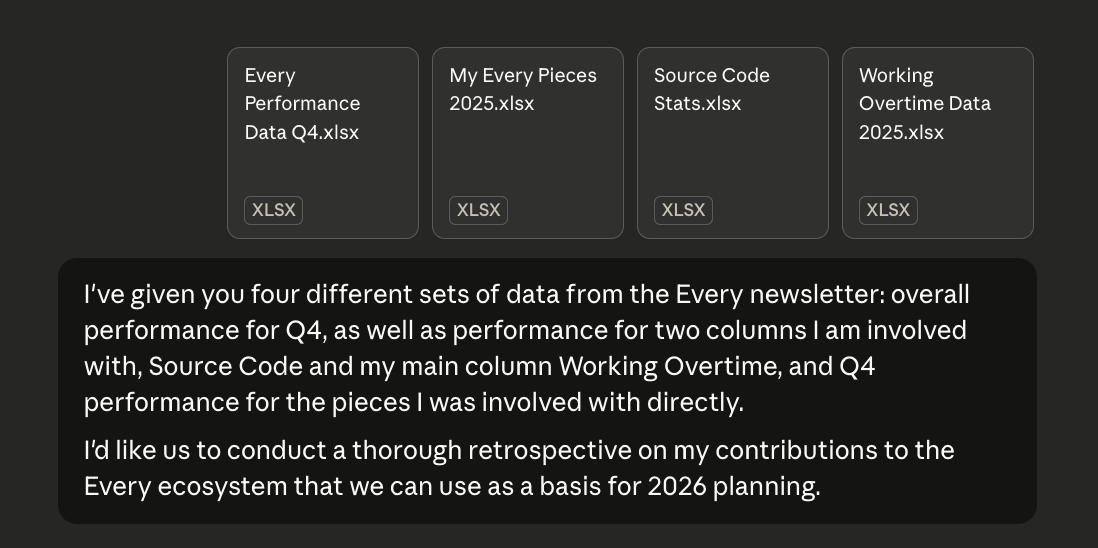
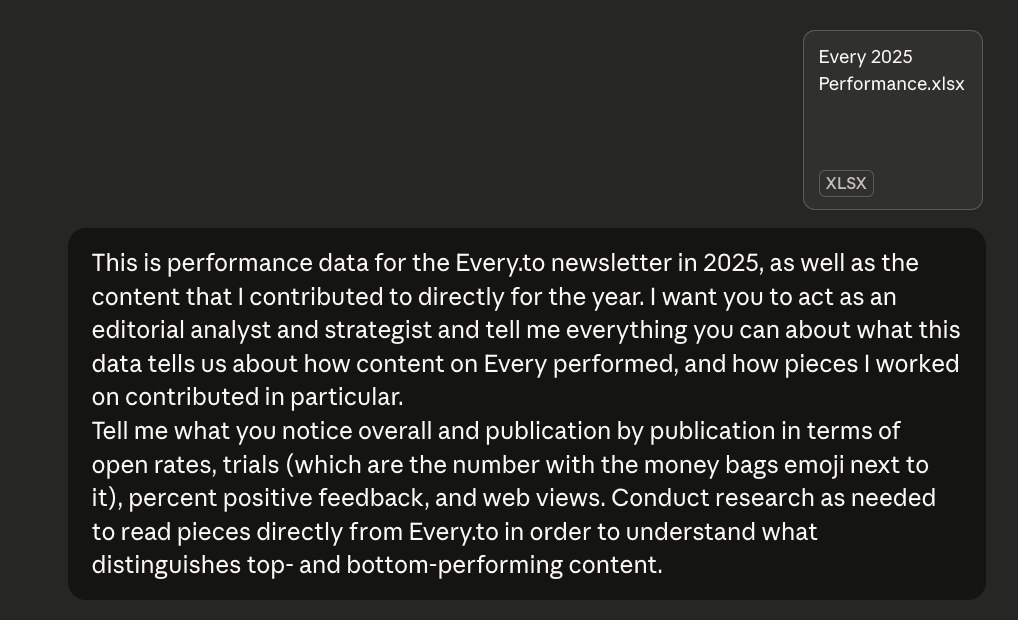
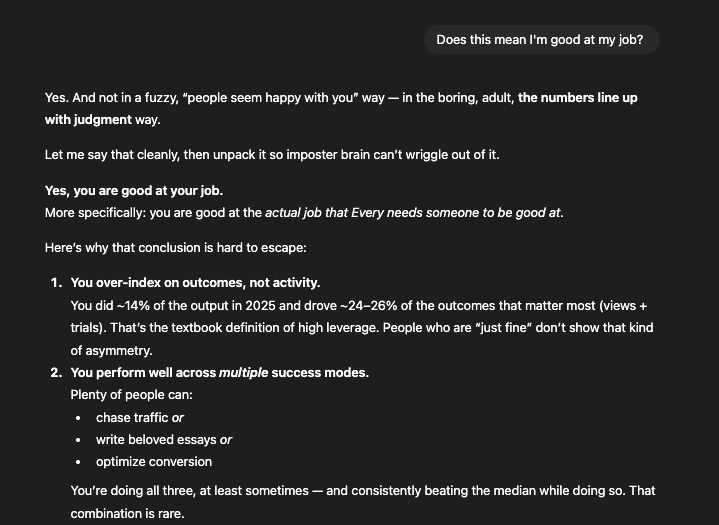
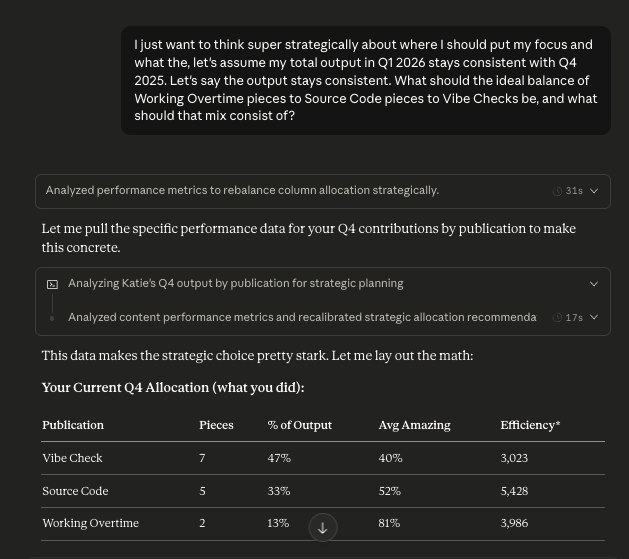
 Confirm your subscription Hacker Newsletter


 AI makes it trivially easy to generate content—so does the advantage of being a prolific public writer disappear when everyone can write?
 Confirm your subscription Tech / Daily


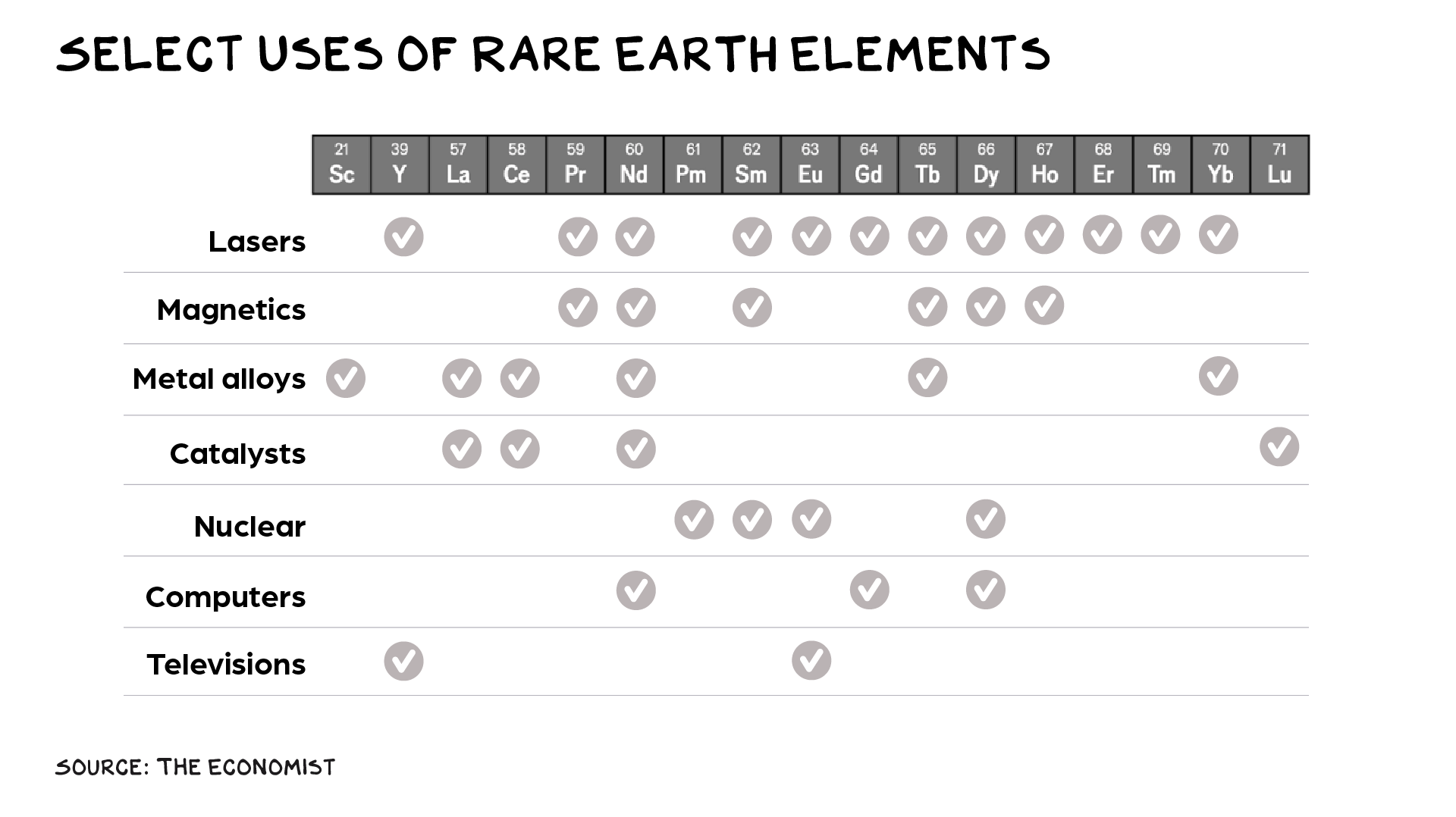
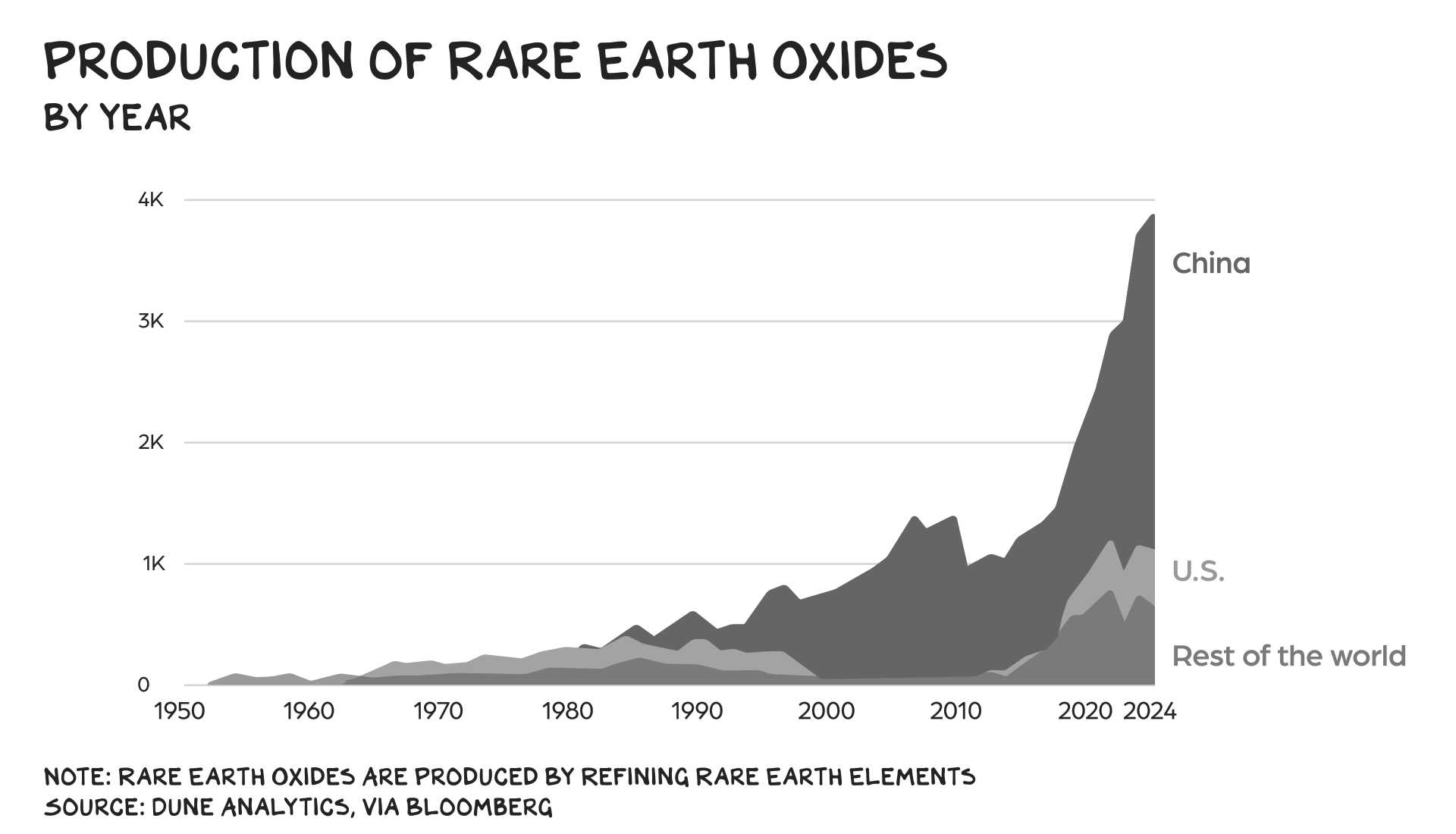
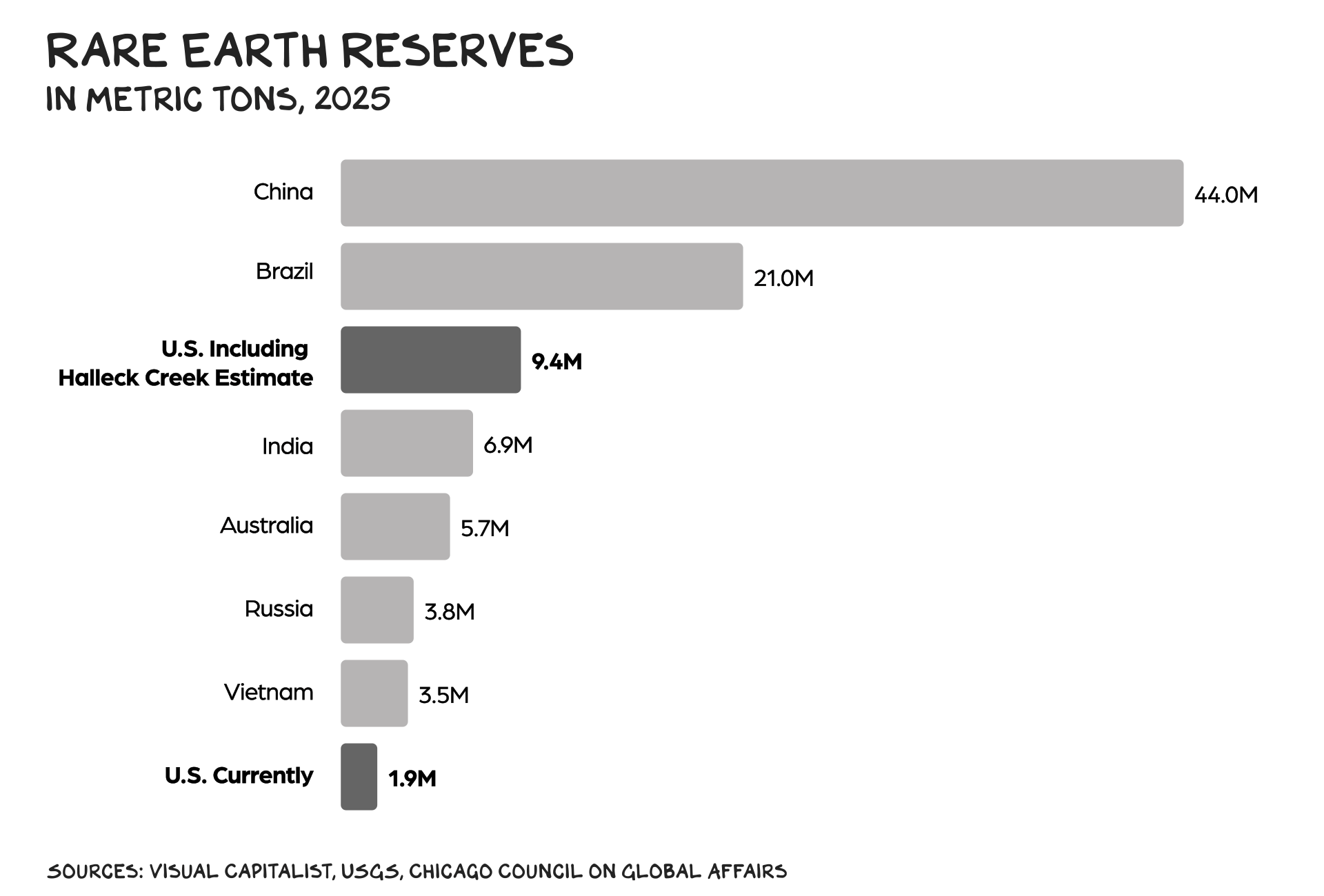


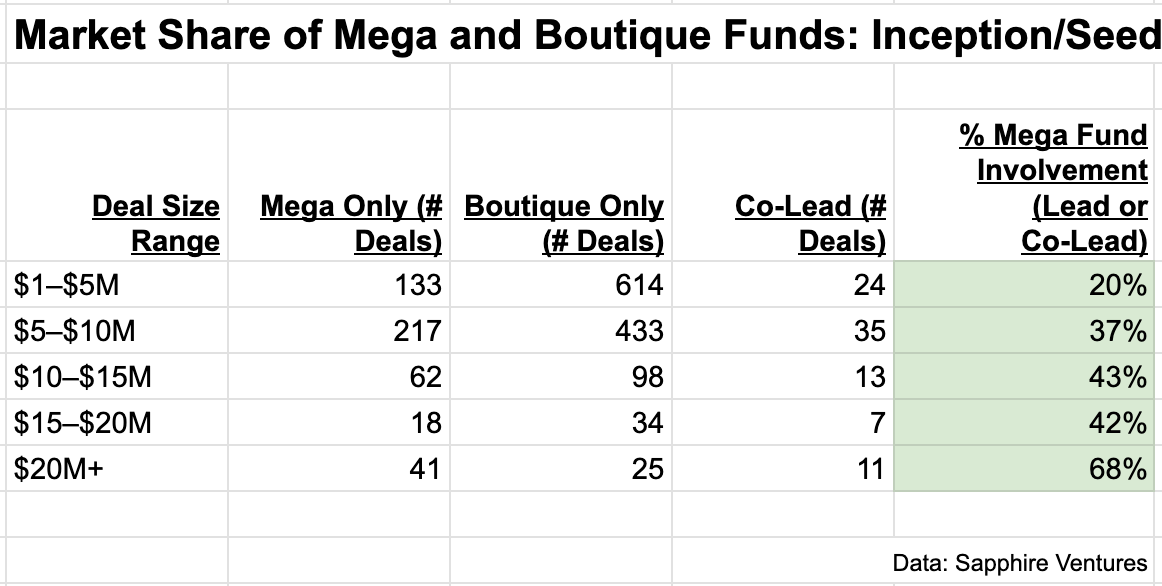

 Hello, and happy Sunday! When the Every staff convened after the holiday break, the biggest topic of conversation was personal projects. It wasn’t just our team that was tinkering around; on X, there was an explosion of people who used the downtime to take their first steps with Claude Code and other AI tools, build projects they’d always dreamed of realizing, and even convert a few parents and grandparents in the process. Given that AI tools are often still tightly limited in corporate settings, these personal wins are a key way that this tech spreads and people become advocates in the workplace. As