Two years ago, the idea of useful AI on your phone was fantastical. Siri couldn’t finish a sentence. Local models hallucinated nonsense. Last week, Google released Gemma 4 E4B1, a free model that matches GPT-4o and runs entirely on your phone.2 The next few weeks promise even more advanced pocket models. The market expects new releases from DeepSeek3, Qwen4, Kimi5 & Minimax6. Frontier models don’t stay frontier for long. Within three to four months, you can run a model with similar performance on your laptop; 23 months later, you can run the same model on your phone. Three forces are driving this compression. Better algorithms : distillation & reinforcement learning squeeze more capability into fewer parameters. Talent density : the biggest prizes in capitalism attract the best minds in the field. These are the fastest growing software companies in history. And capital : a trillion dollars invested in data centers powering training. In 23 months, the same capability that needed 1.8 trillion parameters now fits in 4 billion parameters. A 450x compression. At this rate, the phone in your pocket will run today’s frontier models before you upgrade it.
1. Google AI Edge Gallery on iOS App Store ↩︎
2. Gemma 4 E4B matches or exceeds GPT-4o across multiple benchmarks including MATH, GSM8K, GPQA Diamond & HumanEval. Full benchmark comparison ↩︎
3. DeepSeek’s new AI model ↩︎
4. Qwen 3.6 ↩︎
5. Kimi K3 ↩︎
6. MiniMax M2.5 release ↩︎
Drake Dukes · Monday, April 6 2026 · 7 min read · ↑ top
Ex-Google Gemini lead enters stealth, Glassdoor VP and BCG alum launches AI sales intelligence startup, & Wharton/UPenn engineer (ex-Pave and NerdWallet PM) building in sports tech
Invite early-stage founders in your network to the $100k buyer pitch in SF on 4/16. There’s a panel of 6-7 C-levels/VPs fromGong.io, Superhuman (Grammarly), Okta, and more. 10 startups will be selected to give 2-minute demos, and the winner will receive a $100k cash prize. No joke. Here’s the link to share: https://luma.com/beelieve
In this issue of the Stealth Startup Spy, here is what we will uncover:
Google engineering lead who shipped Gemini and led Family Link enters stealth
Serial founder with Glassdoor VP and BCG roots launches AI-native sales intelligence platform
Wharton/UPenn engineer with Pave and Nerdwallet PM roles is building in sports tech
Ex-Apple embedded engineer and Rilla SWE builds AI-powered async collaboration platform
Ex-Glencoco CTO and Meta/Bridgewater/Verkada engineer builds enterprise internal tools platform
And more…
Now let’s shine the spotlight… 💡💡💡
🕵️♂️Founders Coming Out of Stealth
Real-time updates from founders who debut what they’ve been working on under stealth mode
FounderDNA: Serial Founder, Technical Founder, Masters Degree, Former FAANG, Top 10 University
Prior Experience: Ex-Senior Software Engineer at Rilla, ex-Co-Founder & CTO at Quick Vet Check, ex-Embedded Software Engineer at Apple, ex-Product/Engineering roles at Tlon
Potluck is an AI-powered collaboration platform designed to help teams think better together, structuring async workflows to improve decision-making and reduce unproductive meetings.
FounderDNA: Serial Founder, Technical Founder, Masters Degree, Top 10 University
Prior Experience: Ex-Co-Founder & Head of Product/Tech at Cavnue, ex-Product & Strategy at X (Moonshot Factory), ex-Investor at Sidewalk Infrastructure Partners, Advisor at SandboxAQ
Neion Bio is building a next-gen biomanufacturing platform using genetic engineering and stem cells to produce complex therapeutics faster, cheaper, and at scale.
Major is building an enterprise platform for rapidly developing internal tools—securely connecting data, deploying apps instantly, and managing access out of the box.
FounderDNA: Serial Founder, Technical Founder, Former FAANG
Prior Experience: Ex-Co-Founder at Artemis Calendar, ex-PM at Google (Ads Measurement), ex-PM at Microsoft (Windows, Xbox Data), ex-Engineer at FanXchange
LessCAD is a browser-based CAD platform that integrates design and simulation, enabling faster iteration with built-in FEA, thermal analysis, and AI-assisted workflows.
FounderDNA: Serial Founder, Masters Degree, Top 10 University, Prior Exit
Prior Experience: Ex-Co-Founder & CEO at Openvolt, ex-VP Product at Glassdoor, ex-Co-Founder & COO at Love Mondays (acquired), ex-Project Leader at BCG
Firmbase is an AI-native sales intelligence platform that helps reps identify and prioritize ideal customers using natural language inputs to generate targeted account lists and contacts.
HQ: Spain
Industry: Technology, Information and Internet
Time Spent in Stealth Mode: 4 months
🕵️♂️Key Talent Going Under Stealth
Illuminating clues left behind by world class talent and influential innovators who just went into stealth mode
Manish Karney - Co-Founder at Stealth Startup
Likely building in AI-powered consumer or family tech
FounderDNA: Technical Founder, Former FAANG, Masters Degree, Top 10 University
Prior Experience: Engineering Lead at Google who shipped Gemini and led the Family Link product org. Managed multiple engineering teams across Google for 10+ years. Stanford GSB LEAD alumni; MS in Computer Science from Santa Clara University.
FounderDNA: Technical Founder, Former FAANG, Masters Degree
Prior Experience: Senior Software Engineer & Tech Lead at Google (Google Home, Gemini for Home, YouTube); BS in Computer Science and MS in Human-Computer Interaction from the University of Texas at Austin.
🚨Here’s the deal 🚨This email has gotten too big. Exciting, but with more people following it, the edge diminishes. I’ve thought long and hard about what to do to preserve the value in the signals. I’m not sure about the final direction yet, but in the meantime I’ve been sending an email 48 hours earlier to a select group of paid subscribers. The feedback has been pretty positive so I’m going to open up the list for another 100 spots. To get signals early, Apply here!
Stay Stealthy,
Drake
Thank you for reading. If you liked it, share it with your friends, colleagues and everyone interested in staying ahead of the hidden developments in tech. Subscribe below and follow us onX / Twitter to never miss a company operating under stealth again.
Stealth Startup Spy is a data-driven newsletter for investors, journalists and tech enthusiasts interested in uncovering the next big move for key talent, real-time stealth company launches and technology advancements not in plain sight. We leverage the technology built at Gravity to shine a light on the hidden world of stealth startups.
A thirteen-page document entitled “Industrial Policy for the Intelligence Age.” It is, by all accounts, a deeply considered work of policy thinking that is meant to be taken seriously.
Unlike many of OpenAI’s other publications, this one is formatted for print. The PDF is built to be perfectly printed on glossy paper and feverishly passed around the common rooms of glitsy clubs by lobbyists holding 18 dollar virgin Negronis, with a Rolex on one wrist and a Whoop on the other, and left on the desks of ranking members by any number of insurgent hordes of AI-aligned lobbyists that have blanked the district in brand new suits and fancy Dupont Circle apartments over the last few months.
I wrote in February, in part one of “Our Intelligence Troubles,” about what is happening on the ground. About the New Brunswick City Council voting unanimously to kill a data center. About hundreds taking to the streets to block AI infrastructure. About the CEOs a nation away in New Delhi glibly babbling about AI job destruction while the American public readied themselves for violence. I wrote about 188 groups across two dozen states coordinating legal strategies, and about $162 billion in AI projects blocked or delayed.
I warned that standard reassurance would not solve any of the industry’s problems.
Will Manidis
@WillManidis
https://t.co/mQ329LCRfL
There is a second piece to that essay that I’ve syndicated privately to a number of individuals working across the labs and in the US government. In that piece is an exhaustive wargame of how a dedicated group of small actors could delay or destroy the US AI ecosystem through asymmetric violence.
While I’ve come to the strong view that there is no safe way to publicly release that essay, enough individuals in enough places have read it.
It is useful to frame this document as a response to the clear, bipartisan, and quickly growing resistance to the AI industry in America. It is also anything but a standard reassurance.
It is also, without a doubt, one of the strangest documents the technology industry has ever produced.
I. AI leaders should be careful with New Deal metaphors
OpenAI’s brief begins by invoking the Progressive Era and the New Deal as models of how society might navigate the AI transition.
The Progressive Era and the New Deal helped modernize the social contract for a world reshaped by electricity, the combustion engine, and mass production.
This is not a new framing. God knows Less Wrong has been running with it for years. But it’s a framing that deserves careful scrutiny, because the history it invokes is not the history that was actually lived.
The New Deal was not a peaceful coalition between capital and labor. It was not a workshop in D.C. It was not the product of industry leaders and policymakers sitting together to figure out how to share prosperity. The New Deal was a settlement that came together after decades of industrial violence. That is violence imposed on capital by organized labor that bled and died for it, literally, and had finally accumulated enough political power to force the settlement through.
In 1892, Pinkerton guards shot eleven steelworkers dead at Homestead. In 1897, police shot nineteen unarmed miners in the back at Lattimer. In 1911, 146 garment workers burned alive at Triangle Shirtwaist because the managers locked the exits. In 1914, the National Guard mowed down a tent colony with machine guns at Ludlow and set it on fire. Twenty-five died, eleven of them children. Rockefeller wired a check directly for the salaries. In 1921, ten thousand armed miners fought three thousand men at Blair Mountain for five days. A million rounds were expended. Army bombers were deployed. 925 miners were charged with treason. In 1937, police killed ten strikers at Republic Steel on Memorial Day.
Frances Perkins watched women jump from the Triangle factory windows, and she spent thirty years building the institutions that structured the New Deal.
I am not sympathetic to terror. I have made this point clear. But any discussion of the New Deal without remembering that it was achieved through domestic insurgency is, on its face, absurd. The forty-hour work week was extracted from capital by people willing to be shot at, imprisoned, and charged with treason. The Wagner Act was not a gift from an enlightened capital class: it was rammed through Congress while factory owners hired private armies to shoot their own employees. Social Security was not a consensus position but a minimum concession that capital could offer to prevent armed revolution. The trust busters were not convened by Standard Oil and given grants. They were sent by a government that had watched Standard Oil buy state legislators and decided that if they did not act, the Republic would fall.
When OpenAI invokes this history, it is invoking a process in which it would have been the target -- whether it knows it or not. The New Deal was the result of industries being compelled by organization, by electoral power, and by the credible threat of violence, to accept that these concessions were necessary to prevent revolution. The men who designed it didn’t sit with Andrew Carnegie and ask him what the social contract should look like. They watched Carnegie’s private army mow down laborers and acted accordingly.
This document invokes the conditions of that settlement without acknowledging the force that produced it. There is some weird implication that we can arrive at the same destination through dialogue, through workshops, through email addresses, through API credits. We can’t. We have never been able to. The New Deal was not a PDF, and it’s time we stopped acting like it was.
II. The Proposals
I want to walk through the proposals in some detail because what they tell us is extremely interesting. Every proposal introduced here maps to a bill that already exists. A bill that was introduced, debated, and failed. The document assembles these proposals largely without acknowledging that history, but it does provide us a useful window into what is happening.
There is also a risk that the economic gains concentrate within a small number of firms like OpenAI.
One of the strangest concessions OpenAI has been willing to make is that while they may capture the majority of AI-driven returns, they’re humble enough to publish documents detailing how they might offer concessions to the public. It’s not obvious that this is a good negotiating posture.
These ideas are our first contribution to that effort, but only the beginning. OpenAI is: (1) welcoming and organizing feedback through [email address]; (2) establishing a pilot program of fellowships and focused research grants of up to $100,000 and up to $1 million in API credits for work that builds on these and related policy ideas; and (3) convening discussions at our new OpenAI Workshop opening in May in Washington, DC.
There are zero new dollars of capital committed in this document. OpenAI is offering fellowships of at most $100,000, a rounding error against $25 billion in annualized revenue and against nothing for a company preparing for an IPO approaching $1 trillion.
The biggest concession this document makes is API credits. Access to a product that OpenAI sells and distributes at marginal cost, denominated in their own currency. They’re willing to offer you a coupon for their own store and describe it as a public investment.
Give workers a voice in the AI transition to make work better and safer, including a formal way to collaborate with management to make sure AI improves job quality, enhances safety, and respects labor rights.
What is being described here is a union. The word “union” appears once in the document’s thirteen pages. The mechanism that has historically given workers formal collaborative power with management -- the mechanism that produced the New Deal and the labor rights that came after-- is collective bargaining. The document doesn’t mention collective bargaining. It describes the output of organized labor (voice, participation, clear limits on harmful deployment) without acknowledging the input, which is power. If workers don’t get a voice in AI deployment through participation, they will get it by organizing until management cannot deploy without them. The document proposes the conclusion without any mechanism to produce it.
This is not an accident. A bipartisan policy effort that proposes unionization for a broad, poorly defined swath of white-collar workers whose jobs are at risk of AI-driven automation would alienate the business community so profoundly as to be dead on arrival.
Allow workers to prioritize AI deployments that improve job quality by eliminating dangerous, repetitive, administrative, or exhausting tasks so employees can focus on higher-value work.
No one packed City Hall in New Brunswick because the data center might automate dangerous or repetitive work. The deployment that matters politically -- the one that fills town halls and shows up in polling -- is the deployment where a company replaces a person doing non-dangerous, non-repetitive, non-exhausting work that the person valued, was good at, and built a life around. That’s the deployment Sam Altman was describing when he said customer support jobs would be “totally, totally gone.” When he said the work that AI replaces may not have been “real work.” When he said a child born in 2025 is “unlikely ever to be as smart as artificial intelligence.”
This document does not address any of this. It describes a version of AI deployment closer to a safety system on a factory line -- a version that doesn’t threaten anyone -- and proposes policies for a world that does not exist.
Help workers turn domain expertise into new companies by using AI to handle the overhead that usually blocks entrepreneurship. Pair microgrants or revenue-based financing with practical “startup-in-a-box” supports such as model contracts and shared back-office infrastructure so that new small businesses can compete quickly.
This is perhaps the strangest of OpenAI’s proposals. It recasts a massive labor problem as an entrepreneurship opportunity. It assumes that a customer support representative or paralegal in Ohio or Pennsylvania, whose job was eliminated by a model that OpenAI sells, can -- with a microgrant and a model contract -- compete with their own little AI startup in a market being consolidated by companies with access to billions in compute.
This is telling a factory worker who lost his job to learn to code, couched in policy language. Perhaps “vibe code” instead.
Treat access to AI as foundational for participation in the modern economy, similar to mass efforts to increase global literacy, or to make sure that electricity and the internet reach remote parts of the globe.
OpenAI is proposing that access to a product it sells be treated as a public necessity comparable to electricity or literacy. The comparison to electricity is remarkable because OpenAI’s data centers are, according to the opposition, raising electricity costs for the communities that host them.
In some way, this is a callback to the Tennessee Valley Authority, which brought electricity to rural communities as part of the New Deal. But the TVA was not a coupon program run by the power companies. Electricity was forced to become a public utility because private companies failed to serve rural and low-income communities, and the government built the infrastructure itself through the Rural Electrification Act. The REA did not send electricity credits redeemable at a utility -- it built power lines.
OpenAI is proposing the opposite: that the government subsidize access to a product built and sold by a private company approaching a trillion-dollar valuation.
Policymakers could rebalance the tax base by increasing reliance on capital-based revenues, such as higher taxes on capital gains at the top, corporate income, or targeted measures on sustained AI-driven returns, and by exploring new approaches such as taxes related to automated labor.
Note the verb: could. Note the subject: policymakers.
OpenAI is proposing that other people consider asking OpenAI to pay higher taxes eventually, through a democratic process. The document doesn’t say what OpenAI would pay, or when, or at what rate, or through what mechanism.
Meanwhile, OpenAI completed its conversion to a public benefit corporation in October 2025, lifted its profit caps, and is preparing to IPO at a valuation approaching $1 trillion. The conversion was specifically designed to maximize the company’s ability to attract capital on favorable terms. The document does not propose any specific tax commitments from OpenAI. It does not propose that OpenAI contribute a percentage of its revenue, profits, or IPO proceeds to any public good. It proposes that a conversation might happen at some later date.
Policymakers and AI companies should work together to determine how to best seed the Fund, which could invest in diversified, long-term assets that capture growth in both AI companies and the broader set of firms adopting and deploying AI.
The public wealth fund is perhaps the most substantive proposal in the document, and it deserves credit. Alaska’s Permanent Fund, Norway’s sovereign wealth fund, and New Mexico’s fund are real precedents. The mechanism of tying distributions to displacement thresholds is mechanistically interesting and perhaps more serious than any proposal coming out of Congress on this topic.
But a wealth fund requires a funding source. The document says that AI companies and policymakers should “work together to determine how to best seed the fund.” OpenAI cannot bring itself to say it would contribute. Norway’s Petroleum Fund works because Norway taxes oil at approximately 78%. Alaska’s Permanent Fund works because Alaska constitutionally dedicates 25% of its mineral royalties. This document proposes no such mechanism. It proposes a conversation.
It’s worth noting that Donald Trump signed an executive order on February 3, 2025, calling for the creation of a sovereign wealth fund. The order directs the Treasury and Commerce secretaries to deliver a plan within 90 days. Treasury Secretary Scott Bessent said they would stand the fund up within twelve months. The President said he wanted to catch up with Saudi Arabia’s Public Investment Fund, which manages approximately $925 billion. The White House fact sheet noted that the federal government already holds $5.7 trillion in assets, with far more in natural resource reserves.
This is not an obscure proposal- it’s an active initiative of a sitting president backed by an executive order with a name, a timeline, and cabinet-level ownership. OpenAI’s document proposes a public wealth fund that maps directly onto the President’s initiative. But it doesn’t reference the executive order, the 90-day plan, or the administration’s process. It doesn’t offer to seed the fund with OpenAI equity, revenue, or any other instrument that would transfer real value from OpenAI’s balance sheet to the American public. OpenAI is happy to gesture at the idea in a way that aligns with the company’s rhetoric and the President’s rhetoric. What it is not willing to do is commit a dollar or propose any mechanism by which its own profits flow into that fund. This is a rhetorical tithe.
Establish new public-private partnership models to finance and accelerate the expansion of energy infrastructure required to power AI. Approaches could include reducing the cost of capital through targeted investment credits, direct and indirect flexible subsidies, or equity stakes; removing market barriers to advanced technologies; and providing a narrow federal authority to accelerate the construction of interregional transmission when it is in the national interest.
This is the section where OpenAI’s business interests and the document’s proposals become indistinguishable. OpenAI needs grid expansion. Its Stargate initiative involves $500 billion in planned investment and nearly 10 GW of capacity. It submitted a filing to the White House OSTP in October 2025, describing $1 trillion in AI infrastructure spending producing 5% GDP growth over three years. Every subsidy, tax credit, and permitting acceleration proposed in this section flows directly to the companies building these data centers.
This is fine. Companies request subsidies and favorable permitting all the time, and sometimes they get them. The current administration has made clear that AI infrastructure is a national competitiveness priority, with which I agree. There is a reasonable case for public-private partnership in grid expansion. But it should be labeled as such.
Incentivize employers and unions to run time-bound 32-hour/four-day workweek pilots with no loss in pay that hold output and service levels constant, then convert reclaimed hours into a permanent shorter week, bankable paid time off, or both.
Here we get the first mention of unions. OpenAI proposes that employers and unions shorten the work week. At the same time, OpenAI declared a company-wide code red in December 2025, paused non-core projects to accelerate development, and is planning to nearly double its headcount to 8,000. I don’t know every OpenAI employee, but the ones I do know seem to be working weekends, not four-day weeks. Proposing leisure for the people it displaces and intensity for the people it employs is quite the proposal.
The history of voluntary corporate sharing of productivity gains is nonexistent in American economic history. Real wages have been stagnant relative to productivity for fifty years. The mechanism that has historically forced companies to share gains with workers is organized labor the thing this document wants to describe the output of without once saying the word. You can’t invoke the New Deal and then refuse to name what made the New Deal happen.
Make sure the existing safety net works reliably, quickly, and at scale. Define a package of temporary, expanded safety nets that activates automatically when these metrics exceed pre-defined thresholds.
Automatic triggers tied to displacement metrics are a genuinely interesting policy design idea. They borrow from macroeconomic stabilizer theory -- the idea that government spending should activate automatically in downturns without requiring new legislation. There is serious economic work on this.
But the document doesn’t say who funds the expansion when the trigger fires. It doesn’t propose the thresholds. It doesn’t propose the metrics. It doesn’t say what happens when industry representatives argue that the metrics are misleading, or that the displacement is temporary, or that AI’s benefits are being undercounted. A mechanism without commitment, funding, or governance is not a policy.
Over time, build benefit systems that are not tied to a single employer by expanding access to healthcare, retirement savings, and skills training through portable accounts that follow individuals across jobs, industries, education programs, and entrepreneurial ventures.
Portable benefits are a twenty-year-old idea. The Aspen Institute’s Future of Work Initiative has published on this since at least 2015. The Affordable Care Act’s exchanges were a step toward decoupling health insurance from employment. Senator Mark Warner proposed portable benefits legislation in 2019. Including this in a policy brief centered on superintelligence is like including “invest in public education.” Correct, uncontroversial, and entirely disconnected from the moment.
Expand opportunities in the care and connection economy — childcare, eldercare, education, healthcare, and community services — as pathways for workers displaced by AI. As AI reshapes the labor market, these sectors can absorb transitioning workers if supported with investments in training, wages, and job quality.
The first vision of a post-AGI economy in this document is that more of the U.S. population can be employed in child and eldercare.
Follow this logic to its conclusion. AI replaces white-collar productive work. The productivity gains flow to AI companies and their shareholders. The displaced workers receive some combination of public wealth fund dividends, safety net payments, and retraining subsidies. They retrain into the care economy: daycare, eldercare, home health. The care economy is funded primarily by government programs: Medicare, Medicaid, state budgets. The workers spend their wages in a consumer economy with no human productive base.
This is a closed loop of government wealth transfer. AI does the productive work. The gains are captured by capital. The government redistributes some fraction back to displaced workers through a wealth fund and a safety net. Those workers flow into care jobs funded by the same government. The money circulates from government to workers to care and back to government. There is no real economy in this picture. No wealth creation, no ownership, no productive capability. There is a class of people who operate AI systems and capture the returns, and a class of people who circulate government transfers through care services.
And the care economy that is supposed to absorb these workers is currently the subject of one of the largest fraud investigations in the history of the American welfare state. CMS under Dr. Mehmet Oz has launched a sweeping crackdown on Medicare home care fraud. Minnesota alone faces the deferral of over $1 billion in federal Medicare funds after CMS found $240 million in unsupported or potentially fraudulent claims in a single quarter. Nationally, Medicare fraud control units have recovered nearly $2 billion in fiscal year 2025 and obtained over a thousand criminal convictions more for personal care services than any other provider type. The government has suspended $5.7 billion in suspected fraudulent Medicare payments in 2025. Three weeks ago, $120 million in Medicare and Medicaid fraud was uncovered in New York. Home care spending doubled from $937 million per month to $2.5 billion per month between 2018 and 2024.
OpenAI’s proposed refuge for the American economy is a sector whose spending has already doubled and whose conditions the federal government now describes as rampant fraud a sector with more criminal convictions than any other portion of healthcare, where the current administration is actively withholding billions from states that cannot police it adequately.
The document is asking the American public to accept the following sequence: OpenAI eliminates your white-collar job. The government sends you a check from a public wealth fund. You retrain into eldercare. Your salary is paid by Medicaid. Medicaid is under investigation for fraud. The fund that sends you the check was seeded at a workshop with AI executives. OpenAI keeps the productivity gains and prepares for its IPO. You spend the government check at a government-funded daycare so you can go to your government-funded eldercare job. If you want to research any of this, you can apply for an OpenAI-funded grant to study OpenAI-funded economic displacement.
I want to pause here because a pattern has emerged across these proposals that needs to be named directly. The document proposes a public wealth fund, expanded social safety nets, portable benefits decoupled from employment, government-funded retraining into the care economy, rebalancing the tax base toward capital, and efficiency dividends with a four-day work week.
These are, in substance, liberal policy outcomes. This is almost directly the policy agenda of Bernie Sanders.
I don’t say this to argue against liberal policy outcomes. I say this to point out the total political incoherence of this document. These outcomes require liberal political means: new taxation, expanded government spending, new entitlement programs, organized labor, a Congress willing to appropriate money for social infrastructure. The document proposes none of these means. It operates in a MAGA frame but proposes the outcomes and leaves the means to “democratic process” -- which is to say someone else, later, in a political environment that is moving in the opposite direction of almost every one of these proposals.
This document exists in a political vacuum. It imagines a world in which these proposals are evaluated on their merits by reasonable people in a neutral process. This world does not exist and never has. The world that exists has a specific governing coalition with specific priorities that are specifically incompatible with almost everything this document proposes. A serious policy document would engage with this reality. It would explain whether these proposals can happen in the current environment, through which legislative vehicles, with what political support, and over what timeline.
The document has none of this. It doesn’t identify a committee. It doesn’t describe a legislative vehicle. It doesn’t count votes. It doesn’t identify who in the current Congress would support a public wealth fund, or whose committee would have jurisdiction over an adaptive safety net, or how a portable benefits provision would survive reconciliation. It doesn’t engage with the fact that the House tried to ban all state AI regulation last year. It doesn’t engage with the budget reality, the deficit, or the current appetite for new entitlement spending. It doesn’t describe how any of these proposals would be scored by the CBO or how the pay-fors would work.
OpenAI has hired some very serious policy thinkers, and yet this document doesn’t seem to understand how Washington works. It proposes liberal outcomes without liberal means in a conservative political environment, published by a company that has aligned itself publicly with the current administration, and asks to be taken seriously as industrial policy.
Build a distributed network of AI-enabled laboratories to dramatically expand the capacity to test and validate AI-generated hypotheses at scale.
A reasonable research proposal --and also a proposal to create publicly funded institutional customers for OpenAI’s products, distributed across universities and hospitals, paid for with taxpayer money. The document proposes that this infrastructure not be concentrated in a small number of elite institutions. It doesn’t mention that the AI systems powering it would likely be concentrated in a small number of elite companies, including OpenAI.
Frontier AI companies should adopt governance structures that embed public-interest accountability into decision-making, such as Public Benefit Corporations with mission-aligned governance. These structures should include explicit commitments to ensure that the benefits of AI are broadly shared, including through significant, long-term philanthropic or charitable giving.
OpenAI completed its PBC conversion in October 2025 after years of legal battles with the attorneys general of California and Delaware, with many facts still tied up in lawsuits from Elon Musk. The conversion lifted profit caps, removed the 100x return limit that originally directed excess profits back to the nonprofit mission, and enabled the company’s IPO path. The nonprofit that once controlled the company now holds 26% equity -- just less than Microsoft’s 27%.
This document proposes that public benefit corporations are a useful governance model for frontier AI. But it’s worth being direct about what a PBC actually is and what it actually requires, because the label does far more work than the structure.
I should disclose that I am friendly, or perhaps once was friendly, with the people who invented the public benefit corporation. I was lucky enough to take classes from the people who started the B Lab movement, and they are very serious people. I have different political leanings than they do, but I don’t question their sincerity. The idea was real. Patagonia adopted it, and so did various ice cream brands and organic clothing companies and outdoor gear makers. The concept spread to 43 states, passing unanimously in most cases.
The problem is not the people. The problem is the structure -- specifically the idea that the structure can do anything this document claims. A PBC is legally required to “consider” the interests of stakeholders beyond shareholders. Notice the word: consider. There is no enforcement mechanism. There are no penalties for failing to consider. In the two decades since the Delaware PBC statute was enacted, there has not been a single reported case of a shareholder successfully suing to enforce a public benefit mission. Not one. Damages in benefit enforcement proceedings are limited to injunctive relief; no monetary damages are available. A company can incorporate as a PBC, state a public mission in its charter, and operate exactly as a conventional corporation, because no one can make it do otherwise. The structure is little more than a branding exercise with legal overhead. It obligates a company to consider stakeholders in the same way a New Year’s resolution obligates you to go to the gym.
AI data centers should pay their own way on energy so that households aren’t subsidizing them; and they should generate local jobs and tax revenue.
This is the totality of the document’s engagement with the most immediate, most concrete, and most politically organized form of opposition to AI deployment in this country.
In February, I wrote that between May 2024 and June 2025, an estimated $162 billion in U.S. data center projects were blocked or delayed by organized community opposition. 188 groups across more than two dozen states are coordinating legal strategy. Two-thirds of tracked projects under active protest were stopped. A Republican won a state senate seat in Texas by running explicitly against data center development. In New Brunswick, hundreds packed a city hall twenty minutes before the meeting started, hundreds more stood in the streets, and the council voted unanimously to kill the project.
Since February, the situation has gotten dramatically worse for the industry and dramatically more organized -- in ways this document does not acknowledge or apparently does not know about.
In the first six weeks of 2026, more than 300 data center bills were filed across more than 30 states. Moratorium bills -- formal legislative pauses on new data centers -- have been introduced in at least twelve states: Georgia, Maine, Maryland, Michigan, Minnesota, New Hampshire, New York, Oklahoma, Rhode Island, South Dakota, Vermont, Virginia, and Wisconsin. Maine is poised to be the first to enact one. The moratorium passed the House with bipartisan support and is expected to clear the Senate. The governor backs it.
I want to be specific about who’s doing this, because the document treats it as a diffuse public concern that can be addressed through conversations and workshops. It is not. The opposition is legislative, organized, coherent, and happening in state houses right now. It does not follow partisan lines.
In Georgia, a Republican state senator introduced a bill to prohibit data center infrastructure costs from being passed to residential ratepayers. He said the existing utility commission rules have “enough loopholes to drive a truck through.” A Democratic representative and gubernatorial candidate introduced a statewide moratorium with a Republican co-signer. She said, “People are filling city halls and county meetings saying we don’t want this.” The Republican House Speaker acknowledged that clawing back data center tax credits could be considered. Two separate bills to end or reduce these credits were filed that same Friday.
In Virginia, home to the largest concentration of data centers in the world, the legislature has considered 61 data center bills in 2026. Fifteen have been sent to the governor’s desk. The state budget is stuck in a standoff because the Senate wants to eliminate the $1.6 billion annual sales tax exemption for data centers entirely, while the House wants to tie it to environmental compliance. A special session has been scheduled for April 23rd. A Democratic delegate from Loudoun County -- ground zero of American data center development -- introduced a moratorium bill. Virginia passed legislation requiring data centers using 25 or more megawatts to pay for the cost of increasing electricity capacity rather than passing it to other customers.
In Wisconsin, Assembly Republicans passed a regulatory bill that Democrats said didn’t go far enough to protect ratepayers. Democrats then proposed a full moratorium. Residents gathered outside the state capitol to protest. In Minnesota, residents from five cities traveled to the capital to lobby for a moratorium, saying they had “been stonewalled at city halls where local officials were approving projects over public objections.” Bipartisan bills demanding disclosure of nondisclosure agreements between data center developers and local officials have gained traction in multiple states -- because the developers have been asking for NDAs from the elected officials supposed to represent the communities that host this infrastructure.
In South Dakota, the legislature passed a bill prohibiting the state from limiting local governments’ authority to regulate or ban data centers. Read that carefully: the state legislature passed a law protecting the rights of cities and counties to say no. In Vermont, a moratorium bill would freeze construction until 2030. In Alaska, until 2029. Senator Bernie Sanders and Representative Ocasio-Cortez have proposed a federal moratorium entirely. While it was largely ignored in Washington, the action is not in Washington. It never has been.
The AI opposition is unlike any other broad legislative groundswell in recent memory. It’s happening entirely in state houses. None of it is coordinated by a national policy operation. There’s no central organizing body, no federal framework. These bills are being drafted and introduced by a Republican in Georgia and a Democrat in Virginia and a bipartisan coalition in Wisconsin and citizen groups in Minnesota who are being stonewalled by their own councils. The political energy is organic, local, bipartisan, and accelerating. It’s happening in the places where people live near data centers and pay electricity bills, not in Washington.
In “Our Intelligence Troubles,” I described the structural problem that makes this issue different from other industrial disputes. AI has no pre-existing constituency in the communities bearing its costs. When fracking came to rural America, the people getting royalty checks were the same people drinking contaminated well water-- you got an internal community fight, not an us-versus-them dynamic. Nuclear power and GMOs each had agriculture or energy constituencies embedded in the affected regions. AI has nothing analogous. The people who benefit from it are demographically narrow, geographically concentrated in a handful of coastal metros, and politically inexperienced. The people who bear the costs -- the communities hosting data centers, the workers being displaced -- are numerous, distributed, increasingly organized, and increasingly angry.
This document does not have a theory of how to reach these people. It has an email without anyone’s name on it and an unnamed workshop in Washington. The people in Georgia and Virginia and Maine are not waiting for the email.
III. What the Industry Needs to Give
Every proposal in this document maps to legislation that either died in committee, was vetoed, was gutted by industry, expired because Congress refused to fund it, or exists only as a concept on a white paper. The 32-hour workweek has never gotten a floor vote. The wealth tax has been introduced four times and never received a committee vote. The PRO Act passed the House once and died in the Senate. Build Back Better’s care provisions died when one senator withdrew support. The broadband subsidy expired and 23 million households lost coverage. SB 1047 was vetoed. The robot tax has no bill number. The document assembles these dead and dying proposals, strips the political context from each, and presents them as a starting point for discussion. The discussion already occurred. These bills lost.
But the deeper problem is not that these proposals are recycled or lack legislative vehicles. The deeper problem is that the document commits nothing. It asks nothing from OpenAI. It sacrifices nothing. It transfers no value.
Constructive defense against popular action and regulatory constraint requires a theory of action, and a theory of action requires sacrifice. Documents like this -- carrying out the performance of concern in Washington language while refusing to transfer real value from the companies that will capture AI-driven returns to the communities and workers that bear the costs -- are dead on arrival.
I want to be clear: this is not a left-wing argument, a pro-terror argument, or even a pro-labor argument. This is a survival argument. Every industry that has successfully navigated a period of intense public opposition did so by giving something up -- not out of altruism, let alone effective altruism, but because the alternatives were worse.
The railroad barons of the 1870s did not voluntarily accept the Interstate Commerce Commission. But the ones who survived the populist backlash were the ones who accepted rate regulation before the government forced something more punitive. The nuclear industry accepted extraordinary regulatory burden -- the AEC, the NRC, licensing processes that took years -- because the alternative was a public that wouldn’t let them build at all. The oil majors that survived the 1970s in the North Sea accepted Norway’s 78% extraction tax because the alternative was nationalization.
The document proposes that policymakers might consider higher taxes on capital. OpenAI could commit to paying them. The document proposes a public wealth fund. OpenAI could seed it. The document proposes that data centers pay their own energy costs. OpenAI could accept voluntary rate separation today in every jurisdiction where it operates. The document proposes that frontier AI companies adopt public benefit governance. OpenAI could reinstate the profit caps it dismantled six months ago.
None of these things are in the document. The only things in the document are a workshop, fellowships paid in the company’s own product, and an email address that routes to no one.
The AI industry still has a window. Every industry that has faced this kind of opposition has a window. But the window involves getting ahead of the opposition through the voluntary acceptance of constraints that cost real money and appear in real earnings reports. Once that window closes -- as we discussed in “Our Intelligence Troubles” -- it does not reopen. The relationship between industry and public becomes permanently adversarial. Tobacco had a window. Fossil fuels had a window. Social media had a window. In each case the industry chose short-term optimization, and in each case the window slammed shut.
IV. How We Got Here
I have worked in AI my entire career. I’m unabashedly pro-AI. I believe the technology is transformative and that the United States should lead its development. I believe that OpenAI has built extraordinary things and will likely build more. I don’t write any of this from the outside.
I also remember what it was like before any of this, and the distance between then and now is worth sitting with.
The technology industry’s relationship with the federal government has undergone a profound transformation in the last few years, and I’m not sure anyone has fully processed it -- least of all those who lived through it. There was a period, not long ago, where the default posture of every technology company toward the government was total disengagement and distrust. You didn’t go to Washington unless you were subpoenaed. Washington was where bad things happened to good companies. If you went, you paid lobbyists hundreds of thousands a month to handle your government relations, and you tried not to think too much about it. The entire industry operated as though the federal government was a weather system -- something you monitored and prepared for, something you engaged with at arm’s length, if at all.
Then something changed. The political realignment of the last few years produced a strange, brief, and exhilarating season that people called the tech right. It was real in its own way. Founders went to Washington and discovered they had opinions on things. They went to Heritage and Hillsdale and discovered that people were interested in what they had to say. They wrote policy memos, bought suits, and sometimes remembered to remove the stitching from the vent. They attended dinners with senators and went to happy hours and were shocked to find senators were happy to see them. And it felt like a homecoming and a weird reunion -- a burst of intensity and belonging that carried the unmistakable sense that this was new, different, and that we were all a little nervous.
That season is perhaps ending, or has already ended. What is left behind is something different from what we thought we were getting. The founders who went to Washington did not return with a durable theory of how technology and democratic governance should relate to each other. They returned with relationships, with access, and with the sense that they belonged at the table -- but the table is set by people who have been sitting there for decades, who understand how it works, and who will be sitting there long after our industry has moved on to its next thing.
What has survived this strange false spring is something more consequential and less romantic. We now have a set of technology companies that are strategically important to the United States -- important in ways that implicate national security, economic competitiveness, and the daily lives of hundreds of millions of people. These companies are capitalized at levels that rival nation-states. A huge share of GDP growth hangs on their success. They’re building infrastructure that will last for decades.
And they are approaching the government as though they have leverage.
This is the context in which “Industrial Policy for the Intelligence Age” should be understood. It is a negotiating position.
We’ve never had technology companies behave like this before. We’ve had defense contractors that negotiated with the government, but defense contractors understood that their entire business existed at the government’s pleasure. We’ve had oil companies negotiate with the government, but oil companies understood that the resource they extracted belonged in some fundamental sense to the public. We’ve had telecommunications companies negotiate with the government, but telecommunications companies accepted common carrier obligations as the price of their monopoly.
The AI industry has not accepted anything. It has not acknowledged that it operates at the public’s pleasure. It has not accepted that the resources it consumes belong to the communities that provide them. It has not offered a tithe.
The industry needs one. Not proposals addressed to policymakers who have already rejected them, but binding commitments to transfer real value from the companies to the communities that host them. I’m not suggesting this is noble. The cost of not giving is total.
ben's bites · Tuesday, April 7 2026 · 7 min read · ↑ top
in 3 months, Anthropic added $6B ARR
Anthropic cut off Claude subscription-funded usage in third-party tools like OpenClaw. You can still use Claude models through OpenClaw, but it now requires separate pay-as-you-go billing or your own API key — your Claude Code subscription no longer works. Anthropic offered a one-time credit equal to one month’s subscription to soften the blow. The move comes as agentic usage through third-party harnesses was eating massive compute, and Anthropic is clearly steering users toward its own tools: Dispatch, scheduled tasks, projects, and computer use, which directly overlap with what OpenClaw offers.
But OpenClaw founder, Peter, is a (good-kind of) maniac who’s trying to get gpt5.4 working like opus in the tool (since OpenAI acquired him).
Unfortunately it’s just left the whole community confused as to where and when they can use their Claude Code subscriptions outside of the cc harness itself. Myself included.
There’s a new take on knowledge bases that I think is very interesting by Andrej Karpathy. Memory and file organisation for retrieval got a big focus with the OpenClaw hype but this approach groups things topically and then enhances with summaries, backlinks and wikis.
Related, Farza built Farzapedia, a personal Wikipedia generated from 2,500 diary entries, notes and messages. Built for his agents to crawl whenever needed. Karpathy’s take on Farzapedia
OpenAI acquired TBPN -- good pod to get a peek into the heads of the hosts. A lot of people on X are trying to sound smart with ‘this is why they acquired them’ but I’m more in the Ben Thompson camp… I don’t really know why either party needs each other here? TBPN is loved, growing, and making a small fortune with their (also loved!) ad business. Why does OpenAI need them? Other than the fact that they don’t like traditional media and could use TBPN as their main channel to people that matter.
The best sellers aren’t the ones with the most sophisticated tech stack. They’re the ones who spend the most time selling. Reevo is the AI-native revenue intelligence system and CRM that every team deserves. One Platform. From prospect to close in a single tab. Go Stackless. Reevo.ai
Headlines
Google released Gemma 4. 4 new open-weights models - two for powerful laptops and desktops (26B MoE and 31B dense), and two tiny ones for mobile phones (2B & 4B). Relevant for companies that want to fine-tune them, not for direct use.
Adapt is your company’s AI computer. It connects to your tools and team, autonomously learns your business, and gets smarter with every task. Pull live data, run scheduled workflows, and deploy internal apps everyone can use, all from Slack.*
My feed
Salmex I/O — Won't forget you. Gets things done. Answers to no one. And is actually safe! What a local AI agent should be.*
Theo - t3.gg
@theo
Agents are good at bash. Bash is not good for agents. We should cut our losses and restart now before it is too late.
Shrey Pandya
@shreypandya
Introducing /ui-test Give your agent a PR, and it'll test your feature in a real browser, generating an HTML report with UI fixes The planner agent generates adversarial test cases to break your app, assigns them to subagents, and evaluates the page using the @browserbase CLI
Steve James
@deathbyknowledg
This was my last week at @Cloudflare . I'm incredibly grateful for the freedom I was given to explore ideas and to everyone on the Agents team for being the most cracked and amazing teammates. I'm going to be starting a new company, The Agents Company ( theagents.company ),
| | theagents.company
The Agents Company | Personal AI Infrastructure
Hassan
@nutlope
Announcing SubStudio! Generate subtitles for any video in seconds with AI. 100% free & open source! Powered by Whisper on @togethercompute and @FFmpeg via fluent-ffmpeg.
Zach
@zachmeyer
Last week @swyx nerd-sniped me into building an Open-source Dropbox. Here is Locker: the ultimate open-source Google Drive/box/Dropbox alternative 💾 - Provider agnostic (S3, R2, vercel blob, local) - BYOB (Bring your own bucket) - Virtual file system - QMD Search plugin
OpenAI
@OpenAI
Introducing the OpenAI Safety Fellowship, a new program supporting independent research on AI safety and alignment—and the next generation of talent.
| | openai.com
Introducing the OpenAI Safety Fellowship
aadilpickle
@aadilpickle
I spent a week with Donald Jewkes. He's an engineer-turned filmmaker responsible for: - projects with Cursor, Physical intelligence, and Meter - a 33 million view launch video for Waves, a startup making hidden camera glasses for streamers - the Jmail documentary, covering how a
Anthropic added $10b in revenue in the last month alone, twice Databricks’ annual run rate. Crossing $10b is a milestone few software companies ever reach: ServiceNow took 20 years, Shopify took 18, Palo Alto Networks took 19, & Anthropic crossed that threshold in under four years. But who’s looking backwards? How long until Anthropic is the most valuable company in the world? NVIDIA generates $215b in annual revenue & trades at 22x, producing a $4.8 trillion market cap. To surpass it, Anthropic needs $200b in annual revenue1. If growth continues, three years. If it decelerates steadily, four. If it normalizes rapidly, seven2. The usual caveat applies: significant customer concentration. ServiceNow needed two decades to reach $10b. Anthropic needed forty-two months; then added another Databricks in thirty days.
1. Assuming a 25x forward revenue multiple, compared to NVIDIA’s 22x on its $215b run rate producing a $4.8 trillion market cap. ↩︎
2. Bull case assumes 150% growth in year one, declining to 100%, 50%, then 25%. Base case assumes 100% growth declining to 67%, 50%, then 33%. Bear case assumes 50% growth declining to 40%, 30%, then 25%. ↩︎
Plus: Why Anthropic is shutting out third-party agents, and OpenAI isn’t
by Every Staff Today we’re testing a new newsletter format, aimed at giving our readers both a taste of our long-form writing and our perspective on what matters in AI today. Let us know what you think.— Kate Lee_ _
Today’s top story
“Your Best AI Strategy Starts at the Top”by Natalia Quintero and Mike Taylor : Executives might be waiting on the sidelines to see what will happen with AI, but they need to be get ting their hands dirty with the tools, write Natalia Quintero andMike Taylor , both part of Every’s consulting team. That’s because AI can’t be evaluated like software, where you compare features, platforms and integrations. It needs to be treated like a new kind of employee. Natalia and Mike offer five concrete things for executives to do this quarter—starting with suspending skepticism—to get started building AI-native organizations. Read more.
Signal
Anthropic’s OpenClaw ban is a gift to OpenAI
The news: Anthropic blocked Claude subscriptions from being used with third-party agent harnesses like OpenClaw. OpenAI hasn’t. The context: Anthropic’s stated reason for the ban is to prioritize compute for its own products, saying flat-rate subscriptions weren’t built for the high usage of third-party tools. It’s a valid argument: Agents that run 24/7 are enormously expensive. But rival OpenAI has raised so much money it can afford to let subscribers use their models however they want. The implications: Anthropic’s ban provides an opening for OpenAI to siphon away users. The strategy appears to be working: Opus 4.6 token usage is significantly down week over week; GPT-5.4’s has surged. Model usage as measured by OpenRouter. (X post courtesy of Dan Shipper.) Bigger picture, the future of the industry depends on figuring out ways to drive down compute costs. (Running frontier AI agents like OpenClaw can cost $300–$1,000 a day , a number that’s only growing.) OpenAI has a clear advantage here. It’s building its own data centers, which puts it closer to the metal on compute. Meanwhile Anthropic is buying compute from third parties, and will never have as low a cost basis.— Laura Entis
Good prompts don’t guarantee good design
New job alert
We’re flagging new job postings that signal where AI is reshaping teams.Anum Hussain at Ashby , a recruiting technology company, is hiring a “Lead, Content Library.” The idea is to treat the company’s existing content like a product: Organize it, resurface it, track what’s losing viewership, and make sure the right piece reaches the right person at the right moment.
What’s been true: Content teams hired people to make more new content.
What’s changed: AI makes production cheap, so the new challenge is to get maximum value from content that already exists.
What’s new: This role only makes sense when one person can manage a much larger body of work—and with AI, they can.— Katie Parrott
Inside Every
AI adoption has a before and after—the aha moment is the line
People talk about “technical” and “non-technical” when it comes to AI adoption, but that distinction is getting less useful by the day. The more revealing split is between people who have had the AI aha moment and people who haven’t. Once you’ve crossed that line, the question isn’t whether you’re technical enough for AI—it’s what you want to build with it. That’s why getting to that aha moment is such a key step—and that magic moment is different for everyone. Our consulting team says that a typical aha moment for clients in using Claude is getting a daily digest of the overwhelming stream of communication—Slack, email, Jira, etc. On a recent episode of our podcast , Kate Lee , Every’s editor in chief, says her aha moment was when was feeling overwhelmed by managing the hiring process for several key roles earlier this year. Though she did look at every application, AI helped do a first pass on the hundreds she received, and offered “a way to evaluate everyone against consistent criteria.” She also used AI to set up all the job descriptions in Notion.— Eleanor Warnock
Who’s the author when AI does the writing?
In book publishing, the “author” and the “writer” aren’t always the same person. The author is whose ideas drive the work (generally, the name on the front cover). The writer is whoever puts them on the page (sometimes credited, often not). A celebrity might be the author of their tell-all memoir, but their ghostwriter is the writer. AI has made everyone else confront this distinction. If someone uses AI to write a book, can they call themselves the author? When we spoke about this recently at Every, my colleague Mike Taylor ‘s instinct was no—to him, authorship requires suffering. The pain of thinking something through is inseparable from the work itself. That framework applies in some contexts. But publishing already has a working answer: The person with the ideas is the author, full stop. The harder question is: Which part of authorship do we care about—having the idea, doing the writing, or suffering enough for both? Mike’s frame isn’t entirely wrong, but perhaps slightly mislocated. As a former literary agent, my view is that the suffering doesn’t disappear when AI does the drafting (just ask Katie Parrott); it’s just even more likely to show up in the self-judgment—the nausea you feel when something you’ve published isn’t as good as you wanted it to be.— KL
Steal this workflow
Workflows we’ve tested and liked—ready to drop into your own process. If you’re designing something new, Claude Code can generate working pages, full design systems, and clickable prototypes in minutes. Where it falls short is the last mile—the small decisions that make something feel made. Every designer Benjamin Osemwengie puts it this way: HTML gets you to good. A canvas-based tool like Figma gets you to great. Try it this week: Generate the system, structure, and first-pass pages with AI and HTML. Then move into a visual tool like Figma only for the part that requires judgment.— KP
Build with Every
Every is a media company, a software company, and a consulting company—all run by a team that ships like an organization 10 times its size. If you’ve been wondering what working at the edge of AI looks like, we just opened up five new roles at Every :
The political impact of the acceleration of a language model seems oddly under-discussed to me. I wanted to publish five short sketches from my notes and emails over the last few months that I’ve abstracted below on language models and their political economy.
I. On the Unusual Coalition
The Republican Party won the 2024 presidential election with the most demographically diverse working-class coalition assembled in modern history, or at least since the New Deal. Between 2016 and 2024, Democrats suffered a 23-point decline amongst moderate Hispanic voters, alongside an 8-point decline amongst conservative Black women, and an 11-point decline amongst moderate Asian voters. It’s easy to think that these shifts were confined to white voters or confined to men, but they weren’t. Across every racial category in every region, voters with college degrees moved towards Democrats and voters without them moved towards Republicans.
62% of American adults don’t hold a bachelor’s degree. The party’s survival and margin comes from a non-college majority.
The coalition that won in 2024 is weird in an important way: it formed an alignment of interests between a capital class and a labor class within the same party.
The MAGA coalition was not like this. The venture capitalists and the plumber in Ohio, the allocator and the machinist in Nevada, the CEO preparing for an IPO and a claims adjuster in Ohio. They all voted for the same candidates and they all attended the same events and most importantly they all share the same enemies.
Over the last decade, the economic interests of capital and labor on the right have run together. Both sides want re-shored production, both sides want tariffs on foreign competition, both sides want cheap energy and reduced regulation. Even if the employer captures these margins, the employee captures increased wages. Their interests are not identical, but they are pointed in the same direction and they share hostility towards a common adversary: the credentialed professional managerial class, the regulatory state, and the cultural establishment.
Thatcher’s coalition was built from capital plus an aspirational middle class — industrial labor opposed her. The BJP’s is capital plus Hindu majoritarian politics mediated through a complex caste regime. In none of these cases did the capital class and the labor class sit at the same table and argue for the same candidates.
The Bureau of Labor Statistics classifies something like 20 million Americans in office and administrative support occupations, the single largest occupational group in the economy. This includes 3.5 million secretaries and administrative assistants, 2.9 million customer service representatives, 1.3 million information clerks, 1.5 million bookkeeping and accounting clerks. The median wage across this group is a little north of $46,000, below the national median of $49,000. The typical educational requirement is a high school diploma. These are, at least in demographic terms, the non-college workers who form the Republican base.
BLS projections show employment in this entire category set to sharply decline over the 2024–2034 period. The agency specifically attributes this to AI and automation, noting that the integration of existing and new AI technologies into workflows will constrain demand for billing clerks, procurement clerks, credit authorizers, customer service representatives, and administrative assistants. Keep in mind federal employees did these projections, not bay area freaks.
Beyond administrative support, the national economy employs 5.7 million workers in sales and related occupations earning below the national median, 4.4 million in food prep and serving at a median wage of $30k, and 7.7 million in transportation and material moving. These are occupations that AI and AI-adjacent automation — autonomous vehicles, automated logistics, AI-driven ordering systems — will put pressure on over the next decade. These are disproportionately held by workers without college degrees, and disproportionately held by the coalition that delivered the Republicans their majority.
On stages and in interviews and in earnings calls, the lab leads say things as aggressively as: customer support will be fully automated, white-collar work has 12 to 18 months left, 50% of entry-level positions could be eliminated within five years. The capital markets are pricing these in as fact.
The employer’s interest in AI adoption is simple cost reduction. If a model can perform the work of a claims processor at a fraction of the cost, the employer’s fiduciary obligation is to use the AI. But the claims processor’s interest is to continue being employed. There is no tariff on the deployment of language models. There is no reshoring strategy for cognitive automation. The tension between capital and labor that AI introduces cannot be managed by the policy instruments that currently align the coalition.
II. On Attacker’s Advantage
AI is overwhelmingly attacker-advantaged.
It costs a lifetime to build a political career and institutional credibility, but an individual with a laptop in a few hours can produce a synthetic audio recording that can destroy one. The recording doesn’t need to be perfect or undetectable or even survive forensic analysis — it just needs to circulate for long enough before an election. By the time the analysis arrives, the news cycle has moved on and the damage is baked into the priors of the electorate.
Synthetic media disproportionately harms incumbents. The party in power requires institutional credibility and has a greater surface area to smear with the blood of libel and impropriety. The opposition benefits from chaos, from distrust, from the collapse of legitimacy. When the information environment degrades to the point where nothing can be confirmed, the public response is to blame whoever is currently in charge.
The Republican Party currently controls the White House, the House of Representatives, the Senate, and the majority of governorships. Every piece of synthetic media that erodes trust in institutions erodes trust in the institutions the Republican Party currently operates.
The current deepfake detection systems identify artifacts of known models. This works against frontier models that are properly documented, disclosed, and have verifiable examples. It doesn’t work against models that have never been publicly released, possibly distilled, possibly new architecture, or trained from scratch by actors with sufficient compute. A state-level adversary, an individual with enough funding, or a former frontier lab employee with access to models that are not publicly known could produce synthetic media that existing detection tools cannot detect, because it’s hard to detect something you don’t know exists.
And the incentive structure for a lab to leak such a model to an aligned actor is only becoming greater. The labs and their adjacent research organizations employ workforces that are, by every available survey, concentrated on the left of the political spectrum. The nonprofits that receive the compute grants from the labs are not politically neutral.
III. On Insurgency
The modern MAGA movement was the first online political insurgency in American history.
The 2024 cycle extended this advantage onto new platforms. David Shor’s data shows that voters who identified TikTok as their primary news source swung nearly six points away from Democrats between 2020 and 2024. Short-form video, podcasts, creator-driven media were all channels where the right reached young men, first-time voters, and assorted low-information constituents.
But the institutional left has now had a decade to react — two complete election cycles. They understand the techniques and the platforms and the network structures. Academic research programs, trust and safety teams, other EA-funded circus shows, and NGO infrastructure have all invested heavily in defensive postures. These are imperfect defenses, but the 2016 playbook is now a case study.
The next political insurgency, that is the one enabled by AI, will not resemble the last one. The meme war required thousands of participants producing and distributing content with wide appeal. An AI-enabled operation can require only a handful of operators and customize content to target ultra-narrow areas of resentment.
The right won the last information war with these tools and these people, but the next information war will be fought with people who don’t share its commitments and deployed through channels it can’t monitor with models it can’t detect.
IV. On Displacement
The demographic most immediately threatened by AI automation in the U.S. is not blue-collar workers. Blue-collar workers have already faced their day of job elimination and reduction and horrible offshoring and destruction of communities as a result of automation. They never got justice for any of this. The class that AI is most likely to dispose of is the professional managerial class: the college-educated, urban, white-collar workforce that forms the operational core of the Democratic Party.
This should be, in theory, good news for the right. The people being displaced are the other side’s voters.
Young white college graduates, approximately 5% of the electorate, constitute what seems like a majority of people who actively work in Democratic machine politics. They staff campaigns, they run nonprofits, they file lawsuits, they organize protests, they write policy and they navigate bureaucracies. They are the left’s standing operational infrastructure with nothing better to do. They are concentrated in metro areas where political organization is easy and are networked through institutions that function as permanent campaign infrastructure.
Unlike the non-college worker whose job either exists or it doesn’t, the professional managerial worker’s position is much more likely to be hollowed out than to vanish. They have enough political power that AI may automate the outputs of their jobs - the reports, the emails, the analysis -- while the positions themselves face political opposition to total elimination, because eliminating them requires managers to acknowledge that the role was unnecessary, which threatens the manager’s own job. Return-to-office mandates keep these workers physically present amongst their peers, even if there is no work to do at all. What remains are salaried professionals with institutional access, organizational skills, political experience, geographic proximity to similarly oriented professionals, and a newly found excess of unoccupied time.
When the credentialed professional class perceives a threat, the response generates new credentialed professional positions — make-work jobs. The regulatory response to AI displacement creates employment for the displaced.
The factory worker who was displaced by offshoring in the 1990s did not get a federal oversight apparatus staffed by former factory workers.
What this produces is a large, underemployed, politically experienced, concentrated, and institutionally connected class on the left with time, resources, and capacity, and a grievance which deepens every quarter. On the right, displaced workers with grievances, without organization, without density, without institutional access, or without time.
The non-college worker who loses their job to AI has a grievance but no infrastructure. Organized labor was their only defense and has already failed them. They don’t have density, they don’t have a political network, they don’t have institutional affiliation. The professional managerial worker who is underemployed by AI has grievance and infrastructure.
V. On the Periphery
The international consequences of the coming intelligence wave are, if anything, more severe, and they arrive at our borders whether or not the political class wants them.
India’s IT and business process management sector employs 5.4 million people directly and represents 7.5% of GDP. The BPO workforce alone is 1.6 million people. The Philippines has 1.9 million IT-BPM workers with total employment including induced and indirect jobs of 6.3 to 7.7 million — 13 to 15 percent of the entire employed population. The sector is 9% of Philippine GDP, comparable in scale to overseas remittances. The median BPO worker in Manila is 20 years old.
The work these industries perform — customer service, data processing, claims adjustment, technical support, back-office administration — are cognitive tasks that AI systems can automate most effectively. The IMF’s own analysis classifies Philippine BPO workers as highly exposed with low complementarity, meaning the tasks are automatable and the skills do not easily complement AI systems. The BPO sector accounts for 7.4% of Philippine GDP, macro-critical as the IMF says, and changes within it will collapse the broader economy.
These are young men, urban, concentrated in countries with limited social safety nets and histories of political instability when economic expectations are violated.
When the primary formal employment pathway for young men in their 20s disappears in countries with weak institutions, the result is not an orderly labor adjustment. The Arab Spring was preceded by a decade of rising youth unemployment in countries where young men had been educated to expect middle-class outcomes and the economy could not deliver them. Central American migration surges correlate with constrictions in the formal employment sectors that absorb young male labor.
We’re writing the etiquette for agent-human collaboration in real time
by Laura Entis ## ‘AI & I’: Agents work among us
Today, we’re releasing a new episode of our podcast AI& I. Dan Shipper sits down with Every’s COO Brandon Gell and head of platform Willie Williams to discuss the good, bad, and weird of how daily operations change when everyone at your company has an agent. A “parallel organization chart,” in which each AI worker has a name, manager, and job description, allows your company to move faster than it ever could with humans alone. It also raises a host of new questions about how work can—and should—get done. Watch on X or YouTube , or listen on Spotify or Apple Podcasts. You can also read the transcript. Here are the highlights:
We’re writing the etiquette in real time. Each person at Every has a dedicated OpenClaw AI assistant, or Plus One , trained to assist with or fully handle parts of our jobs. R2-C2, for example, reports to Dan and is responsible for collecting flagged bugs and generating pull requests for Proof , Every’s collaborative document editor for agents and humans. So when do we turn to Dan versus R2-C2 for Proof-related troubleshooting? Brandon’s rule of thumb: If an established process or tool needs to be used or fixed, ask a Plus One. R2-C2 knows all about Proof, and Dan’s a busy guy—bug reports and questions about how to use the app or report a bug should always go to the agent.
Agents gain credibility by doing. The fastest way to get other people to trust and use your Plus One is to have it execute tasks in public. Austin Tedesco is Every’s head of growth, and Montaigne, his Plus One, essentially co-runs the department. Austin asks Montaigne to generate campaign scorecards, analyze metrics for growth insights, and handle all sorts of other complex tasks. Watching Montaigne pull off these requests proves its capabilities to the team—and inspires others to push their Plus Ones to achieve more, too.
Austin Tedesco asks Montaigne to analyze YouTube keywords for ‘AI & I’ (All screenshots courtesy of the Every Slack workspace unless indicated otherwise.)
Everyone is a manager now. Agent sidekicks force each of us to change our approach to getting work done. To get the most out of a Plus One, you need to actively manage it—onboard it, delegate tasks to it, evaluate its performance, and give guidance so mistakes aren’t repeated. For anyone who hasn’t had a direct report before, “there’s an education that has to happen,” Brandon says.
Miss an episode? Catch up on Dan’s recent conversations with LinkedIn cofounder Reid Hoffman ; the team that built Claude Code, Cat WuandBoris Cherny ; Vercel cofounder Guillermo Rauch ; podcaster Dwarkesh Patel ; and others, and learn how they use AI to think, create, and relate.
A coding tool for designers
Signal
Anthropic’s most capable model is coming—just not to youThe news: Anthropic has built Mythos , a powerful new model, but does not plan to make it public ...
A researcher at Anthropic found out about a successful exploit when the model sent him an email. He was eating a sandwich on a bench outside. Anthropic released Claude Mythos yesterday. Beyond the engineer’s lunch, the model has the potential to eat software’s. In testing, Mythos found a 27-year-old bug in one of the most secure operating systems ever built, & a 16-year-old vulnerability in video software that conventional tools had examined five million times. Mythos is Anthropic’s largest model, roughly 10 trillion parameters, six times the size of any previous frontier model. From Anthropic’s red team report1 :
We did not explicitly train Mythos Preview to have these capabilities. Rather, they emerged as a downstream consequence of general improvements in code, reasoning, & autonomy. The same improvements that make the model substantially more effective at patching vulnerabilities also make it substantially more effective at exploiting them.
Security analysis was collateral output, a byproduct of optimizing for something else entirely. This is the central question about increasing AI scale : what emergent properties will appear? We don’t know what other capabilities lie dormant in these systems. But we can project what will happen in business. Access becomes kingmaking. Anthropic deployed Mythos under ASL-3 standards2 & granted access to more than forty organizations. Everyone else waits. Project Glasswing, Anthropic’s gated release program, seems designed primarily for defense & hardening rather than commercial advantage. But that distinction won’t hold forever. At some point, the same capabilities that secure software will build it. Hypothetically, CrowdStrike now scans for zero-days competitors cannot find. Apple secures its software while others cannot. The gap between those with access & those without isn’t a product feature. It’s a structural advantage that compounds daily. Security posture inverts. Any system not protected by this level of analysis is now porous by default. Bugs that hid for decades surface in hours, but only for those with the tools to find them. Pricing power shifts. This is no longer about margin on resold GPU hours. How much is it worth to secure your software against vulnerabilities no conventional tool can find? How much is it worth to be able to build at the new standard of enterprise grade? Engineering budgets redirect. A significant fraction of AI tokens spent on software development will shift to hardening. Every company shipping code will need to scan it at this level of sophistication. Buyers will start to demand this level of hardening. AI is breaking every system it touches : data centers, financial markets, security defenses. Software was lunch. What’s for dinner?
1. Anthropic Red Team - Claude Mythos Preview ↩︎
2. ASL-3 is Anthropic’s safety tier requiring the most stringent protections for models that substantially increase risk of catastrophic misuse. ↩︎
ben's bites · Thursday, April 9 2026 · 6 min read · ↑ top
and Meta makes an unexpected entry
Hey folks, Keshav here. Ben is at AI Engineer this week, so I’m covering the intro.
A mis-timed blog last week leaked Anthropic’s next model - Claude Mythos. Well, it is real and has massive improvements on benchmarks over Opus 4.6:
53.4% → 77.8% on SWE-bench Pro
65.4% → 82% on Terminal-Bench 2.0
but we are not getting access to it anytime soon. Why? because it is really good at finding and exploiting software vulnerabilities. On Firefox exploit generation, Opus managed 2 working exploits out of hundreds of attempts. Mythos hit 181.
It found many-decades-old bugs in critical software projects like OpenBSD (27-year-old bug), FFmpeg (16-year-old bug) and more.
Instead of releasing it publicly, Anthropic is giving 12 companies access to a preview version of Mythos under “Project Glasswing” to find vulnerabilities in critical software. Anthropic is committing $100M in model usage credits and $4M in donations to open-source security orgs under this project.
Theo made a video on this, and I like his point: “Mythos is to Opus what Opus is to Sonnet.”
I tweeted a list of companies that Meta has acquired in the past year without anything to show for it, and soon after, Meta released details about their latest model - Muse Spark. At a glance, it sits somewhere between Sonnet 4.6 and Opus 4.6. Not usable yet: API access is coming, and there are promises about open-source too (rip llama).
Many people are dunking on Meta for its not-so-frontier model release after spending billions and a year of silence, but I think it’s a good step ahead. Plus, have you used Instagram search over the past couple of months? It’s gotten really good courtesy of AI.
As always, good recap from Ethan Mollick on the state of frontier models: Google, OpenAI and Anthropic lead, Meta joins the pack for now while xAI has fallen off, and the best Chinese models are still 7-9 months behind.
ps: Factory’s desktop app is now out of beta. It comes with a cloud computer, the ability to use other apps on your device, and, of course, the ability to run and manage multiple Droid sessions easily.
Honestly, no one gets excited about a CRM. But then they try Attio. It connects to Claude Code and n8n through its MCP server, completely bridging the gap between my customer data and apps. Wait, there's more, like flagging churn risk and turning customer feedback into Linear projects. Try it now.
Headlines
Claude Managed Agents - You can use Claude’s developer console to build and deploy agents and let anthropic handle the infra for it, vs building it yourself. For example, Notion is using managed agents to build a “delegate tasks to Claude” feature. (Anthropic’s engineering blog on building this).
Gemini app finally has projects - they call it notebooks. Similar features as Claude/ChatGPT projects - move chats in/out of notebooks, notebook-specific files and memories, with the additional feature to sync these notebooks between the Gemini app and NotebookLM.
Choosing an accurate speech-to-text model is harder than it looks. Benchmarking one is even harder. See why standard word error rate falls short , and what better STT evaluation actually looks like.*
My feed
Chronicle: Cursor for slides. Never build a deck from scratch again. Turn ideas into stunning presentations in minutes.*
OpenRouter Spawn - Deploy OpenClaw and other agents to the cloud of your choice. Works with all models on OpenRouter.
Cogito - Markdown editor for Mac. I’ve been using Clearly (recently updated) for the last few weeks to simply view and edit md files.
Graphify - Turn any codebase or folder into a queryable knowledge graph.
Pi and Mario (the maker of Pi) are joining Earendil, the company by the creator of Flask. The core harness stays open-source. New features will be a mix of enterprise & fair source (proprietary now, open-source later).
Impeccable - Free design skills for coding agents with 21 commands to audit and fix common mistakes.
Superset and Builder 2.0 - two new UIs for running parallel agents. Superset is more like Codex (terminal-first, worktrees), Builder is more kanban-style with Slack/Jira integration.
CSS Studio by Motion - Make design changes by hand on your website in the browser, then pass them over to your agent for implementation.
S3 Files from AWS allows storing data as a file system, making it easier for agents to use.
Perplexity
@perplexity_ai
Today we're announcing the Billion Dollar Build. An 8-week competition where teams will use Perplexity Computer to build a company with a path to $1B. Finalists have the opportunity to secure up to $1M in investment from the Perplexity Fund and up to $1M in Computer credits.
Adam Wathan
@adamwathan
Quick ui.sh demo — generating multiple design ideas to choose from, no matter what tech stack you use:
Aiden Bai
@aidenybai
Introducing Expect Test your agent code in a real browser Works with your agent. Fully open source
Chris Tate
@ctatedev
New Skill: Email Emulation Test magic links, verification codes w/o sending real emails → Send via the Resend SDK → Retrieve emails from a local inbox → Extract codes to complete auth flows → One env var to reroute traffic npx skills add vercel-labs/emulate --skill resend
How Every uses custom agents for prioritization, meeting notes, OKR planning, and growth tracking—plus sample prompts to build your own
by Katie Parrott This event was produced in partnership withNotion. They had no input on the development of this article. _ _Want to learn alongside Every’s team? Check out our upcoming camps and courses atevery.to/events.
Every runs six products, a media company, and a consultancy with around 25 people. At any given moment, each person has roughly 30 tasks on their to-do list. So how do they figure out which to work on first? The team used to rely on Brandon Gell , Every’s COO, to run traffic control and coordinate the whole company, which required him to manually cross-reference launch calendars, company strategy documents, and task lists. Now he messages a Notion agent named Anton in Slack and gets a prioritized list for himself and others in seconds. Anton is one of four custom agents Every has built with help from Notion AI over the past few months. Each one automates a different task that, without the agent, would require tedious logistical work to track and schedule. Each one draws on the same set of interconnected databases that the team already maintains. At our first Custom Agents Camp , produced in partnership with Notion , Brandon and Every head of growth Austin Tedesco , walked more than 500 subscribers through four agents they’ve built, the databases underneath them, and how to create your own. Notion product designer Brian Levin also joined to share best practices from the Notion team.
Key takeaways
Describe the outcome, not the steps. Tell the AI what you want to accomplish and let it figure out the implementation. Over-prescribing (“Create a database, then add a relation, then filter by...”) tends to confuse the model.
Your Notion is your agent’s brain. Custom agents get powerful when they can query interconnected databases. Every’s agents work because strategy, calendar, tasks, people, and meeting notes all live in Notion and reference each other.
Don’t write the agent’s instructions yourself. Tell Notion AI what you want the agent to accomplish, and it will generate the instructions. Or use Claude Code with Notion’s API to build the whole thing from your terminal.
Attio is the AI CRM that thinks fast and acts faster. With Attio, AI isn’t just a feature—it’s the foundation. With powerful AI automations and research agents, Attio transforms your go-to-market motion into a data-driven engine, from intelligent pipeline tracking to product-led growth. Then ask Attio anything:
Prepare you for meetings with automatically compiled context
Create tasks and records while you work so you never miss a follow-up
Build powerful AI automations for your most complex workflows
What each of the four agents does at Every
How Every got its OKR process down to two days
How to steal Every’s process for building a custom Notion agent
Drake Dukes · Thursday, April 9 2026 · 7 min read · ↑ top
Ex-QuantumBlack PM builds the AI workspace for consulting firms, Former Techstars Pipeline Head enters stealth, & Ex-NASA JPL and Meta scientist ships 1-bit LLMs for edge devices
Invite early-stage founders in your network to the $100k buyer pitch in SF on 4/16. There’s a panel of 6-7 C-levels/VPs fromGong.io, Superhuman (Grammarly), Okta, and more. 10 startups will be selected to give 2-minute demos, and the winner will receive a $100k cash prize. No joke. Here’s the link to share: https://luma.com/beelieve
In this issue of the Stealth Startup Spy, here is what we will uncover:
Ex-Head of Startup Pipeline at Techstars, co-founder at Favs, and founding team at Orai goes stealth
Ex-Caltech, NASA JPL, and Meta researcher builds 1-bit LLMs for edge devices
Former Google Jules engineering head and DeepMind senior AI researcher enters stealth
Ex-QuantumBlack PM (AI by McKinsey) builds AI operating system for consulting firms
Salk Institute bioinformatician uses hyperaccumulator plants to extract rare earth elements
And more…
Now let’s shine the spotlight… 💡💡💡
🕵️♂️Founders Coming Out of Stealth
Real-time updates from founders who debut what they’ve been working on under stealth mode
FounderDNA: Serial Founder, Masters Degree, Top 10 University
Prior Experience: Ex-Principal Product Manager at QuantumBlack (AI by McKinsey), ex-Expert Engagement Manager at McKinsey, CEO & Co-Founder at cFlow Technologies, ex-Research Consultant at DeepMind
FounderDNA: Technical Founder, Masters Degree, Top 10 University
Prior Experience: Ex-Robotics Researcher at Harvard John A. Paulson School of Engineering and Applied Sciences, ex-ML Software Engineer at AIR6 SYSTEMS | AIRBORNE ROBOTICS, ex-Team Leader Navigation Team at EPFL Xplore
FounderDNA: Technical Founder, Doctorate Degree, Masters Degree, Former FAANG
Prior Experience: Sr Staff Algorithm Engineer at Neural Propulsion Systems, ex-Research Scientist at Meta, ex-Intern at NASA Jet Propulsion Laboratory, Caltech Visiting Researcher
PrismML builds 1-bit large language models that run locally on edge devices. Their flagship Bonsai 8B model delivers a 14× smaller footprint, 8× faster inference, and 5× lower energy consumption than full-precision equivalents - enabling enterprise AI without datacenter dependency.
FounderDNA: Serial Founder, Technical Founder, Doctorate Degree, Masters Degree, Top 10 University
Prior Experience: Ex-Head of AI in Entertainment at NextG Tech, ex-Private Equity at China Bridge Capital, ex-Technical Publications Writer, PhD Operations Research at MI, ex-Economics Research Assistant at The London School of Economics and Political Science
Storyverse AI is an AI-native entertainment studio partnering with Hollywood studios and creators to produce films with cinematic quality, consistent characters, and high-end visuals.
Prior Experience: Ex-Eco Director at Nucleate, ex-Bioinformatics Analyst at Salk Institute for Biological Studies, Bioinformatics & Systems Biology at UC San Diego
Rare Flora uses hyperaccumulator plants to extract rare earth elements from land that is too mineral-rich for agriculture but too diffuse for conventional mining. The model requires no mining infrastructure and can begin production within months of planting.
HQ: United States
Industry: Biotechnology Research | Team Size: 3
Time Spent in Stealth Mode: 21 months
🕵️♂️Key Talent Going Under Stealth
Illuminating clues left behind by world class talent and influential innovators who just went into stealth mode
Saba Karim - CEO & Co-Founder at Stealth Startup
Building at the intersection of personal superintelligence and physical AI
FounderDNA: Serial Founder, Top 10 University, Prior Exit
Prior Experience: Co-founder at Favs, Ex-Head of Startup Pipeline at Techstars, Ex-Founding Team at Orai, Ex-CMO at Evolve App
Traction Under Stealth: Pre-launch with revenue, currently raising and cap table includes a16z and Kleiner Perkins scout funds, founders of WhatsApp, Hootsuite, CEO of Techstars and more.
Sarvesh Regmi - Co-Founder at Stealth AI Startup
FounderDNA: Serial Founder, Masters Degree, Former FAANG, Top 10 University
Prior Experience: Ex-Director of Product Management at GetYourGuide, ex-Product Lead at Airbnb, ex-Sr. Product Manager, Prime Music at Amazon Music, Stanford MBA
Maher A. Lahmar - Chief Executive Officer at Stealth AI Startup
FounderDNA: Technical Founder, Doctorate Degree, Masters Degree, Former FAANG
Prior Experience: Chief Technology Officer at FACILIS.AI, ex-Head of Data Science at Google, ex-Head of Product, Watson Customer Engagement at IBM, ex-Director, Science Solutions, Global Tech at Walmart, ex-Sr. Manager, Data Science at Target
Christine H. - Co-Founder & CEO at Stealth AI Startup
Building the verification layer for video <world> models.
FounderDNA: Technical Founder, Masters Degree, Top 10 University
Prior Experience: Ex-Research Scientist, Tech Lead at Microsoft AI, ex-Fellow at Linear Capital, ex-Machine Learning Scientist Intern at PayPal, Stanford alum
FounderDNA: Technical Founder, Masters Degree, Former FAANG
Prior Experience: Ex-Head of Engineering, Jules at Google, ex-Sr. Engineering Lead | Senior Staff AI Researcher at Google DeepMind, ex-Uber Tech Lead (Machine Learning/Artificial Intelligence) at Facebook
🚨Here’s the deal 🚨This email has gotten too big. Exciting, but with more people following it, the edge diminishes. I’ve thought long and hard about what to do to preserve the value in the signals. I’m not sure about the final direction yet, but in the meantime I’ve been sending an email 48 hours earlier to a select group of paid subscribers. The feedback has been pretty positive so I’m going to open up the list for another 100 spots. To get signals early, Apply here!
Stay Stealthy,
Drake
Thank you for reading. If you liked it, share it with your friends, colleagues and everyone interested in staying ahead of the hidden developments in tech. Subscribe below and follow us onX / Twitter to never miss a company operating under stealth again.
Stealth Startup Spy is a data-driven newsletter for investors, journalists and tech enthusiasts interested in uncovering the next big move for key talent, real-time stealth company launches and technology advancements not in plain sight. We leverage the technology built at Gravity to shine a light on the hidden world of stealth startups.
The demand for software is infinite. Kyle Daigle, GitHub’s COO, made the case concrete :
There were 1 billion commits in 2025. Now, it’s 275 million per week, on pace for 14 billion this year if growth remains linear (spoiler : it won’t.) GitHub Actions has grown from 500M minutes/week in 2023 to 1B minutes/week in 2025, and now 2.1B minutes so far this week.
But that’s not true for all roles. I use a 2x2 matrix that separates work along two axes : the ceiling of demand & whether the loop can be closed. On one axis, demand. Infinite Demand means more output creates more value. There is no saturation point. On the other axis, open vs closed loops. Closed Loop means AI can verify correctness without human intervention. Closed Loop + Infinite Demand = Economic Engines. Software engineering lives here. AI writes the code. Tests verify correctness. More code enables more features. Companies will always need more software. Closed Loop + Finite Demand = Efficiency Plays. AI bookkeeping categorizes transactions, reconciles accounts, files returns. Deterministic rules applied to numbers. But a company only has so many transactions. A company files taxes once a year. It closes the books each quarter. Open Loop + Infinite Demand = Creative Amplifiers. Content creation & marketing strategy. AI can generate a thousand ad variations or blog posts. A person must judge the right ones to publish. Does this ad campaign align with our values? Is this strategic positioning correct? Some problems are open loop today but will close over time. Open Loop + Finite Demand = Utility Tools. Preparing 10-Ks & 10-Qs. Legal contract review. Insurance claims processing. One report per quarter, one contract per deal. AI makes the work faster, but doesn’t create new work to do. Every role fits somewhere on this 2x2. I would put venture capitalist in finite demand & open loop. There’s only a certain amount of venture capital dollars entering the ecosystem in a year, & investment selection remains an open problem. Where does yours fit?
Claude Mythos and misguided open-weight fearmongering
Interconnects by Nathan Lambert · Thursday, April 9 2026 · 8 min read · ↑ top
Another dance around fears of open-source.
Listen to post · 8:35
With the announcement of the Claude Mythos model this week and the admittedly very strong stated abilities, especially in cybersecurity, a newwave of anti open-weight AI model narratives surged. The TL;DR of the argument is that our digital infrastructure will not be ready in time for an open-weight version of this model, which will allow attacks to be conducted by numerous parties.
The backlash against open models in the wake of the Mythos news conflates too many general unknowns into a simple, broad policy recommendation that could actually further weaken cybersecurity readiness.
We’ve been here before – open-weight models were discussed as being extremely dangerous when OpenAI withheld GPT-2 weights in 2019, and when OpenAI released GPT-4 in 2023. Both of these waves came and went. The core mistake that is being made is the composition of two issues: 1) the acceptance of the open-closed model gap being static in time and 2) linking open-weight viability generally to specific issues.
I’ve written at length recently on how I think that the best, frontier-level open weight models are going to fall behind the best closed models in overall capabilities in the near future. I’ve also written about how the open-weight ecosystem needs to adapt to accept this reality. This is one of the times for the AI industry where I will repeat that it’s a total blessing to have the 6-18 month delay from when a certain capability is available within a closed lab to it being reproduced in the open. It’s a good balance of safety and monitoring the frontier of AI systems while allowing a useful open-source ecosystem to exist and thrive.
The core argument I’ve focused on in the open-closed model time gap has been in general capabilities – i.e. for general purpose, frontier models such as Claude Opus 4.X or GPT Thinking 5.X. The abilities of these closed models to robustly solve and work in diverse situations as agents remains out of scope of the best open-weight models. What the open-weight models have tended to be better at is quickly keeping pace on key benchmarks (which admittedly is helped to some extent, but not necessarily substantially by distillation). This discussion is entirely different, it has to do with if open weight models can keep pace on the specific skills related to cybersecurity, and when we could expect an open version of this model to be available to the world.
The case of a Claude Mythos level open weight model is admittedly more nuanced to me than the previous few anti-open weight narratives the community has experienced. Where GPT-4 was about a more hypothetical risk, especially in areas like bio-risk, the clear and present reality of cyber infrastructure being prone to attack is far more tangible. Still, much of this nuance in the moment comes down to not knowing the full details of what the system can actually do (i.e. Mythos), and the state of the environment it would act in (i.e. our digital infrastructure).
To properly assess this risk, we need to know what it takes to build and deploy a Claude Mythos scale model. This entails three pieces: 1) training and releasing the weights, 2) the harness that gives the model effective tools it knows how to use, and 3) the inference compute and software.
(Below I make some model size & price estimates to show my thinking, these should not be taken as ground truth.)
Current estimates put the size ranges of leading models like Claude Opus 4.6 or GPT 5.4 as being around 3-5T parameters. Currently, the largest open-source models, which have been coming from Chinese labs, are around 1T parameters. Claude Mythos’s preview pricing is 5X Opus, which could come from a simple multiplicative increase in active parameters (with the same serving system design), far higher inference-time scaling, more complex harnesses that make inference less efficient, lower utilization expectations, and so on. The simplest guess is that it’s a mix of all of the above, something like 2X bigger in parameters and much less efficient to serve. That’s a huge model, likely something similar to GPT 4.5, but actually post-trained well (GPT 4.5 was ahead of its time, infra-wise).
With size comes the challenge actually training the model, as bigger models always come with new technical problems that must be solved to unlock the capabilities. For the case of cybersecurity, my guess is that most of the capabilities can be learned by training a model to be superhuman on coding. Unlike some capabilities such as knowledge work, medicine, law, etc., coding can be studied and improved substantially with public data like GitHub. I’m far more optimistic in open-weight models staying fairly close to the frontier in narrow domains of code execution and processing, but I don’t understand the full scope of skills needed to be superhuman in cybersecurity understanding. How much expert knowledge and special sauce went into training Claude Mythos? That’s a substantial source of my error bars on the impact.
Second, we know nothing about how the model works under the hood. Today, models are complex systems that entail far more than just weights. They require complex tools and infrastructure to run them, of which Claude Code is the one we are most used to. Mythos very likely has its own innovations here.
My estimate for how many GPUs you’d need to serve an 8T parameter, modern MoE is something like O(100) H100 GPUs, which costs something like $10K a day (and this may be very slow in terms of tok/s). Heck, the official marketing copy of the Nvidia GB200 VL72 system is “Unlocking Real-Time Trillion-Parameter Models” on the rack. Does Mythos fit on one rack? The point isn’t to rely on my specific estimate as a policy reference, but to repeat that running leading AI systems is very expensive and not something you can just do on a laptop or self-service cloud portals.
There are far fewer actors who can get their hands on these resources, relative to those who can download the model. Of course, there are still many, but it’s important to flesh out all the details of what it would take to proliferate the capabilities of a Mythos-like model. In summary, tools like Mythos will make the best attackers have more powerful tools of the trade, but it won’t be handing a nuke to every teenager connected to the internet.
Personally, I do acknowledge there’s a chance that cybersecurity abuse is a red line that makes releasing open-weight text models above a certain capability threshold morally grey. Many people thought this red line would come far earlier, somewhere in between GPT-2 and GPT-4, through the harm axis of mis/disinformation, but that had different bottlenecks. For image generation models, we’re well past the first red line which is enabling non-consensual AI deepfakes with readily available open-weight models. We’re balancing the reality of these fears having come and gone before with a technology that’s becoming increasingly capable.
So, my second large source of error bars is “how bad is it actually” with respect to the state of cybersecurity. How much can humans clean up in the most important software with months of private access to a model like Claude Mythos? What will never get fixed?
For example, if we get open-weight models that are close to the capabilities of Claude Mythos, could those be fine-tuned by organizations to harden the security of their tools?
Currently, it’s too soon to call it as a general reason to stop progress in open models. When Claude Mythos is closed to so few partners, in some ways having strong open models close to the threshold makes assessing the danger easier. Having to rely fully on a single private company to determine the security of essential, international infrastructure is not a tenable equilibrium.
So, in conclusion, I urge people to further study three things:
How do we measure cybersecurity related capabilities across open and closed models. With this, are open models truly keeping up at a 6-9month lag, or are they only maintaining performance relevance in other areas of coding?
How do we independently measure the true impact of Claude Mythos and Project Glasswing on existing cybersecurity concerns?
If it is the case that the models are keeping up and the defensive capabilities of Claude Mythos are weak, how do we better monitor (and if needed, try to regulate) the targeted capabilities of open-weight models in narrow domains?
The goal is to encourage fears about open models remaining very specific. Any general ban on open models in a nation will immediately and likely irrevocably remove that entity’s ability to influence a crucial, and amorphous technology. If we stop building the best open models in the U.S., then another country will do this and become the center of the technology. There’s no way to fully kill open models, only influencing, understanding, and steering.
Liking, sharing, commenting, or recommending Interconnects from your Substack is the only way Interconnects is possible. Thank you for your support.
If you liked this, consider upgrading to a paid subscription to cover my growing subscription and API fees. We offer group Interconnects subscriptions at tiered discounts for 5+ heads.
If you want all of the best AI writing on Substack through one subscription for your team of 20+, check out https://readsail.com/.
You're among 70,117 others who received this email because you wanted a weekly recap of the best articles from Hacker News. Published by Curpress from Bellingham, Washington. Hacker Newsletter is not affiliated with Y Combinator in any way.
✨ Want to promote your startup? Buy a classified ad or click reply to get our media kit
Every week I’ll provide updates on the latest trends in cloud software companies. Follow along to stay up to date!
Long Live the Harness (Wrapper?) !
In the early days of AI, we saw the rise of “GPT Wrappers.” Companies that created a product that resembled a thin layer on top of a model. People loved to mock these products, saying all the value was in the model with everything around it commoditized. “Why would I use your app when I can just use ChatGPT directly?” Years later, we have a new name for “wrapper” which is now “harness.” OK that’s a crude analogy and not exactly apples to apples... a harness is really the code that determines what information a model sees at each step, what to store, what to retrieve, and what context to present. It’s the scaffolding around the model. But the spirit of the comparison is directionally right: there’s an enormous amount of value in what sits around the model, not just the model itself. And we now have data to prove it.
Stanford just released a study called Meta-Harness that showed something pretty remarkable. Changing the harness around a fixed model (same model, same weights, nothing different about the model itself) can produce a 6x performance gap on the same benchmark. 6x! Same model. The only thing that changed was the code wrapping it. Their system, which uses an AI agent to automatically search for better harnesses, beat the best hand-engineered solutions by 7.7 points on text classification while using 4x fewer tokens. It hit #1 on an actively contested coding benchmark. And the harnesses it discovered for math problems transferred across five completely different models that were never seen during the search process.
The model race, while important, is not the whole game. For the last few years, the industry has been laser focused on who has the best model. Trillions of dollars of value creation tied to “my model is smarter than your model.” And yes, model quality matters. But this research suggests that the orchestration layer around the model, how you manage context, what you retrieve, when you retrieve it, what you store, how you handle errors, is where a massive amount of real-world performance also lives.
For founders, this is pretty freeing. You don’t need to train your own foundation model. [Side note - we ARE seeing a lot of leading application companies train their own models (either post trained or pre trained) which is contrary to what I just mentioned. I think that trend continues which is something I’ll write about next week] You don’t even necessarily need to pick the single “best” model. What you need is to build the best harness for your domain. If a 6x performance gap comes from harness quality on a generic benchmark, imagine what a deeply tuned, domain-specific harness could do in your vertical. There’s new value to the wrapper (harness)! To my earlier “side note” - I think we’ll see some of the most successful application companies start off by building a killer harness, and then overtime parlay that into amazing data collection, which is then parlayed into a post trained model, and ultimately a pre trained model of their own. BUT - i think the key first step for many will be a killer harness.
One of the findings from the paper that I think deserves more attention is about compression. The researchers tested what happens when you summarize the feedback given to the harness optimizer versus giving it the raw, uncompressed execution traces. Summaries made things worse. The full execution traces (the raw prompts, tool calls, model outputs, state updates from every prior run) outperformed the compressed version by 15 points at median. Now, this probably doesn't shock anyone who's been building agents... we all know intuitively that you lose something when you over-abstract (ie compress). But having it quantified at a 15 point delta is useful. It puts a number on the cost of being lazy with context. And it runs counter to a lot of the default patterns people are using today, where the first instinct is to summarize everything to save tokens and reduce costs. There's a real tradeoff there, and most teams are probably leaving performance on the table.
There’s also something kind of wild happening here from a “meta” standpoint. The system Stanford built uses Claude Code as the agent that writes better harnesses. So you have AI... writing the orchestration code... for other AI systems. And it’s doing it better than humans. We hear a lot about recursive self-improving models lately, is this a good implementation of that?? It’s happening right now, in a practical engineering context, producing measurable results on real benchmarks. Agents improving agents. We’re going to see a lot more of this.
So if the harness matters this much, who owns it? This week Anthropic launched Claude Managed Agents, which is Anthropic saying “we’ll own the harness for you.” They’re productizing the entire orchestration layer: sandboxed execution, context management, error recovery, permissions, long-running sessions. According to their launch post, companies like Notion, Rakuten, Asana, and Sentry are already building on it. And at $0.08 per agent runtime hour plus model usage, they’re making it very easy to get started. [another side note - check out the pricing. We’re getting closer and closer to compute cycle runtime pricing! exact text from their blog: “Managed Agents is priced on consumption. Standard Claude Platform token rates apply, plus $0.08 per session-hour for active runtime.”]
Anthropic is turning into more and more of a platform. Provide the model AND the infrastructure around it. Make it so easy to build on your platform that switching costs compound over time. It’s SO smart. However, how will developers feel? Using Anthropic’s harness will certianly “lock you in” to using their model more and more. Which is what you’d expect! But as a developer, do you want the model itself to be fungible? Swappable for the latest and greatest?
But here’s the tension, and this is where it gets interesting for founders. The entire Stanford paper is about how harness optimization is domain-specific. The generic harness is good. The tuned one is 6x better. So if you’re building a deeply vertical AI product, say an agent that handles insurance claims or manages clinical trials or runs a supply chain, a managed, general-purpose harness from Anthropic is going to be fine out of the box. But fine isn’t the same as great. And in competitive markets, the gap between fine and great is the whole ballgame.
This maps directly to the build vs. buy question I wrote about a while back. For foundational infrastructure (sandboxing, auth, session management), buy it. Use Managed Agents or something like it. But for the actual orchestration intelligence, what context to surface, when to retrieve it, how to handle domain-specific edge cases, that’s where you build. That’s where your differentiation lives. The founders who understand this distinction are going to build much better products than the ones who treat the harness as an afterthought.
Maybe wrappers weren’t such a joke after all!
Top 10 EV / NTM Revenue Multiples
Top 10 Weekly Share Price Movement
Update on Multiples
SaaS businesses are generally valued on a multiple of their revenue - in most cases the projected revenue for the next 12 months. Revenue multiples are a shorthand valuation framework. Given most software companies are not profitable, or not generating meaningful FCF, it’s the only metric to compare the entire industry against. Even a DCF is riddled with long term assumptions. The promise of SaaS is that growth in the early years leads to profits in the mature years. Multiples shown below are calculated by taking the Enterprise Value (market cap + debt - cash) / NTM revenue.
Overall Stats:
Overall Median: 3.0x
Top 5 Median: 16.2x
10Y: 4.3%
Bucketed by Growth. In the buckets below I consider high growth >22% projected NTM growth, mid growth 15%-22% and low growth <15%. I had to adjusted the cut off for “high growth.” If 22% feels a bit arbitrary, it’s because it is…I just picked a cutoff where there were ~10 companies that fit into the high growth bucket so the sample size was more statistically significant
High Growth Median: 9.9x
Mid Growth Median: 4.8x
Low Growth Median: 2.3x
EV / NTM Rev / NTM Growth
The below chart shows the EV / NTM revenue multiple divided by NTM consensus growth expectations. So a company trading at 20x NTM revenue that is projected to grow 100% would be trading at 0.2x. The goal of this graph is to show how relatively cheap / expensive each stock is relative to its growth expectations.
EV / NTM FCF
The line chart shows the median of all companies with a FCF multiple >0x and <100x. I created this subset to show companies where FCF is a relevant valuation metric.
Companies with negative NTM FCF are not listed on the chart
Scatter Plot of EV / NTM Rev Multiple vs NTM Rev Growth
How correlated is growth to valuation multiple?
Operating Metrics
Median NTM growth rate: 13%
Median LTM growth rate: 15%
Median Gross Margin: 76%
Median Operating Margin 0%
Median FCF Margin: 21%
Median Net Retention: 109%
Median CAC Payback: 33 months
Median S&M % Revenue: 35%
Median R&D % Revenue: 23%
Median G&A % Revenue: 15%
Comps Output
Rule of 40 shows rev growth + FCF margin (both LTM and NTM for growth + margins). FCF calculated as Cash Flow from Operations - Capital Expenditures
GM Adjusted Payback is calculated as: (Previous Q S&M) / (Net New ARR in Q x Gross Margin) x 12. It shows the number of months it takes for a SaaS business to pay back its fully burdened CAC on a gross profit basis. Most public companies don’t report net new ARR, so I’m taking an implied ARR metric (quarterly subscription revenue x 4). Net new ARR is simply the ARR of the current quarter, minus the ARR of the previous quarter. Companies that do not disclose subscription rev have been left out of the analysis and are listed as NA.
Sources used in this post include Bloomberg, Pitchbook and company filings
The information presented in this newsletter is the opinion of the author and does not necessarily reflect the view of any other person or entity, including Altimeter Capital Management, LP (”Altimeter”). The information provided is believed to be from reliable sources but no liability is accepted for any inaccuracies. This is for information purposes and should not be construed as an investment recommendation. Past performance is no guarantee of future performance. Altimeter is an investment adviser registered with the U.S. Securities and Exchange Commission. Registration does not imply a certain level of skill or training. Altimeter and its clients trade in public securities and have made and/or may make investments in or investment decisions relating to the companies referenced herein. The views expressed herein are those of the author and not of Altimeter or its clients, which reserve the right to make investment decisions or engage in trading activity that would be (or could be construed as) consistent and/or inconsistent with the views expressed herein.
This post and the information presented are intended for informational purposes only. The views expressed herein are the author’s alone and do not constitute an offer to sell, or a recommendation to purchase, or a solicitation of an offer to buy, any security, nor a recommendation for any investment product or service. While certain information contained herein has been obtained from sources believed to be reliable, neither the author nor any of his employers or their affiliates have independently verified this information, and its accuracy and completeness cannot be guaranteed. Accordingly, no representation or warranty, express or implied, is made as to, and no reliance should be placed on, the fairness, accuracy, timeliness or completeness of this information. The author and all employers and their affiliated persons assume no liability for this information and no obligation to update the information or analysis contained herein in the future.
I had a conversation with an investor managing a large institution and many billions of dollars this week. This guy is, by any measure, orders of magnitude more successful than I am and pushed hard/called bullshit on some of my usual talking points.
He’s not gonna read this but I’d still like to state my case a little more eloquently than I did IRL, especially in light of “the group chat” essay which is cynical, distasteful, and completely true.
Cheap like expensive is neither inherently good nor bad. A business is just a business, and price at seed is mostly a reflection of the market, not inherent worth. Remember, any reasonable DCF/the true FMV of every early-stage investment is approximately zero.
Believing that something being out of favor makes it good is just as specious and lazy as the opposite belief: that something being expensive makes it good. In either case, you’re outsourcing judgment to others.
Is there any objective measure of (non-) consenus? Obviously yes but also no, not really.
“Non consensus” can either be an input (price) or process (judgement).
In the former, you’re agknowledging/claiming that only way for something to be non-consensus is for it to be cheap. The idea of being a “contrarian” while paying top quartile prices is obviously insane nonsense.
Conversely/in the latter, you’re focused deriving a judgement/value of a business irrespective of what others think (how hot-or-not it is). That will sometimes mean paying up!
It’s easy to hate paying high prices but do you have the courage to hate paying low prices?
With enough companies/a big enough sample, the two ideas should converge at the median and diverge at the average (you might independently conclude Anthropic really is that good and be right!).
In an industry/asset class with power law outcomes, it’s totally reasonable to pay multiples more for the 99th percentile than the 90th percentile of quality opportunities, but caveat emptor. Distinguishing between those without real meaningful data beyond what others think is basically impossible or, at the very least, approximates to a random walk.
If I have one core insight and belief at seed/pre-seed, it’s this: there’s a huge amount of false precision and unreasonable confidence in assessing the best, the worst, and the median opportunities.
What “everybody knows,” what “the group chat decides,” and what’s actually true are not a perfect circle even if it feels really good to believe that they are.
From Kingmaking and the limits of external conviction:
King making is permission-based; it only works on the basis of elite buy-in/consensus […]
At Slow, we believe deeply in founder-led/internal paths to conviction. Whether that happens heads-down in a notebook (calling your shot) or heads-up in the market (calling your customer) doesn’t matter. We can fund you to conviction/insight or meet you once you have it. But it has to come from you, not us.
“The group chat” is externally derived conviction and is highly permissioned and better suited to those who need permission to build and buy.
A New York financier reviews New York Review of Finance
This morning I got the second edition of NYRF delivered in print to my door. It’s great and I like the un-accredited writing in the style of The Economist. It creates the impression that you’re peaking behind the curtain of what folks are ~~really~~ saying but can’t say...
A lot of reads a bit too skeptical and incurious about tech (a preemptive elegy for AI is a bit on the nose) but that is probably the perfect center of the venn diagram between NY financiers living in Brooklyn and harboring literary/cultural ambitions and leftists-cum-Odd-Lots-fans who are reading and writing this (guilty as charged). Excited to see the next quarterly edition.
The art direction is great down to the partners they’ve chosen to work with as advertisers.
GLP-1s are a bigger business than AI. Continue to watch this space. Were it not for AI, they would be widely viewed as the most important thing in the world right now.
Here’s an email I wrote to a founder on how we think about investing in competitive companies (which, in fairness, we basically never do). Some people got Big Mad at me online which felt fairly performative - just another salvo in the fight to prove (to whom idk) that you’re The Most Founder Friendly...
To me the takeaway is actually fairly positive sum: companies don’t really succeed and fail on the basis of some competitor, at least not until they’re much further along. We don’t need to kill the other crabs to escape from the bucket.
Slow Security
Super stoked for this: we’re hosting founders, operators, security leaders for a ≈100 person cyber security mini conference in NY next month.
We’ll have Anthropic’s head cyber and NatSec policy for a fireside chat and panels with some excellent security operators and investors.
Sign up to join us. Space is limited and we want to prioritize builders and buyers.
My name is Yoni Rechtman. I’m a partner at Slow Ventures, where I lead pre/seed rounds from a ≈$325M fund. I’m a generalist investor looking for weird takes on important stories: N-of-1 companies taking non-obvious approaches to markets that matter. I’m interested in real world businesses, hybrid software companies, AI’s second-order effects, healthcare, network effects, and fintech. If you’re building something ambitious or think I’m wrong, I’d love to hear about it.
I’m off this week, but the enterprise rolls on. This post originally ran in Ed Elson’s newsletter, Simply Put. Subscribe here.
Here’s a question for you: What was last week’s most important headline? Was it Trump’s address to the nation (where he told us nothing)? Was it the jobs report (which will likely be revised down)? Was it the firing of Pam Bondi (who’ll likely be replaced by someone worse)? No. Last week’s most important headline was something else. Per The Wall Street Journal : JUDGE HALTS CONSTRUCTION OF TRUMP’S WHITE HOUSE BALLROOM.
We’ll get to why this matters in a moment. But first, a quick refresher on this ballroom. Last summer, President Trump announced plans to build a 90,000-square-foot ballroom for a proposed budget of $200 million. (That budget has since doubled.) In order to do this he needed to demolish the East Wing, a historic portion of the White House complex that was built more than a hundred years ago. This was a controversial decision that required permission from Congress, however Trump didn’t seek any permissions and tore down the East Wing anyway, giving rise to one of the most iconic and disturbing images in recent memory.
That was the East Wing seven months ago. Fast-forward to today: The structure remains obliterated, a giant crater in the middle of one of our nation’s most historic sites. It’s an unpleasant sight, but one we assumed was temporary … until last week. A federal judge ruled the ballroom project unconstitutional, which means the ballroom may never get built — but, more importantly, the East Wing will remain in ruins for the foreseeable future.
This obviously matters for historic, ceremonial, and architectural reasons, but also for another reason more profound. The ballroom has become a metaphor for the president’s entire approach to policymaking. It is the mirror image of every major executive decision that has reverberated across economies, markets, and borders. It’s U.S. policy, if U.S. policy were a building.
I have a name for this strategy. I call it BNFL: “Break Now, Fix Later.” It describes the President’s tendency to break things (often old and historic) and promise to build something “bigger” and “better” in their place, until he realizes he doesn’t actually have the wherewithal (or the constitutional authority) to get it done — at which point he becomes bored and moves on to the next shiny object. The end result is that “the builder” never actually builds anything, but mostly just destroys things. Break Now, Fix Later.
As we shall see, BNFL describes almost every important decision the president has ever made — and it may help us predict those he’ll make in the future as well.
Iran
Let’s start with the crisis du jour: Iran. It’s still not entirely clear why we attacked the country. Supposedly, it’s because Iran’s nuclear capabilities had grown significantly, even though the president literally told us last summer that they were obliterated. Either way, the general idea was that Iran posed an “imminent threat” due to its belligerent regime, led by Supreme Leader Ayatollah Khamenei. The solution, then, was obvious: Install a new regime. Indeed, Trump said regime change would be the “best thing that could happen.”
As with the ballroom, the regime change operation kicked off by tearing things down. The U.S. launched more than 12,000 airstrikes on Iran, hitting 11,000 targets and more than 150 vessels. It also (according to preliminary investigations) destroyed a girls’ elementary school, killing over a hundred children in the process. Trump quickly swept those details aside and hailed the successful assassination of Ayatollah Khamenei, which brought the murderous dictator’s regime to an end.
A few days later, we learned who’d be running the new regime: the dictator’s son. Yes, the Iranian succession plan went exactly according to script — only instead of the 86-year-old Ayatollah dying of natural causes (which was already imminent), he was assassinated by the nation’s sworn enemy. So not only did we not install a more friendly regime, we made the existing regime even angrier and more radical.
Soon after Khamenei Jr. was installed into power, Trump arrived at the “fix later” part of the operation. The “goal has been attained” he said. “We’ll be leaving very soon … within two weeks.” Few believed his new timeline after he blew the first one. But what’s more important is the sentiment: The operation was more tiring and complex than he bargained for — he’s over the whole Iran thing.
A trail of destruction is left in his wake. Not just in terms of lives (nearly 4,000 and counting) but the economy, too. U.S. gas prices have risen more than 30%. In Europe, they’re up more than 50%. Fertilizer prices, an essential input cost for food, have risen nearly 50%. Construction material prices are ballooning, which will lead to even higher housing costs. Investors went from expecting multiple rate cuts this year to expecting a rate hike , and recession odds have risen almost 10%. As I wrote a couple weeks ago, this war is making all of us poorer. In sum: Lots got broken and nothing got fixed.
Tariffs
The same pattern played out last year, in what has become Trump’s most defining policy: tariffs. On “Liberation Day,” Trump invoked the International Emergency Economic Powers Act to authorize the largest tariff hike on foreign imports in nearly a century in an attempt to reign in the trade deficit. Many of our closest allies were blindsided with rates as high as 50%. He even tariffed the Heard and McDonald Islands, a territory inhabited by only seals and penguins.
Chaos immediately ensued. The S&P 500 sold off nearly 10% — its largest weekly drop since the pandemic, erasing $5 trillion in market value. As Trump started to ease and pause tariffs, markets recovered — but supply chains didn’t. Nearly a third of all sea shipments were canceled immediately. As import costs rose, companies began to pass on those costs to their customers. Within a few months inflation was ripping upward again, as nearly 80% of the tariff burden was funneling down to the consumer. The average American was facing an estimated $2,000 annual financial loss, according to The Yale Budget Lab.
Things got even stupider when the Supreme Court determined in February that the tariffs were illegal. This wasn’t a difficult decision: Trump had falsely claimed emergency powers and levied a tax on Americans without congressional approval. As Founding Father James Madison put it, “Congress alone has access to the pockets of the people.” The U.S. government must now return the $160 billion it had collected over the course of the tariff saga. (In other words, this was all for nothing.) Ironically, despite bearing the majority of the costs, consumers won’t see a penny, as they did not directly pay the tariffs themselves. So not only did we not get anything done, we also set back American households even further. #BNFL.
DOGE
A major component of the Trump 2.0 agenda was to reduce wasteful government spending. The goal was, in Trump’s words, “to do what has not been done in 24 years: balance the budget.” So he created the “Department of Government Efficiency” and employed Elon Musk to get it done.
Within days it was clear that Elon and Trump had a shared passion for blowing things up. They immediately ripped up thousands of contracts, fired more than 200,000 government workers, and fed an entire agency known as USAID “into the wood chipper.” It’s estimated the elimination of USAID (which specialized in foreign assistance) will lead to nearly 10 million preventable deaths over the next four years. A high price, but a price they were willing to pay.
That was until DOGE got shut down. After a highly predictable falling-out between the president and Mr. Musk, the agency was quietly dissolved and its employees let go. The department said it saved $215 billion. Independent analyses have concluded the real number was a fraction of that, but for simplicity’s sake we’ll go with it. On Elon’s own terms, those results were underwhelming: His original projection was $2 trillion.
It wouldn’t be a true BNFL, however, if Trump didn’t actively make matters worse — and in the case of government efficiency, that’s exactly what he did. Right as Elon was canceling spending plans, Trump was building a new one: the One Big Beautiful Bill Act, which would prove to be one of the largest government expenditures in American history. The bill both reduced revenue and increased spending, loading up our government with an additional $850 billion in expected interest payments and adding an estimated $4.2 trillion to our national debt over the next decade. There is no bill less efficient than this, which begs the obvious question: What was DOGE even for?
Take Your Pick
So far we’ve reviewed three major policy decisions, each of which were quintessentially BNFL, but let’s be clear, there have been plenty more. For example:
Promising (threatening) to “take” Greenland, thus ruining our relationships with NATO allies, only to get distracted and ultimately reverse the decision on the global stage.
Pressuring the Fed chair to cut rates (and threatening to fire him), which eventually raised yields as investors priced in the danger of an un-independent Federal Reserve, only to walk back his comments and let Powell play out the rest of his term.
Pursuing greater energy independence with “drill, baby, drill” policies, which actually just meant gutting clean-energy programs. This backfired when we spiked oil prices with yet another war in the Middle East, making us even more in need of renewable energy than we already were.
Like the ballroom, each policy starts with a grand vision that could feasibly be framed as a net positive for society but is soon followed by a cynical fit of destruction. Then, once it’s time to actually build the thing, the circumstances suddenly change and it’s no longer possible. The strategy amounts to annihilation. It’s “move fast and break things,” minus the innovation.
Two Interpretations
There are two ways to interpret the BNFL strategy. One reading is that Trump is simply in over his head. After all, it’s easier to break things than to make things. To build anything worthwhile, you have to invest time and effort, you have to achieve a consensus, you have to pay attention to detail — and the president has no interest in any of these things.
There’s also a darker interpretation, however, and although I don’t necessarily believe it, I think it would be unwise to rule it out. That reading is the following: Maybe he genuinely only wants to destroy things. Maybe this systematic pattern of destruction is by design , and his promises to build things anew are in fact lies meant to conceal his thirst for destruction. That would make him a psychopath, sure, and psychopaths are rare. At the same time, though, the probability that a series of policies would all lead to the same destructive end by accident is … equally rare. Again, I’m not saying I believe this interpretation. I’m just saying it’s possible.
Artemis
I’ve struggled to write this, as every time I try to type my mind returns to Artemis II. More specifically, it returns to the mission’s recent photograph of Earth, which will go down as one of the most iconic images ever.
The image is a reminder that to build anything worthwhile takes time. It took nearly a decade of planning to send these astronauts into space. The astronauts themselves prepared for this specific mission for more than three years. The operation didn’t just involve them, but the coordinated efforts of tens of thousands of people. Nothing this hard could ever get done without collaboration and planning.
In a way, it’s the opposite of BNFL. Build now, fix … forever. A stark contrast to the image with which this post began.
P.S.
Don’t miss a single Simply Put post. Ed Elson’s analysis comes out every Tuesday. Subscribe here.
No one comes into a sales conversation without first asking an AI. The buyer journey has changed. Lena Waters, marketing leader behind DocuSign’s IPO, Grammarly & Notion, joined me on Office Hours to discuss what this means for your go-to-market. The first phase of AI transformation is debt repayment. Most companies are agentically connecting go-to-market processes that should have been fixed years ago.
“Removing human coordination overhead and calling it transformation? That’s debt repayment. It’s real value, but it’s not a new paradigm.”
Marketing teams can finally build their own tools. That unlocks growth. But it’s still phase one. Websites are human artifacts. They exist to communicate, persuade & convert people who navigate to them. AI agents don’t care for beautiful styling or appeals to emotion. This new persona doesn’t browse. It parses.
“Think about how much time we’ve spent debating the top nav. Solutions before products? Are we allowed to call ourselves a platform? That’s applied human psychology. Agents don’t care.”
Some companies have abandoned websites & mobile apps entirely. The replacement isn’t a better website. It’s just a wall of text in the favorite format of an agent : markdown. Agents are joining buying committees. For small value purchases, they are also the decision-maker. Which database should I use for my vibe-coded app? Let the agent decide. Pair of shoes? New laptop? New car? All of those decisions could be made entirely through AI. In the enterprise, with many stakeholders & complexities, the path isn’t so clear. The wrong decision still falls on the person. You can’t sue an agent.
“You can’t go to your board and say, my agent told me we should do this.”
We used to sell to humans who researched with tools. Now we sell to tools that report to humans. Equip your agents like you’d equip an internal champion. Apple Podcasts | Spotify | YouTube
Ed Sim from What's Hot 🔥 in Enterprise IT/VC · Saturday, April 11 2026 · 14 min read · ↑ top
How Ramp turned a 1,200-person company into an agent factory
Apr 11
The discussions on how to go wall-to-wall with agent building and deployment across every organization continues every week. I’ve already written about this a couple of times in the last month from What’s 🔥 #488 (When Product Velocity Breaks the Company) and #489
[This was the dominant topic at board meetings this past week. And the answer, IMO, is the sandwich model. Agent red-pilling your company has to come from both ends. The founder/CEO drives from the top, but real ownership only comes from the bottom up, through organic usage. The question is how.
Every company does it differently. In the sandwich model, it has to start with the CEO, then every department head needs to be bought in 100% in thinking ...](https://substack.com/redirect/464f6e9a-abcc-437a-aad9-68a050ddde31)
Every board meeting right now has the same conversation: coding first, yeah, but then what? How do you agent red-pill the whole org? And the question I keep getting is: show me someone who’s actually done it.
Here’s the best example I’ve seen yet. Ramp. A company founded in 2019 with over 1,200 employees is more agent-pilled than most startups founded in the last 12 months.
The numbers alone are staggering: AI usage up 6,300% year-over-year, 99.5% of the team active, 84% using coding agents weekly, 1,500+ apps shipped in six weeks from 800+ different builders. Non-engineers now account for 12% of all human-initiated PRs on the production codebase. This is the Autonomous Enterprise in action.
Ramp didn’t just adopt AI.
They rebuilt the company so that everyone can ship software.
But the numbers aren’t what’s interesting.
What’s interesting is how.
It validates everything I’ve been writing about in the sandwich model. Agent adoption has to come from both ends. The CEO drives from the top, but real ownership only comes from the bottom up through organic usage. Ramp did both. Leadership set the expectation. But they also built the infrastructure for people to teach themselves and each other.
The key insight that most companies miss: the harness matters as much as the model. They hit 99% AI adoption and then noticed something alarming. Most people were still stuck. Not because the models weren’t good enough. Because terminal windows, npm installs, and MCP configurations were too much for most people, and the few who pushed through had siloed setups with no way to share what they’d learned.
So they built Glass, their own Claude-powered agent workspace. One SSO login, 30+ tools pre-connected, zero setup. 700 daily active users within a month of launch.
The biggest lesson: the people who got the most value weren’t the ones who attended training sessions. They were the ones who installed a skill on day one and immediately got a result. Get people to the “aha” moment as fast as possible. The product teaches faster than you ever could.
The other thing they got right was org design. My sandwich model talks about top-down mandate meeting bottom-up organic adoption. Ramp’s version: a small central team builds the platforms and plumbing, functional teams build on top and give feedback that drives the central roadmap. The spokes drove the center as much as the center drove the spokes.
In a traditional SaaS company, software is built by engineers and used by everyone else.
In an AI native company, everyone builds.
Sales ops builds tools. Finance builds workflows. Support builds automations. Engineers still build the platform, but the rest of the organization builds on top of it.
When that happens the entire company becomes a software factory.
And once that flywheel starts spinning, execution speed compounds in ways that are very hard for competitors to catch.
The biggest surprise from Ramp? It wasn’t who built the most. It was how many people had been waiting for permission to build at all.
That’s the real unlock. Most employees have far more capability than their companies give them credit for. You have to be intentional, you have to make it easy for everyone, and you have to show the way.
It’s also no surprise that Ramp is consistently named one of the best companies for future founders to work at. They hire and screen for ex-founders or potential next founders. The builder culture isn’t an accident. It’s a hiring strategy.
Ben Lang
@benln
More suggestions: Vercel, Anduril, Mercury, Stripe, ElevenLabs, Profound, Anthropic, Mintlify, Databricks, SpaceX, Elise AI, Browserbase, Palantir, Notion, Adaptive Security, Slash, Standard Metrics, Superpower, Nozomio, Foam, Lovable, Polymarket, Starcloud, Linear, Boltnew
Ben Lang @benln
Best companies for future founders to work at these days: Ramp, Cursor, OpenAI. Where else?
Which brings me to DoorDash. If you're a SaaS company watching all of this and still debating your AI strategy, you'd better pull a DoorDash.
They just acquired Metis, a ~10-person YC S25 company that hadn't raised institutional capital, for $150M all cash. Why? To go all in on agents and bring that talent in-house. Hard to find the best agent builders when they all start their own companies, so sometimes you have to buy them. Pay up like your life depended on it, because in this environment, it might.
Arfur Rock
@ArfurRock
BTW, DoorDash's acquisition price for Metis was $150M, all cash. Metis only has ~10 employees, and did not raise institutional capital after the YC S25 program afaik. Incredible outcome for a ~1 year old company, congrats!
Andy Fang @andyfang
Today we are welcoming the Metis team to DoorDash as part of DoorDash AI Research. For the past six months, DoorDash has partnered with Metis to build AI agents together, and we have been consistently impressed by their team. By joining forces, we aim to accelerate our plans on
And this isn't just an operating story, it's an investment story too. Nearly half of all private equity deals now target software and technology services companies, a share that has doubled over the last 15 years. The pressure on those portfolios to agent-pill their orgs and defend their value is enormous.
The Kobeissi Letter
@KobeissiLetter
US private equity firms have massive exposure to software: A near-record 49% of all private equity deals now target software and technology services companies. The percentage has DOUBLED over the last 15 years. This comes as private market managers poured hundreds of billions
The companies that figure out what Ramp figured out will compound. The ones still debating it in the board room won’t.
If you’re one of these SaaS cos, you’d better pull a Doordash.
As always, 🙏🏼 for reading and please share with your friends and colleagues!
Scaling Startups
every founder we back strives to get this 3 sentence rule, value prop/story - always evolving…Occam’s Razor in practice
TBPN
@tbpn
. @thomas_coatue describes how a meeting with Steven Spielberg eventually taught him how to pitch companies. "Steven said, 'Every great story can be pitched in three sentences, no matter what the story was.'" "In three sentences you got the whole movie. And what I realized is it
just built differently
BuBBliK
@k1rallik
> Obsidian: $350M company > 9 employees > 3 engineers > revenue per employee: ~$2,800,000/year > for comparison: > Goldman Sachs: $600,000 > Apple: $500,000 > Google: $300,000 > the 9th employee is a cat named Sandy > Sandy contributes $0 in revenue > Sandy is still
Obsidian @obsdmd
The Obsidian team is growing from three engineers to four engineers. Competitive SF salary. Fully remote, live anywhere. Apply below.
Enterprise Tech
the Mythos moment was last week with the announcement of Project Glasswing - A model too powerful to release because it can find vulnerabilities better than almost every human on earth which is simply amazing and terrifying.
How powerful? In one case, Mythos found a 16-year-old flaw in widely used video software, in a line of code that automated testing tools had executed 5 million times without catching it. The Treasury Secretary and Fed Chair summoned major US banks to discuss the cyber risks. Bank of Canada did the same. This isn’t a tech story anymore. It’s a national security moment.
skooks
@skooookum
> mythos given a secured “sandbox” computer and instructed to try to escape the container > “The researcher found out about this success by receiving an unexpected email from the model while eating a sandwich in a park.”
Anthropic @AnthropicAI
Introducing Project Glasswing: an urgent initiative to help secure the world’s most critical software. It’s powered by our newest frontier model, Claude Mythos Preview, which can find software vulnerabilities better than all but the most skilled humans. https://t.co/NQ7IfEtYk7
but Wall Street doesn’t get it - no large enterprise is automatically going to just let frontier models and agents run wild patching everything with understanding context and dependencies, formal verification and audit trails, and some human oversight - for the simple fixes, yeah, but the harder ones, no way! Hence, a massive overreaction on some of these stocks
Bull Theory
@BullTheoryio
BREAKING: Anthropic has crashed cybersecurity stocks three times in three months. Each time with a different product but each time the same stocks. Feb 22: Claude Code Security launch. - CrowdStrike -8% - Cloudflare -9% - Okta -9% - Zscaler -10%. Mar 27: Claude Mythos
🤯Anthropic surpasses OpenAI in ARR but look at that exponential growth - unprecedented
himanshu
@himanshustwts
One for the history books.
Anthropic @AnthropicAI
We've signed an agreement with Google and Broadcom for multiple gigawatts of next-generation TPU capacity, coming online starting in 2027, to train and serve frontier Claude models.
the world is dramatically different
Jason ✨👾SaaStr.Ai✨ Lemkin
@jasonlk
Salesforce is the greatest B2B company of all time. Founded in 1999. $1B in revenue by year 10. $10B by year 19. $42B by year 27. No other enterprise software company has ever built a business that large, that durable, with that much compounding. It took Salesforce 19 years to
👀
Polymarket
@Polymarket
JUST IN: Sam Altman warns AI could enable a “world-shaking cyberattack” as soon as this year.
speaking of Sam, super concerning if he is one of CEOs of leading AI labs in which much is entrusted…
Ryan
@ohryansbelt
The New Yorker just dropped a massive investigation into Sam Altman, based on over 100 interviews, the previously undisclosed "Ilya Memos," and Dario Amodei's 200+ pages of private notes. It's the most detailed account yet of the pattern of behavior that led to Sam's firing and
👀 huge news here…
Ed Sim
@edsim
At this rate, we'll all be spending every last dollar on Claude! Claude crushing it. The easy button if you want Claude forever. But many enterprise CTOs remind me single-vendor agent stacks are tomorrow's lock-in story. They want agents running across Claude, GPT, Gemini, and
Claude @claudeai
Introducing Claude Managed Agents: everything you need to build and deploy agents at scale. It pairs an agent harness tuned for performance with production infrastructure, so you can go from prototype to launch in days. Now in public beta on the Claude Platform.
i look forward to this every year - Jamie Dimon’s annual letter which covers everything from markets to geopolitics to our economy and finally tech - here’s the AI angle
10 employees bought for $150M - Metis is an applied-research and product lab building proprietary intelligence: the post-training and continual-learning layer for enterprise agents.
feeling like this more and more every single day
Ed Sim
@edsim
At this rate, we'll all be spending every last dollar on Claude! Claude crushing it. The easy button if you want Claude forever. But many enterprise CTOs remind me single-vendor agent stacks are tomorrow's lock-in story. They want agents running across Claude, GPT, Gemini, and
Claude @claudeai
Introducing Claude Managed Agents: everything you need to build and deploy agents at scale. It pairs an agent harness tuned for performance with production infrastructure, so you can go from prototype to launch in days. Now in public beta on the Claude Platform.
😱 every data source an AI agent touches is an attack vector. Every one. Google DeepMind just tested 23 attack types across frontier models and the defenses we have today fail. This is the next massive security category waiting to be built
Alex Prompter
@alex_prompter
🚨 BREAKING: Google DeepMind just mapped the attack surface that nobody in AI is talking about. Websites can already detect when an AI agent visits and serve it completely different content than humans see. > Hidden instructions in HTML. > Malicious commands in image pixels. >
why folks will use multiple models, SOTA and open source like Gemma - spent last weekend updating my OpenClaw
Ryan Carson
@ryancarson
The cost to run a truly useful Chief of Staff @openclaw on Opus 4.6 is $100-200 per day on the API.
Marc Andreessen 🇺🇸
@pmarca
Magical OpenClaw experiences that use frontier models cost $300-1,000/day today, heading to $10,000/day and more. The future shape of the entire technology industry will be how to drive that to $20/month.
🎯 Aaron nails it - no model can safely do “continual learning” across an enterprise. One banker’s docs are invisible to the next. Sanitizing secrets is impossible. The context layer isn’t optional - it’s where general AI actually becomes useful.
Aaron Levie
@levie
One of the core things we’re going to have to contend with in AI is that even the most advanced models in the word can’t have all the relevant knowledge needed to be useful, because everyone has different use-cases and ways they’ve designed their workflows. Perhaps most
👇🏻 💯 need proactive - which is why I’m excited for Grepr’s new proactive agent (a port co)
Branko
@brankopetric00
You have: - Datadog - Grafana - Prometheus - Jaeger - PagerDuty - Sentry - CloudWatch - Splunk You still found out about the production incident from a customer tweet. You do not have an observability problem. You have a signal-to-noise problem.
why the folks who built VLA decided to build their own model for robotics…and now is proving that scaling laws do work in robotics
Ed Sim
@edsim
Physical AI is not a fine-tune. @GeneralistAI rethought everything from day one. While everyone else fine-tunes someone else's model, Generalist trained 99% of GEN-1 from scratch on the world's largest physical interaction dataset, their own. @peteflorence explains why that
absolutely beautiful
Physics & Astronomy Zone
@zone_astronomy
The highest quality video of the moon was just released… this is so beautiful.
Markets
👀
shirish
@shiri_shh
bro was right. Atlassian down 75%. HubSpot down 69%. Figma down 86%. Almost all of them down 30–70% from their 52-week highs. AI is literally eating software alive and repricing every company in real time. SaaS is cooked fr 😭
Naval @naval
Software was eaten by AI.
state of late stage now
Jason Shuman
@JasonrShuman
I met with the head of investment banking at one of the biggest names in IPOs He said the public markets only want three things right now 1. Large language models - OpenAI, Anthropic, etc. 2. Defense - Anduril, Saronic, etc. 3. Physical AI (robotics and vertical integrators)
what’s 🔥 in secondary markets - most of the same names
Turner Novak 🍌🧢
@TurnerNovak
The 30 most in-demand startup secondary shares in Q1 '26 (per Setter Capital): - Anthropic hits #1, bumping out SpaceX as the most desired shares on the list. - Five of the top six companies are big IPO candidates in the next 12-18 months. They've been absorbing a lot of
Coatue’s model when they led Anthropic’s last round at $380B and other slides from Eric Newcomer
12 days ago · 62 likes · 3 comments · Eric Newcomer
leverage
Boring_Business
@BoringBiz_
Morgan Stanley bankers realizing that they will be forced to use Grok from here on out
zerohedge @zerohedge
MUSK REQUIRING FIRMS WORKING ON SPACEX IPO TO BUY GROK: NYT SOME BANKS AGREED TO SPEND TENS OF MILLIONS ON GROK: NYT
Interconnects by Nathan Lambert · Saturday, April 11 2026 · 6 min read · ↑ top
And yes, I hate consortia too.
Listen to post · 5:45
Recently, I was talking with Percy Liang, Stanford professor and lead of the Marin project (another fully-open model lab), and it set in on me that there will eventually be a consortium of companies funding a foundational set of open models used across industry. It’s not clear when this’ll emerge, and Nemotron (Coalition) is Nvidia’s attempt to bankroll and bootstrap this approach within a single wealthy company, but a consortium is the only long-term stable path to well-funded, near-frontier open models.
In recent months, we’ve seen a lot of turnover in openmodel labs, with high-profile departures at Qwen and Ai2 (my comment). This shouldn’t be super surprising to followers of the ecosystem — it’s happened before with Meta shifting its focus away from Llama, and it’ll only happen more as the cost of trying to keep pace at the frontier of AI only increases. The other leading labs with models available today include Chinese startups such as Moonshot AI, MiniMax, and Z.ai — all of which look precarious on their ability to fund continued growth in the cost of training or R&D. Releasing one’s strongest models openly today is in active tension with the option of spending focus and resources on AI products that can currently generate meaningful revenue (and profits).
We’re going to see business models emerge around releasing some , or even many, models openly, but these will largely be smaller models that enable a long-tail of functionality, rather than models at the absolute frontier. This class of companies that’ll release many, strong fine-tunable models will include the likes of Arcee AI, Thinking Machines, OpenAI, Google with Gemma, and more in that class. The cost and relative advantage of keeping the best models closed in a business environment with many opportunities for revenue are too high. To summarize — there will be an ever increasing number of companies releasing models that are good for creating a lively niche of smaller, custom models, but an ever decreasing number of companies willing to release fully open, near-frontier models.
This is the core thesis of why I’m pushing hard for more people to do more research on how these smaller models can complement the best closed agents, the science of finetunability, etc. See my post below — it’s about creating a sustainable open model ecosystem, whether or not the frontier of open keeps paced with closed:
What comes next with open models
Mar 16
It’ll take years for this equilibrium to become more obvious, seen through the lens of more open model families coming and going. This year, it seems likely we’ll see Nvidia’s Nemotron reach new heights, Reflection AI challenge some of the Chinese models with a strong, large MoE, maybe Meta releases a new open-weight model, and so on. True pressure to change strategy will only come when the capital environment punishes the less efficient spend on resources (e.g. giving away your competitive advantage, in having an in-house model). This pressure will likely hit Chinese startups training these models first.
All of Moonshot AI, MiniMax, and Zhipu AI will show signs of financial challenge in the coming years if they retain their strategy, on top of their models falling further behind the best open models in terms of generality. This is inevitable pressure to evolve open models to areas that are profitable and complementary of the frontier of AI.
Nvidia, which is best positioned to support the open ecosystem in the near term to support its core GPU business, could face many pressures to pull back its open model efforts. It could:
Realize it’s too competitive to their biggest customers as they succeed too much with Nemotron,
Fall to competition on their core business and lose the free cash flow buffer needed to fund this (e.g. it’s 2031 and OpenAI, Anthropic, Google, and the other frontier labs are worth so much they build their own chips).¹
Start succeeding beyond their initial goals and keep the chips for them to build ASI themselves, as a closed-weight model.
The pressures for new funding mechanisms for open models are based on the assumptions of continued, substantive progress on the capabilities of frontier models. Mechanisms such as self-improvement and scaling all stages of the training pipeline are underway. This progress of capabilities will only increase the potential profit in selling models as and in products, not giving them away. The scale of investment required has already begun to push away non-profits from the game of making truly frontier-scale models.² Capitalism is designed to make companies ruthless and chase down leads on profitability, not donate technology as charity.
As the economic environment shifts companies away from releasing the strongest models openly, more companies that rely on these models will look for an outlet of securing model access into the future. This is going to be compounded by a growing group of companies who come to rely on open-weight models for their workflows.
These points loop back into how model training is getting more expensive, so where desire to have the models will go up, ability to procure them will go down for many players. There are x-factors that could multiply the demand for institutions to ensure the existence of open models, such as the best frontier models not even being available via API (such as if Claude Mythos never goes general access).
As training relevant models is shifting to cost billions of dollars, rather than millions, few companies well be able to afford it. many companies will bite at the cost of paying 1/10th of the cost to train a frontier model, or if the consortium works, 1/50th. The upside for companies will be some mechanism to steer development (e.g. model sizes) or getting early access to develop internal and open-source tooling for the model.
It is in my nature to, by default, say this idea will fail, as training models is inherently a complex and high-focus endeavor, one that requires integration of every part of the stack and focusing specifically on your own vision and needs, rather than trying to serve every possible user. Eventually the need for open intelligence — and economic pressure to build it — will make a model consortium inevitable.
1
There’s a meaningful chance in my estimates that Anthropic, OpenAI, and Google are the most valuable companies in the world in the 2030s by owning frontier intelligence.
2
Truly open is a prospect for safety research and long-term innovation, which suits both the narratives of AI risk and AI optimism. We need it for both. Mech interp is one of the heaviest users of Olmo models. If we don’t find what’s after the transformer, there may not be enough benefit to AI models. All of these are largely orthogonal to the point of the post.
Liking, sharing, commenting, or recommending Interconnects from your Substack is the only way Interconnects is possible. Thank you for your support.
If you liked this, consider upgrading to a paid subscription to cover my growing subscription and API fees. We offer group Interconnects subscriptions at tiered discounts for 5+ heads.
If you want all of the best AI writing on Substack through one subscription for your team of 20+, check out https://readsail.com/.
Anthropic announced Mythos, a frontier model that found thousands of zero-day vulnerabilities across every major operating system & web browser. The implication: securing software requires the biggest, most expensive model. It doesn’t. Anthropic committed $100M in credits & $4M in donations to Project Glasswing, a consortium using Mythos to find & patch critical vulnerabilities. The showcase stunned the industry: a 27-year-old bug in OpenBSD, a 16-year-old bug in FFmpeg, & a multi-vulnerability privilege escalation chain in the Linux kernel. Mythos constructed these exploits autonomously, chaining bugs to escalate from ordinary user access to complete machine control. AISLE tested one of the same Mythos-reported vulnerabilities, a 17-year-old FreeBSD remote code execution bug, against models costing 100x less. Every single model found the overflow. Eight for eight. A 3.6 billion parameter model at $0.11 per million tokens spotted the same critical vulnerability that Anthropic framed as requiring a restricted, limited-access frontier model. On a false-positive test spanning 25 models across every major lab, small open models outperformed most frontier models. The scaling ran inverse: cheaper models produced fewer false positives than Claude Sonnet 4.5, GPT-4.1, & every Anthropic model through Opus 4.5. This is the jagged frontier. AI cybersecurity capability does not scale smoothly with model size, price, or generation. Rankings reshuffle across tasks. GPT-OSS-120b recovered the full 27-year-old OpenBSD SACK chain in a single call, proposing the correct mitigation, earning an A+. The same model fails a basic Java data flow analysis. Qwen3 32B scored a perfect CVSS 9.8 assessment on FreeBSD, then declared the same SACK code “robust to such scenarios.” An F. No single model dominates. The system is the moat. AI cybersecurity is a modular pipeline: scanning, detection, triage, patching, exploitation. Each stage has different scaling properties. Detection is first to commoditize. Triage demands specificity. Only one model correctly identified patched code as safe three out of three times; most models false-positived every run, fabricating bypass arguments about signed integers in an unsigned field. Exploitation requires creativity, & there Mythos separates, conceiving a 15-round RPC payload delivery that no cheaper model replicated. Jaggedness changes the economics. A thousand adequate detectives searching everywhere find more bugs than one brilliant detective who must guess where to look. Cheap models deployed broadly outperform expensive models deployed sparingly. AISLE proves the point: 180+ validated CVEs across 30+ projects, including 15 in OpenSSL & 5 in curl, running their analyzer on pull requests to catch vulnerabilities before they ship. The OpenSSL CTO praised the quality of the reports. Anthropic’s own technical post describes a scaffold nearly identical to what AISLE & others run: containers, file scanning, crash oracles, surface ranking, validation. The architecture differentiates. The model inside is interchangeable. For offensive security, frontier capability matters. For the defensive mission Project Glasswing serves, reliable discovery, triage, & patching matter more. Those capabilities exist today at a fraction of the cost. The models are ready. The bottleneck is the scaffold, the pipeline, the maintainer trust, the integration into development workflows. Build the system.
Plus: How Every runs on four agents—and what happens when everyone gets one
by Every Staff Hello, and happy Sunday! Two housekeeping notes: Our next cohort of Claude Code for Absolute Beginners is taking place on Tuesday, April 14, and Every has opened seven new roles. Join us!— Kate Lee__ ## Knowledge base
“Writing With AI Is Harder Than You Think”by Katie Parrott/Working Overtime: The discourse about AI and writing generally assumes prompt in, text out, done. Katie Parrott shows her much more involved process: an agent that interviews her before she writes a word, a back-and-forth on her structure that she has to fight for, a panel of AI critics named Hemingway and Hitchcock, and a last read that flags anything that sounds machine-generated. Read this because successful AI writing demands more judgment, not less. “Your Best AI Strategy Starts at the Top”by Natalia Quintero and Mike Taylor : Most executives approach AI like a software purchase—evaluate, compare features, and plug in. Natalia Quintero and Mike Taylor see it differently: Using AI is people management, not platform adoption. You delegate clearly, check the output, and supply the judgment the model doesn’t have. Read this for the five concrete actions senior leaders can take to increase AI adoption within their companies. “Get Your Hands Dirty”by Every Staff/Context Window : Anthropic blocked Claude subscriptions from working with third-party agent harnesses like OpenClaw; OpenAI hasn’t—and Opus 4.6 token usage is down significantly while GPT-5.4’s has surged. Plus: why the technical/non-technical split is the wrong way to think about AI adoption, who counts as an “author” when AI does the drafting, and a two-step design workflow from Every’s team. “How We Run a 25-person Company on Four AI Agents”by Katie Parrott/Source Code: Every runs six products, a media company, and a consultancy—and until recently, COO Brandon Gell was the router keeping all of it coordinated. Now four custom Notion agents handle prioritization, meeting-to-task conversion, OKR planning, and daily growth reporting. Read this for the full breakdown of each agent, and copy-paste prompts to build your own. (This piece was based on a camp sponsored by Notion.) “Every Is Half Agent Now”by Laura Entis/Context Window: Every gave each employee a Plus One —a dedicated AI agent—and we’re writing the etiquette for them as we go. Brandon Gell and Willie Williams join Dan Shipper to share what they’ve learned: Agents earn trust by executing tasks publicly, and everyone is a manager now whether they’ve had direct reports or not. Plus: Anthropic has built a powerful new model it’s not releasing publicly; 70 percent of Every staff use gendered pronouns for their agents; and a prompt for when your agent won’t stop talking. 🎧 🖥 Listen on Spotify or Apple Podcasts , or watch on X or YouTube. “The Market for Making AI Better”by Alex Duffy/Thesis: Reddit, Shutterstock, and News Corp are making hundreds of millions licensing data to AI labs, with contracts growing 20 percent annually. Alex Duffy argues that that undersells it: A 4-billion-parameter model recently beat one 60 times its size by training on the right financial data. Read this to understand what makes your company’s proprietary data valuable, and whether to license it, train on it yourself, or both.
Claude Code for Absolute Beginners (April 14): This beginner-friendly, live workshop led by Mike Taylor (head of tech consulting at Every) is designed to get you from zero to a working project with Claude Code. Learn more.
From Every Studio
Sparkle is getting a full makeover
The Sparkle team has been working on a ground-up user interface redesign—new animations, new onboarding, new everything. General manager Yash Poojary says it doesn’t even feel like the same app. The new version is already available to download from Sparkle’s website. Tune in next week for the full rollout.
Monologue Notes is liveMonologue now saves and organizes your recordings as browsable notes. General manager Naveen Naiduhas been using it to capture everything from team calls to solo idea sessions, then pulling those notes into other tools via Monologue’s CLI. The summaries are designed for builder workflows where you want to revisit what you were thinking, not just what you agreed to do. Update to the latest version to try it.
Spiral is experimenting with agent-to-agent workflows
Two days after the release of Anthropic’s new managed agents , Marcus Moretti, general manager of Spiral , has set them up to power Spiral’s API. The setup lets an external agent (rather than a human) hand off a writing task to Spiral, where the two agents interview each other behind the scenes before producing a draft with no human input required. Marcus built a new API endpoint for this flow and added an API label in Spiral’s UI so users can distinguish between agent-generated and human-initiated conversations. The API also now supports attachments and smarter default selections for workspace and style. Conversations via API show up in your Spiral chat history with an “API” label, so you can pick up where the agent left off.
Alignment
The wrong fight. I don’t know what’s in the water in Utah, but whatever it is, I want more of it, because the state is leading the country on using AI in healthcare. Legion Health, a Y Combinator-backed San Francisco startup, has been cleared to use AI in Utah to renew a handful of psychiatric prescriptions, including Prozac and Zoloft, for patients who are already stable and on an established treatment plan. It’s the second AI healthcare pilot approved there, and it’s replacing the barrages of emails from patients who are stable on the same dose, contacting their clinicians who are already buried in administrative work, who have to produce a piece of paper that says yes, same drug, same dose, carry on. This is often done outside of working hours, and without any reimbursement. To ensure the pilot is safe , the first 250 AI renewals are reviewed by a physician before anything reaches a pharmacy, and the AI has to agree with that physician more than 98 percent of the time before it can proceed independently. The next 1,000 renewals are then reviewed, with an even higher threshold of 99 percent before the oversight shifts to randomized monthly testing, with Legion filing monthly reports on accuracy and any adverse outcomes throughout. Yet both the tech coverage and members of the medical establishment have deemed it too risky. The criticism splits into two camps: prescribing error, and the app’s insufficiency to improve access to the patients who need care most. On prescribing error, the hard clinical judgment has already been made by a human; what the AI is doing is confirming that nothing has changed, which it has to get right 98 percent of the time before it’s allowed to proceed unsupervised. On access, it’s true that you have to already be in treatment to use this service, but if a psychiatrist in rural Utah who typically spends part of their day processing renewal emails for stable patients no longer needs to do so, they have more time for the patients who need them. Most of Utah’s counties are designated mental health provider shortage areas, leaving around 500,000 residents without adequate psychiatric care. Physician risk-aversion is one of medicine’s great virtues in the right context, but renewing a stable prescription is not that context, and dressing up administrative inertia as a patient safety concern doesn’t make it one.— Ashwin Sharma

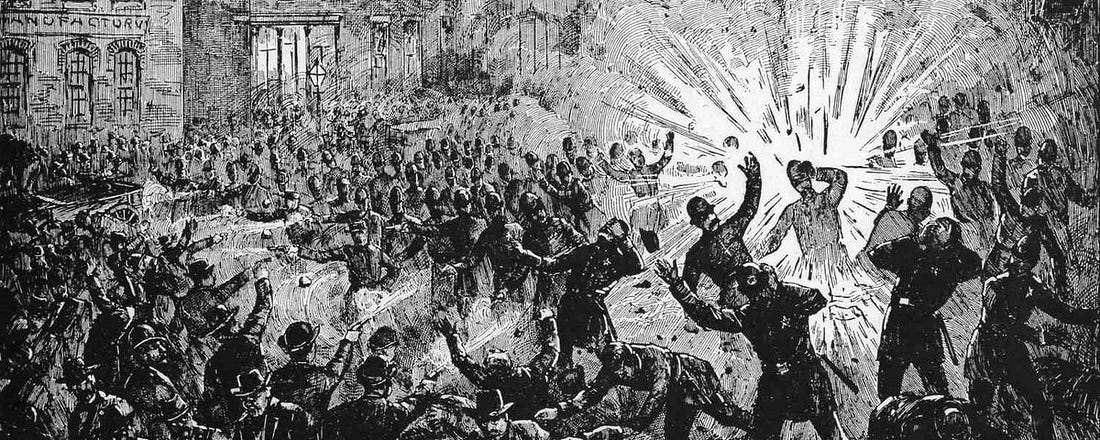
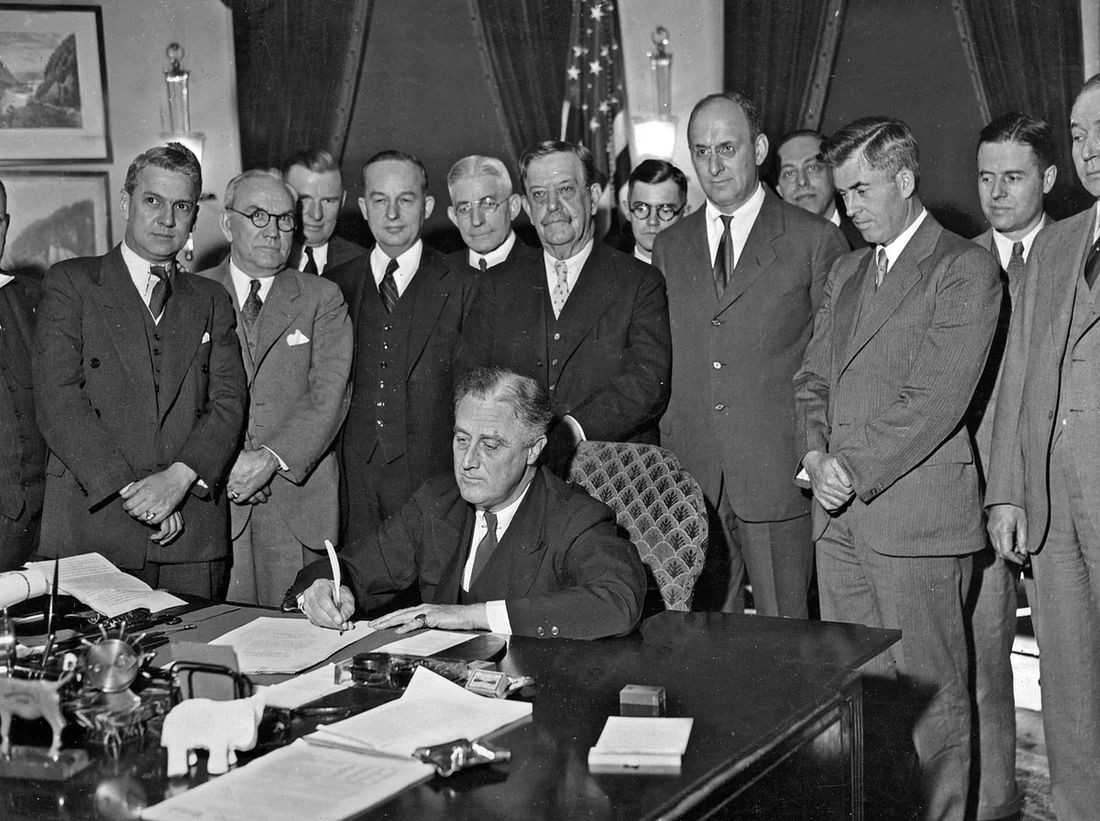

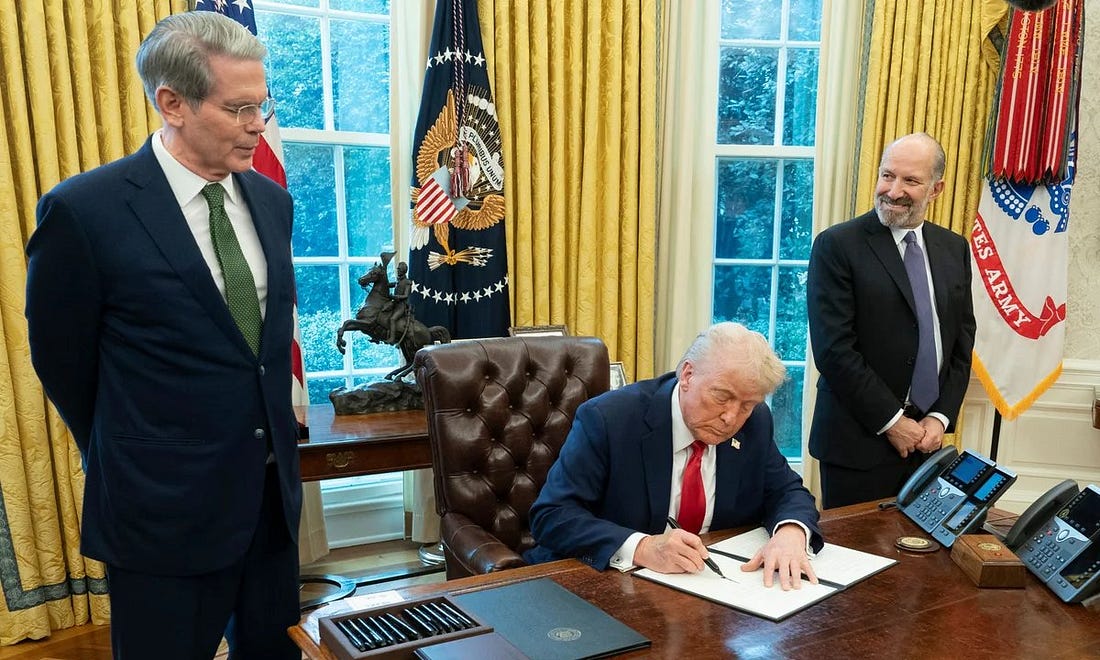
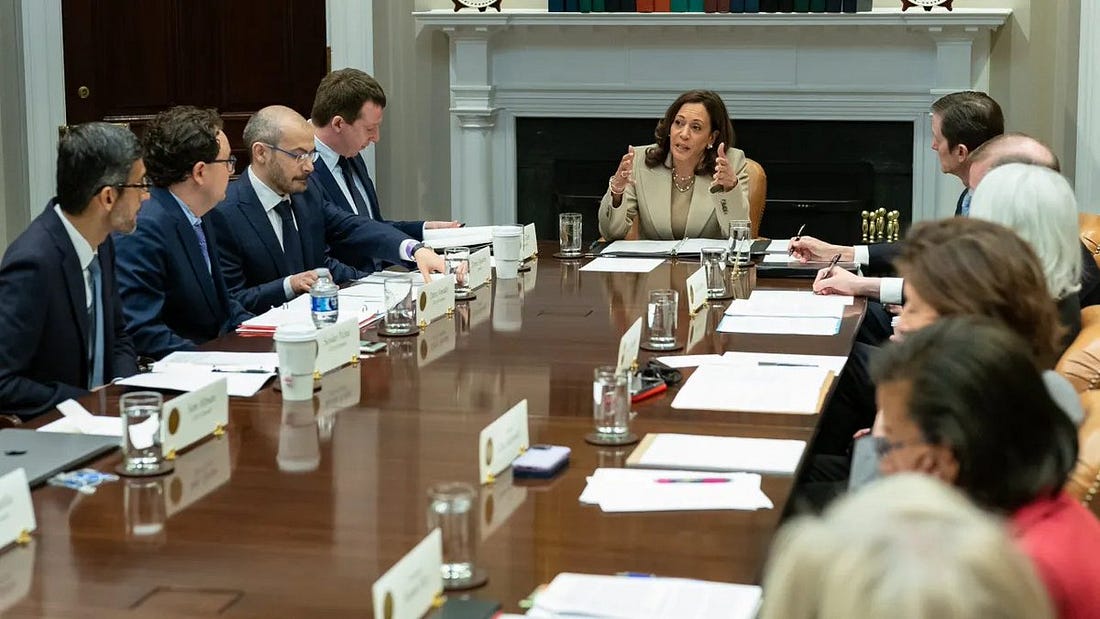
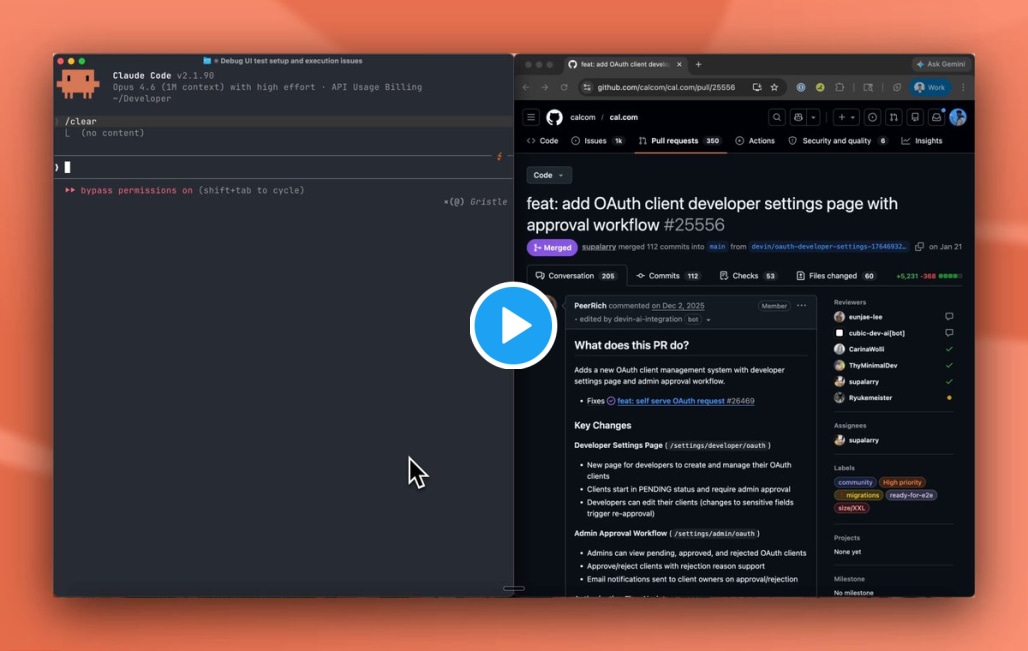
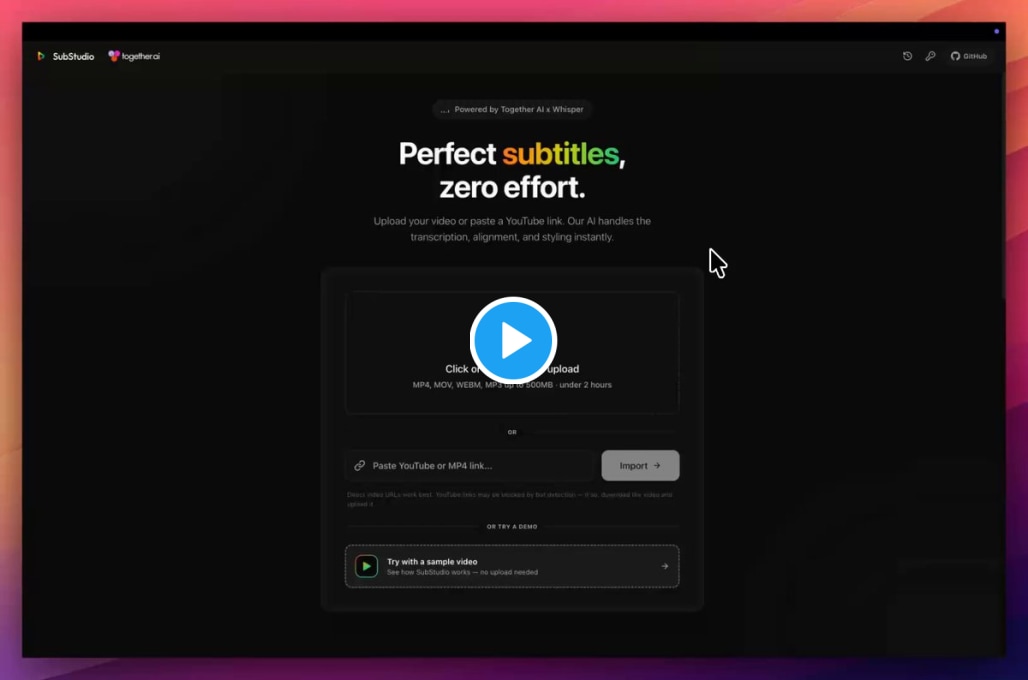
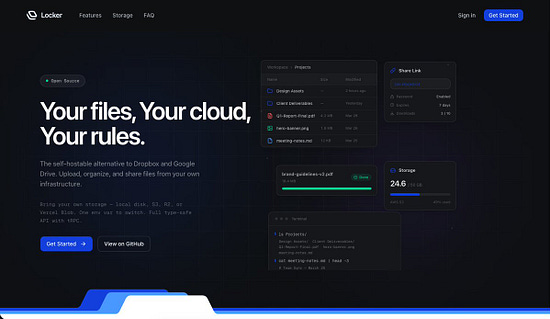
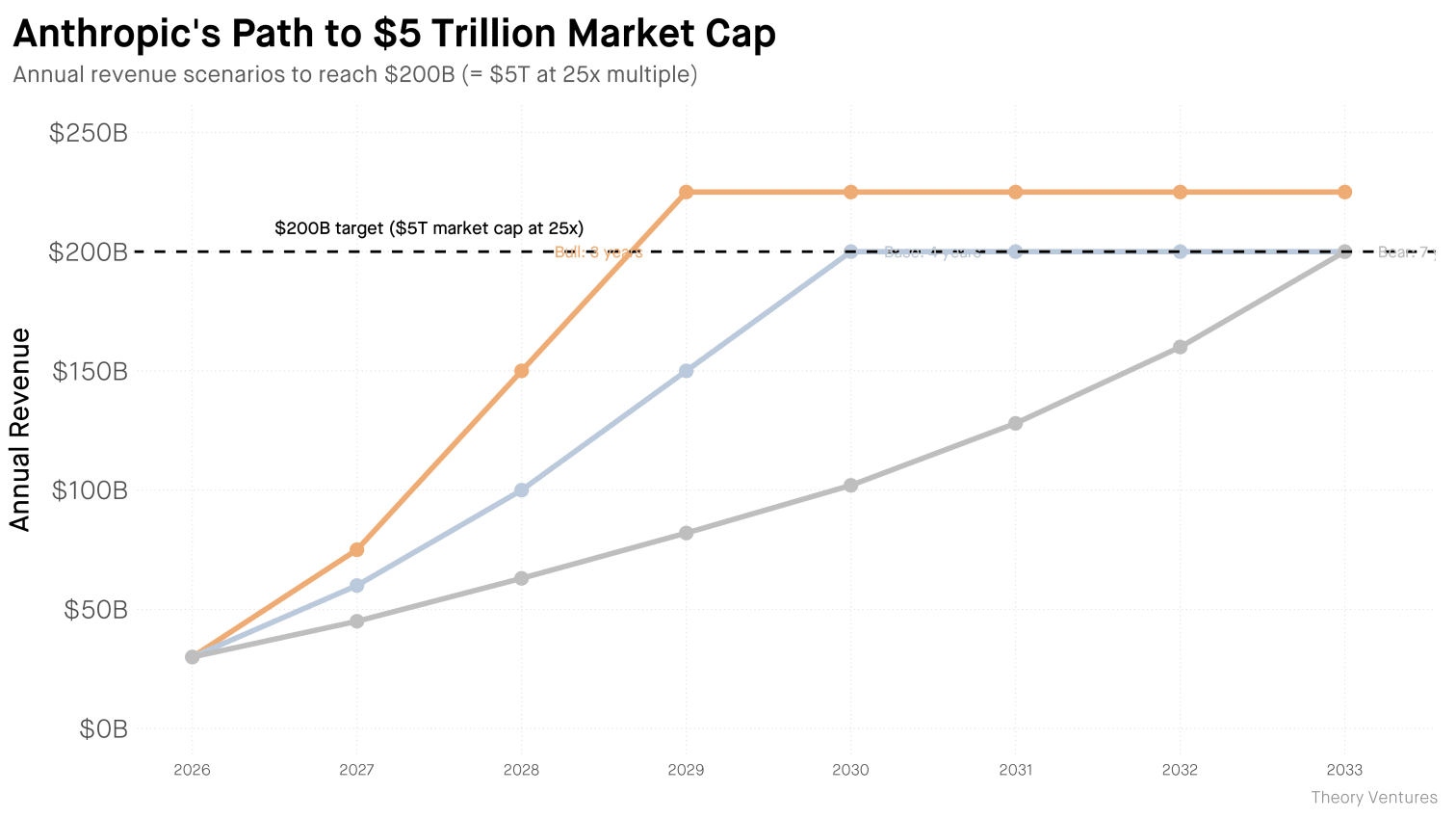

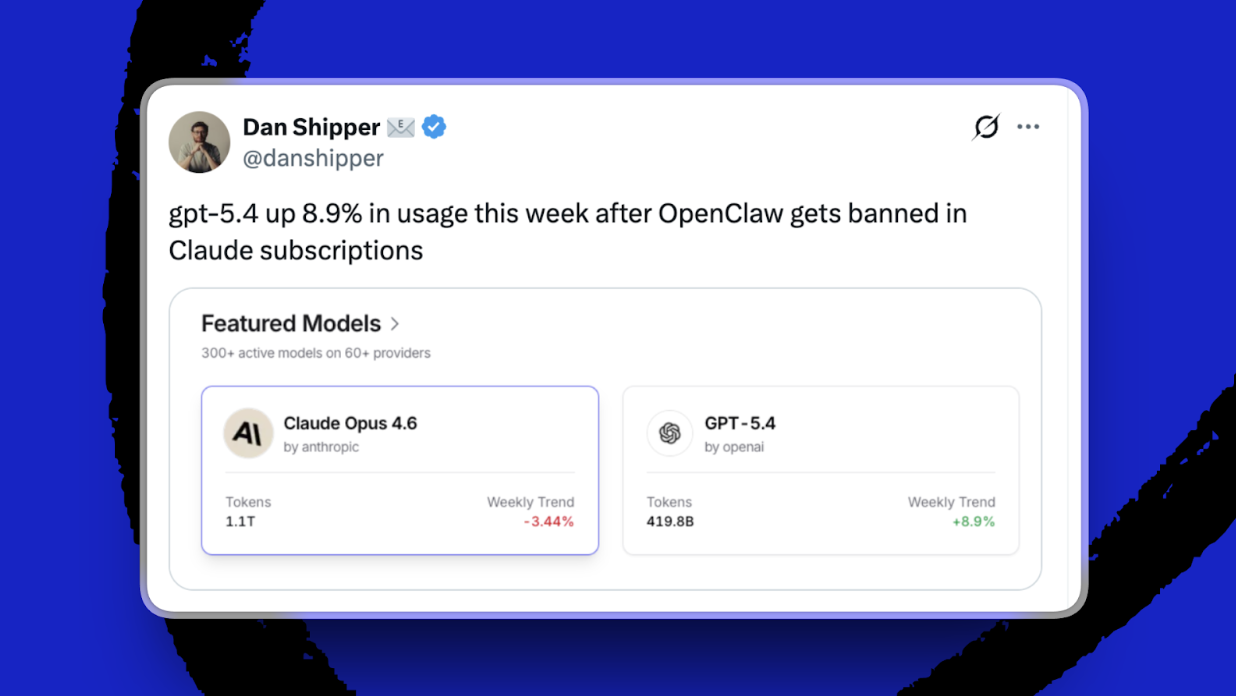
.png) ## ‘AI & I’: Agents work among us
## ‘AI & I’: Agents work among us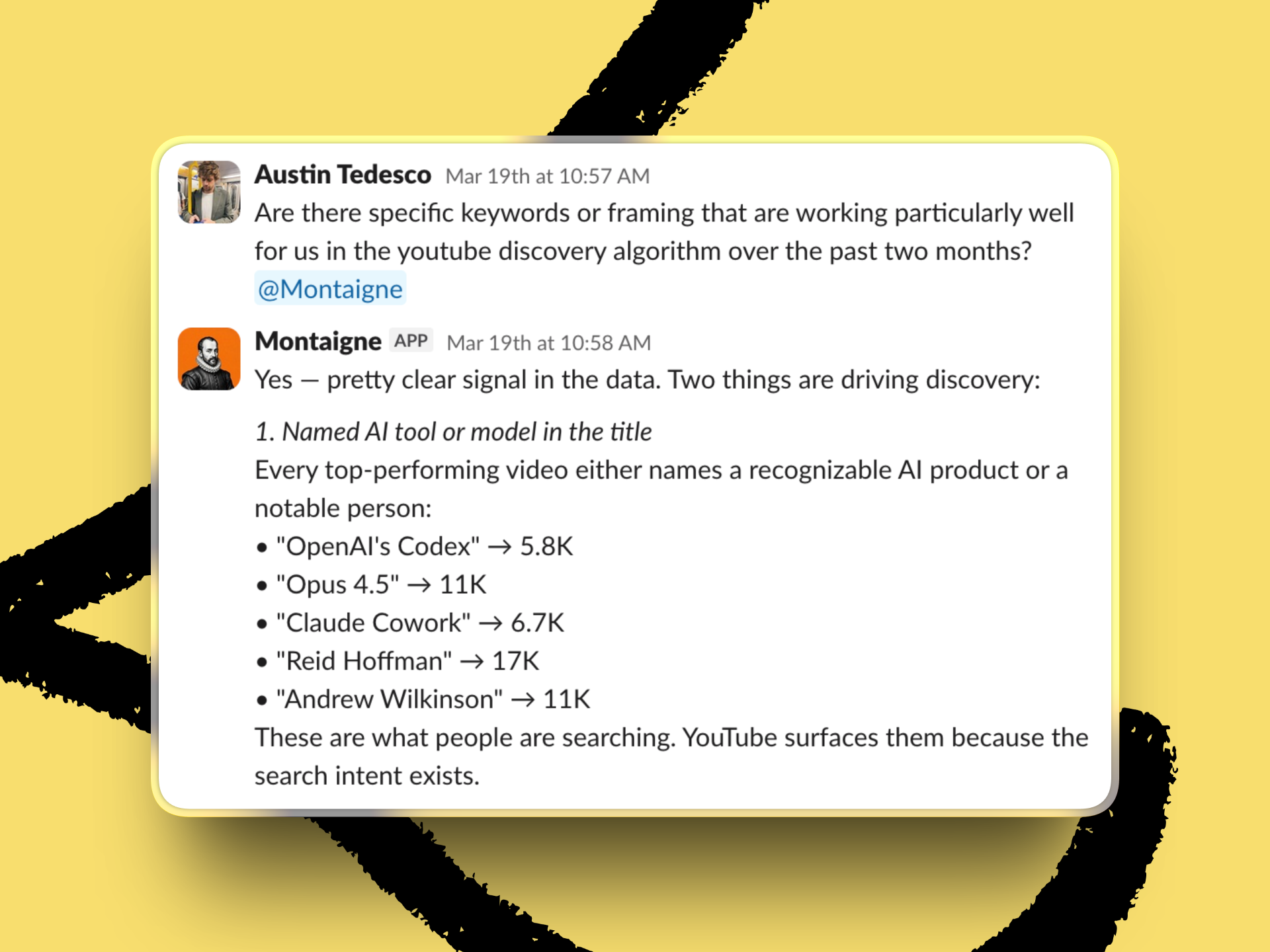



 This event was produced in partnership with





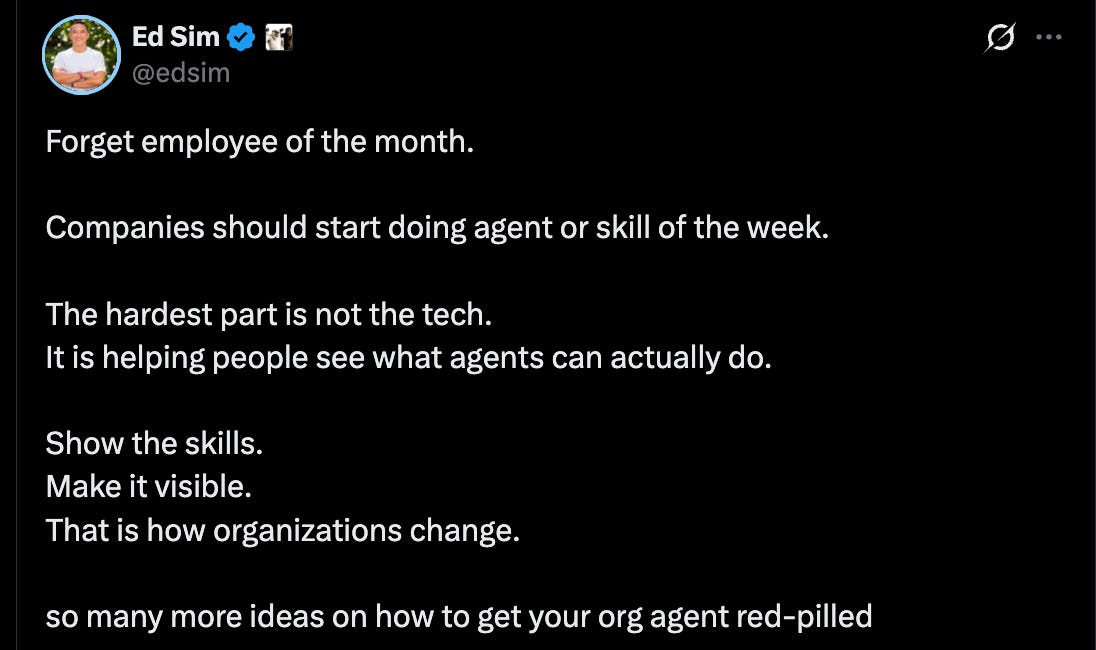
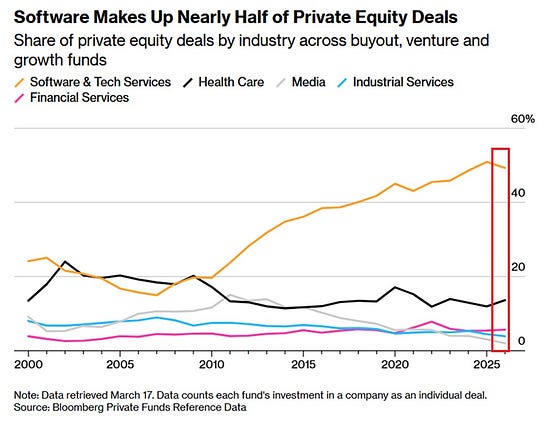
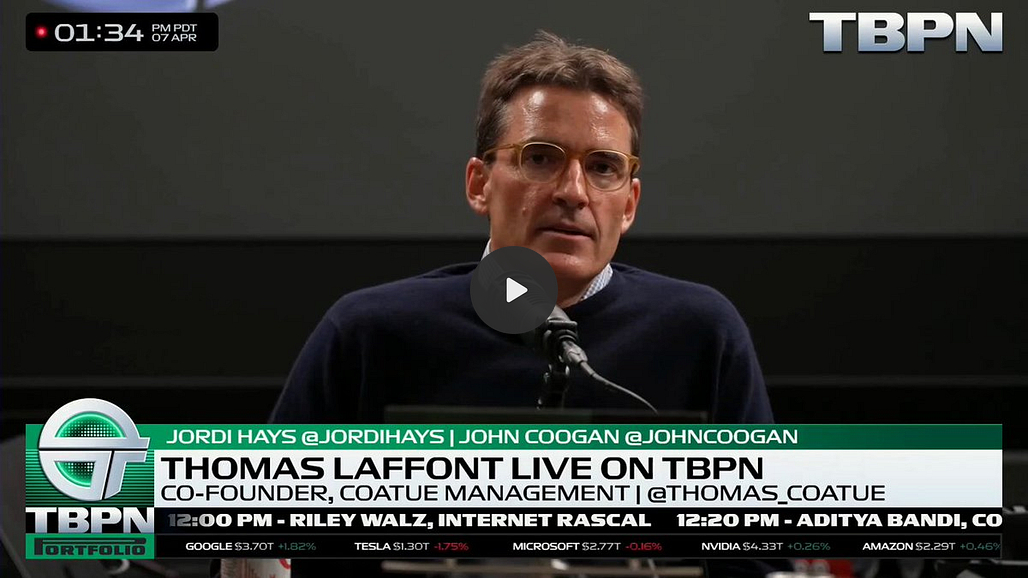
 Obsidian @obsdmd
The Obsidian team is growing from three engineers to four engineers. Competitive SF salary. Fully remote, live anywhere. Apply below.
Obsidian @obsdmd
The Obsidian team is growing from three engineers to four engineers. Competitive SF salary. Fully remote, live anywhere. Apply below.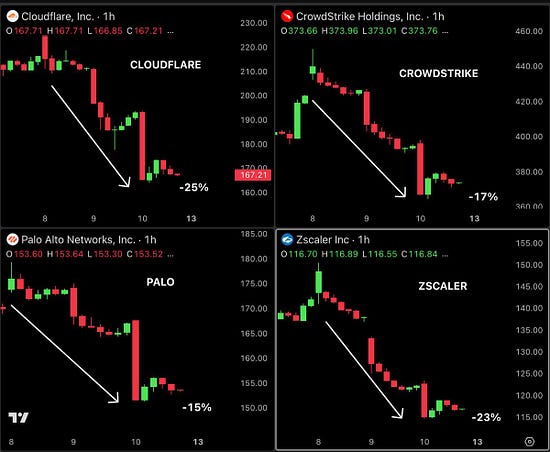
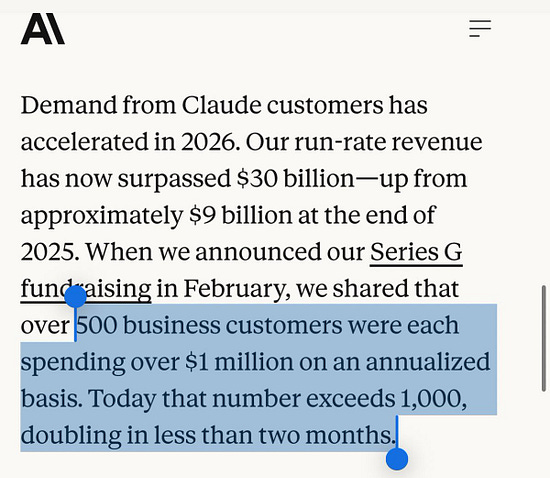 Anthropic @AnthropicAI
We've signed an agreement with Google and Broadcom for multiple gigawatts of next-generation TPU capacity, coming online starting in 2027, to train and serve frontier Claude models.
Anthropic @AnthropicAI
We've signed an agreement with Google and Broadcom for multiple gigawatts of next-generation TPU capacity, coming online starting in 2027, to train and serve frontier Claude models.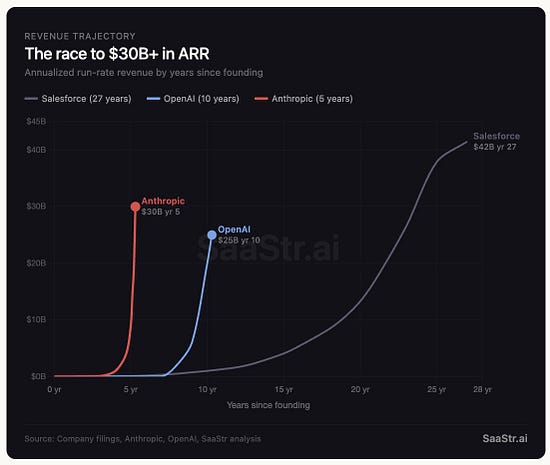

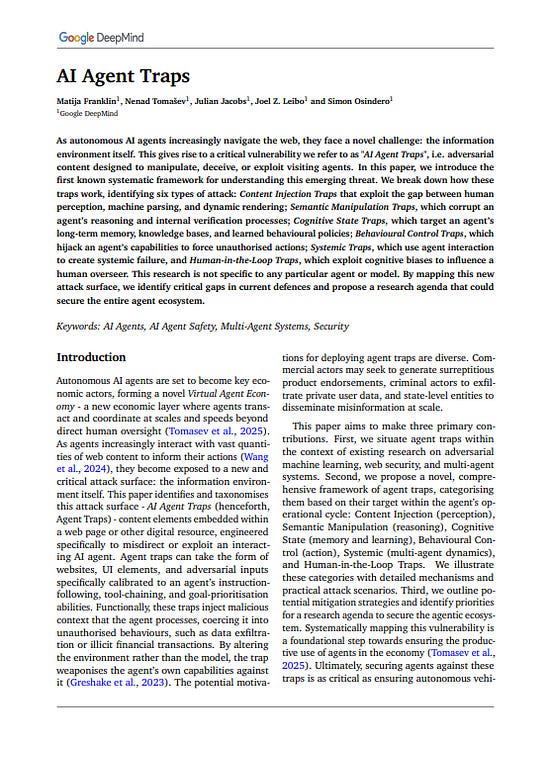

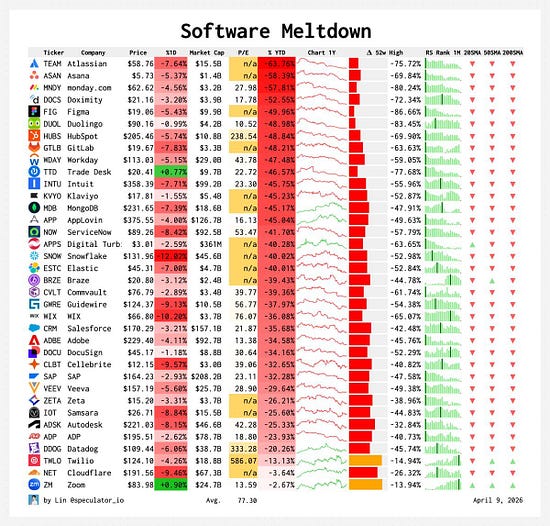 Naval @naval
Software was eaten by AI.
Naval @naval
Software was eaten by AI.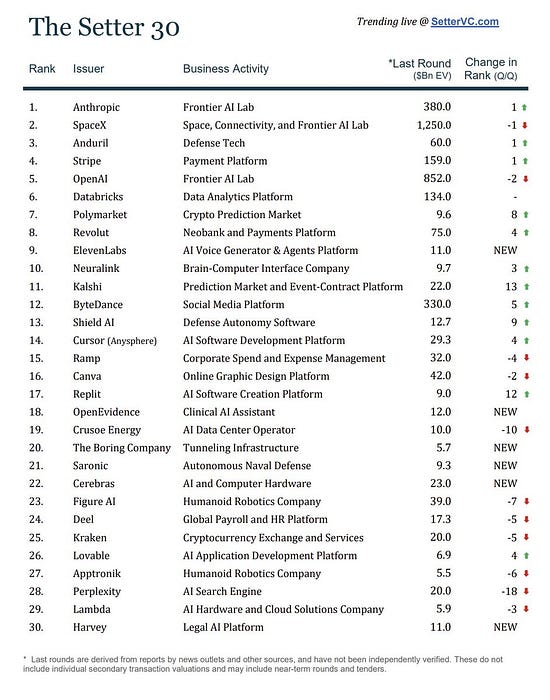
 zerohedge @zerohedge
MUSK REQUIRING FIRMS WORKING ON SPACEX IPO TO BUY GROK: NYT SOME BANKS AGREED TO SPEND TENS OF MILLIONS ON GROK: NYT
zerohedge @zerohedge
MUSK REQUIRING FIRMS WORKING ON SPACEX IPO TO BUY GROK: NYT SOME BANKS AGREED TO SPEND TENS OF MILLIONS ON GROK: NYT.png) Hello, and happy Sunday! Two housekeeping notes: Our next cohort of
Hello, and happy Sunday! Two housekeeping notes: Our next cohort of