We’re tracking company launches as they happen and surfacing the most interesting new founders and startups (yes, all outside of this stealth activity too). If you want to stay ahead of the curve, this is where you’ll find them first.
Right now we’ve got 5 subscribers: my wife, my mom, and that high school buddy who won’t stop pitching me his app. Be smart like them and get in early 👇
We run a live feed inside Gravity that tracks founders entering stealth and companies quietly exiting it.
What you’re reading here is about 1% of the stealth activity we pick up. The full tracker updates in real time as things change and new activity emerges.
FounderDNA: Technical Founder, Doctorate Degree, Masters Degree, Top 10 University
Prior Experience: PhD in computational health and econometrics at University of California Berkeley, Research Fellow at University of Chicago, Graduate Research Assistant at University of Cambridge
Knit Health is a healthcare intelligence platform, spun out of UC Berkeley, that learns from hundreds of millions of clinical decisions to model how care is actually delivered and optimize patient-provider matching within existing workflows.
HQ: San Francisco Bay Area, United States
Industry: HealthTech, Clinical AI, Health Systems | Team Size: 13
Behrad Habib Afshar - Founder at Mavericks Photonics
FounderDNA: Technical Founder, Doctorate Degree, Masters Degree, Top 10 University
Prior Experience: PhD in Electrical Engineering / Applied Physics at Stanford University, Precision Optical Sensing Consultant at Intelligent Fiber Optic Systems, MEng at Imperial College London
Mavericks Photonics is building photonic-integrated sensor chips that deliver lab-grade precision navigation and situational awareness for autonomous systems operating in GPS-denied environments, shrunk into matchbox-sized form factors.
HQ: San Francisco Bay Area, United States
Industry: Deep Tech, Photonics, Defense & Autonomous Systems
FounderDNA: Masters Degree, Former FAANG, Top 10 University
Prior Experience: MBA at Harvard Business School, Post-Training at xAI, Product Manager at Anduril Industries, Program Manager at Meta, F/A-18 Pilot at US Navy
Dispatcher is a real-time aerial intelligence platform built for defense and public safety, delivering mission-ready situational awareness with no blind spots.
HQ: San Francisco, California, United States
Industry: Defense Tech, Aerial Intelligence, Public Safety | Team Size: 14
FounderDNA: Technical Founder, Masters Degree, Former FAANG, Top 10 University
Prior Experience: Senior Director, Data & AI at Archer, Executive Technology Advisor at Relativity Space, Director of Data Engineering & AI at Lucid Motors, Data Engineering Manager at Amazon Web Services, Data Engineering Manager at Twitter
TelemetryLab is an AI-native platform for vehicle telemetry, diagnostics, and root cause analysis, serving fleet operators, OEMs, and Tier 1 suppliers with a closed-loop system that turns raw sensor data into deterministic engineering answers.
HQ: Palo Alto, California, United States
Industry: Vehicle Intelligence, AI/ML, Data Infrastructure
Prior Experience: Enterprise Territory Manager at Dataiku, Account Executive at Datadog, GTM at Furhat Robotics, Founding AE at Hyper, Founding Board Member at Rocky Mountain AI Interest Group
Hank is an AI dispatch platform built exclusively for water, fire, and mold restoration companies, handling inbound calls 24/7, dispatching emergencies, and automating back-office work including insurance documentation and CRM updates.
HQ: Austin, Texas, United States
Industry: AI Agents, Field Service Automation, InsurTech | Team Size: 3
Time Spent in Stealth Mode: 2 Months
🕵️♂️Key Talent Going Under Stealth
Illuminating clues left behind by world class talent and influential innovators who just went into stealth mode
Anurag Jain - CEO and Co-Founder at Stealth AI Startup
FounderDNA: Serial Founder, Technical Founder, Masters Degree, Former FAANG, Prior Exit
Prior Experience: Head of Product - Travel Ads and AI Ads at Google, CEO & Co-founder at Voltix, CTO & Head of Product at Hitfix (acquired by Uproxx Media), CEO & co-founder at Gigzee, Product Manager at Microsoft
FounderDNA: Serial Founder, Technical Founder, Doctorate Degree, Masters Degree
Prior Experience: Co-founder and CTO at Connectly.ai, CTO at Strava, VP Engineering at NetEase, Engineering at Uber, Researcher at Microsoft, Researcher at Yahoo!, Computer Science PhD at Carnegie Mellon University
FounderDNA: Serial Founder, Technical Founder, Top 10 University
Prior Experience: Co-Founder at CloudTrucks, Product Engineer at Intercom, Product Engineer at Scotty Labs, Software Engineering Intern at Yammer, Inc., Explorer Intern at Microsoft, MIT CS
FounderDNA: Serial Founder, Technical Founder, Former FAANG
Prior Experience: Senior Staff Software Engineer / Tech Lead / AI Creator Tools at Cantina, iOS Tech Lead at TikTok, iOS Tech Lead at Airbnb, Tech Lead at Google, iOS Software Engineer at Meta, Software Engineer at Apple
Prior Experience: Forward Deployed Software Engineer at Palantir Technologies, Software Engineer at Uber, Software Engineer Intern at Salesforce, Software Engineer Intern at Expedia Group
🚨Here’s the deal 🚨This email has gotten too big. Exciting, but with more people following it, the edge diminishes. I’ve thought long and hard about what to do to preserve the value in the signals. I’m not sure about the final direction yet, but in the meantime I’ve been sending an email 48 hours earlier to a select group of paid subscribers. The feedback has been pretty positive so I’m going to open up the list for another 100 spots. To get signals early, Apply here!
Stay Stealthy,
Drake
Thank you for reading. If you liked it, share it with your friends, colleagues and everyone interested in staying ahead of the hidden developments in tech. Subscribe below and follow us onX / Twitter to never miss a company operating under stealth again.
Stealth Startup Spy is a data-driven newsletter for investors, journalists and tech enthusiasts interested in uncovering the next big move for key talent, real-time stealth company launches and technology advancements not in plain sight. We leverage the technology built at Gravity to shine a light on the hidden world of stealth startups.
ben's bites · Tuesday, May 26 2026 · 6 min read · ↑ top
MCP comeback in works
Hey folks,
It’s a heatwave in the UK, and I can’t think straight. Dan went on Lenny’s podcast to talk about agents, automation and SaaSpocalypse, which is worth checking out.
While I generally agree with it all, the one thing I can’t shake is the bullish case for SaaS. I think SaaS is in trouble…
I don’t think it’s in trouble because you can build your own versions with a plan, patience and prompts.
With SaaS tools, you pay monthly for a set of features and stability. The problem is that the tool needs to keep growing. They add new features, change the interface, do all sorts of things you may not need (and often hate).
The tool is for the masses but you may have only wanted a sliver. The tools can outgrow you and why you bought it in the first place.
So if I only need a sliver, I’ll go looking for pieces I can pull together myself. A document editor over here, an agent there, etc.
I think SaaS companies that can unbundle their building blocks and sell them as composable pieces for users (as well as the all-in bundle) could be a very interesting bet.
WorkOS do this well. Their tagline on Google results is literally “ WorkOS is a set of building blocks for quickly adding enterprise features to your app”.
Stripe does this too.
In the age of customisable software and using tools with agents, I can’t imagine paying for a tool that I can’t change its feel or features.
It’s why I think API/CLI/SDK-first companies are in a really interesting place.
Sherlocq is an AI-powered regulatory intelligence platform built for compliance, legal, and regulatory professionals. Research regulations, analyse documents, and run sanctions checks across 30+ jurisdictions and 320+ sanctions sources, cutting research time by up to 70%.
Headlines
Appshots in Codex attach the active Mac window to a Codex thread with a screenshot + available text, including context beyond what is visible. Goal mode in Codex is now out of the experiment stage - it helps Codex execute multiple-step workflows with a single outcome in mind, with the ability to check back and compare its work with that goal. Plus, there are other updates like sharing plugins, using a Mac while it’s locked and more.
MCP is getting a major upgrade (finalizes on July 28). It should be much easier to run MCP servers reliably at scale. The update also adds built-in support for app-like interfaces, long-running tasks, stronger login/security rules, better tool definitions, and a clearer process for changing the protocol over time.
Perplexity open-sourced Bumblebee - A safety scanner for developer machines. It checks for risky packages, browser/editor extensions, and AI agent configs, without running any of the tools it is inspecting. So it can flag supply-chain risks without accidentally triggering the same risky code.
My feed
Cloudsail - fresh Cloudflare Sandboxes for coding agents, with shell, Codex and GitHub access.
WorkOS released auth.md, an open protocol for agents to register for web services on behalf of users
Building Pi With Pi - using agents for issue research, PR wrap-ups, context tracking and parallel work.
An AGENTS.md file with a year of small agent-behaviour improvements.
release.bar - trending active GitHub repos, with a dashboard for each repo/builder. (see example). GitHub should probably have shipped this already.
Hyper - Bun API framework you copy into your codebase instead of installing as a dependency.
Kakuna - Checklist-driven codebase hardening, and a production-ready repo skill that turns a fragile vibe-coded app into something maintainable and agent-friendly.
Cursor’s internal /thermo-nuclear-code-quality-review skill deletes complexity, blocks huge files and rejects PRs that work but make the codebase messier.
Simpleplayer - clean default video player with custom overlay controls.
Running a startup solo with AI agents - OpenClaw as Chief of Staff, Codex/Devin as engineering and giving agents real email, calendar and GitHub access.
zero2claude - free course from zero terminal experience to shipping with Claude Code.
Find repeated workflows across recent sessions/memories, then create only the smallest useful skill, subagent or automation.
Shades - Chrome extension that hides sensitive inputs while screen recording or sharing.
Plannotator - annotate agent plans before they run and review the output in full diffs.
ChatGPT for PowerPoint - create slides, ask questions across a deck, and make updates inside PowerPoint.
Afters
Anthropic
@AnthropicAI
Anthropic co-founder Chris Olah was invited to speak at today's presentation of Pope Leo XIV's encyclical "Magnifica humanitas." Read the full text of his remarks:
| | anthropic.com
Anthropic co-founder Chris Olah's remarks on Pope Leo XIV's encyclical "Magnifica humanitas"
jason
@jxnlco
codex prompt tip 13 "read my past 400 slack messages, identify my personas and make a skill on how to message people one each one, then do the same thing for emails and twitter so you jnow how to write in my voice"
David Senra
@davidsenra
My conversation with @RickRubin 0:00 Less Is More But Harder 2:00 Def Jam From The Dorm Room 4:00 Capturing Club Energy On Record 6:00 Going Deep On Influences 12:30 Why Reduced By Rick Rubin 14:00 Beatles Structure Meets Rap 16:00 The Ruthless Edit 19:30 Eminem: The Most
0xSero
@0xSero
How to use Codex's computer use in EU for europoors better than nordvpn - download Tailscale on your device(s) - go to settings - configure mullvad - pay 5$ a month - set exit node US based - now you have a VPN for each node - Albania for ur tv (no ads on entire home network)
Siddhartha Saxena
@siddsax
Anthropic onboarding day: Michael Scott introducing Karpathy like he just signed Wemby in free agency.
Delba
@delba_oliveira
Ok, now we're cooking. Claude 🤝 Remotion
Governments are usually quick to tell us what a war costs. They’re much slower to tell us what counts.
In this Prof G+ Deep Dive, Scott breaks down why the official price tag of war almost always understates the real economic cost — from military spending and replacement weapons to veteran care, inflation, debt interest, and the decades-long consequences…
No ads on pods, because ads tax your most valuable asset: time
Prof G+ exclusives, including breaking livestreams, deep dives, keynotes, and more
Community privileges to leave comments, make friends, and engage in a series of bad decisions that might pay off
Interconnects by Nathan Lambert · Tuesday, May 26 2026 · 9 min read · ↑ top
Gemini Flash 3.5, Mythos, open-closed balance, America's open-source surge, emerging power struggles and more.
Listen to post · 9:37
As the years of AI progress go by, it’s been accompanied by a slowly rising tide of consequence. Models are getting more capable, how we work is changing quickly, economics of AI are becoming real, just as real-world risks come to the forefront. 2026 is the first year where I don’t think there’ll be any breaks from this. The hard part to prepare for is that there’s a good chance things just continue to ratchet up from here – more disruption, more surprises, more stakes.
On my end, there’s been a growing list of topics that are very fateful to how I see the current state of AI, but I haven’t even gotten to write about them (at least not from all the angles I want to)! All of these are closely related to the implications of different models reaching new capability levels and how I use that to infer what may come next.
1. Open models haven’t had their true agent moment like Opus 4.5
The time gap between open and closed models is very often discussed, but the reality is that we have a nice time-gating that’s independent of debatable benchmarks – if open-weight models do or do not become super useful in agentic harnesses. The Opus 4.5 in Claude Code moment of December 2025 was so loud and obvious, that if open models hit this performance level for price points as low as $5/month, there will be an explosion in usage.
Right now we are about 5-6 months in with no equivalent open model. I suspect the robustness of the best closed frontier models that I write about could make this moment take a good amount longer, say closer to 12+ months. In this time, Claude Code and Codex may seem like different categories of products. In the standard flurry of new, state-of-the-art open models from a variety of labs, benchmarks will definitely keep climbing, but the open-closed gap should become more interpretable as real-world use becomes the real litmus test.
2. Gemini still doesn’t have a meaningful competitor for Claude Code and Codex
The best exclamation point I can offer to reinforce my prediction that open models are further behind than the benchmarks claim is that even the mighty Google doesn’t have a clear competitor for Claude Code and Codex. I’m sure the Gemini team is pushing very hard on this.
I still need to do a lot more testing on Gemini 3.5 Flash, but reading reviews makes it clear that it’s not a substitute for how I’m working today. It’s maybe not the Gemini team explicitly specializing for Google’s existing products (search, YouTube, etc.), but the model seems to suit them. If Google doesn’t have a powerful tool here soon, I don’t expect the open model labs to either. The open models are going to be used more for automated, enterprise agents and low-cost domains, rather than being the driving tool of modern knowledge work. This will feed directly into the economic engine of funding future models, where the agents like Claude Code and Codex are the current best path to massive AI revenue growth.
I discussed how the current environment is quietly driving labs in China to specialize onAI Proem with Grace Shao and this is central to my expectations of open models specializing over the next few years instead of competing with OpenAI, Anthropic, and Google.
3. I don’t expect an open-weights Mythos this year
While I don’t think Mythos is a general “god model” that will crush the competition in every domain, I do think it’s a remarkable technical achievement in software engineering and cybersecurity. Mythos is obviously a watershed moment for those fields. Having spoken to most of the Chinese labs – particularly those with the most prominent, large, open MoE models like Kimi, Z.ai, DeepSeek, and Qwen – I think they’re heavily resource limited and don’t have an immediate path to scaling up training processes like the big labs in the U.S. For the labs which are more corporate, which comes with more resources, such as Alibaba and Bytedance, they also have more conservative stances on safety and security.
Mythos is a bellwether of the massive acceleration in training and research compute available to the largest American companies.
Epoch AI recently had a nicepiece on the compute available to various labs (~Google 25%, Meta 11%, OpenAI 11%, Anthropic 6%). All of these numbers are vastly higher than any Chinese lab.
4. American open models are slowly gaining steam
Nvidia with Nemotron, Google with Gemma, Arcee AI and others are slowly stabilizing the open model ecosystem in the U.S. There’s a lot that’s hard to measure here, especially in the rise of local agents like OpenClaw and Hermes, but there are adoption numbers of American models that we haven’t seen since Llama 3.
Gemma 4’s models are all tying or outperforming the equivalently sized Qwen 3.5/3.6 models — where Qwen has for years now been the default open model at these sizes. These Qwen 3.5/3.6 models have been tricky to get working in a lot of post-training research, partially due to architecture/tooling and partially likely due to modeling (i.e. the model is not easy to finetune for some training decision). I’ve heard few complaints about Gemma, but it also could be because Gemma is not yet the researcher default.
There's a simple reality that we've seen recently with models like GPT-OSS, Nemotron 3, and now Gemma 4, that if a model is in the right range of benchmarks and released by an American lab with a truly permissive license, it'll get a large amount of adoption (in this cycle, recall that Gemma 4 adopted the Apache 2.0 License, changing from one with use-case restrictions on earlier Gemmas). This early phase of American growth in open models is establishing key brands directly with developers. The consensus is that more neolabs like Reflection and Thinking Machines are likely to participate in this space, but being too patient will lose the time when new agentic workflows and enterprise relationships are built.
5. Anthropic and OpenAI are just getting up to speed in model iterations
I expect the rest of this year to be a ruthless competition between these two flagship companies. I’m at an interesting balance where I think GPT 5.5 is a bit smarter of a model and I love the Codex App, so I’m structuring much of my work to be possible there. At the same time, for a lot of writing-related and broader surface area tasks I really still love Claude. These models are rapidly changing how we work, I run Codex from my phone while doing other things, am setting up automated open model analysis jobs on the back of agents, and expect to be able to scale the research side of Interconnects widely.
AI is beginning to drive companies to the two extremes in the scaling era. The biggest companies will be way bigger than ever, using resources and mass talent to have sustained progress at the frontier of raw AI capabilities. On the other side, tiny businesses like Interconnects thrive by using agents to refine, present, and sell niche expertise. The mass social job displacement that’ll come is going to reduce employability for various knowledge workers that don’t fit into either of these extremes for the raw technical side (big or small companies), while sustaining and maybe even amplifying careers that interface directly with humans (e.g. doctors) or other power structures with means to sustain themselves (law/government).
6. More existing power structures will assert themselves on AI
Just in the last few days while writing this, we had the Pope release an over 40,000 word document on where AI is goingand China expand personnel movement restrictions on top AI researchers across industry. At the same time, the U.S. has designated Anthropic a supply chain risk and continues to use its models for national security. The list of news like this is only going to grow. Existing power structures are realizing there’s a finite time window for them to exert themselves in the AI dynamic — an intuition that could be mapped to influence going down as AI models get more powerful. This intuition is potentially dangerous, as it sets up meaningful conflict in who controls the technology (as I discussed with Dean Ball after the Anthropic-DoW spat).
Next: Where technical becomes social
These largely technical and power trends accelerating are going to put more pressure on the social and political anti-AI sentiments within the U.S. This is currently the most obvious barrier to continued AI development and beneficial diffusion. Reflecting on this, many people in the tech discourse get too focused on the details, where yes a lot of data-center-detractors are making genuinely wrong factual claims in defense of their position.
The real position that a large swath of Americans has is that they have a voice in saying no to the current trend — by not granting permission to build data centers. This is a voice that they haven’t been granted by the tech industry that changed the face of the global economy and power structures in the last few decades.
This is setting us up for a challenging year ahead for the industry. The labs are aggregating and concentrating talent to peak levels. There are few neutral messengers to communicate the reality of AI to the public. The frontier labs leadership is largely gearing up to IPO and stay ahead in the capabilities race. With the status quo, there are few actions to unwind this path toward social conflict.
It takes individuals in the AI ecosystem to zag and go against the groupthink of needing to make your wealth today, of needing to be at a lab to do impactful work, and so on. I’m personally continuing to bet on this, by trying to make a vibrant and diverse open model ecosystem supported by clear, unbiased information. If you agree with this and have been watching from the sidelines, it’s a good time to get involved, before the situation spirals into something uncontrollable.
Liking, sharing, commenting, or recommending Interconnects from your Substack is the only way Interconnects is possible. Thank you for your support.
If you liked this, consider upgrading to a paid subscription to cover my growing subscription and API fees. We offer group Interconnects subscriptions at tiered discounts for 5+ heads.
If you want all of the best AI writing on Substack through one subscription for your team of 20+, check out https://readsail.com/.
If data gravity was the most important force in the Decade of Data, agent gravity will be the same in the Decade of Agents. Agents are wonderfully powerful technologies & they require tremendous compute to power. That compute is big business & major platforms will fight to keep them on their platforms. The more agents & data running through a platform, the greater the agent gravity. The most recent episode with a new Databricks feature on Microsoft’s platform :
While this was not the feature’s stated purpose, it essentially made it easier for Power BI customers to manage their data and build AI agents in Databricks instead of a competing data management offering from Microsoft, called Fabric.- The Information
So what’s going on : If DBX customers can create data pipelines & manipulate their data through agents, then the person building those agents - or the agent itself - will decide where to run the agent (agent gravity) & where to process the data (data gravity). These agents can siphon the knowledge in the semantic layer, migrate the data into other cloud data warehouses, & publish data to other BI systems. Very quickly, users, knowingly or unknowingly, can migrate the profitable agent workloads & data warehouse workloads to a new platform. Winning & sustaining agent gravity is the motif of the Decade of Agents.
Setup, workflows, and principles for turning Codex into an operating system for email, writing, research, planning, and reporting—even if you’re not an engineer
by Katie Parrott Dan Shipper is a man possessed by Codex. He calls it his daily driver , he’s been at inbox zero for 10 days straight (genuinely unlike him), and at a recent Anthropic event he spent his time telling the people who build Claude Code that they had to try Codex. He swears he isn’t sponsored by OpenAI. He’s just like this now. At first glance, Codex looks just like another coding agent. In practice, it’s a workspace where you and AI agents can work side by side across your inbox, documents, data sources, and connected tools. You bring the context, judgment, and review. Codex helps gather inputs, produce artifacts, check work, and turn repeated processes into reusable workflows. Today we published a power user’s guide to using Codex for knowledge work—even if you’ve never written a line of code. The guide covers:
The Codex knowledge-work loop: Connect, contextualize, delegate or collaborate, review, and compound
Workspace setup: how to create context files, rules, source folders, workflow documents, and review checklists
The five levels of Codex use: from one-off tasks to multi-source workflows, recurring chores, small tools, and compounding systems
13 workflow templates: inbox review queues, unanswered message sweeps, research briefs, weekly reports, GTM plans, customer support routing, recruiting research, planning agents, and more
If you want to know how to use Codex as an operating system for knowledge work, this guide is for you. Read the guide On June 12, Dan and the Every team are hosting a two-hour camp on the Codex workflows we use most, the use cases that changed how we work, and what becomes possible once you start building Codex-native apps. If you’re not a paid subscriber yet, start your free trial to join. RSVP
Scott Galloway · Tuesday, May 26 2026 · 3 min read · ↑ top
Introducing a new weekly live show
Rage is a dish best served live.
Starting May 27 (that’s tomorrow), we’re debuting an all-new, all-live show every Wednesday at 12 p.m. ET. My Raging Moderates co-host, Jessica Tarlov, is teaming up with Gen Z political phenom Aaron Parnas to give you Raging Perspective – unscripted, unfiltered, and unedited.
We’ll bring the too-spicy-for-cable-news political analysis. You bring your questions for Jessica and Aaron – that’s right, this show is interactive, baby. The best way to join the conversation is by subscribing to our weekly newsletter, The Monday Rage. We’ll be curating questions, hot takes, and rage bait from the newsletter comments section for (selective) inclusion on the show.
Raging Moderates + The Parnas Perspective = Raging Perspective. Get it? See you there.
Last Call
Last week, my Markets co-host Ed Elson debuted a keynote presentation exclusively for Prof G+ subscribers, only on Substack.
The New Normal identified the most important – and least discussed – forces reshaping the global economy. Sample feedback from the Prof G+ community: “This should be mandatory viewing for everyone in Congress.”
The replay ofThe New Normalleaves Substack tomorrow. Watch now, or forever hold your peace.
What Does a War Really Cost?
It’s been the question of the moment since Defense Secretary Pete Hegseth presented a $29 billion receipt to Congress last month.
Our latest Prof G+ Deep Dive breaks down why the “official” price tag of war almost always understates the real economic toll, ignoring the decades-long financial hangover of veteran care, inflation, debt interest, and opportunity cost that rarely makes it into the headline number.
I’m joined by Justin Wolfers, University of Michigan professor and author of Platypus Economics, to help unpack why estimating war costs is so difficult – and why governments routinely get it (very, very) wrong.
Learn why we can’t accept the numbers at face value, only for Prof G+ subscribers.
The Week
We get it – we release a lot of content.
Enter The Week from Prof G Media, the latest addition to The Prof G Pod lineup. Every Friday, we curate the highlight reel of our most incisive takes across business, tech, politics, and culture, and catch you up on what you missed.
Hosted by George Hahn, the voice behind the No Mercy / No Malice pod, The Week will make you smarter in under 15 minutes. Watch the latest below, and let us know what you think.
Looking forward to seeing many of you tomorrow in San Francisco, our first stop on the Prof G Marketslive tour.
Life is so rich,
Scott
P.S.
Something new is coming … The (real) brains behind Prof G Media are bringing you Extra Credit , dropping next week. School might be out, but we’re still in session. Stay tuned.
P.P.S.
Dads & Grads season is upon us. Still searching for that perfect gift? Look no further than … wait for it … Prof G merch.
The end of the software era is the beginning of the harness era. AI outmoded SaaS managed databases with fixed workflows with intelligence. Like a mustang, AI is powerful but wild. Harnessing the power means domestication. There are seven parts to this domestication :
Context & memory : General models need bespoke retrieval. The system that fetches the right context for a radiologist is not the system that fetches it for a paralegal. Sometimes it’s a lot of short-term memory. What was the agent working on 45 seconds ago? Other times it’s large-scale image retrieval, say for radiology or for video generation. Other times it’s a keyword search across a billion documents. Those systems will be bespoke to each individual use case to drive the best accuracy. Sitting alongside retrieval is the context database, the recipe book of how each business actually runs. The standard operating procedures we all carry in our heads & bring to work every day are those recipes. Capturing them initially & evolving them as both people & process change is the essence of the context database.
Tools & action : Tools are how the agent affects the outside world. The recipes in the context database describe what to do. Tools are the ingredients & utensils that actually do it. A modern harness exposes tools through a registry, validates the arguments the model passes, dispatches the call, gates sensitive actions behind approvals, & parses the result back into the agent’s loop. MCP has emerged as the connective tissue. The quality of a harness depends on how many tools it can safely expose & how cleanly it handles their failures.
Orchestration & loop : The agentic loop is think, act, observe, repeat. Planning, decomposition, sub-agents, retries, & stop conditions define how the work gets done. We also expect our software to improve as we use it. Closed loop patterns that learn from each run will separate different vendors.
State & persistence : In a large-scale enterprise with lots of different people working on a system, the system needs to be resilient. When a harness crashes at step 7 of a 10 step task, it should resume at step 8, not restart from zero. File systems, checkpoints, session threads, & artifact storage are the mechanisms that prevent lost work.
Sandbox & compute : Each agent needs a sandbox in which to play. Isolated Unix workspaces, controlled network egress, & credentials that live outside the model are what make sandboxes secure, confidential, & fast at scale.
Observability & governance : You cannot trust what you cannot see. Tracing every step, logging every tool call, running evals as regression tests, & putting humans in the loop for the highest stakes decisions are how a demo becomes a production system. Guardrails enforce policy. Evals catch regressions before customers do.
Cost & workflow optimization : The seventh discipline is architectural judgment. What should be deterministic versus non-deterministic? Which model is the right one for each step, state of the art, medium, small, or fine-tuned? What knowledge belongs in skills versus in memory?
The result is a new competitive dynamic in software. This won’t work in every category. The markets the major labs prioritize will benefit from their ability to move quickly & their direct control of the models. But that leaves thousands of separate markets up for startups. What happens when every company has access to the same model? The best riders win.
Plus: The Vatican weighs in on AI labor, and our Codex playbook
by Katie Parrott Dan Shipper (left) and Brandon Gell. ### ‘AI & I’: More machine, more human work
Today, we’re releasing a new episode of our podcast, AI& I. In a format flip, Dan Shipper sits down with Every’s COO Brandon Gell not to interview a guest, but to be interviewed himself on why automating everything leads to more human work. The occasion is “After Automation,” Dan’s 8,000-word argument on the topic that became our most viral piece of the year, driving the AI discourse on X for a couple days. It’s a counterintuitive thesis from someone who runs a company that’s automated every single thing it can. And yet Every has grown from four people to 30 in the GPT era, with agents embedded into nearly every workflow. Dan’s point isn’t that AI won’t change work—it already has—but that it drives up the demand for human expertise, judgment, and taste. Watch on X or YouTube, or listen on Spotify or Apple Podcasts. You can also read the transcript. Here are the highlights:
AI makes experts more valuable. When everyone can produce a decent first draft—of code, writing, design—the floor rises, but so does the amount of comparable content. “You flood the zone with tons of stuff that’s close, but not quite right,” Dan says. Getting from close to memorable requires experts who can work with AI to rise above the new baseline.
The goalposts will keep moving. Models improve exponentially on benchmarks precisely because benchmarks are fixed frames, or existing ways of posing a problem the model can train on. Humans remain indispensable because we can operate outside established frames entirely—we zoom out, recenter the problem, and make surprising, self-directed choices that don’t exist anywhere in the training data.
“AI layoffs” are usually a cover story. Meta and ClickUp, among other tech companies, have recently laid off people and blamed AI. Dan and Brandon’s read on the trend is the same: AI is an easier explanation than admitting your company hired too many people or is in financial straits. AI will undoubtedly change how people do their jobs—and big, structurally rigid companies will have to reorganize around that—but that’s different from the technology eliminating jobs.
Ride the models and you’ll be fine. The paradox at the heart of Dan’s essay is that AI creates more work for humans while raising the bar for how good that work needs to be. Agents are structurally built to rely on humans for direction; without someone deciding what matters and how to make it better, they produce mediocre results. To position yourself to thrive in an AI-native workplace, Dan says, use new models to do the tasks you’re already good at, and you’ll be more in demand than ever.
Miss an episode? Catch up on Dan’s recent conversations with LinkedIn cofounder Reid Hoffman ; the team that built Claude Code, Cat Wu and Boris Cherny ; Vercel cofounder Guillermo Rauch ; podcaster Dwarkesh Patel ; and others, and learn how they use AI to think, create, and relate.— Laura Entis
Signal
The Pope takes on the means of AI production
When Pope Leo XIV ’s encyclical on AI, Magnifica Humanitas , hit the internet a little after 6 a.m. on Monday, the first thing I did was give it to an AI. I’d been waiting on the Pope’s first major written teaching with the bated breath of a left-leaning agnostic secular humanist amateur Bible scholar slash knowledge worker in the AI economy. AI, labor, and the Book of Nehemiah, in one document? I’m not sure there’s ever been a more Katie Parrott-coded text. Nevertheless, I gave AI the first crack at it. I had Andy, Every’s in-house editorial assistant, use Claude design to turn it into a comic-book infographic with the need-to-know information for the Every team. Our head of tech consulting, Mike Taylor , said the comic helped him wrap his head around the argument as a non-believer. Praise the Lord. Page 1 of the Magnifica Humanitas comic book graphic created by Andy using Claude Design. (Image courtesy of Katie Parrott.) I can hear the objection, because I had it myself: Isn’t it a little rich—in bad taste, even—to run an encyclical on AI through an AI? To use the machine to skim the Pope’s warning about the machine? Feeling guilty, I closed the comic and read the whole thing myself, slowly. The penance turned out to be unnecessary, because the guilt rests on a false premise. Magnifica Humanitas is not anti-AI. That’s not to say His Holiness doesn’t see something in AI to worry about, but the things that he’s worried about have more to do with the systems of power surrounding AI than they do with AI itself. The timing of Magnifica Humanitas’ s appearance is a heck of a thing, because five days earlier, we published our own encyclical of sorts: “After Automation,” Dan’s case that as AI makes yesterday’s expertise cheap, human judgment becomes the scarce, valuable thing. More machine, more human work. I’ve had these two voices—my boss and Catholicism’s boss—in my head for a few days now. I even made an app where AI versions of them argue about AI and the future of work, just for fun. I want to believe my boss when he says AI will make human judgment more valuable, not less. Catholicism’s boss doesn’t exactly disagree. He just asks the question hiding underneath: valuable to whom?
Human dignity in the new Industrial Revolution
The Holy Father formerly known as Richard Prevost took the name “Leo” for a reason. In 1891, the previous Pope Leo, Leo XIII , wrote Rerum Novarum , the letter where the Church took the side of workers against industrial capital. His indictment: The wealth made by the many had pooled in the hands of a few, leaving workers with “a yoke little better than that of slavery itself.” The indictment came with a policy agenda: a living wage, humane hours, rest, limits on child and exhausting labor, the right of workers to form unions and mutual-aid societies, and a state willing to step in when the poor were crushed by market power. Our present Leo signed Magnifica Humanitas on the 135th anniversary of the previous Leo’s letter. Translation: AI is the new factory, and the Church means to do for the large language model what it once tried to do for the assembly line. The present policy agenda: Regulate data as a shared good; make algorithmic decisions transparent, contestable, and accountable; design workplace systems around human dignity rather than machine-speed productivity; invest in retraining and access; use taxation, social protection, and industrial policy to spread the gains; protect children from extractive platforms; and keep lethal decisions out of automated hands. A key part of the argument in Magnifica Humanitas is built on a philosophical principle older than capitalism: the universal destination of goods. It’s the idea, developed in Catholic teaching from Aquinas forward, that the world’s resources are intended for everyone, and private ownership is a stewardship arrangement rather than carte blanche. Bible readers will recognize the spirit of it in Acts: The first followers of Jesus “had all things in common,” selling what they owned and giving “to each as any had need” (Acts 2:44–45 NRSVUE)—a line that would echo, centuries later, through everyone’s favorite, non-divisive German philosopher Karl Marx. Leo XIV updates it for the era of the data center. He extends “goods” to include “patents, algorithms, digital platforms, technological infrastructure and data,” and warns that when those stay “concentrated in the hands of a few,” the result is “a new imbalance” (¶67). The models you hand your work to were trained on the collective writing of everyone who ever put words down—yours and mine included. We’ve built the material underlying this technology collectively. But according to Leo XIV, the value is being disproportionately captured by “private, often transnational, parties” whose resources “surpass those of many Governments” (¶5). A pope is describing the means of production—and the fact that the people whose livelihoods now run on them don’t own a share.
A Pope and a CEO walk into a discourse
Dan’s focus in “After Automation” is mostly on the individual. What can I do to stay ahead and make the most of AI progress? Answer: Become the framer—the person in charge of deciding what’s worth doing, and why. His Holiness takes the collective view, and reading their perspectives together is what makes Dan’s piece feel both right and incomplete at once. Becoming the framer is the correct individual strategy. It’s also a move that only pays off if you’re positioned to make it—with savings to play with, time to learn to use the tool well, and somewhere soft to land if you leap. I had all three when I was first experimenting with AI. The same model, handed to a single mother working two jobs to pay for childcare, won’t have the same effect. Access to AI multiplies what you already have, and the machine doing the multiplying still belongs to someone else.
What you can do
Leo’s question doesn’t resolve into action items, but there are a few moves available to anyone who works in or around AI.
Know what (and who) you’re depending on. Start with your own tools. List the models, agents, APIs, and platforms that sit between you and your work. Ask what happens if the price changes, access disappears, terms shift, or your data gets locked in. Keep the parts of your work that create lasting value—notes, prompts, workflows, client context, and taste—in places you control.
Bring ownership and governance into decisions you already touch. When a team pilots a tool, ask about more than time saved. Ask who benefits from that saved time, whose work changes, what needs human review, and what should not be automated. Put those questions into kickoff docs, vendor decisions, retros, and performance reviews.
Use your position to set the standard. If you are reading this, you are on the first wave of AI adoption, whether it feels that way or not. You are testing tools, designing workflows, advising clients, and modeling what “good AI use” looks like. Take that responsibility seriously. The standard we set now is the baseline for everyone else who comes after.
AI has given me a working life I love, on loan from a commons everyone built and a few companies own. Dan’s question I can answer by myself, which is what makes it comfortable. Leo’s I can’t answer alone, and neither can you. What we can do is stop seeing our own good luck as proof the system is fair, and keep the big question on the table: Who owns the machine that makes my work valuable, and at what cost?
Every 🤝 IRL : Join us at the Every brownstone in Brooklyn on June 3 during New York Tech Week for a subscriber-only meetup celebrating the Every community over drinks and conversation. Learn more and RSVP.
Inside Every
Use Codex for knowledge work like the Every team
If you’re anything like me, modern knowledge work has started to feel a little like being your computer’s errand girl. Move the Slack thread into Notion. Copy the dashboard number into the spreadsheet. Find the latest version of a draft in a field of them. Gather the eight inputs for one report, each living on a different work surface. Codex changes all that. OpenAI’s agentic workspace can read across the apps, files, and tools you connect, gather the context you would otherwise have to chase down yourself, and turn scattered inputs into a draft, brief, plan, or workflow you can review. The Every team is so Codex-pilled, we built an entire 9,000-plus-word guide about how we use it. It walks through how to set Codex up, what to hand off, what to keep close, and how to turn one-off tasks into reusable workflows. A member of the Codex team at OpenAI said he’s sharing it with his agent, so there’s truly something for everybody—and every-bot-y. Nick Baumann (@nickbaumann_) from the Codex team gives our Codex for knowledge work guide the thumbs up. (Image courtesy of Katie Parrott.) If you want to know even more about how the Every team uses Codex to accelerate our work, we’re hosting a two-hour Codex Camp on June 12 where Dan and the Every team will be sharing our favorite hacks for working with Codex. The camp (and the guide) are for subscribers only, so subscribe today to access the full guide and register for the camp. Bring your favorite workflows.
Scott Barker · Wednesday, May 27 2026 · 26 min read · ↑ top
There is too much work to be done
🌒
🌓
🌔
Welcome to edition #18 of The Wake Up Call, this week I write about:
A five step framework for navigating your career in a world where the rules keep changing
This newsletter is for anyone who is questioning the endless pursuit of more. Stories exploring the psychology of meaning, technology and how we begin to build a better future together. Each week I write one non-fiction essay for the mind or one fiction story for the soul.
Thanks for reading The Wake Up Call! Subscribe for free to receive new posts and support my work.
Throughout my writing journey, I’ve been getting a growing number of young people reaching out to me who feel lost and confused about their role in the world.
I also have many friends with teenagers or kids in their early twenties who are increasingly worried about their future. Hope seems to be in short supply and uncertainty/disillusionment seem to be the norm.
In the following essay, I will try to articulate my best advice for those navigating a world where the rules seem to keep changing. This began as a piece for the younger generation but upon completion, I think it is widely applicable to all ages.
If it lands with you I hope you share it with the young people in your life or anyone you think could benefit from reading it.
If you don’t make it any further than this, here is the essence what I’m trying to say:
AI is here. It is not going away. Jobs will disappear. Meaningful work will not. You must find a problem that is worthy of your life and give yourself fully to that problem. Build the skills that make you deserving of solving that problem. Make it known to the world you are committed to that problem. If you do that, you have a change at finding real meaning in your life. And no man or machine can ever take meaning from you. Meaning will become your resilience against the rapid, relentless change.
I’ll try to show you how to do that in the essay below.
for.and.from.the.mind
I first want to be very clear on something: your fears, doubts and confusion about the future are all valid.
We (the generations that came before you) should have done better. Collectively, we have been short-sighted again and again.
The acceleration of technology now threatens traditional, static roles in a way we have never seen before. The safest path in the future is no longer specializing in a static job function as we did, it is becoming an adaptive human being that can find/solve meaningful problems.
Being a young person or trying to reinvent yourself has been difficult across the ages but I have come to believe this is the most destabilizing time in human history. And with that comes a new set of challenges that none of us have navigated before.
I do not know what it is like to be you. But I do know what it feels like to be taught the rules to a game, to be told that if you play by those rules then eventually you will feel happy/fulfilled, then you play by those rules for years, only to find out the promise was not true.
I locked in for fifteen years of my life. I sacrificed much of my early life to chase success. I did not focus on passion, I focused on the quickest path to elevate my financial position and status within society. I climbed to the top of my field in tech and then co-founded a venture capital firm where we raised over one hundred million dollars. I found nothing at the top except for an addiction to more and a broken nervous system.
I pointed all my ambition at money and status. I have since learned that what I was really chasing was meaning. And that meaning is most easily found through contribution and helping others.
A lot of people ask me:
Do you have regrets? What would you do differently?
My answer is I do not regret the path I took, we all have our unique road to travel and this was mine. It brought me here so I would not do anything differently.
But, if you asked me:
Would you have your children or someone you loved walk the same path?
My answer would be no.
In this essay I will outline the advice I would give my future children or to anyone who feels lost, scared or confused about their career as we head into the Acceleration Decade.
I will break it down in five steps that I believe will help you begin to build a career that can weather all of the change/acceleration to come:
Reclaim your nervous system
Find a big problem that you feel passionate about
Aquire the skills needed to have an impact on that problem
Make you passion for this problem known
Do not wait for permission, start solving the problem now
Unfortunately it’s not quite as simple as it sounds.
Reclaim your nervous system and attention
Most of us are no longer in control of our own thoughts. We’re taking in too much outside information and it’s throwing off our internal compass.
I’m not going to tell you anything you don’t know in step one but if you don’t take this one seriously then steps two to five will be useless.
Unlike some people may have you believe, there is no grand conspiracy to keep you sedated, distracted and feeling scared. I feel confident in saying this because I have met many of the founders who are building the next generation of technology. Most are normal(ish) human beings who set out with good intentions. Over time those intentions change to optimize for profits over purpose because that is what capitalism does. That is the system we operate under, without growth, it does not function.
This is important to highlight because I see many people who have become totally disillusioned with the world which has led to hopelessness. But when we blame problems on some invisible force, we give away our agency. And you are going to need all of your personal agency to navigate this new world.
What happens in reality is someone builds a new technology, we unleash it without thinking of the long term consequences, people adopt it with enthusiasm because it promises efficiency/ distraction, our human nature cannot get enough and so the technology accelerates in a way that provides more and more efficiency and distraction.
If you want to go deep on how I think you can prepare against this, you can do so here:
How to prepare for the next decade
Feb 18
Today we are going to focus on personal agency and how you can operate within the current system as it is. Hopefully if we unlock the new generation’s ambition, they can help us build a better system.
It’s not fair that the onus is on you as the individual to navigate a world that you did not set up but that is the reality of where we are at.
In order to think clearly enough to move on to step two, you must get separation from the distraction machines.
Anything that has an infinite scroll, auto-play, personalized recommendation feeds, push notifications, short-form video loops, streak, likes, reactions or any social validation metrics is not your friend.
But you know this already.
What you might not know, since you grew up with these things being part of everyday life, is how your nervous system/body/mind can feel like without them.
I’m thirty four, and before this last year, I also forgot what it was like to have a normal dopamine baseline and not be completely addicted to a screen. And I happened to grow up before the explosion of smartphones so I cannot imagine how difficult it must be to get some separation when it’s all you have ever known.
I separated myself for an entire year. I’m here to tell you that with separation, everything (including your emotions) get easier to manage and your ability to think both critically and creatively will explode.
I don’t think it’s an exaggeration when I say that it’s a matter of life and death that you regain control over your nervous system and attention from devices. The part of you that finds joy in the small things, that can create beauty at will and can navigate all the challenges life throws at you, that part may die, if you don’t fight back.
It almost did for me.
But there is hope, you are not broken. You are not beyond repair. Quite the opposite, you are absolutely teeming with untapped potential just waiting to be released when you stop giving that potential to meaningless mechanisms.
To make this actionable:
Have a plan before you engage, unconscious consumption is the enemy. Treat your phone and laptop like it is alcohol. Many young people seem to have a healthier relationship to alcohol than my generation ever did. I don’t drink anymore but there was a time where alcohol had some social benefit in my life, just like technology does. But if you don’t go into the evening with a plan ie.I’m going to have two drinks at the party then it can easily get away from you. Same with your phone/screens. You need to set hard limits.
Remember when you engage with distraction technology, you are spending your happiness and motivation chemicals. You only have a finite amount of these brain chemicals each day so ask yourself,is this really where I want to spend them?
Build a daily practice that replenishes these motivation and happiness chemicals. Motivation to do hard things is earned, you cannot just will yourself into tackling the challenges in your life. Guard this daily practice with your life, everything else flows from it. Block one hour a day and build a routine that works for you but it must include: stillness, silence, movement, breath and nature. Play around with it until you find one that you look forward to every day.
Be patient with yourself.
Step one is the real game that you must master in life. I spend most of my time thinking about how I can get better at balancing my mind/body/soul so that I feel connected to myself and the world around me. It is an ongoing process that never ends. You will find that when you feel connected, life begins to unfurl in front of you with a lot less effort.
Find a big problem that you feel passionate about solving
Now that you have some separation from things that drain your passion. You must begin to pay attention to the things that make you feel most alive. Deep interest creates long-term resilience. Genuine curiosity becomes your advantage over the long-haul.
People who are deeply interested in a problem naturally spend more time thinking about it, learning about it, experimenting with it and connecting with others who care about it.
When I ask most young people what they want to do, most don’t know the answer. They will usually say that they want to make a lot of money as quickly as possible and then stop working.
I get it. I was also under the same delusion for a long time.
But then I will ask, what would you like to do after that now that you have all this free time?
Most do not know how to answer this either. Or if they do, they mention a bunch of distractions that will get old very quickly. And here is where the bigger problem lies.
We know that we want to escape the current system, we know we want a lot of money but we have no idea what to do with our lives once we escape. This is common among all age brackets.
For many years, jobs were looked at as a means to an end. Maybe our parents worked a nine-five job that paid them well enough that they could live meaningful lives outside of their work. They worked so they could live later, either on the weekends or in retirement. This paradigm is actively breaking down.
Jobs, as we have known them in the past, are no longer sources of stability. Most of them also demand our attention almost twenty-four seven since we are now always connected. So increasingly there is no time to do the actual living part.
On top of that, we have unleashed technology that will quickly do more and more of the job functions that were once done by humans, making these jobs even less stable and more demanding. Sounds bleak.
The good news?
Yes, there is a lot of fear around job loss these days but when I look around I see so much work to be done.
We have to reframe how we think about our careers.
Where there is work to be done, problems to be solved, there is an opportunity to make a livelihood. So what kind of work would you like to spend your life doing?
Not as a form of escape, not as a means to just pay your bills but whatchange would you really like to see in the world?
It goes back to the question, if you had all the money in the world already and you escaped the system, what would you spend your life doing?
That is the thread you should follow. That is where you will find meaning.
There are virtually unlimited problems to be solved, here is a non-exhaustive list to get you thinking:
I could go on and on, the list is endless. If you picked any one of these and deeply devoted your time/attention to them, I believe you could build a meaningful career that would provide the capital and resources to live a comfortable life.
To make this actionable:
Forget about asking yourself What job do I want? and lean into What problem would feel meaningful to dedicate my life to? Now, of course, you can change your mind as you grow and learn more about yourself. But take the time to pick something that you know will interest you for at least the next five years. Learning compounds so switching too often will set you back.
Do not get stuck in over-analysis. Picking one problem may lead you to finding out about another one that suits you more (again, try not to jump too often but it’s okay to change your mind). Continually keep yourself educated on the problem you choose and adjacent problems around it. Education is changing, you must fall in love with learning to succeed in the future. Read widely from many different sources. Physical books are your friend.
Much of the advice you will receive about your career, particularly around linear career paths, will come from a good place but it is outdated. The world that our parents grew up in no longer exists.
Step 3: Aquire the skills needed to have an impact on that problem
I like to think that problems want to be solved. They are just waiting there for the right person (or group of people) to come along and figure out a solution for them.
The problem is you are likely unworthy of solving that problem…yet. The problem doesn’t want you to solve it right now because you have not acquired the skills you will need to do so.
This is where you will need some self-awareness.
The self-awareness to do an honest self assessment on the skills you have today and the skills you will need in the future to be capable of solving that problem. And the understanding that skills take time to learn and foster.
What have people told you that you’re naturally good at?
Are you creative? Do you naturally fall into a leadership role? Do you like building systems? Are you good at organizing people? Do you feel more technically skilled than most? Are you a builder? Are you good at selling ideas? Are you good at creating an audience? Can you grasp abstract ideas?
In order for this problem to be solved, it needs people that have all sorts of different skills. You don’t need to learn them all. Understand and lean into your strengths.
Let’s take a random example of a problem: Old people loneliness
This seems like a big, juicy, worthwhile problem to tackle.
This is an over-simplification but In order to effectively solve old people loneliness you would need to understand the problem (critical thinking and empathy), you would need to come up with a potential solution (creative thinking), you would need to build the solution (judgement, taste, technical aptitude), you would need to test the solution (patience, strong communication skills), you would need to market the solution (creativity, writing, marketing knowledge), you want need to sell the solution (sales, presentation and interpersonal skills), you would need to build a team (leadership and recruiting), you would need to motivate and guide that team (people management), you would need to figure out how to make money (financial literacy), you would need to deploy the solution (organizational and problem solving skills) and then you would need to scale that solution (building systems and process).
Just in that one example it requires people that have:
The ability to critically think
Empathy
The ability to creatively think
Taste
Judgement
Technical aptitude
Patience
Strong communication
Creativity
Writing skills
Marketing knowledge
Sales skills
Presentation skills
Interpersonal skills
Leadership ability
The ability to recruit others
The ability to manage others
Financial literacy
Organizationals skills
Problem solving skills
The ability to build systems and process
All of the above are learned skills, learned skills that are very human. Again, you do not need to learn them all but you do need to get really good at four or five of them. Of course depending on the problem you choose, it might require a completely different set of skills.
Yes, you can learn the above skills yourself online via research, newsletters, courses, videos, etc but the best way to learn is by doing them day in and day out. This is where you may have to swallow your pride for a short period of time and go into an environment that may not perfectly map to the problem that you are passionate about. That’s ok. Life is longer than you think, you have time.
Think of this environment as an extension of your schooling/education. You are there to learn skills in order to make yourself into the person that can be an asset to a group that is focused on the real mission you want to serve.
To make it actionable:
To the best of your ability, try to map out what skills that are required to solve the problem you have decided to dedicate your time to. Ask the people around you what you are naturally good at. Find the cross section between what you are good at and what skills the problem needs. Highlight four or five and go all in on those.
There is plenty of volunteer work out there where you can learn all types of skills. Take control of your own learning, do what you can online but you must also get real world experience to build true skills. A lot of what holds us back is our ego and thinking that we ‘are above’ certain types of work, you must get out of your own way. You do not have to stay in the environment forever, you are there on a mission to try to learn as much as you can.
I want this to be pragmatic advice and it is unrealistic to think that you can spend your life helping to solve meaningful problems before you have any meaningful skills. Skills move forward with you in life so slowing down to properly learn them is never wasted time.
Step 4: Make your passion about this problem known to the world
You now have a clear mind, you have a problem that you want to spend the next portion of your live solving, you’re on your way to acquiring the skills that make you valuable to this problem, now you need to tell the world about your intentions.
For better or worse, we live in a world that is largely driven by the attention economy. The same one that we had to escape in step one in order to see and think clearly.
Here is where we cautiously re-enter that world but now we flip the script. Instead of being a consumer, we begin to create and document our learnings about this problem.
The problem, and the people currently focused on that problem, need to know that you exist. It starts small but you need to make a declaration to the world that for the foreseeable future much of your time/energy will be dedicated to learning all you can about this problem.
Every problem has hundreds, thousands or millions of other people who are also interested in it. Find those people. Start to follow those people. Start to learn from those people. But also start to formulate your own point of view. Then begin to share that point of view.
It could be through your favorite social media platform, it could be by writing highly technical whitepapers, it could be interviewing people on a little podcast or video series, it could be a newsletter, it could be creating a small in-person group in your community, decide what fits your style, you just need to signal to the world that this is your lane.
As you share your point of view with the world, it’s okay to be a beginner. It’s okay to not be an expert yet. What you are doing is leaving behind little beacons for other people that are also interested in this problem to find you.
The world does not owe you anything. It will not be an easy path to making this problem your life’s work. It will take a lot of effort, day in and day out. You will have to put yourself in uncomfortable situations. You will have to show up at events for your problem, you will have to show up in online communication about your problem, you will have to try to get the attention of others solving that problem.
Here is what I want you to know:
The people that have been working on this problem for the last ten, fifteen or twenty-five years desperately want to help you. They want nothing more than to know that there is another generation of ambitious, young people who care about this problem. People want to help you.
To make this actionable:
Map out your network, your parent’s network, your friend’s network, everyone that you can possibly think of where you have some connectivity. See if there is anyone in that network who is actively working on the problem you are passionate about. Make a list. If there are no names on that list, do research online and come up with twenty names of people who have dedicated their lives to that problem.
Once you have the list, send each person a custom email/DM, something like:
“Hi (name) -
I’ve been studying your work around ‘x problem’. It gives me hope that there are people like you that have dedicated their life to a mission like ‘x problem’. I am early in my career and still have much to learn but it is clear to me that I would like to spend this next chapter of my life focusing solely on helping with ‘x problem’. What advice would you have for a young person who wants to get involved? Would you be open to an in-person or digital coffee sometime in the coming weeks? I’ll come prepared.
I’m early in my journey but eager to learn.
(Your name)”
If you send a version of that to twenty people, I would be shocked if at least two or three didn’t respond.
Meet them, come prepared, be curious. Tell them about the skills you think are needed to help and validate your assumption with them. Ask for their advice on the best way to build the skills needed to help solve the problem. See if there is any opportunity to volunteer, work or learn from them. If not, see if there is anyone else they think would be valuable for you to meet. Repeat from step one until opportunities start appearing.
Step 5: Start solving the problem
Your attention is flowing where it should, you know what your life’s mission is (at least for now), you are building skills that will help serve that mission, you have made your mission known to the world and you’ve started to build a network around that mission.
Now you must go out and start solving the problem.
Congratulations, you now have a job solving the problem you’re passionate about!
A job is a specific, regular role or position of employment where a person performs tasks to earn money. It can also refer to a single, temporary task or responsibility assigned to an individual.
At this point, you’re just missing the earn money part. That’s ok, that can and will come later if you remain patient.
You might not be very good at solving it to begin with but you can solve it in the best way you know how.
Let’s go back to our original example of a problem: old people loneliness
Right now, you don’t need some big, sophisticated solution to solve this. What you could do is go to your local old folk’s home and volunteer to chat or play board games with some elderly people.
As you do that week in and week out, you are going to notice how old folk’s homes operate, what the elderly really need to feel connected, the lack of funding and why this problem has fallen through the cracks. Over time, a better solution may start forming in your head.
Perhaps you realize that you have limited time so you recruit other young people who need volunteer hours to join you on a given afternoon, what if you started sharing your learnings more online, maybe you expand your little volunteer group to another old folks home, you could ask people for donations so you could incentivize more young people to join you and now things are starting to snowball a little. Down the line this gets the attention of some bigger non-profits in the area or a tech founder building an app for grandparents who now both want to talk to you becuase of your hands on experience.
Now, this is just a fictitious scenario but one that I believe is rooted in reality. When you get out into the world and start doing things, the universe reacts. Every action has a reaction. The more action you take, the more reaction comes your way.
Action creates surface area for opportunity.
An important note:
I am aware that we need money in order to live.
This five step process is to set you up for a meaningful life in the long term. This way of living and thinking is similar to that of an artist. An artist gives themselves completely to their art and makes sacrifices in order to do that. To them, their art is their life. It means enough to them that they are willing to forgo certain comforts and pleasures in order to continue doing the thing they love. Same goes with working on a problem that you’re deeply passionate about. It takes time and sacrifice in the short-term. You may need to stay at home longer (if available to you), you may need to work another job that is less aligned as you work towards your mission and you may not be able to afford all of the luxuries you want right away.
But what you are building is resilience. Nobody can take your passion about your problem away from you, nobody can fire you from your problem and your knowledge of this problem will start to compound over time. And, most importantly, you may start to find deep meaning in your work. I promise you, that with enough time, you will find that is more valuable than money.
I also don’t want you to think that I’m telling you to not make money. You can become wildly successful and rich by solving meaningful problems. Money follows problem solvers around. If you get good at solving problems, money will chase you down wherever you go. But make money/success a byproduct of a life spent solving a problem that lights your soul on fire.
That’s the best kind of money there is.
To make it actionable:
Ask yourself: What is the smallest action I can take that helps to solve the problem I’m passionate about? Then go do that.
Collect data on all of your small actions. Use this data to look for ways that you can make a slightly bigger impact on the problem every few months.
As you solve it more and more times, map out who cares about having this problem solved. Who is benefiting from this problem being solved? That is likely where your money will come from.
The big secret is that you do not have to wait for permission to start solving a problem. You can just do it, like right now.
A few footnotes worthy of inclusion:Learn how AI actually works
There’s no escaping it, use it, understand it. Like every technology cycle, people who understand new tools early gain asymmetric leverage. Do not outsource your thinking to AI but use it to amplify your thinking.
Soft skills matter more than ever
The value of pure intelligence, memory and analysis is going down. Things like judgment, emotional regulation, courage, creativity, discernment, storytelling and adaptability are going up. Focus on the latter.
Distribution matters as much as skill
Even the best problem solvers need to reach the people they are solving the problem for. If you do not build up distribution channels that you own, you will have a much harder time finding success.
Trust is more valuable than ever
Everyone is trying to sell you a shortcut. The cost of shortcuts is usually trust or your future ability/skill. Speed is not the same thing as progress. Protect your personal integrity at all costs.
I have a lot of hope for this next generation. A generation that was raised to consume may just be the generation that finally fights back and creates a better future for all.
The future needs people who can still feel deeply, think clearly, work meaningfully, and help other humans navigate an increasingly artificial world.
I do not have all of the answers. I’m still trying to figure this out myself.
But recently, I have oriented my life around solving meaningful problems because the meaning I derive from my work creates resilience, adaptability, a continuous learning loop and long-term motivation in an unstable world.
Meaning is where I have found my stability.
And that stability is available to all of us, if we commit to searching for it.
latest.podcast.episode
In my latest episode of the Wake Up Call podcast I sit down with one of my dearest friends, a brother, my new business partner and the co-founder of Enfold, Steve Rio.
We go deep on doing hard things, remembering who you are and sharing that gift with the world. You can listen to the whole episode here.
Please support our partners (they are doing incredible work in the world)
Dreamfuel : The leading mental performance coaching platform for technology teams. As a Wake Up Cal l subscriber, you are eligible for a free 1-1 or team coaching session.
Enfold : Five days can change the course of your life forever. If you mention Wake Up Call , your application will be prioritized.
Thank you for reading until the end.
I hope that this did not come off in anyway as preachy, that was not my intention. This advice comes from a sincere look back at my own life and an earnest reflection into where humanity is currently at.
If this was helpful, please share it so that more people can find it who may need to read it.
And like I mentioned earlier, my generation and the generations before me got us into this strange set of affairs so it’s unlikely we’ll be the ones to have the answers.
But I have hope that you just might.
All love,
Scott Barker
*To try to keep the integrity of this project, I don’t use AI for any copy-writing or proof-reading (only research and debate). I am a human, I write like a human and humans make grammar/spelling mistakes. Writing mistakes might not be around for much longer so I hope you enjoy them while you can :)
Thanks for reading The Wake Up Call! Subscribe for free to receive new posts and support my work.
Eugene Yan · Thursday, May 28 2026 · 11 min read · ↑ top
👉 Read in browser for best experience (web version has extras & images) 👈 If you use AI regularly, you likely already apply many of these practices. Nonetheless, I believe the underlying principles apply broadly: provide good context, encode your taste as config, make verification easy, delegate bigger tasks, and close the loop. If a practice does not fit, adapt the principle and invent your own. Also notice, as you read, that none of this is specific to AI. It’s simply how you onboard and work with any new collaborator.
Context as infrastructure
Help models nagivate your context. For example, all my code lives in ~/src and all my knowledge work lives in ~/vault (organized into projects/, notes/, kb/ and so on). When our work is organized, it makes it easier for the model to retrieve context using grep or glob. And by having a clean directory tree, it’s more straightforward to navigate the directory, and find and lean on prior code, project docs, analysis, etc. to improve the work being done. Connect models to your organization’s context. Models can benefit from organizational knowledge which likely lives in Slack, Drive, Mail, etc. Most have MCPs for Claude Code, Cowork, Claude.ai. On top of these, I also maintain a INDEX.md per project. It’s an annotated index of the relevant docs and channels, and each entry includes the URL, owner, and a brief paragraph explaining what’s inside and when to read it. The annotation helps a lot. A bare list of URLs forces the model to open every link to figure out what’s relevant, wasting time and context. By annotating upfront, we do the heavy lifting once and store it in the index. Onboard each new session like a new hire. With each new session, the model starts with a blank slate. Thus, it helps to treat the per-project CLAUDE.md like the onboarding doc we’d hand to a new teammate on day one. Claude scanned my per-project CLAUDE.md files and highlighted that they included glossaries for acronyms, project code names, and teammates with the same first name. I also have a suggested reading order in the CLAUDE.md, like telling the model to skim INDEX.md first, then TODOS.md, and finally specific topic notes. Build your memory layer. By default, models don’t remember what happened in the last session, so anything worth persisting should be written to disk. I split my memory layer into two buckets. ~/vault holds facts such as project state, artifacts, and domain knowledge; ~/.claude (along with its CLAUDE.md, skills/, guides/) contains my preferences, workflows, and personal taste. The former provides context while the latter provides configuration.
Taste as configuration
Start with~/.claude/CLAUDE.md. Claude reads this at the start of every session. I think of it as a behavioral contract. My CLAUDE.md contains preferences like how direct to be, when to push back, how to handle mistakes, what to teach me, etc. Here’s a trimmed version: |
Scope it by directory: global, then repo, then project. Put preferences that apply everywhere (e.g., behavior, long-term goals, teaching) in ~/.claude/CLAUDE.md. Put conventions for a specific a repo (e.g., linting, naming, pull requests) in the repo’s root. Put project-specific context (i.e., directory layout, domain knowledge) in the project directory. When you start Claude Code in a subdirectory, it walks up the tree and loads each CLAUDE.md. And when the model navigates into a subdirectory mid-session, the model picks up that directory’s CLAUDE.md too. More in the docs.
When CLAUDE.md gets too long, split it out. A long CLAUDE.md can become a context tax. It loads everything every session even if the session doesn’t need it. To fix this, refactor chunks into guides that load lazily. Don’t @import them (because that just inlines them). Instead, tell your CLAUDE.md to read them when relevant. This way, a session that’s building evals skips the guide on writing docs. Here’s an example guide section:
If you do something ≥ once a week, make it a skill. A skill is a markdown file with a name, trigger, and procedure that the model loads on demand. Think of skills as workflows written in markdown. They can include logic. For example, my /polish skill looks at the artifact diff. If it produces a metric, it runs the associated eval. If it renders in a browser, it checks the output via Claude in Chrome. If neither, it runs the code and reads the output or error. Skills encode both the steps and the judgment of which steps apply. A few I have include:
/polish: checks for bugs, simplifies the code, verify the output (via evals, Claude in Chrome, or something else), iterate until no critical feedback, draft the PR
/write: interviews me for the outline, spawn research subagents, writes the draft, gives feedback via adversarial critic, iterate until no critical feedback
/daily: reads my calendar, slack, PRs, yesterday’s log, etc and writes today’s priorities
I tend to keep SKILL.md small and focused on the workflow and routing. The knowledge, like templates and scripts, are separate files that the model reads and runs only when needed, just like lazy-loaded guides.
Bootstrap skills by doing the task once and then asking the model to make it a skill. This is how I build most skills. First, I do the task once, interactively, in a normal session. Then, I ask the model to turn what we just did into a skill. Next, I run the skill on the same or similar task. Inevitably, I’ll need to correct the output, which I do in the same session so feedback is logged in the session transcript. Finally, I ask the model to update the skill based on the corrections and feedback. You can also seed a skill with exapmles of the desired output. Ask the model to extract the patterns, like how you organize your code, or the structure and tone of your docs.
Refine skills via the transcript, not the file directly. The first version of the skill rarely works perfect because it overfits the original session. This is normal. When you run it and need to update the output, correct it within the session. Try not to open and edit SKILL.md directly. Providing feedback in the session gives the model before-and-after pairs which accumulate in the transcript—here’s what we did, here’s what I wanted, and why. Once the output is right, ask the model to merge the feedback into the skill. After a few rounds, the skill converges and you barely have to edit the final output.
Nonetheless, not every task needs this context. For brainstorming, exploration, and rough drafts, I enjoy using simple mode (CLAUDE_CODE_SIMPLE=1 claude). Here, CLAUDE.md still loads but the agentic harness—hooks, skills, tool-heavy loops—doesn’t. This gets me closer to the model, which is what I want when I’m thinking out loud rather than shipping.
Verification for autonomy
Shift verification left; catch errors at write time. I think of verification as a ladder. The bottom is cheap and deterministic; the top is expensive and requires judgement. We want to address issues at the lowest possible rung. Near the bottom are post-edit hooks that run ruff format, ruff check --fix on files the model just updated. This happens deterministically and doesn’t cost tokens. Higher on the ladder are tests, evals, LLM reviews, etc.
Make it easy for the model to verify the work. Give the model feedback loops to improve its output. If the system produces a metric, let the model run the eval and optimize it. If the output renders in a browser, let the model inspect it via Claude in Chrome. If neither, let the model run it and read the error. For example, when building Docker images, I let the model build, read the error, edit the Dockerfile, and rebuild. If I’m tuning a harness, the model runs evals, reads the transcripts, and fixes failures. When building a dashboard, the model checks in Chrome that tooltips render, labels don’t overlap, and the narrative matches the numbers.
For long-running tasks, have models watch models. Long sessions can drift as errors build up. One fix is to run a secondary session with fresh context to read the original spec and the recent turns of the primary session. My minimal setup uses two tmux panes, one for the primary dev, one for the pair programmer. Initial instructions and follow-up prompts are appended to a shared file. Periodically, the pair programmer spins up, checks the spec against the primary’s recent transcript, and if something’s off, provides feedback to course correct.
We can do this in various ways. For example, the pair programmer can watch for execution drift—is the model doing the task right? This is local and tactical, like ignoring an error, reporting a bad metric, or diverging from the spec. There’s also direction drift—is the model doing the right task? These are bigger picture and strategic, and occur when the model misinterprets the original intent and spends hours building the wrong thing. Check for execution drift often and direction drift occasionally.
Scaling via delegation
Delegate increasingly bigger chunks of work. Sometimes, we pair-program with models: short tasks, fast feedback, staying in the loop. This well works for fast iterations, exploratory analysis, and prototyping. But with increasingly stronger models, we should aim to delegate bigger tasks. Explain your intent, constraints, and success criteria upfront, then let the model work. You can’t delegate what you can’t verify, so this requires first defining success criteria and metrics. The shift is from giving instructions, one at a time, to fleshing out plans and letting the model execute them end to end:
“Given these eval suites, build isolated containers per suite and smoke-test that each builds. Then, do the full run, log the eval metrics and transcripts, and use subagents to read the transcripts and confirm the evals ran correctly. Run each eval n times for confidence intervals. Finally, generate the report, verify it follows the report guide, and slack me the results and report URL.”
Run sessions in parallel and find the bottleneck. Delegating bigger tasks means we can run more at once. Claude says I typically run three to six sessions simultaneously. The bottleneck has shifted from doing the work to writing clear specs and reviewing outputs fast enough to keep the pipeline moving—the middle is hollowing out. If parallel sessions share a repo, use git worktrees so each session gets its own checkout and don’t overwrite each other’s changes.
Make sessions easy to observe. When running multiple sessions, I need to know their state and which one needs attention. On my mac, a stop hook plays a sound when a session finishes (example below). My tmux window titles use a status emoji (⏳ working; 🟢 complete) and a short Haiku-generated label so I know what each pane is doing. The Claude Code status line shows context usage and the current mode. Together, the stop-hook sound signals a finished task, the tmux titles shows which one, and the status line provides the details.
You can check in even if AFK./remote-control in Claude Code makes this easy. While commuting or waiting in line, I open the code tab in the Claude app to see what’s running and what’s blocked, and if needed, unblock a stalled session with additional context or new instructions. This keeps sessions moving instead of sitting idle for hours. Only do this if there’s something urgent though, not when you’re trying to be present or touch grass.
Closing the loop
Keep the context rich by working in the open. When we do our work in shared docs, repos, and channels, it makes it easier for everyone—including models—to retrieve and benefit from the context. What we share today becomes part of the org context tomorrow. Try this simple test: could a new teammate replicate your work from last week using only the shared context? If yes, you’re contributing well to the org context; if not, that precious context is stuck in your head. I automate this somewhat via instructions in my CLAUDE.md to post short updates in a worklog channel whenever I finish a substantial task, with links to the artifact PR or doc.
Mine your transcripts for config updates. Have the model read past session transcripts to find gaps. When I scanned ~2,500 of my past user turns, a sizable percentage contained phrases like “can you also…“ , “did you check…“ , “still wrong” , etc. These suggest that the model should have done something unprompted, and I should update the CLAUDE.md or skill, or that a verification step is missing or broken. Hit counts show how often a correction happens and the transcripts show exactly what failed. This is why I make corrections within the session, so I can use the transcript as input for my next CLAUDE.md or skills update.
Refactor and prune periodically. As configs grow, they can overlap or conflict with each other. As a result, if the model ignores a rule, it can be because another rule contradicts it. Fix this by refactoring periodically. Each rule or preference should live in exactly one place (though critical instructions can be repeated in the main CLAUDE.md). I also check for stray directory-level settings.json and consolidate them back into ~/.claude.
• • •
While the specific setup will likely change as models get better, I think the principles will remain relevant: provide good context, encode your taste, make verification cheap, delegate more, and close the loop. What we’re doing is training a collaborator, one feedback at a time. And if you think about it, these principles apply to how we work with a human team too.
To get started, have your model read this SETUP.txt and help you apply it. Also, I’d love to learn what practices or principles you’ve found valuable—please comment below or reach out!
p.s. This isn’t just about personal tooling. It’s also how you’d design agent harnesses, set team norms, and build org infrastructure. Try reading it again with those layers in mind.
🤜🤛 Want to support my writing? Please forward it to friends who can benefit from this. New readers can subscribe here.
ben's bites · Thursday, May 28 2026 · 5 min read · ↑ top
new software benchmark
Hey folks,
“SaaS may be dead” - me, on tuesday
Just signed up for another SaaS tool - me, yesterday
I’m trying really hard to make interactive components for this course/reference manual I’m making. So you as a user can feel the concepts, to help understand them.
I’ve tried so many models, tools and ways to try and develop my own component styles that look good and feel right. And I think I finally found it…
I tweeted my frustrations and Pietro, who I met at OpenAI’s Dev Day last year reminded me to try Magic Path. You can have multiple agents generating design assets, components, animations, whatever on a big shared canvas.
I gave it a go on a fun experiment first and it generated some pretty awesome mechanical-style components.
Ben Tossell
@bentossell
magicpath slaps (with droid) tested it out h/t @skirano
Ben Tossell @bentossell
design peeps, a lil help? im building interactive, animated components im using shadcn, tailwind, motion, tegaki, rough-notation. i want a bit of a component generator that can help me cycle through variations, themes, layouts, mix n match different components and things like
So now I have an actual workflow and tools to generate all the components I’m after. I can play with different styles and tweak the smaller parts of the components - the buttons, prompt input box, etc.
early experiments for different styles
So I blew through the Magic Path free plan pretty quickly and then promptly signed up for a pro plan 😬.
Ben’s Bites is brought to you byPalabra.ai — Real-Time Voice AI Translator
Headlines
Claude Code now has a security plugin that checks code as Claude writes it and warns when it spots common risky patterns, like unsafe command execution, insecure HTML handling, or dangerous Python code.
DeepSWE tests agents on 113 original long-horizon tasks across 91 active repos and five languages. Prompts are shorter than SWE-bench Pro, but the fixes are much bigger: 668 lines and seven files on average. Current leaderboard: GPT-5.5 70%, GPT-5.4 56%, Claude Opus 4.7 54%, Claude Sonnet 4.6 32%.
From the board to building the Software Factory. It doesn’t happen that often, but I’ve seen it a few times recently - investors in a company leave to join the company that they backed. Madison joining Factory is a big signal and a great addition to the team. If you remember, I am an investor in Factory who joined last year but I left earlier this year due to our army of young children running my life, leaving less and less time for work work. 3 under 3 is still A LOT of work 😅.
My feed
Software after software - this was a great read, highly recommended. Thorsten runs the coding harness, Amp and always has great takes on the space.
Auto-review skill for your agents, from the power-house shipper Peter Steinberger.
howtoeval - the no-bullshit guide to eval’ing AI agents.
Afters
Sam Altman
@sama
AI should dramatically increase quality of life and individual freedoms for people around the world. The OpenAI Foundation is making an initial $250M commitment to measurement, transition support, and new approaches to broadly shared prosperity. openaifoundation.org/news/economic-…
ben hylak
@benhylak
introducing howtoeval dot com. the no-bullshit guide to eval'ing AI agents. from personal experience, and from working with the best companies in the world. there's even a quiz. link below.
Theo - t3.gg
@theo
Codex, Claude Code, and Cursor are all great tools. They're also much more different than you think. I did a comparison of the three, but not in the usual way. I went deep on how they differ philosophically.
Gergely Orosz
@GergelyOrosz
Why is the creator of OpenCode pretty skeptical about AI productivity gains, and the hype around AI? A very conversation @thdxr (and lots of truth bombs:) Timestamps: 00:00 Intro 07:03 Dax’s path into tech 09:04 Early startup experience 13:16 Getting involved with open source
Cursor
@cursor_ai
We're hosting an event on June 16th in San Francisco. Compile is a one-day event that brings together engineers, researchers, designers, and builders of all kinds to discuss the future of software.
| | cursor.com
Drake Dukes · Thursday, May 28 2026 · 6 min read · ↑ top
Ex-DeepMind & Amazon scientist enters stealth, Ex-Apple Camera Lead builds AI-driven robotics for manufacturing, & Harvard PhD builds AI biosecurity infrastructure for the bioeconomy
We’re tracking company launches as they happen and surfacing the most interesting new founders and startups (yes, all outside of this stealth activity too). If you want to stay ahead of the curve, this is where you’ll find them first.
Right now we’ve got 5 subscribers: my wife, my mom, and that high school buddy who won’t stop pitching me his app. Be smart like them and get in early 👇
We run a live feed inside Gravity that tracks founders entering stealth and companies quietly exiting it.
What you’re reading here is about 1% of the stealth activity we pick up. The full tracker updates in real time as things change and new activity emerges.
TwentyTwo is building AI-powered biosecurity screening infrastructure for the bioeconomy, helping organizations comply with emerging dual-use regulations under the EU Biotech Act and US executive orders.
FounderDNA: Serial Founder, Technical Founder, Top 10 University
Prior Experience: Co-Founder & CTO at Backlot (YC S20), Co-Founder & CTO at Ayez (YC W18), Founder at Nodogoro, Technical PM at Microsoft, Researcher at Johns Hopkins Whiting School of Engineering
Starpilot is building an operating system for the physical world, combining low-latency teleoperation with advanced data capture to enable robots to perform human tasks with deterministic reliability.
FounderDNA: Serial Founder, Technical Founder, Masters Degree, Prior Exit
Prior Experience: Distinguished Engineer at Juniper Networks, Co-Founder & Chief Scientist at WiteSand (acquired by Juniper), Principal Engineer at Cisco Systems, MTS at Pensando Systems
REAP is an AI-native network intelligence platform that converts raw network signals into actionable answers, built by engineers with deep experience designing enterprise networking infrastructure.
HQ: San Jose, California, United States
Industry: Network Intelligence, AI, Cybersecurity | Team Size: 4
FounderDNA: Technical Founder, Doctorate Degree, Former FAANG
Prior Experience: Camera Module Design Lead at Apple, Product Development Lead at Inscopix, Head of Product at Xip, PFC Fellow at Pear VC, PhD at University of Illinois Urbana-Champaign
🚨Here’s the deal 🚨This email has gotten too big. Exciting, but with more people following it, the edge diminishes. I’ve thought long and hard about what to do to preserve the value in the signals. I’m not sure about the final direction yet, but in the meantime I’ve been sending an email 48 hours earlier to a select group of paid subscribers. The feedback has been pretty positive so I’m going to open up the list for another 100 spots. To get signals early, Apply here!
Stay Stealthy,
Drake
Thank you for reading. If you liked it, share it with your friends, colleagues and everyone interested in staying ahead of the hidden developments in tech. Subscribe below and follow us onX / Twitter to never miss a company operating under stealth again.
Stealth Startup Spy is a data-driven newsletter for investors, journalists and tech enthusiasts interested in uncovering the next big move for key talent, real-time stealth company launches and technology advancements not in plain sight. We leverage the technology built at Gravity to shine a light on the hidden world of stealth startups.
When security practitioners become engineers, the mission changes from managing people to architecting the automated policies that govern an agentic world. Jonathan Jaffe, CISO at Lemonade, joined me on Office Hours to discuss what this means for how we build, secure, & operate AI systems when both sides are automated. AI is just as powerful for defenders as it is for attackers. The fear narrative underestimates this fact. Defenders harden everywhere, simultaneously, because every vendor in the stack is also racing to ship.
“There are tens of thousands of attack targets out there. The chances that you’re going to be one of those is small. At the same time, all of the vendors that you use will also have access to this to improve their services.”
The window of exploitability is narrowing. Yes, AI will write more vulnerable code. But AI-written code also gets reviewed, pen-tested, & patched faster than any human pipeline. Plus, the total number of bugs within a particular piece of software is finite. As the velocity of solving or resolving bugs increases, software will become far more resilient. Security teams are becoming engineering teams. At Lemonade, every security person is an engineer. They built their own AI platform with agents on top of it. One agent reads threat intel. Another checks whether the vulnerable method is actually called in production code.
“Automation is the only way you can deal with the scale of what’s coming at us now.”
Every agent needs an identity. On a single endpoint, we could be running 200 or 10,000 agents, but each one of them needs to be numbered and then governed by policy at the point of action.
“Every agent needs to have an identity, and more than that, you need a way to control policy for all of these agents in a much more complex way than current identity and access management systems do.”
Modern agentic security engineering is rapidly transforming, and we should expect to see significantly hardened systems as a result. It’s a bright future for security and security professionals. I’m grateful to Jonathan for sharing his insights at Office Hours!
Opus 4.8 tops both our Senior Engineer benchmark and our writing tests. It’s the most complete model we’ve tested. We just wish it had an app to match.
by Dan Shipper and Katie Parrott Anthropic is back. After a year of riding Claude Code into the rest of knowledge work, the lab hit a rough patch: Opus 4.7 was hard to love, and OpenAI’s Codex desktop app pulled even devoted Claude users from our team to GPT models. Opus 4.8, out today, has us running back—for the model, if not the app around it. It tops our Senior Engineer Benchmark and our writing tests at once, and it’s the first Anthropic release in a year we’d reach for across coding, prose, and everyday work. The big insights from our testing:
Best on senior-engineer coding. At extra-high effort, Opus 4.8 scored 63 on our Senior Engineer Benchmark, versus 62 for GPT-5.5 and 33.5 for Opus 4.7. At lower effort settings, the score drops significantly.
The strongest writing model we’ve tested. Opus 4.8 at high effort scored 79.6, ahead of Sonnet 4.6 (74.5), GPT-5.5 (73), and Opus 4.7 (63), with fewer AI tells than any non-Claude model.
Best one-shot PowerPoint we’ve seen. On our Every Consulting Benchmark, Opus 4.8 produced a well-designed deck that told a clear story—something most models still can’t do.
The model is stronger than the app. Opus 4.8 is good enough to make us want to live in Claude, but the split between Chat, Code, and Cowork keeps Codex as the better daily harness.
The full Vibe Check has the benchmark results, Reach Test ratings, pricing, screenshots, and advice on when to reach for Opus 4.8 versus GPT-5.5. Read the full Vibe Check
You’ve been meaning to start outbound for six months.
You're among 70,467 others who received this email because you wanted a weekly recap of the best articles from Hacker News. Published by Curpress from Bellingham, Washington. Hacker Newsletter is not affiliated with Y Combinator in any way.
✨ Want to promote your startup? Buy a classified ad or click reply to get our media kit
Every week I’ll provide updates on the latest trends in cloud software companies. Follow along to stay up to date!
The Second Life of a GPU
Last week I wrote a post on the opportunity for Neoclouds. At the end I teased out an idea that these businesses could really surprise people if chips retained value after a 4-5 year useful life, and I wanted to unpack that a bit this week.
First - it’s important to go through some of the unit economics / business model of these Neoclouds to understand why the useful life of these chips matter. There’s largely three different types of “deals” different offtakers (ie labs, hyperscalers, AI natives, etc) make with these neoclouds. Bare metal, “managed kubernetes”, and “full cloud.” Bare metal is the most stripped-down offering. The neocloud delivers the physical GPUs, networking, and power, and the customer brings everything else (their own scheduler, orchestration, storage layer, software stack), essentially renting the raw iron. Managed Kubernetes is the middle ground. The neocloud handles the orchestration layer on top of the bare metal (so the customer doesn't have to babysit cluster management, node failures, networking config, etc), but the customer is still running their own workloads and software. Full cloud is the closest analog to what AWS / Azure / GCP offer. The neocloud bundles compute with a full suite of services (storage, databases, networking primitives, managed inference endpoints, observability, etc), and the customer is effectively buying a "cloud" experience rather than just chips. As you move higher up (from bare metal to full cloud) generally you can charge higher rates / hour because you’re offering more.
For this post, I’ll use more “bare metal” assumptions. From the Neoclouds perspective this generally means they’re signing a single offtake site - one customer takes the entire site. It’s not a “cloud” where many different customers (ie scaling AI native startups) all use / share the resources.
To understand the unit economics, let’s first dig into the costs. Neoclouds generally buy the hardware (vs lease, there’s tradeoffs to both). BUT - buying gives you access to the residual value of the chips (which is the point of this post), and generally a lower cost of capital. The other point to highlight is many of these businesses are structured as “sub projects” or “sub entities".” Think of these projects as an individual data center. There’s a parent co (the Neocloud), with a number of projects (ie data centers) sitting beneath the parent.
To finance each project, the sources generally include some combo of project level debt, project level equity (think co-investors who invest equity for return on their equity), and equity from the parent co.
The debt is generally tied to the single contract for the site. The debt provider is looking at counter party risk. What is the likelihood that customer is around for the life of the contract? If they stick around and pay, we (the debt provider get paid). If they go away, go out of business, break their contract, etc, then the Neocloud has to find a replacement customer or they risk not being able to pay back the debt. So it really matters who the end customer is. If that end customer (the offtake) has high credit worthiness, a good reputation, etc, the debt provider probably gives a better rate.
When I say the debt is tied to the contract, what I mean is the debt is amortized over the lifetime of the contact. If the single offtaker is signing a 4-5 year deal, the debt will have a 4-5 year term (ie paid off in 4-5 years).
Ok - so let’s bring this back to the original point of the article. What are the implications of chips having a longer useful life than 4-5 years. After the Neolabs have “completed” a contract with an initial offtaker (ie 4-5 year deal), the debt has been fully paid off. IF the chips have value after that period, the Neolab can “recontract” the site. It will certainly be at meaningfully lower price per hour per chip, BUT without an interest expense the profit margins can skyrocket. These recontracting deals will almost certainly be for inference vs training (folks will want to train on frontier chips), BUT if you believe inference will explode (which I do), there will be SOO much demand for inference compute in the future. And these recontracting deals could prove to be extremely profitable.
I’m writing this post much later in the evening than normal, and I think I’m starting to ramble / not write as clearly as I’d like…But the takeaway - I believe chips will have a longer useful life than the original contracts they’re being signed to support, and if they do we could see a meaningful lift to neolab profitability.
Quarterly Reports Summary
Top 10 EV / NTM Revenue Multiples
Top 10 Weekly Share Price Movement
Update on Multiples
SaaS businesses are generally valued on a multiple of their revenue - in most cases the projected revenue for the next 12 months. Revenue multiples are a shorthand valuation framework. Given most software companies are not profitable, or not generating meaningful FCF, it’s the only metric to compare the entire industry against. Even a DCF is riddled with long term assumptions. The promise of SaaS is that growth in the early years leads to profits in the mature years. Multiples shown below are calculated by taking the Enterprise Value (market cap + debt - cash) / NTM revenue.
Overall Stats:
Overall Median: 3.2x
Top 5 Median: 26.8x
10Y: 4.4%
Bucketed by Growth. In the buckets below I consider high growth >22% projected NTM growth, mid growth 15%-22% and low growth <15%. I had to adjusted the cut off for “high growth.” If 22% feels a bit arbitrary, it’s because it is…I just picked a cutoff where there were ~10 companies that fit into the high growth bucket so the sample size was more statistically significant
High Growth Median: 15.9x
Mid Growth Median: 4.8x
Low Growth Median: 2.6x
EV / NTM Rev / NTM Growth
The below chart shows the EV / NTM revenue multiple divided by NTM consensus growth expectations. So a company trading at 20x NTM revenue that is projected to grow 100% would be trading at 0.2x. The goal of this graph is to show how relatively cheap / expensive each stock is relative to its growth expectations.
EV / NTM FCF
The line chart shows the median of all companies with a FCF multiple >0x and <100x. I created this subset to show companies where FCF is a relevant valuation metric.
Companies with negative NTM FCF are not listed on the chart
Scatter Plot of EV / NTM Rev Multiple vs NTM Rev Growth
How correlated is growth to valuation multiple?
Operating Metrics
Median NTM growth rate: 13%
Median LTM growth rate: 15%
Median Gross Margin: 76%
Median Operating Margin 0%
Median FCF Margin: 21%
Median Net Retention: 109%
Median CAC Payback: 33 months
Median S&M % Revenue: 35%
Median R&D % Revenue: 23%
Median G&A % Revenue: 15%
Comps Output
Rule of 40 shows rev growth + FCF margin (both LTM and NTM for growth + margins). FCF calculated as Cash Flow from Operations - Capital Expenditures
GM Adjusted Payback is calculated as: (Previous Q S&M) / (Net New ARR in Q x Gross Margin) x 12. It shows the number of months it takes for a SaaS business to pay back its fully burdened CAC on a gross profit basis. Most public companies don’t report net new ARR, so I’m taking an implied ARR metric (quarterly subscription revenue x 4). Net new ARR is simply the ARR of the current quarter, minus the ARR of the previous quarter. Companies that do not disclose subscription rev have been left out of the analysis and are listed as NA.
Sources used in this post include Bloomberg, Pitchbook and company filings
The information presented in this newsletter is the opinion of the author and does not necessarily reflect the view of any other person or entity, including Altimeter Capital Management, LP (”Altimeter”). The information provided is believed to be from reliable sources but no liability is accepted for any inaccuracies. This is for information purposes and should not be construed as an investment recommendation. Past performance is no guarantee of future performance. Altimeter is an investment adviser registered with the U.S. Securities and Exchange Commission. Registration does not imply a certain level of skill or training. Altimeter and its clients trade in public securities and have made and/or may make investments in or investment decisions relating to the companies referenced herein. The views expressed herein are those of the author and not of Altimeter or its clients, which reserve the right to make investment decisions or engage in trading activity that would be (or could be construed as) consistent and/or inconsistent with the views expressed herein.
This post and the information presented are intended for informational purposes only. The views expressed herein are the author’s alone and do not constitute an offer to sell, or a recommendation to purchase, or a solicitation of an offer to buy, any security, nor a recommendation for any investment product or service. While certain information contained herein has been obtained from sources believed to be reliable, neither the author nor any of his employers or their affiliates have independently verified this information, and its accuracy and completeness cannot be guaranteed. Accordingly, no representation or warranty, express or implied, is made as to, and no reliance should be placed on, the fairness, accuracy, timeliness or completeness of this information. The author and all employers and their affiliated persons assume no liability for this information and no obligation to update the information or analysis contained herein in the future.
I’ve been using state-of-the-art models to teach small models running on my computer how I work. My personal agent, based on Pi, runs my inbox, my deal pipeline, my blog publishing, my calendar, & my research. It looks less like a chatbot & more like a small operating system. The first layer is QMD , a local markdown knowledge base of about eighty workflow files in ~/memories. Before answering any procedural question, the agent searches QMD for the right playbook. The second layer is Skills , atomic SKILL.md files that describe one job each. The skills are written by a frontier model. So are the evaluations that grade them. The same system writes, tests, and rewrites each skill until accuracy converges. It also checks recall against QMD, so the right keywords always surface the right skill. The third layer is the Agent Loop , a model running Plan → Tool Call → Observe → Refine, calling out to seventeen Rust APIs & a handful of MCP integrations. One of the techniques I’ve started to use is skill distillation. A frontier model, Opus 4.7, GPT-5.1, Gemini 3 Pro, authors & refines the skill files. A smaller model, Qwen 35B or Gemma 26B running locally, executes them. The teacher transfers procedural knowledge to the student through markdown. The skill is inspectable, versionable, & hot-swappable. This is fundamentally different from classical knowledge distillation, which compresses a big model’s soft probability outputs into a smaller model’s weights. It’s different from instruction tuning, which bakes behavior into weights through prompt-response pairs. It’s different from RAG, which retrieves facts. Skill distillation retrieves procedures. The smaller model doesn’t have to know how to evaluate a company. It just has to know how to follow the steps. Every night a system runs through historical logs to understand what new skills should be generated, mirroring the loop that Pete Koomen described at Y Combinator earlier this week. The frontier model becomes a teacher. The library becomes the company’s institutional knowledge. The student becomes whichever model happens to be cheapest this quarter.
Scott Galloway · Friday, May 29 2026 · 9 min read · ↑ top
Help Cuba
Hemingway famously said bankruptcy happens slowly then suddenly. The collapse of his former home, Cuba, appears to be in the suddenly phase.
Tourism, which generated 8% of Cuba’s $30 billion GDP in better times and brought in hard currency, has fallen 48% year over year. Inflation is 15%. Two weeks ago, Cuba’s minister of energy and mines said the country had run out of fuel, because of the U.S. oil embargo, adding that Havana is frequently without power for up to 22 hours a day. The last oil shipment arrived in April, and a Russian tanker that had been headed for Cuba carrying 300,000 barrels — enough for three days — abruptly changed course. On social media, there are reports of sporadic protests breaking out in and around the capital. Safe drinking water is in short supply. Food has been scarce for months. The country’s healthcare system is breaking down. In sum, the U.S. is asphyxiating the Cuban people. As Cuban American historian Ada Ferrer told CNN’s Christiane Amanpour, “Survival is an open question.” But to paraphrase Cuban interventionist President John F. Kennedy, we shouldn’t be asking what additional pressure we can apply to Cuba, but what help we can provide its people?
Regime Change
In a rare direct message to the Cuban people, U.S. Secretary of State Marco Rubio offered a lifeline … with strings attached. “The only thing standing in the way of a better future are those who control your country,” Rubio said, predicating $100 million in aid on regime change. His message was timed to coincide with the announcement that the aircraft carrier Nimitz is heading toward the island, as well as the Justice Department’s decision to indict Raúl Castro, the country’s 94-year-old former president and de facto leader. The endgame script is similar to one the U.S. deployed against Venezuelan strongman Nicolás Maduro. But just in case there’s any ambiguity about the goal, President Trump has been saying the quiet part out loud since March. “I built this great military. I said, ‘You’ll never have to use it.’ But sometimes you have to use it. And Cuba is next, by the way.’” We’ve seen this movie before, and it doesn’t end well.
Soft Power
In his famous 16th century treatise The Prince , Niccolò Machiavelli asked whether it’s better for a leader to be loved or feared. “One should wish to be both,” he wrote, “but because it is difficult to unite them in one person, it is much safer to be feared than loved.” Today, “Machiavellian” is used to describe a ruthless style of politics where fear is the most valuable currency. But as Jeffrey Sonnenfeld, the senior associate dean for leadership studies at Yale’s School of Management, observed, many of today’s leaders miss the operative part of the diplomat’s famous quote. “What Machiavelli actually advised was that it is best to be both loved and feared,” Sonnenfeld wrote. “Only when that ideal is not possible … did Machiavelli suggest fear is a more reliable way to inspire discipline than bonds of love.” One of the many failings of the Trump administration is the false belief that America is incapable of inspiring fear and love simultaneously. Trump’s preference for instilling fear in other nations and his disdain for inspiring their love misses what makes America so great.
In 1990, just after the end of the Cold War, political scientist Joseph Nye popularized the term “soft power” to describe how state actors achieve their goals without using force, making threats, or paying bribes. According to Nye, a nation’s soft power resides in its culture and political values, plus its foreign policy to the extent that its peers see it as legitimate and having moral authority. “A country may obtain the outcomes it wants in world politics because other countries — admiring its values, emulating its example, aspiring to its level of prosperity and openness — want to follow it,” Nye wrote. “This soft power — getting others to want the outcomes that you want — co-opts people rather than coerces them.”
Nye’s concept explains the pincer move the U.S. successfully deployed against the Soviets during the Cold War. Our “hard power” included a nuclear arsenal with a rapid response capability measured in minutes, a military that peaked at 3.5 million people in uniform, and the willingness to engage in bloody proxy wars in Asia, Latin America, and the Middle East. Our soft power included foreign aid, Hollywood movies, rock & roll, Levi’s jeans, and middle-class prosperity. (See Nixon’s “Kitchen Debate” with Soviet Premier Nikita Khrushchev.) As Nye said in 2019, “The Berlin Wall collapsed not under an artillery barrage, but from hammers and bulldozers wielded by people whose minds had been affected by ideas that had penetrated the Iron Curtain over the preceding decades.”
The Alpha of Magnanimity
Our willingness and capacity to deliver violence against our enemies anywhere in the world is a significant asset, but American magnanimity is what makes the country unique among history’s greatest powers. During World War II, the U.S. sustained 400,000 dead and another 670,000 wounded. In the immediate aftermath of the war, the country provided emergency aid to its former enemies in Austria, Germany, and Japan. Then, in 1948, Congress passed legislation to fund the Marshall Plan — a $13.3 billion aid package ($180 billion adjusted for inflation) to rebuild 17 European nations, including West Germany. Separate from the Marshall Plan, the U.S. spent an estimated $2 billion ($25 billion adjusted for inflation) between 1946 and 1951 to rebuild Japan. We offered similar support to the Soviet Union and Eastern bloc, but were rebuffed. Regardless, America wrote checks when other victors would’ve demanded reparations.
In hindsight, it’s easy to discount U.S. magnanimity as Cold War pragmatism, but that misses the contribution of the American spirit and our capacity to forgive. Had American voters been consumed by hatred and xenophobia — understandable sentiments after years of war and sacrifice — the isolationism of the pre-war years might’ve returned. Instead, seven months after signing the Marshall Plan into law, Truman won reelection, suggesting that a significant number of American voters found space in their hearts and wallets for people who had been their enemies just three years prior. That selflessness helped install a global operating system financed by American capital, secured by the U.S. military, and held together by American generosity and kindness. Eight decades later, one of our most underrated assets remains our talent for turning enemies into allies. Similar to many relationships and brand equity, the current administration has taken a blow-torch of performative masculinity and stupidity to these assets.
Bridge to Cuba
Despite six decades of hostility, the infrastructure of American empathy and generosity to Cuba already exists. After the Obama administration loosened travel restrictions in 2016, 1.2 million Americans visited Cuba over two years, outstripping tourists from every other country. Of the 3 million Cubans in the U.S., 57% are immigrants with firsthand ties to their homeland. Cuban Americans are believed to send between $2 billion and $4 billion per year to their relatives back home, though exact numbers are difficult to come by because of U.S. restrictions on commerce with the island. Writing in Mother Jones about how her mom regularly sends care packages and money to relatives in Cuba, Laura Morel observed that exiled Cubans are keeping the nation alive. Formal channels also exist. The U.S. resumed aid to Cuba in 1990 after a 30-year Cold War hiatus, though the Trump administration effectively turned off the flow of economic support last year. The stockpile of U.S. bombs and threats is running low, but they aren’t needed for the island nation 90 miles off the coast of Florida. We’ve already established the lifeline. What we need to do is summon our soft power — the empathy and generosity that makes America uniquely American.
Open Hand
I don’t believe the U.S. will invade Cuba. One quagmire at a time is enough. In addition, Trump doesn’t see himself as a liberator, but as a dealmaker. That’s fine, but the best deals are win-win, not zero sum. Trump and Rubio have made their intentions clear: The deal they seek has to include regime change. Less clear is what regime change looks like in practice. As Brian Finucane, a senior adviser with the International Crisis Group and a former State Department lawyer, told PBS, Venezuela isn’t a good template for Cuba, as there isn’t an obvious successor to make a deal with.
Strangling Cuba until it collapses into chaos, or launching a cinematic special-ops mission to rendition a 94-year-old autocrat, isn’t a strategy. It’s a weapon of mass distraction from Epstein, ICE, inflation, Iran, the J6 terrorist immunization fund … The real move is magnanimity. America’s greatest returns on investment haven’t come from the barrel of a gun, but from the extension of an open hand. Imagine what $100 million in unconditional aid to the Cuban people could buy. Not regime change. Something better: goodwill, gratitude, and eventually a generation of Cubans who love America and associate it with their own prosperity, rather than an embargo. Empathy isn’t a sign of weakness. It’s the most ruthlessly effective weapon in the American arsenal.
Life is so rich,
P.S.
We’re doing it live. Join my Raging Moderates co-host Jessica Tarlov and Gen Z political analyst Aaron Parnas every Wednesday at 12 p.m. ET for our new live show: Raging Perspectiv e. Watch a replay of the debut episode in all its unscripted, unfiltered, unedited glory here.
The agony and ecstasy of Knicks fandom is profound. I fell in love with basketball around 6th grade, c. 2005, the first innings of nearly 25-year, uninterrupted run of mediocrity and pain for the franchise.
While some of the bing-bong antics today are over the top, it all comes from a place of profound love and desperation. New York is a basketball city and this team/organization/coaching staff has finally given a team worthy of our love.
Knicks in four.
Many thanks to Cooley, JPM, and Sydecar for supporting this effort.
Slow Takeoff
Last week in New York we hosted Takeoff our now bi-annual mini-conference for young partners, principals, and emerging managers - and our counterparts on the limited partner side.
We are betting on this cohort to be the next generation of important investors in this asset class (and I’m lucky to call many of them my friends and peers). Some of them are running funds already, some are still building careers inside larger firms, all of them are doing the work without the security of knowing they’re right. We get to follow and support them, co-invest with them, and steal their best ideas. The least we can do is buy them a drink and put them in front of each other (and LPs) once a year.
The event itself was off the record so I won’t repeat/reveal much but we had a phenomenal group of speakers:
Emerging Managers: Taylor Greene (TwelveBelow), Finn Murphy (Nebular), Niko Bonatsos (Verdict)
Our Thinky Boys: Aaron Harris (Magid), Jeremy Giffon (Octave), Mike Dempsey (Compound)
Fireside chat with Hunter Walk (Homebrew / Screendoor)
LPs : Erik Strobel (Granite) and Matt Auxier (University of Chicago)
There were a few threads and themes that really jumped out.
Heart in the game Skin in the game used to do the work of binding people to outcomes; it doesn’t anymore. Everyone trades in and out, gets paid regardless, can leave for a portco or a frontier lab. But who would make a decision that costs them in the moment because they actually give a shit and are planting a long term stake in the ground?
Firms are products You don’t get to bolt together separate decisions about fee structure, fund size, partnership composition, check size, and LP base and call it a firm. They have to cohere or you get the bootleg cassette effect: a third-generation partner playing back a model built for and around people they’ve never met, audibly degraded each copy.
What comes after the navy The alternatives world ate venture. The platforms behave less like risk-taking partnerships and more like large institutional asset managers, because that’s what most of them have become. The pirates became the navy. The interesting question, which we did not resolve, is what comes after. Almost everyone in the room is making a bet, with their career and their LPs’ money, on some version of that question.
Tremendous thanks to our supporters who help make this possible: Cooley ( Slow’s law firm), JP Morgan(a very deep partner to the firm), and Sydecar(our friends and thought partners).
Ask Yoni
This week I shipped something fun: a Yoni’s 99D MCP to know what I think/have written about stuff (this newsletter). I made this for myself as a more efficient/portable way to surface relevant context for writing and investing projects after getting annoying by constantly trying to manage project memory/context. I do tons of copy and pasting links which is annoying.
I figured someone, somewhere in the world my want to read my newsletter (or have their agent read my newsletter) within chat. One step closer to Yoni GPT.
Mamdani announced the Comission On Government Efficiency, which is an obviously dumb name for what remains an obviously good idea. My immediate skepticism about DOGE (since vindicated - it was a complete a failure) came from my (correct) read that it was a bad faith effort by unserious leadership. But we shouldn’t let that poison us against the thought that government can/should/must work better.
It’s also obvious that tech/software/AI should be a big part of improving public service and delivery. Democrats, progressives, and technocratic abundists (check, check, check for me) should be rooting for ideas like this.
Cost overruns, delays, bad service, etc. all undermine faith in government and spur the death spiral of state capacity. The only way to reverse the trend is to reverse the trend. Personally, I want to be involved and supportive in any way I can.
Remember, efficiency isn’t just less money in, it’s outcomes achieved per unit of work.Mamdani announced COGE - NYC’s Commission on Government Efficiency. This is a very dumb name for a very good . I was/am on record that DOGE was/is a complete failure because it was never a serious or good faith attempt but
Making government work better and be cheaper is obviously good
Software/tech/AI should obviously be part of that
It is absolutely incumbent on democrats, progressives, and technocratic abundists (check, check, check for me) to demonstrate that government can actually deliver, not just spend more money. We have to start in places like New York which have an immense pool of talent and capital and still face dire budget problems.
I hope to support COGE and be involved in any way I can (step one is coming up with a better name).
Being Public Seems Hard
Seems basically impossible to be a public company right now.
You’re simultaneously getting the feedback that you need to be an AI leader AND that you predictable high margins but:
You’re spending tons of tokens, and increasingly, more than the tons you had planned on spending (“we blew our whole budget in 3 months”)
All the spend is highly experimental and you don’t know if the results will be there (good or bad) or how they will materialize (more growth, more profits, etc.)
Public markets love predictability (the only better than good news is the expectation of good news, and the only worse than bad news is unexpectedly bad news).
That is basically impossible to deliver right now.
I am extremely into neighborhood restaurants getting “day jobs” as popups/coworking spaces/coffee shops. Margot/Winner has become a staple for me. I’m pretty curious about the economics since part of the appeal is low density/low turnover but hey, if it works!
My name is Yoni Rechtman. I’m a partner at Slow Ventures, where I lead pre/seed rounds from a ≈$325M fund. I’m a generalist investor looking for weird takes on important stories: N-of-1 companies taking non-obvious approaches to markets that matter. I’m interested in real world businesses, hybrid software companies, AI’s second-order effects, healthcare, network effects, and fintech. If you’re building something ambitious or think I’m wrong, I’d love to hear about it.
The AI-native engineering philosophy has expanded from four steps to eight
by Kieran Klaassen Join me andTrevin Chowfor our third compound engineering camp for paid subscribers next Friday,June 5. We’ll show how planning and building are collapsing into one flow—where you hand your AI a goal and it runs with it.RSVP. In its early days, compound engineering was mostly about the code. I wanted to see if I could get an AI model to make a plan, do the work the way I wanted it done, review the results against my standards, and incorporate lessons from my feedback so it wouldn’t make the same mistake next time. The loop looked like this: Brainstorm → work → review → compound → repeat That loop is still the core of how I build Cora. But almost a year after we first coined the term compound engineering, the work phase has become boring—in the best way. If the plan is good and the agent has the right context, it usually does the work right. It writes the code and runs the tests. It fixes the obvious issues. The question now is: “Where do I fit in?” The answer is at both ends of the process. An analogy my collaborator on the compound engineering plugin , Trevin Chow , came up with is a sandwich. AI is the stuff in the middle. Humans are the bread on either end, holding it together. At the beginning, I need to decide what is worth building. I need to understand the user, the product, the weird edge cases, and the thing that feels exciting enough to spend time on. Then I can hand the middle to the agent. At the end, I come back in. I click around and look at the design. I read the copy. I ask whether the experience feels right. Sometimes everything technically works, but the product is still not good. So I make it better. As the models have grown more capable, the original compound engineering loop started to feel incomplete. Plan, work, review, and compound still describes the core engineering cycle, but it leaves out the two places where I now spend most of my attention: before there is a plan, and after the work technically passes review. So I expanded the loop: Ideate → brainstorm → plan → work → review → polish → compound → repeat Ideate and brainstorm are the new front of the process. Polish is the new end. Compound is still the most important step, because the whole point is that every feature should make the next feature easier. I updated the compound engineering guide to explain the full system. The guide is about engineering, but I think the pattern applies to knowledge work much more broadly. The middle of a lot of work will get automated. But if you want the work to be good, and if you want it to feel like yours, you still need to be there at the beginning and the end. Read the updated compound engineering guide
Jess replaced me on the pod this week with another stunningly good looking Jew. I have no idea what they talked about… I am sure it was fine.
HOT TAKES
What if AI doesn’t destroy that many jobs… but does destroy the US consumer economy? — the new vibe from the top is ‘JK AI isn’t going to take all the jobs’ -…. But here is the thing… it doesn’t need to to totally disrupt the US economy. Very rich people don’t spend any money (relative to their income)… half the country has no disposable income… our ‘consumer economy’ is mostly driven by the top 1-15% of middle managers who make good money AND spend what they make… And if AI takes those ‘managerial’ jobs — it might crush the US economy not from the labor side, but by gutting the slice of ACTUAL American consumers!
People Want to Work For People, Not Robots and Also Not Companies — I have noticed a trend from talking to several folks around hiring… people show up to interview and the talk track isn’t that they want to work for the company / or in the vertical, but that the want to work for The PERSON specifically / that the role reports to… they care about the individual, want to be like them, learn from them, etc. This feels more and more common to me — and it makes me wonder, people not only don’t want to report to machines… they also probably don’t want to report to companies as much any more. It isn’t ‘get on the rocket ship don’t worry about the seat’… it is more ‘who knows the future but I want to learn from this person’
Will SpaceX Be An Economic Make or Break Moment? — I know people are annoyed I obsess about this one… but it is just SOO interesting. The meme of the moment is ‘SpaceX clearly isn’t worth 2T financially’ ‘Elon bump’ or ‘Actually this is all a question of S&P 500 and if Elon can pull a rabbit of exit liquidity out of his hat AGAIN… in the school of ‘true north, never lose investors money’ — I do wonder if this summer and the SpaceX wild IPO is going to be some sort of moment… it either works and narratives win, and investors get confidence because S&P exit liquidity will carry the day — OR it feels like a moment where classic economics reasserts itself??
Have You Been ‘Red Pearled’? — or should I say ‘black pearled’ … if you know you know, but what a week….
The Virtues of Selfishness (Shell-Fish-Ness) — this was my other favorite sub-tweet of the week from a friend I haven’t seen in a long time… Good reminder that relationships are long, do right by people, and in-person is always great.
Hope you enjoy the tail end of your may token-maxxing…
Sam
P.S. The no arm woman wins the internet this week. Courtesy of trainer mike of course.
P.P.S. Remember the NYC bar “PDT” / please don’t tell… I do.
Ed Sim from What's Hot 🔥 in Enterprise IT/VC · Saturday, May 30 2026 · 11 min read · ↑ top
The End of the AI Subsidy Era and the Rise of ROI Per Workflow
May 30
First, I wanted to thank all of you for embarking on the What’s 🔥 journey with me as we just hit issue #500 🤯!
That’s 500 weeks in a row. So many times I was wiped out, sick, traveling, or just exhausted, but I kept plugging away because writing this newsletter has been invaluable for me personally.
It started simply as notes to myself shared with friends, and over time it evolved into something much more meaningful. I now find it to be a cathartic way to reflect on the week, synthesize my thoughts, connect trends, and think longer term about where the world and technology may be heading.
Thank you all for reading, sharing, and being part of this journey. Here’s to many more issues ahead!
Now back to the regularly scheduled programming…
Ok all, let’s not overreact to every single AI related news announcement. This week it was all about tokenomics and insane costs. As always the reality is more nuanced.
First, here’s what kicked it off…
Ed Zitron
@edzitron
Uber’s COO has said that it’s getting “harder to justify” its AI costs because there was no way to show a link between AI spend and any meaningful increase in useful features. This is the first time I’ve seen a company say this directly. businessinsider.com/uber-coo-andre…
But people tend to overreact to headlines without digging deeply enough into the underlying context, which is why I agree with Simon here 💯.
Simon Willison
@simonw
I'm suspicious of that that whole story about Uber blowing their AI budget and being disappointed in the results - I dug into it and it appears to have been built on very shaky foundations
Sure, there is so much wasted spend especially when you have token leaderboards versus being focused on hard ROI.
Gergely Orosz
@GergelyOrosz
I can now probably say this: Two months ago, inside Anthropic someone suggested building a token leaderboard. A heated internal debate followed and the decision was made to never ever do it… because several people inside Anthropic simply thought ahead of the consequences
Techmeme @Techmeme
Sources: Amazon has shut down an internal leaderboard that tracked employees' use of AI tools after workers tried to boost their scores with needless tasks (@rafeuddin_ / Financial Times) (Visit Techmeme dot com for the link and full context!)
Measuring tokens consumed is measuring effort, not output, and it’s the same mistake enterprises made a decade ago measuring lines of code or hours logged. You get what you measure, and if you measure tokens, you’ll get engineers finding creative ways to burn them.
Here’s the real story. We’re entering Phase 2 of enterprise AI.
Phase 1 was the subsidy era, where frontier labs aggressively absorbed costs to drive adoption and enterprises experimented freely because tokens were effectively subsidized.
Phase 2 is the consumption era, where vendors charge real money, CFOs ask harder questions, and procurement re-enters every renewal discussion.
The winners from here will:
intelligently route workloads across models
lean into open source for the 80% of workloads that don’t require frontier intelligence
reserve expensive inference for workflows that actually move revenue, efficiency, or customer outcomes
Token leaderboards are a Phase 1 artifact.
ROI per workflow is the Phase 2 metric.
Ed Sim
@edsim
agreed - overblown but... reality is we're entering the next phase where enterprises fully aware of costs as vendors charge more for consumption and subsidy era is over We'll see much more in way of intelligent routing to models, more investment in open source for hybrid
Simon Willison @simonw
I'm suspicious of that that whole story about Uber blowing their AI budget and being disappointed in the results - I dug into it and it appears to have been built on very shaky foundations
This reminds me a bit of how overblown the “Claude Mythos destroys cybersecurity” narrative became earlier this year. Immediate market reactions tend to overshoot reality as Palo Alto Networks, for example, has already bounced back in stock price!
Gary Marcus shares a few more takes from this tokenomics discussion.
Gary Marcus, MIT PhD and NYU Professor Emeritus
@GaryMarcus
Hot take on what comes next, after the sudden decline of tokenmaxxing: - OpenAI will struggle - with the decline of tokenmaxxing Anthropic will struggle (aside from this quarter) to make a profit - Google will catch up to Anthropic - some Chinese companies might, too - LLMs
The important point many are missing from Gary Marcus’ comments is that he’s not saying agents don’t work. He’s saying enterprises will become more disciplined in how they measure ROI and deploy AI systems. The conversation shifts from token consumption to business outcomes.
And despite all the noise, token consumption itself is still exploding.
The real question is: where does the value accrue?
Regardless of routing strategy, GPU and compute demand still compounds. Look at this chart from Goldman Sachs showing insane token growth in the next few years at 24x!
Sierra recognized this shift early by focusing on outcomes-based pricing rather than token-based pricing.
Sierra
@SierraPlatform
Applied AI is about jobs to be done, not tokens to be consumed. Token usage may be a reasonable short-term proxy for adoption. But long term, success comes from outcomemaxxing, not tokenmaxxing. It's why we took an early bet on outcomes-based pricing: pay for the value
What’s becoming increasingly clear is that the best enterprise AI companies are already building:
routing layers
swappable model infrastructure with an emphasis on open weight
proprietary orchestration
hybrid deployment architectures
on-prem support for sensitive enterprise environments
Some are even deploying open-weight models on-prem for deep customization and control before selectively invoking frontier models when necessary. Harvey, for example, has used its insane growth to build a powerful proprietary data flywheel and is showing how this gets done.
Harvey
@harvey
We're partnering with @trajectorylabs to bring sovereign continual learning to legal AI with NVIDIA Nemotron models. Continual learning allows agents to improve over time from feedback on their work: every redline refines the next draft. Open-weight models offer full
Trajectory @trajectorylabs
Welcome to Day 2. Yesterday, we showed the broader work we're doing with the pioneers of continual learning. Today we'd like to deep dive on one: how we post-trained an open model for legal work, in partnership with @Harvey. We've built a platform where production data is the
This is exactly where proprietary enterprise context becomes incredibly valuable.
As open-weight models improve, we’ll increasingly see more and more software vendors and enterprises train and customize models directly on private internal data, routing across a mixture of open and frontier systems depending on sensitivity, latency, and economics.
That’s exactly what Larry Ellison has been talking about.
Vivek Sen
@Vivek4real_
LARRY ELLISON: AI IS RAPIDLY COMMODITIZING BECAUSE MOST MODELS ARE TRAINED ON THE SAME PUBLIC INTERNET DATA. THE REAL COMPETITIVE EDGE ISN’T THE MODEL ANYMORE — IT’S ACCESS TO EXCLUSIVE, PROPRIETARY DATASETS. THAT MAY BE THE ONLY MOAT LEFT.
LFG - it’s still early!
As always, 🙏🏼 for reading and please share with your friends and colleagues!
Scaling Startups
🎯
Charlie Marsh
@charliermarsh
“Someone else already tried”, “a lot of people are probably working on it already”, etc., are bad reasons not to do something
founder advice I strongly concur with
Gokul Rajaram
@gokulr
Founders: don't make the same mistake that many made in 2021-22. Do not sacrifice control at the altar of valuation. In other words, always choose a clean termsheet without structure over a higher valuation with structure (eg: non-standard liquidation preference). As someone
fun time, lots of parallels between early days of NY and Miami now except timeline is significantly accelerated - listen in or watch
The #MiamiTech PodMiami TechPodcast
physical AI
Peter Walker
@PeterJ_Walker
There's never been a better time to build a startup based in atoms not bits. Hardware here contains many sub-sectors, but robotics and defense-related hardware are the fastest growing.
got to admire the all-in nature of Masa!
MotherCabriniPreys
@MotherCabriniNY
"SoftBank borrowed against its OpenAI shares to buy more OpenAI shares" Sweet Jaysus
Hedgie @HedgieMarkets
🦔New Bloomberg reporting reveals SoftBank has committed roughly $60 billion to OpenAI, and internal advisors who questioned the size of the bet say founder Masayoshi Son shut them down. Former SoftBank insider Habib Imam described the position as "a bet on a worldview about AGI"
Enterprise Tech
the skeptical view of agents and AI has been all the rage this week…
Sir Escanor (𝘏𝘰𝘱𝘪𝘶𝘮 𝘚𝘭𝘢𝘺𝘦𝘳)
@EscanorReloaded
CEOs are quietly realizing the AI replacement plan has a problem. Two problems, actually. One: the token costs for running AI agents are now exceeding what they were paying the employees they fired. Two: when the tokens run out, the AI stops. Just stops. No continuity. No
remember Facebook for Work, its enterprise play - well that didn’t work out but now its back with its own FDEs but who would want theirs?
Techmeme
@Techmeme
Memo: Meta plans to embed engineers and product managers within large corporate customers as part of a new Enterprise Solutions unit to help deploy its AI tools ( @jyoti_mann1 / The Information) (Visit Techmeme dot com for the link and full context!)
as I’ve written before - What’s 🔥 #498, larger companies are not only using a constellation of models (SOTA, open source) for token costs but also for creating differentiation - why give my employees brains to a model when I can have my own - this will be a bigger and bigger opportunity over time and also may offset billable hours to outcome based pricing?
Financial Times
@FT
Kirkland & Ellis to spend $500mn building its own AI technology
| | ft.trib.al
Kirkland & Ellis to spend $500mn building its own AI technology
seems likes its working…
Cognition
@cognition
1/ We’ve raised over $1B at a $26B valuation, led by @Lux_Capital , @generalcatalyst , and @8vc . Our enterprise usage has grown >10x since the start of this year, and our run-rate revenue grew to $492 M. We launched Devin two years ago as the first AI software engineer. Since
🎯
Aaron Levie
@levie
CEOs are uniquely prone to AI psychosis because they’re sufficiently distant from the last mile of work that still has to happen to generate most value with AI. So when they play with AI, they see the happy path results, often not considering the next 10 or 20 things that have
Michal Malewicz @michalmalewicz
CEOs are the most delusional about AI. Detached from reality.
🤯 insane growth for inference providers who don’t own their own GPUs - thinner margins but slick software on top to optimize inference, etc - all of them growing 📈
Lin Qiao
@lqiao
We just hit a major milestone — @FireworksAI_HQ passed $800M annualized run rate and reached 4x revenue growth, apart from Cursor, in Q1. We invite curious and courageous minds to join us and define new frontiers of specialized intelligence!
no surprise Fireworks on this list - great list (congrats Keycard, a boldstart port co) and solid deck in this thread - worth a read
Redpoint
@Redpoint
The Redpoint InfraRed 100 is now live. These are the companies building the infrastructure that powers everything happening in AI right now, from world models and agent runtimes to the sandboxes, databases, and security tools agents depend on. Congratulations to this year's
edge inference coming in a big way - Apple will finally flex its muscles with announcments at its WWDC (The Information)
I spoke about this a couple years ago on this pod!
Ed Sim: AI Venture CapitalHelen and Dave EdwardsEpisode
I feel this every day
Cory House
@housecor
I run 1-2 agents at once. Rarely more. Why? Because code generation isn’t the bottleneck. Great read.
why we led the inception round for Generalist AI 2 years ago and investing more in the stack - stay tuned 👀
arian ghashghai
@arian_ghashghai
robotics is inherently about hardware, however I'm meeting more and more founders who want to find a software (or just non-hardware) business to build for robotics. thoughts: > software is behind hardware (so this realization is correct, but not unique), and "robot brain" is
no thank you - but yes, there is no reddit for robotics data
Polymarket
@Polymarket
NEW: Startup offers free NYC apartment cleanings in exchange for recording the job to generate robotics training data.
not a surprise but consulting is going to rapidly change
Bearly AI
@bearlyai
McKinsey is “under pressure from clients” to change its business model due to AI. Instead of tying fees to hours worked —AI can do analysis, diagnosis and reports in minutes — clients want “to tie its fees to outcomes achieved” (eg. lower costs, higher revenues, increased
🤣
Brandon Carl
@brandonjcarl
Earnings Before Tokens
Markets
reminder - software not dead yet - market overreacted to every SaaS co from frontier lab fear but many have bounced back
Jason ✨👾SaaStr.Ai✨ Lemkin
@jasonlk
Ok the SaaSpocolypse is now really, truly over. All the loses, in the aggregate, have been pared. Public software stocks are finally back in the green for the year. After big runs from Snowflake, Twilio, Okta, Datadog, ServiceNow, etc. we're back. Salesforce is up 9% today!
from Jamin Ball - Palo Alto back at 15.9x forward with 29% NTM revenue growth and Datadog at 16.9x with 23% revenue growth
Plus: Vibe Check on Opus 4.8, the Vatican’s first AI encyclical, and a doctor on AI-guided care
by Every Staff Hello, and happy Sunday! This week was bookended by two guides: a 9,000-word power user’s guide to Codex —Dan Shipper ’s “After Automation” essay put into practice the way the Every team has lately been working. And Kieran Klaassen published an updated guide to compound engineering, Every’s AI-native development workflow, expanded from four steps to seven. We’re running camps for both—a Compound Engineering Camp on June 5 and a Codex Camp on June 12. Mid-week Anthropic dropped its latest model, Opus 4.8 , and in the words of Dan and Katie Parrott ,“Anthropic is so back.” The model tops our coding benchmark and writing tests, making it the company’s most complete model yet, though the app around it has some catching up to do. Anthropic and OpenAI have been volleying for the top of Every’s benchmarks for months. This week, Anthropic took the poin t. — Kate Lee .
Knowledge base
🔏 “Codex for Knowledge Work”by Katie Parrott /Guides : Katie Parrott ’s 9,000-word guide turns Codex into an operating system for knowledge work, with five levels of use (from one-off tasks to compounding systems), 13 workflow templates, and the full setup for context files, rules, and review checklists that make agents reliable across a full workday. A companion essay covers the framing for readers new to Codex. Read this for the seven-day starter plan and the deeper templates. “Compound Engineering”by Kieran Klaassen and Trevin Chow/Guides : The compound engineering loop has been expanded from four steps to seven. Ideate and plan move to the front, and polish to the end—now that AI handles the middle of the cycle. The updated plugin ships 43 subagents and 38 slash-command skills. In a companion essay , Kieran Klaassen explains the new paradigm of a sandwich: AI in the middle, with humans the bread on either end. Read this for the new loop and what each step demands of you.“Vibe Check: Opus 4.8—Anthropic Should’ve Rounded Up to 5”by Dan Shipper and Katie Parrott /Vibe Check : Opus 4.8 is the first Anthropic release in a year Dan Shipper and Katiewould reach for across coding, prose, and everyday work alike. It scored 63 on Every’s Senior Engineer Benchmark versus 62 for GPT-5.5 and 33.5 for Opus 4.7, and 79.6 on the writing tests—the highest score any model has hit, with fewer AI tells than any non-Claude model. Read this for the benchmark breakdowns and the case for why the model now outpaces the app built around it. 🎧 🖥 “We Automated Everything With AI and Tripled Our Headcount”by Dan Shipper /AI& I: In “After Automation,” Dan argues that AI progress creates more work for humans, not less. The better models get, the more frames there are to hand them. Every COO Brandon Gell sits down with Dan to press on each premise. Watch or listen to this for the oral version of the thesis. 🎧 🖥 Listen on Spotify or Apple Podcasts , watch on YouTube , or follow the discussion on X. “After ‘After Automation’”by Katie Parrott /Context Window__ : Katie reads Pope Leo XIV ’s Magnifica Humanitas —the Vatican’s first major encyclical on AI—as a collective companion to Dan’s thesis. Read this for what theyagree and disagree on about AI and labor.
Log on
Get hands-on with how Every uses AI. These are the live camps, workshops, and meetups where team members teach the workflows behind our work.
Every 🤝 IRL : Join us at the Every brownstone in Brooklyn on June 3 during New York Tech Week for a subscriber-only meetup celebrating the Every community over drinks and conversation. Learn more and RSVP.
From Every Studio
Proof keeps your name on shared docsProof , where humans and AI agents work on documents together, got eight new PRs this week, all focused on collaborative editing. Shared documents are now attributed to the first human who opens them (instead of the system), and your edits preserve your name through the full pipeline—no more anonymous tracked changes.
Alignment
The right kind of nervous.A few months ago I wrote about Doctronic, the company running a pilot in Utah to let an AI handle prescription renewals, and on Friday the state’s Office of AI Policy released the first five months of results. (The AI gathers a patient’s information and either recommends a renewal that a human physician signs off on, or declines and escalates the case to a doctor.) In 72 percent of cases the AI recommended renewal, and the reviewing physician agreed nine times out of ten. In the 9 percent where a physician wanted more information, a second physician was brought in and usually decided it wasn’t needed. After both reviews, 97 percent of the recommendations stood. The office estimates humans get it wrong 5 to 12 percent of the time. But the most reassuring data is that of the 28 percent of cases the AI escalated to a physician, doctors backed the call 69 percent of the time and judged the AI overcautious in the rest. For a pilot, that overcaution is wonderful—you want a system tuned to catch every genuinely risky case even if it stops some perfectly fine ones. A confident system that waves prescriptions through g is the one that should frighten you. When I was doing rounds many years ago, I was told that the most dangerous doctors are the junior ones who are overconfident and the safest tend to be the overworriers who escalate everything, warranted or not. They do so precisely because they are still learning where the line sits, and that overcaution is how they find it. The Doctronic AI is behaving like a nervous junior, and at this stage, that’s the most encouraging thing it could do.— Ashwin Sharma
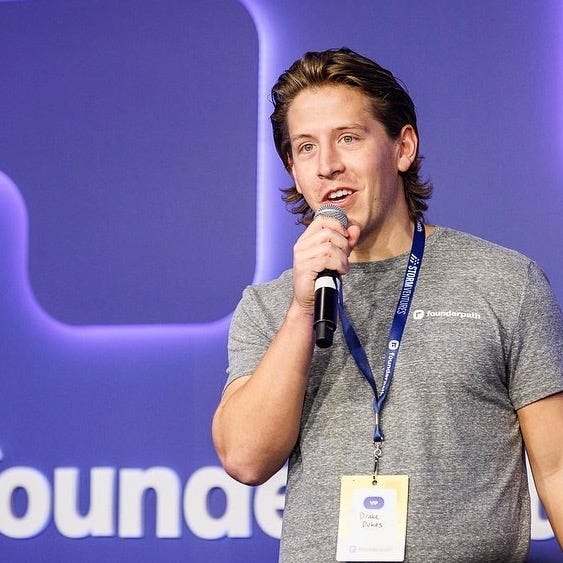

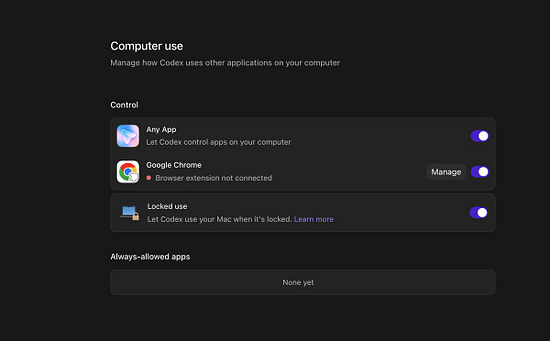



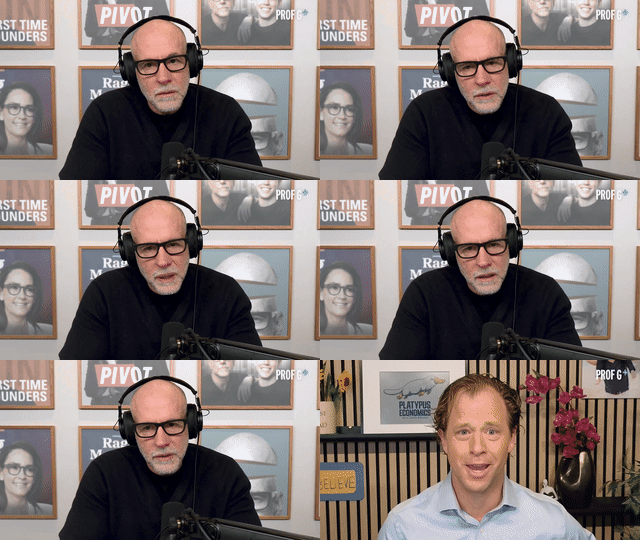


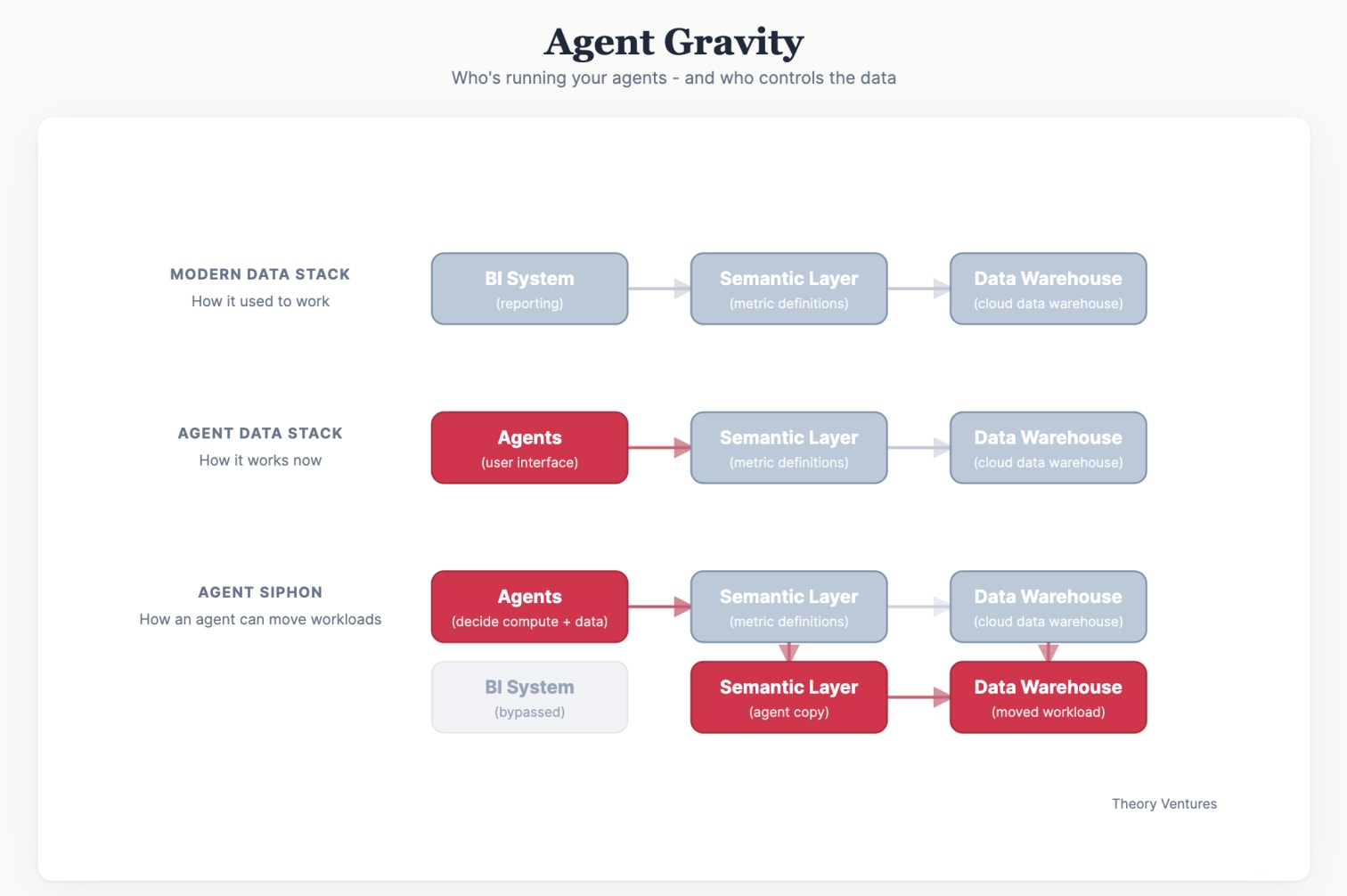




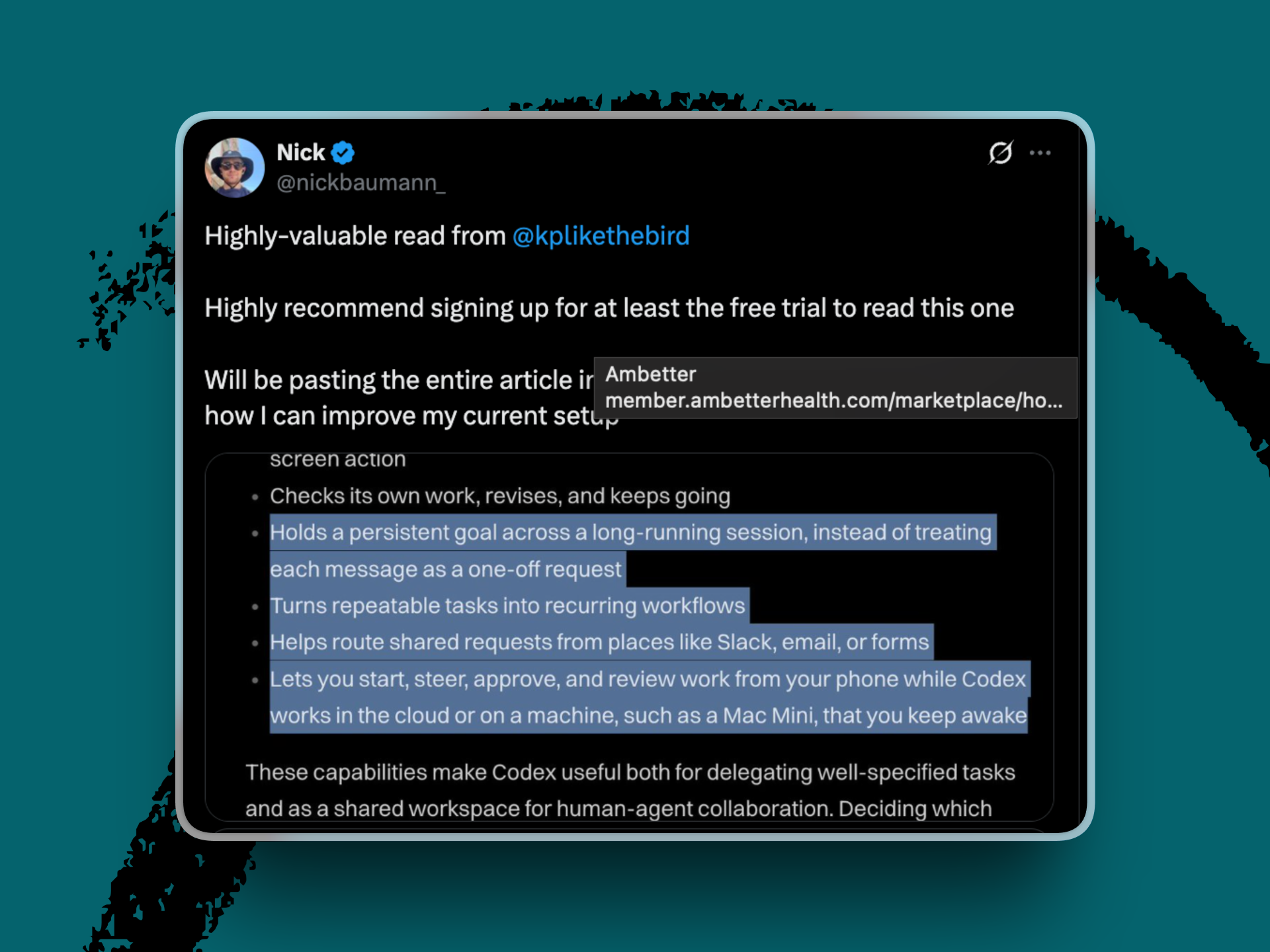


 Ben Tossell @bentossell
design peeps, a lil help? im building interactive, animated components im using shadcn, tailwind, motion, tegaki, rough-notation. i want a bit of a component generator that can help me cycle through variations, themes, layouts, mix n match different components and things like
Ben Tossell @bentossell
design peeps, a lil help? im building interactive, animated components im using shadcn, tailwind, motion, tegaki, rough-notation. i want a bit of a component generator that can help me cycle through variations, themes, layouts, mix n match different components and things like

 Anthropic is back. After a year of riding Claude Code into the rest of knowledge work, the lab hit a rough patch:




 Join me andTrevin Chow for our third compound engineering camp for paid subscribers next Friday,June 5 . We’ll show how planning and building are collapsing into one flow—where you hand your AI a goal and it runs with it.
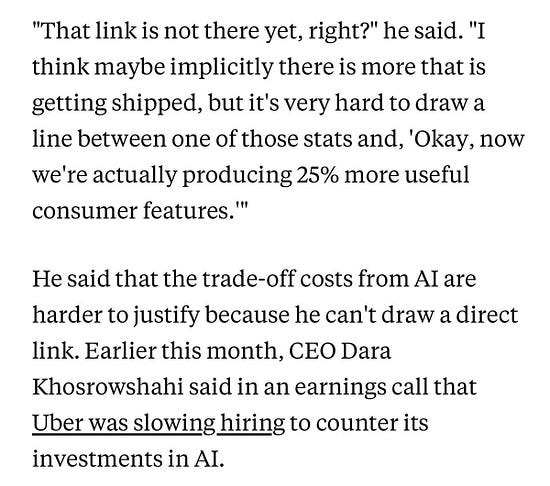
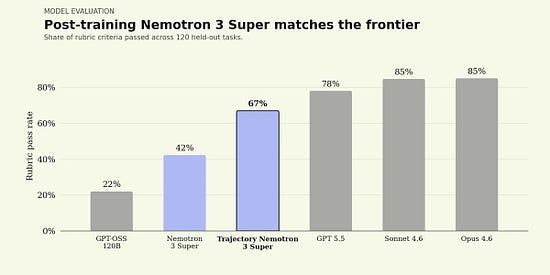 Trajectory @trajectorylabs
Welcome to Day 2. Yesterday, we showed the broader work we're doing with the pioneers of continual learning. Today we'd like to deep dive on one: how we post-trained an open model for legal work, in partnership with @Harvey. We've built a platform where production data is the
Trajectory @trajectorylabs
Welcome to Day 2. Yesterday, we showed the broader work we're doing with the pioneers of continual learning. Today we'd like to deep dive on one: how we post-trained an open model for legal work, in partnership with @Harvey. We've built a platform where production data is the
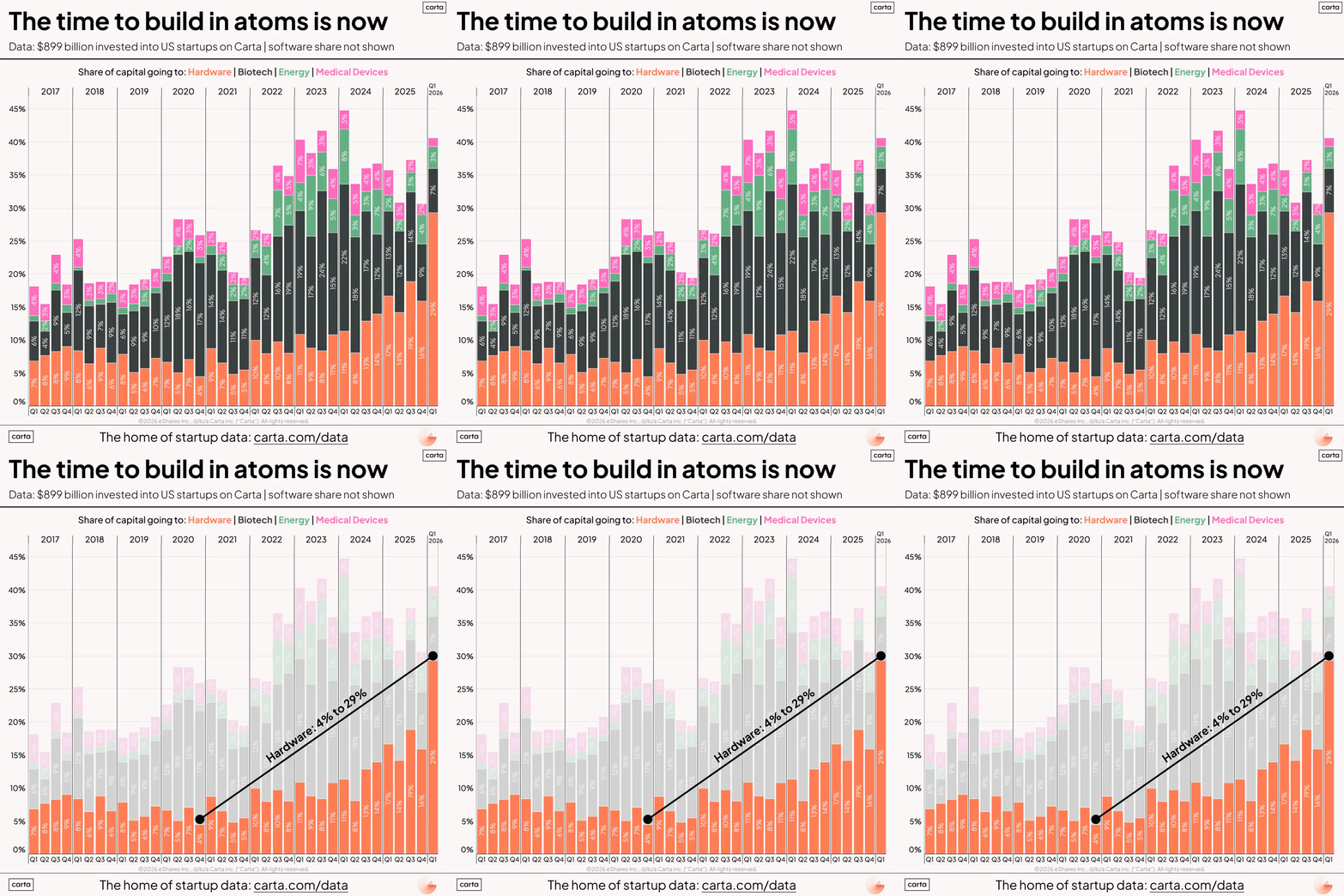

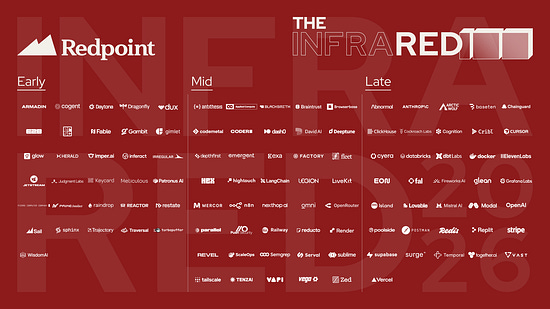
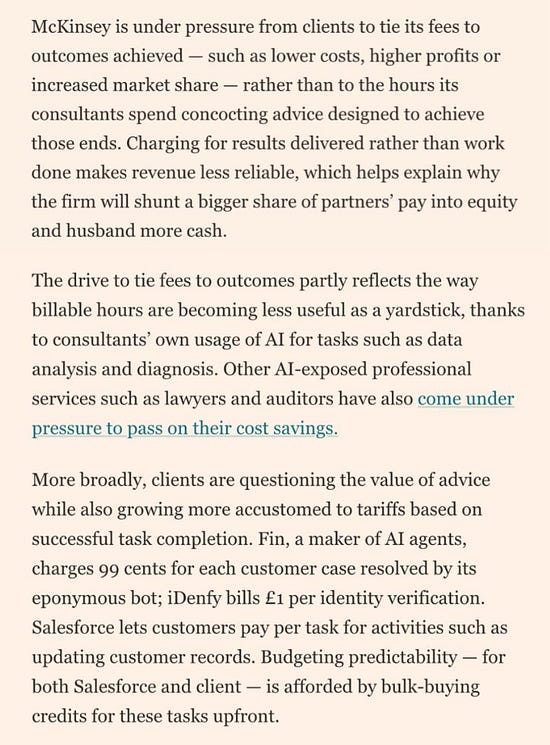
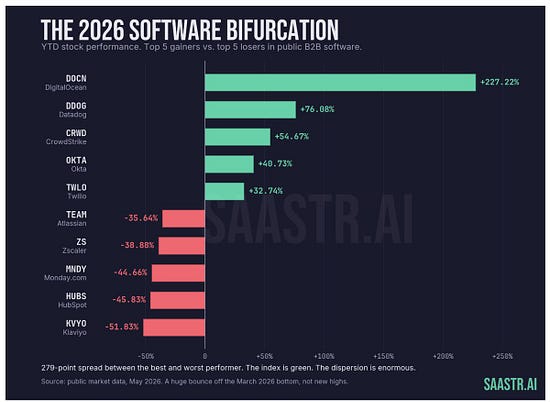
 Hello, and happy Sunday! This week was bookended by two guides: a 9,000-word