We live in a time where we’re constantly on the verge of a new trend emerging, whether it be tech, fashion, design, or lifestyle. Our world is encompassed and shaped by trends that ultimately dictate how we act and what we consume. The mysterious thing about trends is that they often appear to come out of nowhere, or at least that’s the illusion those behind the curtain strive to attain. Trends become widespread across every industry, from large-scale matters like fashion, tech, and travel, all the way down to minuscule matters like colors, mannerisms, and minor habits in our daily lives. An organic wave may create the trend, but consumerism and deeper psychological needs are what perpetuate and solidify them.And even further, modern trends are no longer just a product of culture or pure consumerism habits, but a manufactured identity system that shapes how we belong and perceive ourselves.
As the decades have evolved, so has the association with trends as a personality building tool. If we look back through the eras of time, it’s evident that each is represented by a few notable items, but also reflective of how we view ourselves as a mirror to societal movements. The 20s brought fringe flapper dresses, bob hairstyles with lace headbands, cigarettes, and all things art deco. It was also an era when the idea of individuality began to form, fueled by the access to modern wealth due to intense economic growth and mass production. The 70s were defined by bell bottoms, disco, peace, and freedom, but more notably, the hippie aesthetic created the movement of visual expression and outspoken individuality.
Thanks for reading Daniella's Substack! Subscribe for free to receive new posts and support my work.
And while the 2010s were notorious for low rise jeans, smartphones, and creating your digital persona, it was also a time when more ostentatious logos were put on display, and the trend was heavily who you’re wearing rather than what. It was especially a decade when the correlation between trends and high consumerism hit its peak, as overconsumption was the hot trend itself. This was likely due to an emergence of social media and widespread technology, where most things felt right at our fingertips, and it was truly the first time you were able to easily display material possessions.
In today’s world, trends are continuously manufactured with a mask that makes people think they influenced them. The result of the “mass production of trends” culture is that trends have shifted away from being just an item or set of items, and instead become entire personality packs and themes. As a result, people’s personalities are increasingly shaped by trends that were carefully curated. The “Pilates girl” aesthetic, for example, has fueled millions into reformer classes, Stanley cups, matching activewear sets, and the idealized “stay at home” lifestyle. It’s no longer just a single item that becomes the trend, but an entire collection of products, habits, and ideas neatly packaged into a persona that’s being sold. This raises the question of how much of our identity and personal aesthetic is truly ours, and how much of it is shaped by the trends we’ve been fed, whether by brands or by a small group of individuals.
Think of the quiet luxury trend that flooded the internet a few years ago, so much so that this term became a new adjective to describe an aesthetic. This trend essentially represented choosing pieces and engaging in activities that create the appearance of wealth through understatement. This meant the introduction of the “old money aesthetic” – from elevated basics, clean jewelry, and living life in accordance with the trademarked if you know, you know motto. It also meant the reversal of any flashy logos, statement pieces, and ironically, anything that was perceived as trendy. This trend also went beyond just clothing and accessories; it shaped how many chose to live and portray their lives. Adopting this trend, or persona, meant that ostentatious displays of wealth no longer had the cool factor they once did, and people aimed to embody discreetness and elegance by partaking in the quiet luxury trend. Extreme wealth signaling started to feel unsophisticated and subtlety became the new status marker.
Further, this trend gained such popularity because it symbolized a key factor many humans long for: proximity to wealth. It made the appearance of wealth become accessible for all, if you engaged in the trend and dressed/acted the part through your wardrobe and interests. The irony is that quiet luxury positioned itself as individuality and timelessness, yet quickly became one of the most replicated aesthetics online.
Another example is the clean girl / almond mom / “nothing processed” archetype. An emerging trend centered around rejecting anything artificial or overly processed. And while much of this is objectively positive, it’s still undeniably a persona. The person who avoids additives and processed foods also often subscribes to a non-toxic household, BPA-free products, organic skincare, and so on. One behavior quickly trickles into another, until an entire identity system is formed around the trend, which also creates an incredibly easy target for marketers.
There are realms to trends, based on socioeconomic status and the space in which you revolve, but the reason behind the existence of a trend is that partaking in one symbolizes something deeper: it’s a representation of belonging. The reason that trends become so widespread and are easy to sell is because they allow for aspirational identity shortcuts. The more one fits in with the masses, the less likely there’s potential for being an outlier and being seen, which is often a trigger for fear in others. This manifests through conscious and unconscious forms, as our urge for over-consumption may stem from a deeper psychological need. This means that we spend just to partake in trends to have the latest and greatest. This is the reason that templatized trend packages sell and are subconsciously adopted by many.
People often feel comfort in an aesthetic sameness (or picking from a template) because it allows for an immediate bond on the basis of mutual taste. It also takes the guesswork out of cultivating your own identity, which is something that has the power to be jarring for many. This is why influencer culture and celebrity fandom continues to rise, because certain individuals and/or aesthetics can become the blueprint for our persona. There’s a reason why celebrity makeup and beauty brands often explode in popularity, despite not always having the most superb product. When consumers buy products from these brands, they’re buying proximity to the identity, which sends an internal signal of proximity to an inner circle.
The more we participate in the “next thing” and blindly follow the people we perceive as idols, the more our identity is shaped by forces outside of ourselves. And as these various ideas and trends become pushed onto us as a way of belonging, it slowly becomes part of our identity. It allows us to select from pre-curated personas that we want to embody, rather than the discomfort of going against the wave. And ultimately, for the creators behind trends, whether it be mass corporations or the it-girls, the reason behind pushing trends is fairly straightforward: it unlocks consistent and growing revenue, along with a distribution base for your products. Whereas our reason for blindly partaking is also simple: it equals belonging and quietly shapes who we are.
Thanks for reading Daniella's Substack! Subscribe for free to receive new posts and support my work.
This week, we’re unlocking a Prof G+ Deep Dive for everyone. These are the kinds of exclusive episodes our Prof G+ subscribers get regularly — deeper analysis, sharper context, and conversations you won’t hear on the main feed.
America used to borrow to build the future. Now it borrows to maintain the present.
In this Deep Dive, Scott breaks down how debt became embedded in every layer of the economy — from trillion-dollar government interest payments, to leveraged corporate bets on AI, to consumers financing groceries and food delivery.
Then, Scott sits down with Morgan Housel to unpack the psychology of debt, financial insecurity, and why borrowing increasingly feels less like a choice and more like a survival strategy.
If you’re not a Prof G+ subscriber yet and want access to these weekly deep dives, make sure to subscribe below for all of Prof G Media’s exclusive content, plus livestreams and ad-free pods.
Four pieces of unsolicited advice from an AI-pilled millennial
by Katie Parrott My first job out of college was as a copywriter at a little crowdfunding website based in Columbus, Ohio, called Fundable.com. The company had no money, so they didn’t care that I had no experience. I had no experience, so I didn’t care that the job didn’t pay at first. The offer was simple: Create a profile for your startup, and we’ll connect you with investors. Most founders didn’t want to write their own profiles, so my job was to take whatever strange, half-formed thing a founder was building and translate it into investor-speak. The profiles were so templatized I can still recite the format: problem, solution, traction, team, business model, revenue projections, competitive landscape, funding terms. I’ve been thinking about that job lately because AI could now produce one of those profiles in two minutes. At 23, I would have heard that and thought: “Thank God.” At 36, I think: “Thank God it couldn’t.” Without that job, I would have never learned how to take a company apart and put it back together as a story, or how to organize information for an audience that wasn’t being paid to read my stuff like my professors in undergrad. This year’s crop of recent graduates has it harder than mine did. AI, which can perform many entry-level tasks, is replacing those early experiences faster than employers can figure out what’s going on. Researchers at Stanford’s Digital Economy Lab found that employment for 22-to-25-year-olds in the jobs most vulnerable to AI has dropped 13 percent since late 2022, even as older workers in the same roles held steady. I think about the 22-year-old version of myself, if I were sending out applications right now into the void of LinkedIn. What would she think about the headlines about AI and job displacement? Would she be scared? Yeah, probably. She was scared of much less. So with full awareness that no one born this millennium wants career advice from someone born before the fall of the Berlin Wall, here’s what I’d do if I were starting over today, knowing what I know about work, AI, and how one is shaping the other.
You’ve been meaning to start outbound for six months.
There’s good news, and there’s bad news
The paradox facing today’s entry-level workers is as old as the entry-level job itself: In many cases, in order to get a job, you need experience, but in order to get experience, you need a job. And while employers requiring experience in AI when the technology barely existed when you picked your major may feel like a cosmic joke, employers have long asked for five years of experience with brand-new technologies. All that is small comfort to the recent grad with a near-empty resumé. And there are qualitative differences in what AI is doing to entry-level work. For one thing, when you look at the kind of AI skills employers expect young workers to bring to the table, they want more than the ability to type a prompt into ChatGPT. They want people who can evaluate tools, review outputs, and figure out how to improve those outputs, whether it be with better prompting or fixing the work themselves. Demand for AI skills in entry-level jobs is up three times, with a particular focus on capabilities that require you to evaluate AI as well as use it. (Chart courtesy of NACE.) They’re looking for judgment, which is something that you can really only build through experience. When I was writing those funding profiles, I learned how to tell good work from bad. The first 50 that I wrote were so bad that at one point, a client said I should be taken out back and shot. With AI in the mix, the bad ones wouldn’t have been bad enough to teach me anything. The other way today’s job market is more intense for entry-level workers is that employers are expecting competence in a technology that won’t stand still long enough for anyone to completely grasp. Agentic tools are changing functions in months, rather than years. There’s no canon to study or senior teammate to apprentice under. Everyone in the org chart is figuring it out on the fly, and you’re expected to figure it out with them while learning how to navigate office politics and pay your taxes. What to do about it?
Chase problems, not professions
When you’re a kid and an adult asks what you want to be when you grow up, the answer is always a job title. A firefighter. A doctor. A YouTube creator. We carry that habit of thinking into the years when we start to look for jobs. We pick a title, and we go after it. The problem is that job titles aren’t as sure a target as they used to be. The role you’re chasing today might exist 18 months from now. Pick a problem you want to help work on—something happening in the world that you find yourself thinking about, even when nobody is paying you to. The role of “content marketer” or “data analyst” may shrink, split, or even vanish, but the problem behind those titles—how to get a stranger to pay attention to something they didn’t know they cared about, how to make sense of a pile of messy numbers—will still be there, and somebody will still be paid to solve it. I’ve been bad at taking this advice myself. I spent a decade chasing the title “copywriter” and then “content marketer” across a handful of industries that had nothing in common—oncology advertising, personal finance, even, God help me, crypto—without asking whether I cared about any of them. I had the high-school overachiever’s mindset: You didn’t have to be passionate about the subject to get an A. I’d been getting A’s in classes I had no feelings about for 16 years. Why would jobs be any different? That strategy doesn’t work as well when AI can do the entry-level tasks. Your value to whomever hired you is whatever you bring on top of that—usually a deeper understanding of the problem than the model has. That kind of understanding is hard to build in a field you don’t care about.
Choose one discipline to protect
Once you’ve picked your problem, pick your craft, whether it’s writing, building, researching, designing, strategizing, or operating. You’ve probably heard the truism that it takes 10,000 hours to gain mastery of a skill. The actual research is more complicated than the popularized version, but the underlying idea is right. You don’t get any good at anything until you’ve done it many, many times. If you want to write for a living, write your own sentences. If you want to be an engineer, write your own code. Protect this craft from AI at all costs. AI can find resources, explain things, quiz you, and point out where your reasoning has gaps. But if you let it write your sentences or do your research, you won’t get the hours of doing things badly that you need in order to do them well. It’s easy for me to say this when I’m writing this with AI open in another tab. Claude wrote the first draft of half the sentences in this section. I rewrote them. That rewriting is what the discipline is for—noticing when something doesn’t pass muster. The reason I can do that is that I’ve been writing sentences for 10 years. I know all too well how tempting cutting corners gets when the shortcut is right there in another tab. Don’t take it, and in five years you’ll be running circles around the people who did.
Make things before anyone asks you to
When I was first applying to jobs out of college, my resume said almost nothing about what I could do in the “real world,” unless the employer happened to be looking for someone with an undergraduate’s grasp of the themes of Wuthering Heights. A thin resume is less of a disadvantage than it used to be, particularly since employers are increasingly shifting to skills-based hiring —screening candidates by what they can do rather than where they’ve been. What you need to do in that environment is make something, and that can be anything— a small tool you wished existed , a piece of writing on a question nobody is paying you to think about. Pick the thing you’d want to use yourself, and make it. Once your work gets you in the door, the conversation that follows is going to be about how you made it. What you used AI for, and where you decided not to—the moments where you looked at the model’s first answer and thought, “No, that’s not right.” Being able to walk someone through those decisions is the second skill you’re building, alongside the work itself. That’s the judgement that I mentioned before.
Build the career coach you wish you had
The last time I was job hunting, I built a career coach in ChatGPT and used it to land the job I have now. It was a project with my resume, a few examples of writing I was proud of, and a long prompt telling the model how to talk to me. I checked in with it most weekdays for about a month. What it did, more than anything, was give me somewhere to put my thinking. Instead of running the same anxious loop in my head, I could lay the question out and have the model suggest specific next steps, like a writing sample worth developing, or questions I could ask on that networking call that it encouraged me to seek out. By the end of that month, I had a job. If I could hop in a time machine and travel back to talk to my 22-year-old self, I’d suggest that she make one too. It’s not even that hard:
Pick a tool. ChatGPT and Claude both have a project feature that holds context, files, and conversation history across sessions. Either works. Free tiers are good enough to start.
Create a project and give it a name. “Apprenticeship Coach,” “Career Stuff,” your friend’s nickname for you.
Load it with context. Add examples of work you’re proud of and examples you wish were better—the model needs to see what you’re aiming at and where you’re starting from. Paste in a few job postings for roles you’d want, even if they might be too senior for you. Write a paragraph on the problem you care about and why.
Tell it how to behave. In your instructions, describe to the model how you want it to deliver feedback. If you want a tough critic, say so. If you’re prone to self-doubt, give it more of a cheerleader vibe. One thing to look out for: Models are infamous for sycophancy—telling you what you want to hear—so guard against that in your instructions, and even then, maintain a healthy skepticism of the outputs. It’s good practice for when you’re asked to work with AI in the workplace.
Here’s a starting template. Fill in the bracketed sections, adapt the feedback line to match your preference, and add it to the custom instructions in your project: I want you to act as my career coach. My goal is to use AI to get feedback, build judgment, and create visible proof of skill, while still doing the central work myself. Here is my context:
Problem I care about: [Examples: climate, education, public policy, media, health care, local business, creator economy]
The kind of work that addresses it: [Examples: writing, building software, running operations, teaching, designing, researching]
My background: [College major, jobs or internships, projects, communities, life experience]
Skills I’m most confident in: [List 3-5]
Skills I’m least confident in: [List 3-5]
My current technical fluency: [Beginner/comfortable with common AI tools/can code a little/technical but not expert/highly technical]
The core practice I want to develop: [The specific thing the work above requires—writing sentences, writing code, reading sources, designing experiments, etc.]
The parts of that practice I want to keep doing manually: [The reps I want to protect from automation, and why]
How I want you to deliver feedback: [Warm and encouraging/rigorous and direct/strategic and pragmatic/Socratic and question-led/blunt but constructive]
Important: Be honest. Push back when my plan is vague, my reasoning is thin, or my project doesn’t teach me the practice I said I want. Ask me a clarifying question rather than guessing. Design an apprenticeship plan that includes:
The tasks I should practice manually (the things I shouldn’t outsource yet)
How I should use AI as a coach, critic, tutor, and research assistant
Readings, people to follow, tools to try, and projects to build
Feedback loops I can use to improve
Portfolio artifacts or public outputs I should create
Mistakes and shortcuts I should watch for
After giving me the plan, narrow it down: What is one concrete thing I can do this week to move toward this goal?
The beginner’s advantage
When I was an undergraduate, my strategy for dealing with the uncertainty of what came next was to pretend it wasn’t happening. I paid for that in the form of angst and existential dread. So if I could give one piece of advice to the class of 2026, it would be this: Don’t wait. AI is reshaping the workforce in real time, and no amount of pretending otherwise will slow it down. I’d love to tell you that the senior people in your field are going to wake up tomorrow and remember that someone once trained them, too. That employers will realize, en masse, that the entry-level folks they don’t hire today are the senior-level folks they won’t have 10 years out. But the market doesn’t reorganize itself around what you wish it would do, and you don’t get a career by waiting for it to. The things AI rewards happen to be the things young people have in surplus, like curiosity, willingness to ask why something is done a certain way, and a little bit of idealism about what work could look like if you weren’t bound by the “best practices” of a time before ChatGPT was a glimmer in Sam Altman ’s eye. I don’t know exactly what work is going to look like by the time you’re my age. Nobody does. But if I had to bet on anyone, it’d be the people who are curious about what’s possible. That’s most of you, whether you know it yet or not.
We’re tracking company launches as they happen and surfacing the most interesting new founders and startups (yes, all outside of this stealth activity too). If you want to stay ahead of the curve, this is where you’ll find them first.
Right now we’ve got 5 subscribers: my wife, my mom, and that high school buddy who won’t stop pitching me his app. Be smart like them and get in early 👇
We run a live feed inside Gravity that tracks founders entering stealth and companies quietly exiting it.
What you’re reading here is about 1% of the stealth activity we pick up. The full tracker updates in real time as things change and new activity emerges.
Prior Experience: Staff Product Designer at Uber, Design Lead (Merchant) at Postmates by Uber, Product Designer at Humble Bundle, Product Designer at Mixbook
Co-Founder:Spencer Thurston (Staff Designer / Sr Manager at Uber)
19th is an AI platform that searches hundreds of model candidates and distills the best into small, fast specialist models for product tasks such as extraction, classification, scoring, and ranking — optimized to beat frontier LLMs on accuracy, latency, and cost.
HQ: San Francisco, California, United States
Industry: Artificial Intelligence, Developer Tools | Team Size: 2
FounderDNA: Serial Founder, Technical Founder, Masters Degree
Prior Experience: Fellow at EWOR, Founder & CEO at getitAI, Co-Founder & Product Director at Pitcher, Partner Advisory Board Member at Salesforce CRM Analytics
Twinity is a B2B subscription platform for digital twins of celebrities and talent, managing rights, distribution, and monetization of likeness while giving businesses access to a curated talent roster — modelled similarly to how Spotify licenses music streaming.
Prior Experience: Founder at Shopbolt, Senior Product Manager at Faire, Manager Strategy & Finance at Airbnb, Senior Business Analyst at McKinsey & Company
Argos helps in-house legal teams surface institutional knowledge grounded in their team’s past decisions, enabling faster and more confident legal delivery.
Prior Experience: Master in Management at HEC Paris, Finance & Management at London School of Economics, Bachelor’s at IEP Paris, Angel Investor at Uncovr, Angel Investor at Daisy
Moni is an AI-powered expense management tool that automatically finds, downloads, and matches receipts on behalf of finance teams.
HQ: Sweden
Industry: FinTech, Expense Management
Time Spent in Stealth Mode: 6 Months
🕵️♂️Key Talent Going Under Stealth
Illuminating clues left behind by world class talent and influential innovators who just went into stealth mode
Sonal Jain - Founder and CEO at Stealth AI Startup
FounderDNA: Technical Founder, Masters Degree, Former FAANG
Prior Experience: Director of Software Engineering at Google, Software Development Engineer at Microsoft, Research Assistant at Information Sciences Institute
Prior Experience: Manager at Allen Institute for AI (AI2), Co-Founder at EarthSenseAI, Engineering Manager ML at WellSaid Labs, Research Manager at Deepgram
Anirudh Seth - Co-Founder & CTO at Stealth AI Startup
FounderDNA: Technical Founder, Former FAANG
Prior Experience: Senior Director of Engineering, AI at Dropbox, Head of Engineering and Science, Game Ads Innovation at Amazon Web Services, Head of Engineering at Amazon
Prior Experience: Founder at Sups (Acquired by US News), Investor at Insight Partners, Investor at Foundation Capital, Generative AI at Boston Consulting Group (BCG), Account Leadership & Research at Mercor
FounderDNA: Technical Founder, Masters Degree, Former FAANG
Prior Experience: Hardware Engineer, Cloud & Infrastructure Silicon at Google, Sr. Director Datacenter Validation of Xeon & Networking SoCs at Intel, Principal Engineer, Computer Architect for Xeon Phi (HPC & Deep Learning) at Intel
🚨Here’s the deal 🚨This email has gotten too big. Exciting, but with more people following it, the edge diminishes. I’ve thought long and hard about what to do to preserve the value in the signals. I’m not sure about the final direction yet, but in the meantime I’ve been sending an email 48 hours earlier to a select group of paid subscribers. The feedback has been pretty positive so I’m going to open up the list for another 100 spots. To get signals early, Apply here!
Stay Stealthy,
Drake
Thank you for reading. If you liked it, share it with your friends, colleagues and everyone interested in staying ahead of the hidden developments in tech. Subscribe below and follow us onX / Twitter to never miss a company operating under stealth again.
Stealth Startup Spy is a data-driven newsletter for investors, journalists and tech enthusiasts interested in uncovering the next big move for key talent, real-time stealth company launches and technology advancements not in plain sight. We leverage the technology built at Gravity to shine a light on the hidden world of stealth startups.
As I was paging through Good Writing, Anne Lamott’s new book, I wondered what AI would say about twisting cliches & finding hidden metaphors (chapters 18 & 19). Over the last 16 years of writing, I’ve read books about writing, hired an editor, & used AI. I’ve fine-tuned models to mimic my voice, tested more than 10 AI systems, & written many post with AI, with some Hindenburgs I’ve kept public as proof despite my embarrassment. Writing is hard for AI. First, AI has its own voice : Gemini beams sunshine ; Claude’s is languid but sharp ; & OpenAI Codex is the most dispassionate. Writing in another voice is hard for people & AI. So writing with a single model doesn’t work. What about an AI editorial council? The concept shines with code review. Why not blog review? At my fourth draft, I asked Gemini, Claude, & OpenAI Codex to edit my work with each other. The result wasn’t an elegant mosaic but a fingerpaint disaster. Each model had its own voice. Like three editors with three visions of the piece, the AI models couldn’t agree on a consistent tone or style. And each is willing to deliver it directly, casually cruel in the name of being an editor. Eg, this post:
Verdict. This is a three-beer conversation mistaken for a finished essay. Pick one angle : the Lamott meditation, or the AI choir experiment, or the vinyl-flare theory. Develop it with specifics, quotes, images. As written, it’s 500 words of intelligent observation without a single indelible sentence.
…imagine that daily farrago in triplicate. AI’s ability to synthesize images, video, text means anything can be created. What’s authentic? Imperfection. The pops of a vinyl record, the solar flare on Kodachrome film, the imperfect analogy and the punctuation peccadilloes (lovers of ampersands, unite!), stand out. AI may generate digital reams of manuals & documentation, & may one day parrot the way we write authentically. But the imperfections of writing are what make it good writing.
ben's bites · Tuesday, May 19 2026 · 7 min read · ↑ top
I haven’t used OpenClaw in weeks
Hey folks
Google I/O starts today, and Logan tweeted: “The model is the product”. There have been some rumours that the latest Gemini model scores similar on benchmarks to GPT 5.5 - but we’ll see how it feels when actually using it - previous models also scored well but didn’t feel great to work with.
When models are so good, harnesses will be much less important. I just don’t think today is the day that happens. And on that point, the role of a harness will probably just shift - instead of managing how/which tools to use, the system prompt, context management etc it could be managed agents, sandboxing, cloud/local management.
I started using Codex on my phone…but not all that much to be honest. A lot of the agent harnesses these days have ways to control your sessions from your phone - Claude Code has /remote-control, Pi can build one for itself (i use a telegram one) and Droid has mobile web + Droid computers.
Most of my mobile first work at the moment is more brainstorming than building and I find myself flitting between all these options all the time.
I used to use my OpenClaw bot like an addict, but haven’t spoken to the poor bastard for weeks now.
It may help that I’m currently focused on just one (ish) main thing - this ‘course’. Which is really more of a library or reference manual on how I think about agents, how I steer them and build with them.
Hyperagent , the cloud agent system with full computing environments, is giving $10M in inference credits to help founders build and run agent-first companies. The first 500 qualifying applicants gain access to this limited founder offer. Applications close May 31st.
Headlines
Codex now connects your Mac to your phone. You can start tasks in Codex from your phone, but the actual work still runs on your Mac, devbox or remote machine, i.e. files, setup and credentials stay where they are, while you can approve commands, answer questions, and review diffs from your phone. This update also brings Hooks to Codex.
Anthropic is acquiring Stainless , a platform to build SDKs (also used by OpenAI), and they are shutting the service down. Also, at their London conference, they added self-hosted sandboxes and MCP tunnels to Claude Managed Agents - their “running agents made easy” product for companies.
Mythos is great at spotting real attacks, which are often many small vulnerabilities connected in a chain.
A single model, however smart, without a good harness leaves a lot to be found.
“Find bugs fast and patch them faster” is not a good idea. Teams need to focus on making bugs harder to chain (even if they exist) and to exploit.
Cursor’s Composer 2.5 (partly trained on SpaceX’s GPUs) is out. The selective benchmarks that Cursor reports put the model roughly at the same place as Opus 4.7-xhigh and GPT-5.5-high, while being much cheaper than them.
Coatue says its AI framework moved from “follow the GPU” to “follow the gigawatt”.
Afters
Thariq
@trq212
okay this is going kinda viral and tbh my original text was kind of messy, so here's a second pass with the help of Claude: -- Implement <SPEC>. As you work maintain a running implementation-notes.html file that captures anything I should know about how the implementation
Chris Tate
@ctatedev
Introducing Zero The programming language for agents. I wanted a systems language that was faster, smaller, and easier for agents to use and repair. Explicit capabilities. JSON diagnostics. Typed safe fixes. Made for agents on day zero.
Steve Ruiz
@steveruizok
killer prompt "can you repeat back to me the outcome that I am expecting?"
Nick
@nickbaumann_
My laptop has become a “satellite device” since I started using Codex from my phone. And my Mac mini has become the “home.” It’s clunky, but the end state feels more like how we’re going to be working in the near future: I’m currently running the Codex app on 2 devices: 1. my
Andy McLoughlin
@Bandrew
Had a lot of fun (really, actually) chatting with @kentlind on the Something Ventured podcast. We cover a lot of ground: the early days of seed investing (featuring folks like @jeff , @m2jr , @joshk et al), the state of seed today, Silicon Valley's "British invasion" (Kent's words,
Max Zeff
@ZeffMax
Scoop: OpenAI announced another major reorg on Friday, as part of its effort to unify ChatGPT and Codex. -Greg Brockman is officially taking over OpenAI's products, after previously being tapped as an interim leader -Head of Codex, Thibault Sottiaux, is now leading core product
dominik kundel
@dkundel
You should build your dream macOS app right now! The "Build macOS App" plugin in Codex is wild. Used voice dictation to build an app I wanted for a while in <7 min (+6 min of tweaking). Couldn't believe how quickly it was done. Prompt is in the video and in the tweet below.
Scott Galloway · Wednesday, May 20 2026 · 3 min read · ↑ top
Ed Elson’s latest keynote, live today
Our podcasts scratch the surface … our keynotes get subterranean.
Today at 12:30 p.m. ET , my Markets co-host Ed Elson debuts an all-new keynote presentation exclusively for Prof G+ subscribers, only on Substack.
The New Normal identifies the most important – and least discussed – forces reshaping the global economy, from how loneliness is producing the next generation of billion-dollar businesses, to the erosion of “brand America” and the desperation driving the casino economy.
Come for the rigorous analysis, stay for the practical insights into how these tectonic shifts should inform the worldview of the next generation of investors (emerging fund managers, take note).
Prof G+ members will also get same-day access to the replay, for one week only. Don’t miss it.
Curious? This week only, we’re unlocking a Deep Dive for all of our subscribers. Tune in for a taste of what our Prof G+ subscribers receive regularly – deeper analysis, sharper context, and conversations you won’t hear on the main feed.
Our freebie this week is about debt. America used to borrow to build the future. Now it borrows to maintain the present. I break down how this paradigm shift has permeated every layer of our economy, from trillion-dollar government interest payments, to leveraged corporate bets on AI, to consumers financing food delivery.
I’m joined by Morgan Housel, author of The Psychology of Money , to help unpack the behavioral economics of debt, and why borrowing increasingly feels less like a choice and more like a survival strategy.
Introducing The Week from Prof G Media, the latest addition to The Prof G Pod lineup. Every Friday, we curate the highlight reel of our most incisive takes across business, technology, politics, and culture, and catch you up on what you missed.
Hosted by George Hahn, the voice behind the No Mercy / No Malice pod, The Week will make you smarter in under 15 minutes.
The Week is available now across all major audio platforms, and will drop on YouTube this Friday. Our Substack fans got early access to the video version last week – check it out here.
Still feeling overwhelmed? We respect your inbox. Customize your Prof G Media account settings below, and decide what you want from us (and what you don’t).
The Business of Being Me
This week, the editorial team at Substack released a generous profile of me and my team, in which I get candid about the business of Prof G Media. For those of you newly subscribed to this publication as a result, thanks for joining us.
A podcaster recently posted about a founder that he had just interviewed. The founder was the most hardcore founder he’s ever encountered after decades of chronicling the most hardcore founders.
Each detail was more extreme than the one that came before it, enumerated in the way that a medieval chronicler would escalate the mortifications of the saints until the congregation was sufficiently prostrate that the church floorboards were bending under them.
The company works seven, maybe even eight days a week. The founder lives, sleeps, and eats in his office. He built a cafe inside because even though he lives amongst other hardcore founders, there is no founder hardcore enough to demand coffee at one, two, three, four, or five in the morning. Two thirds of the company have tattooed themselves with the logo of the company like a cattle brand.
The post closed with a jab at the 9 to 5ers working from home on Fridays, the comfortable, the moderate, and the damned, who exist in his frame only to establish, by contrast, how serious and hardcore this founder is, how committed and how far beyond the ordinary human appetite for rest and domesticity and life outside the building.
No one asks what the company does.
It doesn’t matter what the company does. The company is beside the point in the same way that the specific miracles attributed to a particular saint are always beside the point in the hagiographic tradition. What matters is the suffering that preceded it and the renunciation that made it possible. This act, the act of chronicling the hardcore founder, is hagiography.
Hagiography in its precise and medieval sense. The chronicles of the lives of the saints that were composed for the edification and moral subjugation of the faithful. We have not progressed on the structure in 800 years, we’ve only made it secular. The saint renounces worldly comfort. The saint endures what ordinary men cannot. The saint is sustained by something the audience can see the evidence of, but can never quite possess. And the distance between the saint’s capacity for pure suffering and the faithful’s capacity for admiring it is the apparatus of faith. I am not the saint and you are not the saint. We are the peasant who is hearing about the saint from the friar who visits the monastery. The role is to be moved by it, to move our souls ever closer to the virtue of our Lord.
Ava
@noampomsky
SF missed connections like “she was sitting in Haus Coffee with Bose 700 headphones over her glossy black hair, testing new Stripe features to reduce fraud. I had swiped right on her Hinge profile a week ago. She had a tattoo of her startup logo on her well-muscled left bicep.”
I keep circling back to the tattoos. 20 people have a startup’s logo on their skin. Permanently. The tattoo is the oldest medium of devotion available to the human body. It’s the same medium the pilgrims used to mark themselves after reaching Jerusalem in conquest and crusade. The same medium that Roman soldiers used to signify that they belonged to the legion before they belonged to themselves. But instead of the legion, instead of your god, the tattoo is of a corporate logo. It’s the terminal escalation of something that I think is worth looking at, because it says something much worse about where we are than anyone seems comfortable saying out loud.
What this reveals is that the wealthiest generation of human beings in the history of our species has become so frightened of being seen as a class so terrified of their position being legible that it has begun performing the lives of people who assemble iPhones in near-slavery conditions in Foxconn plants. Their motivation does not come from a place of solidarity with those workers. And it’s not a political conviction about the dignity of labor, the motivation is terror. The specific terror of being seen to have money and to enjoy it. The terror of the surplus being visible and not disguised as the product of equivalent suffering. The seven day work week is the Foxconn schedule, the sleeping in the office is the Foxconn dormitory, the cafe built inside is the Foxconn canteen, but there is no one forcing them to labor, no suicide nets.
Jordi Hays
@jordihays
@GiveIt2Hamilton Good feedback We are trying to reclaim 996 lifestyle from the Chinese though
These are people that are performing voluntarily in public the precise conditions that we correctly identify as exploitation when they are imposed on a person who has no alternative. And we celebrate the performance because the performance answers the question that this culture has no answer to otherwise.
Why do you deserve so much? Why are you so rich?
Because I suffer. Because I do not sleep. Because I’ve given up my life to something greater than myself because my employees have scarred their flesh with my symbol and I eat from open containers the leftover food and my body rots, as I sit at the desk, because I have not left this building in 11 days because I am no more of the lines of code that I produce than I am flesh and life. The corporeal faculties that define me, reproduction, love and lust no longer exist. They have eliminated them in service of something greater, and trust me when I say I’m not enjoying any of this. And if I am, I’m enjoying it only because I’m giving it up in sacrifice for something greater. I’m a sicko. I’m barcode.
We should find this considerably more disgusting than we do. When we impose these conditions on a person by necessity we call it what it is, exploitation and we call for its remedy. When they are performed voluntarily by people who could be doing literally anything else with their lives, anything, the whole range of human possibility available to them. Every library unbuilt, every garden untended, every beautiful thing in the world unfunded. We are witnessing a thing that looks like discipline, but is actually the most extravagant waste of economic surplus in the history of our civilization. We are watching people who have more freedom than the Medicis use that freedom to pretend they have less freedom than the line worker in Shenzhen, and we applaud it.
Frank Slootman is a hero of mine.
Slootman ran Data Domain, ServiceNow, and Snowflake, three of the most intensely demanding companies in the history of enterprise software. And everyone who works at any of them will tell you the same thing. The intensity was real, the standards were exacting and brutal, and the culture did not accommodate mediocrity or comfort and had never pretended otherwise. These were intensely hard companies and the people inside them worked intensely hard and they produced just incredible returns for shareholders.
What Slootman did not do, and what perhaps his Dutch cultural values made impossible for him to do, was perform the hardness. He did not sleep on the floor. He didn’t build a cafe inside the building. He did not post bullet points about his schedule. He campaigned Pac52s, ocean racing yachts costing tens of millions of dollars, requiring full-time crews that require serious skill and expense. And he sailed them across the Pacific without apology. And Snowflake turned in the best quarters in its history while he was at sea.
The company was not built by suffering. Suffering was orthogonal to his judgment and his judgment was better because he was not performing suffering. He was making decisions from a position of clarity that the performance of suffering specifically and structurally prevents. A person who has not slept and has not left a building in over 100 days and has organized his identity around the demonstration of his own endurance is not in a position to make good decisions about anything, including and especially the thing that he is supposedly enduring for.
Elon Musk
@elonmusk
@MattWallace888 My primary home is literally a ~$50k house in Boca Chica / Starbase that I rent from SpaceX. It’s kinda awesome though. Only house I own is the events house in the Bay Area. If I sold it, the house would see less use, unless bought by a big family, which might happen some day.
I want to make a specific and narrow distinction between a hard company and a grindslop company. Because from the outside, it’s easy to think these two things are the same. They both involve long hours. They both involve sacrifice. They both involve pushing people far past the point of comfort. But the difference is what the hours are for. In a hard company, the hours serve an output. The hours are the cost of the thing being built and no one is documenting the cost because the cost is not the product. In a grindslop company, the hours are the output. The documentation of those hours and the performance of suffering is the product. The suffering is the thing being built and the company is, in some very real sense, a machine for converting human effort into the feeling of exerting human effort.
No one at Snowflake was tattooing the logo on their body. They were too busy doing their damn jobs.
There is a media structure that has grown to serve the grindslop economy, and I want to describe it with care because many of the people involved at least at the very edges edges of it are close friends of mine. And I don’t think what they’re doing is cynical. I think the structure is the damaging thing and the people that are inside of it are operating in good faith within a form whose implications they have not fully seen, which is how most of our world works and I am not without my hypocrisy in this regard.
David Senra
@davidsenra
My conversation with @EricJorgenson , author of The Book of Elon ( @elonmusk ). 0:00 Book Reveal 0:39 Build Useful Things 2:19 Engineering Talent Edge 4:26 Wired for War 6:47 Tip of the Spear 8:47 Burn the Boats 13:13 Facing Fear 15:16 Origin Story Myths 18:19 Know Business A to Z
My friend Eric Jorgensen wrote a book about Elon Musk. David Senra, whose podcast is organized around the subjects of biographies, interviewed Jorgensen about Musk. The output of this produced something that structurally was a guy talking to a guy about a guy about a guy and at no point in this chain did anyone build a rocket or run a company or do any of the work that the chain exists to celebrate. That work is upstream. What we’re watching downstream is performances of proximity to work. And I keep thinking about this because it seems like every additional layer of remove, every additional step away from Musk and whatever it is Musk actually does all day, doesn’t dilute the holiness but actually concentrates it somehow.
The biography is purer than Musk. I know how that sounds. But think about it like a relic, like an actual medieval relic. Musk has to deal with lawsuits and the rockets blowing up and the indignity of posting through it on the internet. The book carries none of that. The story has absorbed the good parts, the relentlessness and the willingness to suffer and the subordination of self to mission, and everything embarrassing about Elon, the parts that make him a real person, got left behind.
It’s the same thing the church did with the bones of saints. You take a finger bone out of Thomas and you put it in a golden box and you carry it around Europe and people weep when they see it. They feel something in the presence of that finger that they could never feel in the presence of Thomas because Thomas was a guy who had opinions and doubts and might say something weird at dinner. The finger just sits there being holy. It’s perfect.
And the thing recurses. Someone will interview the interviewer about interviewing the biographer. Someone will thread about the interview. Someone will thread about the thread. Every layer is further from anything real and closer to the pure performance of the attributes of building. The Fourth Lateran Council tried to shut this down in 1215. It didn’t work. It never works. You can’t regulate the demand for proximity to the sacred because the demand is bottomless and the supply of actual sanctity is always tiny.
I want to be honest about my own hypocrisy here because the argument requires it.
I bought a piece of devotional art at a book fair in New York not too long ago. It was a sanguine engraving of the Holy Shroud of Besançon hand cut into a sheet of white paper, an intricate floral motif by a woman in a convent sometime in the 17th or 18th century, laid over a backing sheet of orange paper.
Christ’s body is depicted faintly in delicate gold ink. The wounds were touched by hand in red pigment with the edges gilded. The colorist got the wound on the wrong side because she was painting the depiction of Christ as a conventional portrait, because she did not understand that the shroud was a body imprint and therefore a mirror image. This is a small human error propagated in the work across 300 years.
The Shroud of Besançon was almost certainly a copy of the Shroud of Turin, or at least an artifact prompted by the Turin relic’s presence in the region. It was first recorded in 1523 without much esteem at first. A canon refused to move statues to make room for its reliquary, but over the next two centuries it became an object of enormous veneration and drew crowds of nearly 30,000 at Easter and was credited with cures for the eyes and invoked against plague. The nuns that produced these devotional copies, Annociades, Carmelites, Clarissans, committed themselves purely to a contemplative life, framed the image in ornaments of gold and silk and reserved the finest panels for display to the most illustrious pilgrims.
On the 24th of May 1794, the shroud was torn apart and the cloth was used to bandage the wounded of the Revolutionary Army. The relic does not exist anymore, but what remains are the copies, the engravings, the embroideries, and the paper cuts made by cloistered women who in many cases never saw the thing they were reproducing. My paper cut is likely a copy of a copy of a copy of a copy of a relic that in itself is probably a copy depicting a body that is not here on this earth anymore that was made by a woman who understood that the point was not the paper or the cutting or the wound, but that the whole chain existed to transmit something that was not able to be contained in the original.
MaaikeDx 🖌
@RembrandtsRoom
Embroidery stitched to the inside of a fifteenth-century book of hours, showing three people venerating the Shroud of Turin.
Embroidery stitched to the inside of a fifteenth-century book of hours, showing three people venerating the Shroud of Turin.
I look at it every morning during my prayers, the orange paper and the rough cutting, the wound on the wrong side. And every morning I feel the same thing looking at it. The encounter with the divine I feel by looking at it, the embodiment of the virtue of Christ and his suffering during the Passion, is real in the way that I know anything about my faith. The chain works because every link in that chain was pointed towards something that the chain itself could not hold and even if the distance is enormous its value was clarified by the pointing.
The grindslop economy is not pointed towards anything beyond itself. It is pointed simply at the worship of itself. The relic is the exhibit and the exhibit is the relic and the audience gathers to see the reliquary opened and inside is another smaller reliquary and inside that is another and in the center there’s nothing. And I don’t mean the luminous nothing that the mystics describe when they run out of language for God, I mean actually nothing. The tomb is empty, and not because of the Resurrection. It was just always empty.
I ended up at a dinner a few months back, one of those odd cross-pollinated tables the city still produces, and the woman next to me turned out to be the heiress to a royal line that is old in the way that non-European fortunes are still permitted to be old. Accumulated over generations the wealth had developed schools and hospitals and trusts and even countries and board seats that no one particularly wanted but maintained because the maintenance was the point of the line.
She bemoaned the death of what she called the spirited aristocrat and it took me most of the dinner to understand what she meant. The spirited aristocrat for her was beautiful people inhabiting beautiful lives, consuming beautiful things as a sacred vocation, the performance of aristocratic virtue as a living exhibition of what a human life can be when freed from necessity. Freed from necessity which is different from freed from obligation. The lives of these aristocrats, no matter how gilded, seem incredibly unpleasant. They are buried in unbelievable amounts of obligation.
She was right to mourn it. Her peers, the other contemporary lines of great families, are being rotted away by something much worse in every direction.
The modern rich have split into two populations that look different but share the same vacancy. The first consumes without orientation, the million dollar F1 hospitality packages and the mega yachts that look like parking structures and the undifferentiated graceless bulk acquisition of expensive experience that differs from the inexpensive only in the denomination of the bills required to pay for it. This is not aristocratic consumption. This is conspicuous consumption pointed at nothing, oriented around the act of consumption itself.
GDE
@GlobalDanceGDE
GAAAAAHHHH DAAAAMNNNN! Here are the 2026 bottle service prices for EDC Las Vegas. If you're not getting ‘The Notorious’, don't bother inviting me 🙂↕️🤑🍾
The second population, which is subtler, is the one that has produced the hagiography and the tattoos. It has fled so far in the opposite direction that it arrived somewhere that I believe is genuinely perverse. These people are so frightened of being seen to enjoy the surplus that they’ve organized their entire visible existence around the performance of labor so elaborate and escalating that the performance is indistinguishable from Foxconn conditions it unconsciously imitates. Between the mega yacht and the mattress on the floor of the San Francisco $20,000 a month apartment, there is almost no one doing the thing that every previous civilization with as much surplus understood as a fundamental obligation of having an unequal and rich society.
Almost no one. I have a dear friend, a founder, someone who built and sold a real company, who lives in a beautiful and expensive house with John Muir’s rocking chair in his house. A Nakashima dining table from 1976. Thousands of dollars of Navajo Crystal rugs from the 40s. JBL Paragon speakers from the 60s that cost ungodly amounts. He has no shame about any of this, and that is what makes him unusual and important to me. He’s not performing austerity. He’s not apologizing for his surplus. He lives among old and beautiful objects that are made by people who cared enormously about the making.
TJ Parker⚡️
@tjparker
While we’re on the topic of old things in the house.. John Muir’s rocking chair (early 1900’s) George Nakashima dining table (1976) Navajo Crystal rug (1940) JBL Paragon Speakers (1960’s)
And his life is pointed at something through those objects, the way my paper cut is pointed at something through the orange paper and the misplaced wound. He is one of the few people I know in this industry who understands that surplus from wealth is a responsibility requiring the performance of aristocratic virtue as an answer. And that answer is of course to do what Christ calls us to do, charity, good works, the enrichment of those who have much less than us, but also the performance of aristocratic virtue, to live well and visibly and without apology, demonstrating what a life can be when it’s freed from necessity and pointed towards beauty.
I think a lot about the European aristocracies because they had an answer to this that we don’t have and I’m not sure we’re capable of having. You had money because God put you there and in return you owed, specifically, to the estate which was there before you were born and will be there after you die and which you were maintaining not because it was pleasant, I mean maintaining these manor houses sounds genuinely miserable, but because your relationship to the thing was custodial. You owed to the tenants, the church, the regiment, the county, the season, and ultimately to your God, a performance of aristocratic beauty.
Ellen Chang 張 心 瑩
@EllenYChang
The Frick Collection is beautiful.
The American expression of this, perhaps last seen in the railroad barons of the Gilded Age, was subtly different. Carnegie built his libraries, Rockefeller built colleges, and Frick built a beautiful museum. Surplus passed through you on its way to something that would outlast you even if the state could not provide the mechanism of endowment.
But still these were not meritocratic bounties. The lord does not justify his estate by working harder than the tenants. Carnegie did not sleep on a mattress on the ground. The surplus freed you to meet obligations that people without surplus could not meet and how you met them was the only justification anyone would accept.
This inversion is perhaps where it all went sideways. A society that’s come to terms with its aristocrats knew that money came from inheritance and history and God. There was no sense in which an aristocrat earned the money so the money came preloaded with obligation. If you live in a meritocratic society, you have to believe that every dollar is a direct and fair contribution returned to you by the rational market. If you’re all squared up and you earned every dollar there’s nothing left to give.
And you have to perform that earning continuously to provide proof that you suffered, proof that the return was proportional, proof that you don’t owe anything to anyone or that the market was unfair in any way. Look how much I suffer. Look how much I hurt.
tweet davidson
@andyreed
deleted hinge and sold my bedframe. it's time to build
“996” is a mass production / central planning approach to creation. It doesn’t work for inventing new things. It only works for cog like scaling of mechanical processes. great work doesn’t happen after 100 hour weeks, it only appears in tiny fleeting random moments, embrace that.
You can assemble an iPhone with 996, but you could have never designed one.
Great work has always demanded sacrifice and often brutal hours and I’m not disputing this. What I’m disputing is the direction. These people, many of them friends, have more economic freedom than any class in history and they’ve chosen, freely, to simulate the conditions of a Chinese assembly line and call it virtue.
In a world in which automation will collapse the cost of everything to basically zero, the only question that matters is what do you actually want. What do you consume. What do you put in your body. What you put in your heart. This is the only constraint left and it’s a constraint placed squarely on your character and your own sense of what’s beautiful and worthwhile. If we approach this world with a generation whose entire preparation has been sleeping on office floors and giving themselves autoimmune disorders from working too hard, then what’s the point.
It’s perhaps an unsavory argument, but:
The Sales Bull 🎯 Follow if you sell B2C or B2B
@TheSalesBull1
Good Morning Today is not just another glorious day of Salesman Summer - today is also the Glorious Twelfth, the opening day of the British shooting season We are quite literally back
A natural aristocracy, even a silly one, even an inherited one, pheasants and silly hats and houses that cost more to heat than a person earns in a year, is more honest and more good than what we’ve built. The aristocrat does not sleep on the floor to prove that his wealth is deserved. He does not brand his skin with the crest of the family. He has money because he has money, and everyone knows that, including him. And the question his culture asks, the only question it considers worth asking, is what he will do with it? What he will build that outlasts him? What he will tend that was not his to begin with?
The hagiographic apparatus can only intensify.
Years from now, a podcaster will walk through an office. The company worked 14 days a week, twenty eight hours a day.
The founder lived and slept, or perhaps even never slept but worked- 24/7 in that office. Every employee had the logo tattooed on their face. The podcaster walks through the building in the same way a pilgrim walks past relics. Slowly. Reverently. With devotion.
Past desks where employees still work. The only difference now is that those employees are dead, they died in service of the work, but their skeletons still linger over the slack channels and the endless ai agent workflows, every one of them, the logo still legible on their skulls, and someone is there in the corner writing a book about the founder who is also a skeleton seated at his desk next to the cafe he built, and the book will be very good, and someone will interview someone about the book, and the interview will be very popular, and the audience will feel the awe and the inadequacy that the hagiographic form has always existed to produce, and no one at any point in this chain will ask what the company did because the company was always beside the point.
With particular thanks to Marshall Kibbey Rare Books, who sold me the beautiful paper cut.
Plus: Why Anthropic just acquired a startup that makes developer tools for a reported $300 million, and a mini-Vibe Check on Figma's agent
by Jack Cheng Google I/O dominated the week, and the message from Mountain View was unsubtle: Agents are now the product, with Gemini 3.5 Flash powering a redesigned search and a new fleet of always-on assistants. One layer down, Anthropic paid a reported $300 million for Stainless—so we’re re-upping our AI& I episode with CEO Alex Rattray , who laid out the design principles for making software legible to agents months before the deal happened. Plus: We did a mini-Vibe Check of Figma’s new in-canvas agent to see whether it solves the blank-page problem.— Kate Lee ### Spotlight
Alex Rattray, Stainless CEO and MCP whisperer
Flashy frontier model releases suck up most of the oxygen in the AI ecosystem. But without reliable ways for AI agents to access these models, their capabilities are limited. This plumbing may be easy to overlook, but it’s an indispensable component of an agent-native internet. You don’t have to take our word for it. On Monday, Anthropic announced it has acquired Stainless , a software platform for high-quality APIs, to extend Claude’s ability to connect to data and tools. (While terms weren’t disclosed, The Information put the purchase price at north of $300 million.) Former Stainless customers include OpenAI and Google, meaning Anthropic has acquired a developer tooling company used by its top rivals. In October, Stainless CEO and founder Alex Rattray joined Dan Shipper on AI& I _to talk about why teaching models to use software is so tricky, and what design principles make model context protocol (MCP) servers more intuitive for LLMs. (TL;DR: Keep the number of tools an agent can access small, give the tools precise names, and aim to generate tightly defined outputs.) In the episode, Alex goes deep on Stainless’s approach to making it easier for AI agents to use the internet—hard-won insights that, as it turns out, can lead to a big-sticker acquisition from a top model company. [Disclosure: Dan is a small investor in Stainless.] Read Anthropic’s announcement about its decision to buy Stainless and then watch Rattray’s _AI & I episode on X or YouTube , or listen on Spotify or Apple Podcasts (or read the episode transcript).— Laura Entis
Get your databases moving faster
Signal
Google goes all-in on agents
We’re hurtling toward an AI landscape divided into two categories of agents: those you collaborate with, and those you delegate to. Google’s new releases from its flagship I/O developer conference, happening this week in San Francisco, break neatly along that line. The headline announcement is Gemini 3.5 Flash, Google’s just-announced frontier model it says operates four times faster and at half the cost of comparable LLMs. It’s the engine powering most of the agentic features below.
In the ‘collaborate with’ bucketAI Mode and the new search box: Google is giving search its biggest interface change in 25 years. In addition to expanding the search box to accommodate longer, more conversational questions and terms from users, AI Mode, which Google introduced at last year’s I/O conference , is becoming the default search mode. With the 2026 updates, you can now build custom mini-apps, such as a personalized fitness tracker, or interactive visualizations directly within search itself. Antigravity 2.0 : Google’s agentic development platform is becoming a desktop app for managing teams of agents, with a new command line interface tool and an SDK for custom workflows. You orchestrate, and the agents code, design, or do whatever else you want them to accomplish.
In the ‘delegate to’ bucketGemini Spark : Google is pitching Spark as a 24/7 personal agent that lives in the cloud, works when your devices are off, and can operate across Gmail, Docs, Workspace, Chrome, and eventually, third-party tools through MCP.“You can just throw tasks over your shoulder,” Josh Woodward , vice president of Google Labs, Gemini, and AI Studio said in the keynote. “Spark will catch them and then run with them.” Daily Brief : An out-of-the-box agent in the updated Gemini app that works overnight, scanning your inbox, calendar, and tasks so it can hand you a prioritized digest when you wake up in the morning. Universal Cart: Google’s new shopping cart works across merchants as part of the Universal Commerce Protocol, which it co-developed with Amazon, Meta, Microsoft, and others. Whenever you add something in your cart, it automatically monitors the internet for information on the product, including price drops, price history, and whether something is back in stock. It also analyzes the full contents of your cart to proactively flag potential issues, like if you’re building a PC and the processor and motherboard you’ve selected are incompatible.
Inside Google I/O
Anyone can cook
Gemini 3.5 Flash, announced in Tuesday’s opening keynote, seems like a meaningful step toward a fast and cheap model that can reliably handle the personal, everyday tasks that most people are looking for help with. When is a model good enough? That was the question I asked myself heading back to my hotel after the first day of Google I/O. I often send agents on multi-hour coding missions, and need to pull together data from multiple accounts and channels to coordinate my workday. In these cases, each new model release seems to work better than the last. So I eagerly hop from one to another. On the other hand, for simple, personal tasks like household briefings, tracking my journaling and meditation habits, and light web development, I am loyal to Sonnet 4.6 —although sometimes I have to tell it to ask Opus or GPT-5.5 for help. But once a model like Sonnet grew smart enough to handle anything personal I might throw at it, I wondered, what else might I want from it? I’d want it to be blazingly fast, so that I wasn’t waiting for responses when I was working with it in real-time. I’d also want it to cost next to nothing. Gemini 3.5 Flash may offer exactly that. Gemini 3.5 Flash is in a quadrant of its own. (Photo courtesy of Jack Cheng.) If the benchmarks are to be believed, then Gemini 3.5 Flash delivers Opus 4.7 -level intelligence at four times the speed. Accurate, near-instantaneous responses let Google believably send users from search results pages into its “AI Mode” without them realizing that they’ve entered a new state. A chat interface, after all, is not that far off from a search box. But for that chat interface to still feel like Google search, it has to be just as snappy as traditional search. It remains to be seen how users will take to the deeper AI mode integration once the update rolls out globally, as it’s beginning to do this week. But Google says 2.5 billion people already use the “AI Overviews” at the top of results pages, and these summaries will now let you ask questions in response. Every search becomes the start of a conversation with an AI agent that can generate text and images, spin up research agents, code up interactive widgets and mini-apps, and more. This could lead many more people to experience their first “aha moment” with AI. Google’s core competencies around speed and scale really come through in the Gemini 3.5 Flash release. The context it already has on users though their Gmail, Google Calendar, and Google Docs accounts removes one of the main headaches in setting up AI agents. Google is perhaps one of two companies in the world—along with Apple (which will also be using Gemini to power its own coming AI integration)—with moats of this size. Pretty soon, billions of people could be newly using agentic AI to cook up tools and workflows that make their lives easier or more enjoyable in some small way. Oddly enough, Google’s announcements at I/O so far don’t affect those of us riding the edge of the AI wave. Reception to the day’s announcements in Every’s Slack was tepid. But I don’t think Google’s keynotes were speaking to people tinkering with OpenClaw or using and building Codex-native apps to do their email and learn piano. To me, the significance of Gemini 3.5 Flash and Google’s AI search announcement, amid a sea of other announcements, was underscored by one of the last slides of one of the last developer sessions of the first day. It read: “We are the first generation of builders creating tools for a world where anyone can build anything.”— Jack Cheng
Every 🤝 IRL : Join us at the Every brownstone in Brooklyn on June 3 during New York Tech Week for a subscriber-only meetup celebrating the Every community over drinks and conversation. Learn more and RSVP.
Mini-Vibe Check: Figma agent
Figma makes the blank canvas less blank
In March 2026, Figmaopened its canvas to outside AI agents. The update let coding tools like Claude Code , Cursor , and Codex connect to Figma through MCP (model context protocol, the open standard that lets AI agents talk to external software) and write designs directly into a Figma file. Today, Figma releases its own agent that lives inside Figma. It edits your canvas directly—switching component states (the variants of a design element, like when a button looks one way when hovered and another when clicked), restyling layouts, and generating new screens. It’s built on a mix of Google’s Gemini Flash , Anthropic’s Claude Sonnet , and Figma’s own fine-tuned models. Figma users no longer have to leave their canvas, or hand the work off to an engineer, to get an AI-generated first draft. Every got access a day before the announcement. Head of marketing Douglas Brundage , senior designerDaniel Rodrigues , and creative designer Benjamin Ose spent a day testing it. Here’s what they found.
What works
When the prompt is specific, the agent produces solid early explorations, preserves copy well, and gives designers something to work with instead of a blank canvas. As Daniel put it, “There’s really no excuse to start from scratch anymore.” The agent can explore visual directions quickly, though fidelity and rendering still need designer review. (Image courtesy of Douglas Brundage.) It’s also good for quickly sketching out product ideas. Benjamin used it to mock up a SaaS dashboard for mining X mentions for testimonials and came away with viable early explorations. Here was his initial prompt:
Design a SaaS dashboard that listens for your X handle mentions, uses AI to extract testimonials (positive shouts, reviews, endorsements), and stores them in a searchable vault. One-click export to websites as embeds, widgets, or APIs—think Grammarly’s clean proofing flow meets Stripe’s embeddable elements. Freemium entry: Basic capture free, premium for AI curation and analytics.
Benjamin used the agent to come up with a testimonial-mining SaaS dashboard, producing a structured early exploration ready for cleanup and iteration. (Image courtesy of Benjamin Ose.)
What needs work
The agent is less useful for detailed work. Tabs rendered improperly, buttons doubled up, components drifted out of alignment, and some outputs came back weirdly low-res. It can lay down the structure, but the designer still has to go in and fix the details. There’s no ability to attach an image or a link as a visual reference for the agent. Right now the agent relies on a prompt-writing skill or an existing Figma frame. Benjamin also said the agent would be much more useful if it worked from an existing design system, instead of inventing from scratch—pulling in the components, colors, spacing, and styles a team already uses in Figma. Ideally, it could also draw on the reference tools designers use, like Mobbin.
Our verdict
Figma’s agent isn’t a fully trustworthy design copilot yet, but it solves the blank-page problem for early design work. Its job is to get designers from zero to first pass, so their energy can shift to judgment and polish. It delivers on that promise for exploration, layout starts, and iteration. It still needs better fidelity, stronger detail handling, and richer reference inputs before it can feel dependable in production.— Katie Parrott
Google’s AI triples in price each year. OpenAI’s AI increases about 40% per year . Anthropic’s AI has been the same price for a little bit & decreased for the most powerful models. Those are three very different pricing strategies.
ben's bites · Thursday, May 21 2026 · 6 min read · ↑ top
it's Anthropic's time for the mandate of heaven
Hey folks,
My first fund is now at 5x! I had a very notable firm not invest in my latest fund as they were assessing if I was a 5x fund returner… seems like I am. Fund 2 is also at ~3x with 55% IRR. Fund 3 I’m starting to fundraise for again, looking for operators, $100k minimum. Deployed 4 cheques so far. I invest in developer tools and infrastructure - essentially anything for an agent-first world. If you or anyone you know would be interested, please let me know.
Google’s I/O event on Tuesday was overshadowed by Andrej Karpathy joining Antrhopic’s pre-training team under Nick Joseph to build and lead a new group focused on using Claude to accelerate pre-training research. Using Claude to help pre-train Claude models.
And now they have the compute… SpaceX’s IPO filing discloses Anthropic will pay $1.25 billion monthly for compute.
Just as Anthropic project $10.9 billion June quarter revenue and its first operating profit. Which could well lead them to a valuation higher than OpenAI. Who have been reported are potentially filing for an IPO imminently (some sources say as early as tomorrow) - but nothing official or confirmed.
GTM Atlas is the map for modern go-to-market. Written by top operators, Atlas is a free resource covering the full customer journey, with systems thinking that scales with you. Curated by Attio. Mapped by operators. Read now
Headlines
Google I/O wasn’t all that interesting.
They have a new model family aiming for any input/any output. Gemini Omni Flash - the first model in that family generates and edits videos. The technical difference between Omni and Veo is similar to that between Imagen and Nano Banana.
For general model upgrades, they only released Gemini 3.5 Flash , which, on paper, is better than 3.1 Pro. This model is fast and intelligent, but not cheap anymore. It also has the knowledge cutoff of Jan 2025, so it does not know about vibe coding and beyond. 3.5 Pro is coming next month, but I don’t have high hopes.
Antigravity is now a clone of Codex, Conductor and every other AI coding agent app. It’s usable — but I couldn’t find a way to bypass permission quickly. They have also made installing the IDE optional.
Their answer to OpenClaw is called Gemini Spark , a 24/7 personal agent that works across Workspace, but it’s “coming soon”, so no idea how well it works.
OpenAI says one of its models solved a famous math problem , and external mathematicians checked the proof. They also added a public image verifier for images made with ChatGPT, the API and Codex. It checks C2PA metadata and also SynthID (from Google). Try it here.
Figma has a design agent inside the canvas. It can start from a design layer, generate multiple directions in parallel, make bulk edits, use your design system, and work in the same file as your team.
Now any product developer can ship globally: Neimo MCP turns Claude, OpenAI's Codex, and Manus into regulatory experts across 200+ jurisdictions. Built by the team behind compliance for some of the world's largest games and platforms. Try Neimo free 👉*
My feed
Handinger: Build AI agents in plain English, connect them to your tools, and kill the boring admin work nobody wants.*
Roughdraft - local open-source interface for commenting and suggested changes on markdown docs/plans.
DiffsHub - replace github with diffshub in a public GitHub diff URL to virtualise and inspect huge diffs quickly.
Lapdog from Datadog - local tracing for reasoning and tool calls in Codex, Claude Code and Pi.
Granola Briefs - searches your email, web and previous meeting notes before a meeting, then gives you three bullets.
Taste MCP - what if your design preferences could follow you into Codex, Cursor, Claude Code?
OpenAI Guaranteed Capacity - companies can pre-book OpenAI compute for 1-3 years, so important products and agents don't get throttled when demand spikes.
Parallel Web Systems Index - lets publishers see which agents are reading their content and get paid. First partners include The Atlantic, Fortune, Every and Packy.
Active Graph - open-source framework for long-running agents to remember what happened, react to new events, and compare different agent runs.
Cohere released Command A+ - an open-source enterprise model. supports text/image/tool use and runs on two H100s/one B200 with quantisation.
Afters
claire vo 🖤
@clairevo
Anthropic has dove an unreal job at papering the earth with enterprise contracts; every company I walk into just went “all in on Claude” about to onboard hundreds or thousands of employees while every cutting edge builder I know has moved to codex. Speed of adoption compounds
Patrick OShaughnessy
@patrick_oshag
This is my sixth conversation with @GavinSBaker . As always with Gavin, the conversation covers a lot of ground, but we spend the most time on watts and wafers. We discuss: - Why the wafer shortage may prevent an AI bubble - Data centers in space (reframed) - Elon's Terafab and
Mario Zechner
@badlogicgames
wait, prompts are code, files are state? YC catching up to ca. Q2 2025 mariozechner.at/posts/2025-06-…
Ben Davis @davis7
A video I never thought I would make: defending GStack I honestly wrote it off as a meme, but the concept is actually really really cool Idk exactly what this turns into long term, but the idea of "markdown file == program" has so much unexplored potential
dominik kundel
@dkundel
You should build your dream macOS app right now! The "Build macOS App" plugin in Codex is wild. Used voice dictation to build an app I wanted for a while in <7 min (+6 min of tweaking). Couldn't believe how quickly it was done. Prompt is in the video and in the tweet below.
Our portfolio company Code shipped a product last month that does something pretty interesting. It takes a little bit from three well-understood crypto concepts and combines them into something new. Like memecoins, anyone can create a new crypto asset in Flipcash. But unlike memecoins, these assets have a reserve and are price-stabilized at their initial value, meaning they can't go all the way to zero. And like Bitcoin, there is a fixed supply of each of them.
The Flipcash website does a good job of explaining all of this as you scroll down the page.
Unlike stablecoins, these currencies can and do appreciate. The more they are accumulated, the higher the price goes.
And you can use these currencies to send/pay others.
I like to think of it as "Venmo With Upside".
A bunch of currencies have been created in the app and a few have grown their values above $100k already.
Some of my favorite currencies are DadCash for dads that hang out together to pay each other and BadBoys for "people who believe basketball should be played the Detroit way".
There are onramps available for ApplePay and GooglePay using debit cards and they are working on offramps now.
The idea is anything you use Venmo for, you can use Flipcash for. But when you use Flipcash, you can enjoy currency appreciation (and depreciation of course).
I am excited to use it for betting with friends on sports and golf and other stuff.
After 24 years as a private company, SpaceX filed its S-1 yesterday. The filing reveals an AI-era conglomerate. SpaceX has three distinct segments : Space, Starlink, and AI. In 2025, SpaceX generated $18.7 billion in consolidated revenue with $6.6 billion in Adjusted EBITDA. But the real story lies beneath those top-line numbers. |
SpaceX runs three businesses with fundamentally different economics
Starlink dominates at 61% of total revenue. Space launches contribute 22%. The AI segment (X platform advertising, subscriptions, and xAI compute infrastructure, consolidated through the xAI merger completed in February 2026) adds 17%.
Space enables Starlink (and eventually orbital AI). Starlink funds the enterprise. AI consumes capital today with the promise of future leverage.
Starlink : The Cash Engine
Starlink is SpaceX’s largest business & profitable.
Starlink delivered $4.4 billion in operating income in 2025 ; a 39% operating margin. Meanwhile, the Space segment ran a $657M operating loss (mostly Starship R&D), and AI burned $6.4B building COLOSSUS data centers and training Grok.
The S-1 provides historical subscriber data showing rapid growth :
Starlink subscribers grew from 2.3M (2023) to 4.4M (2024) to 8.9M (2025) ; a 97% CAGR. Revenue grew 49.8% year-over-year to $11.4 billion in 2025. As of March 31, 2026, Starlink served 10.3 million subscribers across 164 countries, territories, and other markets, supported by approximately 9,600 broadband and mobile satellites in LEO (low-earth orbit) ; 75% of all active maneuverable satellites.
Amortizing more revenue over the cost has improved the economics :
Revenue grew 50% year-over-year. Operating income grew 120%. Adjusted EBITDA grew 86%. This is the leverage inherent in a satellite network ; once the constellation exists, each new subscriber adds revenue at near-zero marginal cost.
Space : Market Dominance
SpaceX’s Space segment lost money in 2025 despite launching more than 80% of all mass to orbit globally.
The losses stem from Starship development. The company has executed 11 Starship flight tests, with a 12th scheduled. SpaceX expects Starship to begin payload deliveries in the second half of 2026.
The economics of Falcon are already extraordinary. A Falcon 9 booster has demonstrated 34 reflights. At $67M per launch, and with 620 orbital launches completed and 99%+ mission success rate, SpaceX has cracked the code on reusability.
Starship aims to extend this further : 100 metric tons to LEO in fully reusable configuration, turnaround times comparable to commercial aviation, and a potential 99%+ reduction in launch costs relative to historical averages.
AI : Massive Investment
The xAI segment is where SpaceX is placing its biggest bet.
Of the $20.7 billion in total CapEx, 61% ($12.7B) went to AI infrastructure. SpaceX claims to have deployed the first coherent gigawatt-scale AI training cluster ; COLOSSUS and COLOSSUS II in Memphis and Mississippi.
The AI platform has scale :
550 million monthly active users across X, with 117 million using Grok’s AI features. That’s 21% AI penetration on the platform.
SpaceX’s $12.7B AI capex is substantial but dwarfed by Big Tech spending :
Big Tech collectively spent ~$285B+ on AI/cloud infrastructure in 2025. SpaceX’s AI capex represents 4.5% of this total, but generates only $3.2B revenue (25% revenue-to-capex ratio) compared to Big Tech’s more mature 2-3x ratios.
The S-1 reveals SpaceX’s long-term AI strategy : orbital AI compute. The thesis is elegant. AI infrastructure on Earth faces power constraints. The Sun contains 99.8% of solar system energy. Space-based solar arrays generate 5x more power per unit area than terrestrial installations. SpaceX plans to deploy AI compute satellites beginning 2028.
SpaceX targets a $1.75 trillion valuation at IPO on June 12, 2026, making it one of the five most valuable companies globally. The S-1 reveals the tremendous scale & nearly limitless ambition of a modern AI conglomerate.
Every · Thursday, May 21 2026 · 1 min read · ↑ top
AI progress creates more work for humans, not less
by Dan Shipper We’ve automated everything we can here at Every. Agents write our code, draft our emails, handle customer support, and help compile the newsletter. We alpha-test new models before they launch. We use AI in every way imaginable to build and ship everything we touch. We go as far and as fast as possible. Yet there’s more human work to do than ever. Today we’re publishing “After Automation.” It’s something I’ve been working through for a while. The popular narrative is that AI will eliminate human work. But I think technological progress creates more for people to do, not less. And that’s a good thing. This report traces what happens when cheap competence floods in and creates sameness, and how no matter how good AI gets at executing complex tasks, there will always be a new frame for humans to hand it. I’ve included examples from inside Every: how we embed our agents, what benchmarks we use, prompt engineering we play with, and what the work looks like when humans stay structurally ahead of the models. Of course, this report is agent-native. Drop it into Codex or Claude and argue with it to your heart’s content. Read "After Automation"Watch the videoDan Shipperis the cofounder and CEO of Every, where he writes theChain of Thoughtcolumn and hosts the podcastAI & I. You can follow him on X at@danshipperand on _LinkedIn. _
Drake Dukes · Thursday, May 21 2026 · 7 min read · ↑ top
Former Snap neural interfaces director goes stealth, Ex-Meta research director builds recursive superintelligence for knowledge discovery, & SpaceX EM and Matter Labs CTO enters stealth
We’re tracking company launches as they happen and surfacing the most interesting new founders and startups (yes, all outside of this stealth activity too). If you want to stay ahead of the curve, this is where you’ll find them first.
Right now we’ve got 5 subscribers: my wife, my mom, and that high school buddy who won’t stop pitching me his app. Be smart like them and get in early 👇
We run a live feed inside Gravity that tracks founders entering stealth and companies quietly exiting it.
What you’re reading here is about 1% of the stealth activity we pick up. The full tracker updates in real time as things change and new activity emerges.
Dekopon AI deploys AI agents for frontline operations including customer support, recruiting, training, and task tracking, upgrading enterprise workflows to AI-native.
FounderDNA: Technical Founder, Masters Degree, Top 10 University
Prior Experience: ML Engineer, Office of the CTO at QuantumScape, Graduate Student Researcher at UC Berkeley College of Engineering, Researcher at Sandia National Laboratories
Madrone builds dew-point cooling systems for data centers, delivering 30% reductions in power and water consumption compared to conventional methods, with an initial focus on Texas.
HQ: United States
Industry: CleanTech, Data Center Infrastructure | Team Size: 2
Type is a multiplayer AI platform enabling teams to create AI teammates that integrate with company tools across marketing, sales, support, coding, and more.
HQ: United States
Industry: Artificial Intelligence, B2B SaaS | Team Size: 4
Time Spent in Stealth Mode: 1 Year
🕵️♂️Key Talent Going Under Stealth
Illuminating clues left behind by world class talent and influential innovators who just went into stealth mode
Sid Kouider - CEO and Founder at Stealth Startup
FounderDNA: Serial Founder, Doctorate Degree, Top 10 University, Prior Exit
Prior Experience: Founder & CEO at NextMind (acquired by Snap), Director of Neural Interfaces at Snap Inc., Professor at CNRS
Prior Experience: Founding Engineer & Robotics Lead at Dexterity, Inc., Robotics Manipulation AI Engineer at Figure, Research Assistant at Max Planck Institute for Intelligent Systems, Head of Robotics Engineering at Tacta Systems
FounderDNA: Serial Founder, Technical Founder, Doctorate Degree
Prior Experience: Senior Research Scientist at Microsoft Research, Co-founder/CTO at Engooden Health, Cofounder at Cohort Intelligence, Senior Director of Engineering at TransformativeMed
🚨Here’s the deal 🚨This email has gotten too big. Exciting, but with more people following it, the edge diminishes. I’ve thought long and hard about what to do to preserve the value in the signals. I’m not sure about the final direction yet, but in the meantime I’ve been sending an email 48 hours earlier to a select group of paid subscribers. The feedback has been pretty positive so I’m going to open up the list for another 100 spots. To get signals early, Apply here!
Stay Stealthy,
Drake
Thank you for reading. If you liked it, share it with your friends, colleagues and everyone interested in staying ahead of the hidden developments in tech. Subscribe below and follow us onX / Twitter to never miss a company operating under stealth again.
Stealth Startup Spy is a data-driven newsletter for investors, journalists and tech enthusiasts interested in uncovering the next big move for key talent, real-time stealth company launches and technology advancements not in plain sight. We leverage the technology built at Gravity to shine a light on the hidden world of stealth startups.
You're among 70,502 others who received this email because you wanted a weekly recap of the best articles from Hacker News. Published by Curpress from Bellingham, Washington. Hacker Newsletter is not affiliated with Y Combinator in any way.
✨ Want to promote your startup? Buy a classified ad or click reply to get our media kit
Every week I’ll provide updates on the latest trends in cloud software companies. Follow along to stay up to date!
The Neocloud Boom
Caveat — This post is not a recommendation on current Neocloud stocks, or commentary on their valuation, but instead some personal observations on the market as a whole
A Neocloud boom feels inevitable. Clicking out one layer, the data center infrastructure buildout feels like it could turn into one of the largest wealth creation moments ever in physical infrastructure. Now that I’ve spoken in absolutes like this, we can bookmark this post for later when we look back on “signs of the top” :)
Let me caveat this post with the fact that I’m very AGI pilled. Just about any estimate for “tokens consumed by X date” or model progress or data centers built or total demand I’m taking the over.
In all seriousness, the numbers are staggering. Rumors / reports peg Anthropic / OpenAI at ~3-3.5GW of capacity to end 2025. OpenAI has talked about getting to 30GW by 2030. Let’s assume Anthropic has similar plans. Just those two alone will bring on (or plan to bring on) ~55GW over the next ~4.5 years. Now let’s assume OpenAI / Anthropic represent 30-40% of the new builds over the coming 4.5 years (I asked Claude for its best guess on this figure, I have no more specific insights here other than Claude’s estimation). That’s >150GW of new capacity in the next 4.5 years alone.
Ballpark figures are ~$50b total costs to build 1GW. For a Blackwell dominated data center, that roughly breaks down into:
~70% for chips / compute.
50% GPUs
10% networking
5% CPUs
3% Storage
2% assembly
~20% for data center shell + power infra (substations, transformers, switchgear, backup generators, hv interconnect, etc)
~5% cooling
~5% land, permitting, and other costs
So in total, ~$50b for a 1GW build, multiplied by 150GW = $7.5Tn total spend. Spread across 4.5 years that’s ~$1.7Tn / year, or ~5% of annual US GDP (~$32Tn / year). I asked Claude to come up with some historical precedents to put this in perspective:
US Railroad building out in the 1880s was ~6% of GDP
Telcom building in early 2000’s was ~1.2% of GDP
The Manhattan Project was ~0.4% of GDP
So this “AI Buildout” is high, but not as high as the railroad buildout.
So that’s the costs - $7.5Tn over 4.5 years. Someone is going to make a ton of money financing all of that.
But how about the revenue / enterprise value creation serving all of it. This is where neoclouds come in. Here’s a quick scorecard on 3 public neoclouds today: Coreweave, Nebius and IREN
Source: Claude
This is a totally made up multiple, but Coreweave / IREN are both at ~$90b of enterprise value per live GW. Nebius quite a bit higher (again, not a comment on valuation, just doing some fun math).
Let’s say the Coreweave / Nebius “math” holds for rest of industry and $90b of enterprise value is created for every deployed GW. If we’re going to bring ~150GW online in next 4.5 years, that equates to $13.5Tn of enterprise value creation…Again, this is all funny math…Lots of that build will be done by hyperscalers, a lot of it for their own internal consumption vs to sell to others. But the numbers are wild!
Even if you assume only ~20% is captured by Neoclouds, that’s over $2.5Tn of enterprise value created in the next 4.5 years. The numbers are so big, it can’t be served by only a few players. The only natural explanation is that we’ll see a boom in Neoclouds, hence the title of this post. In a few years I bet there will be a handful of very large Neoclouds, and then a long tail (including independently owned single site neoclouds, similar to how the IPP (independent power providers) market played out. Expect PE to play a big role!
Obviously you could say my initial assumption is BS - that we’re not going to bring online another 150GW by 2030. Either because you don’t believe AI will garner that demand (but I’ll point you to my initial caveat! I’m very AI pilled…). or you think the costs are just too high as a percent of GDP. But let’s dream the dream - this could be a MASSIVE opportunity…And as far as the venture communities go, there is still a lot of skepticism around neoclouds (I’d ask them, who else is going to build out the compute for AGI!). In many ways, Neoclouds are the perfect hedge on a venture portfolio :) If everything else goes to zero because AGI captured all the value, someone will have to build, deliver, and serve that compute :)
Ok last little bit here. I was done writing the post, but thought I couldn’t write a post about Neoclouds and not bring up SpaceX. SpaceX? How are they a Neocloud? I’m sure most of the readers of this blog have been plugged into the AI news cycle, but in case not, here’s a quick summary. xAI was a AI lab Elon founded. They created two very large data centers of their own. Colossus 1 (which is estimated at ~300MW), and Colossus 2 (which has total capacity of 2GW, but estimates peg it at ~500MW operational today). SpaceX then bought xAI. They then proceeded to “rent” capacity at Colossus 1 and Colossus 2 to Anthropic! In the SpaceX S-1, they gave some details on this commercial relationship.
According to the S-1, Anthropic is paying SpaceX $15b per year (!) for this capacity. They supposedly have all of the capacity in Colossus 1 (~300MW). Impossible to know how much of Colossus 2 they have, but let’s assume it’s ~40%? That would give them an incremental ~200MW. SpaceX/xAI has to keep some for itself…and Cursor has announced they have some of that capacity (which Elon as agreed to buy as well…are you keeping up with all the acquisitions??).
So that’s $15b / year for ~500MW. To put those numbers in perspective:
SpaceX did $18.7b of revenue in the full year 2025. And they just “created” a new business line item of ~$15b in an instant! Insane. SpaceX was founded in 2002. It took them 23 years to get to an annual revenue figure of ~$19b. And with their new “neocloud” they generated almost that same amount. The opportunity for Neoclouds is massive!
This math also assumes Anthropic is paying ~$30m / MW ($15,000M / 500MW). That would be really high…Most neocloud comps are closer to the $10-$12m / MW. Coreweave guided to ~$18.5b annualized run rate revenue to end 2026, and said they’re “on track to reach or exceed our target of more than 1.7GW by the end of 2026.” This math comes out to ~$11m / MW. If Anthropic was paying $11m / MW that would mean they have ~1.4GW of capacity from SpaceX (which isn’t possible).
The $30m / MW does feel high…BUT - the contract has a 90 day out. Anyone can cancel the deal with a 90 day warning. And Anthropic is VERY compute constrained. So might they stretch on a one time deal with an out? Maybe!
Either way - I’m bulled up on the opportunity for Neoclouds :) The revenue potential is clearly massive. Now they just need to prove they can make the business model work! On revenue multiples, CoreWeave trades at ~6x NTM rev, Nebius / IREN at ~10x. On NTM EBITDA, CoreWeave is trading ~10x, with IREN / Nebius ~20x.
I believe trillions of enterprise value will be created in the neocloud space in the next 5+ years. Go grab it! I may write a piece next week that discusses why these businesses could really explode if the chips retain value after years 4-5.
Quarterly Reports Summary
Top 10 EV / NTM Revenue Multiples
Top 10 Weekly Share Price Movement
Update on Multiples
SaaS businesses are generally valued on a multiple of their revenue - in most cases the projected revenue for the next 12 months. Revenue multiples are a shorthand valuation framework. Given most software companies are not profitable, or not generating meaningful FCF, it’s the only metric to compare the entire industry against. Even a DCF is riddled with long term assumptions. The promise of SaaS is that growth in the early years leads to profits in the mature years. Multiples shown below are calculated by taking the Enterprise Value (market cap + debt - cash) / NTM revenue.
Overall Stats:
Overall Median: 3.2x
Top 5 Median: 25.0x
10Y: 4.6%
Bucketed by Growth. In the buckets below I consider high growth >22% projected NTM growth, mid growth 15%-22% and low growth <15%. I had to adjusted the cut off for “high growth.” If 22% feels a bit arbitrary, it’s because it is…I just picked a cutoff where there were ~10 companies that fit into the high growth bucket so the sample size was more statistically significant
High Growth Median: 15.6x
Mid Growth Median: 4.8x
Low Growth Median: 2.6x
EV / NTM Rev / NTM Growth
The below chart shows the EV / NTM revenue multiple divided by NTM consensus growth expectations. So a company trading at 20x NTM revenue that is projected to grow 100% would be trading at 0.2x. The goal of this graph is to show how relatively cheap / expensive each stock is relative to its growth expectations.
EV / NTM FCF
The line chart shows the median of all companies with a FCF multiple >0x and <100x. I created this subset to show companies where FCF is a relevant valuation metric.
Companies with negative NTM FCF are not listed on the chart
Scatter Plot of EV / NTM Rev Multiple vs NTM Rev Growth
How correlated is growth to valuation multiple?
Operating Metrics
Median NTM growth rate: 13%
Median LTM growth rate: 15%
Median Gross Margin: 76%
Median Operating Margin 1%
Median FCF Margin: 20%
Median Net Retention: 110%
Median CAC Payback: 36 months
Median S&M % Revenue: 35%
Median R&D % Revenue: 23%
Median G&A % Revenue: 14%
Comps Output
Rule of 40 shows rev growth + FCF margin (both LTM and NTM for growth + margins). FCF calculated as Cash Flow from Operations - Capital Expenditures
GM Adjusted Payback is calculated as: (Previous Q S&M) / (Net New ARR in Q x Gross Margin) x 12. It shows the number of months it takes for a SaaS business to pay back its fully burdened CAC on a gross profit basis. Most public companies don’t report net new ARR, so I’m taking an implied ARR metric (quarterly subscription revenue x 4). Net new ARR is simply the ARR of the current quarter, minus the ARR of the previous quarter. Companies that do not disclose subscription rev have been left out of the analysis and are listed as NA.
Sources used in this post include Bloomberg, Pitchbook and company filings
The information presented in this newsletter is the opinion of the author and does not necessarily reflect the view of any other person or entity, including Altimeter Capital Management, LP (”Altimeter”). The information provided is believed to be from reliable sources but no liability is accepted for any inaccuracies. This is for information purposes and should not be construed as an investment recommendation. Past performance is no guarantee of future performance. Altimeter is an investment adviser registered with the U.S. Securities and Exchange Commission. Registration does not imply a certain level of skill or training. Altimeter and its clients trade in public securities and have made and/or may make investments in or investment decisions relating to the companies referenced herein. The views expressed herein are those of the author and not of Altimeter or its clients, which reserve the right to make investment decisions or engage in trading activity that would be (or could be construed as) consistent and/or inconsistent with the views expressed herein.
This post and the information presented are intended for informational purposes only. The views expressed herein are the author’s alone and do not constitute an offer to sell, or a recommendation to purchase, or a solicitation of an offer to buy, any security, nor a recommendation for any investment product or service. While certain information contained herein has been obtained from sources believed to be reliable, neither the author nor any of his employers or their affiliates have independently verified this information, and its accuracy and completeness cannot be guaranteed. Accordingly, no representation or warranty, express or implied, is made as to, and no reliance should be placed on, the fairness, accuracy, timeliness or completeness of this information. The author and all employers and their affiliated persons assume no liability for this information and no obligation to update the information or analysis contained herein in the future.
Salesforce has gone headless : a sales person can update their deal sheet without ever logging into salesforce.com through AI. Many companies are following suit with MCPs. English as an interface to complex systems is a tremendous innovation. And yet, some of the most sophisticated thinkers in AI are pushing more than markdown text, a format AI & computer systems use. These thinkers espouse richer UIs :
“Imagine using iMessage to do everything, when in fact every other app has a unique interface…With e-commerce, you want a very rich user interface.” - Brian Chesky, CEO of AirBNB
“I want richer visualizations, color, and diagrams and I want to be able to share them easily,” he adds. “I’ve started preferring HTML as an output format instead of Markdown and increasingly see this being used by others on the Claude Code team, this is why.” — Thariq Shihipar, Claude Code engineer
AI enables us to dynamically create UIs whenever we need them built for purpose. Custom-tailored to vacation shopping, CRM updating, or terminal typing, whatever the recipient’s preference might be. Headless systems don’t decapitate the system ; they enable many user interfaces. On the go? How about an audio summary of your email? Reviewing marketing copy? Interactive web app. Planning expenses for next year? Interactive spreadsheet with charts. The user interface, the head isn’t disappearing, it’s become plastic, malleable to the interface a user needs when they need it.
We’re in the installation period of the AI supercycle where hype, speculative capital, and technological progress are rampant. The deployment period, where it becomes usefully integrated into our productive base, is just beginning and will last generation(s).
Deployment is the most important thing happening in the world right now. Acceleration and abundance vs stagnation rests in the balance.
Accordingly, there is intense, widespread interest in making bets directly on deployment. Betting not just on the beneficiaries (new AI-enabled products and services) but also on the delivery (the IT services working on AI transformation projects for legacy institutions).
System integrators and other consultants/AI services firms are/will be the connective tissues between installation and deployment.
There are three or four main flavors of AI services right now:
Fast moving FDEs/bodyshops : (elite) generalist teams parachuting into enterprise transformation work horizontally and on a per-engagement basis
The captives/joint ventures : the deployment arms and JVs being spun up by the labs and hyperscalers
The product companies : specialists building an internal product that delivers a specific outcome for a specific kind of customer, repeatedly. We have one company here (operating as a system integrator) and are looking for more. And of course there are a few companies selling these kinds of tools externally to other service providers (arguably the fourth).
The bodyshop approach is a rational response to the current market environment and the belief that things are moving too fast to do anything else. There’s not time to build a product; you just have to do stuff. It’s also a much better deal for a certain kind of talent. The best FDEs get to be the hero and directly monetize their skills instead of running customer success for a research team that sees deployment as overhead.
The JVs/captives are a fundamentally different proposition but also rational for their backers/creators. Their deployment JVs don’t need to create value companies directly; instead they generate EV by expanding the surface area and lock-in for their sponsors. Investing $100M to improve the odds for a $10B position is obviously rational. At $1T it becomes necessary.
Of course there is some risk of a “Hotel California” situation: once they’ve built your AI infrastructure on their stack, with their FDEs, around their models, you can’t check out. Their people aren’t working for your outcome, they’re working for their sponsor’s lock-in. The tradeoff is that they have max recognition and access, so a lot of buyers will take the deal anyway.
The most interesting version of the story is a product company delivering a service, rather than a service company delivering a product.
The internal product enables differentiated service delivery. The product might look like some combination of an agent/harness, context layer, workflow automation, etc. but in any case you’re creating a product that you consume internally in order to deliver a service externally (to your customers) better, faster, cheaper. The product companies bend the cost curve down rather than charging more because of temporal buying pressures and unique access to talent.
One of the most obvious tells is whether you’ll do anything for everyone or if you have a narrowly defined ICP. Are you trying to productize the process that delivers a specific kind of outcome in a specific context, or are you offering to do custom work and build anything your customers want? The product companies will have clear religious beliefs about what they can’t touch or won’t do.
We’re looking to back AI Accenture, not “Accenture for AI.” That is, there’s an immense opportunity for services companies to fundamentally rebuild how they deliver, not merely what they deliver.
My name is Yoni Rechtman. I’m a partner at Slow Ventures, where I lead pre/seed rounds from a ≈$325M fund. I’m a generalist investor looking for weird takes on important stories: N-of-1 companies taking non-obvious approaches to markets that matter. I’m interested in real world businesses, hybrid software companies, AI’s second-order effects, healthcare, network effects, and fintech. If you’re building something ambitious or think I’m wrong, I’d love to hear about it.
Scott Galloway · Friday, May 22 2026 · 9 min read · ↑ top
China’s soft invasion of Taiwan
In Davos, Canadian Prime Minister Mark Carney had a warning for nations that have relied on the U.S.-led world order that provided (relative) peace and prosperity for eight decades. “If we’re not at the table,” he said, “we’re on the menu.” Heading home after last week’s summit with Chinese President Xi Jinping, President Trump made clear that whether Taiwan was at the table or on the menu was entirely his call. “I don’t talk about those things,” Trump said, referring to a private conversation in which Xi asked whether the U.S. would use military force to defend Taiwan. “There’s only one person that knows that — you know who it is? Me. I’m the only person.” But the question isn’t whether Trump will stand by the U.S. commitment to an independent Taiwan — breaking faith with our allies is a feature of his administration, not a bug — it’s how much he needs to be given to look the other way. A: Significantly less than Xi was previously prepared to pay.
Quid Pro Quo
The conventional wisdom was that China was preparing to invade Taiwan in the next few years, but that’s shifted. The most recent U.S. intelligence assessment, in March, concluded, “Chinese leaders do not currently plan to execute an invasion of Taiwan in 2027, nor do they have a fixed timeline for achieving unification.” Seeing Iran and Ukraine deploy asymmetric warfare against opponents with superior firepower may have given China’s hawks pause. Also, not a single member of the Chinese military has combat experience.
Meanwhile, the Tracking People’s Daily newsletter, analyzing 7,000 official Chinese statements since 2021, noted that Beijing had softened its rhetoric from Biden to Trump, despite the trade war. Biden was seen as a systemic threat who was determined to “encircle and suppress” China, according to Tracking People’s Daily , while Beijing views “Trump’s transactionalism [as] something [it] understands and can work with.” I believe Xi made a deal with Trump: Look the other way on Taiwan, and in exchange Beijing will purchase enough Trump meme coins to make him wealthier than the CEOs who accompanied him at the summit. One sign of a deal: Trump said he would withhold a $14 billion arms package from Taiwan, without receiving any concessions.
But all of that is nothing compared to the shakedown he perpetrated on American taxpayers with a $10 billion lawsuit alleging the IRS had failed to keep private the tax returns Trump once promised to release. This week the DOJ announced a settlement in the form of a $1.776 billion fund to compensate Trump allies, including January 6 insurrectionists.
The Real Money
Of course, the real money is in market manipulation, from suspicious puts placed just before tariff announcements to oil bets made minutes before Trump announced a ceasefire with Iran. Trading on inside information is a bipartisan tradition, but Trump’s transgressions are orders of magnitude more brazen and profitable than anything we’ve seen. It took Nancy Pelosi four decades in Congress to amass $130 million in the stock market. Trump recently disclosed 3,700 stock trades from the first quarter of this year valued somewhere between $220 million and $750 million. We need investigations and prosecutions. However, the Supreme Court immunized the president, and he promised to grant preemptive pardons to everyone “within 200 feet of the Oval Office.” Besides, there isn’t anyone to bring the case, as Trump has gutted the DOJ, SEC, IRS and other agencies responsible for rooting out financial corruption.
Repatriation
China doesn’t need to fire a shot to repatriate Taiwan. According to a Bloomberg analysis, a conflict over Taiwan would cost the world economy an estimated $10.6 trillion, roughly 10% of global GDP, in the first year alone. By comparison, the OECD predicts the Iran war will slow global GDP growth from 2.9% to 2.6% in 2026 and from 3.0% to 2.5% in 2027. Taiwan is the digital economy’s carotid artery, but, more important if you’re Xi, it has deep economic ties to China. An estimated 80% of Taiwan’s businesses are linked to China. Despite Taiwan’s recent efforts to disconnect from the mainland, China remains its second-largest trading partner, behind only the U.S., with exports accounting for 20% to 25% of GDP. Meanwhile, China has a history of deploying economic coercion. Between 2010 and 2022 the Mercator Institute for China Studies documented 123 instances of economic coercion from the PRC. It has also executed a multidecade campaign to isolate Taiwan in diplomatic terms, reducing the number of countries that officially recognize the island nation to 12. Add on cyberattacks, espionage, and disinformation, and Xi doesn’t need a D-Day-style assault. China’s “soft invasion” has already made inroads and will continue to advance until Taiwan capitulates.
Checkmate
Taiwan’s most valuable company, TSMC, controls 72% of the global foundry market, producing chips for AMD, Apple, Nvidia, and Qualcomm. The company also produces 90% of the world’s most advanced chips. Taiwan’s dominance isn’t an accident, but the result of a state policy to leverage chipmaking for national security purposes. In 2001, journalist Craig Addison coined the term “Silicon Shield” to describe how Taiwan’s chipmaking monopoly resulted in a de facto U.S. defense commitment, even though we dropped our recognition of Taiwan in 1979 in order to normalize relations with China. Two decades later, there’s a crack in the Silicon Shield. “The single biggest threat to the world economy, the single biggest point of single failure, is that 97% [sic] of the high-end chips are made in Taiwan,” Treasury Secretary Scott Bessent said in January at Davos. “If that island were blockaded [or] that capacity were destroyed, it would be an economic apocalypse.” Another way of putting that: If push comes to shove, the U.S. and the rest of the world would likely choose stability over Taiwan’s sovereignty.
Actually, we might not have a choice, considering how drones have disrupted warfare. China produced 2.5x the number of drones we produced in 2025, but as Noah Smith observed this week, “Drones use lithium-ion batteries and rare earth electric motors, both of which are almost entirely manufactured in China.” Currently, China controls 60% to 70% of rare earth mining and 90% of the global processing capacity. As Deng Xiaoping famously said in 1992, “The Middle East has oil, China has rare earths.” Adding chipmaking to its economic arsenal would give China unilateral power to tax the global economy, as well as leverage over other nations that far exceeds the $1 trillion it deployed to fund infrastructure projects around the world via its Belt and Road initiative.
Thucydides Trap
In his 2017 book, Destined for War , former U.S. Assistant Secretary of Defense Graham Allison wrote, “When a rising power threatens to displace a ruling power, alarm bells should sound: danger ahead. As a rapidly ascending China challenges America’s accustomed predominance, these two nations risk falling into a deadly trap first identified by the ancient Greek historian Thucydides.” At their summit, Xi asked Trump whether the two nations could avoid the Thucydides trap and “forge a new paradigm for major-power relations?” Trump registered the insult — the implication of U.S. decline — but blamed Biden and insisted that the U.S. is the “hottest nation anywhere in the world.”
Future historians will likely have trouble gauging Xi’s skill. On the one hand, he’s a serious statesman. On the other hand, his opposite number is Donald Trump. Regardless, the Chinese see blood in the water, even if American leadership won’t acknowledge we appear to be committing superpower suicide. In January, a Beijing think tank published a report called “Thank Trump,” which concluded that tariffs, attacks on allies, anti-immigration policies, and the president’s war against American institutions have strengthened China while weakening the U.S. Citing polarization, government dysfunction, and “Latin American-style instability,” the report’s authors labeled Trump an “accelerator of American political decay.” A decade ago, our priority was to manage the Thucydides trap such that we maintained our leadership of the rules-based world order, avoided conflict, and increased global prosperity. Today, we’re riding shotgun with a president who never met an American interest he didn’t seek to monetize. Superpowers don’t die when adversaries breach the gates. They die when the people inside start auctioning off the gates.
Memorial Day
I write often about what we’re losing by dismantling the rules-based order, less often about the cost of building it in the first place. It’s Memorial Day weekend in the U.S. — a holiday meant to honor those who died serving our country, though most Americans observe it by barbecuing, drinking, and shopping. Pulling down the U.S.-led order robs our children of their future, but it also demeans the memory of American sons and daughters who gave what Lincoln called the last full measure of devotion. Shame on Trump. Shame on his enablers. And shame on us if we fail to pull the country off of Trump’s auction block.
Life is so rich,
P.S.
My Prof G Markets co-host Ed Elson was live on Substack this week sharing “The New Normal,” his presentation about the forces shaping the global economy. Ed’s talk is available exclusively to Prof G + members for one week and one week only. Say no to FOMO by saying yes to a Prof G + membership. Upgrade here.
Google I/O wasn't flashy, but it might be the most important yet
by Alex Duffy Last year at Google I/O , the company made an overwhelming 100 announcements, including an AI video model—Veo 3—that was miles ahead of anything else at the time. This year had less wow but more dutiful iteration. Gemini 3.5 Flash is faster and more capable than Google’s previous frontier model. Search now builds the right small tool to answer your question on the fly. Gemini assistants can keep running with your laptop closed. Even Gemini Omni , a new, multi-model world model that intuitively understands gravity, kinetic energy, and fluid dynamics—and will likely help train robots—is, for now, being billed as “Nano Banana for video.” In a year when competitors like OpenAI continued to throw things at the wall—touting its video model, Sora 2 , as a ChatGPT moment for video that, according to former head Bill Peebles , would “evolve into a mini alternate reality”—only to shut it down later in the same year. Or leaned into the work market while simultaneously talking, as Anthropic CEO Dario Amodei did, about AI’s potential to decimate entry-level jobs , Google’s releases were not flashy. But filling the gaps both within AI’s jagged intelligence and across its products, while getting the tools to people who will use them, is probably orders of magnitude more important. Attendees at this year’s Google I/O, with the swooping, landscape-inspired roof of the company’s Bay View campus buildings. (All photos courtesy of Alex Duffy.) Demis Hassabis , CEO of Google DeepMind, called this moment the “foothills of the singularity.” He puts artificial general intelligence (AGI) “just a few years” out and its total impact at 10 times the Industrial Revolution, and arriving 10 times faster. We now have the ability to automate almost anything we can capture reliable data on, but one of the biggest hurdles is convincing society that it’s worth investing in that ability. Right now most people don’t think it is. Hassabis called out explicitly that “it’s incumbent on the field, our field, the AI field and industry to show the unequivocal benefits more clearly and more concretely.” My impression, after this year’s conference, is that Google sees the precarity of the current moment clearly, and its scale gives it a rare position to do something about it.
PRDs don’t work in the AI era
The loop
Google’s loop works like this: Researchers find new data, improve the model architecture, and train a new one. The model is trained specifically to fit into their “Antigravity” harness, giving it the ability to write and run code, and therefore do pretty much anything else. The company then applies it across every product: Search, Docs, YouTube, Gmail, Android, the works. Users try it out and provide feedback implicitly through behavior and explicitly with thumbs up or down ratings. The next model improves. Everything happens across Google’s full stack—the chips it designs, the data centers it owns, the models, the deployment pipeline, billions of users on more than half a dozen core apps. This past year has been about realigning the organization to run that loop at scale. Internal tools are being rewritten to be 20 times faster and built for agents. Google is looking at how experts within and outside of the organization work, collecting that high-quality data, identifying the underlying capability gaps, then training models to overcome them. It shows up as a search box that can build a custom widget for your question on the fly, helping drive home a deeper understanding than a headline. Or in an easier-to-use Gemini app, which just passed 900 million monthly users and will soon have a 24/7 personal agent doing research across your emails, catching tasks and running with them asynchronously, returning drafts, reports, itineraries, and more. Google’s adding new agents to surfaces across its family of apps like Maps and Shopping, all of them powered by Gemini 3.5 Flash and the Antigravity harness—the same combination that can build a working operating system in 12 hours with 93 sub-agents for under $1,000. None of that was possible six months ago. Now billions of people will use these tools to pursue their goals, often without realizing that they’re using them. Google Deepmind CEO Demis Hassabis at the “AI and the frontiers of science” session on the second day of the conference.
The obligation
A year ago, Google processed 480 trillion tokens a month. Last month, that number was 3.2 quadrillion —3 trillion a day, doubling every three weeks. Its capital expenditures this year were around $180 billion, almost six times what it was in 2022. But so far, the general public is not convinced that the investment is worth it. What most people see, instead, is white-collar layoffs, resource-hungry data centers going up in their back yards, and a small group getting very rich. My Uber driver back from Mountain View to San Francisco was 54 years old, still works in construction, and optimized his routes around the goings-on of his city with which he was intimately familiar. He’d never heard of Hassabis or how games could help teach AI , but was curious about what happened at I/O. He opened our conversation with a worry about layoffs, the rich getting richer, and the question of who would be left to spend in the economy. I asked a lot of questions and mentioned how Hassabis emphasized the obligation of the industry to “show the unequivocal benefits of AI more clearly.” I shared my admiration for Hassabis’s clear, vocal focus on curing all disease, and the progress made so far thanks to AlphaFold. We talked about how one person could now do what used to take a team , and how that opens room for more small businesses, though the road there may be pocked with layoffs. By the time we arrived in San Francisco, he had moved the YouTube documentary he’d saved to the top of his watch list. I think people want to be excited. The promise is real—AI is the best general-purpose tool we’ve ever had for science. Data centers already pay half of some counties’ property tax revenue, lessening the burden on everyday people and providing dramatically better returns on resources like water than alternatives. On the horizon are cures we’ve been chasing for decades, materials that could increase our energy efficiency while reducing our footprint, and education that adapts to the learner. Self-driving cars could save tens of thousands of American lives a year and provide the freedom of mobility to many. They will also be coming for my driver’s job. The promise arrives at scale, but the cost arrives household by household. Unless the industry shows upsides as tangible as today’s downsides, whether actual or perceived, and invests in the people displaced first, progress will slow. James Manyika, president of Research, Labs, Technology & Society at Google and Alphabet (left), in conversation with Hartmut Neven, founder and lead of Google Quantum AI, who is holding up one of Google’s Willow quantum chips. The window is open. Google and others have built the infrastructure to run this cycle at scale and put it in the hands of billions. This past week mathematicians used a frontier model to uncover a mathematical secret which had eluded us for 80 years, disproving a long-standing conjecture in discrete geometry. That used to require a PhD or a team. Now it can mean one curious person and a coding agent. What’s left is to point these tools at problems worth solving right now, that produce visible benefits for individuals and communities alike. Announcements like the Gemini XPRIZE , which aims to do just this, show that the company understands the urgency of the moment. As does just simply getting the tools into the hands of more people, especially when the learning curve is as shallow as asking a question. I’m excited about the robotics updates and the world models being built for simulation. The bigger moonshots are coming. But the work most worth doing right now is the work in front of us, with the people around us. The future, in Hassabis’s words, is yet to be written. But we must also be careful with direction and not mistake activity with achievement. The stakes are high. The conversations we have, the stories we tell, and the way we use these tools today will define what comes tomorrow.
We talk SpaceX S1, and 1.25B a month from Anthropic… also a bit about Dellworld, Tokenomics (AI not Crypto Lol), Goolge IO’s announcements … and some legal updates…. Also if Elon can sell his data-center capacity like that… are we long just anyone acquiring GPUs for the foreseeable future (the spot market for H100s in last month would suggest so, wild.)
HOT TAKES
Iron Domes for $200B Data Centers? — I assume people are thinking about this… but isn’t putting 200B of infra in one place kinda a defense problem? Are they deploying iron domes? Sort of like the somewhat funny bit when AWS got bombed by Iran… but at giga-scale (maybe distributed in space with lasers (and sharks) is a defense story
Holes for Defense — I saw somewhere Palmer talking about given modern drone warfare… above ground is a death zone — and how Hamas has it right… which leads to a funny conclusion… which is that Elon’s 'The Boring Company' is actually a defense play. Does it just turn out that if you do something crazy that moves a lot of atoms eventually you find a use for it?
What is Waymo Without Highways?! — I had to take an uber .. yuck. Got in Waymo to go home, and it simply would not get on the highway… I had to make it stop and take an Uber like a commoner home… the funniest part was calling Waymo support and asking for a refund and why? — their response ‘we don’t control the cars’ — hilarious, I think true, and a sign of the future.
Anthropic Will Save California’s Budget… (so will SpaceX) — when Facebook went public at relatively tiny scale it helped fix the California budget crisis — this is a whole other level. As some have pointed out, is this ‘waiting for IPO state spending into the ground’ really a strategy? Is California’s actual problem that the IPO window was closed for too long :)
Token Gas Prices — let’s be honest — this is how to visualize token prices… and it kinda shows instantly how insanely expensive Anthropic is! Does your model really require supreme (turns out most cars... i mean models... don't actually need it)
Go Harvard (on a serious note) — Capping As, bringing back some level of grading rigor is a GREAT development. Better yet… 70% of faculty voted yes on this development (which was a surprise and high, and very big shift from a year ago momentum wise) — Harvard’s grades might matter again! Thank you crimson.
How to Vote Down Ballot — turns out this is a GREAT llm use case — if you have it wired up to know you well / personally…. It can pick all the candidates for you (with rationales) that you might get wrong for random small government jobs — it turns out most people probably should delegate their vote to the LLM of choice.
Etiquette in the WSJ — great homepage placement… and I hear in print Saturday (for those who celebrate)… I find it enormously funny (and stand by my quotes!) — as software commoditizes and founders are asking companies to hand over data, etc… trust is the key currency — and you establish trust through knowing how to show up to put people at ease / demonstrate respect. These things Matter… also if you are reading things reread this
Game Branching… To Personalize Games — as the boys have been building more and more games on their own… I have been thinking — why aren’t their game platforms you can prompt-to-branch / customize yet? I.e. make a base game, and then let people iterate versions of it with natural language / modify rules, etc. to try to create better, more personal, and more engaging variants?
Oh and while I am at it,dropped some new Podcasts for the boys on a car trip… Wilder’s request for ‘the invention of boats’ was funny… and I learned a lot from ‘the creation of the NBA’ and ‘Invention of Football’ (Not to be mistaken for a different episode, creation of the NFL) — personal media FTW.
Have a great weekend,
Sam
P.S. I haven’t seen this Margo's Got Money Problems show (yet)…. But it sounds like OF is going mainstream in the most positive way. Good news.
Ed Sim from What's Hot 🔥 in Enterprise IT/VC · Saturday, May 23 2026 · 12 min read · ↑ top
The More We Automate, the More Valuable Humans Become
May 23
The more you automate the more people you need??? Dan is on the forefront of agentic operations and this is a must read:
Dan Shipper 📧
@danshipper
We’ve automated every single thing we can @every with AI agents. And yet there’s way more human work to do than ever. We’ve gone from 4 -> 30 human employees since GPT-3. I wrote a report on the structural reasons: how AI makes expert competence cheap, why that drives up demand
Reminds me of the old IBM training manual: computers do not eliminate the need for humans; they change what humans need to do.
Historic Vids
@historyinmemes
An IBM training manual from 1979.
Here’s why:
First, you need humans to actually figure out what to automate, what success looks like, and how to maintain it so it continues to work well. Automation creates leverage, but it also creates new surface area.
Second, when everyone from marketing to sales to support can make a pull request, and basic skills become commoditized, you get slop. You still need human experts to discern, to have taste, and to know what great looks like.
This is exactly what Strauss Zelnick, CEO of Take-Two, said about AI and creativity. AI is based on data and is backward-looking. Hits are unexpected. That is why he believes humans are still needed. The same applies to automating workflows and doing great work versus producing more slop.
David Senra
@davidsenra
The Man Behind Grand Theft Auto VI and a $45 Billion Media Empire: Strauss Zelnick Strauss Zelnick has been one of the most powerful people in media for decades, and most people still don't know his name. He took over Take-Two Interactive while the company was under criminal
It’s clear that the work changes. More expertise is needed, not less. And in many cases, the net result may actually be more humans needed.
Cloudflare is another example of how work is changing, and frankly we’ll have to see if this is AI washing or if it plays out over the next 6 months.
Matthew Prince, founder/CEO of Cloudflare, recently took a lot of heat for cutting roughly 20% of the workforce while citing AI and a new operating model. The stock got hit hard.
Ed Sim
@edsim
important read and focus on basics - not about removing jobs, it's about removing friction from the core of business - "build a product, sell the product" As I've said before, relationships and sales will matter more than ever "With fewer people needed for measuring, we can now
Matthew Prince 🌥 @eastdakota
AI isn’t going to take all jobs. But it will fulfill the prophesy of Peter Drucker from 71 years ago: more builders, more sellers, fewer measurers. https://t.co/ud248eONCm
But there is a super important message beneath the surface, which he laid out in his WSJ op-ed: this is not just about removing jobs. It is about removing friction from the core of the business.
As I’ve said before, relationships and sales will matter more than ever.
While everyone talks about job loss in the AI era, the bigger story may be the removal of friction and the return to the basics: more builders, more sellers, fewer measurers.
So yes, AI will absolutely remove jobs and change org charts. That transition is painful and real.
But the bigger opportunity is not just doing the same work with fewer people. It is rearchitecting the company so humans spend more time on what actually matters: building, selling, creating, deciding, and bringing taste to the work.
The more we automate, the more valuable the best humans become.
As always, 🙏🏼 for reading and please share with your friends and colleagues!
Scaling Startups
inspiration…esp after you read what’s next
Dr. Julie Gurner
@drgurner
"Until death, all defeat is psychological." - Marcus Aurelius Refuse everything that would lead most people to give up. Refuse it. Rise from the dead 1000 times. Commit to never stay down & never give up. Everything you want is on the other side of struggle.
AI is changing the world and then you have this - quite a sad state of affairs in SF - anxiety abounds for even the agent pilled
Deedy
@deedydas
The vibes in SF feel pretty frenetic right now. The divide in outcomes is the worst I've ever seen. Over the last 5yrs, a group of ~10k people - employees at Anthropic, OpenAI, xAI, Nvidia, Meta TBD, founders - have hit retirement wealth of well above $20M (back of the envelope
how Anthropic reengineered its sales process for simply insane growth - great to see Clay, a port co, as key part of stack:
all about the founders and love my team as well!
PSA - CISOs who subscribe - who wants a free Peloton?
Our portfolio company which has built a platform for automating security hygiene, Surf AI, is running the 2026 AI in Enterprise Security Survey - if you're a CISO or security leader, they'd love your take. Takes 5 minutes and they are giving away a Peloton to one respondent: https://www.surf.ai/2026-survey
Enterprise Tech
tokenomics was talk of the week
Hedgie
@HedgieMarkets
🦔Microsoft canceled its internal Claude Code licenses this week after token-based billing made the cost untenable, even for a company with effectively infinite cloud resources. Uber's CTO sent an internal memo warning the company burned through its entire 2026 AI budget in just
because of this - subsidies going away as OpenAI and Anthropic need to show economic models that will eventually generate substantial profits
Citrini
@citrini
people don’t realize how heavily subsidized AI is right now your o3 prompts probably cost more in electricity alone than your subscription fee remember when uber was awesome and cheaper than a taxi? yeah, that.
the harness and everything else matters!
Greg Brockman
@gdb
the model alone is no longer the product
less than $1M raised and at $100M ARR in 19 months - software is not dead but also shows why everyone does not need to be obsessed chasing venture money instead of building great product and getting insane distribution
Simon Eskildsen
@Sirupsen
turbopuffer crossed $100M run-rate in March. 19mo after $1M. Profitable & <$1M raised. Cursor・Anthropic・Notion・Cognition・Harvey・Bridgewater・Ramp・Linear・Legora・Superhuman・Atlassian・Granola We’d be nowhere without them. We work like hell to exceed their expectations.
🤔
First Squawk
@FirstSquawk
GOOGLE CEO SUNDAR PICHAI SAYS THE NEXT 5 YEARS COULD CREATE MASSIVE WEALTH: According to Pichai, AI is driving the biggest technology shift since the internet — and 2026–2030 may be the window where individuals can still build, invest, and scale before the market becomes
but AI still can’t count well
Starbucks ran an AI inventory system for nine months before shutting it down because it couldn't actually count or label items. Letting a hallucinating model dictate physical supply chain orders for three fiscal quarters? This seems production grade.
Techmeme @Techmeme
Sources: Starbucks shut down an AI program for automating inventory counts, nine months after deploying it, after it frequently miscounted and mislabeled items (@waylon_wc / Reuters) (Visit Techmeme dot com for the link and full context!)
another wrong way to get everyone to use AI
More Perfect Union
@MorePerfectUS
A Pizza Hut franchisee is suing the company over forced AI integration, claiming that Pizza Hut's "Dragontail" AI system cost them $100 million. The AI delivery management system reportedly pushed the delivery time from under 30 minutes in most cases to over 45 much of the time.
there is no massive real world data set for robotics 🤔
Jeremy Loffredo
@loffredojeremy
I just ran into a guy I know in NYC who said he’s doing a temporary gig for OpenAI. According to him, OpenAI is paying hundreds of people and families in New York to install 360-degree cameras throughout their homes that record virtually everything. Vacuuming, washing dishes,
one of best published reports on power of Mythos from Cloudflare - bottom line need your own security harness - must read
Cloudflare
@Cloudflare
Cloudflare's security team spent the last few weeks testing Anthropic's Mythos against fifty of our own repositories. What we learned about offensive AI, why faster patching is the wrong reaction, and what the architecture around vulnerabilities has to look like next.
speaking of Mythos and Glasswing, here’s an update - notice conclusion!
Ed Sim
@edsim
The surface area is only expanding and more humans needed to patch and fix... which is why dozens of security companies have partnered with Anthropic - the market opportunity for the right cybersecurity companies is only getting bigger and more urgent, not less
Anthropic @AnthropicAI
Last month we launched Project Glasswing, our collaborative AI cybersecurity initiative. Since then, we and our partners have found more than ten thousand high- or critical-severity vulnerabilities in essential software.
market map on AI Data centers - got a hot one in AI data center security not listed here, stay tuned!
Lindsey Li
@LindseyLi_
Our newest roadmap on the AI data center stack is live! Here @BessemerVP , we often have 5-10 main themes (aka roadmaps) running through the fund. They almost always stem from a founder's unique insight accompanied by an indisputable "why now". We would be hard pressed to find
love this turnaround from Ken Griffin - skeptic turned agent pilled - must watch 👀
Ed Sim
@edsim
Huge statement from Ken who was more skeptical on AI Doing work that PhDs in finance did over course of weeks or months in hours or days And still so early for agentic workflow diffusion
Brett Caughran @FundamentEdge
A big pivot from Ken Griffin on AI: “Number one is, in the last few months, there has been a step change in the productivity of the AI toolkit. It is profoundly more powerful than it was just nine months ago. And for us at Citadel, that has allowed us to unleash a much broader
guaranteed capacity for those massive customers - don’t get your own additional compute, you are covered here - super smart
OpenAI
@OpenAI
Introducing OpenAI Guaranteed Capacity: a new offering that enables customers to guarantee long-term access to OpenAI compute. We’ve made long-term investments in infrastructure, partnerships, and capacity planning to help customers scale reliably. Now, Guaranteed Capacity
here’s why - look at those tokens 📈
Wall St Engine
@wallstengine
GOOGLE JUST SHOWED HOW INSANE AI DEMAND HAS GOTTEN Monthly tokens processed across Google surfaces: May 2024: 9.7T May 2025: ~480T May 2026: 3.2Q+ That is 7x Y/Y growth.
huge and super cool
NASA
@NASA
We're building a Moon Base! @NASAMoonBase will serve as a habitat where astronauts live and work during long-term science missions. Join us at 2pm ET on Tuesday, May 26, for a live news event where we’ll share updates on our lunar exploration plans: go.nasa.gov/4uinkLi
much needed for agentic security from port co Keycard
Ed Sim
@edsim
Multi-agent AI is the future… but right now it’s a credentials nightmare. One agent calls another, passes down god-mode access, nothing scopes, nothing expires, and you have zero idea who did what. @KeycardLabs just fixed that. Just shipped Keycard for Multi-Agent Apps -
Keycard @KeycardLabs
When one agent calls another to query Snowflake, it passes down the same broad credentials. Nothing is scoped to the task. Nothing expires with the session. You can't tell which agent did what, on whose behalf, or why. Today we're launching Keycard for Multi-Agent Apps 🧵
speaking of taste
Ed Sim
@edsim
the ultimate in trusting AI and whether it has taste 😂
Cointelegraph @Cointelegraph
🇨🇳 NEW: Chinese cities are rolling out AI-powered robot barber kiosks that scan customers in 3D and cut hair with millimeter precision for just 60 yen per session.
Yann continues to tell us that current models will not lead to AGI
Yann LeCun
@ylecun
@Noahpinion People are realizing that AIs are nowhere near human intelligence and learning abilities. Yet they have become very useful by compensating for their lack of common sense, lack of understanding of reality, and limited reasoning and planning abilities, by the accumulation of
Markets
the highly anticipated SpaceX IPO with goal of $1.75 trilion listing price 🤯 - yes, I’m super excited about it but wow, these two slides gives me some dot com vibes meaning the valuation multiples and promise of market size
Boring_Business
@BoringBiz_
SpaceX IPO valuation implies a 93x revenue multiple and you don’t even have a P/E ratio because the company has negative earnings
| | | JaguarAnalytics @JaguarAnalytics
$SPCX Highlights of $1.75 trillion company: -- 2025 sales $18.7 bn -- 2025 operating loss $2.6 bn -- 1Q26 sales $4.7 bn -- 1Q26 operating loss $1.9 bn You are cordially invited to take out 2nd mortgage and buy on margin at 93x 2025 sales. S-1 filing: https://t.co/lczJvzf9oZ
a TAM of entire US economy 👀
Sawyer Merritt
@SawyerMerritt
SpaceX in IPO filing: "We believe we have identified the largest actionable total addressable market in human history. We estimate that our quantifiable TAM is $28.5 trillion, consisting of $370 billion in Space from space-enabled solutions; $1.6 trillion in Connectivity across
Sawyer Merritt @SawyerMerritt
SpaceX's IPO prospectus (S-1 filing) is now officially public! You can read the full document here: https://t.co/zlYx39Hco9
and oh yeah
Ed Sim
@edsim
founded March 2002 - moonshots take time!
Sawyer Merritt @SawyerMerritt
SpaceX's IPO prospectus (S-1 filing) is now officially public! You can read the full document here: https://t.co/zlYx39Hco9
Benedict Evans AI Eating World deck always insane source of info
Matt Harney
@SaaSletter
👀 New "AI Is Eating The World" 79-slide deck from @benedictevans ben-evans.com/presentations
who’s going to win tomorrow?
Molly O’Shea
@MollySOShea
Philippe Laffont on why today's AI market winners may not stay winners 😳: "at one point there will be a power shift the other way, & we need to be extremely, extremely aware & well prepared to do that." . . . "The market is really rewarding the sellers of the shortage, but it
Molly O’Shea @MollySOShea
NEW: Exclusive Interview with Jaimin Rangwalla, Chief Investment Officer of Public Investments at Coatue In @coatuemgmt's Spring 2026 Investor Update, Jaimin walks through the unexpected winners of the AI cycle: memory, optical, CPUs, & the infrastructure layer quietly
AI is rising on list of concerns…let’s check back in 6 months
Marc Andreessen 🇺🇸
@pmarca
Interesting. HT @blueroseorg
During COVID, one of Graham Moreno’s sales reps found out that his champion’s son had to stop taking guitar lessons. So the rep offered to teach him over Zoom. The rep didn’t tell anyone — Moreno found out about it six months later when the customer brought it up on a call.One of Moreno's core philosophies is that a great go-to-market system raises the floor and introduces predictability while still leaving space for exceptional people to use their judgment to delight the customer. Much of the industry has been debating whether AI could replace salespeople, but this example of the guitar lessons is the kind of real, human connection Moreno observes in elite sales orgs. Moreno is one of a small number of elite go-to-market leaders. He was a global VP at Grafana Labs, architected the GTM motion at Windsurf through its acquisition by Cognition and now is the head of GTM at Parallel Web Systems. His opinion is counterintuitive to how most sales organizations are operating right now — the fundamentals of great selling are becoming the only real edge in the age of AI.In this episode, you’ll learn:
Why PLG isn’t enough in enterprise — while at Windsurf, Moreno collected data on the outcomes of structured rollouts and in-person enablement, and found they were far more successful compared to when customers were given the tools and left to self-serve. They heard feedback that no other AI company was sending people to roadshows or being that hands-on with customers.
How to build a sales org that raises the floor without capping the ceiling — Moreno describes how to create just enough structure so that consistent performers thrive, while also leaving enough room that exceptional ones can teach someone’s kid guitar over Zoom.
What changes when selling to AI-native companies — a sales cycle that takes six to eight weeks in enterprise compresses down to five business days with an AI-native buyer. Moreno breaks down why, and what it demands of sellers.
Why post-sales should report to a revenue leader — Moreno says that when you split go-to-market into separate pillars, this creates organizational drift because no one person owns the full customer relationship.




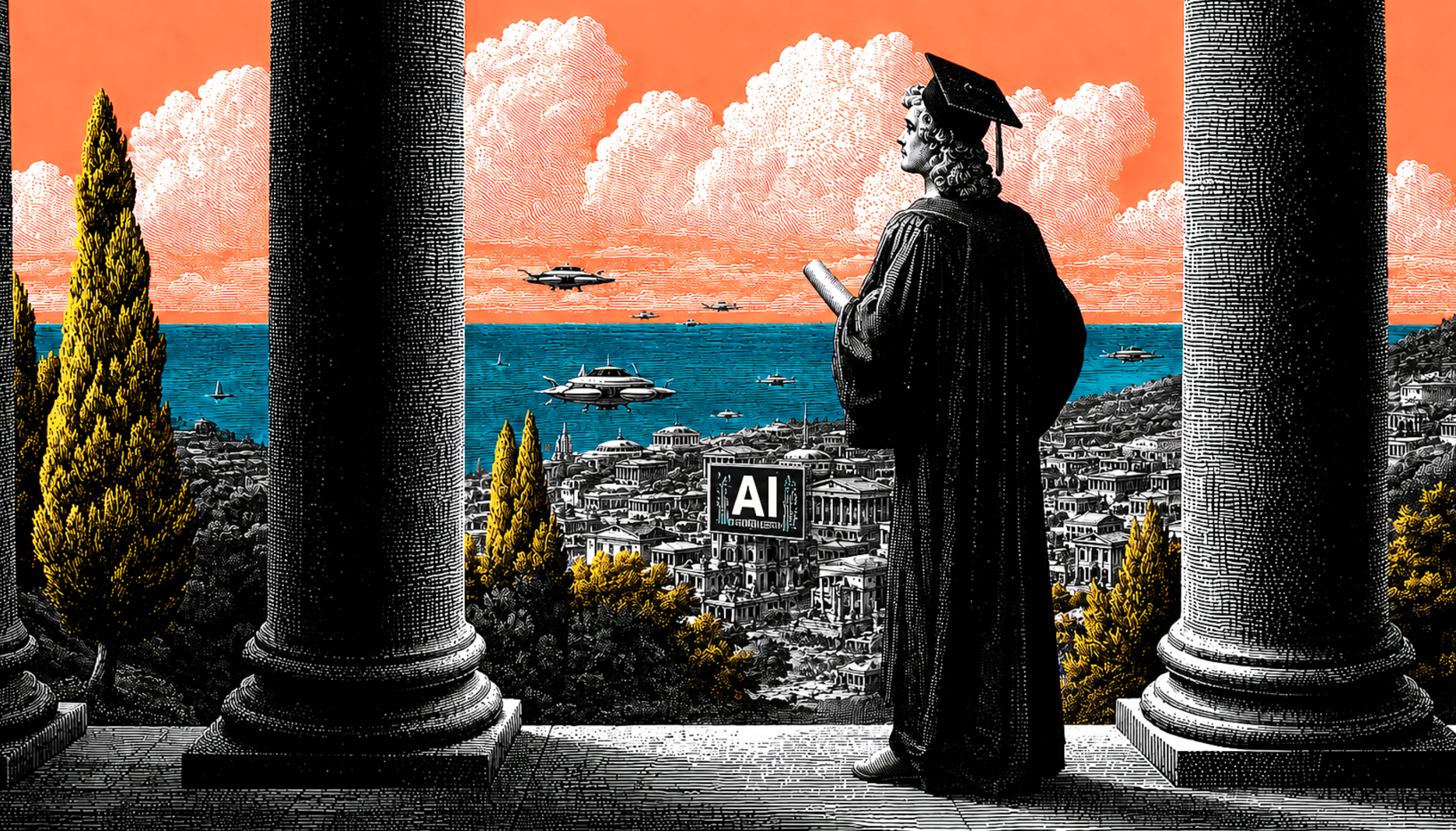 My first job out of college was as a copywriter at a little crowdfunding website based in Columbus, Ohio, called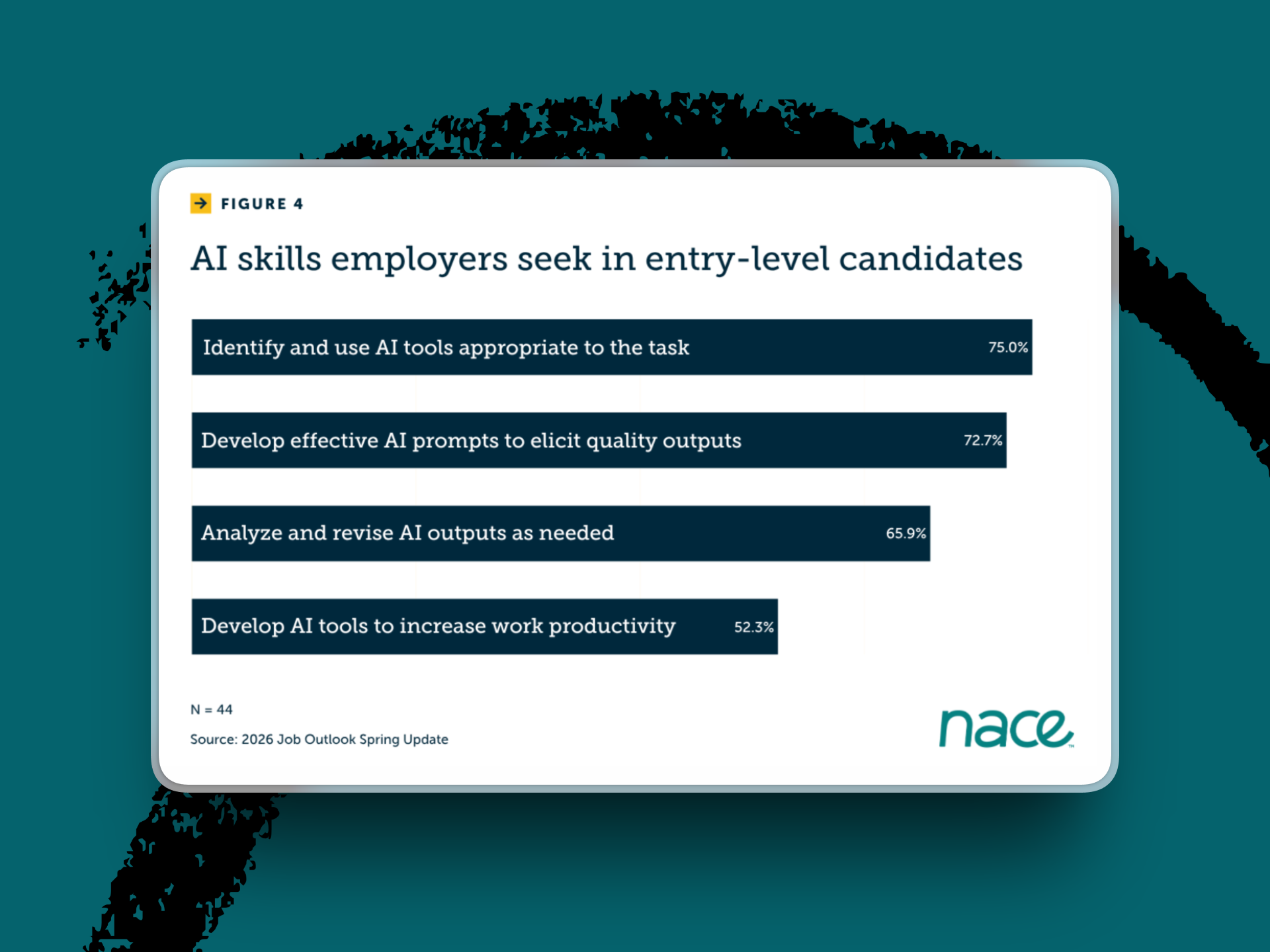
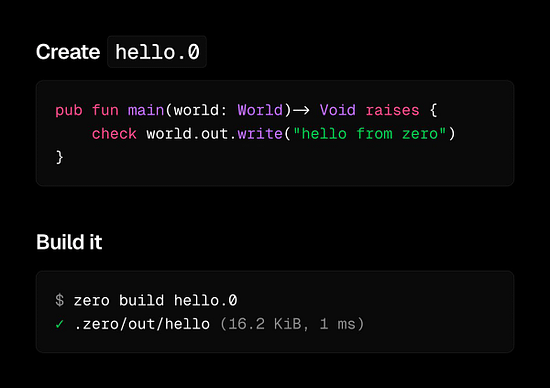
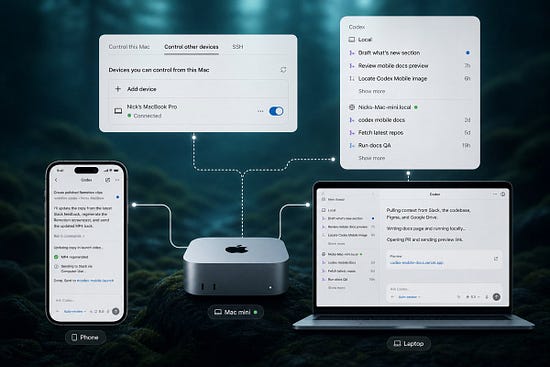
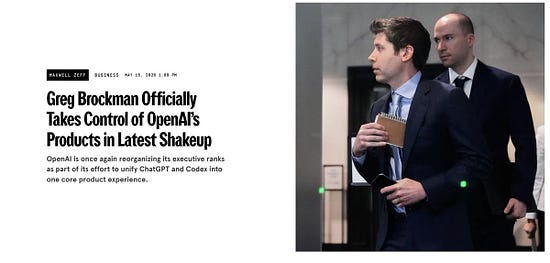
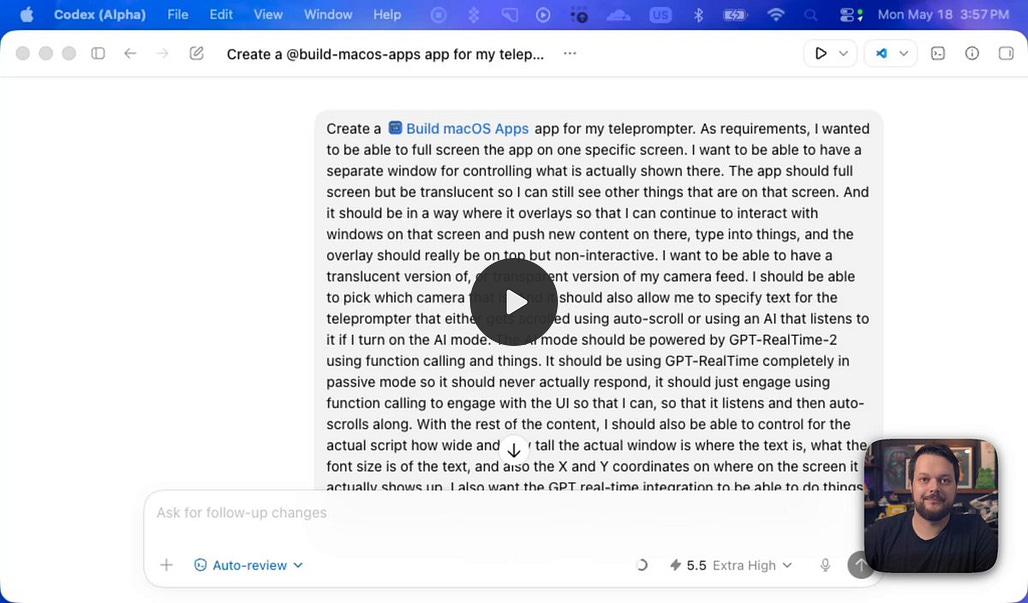
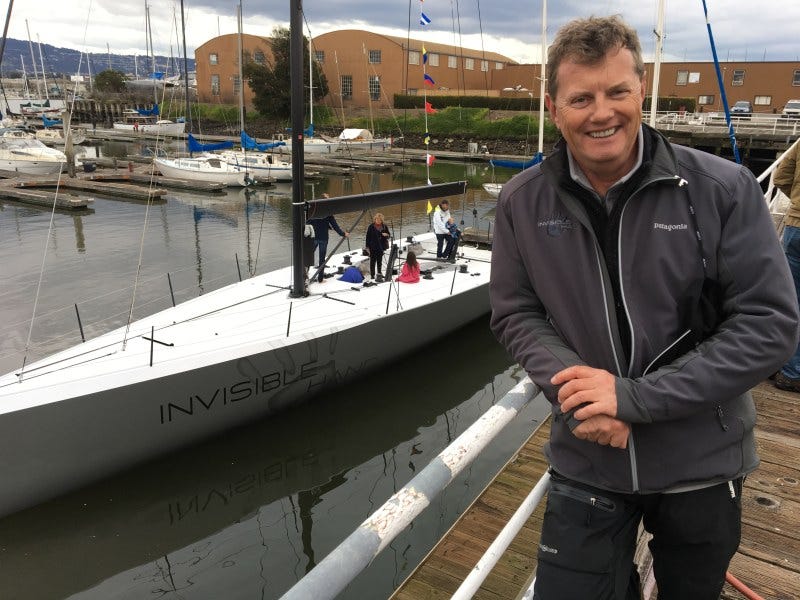










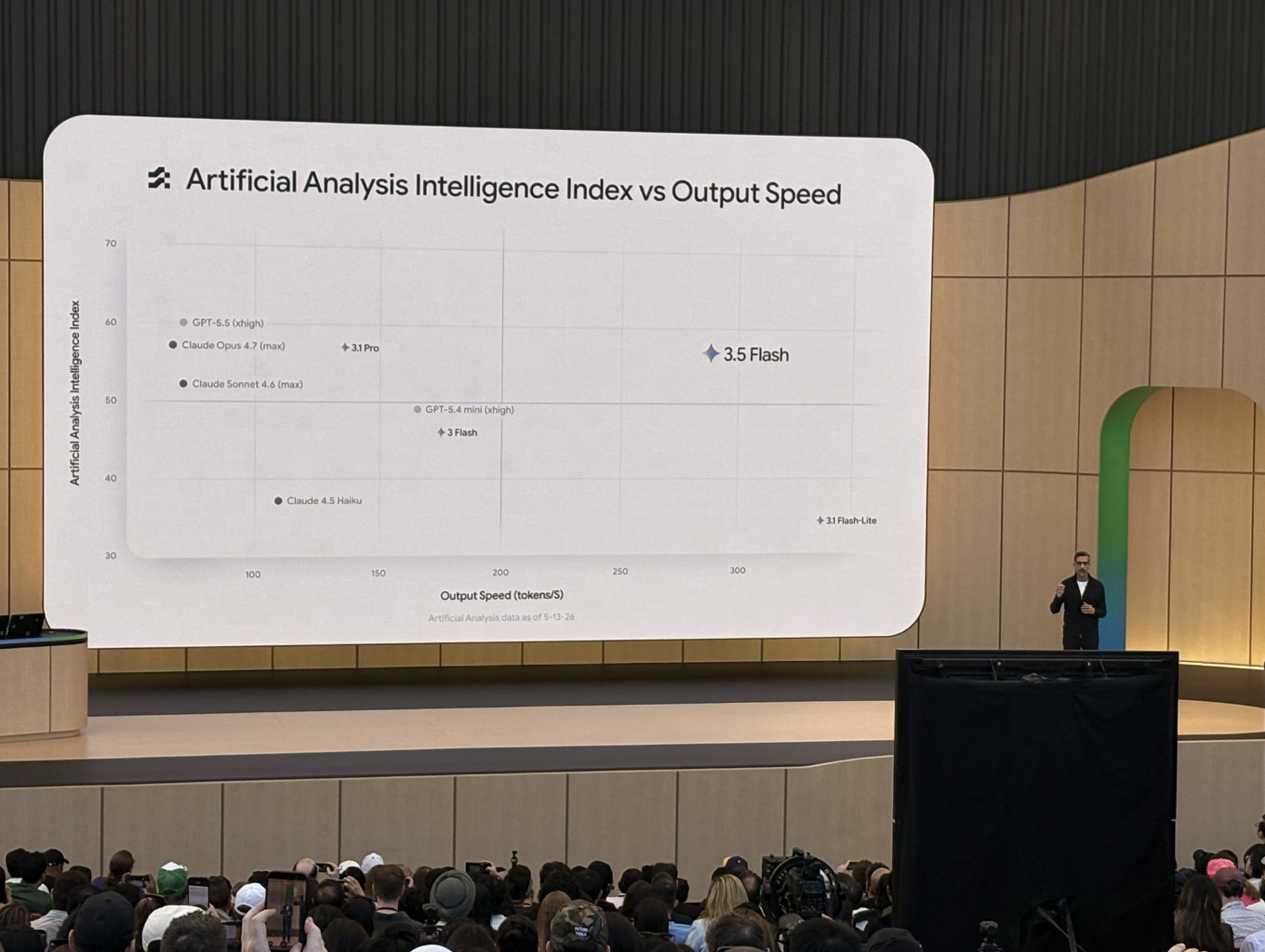
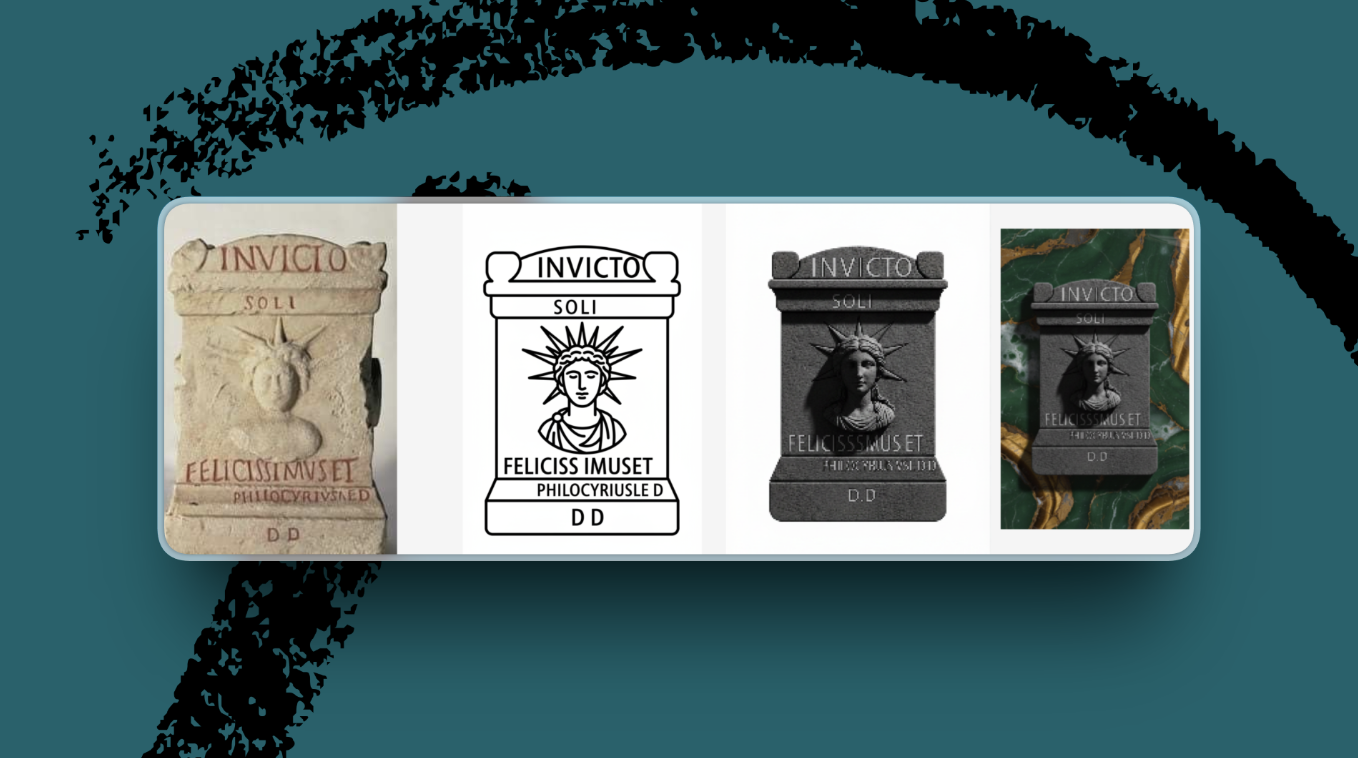
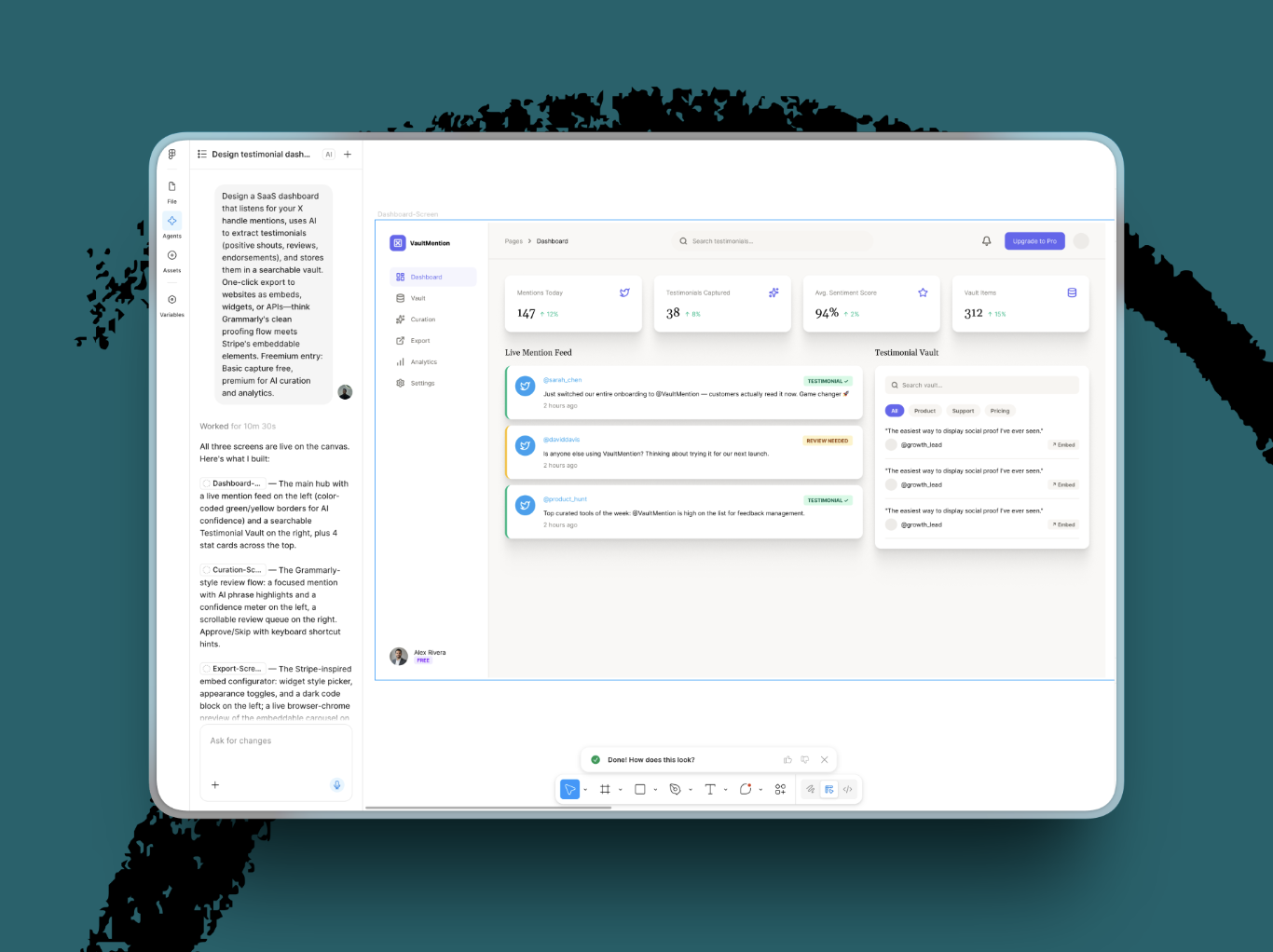


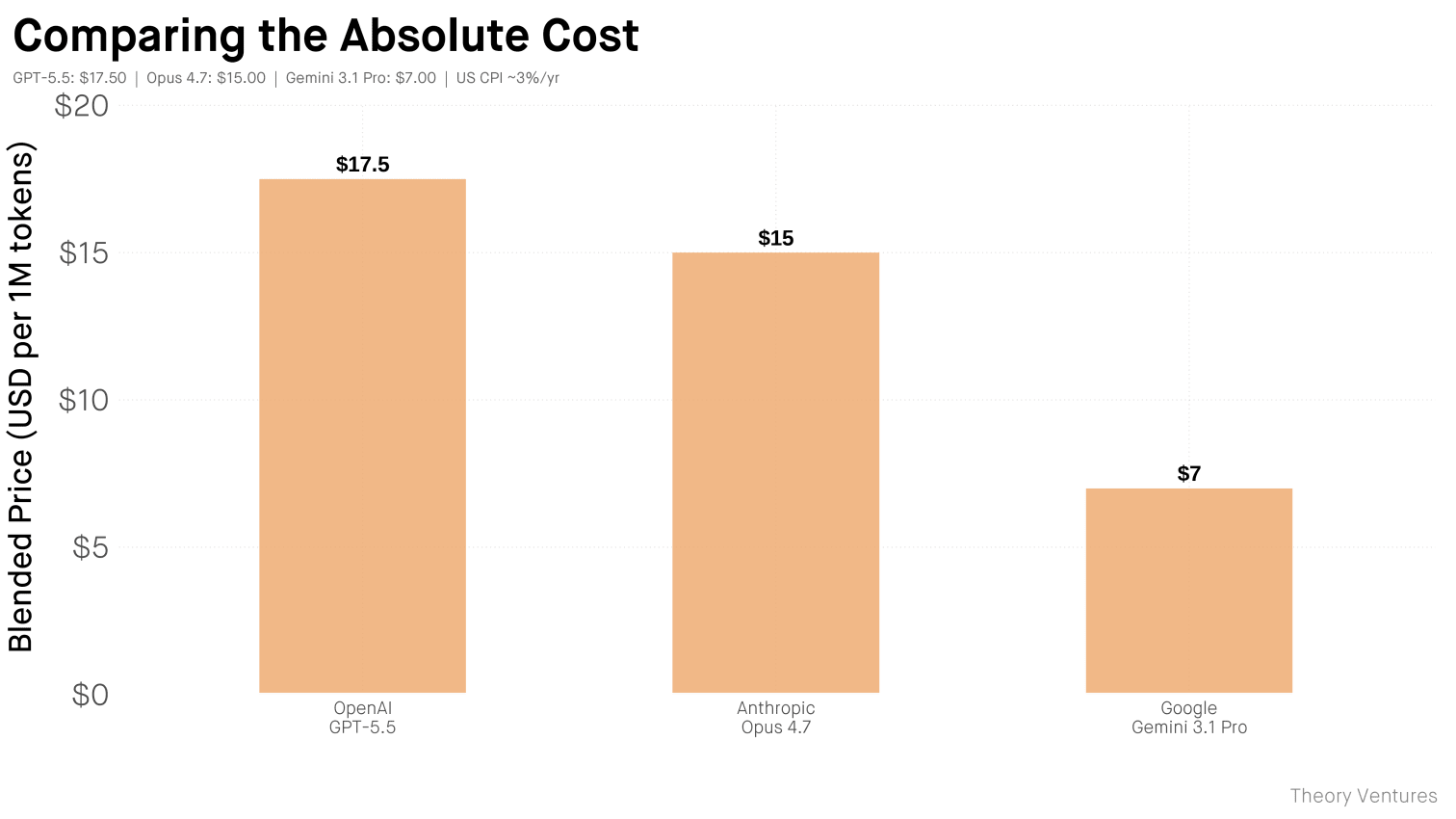
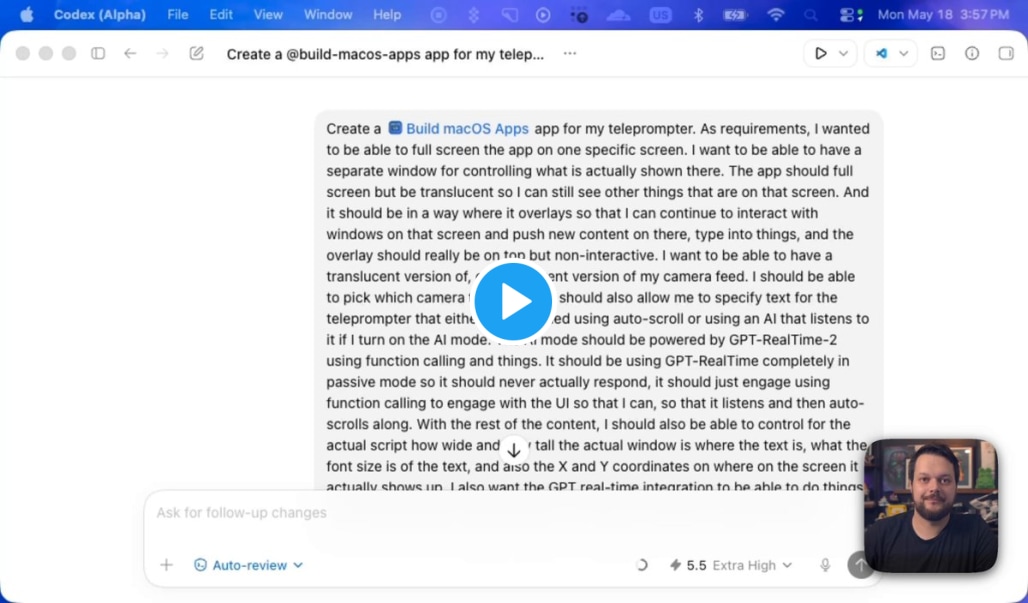


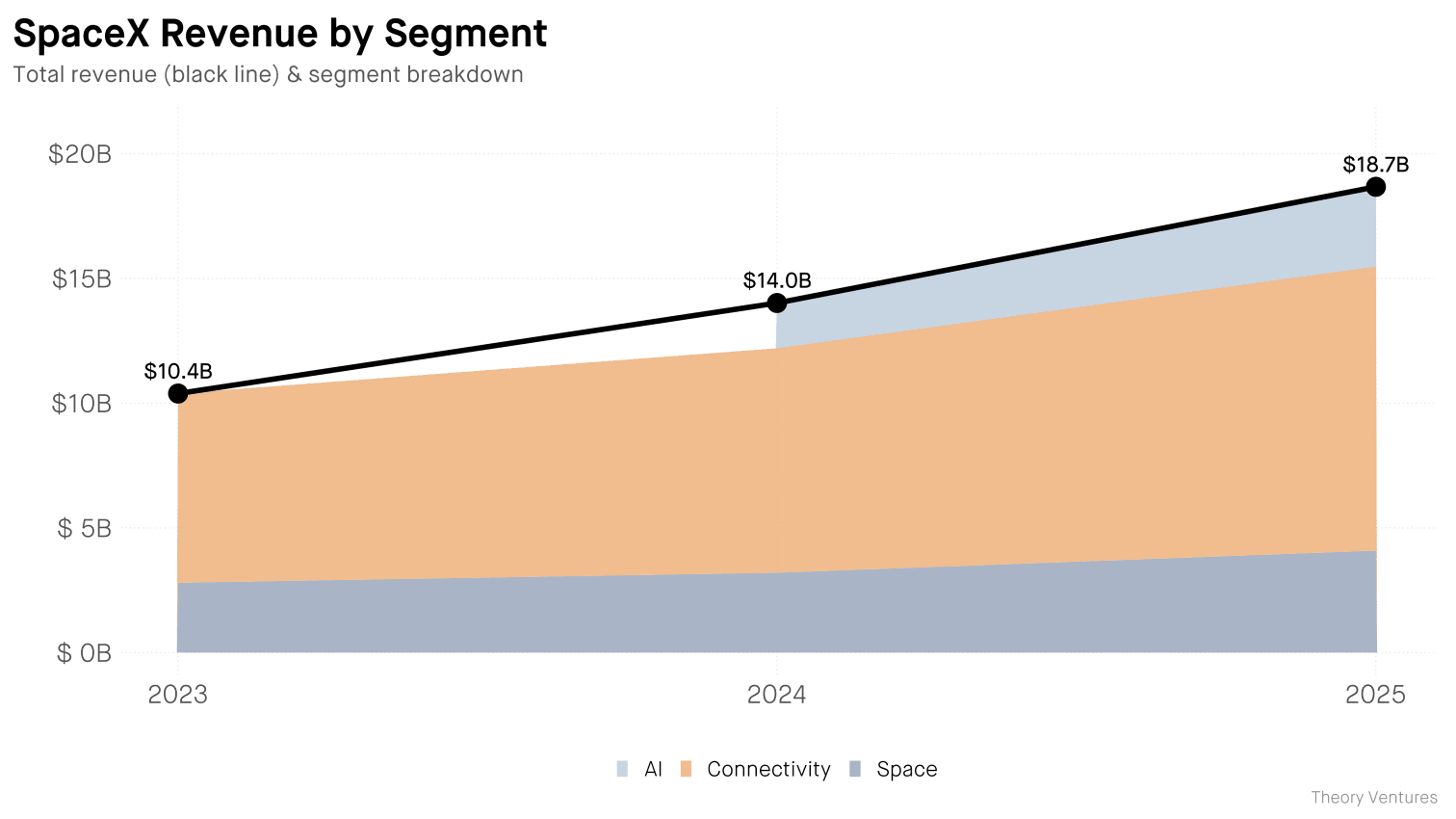


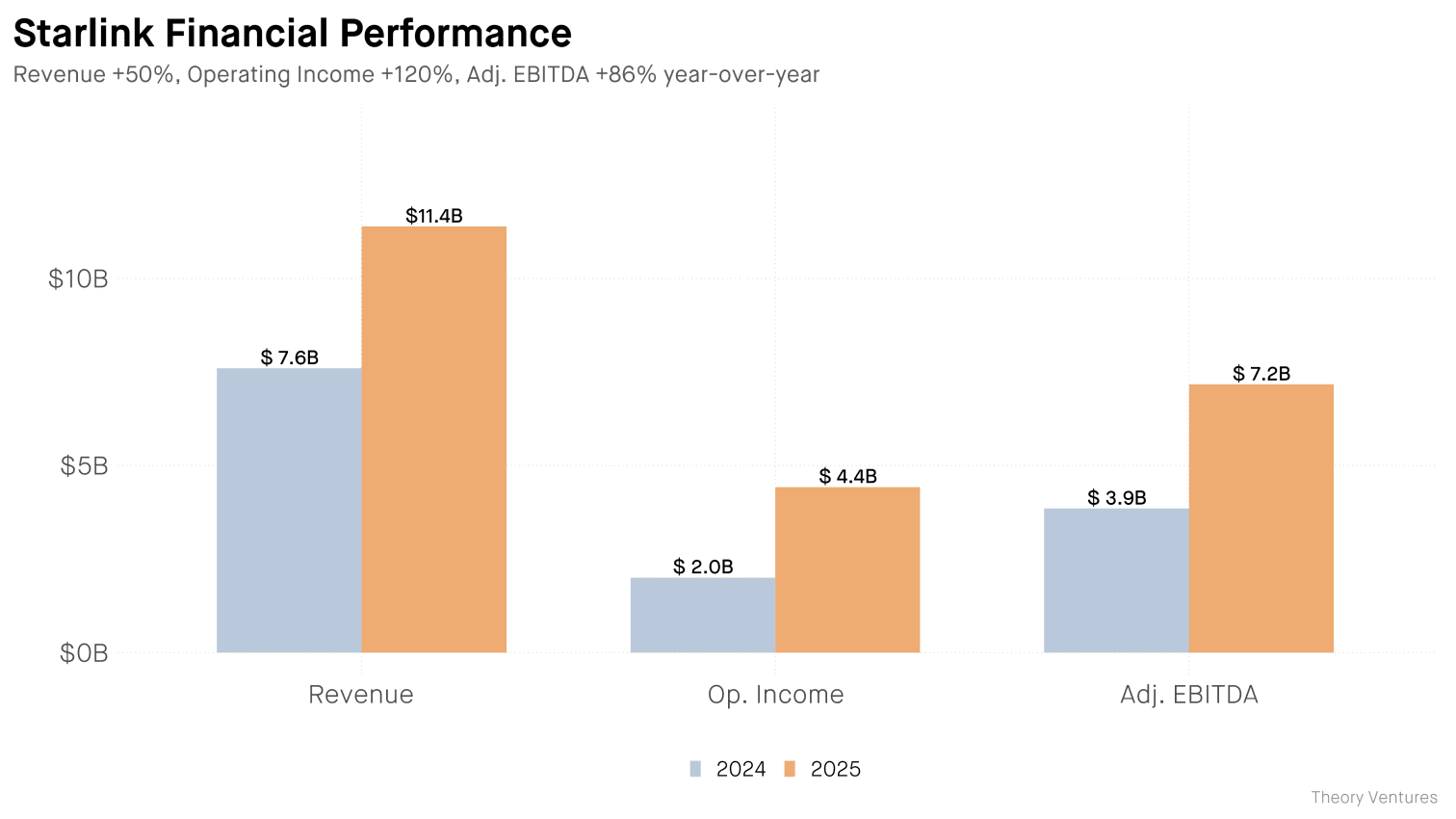
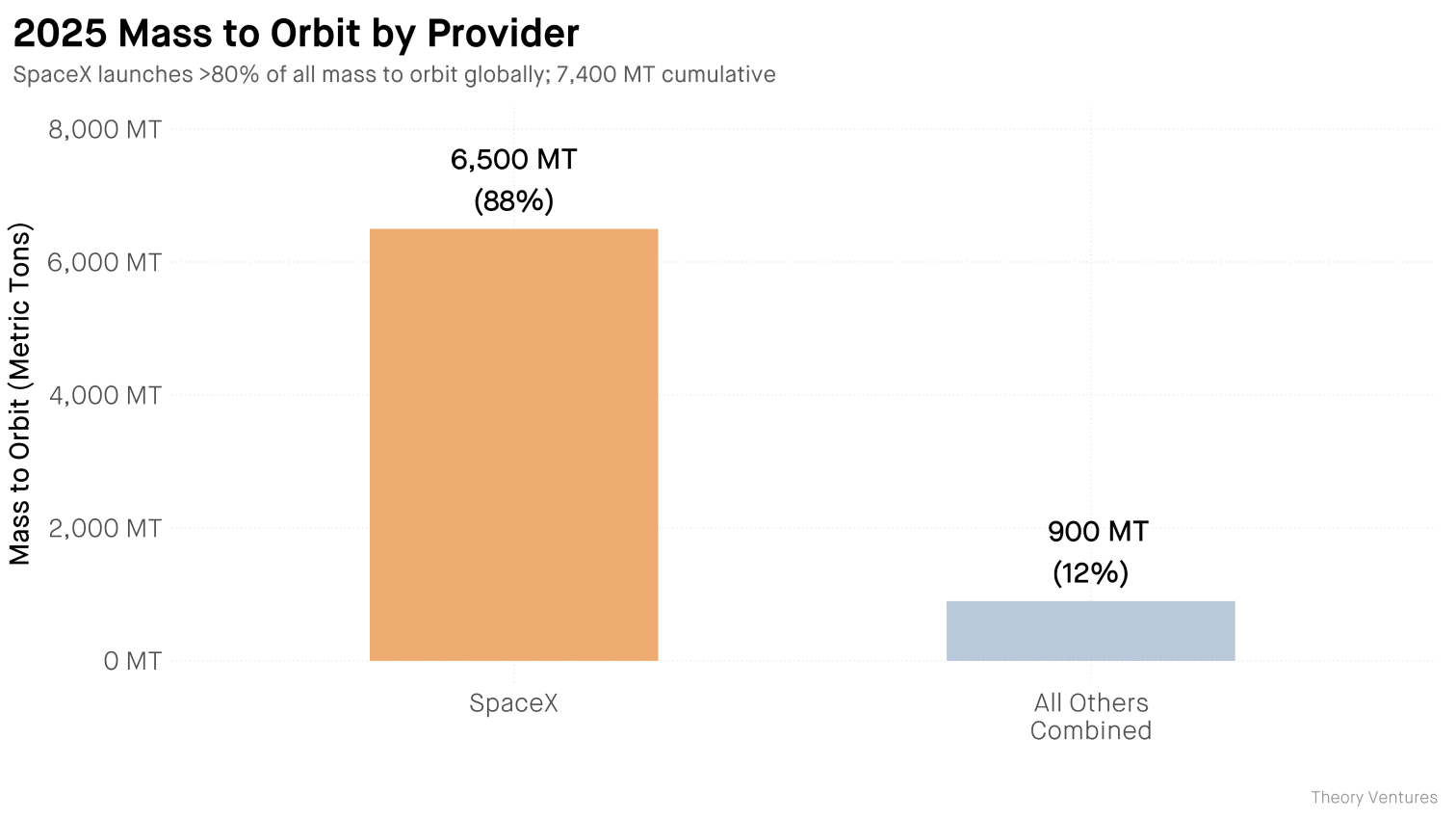


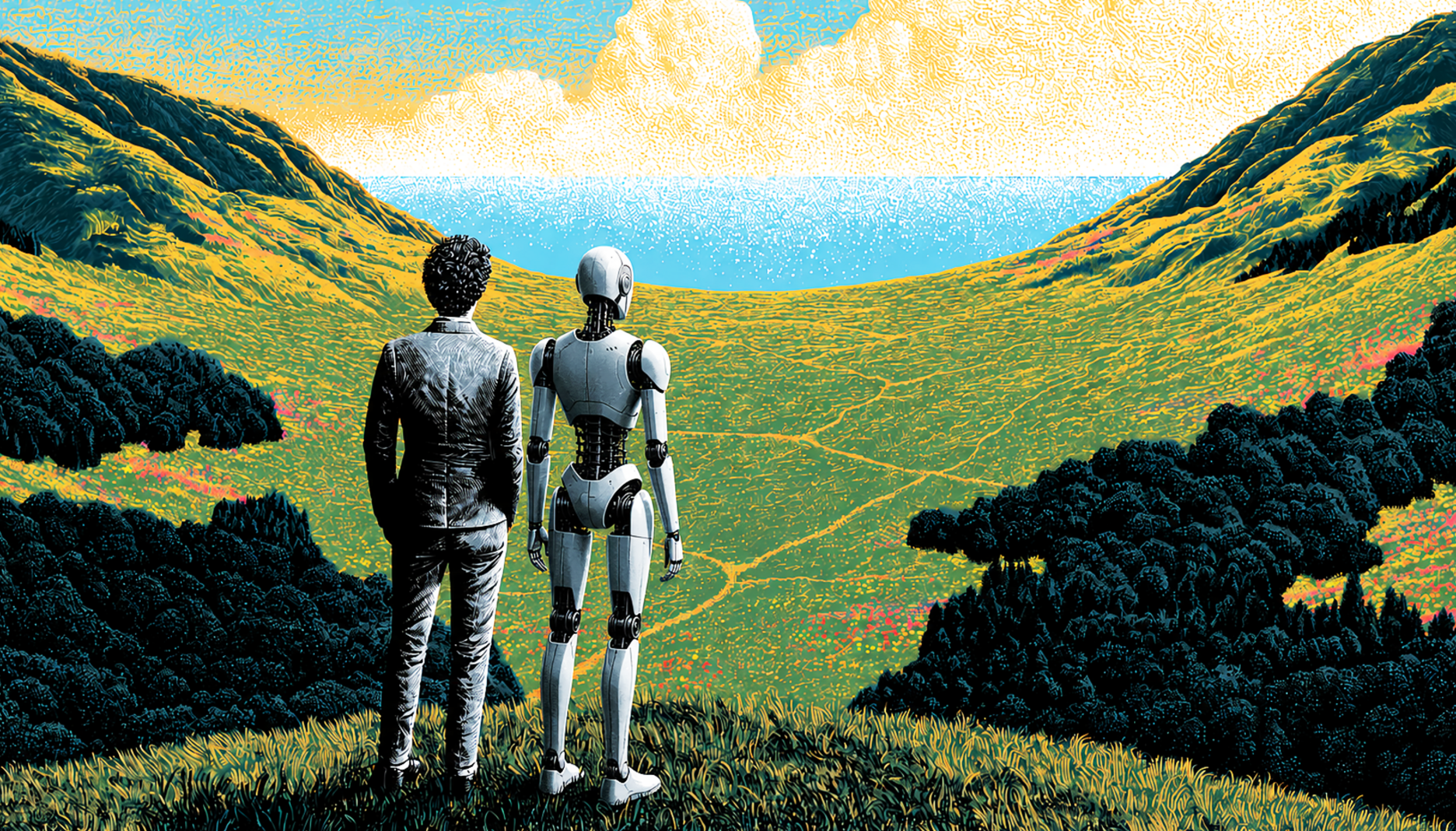 We’ve automated everything we can here at





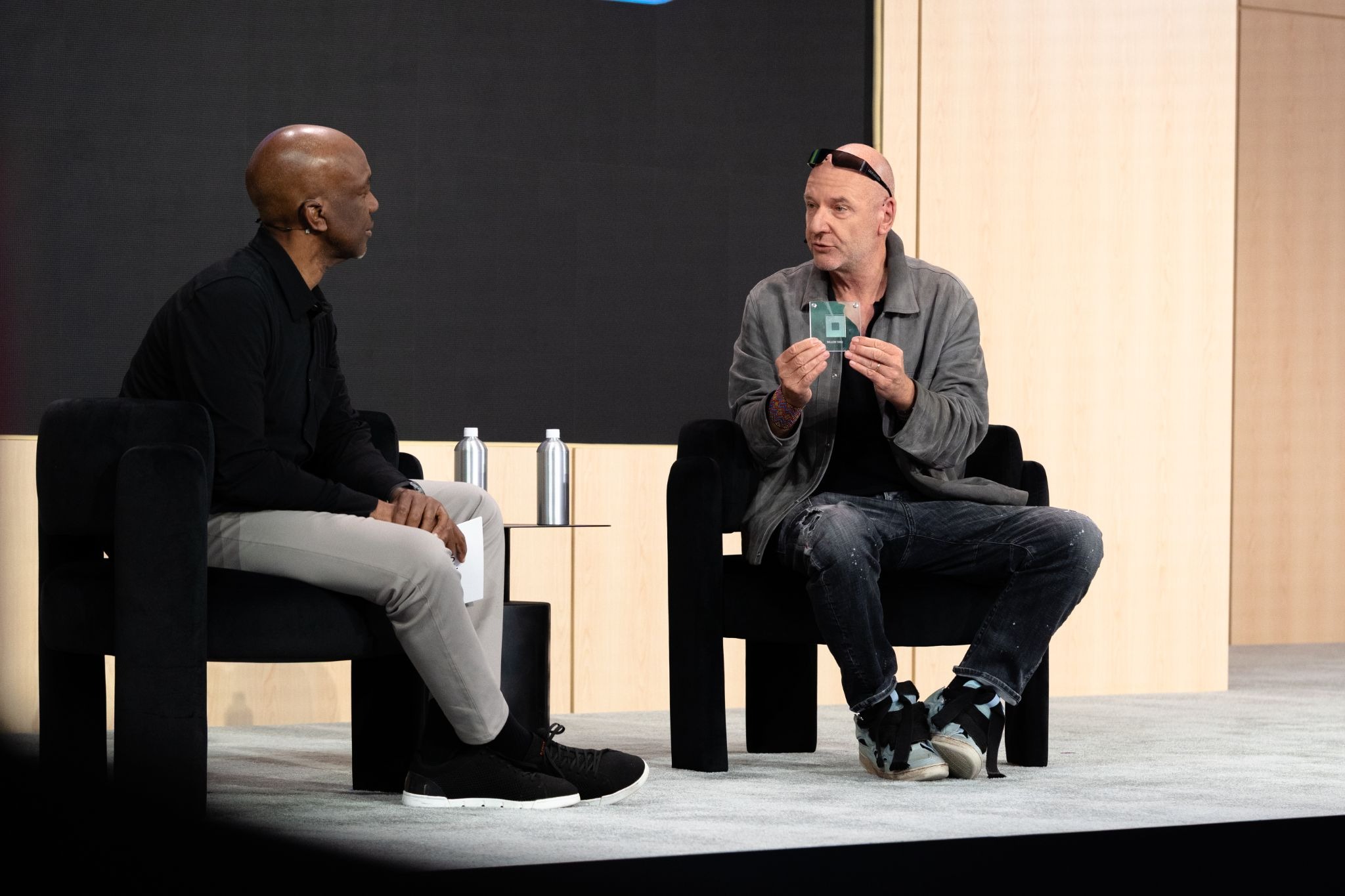
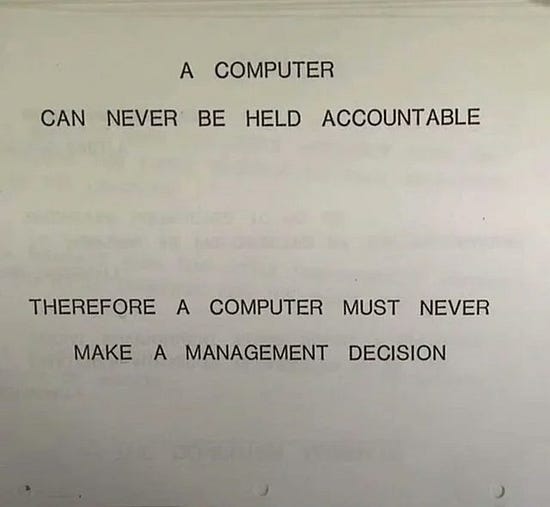

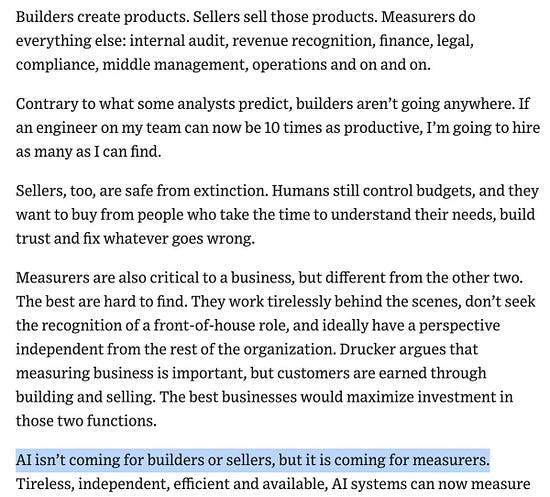 Matthew Prince 🌥 @eastdakota
AI isn’t going to take all jobs. But it will fulfill the prophesy of Peter Drucker from 71 years ago: more builders, more sellers, fewer measurers. https://t.co/ud248eONCm
Matthew Prince 🌥 @eastdakota
AI isn’t going to take all jobs. But it will fulfill the prophesy of Peter Drucker from 71 years ago: more builders, more sellers, fewer measurers. https://t.co/ud248eONCm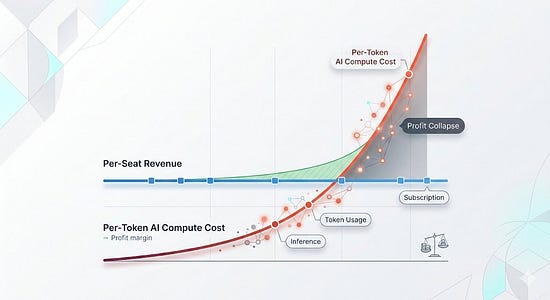
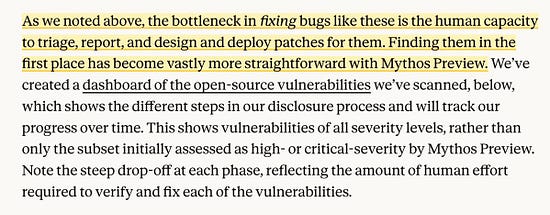 Anthropic @AnthropicAI
Last month we launched Project Glasswing, our collaborative AI cybersecurity initiative. Since then, we and our partners have found more than ten thousand high- or critical-severity vulnerabilities in essential software.
Anthropic @AnthropicAI
Last month we launched Project Glasswing, our collaborative AI cybersecurity initiative. Since then, we and our partners have found more than ten thousand high- or critical-severity vulnerabilities in essential software.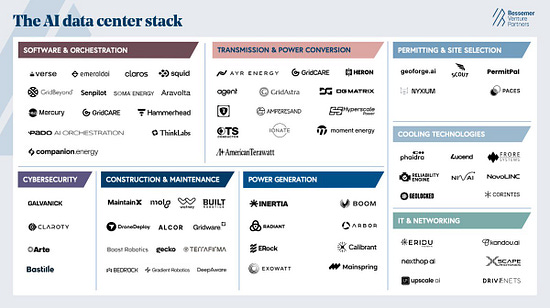
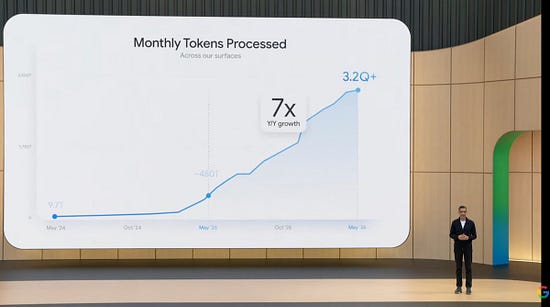

 | | | JaguarAnalytics @JaguarAnalytics
$SPCX Highlights of $1.75 trillion company: -- 2025 sales $18.7 bn -- 2025 operating loss $2.6 bn -- 1Q26 sales $4.7 bn -- 1Q26 operating loss $1.9 bn You are cordially invited to take out 2nd mortgage and buy on margin at 93x 2025 sales. S-1 filing: https://t.co/lczJvzf9oZ
| | | JaguarAnalytics @JaguarAnalytics
$SPCX Highlights of $1.75 trillion company: -- 2025 sales $18.7 bn -- 2025 operating loss $2.6 bn -- 1Q26 sales $4.7 bn -- 1Q26 operating loss $1.9 bn You are cordially invited to take out 2nd mortgage and buy on margin at 93x 2025 sales. S-1 filing: https://t.co/lczJvzf9oZ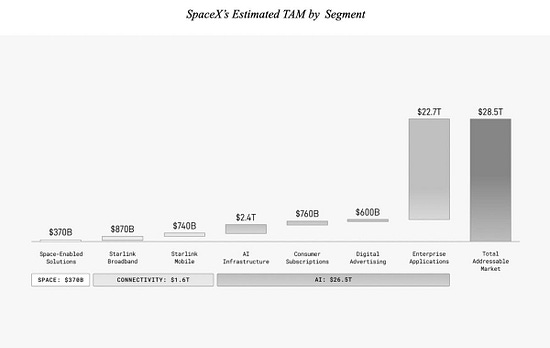 Sawyer Merritt @SawyerMerritt
SpaceX's IPO prospectus (S-1 filing) is now officially public! You can read the full document here: https://t.co/zlYx39Hco9
Sawyer Merritt @SawyerMerritt
SpaceX's IPO prospectus (S-1 filing) is now officially public! You can read the full document here: https://t.co/zlYx39Hco9
 Molly O’Shea @MollySOShea
NEW: Exclusive Interview with Jaimin Rangwalla, Chief Investment Officer of Public Investments at Coatue In @coatuemgmt's Spring 2026 Investor Update, Jaimin walks through the unexpected winners of the AI cycle: memory, optical, CPUs, & the infrastructure layer quietly
Molly O’Shea @MollySOShea
NEW: Exclusive Interview with Jaimin Rangwalla, Chief Investment Officer of Public Investments at Coatue In @coatuemgmt's Spring 2026 Investor Update, Jaimin walks through the unexpected winners of the AI cycle: memory, optical, CPUs, & the infrastructure layer quietly