AI can write, analyze, and problem-solve in seconds. So what happens when it starts doing the thinking for you?
In this Deep Dive, Scott unpacks the growing evidence that heavy AI use may weaken critical thinking, reduce learning retention, and increase reliance on flawed outputs. From consultants making worse decisions to students performing worse witho…
No ads on pods, because ads tax your most valuable asset: time
Prof G+ exclusives, including breaking livestreams, deep dives, keynotes, and more
Community privileges to leave comments, make friends, and engage in a series of bad decisions that might pay off
One search ad every 40 minutes pays for a trillion-parameter model. One content ad every 3 minutes does the same. The math on ad-supported AI is better than you think. When Anthropic pulled Claude Code from the $20 plan last month, it signaled an industry assumption : frontier intelligence requires frontier pricing. For open models, the economics flip. A B200 GPU costs $4.50/hour on spot markets.1 Google Search ads generate $38.40 CPM (cost per thousand impressions),2 while Google Display runs $3.12.3 | Ad Context | CPM | Impressions to Break Even (per hour) | One Ad Every…
These numbers assume the provider runs 4 B200 Blackwells at 300 users, 50% of the theoretical maximum, leaving headroom for bursts.4
To support these costs, users would see one ad every 3 to 39 minutes. That is well below what users already tolerate : hyper-casual mobile games show six ads per session, roughly one per minute.5
There are nuances. Assuming ad fill rates (the share of ad requests that return a paid ad) and ad network revenue share, we can model effective CPMs of $1.50. At that floor, the frequency doubles. One content ad every 90 seconds still covers the cluster, comparable to what mobile users already tolerate.
On the other end of the spectrum, rewarded video clears at $40 to $50 CPM with near-100% fill in gaming. A single round of rewarded video across the cluster nearly covers an hour of compute.6
But there is the question of utilization. All of these figures assume the cluster stays busy. Idle GPUs raise the per-user cost.
What about heavier workloads? Agentic coding burns 10 to 20x more tokens than passive chat.7 At that rate, ad-only models can’t keep up. But a hybrid works : $10/month plus 8 ads per day covers 2 million tokens.8 It won’t fund a tokenmaxxing habit, but it will keep you shipping.
Ad-supported AI is viable : open models, commodity GPUs, and ad frequencies already parallel those of mobile & web.
1. B200 Cloud Pricing: Compare 22+ Providers (2026) : spot market averages $3.40 to $4.50/hour across 22 cloud providers. ↩︎
Online Advertising Costs In 2026 (Top Draw) : Google Search Ads average CPM $38.40 (derived from CPC × estimated CTR; search is typically priced per-click, converted here for comparison). ↩︎
Calculation : $10/month = $0.33/day. At $0.33/day alone, cluster supports 1,309 users at 1M tokens/day each, half the target. The remaining $0.33/day gap is filled by ads. At rewarded-video CPMs of $40, that is 8 impressions/day. Combined : $10/month + 8 ads/day = 2M tokens/day per user. ↩︎
Interconnects by Nathan Lambert · Monday, May 4 2026 · 8 min read · ↑ top
Listen to post · 8:51
‘Distillation attacks’ is a horrible term for what is happening right now. Yes, some Chinese labs are hacking or jailbreaking APIs to attempt to extract more signal from model APIs — stopping this is important to maintain the U.S.’s lead in AI capabilities. Referring to this as distillation attack is going to irrevocably associate all distillation with this behavior, and distillation generally is a core technique needed to diffuse AI capabilities broadly through academic and economic activities.
We went through this sort of language transition with the open source vs open weight debate. All the terms just reduced to open models – very few people in the large AI community know exactly how open-source differs from open-weights. And terminology matters, as the less informed people who still care about — and influence — the technology are bound by different terms they use. If we’re not careful with the discourse around distillation, many people could associate this broad technique used for research and development of new models as an act at the boundary of corporate manipulation and crime.
I’ve recently written a more technical piece on estimating how impactful state-of-the-art distillation methods are on leading Chinese models, and this piece follows to push for caution in any hasty actions to target the methods with policy. To set the stage, recall Anthropic’s recent blog post where they detailed “distillation attacks” made by 3 Chinese labs.
These labs used a technique called “distillation,” which involves training a less capable model on the outputs of a stronger one. Distillation is a widely used and legitimate training method. For example, frontier AI labs routinely distill their own models to create smaller, cheaper versions for their customers. But distillation can also be used for illicit purposes: competitors can use it to acquire powerful capabilities from other labs in a fraction of the time, and at a fraction of the cost, that it would take to develop them independently.
This is a clever paragraph, where they normalize distillation generally and explain how a few people can use it illicitly, without detailing how illicit use often involves other more explicit behavior like jailbreaking, hacking, or identity spoofing of the API.
Distillation itself is an industry standard. It’s used extensively, primarily in post-training, by smaller players to create specialized or smaller models. In my book coming this summer, I describe it as follows:
The term distillation has been the most powerful form of discussion around the role of synthetic data in language models. Distillation as a term comes from a technical definition of teacher-student knowledge distillation from the deep learning literature.
Distillation colloquially refers to using the outputs from a stronger model to train a smaller model.
In post-training, this general notion of distillation takes two common forms:
As a data engine to use across wide swaths of the post-training process: Completions for instructions, preference data (or Constitutional AI), or verification for RL.
To transfer specific skills from a stronger model to a weaker model, which is often done for specific skills such as mathematical reasoning or coding.
With this definition, it’s easy to see how distillation takes many forms. Of course, if you just take the outputs from GPT-5.5 and train a recent open-weight base model with them to host a competitive product, that’s one thing. But, a lot of the things that fall under the bucket of distillation are complex, multi-stage processes that muddle the exact impact of the model you distilled from.
Modern LLM processes could look like using a GPT API to build an initial batch of synthetic data to build a specialized small data-processing model. A good example is a model like olmOCR (or many other models in this category) that are trained to convert PDFs to clean text. This specialized model would be used to create large amounts of data. Finally, you train another model (often from scratch) with the new data you created. Is this final model distilled from GPT?
This is all to say that distillation is an industry standard technique, and the use of closed APIs to perform distillation has always been a grey area. Nvidia’s latest Nemotron models, as one of the only models with open post-training datasets, are technically in large part distilled from Chinese, open-weight models. The Olmo models we’ve built at Ai2 are distilled from a mix of open and closed models. This grey area was brought to the forefront again when it turned out that xAI has been distilling from OpenAI. Quoting from the recent trial proceedings between Elon and OpenAI:
OpenAI’s counsel asked Musk whether xAI has ever “distilled” technology from OpenAI.
Musk: “Generally AI companies distill other AI companies.”
“Is that a yes?” Savitt asked.
Musk: “Partly.”
xAI is likely the largest, and most successful AI company willing to thread the grey area that is distillation from their competitors. On the other side, the majority of startups and research groups with fewer resources than them have very likely engaged in distillation of some capacity from Claude, GPT, or Gemini models.
In the above Anthropic blog post, the problem with the distillation attacks by a few Chinese labs is less the distillation and more the means of attack. It is documented that Chinese labs are actively working to get around the intended use of the API, e.g. to provide additional reasoning data that is very useful for training.
Of course no one should be able to access information from a model that a developer didn’t intend to reveal in their APIs (e.g., reasoning traces which would be helpful for training). Associating all of distillation with these attacks, which is to date an industry standard for post-training, from open and closed models alike will be a massive own goal.
What these few labs are doing should be referred to as jailbreaking or abuse, rather than distillation.
The discourse around these actions is creating a troubling discussion that’s marching towards a mix of regulatory capture or regulatory exuberance that’s most likely to harm the U.S.’s ecosystem more than China’s. Even if we ban, most likely through potential legal action and other penalties, this type of API abuse, the Chinese companies will likely still do it. We’ve seen this playbook with Chinese multimedia models taking a flexible view of copyrighted content that no U.S. player is willing to take the risk on.
This distillation discussion has quickly snowballed, with a bill moving out of a committee in Congress, an executive order pushing for action, and congressional oversight targeting U.S. companies building on Chinese models (which are downstream of distillation). This multi-pronged regulatory environment could yield truly horrible outcomes – such as figuring out a way to effectively ban open-weight models in the U.S. that are built in China by groups abusing closed LLM APIs.
It is obvious that no bill will literally ban open models, but they can create grey area that exposes entities to unwanted risk or require certain provisions that are bureaucratically very challenging to fulfill, squashing small open source contributors.
In that scenario, the groups who lose are Western academics and smaller companies building models for the long-tail of AI uses. The ecosystem here could be made permanently irrelevant with the removal of nearly all Chinese open-weight models. There is no immediate substitute and building new models with meaningful community adoption has a lead time measured in 6+ months. In the time it takes to build a new domestic open-source ecosystem, countless researchers would’ve moved onto closed training platforms or into new areas.
Altogether, I’m hoping this flurry of discussion around distillation becomes a nothing-burger and not a hasty, multi-pronged policy push. We need to avoid two things:
A wholesale negative connotation of the word distillation, which is used extensively across the AI ecosystem.
A domestic ban of the open-weight models built by organizations engaged in some portion of distillation.
In addition to this, I want the leading U.S. AI companies to be able to provide their APIs without having their IP leak. They should share more information on why it is hard for them to secure their APIs, but that’s an issue out of scope for my expertise.
I’ll conclude with a proposal from my friend Kevin Xu at Interconnected Capital (and great Substack) on why this current distillation dynamic may actually be good for the leading labs.
If all the Chinese companies are addicted to distillation as a way of getting close to the frontier, then they’ll never actually learn the techniques needed to take an outright lead. If we cut off the Chinese’s obvious crutch in model building, we’ll gain a short-term lead in AI, but in the long-term that may be what they needed to get on a more competitive long-term trajectory.
This is the same debate we’re having with other technologies where the U.S. currently has a lead, e.g. with advanced semiconductor technologies. So I understand the trade-offs, but we not should crack down on all of distillation.
Liking, sharing, commenting, or recommending Interconnects from your Substack is the only way Interconnects is possible. Thank you for your support.
If you liked this, consider upgrading to a paid subscription to cover my growing subscription and API fees. We offer group Interconnects subscriptions at tiered discounts for 5+ heads.
If you want all of the best AI writing on Substack through one subscription for your team of 20+, check out https://readsail.com/.
Drake Dukes · Monday, May 4 2026 · 7 min read · ↑ top
Ex-Anthropic engineer builds RL environments for automated ML research, Ex-Facebook PM and Stackbit founder goes stealth, & Durin/Hadrian/Stoke Space alum builds human augmentation tech
We’re tracking company launches as they happen and surfacing the most interesting new founders and startups (yes, all outside of this stealth activity too). If you want to stay ahead of the curve, this is where you’ll find them first.
Right now we’ve got 5 subscribers: my wife, my mom, and that high school buddy who won’t stop pitching me his app. Be smart like them and get in early 👇
We run a live feed inside Gravity that tracks founders entering stealth and companies quietly exiting it.
What you’re reading here is about 1% of the stealth activity we pick up. The full tracker updates in real time as things change and new activity emerges.
In this issue of the Stealth Startup Spy, here is what we will uncover:
Former Anthropic Technical Staff Member and Stripe engineer is building reinforcement learning environments that automate ML research and engineering
Ex-Facebook PM and Stackbit CEO (acq. by Netlify) enters stealth
Former Autodesk Construction exec (via Pype acquisition) is building an AI preconstruction risk platform that catches scope conflicts before they hit budgets
Amazon Alexa AI and Prime Video engineering leader enters stealth
Early employee at Durin, Hadrian, and Stoke Space is building next-gen human strength and endurance augmentation tech
And more…
Now let’s shine the spotlight… 💡💡💡
🕵️♂️Founders Coming Out of Stealth
Real-time updates from founders who debut what they’ve been working on under stealth mode
FounderDNA: Serial Founder, Masters Degree, Top 10 University, Prior Exit
Prior Experience: Co-Founder & CEO at Pype (acquired by Autodesk), Senior Director at Autodesk Construction Solutions, MS Construction Management at Virginia Tech
Wyre AI is an AI-powered preconstruction risk management platform that analyzes construction document sets to auto-generate structured scope packages and identify coordination conflicts before they impact project budgets or timelines.
HQ: Washington DC-Baltimore Area, United States
Industry: ConTech, AI, Construction | Team Size: 12
FounderDNA: Serial Founder, Technical Founder, Prior Exit
Prior Experience: Co-Founder, COO & CPO at Catalyst Software, Investor at Digraph (acquired by DataDog), Angel at First Round Capital, Head of Sales & Revenue Operations at DigitalOcean, Forbes 30 Under 30 (Enterprise Technology, 2019)
Thea Technology is building an AI doctor for aesthetics, using a single photo to recommend OTC products, facilitate access to prescriptions, and match users with cosmetic treatments and providers at competitive pricing.
HQ: United States
Industry: HealthTech, Consumer AI, Aesthetics | Team Size: 9
Latest Funding: $4M Pre-Seed Round on 4/29/2026
Key Investors: General Catalyst, Stellation Capital, Dnipro VC
Era is the intelligence layer for physical devices. The platform that lets anyone give their products the ability to think, listen, and respond in a style that’s entirely their own.
HQ: United States
Industry: Technology, Information and Internet | Team Size: 11
Latest Funding: $9M Seed Round on 4/23/2026 | Total Funding: $11M
Edgerun Industries is building next-generation technology to augment human strength and endurance, with active development across the U.S. and international partners.
HQ: United States
Industry: Robotics, Deep Tech, Human Augmentation | Team Size: 2
Time Spent in Stealth Mode: 5 Months
🕵️♂️Key Talent Going Under Stealth
Illuminating clues left behind by world class talent and influential innovators who just went into stealth mode
Dan Barak - Co-Founder at Stealth
FounderDNA: Serial Founder, Technical Founder, Former FAANG, Prior Exit
Prior Experience: Principal Product Manager at Facebook, Co-Founder, CEO at Stackbit (acquired by Netlify), VP Product at Netlify, Group Product Manager at Lyft
FounderDNA: Serial Founder, Technical Founder, Masters Degree, Former FAANG, Top 10 University
Prior Experience: Leadership - Interactive Ads Prime Video Player at Amazon, Engineering Leadership - Alexa AI LLM Skills Kit at Amazon, Head of Platform Engineering at Secureframe, Sr Engineering Manager at Box
Jose Enrique Hernandez - Co-Founder at Stealth Startup
FounderDNA: Technical Founder, Masters Degree
Prior Experience: Director, Threat Research Team at Splunk, Senior Vice President of Technology at ZENEDGE, Cloud Threat Researcher at Lacework, SOC Manager at Fastly
🚨Here’s the deal 🚨This email has gotten too big. Exciting, but with more people following it, the edge diminishes. I’ve thought long and hard about what to do to preserve the value in the signals. I’m not sure about the final direction yet, but in the meantime I’ve been sending an email 48 hours earlier to a select group of paid subscribers. The feedback has been pretty positive so I’m going to open up the list for another 100 spots. To get signals early, Apply here!
Stay Stealthy,
Drake
Thank you for reading. If you liked it, share it with your friends, colleagues and everyone interested in staying ahead of the hidden developments in tech. Subscribe below and follow us onX / Twitter to never miss a company operating under stealth again.
Stealth Startup Spy is a data-driven newsletter for investors, journalists and tech enthusiasts interested in uncovering the next big move for key talent, real-time stealth company launches and technology advancements not in plain sight. We leverage the technology built at Gravity to shine a light on the hidden world of stealth startups.
ben's bites · Tuesday, May 5 2026 · 5 min read · ↑ top
but I wish it had this
Hey folks,
I spent most of the bank holiday weekend offline for a change whilst at a wedding in the English countryside. I would’ve been more online if Codex had a mobile app but still waiting on that… this morning I did just install this skill that lets you iMessage Codex which is pretty great - essentially keeps a thread open in the app that you can message. Just paste the link in Codex and it’ll guide you through everything.
As AI Agents connect to more APIs, security risk gets harder to manage. Gravitee helps teams govern APIs, events, and AI Agents while reducing silos and cost. See what enterprise teams are prioritizing in the State of AI Agent Security report.
Headlines
OpenAI wants non-technical users to use Codex. They are making it easy for you to switch to Codex. You can now import settings, plugins, agents, project configuration and more into Codex (from tools like Claude Cowork). They are directly improving features related to everyday work, like creating slides/sheets, plus friendlier UI changes.
Grok 4.3 is out in the API. 1M context, text + image input, reasoning and a December 2025 knowledge cutoff. It’s priced $1.25/$2.50 per million input/output tokens, i.e. much cheaper than Sonnet 4.6 for a relatively similar performance.
Entire , the company by GitHub’s ex-CEO, released two new things: git-sync - a utility to mirror git repos from a source to a target without needing to clone it locally and Dispatches - a feature on their web platform to generate release notes from recent ships, commits, and agent sessions by repo/date range.
Charity Majors and Christine Yen headline Honeycomb's Innovation Week (May 12–14), a 3-day virtual event addressing observability for the agent era. Learn how the most forward-thinking engineering teams are rising to meet this challenge.Register now.*
My feed
Lightfield - AI-native CRM that learns how you sell. Describe any workflow in English, your CRM runs it on command. 3 mo free w/ **BENSBITEST13
Sauna - learns how you work, remembers everything that matters, and actions on it (portfolio company!)
Shared Brain by Zapier - Collective knowledge vault for your team and a personal assistant to complete tasks. Now in early access.
Manus Cloud Computer - always-on cloud machine for Manus so bots, scripts, databases and scheduled jobs keep running when your laptop is off. Files and installed tools persist across sessions.
Proxyuser - test all the core flows of your app via a synthetic user with a real browser, including signups.
Web UI Bench - Same UI components built by 20 models, shown side-by-side. GPT-5.5 uses too much bland text in the UI when an icon or control is self-explanatory (compared to Opus 4.7).
Flue - TypeScript framework for building Claude Code-style agents.
deepsec - open-source security harness from Vercel for finding vulnerabilities in your codebase with coding agents.
localterm - run a terminal in your browser with npx localterm@latest start.
open-slide - slide framework built for agents. Visual edits, comments, assets and agent-readable slide structure.
Refero Styles - 2,000+ DESIGN.md files from real products that your agent can use for style references.
OpenAI Developers
@OpenAIDevs
Pets. Now in Codex. Use /pet to wake your pet.
Logan Kilpatrick
@OfficialLoganK
We just shipped Webhooks in the Gemini API :) This is a big step towards making the DevX for long running tasks (batch, agents, GenMedia, etc) way better.
Geoff Goodman
@filearts
My first pi extension: /feedback. For the novels that models tend to write. It writes the last msg to a .md in your session and opens it in $EDITOR. If you save it with changes, it injects a [Feedback] token. The token is replaced with a small prompt + the diff. Works great!
How Agents Manage Other Agents: Four Subagents Patterns in 2026
philschmid.de · Tuesday, May 5 2026 · 1 min read · ↑ top
philschmid.de - RSS feed
RSS feed for my blog www.philschmid.de
Tuesday 05 May 2026 12:00 AM UTC+00 Subagents solve context pollution, but how the main agent manages them matters more than whether they run in sync or async. Four orchestration patterns, from a simple tool call to an autonomous agent team, each with different requirements for model capability and result collection.
Scott Barker · Tuesday, May 5 2026 · 18 min read · ↑ top
A thought experiment, two questions and a story that changed my entire life
🌒
🌓
🌔
Thanks for reading The Wake Up Call! Subscribe for free to receive new posts and support my work.
Welcome to edition #16 of The Wake Up Call, this week I write about:
A thought experiment & two simple questions that changed my life
A personal story & announcement that has been six years in the making
This newsletter is for anyone who is questioning the endless pursuit of more. Stories exploring the psychology of meaning, acceleration and modern ambition. Each week I write one non-fiction essay for the mind or one fiction story for the soul.
This essay is a personal one. I will continue my series of writing on The Acceleration Decade after this edition.
You haven’t heard from me in a while. I took a little break from publishing. I could feel myself starting to write for an audience, rather than writing to understand myself/the world better so I hit pause.
A little pause to take my own (and Brad’s) advice to slow down, touch grass and challenge myself to create, contribute & love from an authentic place again.
| | Scott Barker 18d We are at a point in history - not nearing it, but here - where everyone is going to have to decide if they are content to numb themselves with an endless stream of fentanyl-like digital slop or if they are going to fight for their humanity and touch grass and challenge themselves and create and contribute and love. - Brad Stulberg
There has also been a lot of exciting changes in my life that have taken up more of my time. I wrapped up my five months in India with a ten day silent retreat, meditating for ten hours a day.
It’s been a whole year now that I’ve been on the road with my backpack looking for ways to live a happier, healthier, more meaningful life.
During this last stint, I got really clear on everything. Perhaps the most clear I have ever felt in my life.
I now know how I want to spend this next phase of my life. I’m excited to share how I got there. It took a long time but I finally have an answer to the question:
What’s next?
Let’s get into it.
for.and.from.the.mind
It’s been just over a year since I left everything I know behind.
And every morning for at least the last nine months I have written the same two questions in my journal:
_Who shall I be today?
What shall I do today?_
Two ridiculously simple questions. The simplicity masks how powerful these questions really are. Within that pair of five words lies almost all of our human agency.
They are perhaps the most personal questions that you can ask yourself.
Who do I want to be in this life? How do I want to spend my short amount of time on earth?
But framed as they are above, these questions strip away any fantasies of the future. It’s not about building yourself into the perfect version of yourself. It’s not about building the perfect life in the future.
It’s about today. It’s about right now. The only moment that ever really exists.
“How we spend our days is, of course, how we spend our lives” - Annie Dillard
There are many things we cannot control in life. Right now we feel that more than ever but these two things are very much in our control (even when they feel like they are not). This is what every human has autonomy over.
Every day, you wake up and you get to decide who you want to be on that given day. Yes, you must battle against all your neurosis, the experiences that shaped your view of the world, your negative habits but on any day you can choose to be something different. That is within the realm of possibility for each of us.
And every day, you wake up and you also get to decide what you want to do on that given day. Now, as adults, we have responsibilities to our loved ones, we have jobs that pay us to be there and a myriad of other things we feel as if we must do. But the reality is, you don’t have to do any of those things. You get to decide where each minute goes.
In my former life as a venture capitalist and tech executive, I could not see the freedom I held in my being and doing. It felt as if my personality/sense of self was already set and I had to make due with who I was. And it felt like I had built a life so big that my responsibilities and task list were set weeks in advance. I just had to find a way to somehow get through each day. I was a prisoner in my own life. Eventually that way of living made me sick.
But we are not bystanders in our own lives. Just because we’ve set ourselves on a path, does not mean we need to see it through to the very end.
I went as far as I could in the world of performance and success…and it broke in a way that required a lot of space and deep tools to fix.
I do not believe everyone has to take the dramatic and drastic steps I took to change my life but it was necessary for me.
Only once I stepped down from the fund, sold everything and slowed my life way down could I create space to focus on answering those questions from a place of wholeness. I’ve circled around those two questions again and again. I’ve likely clocked over one hundred hours of meditation/contemplation on them.
One of the things I noticed is how much longer it took for me to see/feel clearly again. We’re always in a rush to reinvent ourselves but the truth is, if you shift too quickly then you’ll just be taking all your old frameworks with you into your new world.
I’ll share my answer below in hopes that they make you think of your own.
Who shall I be?
I would like to be someone who is deeply connected to themselves and the natural world around them. Someone who has enough peace and equanimity in his daily life to seek truth and express that truth. A man who has the courage to take action to help create a better future for all. And one who chooses love over fear as often as they can.
*I tweak my answer slightly each day to suit the particular set of events/tasks I have ahead. Some days I need more peace, others more courage. We are much more malleable than we think.
What shall I do?
I would like to spend my life transforming fear/pain into love/passion through creation and action. And helping others close the gap between their external world and internal reality.
*I’m aware that sounds corny but I have tried many, many times to re-word it in a way that doesn’t make everyone roll their eyes but I can’t…so we’re stuck with it. I think I’m ok with being corny these days.
How do I keep myself accountable for being the human I want to be and doing the things I was called to do when life starts moving fast?
I keep it dead simple. I run a simple thought experiment at the end of each day.
How to measure your life:
Look at your previous day and ask yourself:
If I had to live that day over and over again for the rest of my life, would I be happy?
If the answer is yes then you’re on the right track. If the answer is no, make some adjustments.
Every day you choose who you want to be. In part, you become that person through the actions you take which leads me to the doing part.
This clarity around what I want to do was crystallized for me last October during my time at a 5-MeO-DMT Retreat and since then I have been looking for ways I can serve that mission.
The whole idea behind this newsletter and my podcast is to help people wake-up before their wake-up call ie. realize what’s important in life before it’s too late. I will continue writing and sharing my thoughts but somehow that did not feel like enough.
I want to get my hands dirty and build again. That sent me down many rabbit holes, mapping out the different businesses I could create next in service of that mission. Part of that was taking stock of all the things that had helped me on my own personal journey.
What helped me transform my own fear or pain into love and passion?
Many things came to mind: long treks in nature, the silence in monasteries, the stillness at ashrams, the learnings from yoga retreats, the wisdom found in ancient scriptures, time spent in community.
It all worked but it also felt disjointed and I couldn’t figure out how to connect it all.
But there was one place that kept coming up in my mind that encapsulated it all. A place that felt like home.
the.big.announcement
This place is a beautiful sanctuary called Enfold on a little island in BC, Canada run by two incredible humans and dear, dear friends.
This place had felt like home for a long time and I knew that it felt like home for thousands of others too.
At first I thought, what if I could build something like Enfold?
They were a living, breathing example of helping transform fear/pain into love/passion.
…but hold on, let’s rewind the tape for a second. It’s a bit of a crazy story.
I first ended up at Enfold quite serendipitously about six years ago. A good friend of mine actually gifted me the experience of going to one of their retreats.
It is a five day process that uses psychedelics, coaching, and various therapies to help you awaken to your life again. To access parts of you that you thought you lost long ago and unlock the dormant answers within.
Their core offering involves 5-MeO-DMT (the strongest psychedelic known to mankind) but the medicine itself is really only part of the process. It is a tool within a structured environment and part of a broader system of transformation.
To say this had a profound impact on my life would be an understatement. I had been on the path for a few years by then but I had yet to witness a container like this before. It was a magical place that felt like it was from another planet, yet the people leading it were very much grounded in this reality. They did not take themselves too seriously, they laughed often, loved to come up with crazy business ideas (like me), they were never preachy and had incredibly full, successful lives before being called to this work.
It was deeply spiritual work, but grounded. Real. Not performative.
The two founders, Steve Rio and Austin Austin, would end up becoming very important in my life.
That first experience gave me a glimpse behind the veil. A glimpse into what source, unconditional love and faith feels like. And for a while, everything made sense.
Unfortunately like all humans, I am very forgetful. Even when I learn the most important lessons of my life, I have this way of forgetting them as time passes. I actually have a tattoo around my knee that says: Life is just a series of remembering.
I went back to my incredibly demanding life but something had shifted inside of me. I could see the masks/characters that I put on in different parts of my life. When it was time to be VC guy, time to be sales guy, time to be dinner host, time to be fun/party guy. None of them felt like the real me.
But, like any good high-performer, I have my black belt in compartmentalization so I pushed those thoughts below the surface and doubled down on outward success. If I achieved enough then I could buy back my time and rediscover the real me again in the future…that was the plan.
Those next five years were far and away the most ‘ successful’ years of my life. I co-founded and built a VC fund from scratch, grew a community of the best tech execs on the planets, invested in hundreds of incredible founders, bought/built a media company and raised one hundred million dollars.
For much of it, I was miserable, anxious and depressed.
The reality is all of that ‘success’ had a cost. The cost was being completely disconnected from my mind, body and soul. My engagement fell apart, all of my friendships were strained since I was never around, I rarely saw my family, I had to give up my best pal (my cat) due to too much work travel, I ended up in the ER with an stress-induced ulcer, I was taking pills to focus, more pills to sleep and drinking daily just to try find some peace.
In the middle of that period, I hit what I thought was rock bottom at the time. After staying late at the office (again), I came home to find my fiance at the time waiting in the living room, she wanted to ‘take a break’ , this completely blindsided me and with my stress-levels already through the roof, I did not take it well. I called some friends and for the next forty-eight hours proceeded to numb myself every possible way I knew how. Drugs. Alcohol. Gambling. You name it. It was not pretty.
Eventually my body started giving up, I was having the darkest thoughts that one can have and I broke down. I did not know where to go. I did not know who to turn to. For some reason, the only place I wanted to go was Enfold. I was in the eye of the storm and needed some sort of anchor.
I called Steve knowing that it was a long shot. They were running retreats all the time that were booked up months and months in advance. I told him what was going on and he didn’t even hesitate when he said: “ Get on the next ferry. I will pick you up. Stay as long as you need.”
As you’ve likely experienced, the world does not stop when you go through tough periods like. When it feels like your whole world is crashing down, the world just keeps moving. I needed a place where the world would stop for a second. They gave me that place.
I do not know how they did it. I’m sure they had to push guests into other dates or at the very least completely readjust all of their own plans that week. There was no medicine used that week but they created an environment for me to do the deepest unearthing, processing and healing that I’ve ever done in my life. I’ll never be able to repay the kindness and presence they showed me that week.
But it also dawned on me that this is just what they do, this was just a normal week for them, this is how they have chosen to spend their lives: helping others transmute their fear/pain into love.
After that week, I knew that one day I would like to find a way to do the same for others.
That felt like a far away fantasy though. It did not feel possible within the framework I was operating under so I went back to my old, very intense life but this time I stayed in that period of remembrance for much longer and my life slowly became more enjoyable again.
Fast forward another few years (because this story is getting too long)and I fall back into deeply rooted patterns of trying to over-achieve, self-sabotage, prove myself to anyone/everyone and chase the next big thing. Eventually I ran my body/mind into the ground again. It got bad. Really bad. Bad enough that I could no longer do it anymore. I could no longer play the character I was playing. This would be the last time.
That’s when I stepped down from the venture fund I co-founded, I sold my house (and everything in it), put what was left in a backpack and went to travel the world to try to figure out some better questions to ask.
I found them in the two, almost comically, simple questions above.
This fall, I travelled all the way back from Lombok, Indonesia to Enfold to participate in another ceremony (we actually filmed it and a documentary will be coming out at the end of the year). It was a much more challenging experience this time around but I came out with my answer to the second question.
Then over the course of the next few months, I figured out how I was going to bring my answer to life.
My thoughts switched from, what if I could build something like Enfold? to what if I put my ego aside and used everything that I’ve learned to support Enfold in their mission?
Now, looking back, the path here feels almost inevitable.
As of today, I am honoured and humbled to finally announce that I’ll be joiningThe Enfold Institute as a Partner and Managing Director.
This is not me completely leaving the world I came from behind, more like trying to help fix parts of what I saw was broken inside of it. It’s clear that a lot of the systems and stories we’ve relied on up until now are breaking down.
It’s an important period of time for: 1. modern health 2. the psychedelic space 3. humanity as a whole
Our modern health system is going through massive upheaval as people start to take their healing into their own hands.
Humanity is about to enter what I call The Acceleration Decade brought on by rapid advancements in technology.
And the psychedelic space is heading into, what Paul Austin calls, the Third Wave. This is a movement in psychedelics that is not anti-science like the 70s. And it’s not narrowly biomedical like the second wave in the 2010s.
It’s the middle path: science and ancient wisdom. Evidence-based tools alongside contemplative traditions. Rigor without reductionism. Reverence without dogma. An approach that can hold the complexity of the human experience without needing to compartmentalize it. An approach that recognizes that “one-size-fits-all” simply won’t work. This is the wave Enfold has been building for. We believe it’s the wave the world is ready for.
- Steve Rio, Co-Founder at Enfold
You can read more about the mission behind Enfold, the Third Wave and our vision for the future, in this article (well worth the read).
There’s a feeling in the air right now that’s hard to name. AI is rewriting the world faster than most of us can metabolize. The us-vs-them mentality has metastasized into something that feels structural. Optimism is in short supply. People are exhausted, dysregulated, and quietly suspecting that the operating system humanity has been running on is no l…
It feels like it’s all converging and I want to be on the front lines.
The world faces many problems right now. And no, psychedelics are not the answer to all of them but they are a part of the solution.
Modern mental, physical and spiritual health is evolving rapidly. And it needs to. I believe our future depends on it.
Our inner collective consciousness must evolve in order to meet the growing challenges of our outer world.
We need happy, grounded and connected human beings in order to co-create a better future for all.
This is not another project for, this is not another job, this is not just another company, this work feels like what I was put on this earth to do.
latest.podcast.episode
In the following interview I sit down with Ian Koniak, a highly successful Founder/CEO, Coach and former #1 Enterprise Account Executive at Salesforce. Ian opens up about addiction, identity, integrity and the tension between who you are and who you are meant to be.
Ian shares what it took to break the cycle, rebuild trust and step into a life rooted in honesty and service.
Please support our partners (they are all doing incredible work in the world)
Dreamfuel - the leading mental performance coaching platform for technology teams. As a Wake Up Cal l subscriber, you are eligible for a free 1-1 or team coaching session.
Enfold - five days can change the course of your life forever. If you mention Wake Up Call , your application will be prioritized.
Second Harvest - a community for accomplished people ready to find clarity & connection in their next chapter. Check out their upcoming Summit in Lincoln, MA.
That’s it, thank you all for being on this journey with me. It’s been a wild one.
As of today, I guess this is my new career path :
College dropout
Bartender
Entrepreneur
Account Executive
Sales Manager
Business Development Rep, Tech
Business Development Team Lead, Tech
Business Development Manager, Tech
Head of Partnerships, Tech
Director, Strategic Engagement, Tech
Co-Founder + Partner, Venture Capital
Homeless backpacker, Advisor + Podcast Host
Managing Director + Partner, Psychedelic Institute
Career paths aren’t real, you’re never stuck, carve your own way, follow your heart. All the cliches are true.
All love,
Scott Barker
*To try to keep the integrity of this project, I don’t use AI for any copy-writing or proof-reading (only research and debate). I am a human, I write like a human and humans make grammar/spelling mistakes. Writing mistakes might not be around for much longer so I hope you enjoy them while you can :)
Thanks for reading The Wake Up Call! Subscribe for free to receive new posts and support my work.
Emma Chamberlain in Mugler. This dress represents the epitome of great art, which is the ability to mesmerize.
Y-Chi Lyra Kuo in Jean Paul Gautltier. It screams art but whispers elegance.
Sombr in Valentino. Costume jewelry in its finest form of high fashion.
Hailey Bieber in Saint Laurent. The 24k molded gold breastplate, vivid cobalt, and inspiration from Yves Saint Laurent’s fall 1969 sculptor-collaborated collection create a timeline elegance.
Jasmine Tookes in Sophie Couture. The beading combines costume jewelry with the highest form of art.
SZA in Bode. It’s dramatic and makes you want to analyze how each component came together.
Jeremy Pope in Vivienne Westwood. Something about the illusory element leaves you speechless.
Imaan Hammam in Saint Laurent. The pleating and bold red translate the drama of this look beautifully.
Gracie Abrams in Chanel. Inspired by Gustav Klimt and resulted in a walking masterpiece.
Grace Ling in her own creation. When art and movement come to life.
Zoë Kravitz in Saint Laurent. Lace has the power of creating a simultaneous complexity and simplicity.
Lauren Wasser in Prabal Gurung. Every element of this look cascades beautifully into one another.
Audrey Nuna in Robert Wun. Cruella de Vil meets Jackson Pollock and creates art.
Vittoria Ceretti in Carolina Herrera. The abs and draping are enough to make a statement.
Sabrina Carpenter in Dior. Simple and beautiful on the surface, but once your eye catches a detail… you’re intrigued by all the pieces.
Rebecca Hall and Morgan Spector in Tom Ford. Feels more like they’re dictating the art, and that’s what makes it fun.
Adut Akech in Thom Browne. Each detail of this outfit shines in isolation and works together beautifully.
Ningning in Gucci. The layers and the drama… feels like a Roman statue but more exaggerated.
Kendall Jenner in Zac Posen. A statue comes to life and graces the Met carpet — simple but effective.
Amelia Gray in Saint Laurent. Wouldn’t say it’s the most on theme, but I think the shape and lace are both stunning.
Joe Alwyn in Valentino. It feels gladiator meets Aladdin.. but there’s something to it.
Ahn Hyo-seop in Valentino. The jacket is the star, but every piece in the look enhances it to create a director of art vision.
Yseult in Harris Reed. The dressed body and sculptural essence is right on theme, and the makeup and headpiece make it even more of a statement.
Daisy Edgar-Jones in Alexander McQueen. The feathers create a living art.
John Imah in Charles Harbison. It’s complex, but it’s a show stopper!
Thanks for reading Daniella's Substack! Subscribe for free to receive new posts and support my work.
Plus: Delegation versus collaboration, Dan’s inbox-zero Codex workflow, and the agentic version of Musk’s five rules of automation
by Katie Parrott ## Inside Every
Working with AI right now often means making the same judgment call dozens of times a day: Hand this task off to an agent or stay close to the process? “The landscape of working with AI is bifurcating,” is how CEO Dan Shipper put it in Every’s Monday standup. On one side is the agent you delegate to. On the other is the agent that sits beside you while you write, code, triage, revise, and decide. Watching the Every team work, you can’t unsee it. Dan delegates bug reports for our collaborative document editor, Proof , to his OpenClaw agent, R2-C2. But he stays close to his inbox through a combination of Codex, Every’s AI email assistant Cora, and a document with custom rules (steal his workflow below). Kieran Klaassen hands the middle of his compound engineering workflow to the model but works closely with it to brainstorm at the beginning and polish at the end. I (Katie Parrott) send the model off to do research, but I’d never trust it to execute a full draft without my hands firmly on the wheel. Which means the allocation economy thesis was only right about half the work. Some of it still wants delegation, but the other half wants you to stay close, pairing on every move with the model in the same window. The two halves demand different skills, and the meta-skill is knowing which is which. Think of it as the AI version of the serenity prayer : Grant me the serenity to delegate the work I can, the expertise to sit with the model on the work I can’t, and the wisdom to know the difference. #### Stop shipping AI on vibes
Steal this workflow
Get to inbox zero with Codex
The perfect email workflow is the white whale productivity people have chased for a decade, Dan included. His latest AI-native version puts the agent in the inbox and the human in a shared document, where every draft and decision stays visible. Here’s how he does it: 1. Write a one-page operating manual for your inbox. The document, which Dan keeps in Proof, names his VIPs, describes what to auto-archive, summarize, or draft, and explains how to handle scheduling. 2. Open your agent-native email tool in Codex. In Codex’s browser pane, Dan loads Cora, which gives the agent two ways to act: command line instructions to archive threads—but also the ability to click through the inbox like a person. 3. Work from a document instead of your email. Dan has Codex create a separate Proof document for each inbox run. Codex sweeps the inbox, archives what the operating manual says to archive, and adds every draft or decision to the bottom of the document. Dan replies inline: “Spam,” “archive,” “reply just to Willie asking what he wants to do here,” “send the invite, draft a reply to Tony.” Codex picks up each instruction, drafts in Cora simultaneously as Dan moves onto the next message, and waits for approval before sending. Try it this week: Write a one-page “how to do my email” document with your own VIPs, auto-archive rules, scheduling preferences, and reply style. Then open Codex, load your email client in its browser pane, and paste in your instruction document and this prompt:
“Sweep my inbox using this operating manual. Put every draft and decision in this doc and wait for me before sending anything.”
Dan’s email workflow as set up in Codex: chat on the left, web browser with Cora on the right. In this version, Dan has also vibe coded a one-page interface that plugs into Cora’s CLI. (Image courtesy of Dan Shipper.)
New job alert
If the new meta-skill is knowing when to delegate and when to stay close, here it is in job-description form: Airtable is hiring an AI Agent Architect, Customer Experience. Support software used to route tickets and surface help center articles. Now it can read context, act across tools, and decide what to do. Which means someone has to design the boundary around support agents—what knowledge they retrieve, which APIs they can use, when they can modify an account, how failures get measured, and where the agent hands the work back to a person.
Tool for thought
Musk’s five rules of automation, except for agents
In 2021, Elon Musk introduced his “algorithm,” a five-step rubric he uses at Tesla and SpaceX to figure out what a process needs before trying to make it faster or handing off any part of it to a machine. Willie Williams , Every’s head of platform, has been exploring how it might apply to agent workflows:
Question every requirement. Every rule, checkpoint, and instruction in a workflow has to justify itself by naming the specific thing that goes wrong without it. If nobody can answer that, it shouldn’t be there.
Delete what you can. Cut steps, approvals, reviews, and agents that don’t survive step one. If you’re not occasionally removing something you later need to restore, you haven’t cut enough.
Simplify and clarify. Break the remaining work into smaller, clearer pieces. Each task should have a single owner, a defined output, and only the information and tools it actually needs.
Accelerate feedback loops. Shorten the time between handing work to an agent and knowing whether it succeeded. Surface errors early, run independent tasks at the same time, and stop making the workflow wait on unneeded approvals.
Automate last. Start with a checkpoint at every step. Only after a workflow is necessary, lean, and fast should you take the humans out of the loop.
Still, Musk’s algorithm was intended for factories building electric cars, rockets, and satellites—hardware. They don’t directly translate to AI agents. “These rules should apply to the world of software automation,” says Willie, “but we don’t actually have them yet. And we have to work on finding them.”
Model card
ChatGPT/Every illustration.
Signal
The hard part isn’t the model
The bifurcation Dan named in Monday’s standup—delegate to the agent, or sit beside it—is the same problem for which frontier labs are now selling enterprise solutions. OpenAI made it explicit last month with its new Frontier Alliance initiative pairing OpenAI engineers with large enterprises to deploy agents inside their workflows. “The limiting factor for seeing value from AI in enterprises isn’t model intelligence,” writes OpenAI. “It’s how agents are built and run in their organizations.” Then this week, Anthropic announced a parallel move —a new services firm with Blackstone, private equity firm Hellman & Friedman, and Goldman Sachs to help companies “design, build, and maintain” Claude deployments. Both labs are saying the quiet part out loud: The hard part of deploying and working with agents is everything around the models themselves—the context, permissions, handoffs, evaluations, and human relationships that decide whether a model should run ahead or sit beside you. Dan’s inbox workflow and Airtable’s support-agent job are microcosms of the same problem, now landing on the enterprise balance sheet. (Every’s consulting practice also helps companies implement AI workflows and products.)
What to do this week:
Write down how you want the work done before you prompt. WhatOpenAI and Anthropic are charging Fortune 500s millions for is the document Dan wrote himself in an afternoon: who counts as a VIP, what to auto-archive, when to escalate. Start there.
Split your tasks into “hand off” versus “stay close.” Bug triage can run on its own. Important email drafts need you in the loop. Sort before you delegate.
Keep the agent’s actions visible. Drafts in a shared document, tracked changes, an action log—whatever the form, you need a record. If you can’t audit the agent’s work and revert it if needed, you aren’t the one driving.
What happens when a startup employee leaves on a Monday? In a twenty-person engineering team, one resignation is a 5% headcount loss. The remaining nineteen absorb the work. In an AI-pilled three-person team running twenty autonomous agents, one resignation is a 33% headcount loss. The agents do not resign. They keep generating, reviewing, testing, and deploying. But one-third of the institutional memory that trains, prompts, validates, and debugs the agent fleet walks out the door. The tradeoff at the heart of AI/labor ratio decisions is not throughput. It is resiliency. At 10/90 (10% AI, 90% labor), a typical mid-stage startup engineering budget powers ~20 engineers and a layer of Copilot, Cursor, and inference spend. Traditional hierarchy. Human code review as the bottleneck. The org chart looks familiar. At 50/50 , the same budget powers ~12 engineers and a fleet of agents. Engineers become solution architects, problem decomposers, and prompt designers. Manager span of control widens because agents do not need standups. At 90/10 , three engineers sit at the center of a constellation of autonomous agents that generate, review, test, deploy, monitor, and optimize. No managers. No hierarchy. No redundancy. If we are building software factories, maybe it’s time to study operations research. In manufacturing, the rule of thumb is simple: run your factory at 70–90% utilization. At 100%, one breakdown cascades into missed deadlines, burned teams, and lost customers. The slack is not waste. It is the feature that keeps the system robust. Engineering teams are not factories, but the same logic applies. When you concentrate orchestration knowledge in three heads, you are running at 100% utilization. Most startups should not make that bet yet.
First Round Review · Wednesday, May 6 2026 · 1 min read · ↑ top
| So much writing about great companies comes from founders. But some of the most revealing and thoughtful stories we’ve heard over the years have come from someone else entirely — the early employees who were in the room for everything, but rarely get asked to tell their side. In our new essay series, “Firsthand,” we partner with early employees to tell these inside stories in their own words. We’re launching the series with Mishti Sharma, Head of Narratives at Clay.Sharma joined as employee number ten. The morning she signed her offer letter, it felt like she was admitting defeat. She hoped to pursue journalism and filmmaking, and instead, was joining a B2B data company to write about cold email. Three years later, she’s still there. Her essay is about why — and what happens when a company finds uniquely talented people and builds roles around their skills, rather than shoving them into job descriptions. | | Take me to The Review
ben's bites · Thursday, May 7 2026 · 7 min read · ↑ top
Free ChatGPT got instantly better.
Hey folks,
I’m a professional procrastinator — I need to ship this course and re-write my fundraising deck for fund II, buuuut yesterday I finally built something I’ve wanted for a while.
Ben Tossell
@bentossell
finally cancelled superhuman built my own email client with codex follows all the same patterns as superhuman but infinitely customisable, runs on gmail cli, agent-native but most of the 'ai' in this flow is just reading label/archives and updating gmail filters
I loved Superhuman, I used it for many years ($40/mo!) but all I really loved was split inboxes based on labels, and how quick and nice it is to use.
I don’t need (…yet? ever?) AI to read all my emails, draft replies, chase me to do things and be a PA for me, I’ve had PA’s and I always let them go.
I just want email rules - if this address is labelled ‘pitch’ (for PR pitches), archive it. If no label - it’s ‘important’ and needs a reply for me, if ‘investing’ it’s from an LP or portfolio founder, if ‘newsletter’ archive it (don’t do this or you wont see these! 😊).
Gmail has filters and labels but it’s limited and just can’t give me the UI I want to work in. So naturally, I built my own. I’ll send a ‘Ben’s Builds’ email on Saturday with more details on what I actually did. It took me ~2 hours for the first version.
I was ‘pushed’ to this by seeing Dan Shipper’s Codex-native email workflow - but again, I don’t need most of the stuff he’s doing. Email is very different for everyone. But now I can completely customise my experience…If I want daily briefs to summarise all my newsletters - my agent can do it, if I want automated actions - my agent can, and so on.
So if you send me an email, it is me who will reply - but my agent may have you labelled and organised to make it easier for me to respond.
Fun fact: Attio’s founder, Nicolas was interviewed by me in Sept 2020 for my previous company’s podcast. Attio is very good software!! I should’ve invested at the time 😩. But for now… I’m going to build something with it 😈
Headlines
Free users in ChatGPT are now on “GPT-5.5 Instant ” - a new model that replaces GPT-5.3 Instant. It’s significantly better at vision, understanding PDFs, web search and using your memories and past chats smartly. Its responses are also shorter in general with less emojis. It also hallucinates 52.5% less than the previous model on high-stakes prompts.
Though recently I’ve been recommending Codex to friends with free plans of ChatGPT a lot. Yep, Codex is available on free plans. It takes them some time to understand the concept of how reading-writing a file on computer unlocks much more capability but in each case, they have come back after a day or two saying “we’re addicted to using codex”.
You can now use twice as much of Claude on all paid plans. How? Anthropic signed a deal to use all of SpaceX’s Colossus 1 data centre. (I guess no one needs/uses Grok)
Code with Claude was a bit meh! The only new launch they did was introducing some features in Claude Managed Agents -
Dreaming - Review past chats and save memories from them.
Outcomes - Describe what success looks like, and a grader will judge the agent’s work.
Multi-agent orchestration - Let a lead agent break the job into pieces and delegate to specialist subagents.
Posthog is building a code editor. Not literally, but they are making a Codex-like app that uses the data (like product usage patterns, bugs observed, errors in logs etc.) as the primary signal to code/build stuff. Here’s how they are thinking about the self-driving product loop.
My feed
Gravitee makes APIs agent-ready, helping teams govern APIs, events, and AI Agents while reducing silos and cost.*
Skills by Entire to teach agents to explain code, search prior session context, investigate why a change happened and hand work off between agents.
pookie - Slack helper to search messages across your workspace. It also generates memes, and connect to tools like Linear, GitHub and Stripe.
Gemini API’s File Search can now search over images & audio i.e. finding 2-3 relevant images from big folder based on what’s in the image (not its name).
@supabase/server - public beta package for server-side auth verification, client setup and request context across Edge Functions, Cloudflare Workers, Hono and Bun.
Anthropic released 10 finance agent templates for pitchbooks, KYC screening, valuation reviews, month-end close and more. They run as Claude Cowork/Claude Code plugins or Managed Agents cookbooks.
Attio
@attio
Introducing GTM Atlas, a map for modern AI GTM built with some of the best operators in the industry. A free resource covering the full customer journey, from lead capture to expansion, with the systems thinking that scales with you. Our first installation features entries from
Adam Lisagor
@adamlisagor
Hovercraft is how I always wanted to share my slides. So I made it. It’s a virtual camera for the Mac. No more disembodied voice. No more “can you see my screen?” Just me, tossing around my windows like it’s 2027.
Dan Hollick
@DanHollick
Have you ever wondered how I make some of the illustrations for makingsoftware.com ? Well, I made a video walking through some of the tooling I've made. Hopefully its interesting.
Michael Grinich
@grinich
For the past several months, our engineering team has been building a new agentic coding system designed around a simple idea: the self-driving codebase. These aren't just agents to write code on demand. They detect triggers, spin up secure sandboxes, gather dynamic context,
Peter Steinberger 🦞
@steipete
Me and codex were busy. 🔊 sonoscli.sh — Sonos 🗃️ wacli.sh — WhatsApp 🪶 birdclaw.sh — X archive 🧰 gitcrawl.sh — GitHub archive 🛰️ discrawl.sh — Discord archive 🎧 spogo.sh — Spotify 💬
| | spogo.sh
spogo — Spotify, but make it terminal
Sam Altman
@sama
i would like to talk to people who have built amazing things with 5.5 that weren't possible with earlier models. i am especially interested in examples that took ludicrous token budgets. thanks.
Ben Tossell
@bentossell
wife just asked if i've heard of claude
Interconnects by Nathan Lambert · Thursday, May 7 2026 · 15 min read · ↑ top
Lessons from my trip to talk to most of the leading AI labs in China.
Listen to post · 16:35
Staring out the window on a new, high-speed train from Hangzhou to Shanghai I’m gifted with views of dramatic ridgelines speckled with wind turbines that are silhouetted against the setting sun. The mountains cast a backdrop to a mix of spanning fields and clustered skyscrapers. I’m returning from China with great humility. It’s a very warming, human experience to go somewhere so foreign and be so welcomed. I had the honor of meeting so many people in the AI ecosystem who I knew from afar, and they greeted me with big smiles and cheer, reminding me how global my work and the AI ecosystem is.
The mentality of Chinese researchers
The Chinese companies building language models are set up as the perfect fast-followers for the technology, building on long-standing cultural traditions in education and work, along with subtly different approaches to building technology companies. When you look at the outputs, the latest, biggest models enabling agentic workflows, and the ingredients, excellent scientists, large-scale data, and accelerated computing, the Chinese and American labs look largely similar. The lasting differences emerge in how these are organized and conditioned.
I’ve long thought that a reason that the Chinese labs are so good at catching up and keeping up with the frontier is that they’re culturally aligned for this task, but without talking to people directly I felt like it wasn’t my place to attribute substantial influence to this hunch. Speaking with many wonderful, humble, and open scientists at the leading Chinese labs has crystallized a lot of my beliefs.
So much of building the best LLMs today comes down to meticulous work across the entire stack, from data to architecture details and RL algorithm implementations. All points of the model can give some improvements, and fitting them in together is a complex process where the work of some brilliant individuals needs to get shelved in favor of the overall model maximizing a multi-objective optimization.
Where American researchers are obviously also brilliant at solving the individual components, there’s more of a culture of speaking up for yourself in the U.S. As a scientist, you’re more successful when you speak up for your work and modern culture is pushing the new path to fame of “leading AI scientists”. This results in direct conflict. The Llama organization is heavily rumored to have collapsed under the political weight of these interests embedding themselves in a hierarchical organization. I’ve heard of other labs saying that it can be needed to pay off a top researcher to get them to stop complaining about their idea not making it in the final model. Whether or not that’s exactly true, the idea is clear. Ego and desires for career advancement do get in the way of making the best models. A small, directional shift in this sort of culture between the U.S. and China can have a meaningful impact on the final outputs.
Some of this has to do with who is building the models in China. There’s an immediate reality at all of the labs that a large proportion of the core contributors are active students. The labs are quite young, and it reminds me of our setup at Ai2, where students are seen as peers and directly integrated in the LLM team. This is incredibly different from the top labs in the US, where the likes of OpenAI, Anthropic, Cursor, etc. simply don’t offer internships. Other companies like Google nominally have internships related to Gemini, but there’s a lot of concern about whether your internship will be siloed and away from anything real.
To summarize how the slight change in culture can improve the ability to build models:
More willingness to do non-flashy work in order to improve the final model,
People new to building AI can be free of prior phases of AI hype cycles, allowing them to adapt to the new modern techniques faster (in fact, one of the Chinese scientists I talked to really actively attached to this strength),
Less ego enabling org charts to scale slightly, as there’s less gamifying the system, and
Abundant talent well-suited to solving problems with a proof of concept elsewhere, etc.
This slight inclination towards skills that complement building today’s language models stands in contrast to a known stereotype that Chinese researchers tend to produce less creative, field-spawning, 0-to-1 academic style research. Among the more academic lab visits on our trip, many leaders talk about cultivating this more ambitious research culture. At the same time, some technical leaders we talked to were skeptical about whether such a rewiring in the approach to science is likely in the near term, because it’ll take a redesign of the education and incentive systems that is too big to happen within the current economic equilibrium. This culture seems to be training students and engineers that are excellent at the LLM building game. They also, of course, have an extremely abundant quantity.
These students told me about a similar brain drain happening in China as in the U.S., where many who previously considered academic paths now intend to stay in industry. The funniest quote was from a researcher who was interested in being a professor to be close to the education system, but remarked that education is solved with LLMs – “why would a student talk to me!”
The students have a benefit of coming at LLMs with fresh eyes. Over the last few years we’ve seen the key paradigm of LLMs shift from scaling MoE’s, to scaling RL, to enabling agents. Doing any of these well involves absorbing an insane amount of context quickly, both from the broader literature and the technical stack at your company. Students are used to doing this and excited to humbly drop all presumptions about what should work. They dive in head first and dedicate their life to getting the chance to improve the models.
These students are also so magically direct and free of some of the philosophical chatter that can distract scientists. When asking questions on how they feel about the economics or long-term social risks of models, far fewer Chinese researchers have sophisticated opinions and a drive to influence this. Their role is to build the best model.
This difference is subtle, and easy to deny, but it is best felt when having long conversations with an elegant, brilliant researcher who can clearly communicate well in English, basic questions on more philosophical aspects of AI hang in the air with a simple confusion. It’s a category error to them. One researcher even quoted the famous Dan Wang premise of China being run by engineers, relative to the lawyers of the U.S. when probing in these areas, to emphasize their desire to build. There’s no track in China that systematically enables the growth of star power for Chinese scientists, akin to mega mainstream podcasts like Dwarkesh or Lex.
Trying to get Chinese scientists to comment on the coming economic uncertainty fueled by AI, questions beyond the capabilities of simple AGI, or moral debates on how models should behave all served to capture the extreme humility of these scientists. It’s more than just being dedicated to their work, but they don’t want to comment on issues they’re not informed on.
Zooming out — Beijing especially felt much like the Bay Area, where a competitive lab is a short walk or Uber away. I got off a flight and stopped by Alibaba’s Beijing campus on the way to the hotel. Then, in 36 hours we went to all of Z.ai, Moonshot AI, Tsinghua University, Meituan, Xiaomi, and 01.ai. Travel by Didi is easy, and if you select an XL in China you’re often paired with electric mini vans that have massage chairs. We asked the researchers about the talent wars, and they said it’s very similar to what we’re experiencing in the U.S. It’s normal for researchers to bounce around, and much of where people choose to go is based on the best current vibes.
In China, the LLM community feels far more like an ecosystem than battling tribes. Across many off the record conversations, it’s nothing but respect for peers. All of the Chinese labs fear Bytedance with their popular Doubao model, which is the only frontier closed lab in China. At the same time, all of the labs have massive respect for DeepSeek as the lab with the best research taste in execution. When you meet with lab members off the record in the States, sparks fly quickly.
The most striking part of the humility of Chinese researchers is how they also often shrug on the business side, saying it’s not their problem, where everyone in the U.S. seems to be obsessed with various ecosystem-level industrial trends, from data sellers to compute or fundraising.
Where China’s AI industry differs (and matches) the Western labs
The thing that makes building an AI model today so interesting is that it’s not just about getting a group of great researchers in one building together to produce an engineering marvel. It used to be this, but to sustain AI businesses, the LLMs are becoming a mix of building, deploying, funding, and getting adoption for this creation. The leading AI companies exist in complex ecosystems that supply money, compute, data and more in order to keep pushing the frontier.
The integration of these various inputs to creating and sustaining LLMs is fairly well conceptualized and mapped for the Western ecosystem, as typified by Anthropic and OpenAI, so finding big differences in how the Chinese labs think about it points at where the different companies can be making meaningfully different bets on the future. Of course, these futures can be heavily dictated by the constraints on funding and/or compute.
I’ve documented the biggest “AI Industry” level take-aways from talking to these labs:
Early signs of domestic AI demand. There’s a much-touted hypothesis that the Chinese AI market will be smaller because Chinese companies don’t tend to pay for software – thus, never unlocking a giant inference market supporting labs. This is only true for software spend that maps to the SaaS ecosystem, which is historically tiny in China, where on the other hand there is obviously still a large cloud market in China. A crucial unanswered question – one which the Chinese labs themselves debate – on if spending for AI in the enterprise tracks the SaaS market (small) or the cloud market (fundamental). On net, it feels like AI is trending closer to the cloud, and no one was actively worried about a market growing around the new tools.
Most developers are Claude-pilled. Most of the AI developers in China are obsessed with Claude and how it’s changed how they build software, despite Claude nominally being banned in China. Just because China has historically been hesitant to buy software does not give me the impression that there won’t be a massive surge in inference demand. Chinese technical staff are so practical, humble, and motivated – a fact that seems stronger than any commitment to previous habits in not spending.
Some Chinese researchers mention building with their own tools, such as the Kimi or GLM CLIs, but all of them mention building with Claude. There were also surprisingly few mentions of Codex, which is definitely surging in popularity in the Bay Area.
Chinese companies have a technology ownership mentality. The Chinese culture is combining with a roaring economic engine to create unpredictable outcomes. I’m left with a lasting feeling that the numerous AI models reflect a practical, current equilibrium of the many technology businesses here. There’s no master plan. The industry is defined by a respect for ByteDance and Alibaba, the incumbents expected to win large portions of all markets with their substantial resources. DeepSeek is the respected technical leader, but far from a market leader. They set the direction, but aren’t set up to win economically.
This leaves companies like Meituan or Ant Group, where people in the West can be surprised they’re building these models. In reality, they see LLMs obviously as being central to future technology products, so they need a strong base. When they fine-tune the strong, general purpose model it hardens their stack from getting the open community to provide feedback on it, and they can keep internal, fine-tuned versions of the model for their products. The “open-first” mentality in the industry is largely defined by practicality — it helps make their models get strong feedback, it gives back to the open-source community, and empowers their mission.
Government aid is real, but unclear how big. It’s often asserted that the Chinese government is actively helping with the open LLM race. This is a government that’s decentralized across many levels, each of which doesn’t have a clear playbook for what exactly they do. Neighborhoods in Beijing compete for tech companies to house their offices there. The “help” offered to these companies almost certainly involved removing bureaucratic red tape like permits, but how far does it go? Can levels of the government help attract talent? Can they help smuggle chips? Across the visit, there were many mentions of government interest or help, but far too little to report the details as assertive or have a confident worldview of how government can bend the trajectory of AI in China.
There were certainly no hints of the top levels of the Chinese government influencing any technical decisions in the models.
The data industry is far less developed. Having heard so much about the likes of Anthropic or OpenAI spending $10M+ for single environments, with cumulative spend on the order of hundreds of millions per year to push the frontier of RL, we were eager to know if Chinese labs are either buying the same environments from companies in the U.S. or supported by a mirrored domestic ecosystem. The answer was not quite complete that there’s no data industry, but rather that their experience was that the data industry was relatively poor quality and it is often better to build the environments or data in-house. Researchers themselves spend meaningful time making the RL training environments, and some of the bigger companies like ByteDance and Alibaba can have in-house data labelling teams to support this. This all mirrors the build-not-buy mentality from the previous bullet.
Desperation for more Nvidia chips. Nvidia compute is the gold-standard for training and everyone is limited in progress by not having more of it. If supply was there, it is obvious that they would buy it. Other accelerators, including but not limited to Huawei, were spoken positively of for inference. Countless labs have access to Huawei chips.
These points paint a very different picture of an AI ecosystem, where quickly mapping how Western labs operate to their Chinese counterparts will often result in a category error. The crucial question is if these different ecosystems will produce meaningfully different types of models, or if the Chinese models will always be explained by being similar to the U.S. frontier models of 3-9 months ago.
Conclusion: The global equilibrium
I knew I knew so little about China going into the trip and came out with the feeling of just starting to learn. China isn’t a place that can be expressed by rules or recipes, but one with very different dynamics and chemistry. The culture is so old, so deep, and still completely intertwined with how domestic technology is built. I have much more learning ahead.
So much of the current power structures in the US use their current worldviews of China as crucial mental devices for decision making. Having talked, in person, either formally or informally to pretty much every leading AI lab in China, there are a lot of qualities and instincts in China that’ll be very hard to model with Western decision making. Even after asking directly about why these labs release their top models openly, the intersection between ownership mentality and genuine ecosystem support is hard for me to connect the dots on.
The labs here are practical and not necessarily absolutists around open-source, where every model they build would be released openly, but there’s a deep intentionality in supporting developers, the ecosystem, and using it as a way to learn more about their models.
Almost every major Chinese technology company is building their own general purpose LLMs, as we see with the likes of Meituan (delivery service) and Xiaomi (broad consumer technology company) releasing open weight models. The equivalent companies in the U.S. would just buy services. These companies aren’t building LLMs out of a race to be relevant with the hot new thing, but a deep fundamental yearning to control their own stack and develop the most important technologies of the day. When I look up from my laptop and always see bunches of cranes on the horizon, it obviously fits in the with the broader culture and energy around building in China.
The humanity, charm, and genuine warmth of Chinese researchers is extremely humanizing. At a personal level, the cut-throat geopolitical conversation we’re used to in the U.S. hasn’t permeated them at all. The world can use more of this simple positivity. As a citizen of the AI community, I currently worry more about the fissures appearing within members and groups around labels of nationality.
I’d be lying if I said I didn’t want US labs to be clear leaders in every part of the AI stack — especially with open models where I spend my time — I’m American, and that’s an honest preference. With this, I want the open ecosystem itself to thrive globally, as this can create safer, more accessible, and more useful AI for the world, and right now the question is whether American labs will take the steps to own that leadership position.
As of finishing this piece, more rumors are swirling of executive orders influencing open models, which can further complicate this synergy between American leadership and the global ecosystem — it doesn’t fill me with confidence.
Thank you to all the wonderful people I got to talk to at Moonshot, Zhipu, Meituan, Xiaomi, Qwen, Ant Ling, 01.ai, and others. Everyone has been so welcoming and gracious with their time. I’ll keep sharing my thoughts on China as they crystallize, across culture generally and AI specifically. It is obvious that this knowledge will be directly relevant to the story unfolding at the frontier of AI development.
Liking, sharing, commenting, or recommending Interconnects from your Substack is the only way Interconnects is possible. Thank you for your support.
If you liked this, consider upgrading to a paid subscription to cover my growing subscription and API fees. We offer group Interconnects subscriptions at tiered discounts for 5+ heads.
If you want all of the best AI writing on Substack through one subscription for your team of 20+, check out https://readsail.com/.
Drake Dukes · Thursday, May 7 2026 · 7 min read · ↑ top
Google DeepMind robotics lead enters stealth, Tiger and Elliott alum builds AI context engine for private marketsEx-Google Gemini PM builds decision intelligence for supply chains
We’re tracking company launches as they happen and surfacing the most interesting new founders and startups (yes, all outside of this stealth activity too). If you want to stay ahead of the curve, this is where you’ll find them first.
Right now we’ve got 5 subscribers: my wife, my mom, and that high school buddy who won’t stop pitching me his app. Be smart like them and get in early 👇
We run a live feed inside Gravity that tracks founders entering stealth and companies quietly exiting it.
What you’re reading here is about 1% of the stealth activity we pick up. The full tracker updates in real time as things change and new activity emerges.
FounderDNA: Technical Founder, Masters Degree, Former FAANG, Top 10 University
Prior Experience: Product Manager – Gemini (prev. Bard) at Google, Product Manager – ChromeOS Intelligence at Google, MBA at Stanford GSB, Botha Chan Innovation Fellow at Stanford University
Mercator is building the decision intelligence layer for global supply chains, replacing spreadsheet-driven workflows with an orchestration platform that coordinates the millions of daily decisions made across competing actors and shifting conditions.
HQ: United States
Industry: Supply Chain AI, Enterprise Software | Team Size: 3
Prior Experience: Portfolio Manager at Tiger Management, Investment Professional at Elliott Management Corporation, MBA at Columbia Business School, Associate at Credit Suisse, Co-Founder & CEO at Bottleneck
Virgil is a context engine for AI-native investment banks and private funds, orchestrating data across existing systems and feeding it into AI tools with domain-specific financial context for deal pipeline, LP/GP relationships, and reporting.
HQ: New York, New York, United States
Industry: FinTech, AI Infrastructure, Financial Services
Prior Experience: Researcher at Stanford AI Laboratory (SAIL), Venture Fellow at New Enterprise Associates (NEA), Venture Fellow at Xfund, Founding Team at Fizz
Prior Experience: Head of Product – AWS Glue, Managed Airflow & AppFlow at Amazon Web Services, Kibana Product Lead at Elastic, Product Lead – ArcSight Security at Hewlett Packard Enterprise
Trayo is a signal intelligence platform for go-to-market teams, turning fragmented market data into prioritized, context-aware actions for sales reps and AI agents.
Prior Experience: MBA at MIT Sloan, Harvard alum, Associate Director at Ginkgo Bioworks, Private Equity Associate at Bain Capital, Life Sciences Go-to-Market at Liquid AI
Satomic is an automated, multi-step chemical synthesis platform designed to accelerate small molecule drug discovery and remove the core bottleneck between idea and molecule.
HQ: United States
Industry: Drug Discovery, Deep Tech, Chemical Synthesis | Team Size: 9
Time Spent in Stealth Mode: 1 Year 5 Months
🕵️♂️Key Talent Going Under Stealth
Illuminating clues left behind by world class talent and influential innovators who just went into stealth mode
Pannag Sanketi - Founder at Stealth Startup
FounderDNA: Technical Founder, Doctorate Degree, Former FAANG, Top 10 University
Prior Experience: Robotics Lead at Google DeepMind (Gemini Robotics, Table-Tennis Robots, Open X-Embodiment), Berkeley PhD
FounderDNA: Serial Founder, Technical Founder, Former FAANG, Top 10 University
Prior Experience: Chief Executive Officer at Chaima (a16z) sr005-backed, Accelerator Head (Google Play VC / Startups) at Google Play, Global Business Development Manager, Artificial Intelligence at Unity Technologies, UC Berkeley alum
FounderDNA: Technical Founder, Masters Degree, Top 10 University
Prior Experience: Head of Platform at Hippocratic AI, Senior Technical Leader Software Engineering at Cisco, Member of Technical Staff R&D at Aruba, a Hewlett Packard Enterprise company
Prior Experience: VP of GenAI and VP of Engineering & Product, XR Tech - Reality Labs at Meta; Engineering Director, Head of AR & Wearables Engineering at Google; Director, Software Development at Lab126, Chief AI Officer at Eclipse
🚨Here’s the deal 🚨This email has gotten too big. Exciting, but with more people following it, the edge diminishes. I’ve thought long and hard about what to do to preserve the value in the signals. I’m not sure about the final direction yet, but in the meantime I’ve been sending an email 48 hours earlier to a select group of paid subscribers. The feedback has been pretty positive so I’m going to open up the list for another 100 spots. To get signals early, Apply here!
Stay Stealthy,
Drake
Thank you for reading. If you liked it, share it with your friends, colleagues and everyone interested in staying ahead of the hidden developments in tech. Subscribe below and follow us onX / Twitter to never miss a company operating under stealth again.
Stealth Startup Spy is a data-driven newsletter for investors, journalists and tech enthusiasts interested in uncovering the next big move for key talent, real-time stealth company launches and technology advancements not in plain sight. We leverage the technology built at Gravity to shine a light on the hidden world of stealth startups.
Scott Galloway · Thursday, May 7 2026 · 2 min read · ↑ top
Aswath Damodaran makes it make sense
Next Monday, May 11 at 10 a.m. ET , we’re joined on Prof G Markets by the Dean of Valuation himself – my friend and NYU colleague, Professor Aswath Damodaran.
As in past quarters, Aswath will lend his blue-flame thinking to unpacking the ~~shitshow~~ volatility that defined the Q1 markets. Want early (unedited) access? We’re livestreaming the conversation on Substack, only for Prof G+ subscribers.
On tap: Big Tech earnings, the hyperscalers’ capex arms race, the SpaceX IPO, OpenAI vs. Anthropic, and the disconnect between the market’s optimism and the Iran war.
What else will we cover? You decide. We’ll be taking live questions from the subscriber chat.
Prof G+ members get access to the livestream. Register below, and see you Monday.
Will AI Make You Stupid?
This week’s Prof G+ Deep Dive tackles cognitive surrender, and why our growing trust in AI may be outpacing our ability to question it. Want more? Head of Research Mia Silverio exposes the hidden costs of outsourcing our critical thinking here.
We’re back next week with a highly requested Deep Dive topic: the state of the IPO market. Tune in for my take on why the rewritten rules of “going public” are undermining accountability, de-emphasizing scrutiny, and eroding the potential of capital gains for ordinary Americans.
Read Me
Read your news? We’ve launched three newsletters (and counting) this year: Ed Elson’s Simply Put , Alice Han and James Kynge’s China Decode Newsletter , and most recently The Monday Rage , a companion newsletter to the Raging Moderates pod from me and Jessica Tarlov.
We respect your inbox. Customize your account settings below, and decide what you want (and what you don’t).
Prof G Markets Tour
We still have a few tickets available for our Prof G Markets tour in L.A., Miami, Chicago, and New York. Grab yours today.
Anthropic grew from $1B to $30B in 15 months. So why does it trade at a discount to public comparables? High-growth companies trade on forward (NTM) revenue. Anthropic’s $30B run rate implies $20B in actual TTM revenue. If they exit 2026 at an $80B run rate1, we can estimate NTM revenue of around $50B. The EV/NTM multiple is 17x. Anthropic commands a 65% discount to Palantir while growing nearly 3x faster. Four factors explain the gap. | Company | Revenue Growth (NTM) | EV/NTM
Capital intensity. Anthropic has raised $15B+ and will need more. The xAI Colossus GPU deal alone will cost $6.2B annually at current market rates2.
Profitability uncertainty. Revenue multiples assume future profitability. GPUs account for 60-65% of AI data center capex3. Anthropic could be growing into a high-margin software business or a capital-intensive utility. The market doesn’t know yet.
Growth volatility. In March & April, Anthropic’s revenue exploded. Will that growth continue? Public markets prefer predictable growth curves they can underwrite.
Exogenous political risk. AI regulation is in flux. Export controls, compute caps, safety requirements : any of these could reshape the competitive landscape overnight.
The discount isn’t irrational : it prices uncertainty in the fastest growing & quickest changing market.
1. The $80B run rate is an estimate used to derive the NTM multiple. ↩︎
Using Ornn’s Compute Price Index spot rates : (150k H200s × $2.64) + (50k × $4.13) + (20k × $5.29) = $708k/hr, or $6.2B annually. ↩︎
Goldman Sachs estimates GPUs and IT equipment account for 60-65% of hyperscaler AI data center capital expenditure. ↩︎
What it was like in the room, plus what the new Managed Agents features look like in production
by Dan Shipper, Marcus Moretti, and Katie Parrott To our surprise, the biggest launch from Anthropic’s developer conference in San Francisco yesterday wasn’t a model or a feature. Instead, it was the company’s announcement of a deal with SpaceX to allocate all of the capacity in the latter’s Colossus supercluster to Claude. Anthropic has been riding a historic demand surge over the last year as Claude Code opened up a new wave of agentic coding for engineers and non-engineers alike. But compute constraints have caused friction even amongst its most die-hard fans—we’ve written previously about being frustrated with its OpenClaw restrictions and the speed of its latest models like Opus 4.7. The deal with SpaceX changes that equation. Anthropic has already doubled rate limits for subscription plans, removed peak-hour limits on Pro and Max accounts, and raised API rate limits by as much as almost 17 times for certain tiers. Other than that, the big story is Claude Managed Agents, Anthropic’s hosted agent product. The company released three new features :
Multi-agent orchestration: a coordinator agent that spins up subagents in parallel baked into the platform
Dreaming: Anthropic’s general-purpose version of compound engineering , a feature that allows agents to learn from past sessions to improve between runs
Outcomes: Anthropic’s answer to Codex’s /goals command, allowing developers to specify an outcome and run an agent in a loop until the outcome is achieved
By themselves, these features are nice but not groundbreaking. What’s more important is that what an AI platform is has changed. In the GPT-3 days, the platform was a text completion end-point: Send text in, get text out. Now, with Claude Managed Agents, the platform is an AI model with a harness and host computer—all provided with unlimited scaling by the model companies. Corageneral managerKieran Klaassen and I reported live from conference with our biggest takeaways, including the xAI compute deal, doubled Claude usage limits, Claude Managed Agents, and why the battle lines between OpenAI and Anthropic are starting to become clearer. Watch now: We also recorded a conversation with Angela Jiang , head of product for the Cloud Platform, and Caitlin Lesse , head of platform engineering. The full episode drops tomorrow on AI& I—highlights below.— Dan Shipper
Building blocks that help your agents compose elegant backends
Vibe Check: Claude Managed Agents
Spiral general manager Marcus Moretti uses the platform’s new features
Anthropic launched Claude Managed Agents in April, and since then, Every’s AI writing tool Spiral has used the platform to power its API and command line interface (CLI), which lets developers and other agents talk to Spiral outside the web app. Claude Managed Agents run on Anthropic’s servers, instead of us having to run them on our own. We set up a new Managed Agent in an afternoon and deployed it to power our API the next day. We’ve incorporated two of the new features Anthropic announced yesterday (memory and multi-agent orchestration) and are deploying the third (outcomes) soon. Memory: Every’s editorial and social expertise—how to write a good X post, for example—lives in an Anthropic-hosted global memory store. The memory store lets us avoid including every piece of editorial and social expertise in the agent system prompt—the standing instructions that tell the agent what to do every time it runs. When a user asks for a podcast description, the agent doesn’t need to also recall how to craft a great LinkedIn post. It only pulls the relevant expertise with each request, thereby making responses faster. Each Spiral subscriber also gets their own personal memory store. When you tell Spiral that you prefer em-dashes over semicolons or that your company name is one word and not two, it will remember and apply your rules by default the next time you run it. Multi-agent orchestration: When users request a single draft of a piece of writing, one agent using Opus 4.6 Fast handles the workflow end-to-end. For multi-draft requests, a coordinator agent using Haiku 4.5 spins up multiple Opus 4.6 Fast subagents to compose drafts in parallel. Before multiagent orchestration, multi-draft requests were handled serially, and each draft added 20 to 30 seconds to the overall request time. A multiagent approach also reduced our costs for multi-draft requests by about a third because we were able to use cheaper models for part of the work. Outcomes: Anthropic’s new outcomes capability is a feedback loop where one “grader” AI checks another AI’s work against a specified goal. Spiral’s main value proposition is writing quality, so we’re using outcomes to set up a rubric to ensure the writer agent’s output meets Spiral’s editorial standards and matches the user’s style guide. The rubric the grader AI uses is generated on-the-fly based on the global standards, the user’s writing style, and their writing preferences from memory. Memory and multi-agent orchestration are live in production, and outcomes is coming soon. You can see the features in action by running npm i -g @every-env/spiral-cli && spiral login or logging into Spiral and using the install command on the Agent and API keys page. Having set these features up in production, here’s what I think: You are not totally locked into Anthropic’s universe. Every engineer worries that when a company offers a hosted version of something, it will be hard to leave. With Managed Agents, the agents themselves, sessions, and memory are all stored on Anthropic machines, and the agents themselves can only be powered by Claude—a managed agent can’t run on GPT-5.5 or Gemini. I’ve mitigated this lock-in in two ways: First, we save agent runs to our own database in addition to Anthropic’s. This way, chats from the API appear in the web app just as web chats do, but it doubles as a safety net. If we ever wanted to leave Anthropic, we’d have all our historical data. Second, the Managed Agents platform lets you define custom tools for the agents. Those tools run on our servers, which means we can use whatever model we want inside the tools themselves. The coordinator agent is locked to Claude, but we control the layer underneath. Using multiple agents has trade-offs. Multi-agent orchestration has allowed us to create multiple drafts faster and cheaper. However, coordination between agents adds overhead that prevents greater speed gains. Debugging also gets harder: If a Spiral draft comes back subpar, we have to investigate both the coordinator agent and the writer agent to identify the root cause. I’d recommend multi-agent orchestration only when your agent benefits from running subagents in parallel or using a mixture of models. Otherwise, a single agent works well. Memory’s design is intuitive. Each memory is just a folder of markdown files, and each memory store is attached to a session with instructions that tell the agent when to consult it. Anthropic designed this feature thoughtfully—they kept it simple.— Marcus Moretti
The feature to watch: Dreaming
Cora general manager Kieran Klaassen sees his own philosophy mirrored back at him
Kieran has spent the last year trying to get agents to learn his preferences instead of forcing him to restate them every time. That’s compound engineering in a nutshell—each run leaves the system better prepared for the next one. So when Anthropic officially announced dreaming at yesterday’s Code with Claude event, he had a familiar feeling : The thing he’d been building was now a feature. Dreaming is Anthropic’s name for a background process that reviews an agent’s past sessions and memory stores , finds patterns, and rewrites memory so the agent improves between runs. OpenClaw introduced a similar feature in April, but Anthropic’s take seems more focused on what teams of agents learn collectively than what a single agent remembers. The system learns from repeated corrections, recurring mistakes, and workflows that run well—creating, over time, an institutional knowledge base. The feature currently lives inside Claude Managed Agents as a research preview , which is where Marcus has been testing it—with early success. Every plans to have its production agents dream as soon as the feature ships in a stable public release. But Kieran’s immediate question was: When is this coming to Claude Code? Claude Code, after all, is where developers spend their days teaching agents the same repo quirks, the same testing rituals, the same “please don’t do it that way” preferences. Those preferences can go into memory files, but memory files get messy. They collect duplicates, stale rules, one-off notes, and contradictions—and as Marcus notes, memory introduces overhead, so you trade speed for quality every time you use it. A dream cleans that up. It takes up to 100 past sessions and produces a reorganized memory store with duplicates merged, contradicted entries replaced, and new insights pulled out—memory that organizes itself, in Marcus’s framing. If Anthropic brings that loop to Claude Code, memory starts to look less like a notes folder and more like accumulated taste.— Katie Parrott
Inside Anthropic
What the company’s platform team told us off-stage
While at the conference, Dan sat down with Angela Jiang , Anthropic’s head of product for the Cloud Platform, and Caitlin Lesse , head of platform engineering, for a recorded conversation. Three things that stood out: The generic harness is dead. Angela told us that building a generalized harness that lets you switch any underlying model for a different one—standard practice even a few months ago—is a losing strategy. Different harnesses paired with the same model produce “drastically different” results on Anthropic’s own evaluations. When the team built memory for Managed Agents, they tested multiple harness designs, and the performance gaps were large enough to make model selection feel secondary. Our own experience backs this up: Our agents run on Claude with a harness tuned specifically for how Claude works. If we don’t want to risk getting locked in, we have to—as Marcus writes above—build the harness in a way that lets us swap in GPT or Gemini. But Angela’s argument is that the bigger risk is leaving performance on the table. Infrastructure is the real wall. Caitlin told us that most people building agents expect the hard part to be the prompting, context window management, and tool setup required to get the most out of the model. In practice, everyone hits the same wall: infrastructure. They have to keep servers running, securely sandbox, prevent connection drops, and store transcripts. Before Marcus set up Managed Agents in an afternoon and deployed it the next day, we spent months on exactly that kind of plumbing. Your agent needs a babysitter. Dan raised this problem directly: Agents get stale fast, running old models and old prompts with nobody responsible for updating them. Our solution so far has been to assign every agent an owner to keep an eye on it. Caitlin said the Anthropic team has built skills to help agents upgrade themselves to new models. “The most AGI -pilled people,” she added, “are running agents that monitor their agents.” The full episode with Angela and Caitlin drops tomorrow on AI& I—we go deeper on where the platform is headed, what “outcome + budget” means as a design philosophy, and why Anthropic thinks Claude should eventually pick its own sub-agents.— KP
Sean Cai · Friday, May 8 2026 · 1 min read · ↑ top
Sean Cai subscriptions for you to give away
Sean Cai · Friday, May 8 2026 · 1 min read · ↑ top
Dear reader,Thank you for being a member of the Sean Cai community. As a paying subscriber, you’ve helped make Sean Cai what it is today.As a thank you, you now have five FREE 1-month gift subscriptions to give to family and friends (usual value = $45). Know someone who might love Sean Cai? Click on the link below to share one of your gift subscriptions with them.Thanks again for reading and sharing Sean Cai!
Welcome to Sean Cai
Sean Cai · Friday, May 8 2026 · 1 min read · ↑ top
Hacker Newsletter #793
Hacker Newsletter · Friday, May 8 2026 · 8 min read · ↑ top
Either you run the day or the day runs you. //Jim Rohn
You're among 70,303 others who received this email because you wanted a weekly recap of the best articles from Hacker News. Published by Curpress from Bellingham, Washington. Hacker Newsletter is not affiliated with Y Combinator in any way.
✨ Want to promote your startup? Buy a classified ad or click reply to get our media kit
Every week I’ll provide updates on the latest trends in cloud software companies. Follow along to stay up to date!
When Machines Out-Eat Humans
Fun post this week. I want to write about my own (newly formed) definition of AGI. I think we'll hit AGI (or we can claim AGI) when as a society we decide the marginal unit of energy is better spent on a GPU (or whatever compute primitive exists at the time) than on a human. Said another way - when the energy consumed by compute becomes greater than the energy consumed by humans, we're making the implicit decision that we get higher utility out of sending energy to machines. All definitions of AGI are super wishy washy anyway, so why not through another into the mix! The reason I like this one is it's quite quantitative. I’ve run the math, and the answer is 2033 (as you’ll hear me describe later, it’s all a bit “funny math dragging assumptions to the right”) but that’s what makes it fun!
First - let’s start with some definitions. In today’s world people use power vs energy interchangeably, but they’re different. Power is a rate (how fast you’re using energy at any given time), while energy is a quantity (how much you’ve used over time). An oversimplified analogy - power is the speed your car is going (mph), energy is the total distance (miles) you’ve traveled. A car going 60mph for 2 hours has covered 120 miles. A data center pulling 100MW for 2 hours has consumed 200 MWh (mega watt hours).
From a unit standpoint, watts are the unit of power. My lightbulbs might be 9W (It needs 9W to turn on). I keep it on for 1 hour, and I’ve used 9Wh. Kilo / Mega / Giga / Tera are just scaling prefixes (1,000x, 1,000,000x, etc). When we hear power figures quoted for data centers we often describe them in mega watts or giga watts. For example, the Colossus 1 data center that xAI rented to Anthropic this week is quoted as 300MW. What does this mean? It means Colossus 1 needs transmission lines, substation(s), generation source(s) that can sustain 300 million watts of instantaneous draw. Think of this more as a physical infrastructure problem.
This data center won’t consume 300MW x 8,760 hours / year. Maybe it runs at 70-80% utilization (but AI training clusters are “running” constantly at higher utilizations).
The confusion most people have with power vs energy, is the “hour” component is not “division” it’s “multiplication.” It’s not MW per hour, it’s MW-hours (and yes, I just wrote a “it’s not X it’s Y sentence…tried to edit it out so it doesn’t sound like AI slop, but the it’s not X it’s Y just made too much sense). Super quick math to make this concrete - let’s say my house consumes 1KW for 10 minutes, then 1.3KW for 50 minutes. To calculate the total energy used:
From 0 to 10 minutes: drawing 1 kW for 10/60 of an hour = 0.167 kWh
From 10 to 60 minutes: drawing 1.3 kW for 50/60 of an hour = 1.083 kWh
Total energy over the first hour ≈ 1.25 kWh
Let’s also use the 300MW Colossus site, running at 80% utilization(ie running 80% of the time)
300MW x 8,760 hours / year x 80% utilization = 2,102,400 MWh
This translates to 2,102 GWh, or 2.1TWh
So the energy consumption over a year is 2.1TWh
I walked through that lead in so that I could then bring it back to my new definition of AGI! When will total energy consumed by machines be greater than humans. To answer that, let’s first try to get a baseline on how much energy is consumed by humans to sustain human life! A very meta question…Obviously there’s no easy answer, but I used Claude to help frame it (ie guesstimate it). Focusing on just US.
Here was Claude’s answer: 27,600 TWh of total US energy consumption. This is how Claude broke it down:
Narrow definition:
Residential energy use: 5,600 TWh
Food systems (ag + processing + transport+ retail): 2,900 TWh
Healthcare delivery: 590 TWh
Water + sewage treatment: 290 TWh
Total = 9,400 TWh
Moderate Definition. Everything in the narrow definition plus:
Personal transportation: 9,400 TWh
Commercial buildings: 4,100 TWh
consumer goods manufacturing: 2,000 TWh
Total = 20,500 TWh
Most Aggressive Definition
According to the US Energy Information Administration (EIA) the US consumed 94.2 quads of energy in 2024. Converting that to TWh = 27,600 TWh
This is all the estimate for all of the energy the US economy consumes, in any form, measured at the source. Every barrel of oil burned in a car. Every cubic foot of natural gas burned in a furnace. Every ton of coal or pound of uranium fed into a power plant. Every BTU of solar or wind generated. etc. A figure you may see quoted if you ask Claude how much electricity is consumed annually in the US is closer to 4,000 TWh (but that is just looking at the electric grid > offtake figure). Most energy is never electricity to begin with (and that’s the gap). This is the difference between the 4,000 TWh figure and the ~28,000 TWh figure
The gap between the “moderate” definition and “aggressive” definition is largely military, freight, etc
So in summary, we can look at annual human energy consumption in the US as
9,400 TWh in most conservative case
20,500 TWh in the moderate case
27,600 TWh in the most aggressive case
What’s a good assumption for total annual data center energy consumption? I asked Claude, and the answer was ~300TWh. Here’s how the math breaks down
Roughly 40GW of total data center capacity (this felt slightly high, but the Claude estimate was based on all hyperscalers, all labs and neolabs, and all neoclouds in the US)
If you assume 80% utilization, then:
This equates to 280TWh of data center energy consumption
So today, the data center energy consumption is 280TWh. Earlier, I said the “moderate” estimate for annual energy consumption to support humans was 20,500TWh. This means today, data centers consume 1% of the energy humans do. Long way to go to AGI :)
So when will we hit the 50% threshold?? Let’s do some more “funny math” :). Let’s say annual population growth is 0.5%, end users consume 1-2% more energy per year, but we get 1-1.5% energy efficiency gains / year. This leads us to ~0.5-1% annual growth in energy consumption, or 21,440 TWh in 2030.
Now, let’s assume OpenAI is going from 2GW in 2025 to 30GW in 2030. And let’s assume the rest of the industry grows at the same rate (maybe aggressive, but just for fun let’s make that assumption). This would get us to 12,600 TWh in 2030 used for data centers. The lines are getting closer! 12,600 TWh for data centers vs 21,440 TWh for human consumption = almost 40%!
Ok final assumptions :) Let’s assume data center growth continues at the same rate in 2030 and beyond as it’s projected to from 2025 to 2030. And let’s assume human consumption continues at ~0.75% / year beyond 2030. When do the lines cross?? The answer is 2033!! This would continue an exponential, which is very hard to do…But if we went from 40GW today to 600GW in 2030, at the same compounding annual growth rate we’d be at ~3TW in 2033. Doing all the funny-math converting that to TWh gets us to ~22,000TWh by data centers in 2033. Extrapolating the human consumption at 0.75% / year gets us to ~22,000 TWh in 2033. The lines have crossed!
Of course, this is all assumption upon assumption upon assumption, and I’m no energy expert at all, but thought it’d be fun to run through this exercise.
AGI by 2033!
Quarterly Reports Summary
Top 10 EV / NTM Revenue Multiples
Top 10 Weekly Share Price Movement
Update on Multiples
SaaS businesses are generally valued on a multiple of their revenue - in most cases the projected revenue for the next 12 months. Revenue multiples are a shorthand valuation framework. Given most software companies are not profitable, or not generating meaningful FCF, it’s the only metric to compare the entire industry against. Even a DCF is riddled with long term assumptions. The promise of SaaS is that growth in the early years leads to profits in the mature years. Multiples shown below are calculated by taking the Enterprise Value (market cap + debt - cash) / NTM revenue.
Overall Stats:
Overall Median: 3.2x
Top 5 Median: 21.1x
10Y: 4.4%
Bucketed by Growth. In the buckets below I consider high growth >22% projected NTM growth, mid growth 15%-22% and low growth <15%. I had to adjusted the cut off for “high growth.” If 22% feels a bit arbitrary, it’s because it is…I just picked a cutoff where there were ~10 companies that fit into the high growth bucket so the sample size was more statistically significant
High Growth Median: 12.6x
Mid Growth Median: 5.2x
Low Growth Median: 2.5x
EV / NTM Rev / NTM Growth
The below chart shows the EV / NTM revenue multiple divided by NTM consensus growth expectations. So a company trading at 20x NTM revenue that is projected to grow 100% would be trading at 0.2x. The goal of this graph is to show how relatively cheap / expensive each stock is relative to its growth expectations.
EV / NTM FCF
The line chart shows the median of all companies with a FCF multiple >0x and <100x. I created this subset to show companies where FCF is a relevant valuation metric.
Companies with negative NTM FCF are not listed on the chart
Scatter Plot of EV / NTM Rev Multiple vs NTM Rev Growth
How correlated is growth to valuation multiple?
Operating Metrics
Median NTM growth rate: 13%
Median LTM growth rate: 15%
Median Gross Margin: 76%
Median Operating Margin 1%
Median FCF Margin: 20%
Median Net Retention: 110%
Median CAC Payback: 36 months
Median S&M % Revenue: 35%
Median R&D % Revenue: 23%
Median G&A % Revenue: 14%
Comps Output
Rule of 40 shows rev growth + FCF margin (both LTM and NTM for growth + margins). FCF calculated as Cash Flow from Operations - Capital Expenditures
GM Adjusted Payback is calculated as: (Previous Q S&M) / (Net New ARR in Q x Gross Margin) x 12. It shows the number of months it takes for a SaaS business to pay back its fully burdened CAC on a gross profit basis. Most public companies don’t report net new ARR, so I’m taking an implied ARR metric (quarterly subscription revenue x 4). Net new ARR is simply the ARR of the current quarter, minus the ARR of the previous quarter. Companies that do not disclose subscription rev have been left out of the analysis and are listed as NA.
Sources used in this post include Bloomberg, Pitchbook and company filings
The information presented in this newsletter is the opinion of the author and does not necessarily reflect the view of any other person or entity, including Altimeter Capital Management, LP (”Altimeter”). The information provided is believed to be from reliable sources but no liability is accepted for any inaccuracies. This is for information purposes and should not be construed as an investment recommendation. Past performance is no guarantee of future performance. Altimeter is an investment adviser registered with the U.S. Securities and Exchange Commission. Registration does not imply a certain level of skill or training. Altimeter and its clients trade in public securities and have made and/or may make investments in or investment decisions relating to the companies referenced herein. The views expressed herein are those of the author and not of Altimeter or its clients, which reserve the right to make investment decisions or engage in trading activity that would be (or could be construed as) consistent and/or inconsistent with the views expressed herein.
This post and the information presented are intended for informational purposes only. The views expressed herein are the author’s alone and do not constitute an offer to sell, or a recommendation to purchase, or a solicitation of an offer to buy, any security, nor a recommendation for any investment product or service. While certain information contained herein has been obtained from sources believed to be reliable, neither the author nor any of his employers or their affiliates have independently verified this information, and its accuracy and completeness cannot be guaranteed. Accordingly, no representation or warranty, express or implied, is made as to, and no reliance should be placed on, the fairness, accuracy, timeliness or completeness of this information. The author and all employers and their affiliated persons assume no liability for this information and no obligation to update the information or analysis contained herein in the future.
Scott Galloway · Friday, May 8 2026 · 9 min read · ↑ top
The AI jobs narrative is BS
Few brands have fallen further faster in the past 18 months than America and AI. Last week, I wrote about the reckoning I see coming for America. This week, let’s talk about a reckoning I don’t believe will happen: the AI job apocalypse. Every generation gets its “machines will take your job” panic. This one just comes with better PR and a bigger balance sheet. The AI job apocalypse isn’t data-driven — it’s narrative-driven, engineered by people who profit when you’re scared. Fear is the product. Capital is the outcome.
Wash, Rinse, Repeat
I believe that, similar to every other technological innovation in history, AI will inspire job destruction that will result in an increase in productivity, profits, reinvestment, and (wait for it) jobs. The relevant question isn’t how many jobs we’ll lose / gain, it’s whether the velocity of disruption will overwhelm that period of adaptation and recovery. There are three scenarios: The AI bubble bursts; AI delivers as promised, but on a slower timeline; and AI disruption comes faster than the market can adapt and respond.
Labor Market Narratives
Recently, Anthropic CEO Dario Amodei warned that 50% of entry-level tech, legal, consulting, and finance jobs will be completely wiped out within five years. Last year, he told Axios the “white-collar bloodbath” could spike unemployment to 20%. In 2023, when the AI narrative felt more optimistic, Elon Musk said, “There will come a point where no job is needed … AI will be able to do everything.” In 2021, a year before launching ChatGPT, Sam Altman wrote, “The price of many kinds of labor will fall toward zero once sufficiently powerful AI joins the workforce.” Translation: AI is an extinction-level event for workers … according to those who benefit most from AI being an extinction-level event.
Their story is as old as the Industrial Revolution. In Narrative Economics: How Stories Go Viral and Drive Major Economic Events , Nobel Prize-winning economist Robert Shiller argued that fears about machines replacing human labor contributed to 19th century economic downturns. Later, science fiction reinforced the narrative, feeding the incorrect belief that automation caused the Great Depression. Fears about the rise of computers exacerbated the double-dip recession of the early 1980s. The danger, according to Schiller, isn’t labor disruption, but the narrative’s negative feedback loop. “The economic hardships created by a temporary recession or depression are mistaken for the job-destroying effects of the machines, which creates pessimistic economic responses as self-fulfilling prophecies.”
I believe we have the makings for the kind of self-fulfilling prophecy Schiller warned about, as AI-washing masks inflation, tariffs, and over-hiring. Consider tech workers, the supposed canaries in the coal mine. Net technology employment in the U.S. grew from 8.7 million in 2020 to 9.6 million in 2023 and has remained flat since then. Not great, but by no means apocalyptic. Oracle, which laid off 18% of its workforce in March and is projecting negative cash flow until 2030, isn’t capturing AI efficiencies, it’s trading people for chips. Last month’s announcement that Meta would cut 10% of its workforce fed AI anxiety, but in reality Meta is returning to its 2021 headcount. Microsoft’s 7% layoff target would reduce its headcount to 2022 levels, but even after those cuts, Microsoft would still have 47% more workers than it did the year before the pandemic. Since xAI’s 2023 founding, its headcount has grown to an estimated 5,000 people. In March, Musk announced that Tesla would increase headcount, adding, “the output per human at Tesla is going to get nutty high.” The following month, Tesla laid off 10% of its workforce due to poor sales. What we’re seeing isn’t the prelude to a job apocalypse, but a low-hire, low-fire labor market where unemployment rates for tech workers and everyone else are converging around the Fed’s target rate of 4%.
Progress Is Turmoil
Catastrophizing is a narrative device the hyperscalers deploy to divert capital flows to them and justify their capex. Every new technology in history has gone through a similar arc of creative destruction. I don’t see why AI is any different. As economist Joseph Schumpeter observed in 1942, “economic progress, in a capitalist society, means turmoil.” So far, the turmoil attributed to AI has been more hot air than hard data.
Bubble (Scenario 1)
Last fall, I wrote that America is one big bet on AI, as the Mag 10 account for 40% of the S&P’s market cap. Since ChatGPT launched in November 2022, AI-related stocks have registered 76% of the S&P 500’s return, 87% of earnings growth, and 90% of capital spending growth. If AI sneezes, the rest of the economy will catch a cold, i.e., plunge into recession. Based on Schiller’s analysis, we’d likely blame AI. Nevertheless, according to Ernie Tedeschi, chief economist at Stripe and former chief economist for the White House Council of Economic Advisers, layoffs come in “recessionary bursts,” rather than the moment technology renders a profession obsolete. “Widespread displacement of travel agents didn’t happen immediately during the dot-com boom,” Tedeschi wrote. “Rather, it was the bust that drove displacement.” When the economy recovered, however, professions rendered obsolete by technology didn’t return to pre-downturn levels. But the profession doesn’t entirely disappear, either. Travel agents still exist, though they’re more sensitive to future downturns relative to the broader labor market, suggesting that as jobs gradually disappear, more workers pivot.
Jevon’s Paradox (Scenario 2)
Maybe there isn’t a bubble, or if there is, maybe it doesn’t burst. (Bubbles are visible only in retrospect.) Assuming the velocity of recovery outpaces the disruption, new efficiencies will lead to increased productivity, resulting in rising margins, funding new businesses, employing people in jobs that didn’t previously exist, expanding growth. This is Jevon’s paradox. When a resource becomes dramatically cheaper to use, we don’t use less of it — we find a million new uses for it. If that sounds painless, keep reading. In March, Anthropic published the most detailed empirical map yet of AI’s penetration into the labor market, finding that in business and finance occupations, AI could theoretically cover 94% of tasks — tied with occupations in computers and math. Pain is on the horizon, as tasks that can be automated will be automated during the next downturn.
But the tasks professionals perform have never been fixed, according to Eldar Maksymov, an accounting professor at Arizona State University. After the release of the first electronic spreadsheet in 1979, people predicted accountants would face mass unemployment. Instead, after adjusting for population growth, the number of accountants increased 4x over the next 40 years. “In every major occupational group that adopted computers heavily, employment grew faster than in groups that did not,” Maksymov wrote. “Computers eliminated specific tasks within jobs — but the resulting cost reductions created so much new demand that the occupations expanded overall.” Looking at AI, he concludes that the future of every knowledge profession hinges on a single question: Is human demand for analysis, oversight, and assurance elastic?
I believe it is. Case in point: computer programmers. They’re coding less and thinking bigger, according to journalist Clive Thompson, who interviewed more than 70 programmers in Silicon Valley and at small firms across the U.S. As he noted, “a coder is now more like an architect than a construction worker.” One executive Thompson interviewed put it this way: “I have never met a team at Google who says, ‘You know, I’m out of good ideas.’ The answer is always, ‘The list of things I would like to do is nine miles longer than what we can pull off.’” But as the cost of execution drops, new demand will likely come from areas that previously didn’t have access to programmers. “Several developers suggested that the number of software jobs might actually grow,” Thompson wrote. “An untold number of small firms around the country would love to have their own custom-made software, but were never big enough to hire, say, a five-person programmer team necessary to produce it.”
Permanent Underclass (Scenario 3)
The most frightening scenario is one in which AI disruption outpaces recovery velocity, hits every sector simultaneously, and encounters little pushback from policymakers. But this ignores that societal tumult usually isn’t due to unemployment, but people who are working yet still hungry, resulting in a loss of economic dignity and narratives to assign blame. If it sounds as if we’re already there, trust your instincts.
Inside Silicon Valley, the vibe is bleak. As Jasmine Sun wrote in the New York Times , “Most people I know in the AI industry think the median person is screwed, and they have no idea what to do about it.” Worse, many say that artificial general intelligence — a technology that may never materialize — will create a “permanent underclass.” That belief is fueling a last-chopper-out-of-Saigon mentality where people see a “limited window” to build wealth before AI and robotics fully replace human labor. I believe this is a consensual hallucination. Techno-narcissists have overindexed on the rapid advances in AI capabilities while completely ignoring … everything else.
Fear & Loathing
AI’s popularity is correlated to wealth, with only those earning more than $200,000 per year viewing AI as a net positive. That’s not a reflection on AI, but yet another signal that the incumbents (the old and the wealthy) have successfully hoarded opportunity. In other words, the AI jobs freak-out is the latest act in America’s ongoing wealth inequality drama. The Gini coefficient is how economists measure inequality: Zero indicates everyone has exactly the same wealth; a score of 1.0 means one individual owns everything. In the U.S., we’re higher than 0.8 — about the level seen when the French began separating people from their heads. The real disruption won’t come from AI, but from the public watching arsonists sell smoke detectors and call it innovation.
The AI job apocalypse isn’t an economic forecast — it’s a marketing strategy. We’re not witnessing the end of work. We’re watching the monetization of fear.
Life is so rich,
P.S. A few tickets remain for the Markets podcast tour. We’ll be recording live, with special guests, in San Francisco (sold out, sorry), Los Angeles, Miami, Chicago, and New York, where Anthony Scaramucci will join Ed and me on stage. Buy tickets here.
Last weekend we hosted Slop Con: an all day hackathon for slop cannons to work on personal projects and compete for (cash) prizes. We got 60+ people squirreled away all day on a gorgeous NYC saturday - extremely bullish. Big thanks to everyone who came out.
The fact that it was, by and large, some of the stupidest projects you could possibly imagine (oneshotting Mog/Chop, e.g.) reinforces the point. These are all people who came out because they wanted to have fun, try new tools, and chop it up. Crucially, they cut across technical and non-technical folks. We had AI engineers and equity research analysts. There were founders and interns.
“Slop cannon” is a self-identification that runs in every company and every org within in.
In the weeks since I published the Four Jobs, we’re starting to see the term/idea crop up everywhere:
Even Max at Pangram, the anti-slop company, proudly refers to himself as a slop cannon.
Because there’s a difference between using slop to produce and producing slop.
The slop cannon uses janky tools and rough output as inputs to better work. The bad version mistakes the byproduct for the practice. I’ll flatter myself and say I do a good job of this in how I use (and don’t use) AI to write; bicycles for the mind vs motorcycles for the mid.
Through a willingness to go produce, go fast, and look dumb you too can reach slop nirvana.
There’s a chance that this is ultimately a distinction without a difference. It might not really matter how or why the best people produce when the modal production is both 1) bad and lazy 2) high volume.It’s very possible that, irrespective of that distinction, at least as far as it comes to communications, sales, marketing, etc., we still wind up in an age where all the channels are choked and stuffed.
And no matter what, we still reach the age of inbound where attention (abundant) and production (scarce) flip.
But what about “taste?”
I reject the idea that we need to choose between velocity and judgement, slop vs taste.
The whole organization needs intuition and judgement (more meaningful and measurable than “taste”). And the organization as a whole needs to move fast, when the moment calls for it. Gotta walk and chew gum, lads.
Taste in the common tech parlance is a meaningless, ineffable meme. It’s a cultural signifier rather than a specific attribute or skill. See also: “tasteslop.”
Slop cannons need to be product- and commercially-oriented to effectively harness their gifts and the blessings of our new AI age. But they need intuition and judgement to point themselves in the right direction, otherwise they’ll run really fast off a cliff.
So remember kids, slop ‘em up.
Slop Cannons Wanted
We have some great companies building fast and looking to add slop cannons.
An ex-One Medical, ex-Bridgewater founder backed by a16z, Slow Ventures, and 100+ leading angels is building a stealth health tech company in New York - physical AI applied to medicine, vertically integrated from software to clinics. Looking for engineers who think in systems, physicians who ship product, and a Chief of Staff who lives in Claude Code. Email stealth@rungravity.com
Michael Rado and Sam Kotlove are building Smoke: an agent workspace that runs sales, marketing, and ops for small teams. Set up a dozen agents in minutes, no code, no connectors, enterprise tools included. The core loop is prospecting, outbound, and content marketing. Nothing goes out without your say. Hiring GTM Engineers, Product Engineers, AI Wonks, and Product Designers.
Justin Woodbridge is building Phoebe: a self-driving network of agents aggregating and directing worker attention in home care. Replacing coordinators inside agencies with agents that never sleep, never churn, and never forget. Looking for a Product Ops lead who wants to be the human in the loop for hundreds of agents running real workflows in production. This is a young team where everyone ships. (NYC)
Goodlane is a repeat-founder team building an AI-native parent brokerage for freight agents in Brooklyn. Independent agents own shipper relationships and run their own mini-businesses; the parent brokerage automates everything else. Looking for an Agent Services Lead to own the relationship with the agents themselves: recruiting them, onboarding them, and making them successful. Part GM, part founding GTM, part product. If you want to run a business inside a business, this is for you. (Brooklyn)
In other news: AI Deployment
OpenAI and Anthropic have now both launched big consulting joint ventures to do enterprise AI transformation and create a new channel to sell tokens.
My bet is that most companies aren’t really ready for full scale transformation so big deployments will keep failing at high rates. The underlying data infrastructure isn’t there yet in many orgs, to say nothing of the culture.
Remember, I am long system integrators and services-led businesses where you own the outcome.
My name is Yoni Rechtman. I’m a partner at Slow Ventures, where I lead pre/seed rounds from a ≈$325M fund. I’m a generalist investor looking for weird takes on important stories: N-of-1 companies taking non-obvious approaches to markets that matter. I’m interested in real world businesses, hybrid software companies, AI’s second-order effects, healthcare, network effects, and fintech. If you’re building something ambitious or think I’m wrong, I’d love to hear about it.
Enterprises run on AI agents. So do the attackers. What does it mean to build, secure, and operate AI systems when both sides - defenders and attackers - are automated? Jonathan Jaffe, CISO at Lemonade, is one of the most forward-thinking security leaders in this age of AI, with more than 25 years of experience in technical security roles since 1997. Join us for a conversation covering :
When the attacker is an agent, the defender must be too. Traditional security playbooks assume human adversaries at human speed. AI agents require AI defenders by design.
Agentic security as a systems problem. How to build, monitor, and operate AI in the enterprise when both sides are autonomous.
Trust and oversight at machine speed. Where to draw the line between automation and human judgment when adversaries act in milliseconds.
ben's bites · Saturday, May 9 2026 · 8 min read · ↑ top
They have some challenges 😅
Hey folks, I had some time to build this week and I mentioned I’d go into a bit more detail on how I did it.
And at the bottom I’ll touch on the tools I’m using day to day.
What did I build this week?
An email app…
I use Gmail. I’ve used Superhuman for years. I like it a lot. It is fast, keyboard-first, clean, and is good software. But like many saas products, it keeps adding features that I don’t need and more importantly, I don’t need to be paying for email.
I wanted a split inbox and rules to organize my emails.
Kicking off with Codex:
I’ve got an idea. I want you to build me an email client so I can have things exactly how I want them. I’ll only be using it on my MacBook. It can run locally to start. Gmail should stay the source of truth.
The code probably has slop in it, I wasn’t planning on sharing it but others have asked. So I will. But I’m only building it for myself.
Version 1
I already have labels I use all the time:
investing - for porfolio companies and LPs
fyi - receipts, updates, info I never need to read
cal - calendar invites
news - newsletters
pitch - PR emails that I don’t need to read
I don’t need AI to read every email and categorise it for me - filtering by domain or email address does a great job.
Codex did the first pass but struggled with the UX/UI so I moved to Factory which handled the polish (I could flit between Opus and GPT 5.5), many fixes, testing and getting the product right (enough).
First real issue
It was laggy. I’m using the Google Workspace CLI which can authenticate, fetch emails, and update labels - all the actions I need basically. The whole app is built on top of this.
Investigate why there is a delay with anything in this app. I want everything to feel instant.
It found the app was pinging Gmail too much, too often.
So it then started showing cached data immediately, refreshing in the background, prefetching thread details and updating the UI optimistically when I archive or label something.
This is one of the reasons I like building with agents. I’m learning along the way - obviously a database would help here - so we added that.
Labels and rules
At first labels were just labels. Press L, pick one, done.
If I label something investing, it should move to Investing. If a rule says a label skips the inbox, Gmail should remove it from the inbox.
It’s obvious with Gmail filters but my agent was defaulting to a local rule file and not actually syncing with Gmail. Factory sorted it out thankfully.
Then I decided I wanted to make rules richer - when I add a label rule, I should be able to define if it should happen to all domains or just that specific email address.
I originally did that with a notification to choose after labelling but then I decided to make it part of the label modal. Code is cheap - try it, then if it feels wrong, change it.
Making it agent-friendly
This app should be usable by agents while I’m talking to them. Add whatever hidden selectors/state/debug endpoints would help agents operate it, but I don’t want to visually see any of that.
Adding reply functionality
Then I wanted to be able to reply, obviously.
Build full reply functionality. Default reply-all, editable to/cc/bcc, attachments. Cmd+Enter sends and archives, but waits 20 seconds before actually sending so Cmd+Z can undo.
This was a bigger jump than I thought… but after a bunch of UX iterations in Factory it feels pretty good.
Email rendering
Showing email sounds easy until you try to show email.
The email renderer needs to handle all kinds of email and display them well. Normal human emails should feel native. Designed newsletters/receipts can render differently. Use good open-source libraries.
Codex improved the system but with a bunch of specific rules like if this do that.
So I stepped away and tried to think about other ways to approach it. I know Obsidian has a web clipper that displays nice previews of web pages. So I got Codex to reverse engineer the chrome extension to understand how it works.
So then I asked to apply that approach to email rendering. It’s still not prefect and I’ve given up on perfect for now so normal emails look good (enough) and html heavy emails (like this newsletter, amazon, etc) just get shown as they are.
What can we do about signatures? They feel irrelevant.
But some emails have stupid signatures that look like designed HTML emails. So I got Factory to fix those and essentially hide that part of the email from the user.
Factory then found one of my favourite bugs. A normal email with a fancy signature rendered like a designed newsletter.
Why? Logo/table signature. The classifier thought the signature meant the whole email was a designed HTML email.
Search and All Mail
Then I added a search page for all my emails.
And then, All Mail, because sometimes I do need to see what’s been archived.
But it was a bit off…
Nah its funky as fuck. Use the browser to test it.
The fix was to lazy-load All Mail and stop hammering Gmail.
My takeaways
I don’t advise building an email client 😅.
If you want a feature (and then another) just build it and see what feels right. Code is cheap.
Switch between tools (harnesses) and models.
Think about other tools or apps that may do all or parts of what you’re trying to do. Ask your agent to reverse engineer it.
Use fresh sessions outside of your project to get unbiased opinions on implementations. Your agent is influenced by everything in it’s context.
Ask the agent a lot of “I assumed it was doing this, is it?”, “Why does this happen?”, “Whats the best way to do this?”, “What are the tradeoffs of this approach?”
Get agents to use the browser to test things out, a lot.
You learn a lot from building for fun or for the sake of it. So just build stuff!
My stack
So many tools. So little time.
Everyone feels the same - so just find tools you need for the job you need to complete. Don’t worry about all the new shiny tools every day.
Day-to-day ‘work’ i.e. brainstorming, talking about ideas, essentially everything non-coding heavy (like bigger projects or apps) I’m still using Pi, but now with GPT 5.5 since Anthropic has cracked down…boo! But I’m liking 5.5 - GPT models tend to follow instructions more directly so it really matters what you have in your AGENTS.md and context.
I’ve also spent the last 2 weeks in the Codex app - it’s really good. Use a VPN if in EU/UK so you can use the chrome and computer use tools. But I still find myself preferring the terminal (with Pi) because you can see everything the agent is doing and jump in to course-correct (or tweak your instructions). But IMO this app is better than the Claude variants. Don’t bother using Cowork - it’s limited and they’ll merge it into Claude Code soon enough - don’t be put off by ‘code’ in the name. All these coding agents are just great general agents.
For ‘real’ coding i.e. when I’m serious about building something, I use Factory. It’s the best harness for code, especially if you don’t know how to actuallycode. It’s more complete, and seems to handle everything much more than others I’ve used - plus you can switch between Claude and Opus models very easily. They recently launched a $100 plan too with better limits too.
For full stack apps I’m sticking with Vercel, Stripe and Supabase. I just started using Stripe’s projects.dev which will set up all three of those apps (and many others) all in one. Your agent can basically just use projects.dev, set up, manage and link all the other services you need to get apps setup properly. Super helpful as you don’t have to manually add or manage each yourself.
I use here.nowa lot - I’m always spinning up new sites for random ideas or tasks like visualising data and things of that nature. Plus sites are easier to read than pure documents. Just give the instructions (copy from the homepage) to your agent and you get free websites spun up on-demand. Super slick and easy.
For document editing and writing I’ve been using Clearly quite a lot recently. I like it - I don’t know what I really want out of a document editor like this, truly I just want to view and edit docs within whichever tool I’m using (pi/droid/codex) but none let you do all of that…yet.
That’s mostly it - other than a bunch of CLI tools like downloading youtube videos or podcasts, getting transcripts, and I use markdown.new for my agents to easily grab website information (It’s in my AGENTS.md so my agents use it - i.e. https://markdown.new/www.example.com - but I recently discovered defuddle.md which I may switch to).
If you know a builder that’d find this useful, feel free to forward to them.
Ed Sim from What's Hot 🔥 in Enterprise IT/VC · Saturday, May 9 2026 · 15 min read · ↑ top
In the Trenches with 50 Midwest CIOs: Agents, Context, Costs, and Real Enterprise AI.
May 9
I spent a couple of days in Chicago this week with 50 CIOs, CTOs, and Heads of AI, from household-name enterprises across regulated, legacy-heavy industries. These weren’t AI tourists. They were the people responsible for making this stuff work.
And the biggest takeaway was simple: despite everything we read online, enterprise agents are still very, very early and there is still so much to build!
Ed Sim
@edsim
Sitting in Chicago with 50 CIOs and AI leaders at large Midwest enterprise household names and when asked who feels like they are using agents at scale, no one raised their hand. Still so so early despite what you read on X.
When the room was asked who felt they had agents operating at scale, no one raised a hand. In a smaller agentic workflow breakout, only 5 of 25 said they had agents in production at all. The concerns were consistent: security everywhere, not just in the CISO office; ROI that is still hard to measure; legacy systems that must be modernized before AI can truly scale; unclear governance and ownership models; and rising questions around vendor claims, data readiness, build-vs-buy decisions, and agent lifecycle management. The demand is real, the executive urgency is real, but the production operating model for enterprise agents is still being invented in real time.
Another huge issue: many enterprises did not even know where to start because the underlying work is not well documented. Before you can deploy agents, you need to understand the actual workflows, handoffs, approvals, exceptions, and systems of record. And once those processes are mapped, the answer should not be to blindly automate them. Many of these workflows need to be rethought, simplified, or reengineered first. That creates a big opportunity for tools that help enterprises discover how work really gets done, decide what should change, and only then bring AI and agents into the flow.
Even once you've mapped the work, the next problem hits fast: cost. One leader described a pattern where a tiny sliver of users was burning the majority of tokens. That's how AI finops becomes a real discipline overnight - budgeting, routing, usage controls, the works.
Uber is well ahead of most enterprises here, and even Uber is feeling it. As the company has gotten more agent-pilled, the token bill has gotten ugly.
Bearly AI
@bearlyai
Uber’s CTO recently said the company had already burnt through its entire token budget for 2026. In a recent interview, Uber CEO Dara Khosrowshahi explained how internally they switch between AI models to try and control costs: create V1s with frontiers, then switch to cheaper
If I combine Uber’s comments with what I heard from the more mature organizations at the summit, it feels pretty clear that AI cost management is going to become a Tier 1 enterprise pain point over the next 12 months.
For many enterprises, it will always start with the “easy” button to get their workers agent pilled using Claude or Codex. Eventually, the likely answer is not “use the best model for everything.” SOTA models for the highest-value work, then route other tasks to cheaper models, smaller models, older generations, or more deterministic systems depending on the use case and required quality.
This is also why companies like Atlassian are talking so much about Rovo, context, and owning that layer. Michael Cannon-Brookes’ point from the earnings call was exactly this: if you understand the work, the people, the permissions, the tickets, the docs, and the workflows, you can make AI more useful and more cost-efficient. The more organized and business-aware the context, the less waste you feed into the model, the better the outcome, and the more manageable the token bill.
Here’s Boris Cherny, Head of Claude Code, on why context matters in the messy enterprise and why ServiceNow’s pitch is landing: organize the dependencies, data, and workflows in one platform, reduce complexity, and feed models cleaner context. With 7T transactions and 100B workflows, that can mean better outcomes and lower token costs.
The Claude Portfolio
@theaiportfolios
Boris Cherny, Head of Claude Code, on the importance of ServiceNow $NOW
Ed Sim
@edsim
Insane context inside the messy enterprise. Assets tied to compliance processes. Approval chains. Vendor history. Business rules. $NOW has trained on: 95B+ annual workflows 7T+ transactions Frontier labs have the models. They don’t natively have the enterprise context graph.
Ed Sim @edsim
Whether or not you believe ServiceNow can reach $30B in revenue, with 30%+ from AI products, the bigger point is clear: Enterprise workflow automation won’t be “just GenAI.” It will require deterministic systems, probabilistic reasoning, human-in-the-loop decisions, and fully
Finally, there was real frustration with Microsoft and other large vendors. As pricing shifts toward consumption, enterprises feel less predictability and more walled-garden pressure. No one wants to rip out SAP overnight, but the cost of accessing and moving their own data is starting to grate. Increasingly, many just want to treat these ERPs as headless systems of record. The opportunity, once again, for startups is going to be huge in the coming years.
We are still early on enterprise agents. But the next race is already clear.
For most non-tech enterprises, the winners won’t be the ones with the best model. They’ll be the ones that know where the work lives: the workflows, the context, the governance, the cost controls.
The frontier labs have the intelligence. They don’t have the enterprise.
That’s the gap. And it’s where the next decade of value gets built.
As always, 🙏🏼 for reading and please share with your friends and colleagues!
Scaling Startups
so agree!
Alex Callinicos @alexcallinicos.bsky.social
@alex_callinicos
Interesting from Gillian Tett
not your usual AI layoff email from Brian at Coinbase with a focus on speed and startup mode - more importantly orgs have to rethink how work is done in an AI native world: “We’re rebuilding Coinbase as an intelligence, with humans around the edge” - max 5 layers, No pure managers (player-coaches only), AI-native pods + one-person teams
Brian Armstrong
@brian_armstrong
This is an email I sent earlier today to all employees at Coinbase: Team, Today I’ve made the difficult decision to reduce the size of Coinbase by ~14%. I want to walk you through why we're doing this now, what it means for those affected, and how this positions us for the
breakdown of YC’s latest class (h/t Robert Scoble) - lots of infra building for agents, not humans
no better time to start a company - the best technical talent has an abundance of capital to access…or they can join a frontier lab and get paid a ton and have zero direct reports 🤣
Chris Bakke
@ChrisJBakke
“You can still make $30M TC but you don’t have to manage a team of 3,600 people” is a pretty great value prop for a lot of public co CTOs
Henry Shi @henrythe9ths
Something strange is happening in tech. CTOs of billion dollar companies are quitting to take IC roles at Anthropic. Workday CTO -> MTS (Mar 2026) You[.]com CTO -> MTS (Mar 2026) Instagram CTO -> MTS (Jan 2026) Box CTO -> MTS (Dec 2025) Super[.]com CTO -> MTS (July 2025) Adept
great list of investors who move with speed…🙏🏻 to be included
boldstart ventures
@Boldstartvc
We @Boldstartvc are built for speed. 48 hours to terms many times. Also well beyond classic enterprise. Long been investing in AI infrastructure, cybersecurity, chips, and physical AI including @GeneralistAI @ToposBio from inception/ideation Please reach out!
Ksenia Moskalenko @kseniam0s
Some VCs take 6 months to say no. Some of these have given term sheets in under 48 hours: - @CRV any partner can say yes without committee approval. 24 hours. - @HustleFundVC built the whole fund model around speed - @Boldstartvc enterprise seed, will move same week if they
how not to get killed by the frontier labs
GTMnow
@GTMnow_
The Founder & GP of @Boldstartvc , @edsim , on how he underwrites AI companies in a market that can flip overnight: The pitch is strong. The team has passion. The product works. Then the partner meeting hits the real question: what happens next Tuesday when the frontier model
Ed Sim @edsim
30 years of venture investing and I've never seen a market move this fast with so much uncertainty which means huge opportunity. 🙏🏻 @HackItMax - we covered a ton of ground on some of my frameworks for investing + working with founders like the 5 P's and 3 CH's. Going to point
Enterprise Tech
great read on agents and harnesses and so agree with this point
Frontier closed models are far too expensive for the large majority of tasks the world needs to do. As teams start mapping costs to ROI, Open Model Harness Engineering will take off even more. It is almost always worth the investment to at least try to get a potential 20x+ cost reduction
Viv
@Vtrivedy10
Strong Opinions, Loosely Held on Agent + Harness Engineering: 1. You can outperform any default harness+model (including codex & claude code) on pretty much any Task by engineering the harness around it. Using the exact same model, curate prompts, tools, skills, hooks for that
Anthropic going deeper and deeper into verticals - the frontier lab footprint just keeps expanding…
Ed Sim
@edsim
First coding, now finance. The playbook is super clear: go deep into massive verticals, ship workflow-specific agents, wrap them with services/SI partners for enterprise last mile, and keep buying or partnering for proprietary data. AI platforms are becoming vertical operating
Claude @claudeai
New for financial services: ready-to-run Claude agent templates for building pitches, conducting valuation reviews, closing the books at month-end, and more. Install them as plugins in Cowork and Claude Code, or use our cookbooks to run them in production as Managed Agents.
ServiceNow wants to own this whole stack - won’t happen but either way, i highly recommend reading the full ServiceNow analyst day deck - master class in enterprise scale and opportunity for AI
Ed Sim
@edsim
Whether or not you believe ServiceNow can reach $30B in revenue, with 30%+ from AI products, the bigger point is clear: Enterprise workflow automation won’t be “just GenAI.” It will require deterministic systems, probabilistic reasoning, human-in-the-loop decisions, and fully
why humans are needed more than ever as more agents - create, architect, judge
Satya Nadella
@satyanadella
Every firm will need to reconceptualize work as they build agentic systems. As AI and agents take on more of the execution, the opportunity is to expand human agency and redesign how work gets done. An in-depth look from the team at what this shift means and key considerations
prescient - read the Satya report above as it explicitly discusses the need for “owned intelligence” and “Creating those systems requires a disciplined approach to holding humans accountable for the work that agents execute.”
Historic Vids
@historyinmemes
An IBM training manual from 1979.
on the ground in China’s AI labs
Nathan Lambert
@natolambert
Visiting most of the leading Chinese AI labs, I'm struck by a culture that's extremely well suited to building LLMs with fewer resources, but one happening in a very different ecosystem, more companies at play, almost no data industry, etc. Full report: interconnects.ai/p/notes-from-i…
how gross margins improve in tokenomics…
Jukan
@jukan05
I read Goldman Sachs’ AI report, and I was genuinely impressed. The core insight is as follows: Agentic AI could turn AI from a capex-heavy cost burden into a business where usage growth drives margin expansion. As token costs fall, more complex agents become economically
Jukan @jukan05
We have only just entered the early innings.
should vendors control agentic access to customer data? more on the AI data wars
Amir Efrati
@amir
👀Mercedes cut SAP instances 40%. SAP (used by vast majority of Fortune 500) now cutting off unauthorized AI agents, a move that has gotten a lot of people's attn.
the future of software dev coming faster than we think?
Jack Clark
@jackclarkSF
I've spent the past few weeks reading 100s of public data sources about AI development. I now believe that recursive self-improvement has a 60% chance of happening by the end of 2028. In other words, AI systems might soon be capable of building themselves.
deploying agents that are useful still requires a shit ton of work and why enterprises will need tons of consulting help
Aaron Levie
@levie
Whether it’s existing consulting firms, new ones that emerge, FDEs from agent vendors, or new internal agent engineering roles, the amount of work that is going to be created to implement agents in enterprises will exceed anything we imagine today. The complexity of implementing
speaking of humans…
Ed Sim
@edsim
Same lesson applies beyond code. Every business workflow getting handed to agents still needs someone who understands the process end to end. Automate a bad workflow and your agents just F things up faster
Adam Tornhill @AdamTornhill
After coding 100% agentic for 6 months, my key observation is that software design is more important than ever.
which is why Anthropic only hiring two kinds of people - those with insane product taste and those how are super deep technically
Lenny Rachitsky
@lennysan
Claude Code eng leader @Nerdi_Yogi on the two profiles she's hiring for now: 1. Creative builders with product sense 2. Deep systems experts (for the hard parts)
we have a GPU utilization problem…
Matthew Prince 🌥
@eastdakota
GPU utilization is embarrassingly low. This is actually good versus the hyperscalers. We’re about to speedrun the multi-tenant CPU optimizations of the last 25 years, including all the security headaches, but with GPUs.
The Information @theinformation
xAI’s GPU fleet is running at about 11% utilization, exposing how hard it is for AI labs to fully use expensive Nvidia hardware. Read more in our AI Agenda newsletter: https://t.co/32tIx6HLf8
Systalyze, a portfolio co, broke down why last week and has a new tool you can try to measure your GPU utilization
Ed Sim
@edsim
@eastdakota @citrini Yep and here’s why systalyze.com/utilyze
great overview of AI data centers - how the 💰 is being spent - important to understand as one of the biggest capX spends
Apoorv Agrawal
@apoorv03
One of the most substantive classes with @ChaseLochmiller at Stanford. We went deep on economics of the datacenter: - Where is the ~$650B of AI infra capex actually going this year? - Who's capturing the margin, who's getting squeezed? - How the bottleneck has moved from GPUs to
that’s a lot of neolabs valued at >$1B
Deedy
@deedydas
The Ultimate List of Artificial Intelligence "Neolabs": May 2026. A Neolab is a pre-revenue scale startup working on long-term AI breakthroughs, usually with a $1B+ valuation. There are now 63 of them!
this will be huge - tokenization of equities coming faster than we think
Cointelegraph
@Cointelegraph
🔥 JUST IN: $114T+ custodian DTCC to pilot tokenized securities trading in July, with full launch set for October. Over 50 TradFi and crypto firms involved, including BlackRock, JPMorgan, Goldman Sachs, Nasdaq, Circle, Ondo, Ripple Prime and more.
Markets
incredible growth and scale 🤯
Mati Staniszewski
@matiii
We just crossed $500M ARR and welcomed new investors to @ElevenLabs : BlackRock, Wellington, Nvidia, Santander, Jamie Foxx, Eva Longoria and more. Natural, human-like communication will be critical to broad AI adoption - and these new investors help us accelerate that work.
VCs blessing winners with check after check in massive markets
Bret Taylor
@btaylor
Sierra is raising $950 million from new and existing investors, led by Tiger Global and GV, at a valuation of over $15 billion. We now have more than $1 billion to invest in becoming the global standard for companies wanting to transform their customer experiences with AI.
agentifying old school cos via buyouts - this is a big one and makes a lot of sense
Nik
@NikMilanovic
Biiiiiiiiiiig fintech news today: Long Lake Management, a startup backed by @generalcatalyst , agreed to acquire @AmexBusiness Global Business Travel (Amex GBT) for approximately $6.3 billion. This is probably mixed news for @tryramp , @brexHQ , and @Navan . Validation that there's
great summary of what LPs are thinking
Meghan Reynolds
@MeghanKReynolds
Heard from LPs this week: more than a bit of fatigue What’s driving it? - Constant fundraising by GPs in their portfolio, but little liquidity - Portftolios that seem promising, but deep concern about disruption and / or bubble pricing 🫧 - Constant headlines on the model
an important reminder…i loved my Palm Pilot btw.
Historic Vids
@historyinmemes
In 2000, Palm was worth more than Apple, Nvidia, Amazon & Starbucks combined.
there is never a sure thing…
Rory O'Driscoll
@rodriscoll
Whenever something looks incredibly easy, and it becomes the conventional wisdom that everyone's going to make money, that’s usually when it blows up in your face. In 2019, The WSJ was writing that the best PE firms “never lost money.” The deals that those firms did right after
which i why i read this every few years just to remind myself!
Ed Sim
@edsim
@rodriscoll read every few years to remind myself a.co/d/03yDRPic
Scott Barker · Saturday, May 9 2026 · 13 min read · ↑ top
New systems and stories for an accelerated world
Welcome to edition #17 of The Wake Up Call, this week I write about:
How we must adapt old systems and stories for an accelerated world
What those new stories could look like across community, ritual, culture, philosophy and religion
This newsletter is for anyone who is questioning the endless pursuit of more. Stories exploring the psychology of meaning, acceleration and modern ambition. Each week I write one non-fiction essay for the mind or one fiction story for the soul.
Thanks for reading The Wake Up Call! Subscribe for free to receive new posts and support my work.
This is the third essay in a series of articles about the upcoming Acceleration Decade.
I spend almost every day thinking about the future, where we might be heading, why so many are struggling, how we might prepare and how we can get back to a hopeful vision for humanity.
In my first essay I outlined how technology is accelerating beyond our capacity and how we might begin to prepare ourselves.
How to prepare for the next decade
Feb 18
In my second essay I wrote about how humanity as a whole is struggling to metabolize all of this rapid change, in part because the psychological enzymes that we have historically used to make sense of change are breaking down.
The psychological cost of acceleration
Mar 15
In this essay, I will begin the difficult task of positing some news stories and systems that may aid us in transmuting this change into a better world for all. It’s a ridiculous endeavour to embark on but I’m going to try.
The aim with all my writing is not to outline the answers but to get people thinking about the topic, start a conversation and help spark some new questions.
If you find this essay or series helpful, think about giving it a like or a share so that it can reach those who may need to read it as well.
Anyway, let’s get into it.
for.and.from.the.mind
Things, as they are, do not seem to be working.
If we don’t consciously start to take part in building the future we want, we will wake up one day and not recognize the world we inhabit.
Right now all of the societal changes that are taking place are driven by corporations inventing new technology. That technology then influences society and the world around us. I believe we have it backwards and that is a big reason that we’re experiencing so many growing pains.
Technology is not serving society, Society is serving Technology.
In this paradigm, I do not think it is possible to realize the Utopian future that is still on the table (at least not for all of us). We need to flip it back. And if the old systems cannot process all of this change, we need new ones.
We don’t just want to cope with the upcoming acceleration. We need to redesign how we live, individually and collectively, in order to metabolize rapid, relentless change.
Last essay, I talked about the psychological enzymes that humans have historically relied on to make sense of the world are weakening. This week, I want to talk about what could replace or update them.
A reminder that the goal here is not to slow down the world. We can slow down our individual lives, which I think is of critical importance, but we cannot fight against the coming tide. Instead we need to increase our capacity to live in a world that never stops changing.
Five systems that we need to rebuild (with urgency)
These five systems are not separate. They work together.
When one weakens, the others have to carry more weight. When all five weaken at once, change becomes almost impossible to metabolize.
Community
Where did our communities go? Why don’t we know our neighbours anymore?
As everything shifted online, we over-indexed on getting our sense of community in the digital world. At first, it felt nice. You could find people all over the world that actually shared your exact interests. It felt good, people finally understood you! The problem is that digital communities cannot adequately support you when you’re in crisis, they cannot help you raise your kids and they do a poor job at challenging the way you see the world (echo chambers).
As we poured more and more energy into those communities, we had little time/energy left for the real relationships that were all around us. At our local coffee shop, out on our daily walk, etc. We fell for the same trap humans often fall for. More must be better. The more connections we had, the better…right?
We went for scale, for audience, for followers. For the most part, this was a failed experiment. We must move back to smaller, deeper more intentional communities. When we allow space for smaller circles, more intimate groups then we unlock a true sense of shared meaning-making.
A tight community helps us give meaning to all of the change. And we can distribute the psychological burden of change across our trusted group.
Two things I have adopted recently to foster more intimate connections:
Every day at 4:30pm my phone alarm goes off, I then look at a list I have made of the ten most important people in my life. I reach out to one of them. It can be a call, a text or a quick hug (or conversation) if they are around me.
I stick to more of a routine and actually engage with the humans that are part of that routine/world. ie. I have a new community center that I’ve been swimming laps at every morning and I actually know the older ladies that swim beside me (they are seventy plus and kick my ass in the pool).
A tight community helps us give meaning to all of the change. And we can distribute the psychological burden of change across our trusted group.
Rituals
Many of our modern rituals are in place to help us optimize. We were sold the idea that there was nothing wrong with society, we were the ones that were broken. And we were all only ever one ritual away from being optimized enough to handle it all.
As a former optimization-addict, I can tell you that there is no end to that game. In my eyes, the answer lies in Integration Rituals rather than more optimization. There is no sense in layering on more things on your crowded to-do list when you haven’t had time to even make sense of your current human experience.
Here are a few helpful rituals that you can introduce into your own life:
One day of silence per week
Weekly reflections with your closest friends/family
Technology ‘ sabbaths ’, no tech on a given day
Transition rituals between stages of life
Rituals help us understand who we are. Without ritual, change accumulates without meaning.
3. Culture
Our culture used to play a key role in slowing down change. It would reinforce shared beliefs/understanding and pump the brakes on changes that were outside of those, like a filter it would accept/reject new changes. It also created some continuity between generations.
Somewhere along the way, our culture stopped doing all of those things. The dominating story in our culture is that speed and progress are the only way things get better. That we would somehow accelerate our way into a better world. The whole ‘ move fast and break things ’ ideology that started in Silicon Valley seeped into everyday life.
We need to reintroduce friction deliberately.
This may be one of the biggest challenges we face. This is not easy to do. In our capitalist world, friction is seen as the enemy to progress. But I believe it is a feature, not a bug.
There are many areas in our systems that have intentional friction baked into them. If you want to sell a drug to millions of people, you first must get it rigorously tested by the FDA before it is allowed to be consumed. We decided that it was worth slowing down our medical advancement to ensure we didn’t unleash something that harmed or killed on a mass scale. Is it insane to think that we would do the same with consumer technology?
We now live in a world where someone can ‘ vibe-code ’ an app on Monday, create a viral marketing plan on Tuesday, push a paid digital advertising campaign on Wed and have it in the hands of millions of users by Thursday…with next to zero oversight.
There are now many studies on the negative effects of social media on children, there’s already early research on AI usage lowering IQ. How do we know what technology is harming or helping us?
We also need to de-couple culture from technology, it feels like the new Church-State paradigm. And no, this is not just a technological problem. The volume/speed over depth trade is widespread everywhere. It shows up in the content we consume, the books we read, the movies we watch.
I don’t believe we want a world where creativity is a volume game. If we want beautiful art and writing in our culture, we must reward depth over volume and be okay with slower creative cycles.
We reward that depth with our wallets and our attention. In a world driven by algorithms, our attention is the most valuable asset we all have right now in shaping culture.
4. Philosophy
New philosophy tends to rise when society loses its shared orientation. It gives people helpful frameworks for interpreting new realities before institutions know how to respond. We desperately need philosophers again.
Even the big AI companies like OpenAI, Google DeepMind, Anthropic have all recently hired notable philosophers to tackle AI safety, consciousness, human-AI relationships and design. But this feels like the tail wagging the dog. The same systems creating the acceleration/instability are now trying to solve the downstream psychological/philosophical consequences of the acceleration they profit from. It’s better than nothing but we cannot rely on this to genuinely help society in any meaningful way.
This is the main purpose behind my writing is to encourage and inspire others to think deeply about the problem we face. They are not going away. And perhaps some of the solutions are sitting in your head (yes you, the one reading this right now!). I am not smart or arrogant enough to think that I can come up with a solution to this acceleration myself, but collectively I know we can.
I know it feels overwhelming to spend time dissecting the world, who are we to think we could actually make a difference? We can and we must.
You do not have to get too academic with it or try to figure out how to change everything about the world overnight but what you can do is start with yourself. You can create your own framework for meaning and your own view on the world. That is how this all started with me. I went on a journey to understand myself better and if you walk that path long enough, you have to start to analyze the world around you. We are relational beings, we do not live in a vacuum.
If you think long and deeply about how you are going to process change and live a happier, healthier life, you may just stumble upon ideas that can help change the world.
Religion/Spirituality
Uh oh.
Trigger word. Trigger topic. Trigger everything.
I am not here to challenge anyone’s religious belief. I accept and have directly learned/taken lessons from just about every religion that I know of. All religions are filled with beautiful wisdom and teachings that should be embraced.
It’s also true that in much of the developed world, organized religion is losing its grip. Globally, the picture is more nuanced. Religion is certainly not disappearing. But the shared religious structures that once helped our societies process change are weakening (in many of the places that are driving this mass acceleration).
Historically, Religion/Spirituality helped us process change through narrative stability and by providing us with answers that went beyond our current change and suffering.
You see many people embrace God when they go through traumatic events outside of their control. When nothing makes sense, if you believe in God, God is still there, no matter what. That anchor is actually very helpful. It allows us to identify with something beyond our immediate circumstances.
So how can we encourage people to foster some of those really positive benefits that come from religion without all of the dogma attached to them?
For me it was helpful to move past doctrine and embrace practice.
You do not have to believe in a Christian God in order to pray. You do not have to believe the Buddha in order to meditate. You do not have to believe in Allah in order to fast.
We all must believe in something. Only you can figure out what that something is for you.
And maybe, for you, that something is nothing. But if it is nothing then make it The Great Nothing. And spend time each day thinking of The Great Nothing.
Even time spent in silence, meditation, reflection and presence revering The Great Nothing is time well spent. Because if you really quiet the mind and connect, you will realize how wondrous, beautiful, chaotic and insane this big great nothing really is. And how small our little, human problems really are. Then all of this change feels a lot less overwhelming.
I broke these into individual sections but, again, these all must work together.
Community is where meaning is shared. But community needs ritual to stay alive.
Rituals repeated over time become culture. Culture is shaped by philosophy (the ideas people believe about what life is for). And philosophy often points toward spirituality (the deeper orientation beneath the ideas).
The work is not to revive each pillar in isolation, but to understand how the reinforce each other. I believe that by examining these five pillars and continuing to reimagine them, we can begin to build a sort of infrastructure for our new accelerated world.
And yes, it also feels unfair to put the burden entirely on the individual to withstand a system they did not design. But that’s where we are. That’s where it starts at least.
With each of us adopting new practices while we slowly re-build and re-imagine the psychological enzymes that help us transmute this change into a better future for all.
If we do not rise to the occasion, we will see a deeper fragmentation across society, synthetic meaning starting to replace real meaning and increased dependence on external regulation (AI, drugs, virtual reality).
This next decade does not have to be defined by technology alone. We can write a new definition. Humanity could look back at this period of time as one of hope, agency and collective responsibility.
As the time when we faced our biggest challenge yet and rose to the occasion. When we did the hard work of rebuilding broken systems, writing new stories and creating a world that fully embraced what it means to be human, for all humans.
That is within the realm of possibility, and I believe it starts with you.
latest.podcast.episode
In my latest episode of the Wake Up Call I ramble to myself. It’s a solo episode where I reflect on my own personal journey and talk about my next chapter.
29 Solo | From Pressure To PeaceScott BarkerEpisode
You can check out the full episode here or wherever you listen to your podcasts.
Please support our partners (they are all doing incredible work in the world)
Dreamfuel - the leading mental performance coaching platform for technology teams. As a Wake Up Cal l subscriber, you are eligible for a free 1-1 or team coaching session.
Enfold - five days can change the course of your life forever. If you mention Wake Up Call , your application will be prioritized.
Second Harvest - a community for accomplished people ready to find clarity & connection in their next chapter. Check out their upcoming Summit in Lincoln, MA.
Thank you for being here and taking the time to read this.
I encourage everyone to get involved in the conversation in the comments. I try my best to respond to each and every one (even if it takes me a little time).
And if you found this valuable at all, please think about giving it a like, a comment or a share so that it may find some others who may need to read it.
All love,
Scott Barker
*To try to keep the integrity of this project, I don’t use AI for any copy-writing or proof-reading (only research and debate). I am a human, I write like a human and humans make grammar/spelling mistakes. Writing mistakes might not be around for much longer so I hope you enjoy them while you can :)
Thanks for reading The Wake Up Call! Subscribe for free to receive new posts and support my work.
SWL Week in Review - Gamma Squeeze and Narratives about Narratives
sam lessin · Sunday, May 10 2026 · 6 min read · ↑ top
More or Less Pod - A Met-Techlash-Moment?
The gang minus me — so it is met-gala techlash, AI layoff anxiety, Dave says it ‘doesn’t matter’ that I am traveling… jess goes with ‘somewhat’ — and I learned jess re-did our closet while I was gone
HOT TAKES
Gamma Squeeze to Infinity — no one knows where the world is going, shorting anything narrative driven is far too expensive and scary & call options for if things go great (either in reality or narrative) make all the sense in the world. Pay a tax today just in case Anthropic really does pass Google. So what? So epic epic Gamma Squeeze where number goes up because structurally number has to go up. When you scope out, this entire game is people financially saying, ‘this probably won’t happen, but if it does we need to be in… and instead of ‘buying’ we can just do a call option for less money and more leverage’ — which then means, NUBMER GO UP… and financial prophecy become liquid dollars. We live in a belief based stock market. How does this end?
And then there is xAI-SpaceX / Anthropic — hours before this got announced I was talking to a relative about this situation… and to Elon’s credit here is the brilliance… xAI was a total failure, but if you raise cheap capital at near zero cost, buy hard-ish assets, cover investors loss by taking from SpaceX shareholders (no worries tho because you can just make number-bigger on SpaceX) … and then after all that shut down the company and resell the infra you bought very cheaply to the person facing huge shortage? …. and THEN flip the story (whether or not reality) on the anvil weighing down your space narrative — This is Thomas Crown level business… this makes Barbarians at the Gate look like a sweet bedtime story. This is Jack Sparrow taking the interceptor times 100. Slow clap. Also I have no idea if this stratigery is true... but it sure is a great story before..., or after the fact.
Speaking of narratives — founders, your story MUST MATTER… Investors just don’t care about your triple, triple, double, double right now… if you want to work in your corner, don’t need capital, and don’t need talent… g-d bless and compound out something great… but if you are playing the main-line tech game right now, story matters more than anything… There simply is no series A market for stories which are ‘blah blah, yada, yada, doing fine’ — people buy things that either (A) have a legitimate shot at infinity / near that in terms of speed of scaling and importance or (B) whatever one of 5 company leaders tweeted about yesterday simply because exiting to someone ‘scaling to infinity’ narrative wise is the only other way (valuation-by-tweet)… what does it do / what does this all mean for traditional VC? Well either as some whisper it is dead, or the world will re- raltionalize at some point… only time will tell!
AI Shepards vs. AI Farmers — Cain vs. Abel — being around Israel this last week… it is hard to not think of tribes and the conflict between the birth of agriculture and herders / herding culture (trading culture?) un-tied to a specific land. Farming is super boring, and super inflexible (some might even biblically say a curse) — but boy does the infrastructure of staying in one place compound in times of peace and without drought. Herding / trading, etc. have their benefits especially in times of disruption where you can just ‘move’ and in certain eras are better (i.e. the internet was initially a big herding / trading innovation!) … but the wheel seems to continue to turn… will the next era be a ‘farming’ era or a herding era? Will the people and organizations that win be the fixed capital-heavy super-AI-infra-farming cultures… or will it be the nimble untethered herders of the world who are super-empowered?
The Cost of Verification vs. Production in Science, Media and LLMs, and Everything — years ago I wrote a bunch about the crisis of ‘verification’ we face in media… in this brief window of the last 150-or-so years… truth could come from anywhere because it was cheap and easy to take a photo, make a recording, etc. but unbelievably expensive to fake it… so ‘verification’ was a fraction of the cost of production. Same with citizen science / the home-science revolution in the 1700s and 1800s… anyone could be a scientist because discovery could come from anywhere, and verifying results by others / decentralized was cheap and easy… Talking with smart people — this same reality is coming from LLMs, more formal work etc…. The cost of ‘verification’ is approaching the cost of ‘production’ of new work — and that is a HUGE crisis— because in a world where verification costs as much as production… you MUST go back to trust based networks for everything (which is what I talked about years ago with media) — and this is a VERY different, somewhat undemocratic, certainly not open world vs. what we live in today / expect.
Refreshing Fin — when really should have documented fin even better when we ultimately shut it down. On the consumer side, I find myself basically re-implementing a lot of the interfaces, threading, etc. we figured out when building it (as well as things like the request composer, how we handled voice, etc.)… Even more humorously, nearly a decade ago with our internal tools we were doing full clickstream logging, etc. for operations work for up to 10,000 human operations agents clearing tasks, etc. and using the data-set to improve workflows / find errors, etc. … priceless data in 2026 :) — I am not bummed we were too early AND as I will tell folks, on the consumer side I don’t actually believe that ‘assistant’ service businesses will work for reasons unrelated to tech… but on the operations side / logging and optimizing human work (and shaving off steps with automation), there is real leverage and LLMs do make a big difference. We had the data-set and the insight, but the painful part was the ‘consulting’ of how ops teams could ask questions of the data… and that is where LLMs shine. I sill wouldn’t back businesses doing ‘fin analytics’ again… I don’t see the return on scale / infinity story BUT it is for sure a thing.
HT Dan Fader — congrats on people noticing :) … and funny they even only know part of the part of the story (I am sure I know only part!)
Regards,
Sam
P.S. Arrows of History vs. Wheels of Time I was brought up in an era which firmly believed in an ‘arrow of history’… the 1990s story of ‘the end of history’ appealed a lot… and science and tech would deliver us there in a some what messianic form. It is a great story, and maybe we will be able to ram on through with ‘mars’ and ‘robot-capital-as-power’… / that is the science fiction dream… but there is a more frightful take on all of this, which is that over the centuries history tends to be a wheel… and demographics are destiny. And demographics don’t look very good for liberal society right now at all… so it might be that for all the aspiration liberal western society (which is the best ever) is just not designed to survive.
P.P.S. -- I am sure you saw it but HT to half cash, half stock... this feels unintentional, but in a world of narratives where no press is bad press -- well well done.
Plus: Anthropic’s agent push, ChatGPT as project manager, and optimism in biotech
by Every Staff Hello, and happy Sunday! This week belonged to agents. OpenAI had a “low-key” launch party for GPT-5.5 on May 5 at 5:55 p.m., a time chosen by the model itself. The following day Anthropic held its second annual Code with Claude developer conference , where the company announced three new features for its Managed Agents product, along with—more suprisingly—a partnership to use SpaceX’s Colossus supercluster. Every was on the ground in San Francisco at Code with Claude. Taken together with the way Codex has been showing up inside Every, it became easier to see that battle lines are being drawn on two fronts: desktop apps for you and a model to collaborate with in real time as you work, and long-running agents like OpenClaw or Claude Managed Agents that teams hand off work to. It matches how agents inside Every have bifurcated into ones we delegate to and ones we collaborate with, and signal we’re seeing from frontier labs embedding employees in large enterprises. Scroll down for a special weekend AI & I with two engineering heads at Anthropic, workflows to steal for hitting inbox zero with Codex or deciding which AI tools are worth testing , and how Every COO Brandon Gellinstills curiosity in both his newborn son—and in himself. We’ve also been keeping an eye on the Elon Musk versus OpenAI trial. Discovery has surfaced plenty of gossipy, occasionally jaw-dropping text messages, but so far none of it changes much for the day-to-day user.— Kate Lee ## ‘AI & I’: The secrets of Claude’s platform from the team that built it
In the future, you’ll be able to accomplish a goal by just giving Claude an outcome and a budget. That’s the direction Anthropic is building in with its new Managed Agents features, announced at this week’s Code with Claude developer event. The basic idea: Claude, wrapped in a computer in the cloud, that you can spin up, scale, and manage as needed. Anthropic is taking on the infrastructure that kills most agent products, and making sure that it scales to meet the needs of agents running 24/7. On a special episode of AI & I _recorded at Code with Claude, Dan Shippertalks with Jiang and Katelyn Lesse , head of engineering for the Claude platform, about what it takes to build an AI infrastructure platform. This is a must-watch for anyone trying to take an agent past the demo and into production. Watch on X or YouTube , or listen on Spotify or Apple Podcasts. Miss an episode? Catch up on Dan’s recent conversations with Stripe’s Emily Glassberg Sands , Every’s Brandon Gelland_Willie Williams , Linear cofounder Karri Saarinen , and others, and learn how they use AI to think, create, and relate.
Knowledge base
“Inside Anthropic’s 2026 Developer Conference”byDan Shipper ,Marcus Moretti , and __Katie Parrott /Chain of Thought: Dan and Cora general manager Kieran Klaassen attended Anthropic’s 2026 Code with Claude, and this piece is a report from the ground. The centerpiece is Anthropic’s new Managed Agents features, which Spiral general manager Marcus Moretti has been testing in his workflows, as well as the new “Dreaming” feature Kieran is most excited about. Read this for what Anthropic announced, what mattered, and how the tools are already being used in practice. “I Let ChatGPT Manage My Workweek”byKatie Parrott/Working Overtime:Katie Parrott is a self-described disaster at project management, a gap she papered over for 15 years by keeping deadlines in her head and avoiding ambitious projects. As her work got more complex, that stopped being sustainable, so she built a ChatGPT agent that reads her OKRs, calendar, Notion, and Slack and tells her what to do next. Read this for the setup, the limits AI can’t fix, and the copyable prompt that powers the whole system. “The Culture of AI Engineering”by Noah Brier/Thesis: The “software factory” metaphor is everywhere in AI engineering, but Alephic cofounder Noah Brier argues it’s the wrong one. Running a software company is less like Henry Ford ’s assembly line and more like Andy Warhol ’s studio: The hard problem isn’t throughput, it’s keeping everyone building the same vision. Brier adapts Stewart Brand ’s pace layers framework into a five-level cultural stack to keep humans and agents aligned. Read this to understand why onboarding your agents matters as much as onboarding your engineers. “The Dawn of Codex-native Apps”byKatie Parrott/Context Window: AI work is splitting into two modes—delegation and collaboration—and the new meta-skill is knowing which one fits the task. Read this to discover why the allocation economy thesis was only right about half the work, and what’s in the other half. “OpenAI Flips the Script”by Laura Entis/Context Window: Three months after Dan Shipper wrote that OpenAI had catching up to do, he and head of growth Austin Tedesco have made Codex their daily driver for strategy docs, recruiting, and other kinds of knowledge work. 🎧 🖥 Listen to their episode of AI & I on Spotify or Apple Podcasts , or watch on X or YouTube.
From Every Studio
Spiral lets you start from a blank page and stop mid-streamSpiral is one of the first products to use Claude’s new multi-agent feature in production. When you use the Spiral CLI to request multiple drafts, a Managed Agent spins up multiple Opus-class subagents to write your drafts in parallel— cutting the response time by 20-30 seconds per draft. Spiral also shipped improvements to the core app flow. You can start a session with a blank draft in addition to a new chat message. You can stop a Spiral response mid-stream if you need to add or change something from your previous message. And the guard against AI tells in Spiral output has been improved based on user input.— Marcus Moretti
Alignment
The case for optimism. The holy grail of any product is low marginal cost and high value. That is why software ate the world and why investors loved it. Biotechnology, however, is the polar opposite. A new drug costs hundreds of millions in research and development, then has to clear approval, then has to be manufactured, and out of every 100 candidates, only two or three reach the pharmacy shelf. The gross margins are fine once a drug ships, but the pipeline to get there is long and expensive. Biotech was never going to scale the way software did. Yet R&D productivity in biotech is rising for the first time in many years, and the investors calling biotech a money pit are back at the table. There are a couple of reasons why. We understand biology a lot better than we did even a decade ago, because we’re able to narrow the search space before we run an experiment. AlphaFold—Google DeepMind’s AI program for predicting the 3D shapes of protein—mapped roughly 200 million in a year. Instead of spending years figuring out a target’s structure, researchers can now begin with that information already in front of them. The second reason is the collapse in the cost of reading the genome. Sequencing a single human genome cost around $100 million in 2001 and now costs about $200. We can sequence at population scale, and once you’re able to do so, you can start to see which genetic variants drive disease and which are noise. A turning point for personalized medicine. (Source: X/ErikTopol.) We now have maps of protein, genes, and cells that are starting to add up to a coherent picture of disease. For most of the history of medicine, we worked at the level of the organ, so we could see the disease but never its origins. Now we work at the level where disease happens—a genetic variant produces a misfolded protein, the misfolded protein disrupts a cellular pathway, and the cellular disruption is the disease. Of course, the marginal cost of a drug will never be zero. But the marginal cost of asking what a disease is, and where to look for the answer, is collapsing. Lower R&D costs mean more breakthrough drugs, which means patients live longer and investors make money. The incentives, for once, point in the same direction.— Ashwin Sharma



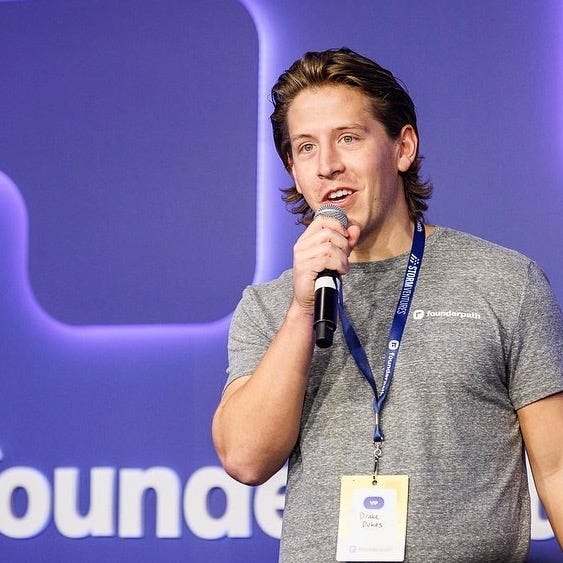






 ## Inside Every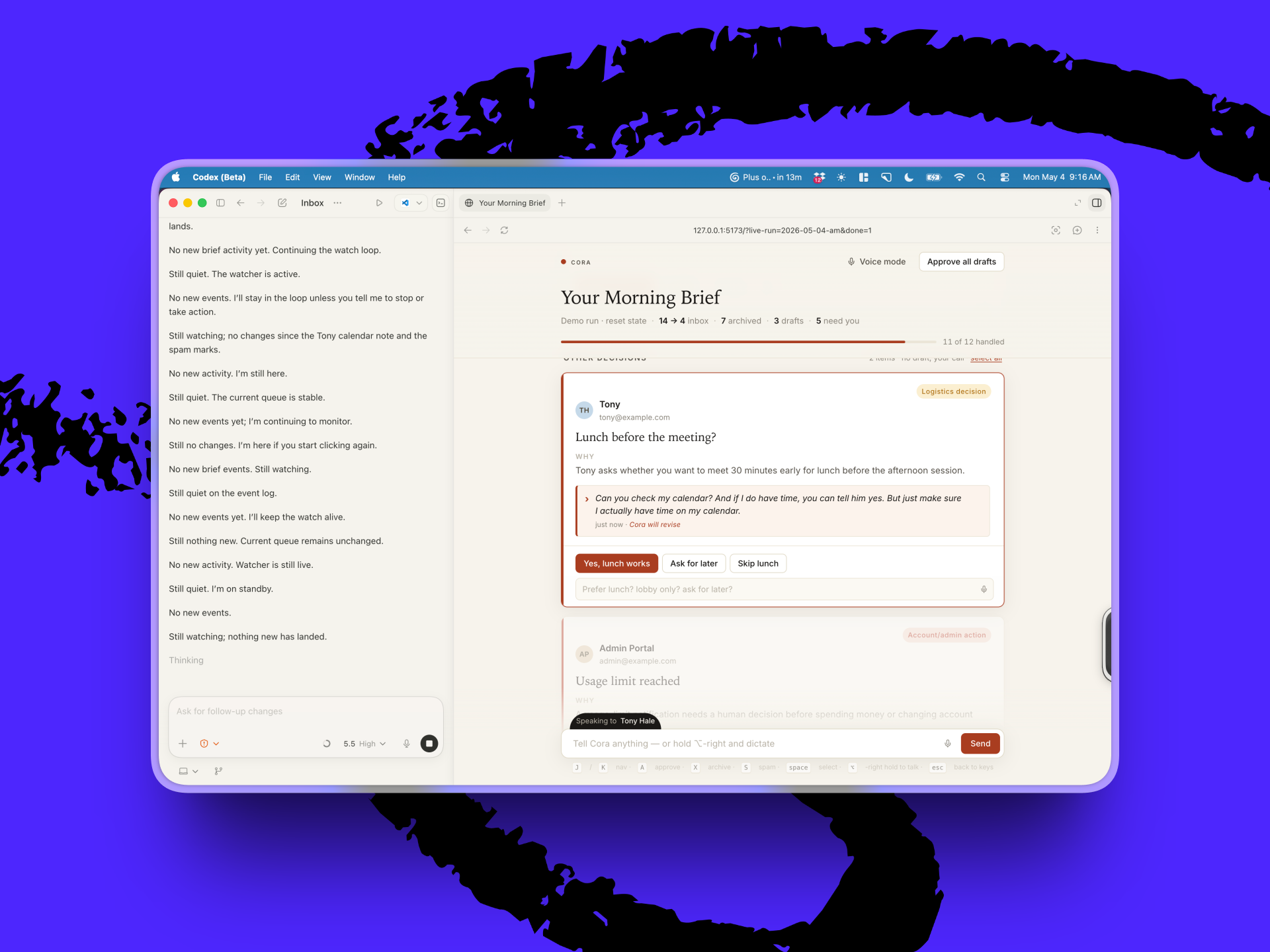
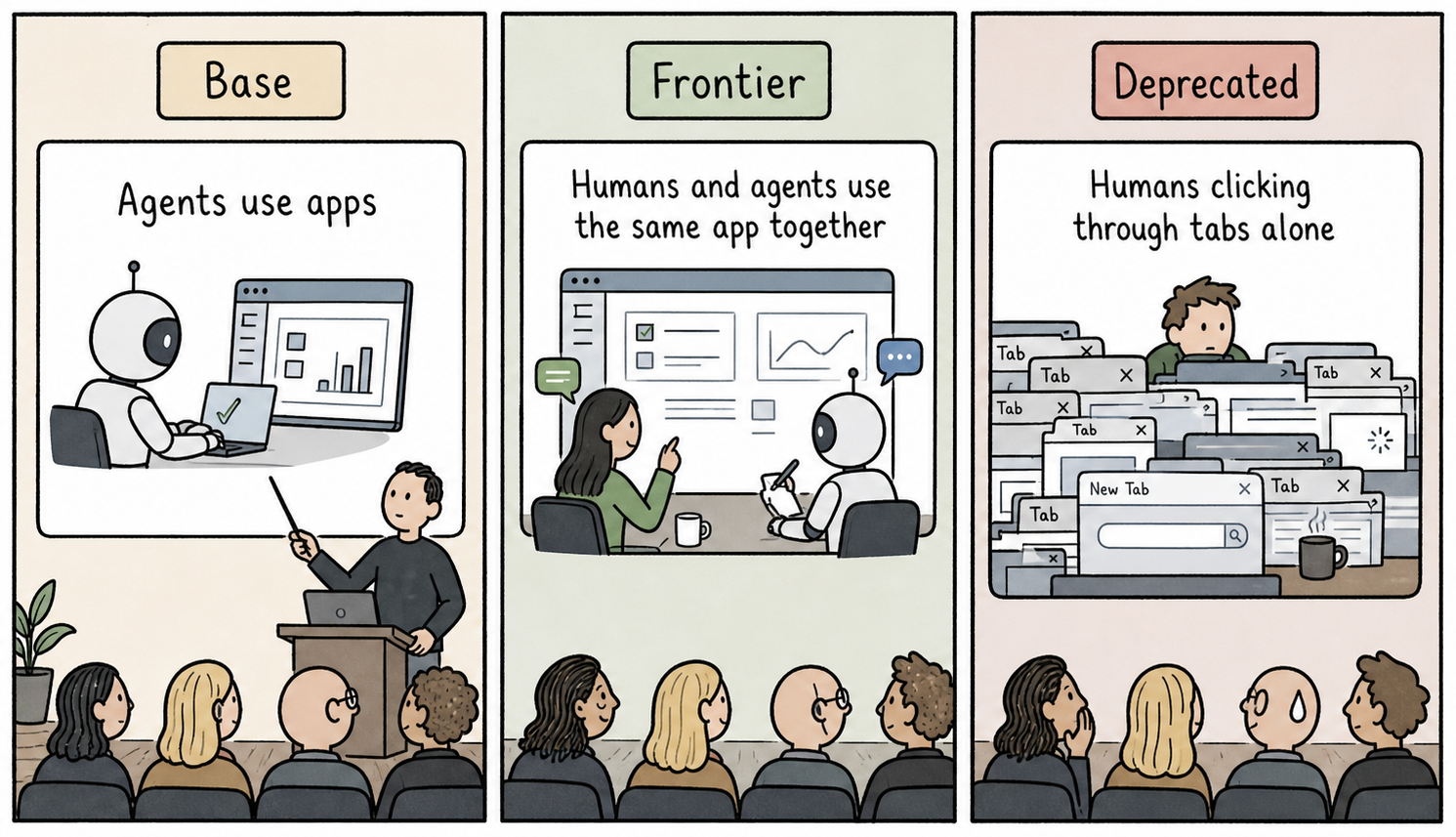

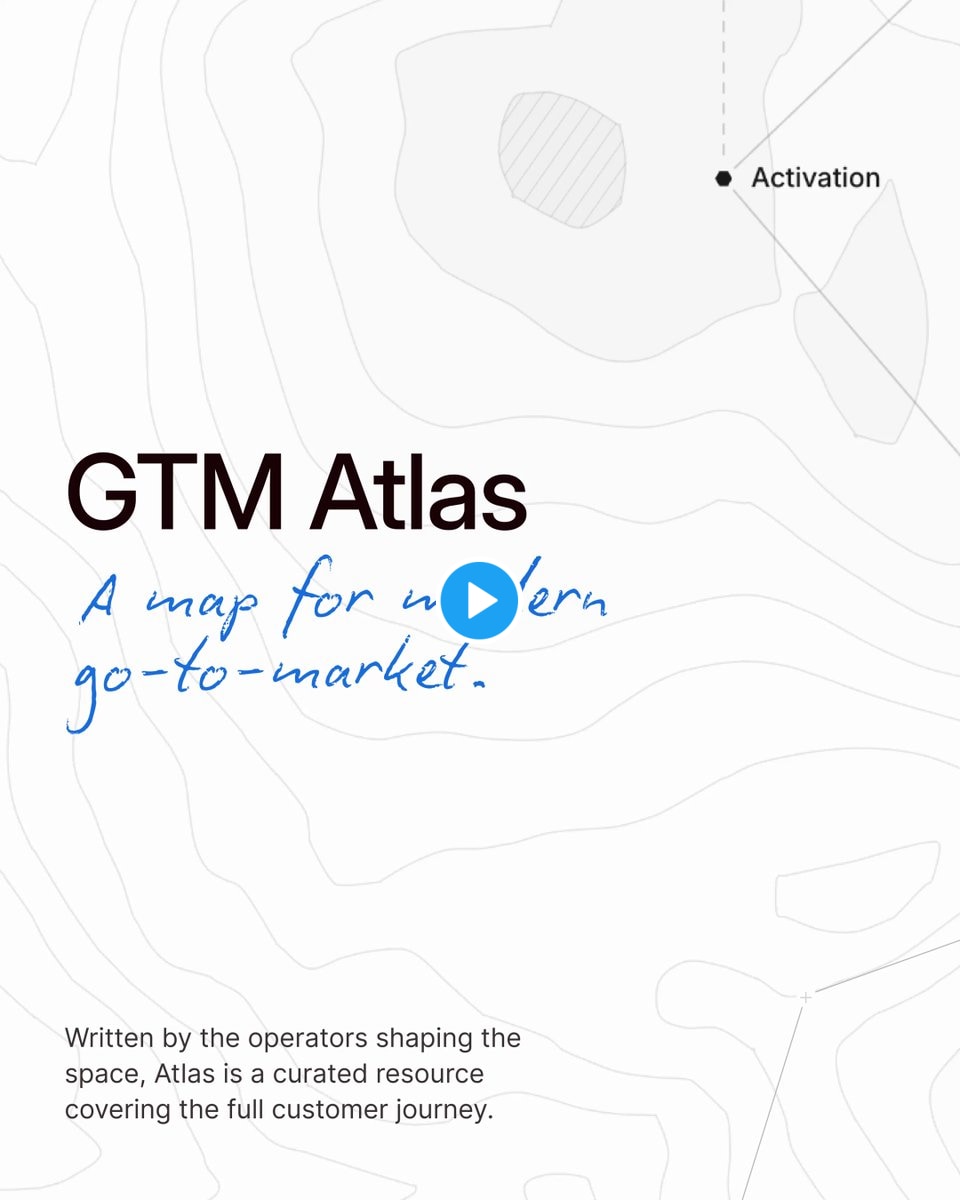







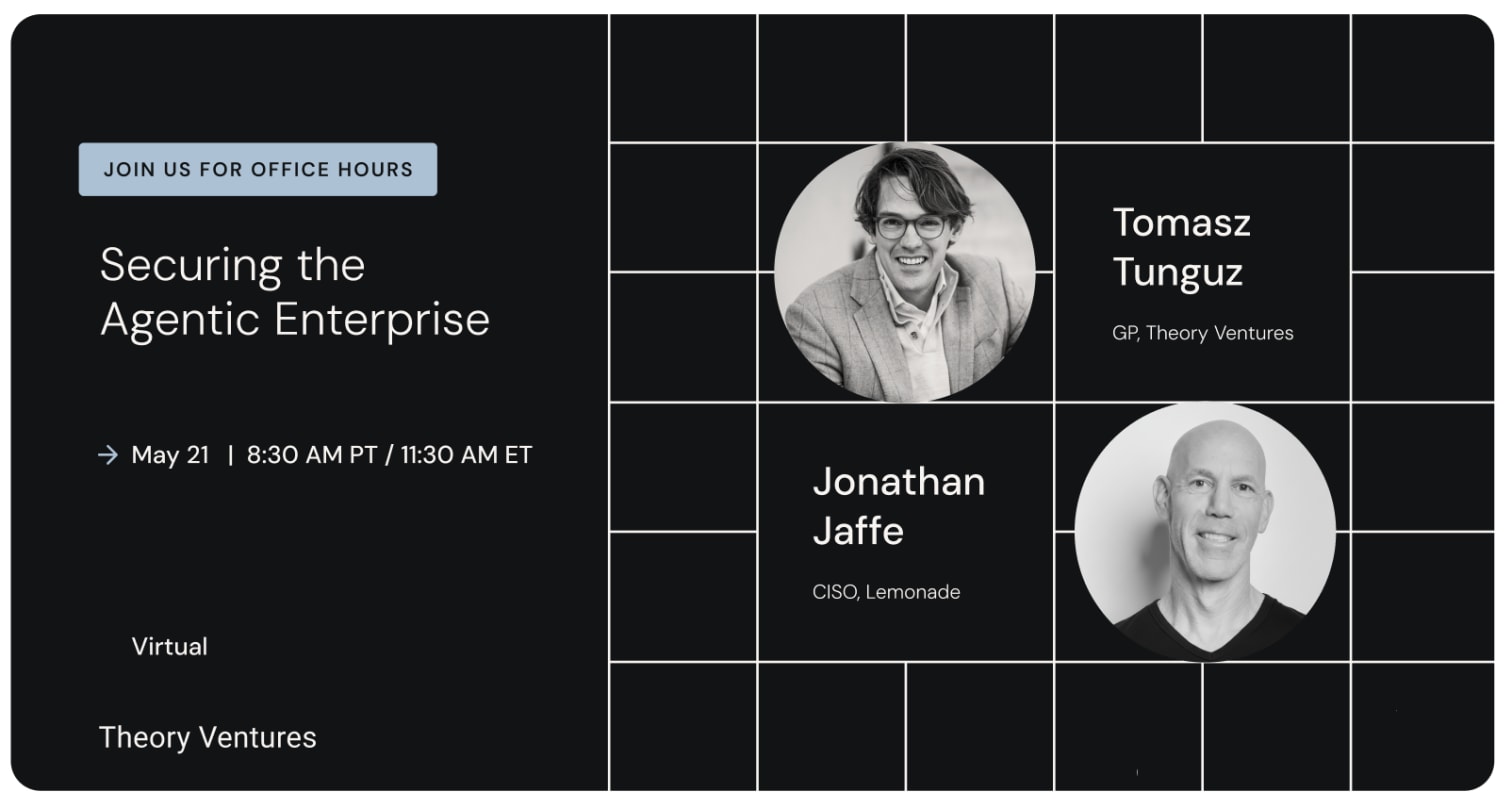

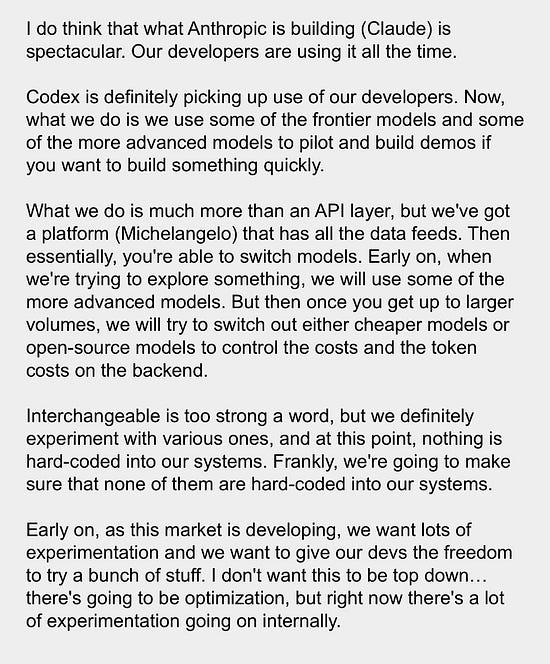

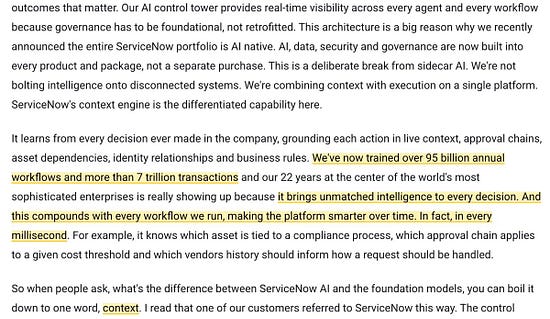 Ed Sim @edsim
Whether or not you believe ServiceNow can reach $30B in revenue, with 30%+ from AI products, the bigger point is clear: Enterprise workflow automation won’t be “just GenAI.” It will require deterministic systems, probabilistic reasoning, human-in-the-loop decisions, and fully
Ed Sim @edsim
Whether or not you believe ServiceNow can reach $30B in revenue, with 30%+ from AI products, the bigger point is clear: Enterprise workflow automation won’t be “just GenAI.” It will require deterministic systems, probabilistic reasoning, human-in-the-loop decisions, and fully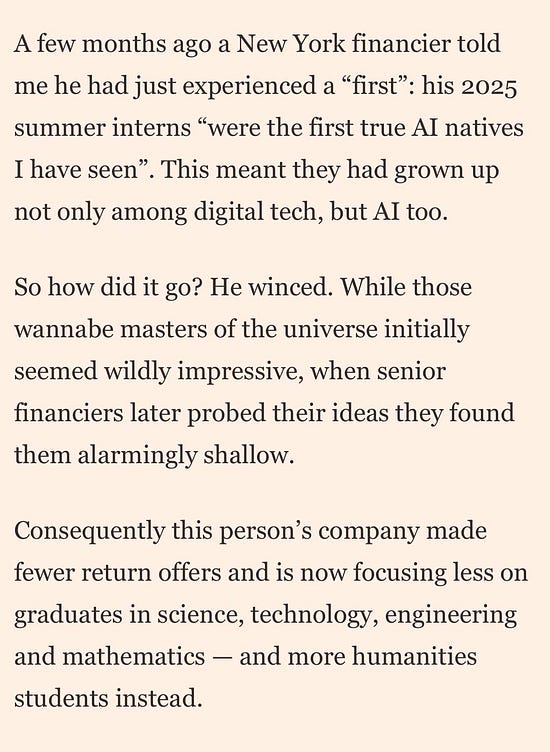
 Ed Sim @edsim
30 years of venture investing and I've never seen a market move this fast with so much uncertainty which means huge opportunity. 🙏🏻 @HackItMax - we covered a ton of ground on some of my frameworks for investing + working with founders like the 5 P's and 3 CH's. Going to point
Ed Sim @edsim
30 years of venture investing and I've never seen a market move this fast with so much uncertainty which means huge opportunity. 🙏🏻 @HackItMax - we covered a ton of ground on some of my frameworks for investing + working with founders like the 5 P's and 3 CH's. Going to point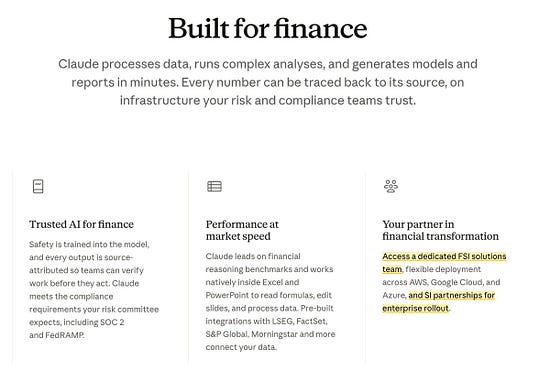 Claude @claudeai
New for financial services: ready-to-run Claude agent templates for building pitches, conducting valuation reviews, closing the books at month-end, and more. Install them as plugins in Cowork and Claude Code, or use our cookbooks to run them in production as Managed Agents.
Claude @claudeai
New for financial services: ready-to-run Claude agent templates for building pitches, conducting valuation reviews, closing the books at month-end, and more. Install them as plugins in Cowork and Claude Code, or use our cookbooks to run them in production as Managed Agents.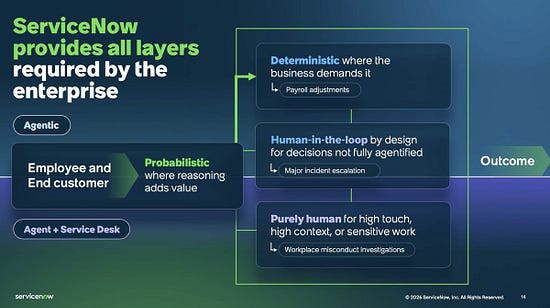
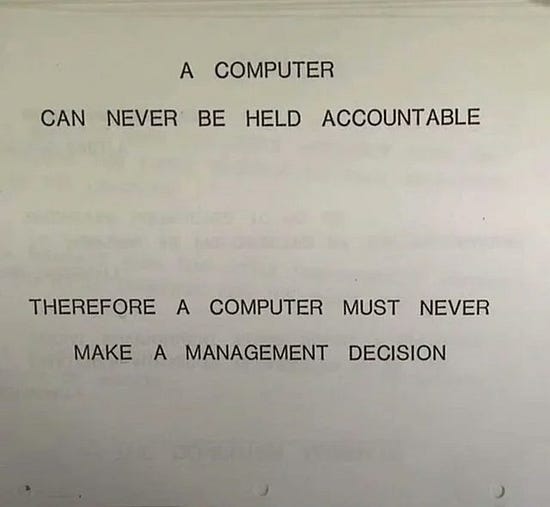
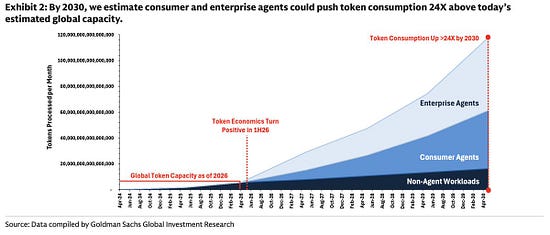 Jukan @jukan05
We have only just entered the early innings.
Jukan @jukan05
We have only just entered the early innings.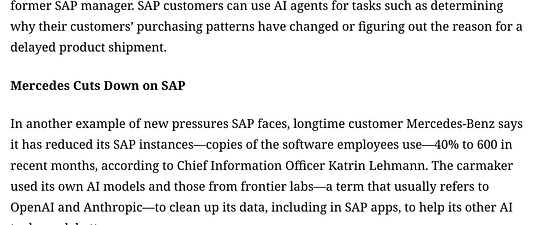
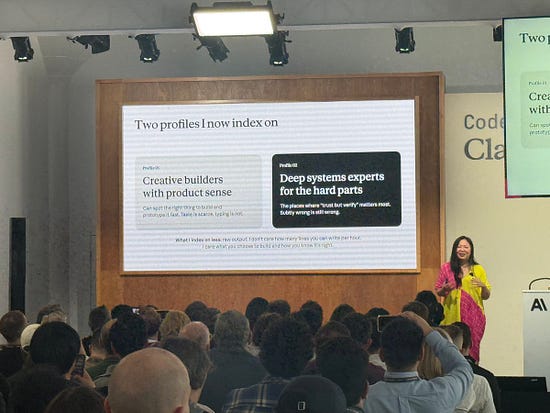
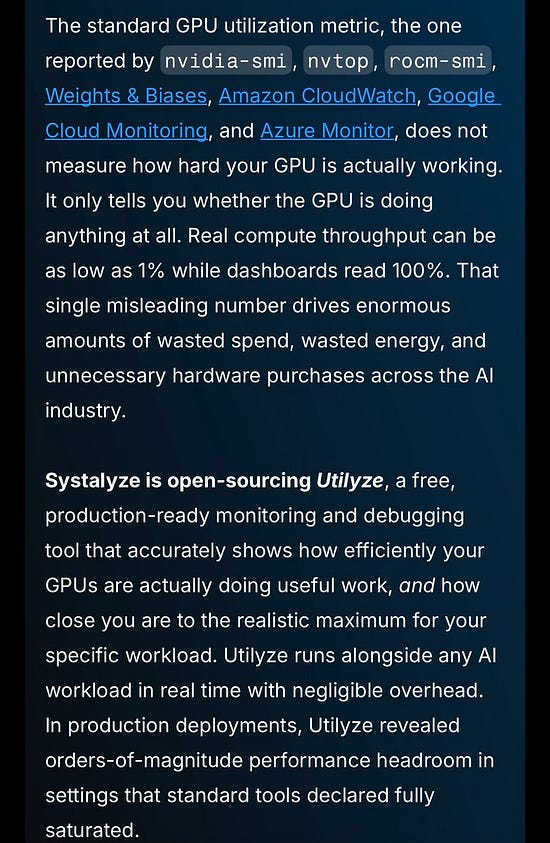
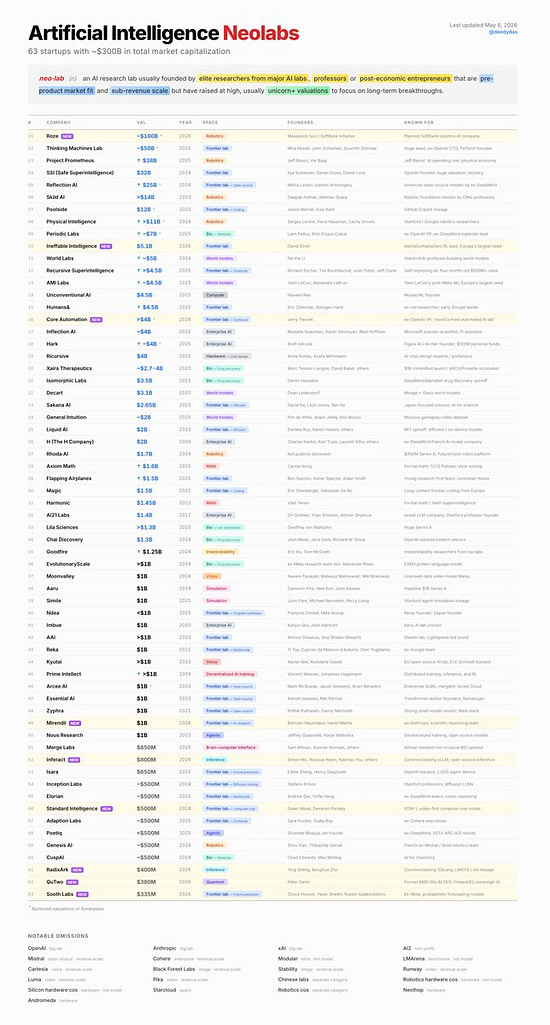




 Hello, and happy Sunday! This week belonged to agents. OpenAI had a “low-key” launch party for